
Crochet spiderweb sweaters can take surprisingly different forms. Some place one large radial web across the torso, while others concentrate the design on the back, turn it into a cropped shrug, add dramatic sleeves, or combine the openwork with a hood. Those construction choices change far more than the finished appearance—they influence fit, movement, layering, and how clearly the web remains visible when the garment hangs.
The ideas below compare 20 distinct directions rather than treating every web top as interchangeable. Several original tutorials are labeled tops or shrugs rather than sweaters, so those sources are presented transparently as close wearable references for sweater-style layering. Use the notes to compare coverage, web placement, sleeves, structure, and adaptation potential, then follow each original creator for the exact construction details.
Quick List
- Crochet Classic Back-Web Shrug Sweater
- Crochet Witchy Hexagon Spiderweb Shrug Sweater
- Crochet Long-Sleeve Panel Spiderweb Sweater
- Crochet Heart-Center Spiderweb Sweater
- Crochet Hooded Spiderweb Sweater
- Crochet Compact Cropped Spiderweb Sweater
- Crochet Convertible-Sleeve Spiderweb Sweater
- Crochet Medium-Fit Spiderweb Sweater
- Crochet Clean-Line Spiderweb Sweater
- Crochet Festival Spiderweb Sweater Layer
- Crochet Distressed Spiderweb Sweater
- Crochet Bell-Sleeve Spiderweb Sweater
- Crochet Minimal Spiderweb Layer Sweater
- Crochet Flowy-Sleeve Spiderweb Sweater
- Crochet Two-Panel Spiderweb Sweater
- Crochet Glow-in-the-Dark Spiderweb Sweater
- Crochet Defined-Web Crop Sweater
- Crochet Nightcrawler-Inspired Spiderweb Sweater
- Crochet Backless Spiderweb Sweater
- Crochet Spider-Man-Inspired Spiderweb Sweater
Decide Where the Spiderweb Should Carry the Garment
Before choosing by color or sleeve style, look at where the main web actually sits. A centered front-and-back construction makes the web part of the garment’s structure, while a back-web shrug leaves much more of the clothing underneath visible. Backless designs use the web almost like a decorative panel, and hexagon constructions can distribute the geometry differently around the shoulders.
That placement affects alteration options. A large radial web can lose its symmetry if one side is stretched substantially farther than the other, so fit changes need to preserve the visual center as well as body coverage. If layering is your priority, compare how much chest, back, and shoulder area each finished project exposes before choosing a tutorial. The most dramatic motif is not automatically the most practical silhouette for your intended outfit.
Yarn Choice Changes Both Drape and Web Definition
Spiderweb crochet relies on open spaces, so yarn behavior is unusually visible. A softer, finer yarn can produce fluid fabric that settles around the body, while a firmer yarn can make the spokes and openings appear more defined. Neither is universally better; the choice depends on whether you want the web to hang softly or maintain a stronger graphic outline.
Weight also matters as a sweater grows. Sleeves, hoods, and longer body sections add material that can pull an open web downward. Before committing to a substitute yarn, work enough fabric to see how it behaves when hanging vertically rather than judging only from a flat sample. Keep the yarn label for care instructions, and treat the creator’s listed materials as the reference point whenever changing fiber, thickness, or hook size.
Check Shoulders, Openings, and Sleeve Weight Before Finishing
A spiderweb can look perfectly balanced on a table and still shift when worn. Before completing decorative borders or securing every end, check the developing garment on the body or an appropriately sized form. Watch whether the web center remains centered, whether the neckline settles where expected, and whether both arm openings allow comparable movement.
Sleeves deserve their own checkpoint. Long straight sleeves distribute weight differently from flared cuffs, while a hood adds another load at the neckline. For cropped or backless designs, there may be less torso fabric available to stabilize those features. If the garment starts rotating or dropping at the back, correcting the underlying shoulder or panel balance is generally more useful than trying to hide the problem with edging.
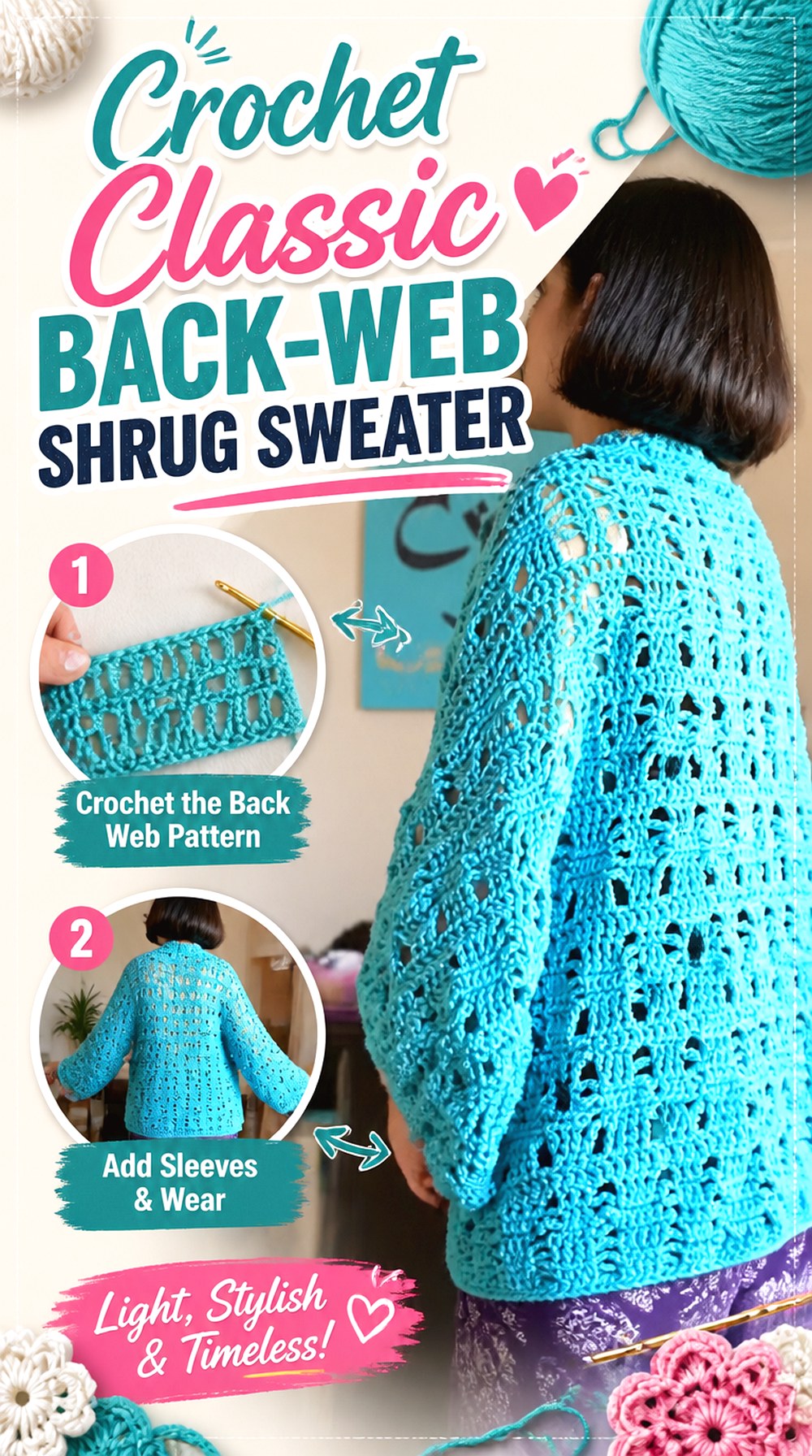
1. Crochet Classic Back Web Shrug Sweater
 SAVE
SAVEThis version keeps the spiderweb concentrated around the upper back and arms, making it one of the lightest sweater-like options in the collection. Crafting Shed’s source is specifically a spiderweb shrug rather than a full pullover, so it works well for readers who want the web to frame another garment instead of covering the entire torso.
The relatively open front also makes styling straightforward: the shirt, dress, or tank underneath remains part of the finished look. Choose this direction when a dramatic back matters more than warmth or full-body coverage.
Center the Web Between the Shoulder Points
A large back motif makes small alignment differences easy to see. Before extending both arms of the shrug, hold the web against the upper back and check where its center falls relative to the neckline and shoulder blades.
If the web leans noticeably to one side, adding sleeves will not automatically correct it. Establishing a balanced back first gives the finished shrug a cleaner hang and helps the sleeve openings begin from comparable positions.
Let the Underlayer Do Part of the Visual Work
Because substantial areas remain open, the garment worn underneath effectively becomes the background of the web. A high-contrast plain layer can make individual spokes easy to read, while a patterned shirt may visually compete with them.
Think about that relationship before choosing yarn color. This project can change character without changing construction simply by pairing the same web with a light, dark, or closely matched base garment.
2. Crochet Witchy Hexagon Spiderweb Shrug Sweater
 SAVE
SAVEA hexagon-based approach changes the geometry of the garment before color or embellishment enters the picture. Yommycrochetlogy’s tutorial is explicitly presented as a witchy spider-web shrug using a hexagon concept, giving this option a more constructed shoulder-layer shape than a simple circular web.
This makes a good choice when you want the sweater to feel intentionally shaped around the upper body while retaining plenty of openwork. It also provides a strong Halloween direction without requiring extra appliqués or decorations—the construction itself creates the themed appearance.
Hexagon Orientation Affects the Worn Shape
A geometric piece can appear obvious while flat but become harder to orient once arm openings and front edges are introduced. Keep track of which areas belong at the neck, back, and sides as the project develops.
Before permanent joining, position the shape as it will actually be worn. This gives you an opportunity to notice whether a corner is landing awkwardly at the neckline or whether the back motif is rotating away from the intended center.
Decide How Open the Front Should Feel
The shrug format naturally exposes more of the front than a pullover. That can be useful over a fitted dress or tank, but it may not suit someone seeking a self-contained sweater.
Compare the finished source silhouette with your normal layering pieces before choosing it. Extending coverage can alter the balance of the hexagon construction, so a fuller sweater tutorial may be a better starting point if substantial torso coverage is essential.
Original Tutorial and Creator Credit
Creator: Yommycrochetlogy
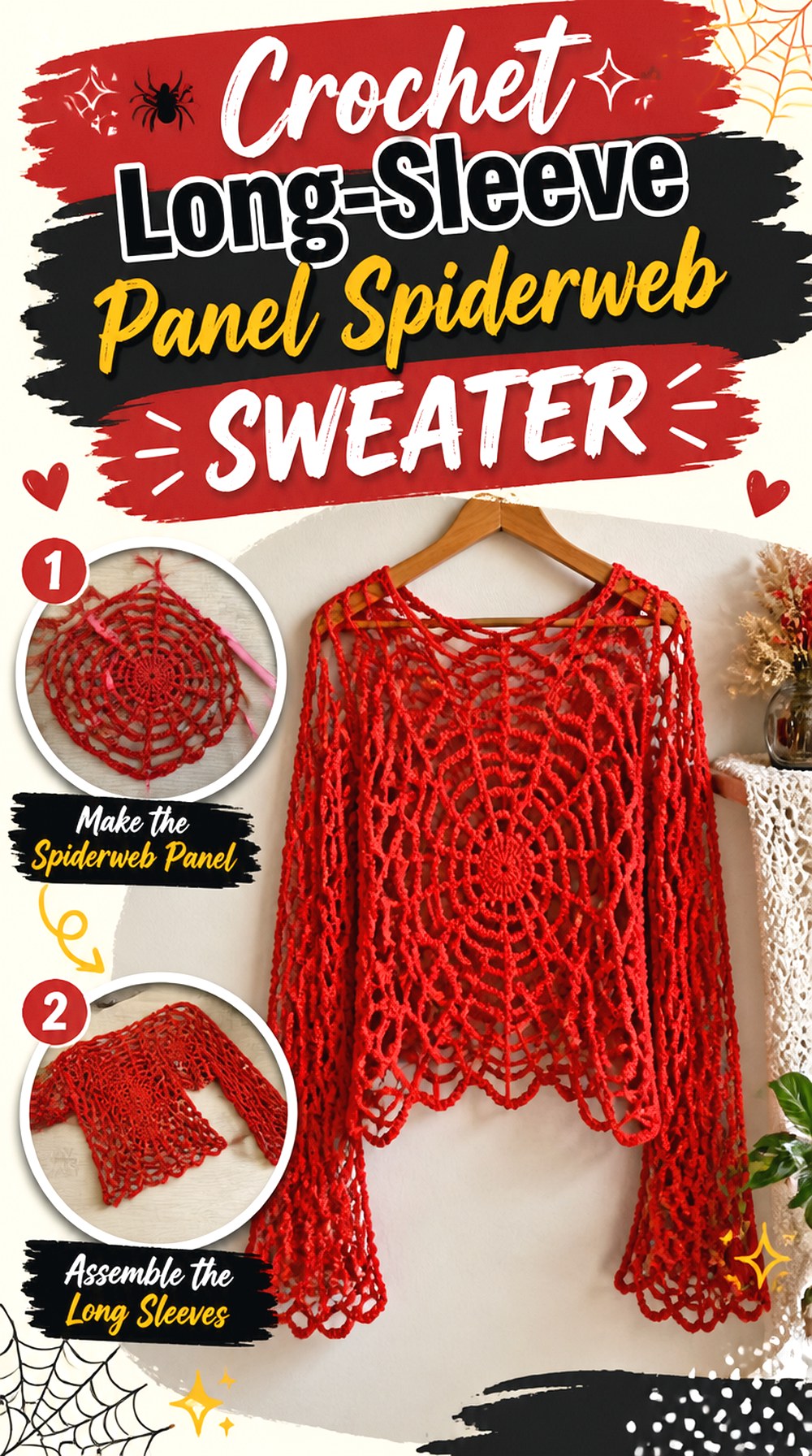
3. Crochet Long Sleeve Panel Spiderweb Sweater
 SAVE
SAVEThreaderie by m. builds a long-sleeved spider-web top through identifiable garment sections, including panels, joining, and sleeves. That makes it a useful reference for anyone who prefers thinking about a web sweater as connected wearable pieces rather than one uninterrupted decorative circle.
The result has substantially more torso presence than a shrug and lets the web become the main outfit layer. It suits readers who want a recognizable spiderweb from a distance while still having full arm coverage. The panel logic also creates useful checkpoints before the entire garment is assembled.
Compare Both Panels Before They Are Joined
Openwork can change dimensions with small shifts in tension. Place corresponding panels beside one another before joining and compare the outer edges, web centers, and intended shoulder positions.
A mismatch is easier to investigate while the sections are separate. Once sleeves and side joins are added, a small difference can present itself as a twisted neckline or off-center motif rather than an obviously uneven panel.
Seams Are More Visible Through Open Crochet
Dense sweater fabric can conceal minor joins, but a spiderweb garment leaves much of its construction exposed. Decide whether you want seams to disappear visually or behave like part of the graphic structure.
Whichever finish you prefer, keep mirrored joins consistent. An intentionally visible shoulder line can look deliberate; one shoulder joined differently from the other is more likely to read as an accidental imbalance.
Original Tutorial and Creator Credit
Creator: threaderie by m.
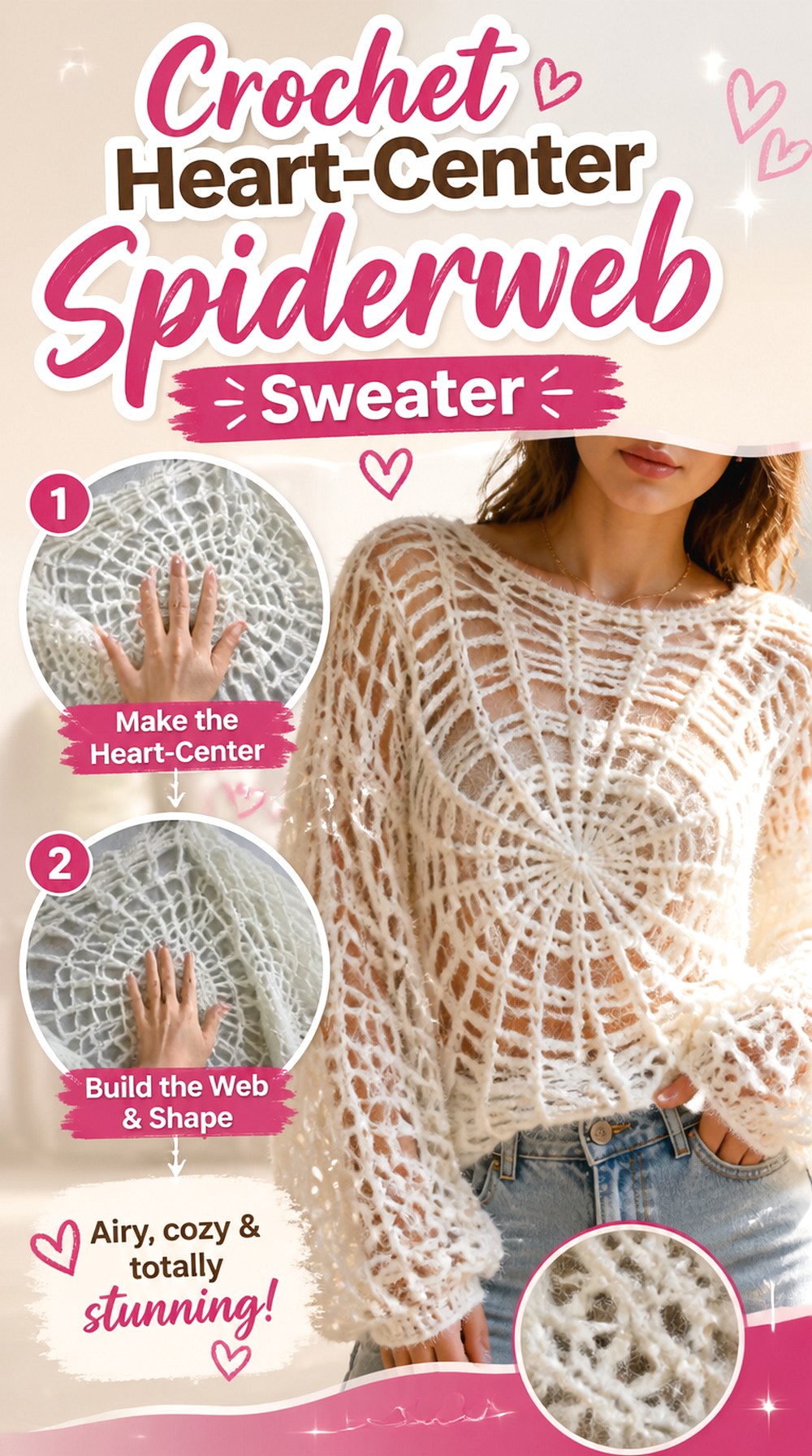
4. Crochet Heart Center Spiderweb Sweater
 SAVE
SAVEWONDER NETTING changes the usual circular web by placing a heart at the center. That small conceptual change creates a noticeably different focal point: instead of the eye traveling directly toward a plain web hub, it lands on a recognizable shape surrounded by the radial openwork.
This direction can feel less strictly Halloween-specific while still retaining the web silhouette. It is particularly effective when you want the center of the sweater to carry more personality than the sleeves. Because the heart needs to remain readable, contrast and garment stretch deserve more attention than they might in a plain centered web.
Protect the Heart From Uneven Stretch
A symmetrical center motif can distort when one side of the surrounding garment carries more tension. Before finishing the sleeves or sides, look at the heart while the project is hanging in approximately its worn position.
If it tilts or elongates sharply, check panel balance and shoulder placement before assuming blocking will solve everything. Keeping the surrounding web evenly supported helps the central shape remain recognizable.
Consider the Clothing Visible Through the Motif
Open spaces mean the base layer becomes part of the heart’s outline. A low-contrast underlayer may create a subtle tonal effect, while stronger contrast can make the heart and web much clearer.
Test the project over likely outfits before deciding that the crochet itself lacks definition. Sometimes changing the background gives the motif the visual separation it needs without adding more yarn or edging.
Original Tutorial and Creator Credit
Creator: WONDER NETTING
5. Crochet Hooded Spiderweb Sweater
 SAVE
SAVEChenda DIY’s tutorial is one of the clearest full-sweater directions in this collection because the spiderweb garment includes a hood. That addition changes both styling and structure. Instead of behaving mainly like an airy top, the finished piece gains more visual weight around the head, neck, and upper back.
Choose this option when you want the garment itself to carry most of the gothic or Halloween impact. The hood also means the project deserves more attention at the neckline than a simple crop top, especially if you plan to substitute a yarn with different weight or stretch.
A Hood Adds Load Exactly Where the Web Is Supported
Hood fabric hangs from the upper garment, so check the neckline with the hood in its natural position rather than evaluating the body alone. Openwork that initially sits high on the back may drop once extra fabric is attached.
If you are changing materials, monitor this area early. A heavier substitute can affect the relationship between hood depth, shoulder position, and the center of the web.
Keep the Hood and Main Motif Visually Balanced
A very prominent hood plus an equally dramatic web can create a strong statement, while a simpler hood lets the radial motif remain dominant. Neither choice is automatically preferable.
Look at the garment from the back and side, not only from the front. Those views make it easier to judge whether the hood overwhelms the web or creates the intentional upper-body volume you wanted.
Plan the Underlayer Around the Neck Opening
The open sweater construction still exposes clothing underneath. With a hood added, the neckline becomes a stronger frame around that base garment.
Try the developing sweater over the type of neckline you expect to wear most often. A high-neck shirt, camisole, and dress can each change how much of the open web appears to be filled visually.
Original Tutorial and Creator Credit
Creator: Chenda DIY
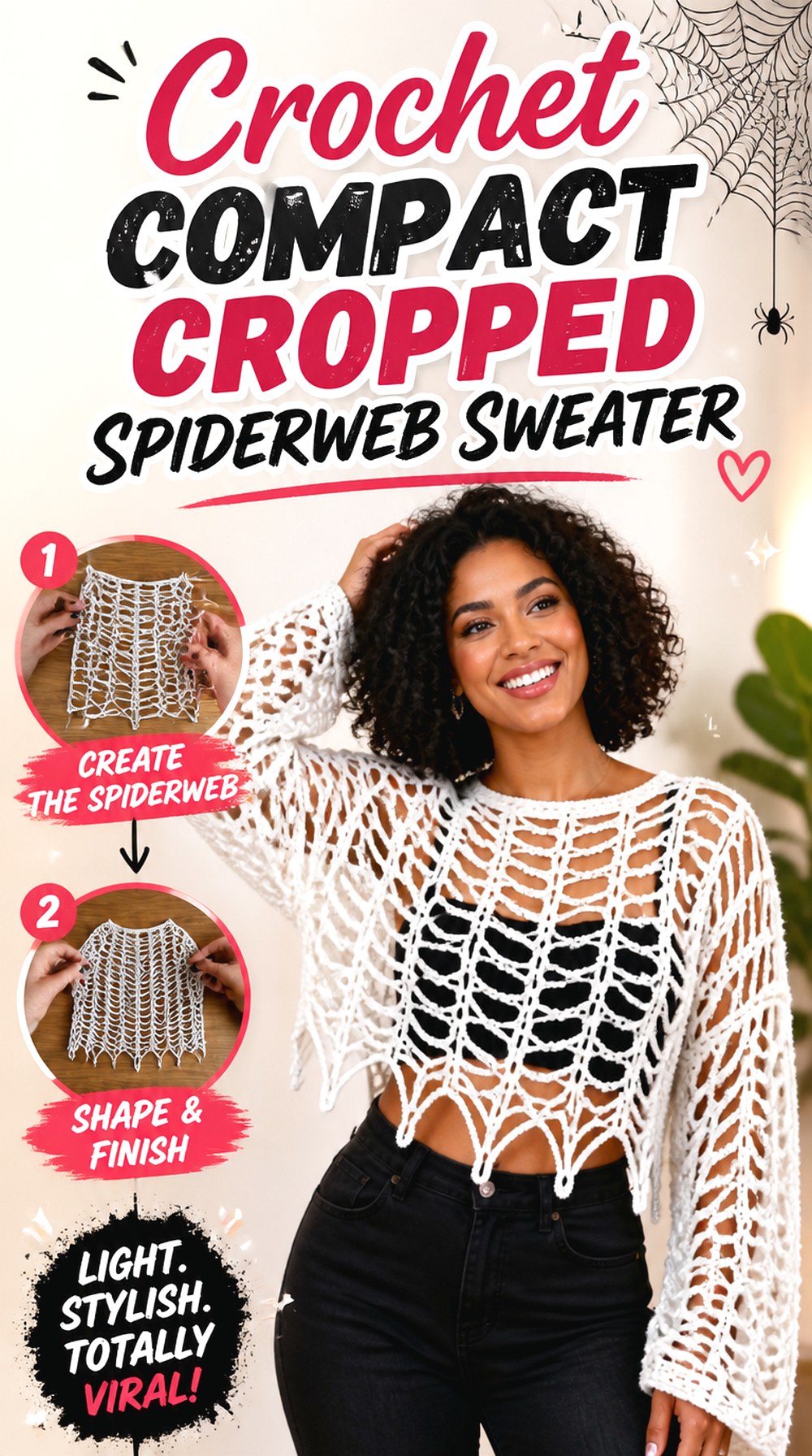
6. Crochet Compact Cropped Spiderweb Sweater
 SAVE
SAVECrochetbyJen’s project is presented as a spider web top with a small-to-medium finished sizing reference in the description, making it a more compact direction than the oversized and hooded choices in this roundup.
Use this idea when you want the web to function as a lighter cropped layer rather than extending into a large sweater silhouette. Reduced body coverage also makes the proportions of the neckline and arm openings more noticeable. Before choosing it, compare the creator’s stated sizing with your intended fit instead of assuming a size label will transfer directly to every wearer.
Cropping Makes Shoulder Placement More Noticeable
With less torso fabric below the motif, the shoulders do more of the work of keeping the garment stable. If the openings begin too far inward, the web can pull outward each time the arms move.
Check the developing piece while raising and crossing your arms. That movement test reveals tension across the upper back more effectively than judging the shape only while standing still.
Compact Coverage Works Well for Intentional Layering
A smaller web sweater leaves more of the outfit underneath visible, which can make it easier to wear outside a costume setting. A plain tank or fitted long-sleeve shirt can provide coverage while letting the radial design remain the focal point.
If you want a self-contained top with less visible underlayer, compare one of the fuller panel designs instead of forcing this compact concept to perform a different job.
Original Tutorial and Creator Credit
Creator: CrochetbyJen
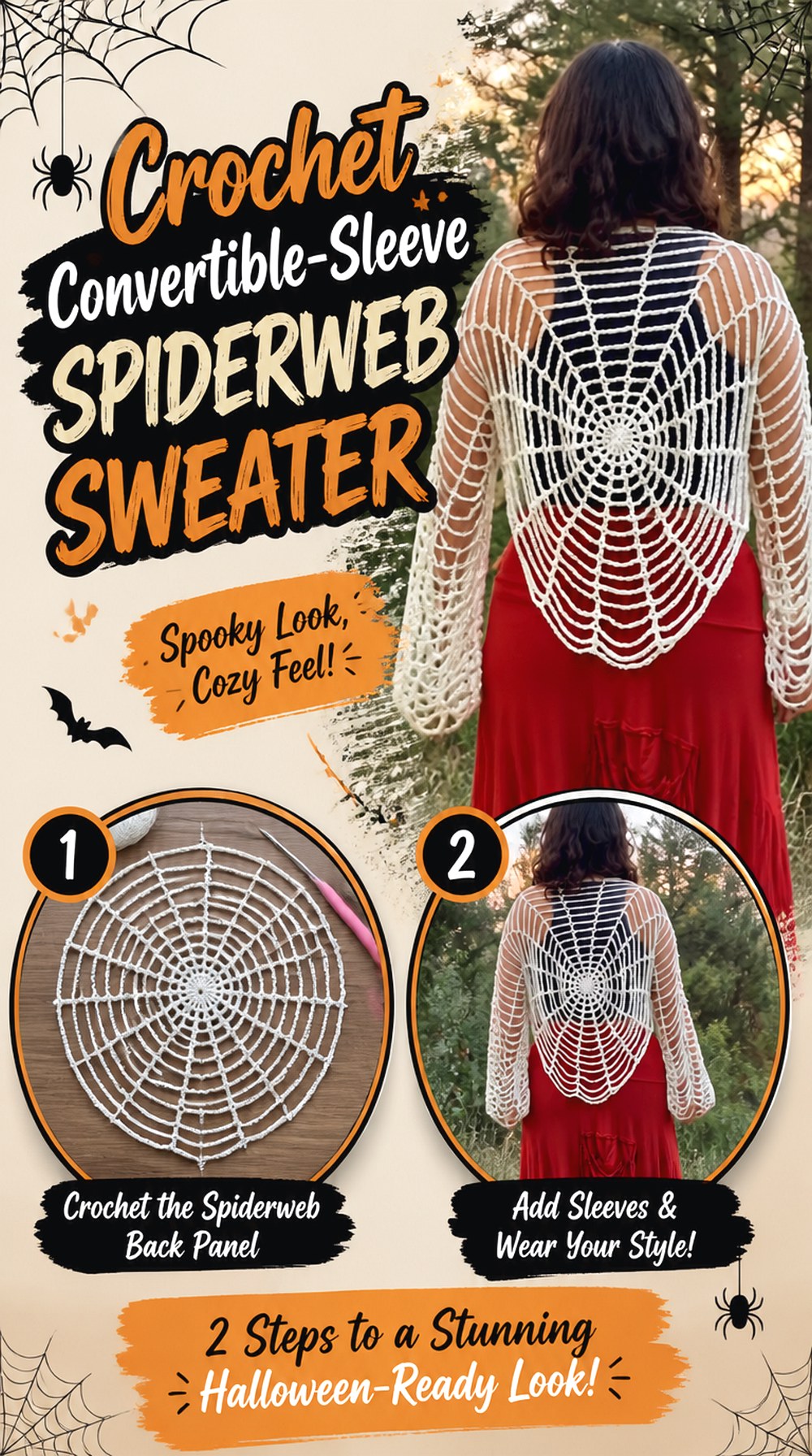
7. Crochet Convertible Sleeve Spiderweb Sweater
 SAVE
SAVESleeves become the main design decision in Crochet with illJay’s tutorial because the title explicitly offers long- or short-sleeve directions. That makes this option useful if you like the same central web concept but are undecided about season, layering, or overall garment weight.
Long sleeves push the project closer to a conventional sweater silhouette, while shorter sleeves leave the openwork feeling lighter and more top-like. Rather than treating sleeve length as a finishing detail, choose it alongside your body coverage so the proportions feel intentional from the start.
Sleeve Length Changes More Than Temperature
A long spiderweb sleeve extends the graphic lines down the arms, making the garment appear more substantial even though the fabric remains open. Short sleeves concentrate attention on the torso and can make the central motif seem larger by comparison.
Think about the complete silhouette rather than selecting a sleeve solely because it looks appealing in isolation. The same body can read as two noticeably different garments.
Check the Layer Beneath the Arm Openwork
Whatever sleeve length you choose, remember that the clothing underneath remains visible through the web. A sleeveless base creates a different effect under long openwork sleeves than a fitted shirt does.
Try the sweater with realistic underlayers before making final sleeve decisions. This is especially useful if the piece needs to work in several seasons rather than being reserved for a single Halloween outfit.
Original Tutorial and Creator Credit
Creator: Crochet with illJay
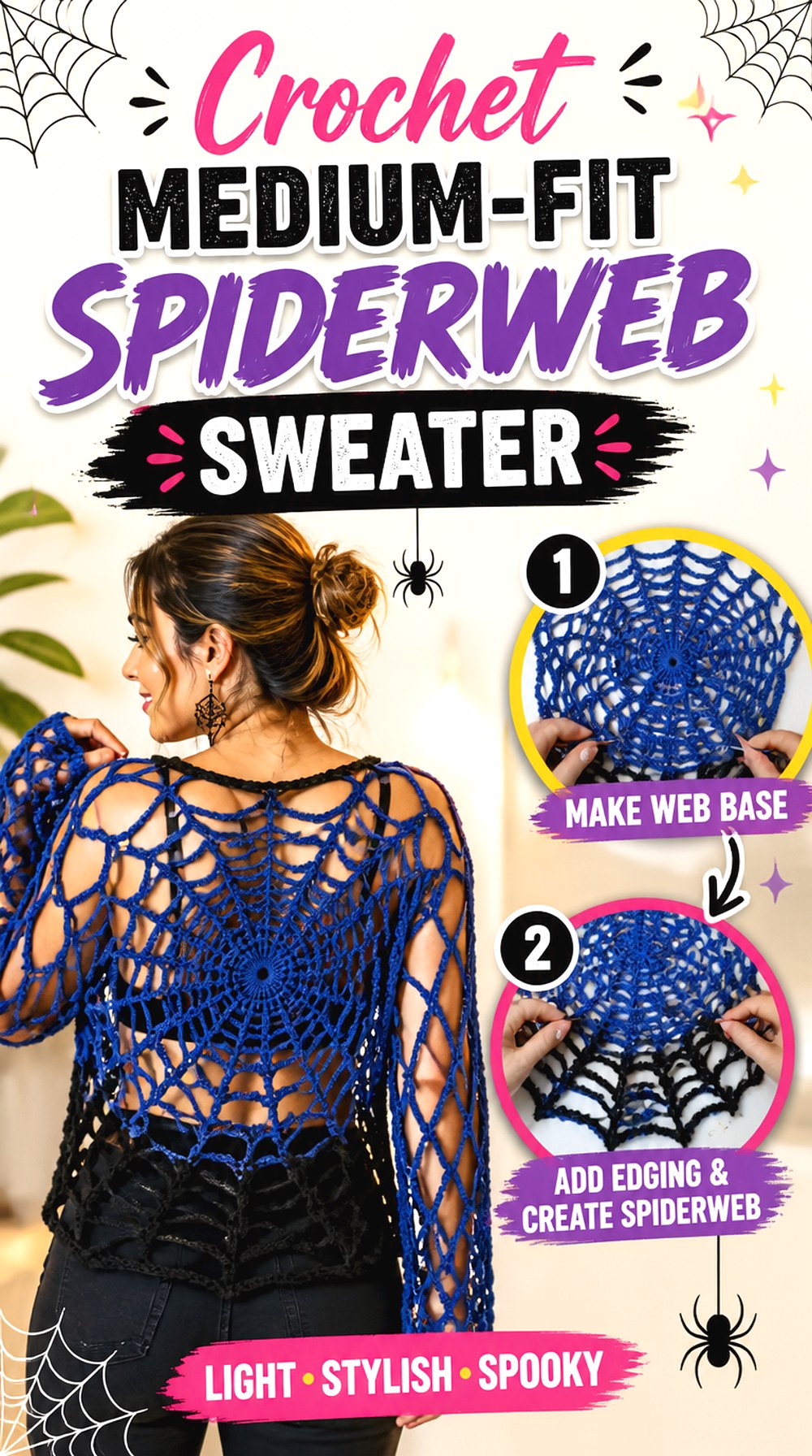
8. Crochet Medium Fit Spiderweb Sweater
 SAVE
SAVEKat’s Creative Crochet labels the source tutorial specifically as a women’s medium, which makes this project valuable for a different reason: it reminds readers not to treat every spiderweb sweater as automatically adjustable without checking the creator’s sizing information.
This idea suits someone who likes a more defined garment proportion rather than an intentionally oversized web. If your measurements or desired ease differ substantially from the demonstrated project, review the creator’s supporting information before starting. Choosing a tutorial that already addresses the kind of adjustment you need is generally more reliable than improvising changes across every structural point.
Treat the Size Label as Information, Not a Guarantee
Two people who usually buy the same clothing size may still prefer different crochet ease, sleeve room, or neckline depth. Compare the tutorial’s available fit information with the measurements and underlayer relevant to you.
Openwork also changes appearance as it stretches. A sweater that technically goes around the body may still pull the web much farther open than you want visually.
Evaluate Fit With the Intended Base Layer
A medium-fit spiderweb sweater worn over a camisole does not need the same room as one intended to sit over another long-sleeved garment. Test fit with realistic clothing underneath before final assembly.
This simple checkpoint helps distinguish true sizing problems from changes caused by the thickness of the layer beneath the crochet.
Original Tutorial and Creator Credit
Creator: Kat’s Creative Crochet
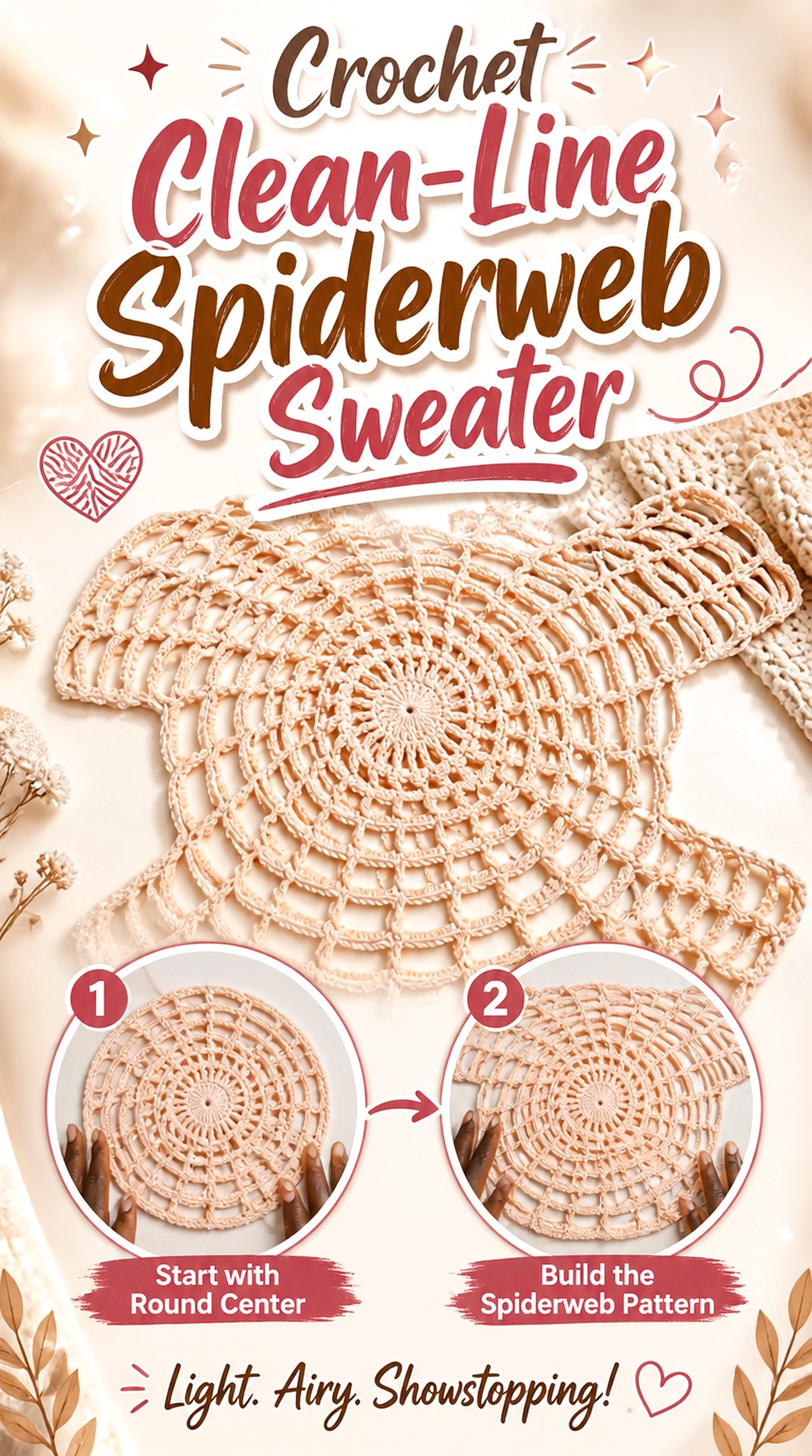
9. Crochet Clean Line Spiderweb Sweater
 SAVE
SAVENjenie Handmade’s tutorial focuses on a straightforward spider web top without an extra hood, heart center, glow effect, or distressed treatment. That simplicity makes it a useful foundation for readers who want the web geometry itself to carry the design.
This version can move easily between Halloween, alternative styling, and a more graphic everyday layer depending on yarn and undergarment choices. It is also a sensible reference when you want to understand the basic relationship between the web body and sleeves before considering more complicated variations elsewhere in the list.
Let the Radial Lines Remain the Main Detail
When the sweater has no secondary motif competing with the web, tension consistency becomes a major part of the finished appearance. A wandering spoke or distorted center is easier to notice.
Periodically view the developing fabric from several feet away. Small stitch differences that disappear at close range can become obvious once the web is seen as one large graphic shape.
Add Custom Details Only After Checking Structure
Contrasting cuffs, beads, appliqués, or unusual borders can personalize a plain web, but they may also add weight or pull on open spaces. First identify which edges stabilize the wearable.
Once the garment hangs correctly, decorative additions can be placed where they enhance the design rather than accidentally changing how the shoulders or web center sit.
Original Tutorial and Creator Credit
Creator: Njenie Handmade
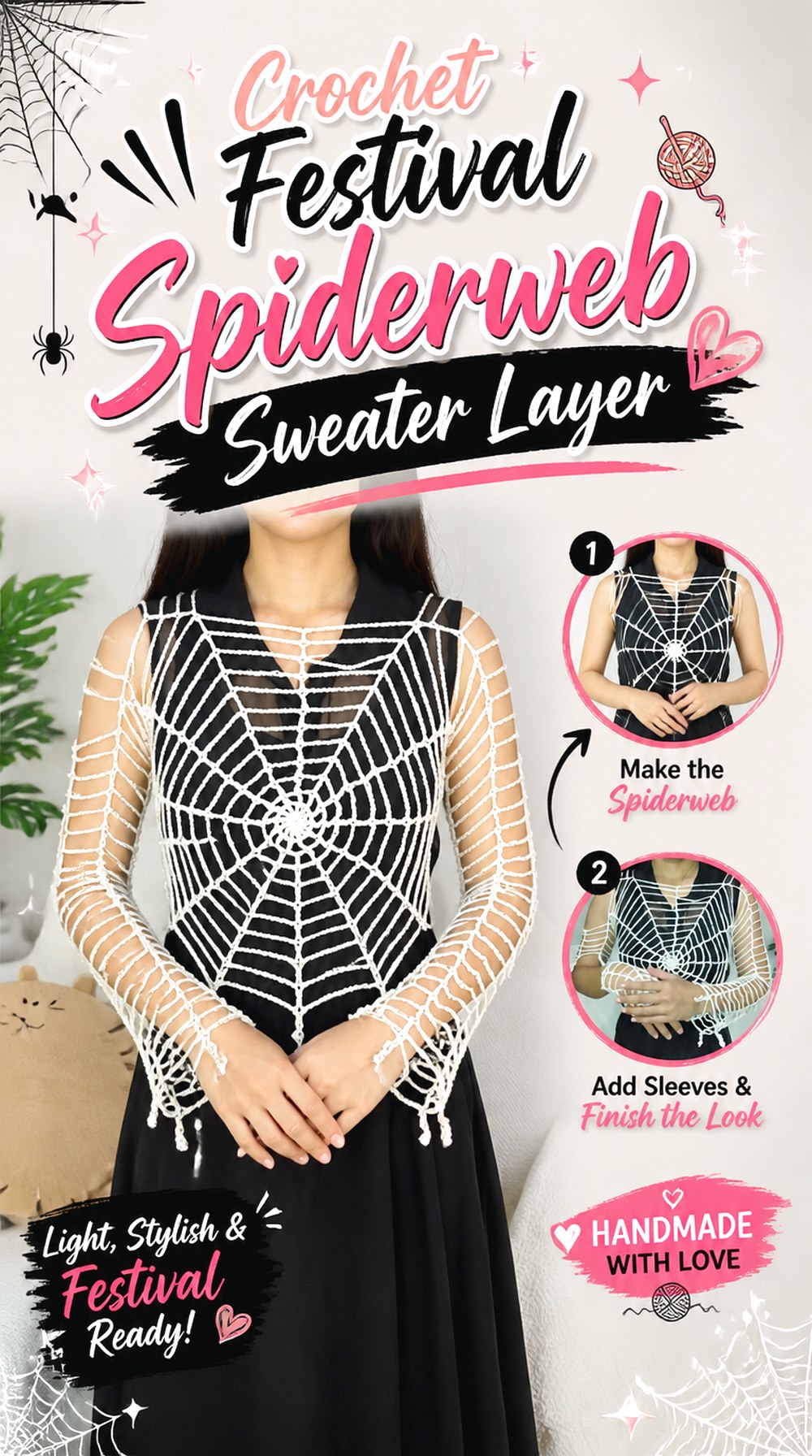
10. Crochet Festival Spiderweb Sweater Layer
 SAVE
SAVEThe Crochet Channel explicitly presents its spider web top as a festival outfit and includes both long- and short-sleeve sections in the video. That context makes this project useful when the sweater is meant primarily as an airy statement layer rather than a source of warmth.
The open design can work over a simple fitted base while allowing the web to remain visible from a distance. If you plan to wear it through a long event, prioritize comfortable shoulder and arm movement as much as the look. Openwork is visually light, but an awkward arm opening can still become noticeable after extended wear.
Build the Outfit Around the Web’s Negative Space
Festival styling often involves several visible layers, and the open spaces in this sweater become part of that composition. A heavily patterned base can make the web difficult to distinguish, while a simpler background usually gives the radial structure clearer contrast.
Check the complete outfit before adding more decorative crochet. The strongest solution may be removing competing details rather than adding another color or border.
Choose Sleeves With Movement in Mind
Sleeve length changes how the piece behaves when dancing, carrying a bag, or adding an outer layer later. Long web sleeves provide more visual continuity, while shorter sleeves reduce material around the arms.
Try the developing sleeve with any wrist accessories or jacket you expect to wear. This keeps the styling decision connected to actual use.
Original Tutorial and Creator Credit
Creator: The Crochet Channel
11. Crochet Distressed Spiderweb Sweater
 SAVE
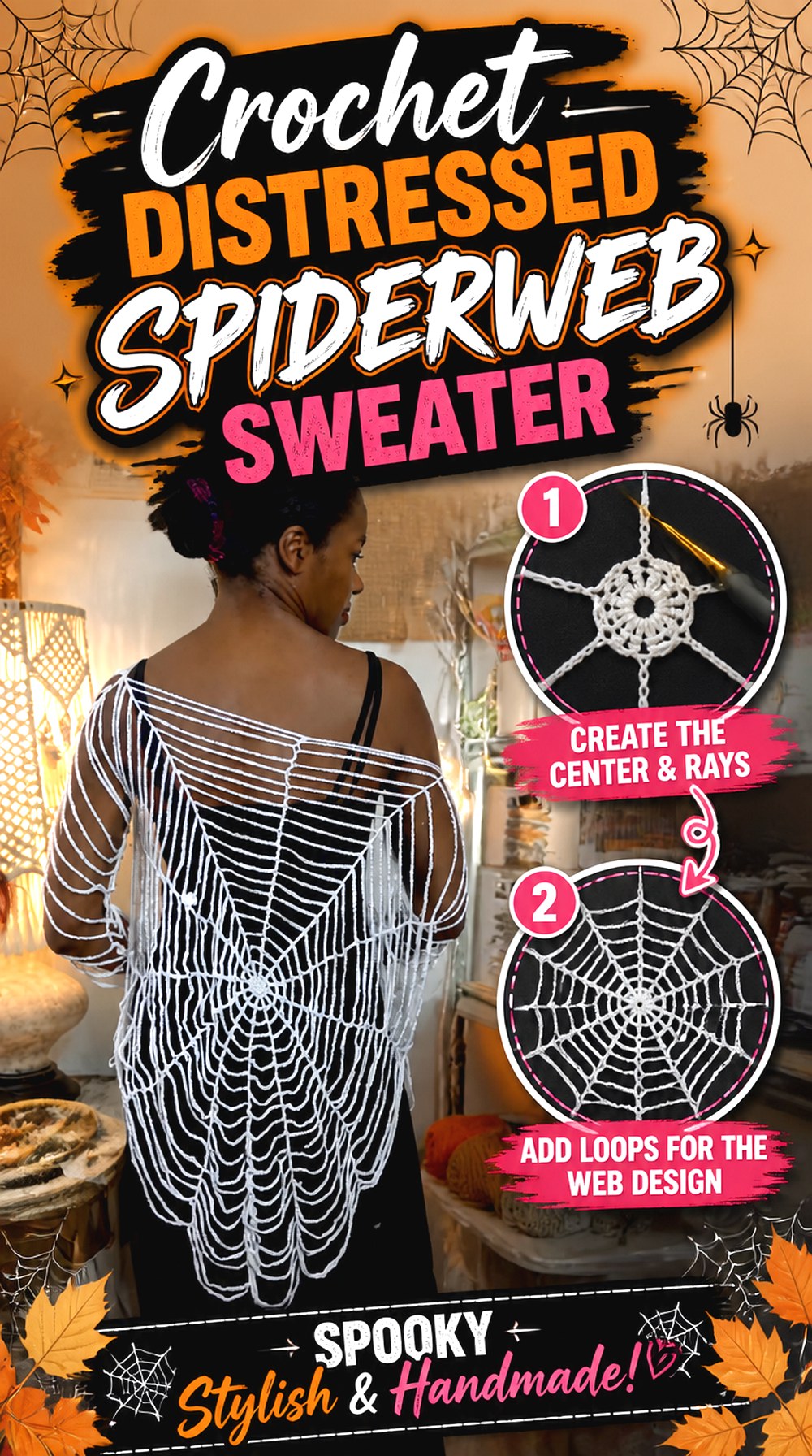
SAVECactus Lady Creation deliberately takes the spiderweb theme into distressed, grunge-oriented territory. The creator describes the source as a distressed spiderweb crochet sweater made for a Halloween setting, making it one of the clearest departures from the clean radial projects above.
The irregular-looking finish makes the sweater feel more weathered and textural, but that does not mean fit can be careless. Distress works best when it appears deliberate around a garment that still hangs correctly. This option suits readers who want a stronger gothic or haunted effect without relying on a hood, heart, or novelty yarn.
Distressed Does Not Need to Mean Structurally Unbalanced
Intentional irregularity can be part of the design, but shoulder and arm placement still affect comfort. Separate decorative distress from actual fit problems by checking the base garment before emphasizing torn-looking or dropped sections.
If one shoulder is carrying noticeably more weight than the other, correct that imbalance first. Decorative asymmetry looks more convincing when it rests on a wearable structure that behaves as intended.
Use Open Areas Where They Support the Silhouette
Extra gaps can create an effective grunge effect, but their location changes how the sweater holds itself. Large openings near high-stress joining areas may behave differently from openings in less structural portions of the fabric.
Follow the creator’s construction for the source project rather than assuming every web space can be enlarged or removed without consequence.
Keep Finishing Consistent With the Distressed Direction
A highly polished, heavy border can fight visually with intentionally ragged openwork. Conversely, completely unfinished-looking structural edges may not provide the stability you want.
Decide which edges should look raw and which need a controlled finish. That distinction helps the sweater feel designed rather than merely incomplete.
Original Tutorial and Creator Credit
Creator: Cactus Lady Creation
12. Crochet Bell Sleeve Spiderweb Sweater
 SAVE
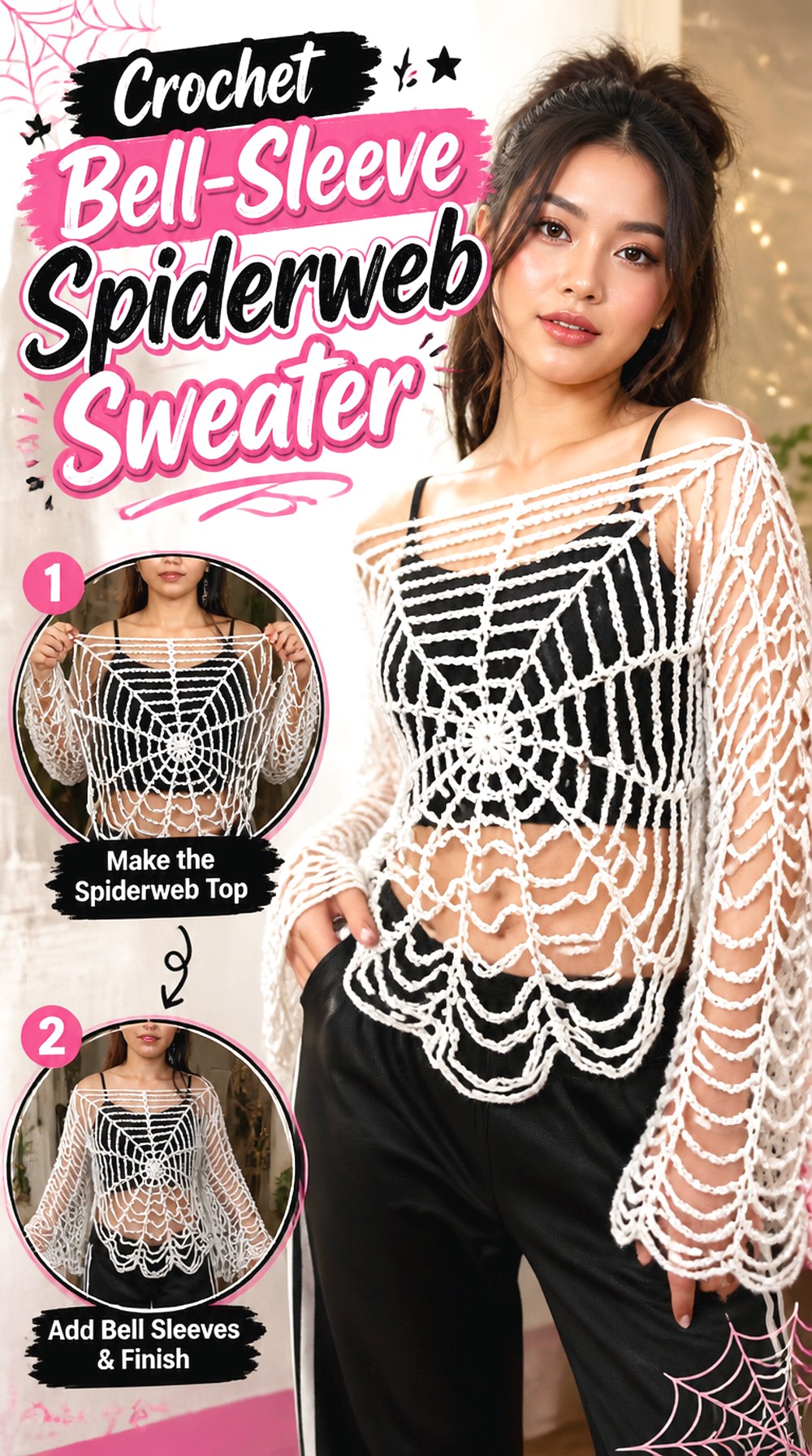
SAVEAngel’s spider web top tutorial includes sizing information and visibly develops the project into bell sleeves, giving this sweater idea a strong sleeve-first identity. The widening cuff creates movement and makes the arms almost as important visually as the central web.
This design suits readers who find straight spiderweb sleeves too restrained and want more of a romantic-gothic silhouette. Because flared sleeves contain more material toward the wrist, check the garment hanging naturally before deciding whether additional sleeve volume still feels balanced with the body.
Start the Flare Where It Looks Intentional
The point where a sleeve begins widening changes its overall character. A late flare emphasizes the cuff, while an earlier expansion makes more of the arm part of the dramatic silhouette.
Rather than changing this area blindly, compare the creator’s finished sleeve with your preferred proportions and normal arm movement. A dramatic cuff should still leave you comfortable using your hands and layering outerwear when necessary.
Watch the Sleeve Weight Against the Shoulder
Bell sleeves place more crochet toward the lower arm. In an open sweater, that weight can influence the upper sleeve and shoulder connection more than a narrow cuff does.
Before finishing the second sleeve, hang or wear the completed first side for a realistic check. If the shoulder shifts noticeably, reassess the material and fit before duplicating the problem.
Original Tutorial and Creator Credit
Creator: Angel
13. Crochet Minimal Spiderweb Layer Sweater
 SAVE
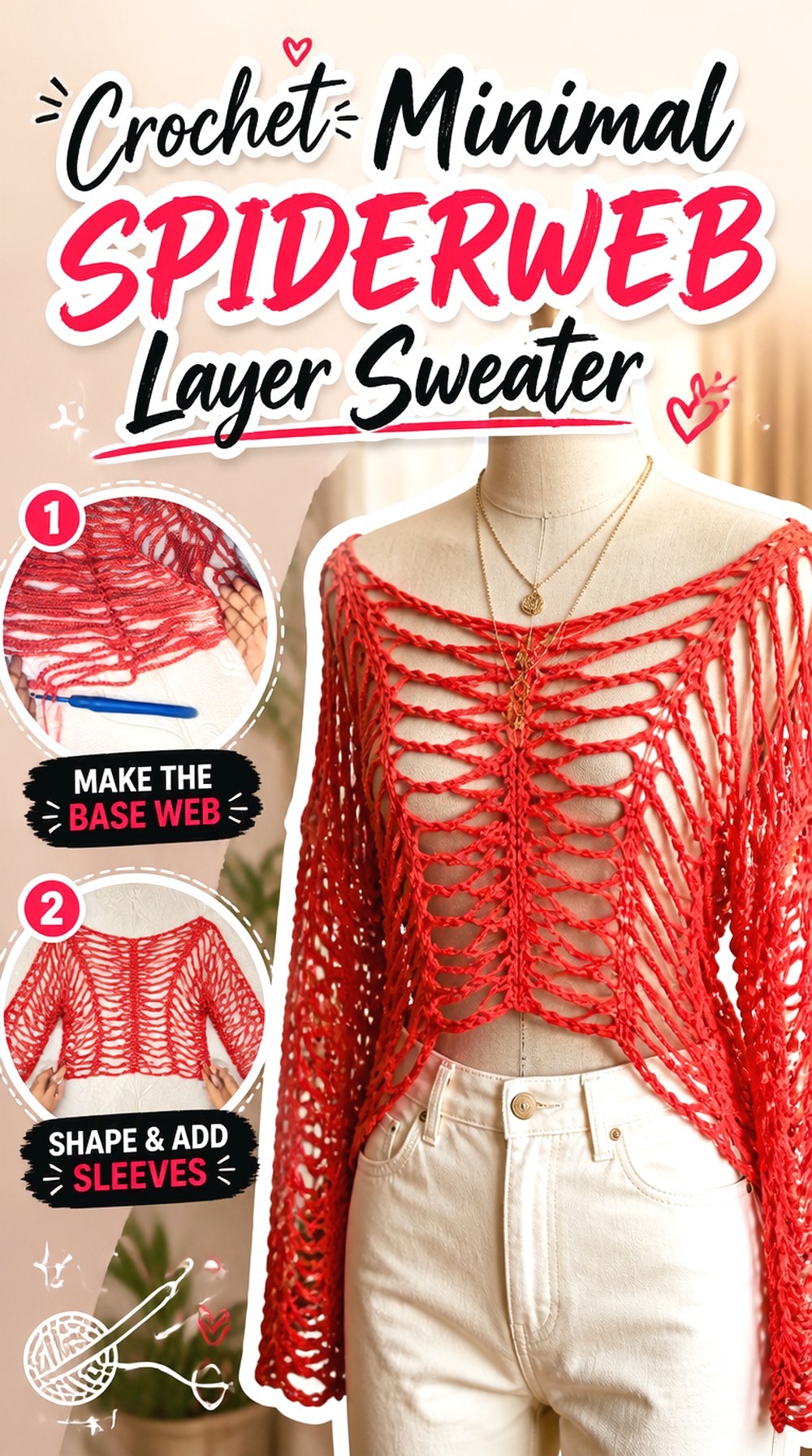
SAVEAqsa.crochet presents a direct spider web top tutorial without relying on a hood, glow yarn, heart center, or heavily distressed finish. That makes this an appealing direction when you want a pared-back sweater layer whose identity comes almost entirely from the web construction.
The simpler appearance also leaves room to style the project differently across seasons. Black can lean gothic, while other color choices can shift attention toward the geometry rather than Halloween. Regardless of palette, treat the open garment as a layer and decide beforehand how much coverage you need from clothing underneath.
A Restrained Design Makes Proportion More Important
When there are fewer decorative features, the relationship between web diameter, sleeve length, and body coverage becomes easier to notice. A very large central section paired with narrow short arms creates a different silhouette from a balanced long-sleeve layer.
Check the garment from front and back during construction so one area does not visually overpower the others by accident.
Use Color Without Losing the Web Outline
Changing from traditional black can make the project less seasonal, but web visibility depends partly on contrast with the underlayer. A mid-tone yarn over a similarly colored shirt may make the motif appear much subtler.
Test a short length of the chosen yarn against likely clothing before committing. This simple visual check can be more informative than judging the skein by itself.
Original Tutorial and Creator Credit
Creator: Aqsa.crochet
14. Crochet Flowy Sleeve Spiderweb Sweater
 SAVE
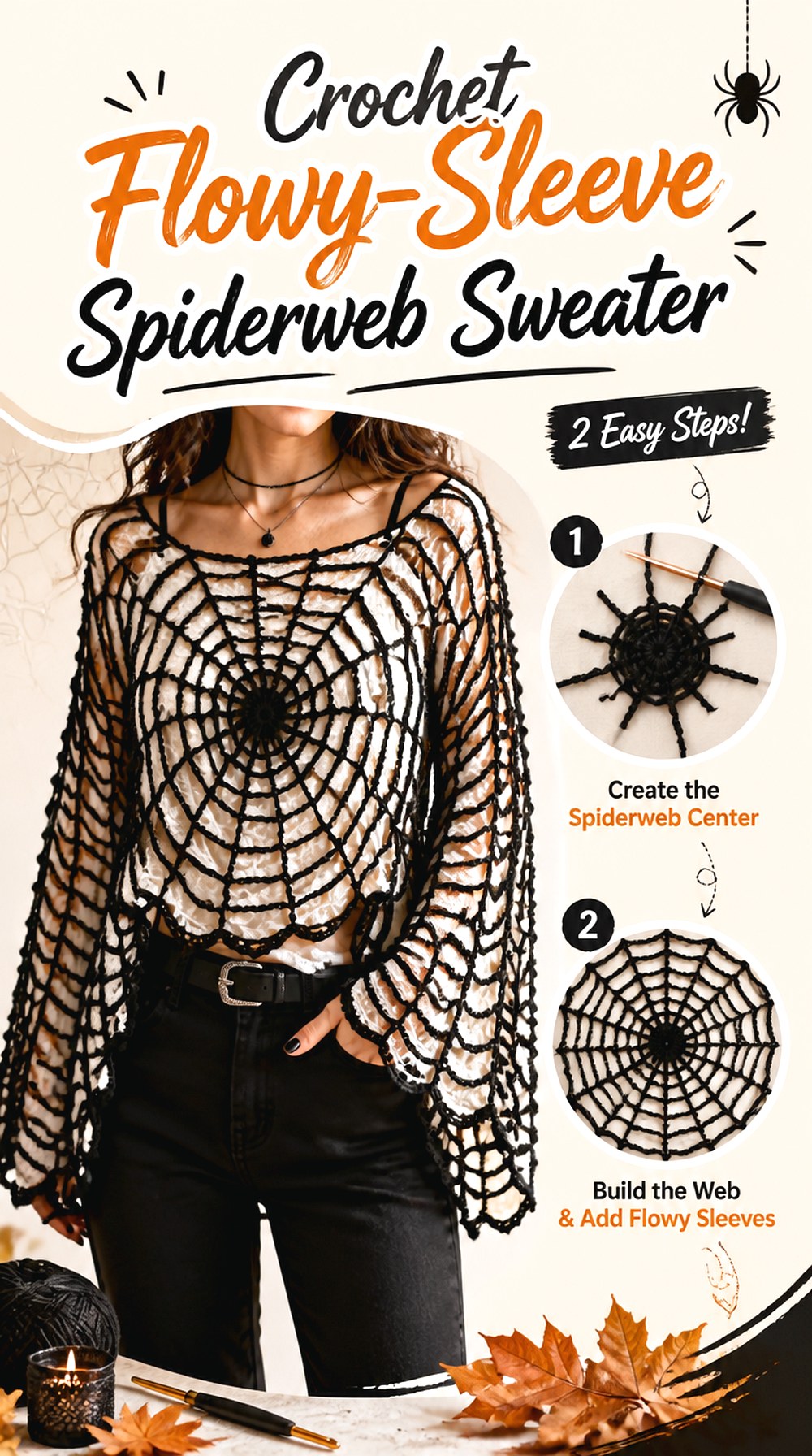
SAVECrystalline’s tutorial includes measurement and arm-sizing discussion along with a section devoted to flowy sleeves, giving this option a softer silhouette than a straight or narrowly fitted web sweater.
The appeal lies in combining a graphic spiderweb body with sleeves that move more freely. That contrast can make the garment feel less rigid and more draped, especially when paired with a yarn that allows the open fabric to settle naturally. If you substitute materials, pay attention to how much the completed sleeve drops under its own weight.
Flow Needs Enough Room Without Losing the Arm Shape
A roomy sleeve should still have a clear relationship to the shoulder and armhole. If all the extra volume begins too high, the upper body may look broader than intended.
Evaluate the sleeve while your arm is relaxed and while it is raised. Both positions reveal whether the fabric is flowing from the intended area or simply pulling the web body outward.
Soft Drape Can Blur a Strong Web
A very fluid yarn can create beautiful movement but may make radial lines look less crisp when the sweater hangs. A firmer material offers more definition but changes the fluid character of the sleeves.
Decide which feature is more important before substituting yarn: sharp web geometry or softer movement. Trying to maximize both can involve competing material properties.
Original Tutorial and Creator Credit
Creator: Crystalline
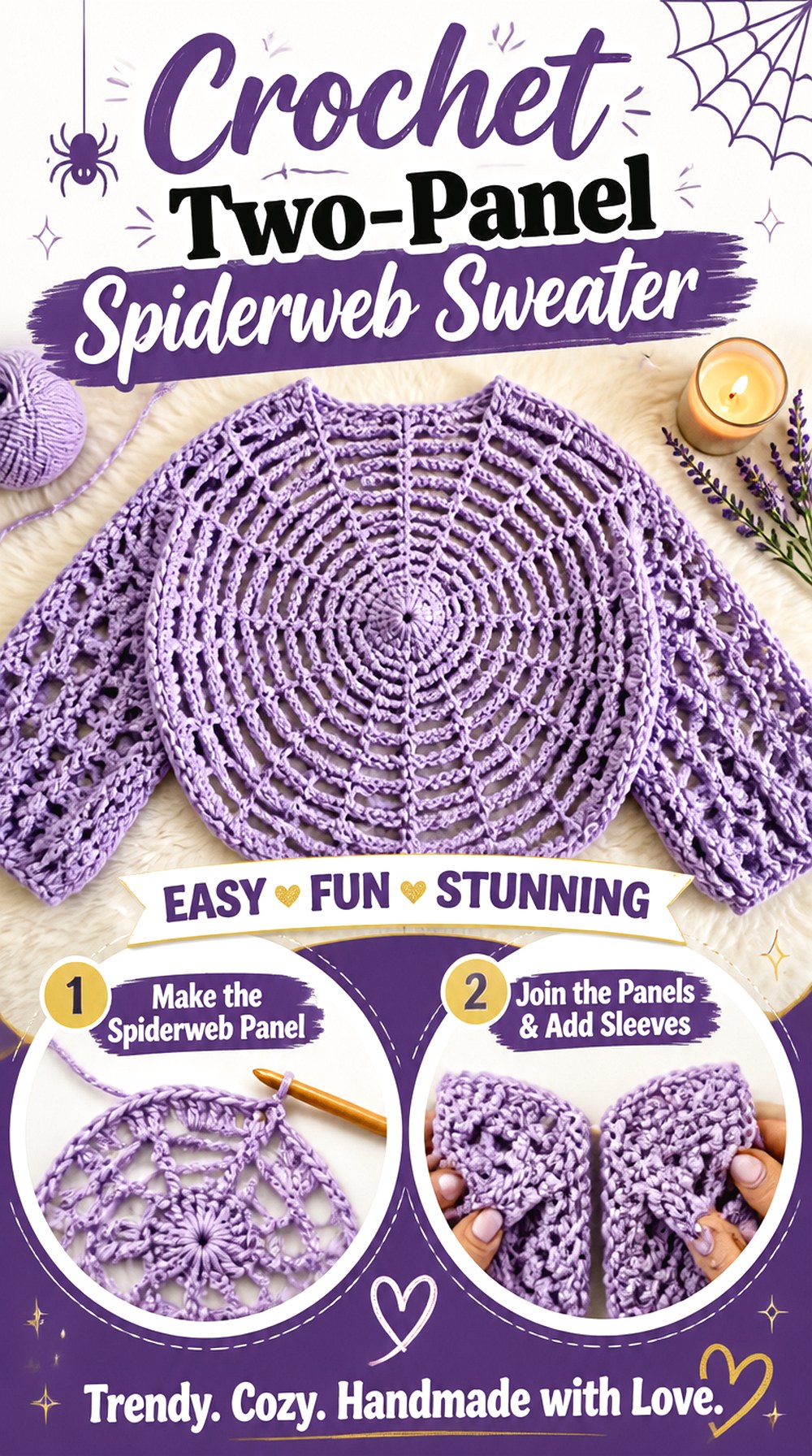
15. Crochet Two Panel Spiderweb Sweater
 SAVE
SAVEMadebymonica’s tutorial discusses sizing and shows the front and back panel relationship before moving into a sleeve, making two-panel planning the clearest reason to choose this source.
A panel-built spiderweb sweater gives you useful intermediate checkpoints. Each large section can be evaluated before the garment carries the weight of sleeves and finishing. That is particularly helpful if you are concerned about web size or whether the torso will provide the amount of coverage you expect. The final fit still depends on the creator’s construction, so use the panels as checkpoints rather than inventing an unrelated assembly method.
Compare Web Centers Before Connecting the Body
Two large radial panels look most intentional when their scale and orientation work together. Lay them flat, then hang them vertically before joining.
A panel can measure similarly at the edge while still having a noticeably different center or spoke tension. Checking both dimensions and visual symmetry gives you a better chance of catching a mismatch before the shoulder and side connections make adjustment more difficult.
Use Panel Construction to Plan Color Deliberately
Separate front and back sections create an opportunity for controlled color decisions. You might keep both identical for a unified web or use a planned contrast that distinguishes the two sides.
If changing colors, compare both yarns for thickness and behavior rather than choosing only by shade. Noticeably different fabric characteristics can make supposedly matching panels hang differently.
Original Tutorial and Creator Credit
Creator: madebymonica
16. Crochet Glow in the Dark Spiderweb Sweater
 SAVE
SAVEBeebe Doe gives the spiderweb concept a functional visual twist by using glow-in-the-dark yarn. The referenced project is built as a front-and-back spiderweb top, so the glowing effect can be visible from more than one direction rather than being limited to a small appliqué.
This is the most lighting-dependent idea in the roundup. Choose it for night events, Halloween gatherings, or situations where the garment’s appearance changing with the environment is part of the point. Treat the yarn’s own label and creator information as the authority for care and glow-related handling.
Judge the Sweater in More Than One Lighting Condition
Novelty yarn may look one way in daylight and very different after the lighting changes. Test the completed or developing fabric with the actual underlayer you intend to wear.
The web should ideally remain visually interesting even before the glow effect becomes noticeable. That way, the sweater still functions as a recognizable design rather than depending entirely on one environment.
Novelty Fiber Behavior Deserves a Separate Check
Do not assume a glow yarn will drape, stretch, or feel exactly like the material used in another spiderweb tutorial. Work enough fabric to evaluate the yarn itself before making major sizing adaptations.
Keep its label for washing and care guidance. Preserving the garment’s appearance requires following the fiber information rather than applying a generic crochet-care assumption.
Original Tutorial and Creator Credit
Creator: Beebe Doe
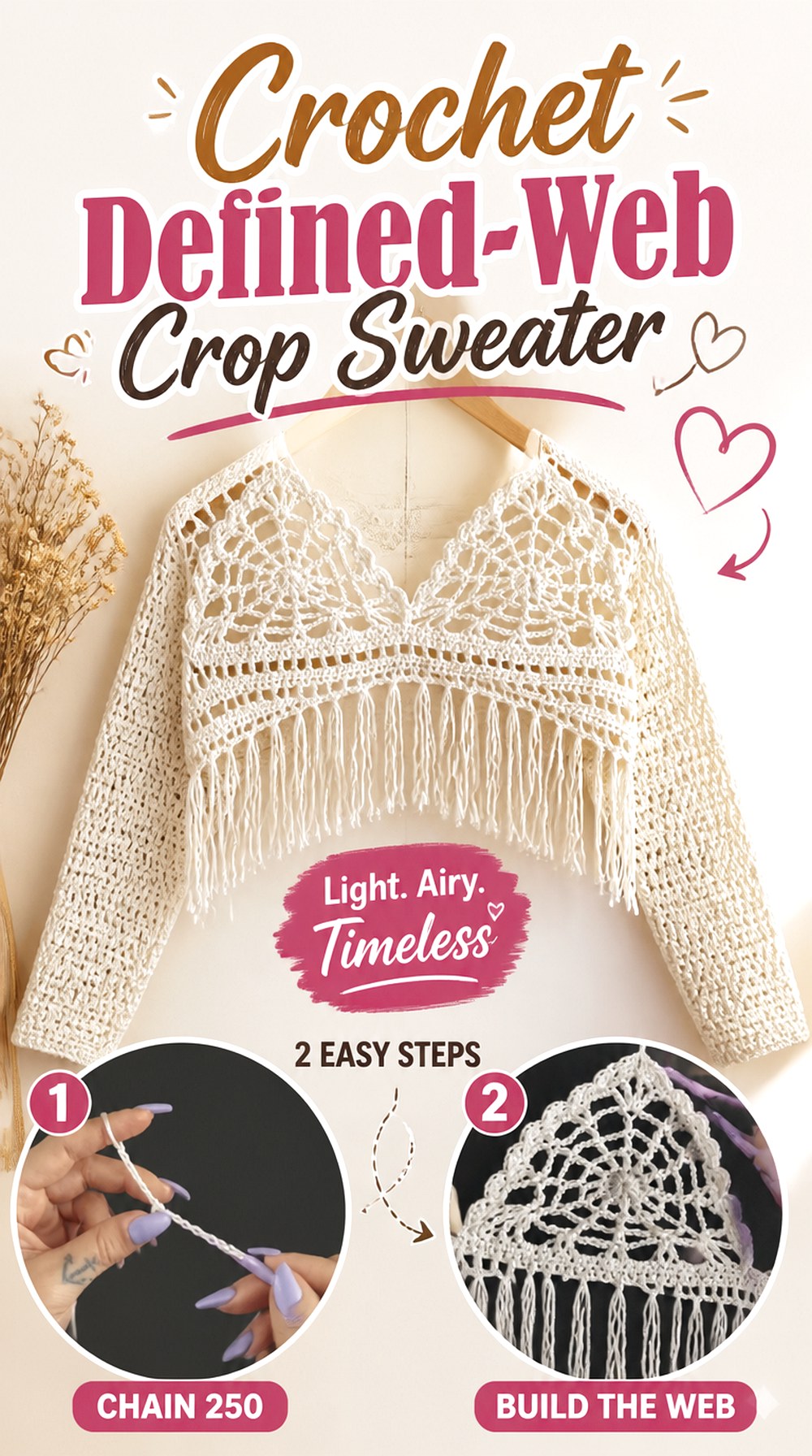
17. Crochet Defined Web Crop Sweater
 SAVE
SAVEMade by BJax’s spiderweb top provides a complete wearable reference with a strong, clearly recognizable web shape. This direction fits between the minimal shrug and fuller sweater options: it keeps the web prominent while avoiding the additional visual weight of a hood or heavily distressed surface.
Choose it when the central geometry is your priority and you want a cropped openwork garment that still feels substantial enough to act as the main feature of an outfit. The simplicity also makes tension differences particularly visible, so inspect the motif as a whole rather than focusing only on individual stitches.
Step Back to Check the Web as One Graphic Shape
Radial motifs can look tidy at close range while appearing uneven from a distance. Periodically place the piece flat or hang it up, then view the entire web rather than inspecting one round at a time.
Look for a center that remains visually centered and spokes that distribute themselves consistently. This kind of broad visual checkpoint is especially valuable before adding garment sections that make the web harder to adjust.
Keep Borders Proportional to the Open Center
A heavy perimeter can visually shrink an airy web by becoming the dominant element. A lighter finish preserves the emphasis on the radial center.
Before repeating an edging around every opening, compare a short section against the completed body. If your eye goes to the border first, decide whether that is an intentional new focal point or an unwanted shift away from the web.
Original Tutorial and Creator Credit
Creator: Made by BJax
18. Crochet Nightcrawler Inspired Spiderweb Sweater
 SAVE
SAVEFay Mberu’s video explicitly describes the project as a spiderweb sweater/top inspired by the Number Nine Nightcrawler sweater and references separate spiderweb motif guidance while developing the garment. That makes this option different from tutorials built around a single self-contained web-top formula.
The appeal is the broader fashion-reference approach: the web becomes part of an alternative sweater concept rather than simply a seasonal symbol. Choose this direction if you are interested in how motif inspiration translates into a wearable silhouette, while relying on the cited original sources for their own exact crochet instructions.
Treat Motif Inspiration and Garment Fit as Separate Decisions
A spiderweb can be visually appealing before you know whether its scale suits a sweater. When translating a motif into clothing, check its actual relationship to shoulder width, body coverage, and the location of joins.
Avoid enlarging the web indefinitely simply because more coverage is needed. At some point, adjusting the garment plan may preserve the motif better than stretching its proportions beyond the look you wanted.
Keep Inspiration From Becoming Visual Overload
A fashion-inspired sweater can carry several strong elements at once, but the web already creates a large graphic field. Additional distress, contrasting trims, and oversized sleeves all compete for attention.
Choose one or two priorities before adding details. A restrained surrounding silhouette can make the web feel more deliberate and preserve the reference without requiring every possible alternative-fashion feature.
Original Tutorial and Creator Credit
Creator: Fay Mberu
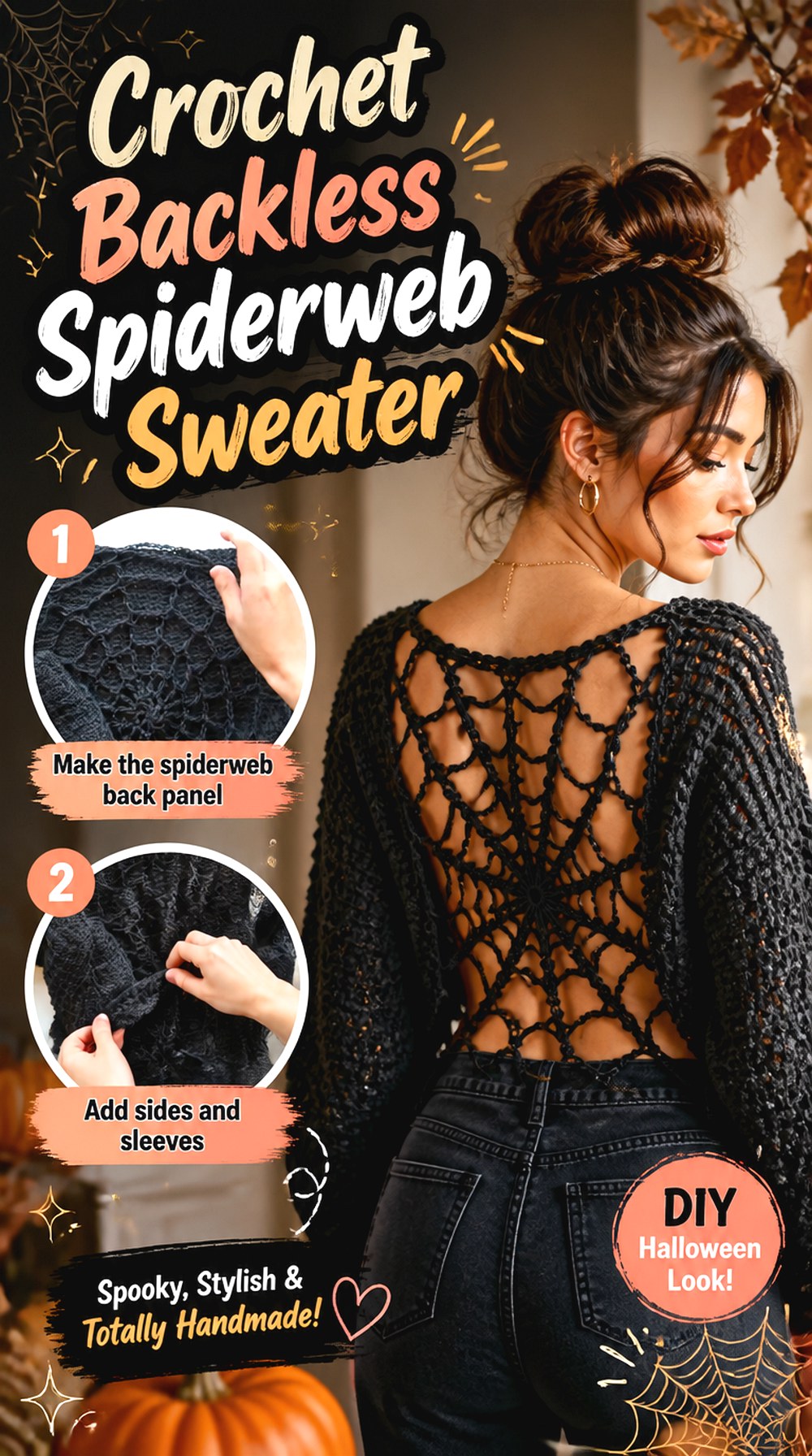
19. Crochet Backless Spiderweb Sweater
 SAVE
SAVEYaejiyea’s project turns the usual spiderweb layout around by making the back the main surprise. The tutorial title describes a backless sweater, and its sections include front and sleeve panels, a back strap area, and the spiderweb back.
This construction is meaningfully different from a standard two-web top because the negative space across the back is part of the garment’s identity. It is well suited to dramatic layering or Halloween styling, but the open back also means support and placement cannot be judged using the same assumptions as a conventional closed sweater.
The Back Web Needs to Stay Centered While Moving
A web framed by open space draws immediate attention to rotation. Check the sweater from behind while standing normally and while moving your arms.
If the motif consistently shifts toward one side, look at how the surrounding shoulder and strap areas are sitting before modifying the decorative web. The supporting garment sections determine whether that focal point stays where it belongs.
Choose the Underlayer Before Finalizing the Effect
A backless sweater can be worn with exposed skin or over another garment, and those choices produce very different appearances. A contrasting shirt turns the web into a strong graphic panel; a closer skin-tone relationship can make the open structure feel more delicate.
Decide which effect you actually want before judging whether the web needs more contrast or detail.
Back Straps Carry More Responsibility Here
When most of the back is intentionally open, the remaining connecting sections become important to stability. Avoid treating those areas as purely decorative.
Follow the creator’s construction for exact placement and check the sweater in motion before making adaptations. Adding weight elsewhere—especially to the sleeves—can change how those smaller supporting sections behave.
Original Tutorial and Creator Credit
Creator: yaejiyea
20. Crochet Spider Man Inspired Spiderweb Sweater
 SAVE
SAVEShyler crochets takes the web theme in a superhero-inspired direction. The associated pattern information describes a long-sleeve spider-web top inspired by Spider-Man imagery, using two main body panels with neckline shaping and web-effect sleeves.
This makes a strong final option for readers who want a recognizable graphic reference rather than a strictly Halloween or gothic sweater. Color can reinforce that association, but the web construction is still strong enough to explore in a different palette. Because the design is presented as made-to-measure in the accompanying pattern information, use the creator’s own fitting method rather than substituting a generic size formula.
Superhero Color Choices Change the Reference Quickly
A red-and-blue direction makes the Spider-Man association more immediate, while black, white, gray, or another palette can move the same general web concept back toward alternative fashion.
Test the colors together in actual openwork. The underlayer will show through the spaces, effectively adding another color to the final composition and potentially changing the contrast more than expected.
Neckline Shaping Deserves Its Own Fit Check
A shaped neckline affects where two body panels settle at the shoulders. Before focusing on sleeve length or decorative finishing, make sure the neck opening sits comfortably and keeps the main web areas in their intended positions.
A neckline that shifts can make an otherwise symmetrical front-and-back concept look uneven once the sweater is worn.
Keep the Long Sleeves in Proportion to the Body
Full web-effect sleeves give this version a more complete sweater silhouette than a sleeveless or cropped web top. That extra coverage also adds fabric hanging from the shoulder area.
Check the garment vertically as the sleeves develop. If they become the heaviest visual element, decide whether that strong arm emphasis supports the superhero-inspired look you want.
Which Spiderweb Sweater Direction Fits Your Goal?
For the least torso coverage, start with the Classic Back-Web Shrug or Witchy Hexagon Shrug. They keep more of the underlayer visible and emphasize shoulders and arms. The Compact Cropped, Defined-Web Crop, and Minimal Spiderweb Layer ideas sit closer to traditional openwork tops.
If sleeves should provide the drama, compare the Bell-Sleeve, Flowy-Sleeve, and Convertible-Sleeve versions. For stronger upper-body presence, the Hooded Spiderweb Sweater adds volume around the neckline, while the Backless Spiderweb Sweater shifts the primary motif behind the wearer.
Choose the Distressed or Nightcrawler-Inspired directions for a more alternative finish, the Heart-Center version for a shaped focal point, the Glow-in-the-Dark project for a lighting-dependent effect, and the Spider-Man-Inspired sweater when the graphic reference is the main appeal.
Conclusion
The strongest crochet spiderweb sweater choice depends on where you want the visual weight. A back-web shrug frames another outfit, a two-panel sweater makes the web the main garment, and bell or flowy sleeves shift attention toward the arms. Hoods increase neckline presence, backless construction exposes more of the underlayer, and heart, distressed, glow, or superhero-inspired details change the theme without making every project structurally identical.
Choose the silhouette first, then compare web placement, shoulder support, sleeve volume, yarn behavior, and desired coverage. Once you have the right direction, use the original creator tutorials linked above for exact construction, sizing, and finishing details.
Frequently Asked Questions
Does a crochet spiderweb sweater fit like a regular solid sweater?
Usually not in exactly the same way. Large open spaces allow a spiderweb garment to stretch and reveal the layer underneath, while the radial construction can distribute tension differently from dense sweater fabric. The fit also varies considerably between shrugs, two-panel tops, backless designs, and hooded versions. Judge each tutorial by its actual finished shape and sizing information rather than transferring expectations from a standard pullover.
What kind of yarn makes a spiderweb design easiest to see?
Web visibility depends on both the yarn and what appears behind it. A material with clear stitch definition can make spokes easier to distinguish, while softer or fuzzier fibers may produce a more diffused appearance. Color contrast with the underlayer is equally important. Before committing to a sweater, make a small visual test with the intended yarn against the clothing you expect to wear beneath it.
How can I keep a large spiderweb centered on the sweater?
Check alignment at several stages instead of waiting until the sleeves and finishing are complete. Compare the center of the web with the neckline, shoulders, and middle of the torso while the garment is hanging naturally. For two-panel projects, compare the sections before joining. If the web shifts when worn, investigate shoulder, strap, or panel balance rather than trying to disguise the problem with decorative edging.
Can I make a spiderweb top tutorial longer and turn it into a sweater?
Sometimes, but extending a wearable is not always as simple as adding more web rounds. A larger motif can change shoulder placement, arm openings, neckline proportions, and overall weight. First determine how the source construction creates its body coverage. If the changes would substantially alter several structural areas, choosing a tutorial that already produces a fuller sweater may be more reliable than heavily modifying a compact top.
What should I consider before adding bell or oversized sleeves?
Check where the extra sleeve volume begins, how much weight hangs from the shoulder, and whether the cuffs suit your intended use. Wider sleeves can look dramatic but may be less convenient under coats or around activities requiring frequent hand movement. Complete enough of one sleeve to evaluate it while the sweater is hanging or worn before repeating the same proportions on the second arm.
What should I wear underneath an open crochet spiderweb sweater?
That depends on the coverage you want and how clearly the web should read. A plain contrasting tank, fitted shirt, dress, or bralette can make the openwork more visible, while a similar-colored layer produces a subtler effect. Because shrugs, backless sweaters, and large two-panel webs expose different areas, test the actual garment over your intended base layer rather than assuming one underlayer works equally well with every style.