Bell sleeves can change the entire balance of a crochet cardigan. A narrow body with a strong cuff flare feels quite different from a relaxed hexagon cardigan, while airy lace, floral mesh, retro contrast trim, and long duster proportions each give the silhouette another direction. That makes this category much broader than simply adding extra width at the wrist.
The 12 ideas below cover cropped, tunic-length, long, fitted, relaxed, textured, motif-based, and made-to-measure approaches. Along with seeing what makes each cardigan distinct, you can compare where sleeve volume begins, how fabric weight may influence drape, and which fit points deserve attention before committing to a full garment. Each project is paired with an original tutorial source for the creator’s actual construction details.
Quick List
- Crochet Cropped Lace Tie-Front Bell Sleeve Cardigan
- Crochet Whimsical Tie-Front Bell Sleeve Cardigan
- Crochet Daisy Mesh Bell Sleeve Cardigan
- Crochet Cropped Hexagon Bell Sleeve Cardigan
- Crochet Retro Tunic Bell Sleeve Cardigan
- Crochet Star-Band Bell Sleeve Cardigan
- Crochet Wide-Sleeve Panel Tie Cardigan
- Crochet Made-to-Measure Lacy Bell Sleeve Cardigan
- Crochet Soft-Texture Bell Sleeve Cardigan
- Crochet Asymmetrical Long Bell Sleeve Cardigan
- Crochet Faux-Fur-Collar Bell Sleeve Cardigan
- Crochet Sunflower Duster Bell Sleeve Cardigan
Choose the Sleeve Flare Around How You Will Wear the Cardigan
Not every bell sleeve creates the same amount of volume. A flare concentrated near the wrist generally leaves more of the arm relatively streamlined, while a sleeve that widens earlier produces a stronger statement silhouette. Before choosing between them, think about where the cardigan will actually be worn.
Very wide cuffs can look striking for an occasion layer, but extra fabric may be less convenient around desks, food preparation, open flames, or tasks where a loose cuff could catch on something. A cropped cardigan can visually balance substantial sleeves because there is less volume through the body. On a long cardigan or duster, a controlled flare may keep the garment from feeling overwhelmingly wide.
Sleeve length matters too. Check where the finished cuff is intended to fall rather than assuming a tutorial’s sample proportions will suit your arms. Altering length before the most pronounced flare is usually easier to plan than trying to correct an oversized cuff after finishing.
Match Yarn Behavior to the Silhouette
Bell sleeves add fabric precisely where gravity has the most leverage, so yarn choice affects more than surface appearance. A light, open fabric can emphasize movement and drape, while a denser fabric generally produces a more defined sleeve outline. Neither is automatically better; they simply create different results.
When substituting yarn, compare the tutorial’s recommended weight and the behavior of your swatch rather than relying on weight category alone. A fluffy yarn can visually enlarge an already generous sleeve. A smooth yarn may make lace or mesh openings more obvious. Fibers and stitch patterns that relax substantially after washing can also change sleeve length or cuff depth.
For a wearable, swatching is particularly useful because you can judge both gauge and fabric character. Let the swatch hang vertically for a while if the intended cardigan has long panels or generous sleeves. Care should follow the yarn label and any guidance supplied by the original designer, especially when trims or mixed materials are involved.
Check the Body Fit Before Focusing on the Bell Sleeve
The sleeve may be the focal point, but a cardigan still has to sit correctly through the shoulders, armholes, bust, and upper arms. If those areas are too restrictive, enlarging the bell at the cuff will not solve the fit problem. If they are excessively loose, the combined body and sleeve volume may obscure the intended silhouette.
Compare your measurements with the designer’s finished measurements or sizing method whenever those details are provided. For made-to-measure tutorials, identify exactly where the creator expects you to measure instead of assuming that adding width in one panel will scale every part proportionally.
Layering also changes the decision. A cardigan intended over a fitted tank can tolerate a different amount of ease from one meant to sit over sweaters. Before completing both sleeves, check shoulder placement, arm movement, upper-arm comfort, and the point where the flare begins. Those checkpoints give you a better chance of preserving both comfort and the intended visual balance.
1. Crochet Cropped Lace Tie Front Bell Sleeve Cardigan
 SAVE
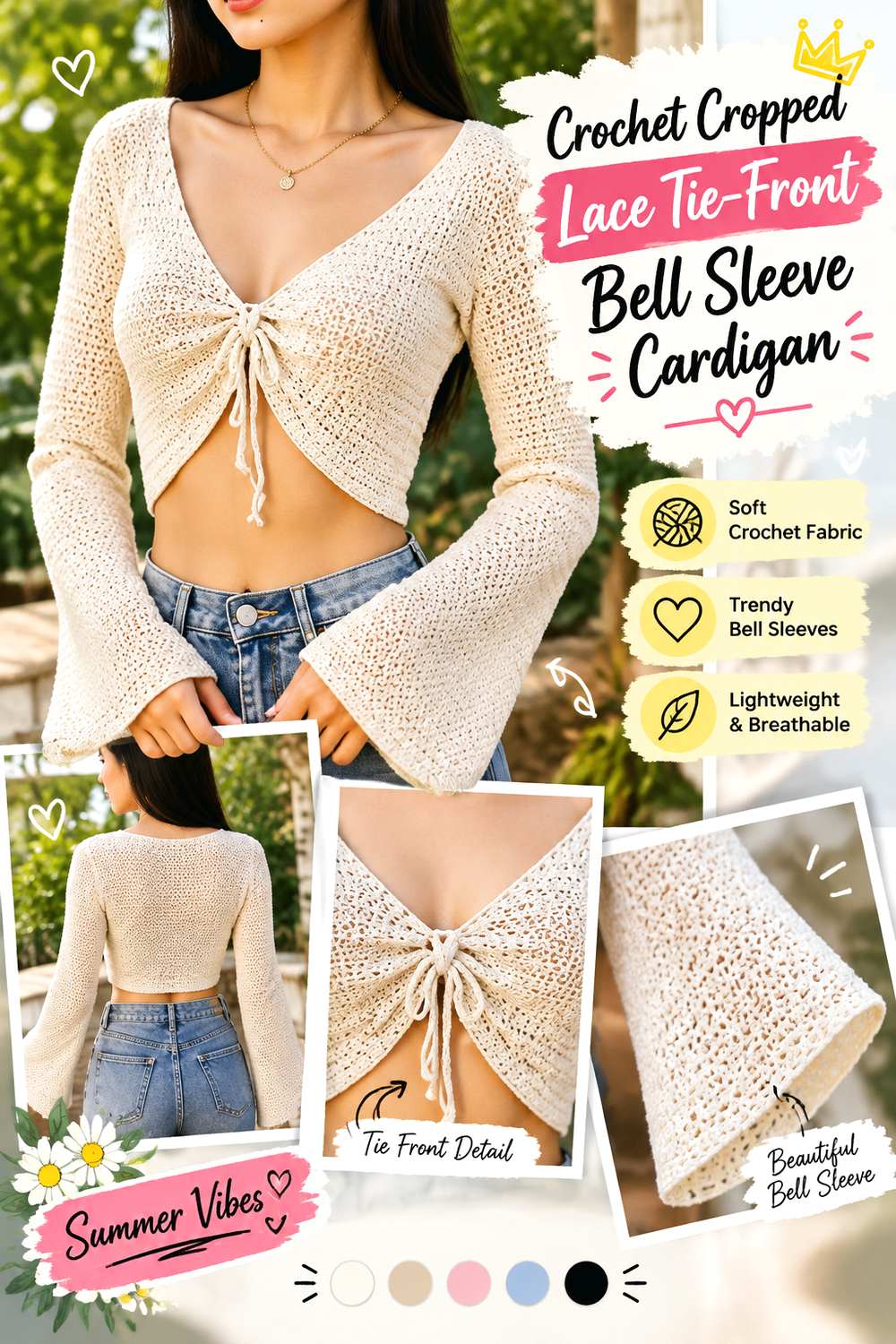
SAVEThis cropped cardigan puts several light, expressive elements together: an open lace-like fabric, a short body, substantial bell sleeves, and a front tie rather than a full buttoned closure. Chenda DIY’s tutorial demonstrates separate front and back portions, the sleeve construction, and the final front tie, making the silhouette easy to recognize without turning the layer into a conventional fitted cardigan.
The short body keeps the sleeves visually dominant and makes the design particularly suited to layering over a simple fitted top or dress. Because both the fabric and front opening are relatively light, this is a cardigan where drape and proportion matter more than creating a rigid outer layer.
Let the Cropped Length Balance the Cuffs
A strong sleeve flare adds width near the hands, while a cropped hem removes visual weight lower on the torso. That contrast is part of what makes this version distinctive. When considering an adjustment, look at body length and sleeve volume together rather than treating them as independent features.
Lengthening the torso significantly can alter that balance. If you want extra coverage, compare the cardigan at several possible hem positions before deciding how much additional fabric suits the flare.
Treat the Front Tie as a Styling Closure
A tie front does not behave like a row of buttons or a zipper. It creates a single point of control while allowing the rest of the opening to move freely. Check where that tie lands on your own torso and whether you want the cardigan worn loosely closed or mainly open.
Avoid assuming the tie should pull the two fronts tightly together. Too much tension can distort an airy fabric or make the front edges angle unexpectedly.
Watch the Weight of an Open Sleeve
Lace does not necessarily mean a sleeve will stay weightless. The flare still adds yarn, and a long cuff can pull downward as the garment hangs. A swatch can help you judge whether your chosen yarn produces the fluid effect you want without making the sleeve noticeably heavy.
If substituting yarn, preserve the source’s gauge logic and check the finished sleeve length against your arm before completing the second one.
Original Tutorial and Creator Credit
Creator: Chenda DIY
2. Crochet Whimsical Tie Front Bell Sleeve Cardigan
 SAVE
SAVEHannah Drapinski’s cardigan takes the tie-front idea in a more textural, playful direction. The video builds the garment through a back panel, shoulder and side sections, border, bell sleeves, and a front tie; it also demonstrates an alternative straight-sleeve version, which makes the effect of the bell shape particularly easy to compare.
This design works well for someone who wants a handmade layer where the stitch texture and silhouette both contribute to the personality of the piece. Rather than behaving like a structured jacket, the open front and decorative sleeve volume make it better understood as an expressive layering cardigan.
Compare the Bell and Straight-Sleeve Silhouettes
The source’s alternate sleeve treatment provides a useful design lesson: changing only the sleeve profile can shift the entire cardigan from dramatic to more restrained. Before committing to the flare, decide whether you want the sleeves to be the first feature people notice.
If you frequently layer cardigans under coats, also consider the practical difference. A straighter sleeve typically occupies less space, while a bell sleeve needs room to retain its shape rather than bunching inside another layer.
Keep the Side Seams From Becoming the Fit Bottleneck
With a cardigan assembled from several body sections, the width around the bust and upper torso deserves attention before the decorative sleeve is finished. Pinning or temporarily joining sections can help reveal whether the sides allow comfortable movement.
Check the garment with your arms both down and raised. A cardigan can look roomy while standing still yet feel restrictive if the armhole or side placement is too tight.
Use Color Changes to Support, Not Hide, Texture
This style can accommodate playful color choices, but frequent changes are not the only way to make the fabric interesting. If the stitch pattern already creates strong texture, a limited palette can make those details easier to read.
With multiple colors, examine the cardigan from several feet away before finalizing the whole garment. Strong contrast around a wide cuff naturally attracts attention, so decide whether that emphasis supports your intended look.
Original Tutorial and Creator Credit
Creator: Hannah Drapinski
3. Crochet Daisy Mesh Bell Sleeve Cardigan
 SAVE
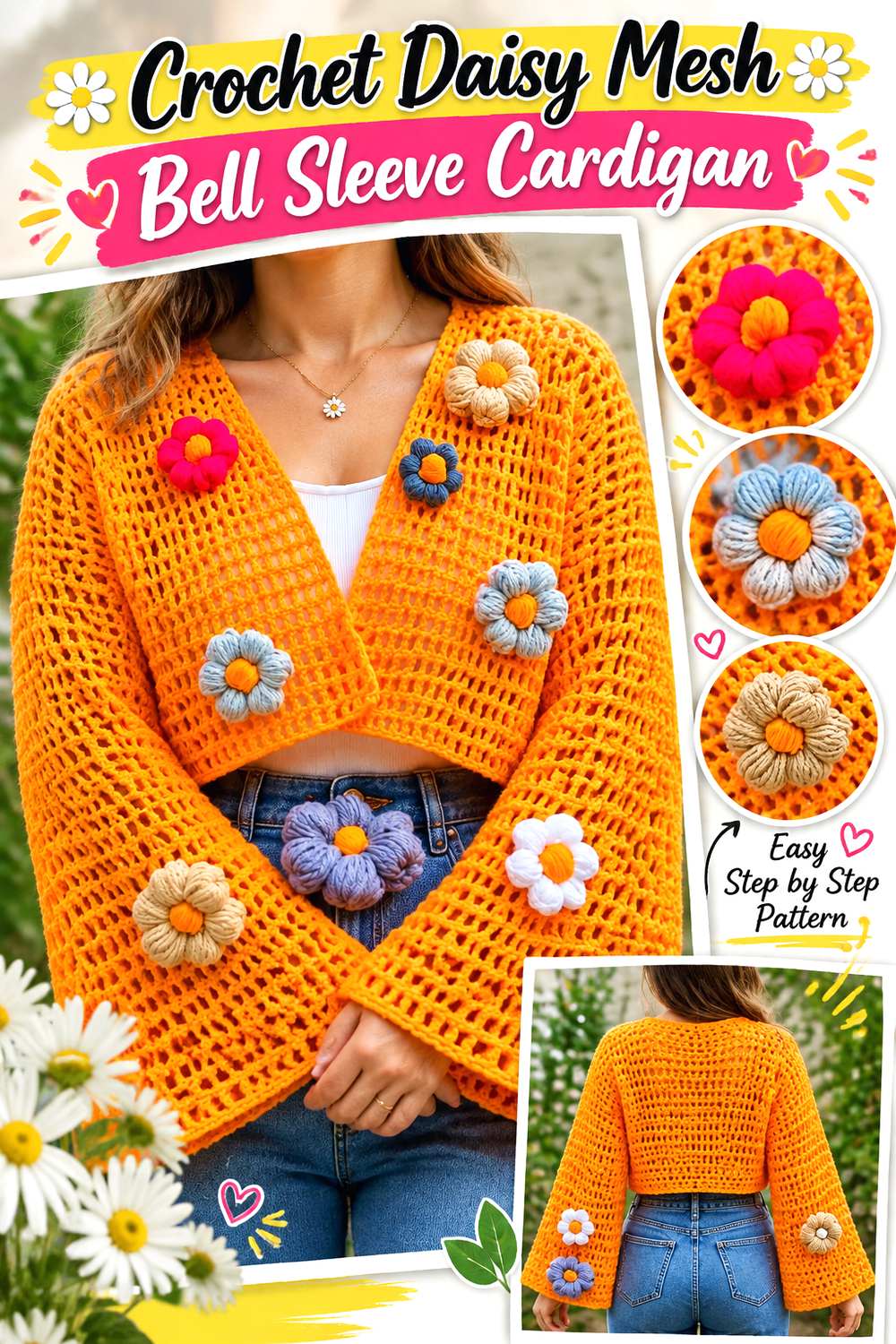
SAVEThis option combines an open mesh cardigan with bell sleeves and decorative floral details. Zx Crochets presents the project as a mesh bell-sleeve cardigan, while the accompanying description identifies the daisy treatment and points to the flower element used with the garment.
The result is visually lighter than a dense cardigan even though the flared sleeves still create substantial movement. Mesh also makes the layer underneath part of the final outfit, so this design suits readers who want a cardigan that adds pattern and shape without completely covering the clothing beneath it. The flowers introduce a second focal point beyond the sleeves and can change how playful or understated the final cardigan appears.
Plan Floral Placement Before Attaching Motifs
Decorative flowers can look balanced when their spacing is considered across the complete garment rather than one section at a time. Lay the cardigan flat and test motif positions before permanently attaching anything.
Pay particular attention to the relationship between the flowers and the bell sleeves. If both are concentrated in the same area, the cuffs become the dominant focal point; spreading motifs elsewhere can distribute visual interest more evenly.
Mesh Makes Layering Part of the Design
An open stitch structure reveals the garment underneath, so consider color and coverage together. A contrasting base layer makes the mesh pattern more obvious, while a similar color can produce a quieter effect.
Open fabric can also snag more readily than a compact stitch pattern. Jewelry, bag hardware, and rough surfaces deserve extra care, particularly around wide sleeves that may brush against objects more often.
Check Sleeve Expansion Against Mesh Stretch
Mesh can respond differently to hanging weight than dense fabric because much of its structure depends on open spaces. Before extending the flare aggressively, let your sample fabric hang and observe whether the openings elongate.
The goal is not to eliminate stretch completely, but to understand it before fixing the final sleeve length. Compare both cuffs after the garment has rested so one sleeve does not finish visibly longer than the other.
Original Tutorial and Creator Credit
Creator: Zx Crochets
4. Crochet Cropped Hexagon Bell Sleeve Cardigan
 SAVE
SAVEA hexagon cardigan creates its shape differently from the panel-based projects in this list. AstroKnotty’s tutorial begins with two hexagon sections, folds and joins them into the garment structure, and demonstrates both a straight sleeve extension and a flare. The creator also explains how the torso can be lengthened without simply enlarging the sleeve opening.
That construction makes this a strong choice for readers drawn to granny-style geometry and relaxed shaping. The cropped sample keeps the form compact, while the bell cuff adds extra movement at the arm. Because a hexagon changes several dimensions as it grows, thoughtful measuring matters more than continuing the motif until it merely “looks big enough.”
Understand What Expanding the Hexagon Changes
One of the most useful checkpoints with this construction is recognizing that growth can affect multiple parts of the garment simultaneously. Making a hexagon larger is not always equivalent to adding only bust width or only body length.
Use the creator’s sizing explanation and repeatedly fold the work into cardigan form. That allows you to inspect the arm opening and torso coverage as separate fit concerns before committing to further expansion.
Add Length Without Losing the Cropped Proportion
The source specifically distinguishes torso extension from indiscriminately enlarging the base hexagon. That is useful if you like the sleeve opening but want more body coverage.
Before lengthening, decide where you actually want the hem to sit. A modest extension may preserve the cropped, sleeve-forward look; a much longer body starts moving the cardigan toward a relaxed jacket silhouette and changes its overall balance.
Keep Granny Fabric Consistent at the Join
Hexagon cardigans place visual emphasis on repeated clusters and directional lines. Uneven tension becomes especially noticeable where two halves meet or where an extension changes direction.
Lay both halves side by side periodically and compare their dimensions rather than relying only on stitch counts from memory. If one piece has relaxed more than the other, address that difference before seaming and adding the final flare.
Original Tutorial and Creator Credit
Creator: AstroKnotty
5. Crochet Retro Tunic Bell Sleeve Cardigan
 SAVE
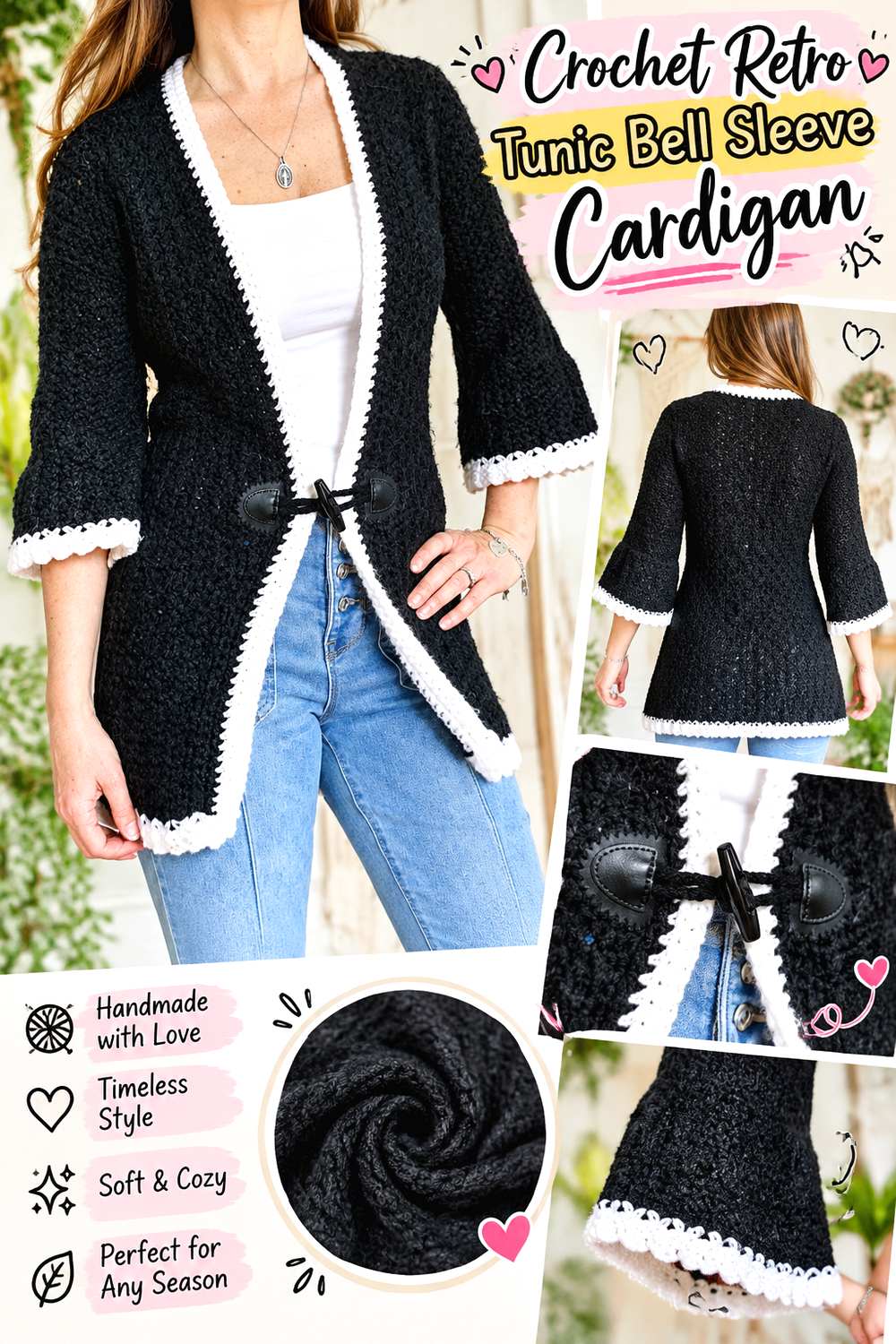
SAVEA BOX OF TWINE’s retro cardigan shifts the silhouette away from cropped festival styling and toward a longer 1960s-inspired layer. The original pattern uses an open V-stitch texture, tunic-length body, bell sleeves, and contrasting trim; it is written across seven sizes and builds the main body from separate panels before adding the sleeves.
The contrast edging gives the flare a particularly clear outline, so the sleeve shape remains visible even when body and sleeve use the same main color. This is a useful choice for someone who wants vintage influence without relying on floral motifs or a very open tie front.
Contrast Trim Can Control the Visual Emphasis
A contrasting cuff acts almost like a frame around the widest point of the sleeve. High contrast makes the bell appear even stronger, while closely related colors can retain the retro detail without drawing quite as much attention to the hands.
Preview color combinations with small yarn lengths beside your swatch. The same trim color also appears elsewhere in the design, so judge the palette as a complete cardigan rather than selecting the cuff in isolation.
Use the Published Sizing Rather Than Guessing Width
Unlike made-to-measure projects, this source provides a defined size range and finished-measurement information. Compare those finished dimensions with a cardigan you already like rather than choosing solely from the size label you normally purchase.
Pay attention to the amount of ease you personally prefer. If you change gauge or yarn substantially, the written sizing no longer guarantees the same finished dimensions, making a proper swatch particularly important.
Keep Long Panels Aligned During Assembly
A tunic-length cardigan gives small discrepancies more room to become visible. Before seaming, place the front pieces against the back and confirm that corresponding edges and hems align as expected.
Do the same comparison with both sleeves. Even when each piece was crocheted from the same instructions, tension can drift over a long project. Correcting a mismatch before final assembly is usually cleaner than trying to disguise it with edging afterward.
Original Tutorial and Creator Credit
Creator/Site: A BOX OF TWINE
6. Crochet Star Band Bell Sleeve Cardigan
 SAVE
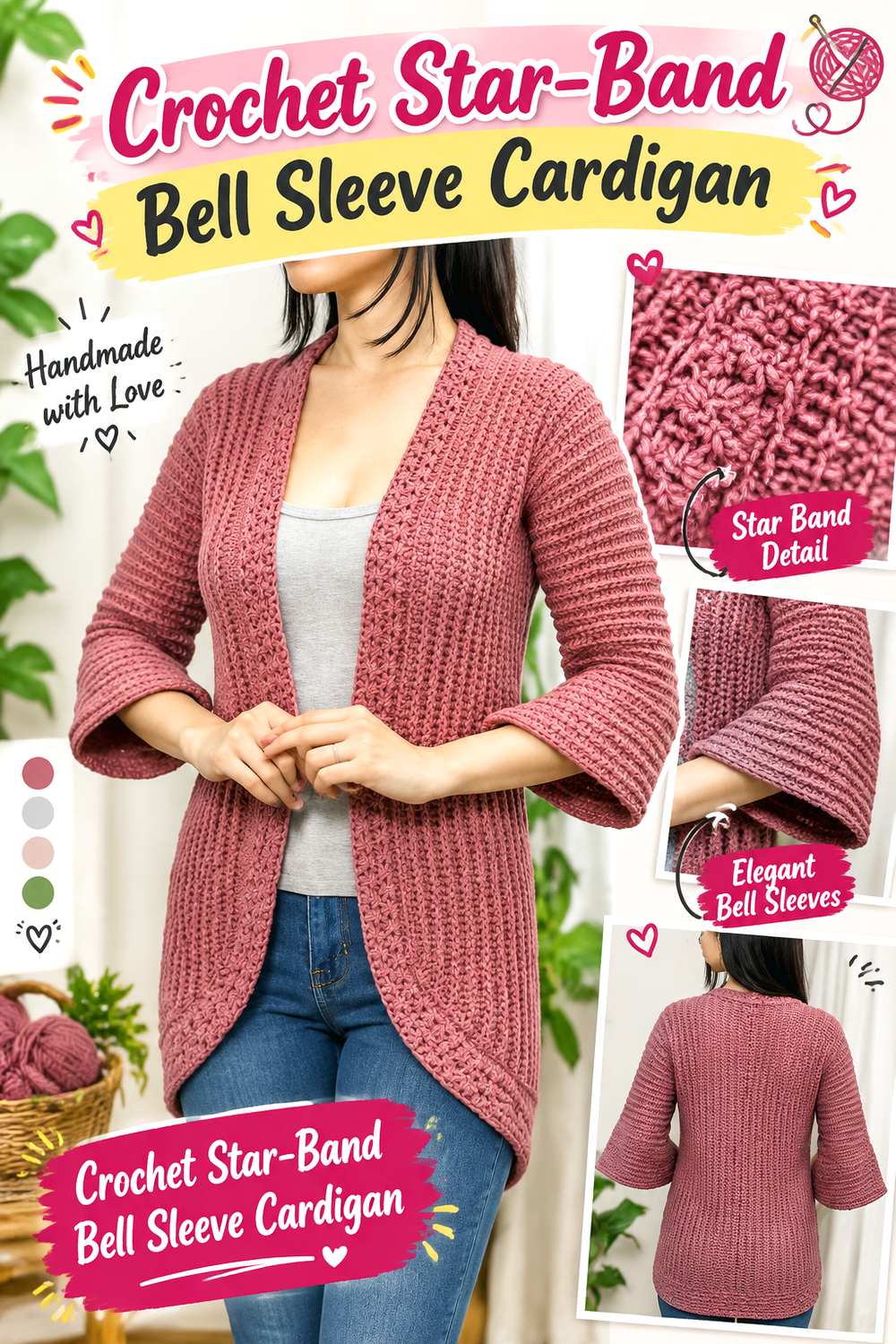
SAVETCDDIY’s bell-sleeve cardigan offers a more substantial panel-built alternative, with separate fronts and back, seaming, a bell-sleeve section, and a star-stitch detail incorporated into the front band. The decorative band distinguishes the center opening rather than placing every visual feature at the cuffs.
That distribution makes the cardigan useful for readers who like dramatic sleeves but still want the front edge to carry noticeable texture. It also creates a different visual rhythm from mesh and granny-based options: the body can read more solidly while the border provides a concentrated decorative feature.
Give the Front Band Enough Attention
A decorative front band frames the face and runs along one of the most visible edges of an open cardigan. Uneven tension there can cause rippling even when the main body lies flat.
Before completing the full band, check whether your working tension lets the edge relax naturally. If it pulls inward or spreads outward noticeably, confirm your stitch placement and gauge against the creator’s tutorial rather than hoping blocking will correct a major discrepancy.
Check the Sleeve at the Upper Arm First
The widest cuff may attract the eye, but the upper sleeve determines whether the cardigan can be worn comfortably. Try the body on or compare the armhole against a well-fitting garment before completing both sleeves.
A flare should add room lower down, not compensate for restriction at the upper arm. If you need a fit adjustment, determine whether the source provides an appropriate sizing method before altering the sleeve independently.
Let the Border and Cuff Share the Work
Because this cardigan has visible detail at both the front edge and sleeves, additional embellishment may not be necessary. Too many strong decorative areas can make the shape harder to read.
If you plan color changes, try placing the yarns beside the nearly finished garment first. A subtle front band with a stronger cuff creates a different effect from repeating the same high-contrast treatment around every edge.
Original Tutorial and Creator Credit
Creator: TCDDIY
7. Crochet Wide Sleeve Panel Tie Cardigan
 SAVE
SAVEThe by Kristine tutorial approaches the bell-sleeve cardigan as an approachable panel project with a front tie, broad sleeve volume, borders, and straps added as part of the finishing. The video walks through the separate garment components and their connection rather than relying on motif assembly.
Compared with the finer cropped lace option earlier in this list, this version reads more strongly through broad fabric sections and its wide sleeve silhouette. It is a useful reference if you like an open-front cardigan but want the fabric itself to have more visual presence than an extremely delicate lace layer.
Decide How Much Width You Want at Rest
A wide sleeve looks different when the arm hangs naturally than when it is extended for a photograph. Assess your intended flare with your arms relaxed at your sides.
If the cuff collapses into heavy folds, your yarn may be producing more weight than expected. If it remains very rigid, the fabric may be stiffer than the silhouette you had in mind. Swatching helps expose that difference before two full sleeves are completed.
Keep the Tie Proportional to the Body
A front tie is a small part of the yarn usage but a noticeable part of the finished styling. A very fine tie can disappear visually against substantial body panels, while an overly bulky one may pull the front edges out of shape.
Follow the source for the intended construction, then judge placement on the finished body. The best checkpoint is how the cardigan sits both tied and untied, since many wearers will use it both ways.
Inspect Border Tension Before Fastening Off
Edging can stabilize an opening, but it can also introduce waves or draw the edge inward. Spread the cardigan flat after working a manageable section of border and check whether it follows the body naturally.
Do not rely on aggressive blocking to correct a border that is significantly too tight. If the edge visibly distorts the front panels, revisiting stitch spacing while the work is still active is the safer correction.
Original Tutorial and Creator Credit
Creator: by Kristine
8. Crochet Made To Measure Lacy Bell Sleeve Cardigan
 SAVE
SAVEAlona crochets presents a lightweight lacy cardigan designed around the maker’s own measurements rather than relying exclusively on a fixed set of garment sizes. The tutorial describes the project as made to measure and uses a light, airy fabric with bell sleeves.
That makes this option particularly relevant for readers who often fall between standard pattern sizes or who want more control over body and sleeve proportions. Made-to-measure does not mean fit becomes automatic, however. It places more responsibility on the maker to measure consistently and understand where each dimension is being applied.
Record Measurements Before Starting
When a tutorial depends on personal measurements, write them down rather than repeatedly measuring from memory. Note whether a value refers to the body itself or to the intended finished garment.
That distinction matters because a cardigan generally needs room for movement and possibly layering. Follow the creator’s method for translating measurements into the project; do not add arbitrary extra width unless you understand how it affects the rest of the construction.
Recheck Fit Before the Flare Expands
The straight or narrower portion of the sleeve establishes upper-arm comfort and the location where the bell begins. Check that section while it is still practical to change.
Look at sleeve length from the shoulder as well as from the wrist. A flare beginning too high can dominate the arm, while one beginning too low may read more like a wide cuff than a full bell sleeve. The intended tutorial proportions should remain your primary reference.
Preserve Airiness When Substituting Yarn
The source specifically presents the cardigan as lightweight and lacy. A much heavier or stiffer substitution may reproduce the measurements yet produce a garment with completely different movement.
Make a sufficiently large swatch to see the openings and drape clearly. If the fabric feels rigid in your hand, enlarging the cardigan will not necessarily recreate the airy effect; yarn behavior and gauge need consideration together.
Original Tutorial and Creator Credit
Creator: Alona crochets
9. Crochet Soft Texture Bell Sleeve Cardigan
 SAVE
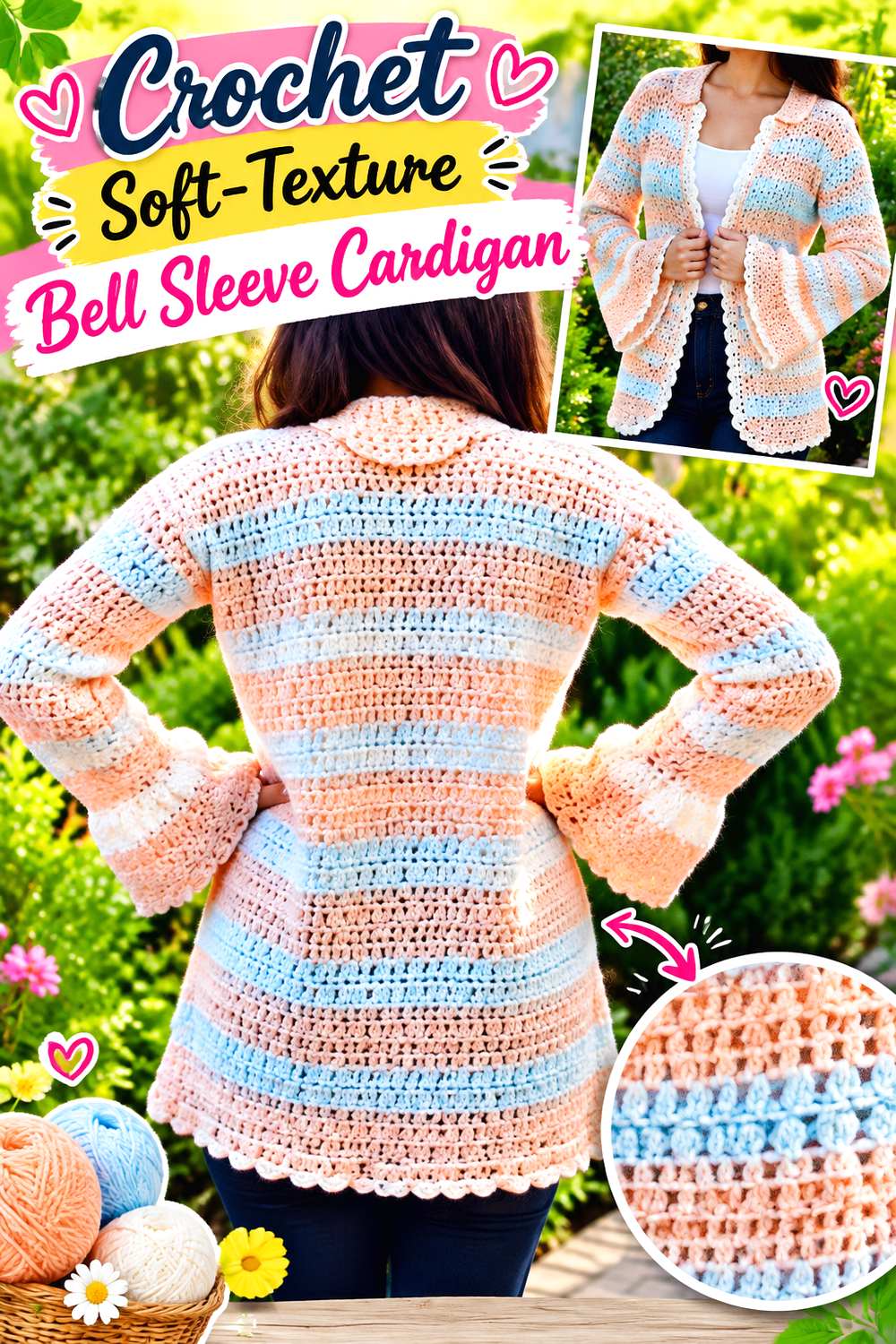
SAVERoxi crochet’s cardigan introduces another variable: a visibly soft, somewhat fluffy yarn texture. The creator describes the sample yarn as similar to bouclé and explains that the cardigan can be adapted to different sizes through the information in the tutorial.
That surface changes the personality of a bell sleeve considerably. Instead of emphasizing crisp stitch definition, a halo or looped texture can soften edges and make the whole garment appear fuller. It can be appealing for a plush, tactile layer, but the yarn itself deserves careful consideration because highly textured fibers can make individual stitches harder to see during both crocheting and correction.
Expect Texture to Change the Apparent Volume
A fluffy yarn occupies visual space beyond the actual stitch structure. On a straight sleeve that may be subtle; on an already flared sleeve, the effect can be much stronger.
Before deciding how dramatic you want the cuff, hold the swatch at arm’s length rather than judging it only close up. You may find that a moderate physical flare looks more substantial once the yarn’s surface texture is taken into account.
Make Corrections Before the Fabric Gets Large
Bouclé-like or fuzzy yarns can make individual loops less obvious, which may complicate ripping back or locating an error several rows later. Count and inspect your work at regular intervals.
Stitch markers can be useful at important transition points even when the original tutorial does not require them for every section. The purpose is simply to make your own checkpoints easier to find in a fabric where stitch anatomy is less visually distinct.
Compare Weight as Well as Softness
Two fluffy yarns can feel similar in a skein yet behave differently in a full garment. A heavy substitute combined with generous bell sleeves can increase downward pull at the shoulder and cuff.
Use the source’s yarn information as your starting reference, then swatch your substitute. If care instructions differ, follow the label for the yarn you actually use rather than assuming the finished cardigan can be treated exactly like the sample.
Original Tutorial and Creator Credit
Creator: Roxi crochet
10. Crochet Asymmetrical Long Bell Sleeve Cardigan
 SAVE
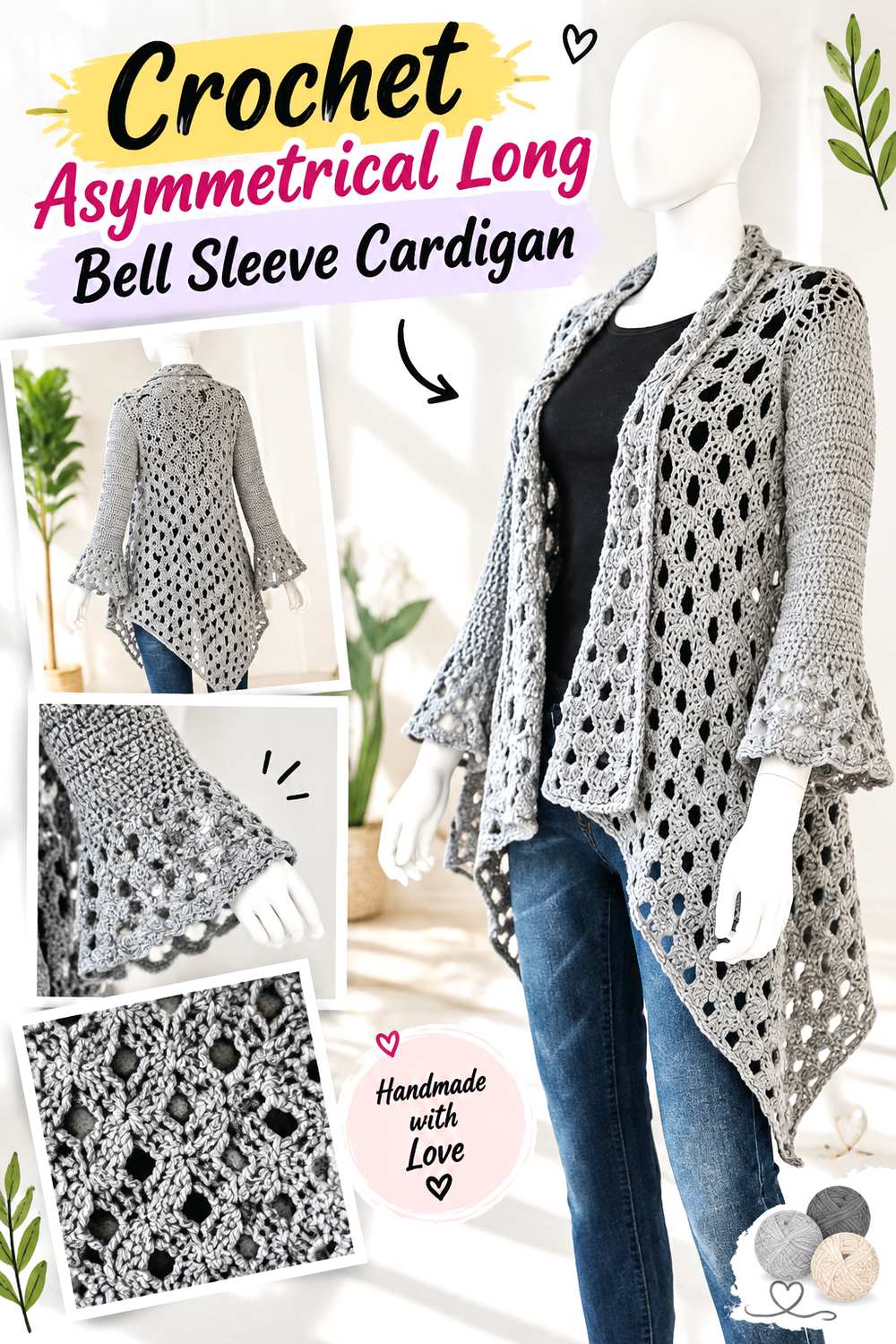
SAVECrochetDreamz’s Grace cardigan moves firmly into long-layer territory. The original designer page shows a lacy cardigan with an asymmetrical hem, bell sleeves, shawl-style front treatment, and a construction based on a rectangle with openings for the sleeves; the sleeves are worked directly onto the body rather than sewn on as separate pieces.
Its length and uneven hem create movement through the entire garment, not only at the cuffs. That makes this a useful alternative to cropped or tunic styles for readers who want a flowing statement layer. The designer also discusses using a relatively light yarn-and-hook combination to obtain the intended drape.
Let the Hem Hang Before Judging Length
An asymmetrical hem can be misleading when the cardigan is spread flat. Evaluate it vertically, because that is how gravity will shape the finished garment.
If you substitute yarn, let your swatch and partially completed body hang before deciding that the length needs extending. Additional weight may cause the fabric to settle more than expected, particularly in an open stitch pattern.
Keep the Shawl Area Fluid
The front treatment contributes substantially to the flowing appearance. A yarn that creates a rigid fabric may cause the edge to stand away from the body rather than fall naturally.
When comparing substitutions, bend and fold the swatch rather than evaluating only its dimensions. The fabric should have the flexibility appropriate to the look you want while still maintaining enough integrity for a long wearable.
Avoid Overloading an Already Dramatic Shape
Long length, asymmetry, lace, and bell sleeves already provide multiple visual features. Additional embellishment can work, but it will compete with the existing movement of the garment.
If you want to customize color, consider using the silhouette itself as the focal point. A relatively simple palette can make the hem line and sleeve shape easier to appreciate without reducing the cardigan’s impact.
Original Tutorial and Creator Credit
Creator/Site: CrochetDreamz
11. Crochet Faux Fur Collar Bell Sleeve Cardigan
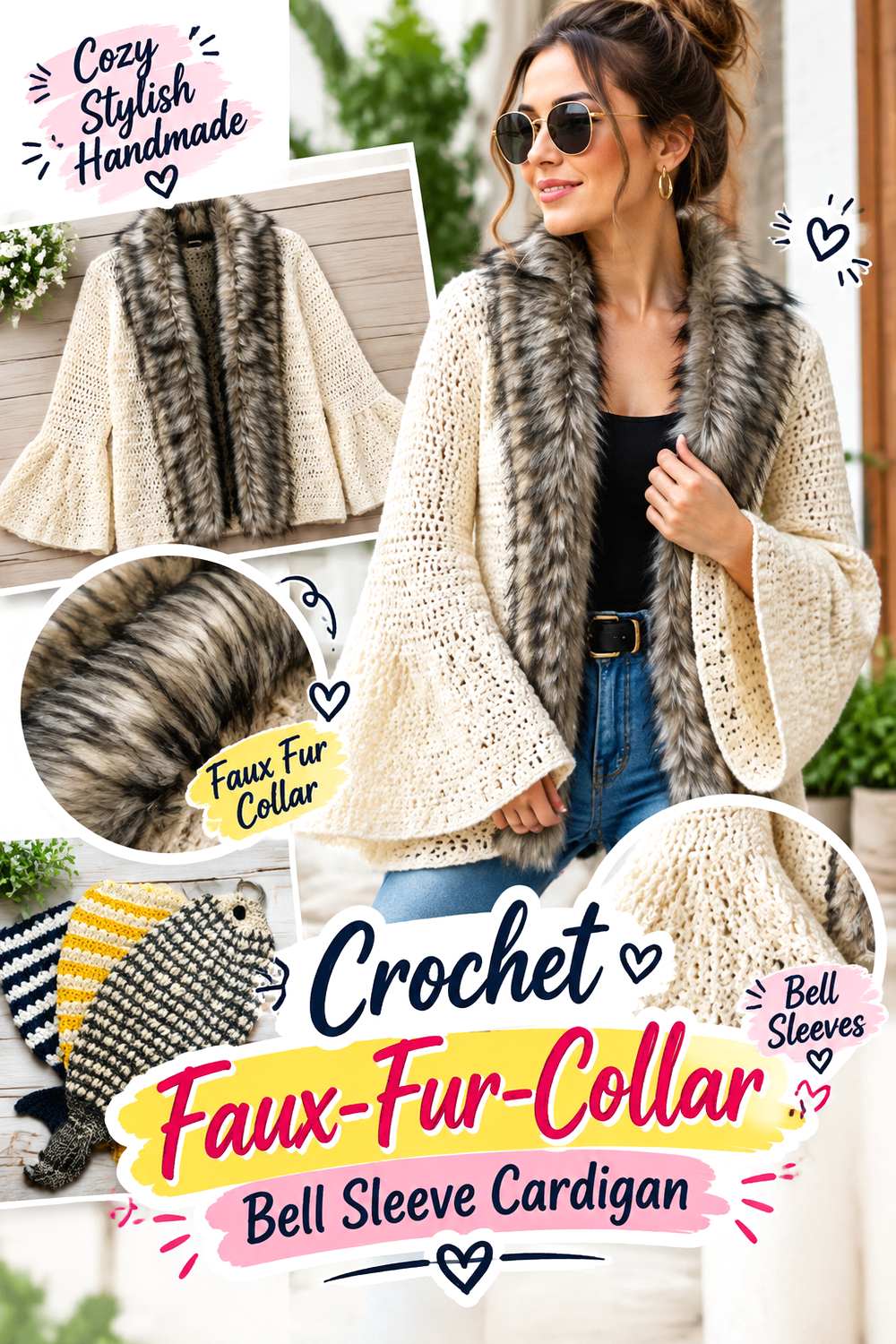 SAVE
SAVELive Chill Life pairs bell sleeves with a detachable faux-fur collar, creating a cardigan with a more structured, dressy character than the airy summer layers in this roundup. The designer page discusses the removable collar, a stitch choice intended to resist stretching, vertical ribbing, and options for full-length or bracelet-length sleeves. A complete video tutorial is also included with the pattern information.
Because the collar and cuffs both attract attention, this cardigan works as a useful example of balancing two strong design features. It can read as a statement jacket rather than a simple open crochet layer, especially when a textured or sparkling yarn is used.
Decide on Sleeve Length With the Collar Attached
A bracelet-length bell sleeve can expose more of the wrist and visually lighten a substantial collar. A full-length version creates more continuous coverage and can make the overall silhouette feel richer.
When choosing between them, view the garment as a whole. Pin or temporarily position the collar while checking sleeve length so you are not making that decision based on an unfinished body that lacks one of its major features.
A Detachable Trim Changes Care Planning
Removable trim is useful because mixed materials do not always share the same care requirements. The source specifically treats the faux-fur collar as detachable and discusses attachment options.
Follow the yarn label, trim instructions, and designer guidance rather than washing all components together by default. Also make sure any attachment method is secure during wear while remaining practical to remove when necessary.
Structure Makes Gauge More Noticeable
A cardigan designed to hold a defined shape leaves less room for an unintended loose, sagging fabric to pass unnoticed. If your yarn substitution produces more stretch than the sample fabric, the fit and front edges can change.
Swatch before committing to the full garment and compare the washed or rested fabric with the pattern gauge. Sleeve flare can remain dramatic without requiring the upper body to become equally loose.
Original Tutorial and Creator Credit
Creator/Site: Live Chill Life
12. Crochet Sunflower Duster Bell Sleeve Cardigan
 SAVE
SAVEFor the most decorative long-form option, Faith Mason’s patterncrochet tutorial presents an open-front sunflower duster with a long coat-like body, flared sleeves, and sunflower motifs used around the hem and cuffs. The page treats the garment as a made-to-measure project and includes substantial construction, fitting, motif-placement, and finishing guidance.
Unlike the daisy mesh cardigan, where motifs sit against an airy open fabric, this design uses floral decoration as a border on a much longer garment. That gives the motifs architectural importance: they visually anchor both the bottom edge and the sleeve flare rather than functioning only as scattered embellishment.
Block Motifs Before Final Placement
Individual motifs that differ slightly in diameter can create puckering when several are attached along one long edge. Arrange and shape them before sewing so you can compare their finished size rather than relying on how they looked immediately off the hook.
Pin the entire motif arrangement in place before committing. This makes it easier to identify awkward gaps or a border that begins drifting off-center across the hem.
Long Dusters Magnify Small Alignment Errors
A slight difference between front-panel lengths may be barely noticeable on a crop but much easier to see on a garment extending toward the knees or lower. Compare panels frequently as the body develops.
The same applies to the two sleeves. Before adding the flower treatment, confirm that their base length and flare look symmetrical. Decorative cuffs are much easier to position once the underlying garment is already balanced.
Keep Floral Weight From Distorting the Edge
Motifs add their own yarn weight to the hem and cuffs. If your chosen flowers are substantially heavier than the body fabric, the decorated edges may hang differently from the undecorated sections.
Lay the motifs in place and suspend the garment briefly before attaching everything permanently. If the body begins stretching noticeably, reconsider motif density, yarn choice, or the adaptation rather than assuming the final border will behave like the tutorial sample.
Original Tutorial and Creator Credit
Creator/Site: Faith Mason / patterncrochet
How to Choose Between These Bell Sleeve Cardigan Styles
For maximum sleeve impact with relatively little body volume, the cropped lace, whimsical tie-front, or cropped hexagon options keep attention close to the arms. The mesh and made-to-measure lace cardigans emphasize airflow and layering, while the retro V-stitch and star-band versions offer more defined body structure and edging details.
If you prefer a substantial statement layer, the asymmetrical Grace cardigan, faux-fur-collar design, and sunflower duster create drama through length or added features as well as sleeve flare. The best choice therefore depends less on which bell sleeve is widest and more on how much volume, texture, decoration, and body coverage you want to manage in one garment.
Conclusion
Bell sleeves can belong to far more than one crochet aesthetic. They can finish a delicate cropped lace cardigan, extend naturally from granny-style hexagons, sharpen a retro tunic silhouette, soften a fluffy textured layer, or become part of a dramatic floral duster. The most useful choice is the one where sleeve volume works with the body length, fabric weight, closure, and intended amount of layering.
Before starting, compare the project’s sizing method with your measurements and consider how the yarn behaves when hanging vertically. For any changes to construction, flare, or garment dimensions, return to the linked original tutorials for the creators’ exact instructions rather than trying to infer those details from the finished appearance alone.
Frequently Asked Questions
How wide should crochet bell sleeves be?
There is no single correct width because the intended flare depends on the cardigan’s proportions, yarn, and construction. A cropped cardigan can visually support a very pronounced cuff, while a long or already oversized body may look more balanced with a controlled flare. Follow the original tutorial for the designed sleeve dimensions. If adapting, assess the sleeve on your arm and check movement before adding more width rather than choosing an arbitrary circumference.
Can I make bell sleeves less dramatic?
Often yes, but the safest adjustment depends on how the designer creates the flare. Some sleeves widen through increases, while others use a separate cuff section or are shaped as part of a larger geometric construction. Reducing increases without understanding the source method may change stitch-pattern alignment or sleeve length. First identify exactly where the tutorial introduces the flare, then determine whether the designer provides adaptation guidance.
What yarn works well for a crochet bell sleeve cardigan?
Match the yarn closely to the fabric behavior required by the project. Lightweight smooth yarns can show lace and mesh clearly, fluffy fibers create more visual volume, and firmer fabrics can give a defined sleeve outline. Weight category alone does not guarantee the same result. Compare gauge, drape, stretch, fiber behavior, and care requirements with the original tutorial, then wash or treat your swatch according to the yarn label before judging it.
How do I keep crochet bell sleeves from becoming too long?
Check sleeve length while the cardigan is hanging or being worn, not only when it lies flat. Yarn and open stitch patterns can relax under their own weight, particularly when the cuff contains considerable extra fabric. If possible, complete enough of one sleeve to evaluate the intended flare before duplicating it. For yarn substitutions, a hanging swatch can reveal whether the fabric elongates noticeably before you commit to the final sleeve dimensions.
Are bell sleeve cardigans practical for everyday wear?
They can be, but the amount and location of flare make a significant difference. A moderate bell beginning near the wrist interferes with fewer activities than an extremely wide sleeve that expands higher on the arm. Consider desk work, cooking, carrying bags, and outerwear before selecting a very dramatic cuff. Loose sleeves should also be kept safely away from flames, hot surfaces, and situations where hanging fabric could catch.
Can I lengthen a cropped bell sleeve cardigan?
Sometimes, but use the construction method to determine how. A panel-built cardigan may allow body length to be extended relatively independently, whereas a hexagon construction can change several garment dimensions as the base shape grows. AstroKnotty’s hexagon tutorial, for example, specifically distinguishes extending torso coverage from simply enlarging the hexagon. Follow the chosen source’s adjustment logic rather than assuming every cardigan can be lengthened in the same way.
Should I block a bell sleeve cardigan?
Blocking can help even out many crochet fabrics, but the appropriate method depends on the fiber, stitch pattern, embellishments, and designer instructions. Never assume that one blocking method suits every yarn. Follow the yarn label and source guidance, and treat detachable trims or mixed materials separately when necessary. With motif cardigans, shaping individual motifs before final attachment may also make spacing and edge alignment easier to control.