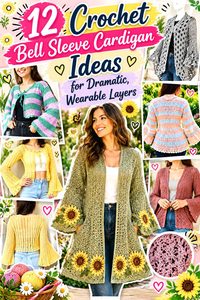
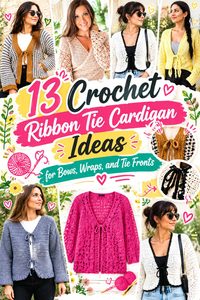
A crochet bow cardigan can take several very different forms. The bow may be the working front closure, a small accent on a cropped layer, an appliqué scattered across a chunky cardigan, a ribbon-like motif worked directly into the fabric, or even part of the collar and edging. Those choices affect more than appearance: they influence fit, front-edge stability, drape, layering, and how much attention the closure needs during finishing.
The 15 ideas below cover airy summer cardigans, soft made-to-measure layers, textured tie fronts, mesh designs, integrated colorwork, and statement coquette styles. Each one points to an original tutorial or designer pattern page for the actual construction. The additional guidance focuses on choosing between the silhouettes, checking fit, and understanding where bows can change the behavior of a crocheted garment.
Quick List
- Crochet Soft Made-to-Measure Bow Cardigan
- Crochet Ribbed Bow-Tie Cardigan
- Crochet Allover Bow-Appliqué Cardigan
- Crochet Airy Cropped Tie-Bow Cardigan
- Crochet Flower-Lace Bow Cardigan
- Crochet Relaxed Tie-Front Bow Cardigan
- Crochet Contrast-Trim Bow Cardigan
- Crochet Top-Down Ribbon-Hem Cardigan
- Crochet Suzette-Stitch Bow Cardigan
- Crochet Minimal Crop Bow Cardigan
- Crochet Y2K Diamond-Mesh Bow Cardigan
- Crochet Colorwork Bow-Motif Cardigan
- Crochet Gothic Coquette Bow Cardigan
- Crochet Five-Panel Summer Bow Cardigan
- Crochet Shell-Edged Mesh Bow Cardigan
Decide Whether the Bow Is a Closure or Decoration
The first useful decision is what the bow actually does. On a tie-front cardigan, the strands repeatedly take tension as the garment is opened, closed, and adjusted. Their attachment points therefore deserve the same attention as the neckline or front edging. A decorative appliqué has a different job: it can be positioned almost anywhere visually, but extra embellishments may add weight and complicate care.
Integrated bows create a third category. Colorwork or grid-style motifs become part of the cardigan fabric rather than pieces added afterward. Their placement therefore needs to be considered while the panels are being made.
Before choosing a project, picture the cardigan untied. If the fronts still hang attractively, the bow can function mainly as styling. If the garment relies on the tie to hold its intended shape, front-edge fit and reinforcement become more important.
Check Cardigan Fit Before Adjusting the Bow
A longer tie cannot compensate for a cardigan body that is too narrow, and a tighter bow should not be used to force front panels together. For made-to-measure projects, work from the creator’s measurement method rather than copying the sample garment visually. For sized patterns, compare the pattern’s finished-fit information with the amount of ease and layering room you actually want.
Closure height matters too. A high bow can make the neckline feel more contained, while a lower tie creates a deeper opening. Temporarily pin scrap yarn at the intended tie position and try the cardigan over the clothing you expect to wear beneath it.
Also check the armhole, shoulder, and sleeve before finalizing a front closure. Pulling the fronts inward can subtly change how the upper body sits, particularly on fitted or lightweight designs.
Match Yarn Behavior to Bow Definition
The most attractive yarn for the cardigan body is not automatically the best at forming a distinct bow. A smooth yarn generally shows edges and tie shapes clearly, while a heavily textured or fuzzy yarn can soften them. That may suit a cloudlike coquette cardigan, but it can make small bows visually disappear.
Drape creates another trade-off. Open mesh and lace benefit from movement, yet their front edges may be less substantial places for a frequently tightened closure. Dense textured fabric gives a bow a stronger visual frame but can also produce a heavier garment.
When substituting yarn, swatch both the main fabric and a small sample of the intended tie or decorative bow. Compare thickness, recovery, and the way the knot sits. Follow the original tutorial’s gauge or measurement guidance where provided rather than assuming that changing only the hook will preserve the original fit.
1. Crochet Soft Made To Measure Bow Cardigan
 SAVE
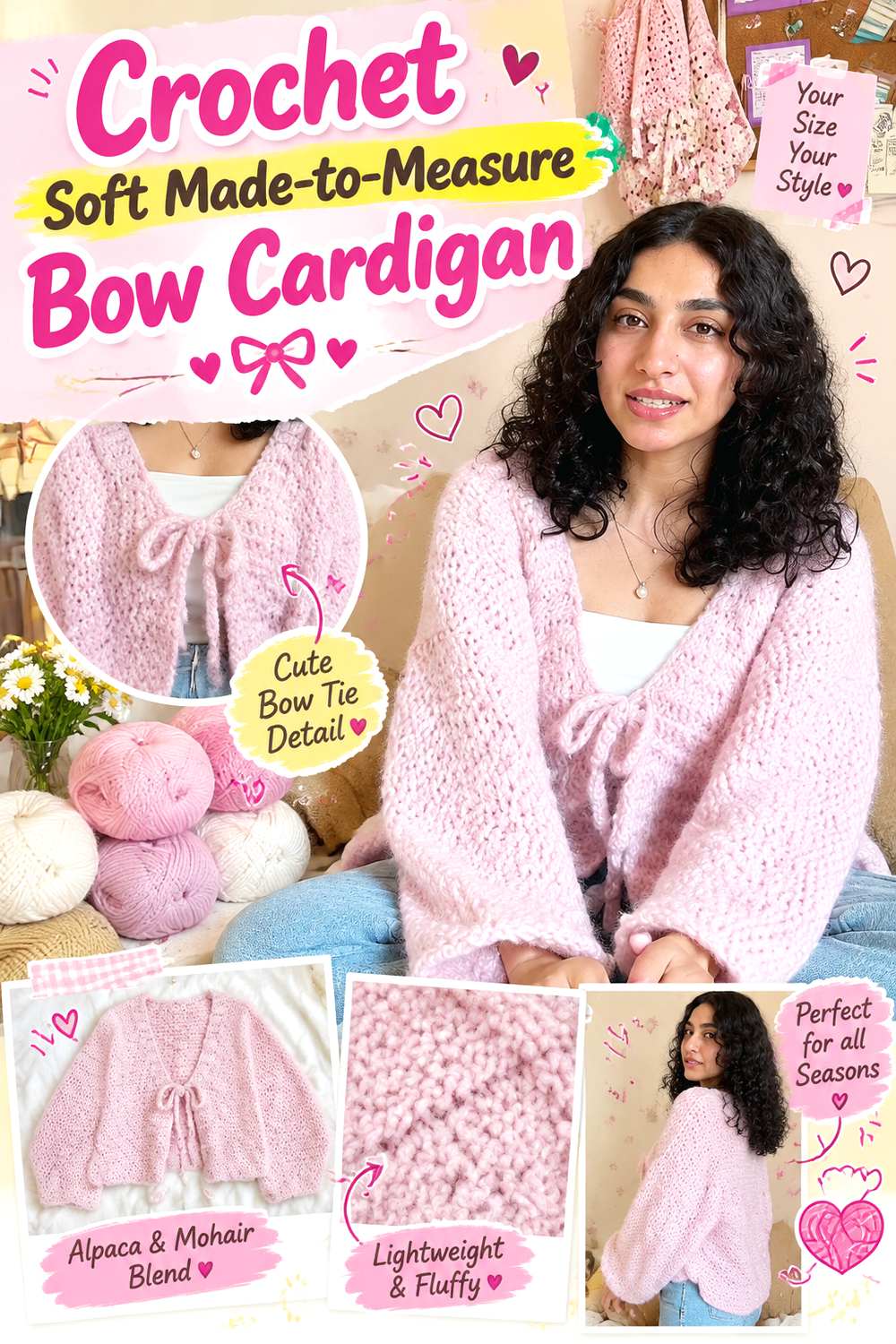
SAVEThis softly styled cardigan centers the entire design around one noticeable front bow. Mahum’s tutorial builds a tie cardigan through a made-to-measure approach and explicitly allows the overall fit to be customized toward a closer or more oversized result. The tutorial covers the cardigan panels, sleeves, assembly, and bow rather than treating the tie as an unrelated add-on.
That flexibility makes this idea useful when you like the simple one-bow silhouette but do not want to copy the sample proportions exactly. Decide on your desired ease first. A relaxed body creates a softer frame around the bow, while a closer fit makes front alignment more noticeable.
Set the Ease Before Shaping the Front
Treat body fit and bow placement as separate decisions. Establish the width and layering room using the tutorial’s measurement logic before deciding how tightly the cardigan should close. If the front panels only meet when pulled firmly together, increasing tie tension may distort the neckline instead of solving the sizing problem.
Try the unfinished cardigan over a typical base layer whenever the construction reaches an appropriate fitting point. That gives a much clearer indication of usable ease than judging a flat panel.
Let the Tie Close Without Pulling the Edges
A centered bow looks most balanced when both front edges approach the closure at similar angles. Before finishing the ties, bring the fronts together lightly and watch for diagonal pulling, rippling, or one side riding higher.
The tie should secure the look rather than reshape the whole cardigan. If the edges distort substantially, revisit fit or closure placement first. This is especially useful for a made-to-measure design because you have more control over proportions before the finishing stage.
Keep Soft Fabric From Swallowing the Bow
A very plush or lofty fabric can make a small front tie visually disappear. If you substitute yarn, compare a tied sample against the main cardigan fabric before committing to the final bow dimensions.
You do not necessarily need a larger bow; sometimes firmer tie fabric or slightly cleaner edges create enough distinction. Any substitution should still respect the tutorial’s measurement and gauge logic because changing yarn can affect the cardigan body as well as the closure.
Original Tutorial and Creator Credit
Creator: mahum 🎀
2. Crochet Ribbed Bow Tie Cardigan
 SAVE
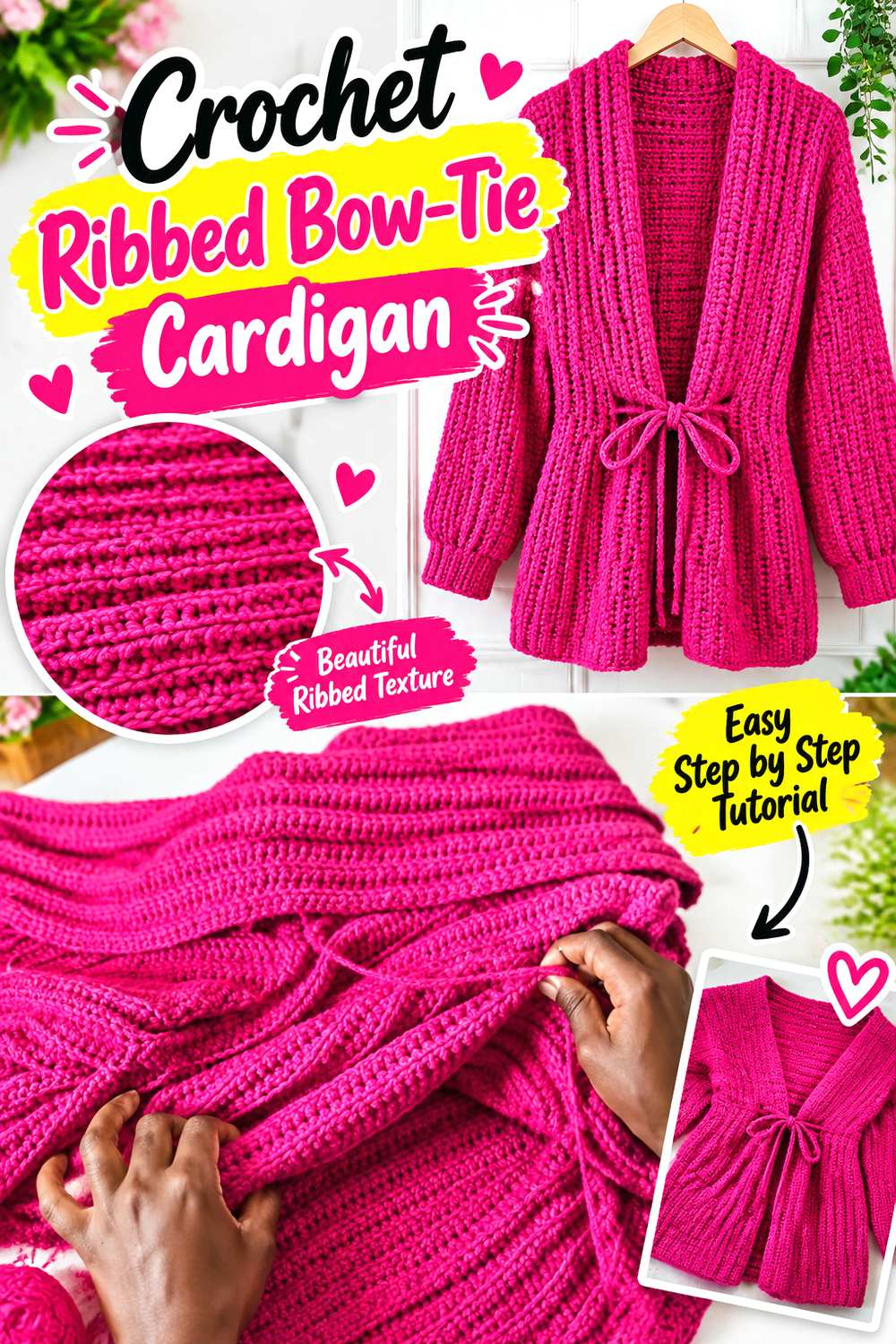
SAVEFor a more defined finish, use a bow-front cardigan where ribbing contributes to the silhouette instead of relying only on the tie for visual structure. Honey Loop Stitches demonstrates a full cardigan project progressing through the back, sleeves, assembly, and crochet ribbing, with the finished design presented as a bow-tie cardigan.
The stronger edge treatment makes this direction noticeably different from airy mesh versions. Ribbing can visually frame the bow and give hems or cuffs a more deliberate finish. It is a good choice when you want a cardigan that still reads clearly as a sweater even when the front bow is left untied.
Ribbing Changes the Visual Weight
Ribbing creates stronger horizontal or vertical boundaries than an unfinished edge, so consider how much emphasis you want around the hem, cuffs, and opening. A prominent rib can make a small tie look intentionally delicate; a very substantial bow may compete with those edges.
When substituting yarn, make a small ribbed sample as well as a body swatch. Some yarns show ribbing clearly, while others soften the ridges enough to change the design’s balance.
Check Both Tie Sides Before Finishing
Lay the cardigan flat with the front edges aligned and compare the two tie attachment points. Even a small vertical mismatch can become obvious after the strands are tied because the knot naturally pulls toward the higher or stronger side.
Then repeat the check while wearing the cardigan. Bodies are three-dimensional, so a perfectly symmetrical flat layout does not always produce identical visual placement once the garment is on.
Watch Cuff and Hem Recovery
Ribbed sections often need to transition between stretch and recovery while the main cardigan fabric may behave differently. After handling the garment, check whether the cuffs and lower edge return to their intended shape rather than remaining stretched.
This matters when adapting materials. A yarn substitution that produces a drapier body might also create softer ribbing. Follow the tutorial’s construction while using your swatch to judge whether the new fabric still gives the edging enough definition.
Original Tutorial and Creator Credit
Creator: Honey Loop Stitches
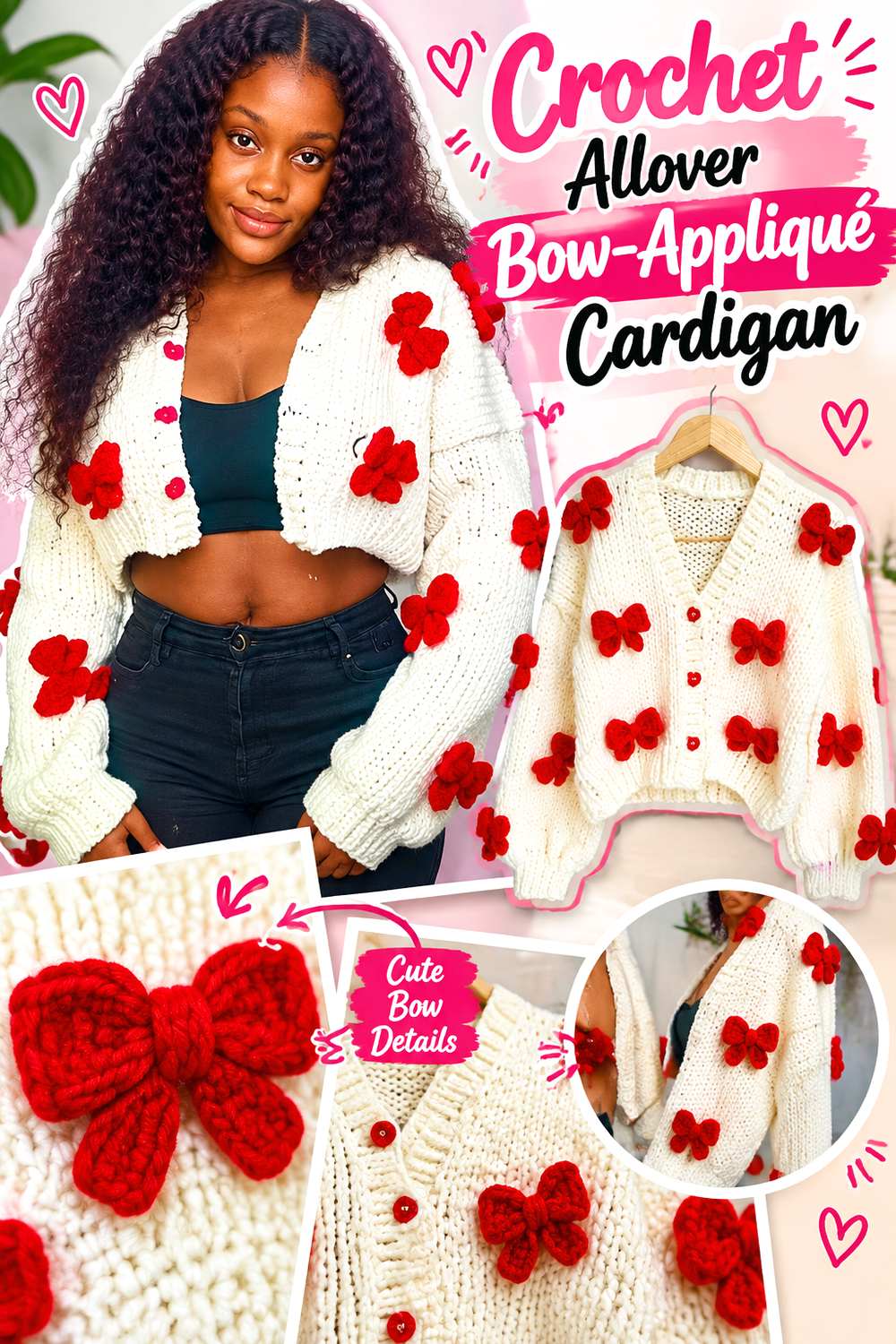
3. Crochet Allover Bow Applique Cardigan
 SAVE
SAVENot every bow cardigan needs a bow closure. Priya Crochets takes a different route by focusing on separate crochet bow embellishments and showing how they are added to a cardigan. The tutorial is specifically an embellishment companion to the creator’s chunky knit-look cardigan project rather than another single-tie front.
That opens up far more freedom with placement. You might emphasize the front panels, continue the motif onto the sleeves, or keep the arrangement deliberately sparse. Because the bows are additional pieces, however, spacing and attachment become the main quality checkpoints. Plan the entire layout before permanently securing the first few motifs.
Arrange Every Appliqué Before Sewing
Crochet several bows and place the cardigan flat before attaching them. Start with major visual landmarks such as the chest, shoulder line, sleeve midpoint, and lower front rather than filling one area completely.
Then try the cardigan on with the bows temporarily pinned or lightly basted. A layout that looks evenly spaced on a table can feel different around curved body areas and sleeve seams. Checking the worn view helps prevent clusters from appearing unintentionally crowded.
Distribute Added Weight
One small bow may have little effect, but repeated embellishments can collectively alter the way lightweight fabric hangs. This is particularly relevant if your bows use a heavier yarn than the cardigan itself.
If the front starts pulling downward or the sleeves lose their original drape, reduce the number or weight of the additions. Decorative pieces should not force the underlying cardigan to support more bulk than its fabric comfortably handles.
Plan Attachment With Care in Mind
Secure appliqués well enough that their corners or centers do not twist after ordinary handling, but avoid stitching so tightly that the base fabric puckers underneath.
Care requirements will ultimately depend on the fibers and finishing used. Check the yarn labels and creator guidance before washing, particularly if you combine different yarns. Mixed materials may react differently to heat, agitation, drying, or blocking.
Original Tutorial and Creator Credit
Creator: Priya Crochets
4. Crochet Airy Cropped Tie Bow Cardigan
 SAVE
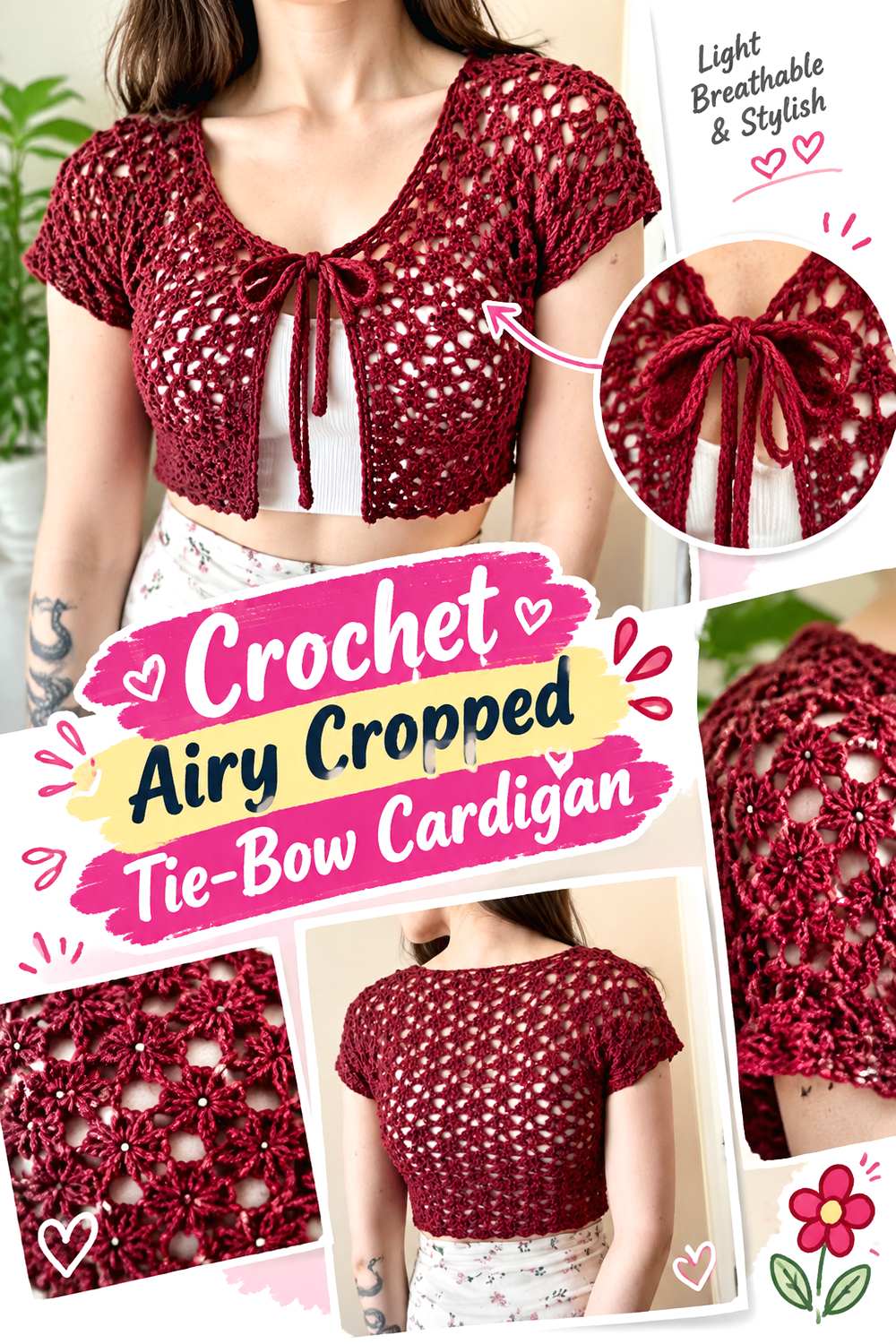
SAVEAlona crochets offers a cropped tie-front cardigan with an airy stitch pattern and a lightweight summer-layering feel. The tutorial sample uses cotton, reinforcing the light, fluid character of the design rather than the heavier appearance of a winter bow cardigan.
The short body makes the closure more prominent because there is relatively little fabric below it. That proportion works well with high-rise bottoms, dresses, or fitted base layers where you want the cardigan to frame rather than cover the outfit. It also means crop length deserves deliberate planning: a small change can noticeably alter where both the hem and bow sit on the torso.
Protect the Airy Fabric in Your Swatch
Open fabric can change substantially after handling or blocking, especially when the yarn has enough weight to relax the stitches. Swatch the actual stitch pattern and assess both width and vertical growth before deciding the finished crop length.
If you substitute a denser or heavier yarn, the cardigan may lose some of the light drape that defines this version. Match behavior rather than choosing a yarn solely because its label lists a similar weight category.
Place the Bow Relative to the Hem
On a short cardigan, the closure and hem visually interact. A bow positioned very low may almost merge with the bottom edge, while a higher tie leaves more open space beneath it.
Use temporary strands to test several heights with the cardigan on. Check the result with the bottoms you expect to wear most often. The best position is the one that closes comfortably without pulling and creates the amount of open front you actually want.
Original Tutorial and Creator Credit
Creator: Alona crochets
5. Crochet Flower Lace Bow Cardigan
 SAVE
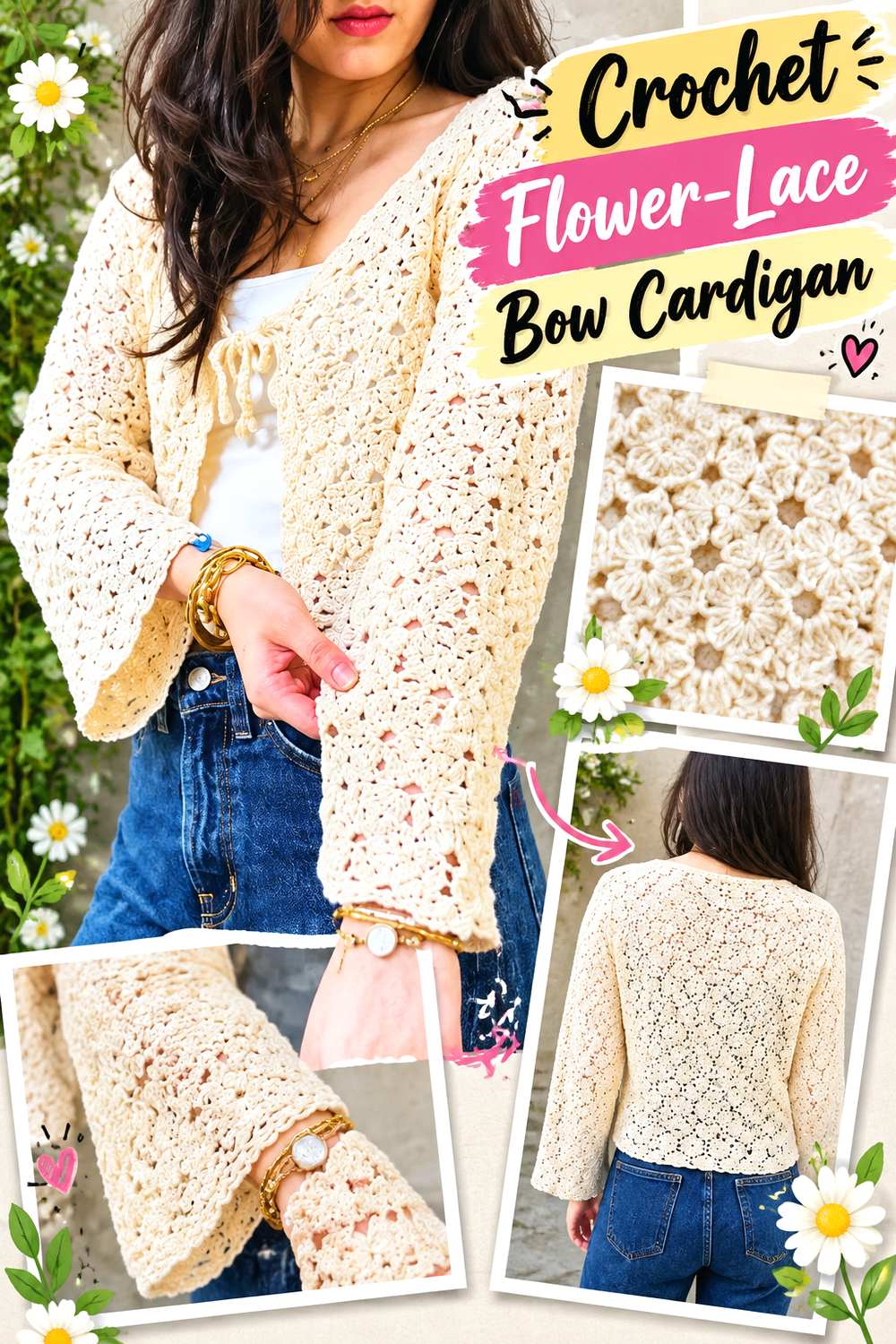
SAVEFor a bow cardigan where the fabric itself supplies much of the decoration, consider the Lacy Holiday Crochet Tie-Up Cardigan from Kiks + Jack Crochet. The original pattern uses a flower-like lace texture, a loose oversized silhouette, decorative edging around the opening, and a small central tie rather than buttons or a full closure band.
This makes the bow intentionally understated. It does not need to compete with the lace; it simply gathers the two patterned fronts at one point. The approach suits readers who want romantic detail without covering the cardigan in separate embellishments. Because the project is made to measure, the pattern’s own measurement and fit guidance should remain the basis for adapting proportions.
Keep Lace Open Without Losing Stability
Lace needs enough openness for the motif to read clearly, but the cardigan still has to support seams, sleeves, edging, and the center tie. If your swatch feels unusually loose or fragile, changing only the tie will not solve the structural issue.
Pay particular attention to the front edge after blocking. It should retain the intended decorative character without becoming so stretched that the closure point pulls a large section inward.
Let the Trim and Bow Share Attention
The clustered edging already creates movement around the opening, so an oversized bow may make the front visually busy. Start with the source’s tie concept before deciding whether you want a more dramatic adaptation.
If you do enlarge the bow, test it temporarily. Look at the entire cardigan from a few feet away rather than judging the knot in isolation. The lace pattern should still remain visible as a major design feature.
Verify Measurements Before Changing Gauge
A made-to-measure format offers customization, but it does not make gauge irrelevant. Different yarn and hook combinations can change the width, height, and openness of the flower-like fabric.
Use the designer’s measurement method and swatching advice when adapting the project. If you deliberately choose a substantially different fabric, confirm front-panel width, armhole depth, sleeve dimensions, and finished length as the work develops rather than relying on the bow to adjust the final fit.
Original Tutorial and Creator Credit
Creator/Site: Kiks + Jack Crochet
6. Crochet Relaxed Tie Front Bow Cardigan
 SAVE
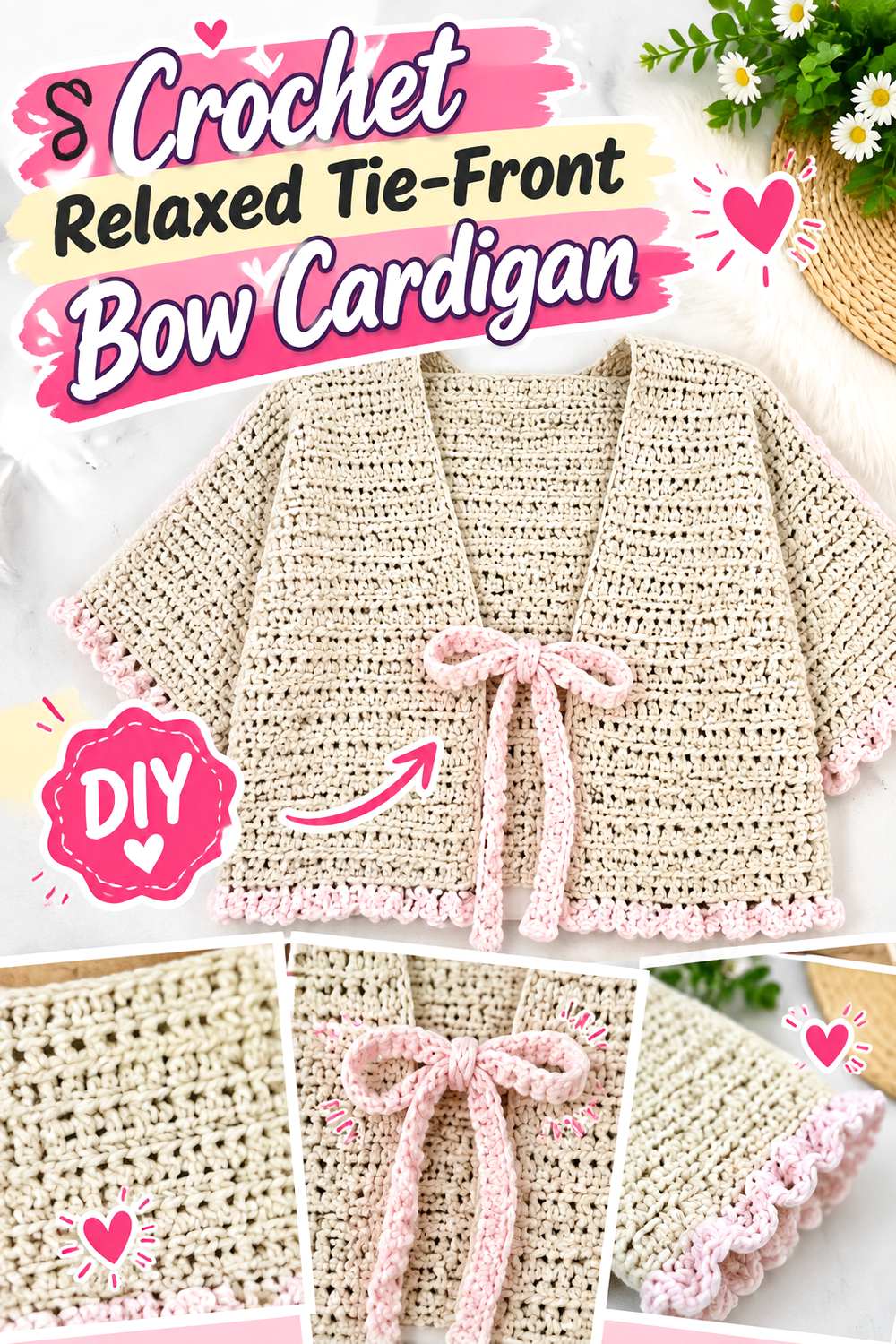
SAVEEmma P’s tie-cardigan tutorial is a useful reference for the stripped-back version of this trend: a crochet cardigan whose main styling feature is its tie front rather than colorwork, appliqués, or ornate edging.
That simplicity makes the concept adaptable to a wide range of wardrobes. The finished bow can be allowed to blend into the cardigan rather than becoming a separate decorative object. It is also a useful option for readers who want to focus their attention on proportion and silhouette. When planning a similar version, decide early whether the cardigan is meant to sit close to the body or function as a relaxed layer, because closure tension should not be doing the work of sizing.
Decide How Relaxed the Body Should Be
Start by picturing the cardigan open. A relaxed layer should still hang intentionally when the bow is undone rather than appearing as though the fronts are simply too wide or too narrow.
Use the source construction as your guide and check your own dimensions as appropriate. If you plan to wear the finished cardigan over anything thicker than a camisole, include that real layering requirement in your fit decisions before finishing.
Match Tie Length to the Opening
Long ties produce a more noticeable bow and hanging tails, while shorter strands keep the closure compact. Either can work, but the proportions should suit the width of the open front.
Test with scrap yarn before committing. Tie it normally, move your arms, sit down, and check whether the knot lands where expected. Avoid shortening a tie based only on its untied appearance because the knot itself consumes length.
Recheck Shoulder Comfort After Closing
A cardigan may feel comfortable when open yet pull across the upper body after the tie is fastened. Watch the shoulders, armholes, and neckline during the final try-on.
If tying the fronts creates restriction, first determine whether the issue is garment width, closure height, or the amount of tension used in the bow. Moving or loosening the closure is preferable to repeatedly stretching the finished neckline.
Original Tutorial and Creator Credit
Creator: Emma P
7. Crochet Contrast Trim Bow Cardigan
 SAVE
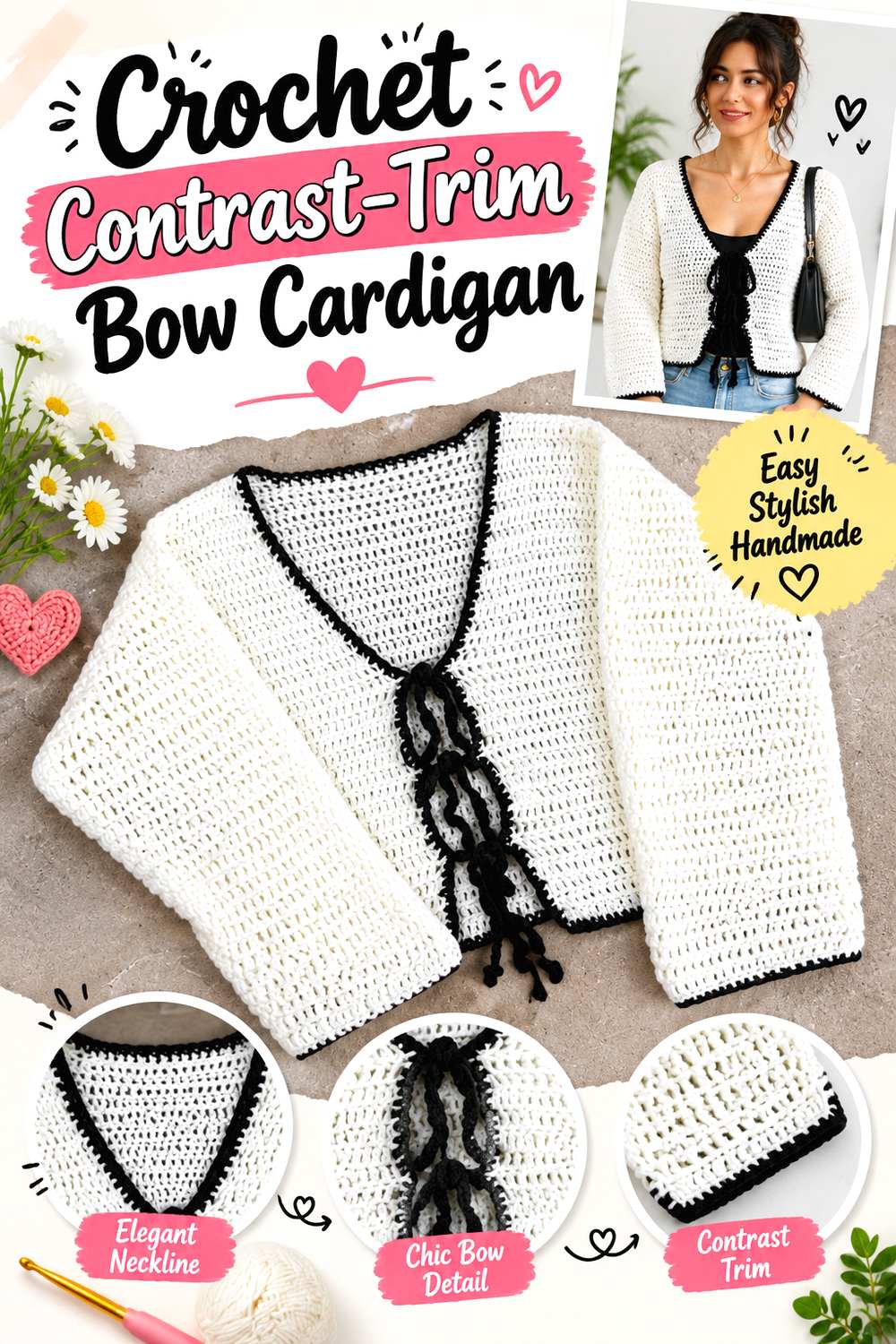
SAVEKenikse Crochet’s front-tie cardigan introduces another useful variation: an accent color appears alongside the main cardigan color, and the tutorial includes the border and ties as part of the finishing sequence.
This gives you a built-in way to emphasize the garment’s outline without adding extra appliqués. A contrasting border can lead the eye around the neckline and opening before ending at the bow. Alternatively, a low-contrast palette can keep the same construction quieter. Either way, consistency along both front edges matters because contrast makes uneven finishing easier to see.
Let Contrast Frame the Garment
Choose whether the accent is meant to outline the cardigan or make the bow itself the strongest feature. Strong contrast across every edge can be graphic; limiting contrast to a smaller finishing area produces a different hierarchy.
Before starting the accent section, place the main fabric beside your proposed secondary color in daylight. Yarn colors that seem subtle in skeins can look much stronger once repeated as a continuous border.
Keep the Two Front Edges Even
A contrast border acts almost like a drawn line around the opening, so differences in length or stitch spacing become particularly visible. Lay both fronts beside each other before the edging is complete.
If one side begins to ripple or tighten, address the spacing rather than hoping blocking will completely correct it. A flat front edge gives the eventual bow a cleaner base and makes the two halves meet more predictably.
Use the Bow as the Final Focal Point
Once the contrasting outline is established, assess how much bow you actually need. An extremely large knot may overpower an already graphic trim, while a moderate bow can provide a clear finishing point.
Tie the cardigan at several tensions during the fitting stage. The prettiest-looking knot is not useful if it pulls the border out of shape. Aim for a bow that sits visibly without changing the front-edge line.
Original Tutorial and Creator Credit
Creator: Kenikse Crochet
8. Crochet Top Down Ribbon Hem Cardigan
 SAVE
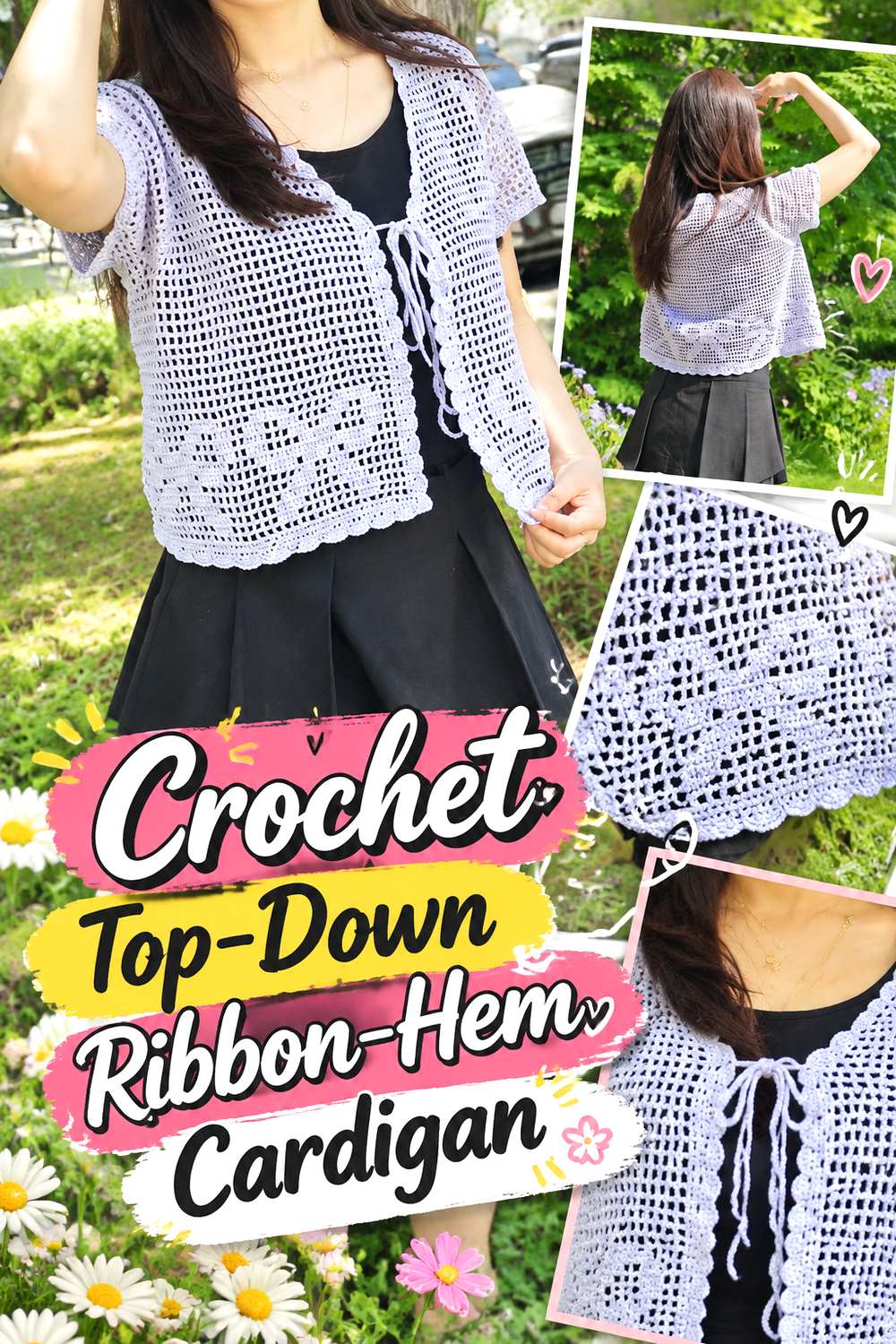
SAVEThe ribbon detail does not have to sit only at the center front. 꼼지락제이 jay7crochet’s Ribbon Cardigan uses a top-down summer-cardigan construction and incorporates a grid-style ribbon pattern with a ribbon detail at the hem.
This shifts attention away from the usual single chest bow. The motif becomes part of the lower garment, creating a more decorative hem while keeping the upper body comparatively clean. Top-down construction also changes the fitting process because the cardigan develops from the upper body downward rather than being assembled exclusively from separate full-length body panels.
Use Top-Down Construction for Early Fit Feedback
A major advantage of a top-down wearable is the opportunity to evaluate upper-body proportions before the full hem length is committed. Follow the creator’s construction and sizing information, and use fitting checkpoints where the tutorial allows them.
Pay attention to shoulder placement, sleeve division, and the way the neckline sits. If those areas are wrong, changing the ribbon treatment near the bottom will not correct the garment’s fundamental fit.
Keep the Grid Ribbon Legible
Motif-based ribbon work depends on enough stitch definition for the shape to read. Highly fuzzy yarn or extremely close color values may soften the intended effect.
Before adapting materials, crochet a representative motif sample rather than testing only plain fabric. View it from normal wearing distance. A ribbon that looks obvious six inches away may disappear visually once it is spread across a full cardigan.
Finish the Hem Without Added Drag
Decorative lower details can add weight exactly where gravity already pulls on the cardigan. After finishing the ribbon section, hold or try on the garment and check whether the hem remains level.
If adapting the motif, remember that larger or denser additions can alter vertical drape. Keep the embellishment compatible with the top-down fabric above it instead of treating the lower section as an entirely separate project.
Original Tutorial and Creator Credit
Creator: 꼼지락제이 jay7crochet
9. Crochet Suzette Stitch Bow Cardigan
 SAVE
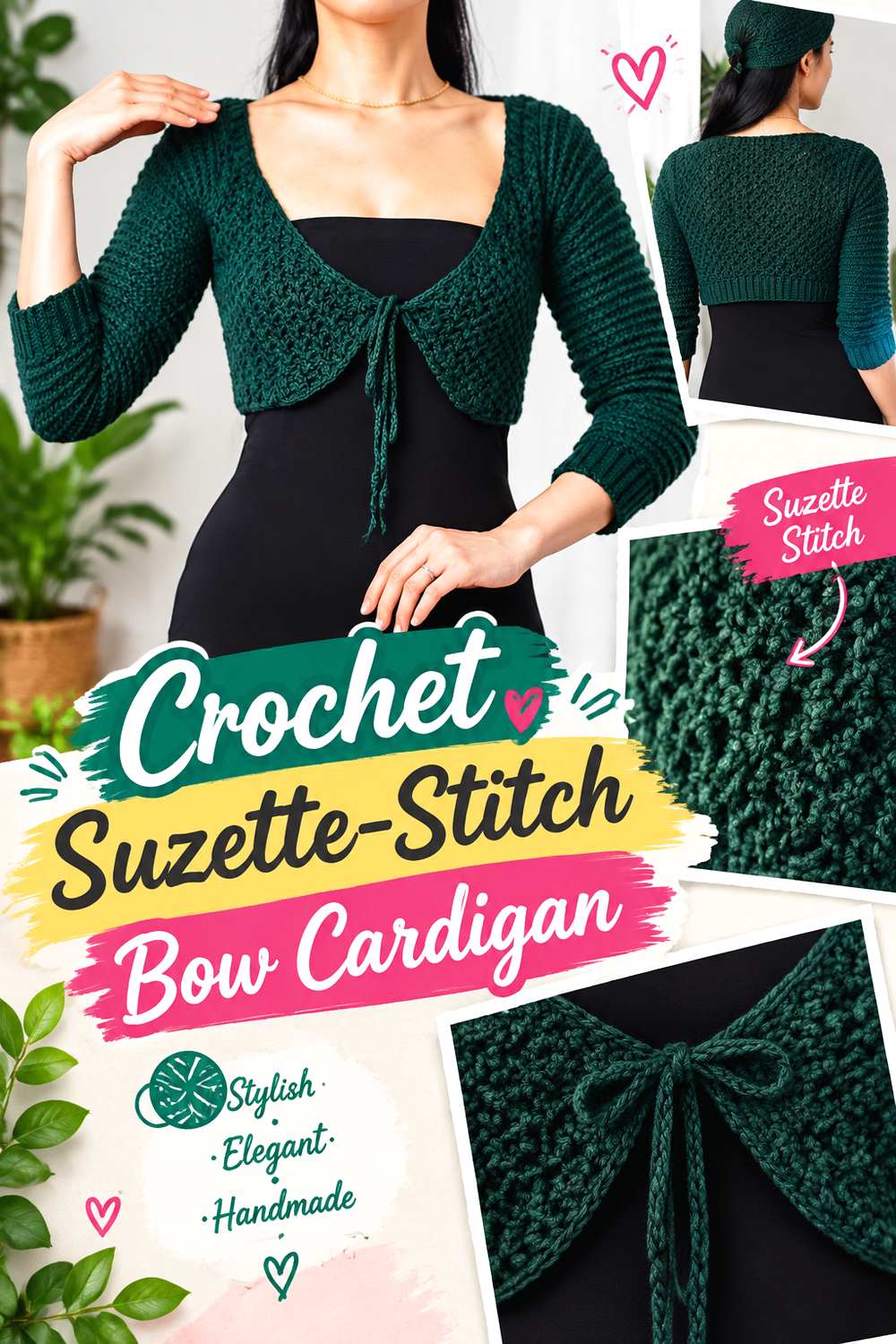
SAVETCDDIY’s elegant front-tie cardigan uses Suzette-stitch texture and includes shaped garment sections, sleeves, cuffs, neckline finishing, and the lower edge in the video construction.
The textured fabric gives this idea more surface interest than a plain tie cardigan while keeping the front bow relatively streamlined. It is a good direction when you want texture to provide depth instead of relying on multiple colors or separate motifs. Because the stitch pattern already creates a noticeable surface, the closure works best when it complements rather than obscures that texture.
Give Texture a Calm Closure Zone
A heavily textured section can make a knot look visually messy if both elements compete in exactly the same place. Look at the front edge and decide whether the bow reads clearly against it.
If you adapt the closure, resist adding unnecessary bulk at the attachment point. A cleaner transition between body texture and tie can make both features easier to see while keeping the front from becoming unnecessarily thick.
Balance Crop Length Against the Sleeves
A shorter cardigan body paired with full sleeves creates a strong proportion contrast. Try the garment with your intended bottoms before deciding that the body needs to be shortened further.
Sleeve volume, cuff position, and hem height all influence the apparent size of the front bow. A knot that feels prominent on a very cropped body may look understated if the same design is lengthened substantially.
Tie Without Crushing the Surface
Textured crochet can flatten temporarily when a tie is cinched tightly over or beside it. The closure should be secure enough for wearing but not so tight that it visibly compresses the surrounding stitch pattern.
During the fitting stage, loosen the bow and inspect the front edge. If it stays distorted, use less tension and check whether the cardigan itself needs more room.
Original Tutorial and Creator Credit
Creator: TCDDIY
10. Crochet Minimal Crop Bow Cardigan
 SAVE
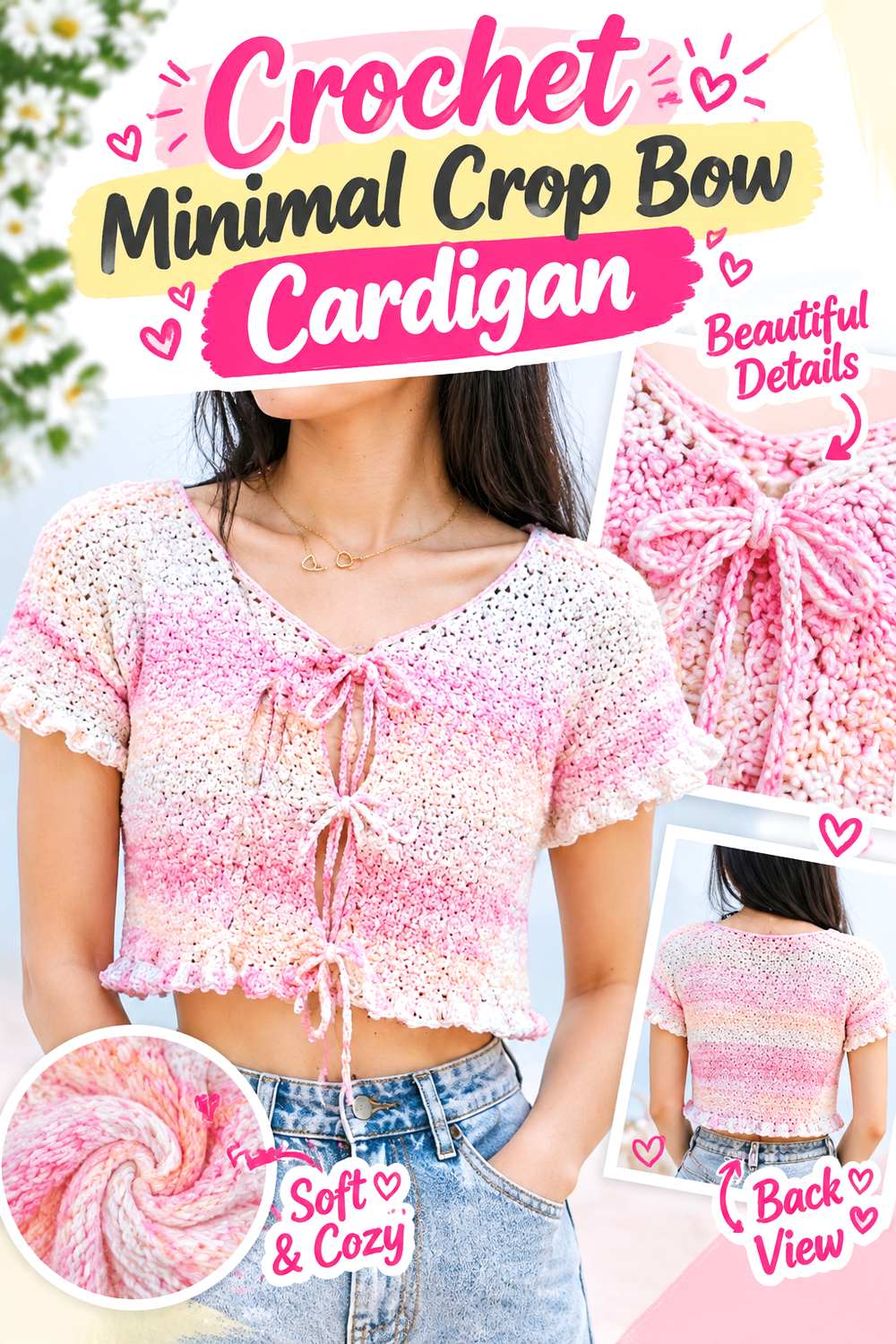
SAVEChenda DIY’s project sits between a tie-front top and a cropped cardigan, with separate front, back, sleeve, and tie construction shown in the tutorial. The source sample uses cotton yarn and keeps the silhouette short and comparatively minimal.
This is the kind of bow cardigan where proportion does most of the styling. With little extra trim or motif work competing for attention, the opening, sleeve length, crop point, and front tie become highly visible. It can work as a warm-weather layer or as a compact cardigan over a simple base, but the shorter body means fit errors are difficult to hide behind extra length.
Minimal Design Magnifies Fit Errors
A plain front gives the eye very few distractions, so uneven edges, a skewed tie, or an awkward crop line can become obvious. Check the two halves frequently during construction and compare them before assembly.
A final try-on should assess more than bust width. Look at shoulder position, underarm comfort, sleeve hang, and whether the lower edge stays where intended when you move your arms.
Keep the Front Bow Proportional
On a compact cardigan, extremely long tie tails can visually extend well below the garment and change the silhouette. That may be intentional, but it should be a choice.
Use temporary cords to compare a neat compact bow with a longer statement bow. Judge both while standing and sitting. The best length should allow a secure knot without leaving more dangling material than you want for normal wear.
Test the Crop Against Real Outfits
Do not choose body length in isolation. Try the developing cardigan with high-rise jeans, skirts, dresses, or other pieces you expect to pair with it.
A crop ending close to a waistband creates a different visual line from one that finishes well above it. Because the bow also occupies the center front, those two horizontal points should feel intentional together.
Original Tutorial and Creator Credit
Creator: Chenda DIY
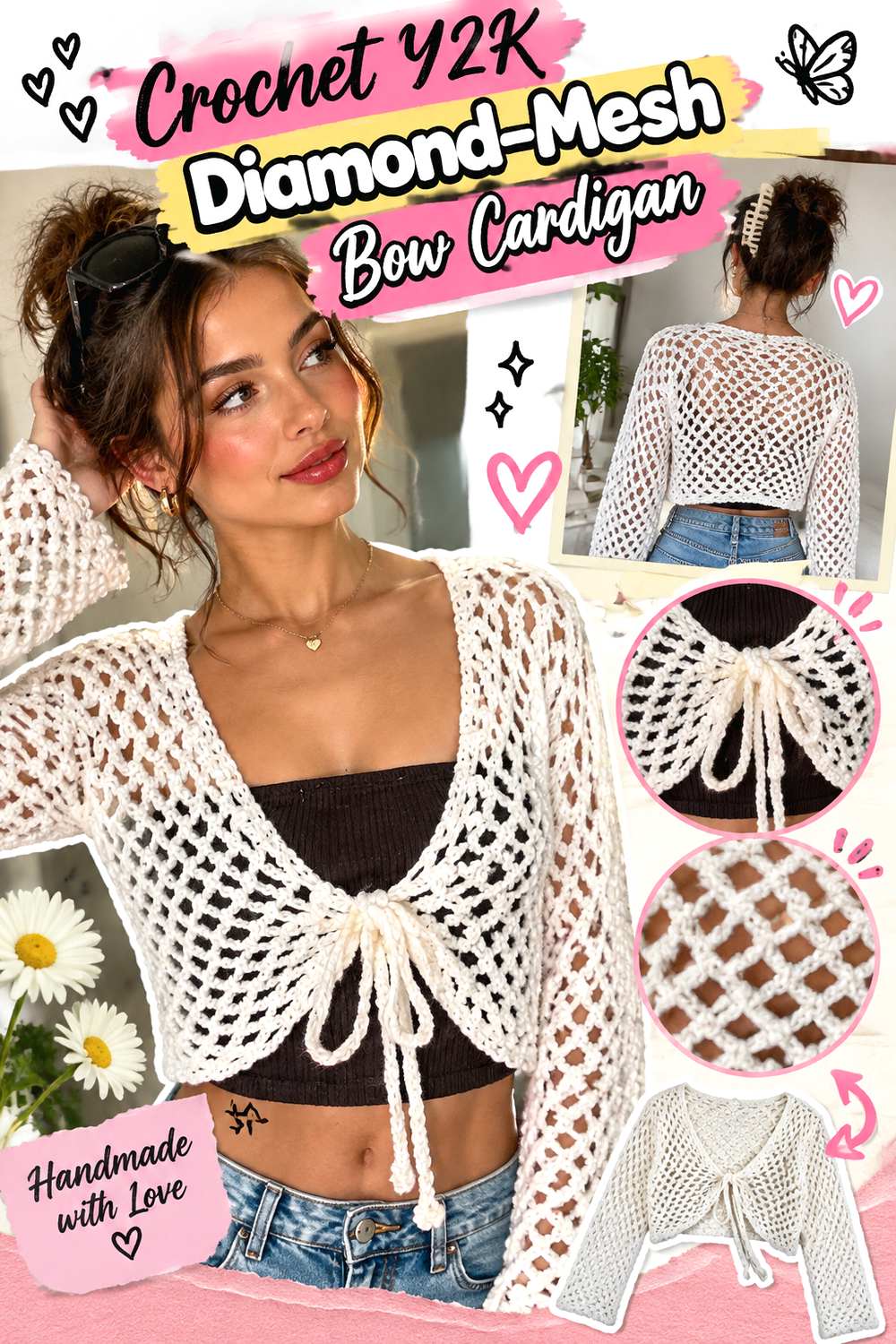
11. Crochet Y2k Diamond Mesh Bow Cardigan
 SAVE
SAVEBrittanyalicecrochet’s Y2K-inspired cardigan uses diamond mesh and a front tie, producing one of the most open and visibly layered designs in this collection. The tutorial also uses body measurements and includes fitting stages for the garment and sleeves.
Because so much of the base layer remains visible through the mesh, this cardigan works almost like a frame around the outfit underneath. The bow is important, but so are negative space and layering color. Compared with a dense winter cardigan, fit may feel visually forgiving in some areas while stretch and tie attachment become more important considerations.
Mesh Needs Stable Attachment Points
A functional tie concentrates force in a small area. On open mesh, avoid assuming any convenient loop is automatically strong enough for repeated pulling.
Follow the source construction for the actual attachment. If you adapt the tie, distribute tension through an appropriately stable area rather than narrowing all of the force onto one fragile chain space. Watch the surrounding mesh when tying; noticeable distortion is a reason to reassess.
Layering Color Becomes Part of the Design
Diamond mesh allows the garment underneath to show through almost everywhere. A high-contrast camisole emphasizes the pattern, while a similar color creates a quieter texture.
Test the cardigan over more than one base layer before deciding whether you want additional embellishment. Mesh plus a bow already creates substantial visual information, and extra decoration may be unnecessary once the full outfit is visible.
Stretch Can Change the Fit
Open crochet structures may relax differently from dense fabric, depending on yarn and tension. Check measurements after making a sufficiently large portion of the actual stitch pattern rather than relying solely on an unstretched foundation.
If the cardigan begins lengthening during wear, tightening the front bow will not restore the original proportions. Material choice, gauge, and the tutorial’s fit checks remain more important than closure tension.
Original Tutorial and Creator Credit
Creator: brittanyalicecrochet
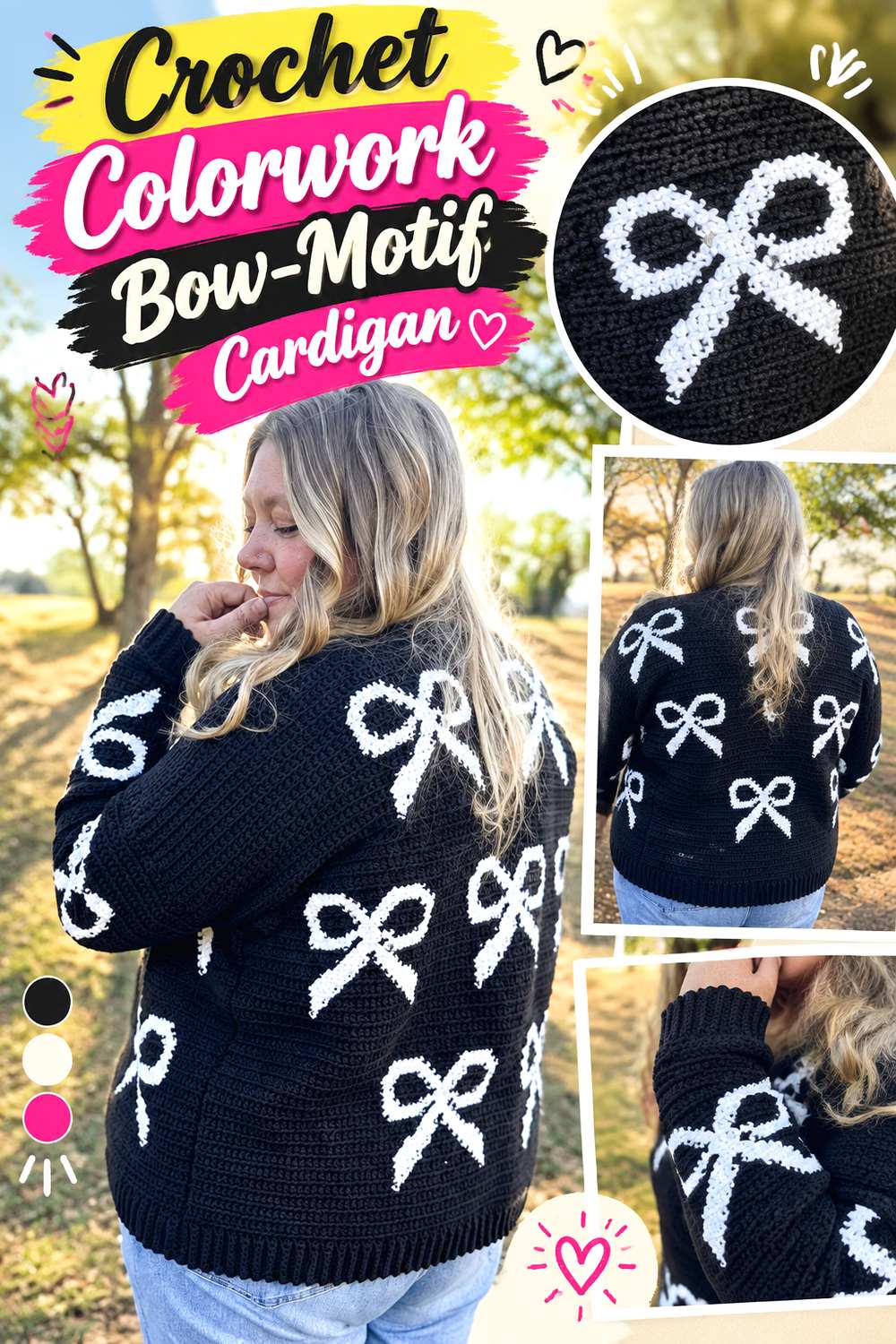
12. Crochet Colorwork Bow Motif Cardigan
 SAVE
SAVEInstead of attaching bows afterward, Meghan Makes Do’s Bowden Cardigan works playful bow imagery directly into the cardigan panels with colorwork. The original crochet-along describes a drop-shoulder cardigan made from separate panels, finished with ribbed edges and a collar, with bows incorporated through colorwork techniques.
This gives the motif permanence and makes the entire cardigan the statement rather than concentrating attention on one closure. It also changes the planning process. You need to think about motif spacing, contrast, gauge, and yarn management while creating the fabric, not after the sweater is assembled.
Balance the Bow Placement Across Panels
Integrated motifs cannot simply be moved after finishing. Before committing to alternate placement or colors, consider how the bows will appear across the back, fronts, and sleeves once those pieces wrap around the body.
A motif near a seam can look different after assembly than it does on a flat panel. Follow the designer’s charting and construction for the original version; any layout changes should be planned on paper before crocheting them.
Gauge Matters Before Colorwork Begins
Even small gauge differences accumulate across a garment panel, and colorwork adds another reason to monitor tension. Tight carried or floated yarn can make a motif section narrower than the surrounding fabric.
Make the recommended swatch and pay particular attention when colors begin interacting. The goal is not just matching overall dimensions; the bow section should lie as naturally as the plain fabric around it.
Keep the Borders Quieter Than the Artwork
When motifs already cover significant portions of a cardigan, simple ribbed finishing can provide useful visual rest. If you customize colors, consider allowing the collar and edges to frame the bows instead of introducing another competing motif.
This also makes finishing quality more noticeable. Neat seams and consistent borders help the graphic bow shapes read as intentional parts of a finished garment rather than isolated blocks of colorwork.
Original Tutorial and Creator Credit
Creator/Site: Meghan Makes Do
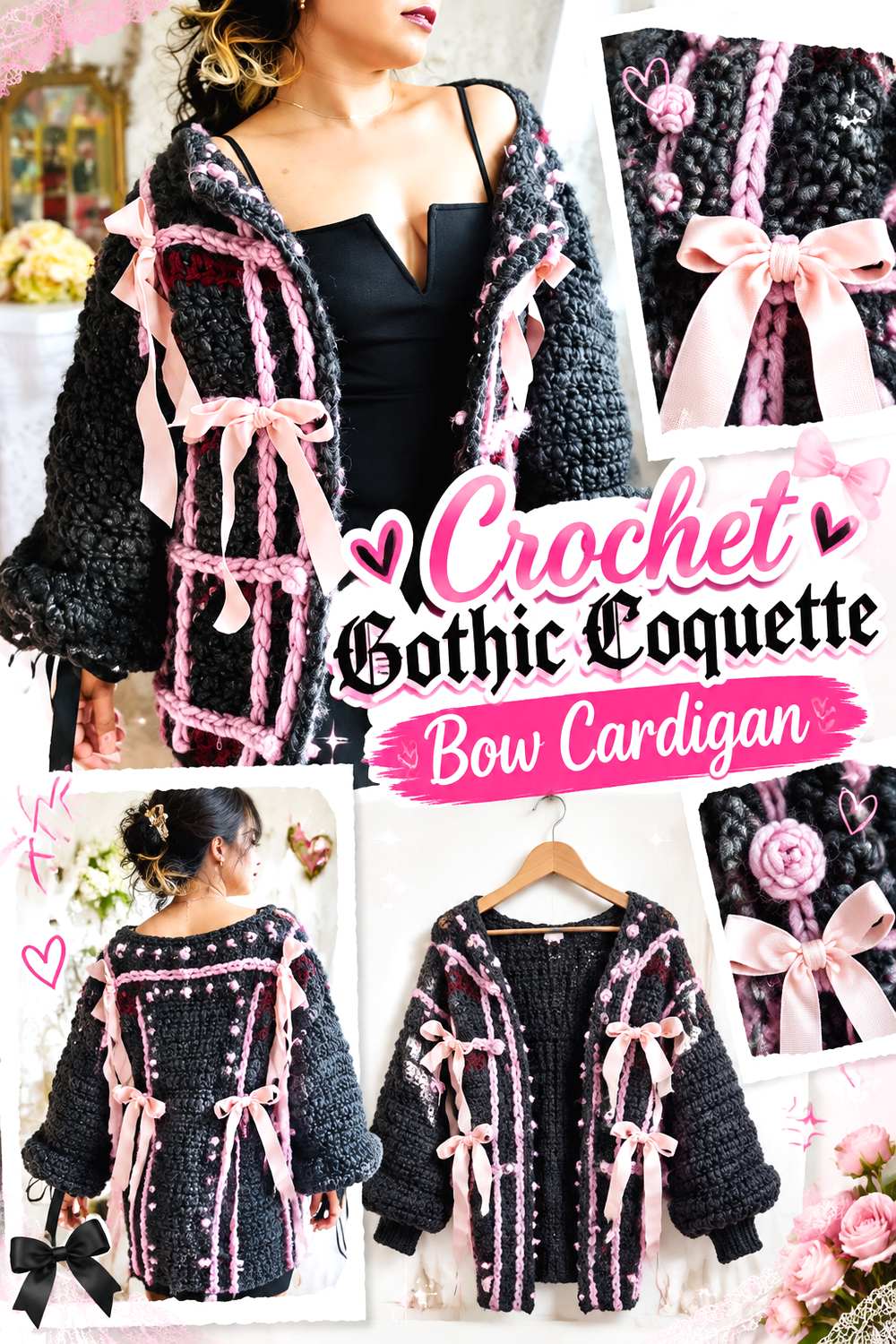
13. Crochet Gothic Coquette Bow Cardigan
 SAVE
SAVEBow cardigans do not need to stay pastel. Yommycrochetlogy’s tutorial presents a darker gothic-coquette interpretation and combines a substantial crochet cardigan with contrasting ribbon accents. The creator’s material notes include ribbon as part of the finished design, giving this project a visibly different approach from crochet-only ties.
The darker palette and plush appearance turn the bow into a sharper styling accent rather than an automatically delicate detail. This direction suits anyone who likes the coquette vocabulary but wants more contrast and winter weight. Because ribbon and crocheted fabric behave differently, attachment and care need more consideration than they would on a single-material cardigan.
Treat Ribbon as a Separate Material
Woven ribbon does not stretch, recover, or wash exactly like crochet fabric. Before attaching it permanently, test how it lies against the cardigan and whether the knot stays where you want it.
Avoid fastening a rigid ribbon so tightly that it cuts into a soft crochet edge. The finished cardigan should still move naturally. If the ribbon is removable, that may also simplify care depending on the materials involved.
Use Contrast Deliberately
A light bow against a dark cardigan becomes a strong focal point even when it is relatively small. Repeat that contrast too many times and the overall effect may become busier than intended.
Lay all proposed ribbon pieces on the completed or nearly completed cardigan before attachment. Check the front, sleeves, and back as a whole. This is more reliable than deciding one bow at a time.
Plan Care for Mixed Components
The correct washing and drying method depends on the specific yarn and ribbon you use. Follow the yarn label, the creator’s guidance, and any care information available for the ribbon rather than assuming the components can be treated identically.
Before washing the entire cardigan, consider how dye transfer, heat, agitation, and knotting could affect contrasting trims. Removable embellishments can sometimes make maintenance simpler.
Original Tutorial and Creator Credit
Creator: Yommycrochetlogy
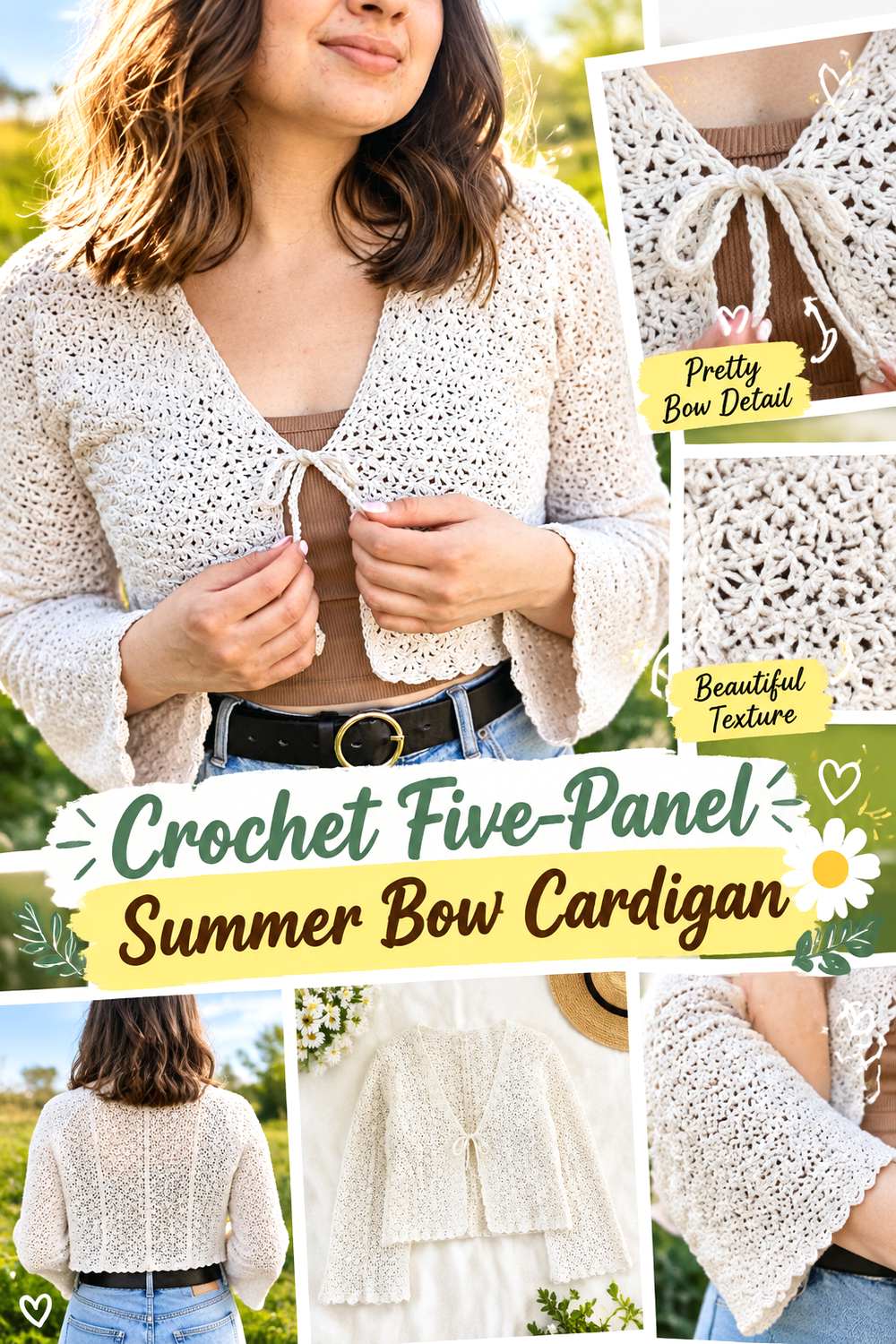
14. Crochet Five Panel Summer Bow Cardigan
 SAVE
SAVEStitchberry’s Lilith Cardigan combines a sweet tie-front look with an intentionally straightforward flat-panel construction. The original designer page describes five flat cardigan pieces with no shaping within those panels, followed by seaming, and provides the design in multiple sizes.
The result is useful for readers who like a fitted, cropped bow cardigan but prefer clearly defined garment components instead of extensive shaping. Because the body geometry is relatively simple, finishing becomes especially important: neat seams, even panel dimensions, and balanced front edges determine whether that simplicity looks polished.
Flat Panels Still Need Measurement Checks
Simple geometry does not eliminate fit. Compare the pattern’s finished dimensions and size guidance with the intended wearer rather than choosing solely by a familiar clothing-size label.
Pay particular attention to bust fit, cardigan length, and armhole comfort. With a cropped design, there is less extra length available to disguise a body panel that sits differently than expected.
Make the Bow Fit the Clean Silhouette
A neat panel-based cardigan naturally suits an uncomplicated front bow. Before making the tie more dramatic, look at how much open space remains between the fronts and where the cardigan ends.
A smaller knot can reinforce the clean summer silhouette, while longer tails introduce more movement. Either can work, but keep the tie attachment symmetrical so the simple body construction remains visually balanced.
Seam Without Distorting the Pieces
Before joining, compare paired pieces and correct any blocking or measurement issues that can reasonably be addressed. Pulling one panel to match another during seaming may introduce twisting or uneven tension.
Once assembled, try on the cardigan before judging the bow. The shoulder and side seams can change how the front panels naturally fall, and that final hanging position should guide the closure rather than the pre-seaming flat layout.
Original Tutorial and Creator Credit
Creator/Site: Stitchberry
15. Crochet Shell Edged Mesh Bow Cardigan
 SAVE
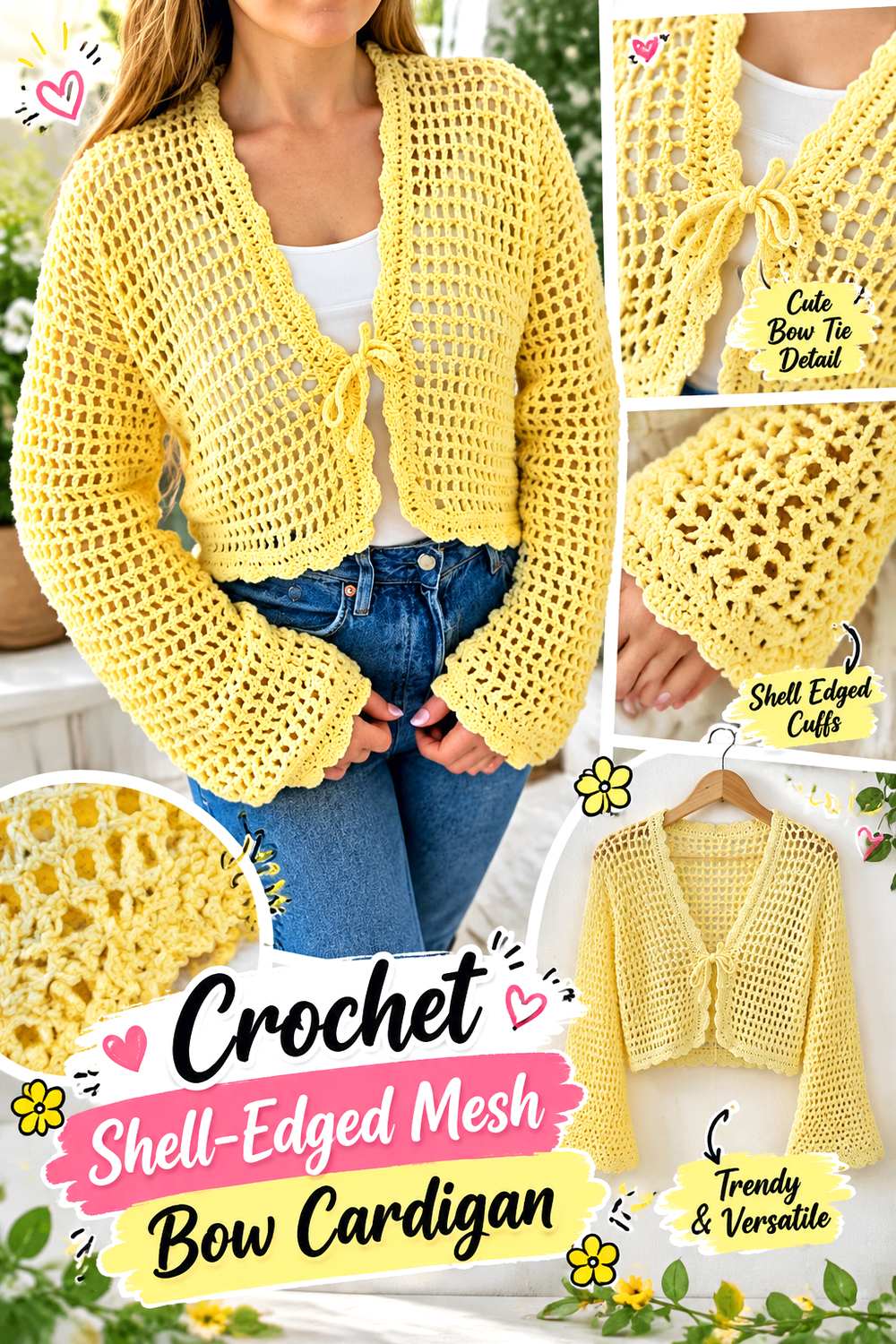
SAVESelina Veronique’s Lemon Mesh Cardigan combines several delicate details in one design: open mesh fabric, a relaxed silhouette, shell-stitch edging, and a small front tie that forms a bow. The original pattern page includes the complete crochet pattern as well as links to the creator’s video support.
Compared with the Y2K diamond mesh option, this cardigan feels less stark because the shell edging softens the geometric openwork. It is an appealing direction when you want the bow to remain small and romantic while the edge treatment supplies much of the decoration. The main challenge is keeping the mesh, border, and closure visually balanced.
Keep the Shell Border Flat
Decorative edging should frame an open cardigan rather than forcing it to flare or cup. Work according to the pattern and monitor the border as it develops, periodically laying the front edge flat.
If substituting yarn, the relationship between mesh and denser shell stitches may change. A border that becomes disproportionately heavy can affect how the opening hangs and, in turn, where the bow naturally meets.
Place a Small Bow Where It Can Be Seen
Because mesh provides strong texture and the shell border adds another layer of detail, the tie does not need to be oversized. A clean knot positioned at a comfortable closure point can be enough.
Try the finished or nearly finished cardigan over contrasting and similar-colored base layers. The visibility of a small tie can change considerably depending on what shows through the openwork behind it.
Preserve Drape Through Finishing
Mesh depends on movement. Avoid compensating for an unstable edge by making the closure increasingly tight, since that can gather the front unnaturally.
Instead, follow the original pattern’s finishing and sizing information, then assess the cardigan after appropriate blocking or shaping for the yarn used. The opening should fall naturally before the bow is tied; the closure can then bring the fronts together without fighting the fabric.
Original Tutorial and Creator Credit
Creator/Site: Selina Veronique
How to Choose Between These Crochet Bow Cardigan Styles
| If your priority is… | Ideas to compare first | Main decision |
|---|---|---|
| A single statement closure | 1, 2, 6 | How much tension the bow should carry |
| Warm-weather layering | 4, 10, 14, 15 | Crop length, drape, and base-layer visibility |
| Decorative bows rather than a tie | 3, 12 | Appliqué placement versus integrated colorwork |
| Lace and openwork | 5, 11, 15 | Stability around the opening and tie |
| Strong texture | 2, 9 | Whether the bow needs to stay visually simple |
| A less pastel interpretation | 13 | Contrast, ribbon behavior, and mixed-material care |
| Construction flexibility | 1, 5 | How carefully to follow measurement checkpoints |
| A different construction direction | 8 | Top-down fit and motif placement |
The most important distinction is whether you want the bow to close the cardigan or merely identify its style. Functional ties put more responsibility on fit and front-edge strength. Decorative bows allow greater placement freedom, while colorwork and ribbon motifs require more planning earlier in construction.
Conclusion
These crochet bow cardigan ideas range from one-bow made-to-measure layers and cropped summer ties to flower lace, diamond mesh, shell edging, appliqué-covered cardigans, integrated bow colorwork, and darker coquette styling. Choosing between them is less about finding one universal “bow cardigan” and more about deciding what you want the bow to contribute: closure, movement, contrast, texture, or repeated decoration.
Whichever direction you choose, establish the cardigan’s fit before asking a tie to correct it, and consider how yarn behavior affects both the body and the bow. Use the credited original tutorials for the exact construction details, sizing, stitch information, and creator-specific finishing guidance.
Frequently Asked Questions
Can I add crochet bows to a cardigan that originally uses buttons?
Yes, as decoration, provided the cardigan fabric can support the added pieces. Replacing the functional button system requires more thought. The front edges were designed around a particular closure, so removing buttons and pulling the fronts together with ties may change the neckline and fit.
Before making a permanent conversion, pin temporary cords where the bows would sit and try the cardigan on. If the front distorts or gaps, retain the original closure and use bows decoratively instead.
How can I reduce stretching in crochet cardigan ties?
Begin with the yarn and tie construction specified by the original tutorial when possible. Long narrow crochet pieces can stretch depending on fiber, stitch structure, tension, and repeated pulling.
Avoid tying the cardigan more tightly than needed, and check whether the base of each tie is distorting the front edge. When adapting a design, make a sample tie and handle it repeatedly before committing. A tie that lengthens dramatically during testing may need a different construction or material choice.
What type of yarn gives a crochet bow clearer definition?
Smooth yarn generally makes individual stitches and bow edges easier to see than highly fuzzy yarn, but there is no single fiber or weight that is correct for every cardigan. The bow also needs to remain compatible with the body fabric.
Swatch the intended cardigan stitch and bow together. If the body yarn is very soft or haloed, you may prefer a slightly firmer bow construction rather than automatically changing to a different yarn that could introduce care or color-matching complications.
Where should a bow sit on a cropped crochet cardigan?
There is no universal placement because bust shape, neckline depth, cardigan length, and the amount of open front all matter. A higher bow creates a more contained neckline, while a lower closure leaves more of the upper front open.
Pin scrap yarn at two or three possible heights and try the cardigan over the intended base layer. Check comfort as well as appearance. The best position should allow the fronts to meet naturally without diagonal pulling or restriction around the shoulders.
Can I resize a crochet bow cardigan by changing hook size?
Changing hook size alone is not a reliable garment-sizing method. It changes the fabric as well as the dimensions, potentially affecting drape, openness, density, and how the bow or front edge behaves.
For a graded pattern, use the designer’s size information. For a made-to-measure tutorial, follow its measurement process. If you substitute yarn or hook size, make a swatch and recheck the relevant measurements rather than assuming that a larger hook will simply create a proportionally larger cardigan.
Should bow appliqués be attached before or after blocking?
For separate decorative bows, it is often useful to shape or block the cardigan fabric first so you can judge the final surface before deciding permanent placement. The bows themselves may also need appropriate shaping depending on their yarn and construction.
However, blocking requirements vary by fiber and project. Follow the original creator’s finishing guidance and the yarn label. Temporarily pin the complete bow layout before sewing so that spacing can still be adjusted once the cardigan has reached its intended shape.