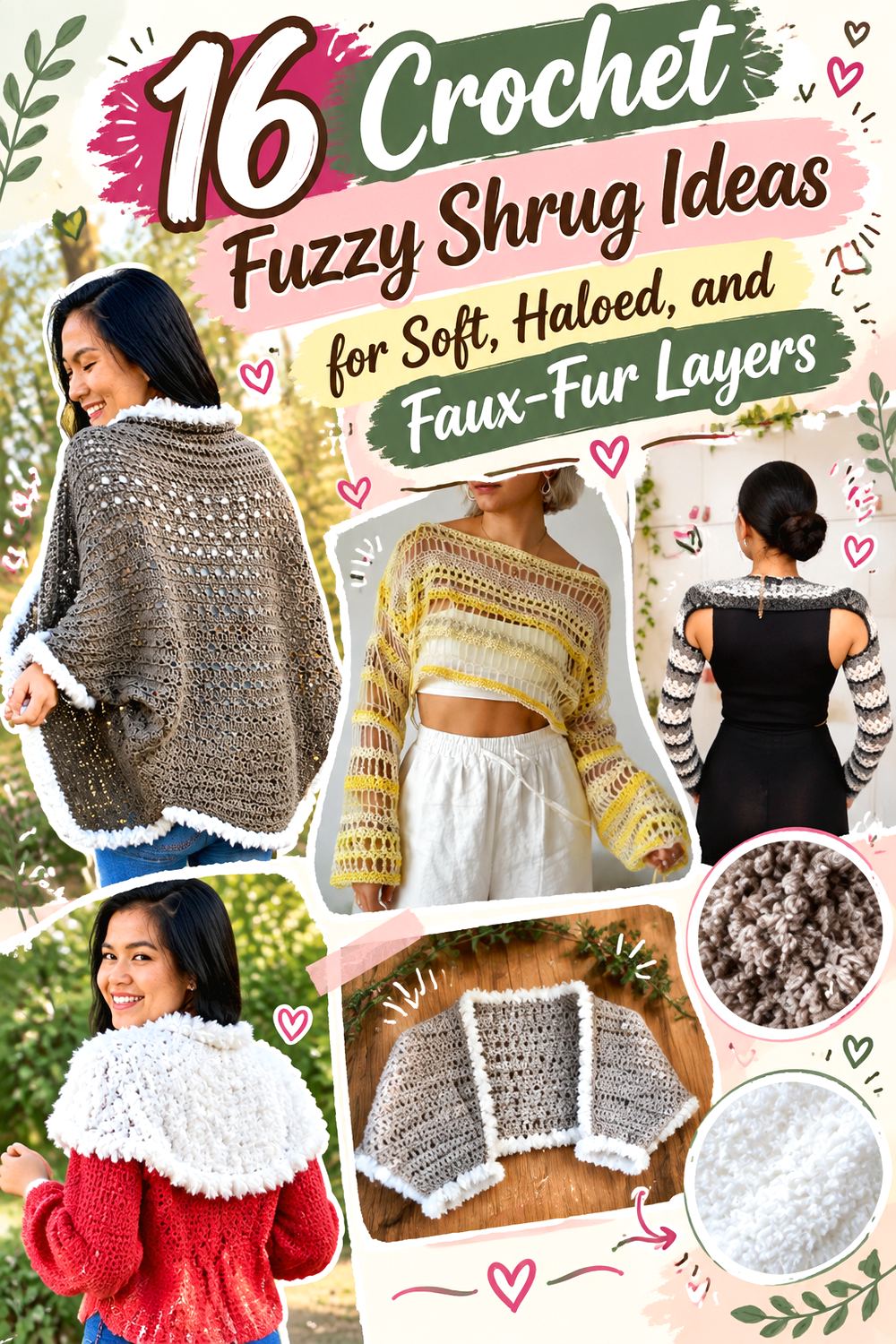
16 Crochet Fuzzy Shrug Ideas for Soft, Haloed, and Faux-Fur Layers
A fuzzy crochet shrug can range from an almost weightless mohair sleeve layer to a substantial faux-fur bolero, so choosing one involves more than picking the fluffiest yarn. Some designs put the texture everywhere, while others reserve it for cuffs or edging. You will also find open mesh, Tunisian crochet, bold back motifs, blanket-style cocoons, bell sleeves, and compact cropped shapes.
The 16 ideas below emphasize those differences rather than repeating one silhouette in new colors. Each project is paired with an original tutorial from its designer or creator, along with practical checkpoints for yarn behavior, fit, stitch visibility, and adaptation. Use the list to decide whether you want delicate halo, dramatic fur, lightweight volume, or a fuzzy accent—and then check the credited tutorial for the creator’s exact construction details.
Quick List
- Crochet Mixed-Fiber Eyelash Bolero
- Crochet Three-Tone Mohair Collar Shrug
- Crochet Mixed-Texture Mohair Mesh Shrug
- Crochet Mohair-Halo Tunisian Cocoon Shrug
- Crochet Blown-Alpaca Blanket Shrug
- Crochet Fluffy Color-Block X-Stitch Shrug
- Crochet Fluffy Mandala-Back Cocoon Shrug
- Crochet Alpaca-Halo Ribbed Collar Shrug
- Crochet Alpaca-Glitz Evening Bolero
- Crochet Alpaca Tulip-Square Back Shrug
- Crochet Faux-Fur Square Bolero
- Crochet Faux-Fur-Trim Cocoon Shrug
- Crochet Treble-Stitch Mohair Sleeve Shrug
- Crochet Plush Pink Mohair Bolero
- Crochet Fuzzy Fairy Bell-Sleeve Shrug
- Crochet Faux-Fox Statement Shrug
Choosing the Right Kind of Fuzz
Not every fuzzy yarn creates the same fabric. Fine mohair or kid-silk strands generally produce a light halo that can soften stitch definition without hiding the entire structure. Eyelash and faux-fur yarns create a much stronger surface effect and may make individual stitches harder to see. Blown alpaca or wool blends can look lofty and substantial while behaving differently from long-pile novelty yarn.
That difference matters when choosing a project. Detailed mesh, motifs, or textured stitches benefit from enough visibility for the pattern to remain readable. A very furry yarn may be better where the silhouette itself supplies the visual interest. Before substituting yarn, compare the tutorial’s intended fabric with a swatch of your alternative rather than relying only on the yarn-weight label.
Fit Checks Matter More With Fuzzy Yarn
Shrugs have relatively little body coverage, but small fit errors can still affect comfort. Shoulder span, upper-arm room, sleeve length, armhole depth, and the distance across the back deserve attention, especially in sleeve-only and tightly cropped constructions. Fuzz can make edges visually less distinct, so judging fit from appearance alone is not always reliable.
For made-to-measure designs, take measurements over the kind of clothing you expect to wear underneath. For sized patterns, compare the stated finished dimensions with a garment that already fits the way you want. If a fuzzy strand is difficult to unravel, try the piece on at logical construction checkpoints rather than discovering after finishing that the sleeves restrict movement or the back is pulling.
Swatching, Finishing, and Care
A fuzzy shrug is a particularly good reason to make a representative fabric sample. Check whether you can identify stitches comfortably, whether the fabric bends rather than standing stiffly, and whether the surface texture overwhelms an important lace or motif design. When two yarns are held together, the combination—not either yarn individually—is what determines the working fabric.
Finishing also deserves patience. Dense fur can conceal joins well, but it can make finding them again difficult. Haloed fibers may catch during frogging, so avoid pulling aggressively if you need to undo work. Washing and blocking requirements vary widely among acrylic faux fur, mohair, alpaca, wool, cotton blends, metallic yarns, and mixed constructions. Follow the yarn labels and the original designer’s guidance instead of assuming every fuzzy shrug should be treated alike.
1. Crochet Mixed Fiber Eyelash Bolero
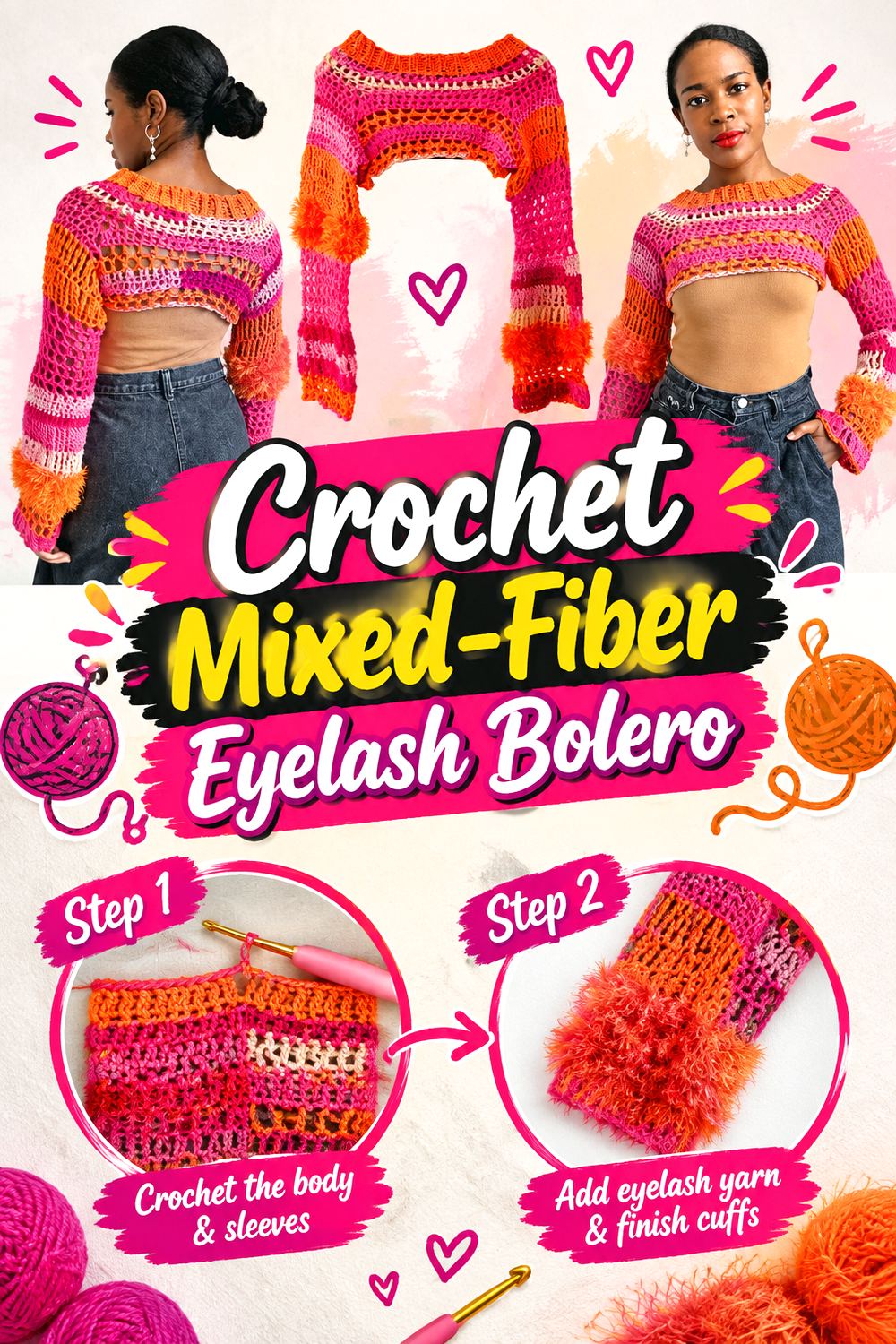
This bolero is a strong choice when you want fuzz to become part of a deliberately eclectic fabric rather than a uniform surface. Cactusladycreation’s source design mixes yarn types, including eyelash yarn, with other medium and bulky options and presents several sleeve-motif possibilities. The result has a collage-like quality that separates it from a conventional solid-fabric shrug.
Because several textures can occupy the same garment, this idea works especially well for someone who enjoys visible contrast between smooth stitches and feathery areas. The main planning question is not merely whether the colors coordinate, but whether the different yarns produce compatible thickness, stretch, and weight.
Why Mixed Fuzz Changes Stitch Visibility
Eyelash fibers can cross over neighboring stitches and partially disguise the loops you would normally use as visual landmarks. If you combine them with smoother yarn, expect the working experience to change from section to section. Place stitch markers wherever shaping or alignment matters instead of depending entirely on what you can see. A small mixed-yarn sample can also reveal whether one section becomes dramatically thicker than the rest.
Use the Sleeve Motifs Deliberately
The original tutorial presents multiple motif possibilities for the sleeves, which gives this design more visual flexibility than a plain rectangular bolero. If you introduce particularly fuzzy yarn into a motif section, check that the shape remains recognizable. A complex detail that disappears beneath a long pile may contribute less than a simpler motif bordered by fuzz, while smoother sections can preserve clearer geometry.
Original Tutorial and Creator Credit
Creator/Site: Cactusladycreation
2. Crochet Three Tone Mohair Collar Shrug
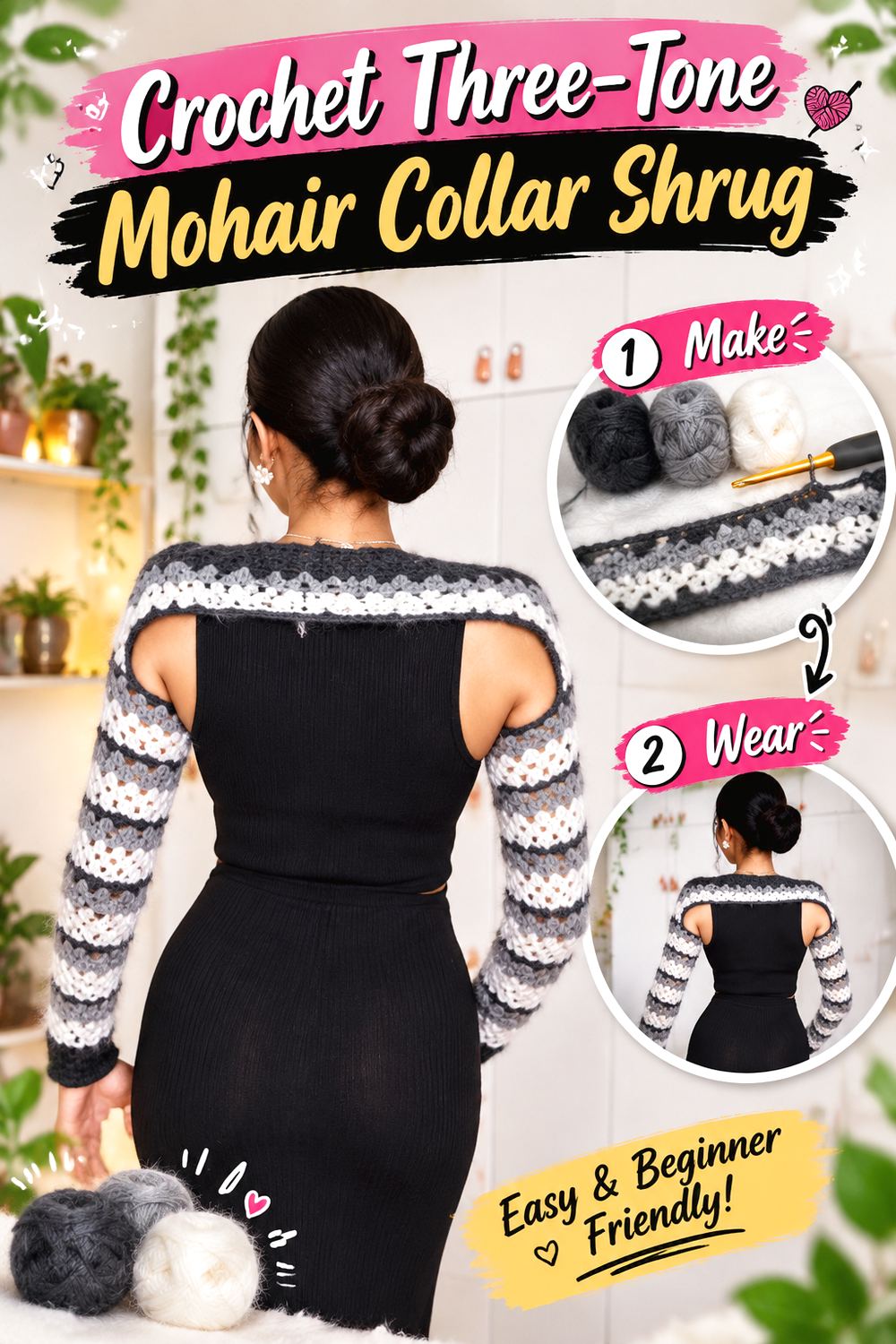
For a lighter fuzzy effect, this sleeve-style shrug keeps the silhouette minimal and lets mohair supply the softness. Crochet with Aisha’s tutorial uses Hobbii Diablo and works with multiple colors, creating a fitted arm-and-collar layer rather than a deep cocoon. That makes it useful over dresses, camisoles, or tops where you want the sleeves to be the focal point without covering the front.
A multicolor mohair piece also offers a different kind of contrast from chunky color blocking. The halo can visually blur neighboring shades, especially when they are close in value, so color placement becomes part of the texture decision. Keep fit checks focused on the shoulders, sleeve circumference, and how comfortably the connecting section sits across the upper back.
Let Mohair Color Changes Read Clearly
If you want each shade to remain obvious, compare the yarns side by side under normal lighting before committing to the sequence. A diffuse halo can soften a boundary that looks sharp in the skein. High contrast creates stronger bands, while neighboring tones can blend into a hazier gradient. Neither approach is inherently better, but deciding intentionally prevents the finished coloring from feeling accidental.
Test Sleeve Mobility Before Finishing
A sleeve-only shrug places most of its fit responsibility around the arms and upper back. Try the developing piece with your arms forward, raised, and relaxed whenever the construction permits. A garment that looks correct while standing still can still pull across the shoulder blades. If you substitute a less elastic yarn for the tutorial’s mohair, this mobility check becomes even more useful.
Original Tutorial and Creator Credit
Creator: Crochet with Aisha
3. Crochet Mixed Texture Mohair Mesh Shrug
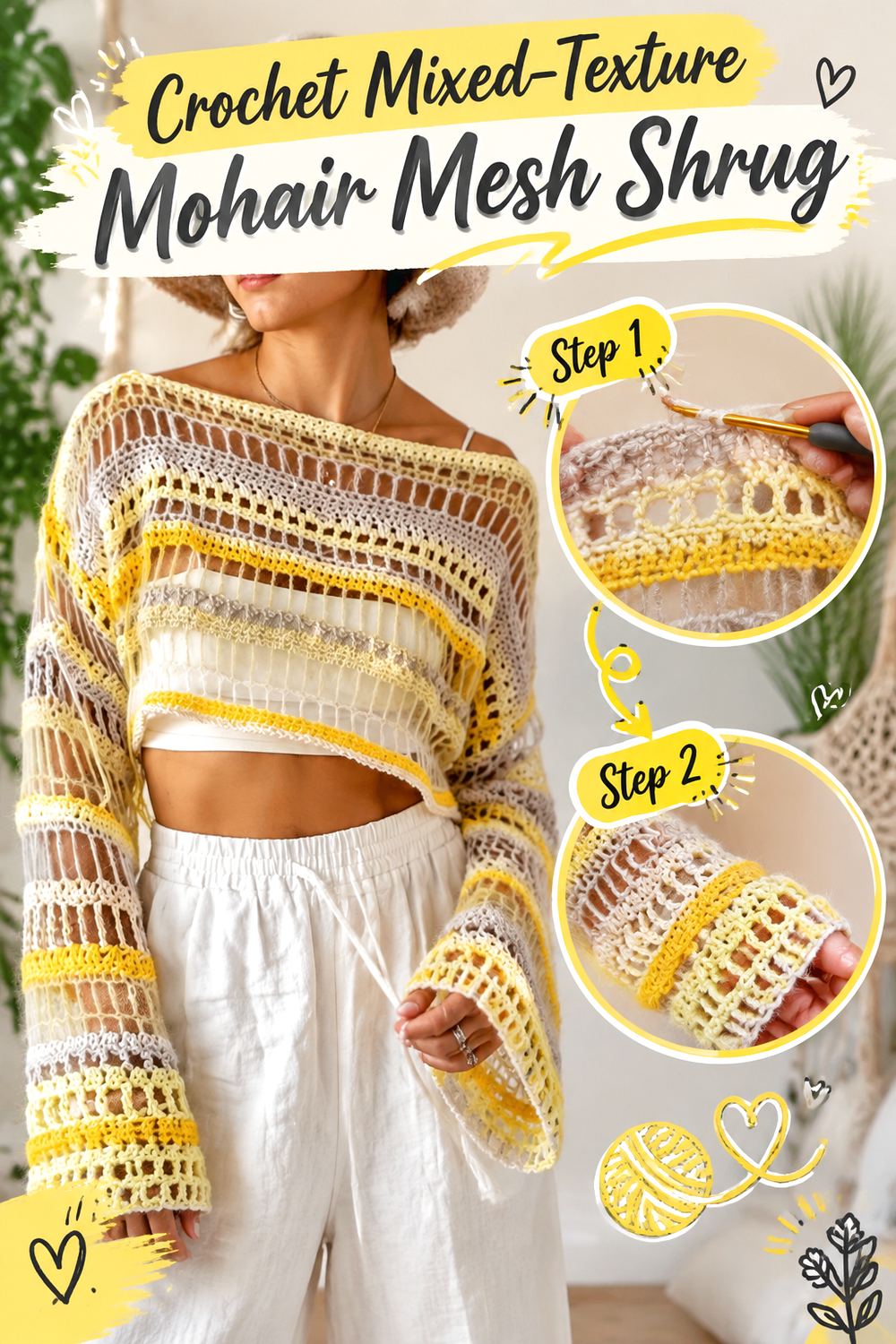
BELINA BELLWOOD’s tutorial takes the fuzzy sleeve concept in a more graphic direction by combining mohair with several stitch-pattern sections. Instead of allowing the fiber halo to do all the visual work, the design alternates open and more substantial textures across the garment. That gives it a light, fashion-forward appearance while providing more surface variation than a single-mesh shrug.
This option makes sense if you like the transparency of mesh but want the sleeves to remain visually interesting from shoulder to cuff. It also places greater importance on consistent transitions. The eye will notice where one texture meets the next, so width, tension, and the behavior of the mohair should remain reasonably balanced across those changes.
Balance Solid and Mesh Bands
Open sections can drape and stretch differently from denser stitch sections even when the same yarn is used throughout. Lay the work flat occasionally and check whether a dense band is pulling narrower or an airy section is spreading wider. With fuzzy yarn, the halo may disguise small inconsistencies, but it will not correct significant differences in fabric width or sleeve circumference.
Watch Transition Areas for Pulling
Changes between stitch patterns are natural places for tension to shift. If a new section contains substantially more open space, confirm that the transition still moves comfortably over the arm. Avoid correcting a width difference simply by pulling the next section tighter; that can create a visible pinch. Comparing the working width against the opposite sleeve or a measurement reference is more dependable.
Choose Contrast by Texture, Not Just Color
This design can remain visually varied even in one color because the stitch patterns create different densities. If you choose a highly variegated or very long-haired yarn, ask whether it will compete with those textural changes. A quieter color can help four different pattern effects remain legible, while a stronger halo produces a softer, less graphic interpretation.
Original Tutorial and Creator Credit
Creator: BELINA BELLWOOD
4. Crochet Mohair Halo Tunisian Cocoon Shrug
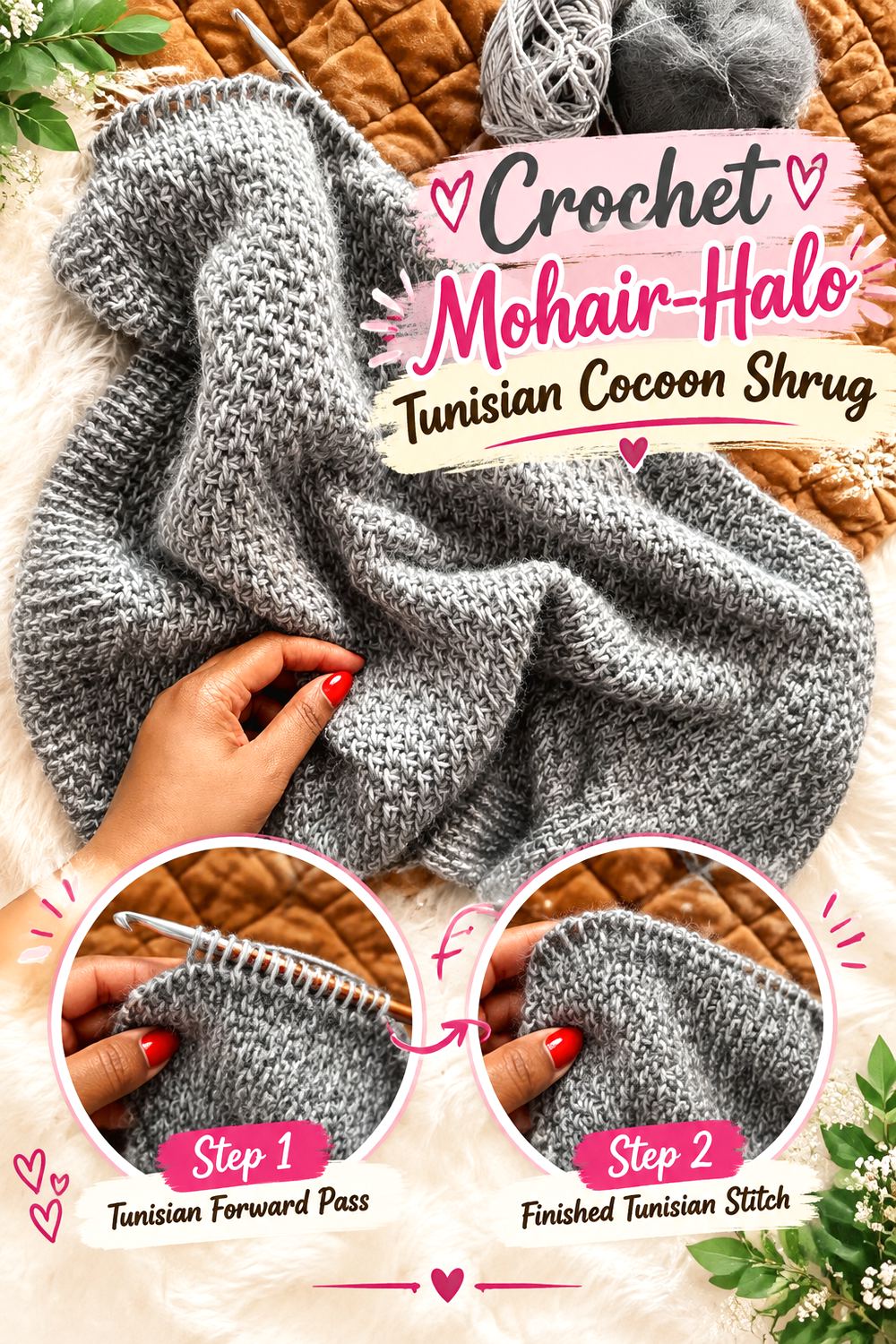
The Sabrina Shrug from TL Yarn Crafts offers a distinctly different route to fuzz: Tunisian crochet worked with a base yarn and kid-silk mohair held together. Toni Lipsey describes a wool/cotton DK paired with Friends Kid Silk, and the garment develops from a simple rectangular concept into an open-front cocoon-style cardigan.
That combination makes this a useful idea for crocheters who want the visual softness of mohair without making the entire fabric from a delicate strand alone. The cocoon silhouette also provides more torso coverage than sleeve-only shrugs. If you change either yarn, assess the combined fabric rather than matching only one component, because both strands contribute to thickness, drape, warmth, and the final halo.
Tunisian Fabric Needs a Drape Check
Tunisian crochet can produce a fabric with a different hand from conventional crochet, so do not judge the proposed substitution by yarn softness alone. Hold your sample vertically and see whether it falls naturally or remains board-like. For a cocoon shape, some body can be useful, but excessive stiffness can prevent the back and opening from settling comfortably around the wearer.
Held-Together Yarns Change the Hand
Pairing a haloed strand with a smoother base yarn can alter color, density, and elasticity at the same time. Before buying enough yarn for a garment, make a sample with both strands held as you plan to use them. If you replace the mohair with another fuzzy fiber, compare not just appearance but also how easily the combined fabric bends and how heavy it feels.
Confirm Cocoon Depth Before Seaming
Cocoon shrugs depend heavily on the dimensions of the main fabric before it becomes a garment. A deeper panel creates more fabric around the lower back and opening, while a shallower one feels more cropped. Compare the tutorial’s intended measurements with your preferred coverage before assembly. Adjusting a large panel is usually simpler before the seams define the armholes.
Original Tutorial and Creator Credit
Creator/Site: TL Yarn Crafts — Toni Lipsey
5. Crochet Blown Alpaca Blanket Shrug
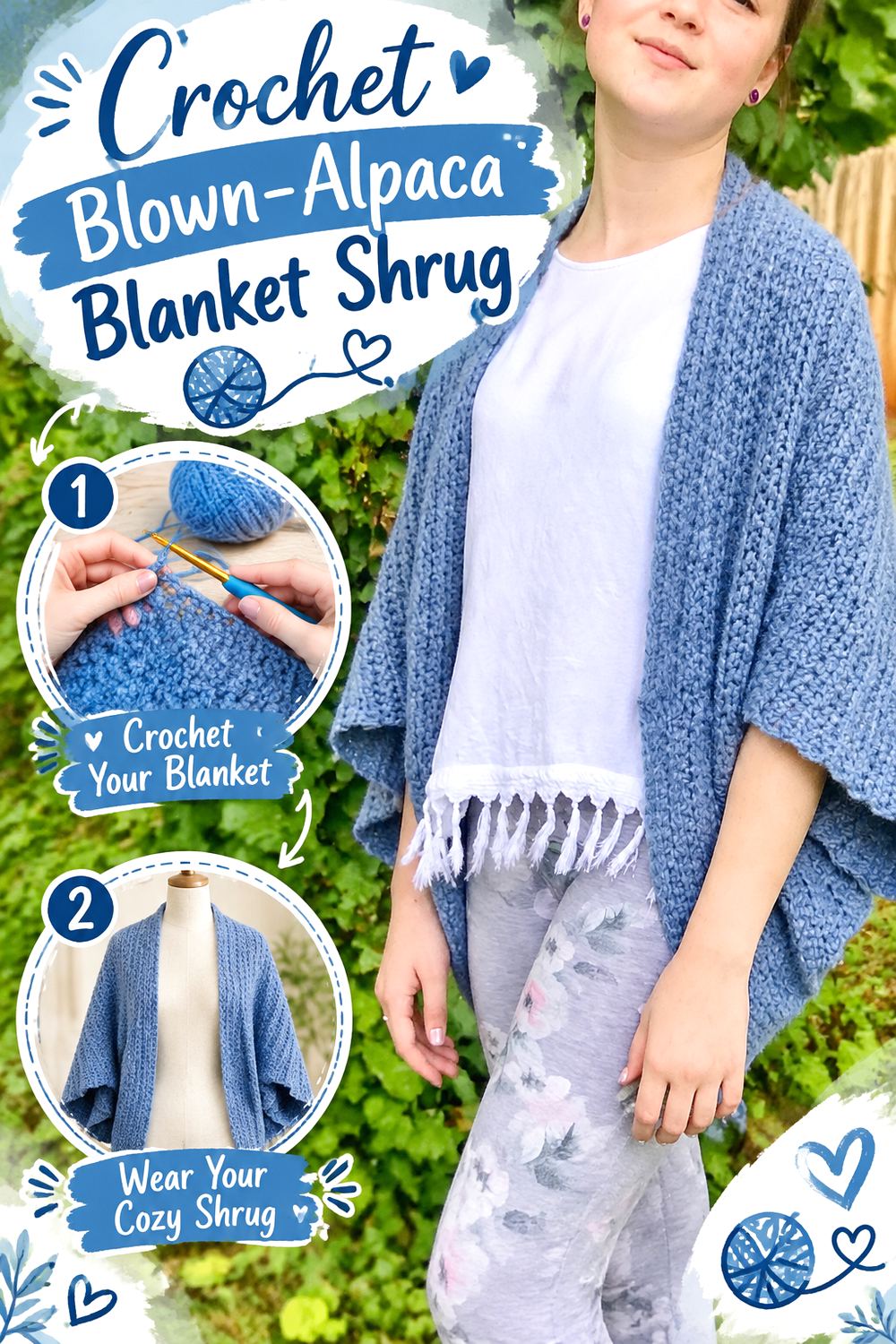
Banana Moon Studio’s Ada Shrug uses Cascade Yarns Aereo, a blown-construction yarn containing merino wool, baby alpaca, and nylon. The designer describes it as lightweight and fluffy, making this project a useful alternative to both wispy mohair and long-pile faux fur. The basic garment is a blanket-style shrug, so much of its character comes from the combination of generous fabric and lofty yarn.
This style is appealing when you want softness and visible volume without turning every stitch into fur. The broad panel also means yarn substitution can noticeably change the garment’s total weight. A denser replacement may make the same dimensions feel considerably more substantial on the shoulders.
Measure the Blanket Panel Against the Wearer
With a generous rectangular construction, panel dimensions directly influence both back coverage and the resulting arm openings. Before finishing, hold the fabric around the wearer in approximately its future orientation. This catches an overly deep or shallow fit while changes are still manageable. Pay particular attention to whether the fabric bunches excessively beneath the arms or pulls when reaching forward.
Treat the Seams as Structural Areas
A lofty yarn may feel light in the hand, but a full shrug still places repeated movement on its joined areas. When substituting yarn or changing size, avoid assuming the same seam treatment will behave identically. The finished join should flex with the surrounding fabric without becoming an obvious rigid ridge. Follow the designer’s assembly method and check the seam periodically as you work.
Original Tutorial and Creator Credit
Creator/Site: Banana Moon Studio — April Garwood
6. Crochet Fluffy Color Block X Stitch Shrug
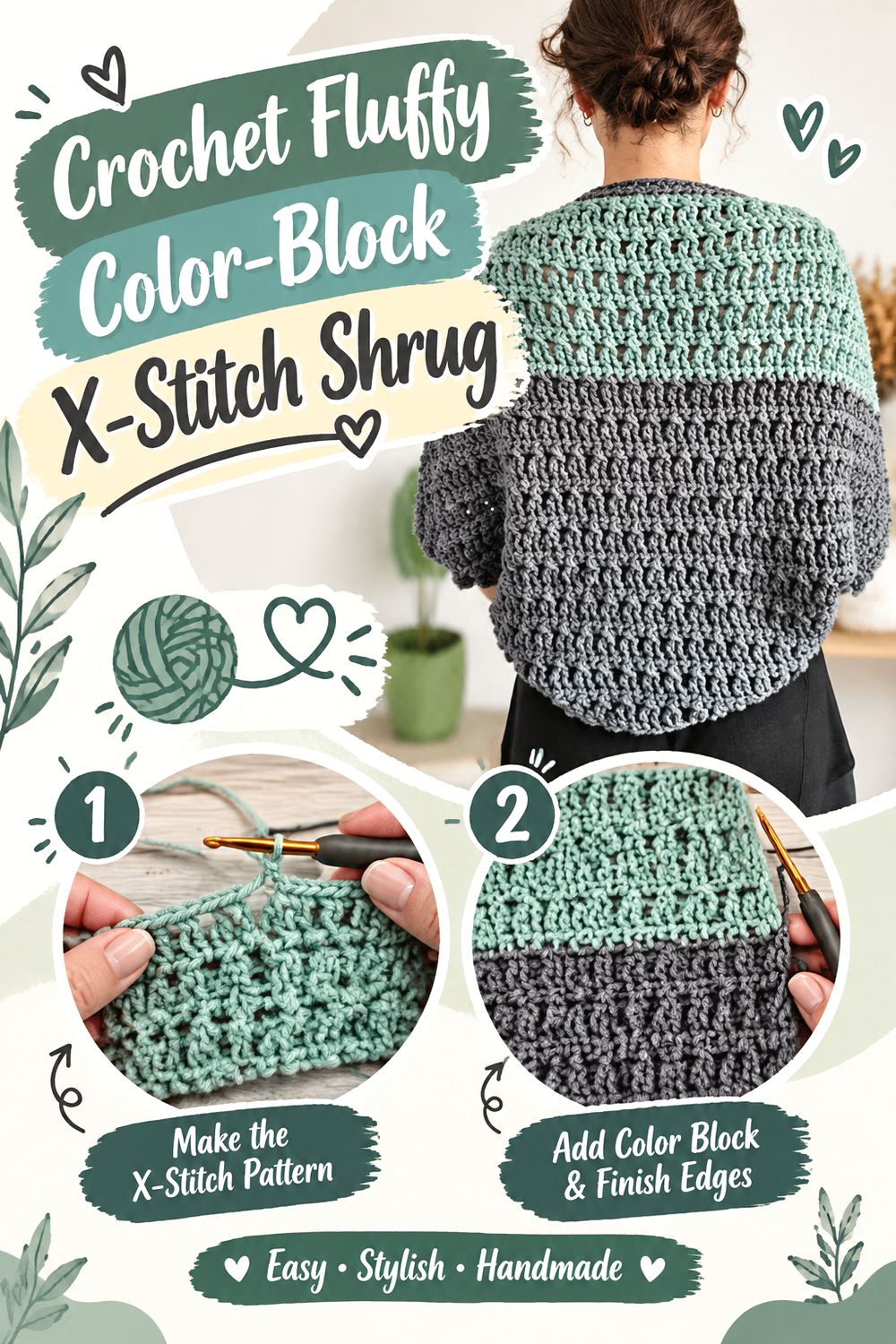
Sandra Stitches pairs a warm, fluffy wool-acrylic yarn with color blocking and an open X-style stitch effect, giving this shrug a more graphic surface than a uniformly plush piece. The source uses Kartopu Melange Wool and constructs the wearable from a crocheted rectangle that is joined into shrug form.
This is a practical middle ground if you want obvious softness while still seeing the crochet pattern. The open texture keeps the design visually lighter than dense faux fur, while the color divisions give you another tool for shaping the overall look. Before substituting a dramatically hairier yarn, consider whether the X openings will remain visible enough to justify choosing this particular construction.
Color Blocks Can Control Visual Weight
Darker, lighter, or more saturated sections can make different portions of a wide shrug appear more prominent. Instead of distributing colors randomly, decide where you want the eye to land when the garment is worn. Fuzzy fibers soften boundaries somewhat, so a sample showing the actual color change can reveal whether the division will look crisp, blended, or almost lost.
X-Stitch Openings Need Consistent Tension
An open pattern shows irregular spacing differently from dense fabric. Check the shape of several neighboring openings while the piece is relaxed rather than stretched. If one area starts becoming noticeably tighter, correct your working tension before that difference accumulates across a large rectangle. Consistency is especially useful near the sections that will later bend around the arms.
Original Tutorial and Creator Credit
Creator/Site: Sandra Stitches — Sandra Regev
7. Crochet Fluffy Mandala Back Cocoon Shrug
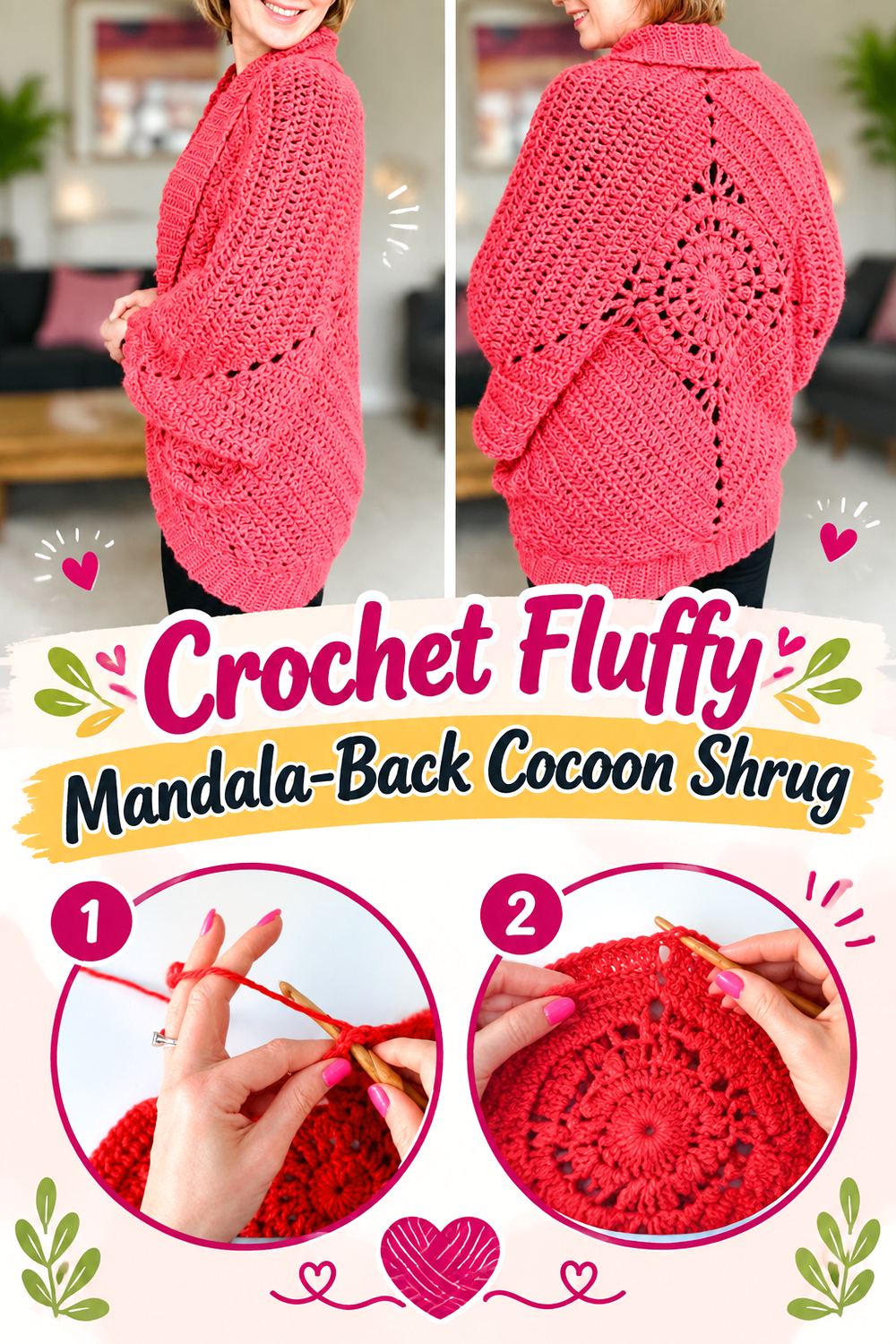
If you want the back of the shrug to carry most of the design, the Dream Catcher Cardi from Ned & Mimi provides a strong reference. Its defining feature is a large central motif that expands into a cocoon-style cardigan, and one of the documented versions uses Hobbii Fluffy Day XL. The source also discusses bulky-yarn options for the design.
That makes this idea quite different from plain rectangle shrugs: the fuzzy surface must cooperate with a motif that is meant to remain noticeable. It suits someone who wants a dramatic back view and a roomy silhouette. The key trade-off is texture versus definition—more halo can make the piece look softer, but too much can blur the motif that gives the garment its identity.
Protect the Center Motif From Distortion
A large motif should stay balanced as it expands. Lay the work flat periodically and check whether it is remaining reasonably even rather than cupping or rippling heavily. Yarn substitution can change how readily the motif spreads. If your chosen fluffy yarn produces a significantly denser fabric, compare your developing piece with the designer’s intended dimensions instead of relying only on visual similarity.
Fluffy Bulky Yarn Enlarges the Visual Scale
Thicker, fuzzier yarn can make each structural feature appear broader and softer. That may be exactly what you want for a dramatic cocoon, but it also means smaller details can merge into the surface. Before selecting colors, look at the motif from several feet away. If neighboring shades disappear into one another, stronger contrast may preserve the central design more effectively.
Ribbing Should Support the Cocoon Shape
Any edging or ribbed finish around a cocoon opening has to cooperate with a large amount of body fabric. Check that it lies smoothly without pulling the opening inward or flaring away from it. A substituted yarn with different elasticity may need particular attention here. Follow the tutorial’s finishing approach first, then evaluate the garment after the edge has settled.
Original Tutorial and Creator Credit
Creator/Site: Ned & Mimi
8. Crochet Alpaca Halo Ribbed Collar Shrug
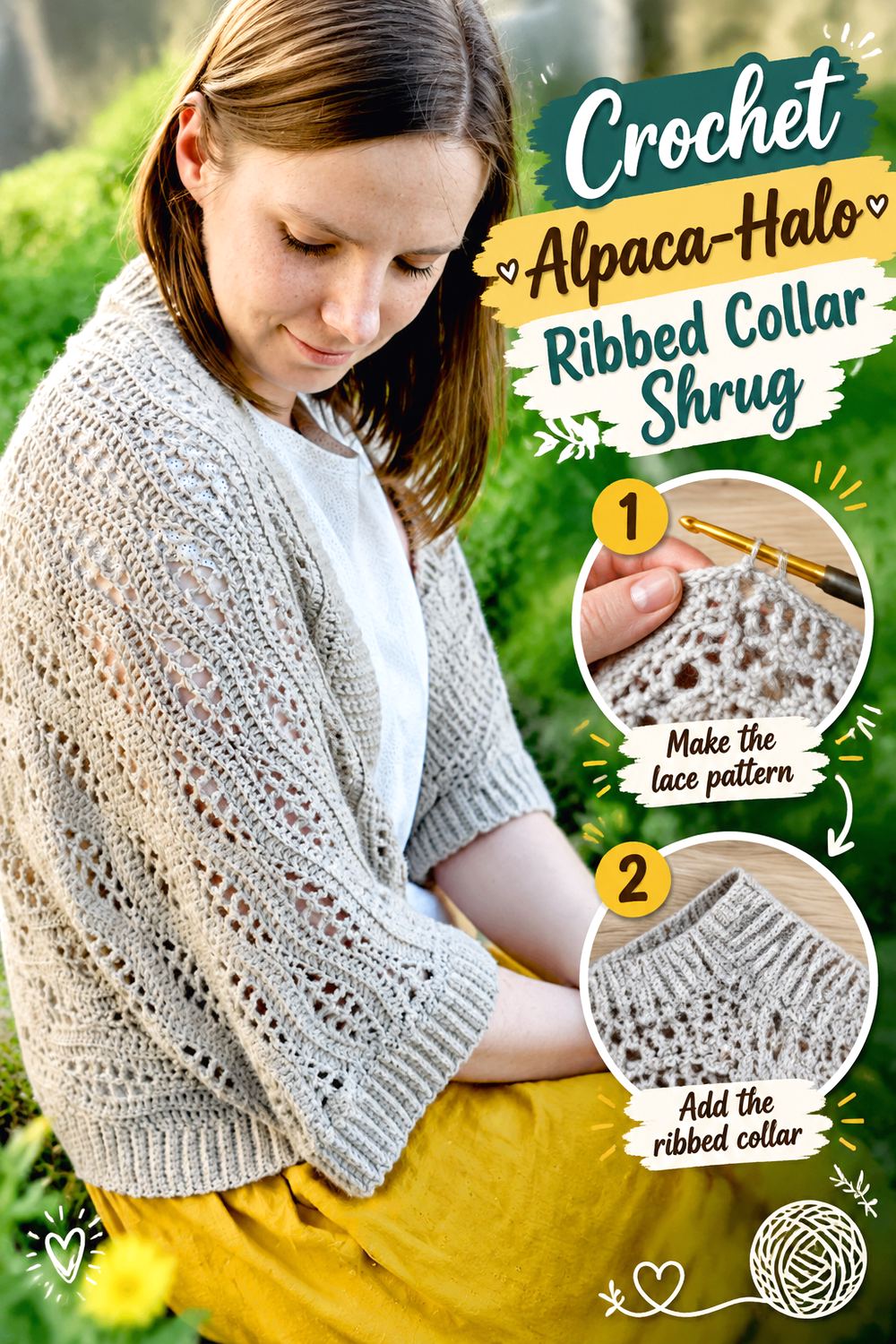
The Nalu Shrug from MyCrochetory brings a subtler type of fuzz through an alpaca-containing yarn rather than a long novelty pile. The source uses DROPS Nord, an alpaca, polyamide, and wool blend, and finishes the garment with a substantial ribbed collar. The designer also emphasizes swatching and blocking when checking the fabric.
This option works well for readers who want a softly haloed surface while keeping the underlying crochet more visible. The collar gives the opening greater visual definition than many simple cocoons, so the project can feel more cardigan-like when worn. Because alpaca-containing fabrics may behave differently after washing, a representative swatch is particularly useful before altering yarn, size, or length.
A Ribbed Collar Can Change the Hang
A wide collar adds both weight and structure around the opening. If the body fabric is very soft but the ribbing becomes dense, the two areas may hang differently. Check the collar as it grows rather than assuming more depth will always improve the garment. The best proportion is one that frames the opening without making the back neckline feel heavy or pulled.
Judge the Fabric After Its Intended Finish
MyCrochetory explicitly recommends washing and blocking a swatch before proceeding. That is useful for any haloed substitution because the fabric you see directly from the hook may not represent its final dimensions or drape. Treat the finished sample as your comparison point before making major width or length adjustments, while still following the yarn manufacturer’s care directions.
Adjust Length Without Losing Balance
Adding body length changes more than coverage: it increases the amount of fabric hanging beneath the armholes and can alter how the ribbed opening sits. If you want a longer version, compare the extra depth with the wearer’s height and preferred layering pieces. Extend deliberately rather than assuming the proportions of a cropped shrug will remain unchanged at cardigan length.
Original Tutorial and Creator Credit
Creator/Site: MyCrochetory
9. Crochet Alpaca Glitz Evening Bolero
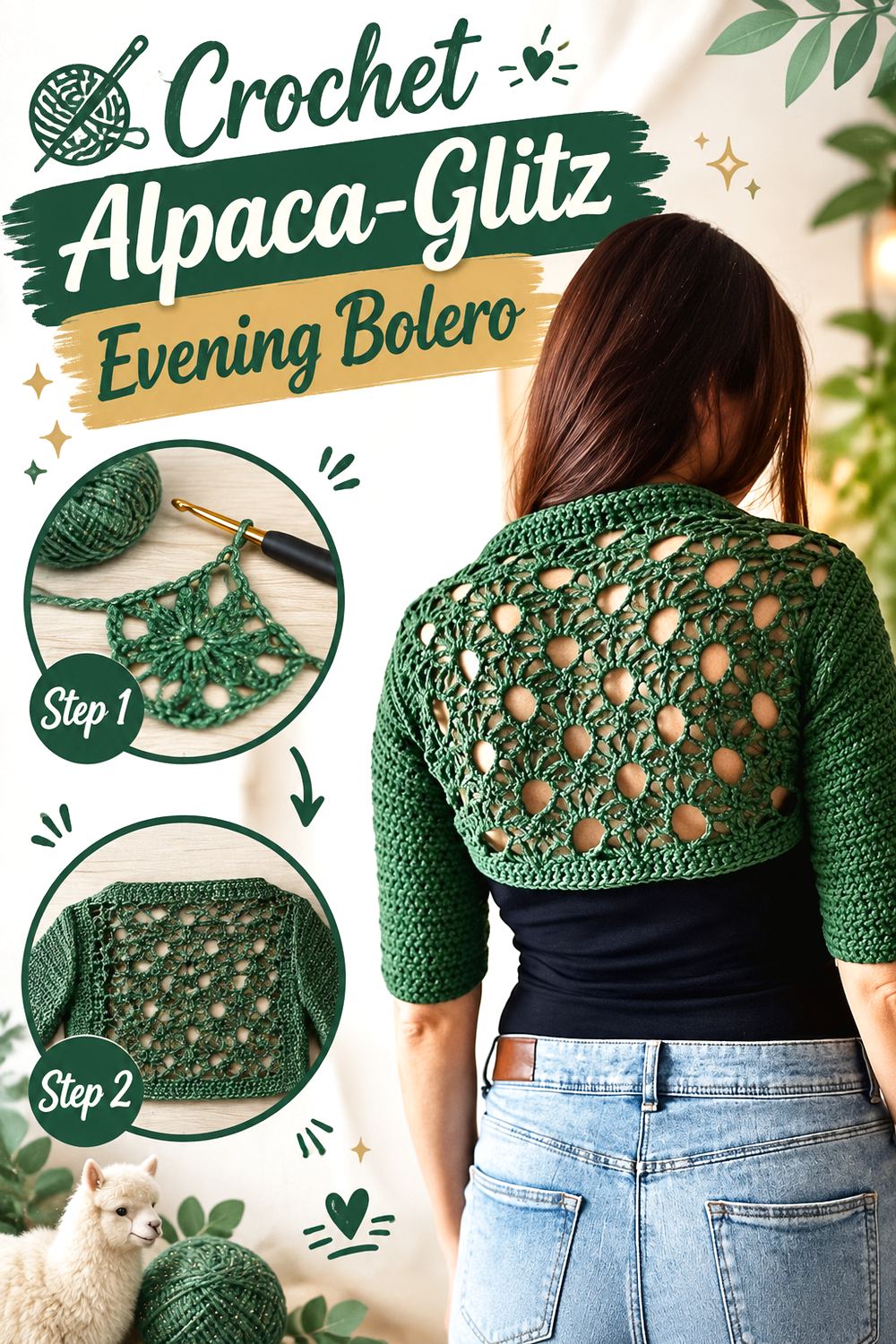
RaffamusaDesigns’ Glitzy Bolero offers a dressier approach to fuzzy texture. One documented yarn option is Ice Yarns Alpaca Glitz, which combines alpaca and wool with other fibers plus a metallic component. The project is a cropped bolero rather than a deep cocoon, so it can add surface interest without covering much of the outfit underneath.
This makes it useful for occasion styling where a full faux-fur shrug would feel too visually heavy. The fiber halo and glint can already create plenty of detail, so additional stitch complexity should remain readable rather than competing with the yarn. Check the front opening and sleeve fit over the exact type of dress or top you intend to pair with it.
Sparkle and Halo Compete With Fine Detail
Metallic highlights catch light while fuzzy fibers soften edges. Together they can make small stitch details less obvious, especially under evening lighting. Work a sample and view it both close up and at normal conversational distance. If the crochet structure disappears entirely, a simpler fabric may showcase the special yarn more effectively than a highly intricate pattern.
Keep the Bolero Edge From Waving
Cropped open-front pieces put their edges in a highly visible position around the torso. During finishing, check that those edges are lying naturally rather than ruffling or pulling inward. Yarn substitutions can alter edge tension even when the main fabric appears acceptable. Blocking may help some fibers, but the appropriate method depends on the yarn, so follow the label and designer guidance.
Plan Layering Under Openwork
If the bolero contains visible openings, the garment underneath becomes part of the composition. A high-contrast base layer emphasizes every hole, while a similar shade produces a quieter texture. Try your swatch over likely clothing before deciding whether you want the stitch structure to stand out or let the fuzzy, glittering surface dominate.
Original Tutorial and Creator Credit
Creator/Site: RaffamusaDesigns
10. Crochet Alpaca Tulip Square Back Shrug
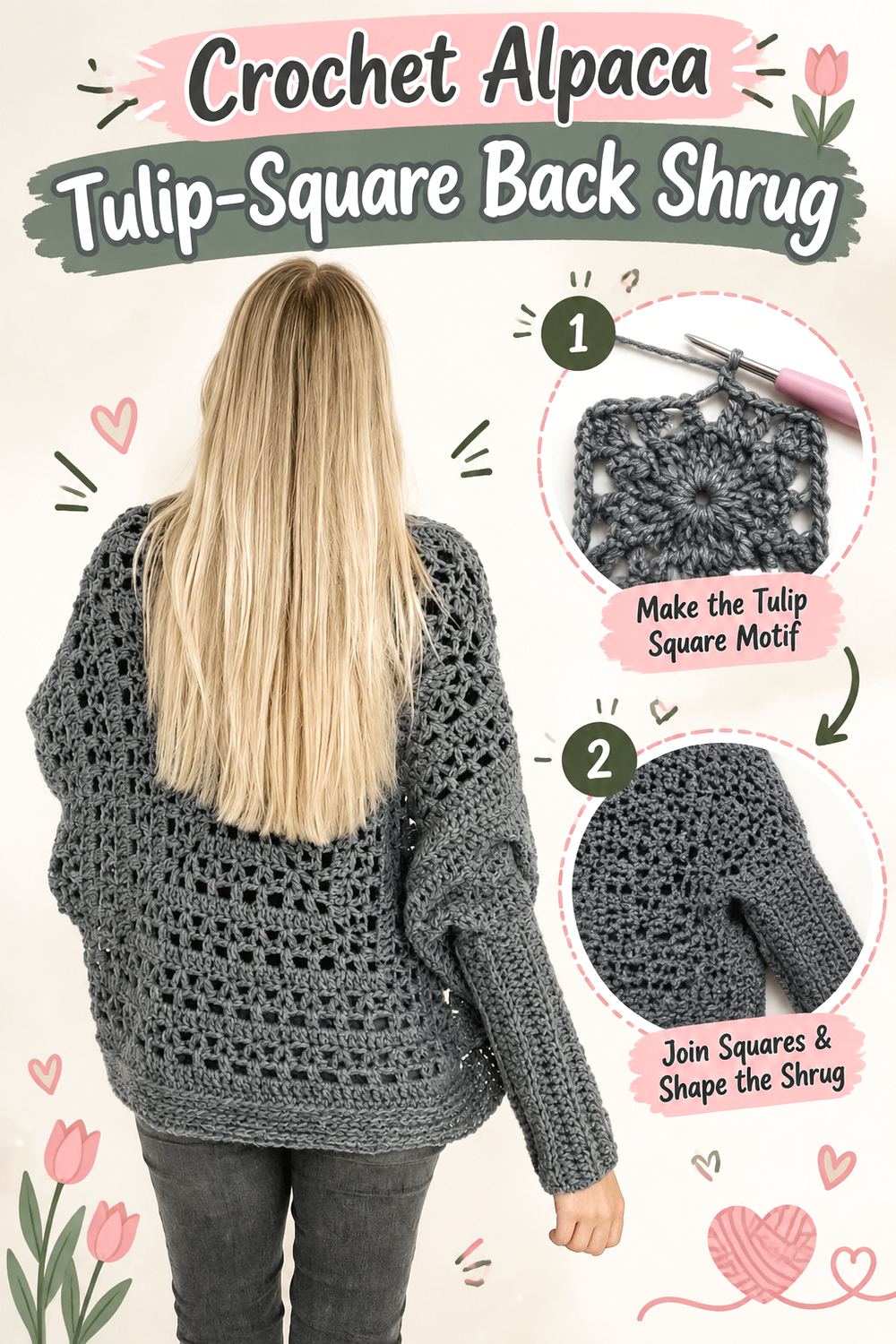
Wilmade’s Tulip Square Shrug is built around a large decorative square on the back, with front sections, sleeves, and a collar completing the garment. The source uses Lion Brand Touch of Alpaca, giving this idea a softer fiber character without hiding the motif beneath a full faux-fur pile.
This is a good direction when the back view matters as much as the fuzzy surface. It is more structured visually than a plain cocoon, and the contrast between the motif, sleeves, and collar creates several separate design zones. If you substitute a very fuzzy yarn, test it first on part of the motif; the project’s strongest feature depends on those shapes remaining legible.
Let the Back Motif Stay Legible
Long fibers can bridge across small openings and soften the boundaries between clusters. That can be attractive, but a heavily obscured square loses the reason for choosing a motif-centered shrug. Photograph your swatch from normal viewing distance rather than judging only with it in your hands. A moderate halo can unify the design while still allowing the tulip-inspired structure to read.
Match Sleeve Weight to the Square
The back and sleeves should feel like parts of the same garment even when their stitch structures differ. If your substituted yarn creates substantially denser sleeves, they may pull downward more strongly than the motif section. Compare the fabric weights and drape before completing both sleeves, especially if you are considering a heavier fuzzy yarn than the tutorial uses.
Use the Collar to Stabilize the Opening
A collar can visually frame a decorative back and give the front edges a more finished line. Check that it distributes smoothly around the opening instead of concentrating excess bulk at the neck. This is one area where a dramatically furry substitution may change the appearance most; keeping the collar slightly clearer can preserve the garment’s overall structure.
Original Tutorial and Creator Credit
Creator/Site: Wilmade — Wilma Westenberg
11. Crochet Faux Fur Square Bolero
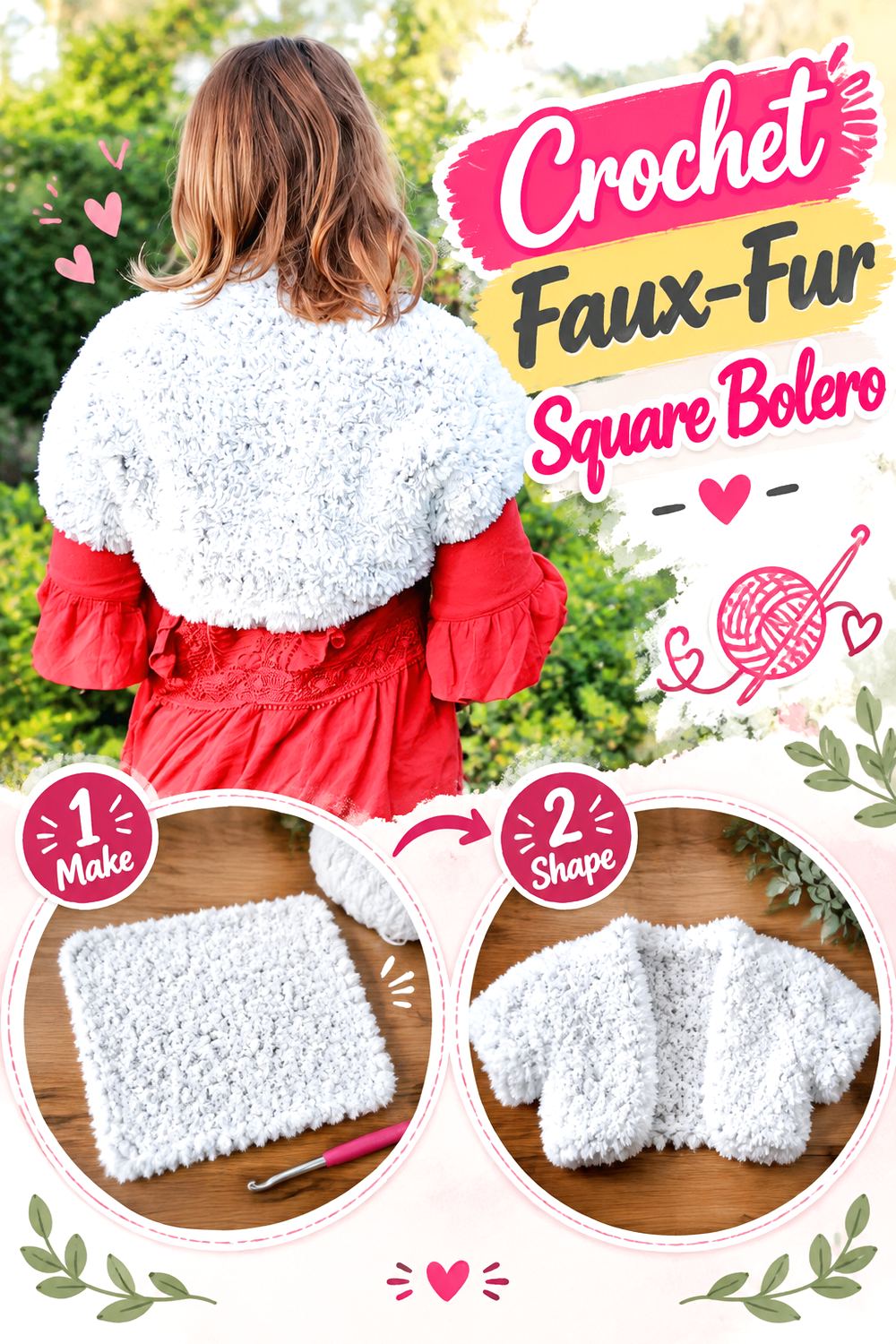
The Faux Real Bolero from E’Claire Makery puts faux fur across the entire garment rather than restricting it to trim. Claire Goodale’s design uses Lion Brand Go For Faux and begins from a simple square-based construction that becomes a wearable bolero when the corners are joined to form the arm openings. The designer also notes that the fur makes stitches difficult to see.
That combination makes the project useful if your priority is maximum plush effect with minimal visible stitch pattern. The silhouette, rather than intricate crochet texture, becomes the design feature. Because the yarn conceals the fabric so thoroughly, tactile stitch tracking and reliable markers can matter more than they would with ordinary smooth yarn.
Faux Fur Requires Tactile Stitch Tracking
With long pile, you may need to feel the underlying base strand to locate the next working point. Good lighting still helps, but sight alone may not be sufficient. Count or mark important intervals before they disappear beneath more fabric. If you are new to furry yarn, practice on a small sample first so you learn how its hidden foundation feels under your fingers.
Square Proportions Control the Armholes
A simple base shape does not mean fit is automatic. The relationship between square width and the joined sections affects shoulder coverage and the available arm opening. E’Claire Makery provides sizing and adjustment guidance in the original pattern, so consult those directions rather than improvising from the finished photograph. Check movement before weaving in every finishing end.
Original Tutorial and Creator Credit
Creator/Site: E’Claire Makery — Claire Goodale
12. Crochet Faux Fur Trim Cocoon Shrug
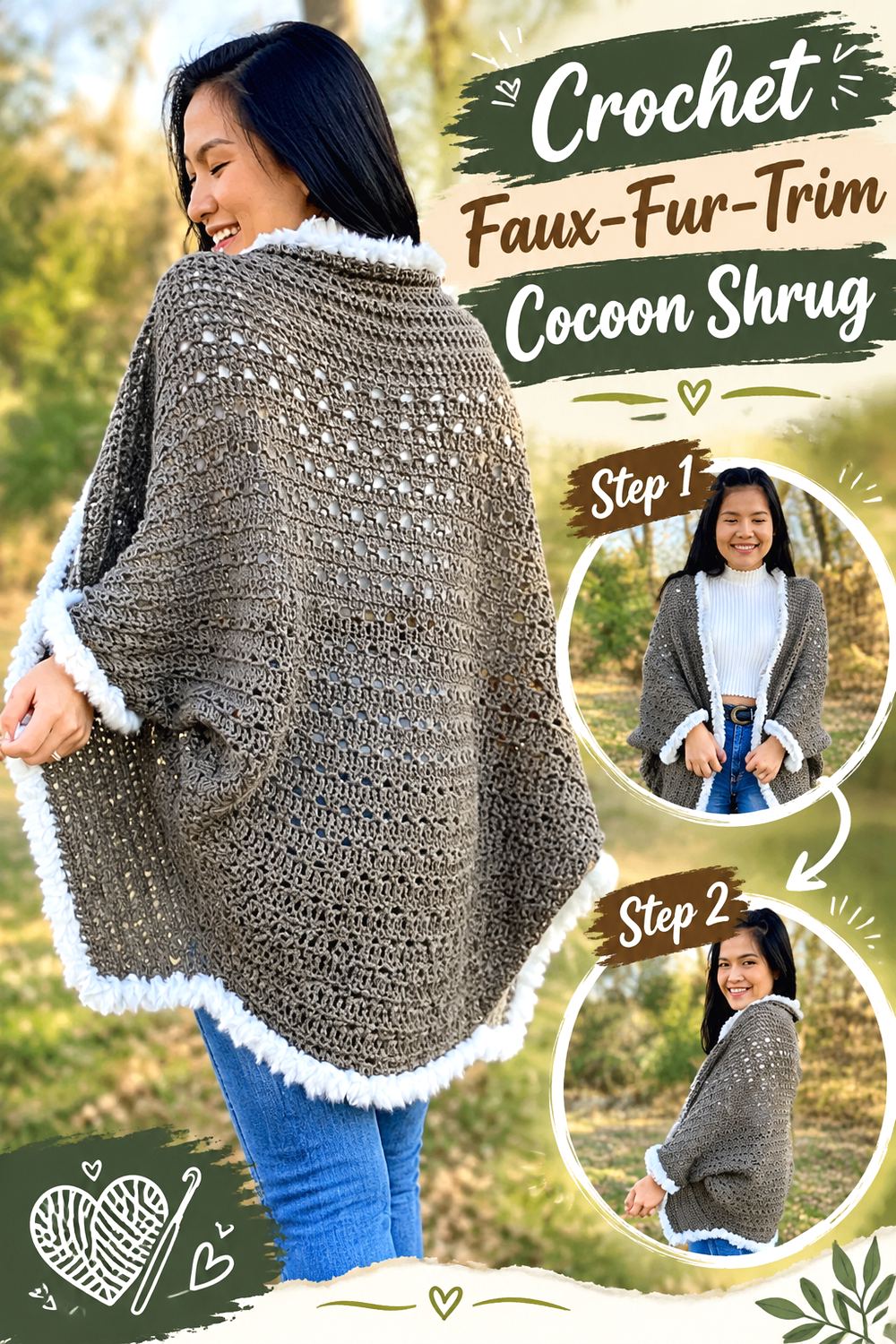
KnitcroAddict takes the opposite approach to full faux fur: the body uses a conventional medium-weight yarn, while Lion Brand Go For Faux appears around the body and armhole edges. The main piece is worked as one body section, joined at the sides, and finished with a collar, giving the fur a framing role rather than making it the entire fabric.
This is one of the more practical ideas if you like the appearance of faux fur but want the central crochet stitches to stay visible. It also makes yarn handling less demanding because only selected areas use the difficult-to-see pile. The contrast between body fabric and trim is the defining feature, so choose the two yarns as a pair rather than independently.
Reserve Fur for High-Impact Edges
A relatively small amount of fur can create a strong visual frame when it follows the opening and armholes. If you adapt the placement, concentrate the novelty yarn where it outlines the silhouette instead of scattering isolated fuzzy sections without a clear purpose. Keeping the body smooth also makes later repairs or fit adjustments easier to see.
Body Fabric and Trim Need Compatible Weight
The trim should not overwhelm the edge it is attached to. A very heavy substitute can pull on a lightweight body, while an extremely thin fur yarn may look sparse next to a substantial cocoon. Make a short test edge using both yarns together before committing to the full perimeter. Check whether the body still lies flat when the trim hangs freely.
Original Tutorial and Creator Credit
Creator/Site: KnitcroAddict
13. Crochet Treble Stitch Mohair Sleeve Shrug
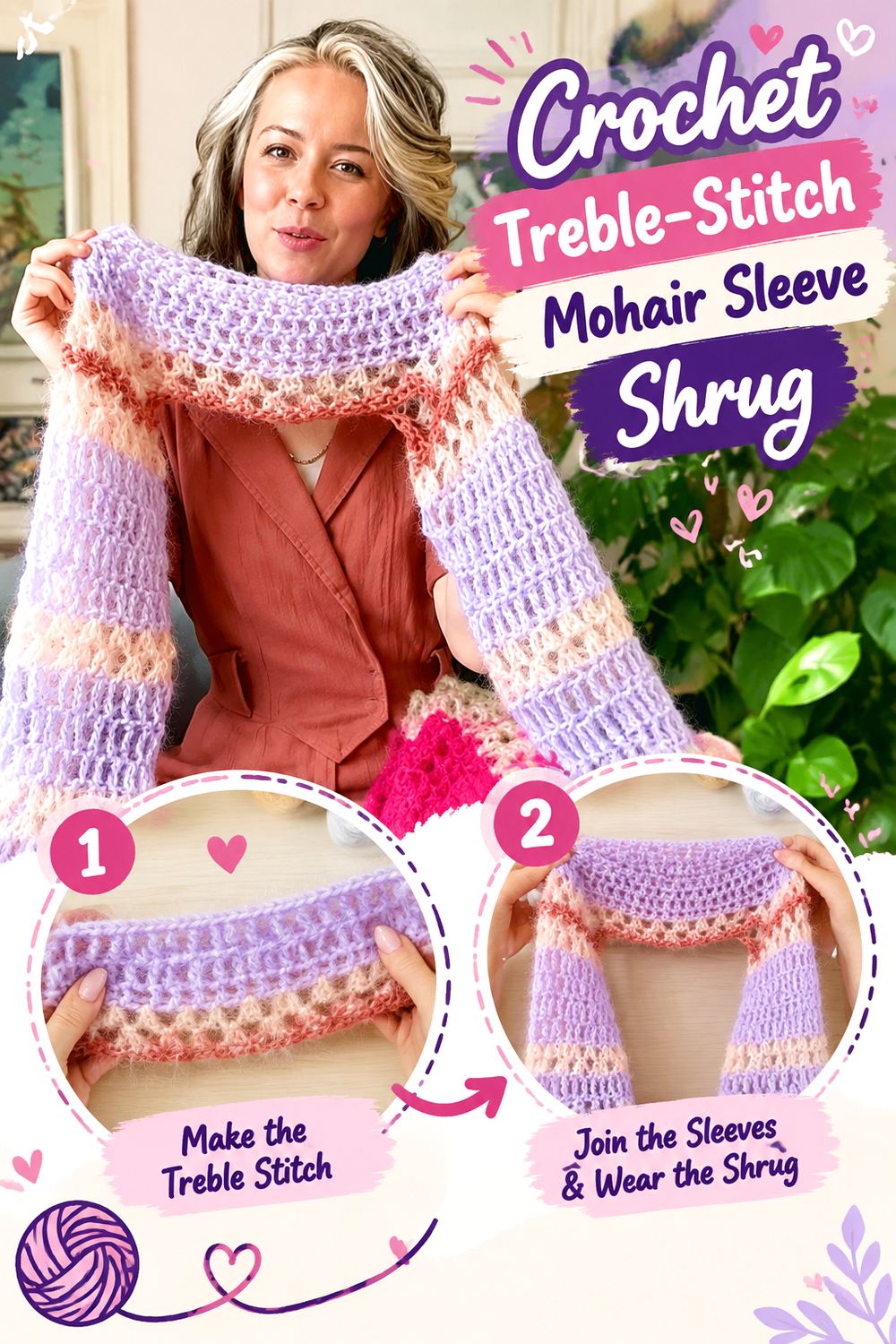
The “here comes treble sleeves” design from made in the moment is a made-to-measure sleeve shrug built around tall, open crochet and a very cropped body connection. The associated tutorial lists mohair options, making it a strong reference for achieving a wispy surface without turning the piece into a dense winter bolero. The design is categorized as a shrug/bolero and is intended to be customized to the wearer.
This idea is especially effective when you want long sleeves but almost no front coverage. The open construction also means the mohair halo occupies negative space, giving the garment a softer outline than the stitch structure alone would produce. Your most important checks are sleeve circumference, arm length, and freedom across the upper back.
Treble Fabric Benefits From Controlled Ease
Tall stitches create openness and can change length noticeably when the fabric hangs from the shoulder. Measure the sleeve while it is supported in a way that resembles wearing, not only while it lies compressed on a table. Enough room is useful for movement, but excessive width can make a very open sleeve feel unstable or catch more easily on surrounding objects.
Mohair Makes Frogging Less Forgiving
Fine haloed fibers can catch around neighboring loops when stitches are undone. Work deliberately at measurements or transition points where you are least certain, and avoid tightening every stitch excessively. If you need to unravel, separate the fibers patiently rather than pulling hard. A smooth companion strand, when the design calls for one, can also make the underlying stitch path easier to identify.
Original Tutorial and Creator Credit
Creator: made in the moment
14. Crochet Plush Pink Mohair Bolero
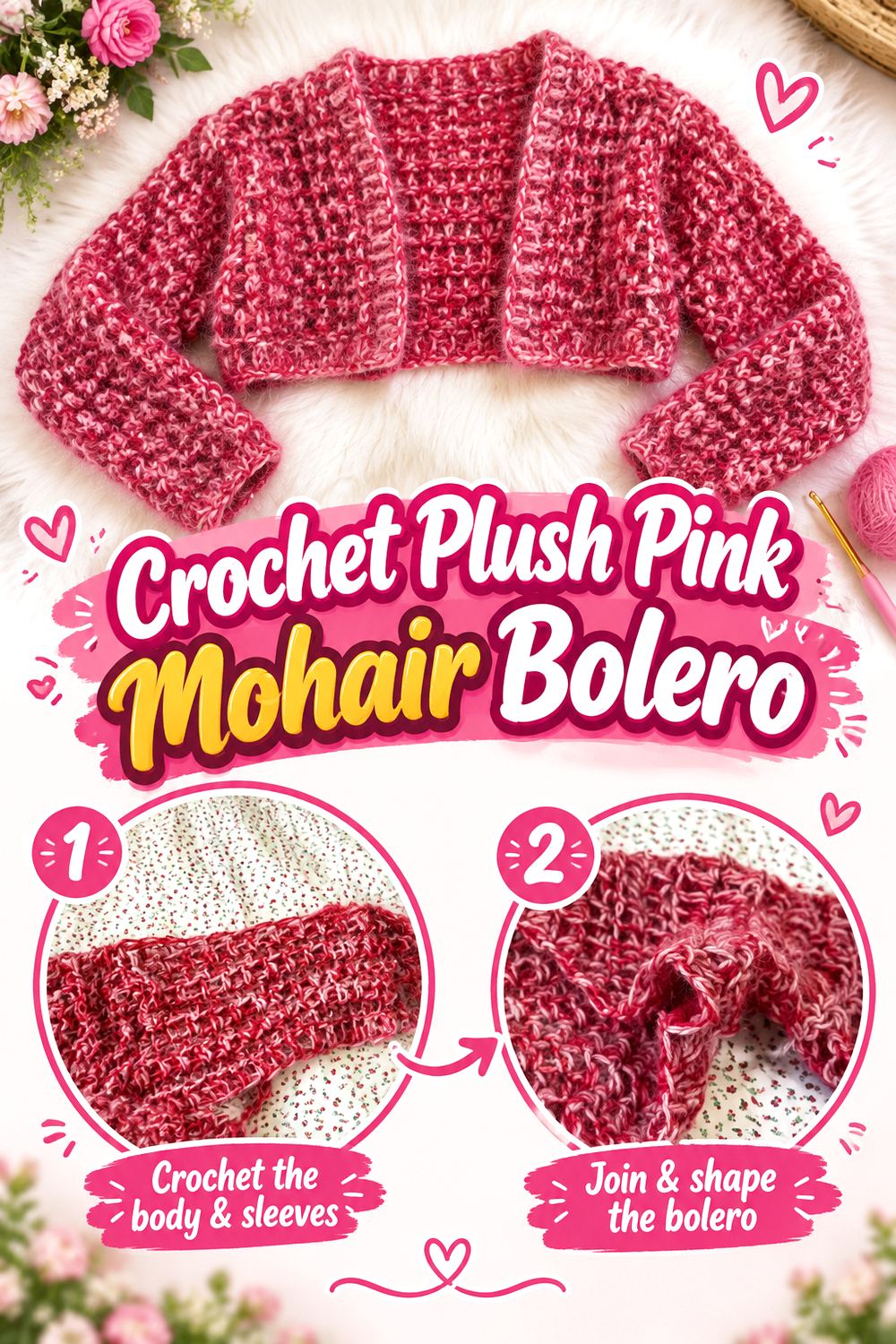
The biihyan crochet bolero tutorial provides another fuzzy direction by combining a pink main yarn with mohair in the documented materials. Unlike the very open treble-sleeve style above, its finished look is more compact and plush, with the fuzzy surface contributing strongly to the garment’s soft outline.
This is a useful reference if you want a short bolero that reads as a substantial accessory rather than an almost transparent mesh layer. Combining yarn types can change the effective fabric quickly, however, so avoid assuming that replacing either strand with a visually similar yarn will preserve the same dimensions. Judge the combined swatch for thickness, drape, and stretch before committing to the full piece.
Two Yarn Types Can Shift the Gauge
When strands differ in loft or elasticity, the working fabric may become larger or smaller than expected even if each yarn appears close to the original on its own. A sample lets you see the actual interaction. Measure it without stretching the halo flat, then handle it normally and check whether the stitches settle or expand before making fit decisions.
Keep a Plush Bolero From Feeling Stiff
Extra fluff should not automatically mean extra density. Bend your sample around the curve of an arm and shoulder; if it resists folding, the finished bolero may feel more rigid than its appearance suggests. A hook or yarn substitution that creates more drape can be preferable, provided it remains compatible with the tutorial’s construction and fit requirements.
Original Tutorial and Creator Credit
Creator: biihyan
15. Crochet Fuzzy Fairy Bell Sleeve Shrug
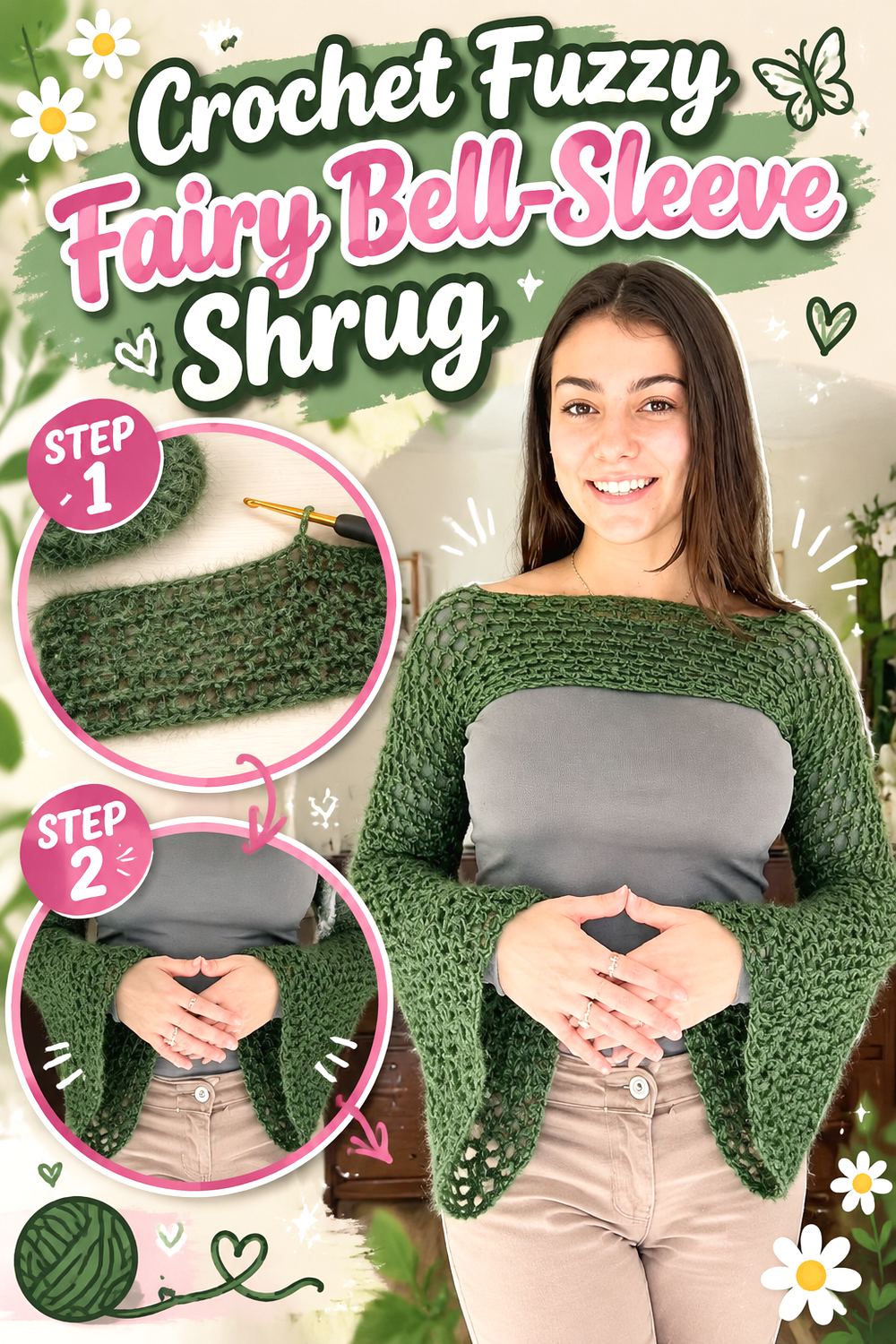
Natalie’s updated Fairy Shrug tutorial centers on a cropped shrug with bell sleeves, using Loops & Threads Facets in the documented project. The flared sleeve shape makes this option visibly different from fitted mohair sleeves and rectangular cocoons: much of the drama sits below the elbow rather than across the back.
A softly fuzzy or haloed yarn amplifies that silhouette because the flare develops a diffuse edge instead of a sharply defined outline. The trade-off is practical movement. Wider cuffs carry more fabric and may brush against surfaces, so this is better treated as a statement layer than a close-fitting everyday sleeve. The made-to-measure approach also makes actual arm and shoulder measurements important.
Bell Sleeves Magnify Yarn Weight
Every increase in sleeve width adds fabric farther away from the shoulder. A yarn that feels modest in a small swatch can therefore become noticeably heavier in a full flare. Before exaggerating the bell beyond the tutorial’s proportions, estimate the effect by holding a larger sample from one edge and observing how strongly it pulls downward.
A Fuzzy Surface Softens the Fairy Silhouette
Bell sleeves already create movement, while a halo blurs their outer line. If you want the flare itself to remain the dominant feature, avoid so much pile that the crochet appears shapeless. Conversely, a softer surface can make pronounced sleeve geometry feel less severe. View the work both moving and hanging still, since this design is strongly affected by motion.
Original Tutorial and Creator Credit
Creator: Natalie
16. Crochet Faux Fox Statement Shrug
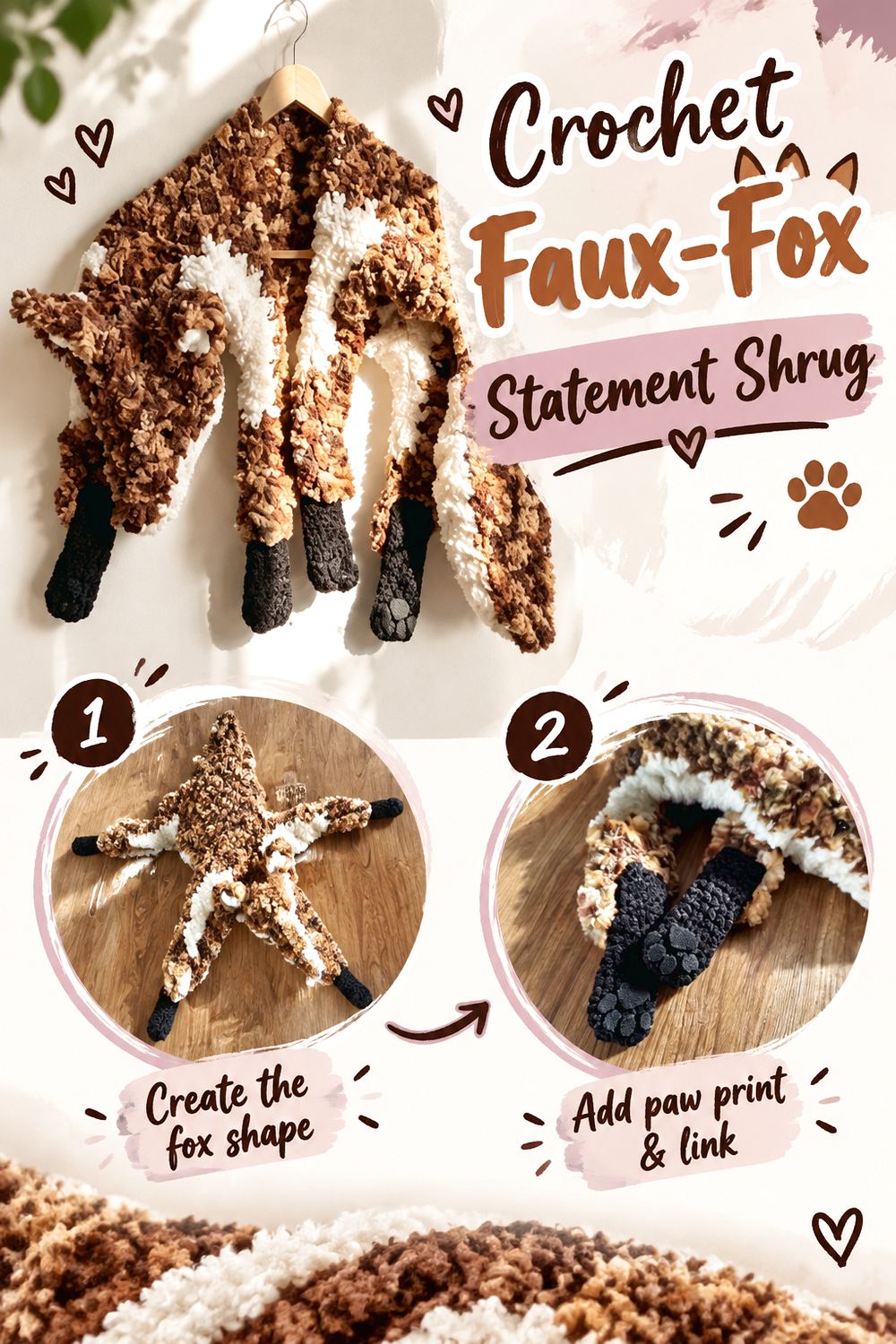
Autumn Olive Crochet’s “faux fox fur shrug & rug” pushes fuzzy crochet into novelty statement territory. Rather than resembling a conventional cardigan, the project takes inspiration from a faux animal-pelt form that can function as a dramatic shoulder piece as well as a decorative object. The original page contains the project-specific pattern and finishing information.
This option belongs in the list precisely because its purpose and silhouette are so different from the other 15. It is less about ordinary layering and more about costume, editorial styling, or whimsical presentation. Before making it for a particular wearer, consider the added dimensional details, how securely they are attached, and whether the finished shape suits the intended setting.
Treat the Pelt Shape as Statement Wear
The recognizable outline is central to this project, so yarn choice should support that silhouette rather than merely adding maximum fluff. If the pile becomes extremely long, smaller shaping details can disappear. Lay the developing piece in its intended orientation occasionally and check that its outline remains clear from a distance, especially before committing to decorative finishing.
Secure Embellishments for the Intended Use
Dimensional novelty projects may incorporate features that require more caution than an ordinary garment. Follow the designer’s finishing instructions, and inspect any attached details before wearing or displaying the piece. If it could be accessible to babies, young children, or pets, loose or detachable components deserve particular attention; decorative craft elements should not be assumed to be child-safe.
Original Tutorial and Creator Credit
Creator/Site: autumn olive crochet
Which Fuzzy Shrug Direction Should You Choose?
For the lightest visual effect, start with a mohair sleeve shrug such as the three-tone collar, mixed-texture mesh, or treble-sleeve designs. They leave plenty of the outfit exposed and use halo more than bulk. If you prefer fuller coverage, the blown-alpaca blanket shrug, Tunisian cocoon, Nalu-style ribbed shrug, and mandala-back cocoon provide considerably more body fabric.
For maximum fluff, the Faux Real square bolero is the clearest all-over faux-fur choice, while the KnitcroAddict cocoon limits fur to high-impact edging. Motif lovers have two notably different options: the Dream Catcher style emphasizes a circular center design, while the Tulip Square makes the back square the architectural feature. For theatrical styling, the Fairy bell sleeves and faux-fox shrug move furthest away from everyday cardigan proportions.
Conclusion
The most useful way to choose among these crochet fuzzy shrug ideas is to decide what you want the texture to do. Mohair can add a translucent halo, blown alpaca can provide lofty volume, and faux fur can turn the surface itself into the dominant feature. Construction then narrows the choice further: sleeve shrugs prioritize arms and shoulders, cocoons add relaxed coverage, cropped boleros frame an outfit, and motif designs make the back a focal point.
Whatever direction you choose, check the fit while the piece is still adjustable and sample unfamiliar fuzzy yarn before making a large substitution. For stitch placement, sizing, assembly, and other exact construction details, follow the original tutorials credited with each project.
Frequently Asked Questions
What yarn works best for a crochet fuzzy shrug?
There is no single best fuzzy yarn because the desired effect matters more than the label. Mohair or similar haloed fibers suit airy layers, while faux-fur and eyelash yarns create a much more dramatic pile. Blown alpaca or wool blends can provide loft with clearer stitches. Compare your chosen yarn with the tutorial’s intended fabric for thickness, drape, elasticity, and stitch visibility before substituting.
Can I replace regular yarn with faux-fur yarn in any shrug pattern?
Usually not as a direct one-for-one substitution. Faux-fur yarn can produce a very different gauge, thickness, weight, and stitch visibility from smooth yarn. It may also obscure lace or motif work that is important to the original design. A safer approach is to make a substantial sample first or use faux fur selectively as trim unless the pattern itself was designed around a furry fabric.
How do I keep track of stitches when fuzzy yarn hides them?
Strong lighting, frequent counting, and strategically placed stitch markers can help, but tactile tracking is often just as important. Learn to feel the foundation strand beneath the pile instead of trying to identify every fuzzy loop visually. Mark construction points before adding more fabric over them. When possible, practice with the yarn on a small sample so you know how its stitches feel before beginning a garment.
How should I size a fuzzy crochet shrug?
Use the measurements that control the specific silhouette. Sleeve-style shrugs need comfortable arm circumference, sleeve length, shoulder width, and upper-back reach; cocoons depend more heavily on panel dimensions and armhole placement. Compare the tutorial’s finished measurements with a garment you already like. If the pattern is made to measure, take measurements over the type of clothing you expect to wear underneath.
Can I hold mohair together with another yarn?
Yes, when the chosen pattern or your swatching supports it, and several fuzzy shrug designs use that approach. The companion strand can contribute structure and clearer stitch definition while the mohair supplies halo. However, two strands together form a new fabric with its own gauge and drape. Swatch the exact combination you intend to use rather than calculating the result from the individual yarn labels.
Do fuzzy crochet shrugs need blocking?
That depends on the fiber, yarn construction, and design. A haloed wool or alpaca blend may respond differently from acrylic faux fur or an eyelash novelty yarn, and aggressive treatment could alter the surface. Follow the care information supplied by the yarn manufacturer and any blocking instructions from the designer. When uncertain, test the proposed method on your swatch before applying it to the completed garment.
How can I make a fuzzy shrug easier to care for?
Start with care requirements before choosing the yarn, particularly if the shrug will be worn frequently. Mixed fibers, metallic strands, faux fur, and embellishments may impose different limitations. Keep the yarn labels, record what you used, and follow the most restrictive relevant care guidance when different materials are combined. For a highly decorative shrug, careful storage can also prevent long pile, bell sleeves, or dimensional details from becoming crushed or tangled.