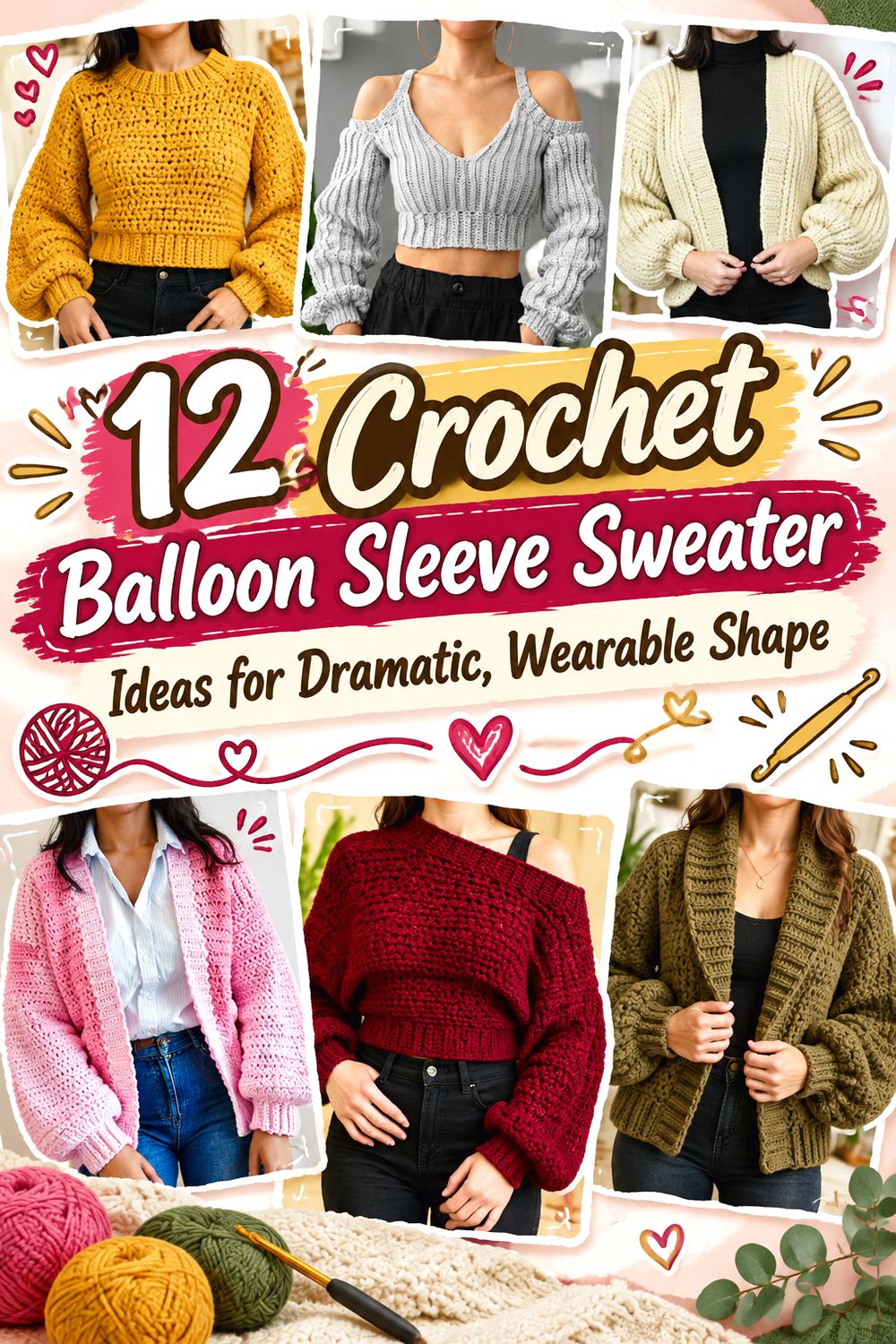
12 Crochet Balloon Sleeve Sweater Ideas for Dramatic, Wearable Shape
Balloon sleeves can change the entire balance of a crochet sweater. Some designs keep the body simple and let oversized sleeves supply the drama, while others combine sleeve volume with cropped hems, fitted waists, pockets, color blocking, wide necklines, or chunky bomber-style construction.
The 12 ideas below cover both pullovers and cardigans rather than repeating one basic sweater in different colors. You will find lightweight four-panel designs, seamless top-down construction, hexagon cardigans, textured pocket sweaters, bishop sleeves, cold-shoulder shaping, and substantial chunky layers. Each project links back to an original creator tutorial or pattern source for the actual construction details. The added notes focus on the choices that matter before you start: sleeve proportion, ease, yarn behavior, cuff stability, layering room, and where substitutions can noticeably change the finished silhouette.
Quick List
- Crochet Classic Balloon Sleeve Pullover
- Crochet Textured Open-Front Balloon Sleeve Cardigan
- Crochet Boxy Cropped Balloon Sleeve Sweater
- Crochet Seamless Chunky Balloon Sleeve Sweater
- Crochet Hexagon Puff Sleeve Waist-Fit Cardigan
- Crochet Textured Pocket Balloon Sleeve Cardigan
- Crochet Color-Block Chunky Balloon Sleeve Cardigan
- Crochet Wide-Neck Bishop Sleeve Crop Sweater
- Crochet Bomber-Style Balloon Sleeve Cardigan
- Crochet Minimal Chunky Balloon Sleeve Cardigan
- Crochet Cold-Shoulder Balloon Sleeve Crop Sweater
- Crochet Classic Puff Sleeve Sweater
Decide How Much Sleeve Volume You Actually Want
“Balloon sleeve” can describe several different proportions. A softly widened sleeve that gathers only slightly at the cuff behaves very differently from a deeply oversized sleeve with substantial fabric above the wrist. Before choosing a project, compare the sleeve width with the body silhouette rather than looking at the sleeve alone.
A boxy sweater can absorb moderate sleeve volume without feeling visually unbalanced. A fitted waist makes the same sleeve look more dramatic because the contrast is stronger. Cropped bodies also emphasize sleeve size, while longer oversized cardigans spread that volume across a larger garment.
For a practical checkpoint, consider your usual layering. If you plan to wear the sweater under a coat, extremely full sleeves may bunch inside narrow outerwear. For an indoor statement layer, that same fullness may be exactly what you want. Always use the original tutorial’s measurements and sizing guidance rather than assuming one sleeve proportion will transfer directly to another design.
Yarn Choice Changes Both Drape and Sleeve Weight
Balloon sleeves use more fabric around the arm, so yarn substitution can have a larger visual and physical effect than it does on a straight sleeve. A relatively light yarn can let the sleeve hang and fold softly, while a thicker or denser fabric may produce a more sculptural silhouette. Neither is automatically better; the right choice depends on the project.
Pay particular attention to weight when the sleeve is very wide. A heavier substitute can pull downward at the shoulder, lengthen the sleeve during wear, or make the gathered cuff feel bulky. A very limp substitute can do the opposite and remove the intended puff.
When changing yarn, compare gauge, fiber behavior, and fabric feel instead of relying only on the printed yarn-weight category. Make a swatch large enough to judge drape. For garments where the original designer provides specific gauge or yarn guidance, use that information as your starting point and verify any substitution before committing to the full sweater.
Treat the Cuff and Armhole as Structural Checkpoints
The visual success of a balloon sleeve often depends on two transition points: where the sleeve joins the body and where its fullness narrows toward the wrist. If the armhole is too restrictive, a beautiful oversized sleeve may still feel uncomfortable. If the cuff is too loose, the sleeve can lose much of its gathered shape.
Before finishing both sleeves, check movement at the shoulder and elbow and confirm where you want the cuff to sit. Sleeve length is especially important because a gathered sleeve may look intentionally relaxed when it pools slightly, but excessive length can place too much fabric over the hand.
Cuffs also react differently to fiber choice. Some yarns recover well after stretching, while others relax with wear. Follow the creator’s construction for the project you select, and treat any cuff-size change as a fit adjustment rather than a purely decorative change.
1. Crochet Classic Balloon Sleeve Pullover
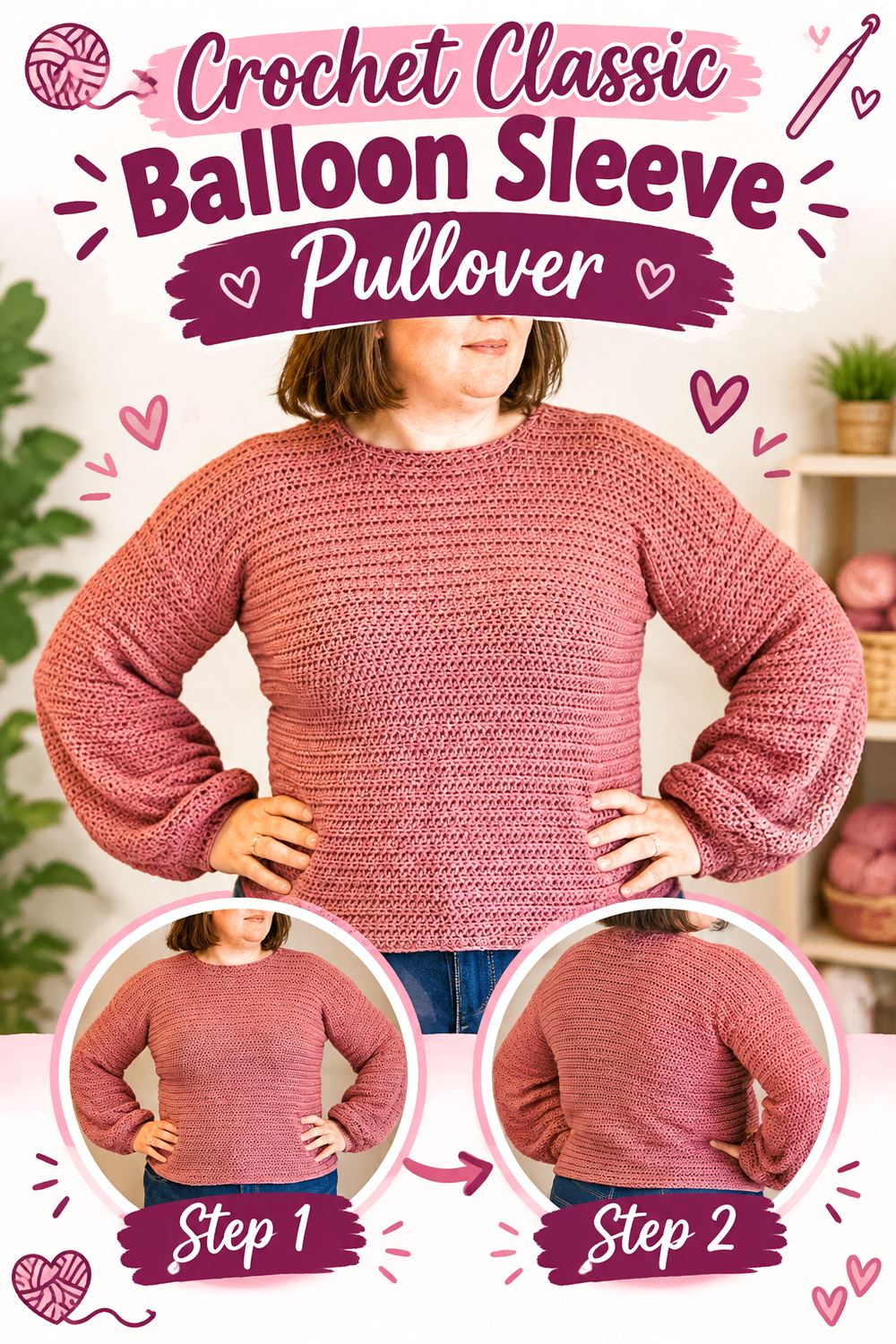
For a straightforward interpretation of the silhouette, this pullover from Joy of Motion Crochet keeps the construction deliberately uncomplicated. The original design is worked as four pieces—a front, back, and two balloon sleeves—and uses half double crochet throughout. The source offers sizes from XS through 5XL and uses a light-weight yarn in the sample, creating a useful contrast to the chunkier sweaters later in this list.
This is a strong direction when you want the sleeves to be the main design feature without adding colorwork, pockets, openings, or elaborate surface texture. Because the body and sleeves are separate pieces, it also gives you clear checkpoints for comparing finished width and length before assembly.
Keep the Body From Competing With the Sleeves
A simple body is useful when you want dramatic sleeves without making the entire garment visually busy. The cleaner the torso fabric, the more clearly the sleeve outline reads.
If you alter the length, consider the new proportion before automatically adding the same amount everywhere. A longer body can make the sweater feel calmer and more traditional, while a shorter body increases the visual prominence of the sleeve. Compare the unfinished pieces together before seaming so you can judge the balance rather than evaluating each piece separately.
Use Gauge as a Fit Tool, Not Just a Formality
The source specifically recommends making a gauge swatch before beginning. That matters on a pieced sweater because changes in stitch size affect both the body dimensions and the circumference of the balloon sleeves.
A swatch should also tell you whether your chosen yarn creates the fabric you want. Matching stitch dimensions with a fabric that feels stiff or excessively loose may still produce a sweater you dislike wearing. Check measurement and hand together.
Plan the Seams Before Final Finishing
Four-piece construction creates obvious opportunities to check symmetry. Before permanently finishing the seams, align the two sleeves side by side and compare their length, widest point, and cuff area.
Small tension differences are easy to overlook while crocheting but more visible once two large sleeves frame the same body. If one piece differs noticeably, correcting it before complete assembly is usually cleaner than trying to disguise the discrepancy through aggressive blocking.
Original Tutorial and Creator Credit
Creator/Site: Joy of Motion Crochet
2. Crochet Textured Open Front Balloon Sleeve Cardigan
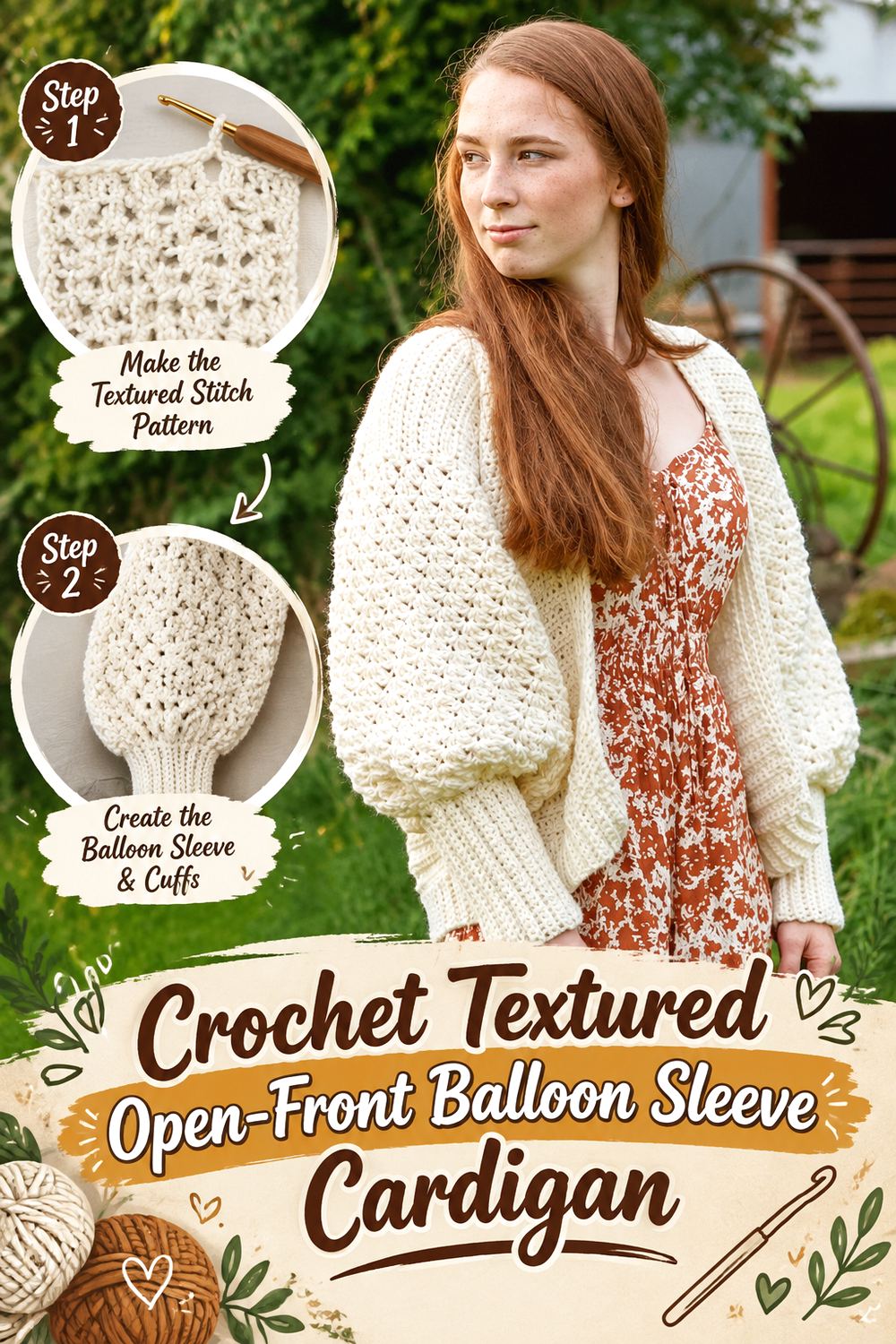
Crochet with Carrie approaches the idea as an open-front cardigan with relatively simple body panels and more decorative texture concentrated in the oversized sleeves. The original construction uses separate back, front, sleeve, and cuff pieces before the cardigan is assembled and finished with a collar. The body relies largely on half double crochet, while the sleeve texture introduces more visual movement.
That separation between a restrained body and expressive sleeve makes this idea useful for readers who want statement volume without committing to texture across every inch of the sweater. The open front also changes how fit should be judged: you need enough room for your intended layers, but the cardigan does not have to behave like a closed pullover across the bust.
Let Texture Add Volume Without Adding Bulk Everywhere
Textured stitches naturally catch more light and can make an already wide sleeve look even fuller. Keeping the torso simpler prevents the whole garment from becoming visually heavy.
If substituting yarn, make a texture swatch rather than checking only a plain section. A yarn that looks balanced in half double crochet can behave differently in a more dimensional repeat. Pay attention to how clearly the texture opens, how much it weighs, and whether it still folds comfortably around the arm.
Check Cardigan Ease With the Clothes You Will Wear Under It
Open-front layers are often worn over tees, dresses, or light sweaters, so measuring only against the body can underestimate the space you actually want.
Try comparing the planned finished width with one of your existing cardigans that layers well. If the balloon sleeve is generous but the upper body is too close-fitting, the contrast may look awkward and movement around the armhole may feel limited. Layering room should be intentional rather than accidental.
Watch the Transition Into the Cuff
The cuff is one of the features that makes a large sleeve read as a deliberate balloon shape. If you change sleeve fullness, do not assume the cuff should be enlarged by the same percentage.
A relatively defined wrist can preserve the silhouette even when the upper sleeve is generous. Conversely, an overly loose cuff may turn a balloon sleeve into a more general wide sleeve. Follow the source construction first, then judge any adjustment while the sweater is actually on the wearer.
Original Tutorial and Creator Credit
Creator/Site: Crochet with Carrie
3. Crochet Boxy Cropped Balloon Sleeve Sweater
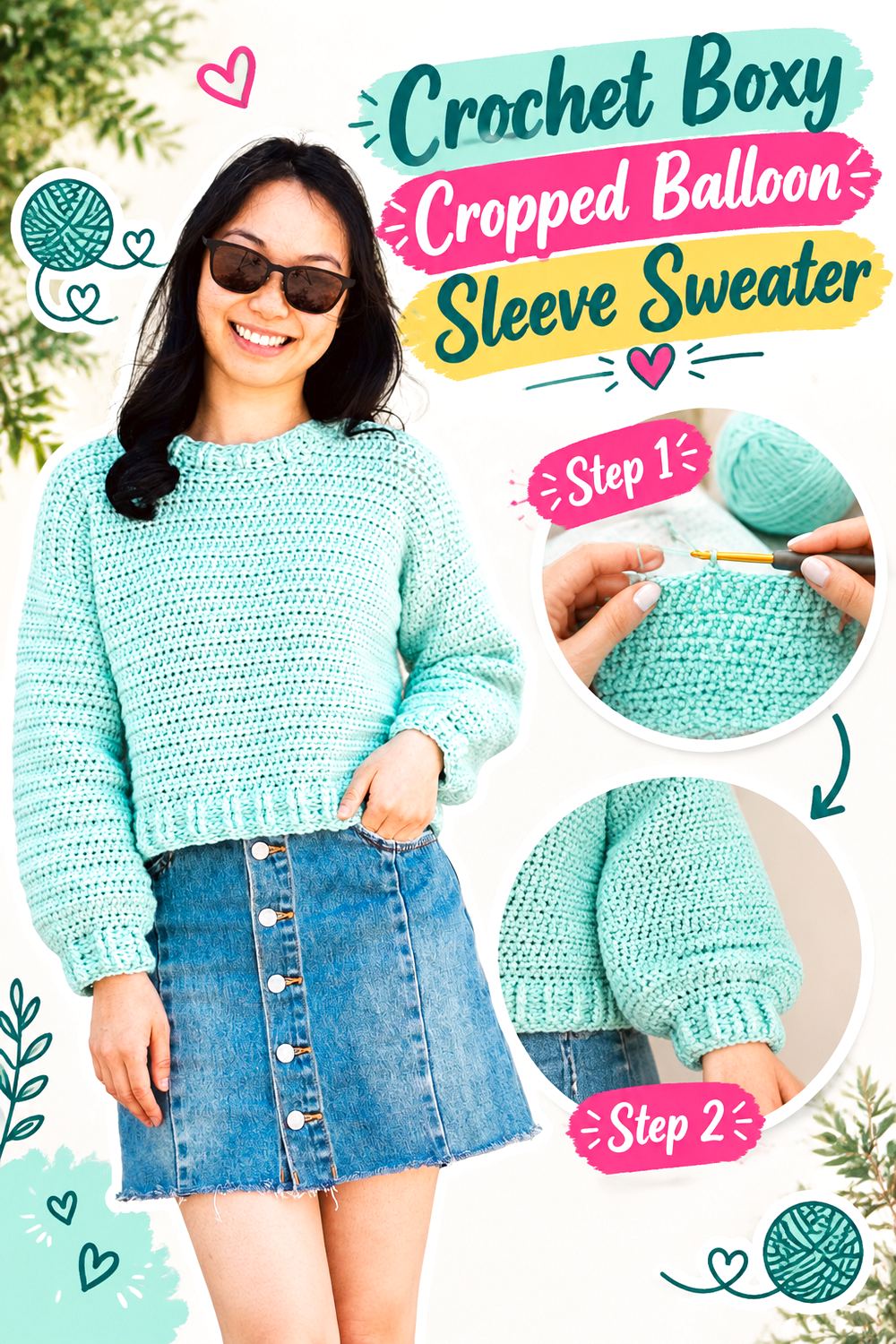
The Someday Sweater from For the Frills offers a softer version of the balloon-sleeve look. Its body is boxy, the length can be adjusted, and the sleeves have a more restrained balloon shape rather than extreme volume. The sweater is made from four panels, with the source describing the body as largely half double crochet and the sleeves worked from the cuff upward with increases that create their shape.
This is a useful choice when you like the trend but do not want the sleeves to dominate every outfit. The uncomplicated body also makes length a major styling decision: cropped, hip length, and longer versions will each shift the apparent sleeve-to-body proportion even when the sleeve construction itself remains unchanged.
Use Body Length to Control the Overall Drama
Shortening a boxy sweater places the hem closer to the widest part of the sleeve, which makes the sleeve look more prominent. Extending the body creates a longer vertical line and usually softens that contrast.
Before deciding, hold the front and back panels against your body with the intended pants or skirt rise. “Cropped” is not one fixed location, and a few extra rows can materially change how comfortable the garment feels when sitting, reaching, or layering.
A Slight Balloon Sleeve Can Be More Layer-Friendly
Not every statement sleeve needs maximum circumference. Moderate volume can be easier to wear under jackets and coats while still creating a clear gathered shape at the wrist.
If everyday layering matters, compare your sleeve plan with the arm width of the outerwear you use most. A sweater that looks great alone but twists or bunches inside a coat may get less wear than a slightly quieter version.
Treat the Optional Neck Finish as Part of the Proportion
The original source includes an optional ribbed collar treatment after the neckline edging. A more defined neckline can visually anchor a boxy body and repeated ribbing can tie the neck, hem, and cuffs together.
If you prefer a simpler neckline, check that it still sits flat after seaming. Stretching or rippling around the neck can distract from otherwise clean sleeve shaping.
Original Tutorial and Creator Credit
Creator/Site: For the Frills
4. Crochet Seamless Chunky Balloon Sleeve Sweater
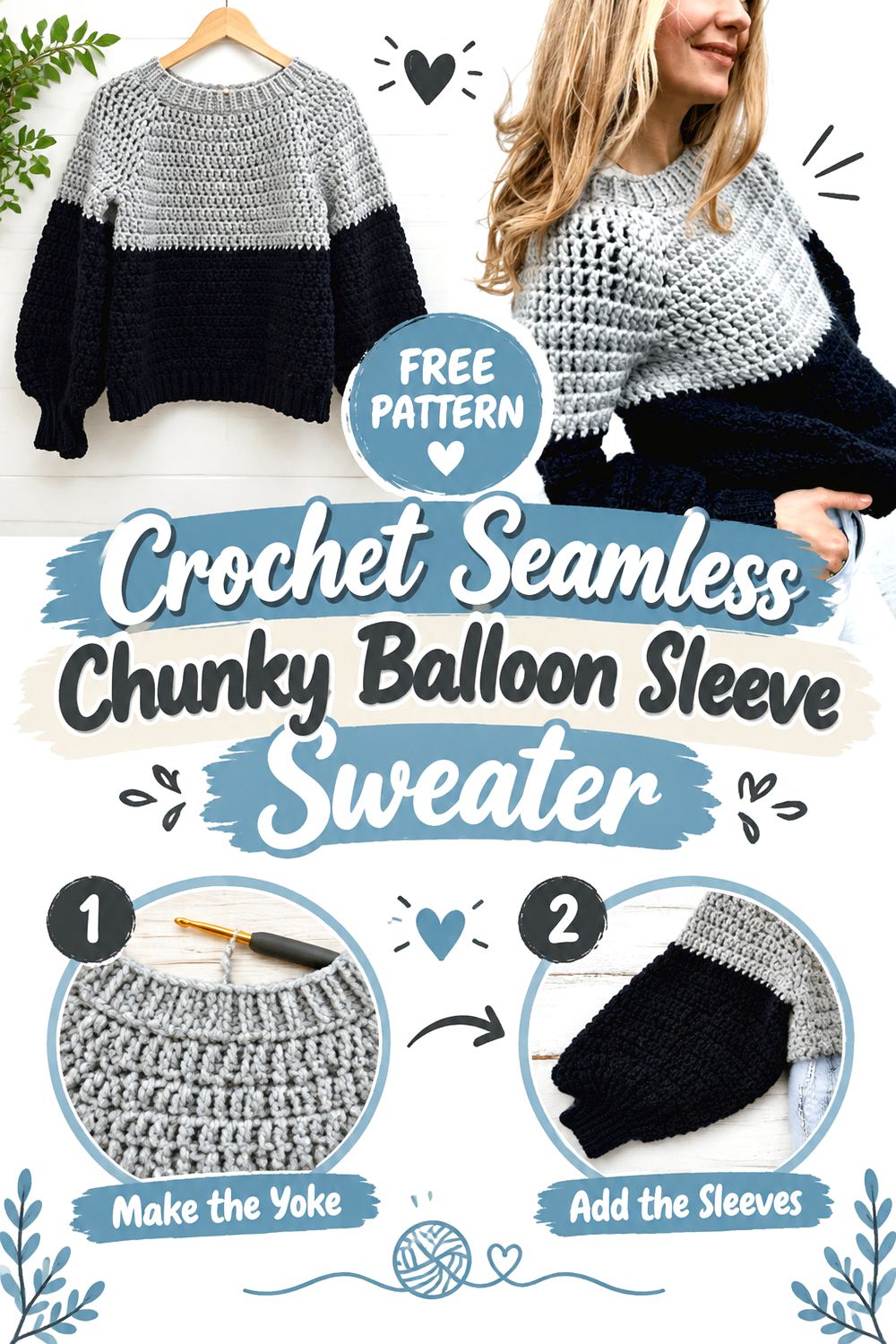
YippieYarnYay’s Chunky Balloon Sweater changes both the construction and the fabric weight. Instead of making separate front, back, and sleeve pieces, the source describes a one-piece, top-down raglan construction with the sleeves added directly to the sweater. It is intentionally loose-fitting and uses thick yarn, giving the balloon shape a much more substantial presence.
This direction suits readers who dislike extensive seaming or who want the ability to assess the garment while it is developing. The top-down approach also makes body and sleeve length easier to visualize in relation to the wearer, although any modification still needs to respect the pattern’s shaping and proportions.
Use Try-On Points Before the Sweater Gets Heavy
Top-down construction gives you a valuable chance to check width and length while the garment is still in progress. Take advantage of it before adding the full weight of both sleeves.
Chunky yarn can make an unfinished sweater behave differently once more fabric is attached. Check the neckline, underarm depth, and body ease early, then check again once one sleeve has enough length to show how the shoulder responds to the added weight.
Chunky Yarn Makes Small Proportion Changes More Visible
With thick yarn, each additional round or row contributes more physical depth than it would in a fine fabric. That makes adjustments quick, but it also means changes can become visually obvious sooner.
If you want a shorter body or a less dramatic sleeve, reassess frequently rather than making a large change in one decision. The bold fabric is part of the appeal, so aim for deliberate proportion rather than simply reducing everything.
Give the Wrist Enough Definition
A substantial sleeve needs a clear endpoint. The original design uses ribbing at the sleeves, helping create the visual contraction that defines a balloon shape.
When working with thick yarn, make sure that definition does not come at the cost of comfort. A cuff should hold its shape without feeling rigid or overly tight around the wrist.
Original Tutorial and Creator Credit
Creator/Site: YippieYarnYay
5. Crochet Hexagon Puff Sleeve Waist Fit Cardigan
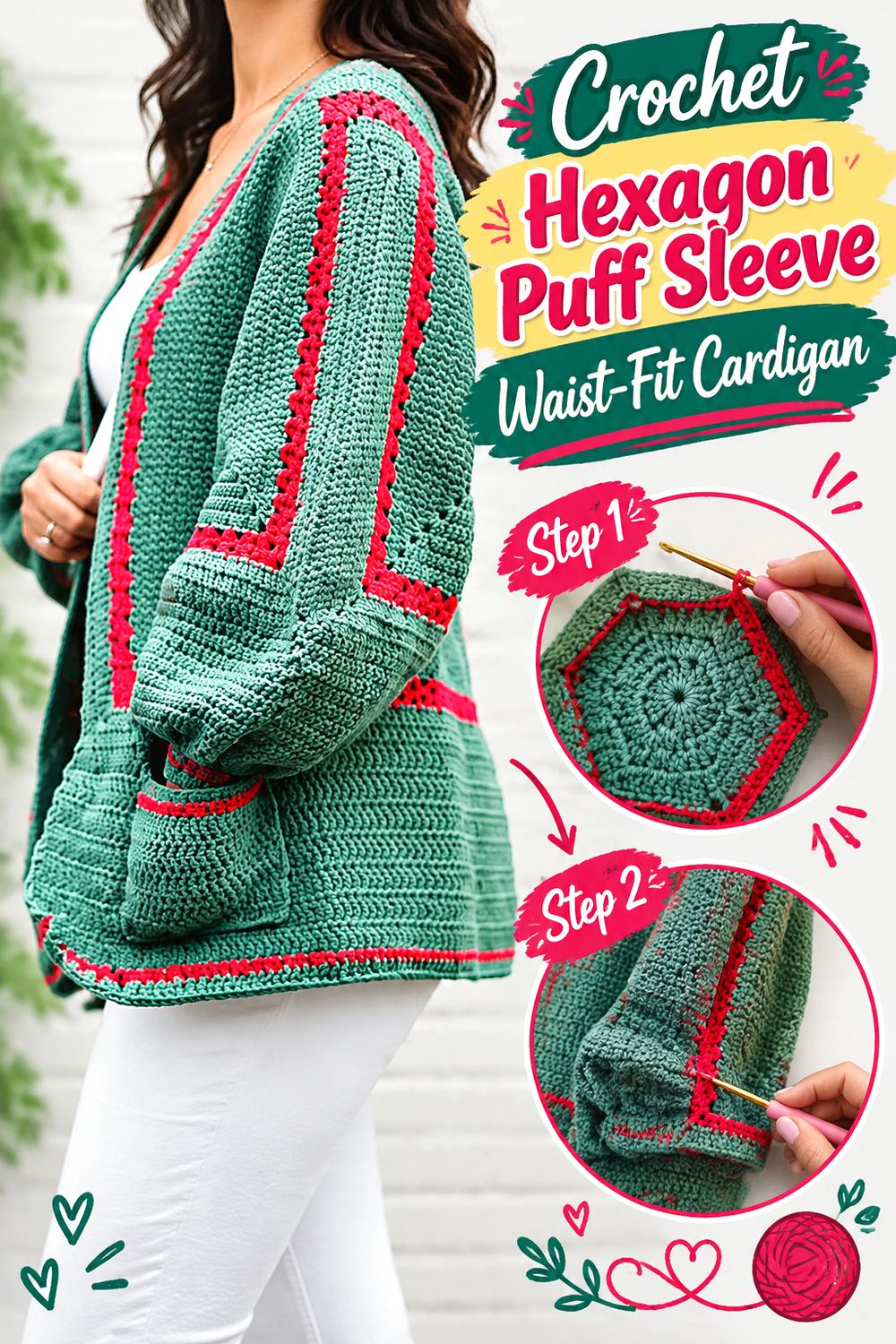
Mathilda’s Cardigan from Knitting with Chopsticks creates a completely different balance by combining oversized puffed sleeves with a more defined waist. The cardigan begins from two hexagons, and the source offers five sizes while emphasizing the contrast between the voluminous sleeves and fitted waistline.
The hexagon approach is worth considering if you want a garment that feels more architectural than a conventional front-and-back-panel cardigan. Visually, the narrower waist makes the sleeves appear even more dramatic. That means fit around the torso matters: the project will lose some of its intended contrast if the waist is inadvertently enlarged until it has the same relaxed proportions as the upper sleeves.
Compare the Waist Fit Separately From the Sleeve Fit
A fitted waist and oversized sleeve are doing different jobs in this design. The torso creates definition; the sleeves supply volume.
When choosing a size, avoid selecting solely on the sleeve appearance. Check the designer’s sizing information against the point where you want the cardigan to sit through the waist and hips. If you need extra room in one area, use the creator’s guidance rather than assuming the entire garment should be scaled uniformly.
Hexagon Construction Rewards Frequent Layout Checks
Geometric garment pieces can look surprisingly different once folded into wearable form. Lay the developing pieces out in their intended orientation as you work.
This helps you judge sleeve depth, body coverage, and overall scale before substantial extensions are added. It also makes it easier to see whether your two main pieces are developing evenly, particularly if you crochet with variable tension over longer sessions.
Contrast Colors Can Emphasize Construction
The source shows the design as suitable for either bright color combinations or more neutral treatment. Color placement can either highlight the hexagon structure or make it recede.
If the sleeve silhouette is already dramatic, a limited palette can keep the garment easier to style. If you want construction itself to become part of the statement, intentional contrast at cuffs, edges, or selected sections can make the geometry more visible.
Original Tutorial and Creator Credit
Creator/Site: Knitting with Chopsticks
6. Crochet Textured Pocket Balloon Sleeve Cardigan
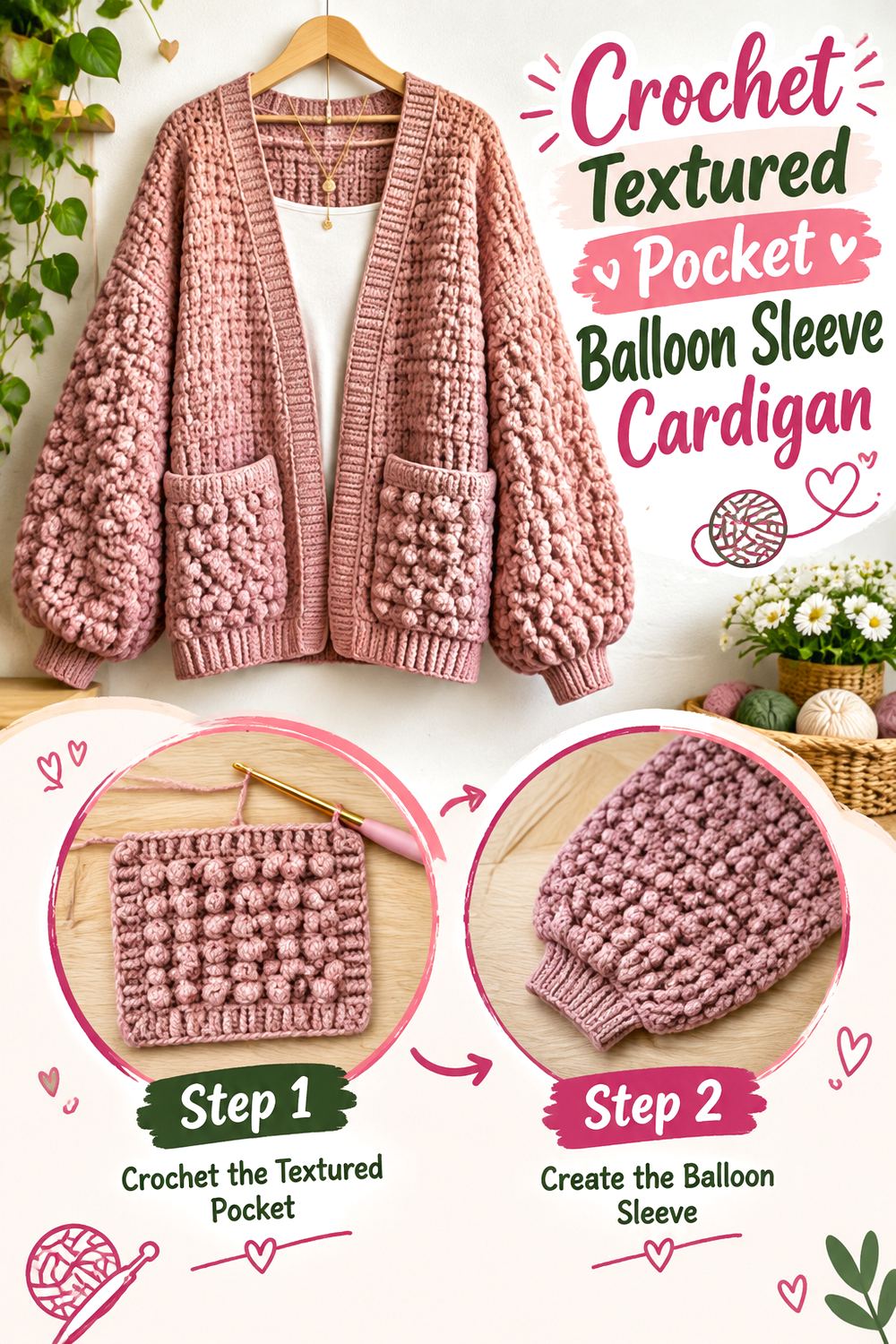
The Stony Shore Cardigan by Rachel Misner of Evelyn And Peter Crochet adds two practical differences: noticeable surface texture and integrated pockets. The original pattern is worked from the bottom up in separate panels and alternates textured bead-stitch rows with double crochet rows. It also uses loose balloon-style sleeves and includes sizing from XS through 5X.
This makes the project a useful option for someone who wants more visual interest across the body rather than concentrating all the detail in the sleeves. Pockets also make it feel more like an everyday cardigan. However, they introduce additional weight and structure on the fronts, so keeping the body hanging evenly becomes more important than it is on a very simple open cardigan.
Texture Can Change the Apparent Fit
Raised or dimensional stitch patterns can make a sweater look denser than an equally sized smooth fabric. They may also behave differently when blocked or worn.
Check the source gauge carefully and make sure your fabric remains flexible enough for a cardigan. If a substitution creates a much firmer texture, increasing the garment width indiscriminately may not solve the problem; a better yarn or hook choice may be needed to preserve drape.
Fill Pockets Only After Checking How the Front Hangs
Crochet pockets add useful function, but heavy contents can pull on an open cardigan. Before treating them like storage compartments, observe how the finished fronts hang with something lightweight inside.
If the fabric noticeably stretches or twists, reserve the pockets for lighter items. This is a general garment-use consideration rather than a capacity claim from the designer.
Keep Both Balloon Sleeves Consistent
The pattern allows length adjustment, which makes careful record-keeping worthwhile. If you change the sleeves, note exactly where and how you altered the first one before starting the second.
Texture can make row counting less visually obvious than on a plain fabric. Measuring both sleeve length and circumference offers a useful second check before final assembly.
Original Tutorial and Creator Credit
Creator/Site: Evelyn And Peter Crochet
7. Crochet Color Block Chunky Balloon Sleeve Cardigan
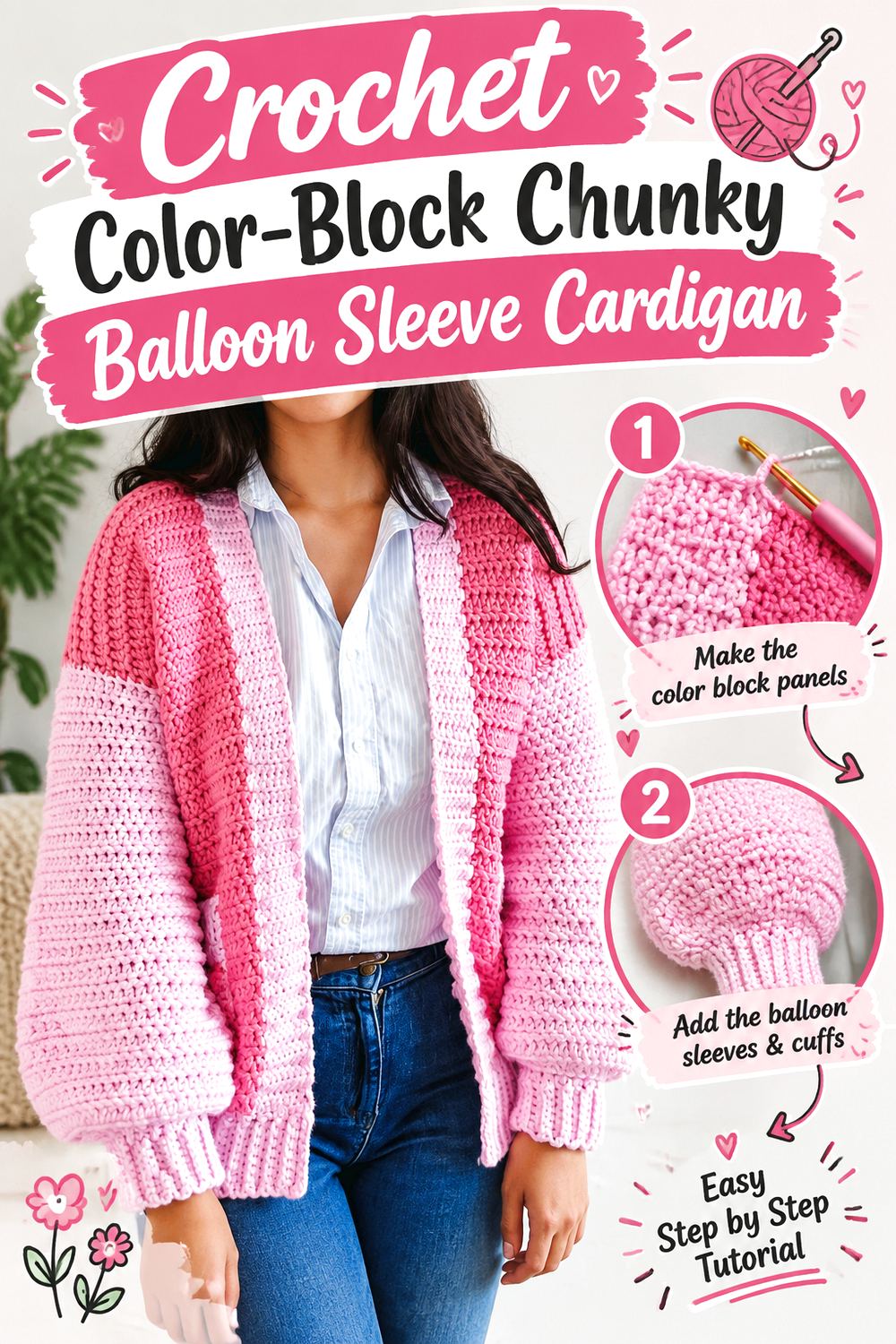
Dublin Bay Crochet’s Bubblegum Cardigan uses color blocking to make its oversized shape even more graphic. The original tutorial describes a chunky cardigan built from five main panels—two fronts, one back, and two sleeves—with a ribbed opening and pockets added after assembly. The sample emphasizes an oversized body and loose, slouchy sleeves.
This design differs from a single-color balloon sweater because the color boundaries can change how the proportions are perceived. Contrasting sleeves make them look larger and more separate from the torso, while a tonal palette can make the same construction appear calmer. The chunky fabric also means your color placement has strong visual weight; even a simple two-color plan can become the defining feature of the finished cardigan.
Use Color to Control Where the Eye Goes
If the sleeves are worked in a contrasting shade from the body, they become the immediate focal point. That works well when exaggerated sleeves are the reason you chose the project.
For a quieter result, choose colors with similar value rather than sharply different light-and-dark contrast. You can still keep the color-block construction without making every boundary visually dominant.
Check the Ribbed Opening Before Adding Extra Weight
A substantial front ribbing helps frame an oversized cardigan and gives the open edges definition. Before deciding that you want a wider or deeper border, consider its weight.
Chunky ribbing can pull differently from the main body fabric. Lay the cardigan flat and also try it on during finishing to make sure the fronts remain balanced rather than curling inward or being dragged downward.
Keep Pocket Placement Symmetrical
Because the source adds pockets as finishing features, placement contributes to the finished look. Pin or mark both positions before attaching anything permanently.
Compare from the hem, front opening, and side seam rather than using only one reference point. On a color-block garment, even a small mismatch can be more noticeable because the surrounding lines are already visually strong.
Original Tutorial and Creator Credit
Creator/Site: Dublin Bay Crochet
8. Crochet Wide Neck Bishop Sleeve Crop Sweater
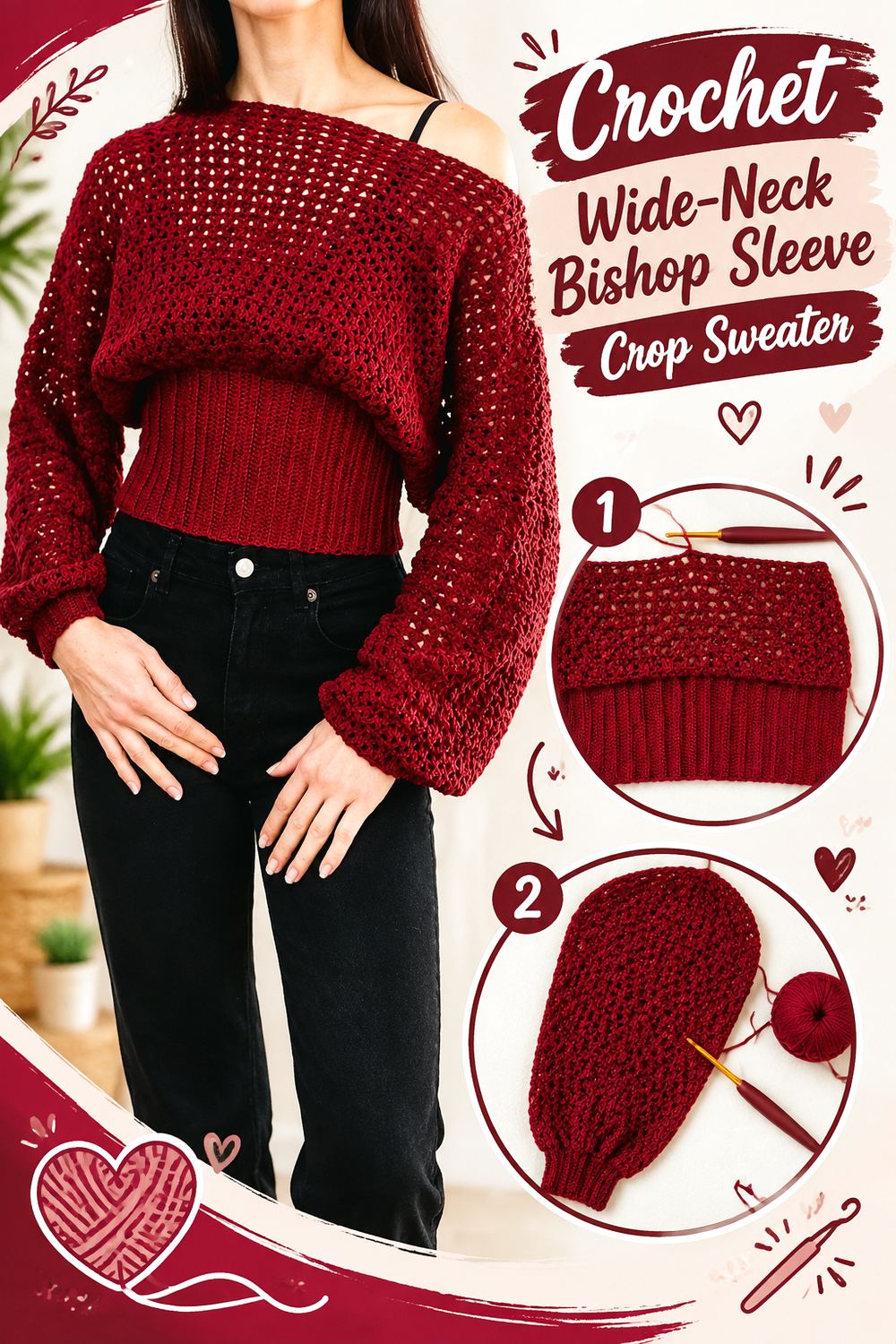
Loops Only’s cropped bishop-sleeve sweater introduces a wider neckline, ribbed waist, and V-stitch body, making it one of the airier and more fitted-looking options in this collection. The designer describes it as made to measure, with the wearer’s own measurements used to customize waist width, bust width, body length, cuff circumference, and sleeve length.
Bishop sleeves are closely related to the balloon silhouette but usually read as a little more flowing before narrowing at the cuff. Paired with the short body and open V-stitch texture, that creates a very different effect from the dense chunky cardigans above. It is a strong option when you want sleeve drama without making the entire garment visually heavy.
Wide Necklines Need Their Own Fit Check
Do not judge this sweater entirely from bust and waist measurements. A wide neckline changes how the garment sits across the shoulders and can affect whether the sleeves appear correctly positioned.
Before committing to body length or extensive sleeve work, confirm that the neckline sits where you want during ordinary movement. A neckline that is intentionally wide should still feel controlled rather than constantly needing adjustment.
Open Stitchwork Makes Yarn Character More Visible
V-stitch fabric creates negative space, so yarn texture and twist can influence the final appearance more strongly than in dense half double crochet.
A fuzzy yarn may soften stitch definition, while a smooth yarn can emphasize every opening. Since the project is made to measure, the designer notes that other yarns can be used, but you should swatch to choose a hook that produces fabric you actually like.
Balance the Ribbed Waist Against Sleeve Fullness
A defined hem or waist is one reason bishop sleeves look so striking on a cropped sweater. If you substantially loosen that lower edge, the whole silhouette moves closer to a boxy pullover.
That may still be attractive, but it becomes a different proportion. Decide whether you want contrast between torso and sleeve or a uniformly relaxed garment before changing the waist treatment.
Original Tutorial and Creator Credit
Creator/Site: Loops Only
9. Crochet Bomber Style Balloon Sleeve Cardigan
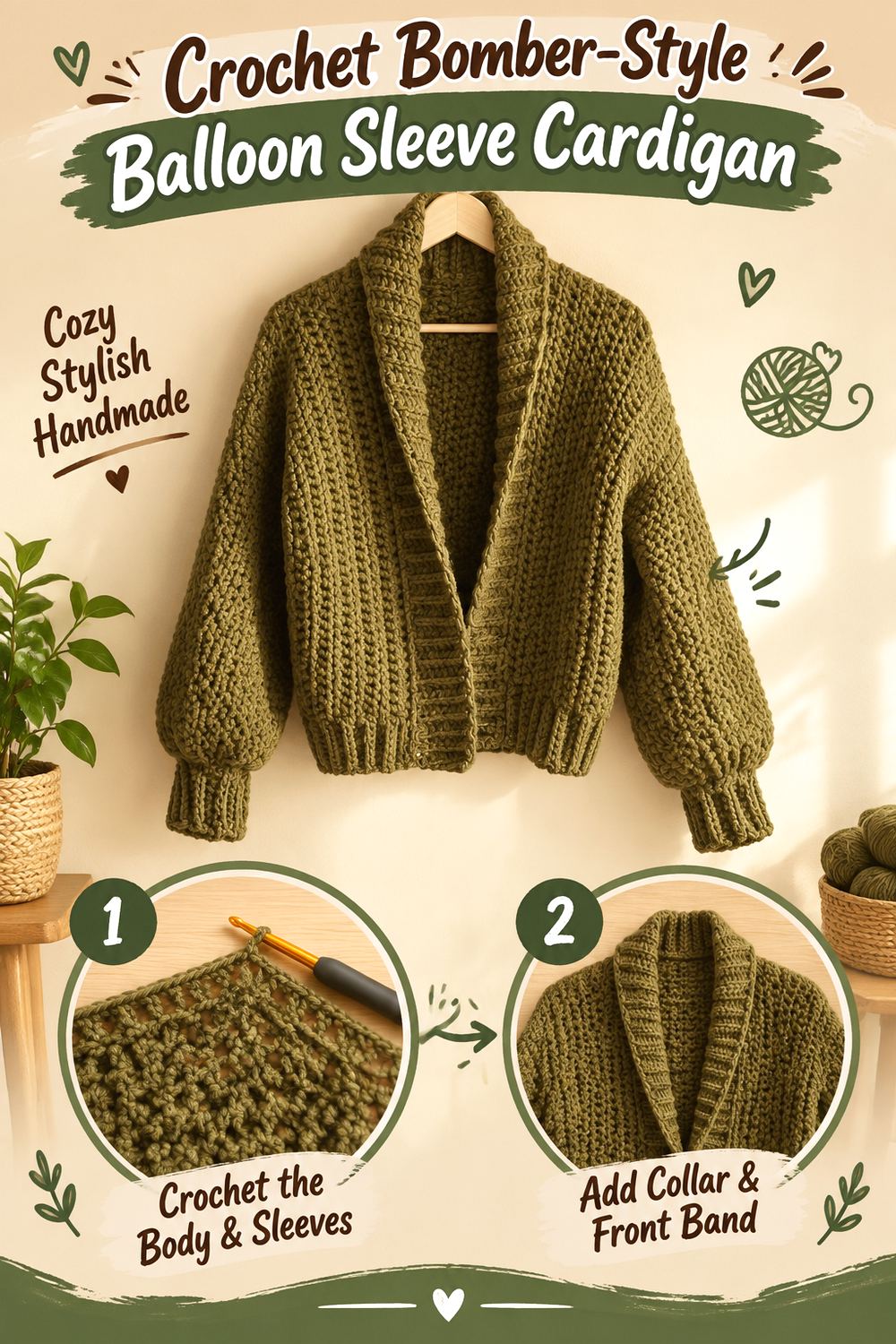
Blue Star Crochet translates balloon sleeves into a cropped bomber-style cardigan. The original design is oversized, has a substantial collar, and works the sleeves straight before finishing them with a cuff, which creates the slightly ballooned effect. The pattern is worked sideways through the main body, with the sleeves added around the armhole openings.
This silhouette stands apart from softer cardigans because the collar, shortened body, and cuffed sleeves create more jacket-like structure. It works well for readers who want balloon sleeves but prefer a clearly defined outer layer rather than a drapey sweater. The source uses super-chunky wool in its sample, so yarn substitution deserves particular thought if you want to preserve both the bold stitch scale and the intended structure.
The Collar Changes the Visual Center of the Sweater
A large collar draws attention upward and can balance broad sleeves. If you reduce it substantially, the sleeves may become much more dominant than they appear in the original design.
Consider the collar, sleeve, and hem as a set of proportions rather than independent details. Changes can work, but review the entire garment outline before deciding which feature to scale down.
Straight Sleeves Can Still Produce a Balloon Effect
The source explains that the sleeves themselves are worked straight and gain their slightly ballooned appearance when they are finished at the cuff.
That is a useful reminder that dramatic shaping does not always require continuous increases and decreases. The relationship between upper sleeve circumference and wrist finish can be enough to create volume.
Super-Chunky Substitutions Need Care
Thick yarn makes the bomber shape bold, but not all super-chunky yarns behave alike. A very dense or heavy substitute may create a stiffer jacket and place more weight on the shoulders.
Swatch the actual stitch used for the body, not just a generic single-crochet sample. Judge whether the fabric bends comfortably and whether the stitch definition supports the structured look you want.
Original Tutorial and Creator Credit
Creator/Site: Blue Star Crochet
10. Crochet Minimal Chunky Balloon Sleeve Cardigan
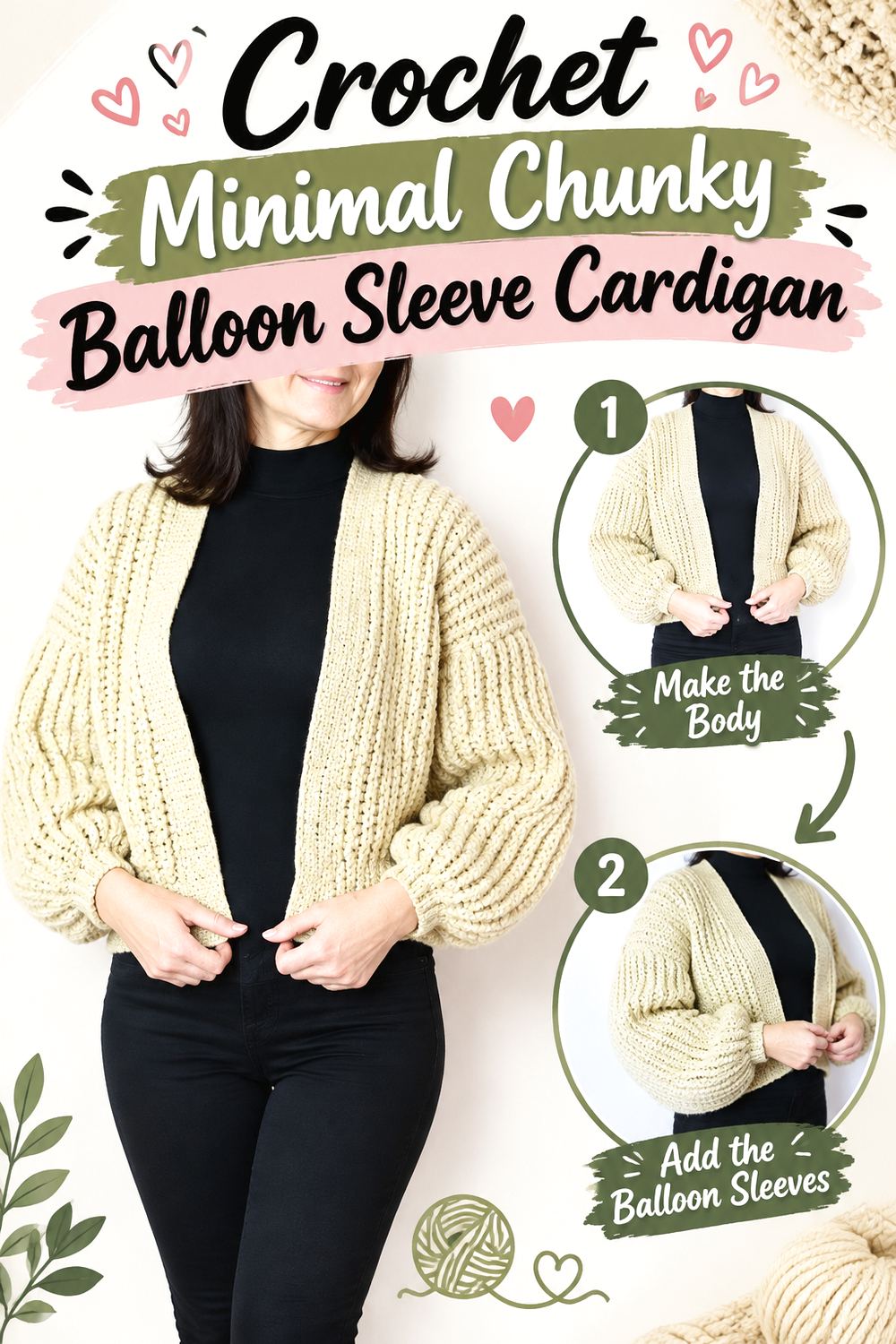
By StellaM’s video is dedicated specifically to a balloon-sleeve cardigan and links viewers to the creator’s accompanying written guidance for the bodice and sleeves. The tutorial sample uses chunky acrylic yarn with a 7 mm hook, placing it firmly in the substantial, cozy end of this list.
The attraction here is a comparatively direct cardigan concept without relying on pockets, complex color blocking, cold shoulders, or an elaborate stitch showcase to create interest. The large sleeves provide the recognizable statement. That makes it a useful inspiration point if you want a neutral, everyday balloon cardigan and would rather let yarn texture and silhouette do the work. Exact construction details should be followed from the creator rather than inferred from another cardigan pattern.
Neutral Color Can Make Volume Easier to Style
Large sleeves already create strong visual movement. A restrained color can make that silhouette easier to combine with patterned dresses, denim, or other wardrobe pieces.
If you want a brighter version, consider whether you want the color or the sleeve to be the first thing noticed. Neither approach is wrong, but making that decision before buying a cardigan quantity of yarn can prevent a finished piece from feeling busier than intended.
Check Chunky Fabric at the Underarm
Thick yarn occupies physical space, especially where the sleeve joins the body. An armhole that appears generous on paper can still feel bulky once seams or multiple layers of fabric meet.
During assembly, check that you can raise and move your arm comfortably before weaving in every end. Do not rely on sleeve width alone as proof of comfortable mobility.
Let the Sleeve Hang Before Final Length Decisions
Chunky sleeves can settle under their own weight. Before deciding that a finished sleeve is too short or too long, let the garment hang and try it on.
The wrist position should be judged with the sweater supported by the shoulders, not while a sleeve is lying flat on a table. Follow the source measurements first and make changes only after considering how your yarn behaves.
Original Tutorial and Creator Credit
Creator: By StellaM
11. Crochet Cold Shoulder Balloon Sleeve Crop Sweater
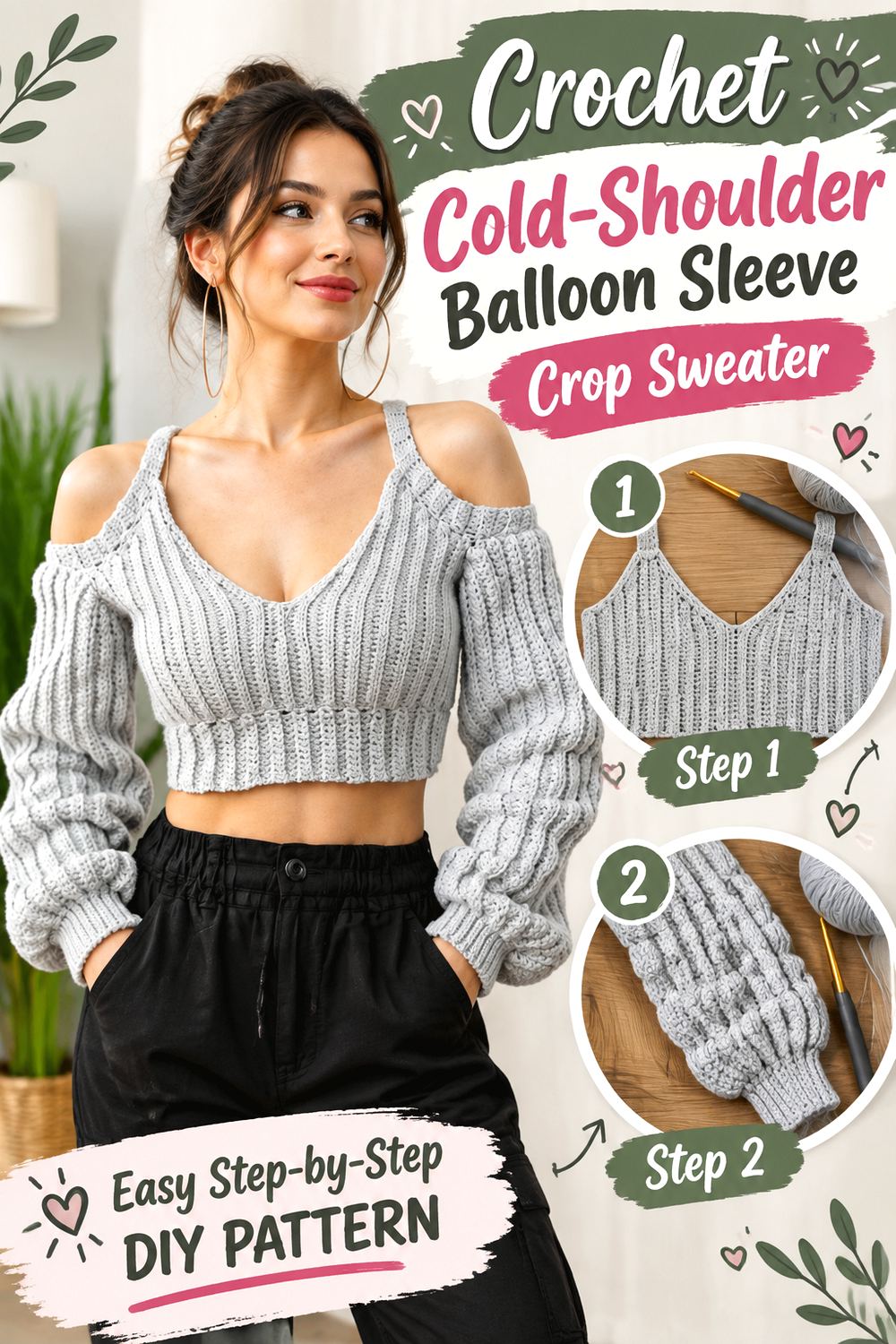
TCDDIY’s cropped balloon-sleeve sweater takes the silhouette in a more fashion-forward direction with a V-neckline and cold-shoulder detailing. The tutorial description also identifies ribbed texture and a made-to-measure approach, making the body more open and shaped than the classic crew-neck pullovers in this collection.
The combination of exposed shoulder sections, cropped length, and full sleeves gives the sweater strong contrast: open areas around the upper body sit next to substantial sleeve volume. That makes fit especially important around the neckline and shoulder openings. Rather than treating this as a standard pullover with decorative cutouts, choose it when those openings are part of the look you actively want to plan around.
Shoulder Openings Need to Sit Deliberately
A cold-shoulder design depends on accurate placement. If an opening shifts too far forward, backward, or downward, the sweater can look as though it is slipping rather than intentionally shaped.
Use the creator’s fitting method and check both sides on the body before finishing. When adapting size, preserve symmetry around the neckline and shoulders instead of changing only the torso width.
Keep Cropped Length and Sleeve Length Separate
A shorter body does not automatically call for shorter sleeves. In fact, long full sleeves often provide the visual counterweight that makes a cropped sweater feel intentional.
Decide where you want the hem based on your own torso and preferred bottoms, then evaluate sleeve length independently. Scaling both dimensions together can remove the contrast that defines the design.
Ribbed Texture Can Highlight Fit Changes
Ribbing creates strong directional lines, so stretched or uneven areas may be more visible than in a mottled textured stitch.
When measuring a ribbed section, avoid pulling it aggressively just to reach a target dimension. The relevant question is how the fabric sits on the body in its normal state.
Original Tutorial and Creator Credit
Creator: TCDDIY
12. Crochet Classic Puff Sleeve Sweater
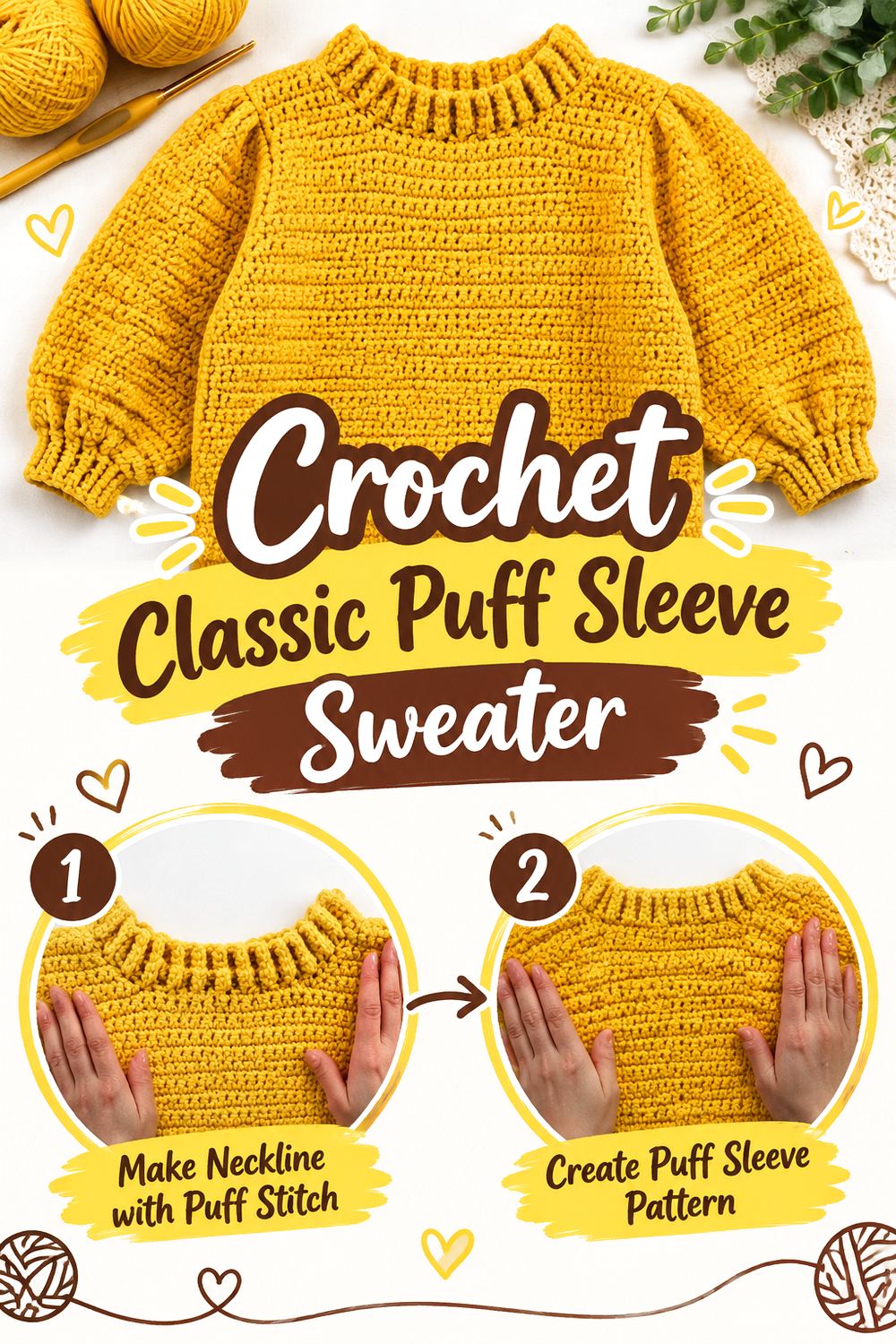
The puff-sleeve sweater tutorial currently published on the Yarn Cakes, LLC YouTube channel offers a more traditional closed sweater body paired with pronounced sleeve volume. The video includes sizing information from XS through 3XL in its accompanying written pattern information and uses category 4 yarn in the demonstrated design.
Compared with the cold-shoulder and bishop-sleeve options above, this concept keeps the neckline and torso visually straightforward so the puff sleeve remains the defining feature. It is a useful final option for readers who like romantic sleeve volume but still want a sweater that can function as a familiar everyday pullover. As always, follow the creator for the actual stitch counts and shaping rather than transferring construction from another puff-sleeve design.
Sleeve Volume Should Start in the Right Place
Puff and balloon sleeves can concentrate fullness near the shoulder, through the forearm, or across most of the sleeve. Where that volume begins changes the entire look.
When trying on the developing garment, check that the sleeve expands where the design intends instead of merely appearing oversized everywhere. If your gauge is off, that transition point may shift even when total sleeve length seems correct.
A Standard Body Makes Fit Errors More Noticeable
Because the torso is visually cleaner than many heavily textured or openwork sweaters, neckline and body fit become easier to see.
Check that the sweater hangs evenly at the shoulders and does not twist around the side seams before focusing on sleeve drama. Full sleeves cannot compensate for a body that is noticeably skewed or too restrictive.
Confirm Yarn Substitutions Against Gauge
The tutorial provides gauge and category information for its sample. If you substitute another category 4 yarn, do not assume the same label means identical fabric.
Different fibers and constructions can change thickness, spring, and weight. Swatch, wash or finish the swatch as appropriate for the yarn, then compare the resulting fabric with the fit and sleeve behavior you want.
Original Tutorial and Creator Credit
Creator: Yarn Cakes, LLC
Conclusion
The most useful way to choose among these crochet balloon sleeve sweater ideas is to look beyond sleeve size. Decide whether you want a fitted or boxy body, a pullover or cardigan, light drape or chunky structure, minimal fabric or strong texture, and whether details such as pockets, cold shoulders, a bomber collar, color blocking, or a wide neckline belong in your everyday wardrobe.
For softer volume, the classic pieced pullovers and bishop-sleeve crop keep the fabric relatively fluid. For stronger visual impact, the chunky top-down sweater, Bubblegum Cardigan, bomber jacket, and fitted-waist hexagon cardigan create sharper contrast. Once you choose the silhouette, use the linked original tutorials for exact sizing, gauge, shaping, assembly, and construction details rather than borrowing instructions from a different design.
Frequently Asked Questions
Can I make a balloon sleeve less dramatic?
Usually, sleeve volume can be modified, but the safest method depends on the individual construction. A sleeve shaped through increases behaves differently from a straight sleeve gathered into a narrow cuff. Reducing width without understanding where the fullness is created can also affect the armhole or wrist transition. Start with the original tutorial’s construction, identify which section actually creates the balloon effect, and use the designer’s adjustment guidance when available.
What yarn is best for a crochet balloon sleeve sweater?
There is no single best yarn. A lighter, flexible yarn can create softer folds and drape, while bulky yarn can produce a bold, sculptural sleeve. Fiber content matters too because some yarns stretch, recover, or gain weight differently during wear. Match the designer’s gauge first, then judge the fabric itself. A technically correct swatch that feels too stiff, heavy, or loose is a warning that the substitution may change the intended silhouette.
How do I stop balloon sleeves from becoming too long?
Measure sleeve length while the garment is supported on the body rather than relying only on a flat sleeve measurement. Full crochet sleeves may settle under their own weight, particularly with heavier yarn. Check length before attaching or completing the final cuff when the construction allows. If the source gives a finished sleeve measurement, use that as your first reference and remember that changing yarn or gauge can alter how the sleeve hangs.
Are balloon sleeve sweaters practical under coats?
Moderately full sleeves can work under roomy coats, but very dramatic sleeves may bunch inside narrow jacket arms. If winter layering is important, compare the widest part of the sweater sleeve with the outerwear you already own before choosing a pattern. A softer, slightly ballooned design such as the Someday Sweater may be easier to layer than an extremely chunky or oversized sleeve. For indoor layering, this limitation may matter much less.
Can I turn a balloon sleeve cardigan into a pullover?
Sometimes, but that is a garment redesign rather than a simple finishing change. Cardigans and pullovers can use different neckline shaping, front widths, ease assumptions, edging, and construction sequences. Closing the fronts of a cardigan does not automatically produce a correctly shaped pullover. If you prefer a closed sweater, choosing one of the pullover tutorials in this list is generally more predictable than substantially restructuring an open-front pattern.
Should I block a crochet balloon sleeve sweater?
Blocking needs depend on the yarn, stitch pattern, construction, and designer’s recommendations. It can help even out fabric and seams, but aggressive stretching may alter cuff recovery or make an already long sleeve grow. Follow the yarn label and the original creator’s finishing guidance first. When unsure, test your intended method on the gauge swatch before applying it to the finished sweater, especially if the garment contains ribbing, openwork, or heavy sleeves.