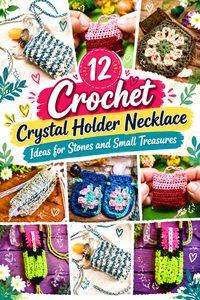
A crochet crystal holder necklace can leave a favorite stone almost completely visible or tuck it inside a more protective pouch. That difference matters. Open nets make the crystal the visual focus, while tapestry, felted, drawstring, and flap-style holders put more crochet between the stone and the outside world. Some designs are also easier to reopen when you want to exchange stones.
The 12 ideas below cover those different approaches rather than repeating the same mesh pouch in different colors. You’ll find adjustable gemstone nets, compact amulet bags, textured pendant pouches, a granny-square holder, and more decorative beaded versions. Several sources were created specifically for crystals or rocks; others teach small wearable pouches that can be adapted for a crystal after checking the opening, weight, and cord carefully. Each idea links back to its original creator for the actual construction instructions.
Quick List
- Crochet Adjustable Open-Net Crystal Holder Necklace
- Crochet Bead-Closing Mesh Crystal Keeper Necklace
- Crochet Rounded Crystal Pouch Necklace With Toggle Closure
- Crochet Geometric Tapestry Crystal Pouch Necklace
- Crochet Felted Tapestry Crystal Amulet Necklace
- Crochet Flap-and-Drawstring Crystal Medicine Bag Necklace
- Crochet Pointed-Flap Beaded Crystal Amulet Necklace
- Crochet Openwork-Band Crystal Pendant Pouch Necklace
- Crochet Spiral-Textured Rock Pouch Necklace
- Crochet Compact Treasure-Pouch Crystal Necklace
- Crochet Granny-Square Crystal Pouch Necklace
- Crochet Deep-Net Gemstone Pendant Necklace
Choose Between an Open Crystal Net and an Enclosed Pouch
Start with how much of the stone you want to see. Netted holders expose the color, inclusions, shape, and surface of the crystal, which makes sense when the stone itself is the main visual feature. Their trade-off is that the openings and lower cradle need to suit the stone closely. A narrow point or unusually small edge can potentially find its way through a space that securely holds a broader tumble.
Enclosed pouches reverse that balance. They hide more of the crystal but give you more crochet fabric around it. Dense tapestry, felted, or textured versions can also feel more like miniature jewelry bags than gemstone cages. Between those two extremes are mesh pouches and granny-style holders, which reveal glimpses of the contents while offering more coverage than a minimal net.
Match the Opening and Closure to the Crystal Shape
A smooth rounded tumblestone and an irregular raw crystal place different demands on a holder. Before making a necklace specifically for one stone, compare its narrowest point—not only its widest dimension—with the visible openings in the crochet. An open mesh that looks appropriately sized around the center can still be too generous near a tapered end.
Closures deserve the same attention. Sliding beads, drawstrings, flaps, toggles, and gathered openings each behave differently as the necklace moves. A closure that is easy to reopen is convenient when you exchange stones frequently, while a more enclosed pouch may make more sense when you plan to leave one crystal inside. Whenever the source gives its own fit or security check, follow that guidance rather than assuming one closure works for every stone.
Consider Cord Stretch, Pendant Weight, and Everyday Wear
The holder is only one part of the necklace. A stone adds concentrated weight, and crochet cords can lengthen or distort depending on fiber, stitch structure, cord construction, and how heavily the pendant is loaded. A cord that looks proportional when the pouch is empty may hang differently once a dense crystal is added.
For wearable adaptations, check how the cord meets the pouch and whether those attachment areas are carrying all the load. Fine thread can keep a small pendant visually delicate, while thicker yarn can make the holder bulkier before the crystal is even inserted. Also consider swing and snagging: fringe, beads, long drawstrings, projecting crystal points, and textured closures may interact with sweaters or loose layers differently from a compact smooth pouch. Care should follow the yarn label and the original creator’s guidance, especially when beads, wool, or felted fabric are involved.
1. Crochet Adjustable Open Net Crystal Holder Necklace
 SAVE
SAVEThis version is for readers who want the crystal to remain unmistakably visible. Heart Hook Home’s gemstone-holder design uses an open crochet net and a bead-based adjustable closure, allowing the holder to tighten around a gemstone rather than hiding it inside a conventional bag. The finished form functions as wearable jewelry while keeping most of the stone exposed.
Its main advantage is also the feature that requires the most attention: the net must actually match the stone. This style makes more sense for a featured individual gemstone than for carrying loose chips or several very small pieces together.
Let the Crystal Supply the Visual Focus
Because the crochet acts primarily as a framework, yarn color and texture do not need to compete with the stone. A simple neutral can make mineral color more prominent, while a contrasting thread makes the net itself part of the jewelry design. The important choice is whether the openings frame the crystal attractively without exposing narrow areas that could slip through.
Treat the Sliding Bead as a Fit Check
The source uses a bead as part of the adjustable securing system and specifically emphasizes checking that the stone is held tightly. A bead that merely looks decorative is not enough; its relationship with the cords affects how the opening behaves. Follow the creator’s fit guidance and test the holder with the intended gemstone before treating the necklace as ready for normal wear.
Irregular Stones Need Extra Margin
Raw points and asymmetrical pieces can be harder to match to an open net than smooth tumbles. Compare the holder with the crystal’s narrow tips and edges, not only the thick center. If a point can pass through the mesh easily, choosing a denser holder or adjusting the project according to the original designer’s guidance may be more sensible than relying on appearance alone.
Original Tutorial and Creator Credit
Creator/Site: Heart Hook Home
2. Crochet Bead Closing Mesh Crystal Keeper Necklace
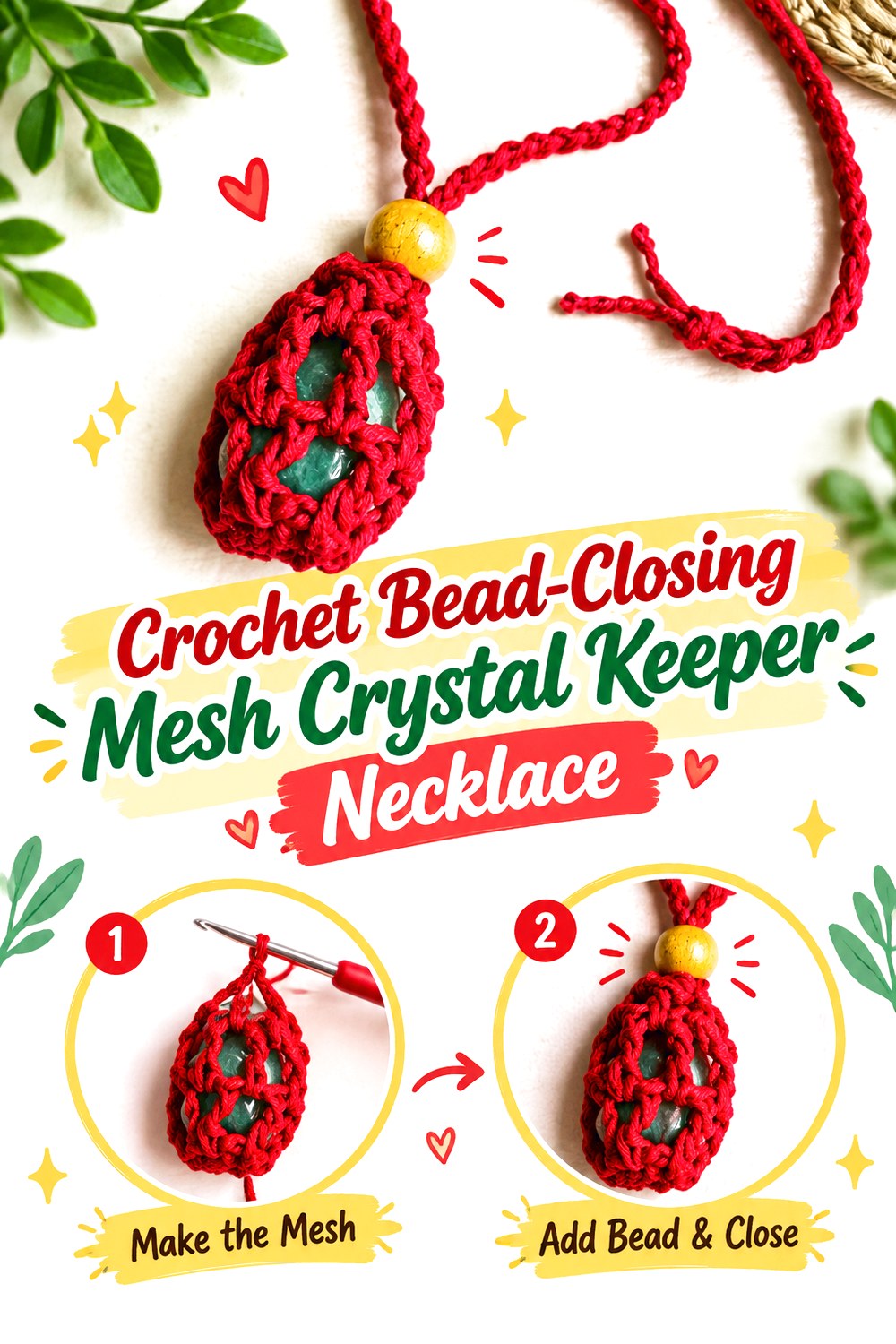 SAVE
SAVEThe Crafty Therapist’s crystal keeper offers another openwork approach, but its rounded mesh form reads more like a small cradle surrounding a tumblestone. The source describes a necklace designed to hold a crystal and uses a sliding bead so the keeper can be opened when the wearer wants to change the stone.
That makes this idea appealing when one necklace is intended to work with several similarly sized stones. The crystal remains easy to recognize through the crochet, while the gathered top gives the design a clearer opening than a permanently closed cage. It is still important to treat “changeable” as size-dependent rather than universal.
Smooth Tumblestones Suit the Rounded Cradle
A stone with a broadly rounded body gives the mesh several areas to hold against. Very narrow shards, tiny chips, or strongly tapered points create a different fit problem because their smallest dimension may approach the size of the openings. If interchangeable use is your priority, compare all the stones you plan to wear instead of sizing only around the largest one.
Swapping Crystals Can Change the Closure Fit
Two crystals may look similar on a table while behaving differently inside the same pouch. Thickness, taper, and surface irregularity all affect how much the crochet must gather. Each time you change the stone, reassess the opening and bead position rather than assuming the previous fit still applies.
Keep Necklace Cords Away From Young Children
The original page includes specific caution around a child-oriented variation. More generally, long necklace cords, beads, and small stones require careful supervision around children and are not appropriate to treat as toys. Follow the creator’s relevant precautions and consider the intended wearer before adapting any jewelry-style crystal holder for a younger person.
Original Tutorial and Creator Credit
Creator/Site: The Crafty Therapist
3. Crochet Rounded Crystal Pouch Necklace With Toggle Closure
 SAVE
SAVECoasty’s Creations takes the idea toward a more enclosed pouch. The project is presented as a crystal pouch necklace and is also described as suitable for related small-pouch uses. Its rounded body gives the stone more crochet coverage than a minimal gemstone net, while the upper portion and closure still keep the design visually light. The source discusses closure and cord options rather than treating the pouch as one fixed presentation.
This is a useful middle ground when you want the necklace to look like a miniature amulet bag but still hint at the contents. It can also suit a reader who prefers the crystal not to rub directly against clothing along its entire surface.
More Coverage Changes the Look of the Stone
With a pouch, only part of the crystal may be visible—or it may be largely concealed depending on how it sits. That shifts attention toward yarn, texture, and closure details. If your stone has a feature you specifically want on display, compare the pouch depth with that feature before committing to this style.
Choose the Closure for the Contents
The source includes options around fastening and decoration. When adapting those ideas, think first about the crystal rather than the ornament. A closure should prevent the intended stone from working its way toward the opening as the necklace moves, and decorative additions should not interfere with opening and closing the pouch.
Watch the Cord Once the Stone Adds Weight
A necklace pouch may appear small while still holding a surprisingly dense object. Before finalizing cord length, hang the completed pouch with its intended contents and observe whether the cord stretches or the attachment areas distort. If the behavior changes significantly, consult the source construction and consider whether a different yarn or cord approach is appropriate rather than simply shortening it.
Original Tutorial and Creator Credit
Creator/Site: Coasty’s Creations
4. Crochet Geometric Tapestry Crystal Pouch Necklace
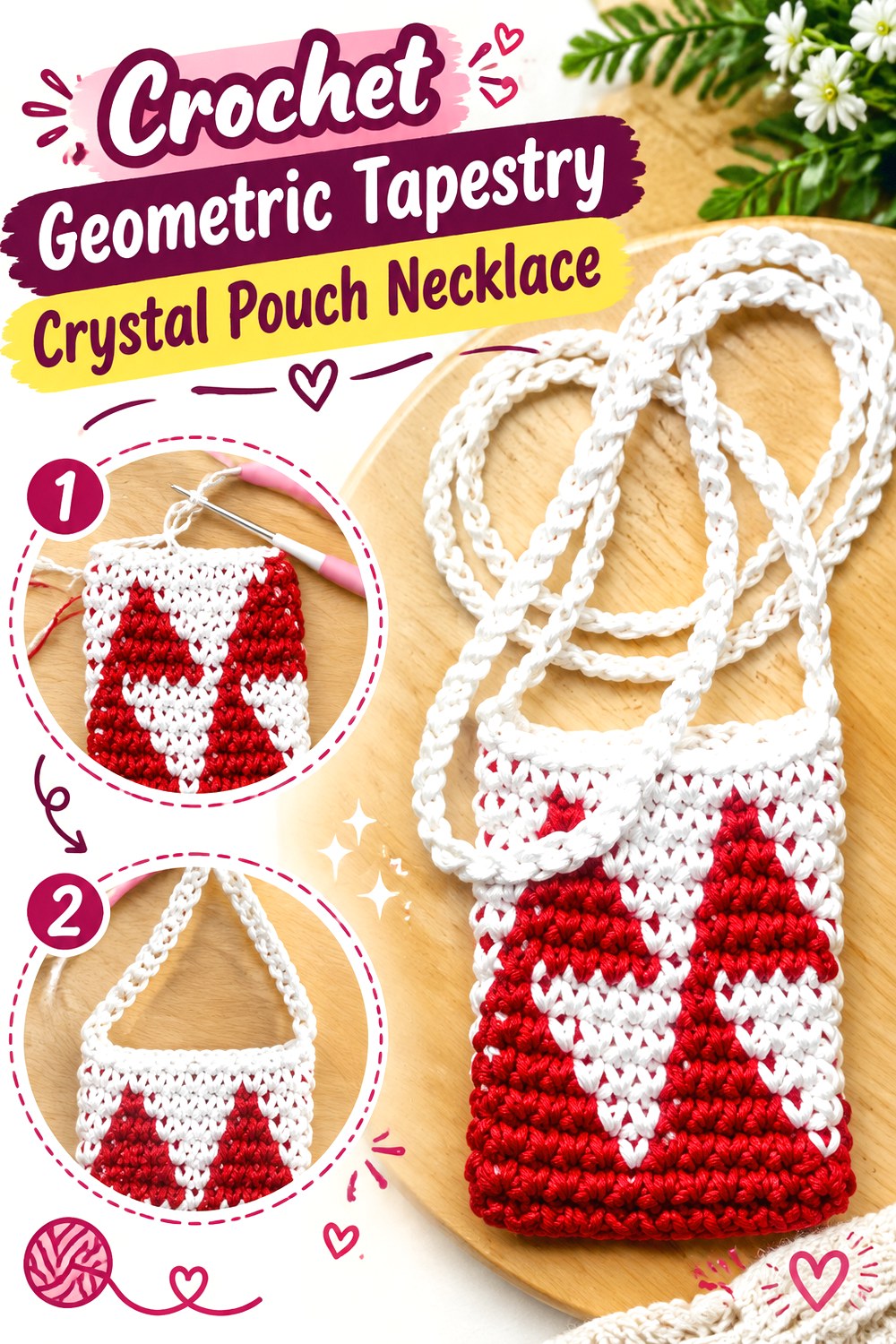 SAVE
SAVECarol Ventura’s tapestry crochet necklace pouch offers a substantially different visual direction. Instead of exposing the crystal through an airy cage, this design uses dense geometric colorwork to make the pouch itself the focal point. The original project is presented as a necklace pouch or amulet bag and includes a crocheted necklace component.
For a crystal-holder adaptation, this style is better suited to someone who enjoys carrying a stone without necessarily displaying its full surface. It also provides room for color planning and motif selection. Because tapestry crochet creates a more substantial fabric than an open net, it is worth checking how the finished scale, crystal thickness, and cord all relate before inserting a heavier stone.
Dense Colorwork Changes the Holder’s Job
Here, the fabric provides visual identity as well as containment. That can be useful for stones you prefer to keep covered, but it means the crystal’s color contributes less to the finished necklace. Choose this route when the crochet motif is meant to be a major part of the jewelry rather than just a transparent support.
Plan the Motif Around Finished Proportions
Small tapestry motifs can look very different when squeezed around a bulky object. Before choosing a crystal, consider whether filling the pouch heavily will stretch the front and distort the geometric design. A slightly less crowded fit may preserve the colorwork better than forcing the pouch to conform tightly around an oversized stone.
Keep the Strap in Scale With the Pouch
A finely worked pouch can feel visually unbalanced if paired with a disproportionately bulky cord. Conversely, an extremely delicate strap may not suit the weight you plan to carry. The original tutorial should remain the construction reference; any yarn or cord substitution should be evaluated for both visual proportion and how it behaves under the crystal’s weight.
Original Tutorial and Creator Credit
Creator/Site: Carol Ventura
5. Crochet Felted Tapestry Crystal Amulet Necklace
 SAVE
SAVEA felted tapestry pouch pushes enclosure even further. Carol Ventura’s felted amulet-bag project uses wool and a looser pre-felting crochet fabric that changes after felting, producing a more compact and opaque finished surface. For a crystal necklace, that creates a holder where the stone can be almost entirely concealed.
The attraction is the textile character rather than crystal visibility. Felted crochet softens the definition of individual openings and can make a miniature pouch feel more substantial. The major planning difference is that felting changes dimensions, so this is not the style to size casually around a favorite crystal using only the pre-felted pouch as a reference.
Felting Makes Final Size a Moving Target
Wool can contract differently according to fiber, stitch fabric, agitation, and finishing conditions. Do not assume an unfelted opening will remain large enough for the intended stone. Follow the source closely and evaluate the pouch only after its finishing process has reached the state you plan to use.
Opaque Fabric Gives the Crystal Privacy
If your goal is to wear a meaningful stone without making it visually obvious, a felted holder offers a very different result from an open cage. That makes it useful for understated styling, but it also removes the quick visual confirmation that the crystal is sitting correctly. Check the closure by touch and inspection rather than relying only on seeing the stone.
Recheck the Opening After Shaping
Once the fabric has changed through felting and shaping, test the actual finished opening before adding the crystal permanently. If the stone barely passes through, forcing it can stress the edge or make later removal difficult. If it passes too freely, review the closure and original construction rather than assuming the felted texture alone will contain it.
Original Tutorial and Creator Credit
Creator/Site: Carol Ventura
6. Crochet Flap and Drawstring Crystal Medicine Bag Necklace
 SAVE
SAVEGoddess Crochet’s pouch was developed in response to a request for small bags for carrying crystals, and the design combines a drawstring-style closing area with an additional fold-over cover. It also includes a small attachment loop that can accommodate a cord or another carrying option.
That layered closure gives this idea a distinctly pouch-like silhouette compared with the netted necklaces above. It can make sense when coverage is more important than showing the stone. For necklace use, however, the extra fabric, flap, and closure can add bulk, so the size and weight of both the pouch and crystal deserve attention before deciding how low to wear it.
Two Closure Layers Help Control the Opening
A gathered opening plus a flap gives the wearer two separate structural features to consider. The benefit is coverage; the trade-off is additional fabric near the top of the pouch. Check that the flap lies naturally after the stone is inserted and that the filled pouch does not force the opening into a shape the closure was not designed to accommodate.
The Back Attachment Carries the Load
When a pouch hangs from a small loop or concentrated attachment area, that connection deserves the same scrutiny as the body. Observe whether the loop twists or pulls noticeably when the intended crystal is inside. A necklace adaptation should follow the source’s attachment logic rather than adding a heavy stone to an improvised point in the fabric.
Keep the Wearable Scale Reasonable
A pouch that works comfortably on a keyring or as a small bag may feel different hanging from the neck. Consider total filled weight, thickness against the chest, and the amount of movement during walking. If the crystal is large, a smaller net holder or a non-necklace carrying method may be a more practical choice.
Original Tutorial and Creator Credit
Creator/Site: Goddess Crochet
7. Crochet Pointed Flap Beaded Crystal Amulet Necklace
 SAVE
SAVECrochetology’s amulet bag is jewelry-focused from the start. The miniature bag has a pointed flap, strap, bead embellishment, and fringe, creating a finished necklace where the crochet pouch itself carries as much visual interest as whatever is placed inside. The source describes the piece as an amulet bag intended to be worn as jewelry.
Used as a crystal holder, it suits someone who prefers a decorative covered pendant rather than a visible gemstone cage. The pointed flap changes the silhouette, while the beads and fringe create movement. Those embellishments also introduce practical considerations: they can add weight, catch on textured clothing, and affect how the piece should be handled or cleaned.
Beads Make the Holder Part of the Jewelry
In a plain crystal net, the stone supplies most of the ornament. Here the opposite can be true. Bead color, finish, and placement can draw attention even when the crystal is hidden. Before adding a particularly heavy stone, remember that the pouch already contains decorative weight and check how the complete necklace hangs.
Fringe Can Interact With Layered Clothing
Fringe gives the small bag a more expressive outline, but loose fibers may catch on zippers, open-knit sweaters, or textured outerwear. If you plan to wear the necklace frequently rather than occasionally, consider how the fringe behaves against your usual clothing. Any alteration to the original finish should preserve the pouch construction rather than modifying structural areas casually.
The Pointed Flap Is More Than Decoration
A flap changes access to the contents as well as appearance. Make sure the chosen crystal does not make the bag so full that the point can no longer fall naturally over the opening. A flatter stone may preserve the intended silhouette better than a very thick irregular specimen.
Original Tutorial and Creator Credit
Creator/Site: Fatima / Crochetology
8. Crochet Openwork Band Crystal Pendant Pouch Necklace
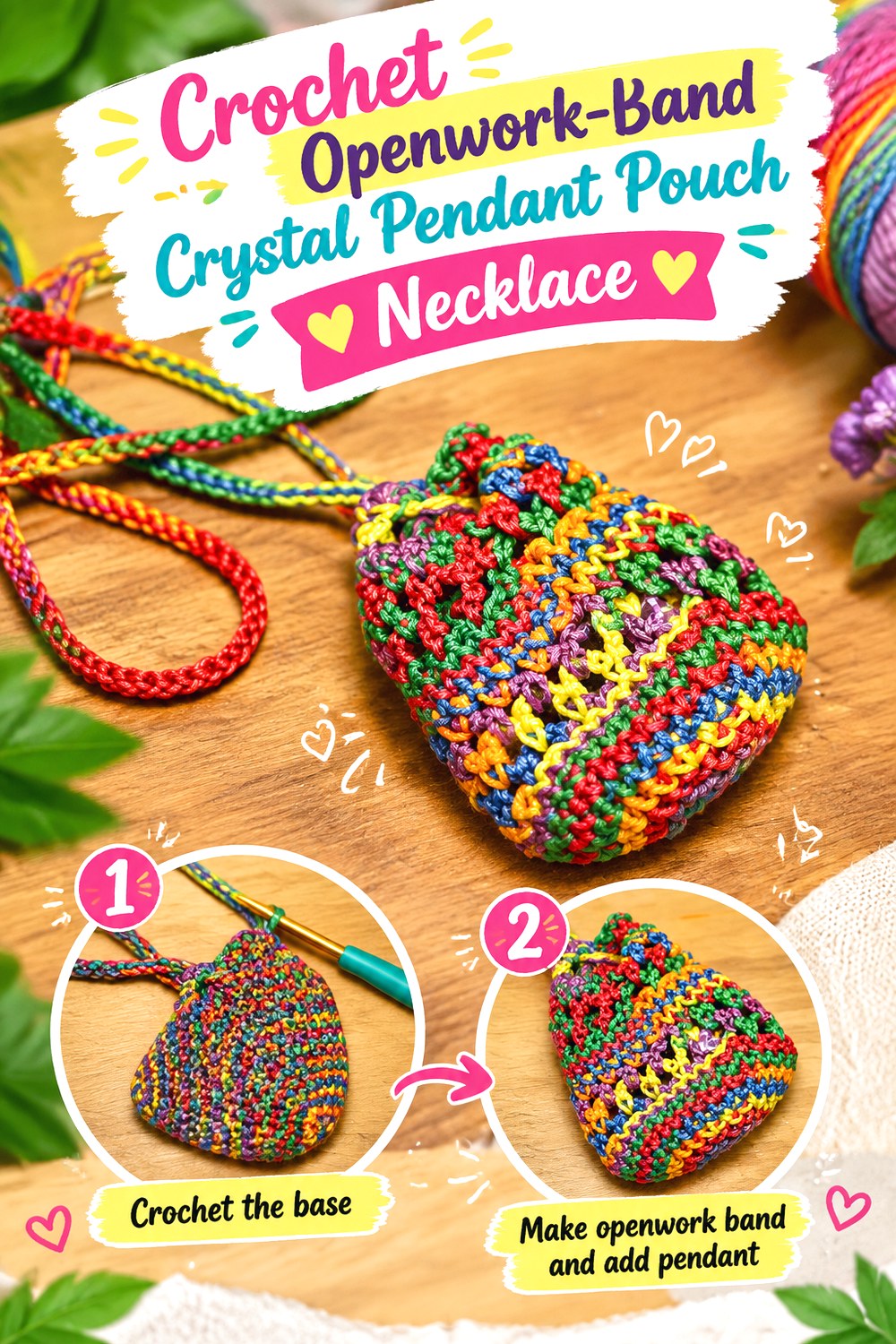 SAVE
SAVEShala Kerrigan’s crocheted pendant pouch is explicitly described as suitable for holding small objects including rocks and crystals. Its shape is more enclosed than an open gemstone net, but the design includes a more open decorative section that breaks up the solid crochet surface.
That combination makes this idea useful when you like pouch-style containment without wanting the pendant to look visually heavy. Fine thread keeps the piece at jewelry scale, while the openwork band provides texture and glimpses into the pouch. The main limitation is straightforward: any opening in the fabric must still be considered in relation to the size and shape of what you place inside.
Open Bands Need Content Awareness
A decorative gap that is harmless around one rounded stone may be unsuitable for tiny chips or narrow points. Look through the pouch from several angles with the intended crystal inside. If part of the stone can protrude significantly, a denser pouch may be a more sensible match than trying to make the openwork behave like solid fabric.
Fine Thread Keeps the Pendant Visually Light
Thread-scale crochet can make a pouch feel more like jewelry and less like a miniature yarn bag. Changing to a substantially thicker yarn could alter both scale and drape, so do not assume the same crystal-to-pouch proportions will remain. If substituting materials, compare the finished fabric rather than relying only on the yarn label category.
Inspect the Upper Edge Before Wearing
The top edge controls whether the stone stays inside while the pendant swings. After filling the pouch, turn and move it gently over a safe surface to see whether the opening remains where intended. This is a practical fit check, not a substitute for the creator’s construction directions.
Original Tutorial and Creator Credit
Creator/Site: Shala Kerrigan / Don’t Eat the Paste
9. Crochet Spiral Textured Rock Pouch Necklace
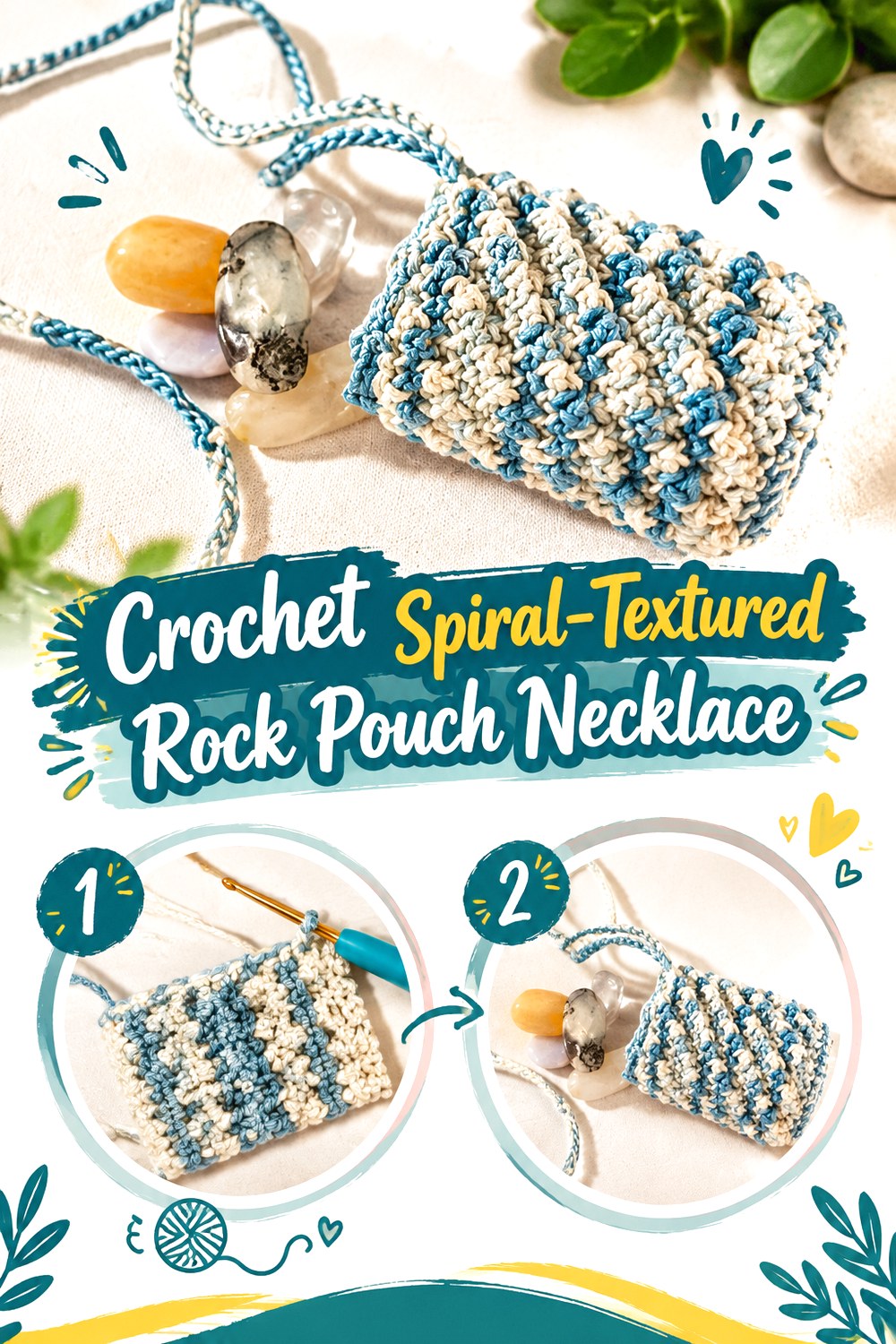 SAVE
SAVEAn earlier Don’t Eat the Paste design provides another stone-carrying approach, this time emphasizing spiral-like crochet texture rather than a conspicuous open band. The original pouch was made to hold rocks and includes an integrated necklace-style strap arrangement.
For crystal use, this is a good contrast to both mesh cages and smooth dense tapestry. The raised visual rhythm makes the yarn surface part of the design while retaining a more covered pouch form. It works particularly well as an idea for someone who wants tactile crochet texture without adding beads or fringe. As with any small pendant pouch, the stone should fit without forcing the body outward so far that the opening and strap geometry change.
Texture Adds Interest Without Wide Lace Openings
A textured surface can create depth while keeping more crochet around the crystal. That may suit a stone you want mostly concealed. The trade-off is that stronger texture also adds visual bulk, particularly if the yarn is enlarged from the original scale. Material substitutions should therefore be judged by the finished pendant proportions.
Use the Pouch Shape to Control Swing
A compact stone that sits close to the bottom generally creates a different feel from several loose pieces moving inside. If you want to carry multiple small crystals, consider whether their movement could distort the pouch or make the necklace uncomfortable. One appropriately fitting piece can be simpler to assess than a collection of shifting contents.
Small Stones Still Need a Controlled Opening
Dense sides do not solve an overly generous top. Compare the stone’s narrowest dimension with the finished opening and observe how the top changes when the necklace is lifted by its strap. If the pouch gaps when suspended, consult the original tutorial before deciding the crystal is adequately contained.
Original Tutorial and Creator Credit
Creator/Site: Shala Kerrigan / Don’t Eat the Paste
10. Crochet Compact Treasure Pouch Crystal Necklace
 SAVE
SAVEHanieBCreations teaches a small crochet pouch bag specifically designed to be worn as a necklace and to carry little valuables. Crystal use is an adaptation here rather than a source-specific claim, which makes this project most useful for readers who first want a wearable miniature bag and then plan to evaluate whether their chosen stone fits it appropriately.
The compact pouch silhouette differs from dedicated gemstone cages because the contents do not define the exterior shape as strongly. Instead, the necklace reads as a tiny bag. Before adapting it, check the crystal for weight, sharp projections, and fit at the opening; a pouch suitable for a lightweight small item is not automatically suitable for every mineral specimen.
Treat Crystal Use as an Adaptation
Start by making the pouch according to the creator’s tutorial, then assess the finished dimensions against your stone rather than altering construction based on guesswork. If the crystal presses hard against seams or openings, it is not a good match simply because it technically fits inside.
Filled Weight Changes Necklace Comfort
A small pouch can disguise how heavy its contents are. Wearability depends on more than cord length: notice pressure at the neck, how strongly the pouch swings, and whether the cord attachment stretches. A very dense stone may be better suited to a purpose-designed crystal net or a non-necklace holder.
The Opening Matters More Than Decoration
When converting any mini pouch into a stone holder, containment should come before embellishment. Check whether the pouch can close in its intended manner with the crystal inside. If the contents prevent the top from sitting normally, choosing a smaller stone is generally more sensible than forcing the closure.
Original Tutorial and Creator Credit
Creator: HanieBCreations
11. Crochet Granny Square Crystal Pouch Necklace
 SAVE
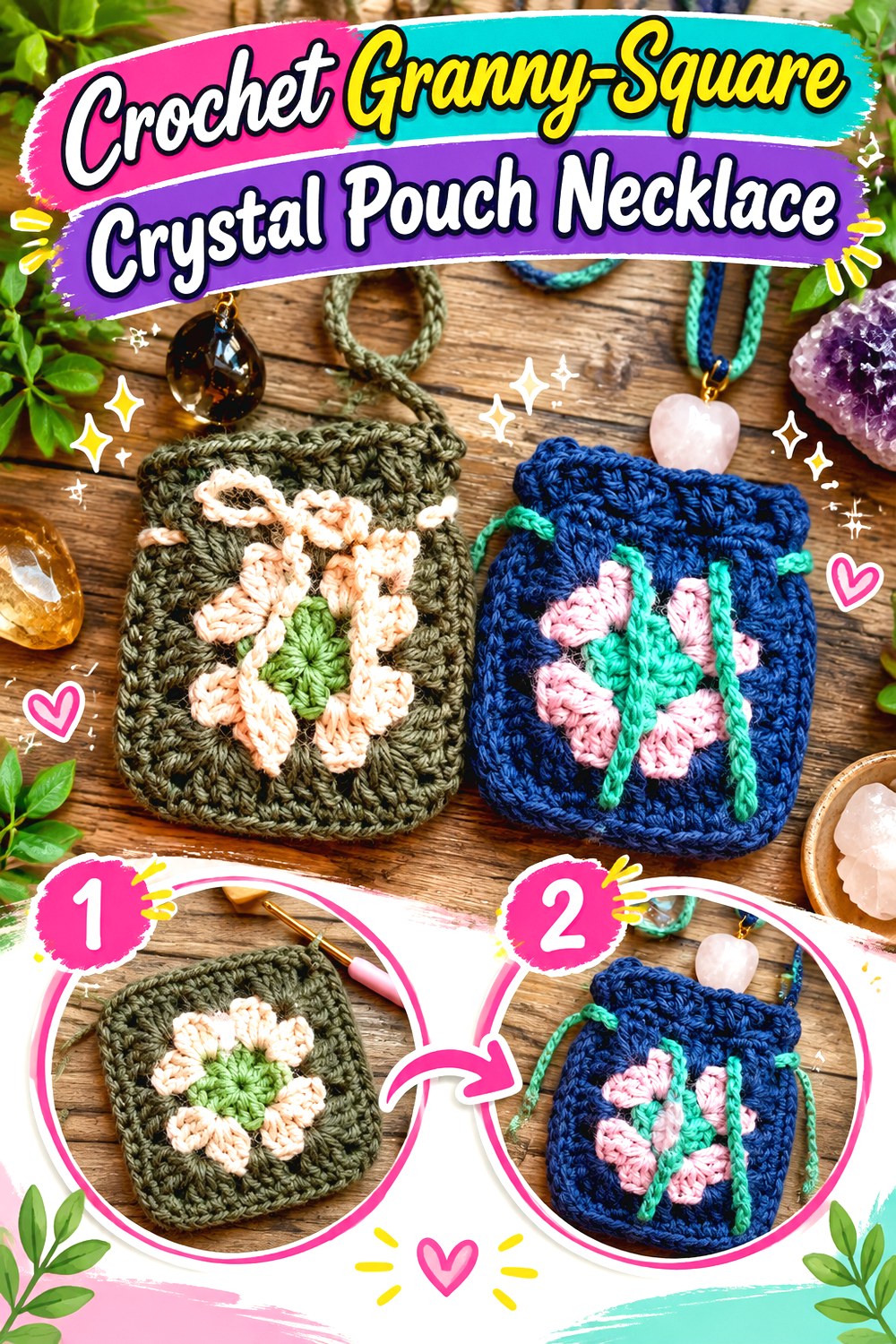
SAVEThe Cozy Tangerine’s crystal pouch uses a small granny-square-inspired construction with separate front and back sections joined into a miniature bag. The tutorial is specifically presented as a crystal-holder pouch and also uses a long chain-style drawstring. For this article, wearing it as a necklace is an adaptation: the source supplies the crystal-pouch construction, while the final wearable cord length and comfort need to be assessed separately.
Visually, this idea stands apart from cylindrical and tapestry pouches. The square front creates a clear color-blocking opportunity, and the panel construction makes the joined perimeter part of both the design and the function.
Panel Joins Become Functional Edges
With a two-panel pouch, the connection around the sides and bottom is responsible for keeping the contents enclosed. Inspect those joined edges after finishing, especially if the crystal has pointed corners. A snugly joined border should not be treated casually simply because it is also decorative.
Granny Openings Favor Larger Contained Pieces
Granny-style fabric naturally introduces visible spaces. A single broad tumble may sit comfortably behind them, while chips or slender points can interact differently with the openings. Look at the crystal from both sides of the completed pouch before deciding that the panel spacing is suitable for everyday movement.
Convert the Drawstring Deliberately
A long drawstring can suggest necklace use, but wearable length, load, and neck comfort are separate questions. If adapting the pouch into a necklace, assess the filled pouch and cord together. Avoid assuming that extending a decorative chain automatically makes it an appropriate load-bearing necklace cord.
Original Tutorial and Creator Credit
Creator: The Cozy Tangerine
12. Crochet Deep Net Gemstone Pendant Necklace
 SAVE
SAVEMaria Creative Mind’s gemstone-net tutorial returns to the open-display end of the spectrum. The project is presented as a crochet gemstone net that can be used to wear a favorite crystal as a pendant, making the stone itself the central visual element. Unlike the more enclosed pouches in the middle of this list, a deep net traces the crystal’s shape while leaving much of its surface exposed.
This style is worth considering when you have one distinctive stone whose color and texture you do not want to hide. Its suitability depends heavily on fit. A net can look dramatic around a broad crystal while still being a poor match for a piece with narrow tips or projecting edges.
A Deep Net Frames the Whole Stone
The visual strength of this design comes from repeated crochet lines crossing the crystal rather than a pouch covering it. Think about where those lines fall over the stone’s most attractive features. A highly patterned crystal may look best with a quiet thread color, while a simple stone can support a more contrasting net.
Points and Sharp Edges Need Extra Caution
A projecting crystal edge can press against the crochet or pass farther through a mesh opening than a rounded tumble. Examine each narrow point before wearing the finished pendant. If the stone seems likely to work through the net, a dense pouch from elsewhere in this list is a more appropriate design direction.
Keep the Pendant Stable on the Cord
Open gemstone pendants expose the stone directly to movement and contact with clothing. After the holder is completed according to the tutorial, check how the filled net hangs from its cord and whether the stone consistently settles into the intended orientation. A visually centered pendant that flips or shifts constantly may need a different stone-to-holder pairing.
Original Tutorial and Creator Credit
Creator: Maria Creative Mind
Comparing Crochet Crystal Holder Necklace Styles
| Holder style | Crystal visibility | Useful when your priority is | Main point to check |
|---|---|---|---|
| Open nets and mesh keepers | High | Displaying one featured stone | Narrow points versus mesh openings |
| Rounded and textured pouches | Low to moderate | More crochet coverage around the stone | Opening size and cord stretch |
| Tapestry or felted amulet bags | Low | Making the textile design the focal point | Bulk, final dimensions, and filled weight |
| Flap or beaded jewelry pouches | Mostly low | Decorative necklace styling beyond the crystal | Closure fit, embellishment weight, and snagging |
| Granny-panel crystal pouch | Moderate | Color blocking and a square miniature-bag shape | Panel joins, fabric openings, and wearable cord adaptation |
There is no single construction that suits every crystal. A broad smooth tumble is easier to match with open mesh than a collection of tiny chips, while an opaque tapestry pouch may make more sense when the stone is personally meaningful but does not need to remain visible. Decide first whether display, exchangeability, enclosure, or decorative crochet is your main goal; that will narrow the list much faster than choosing by color alone.
Conclusion
These 12 crochet crystal holder necklace ideas range from barely-there gemstone nets to opaque felted and tapestry pouches, with mesh keepers, decorative amulet bags, textured pendants, and a granny-square holder between those extremes. The most useful choice depends on the actual stone: its narrowest points, overall weight, surface shape, and how often you expect to remove it all affect which holder makes sense.
Open designs emphasize the crystal, while covered pouches put more attention on crochet texture, colorwork, beads, or closure details. Whichever direction you choose, assess the finished holder with the intended stone rather than relying on appearance alone. Use the linked original tutorials near each idea for the creators’ exact construction details before making sizing, yarn, closure, or cord adaptations.
Frequently Asked Questions
Can I use any crystal shape in a crochet necklace holder?
Not necessarily. Rounded tumblestones are generally easier to evaluate in open nets because they have fewer narrow projections. Raw points, shards, chips, and strongly tapered stones may pass farther through mesh openings or put concentrated pressure on the crochet. Compare the stone’s narrowest dimension with the finished fabric, not only its widest point. When in doubt, a denser enclosed pouch may be more appropriate than an open cage.
Is crochet thread or yarn better for a crystal holder necklace?
Neither is universally better. Fine crochet thread can keep a small pendant jewelry-like and reduce visual bulk, while a thicker yarn creates a more substantial textile appearance. Changing material can also change opening size, stretch, stiffness, and finished scale. If a tutorial specifies a particular yarn category or thread, use the creator’s information as your starting point and avoid assuming a thicker substitute will behave the same way.
How can I reduce the chance of a crystal slipping out?
Start with a holder whose openings are clearly smaller than the parts of the stone that could move through them. Check the top closure after the crystal is inserted and again while the necklace is suspended. Sliding beads, drawstrings, flaps, and gathered openings should operate as the designer intends. Heart Hook Home, for example, specifically emphasizes checking that its adjustable gemstone holder grips the stone securely.
Can I make one necklace and swap different crystals into it?
Some designs are better suited to that goal than others. Adjustable nets and bead-closing mesh keepers are convenient starting points because the opening can be accessed again. However, stones that seem similar may differ significantly in thickness and taper. Recheck the fit every time you swap the contents, especially with an open holder. A closure position that suits one tumble should not automatically be assumed safe for another.
Are crochet crystal holder necklaces suitable for children?
Long cords, beads, drawstrings, and small stones can create hazards for children, so these pieces should not be treated as toys. The Crafty Therapist’s crystal-keeper source includes specific precautions around a child version. For any child-related adaptation, follow the original designer’s warnings, use close adult supervision where appropriate, and avoid assuming that a handmade necklace is suitable for a young child simply because the crochet itself feels soft.
How should I wash a crochet crystal necklace?
Care depends on the yarn fiber, beads or other embellishments, whether the holder has been felted, and the stone itself. Follow the yarn label and any care guidance provided by the original creator. If the design allows the crystal to be removed, taking it out before cleaning can simplify care, but do not force a stone through a tight opening. Felted wool, decorative beads, and mixed materials may require different handling from a plain cotton or thread pouch.