Burgundy and powder blue give crochet lace sleeves an interesting light-and-dark relationship. Burgundy can provide the deeper visual anchor, while powder blue can open up smaller lace details, soften wide sleeve areas, or draw attention to cuffs and edging. Reversing those roles creates a noticeably lighter garment without changing the basic construction.
The key is deciding where the color change belongs. On openwork sleeves, a contrast line at the shoulder, elbow, cuff, motif edge, or back panel can become much more visible than the same color change on dense crochet. The tutorials linked below support the sleeve, shrug, bolero, or openwork construction concept; the burgundy-and-powder-blue arrangements are independent color-planning ideas rather than claims about the creators’ original colors.
Quick List
- Burgundy-Led and Powder Blue Flared Lace Crochet Sleeve Shrug
- Burgundy and Powder Blue Bell-Sleeve Mesh Crochet Shrug
- Powder Blue and Burgundy Collar-Lace Crochet Sleeve Bolero
- Burgundy Spiderweb and Powder Blue Crochet Lace Sleeve Shrug
- Burgundy and Powder Blue Granny-Lace Crochet Sleeve Bolero
- Powder Blue and Burgundy Dragonfly-Lace Crochet Sleeve Cocoon
- Burgundy Sleeve and Powder Blue Grid-Back Crochet Lace Shrug
- Powder Blue and Burgundy Seamless-Mesh Crochet Lace Sleeve Shrug
- Burgundy Filet-Edge and Powder Blue Crochet Lace Sleeve Bolero
- Powder Blue Openwork and Burgundy-Cuff Crochet Lace Sleeve Bolero
- Burgundy Distressed and Powder Blue Crochet Mesh Lace Sleeve Shrug
- Powder Blue Fishnet and Burgundy-Anchor Crochet Lace Sleeve Shrug
Plan Burgundy and Powder Blue Around the Lace Openings
With lace sleeves, the empty spaces are part of the color scheme because the shirt, dress, or skin underneath shows through. That means a small amount of burgundy can look stronger than expected when it forms narrow lines around large powder blue openings.
Before committing to equal amounts of both colors, decide which one should control the sleeve silhouette. Burgundy works well when you want the outline, cuffs, or shoulder structure to read more strongly. Powder blue can take more surface area when you want the lace to appear lighter and less visually dense.
Check Burgundy and Powder Blue in Light and Dark Value
Burgundy will often appear substantially darker than powder blue, but actual yarns vary. Put the skeins beside each other and, if necessary, look at a grayscale photo before starting the sleeves. That quick check shows whether the two yarns have enough light-and-dark separation for small motifs, edging, and narrow color bands to remain visible.
Also compare the yarns against the clothing you expect to wear underneath. Powder blue lace over a pale top can become quiet, while burgundy may remain strongly defined. Over a dark base layer, the opposite problem can occur, with burgundy becoming more subdued and powder blue gaining emphasis.
1. Burgundy-Led and Powder Blue Flared Lace Crochet Sleeve Shrug
 SAVE
This direction lets burgundy control most of the fitted sleeve and upper shrug while powder blue appears where the lace expands toward the wrists. The darker upper section visually anchors the shoulders, while the lighter flare makes the lower sleeves feel less heavy. It is particularly useful for a design with decorative edging because the color change can follow an existing structural boundary instead of appearing randomly across the openwork.
Let Burgundy Lead the Upper Crochet Lace Sleeves
Keep burgundy through the upper arms and the main connecting section when you want the shrug to have a clearly defined frame. On a very open lace fabric, using the deeper color continuously across the shoulders also prevents the garment from looking like two separate sleeves.
Check the burgundy against the intended underlayer before extending it through every section. If the base garment is equally dark, moving some powder blue closer to the shoulders can restore visible separation.
Use Powder Blue to Lighten the Burgundy Sleeve Flare
Powder blue can begin where the sleeve noticeably widens, letting the silhouette itself explain the color change. This gives the lower sleeve more visual space and prevents a large burgundy flare from dominating the entire garment.
For a quieter version, use powder blue only on the final decorative edge or tie. For stronger color blocking, give powder blue the full flared section while keeping the narrower sleeve burgundy.
Creator Credit: HookedOnViktoriya
2. Burgundy and Powder Blue Bell-Sleeve Mesh Crochet Shrug
 SAVE
Bell sleeves create a natural place to switch colors because the lower sleeve already changes in shape. Use burgundy through the shoulder and narrower upper-arm portion, then transition to powder blue as the bell begins. This makes the lighter shade responsible for most of the sleeve movement without losing the darker frame across the upper body.
Burgundy Gives the Upper Bell Sleeve a Stronger Anchor
Keeping burgundy around the shoulder and upper arm helps contain the visual width of the sleeve. This matters on large mesh because the outline can attract as much attention as the individual stitches.
If you also use burgundy across the back, repeat it continuously from one shoulder to the other. That creates a deliberate dark frame rather than isolated burgundy patches.
Powder Blue Makes the Burgundy Bell-Sleeve Transition Clear
Start powder blue at a recognizable change in sleeve width rather than halfway through an otherwise identical mesh section. The transition then feels connected to the sleeve construction.
Check the proportions before repeating the second sleeve. If powder blue occupies nearly the entire arm, the project will read as a powder blue shrug with burgundy trim rather than the more balanced split-tone effect.
Creator Credit: Crochet Made By Eli
3. Powder Blue and Burgundy Collar-Lace Crochet Sleeve Bolero
 SAVE
A compact collar-and-sleeve bolero offers less body area for color blocking, so every placement choice becomes noticeable. Use powder blue across the shoulder connection and most of the open sleeve, then reserve burgundy for the outer collar line and sleeve ends. That arrangement keeps the garment light while still giving its edges enough contrast to remain defined.
Powder Blue Can Keep the Crochet Shoulder Lace Visually Light
Let powder blue occupy the area around the shoulders when you want the openwork to blend gently into the sleeves. The lighter field can also stop a compact bolero from appearing visually concentrated around the neckline.
Because the shoulder section sits near the face and any jewelry, check the powder blue beside the tops and dresses you actually plan to layer underneath.
Burgundy Defines the Powder Blue Collar and Sleeve Ends
A burgundy collar edge provides a clear boundary between powder blue crochet and the neckline underneath. Repeating the same burgundy at the wrists connects the two ends of the garment without requiring alternating stripes throughout the sleeves.
Keep those burgundy sections relatively controlled if the open lace is the main feature. Very wide dark cuffs can shift attention away from the powder blue surface.
Creator Credit: amazingishgrace
4. Burgundy Spiderweb and Powder Blue Crochet Lace Sleeve Shrug
 SAVE
A statement back motif gives the two colors different jobs. Burgundy is a strong choice for the spiderweb or other radial lace feature because its darker lines can define the motif, while powder blue can cover more of the sleeves. The result concentrates the deepest color at the center of the garment rather than distributing it equally everywhere.
Burgundy Helps the Spiderweb Crochet Motif Stay Central
Keep the main web burgundy when you want the back motif to remain the focal point. Introducing powder blue repeatedly inside the same web can fragment the shape, especially if the motif already contains many spokes and openings.
Instead, finish the main burgundy motif first and evaluate its visibility over the intended base garment before deciding whether any powder blue belongs inside it.
Powder Blue Keeps Burgundy Spiderweb Sleeves From Feeling Too Dark
Moving into powder blue around the arm openings or sleeves separates the central web from the surrounding fabric. The lighter sleeves can make the burgundy motif look more intentional rather than allowing dark crochet to occupy the entire upper body.
A small burgundy repeat at the cuffs can reconnect the sleeves to the back without extending the full web color down both arms.
Creator Credit: Crafting Shed
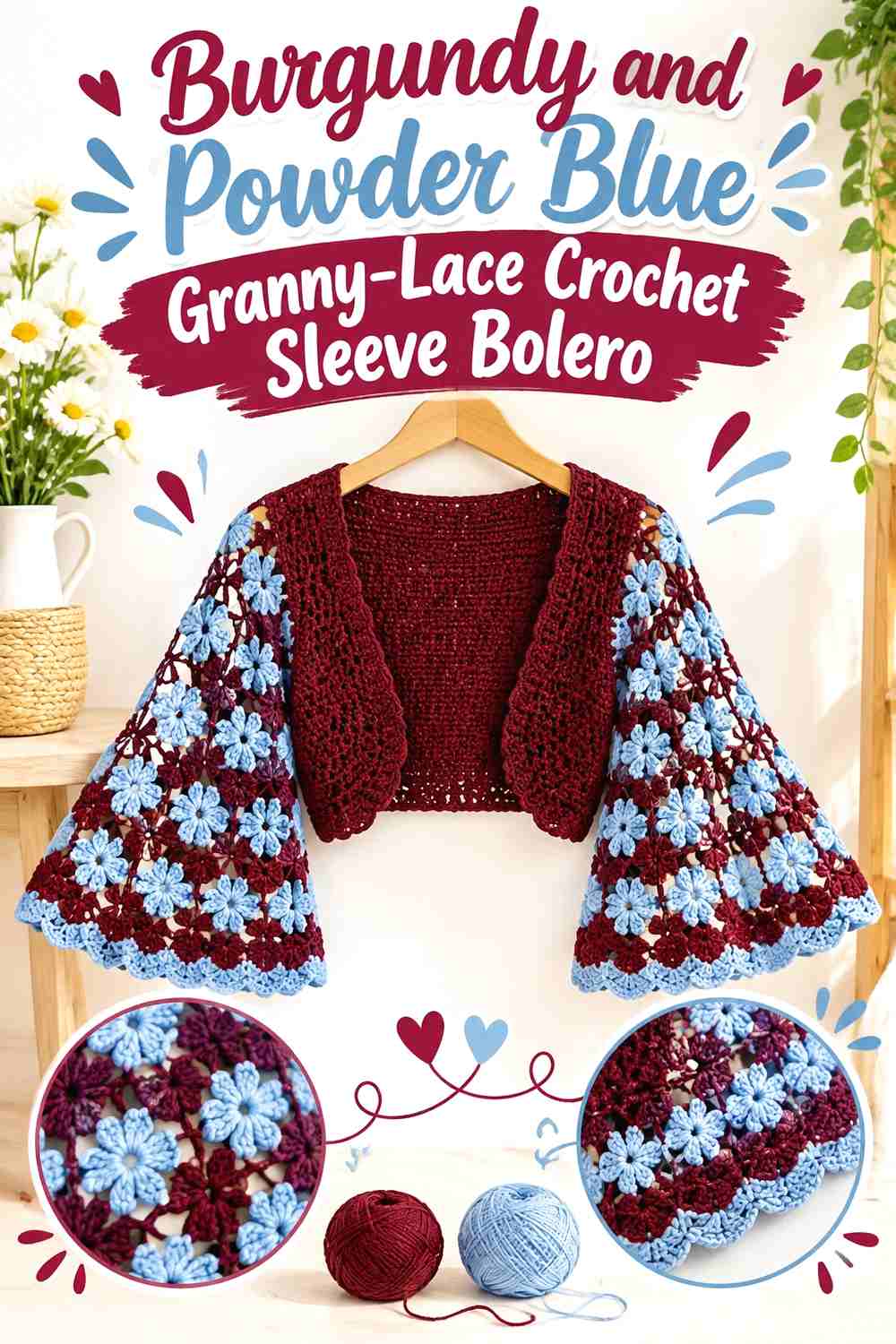
5. Burgundy and Powder Blue Granny-Lace Crochet Sleeve Bolero
 SAVE
Motif construction makes it possible to distribute burgundy and powder blue in smaller, repeated units rather than large sleeve sections. One useful approach is to give burgundy more of the motif centers and powder blue more of the outer rounds or connecting areas. Repeating that relationship keeps the garment coordinated even when individual squares alternate positions.
Burgundy Centers Can Give Powder Blue Crochet Motifs More Definition
Using burgundy toward the middle of repeated lace motifs creates a consistent dark point that the eye can follow across the back and sleeves. Powder blue around those centers then gives the motifs room to separate from one another.
Before joining, lay out the finished motifs in their intended sleeve positions. A color arrangement that looks balanced in a pile can become uneven once several burgundy centers collect on one side.
Powder Blue Joins Can Soften a Burgundy Granny-Lace Layout
Powder blue joining or outer motif sections can prevent the burgundy centers from forming one uninterrupted dark block. This is useful when you want the individual motifs to remain recognizable.
If you prefer a more graphic result, reverse the roles and use burgundy for joining. Just expect the join grid to become a much stronger part of the finished sleeve design.
Creator Credit: DIY FROM HOME CROCHET
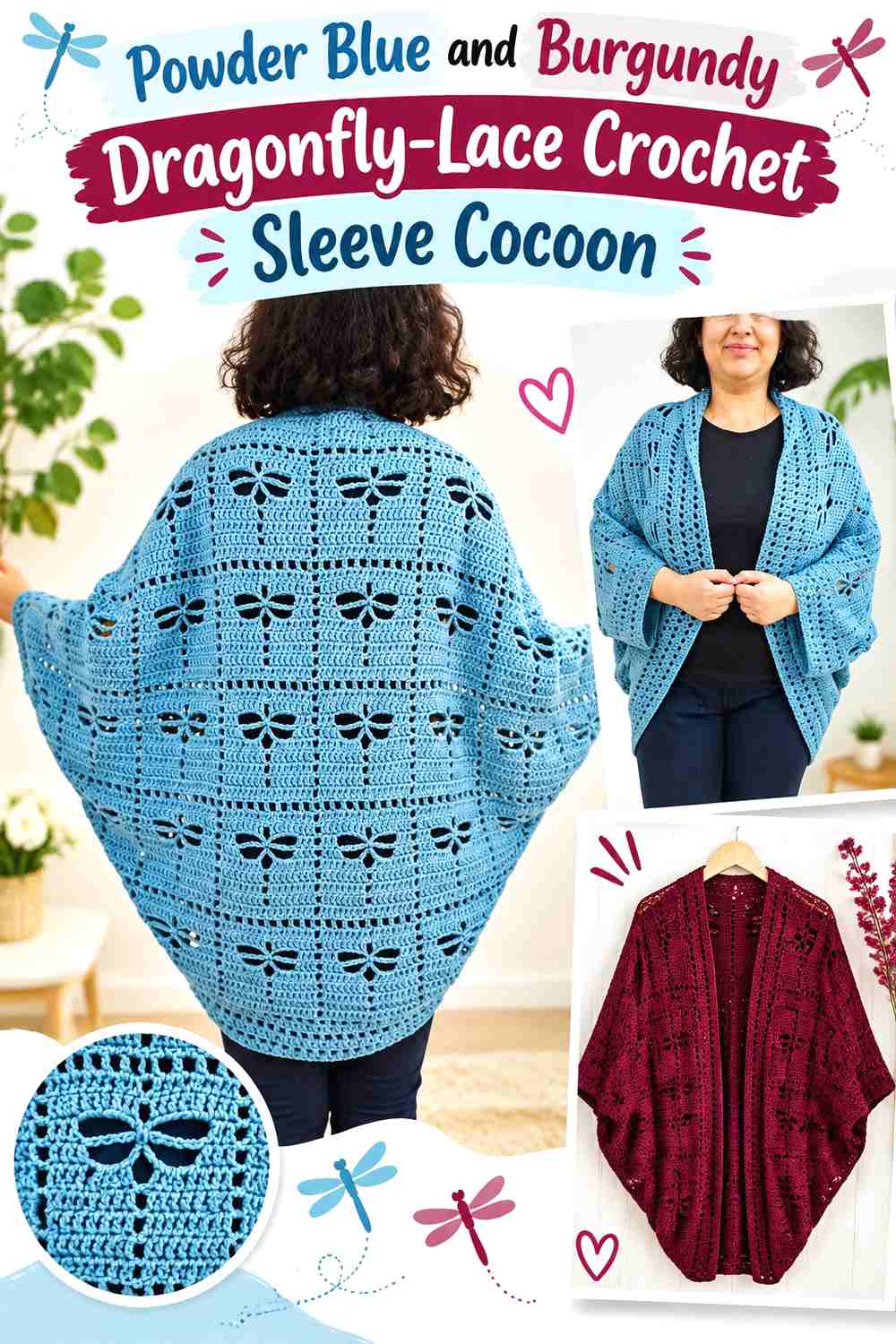
6. Powder Blue and Burgundy Dragonfly-Lace Crochet Sleeve Cocoon
 SAVE
A larger openwork motif benefits from a clear color hierarchy. Powder blue can cover most of the cocoon and sleeve fabric, while burgundy marks selected motif areas or the outer opening. This keeps the larger garment from becoming visually heavy while still allowing burgundy to create recognizable points of emphasis.
Powder Blue Gives the Crochet Lace Cocoon More Visual Breathing Room
Use powder blue over the broadest areas when you want the draped fabric and negative space to remain prominent. Because a cocoon-style shrug covers more of the back than a narrow bolero, the dominant color occupies a much larger visible area.
Check the piece from the back as well as the front. A powder blue distribution that looks balanced around the sleeves may need a burgundy repeat nearer the center to keep the back from appearing disconnected.
Burgundy Can Define Powder Blue Dragonfly-Lace Details
Reserve burgundy for the parts of the openwork you most want to notice rather than outlining every opening. Strategic repetition creates contrast without turning the motif into a busy two-color grid.
If the burgundy details begin to merge from a distance, increase their separation rather than automatically increasing their size.
Creator Credit: Let’s All Crochet
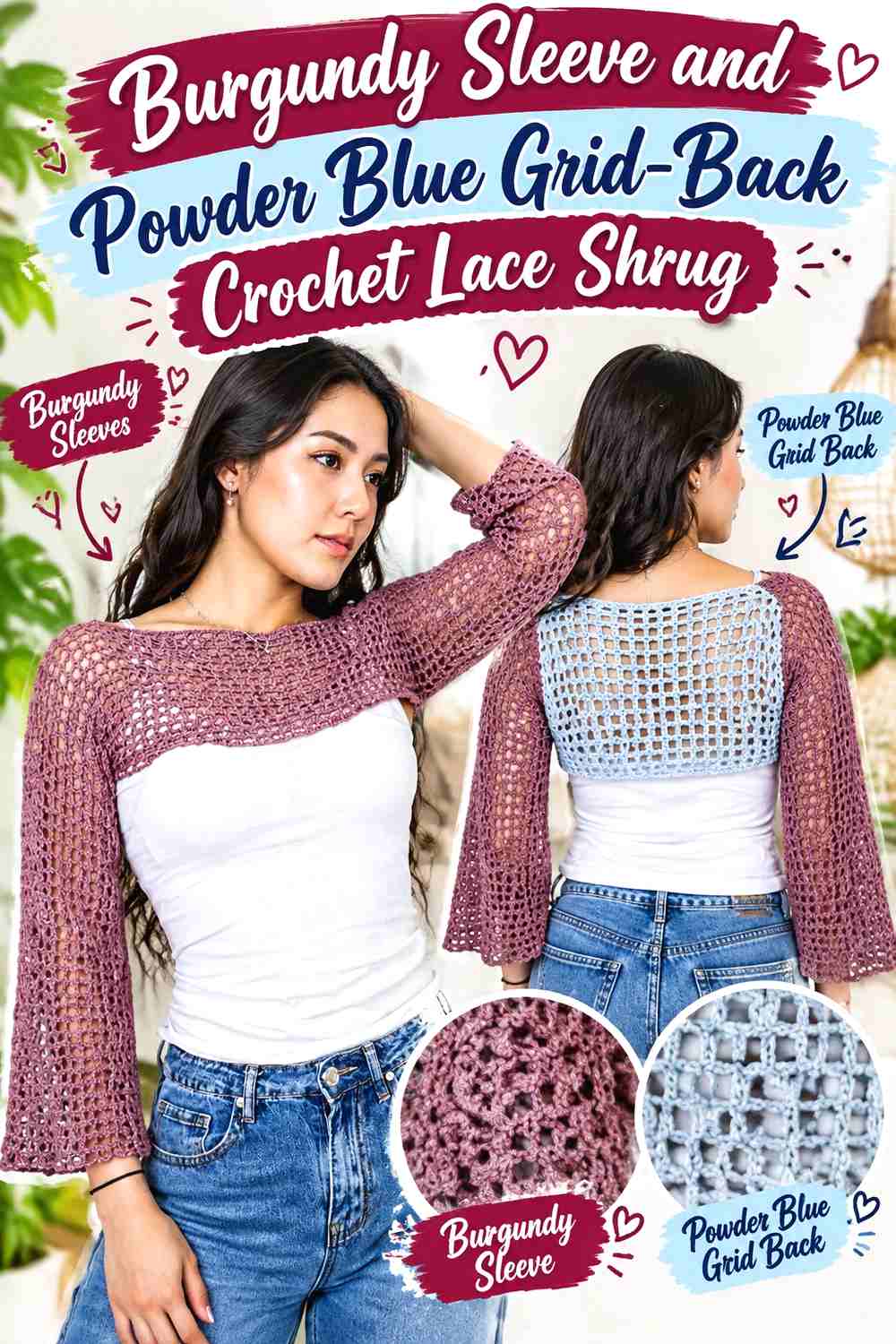
7. Burgundy Sleeve and Powder Blue Grid-Back Crochet Lace Shrug
 SAVE
This color direction separates the garment by function: burgundy controls the long sleeve sections, while powder blue distinguishes the shorter central body or back. The arrangement works well on a one-piece grid because the basic mesh stays consistent while the color change clarifies where the sleeve-focused garment crosses the shoulders.
Burgundy Can Make Long Crochet Lace Sleeves the Main Feature
Use burgundy from the wrists toward the shoulder when you want the arms to carry most of the visual weight. Long open sleeves already create strong vertical lines, so there is little need to add multiple extra color changes.
Stop and compare both sleeves before continuing into the center section. Matching the burgundy coverage on each side keeps the powder blue back visually centered.
Powder Blue Separates the Burgundy Sleeves Across the Back
A powder blue central span breaks the dark line from wrist to wrist and gives the upper back its own identity. It can also make the neckline opening easier to see against burgundy sleeves.
If the powder blue section feels isolated, carry a small amount into the sleeve edging rather than adding an unrelated third color.
Creator Credit: VivCrochets
8. Powder Blue and Burgundy Seamless-Mesh Crochet Lace Sleeve Shrug
 SAVE
Continuous mesh works well with restrained color blocking because there are fewer assembly lines to compete with the palette. Keep most of the mesh powder blue and introduce burgundy toward the wrists or around the upper-back connection. The result preserves the uninterrupted mesh while giving its endpoints more structure.
Powder Blue Keeps Seamless Crochet Mesh Visually Continuous
Using powder blue across long uninterrupted sections allows the grid itself to become the repeated visual feature. Avoid changing colors too frequently, since many narrow stripes can make an otherwise clean mesh construction feel fragmented.
Check the color placement with both arms extended. A continuous shrug is read as one long piece, so uneven color-change positions on opposite sleeves are easier to notice.
Burgundy Wrist Bands Can Ground Powder Blue Mesh Sleeves
A compact burgundy finish at each wrist gives the powder blue mesh a clear endpoint. The darker color works especially well when the rest of the sleeve contains large openings and relatively little solid fabric.
If a strong wrist contrast feels too abrupt, introduce burgundy slightly higher as one additional narrow repeat rather than alternating both colors throughout the entire sleeve.
Creator Credit: sewsam
9. Burgundy Filet-Edge and Powder Blue Crochet Lace Sleeve Bolero
 SAVE
A defined outer edge gives burgundy a natural place to dominate without requiring it to fill the entire bolero. Work the main open sleeve and body area in powder blue, then use burgundy around the neckline, opening, and sleeve boundaries. The contrast turns the darker color into a visual frame.
Burgundy Can Frame Powder Blue Filet Crochet Cleanly
Use burgundy along edges that already define the bolero shape. Because filet-style or grid lace contains strong geometric openings, an equally clear border can make the garment look deliberate without interrupting the main pattern.
Keep the border width proportional to the openwork. A very heavy burgundy band can overwhelm a delicate powder blue grid.
Powder Blue Preserves the Open Character Inside Burgundy Edging
Let powder blue cover the largest mesh areas so the lighter shade remains visible inside the darker outline. This creates more separation than alternating burgundy and powder blue in every row.
Check the neckline over the intended underlayer before finishing the entire burgundy frame. The contrast is strongest where the crochet meets clothing or skin, so that edge deserves more attention than it receives when lying flat.
Creator Credit: Alextitia Tuto Crochet
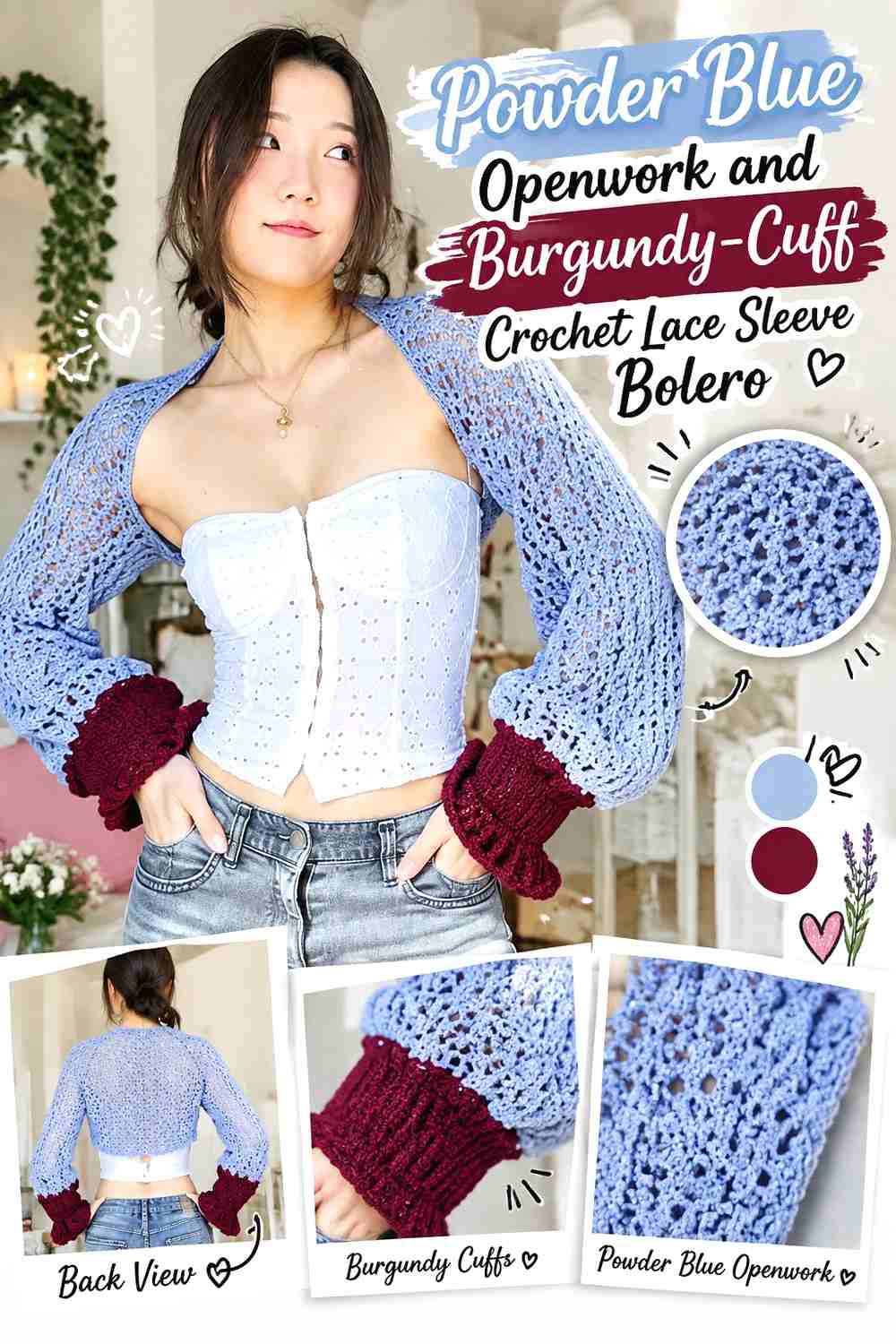
10. Powder Blue Openwork and Burgundy-Cuff Crochet Lace Sleeve Bolero
 SAVE
This arrangement makes the cuffs the strongest dark feature. Powder blue covers the loose sleeve and central openwork, while burgundy gathers attention at the wrists. Because the cuff fabric is visually denser than the surrounding lace, changing color there reinforces an existing textural difference.
Powder Blue Lets Loose Crochet Lace Sleeves Stay Airy
Give powder blue most of the sleeve area if you want the loose openwork to appear lighter. A single dominant shade also prevents wide sleeves from becoming crowded with competing bands.
Try the developing sleeve over both light and dark clothing. Powder blue openwork can change noticeably depending on how much contrast the base layer supplies.
Burgundy Cuffs Give Powder Blue Sleeves a Firm Visual Endpoint
Using burgundy only at the cuff makes the color shift easy to understand: airy powder blue above, compact dark detail below. It is also a practical way to include a significant amount of burgundy without breaking the lace repeat.
Keep both cuffs similar in visual width. Because burgundy is darker, a small difference between the two sides can be more noticeable than the same difference in powder blue.
Creator Credit: yaejiyea
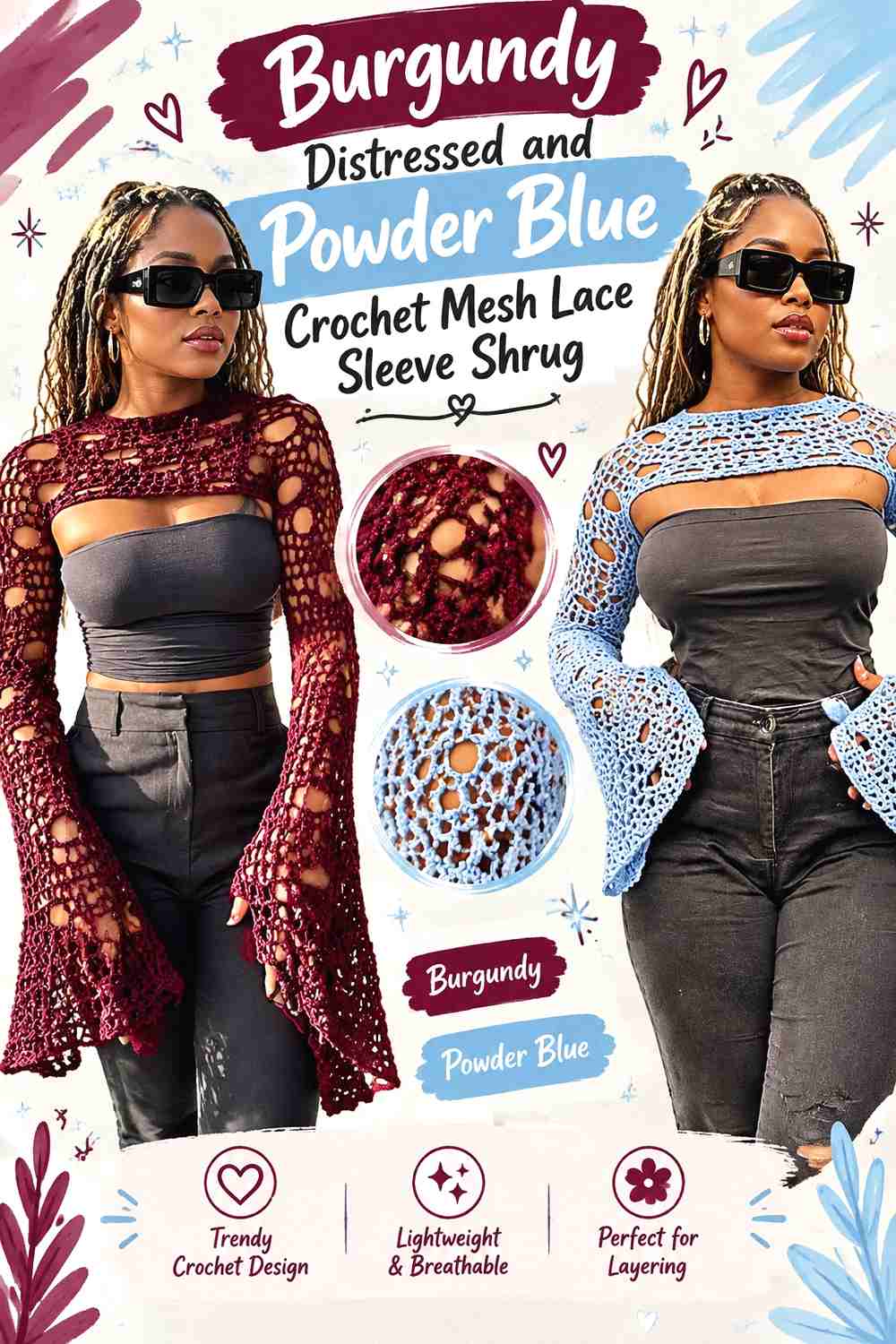
11. Burgundy Distressed and Powder Blue Crochet Mesh Lace Sleeve Shrug
 SAVE
Irregular mesh gives the palette a different opportunity. Instead of creating perfectly straight color sections, use burgundy as the dominant distressed surface and let powder blue appear in controlled interruptions. The irregular texture keeps those accents from feeling like conventional stripes, but repetition is still important if the final result is meant to look intentional.
Burgundy Can Control the Distressed Crochet Lace Surface
Keep most of the open mesh burgundy so the intentionally irregular holes remain part of one coherent field. Switching colors every few openings can make it difficult to tell whether the texture or the palette is supposed to lead.
Judge the sleeve from several feet away. Distressed mesh is visually active even before color is introduced, so the deeper shade may need less additional decoration than expected.
Repeat Powder Blue Accents Through Burgundy Instead of Scattering Them
Place powder blue in two or three recognizable areas—such as the upper arm, wrist, or connecting back—rather than in unrelated single stitches. Repetition gives the lighter color a role and keeps it from looking accidental.
If the powder blue starts competing with the distressed texture, reduce the number of accent zones while keeping each one easy to identify.
Creator Credit: Priya Crochets
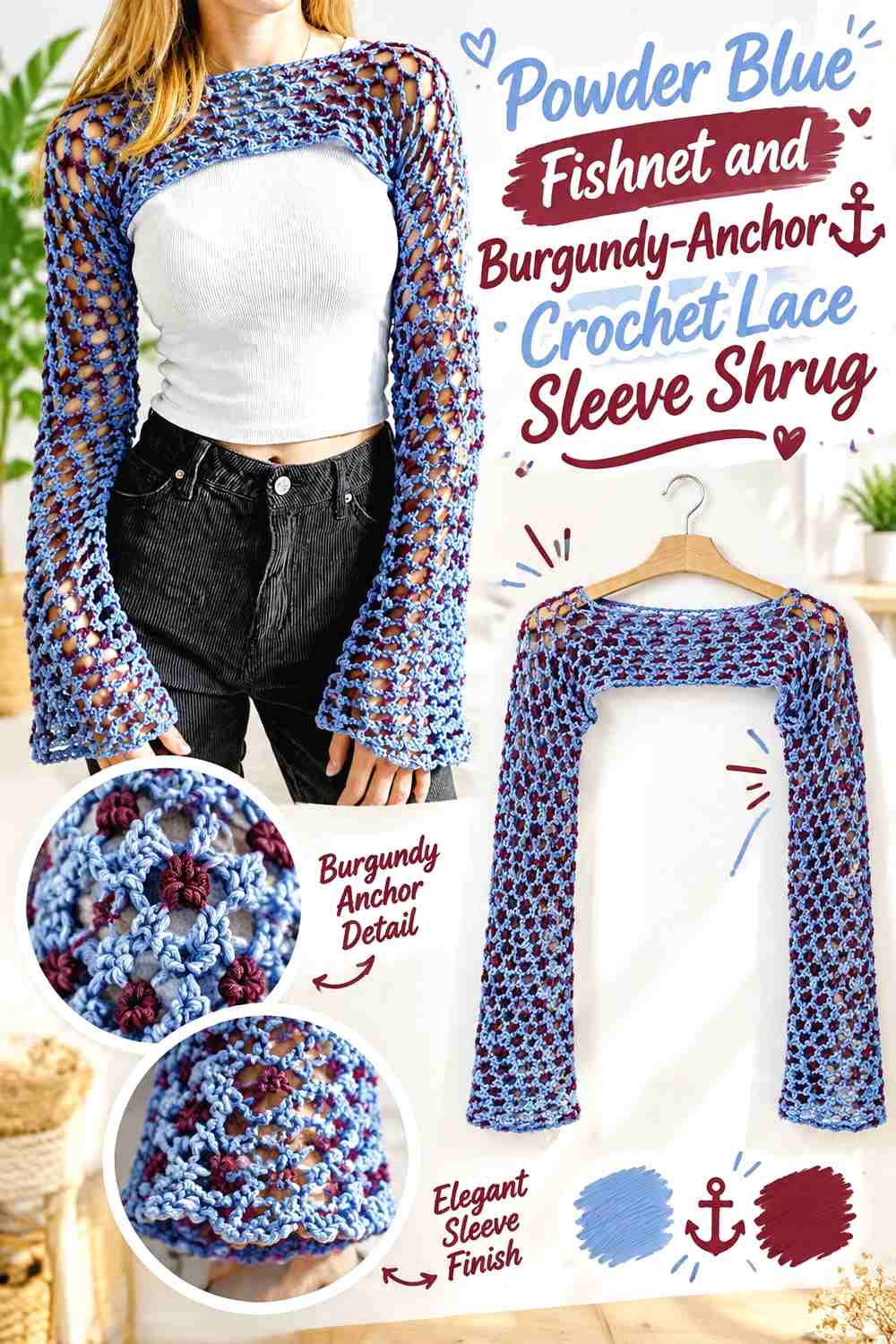
12. Powder Blue Fishnet and Burgundy-Anchor Crochet Lace Sleeve Shrug
 SAVE
Large fishnet openings make color placement especially graphic because relatively little yarn forms each section. Use powder blue for most of the arms, then concentrate burgundy across the shoulder or back connection. The darker section visually holds the two lighter sleeves together while leaving the fishnet effect open and minimal.
Powder Blue Keeps Fishnet Crochet Sleeves Light and Visible
Powder blue suits the broad sleeve areas when you want the grid to remain noticeable without turning the arms into the darkest part of the outfit. Because fishnet contains so much negative space, the clothing underneath will strongly affect how the powder blue reads.
Test the mesh over the actual base layers you expect to wear. A powder blue grid that disappears over one top may become highly visible over another.
Burgundy Can Anchor Powder Blue Fishnet Across the Shoulders
Use burgundy on the upper-back connection or a compact shoulder section to visually link the two sleeves. That placement takes advantage of burgundy’s deeper value without requiring dark yarn down the full arm.
If the burgundy section appears too isolated, repeat it once at the wrists. Two small echoes are usually clearer than scattering many tiny burgundy interruptions through very open powder blue mesh.
Creator Credit: Anna Greene
Choosing Between These Burgundy and Powder Blue Crochet Lace Sleeve Ideas
Choose the burgundy-led flared, bell-sleeve, or distressed options when you want the darker shade to control the silhouette. The spiderweb direction also favors burgundy when a central motif needs a clear visual anchor.
For a lighter overall layer, start with the powder blue fine-lace, collar-lace, dragonfly, seamless-mesh, cuffed, or fishnet options. Burgundy then works more effectively as framing, cuffs, motif definition, or a shoulder connection.
The motif and filet ideas sit between those extremes. They let both shades remain visible without necessarily dividing the sleeve into large color blocks. Whichever direction you choose, compare the actual yarns together and against your planned underlayer before repeating the color placement across both sleeves.
Conclusion
Burgundy and powder blue work especially well for crochet lace sleeves when each shade has a clear job. Burgundy can define cuffs, shoulders, motif centers, borders, or fitted upper sleeves, while powder blue can open up broad mesh areas, wide flares, and delicate lace repeats.
For a darker statement, give burgundy the larger surface area and use powder blue where the sleeve expands or needs separation. For a lighter result, reverse the hierarchy and use burgundy only where definition matters. Motif-based projects can divide the colors in smaller repeated sections, while simple mesh usually looks more controlled with fewer, larger color zones.
Once you choose the color distribution that suits your preferred silhouette, use the linked creator tutorial for the exact construction, fitting, and finishing details.
Frequently Asked Questions
Should burgundy or powder blue dominate crochet lace sleeves?
Either can dominate, but they create different results. Burgundy generally gives the sleeves more visual weight, while powder blue creates a lighter overall surface. Decide first whether you want the lace sleeves themselves to look dark and defined or airy and softly contrasted.
How can I tell whether burgundy and powder blue have enough contrast?
Place the actual yarns side by side and look at them from a distance. A grayscale photo can also help show whether their light-and-dark values are clearly separated. This is particularly useful before using the colors in small lace motifs or narrow borders.
Where should powder blue go on burgundy crochet lace sleeves?
Useful placements include bell-sleeve flares, cuffs, outer motif rounds, mesh panels, or selected edging. Choose a structural area of the sleeve rather than inserting powder blue randomly. A recognizable placement makes the two-color scheme easier to read.
Can I make powder blue dominant and use only a little burgundy?
Yes. Burgundy can work as a smaller framing color at the cuffs, shoulder connection, neckline, border, or motif centers. Because it is often much darker than powder blue, a relatively small area can still have a strong visual presence.
What should I wear underneath burgundy and powder blue crochet lace sleeves?
Choose the underlayer according to how clearly you want the openwork to show. A contrasting base makes lace openings and mesh lines more visible, while a base close to one of the crochet colors creates a quieter layered effect. Test the actual combination before judging the crochet by itself.
How do I keep burgundy and powder blue lace sleeves from looking too busy?
Give each shade a defined role. One can cover the main sleeve while the other handles cuffs, borders, motifs, or the shoulder section. If the openwork already contains complex shapes, fewer and larger color zones usually preserve the lace more clearly than frequent alternating bands.