Pine green and cream give crochet lace bonnets a clear dark-and-light relationship. Pine green can define the crown, face opening, joins, or ties, while cream can separate delicate shells, flower motifs, scallops, and open lace that might otherwise disappear inside a darker surface.
The proportions matter on a bonnet because the front edge and ties occupy more visual space when the piece is worn than they do when it lies flat. A narrow cream face border can become one of the first details you notice, while a pine green crown may dominate the back view even when cream covers much of the side lace.
The tutorials below support different bonnet constructions, including flower lace, Solomon-knot openwork, shell lace, granny motifs, vintage shapes, ruffles, and pixie forms. The pine-green-and-cream palettes are independent color adaptations rather than claims about the colors used by the tutorial creators.
Quick List
- Pine Green and Cream Crochet Flower Lace Bonnet
- Cream and Pine Green Crochet Solomon-Knot Lace Bonnet
- Pine Green and Cream Crochet Belle-Style Lace Bonnet
- Pine Green and Cream Crochet V-Lace Baby Bonnet
- Cream and Pine Green Crochet Rose-Texture Lace Bonnet
- Pine Green and Cream Crochet Lace Bonnet With Crown Accent
- Cream and Pine Green Crochet Flower-Crown Lace Bonnet
- Pine Green and Cream Crochet V-Shell Lace Bonnet
- Cream and Pine Green Crochet Granny-Square Lace Bonnet
- Pine Green and Cream Crochet Granny-Lace Bonnet
- Pine Green and Cream Crochet Pixie-Puff Lace Bonnet
- Cream and Pine Green Crochet Ruffle Lace Bonnet
- Pine Green and Cream Crochet Structured Lace-Edge Bonnet
Decide Whether Pine Green or Cream Should Lead the Lace Bonnet
Use pine green across the largest areas when you want a bonnet with a strong woodland or vintage-inspired direction. Cream can then be concentrated around scallops, shells, floral motifs, or the face edge where lighter yarn helps the decorative details remain visible.
A cream-dominant bonnet feels noticeably lighter. In that arrangement, pine green works well at the crown, motif centers, joins, lower edging, or ties. Because pine green is much darker, it can remain visually important without occupying half of the bonnet.
Avoid dividing the two shades equally by default. Give one color a clear structural role and let the second color explain a feature of the bonnet.
Use Cream Where Pine Green Lace Needs More Separation
Dark yarn can make fine openings and closely spaced decorative stitches look more visually compact. Cream is especially useful beside pine green shells, flower shapes, ruffles, and face-framing lace because the light value separates the outline.
That does not mean every lace repeat should switch to cream. When the stitch pattern is already elaborate, keeping most of it pine green and reserving cream for one edge can produce a clearer result than alternating colors repeatedly.
Plan Pine Green and Cream Around Bonnet Ties and Face Edges
The face opening is usually one of the most visible parts of a bonnet, so a color change there has more influence than its small yarn area suggests. A cream border around a pine green bonnet can immediately lighten the whole piece, while a pine green border can give a cream bonnet much stronger definition.
For baby bonnets, treat long ties and added dimensional decorations carefully. Follow the original tutorial for construction, supervise wear, and remove tied headwear for sleep or whenever cords or embellishments could become a hazard.
1. Pine Green and Cream Crochet Flower Lace Bonnet
 SAVE
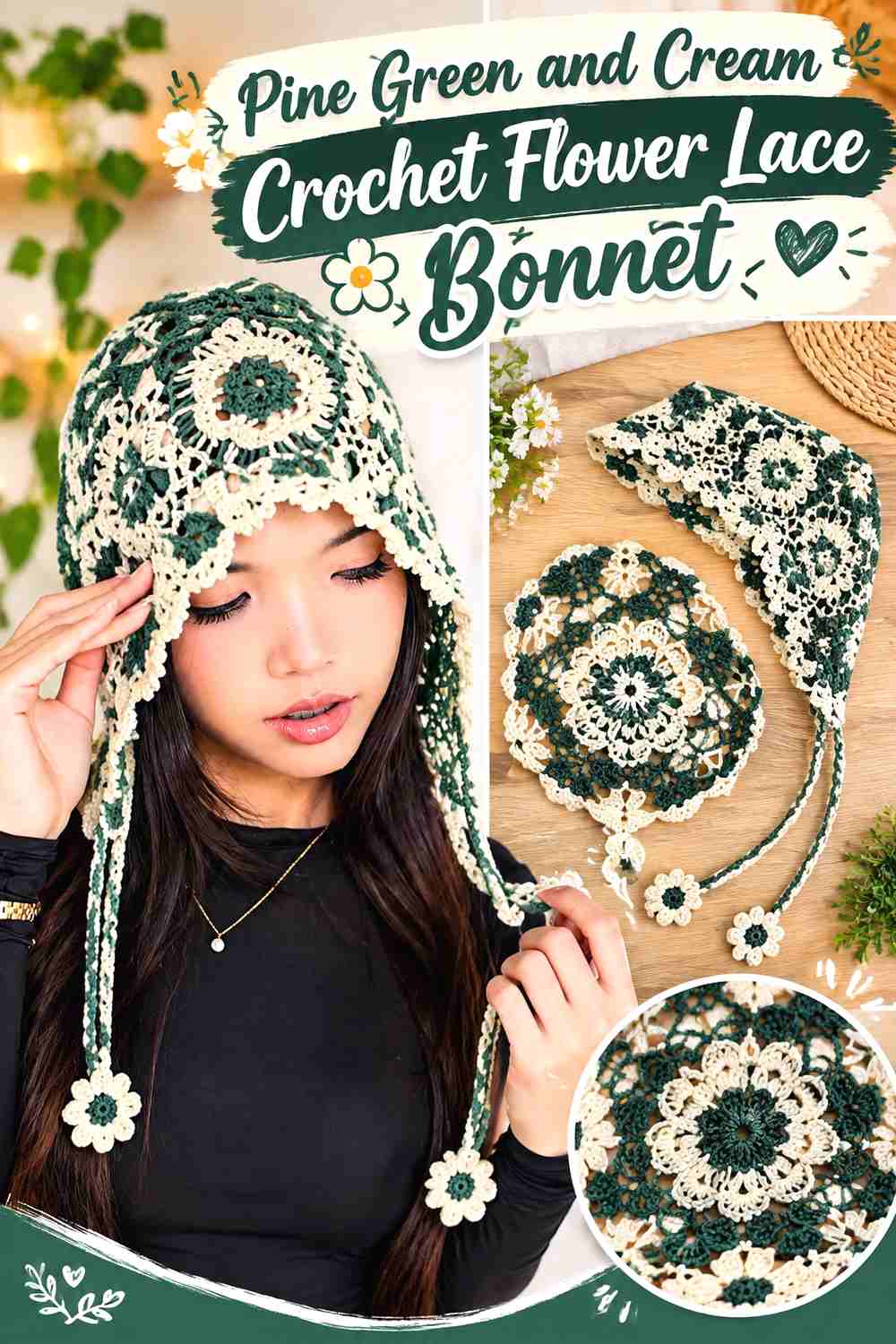
A flower-lace construction gives both colors clearly different jobs. Keep pine green across most of the connected floral surface and use cream around selected motif edges or smaller flower details. The darker field keeps the bonnet cohesive, while cream prevents intricate petals from merging into one solid green texture. The supporting tutorial uses a flower-lace bonnet construction assembled from shaped motifs.
Pine Green Should Connect the Main Flower Lace Bonnet Surface
Let pine green repeat through most of the adjacent floral motifs so the bonnet still reads as one continuous headpiece. Switching every flower between green and cream can create a checkerboard effect that competes with the lace shapes themselves.
Before joining the full layout, arrange the motifs in approximately their final positions. Check whether the green areas feel balanced from the front, sides, and crown rather than judging each flower individually.
Cream Can Separate Pine Green Flower Motifs at the Bonnet Edge
Use cream on outer motif rounds, selected petals, or the face-framing edge when individual pine green flowers need clearer boundaries.
If cream becomes too prominent, keep it concentrated around the bonnet opening rather than adding it equally to every motif. That gives the lighter shade a recognizable framing role.
Creator Credit: Chenda DIY
2. Cream and Pine Green Crochet Solomon-Knot Lace Bonnet
 SAVE
Solomon-knot lace contains large open spaces, so cream can carry most of the fabric without looking visually dense. Pine green works effectively around the border, back connection, or tie area, giving the very open cream lace a clear silhouette. The supporting tutorial demonstrates a highly open Solomon-knot bonnet that can also function as small scarf-like neckwear.
Cream Keeps the Solomon-Knot Crochet Bonnet Visually Airy
Use cream throughout long uninterrupted sections of the open loops. The light shade allows the negative space to remain the main feature rather than turning every loop into a separate high-contrast color event.
Because so much of the clothing or hair underneath remains visible through this construction, test the cream lace against the colors you actually expect to wear with it.
Pine Green Can Anchor the Cream Solomon-Knot Bonnet Border
Place pine green around a stable outer border or back panel where the bonnet needs visual structure. The deeper shade can help the cream lace read as intentional headwear rather than a loose web of pale loops.
Avoid adding green to every individual knot. Concentrating it around the perimeter preserves the openness that makes this construction distinctive.
Creator Credit: It’sKenKen
3. Pine Green and Cream Crochet Belle-Style Lace Bonnet
 SAVE
A traditional lacy baby-bonnet silhouette puts special emphasis on the face edge. Use pine green for the crown and principal lace body, then move into cream around the front opening. The supporting tutorial demonstrates a vintage-style lacy bonnet with a classic face-framing shape.
Pine Green Gives the Belle-Style Crochet Bonnet a Defined Crown
Keeping the crown pine green creates a strong visual anchor at the back of the head. Continue enough green into the side lace that the color remains connected rather than looking like a separate circular patch.
If the bonnet will be worn with a dark outfit, evaluate whether the green crown still separates clearly from the surrounding clothing.
Cream Can Frame Pine Green Lace Around the Face
Cream is particularly effective along the front border because the light edge separates the pine green lace from hair, skin, or clothing.
Keep both sides of the cream face frame visually even. A contrasting pale edge makes small differences in width or tension easier to notice than an all-green finish would.
Creator Credit: Loopy Mabel Crochet
4. Pine Green and Cream Crochet V-Lace Baby Bonnet
 SAVE
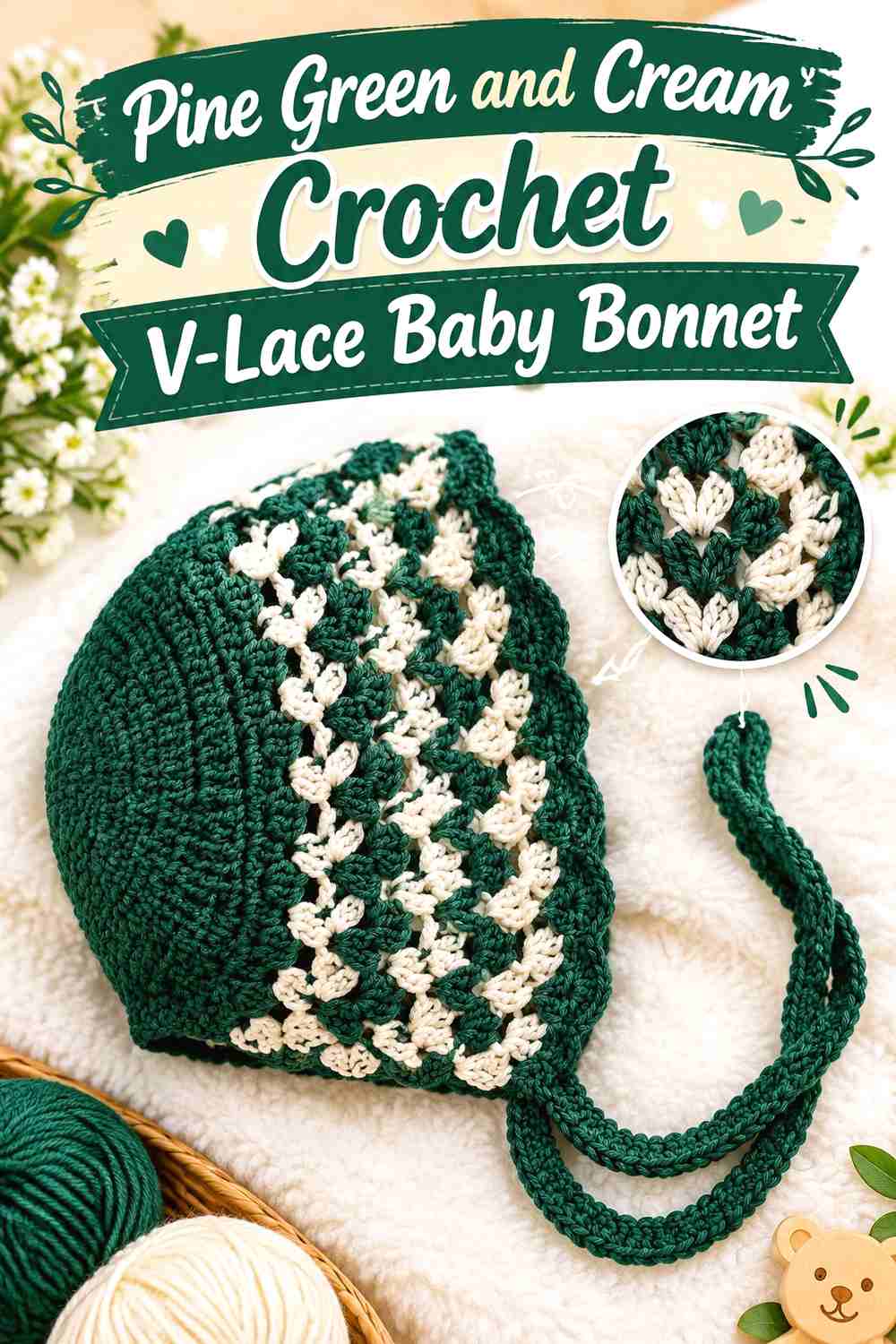
This direction keeps pine green dominant through the crown and lets cream identify the most open V-shaped lace sections. The supporting lacy bonnet design uses repeating open stitch groups that create an already decorative edge, making it suitable for controlled two-color placement rather than extra embellishment.
Pine Green Can Ground Repeating Cream V-Lace Sections
Keep the more solid crown and transition area pine green. As the open lace begins, introduce cream selectively where you want the holes and stitch groups to become easier to distinguish.
A full cream lace section creates strong contrast; a narrower cream edge gives a quieter two-color result.
Cream Should Highlight Pine Green Lace Without Splitting Every Repeat
Avoid switching between pine green and cream inside every small V-shaped unit. That much color movement can compete with the stitch pattern.
Instead, assign cream to a complete border or recognizable lace zone. The reader can then see both the color hierarchy and the lace structure immediately.
Creator Credit: Toyslab Creations
5. Cream and Pine Green Crochet Rose-Texture Lace Bonnet
 SAVE
A one-piece vintage-style bonnet can use cream across most of the textured surface while pine green handles the ties and lower framing. The source supports a bonnet with a lace-like textured body and tying straps, giving the color change useful structural locations rather than requiring stripes through the main fabric.
Cream Can Carry the Main Rose-Texture Crochet Bonnet
Let cream cover the crown and side texture when you want the bonnet to appear light overall. Maintaining one shade through that surface also makes the stitch texture easier to read.
If the cream is close in value to the intended outfit, pine green edging can provide the boundary the bonnet needs.
Pine Green Ties Can Ground a Cream Lace Bonnet
Introduce pine green along the lower edge and continue it into the ties if you want a clear dark endpoint.
Because ties hang away from the bonnet when loose and form a concentrated bow when fastened, judge their color impact in the worn position rather than assuming they will remain a small detail.
Creator Credit: Sweet Softies
6. Pine Green and Cream Crochet Lace Bonnet With Crown Accent
 SAVE
A lace bonnet with a dimensional finishing feature gives cream a different role. Keep pine green through the circular crown and side lace, then use cream as a concentrated accent at the closure or decorative crown area. The supporting tutorial demonstrates a lacy baby bonnet construction that finishes with a pom-pom element.
Pine Green Should Remain Continuous Through the Bonnet Lace
Use pine green across the crown and main lace area so the garment still reads as green even after the cream decoration is added.
Because lace naturally introduces visual breaks, an additional striped color sequence is usually unnecessary here. Let the texture create variation while pine green maintains continuity.
Cream Can Create One Focal Point Against Pine Green
Reserve cream for the crown accent, edge, or another compact detail when you want a single pale feature rather than allover color blocking.
For baby use, make any dimensional embellishment secure and follow the tutorial’s construction guidance. Remove the bonnet for sleep and supervise wear rather than treating decorative attachments as play elements.
Creator Credit: studioAro
7. Cream and Pine Green Crochet Flower-Crown Lace Bonnet
 SAVE
A bonnet with a floral back gives the palette an obvious focal point. Work most of the surrounding bonnet in cream and let pine green define the rear flower or selected radiating sections. The tutorial supporting this concept specifically places a flower motif at the back of the bonnet, making the crown view part of the design.
Pine Green Can Make the Cream Flower Crown More Distinct
Use pine green at the flower center, selected petals, or immediately around the floral motif when you want the rear view to have a strong anchor.
Check the motif from behind before continuing the full bonnet. A dark center makes uneven placement easier to spot, so correct any obvious visual lean before adding more surrounding cream.
Cream Keeps Pine Green Flower Details From Taking Over the Bonnet
Let cream cover most of the side and face-framing sections so the pine green flower remains a focal feature rather than one of many competing dark areas.
A small green repeat in the ties can reconnect the back motif to the front view without carrying the full flower palette around the entire bonnet.
Creator Credit: シロクロクロシェ(Shirokuro Crochet)
8. Pine Green and Cream Crochet V-Shell Lace Bonnet
 SAVE
A V-shell bonnet gives cream a natural place around the face because the repeated openings already form a light decorative rhythm. Keep the crown pine green and introduce cream where the shell groups become most visible. The supporting tutorial demonstrates a baby bonnet construction associated with a repeating open shell treatment.
Pine Green Gives Cream V-Shell Lace a Strong Background
Use pine green through the crown and early transition section so the bonnet has a substantial dark foundation.
When cream begins, make the change at a complete structural boundary rather than midway through one shell group. A clean transition helps both the stitch pattern and color block remain readable.
Cream Can Make Pine Green V-Shell Edging Easier to See
Cream around the face-opening shells highlights both the openings and the scalloped rhythm. This can be especially useful if the bonnet will be paired with dark green, brown, navy, or other deeper clothing.
If the cream becomes too dominant, use it for the outermost shell section only rather than the entire side panel.
Creator Credit: Adore Crea Crochet
9. Cream and Pine Green Crochet Granny-Square Lace Bonnet
 SAVE
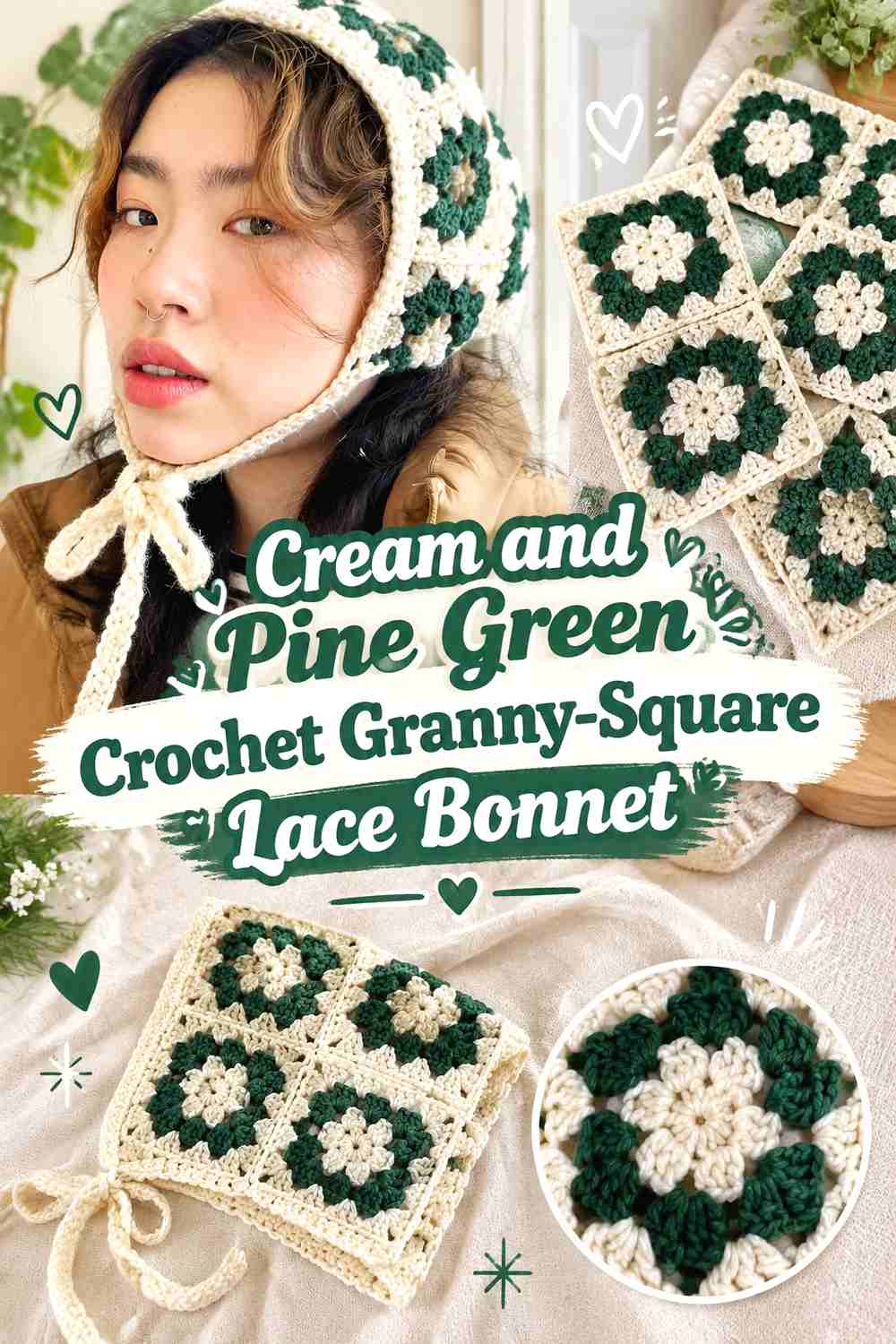
Granny-square construction makes color distribution part of the bonnet architecture. Use cream through most of the open square motifs and pine green for joins, selected outer rounds, or the lower border. The source demonstrates a bonnet assembled from granny squares with the joins and finishing forming part of the final structure.
Cream Can Keep Granny-Square Crochet Bonnet Motifs Light
Let cream dominate the open centers or broadest rounds when you want the motif layout to feel airy rather than patchwork-heavy.
Before joining, arrange all squares in the planned bonnet shape. Make sure pine green is distributed evenly across both sides instead of accidentally collecting around one temple or one half of the crown.
Pine Green Joins Can Organize Cream Granny Lace
A dark joining color creates clear boundaries between pale motifs. This makes the square construction easy to recognize and gives the bonnet a stronger geometric character.
If the pine green grid becomes too prominent, keep the final motif rounds cream so less green remains exposed after joining.
Creator Credit: Triple Capricorn
10. Pine Green and Cream Crochet Granny-Lace Bonnet
 SAVE
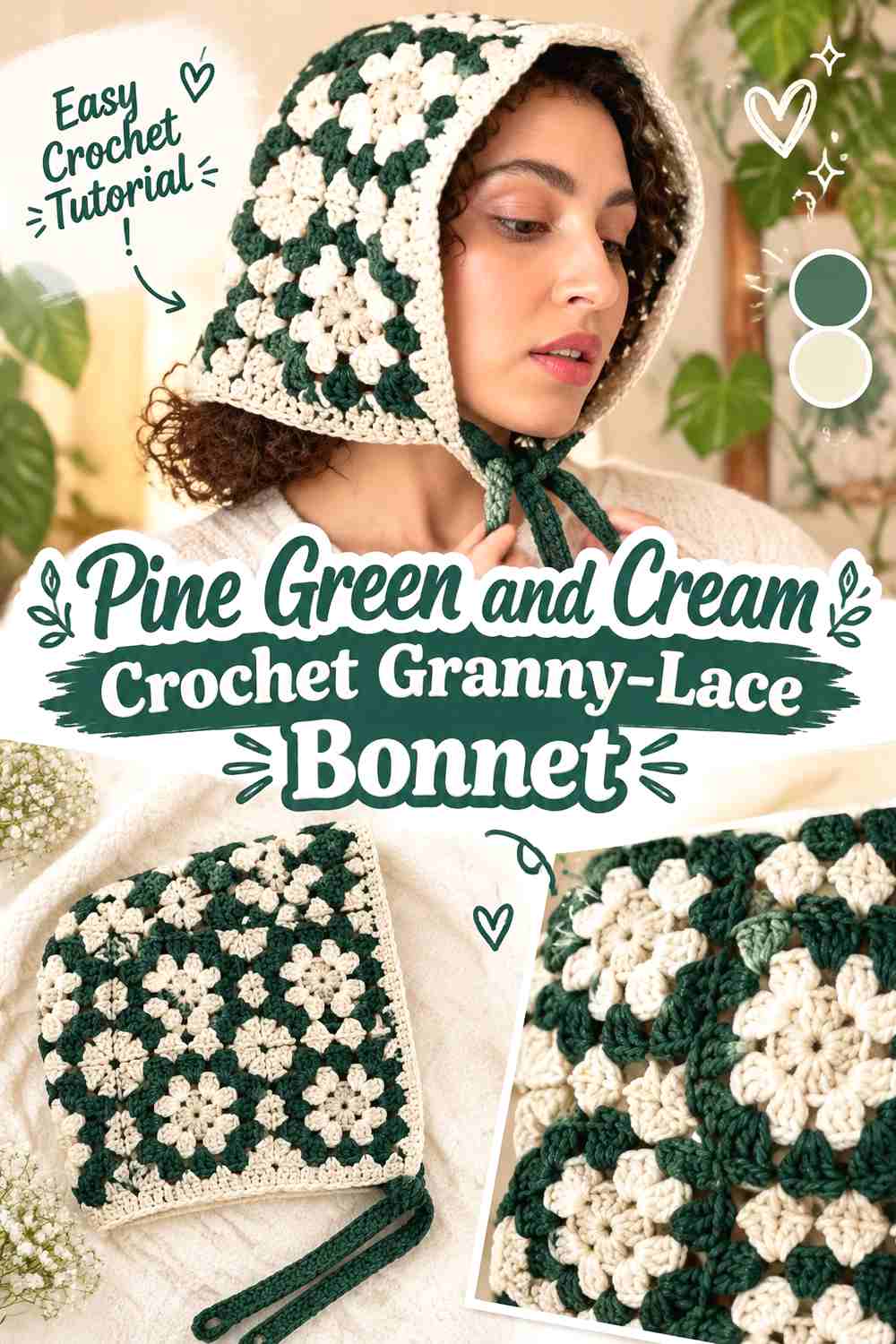
This granny-bonnet direction reverses the previous hierarchy. Pine green carries most of each square, while cream appears in the motif centers or outermost rounds. The tutorial supports another granny-square bonnet construction, allowing the color difference itself to create a meaningfully different finished direction.
Pine Green Can Make the Granny-Lace Bonnet Look More Woodland-Inspired
Use pine green across the largest portion of each motif so the assembled bonnet reads as one deep green accessory rather than a cream bonnet with green accents.
Repeat the same basic green coverage across the squares before introducing deliberate exceptions. Consistency is particularly useful around the crown where several motifs meet.
Cream Centers Can Break Up Pine Green Granny-Square Lace
Small cream centers create light focal points inside the darker motifs without turning the joins pale.
If the cream centers are too small to remain visible from normal viewing distance, move the cream into an outer round instead. Preserve the light-dark relationship rather than forcing a placement that disappears once the bonnet is assembled.
Creator Credit: jess valdes
11. Pine Green and Cream Crochet Pixie-Puff Lace Bonnet
 SAVE
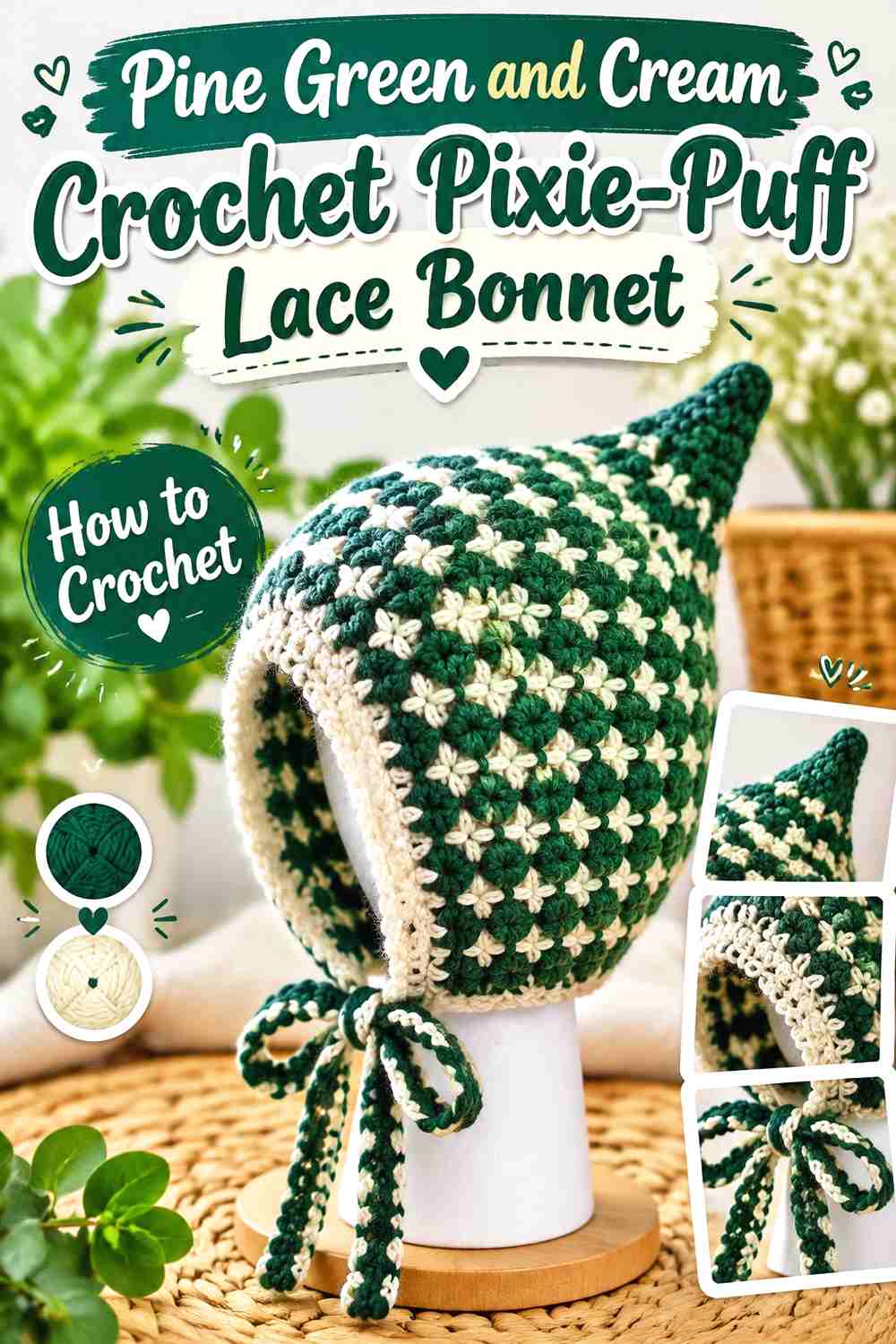
Raised puff texture gives pine green enough surface variation to work as a broad dominant color. Use cream along the face edge, lower tie area, or another narrow boundary so the pale shade clarifies the pixie silhouette without competing with every puff. The source demonstrates a puff-textured pixie bonnet with a pointed profile.
Pine Green Gives the Pixie-Puff Crochet Bonnet Visual Depth
Keep the puffed main panel pine green so its raised texture can create highlights and shadows within one color. Changing every puff to cream would make color compete with the dimensional fabric.
View the developing panel from the side as well as flat. The pointed back is part of the bonnet’s identity and should remain visually balanced after seaming.
Cream Can Define the Pine Green Pixie Bonnet Opening
A cream face border gives the darker puff surface a clean stopping point and draws attention to the bonnet outline.
If you also carry cream into the lower edge, keep its width controlled so the pine green puff texture remains the obvious main feature.
Creator Credit: YARNutopia & M0re
12. Cream and Pine Green Crochet Ruffle Lace Bonnet
 SAVE
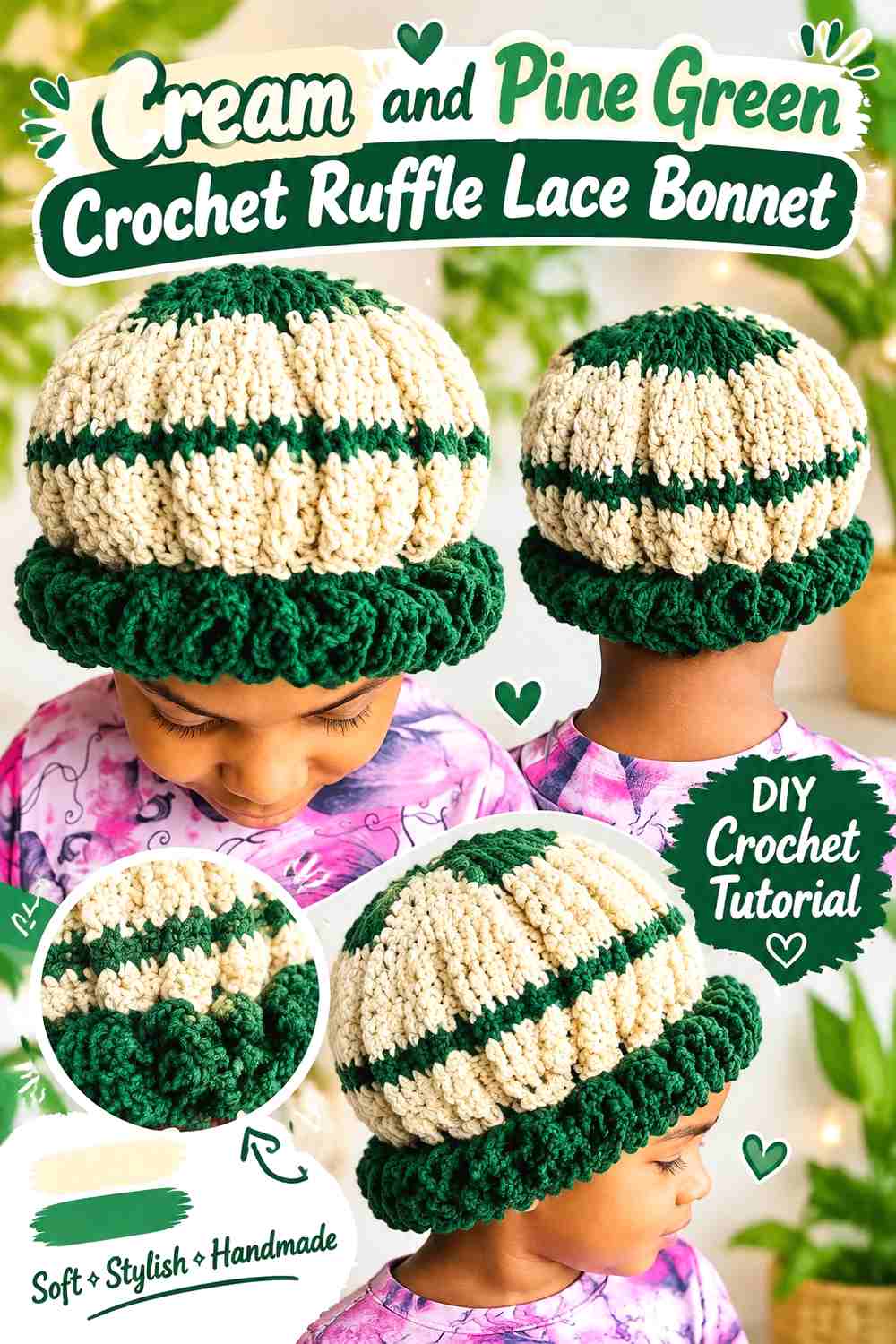
A ruffled face edge can look much larger once it spreads outward, so cream does not need to occupy half the construction to become visually dominant. Use pine green for the fitted foundation and cream for the ruffle, or reverse those roles when you want a very light bonnet. The source demonstrates a bonnet in which the ruffle itself is a major design feature.
Pine Green Can Anchor a Wide Cream Ruffle
Keep the fitted crown and side section pine green so the bonnet has a stable dark base beneath the expanding cream edge.
Assess the proportions while the ruffle is allowed to open naturally. A few cream rows can occupy considerably more visible area than the same depth of flat pine green fabric.
Cream Makes the Pine Green Ruffle Silhouette More Visible
If you prefer a darker bonnet, reverse the treatment: keep the ruffle pine green and use cream only at its outermost edge.
A thin cream outline can reveal each wave of the ruffle against dark hair or clothing without converting the entire face frame into a pale section.
Creator Credit: Princess handmade
13. Pine Green and Cream Crochet Structured Lace-Edge Bonnet
 SAVE
A more structured rectangle-based bonnet provides a useful foundation for adding color contrast at the border. Keep pine green across the primary bonnet body and treat cream as the lace-style or scalloped visual finish around the face. The supporting tutorial demonstrates a rectangle-based bonnet that is seamed at the back and finished around the front and lower edges.
Pine Green Should Cover the Main Structured Crochet Bonnet
Use pine green continuously through the broad body so the simple construction provides a calm background for the cream finish.
This is especially useful if you want the color treatment to add delicacy without altering the original bonnet’s basic shaping. Keep structural changes with the creator’s tutorial and treat the lace-like cream border as the visual adaptation.
Cream Can Turn a Pine Green Bonnet Edge Into the Main Decorative Feature
Use cream around the face opening where even a narrow border will be highly visible. A shell-inspired, scalloped, or otherwise compatible decorative treatment can visually lighten the green body, provided it suits the underlying construction you are following.
Keep both sides of the cream border even. Strong light-dark contrast will reveal asymmetry more readily than a single-color edge.
Creator Credit: The Moule Hole
Comparing These Pine Green and Cream Crochet Lace Bonnet Ideas
For the darkest overall direction, choose the pine-green flower lace, Belle-style bonnet, V-shell bonnet, pixie-puff bonnet, or structured lace-edge bonnet. These keep pine green across the crown or largest panels and let cream reveal the most decorative boundaries.
For a lighter result, the cream Solomon-knot, rose-texture, flower-crown, and cream granny-square options move the pale shade into the largest visible area. Pine green then becomes more effective as a border, motif center, join, or tie color.
The granny-square and flower-lace options give you the most control over repeated color distribution because each motif can carry both shades. The ruffle and shell directions are better when you want a simpler division between a dark bonnet body and light face frame.
Conclusion
Pine green and cream work particularly well on crochet lace bonnets when the dark shade establishes the silhouette and the pale shade reveals the detail. Pine green can anchor crowns, pixie panels, granny motifs, joins, and ties, while cream can open up flowers, shells, ruffles, scallops, and face-framing borders.
Choose a pine-green-dominant arrangement when you want a deeper woodland or vintage direction. Choose cream as the larger field when you want the lace to look lighter and more delicate. Motif bonnets can distribute both colors repeatedly, while traditional crown-and-side constructions usually look clearer when the palette changes at a recognizable border or lace transition.
Use each linked creator tutorial for its exact construction, sizing, shaping, and finishing details. For baby bonnets, pay particular attention to the creator’s sizing guidance and supervise wear when ties or added dimensional details are present.
Frequently Asked Questions
Should pine green or cream dominate a crochet lace bonnet?
Pine green is useful as the dominant shade when you want a deeper and more defined bonnet. Cream works well as the main shade when you want lace openings and decorative stitches to feel lighter. Give one color the larger structural role rather than assuming both need equal coverage.
Where should cream go on a pine green crochet lace bonnet?
Cream works especially well around the face edge, shell border, ruffle, flower details, granny-square centers, or outer motif rounds. These placements use the light shade to clarify details instead of randomly interrupting the pine green body.
Can cream be the main bonnet color with only a little pine green?
Yes. Pine green can remain visually strong when used for ties, joins, motif centers, a crown detail, or a narrow face border because it is much darker than cream. A small amount can provide sufficient definition.
How can I tell if pine green and cream have enough contrast?
Place the actual yarns side by side and view them from several feet away. A grayscale photo can also help you compare their light-and-dark values. Strong value separation is particularly useful for small floral motifs, granny-square joins, and narrow scalloped edges.
Should pine green granny-square bonnet joins be darker than the motifs?
They can be if you want the square construction to remain obvious. Pine green joins around cream motifs create a visible grid. If you prefer the motifs to blend into one surface, use cream for more of the outer rounds and reduce the amount of exposed green joining yarn.
How do I stop a cream lace edge from overpowering a pine green bonnet?
Reduce the depth of the cream section rather than adding another color. Ruffles, shells, and scallops spread outward, so they can look larger when worn than they do while being crocheted.
Are long ties appropriate on a pine green and cream baby bonnet?
Use the original tutorial’s fastening design rather than extending ties solely for appearance. For babies and young children, supervise wear and remove bonnets with ties before sleep or whenever cords could become caught.