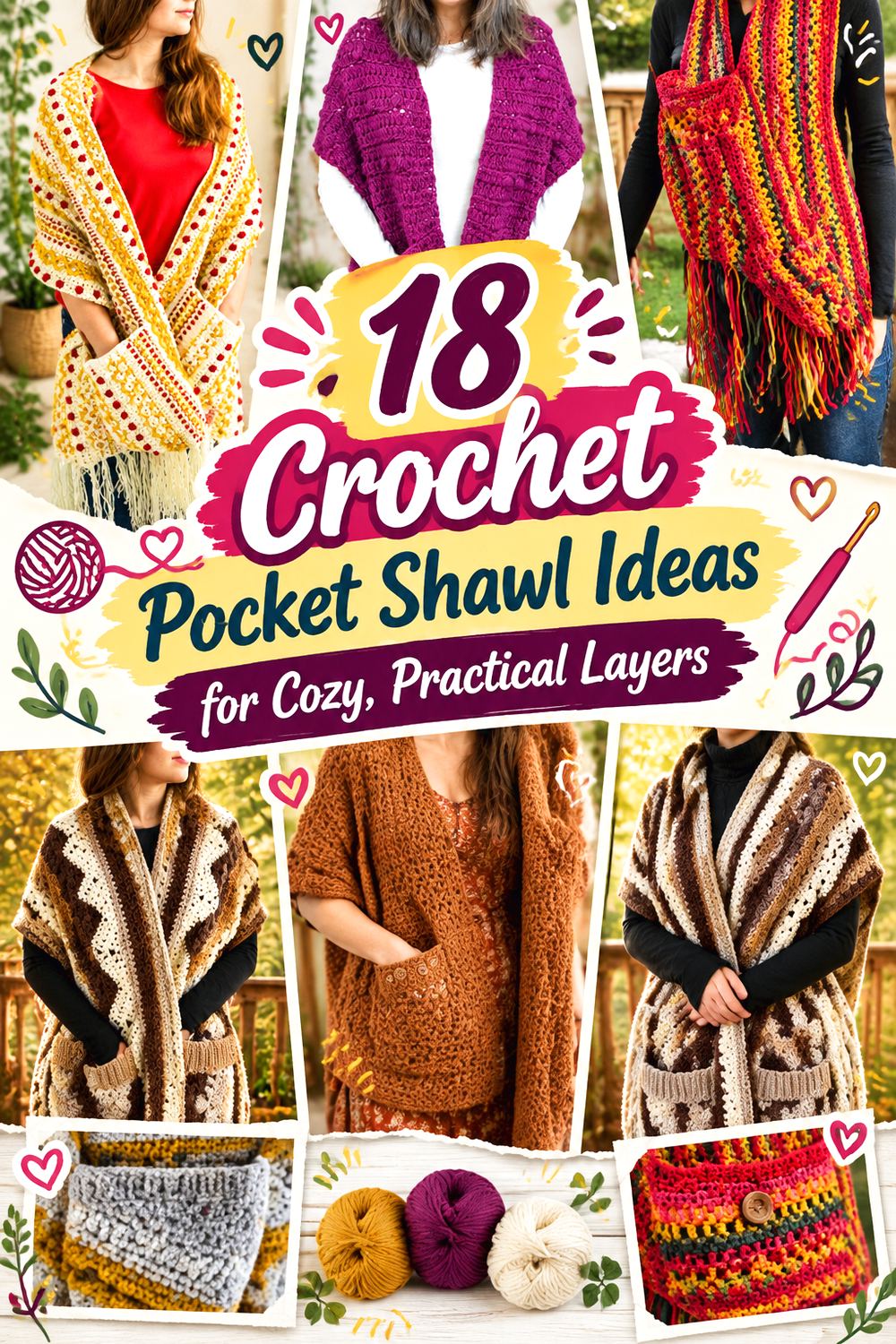
18 Crochet Pocket Shawl Ideas for Cozy, Practical Layers
Crochet pocket shawls can look deceptively similar at first glance, but construction makes a major difference in how each one wears. Some are broad wraps with roomy sewn-on pockets, while others behave more like long scarves. You can also find integrated fold-up pockets, granny-square constructions, hoods, button details, Tunisian fabric, C2C texture, plush faux-fur accents, and decorative motifs.
The best choice depends on more than appearance. Length affects where your hands naturally meet the pockets, fabric density influences drape and stretch, and bulky embellishment can change both weight and care. The 18 ideas below use original tutorials from individual designers or creator channels so you can compare the finished concepts here, then visit the source for the exact construction details.
Quick List
- Crochet Buttoned Tunisian Pocket Wrap
- Crochet Ribbed Moss-Stitch Pocket Shawl
- Crochet Fold-Up Pocket Wrap with Button Option
- Crochet Chunky Ribbed Pocket Scarf
- Crochet Slim Granny-Pocket Shawl with Fringe
- Crochet Open Puff-Texture Pocket Shawl
- Crochet Patchwork Granny-Square Pocket Shawl
- Crochet Textured Button-Detail Pocket Shawl
- Crochet Hooded Pocket Shawl for Cold-Weather Layering
- Crochet Sideways Chevron Pocket Shawl
- Crochet Catherine-Wheel Scrap-Yarn Pocket Wrap
- Crochet Buffalo-Plaid Hooded Pocket Scarf
- Crochet Heart-Pocket Shawl with Layered Storage
- Crochet Striped Linen-Stitch Pocket Shawl
- Crochet Pineapple-Texture Pocket Shawl
- Crochet Corner-to-Corner Pocket Shawl
- Crochet Stitch-Sampler Pocket Shawl
- Crochet Knit-Look Scarf with Faux-Fur Pockets
Check Length Before You Decide on Pocket Placement
Pocket shawl length is functional rather than purely decorative. Several designers use the wearer’s wingspan as a useful starting reference, although their individual patterns handle sizing differently. Winding Road Crochet, Betty McKnit, and Banana Moon Studio all discuss adapting length around the wearer instead of assuming one fixed measurement will suit everyone.
For your own project, drape the unfinished body over the shoulders before permanently attaching separate pockets whenever the construction allows it. Your hands should enter the openings without needing to raise the shoulders, bend the wrists sharply, or pull the shawl downward. Remember that some crochet fabrics relax with wear. If you substitute a heavier yarn or make deeper pockets, assess the hanging length again before seaming.
Choose Between Drape, Warmth, and Pocket Stability
A very open fabric can make a graceful wrap, but a pocket introduces concentrated weight. Dense moss, linen, ribbed, C2C, Tunisian, and textured fabrics respond differently when keys, a phone, or simply your hands pull on one area.
For a shawl intended primarily as a warm layer, a denser fabric can help the pockets feel integrated rather than floppy. For decorative wear, an airier stitch pattern may be more important than maximum structure. Either way, do not assume that a yarn substitution will behave like the designer’s sample. Fiber, yarn weight, hook size, and tension can change stretch and finished dimensions. Swatch when fit matters, and treat pocket seams as structural seams rather than purely decorative finishing.
Sewn-On, Folded, and Integrated Pockets Behave Differently
Separate patch pockets offer the most freedom for adjusting placement, and they can provide a strong visual contrast when made in a granny square, faux fur, or a different textured stitch. Folded pockets remove some seaming decisions because the shawl end itself becomes the pocket, but changing their depth can also change the overall wearable length.
Motif-built shawls introduce a different consideration: joins become part of the structure. Check that seams lie flat and that both pockets open at the same height. Hooded versions add weight around the neck and shoulders, so pocket depth, hood size, and overall shawl width should feel balanced. None of these constructions is automatically better; the right choice depends on whether your priority is adjustability, minimal finishing, visual detail, or warmth.
1. Crochet Buttoned Tunisian Pocket Wrap
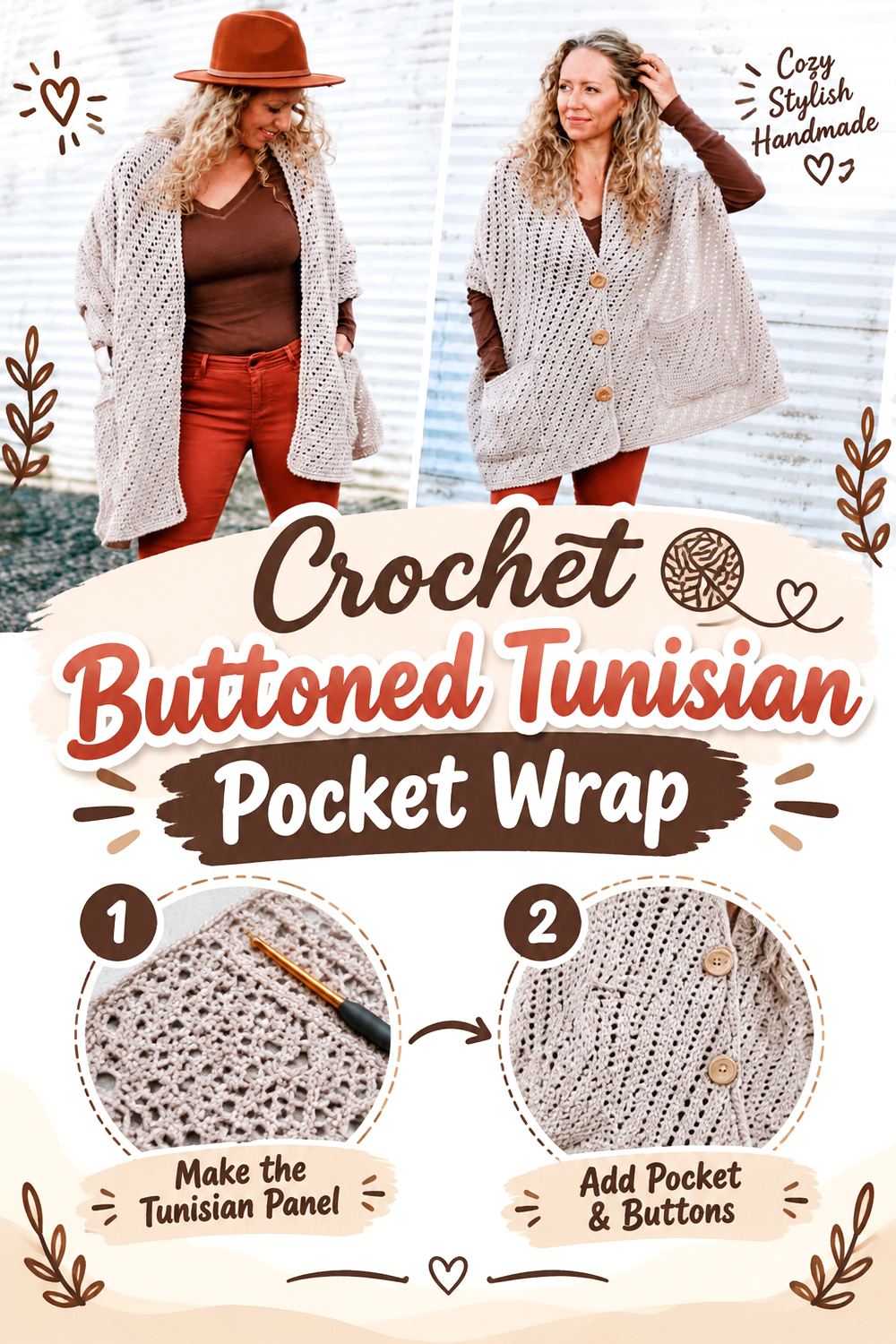
This idea moves beyond a conventional rectangular scarf by using Tunisian crochet for a broad, drapey wrap and adding optional buttons that can shift the silhouette toward a loose poncho. Make & Do Crew’s source uses a diagonal eyelet-style Tunisian fabric, separate pockets, and optional front buttons, giving the finished piece two distinct ways to wear it.
It suits someone who wants a pocket shawl to feel more garment-like without committing to sleeves or complicated shaping. The buttoned option is the important differentiator: instead of relying only on hand position to hold the wrap in place, the front can gain an additional point of connection.
Decide How You Want the Front to Behave
Before adding buttons, try the finished shawl around your shoulders and mark where the fronts naturally overlap. Button placement that looks balanced when the wrap is lying flat may feel different once the weight of the pockets pulls downward. If you want maximum styling flexibility, make sure the unbuttoned version still hangs comfortably. Buttons should enhance the shape rather than compensate for a shawl that is too short or too narrow for the intended wearer.
Watch the Weight of Tunisian Fabric
Tunisian crochet can create substantial fabric, particularly after a wider shawl, pockets, and buttons are combined. A yarn substitution that is considerably heavier than the original can increase the pull across the shoulders. Check a swatch for both drape and weight instead of matching stitch size alone. If the finished fabric feels stiff, changing hook size or yarn may be more effective than assuming blocking will completely transform the character of the material.
Use the Pocket as an Early Checkpoint
The designer’s pattern specifically begins with a pocket that can also function as a gauge check, which is a useful strategy before investing in the much larger shawl body. If your pocket fabric already seems too dense, loose, or heavy for its intended purpose, reassess the combination early. A pocket is also large enough to show whether the eyelet texture and yarn provide the degree of openness you actually want.
Original Tutorial and Creator Credit
Creator/Site: Make & Do Crew
2. Crochet Ribbed Moss Stitch Pocket Shawl
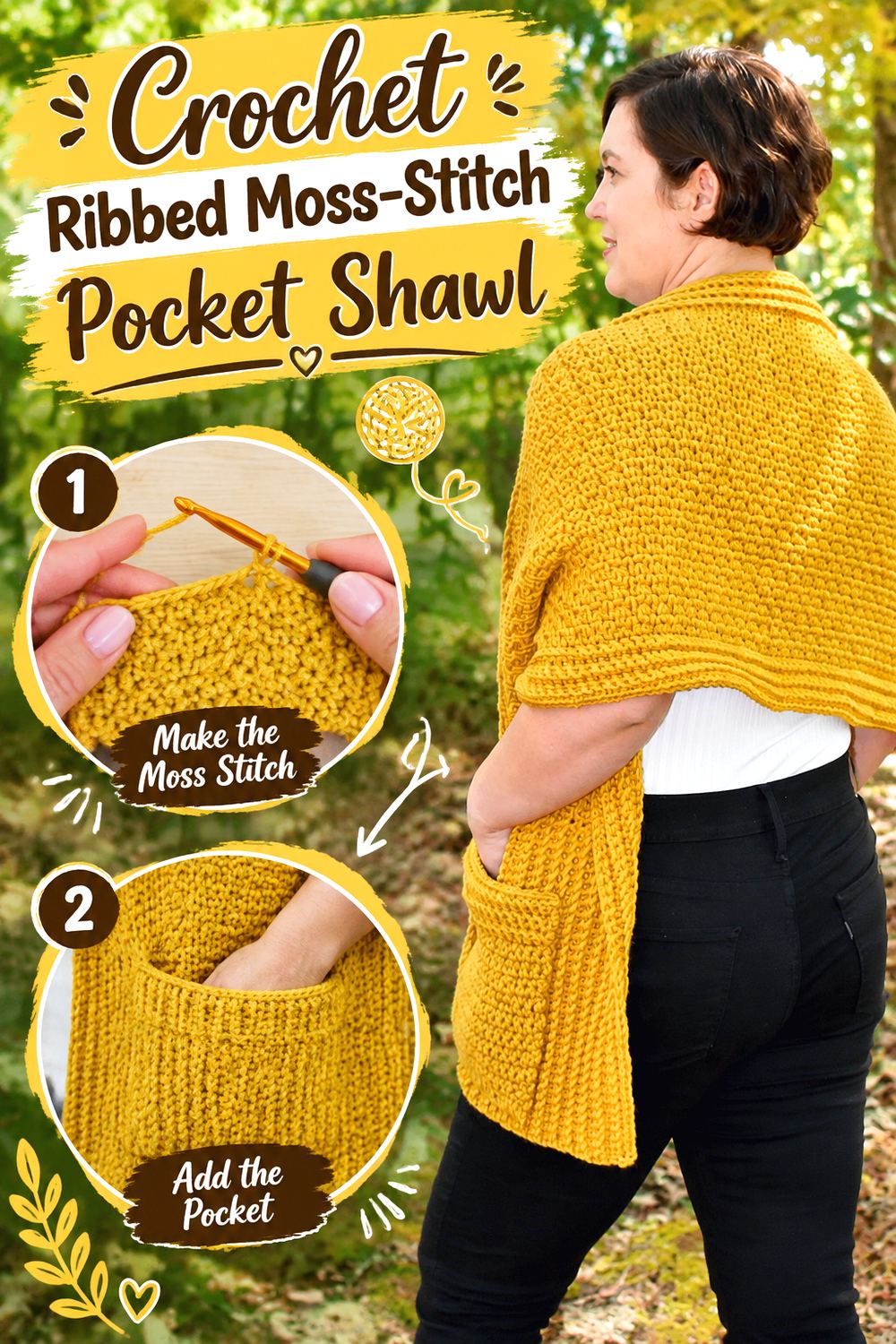
A restrained stitch palette can make the pockets and silhouette do most of the visual work. Winding Road Crochet combines ribbed sections with moss-style texture while keeping the underlying stitch vocabulary simple. The designer also provides adaptable sizing based on wingspan rather than treating the sample dimensions as universal.
This is a strong direction when you prefer a unified shawl instead of contrasting motif pockets or bold colorwork. The ribbed areas give the otherwise simple rectangle more definition, while separate pockets preserve the classic pocket-shawl form. Because the design depends heavily on clean proportion rather than decorative motifs, length and pocket position deserve as much attention as the stitch pattern itself.
Measure the Wearer Before the Long Foundation
A pocket shawl becomes awkward when the ends land too high or too low for relaxed hand placement. Take a wingspan or over-the-shoulder hand-to-hand measurement before beginning, then compare it with the designer’s sizing approach. If you change yarn or tension, do not rely solely on a starting-chain count from a different gauge. The useful target is the finished physical length, not reproducing a number that may produce different dimensions in your fabric.
Allow for Ribbing to Relax
Back-loop ribbing can have noticeable elasticity. Before attaching pockets, let the shawl rest and gently handle it as it would be worn. If the ends lengthen under their own weight, pocket placement based on a freshly finished piece may shift later. Avoid overloading a stretchy pocket shawl with heavy items unless you have assessed how the fabric responds. For everyday wear, stable seams and comfortable hand placement matter more than maximizing pocket capacity.
Original Tutorial and Creator Credit
Creator/Site: Winding Road Crochet
3. Crochet Fold Up Pocket Wrap with Button Option
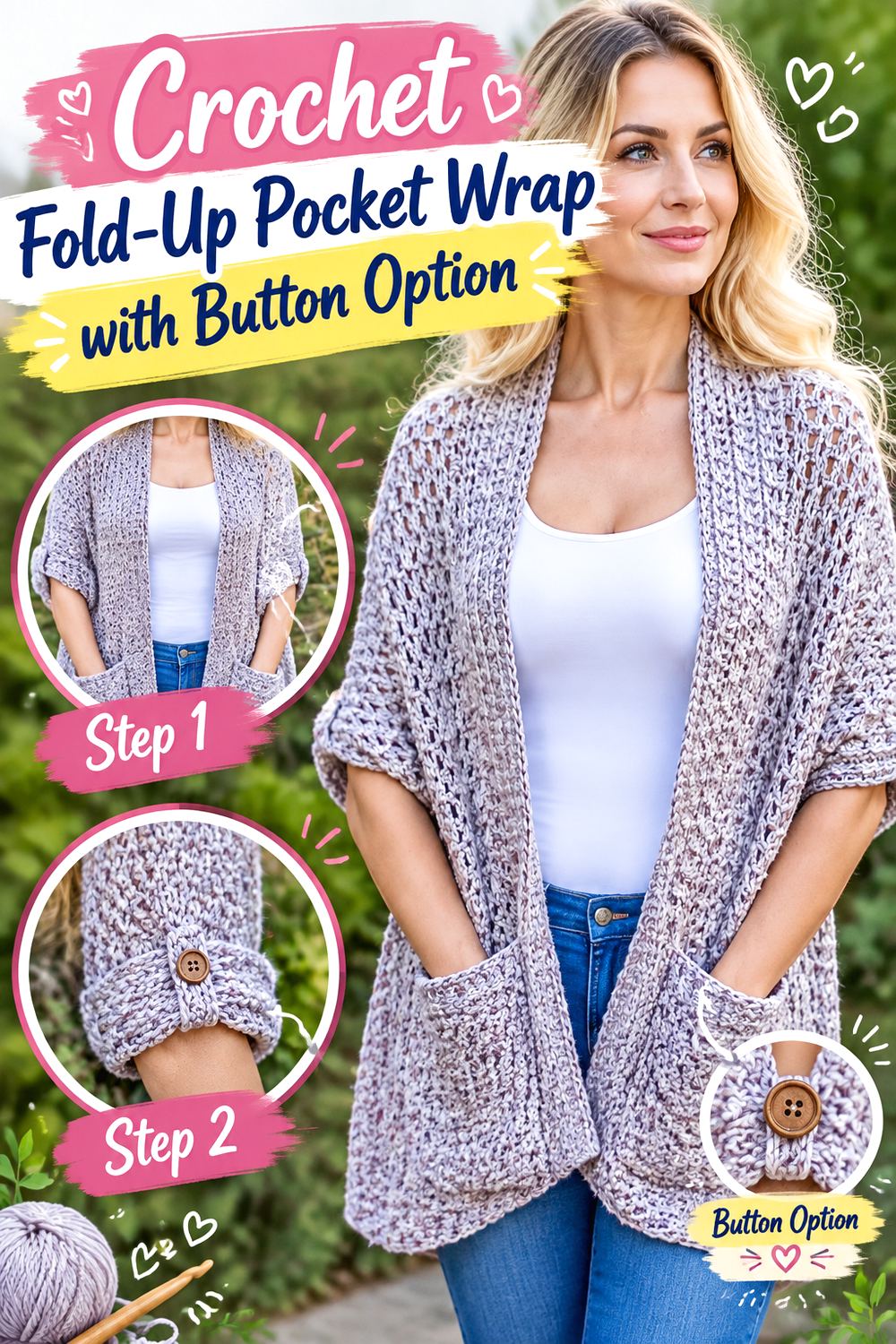
Instead of treating the pockets as separate patches, this version turns the shawl ends themselves into the pocket area. Naztazia’s video tutorial shows the wrap construction, folding the ends to form pockets, adding edging, and incorporating optional buttons.
That integrated approach creates a cleaner visual transition from shawl to pocket and removes the need to center two independent pocket squares. It is a useful concept for anyone who prefers continuous fabric over motif-style pockets. The trade-off is that pocket depth and shawl length become closely connected: changing how much fabric folds upward changes how much length remains available across the shoulders and down the front.
Test the Fold Before Securing It
Lay the finished rectangle over the wearer’s shoulders and temporarily clip or pin the intended pocket folds. Check hand depth from both sides before completing the permanent finishing. A pocket that looks proportionate while flat can feel shallow once the shawl bends around the body. Matching the two folds carefully also keeps both pocket openings at the same visual height when the wrap is worn.
Add Buttons Only Where They Improve Use
Buttons can help with styling, but they also add local weight and a firm point on otherwise flexible crochet fabric. Consider whether they are meant to close a pocket, stabilize the wrap, or simply provide decoration. The attachment area should feel substantial enough that the button does not distort the stitches. If the surrounding fabric is very open, a smaller or lighter button may sit more naturally.
Original Tutorial and Creator Credit
Creator: naztazia
4. Crochet Chunky Ribbed Pocket Scarf
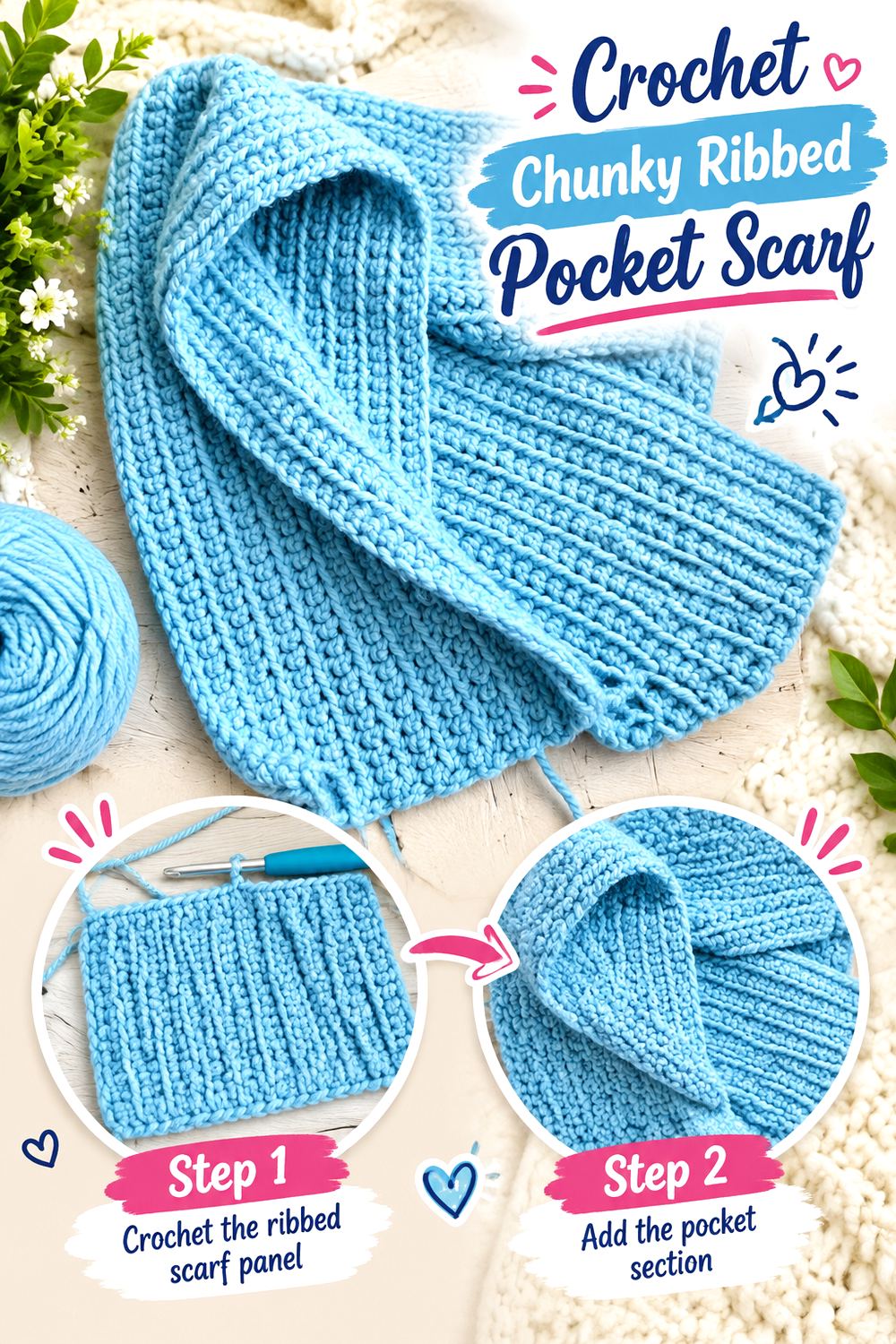
For a narrower, scarf-like interpretation, the Willow Scarf from All About Ami uses front-loop-only single crochet to create pronounced ribbing, then adds optional pockets and fringe. The sample is worked in super-bulky yarn, so the texture reads strongly even though the underlying stitch structure remains straightforward.
Compared with broad shawls that cover much of the upper arm, this concept puts more emphasis on vertical length and chunky texture. The contrasting direction of the ribbing on the pockets can become a deliberate design feature rather than something to hide. It works particularly well when you want hand-warming pockets but prefer a substantial scarf to a wide stole.
Decide Whether the Pocket Ribs Should Contrast
Changing the orientation of ribbing alters the visual relationship between the scarf and pocket without requiring a new stitch pattern. Horizontal pocket ridges against vertical body ridges create an obvious framed look; aligning them makes the pocket quieter. Before sewing, rotate both pocket pieces and compare them in the intended position. Also check that the pocket opening remains easy to distinguish if you choose the more seamless orientation.
Keep Chunky Fringe in Proportion
Super-bulky fringe quickly adds volume and visual weight. If you lengthen the scarf or make the pockets deeper, equally heavy fringe may make the lower ends feel crowded. Test a small fringe bundle before cutting every strand. You can reduce density while keeping the long-fringe effect, or omit it for a cleaner edge. Care also changes when fringe is added, so follow the yarn label and the designer’s guidance rather than assuming all bulky yarn can be treated identically.
Original Tutorial and Creator Credit
Creator/Site: All About Ami
5. Crochet Slim Granny Pocket Shawl with Fringe
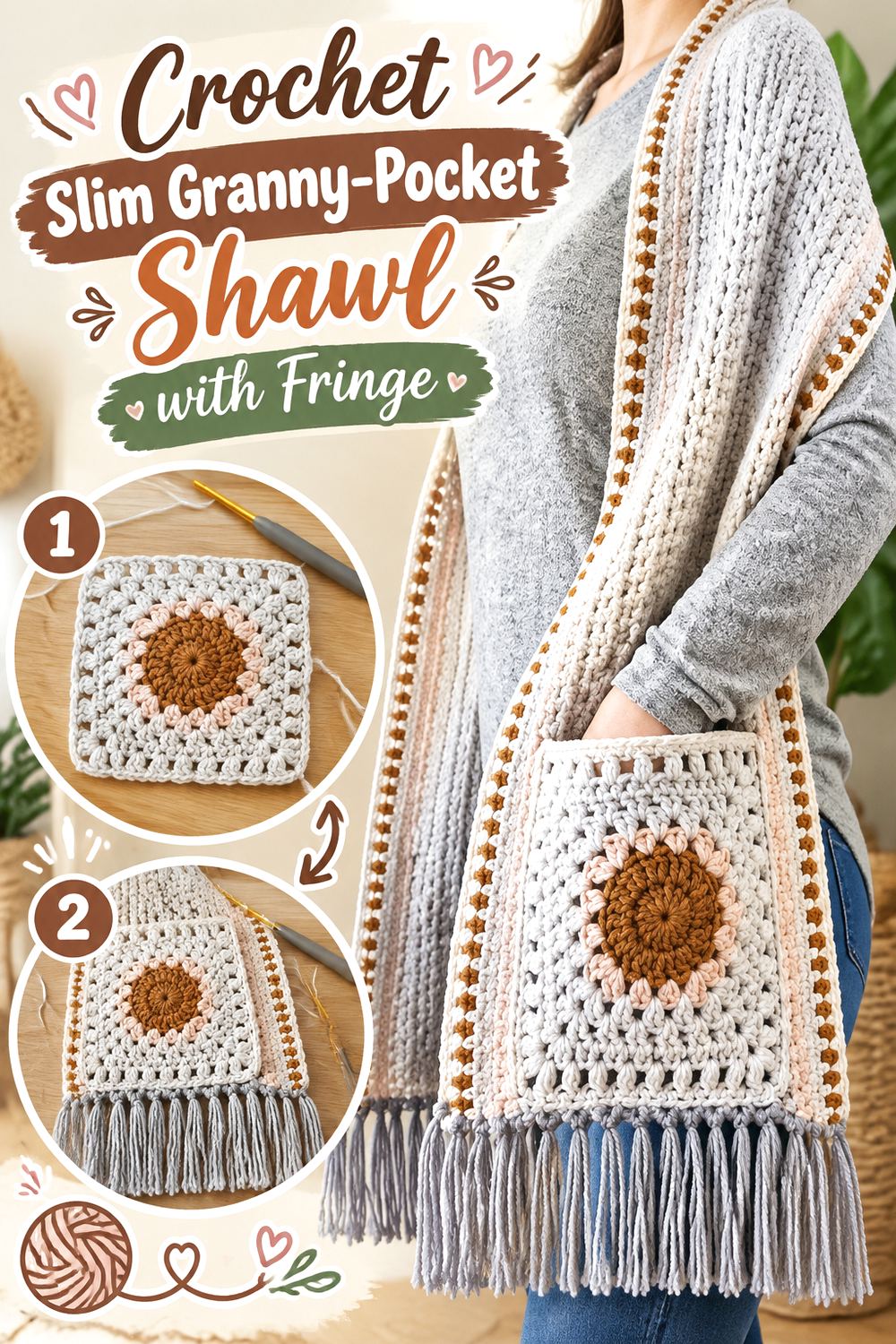
This Pixie Creates takes a narrower approach to the pocket-shawl silhouette and pairs the main rectangle with colorful granny-square pockets, stripe accents, varied stitch texture, and fringe. The designer explicitly describes the sample as slimmer than many conventional pocket shawls and provides guidance for changing its proportions.
That reduced width makes the pockets much more visually prominent. Instead of disappearing into a large wrap, each granny square acts almost like a focal applique with a practical opening. This makes the idea well suited to color planning: a mostly neutral body can support brighter pockets, while repeated accent colors can connect the pockets to stripes elsewhere in the shawl.
Center the Motif After Any Width Change
A square pocket is unforgiving of casual placement because its straight edges make asymmetry obvious. If you make the shawl wider than the sample, recalculate placement from the finished edges rather than copying the source position. Pin or clip both pockets first, hang the shawl, and compare them while worn. Centering visually on the body may matter more than matching a fixed distance from an edge after you have customized dimensions.
Use Accent Colors as a System
When a project contains pockets, stripes, and fringe, too many unrelated colors can make each detail compete. Choose which feature deserves the strongest contrast and repeat at least one accent elsewhere to connect the design. Scrap yarn can work well here, but similar yarn thickness and compatible care requirements will help the separate elements behave consistently. A very heavy granny square on a lightweight body can cause the pocket area to droop.
Block Motifs Before Final Attachment
Granny squares can change noticeably after shaping, especially when different stitches or colors create uneven tension around the edges. Block the pockets to their intended shape before sewing them onto a finished shawl. This gives you a more reliable basis for alignment and reduces the chance that later shaping will distort the seam. Use the care method appropriate for the chosen fiber; heat and moisture should never be applied blindly to an unfamiliar yarn.
Original Tutorial and Creator Credit
Creator/Site: This Pixie Creates
6. Crochet Open Puff Texture Pocket Shawl
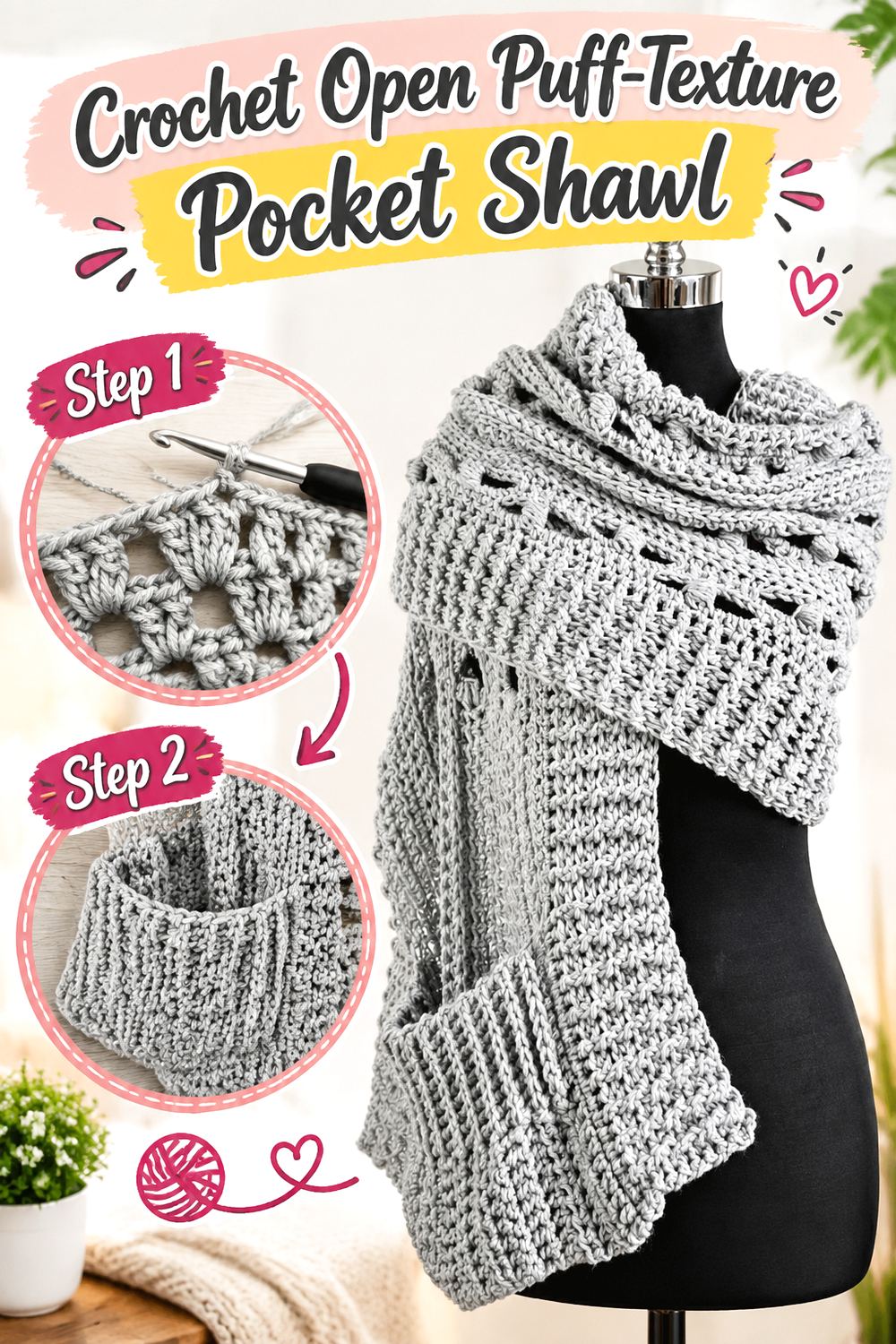
Crochething with Alice builds this version around the blocked puff stitch, a puff variation with a more open appearance than a densely packed textured stitch. The designer also highlights tension as something worth practicing and supplies both written and video guidance.
The result occupies a useful middle ground: it has pronounced surface interest without reading like a solid bobble fabric from edge to edge. That can make a larger shawl feel visually lighter. Because puff-based stitches consume and distribute yarn differently from plain rows, this is an option to choose for the texture itself rather than as a direct substitute for a simple rectangular shawl.
Practice Consistent Puff Height First
A textured repeat can magnify small tension differences. If one puff is noticeably tighter than the next, the surrounding open spaces may also change size. Make enough of a swatch to establish a comfortable rhythm before starting the full-length piece. Consistency matters particularly around the pocket zone, where uneven texture can make seaming look wavy or cause the opening to sit differently on each side.
Keep Pocket Seams from Fighting the Texture
Dimensional stitches create raised and recessed areas, so a seam worked without attention to the stitch pattern can appear uneven. Position the pockets while the shawl is lying naturally rather than stretched flat under tension. Use evenly spaced attachment points and periodically check the front side. The aim is a secure seam that follows the fabric without compressing the decorative texture into a rigid outline.
Consider Yarn Consumption Before Upsizing
Puff-style textures often use more yarn than flatter fabrics because each feature contains additional loops. If you plan to make the shawl wider, longer, or substantially deeper in the pockets, do not assume yardage will increase at the same rate as a basic single- or double-crochet rectangle. Confirm the designer’s requirements, swatch your substitution, and obtain enough of the same dye lot when color consistency matters.
Original Tutorial and Creator Credit
Creator/Site: Crochething with Alice
7. Crochet Patchwork Granny Square Pocket Shawl
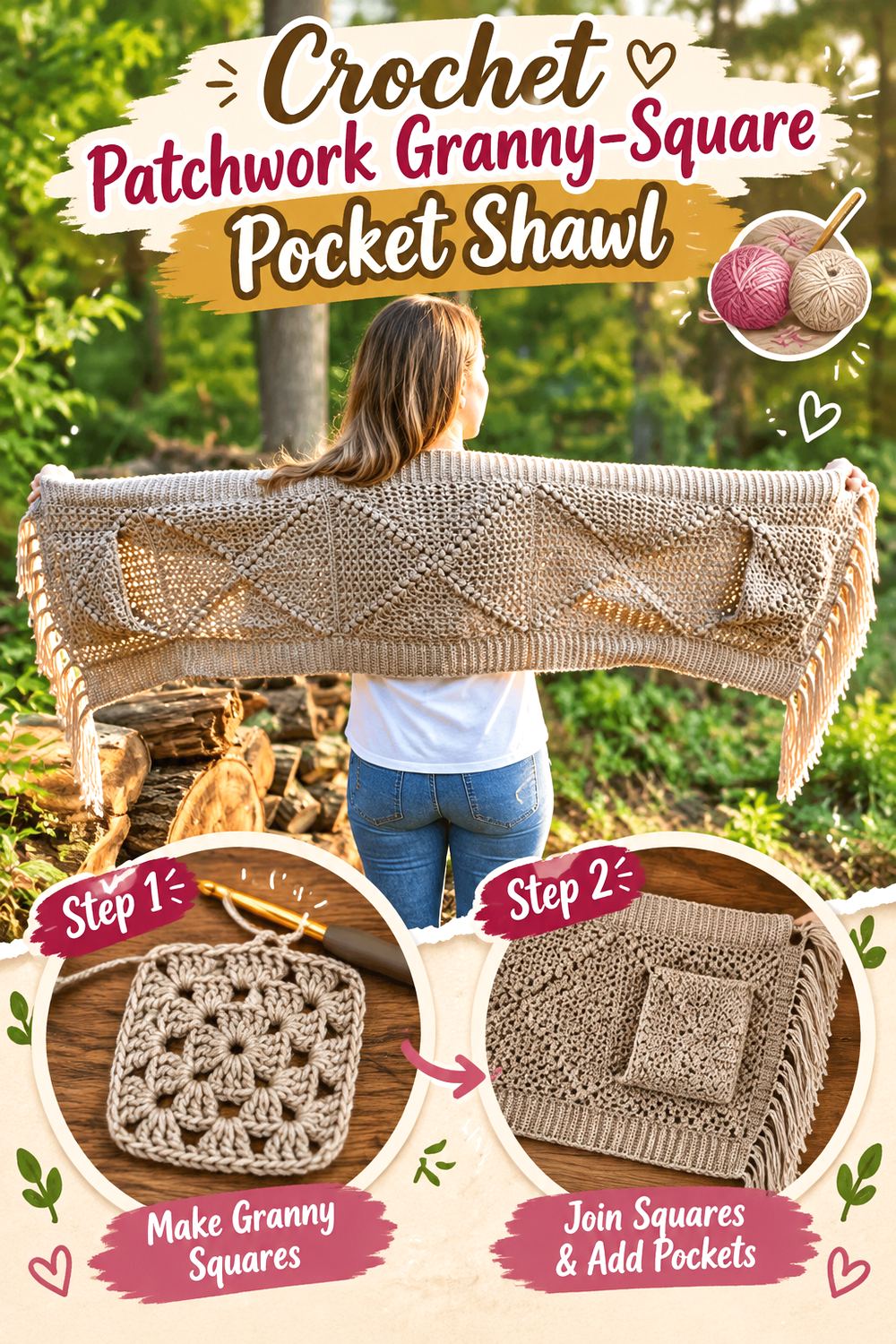
The Pine Gap design changes the basic construction completely. Instead of making one long body rectangle, Stitching Together constructs the shawl from multiple granny-style squares: larger motifs form the main body and smaller squares become the pockets. The source also adds sweater-like ribbing around the assembled piece.
This makes the shawl a strong choice for readers who enjoy motif work and assembly more than very long rows. Seams become visible structural features, and repeating squares give the wrap a patchwork rhythm that a conventional striped rectangle cannot duplicate. Because the entire body depends on motif consistency, accurate square size is more important here than on a shawl where only the pockets are motifs.
Match Motif Dimensions Before Joining
Do not wait until assembly to discover that one square is noticeably larger. Stack or lay completed motifs together as you work, especially after yarn changes or long breaks between sessions. Small variations can compound when several squares form a row. If you intentionally substitute another square design, compare both its finished dimensions and edge structure so the joining method has compatible stitches to work with.
Treat the Joins as Load-Bearing Seams
Once pockets and ribbing are added, the joins between body squares must support the shawl while it hangs from the shoulders. A decorative join that stretches dramatically may alter the length or create dips between motifs. Whichever joining technique you choose, make a short sample connection first and gently pull it in the direction the shawl will hang. The seam should move with the fabric without becoming the weakest point.
Use Ribbing to Unify Busy Motifs
Repeated granny motifs naturally create many lines and openings. A more uniform border or ribbing can visually frame the patchwork and give the outer edges a calmer finish. If you change colors frequently in the squares, consider using one repeated border color to tie them together. This is also the stage to correct minor edge waviness before attaching pockets, rather than asking the pocket seams to disguise an uneven body.
Original Tutorial and Creator Credit
Creator/Site: Stitching Together
8. Crochet Textured Button Detail Pocket Shawl
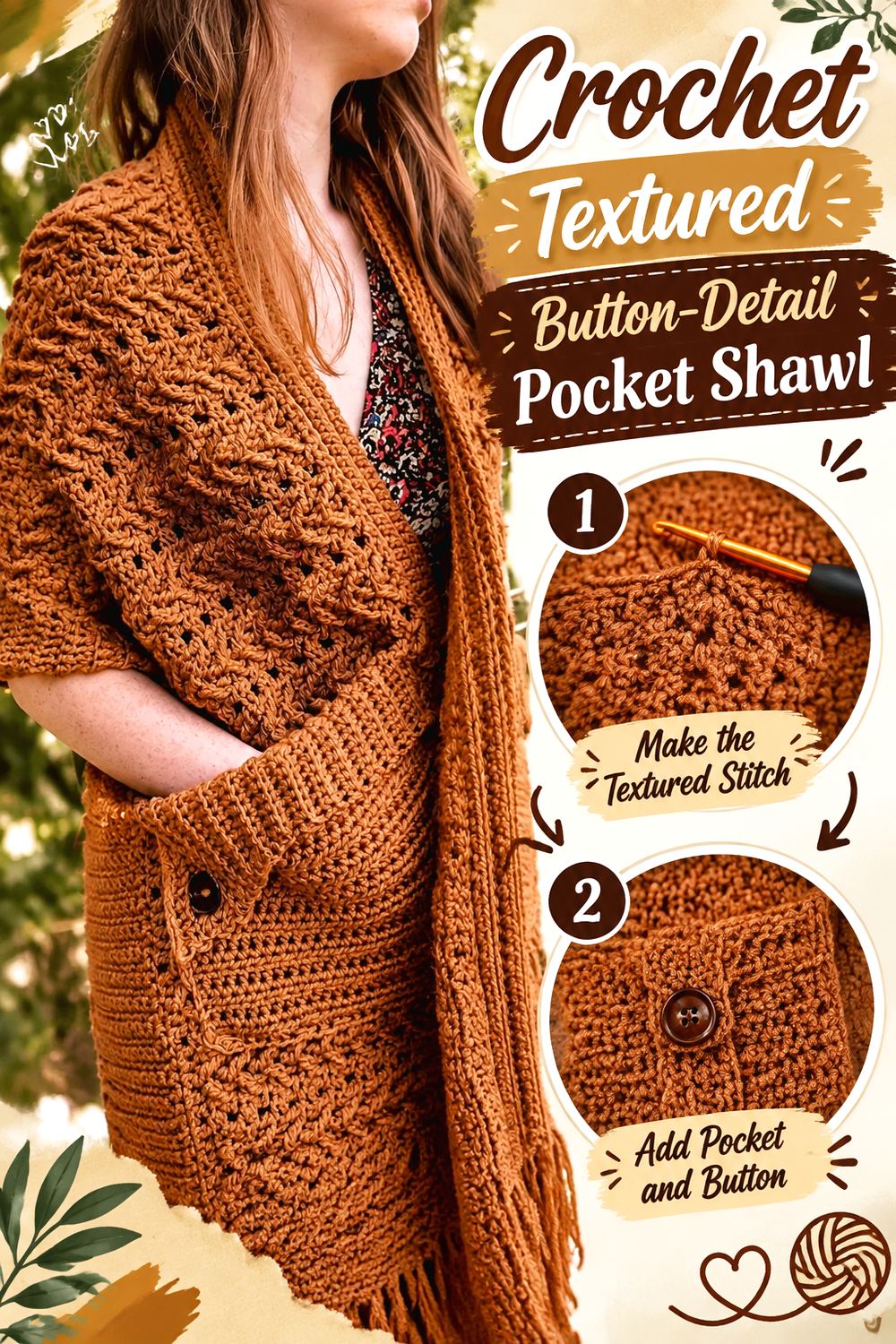
Crochet with Carrie’s Harvest Moon design uses a strong textured repeat, ribbed sections, pockets, fringe, and large button details. The tutorial describes a short repeating texture and explains how the shawl length can be adjusted.
Visually, it offers more surface movement than a plain moss- or linen-stitch shawl without turning the whole project into separate motifs. The buttons provide another focal point near the pockets, so this design suits someone who likes a finished accessory to look detailed even in a single main color. The ribbing also creates a useful contrast between organized linear texture and the more decorative body pattern.
Check the Repeat Before Changing Length
Whenever length is tied to a stitch or ribbing repeat, customization needs more planning than simply stopping at any convenient point. Work out how an additional repeat changes the physical length in your own gauge before committing to a large adjustment. This helps preserve symmetry and keeps the decorative sections ending where the pattern expects them to. Measure the piece relaxed rather than pulling the ribbing to its maximum stretch.
Balance Buttons with Pocket Openings
Large buttons can attract the eye as strongly as the pockets themselves. Place temporary markers where the buttons will sit and view the shawl from several feet away before sewing them on. Make sure they do not visually crowd the pocket opening or make the two ends appear uneven. If you substitute buttons, compare weight as well as diameter; a heavy button can tug on flexible crochet fabric.
Let Texture Guide the Finishing
Highly textured fabric already creates visual interest, so every added finish does not need to compete. If you keep the fringe, consider whether its density supports or overwhelms the body pattern. Likewise, use a pocket seam that does not flatten the raised stitches unnecessarily. When blocking, follow the yarn’s care instructions and use enough restraint to settle the fabric without erasing the texture you chose the design for.
Original Tutorial and Creator Credit
Creator/Site: Crochet with Carrie
9. Crochet Hooded Pocket Shawl for Cold Weather Layering
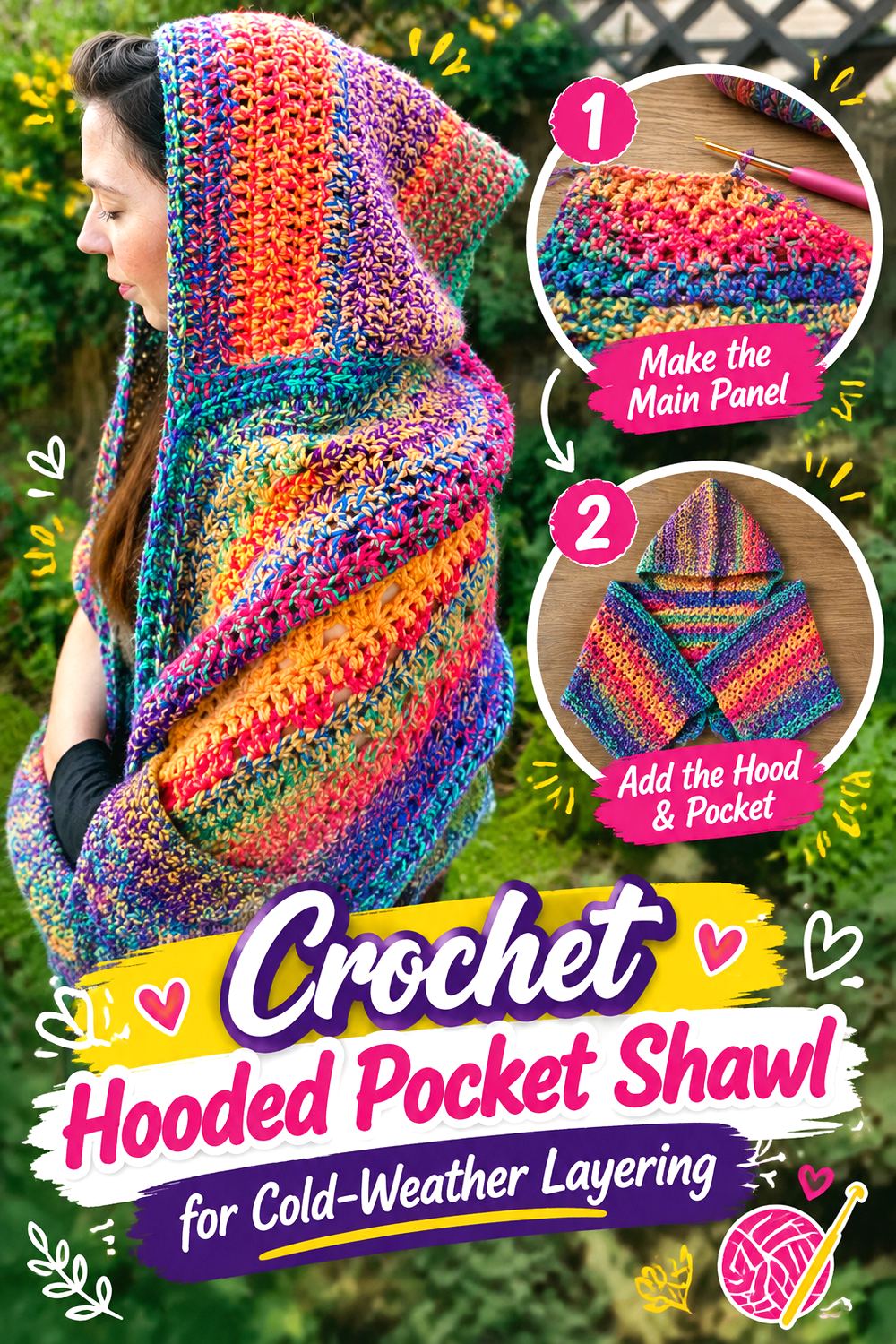
Adding a hood changes a pocket shawl from a simple hand-warming wrap into a more substantial outer layer. Carroway Crochet’s Harmony version uses a long rectangular shawl with two large pockets plus a separate rectangular hood that is attached to the main piece.
The silhouette remains approachable because the project is still based largely on rectangles, but the hood adds weight and changes how the center of the shawl sits at the back of the neck. This is a useful design for someone who wants head coverage without moving all the way to a sleeved garment. It also offers noticeably different styling when the hood is worn down.
Find the True Center Before Attaching the Hood
A hood that is even slightly off center can make one shawl end appear longer when worn. Fold the finished body in half, mark the midpoint securely, and compare the hood edges on both sides before seaming. Try the pieces together with clips if possible. The hood opening should frame the head without pulling the shawl upward from the pockets or forcing the neckline to bunch.
Consider the Hood When Choosing Yarn
The same yarn that feels pleasantly substantial in a flat shawl may feel heavy once another large rectangle hangs from the neckline. When substituting, compare grams per yard or meter as well as the nominal yarn-weight category. A lighter yarn with similar gauge can sometimes produce a more comfortable hooded layer. Conversely, an overly limp substitution may make the hood collapse rather than hold the intended silhouette.
Keep Pocket Depth Proportional
A hood already increases the visual and physical bulk of the garment. Extremely deep pockets can make the ends feel equally heavy and pull the shawl downward from both directions. Pin the pockets in place and test the wrap with the hood up and down. The design should remain balanced in both positions, especially if the wearer is likely to keep hands inside the pockets while walking.
Original Tutorial and Creator Credit
Creator/Site: Carroway Crochet
10. Crochet Sideways Chevron Pocket Shawl
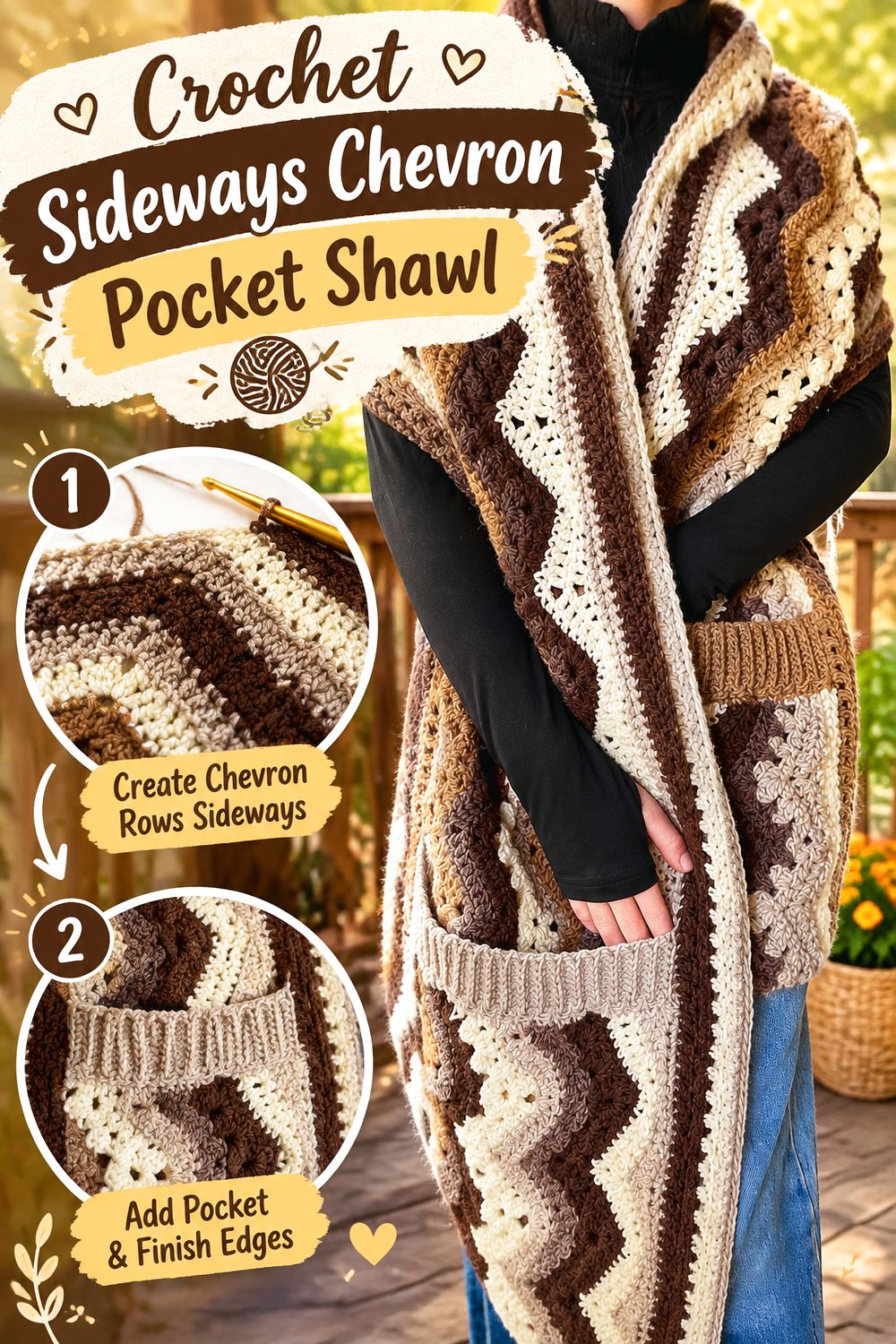
Betty McKnit’s Sideways Pocket Shawl uses a construction that is distinctly different from separate patch-pocket designs. The shawl grows sideways in a chevron-based pattern, while additional length at the ends is folded upward to create the pockets. The designer also discusses working the concept in several yarn-weight categories and adjusting it around the wearer’s proportions.
The chevrons produce a strong directional pattern, making this a good option when silhouette alone feels too plain. Integrated folded pockets keep that zigzag rhythm moving into the ends instead of interrupting it with separate squares. Because pocket depth comes from the body itself, planning the total length before starting is especially important.
Calculate Pocket Allowance with the Wearable Length
For folded construction, the starting piece must account for both the portion crossing the body and the fabric that will turn upward into pockets. Do not decide on shawl length first and treat the pocket folds as an afterthought. Use the designer’s sizing guidance for the selected yarn weight, then compare the planned dimensions against the actual wearer before committing to a long foundation.
Keep Chevron Points Consistent
Chevron fabric can expose counting mistakes quickly because each peak and valley creates a visible line through the finished shawl. Use markers or another counting system if your attention tends to drift during long repeats. Correct a misplaced increase or decrease when you first notice it rather than hoping the border will hide it. Consistent shaping matters even more once the ends are folded, because misaligned points can make the pocket edges look uneven.
Check the Fold Against the Stripe Pattern
If you use gradient or striped yarn, folding the ends changes how the color sequence reads at the pocket. A transition that looked balanced on the flat body may overlap another color after the fold. Before finishing, turn both pocket sections into position and compare them. Intentional asymmetry can look excellent, but accidental mismatching is easier to address before the seams and border are complete.
Original Tutorial and Creator Credit
Creator/Site: Betty McKnit
11. Crochet Catherine Wheel Scrap Yarn Pocket Wrap
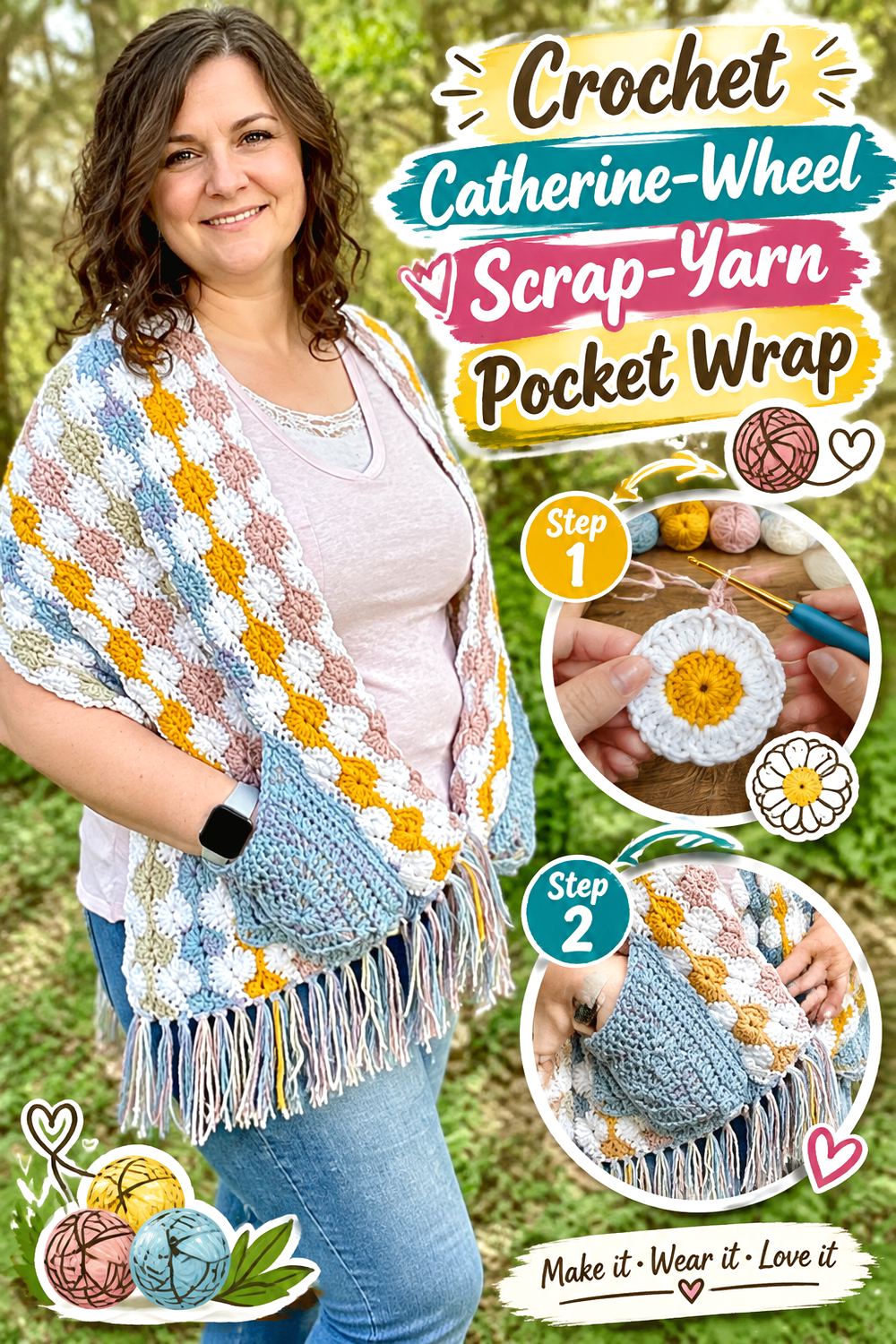
Banana Moon Studio’s Pettit Pocket Wrap combines Catherine Wheel stripes with solid granny-square pockets and fringe. The designer specifically presents it as a scrap-friendly project, and the fringe provides a practical place to incorporate the numerous color-change tails.
The contrast is what makes this idea stand apart: the shawl body has sweeping repeated wheel shapes while the pockets are calmer, more solid squares. That relationship can be useful when you want to use many leftover colors without allowing every component to become equally busy. The finished wrap still has the classic long rectangle, but its surface has much more movement than a straightforward stripe pattern.
Sort Scraps by Weight Before Color
A visually appealing palette will not help if one stripe is made from much thicker yarn than the next. Compare your leftovers for diameter, elasticity, and fiber behavior before arranging them by color. Small differences may be manageable, but dramatic changes can distort the Catherine Wheel repeat. When in doubt, make a short multi-yarn swatch and see whether the fabric stays level after it relaxes.
Let the Solid Pockets Rest the Eye
When the body contains repeated color changes and curved motifs, simple pockets can provide useful visual contrast. You do not need to reproduce every body color in each pocket. One neutral or one repeated accent can make the pockets easier to read and keep the wrap from becoming visually fragmented. Place the completed squares on the shawl before sewing and compare several color orientations if the motifs themselves contain multiple shades.
Plan Fringe Before Trimming Tails
If a design intentionally incorporates yarn ends into fringe, decide on the finished fringe treatment before cutting tails short. Even when following a scrap-friendly concept, secure joins appropriately so the decorative finish is not doing all the structural work. After the fringe is assembled, hang the shawl and trim only after the strands have settled. Different fibers may relax by different amounts, particularly in a mixed-yarn scrap project.
Original Tutorial and Creator Credit
Creator/Site: Banana Moon Studio
12. Crochet Buffalo Plaid Hooded Pocket Scarf
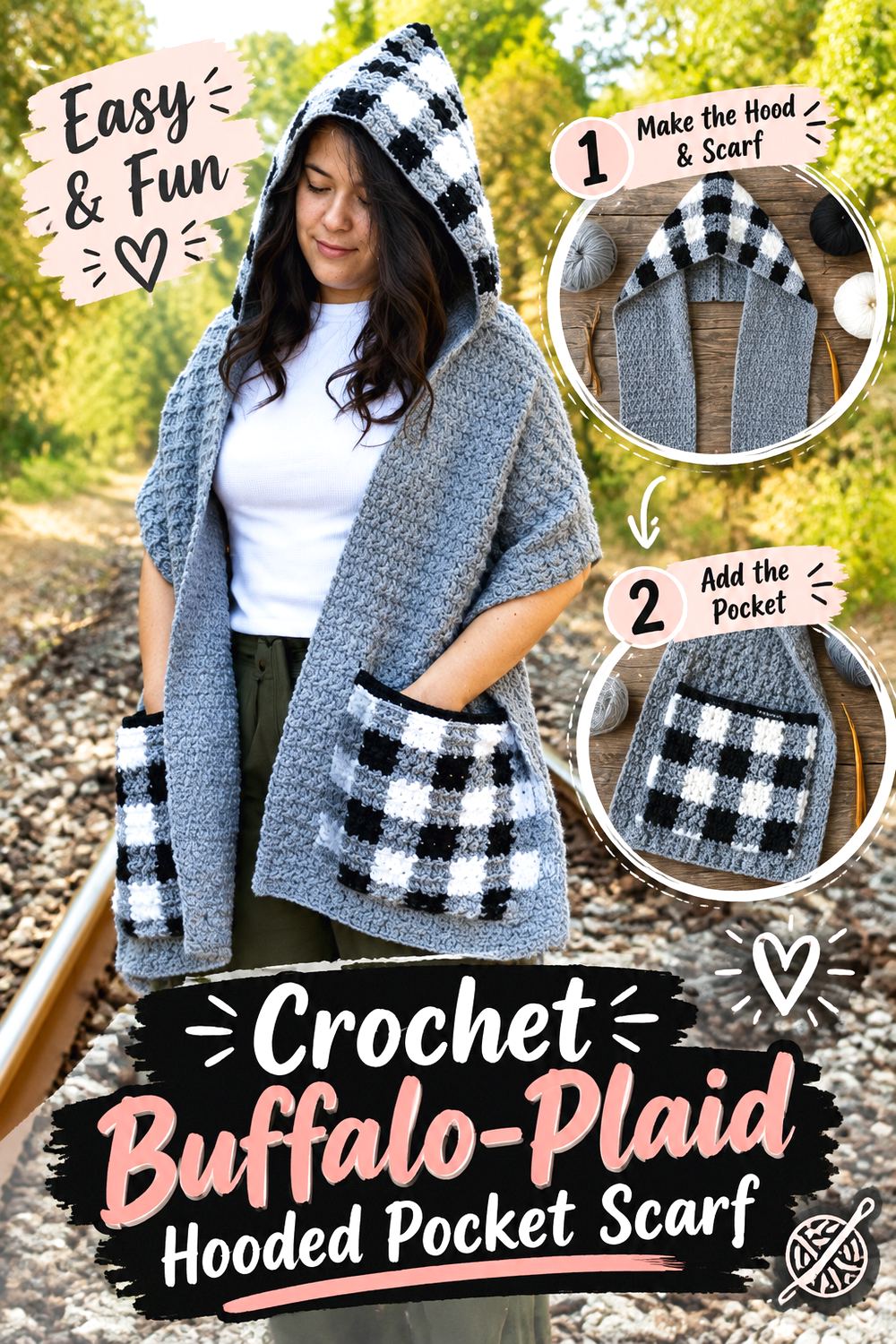
The Checkmate design from Passionate Crafter brings colorwork, a hood, and pockets into the same accessory. Its buffalo-plaid version uses three colors with a textured floret stitch, and the designer provides a range of sizing options from children through adults.
This makes the piece visually different from both simple hooded shawls and plain striped pocket scarves. Plaid depends on repeated color relationships rather than isolated accent stripes, so yarn organization becomes part of the project. The hood also makes the design more obviously winter-oriented. If you prefer the silhouette but not the full plaid treatment, the source notes that the underlying scarf can also be approached in a single favorite color.
Label Similar Plaid Shades
Buffalo plaid often uses colors that are intentionally related, which can make yarn balls surprisingly easy to confuse in low light. Label or arrange each shade consistently before beginning the colorwork. When substituting colors, think in terms of value contrast—light, medium, and dark—not just three hues you like separately. Photographing the yarns in grayscale can help reveal whether the planned plaid will remain visually distinct.
Fit the Hood and Scarf as One System
Changing only the scarf length while leaving every hood proportion untouched may alter how the complete piece balances on a different wearer. Check where the hood joins relative to the neck and where the pockets reach the hands. For a child, also consider overall bulk and mobility rather than simply scaling down an adult look. Follow the source’s specific size instructions instead of improvising garment dimensions from age labels alone.
Keep Colorwork Seams Neat at the Pockets
Plaid makes misplaced or uneven finishing more visible because straight color boundaries provide reference lines. Pin the pockets so their top edges sit evenly relative to the nearby pattern. If yarn is carried or ends are concentrated around color changes, avoid adding a bulky seam directly over an already thick area. A clean pocket outline lets the plaid remain the feature rather than turning the attachment line into another competing element.
Original Tutorial and Creator Credit
Creator/Site: Passionate Crafter
13. Crochet Heart Pocket Shawl with Layered Storage
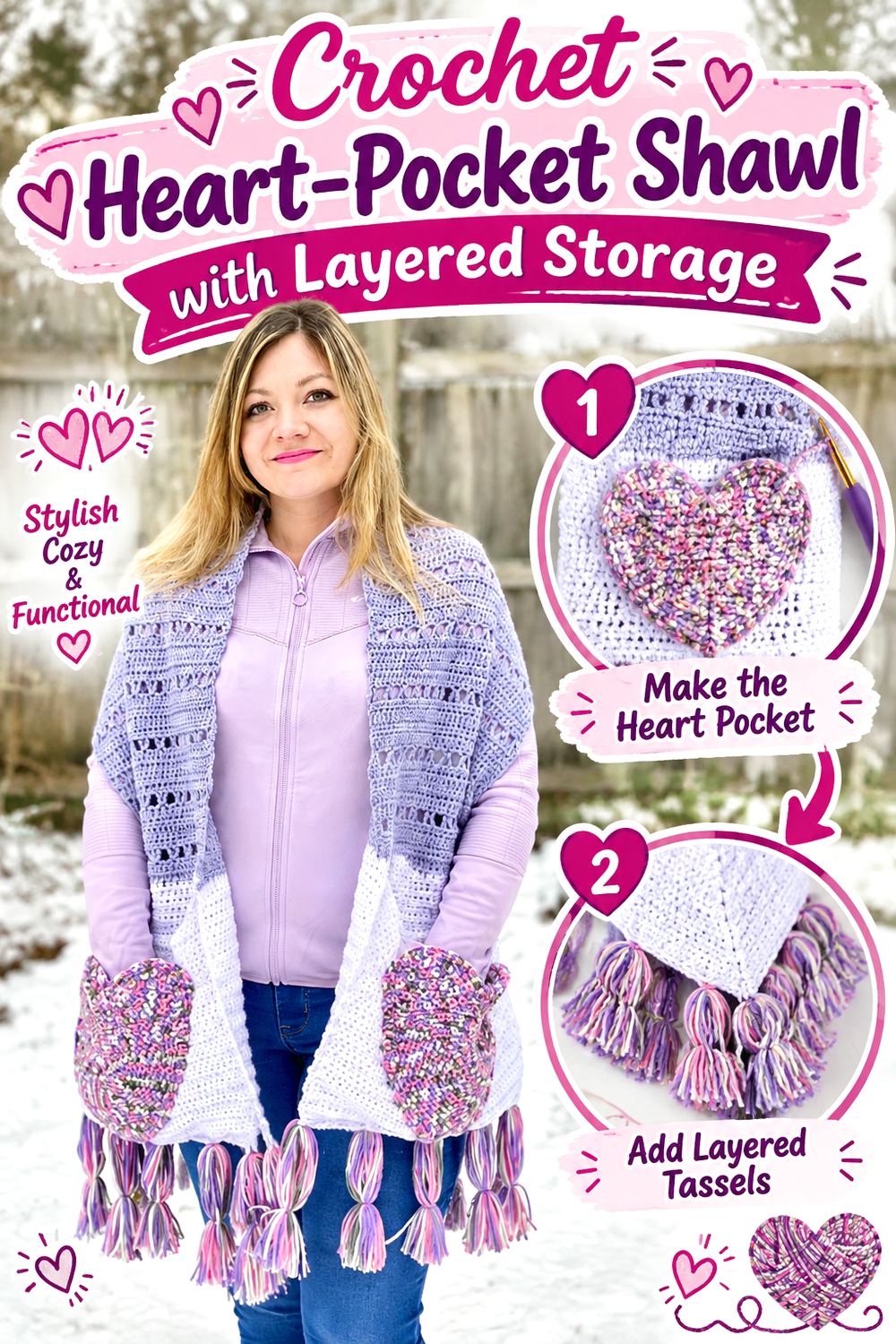
Crafty Kitty Crochet turns the pocket itself into the decorative theme. The Happy Hearts design includes standard pocket areas plus heart-shaped pockets that create an additional smaller storage layer, giving the shawl a playful dimensional front rather than relying on surface applique alone.
This concept is useful for seasonal gifts or anyone who likes novelty motifs but still wants a wearable rectangular shawl. The heart shapes are visually strong, so they can carry the design even if the remainder of the fabric is relatively simple. Because multiple pocket layers add thickness in one area, the lower ends deserve extra attention during finishing and care.
Keep Decorative Pockets Truly Usable
A shaped pocket can look excellent but still be frustrating if the opening is too tight for the intended purpose. Before completing the attachment, slide a hand or the small item you expect to carry into the opening and check whether the motif distorts. If the decorative pocket is intended only for something light, treat it that way rather than forcing it to function like the main hand pocket.
Avoid Too Much Bulk in One Zone
Layering one pocket over another concentrates yarn, seams, and potentially stored objects at the shawl ends. Compare the thickness with the rest of the wrap before adding further embellishment. If you substitute a bulkier yarn, this effect will increase. A decorative heart does not need additional lining or heavy edging unless the construction genuinely requires it; preserving flexibility can make the finished shawl hang more naturally.
Think Beyond Valentine Colors
The heart motif is recognizable without depending on red or pink. A neutral body with tonal hearts can make the shawl less seasonal, while high-contrast colors emphasize the novelty aspect. Whatever palette you choose, make sure the heart remains visually distinguishable from the larger pocket underneath. Color placement is more useful here than adding extra surface decoration that might obscure the layered-pocket concept.
Original Tutorial and Creator Credit
Creator/Site: Crafty Kitty Crochet
14. Crochet Striped Linen Stitch Pocket Shawl
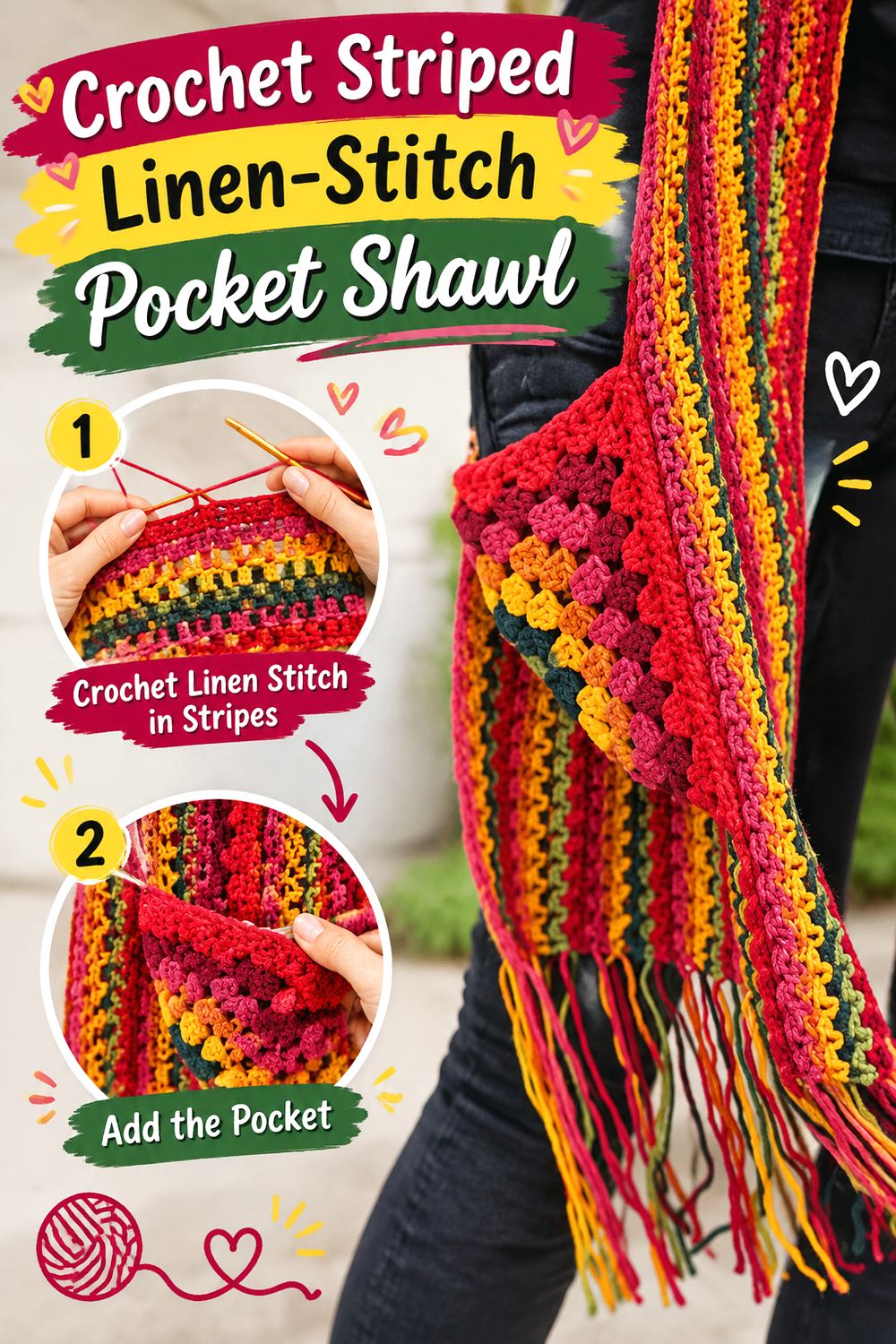
Annie Design Crochet combines a dense linen-style body, frequent color changes, granny-square pockets, and fringe. The main shawl is described as reversible, while the pockets introduce a more traditional granny motif against the narrow striped texture. The project is also presented as suitable for using a collection of coordinated yarn colors.
This is a useful direction when you want a colorful pocket shawl without committing to full patchwork construction. The body remains one continuous rectangle, so fitting is simpler than joining numerous motifs, while the pockets still provide a strong square focal point. Repeating body colors in the pocket rounds can help the separate elements look intentionally related.
Build a Color Sequence Before Starting
Frequent stripe changes are easier to manage when the order is decided in advance. Lay the yarns side by side and determine whether you want a predictable repeat, a gradient, or intentionally irregular stripes. Keep enough of key colors aside for the granny-square pockets before using the entire supply in the body. A pocket containing none of the body colors can work, but it will read as a much stronger contrast.
Compare Drape with Pocket Structure
A shawl body should bend comfortably around the shoulders, while a useful pocket benefits from enough stability to stay open without sagging badly. When using the same yarn family for both, you can adjust this relationship through hook choice or pocket finishing only if the pattern allows it. Avoid making the pockets dramatically denser without considering the extra weight they will introduce at both ends.
Treat Fringe as Part of the Color Design
On a multi-stripe project, fringe can either simplify the palette or extend it. A single neutral fringe visually frames a busy body, while mixed-color strands continue the stash-driven look. Decide before fastening off large numbers of color changes, especially when the designer’s finishing method can incorporate tails into the fringe. Whatever approach you use, secure the fabric properly first so decorative fringe is not relied upon to prevent unraveling.
Original Tutorial and Creator Credit
Creator/Site: Annie Design Crochet
15. Crochet Pineapple Texture Pocket Shawl
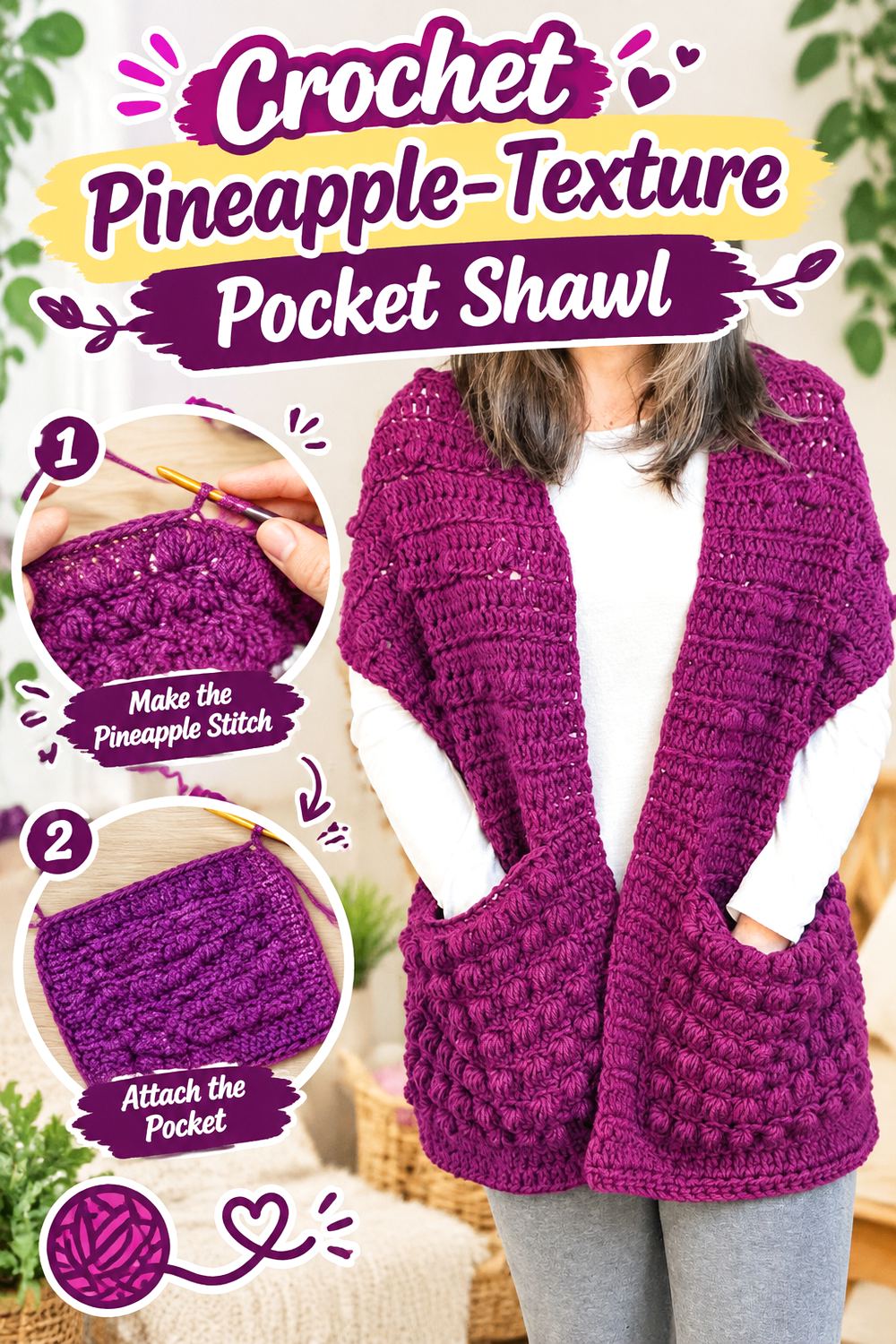
ChristaCoDesign’s Ana Pocket Shawl uses a bobble-like pineapple stitch as a concentrated accent rather than covering the entire wrap in heavily dimensional texture. The designer places that stitch prominently in the pockets and as a central detail, contrasting it with simpler fabric worked in bulky yarn.
This is a smart design direction if you enjoy puffed texture but do not want the yarn consumption or visual density of a completely bobbled shawl. The pockets become the most textured components, drawing attention to the practical feature. The result is more sculptural than a basic rectangle but still visually calmer than an all-over motif piece.
Use Texture Where It Has the Most Impact
Dimensional stitches can be most effective when surrounded by quieter fabric. If you customize the project, resist automatically adding extra puff motifs everywhere. A concentrated pocket texture gives the eye somewhere to land and helps define the shawl ends. Additional motifs may also increase yarn use and weight. Compare the finished pocket against the plain body before deciding whether more surface decoration would genuinely improve the design.
Check the Pocket Fabric for Snagging
Raised stitches have loops and contours that may catch more readily than flat fabric, depending on yarn and tension. If the shawl will be worn under a coat or around jewelry, rub a swatch gently against the expected outer layer to see how it behaves. The aim is not to eliminate texture but to choose a yarn whose fibers and stitch definition suit the way you intend to wear the piece.
Keep Bulky Yarn from Overwhelming the Seam
A thick yarn plus a textured pocket can produce a substantial edge once three sides are attached. Use the joining method specified by the designer and avoid repeatedly sewing through the same bulky area unless required. Check the front after every section of the seam so the pocket remains flat. If you change yarn weight, verify the entire pattern rather than assuming the original pocket and body proportions will translate automatically.
Original Tutorial and Creator Credit
Creator/Site: ChristaCoDesign
16. Crochet Corner to Corner Pocket Shawl
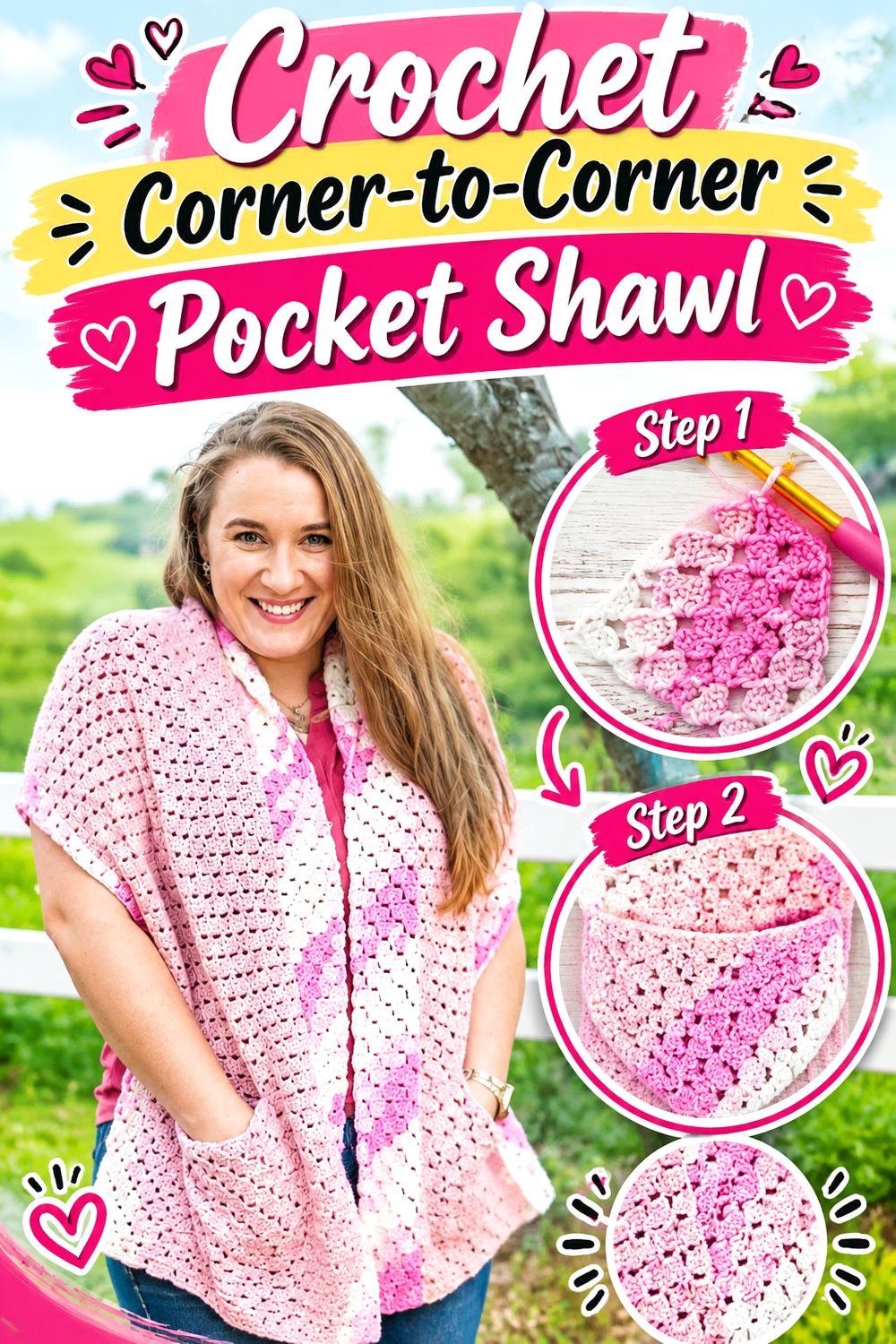
Nicki’s Homemade Crafts applies corner-to-corner crochet to the pocket-shawl format. The source constructs the accessory from one large C2C rectangle and two smaller C2C squares for the pockets, with DK-weight yarn used in the featured design.
This creates a block-like diagonal texture that looks different from horizontal rows even when the shawl is made in a restrained palette. C2C also lends itself naturally to color changes and graphic planning, so this idea has more room for personalization than a plain rectangular stitch repeat. The practical challenge is making the two pocket squares match each other closely enough to align cleanly on the larger pixel-style body.
Keep C2C Blocks Uniform
Variations in cluster height or chain-space tension can gradually change the angle of a C2C piece. Check the edges periodically rather than waiting until the rectangle is complete. The two pocket squares are useful consistency tests: if they finish at noticeably different dimensions despite having the same structure, identify the tension difference before attaching them to opposite ends of the shawl.
Use Colorwork Without Losing Pocket Visibility
C2C can support stripes, gradients, or graph-based images, but a very busy body can make the pocket opening difficult to see. If function is important, give the top edge of each pocket enough contrast to remain visually obvious. You can achieve that through color placement or a restrained border rather than changing the underlying construction. Plan both pockets as part of the overall graphic, not as two unrelated squares added at the end.
Reinforce Only as Much as Needed
C2C fabric contains natural spaces between clusters. If you intend to use the pockets for more than warming hands, assess how small items interact with those openings. A fabric lining could be considered for additional containment, but it changes stretch, weight, and care and is not automatically necessary. If you add one, secure it without pulling the crochet square out of shape and allow enough ease for the pocket to remain usable.
Original Tutorial and Creator Credit
Creator/Site: Nicki’s Homemade Crafts
17. Crochet Stitch Sampler Pocket Shawl
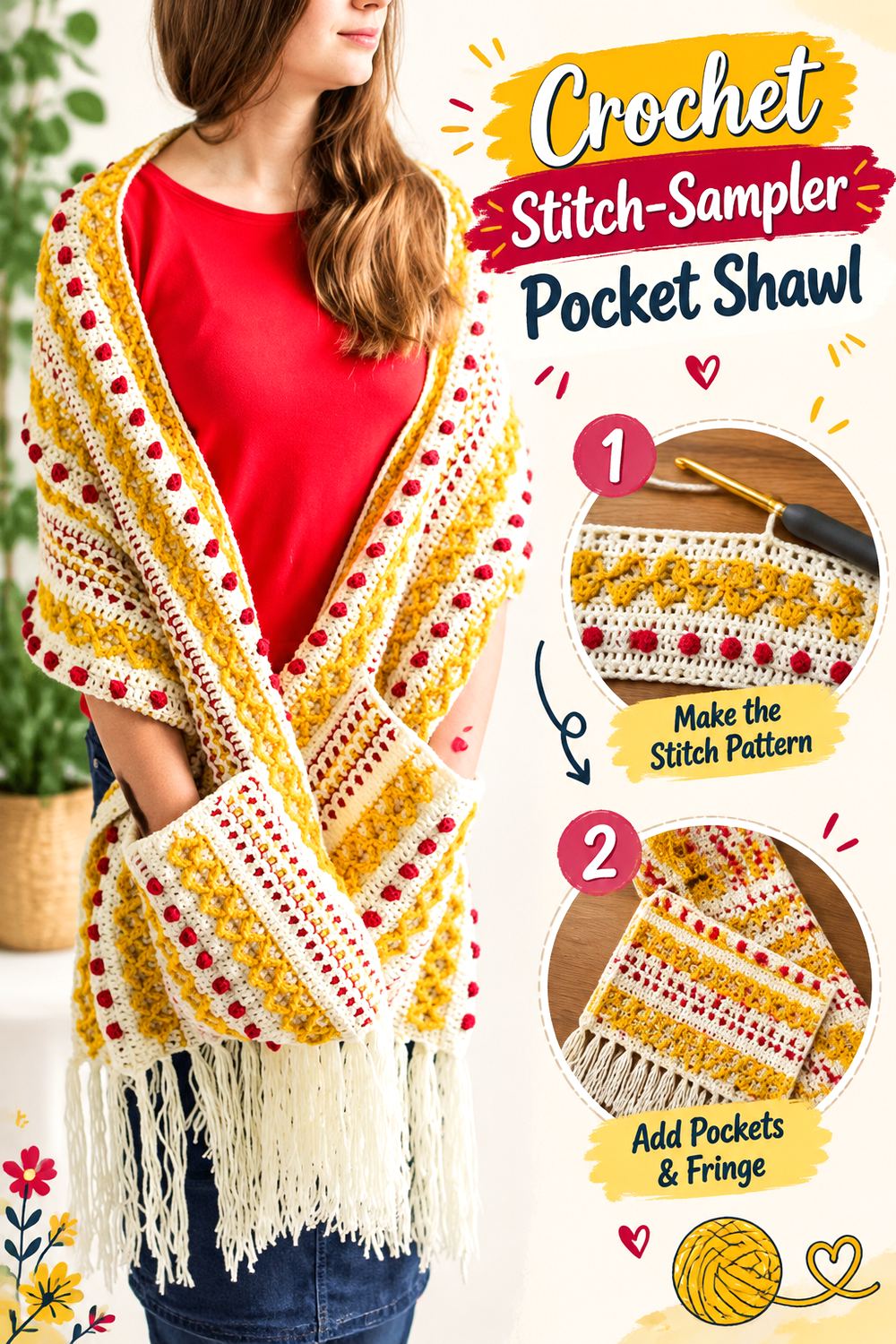
The Marjorie Pocket Shawl from Nana’s Crafty Home is built around stitch variety rather than one repeated texture. The designer combines Diamond Waffle, Interlocking Arches, and Popcorn stitch sections, then creates matching pockets and finishes the scarf-style wrap with optional fringe.
This gives the shawl a sampler-like appearance and makes it appealing to crocheters who become bored with hundreds of identical rows. It also creates natural opportunities for color blocking because each textural zone can be emphasized separately. The main challenge is maintaining consistent overall width when several stitch patterns with different natural tensions appear in one piece.
Measure Width After Every Texture Change
Two stitch patterns worked with the same yarn and hook can still produce different fabric widths. Lay the piece flat after transitioning into a new section and compare it with the established edges. If the sides begin pulling inward or flaring outward, review the pattern and your tension immediately. Correcting a developing problem is easier than trying to force several incompatible sections into alignment during blocking.
Let Color Support the Sampler Structure
A texture-heavy shawl does not require a different color for every stitch section. Repeating two or three shades can make the pattern easier to read while keeping the overall accessory cohesive. If one stitch is especially dimensional, a solid or lighter color may reveal its shadows more clearly than a highly variegated yarn. Place potential pocket colors against several body sections before deciding which relationship looks most intentional.
Align Pocket Texture Carefully
When the pockets echo stitches already present in the body, poor alignment can be more noticeable than on plain fabric. Pin each pocket at multiple points and check whether the major horizontal texture lines appear level across both ends. Avoid stretching one pocket to force a match. If the pieces differ slightly, repositioning may be less visible than creating a puckered seam that draws attention to the discrepancy.
Original Tutorial and Creator Credit
Creator/Site: Nana’s Crafty Home
18. Crochet Knit Look Scarf with Faux Fur Pockets
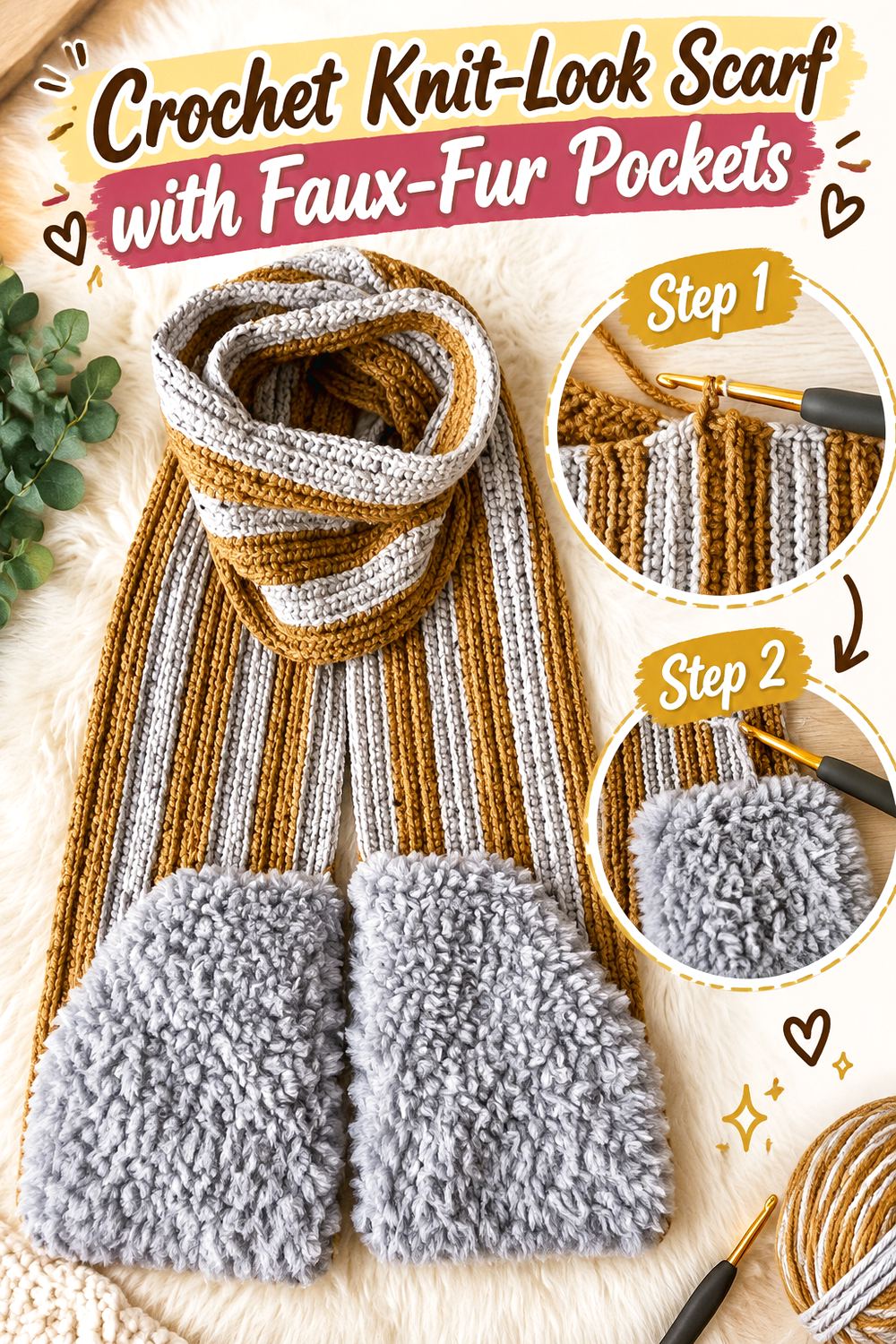
Blue Star Crochet’s Alpine-style pocket scarf pairs a knit-look main fabric with separate faux-fur pockets. The scarf uses half double crochet worked through the third loop for its horizontal knit-like ridges, while the fuzzy pockets deliberately contrast in both yarn texture and weight. The designer also cautions against relying on the soft pockets to secure valuable items.
This is the most material-contrast-driven idea in the collection. Instead of changing construction dramatically, it makes the pocket feel special through fiber choice. The narrower scarf format is also useful for someone who wants warm hands and neck coverage without the width of a full shoulder wrap.
Swatch the Faux Fur Separately
Faux-fur yarn can hide individual stitches, so gauge and shape are often easier to judge by measurement and feel than by visual stitch counting alone. Work enough fabric to understand how the yarn behaves before starting both pockets. Make sure the opening remains easy to find by touch, and check that the finished pocket does not stretch far below its intended position once a hand is inserted.
Treat These as Hand-Warming Pockets
Soft, open-topped crochet pockets are not automatically secure storage. Blue Star Crochet specifically advises caution with valuables in this design. For a phone, keys, or anything difficult to replace, use a separate secure bag unless you have intentionally modified the pocket with suitable containment. The fluffy texture is best appreciated as a warmth and tactile feature rather than proof that the pocket can safely carry weight.
Original Tutorial and Creator Credit
Creator/Site: Blue Star Crochet
How These Crochet Pocket Shawls Compare
| Construction style | Ideas to compare | Main advantage | Main checkpoint |
|---|---|---|---|
| Classic rectangle + patch pockets | 2, 5, 6, 8, 14, 15, 17 | Pocket placement can usually be evaluated before final sewing | Make both pockets level and comfortable for the wearer |
| Folded or integrated pockets | 3, 10 | Fewer separate pocket pieces and a continuous visual line | Pocket depth directly affects usable shawl length |
| Motif-built body | 7 | Strong patchwork appearance and portable motif construction | Keep motif dimensions and joins consistent |
| Tunisian or C2C construction | 1, 16 | Distinctive fabric structure and strong visual texture | Swatch for gauge, drape, and finished weight |
| Hooded designs | 9, 12 | More cold-weather coverage without sleeves | Balance hood weight against shawl length and pocket depth |
| Scarf-width specialty pockets | 4, 18 | Less bulk across the shoulders | Narrower proportions make pocket size and placement more noticeable |
A broad shawl is not automatically warmer or more functional than a narrower scarf, and a decorative pocket is not automatically suitable for carrying heavy objects. Start by deciding whether you want shoulder coverage, a hood, strong motif work, minimal seaming, or distinctive pocket texture. That choice will narrow the list much faster than choosing by color alone.
Conclusion
These 18 crochet pocket shawl ideas range from simple ribbed and moss-stitch rectangles to Tunisian fabric, C2C blocks, all-over granny construction, integrated chevrons, dimensional puff details, hoods, plaid colorwork, hearts, and faux-fur pockets. The most useful differences are structural: how the pockets are formed, how wide the wrap sits on the shoulders, whether additional elements increase weight, and how readily the dimensions can be adapted.
Before choosing, think about where the wearer’s hands naturally fall and what the pockets are actually expected to do. Once you have selected the shape and construction that suit those priorities, use the linked original tutorials for the designer’s exact stitch counts, sizing, materials, assembly, and finishing details.
Frequently Asked Questions
How long should a crochet pocket shawl be?
There is no single correct length because height, arm span, shoulder width, pocket depth, and fabric stretch all affect where the ends land. A wingspan measurement is a useful starting checkpoint for many rectangular designs, but it should not replace the sizing information in the chosen tutorial. If possible, drape the unfinished piece over the intended wearer before attaching separate pockets and confirm that the hands reach the openings comfortably.
Can I substitute a different yarn weight in a pocket shawl?
Sometimes, but changing yarn weight can alter much more than gauge. A heavier yarn may make the shawl longer under its own weight and can make pockets sag, while a lighter yarn may produce less structure than the original. Check whether the designer provides substitution guidance. Otherwise, swatch first and compare the resulting fabric for dimensions, drape, opacity, elasticity, and weight before recalculating the entire project.
Should crochet pocket shawls be lined?
Most do not automatically need lining. A lining is more relevant when you want small objects contained securely or when the crochet fabric has openings large enough for items to poke through. Adding fabric changes stretch, weight, and washing considerations, so it should be an intentional modification rather than a default finishing step. For hand-warming pockets, a well-shaped crochet pocket may already provide everything the design needs.
How can I stop crochet pockets from sagging?
Begin with pocket placement and fabric choice. A pocket made from loose, highly elastic crochet will usually stretch more under weight than a dense, stable fabric. Sew the sides and lower edge evenly without stretching either layer during attachment. If you plan to carry objects, test the pocket with a similar weight before assuming it will remain stable. A pocket shawl is still a soft textile accessory, not a structured handbag.
Can I add a hood to any crochet pocket shawl?
A rectangular hood can sometimes be adapted to another design, but adding one successfully requires more than sewing a rectangle at the midpoint. The neckline width, body fabric, hood depth, total weight, and intended fit all matter. A heavy hood can drag a narrow shawl backward or distort an open fabric. For the most predictable result, use a pattern designed with a hood or carefully compare the construction with an existing hooded tutorial before modifying it.
Do crochet pocket shawls need blocking?
That depends on the stitch pattern, fiber, and construction. Motif projects, lace, C2C fabric, or pieces with uneven edges may benefit from shaping before assembly, while some dense ribbed scarves need little adjustment. Always follow care information for the actual yarn being used. Blocking should help settle dimensions and stitches; it should not be treated as a guaranteed way to fix serious gauge problems, badly mismatched motifs, or incorrectly positioned pockets.
Are pocket shawls safe for carrying a phone or keys?
Do not assume an open crochet pocket will secure valuables simply because the item fits inside. Stretchy fabric, shallow openings, open stitch patterns, and the movement of the shawl can all allow objects to shift or fall out. For valuable items, use a bag or deliberately add an appropriate closure or lining after considering how that modification affects the crochet fabric. Hand-warming pockets and secure storage have different structural requirements.