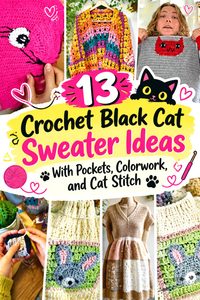
A crochet black cat sweater can make the feline theme part of the garment in very different ways. Some designs rely on one large graphic cat, while others use repeated cat stitches, modular squares, shaped pockets, dimensional ears, or an oversized silhouette. That difference matters because each approach changes how much colorwork, fitting, seaming, and motif planning the project requires.
The ideas below focus on human wearables, including pullovers, cardigans, a hooded sweater, a children’s design, and a dress-length option. A few original tutorials already feature a black cat; others teach a cat motif or garment that can be responsibly adapted to a black-cat palette. Those adaptations are identified rather than presented as features of the original source.
Quick List
- Crochet Black Cat-Ear Hooded Sweater
- Crochet Tunisian Black Cat Kids’ Sweater
- Crochet Black Cat Pocket Cardigan
- Crochet Oversized Black Cat Sweater Dress
- Crochet Balloon-Sleeve Black Cat Stitch Cardigan
- Crochet Long Black Cat Colorwork Pullover
- Crochet Black Cat Granny-Square Cardigan
- Crochet Retro Black Catghan Pullover
- Crochet Patchwork Black Cat Halloween Cardigan
- Crochet Raglan Black Cat Stitch Sweater
- Crochet Bold Black Cat Graphic Sweater
- Crochet Shaped-Sleeve Black Cat Stitch Cardigan
- Crochet Centered Black Cat Face Sweater
Choose How the Black Cat Appears in the Sweater
The biggest design decision is whether the cat should be structural, graphic, or decorative. Cat ears built into a hood change the sweater silhouette, while pockets or granny squares keep the theme localized. Tapestry, intarsia, and other colorwork approaches can create a much larger statement, but they also put more emphasis on tension and motif placement.
Repeating cat stitch creates another effect entirely: the feline shapes become part of the fabric rather than a single picture. For a black-cat version, contrast is especially important. A black motif against another very dark shade may disappear from normal viewing distance. If the cat itself needs to read immediately, preview the black yarn beside the proposed background before committing to a full garment.
Check Fit Before Finalizing Cat Placement
Large motifs need usable visual space. A cat face that looks balanced on a flat rectangle can change once that fabric becomes a sweater and the graphic approaches a neckline, side seam, armhole, pocket, or area of shaping. Check the intended garment dimensions and identify the uninterrupted motif area before settling on scale.
This is particularly important when transferring a cat graphic onto a different sweater base. A graph or motif tutorial does not automatically provide garment sizing. Treat the graphic and the wearable as two compatible systems that still need to be checked against each other.
For fitted designs, compare the source’s sizing method with the wearer’s measurements. For relaxed or oversized sweaters, also consider whether additional fabric weight will pull a large motif lower than expected.
Make Black Yarn Work for the Design
Black yarn creates a strong cat silhouette, but it can hide both stitch definition and small facial details. Lighting, yarn texture, and surrounding color all influence how clearly the finished motif reads. A contrasting background usually gives a black cat the clearest outline, while lighter eyes, whiskers, borders, or neighboring stripes can preserve expression without changing the basic theme.
Material substitution deserves separate thought. A yarn that creates a soft, drapey cardigan may behave differently in dense colorwork, while a heavier substitution can increase the weight of oversized bodies, pockets, sleeves, or long sweater dresses. Rather than assuming two yarns will produce equivalent fabric, compare gauge and finished fabric behavior with the original tutorial. Care should also follow the yarn label and any creator guidance, especially when a sweater combines embroidery, pockets, or mixed techniques.
1. Crochet Black Cat-Ear Hooded Sweater
 SAVE
SAVEThis option makes the cat theme part of the silhouette rather than placing a cat picture across the chest. Morale Fiber’s Batty Kitty design has an exceptionally wide, boxy body, a deep hood with large triangular ears, a roomy front pocket, and ribbed finishing. The creator describes it as occupying the space between a sweater, poncho, and blanket.
The source sample is not a black-cat sweater, so the black version here is a palette adaptation. Worked in black or charcoal, the hood ears become the main feline cue, making this a useful choice for someone who wants cat character without managing a large tapestry motif.
The Hood Does Most of the Character Work
Because the ears are associated with the hood, the sweater can still read as cat-inspired when the hood is up without requiring a detailed face graphic. That also means hood shape deserves attention during finishing. If the fabric becomes much stiffer or heavier after a yarn substitution, dimensional details may sit differently. Check the source gauge and fabric character before changing yarn category dramatically.
Oversized Width Changes Yarn Behavior
A very wide body carries more fabric than a conventionally fitted pullover. With that comes more potential weight, particularly if the chosen yarn is dense. When adapting the design to black, do not select yarn only for color. Compare how the swatch hangs and whether the resulting fabric still suits the intentionally roomy shape rather than turning the body unnecessarily rigid.
Black-on-Black Can Still Show Texture
An entirely black version does not have to look flat. Ribbing, fuzzy or smooth fiber texture, the hood outline, and the ears can provide visual separation even without multiple colors. If maximum definition matters, photograph or view a swatch under ordinary indoor light as well as daylight; very dark textured yarn can conceal details that were obvious while working close to the fabric.
Original Tutorial and Creator Credit
Creator/Site: Morale Fiber
2. Crochet Tunisian Black Cat Kids’ Sweater
 SAVE
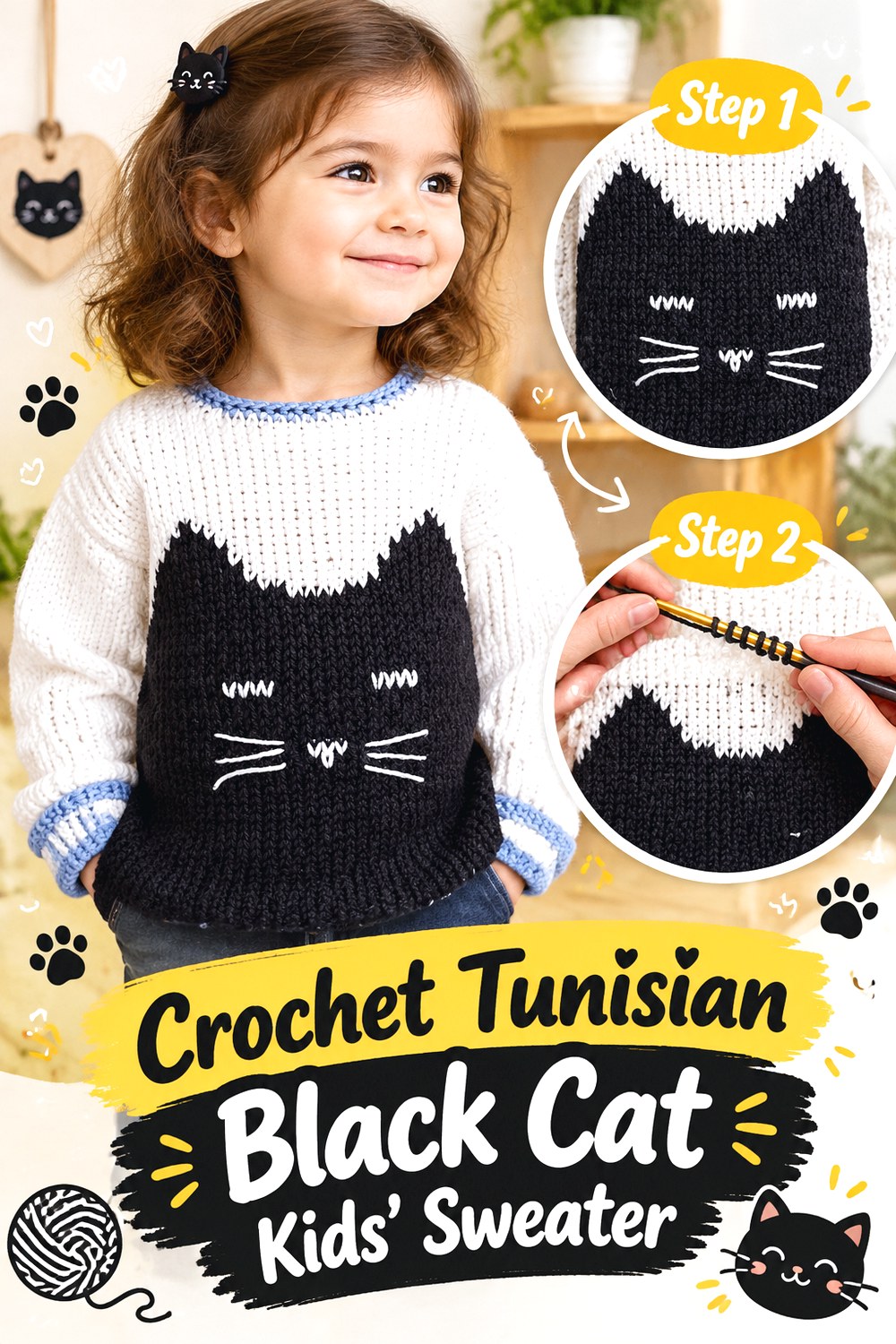
SAVEFor a child-size option, the Mew and Me Sweater uses a different surface and motif method from the conventional crochet garments in this collection. Amy Gunderson’s design for I Like Crochet is worked primarily with Tunisian crochet, with a black cat motif incorporated on the front using intarsia. The published pattern includes multiple children’s sizes rather than treating the sweater as a one-size graphic project.
This is already a genuine black-cat design, so no recoloring is required to establish the theme. The cat occupies a defined front area, making the sweater more graphic than the hooded option while still leaving the sleeves and back visually quieter.
Tunisian Fabric Gives the Motif a Different Surface
Tunisian crochet can produce a fabric appearance and structure that differ from a typical row-by-row crochet sweater. That matters when choosing this design specifically for the cat graphic: changing the underlying technique would also change the visual grid that supports the motif. Readers unfamiliar with Tunisian work should review that part of the source before buying yarn solely for the picture.
Children’s Fit Deserves Its Own Check
The original pattern provides several child sizes, but size labels are only the starting point. Compare the intended wearer’s measurements with the source information, particularly when making the sweater ahead for a growing child. Sleeve and body length are worth checking separately; increasing only the overall width does not necessarily solve a length issue.
Keep the Face Details Readable
A black silhouette depends on its contrasting facial details to stay expressive. If you change the background or accent colors, place the candidate yarns beside the black first. Low contrast can make small features visually merge into the cat body. Any embroidery or finishing details should follow the original pattern rather than being inferred from a finished photo.
Original Tutorial and Creator Credit
Creator/Site: I Like Crochet (design by Amy Gunderson)
3. Crochet Black Cat Pocket Cardigan
 SAVE
SAVESelina Veronique’s kitty cardigan offers one of the easiest ways to make the cat detail noticeable without covering the entire garment in motifs. The design is an open cardigan assembled from a back, front panels, and sleeves, with matching cat-shaped pockets attached to the fronts. The source also uses a V-stitch fabric for the main cardigan.
The original sample uses a different palette, so making the pockets into black cats is an adaptation. A lighter cardigan body with black pockets would create a strong graphic contrast; alternatively, a darker body could keep the cats more understated if their edges and facial details remain visible.
Pockets Let the Cat Theme Stay Localized
Cat pockets make sense for someone who wants an everyday cardigan that still reads clearly as feline. The motif does not have to survive neckline shaping or stretch across a large torso graphic. Instead, the visual success depends on pocket placement and proportion. Before attaching them permanently, pin or temporarily position both pockets and view the cardigan hanging naturally rather than only flat on a table.
Match Pocket Scale to Cardigan Length
A pocket that looks balanced on one garment length may feel oversized or unusually low after length adjustments. If you alter the cardigan body, reevaluate pocket position against the finished front panels. Functional use matters too: placing a decorative pocket solely for visual symmetry can make it less convenient for hands or small belongings.
Contrast Can Stay Sophisticated
Black cat pockets do not require a Halloween palette. Cream, oatmeal, soft gray, muted pink, denim blue, or another clearly contrasting background can keep the cats readable while making the cardigan suitable beyond seasonal styling. Whatever colors you choose, verify that any yarn substitution still produces fabric compatible with the source gauge and intended drape.
Original Tutorial and Creator Credit
Creator/Site: Selina Veronique
4. Crochet Oversized Black Cat Sweater Dress
 SAVE
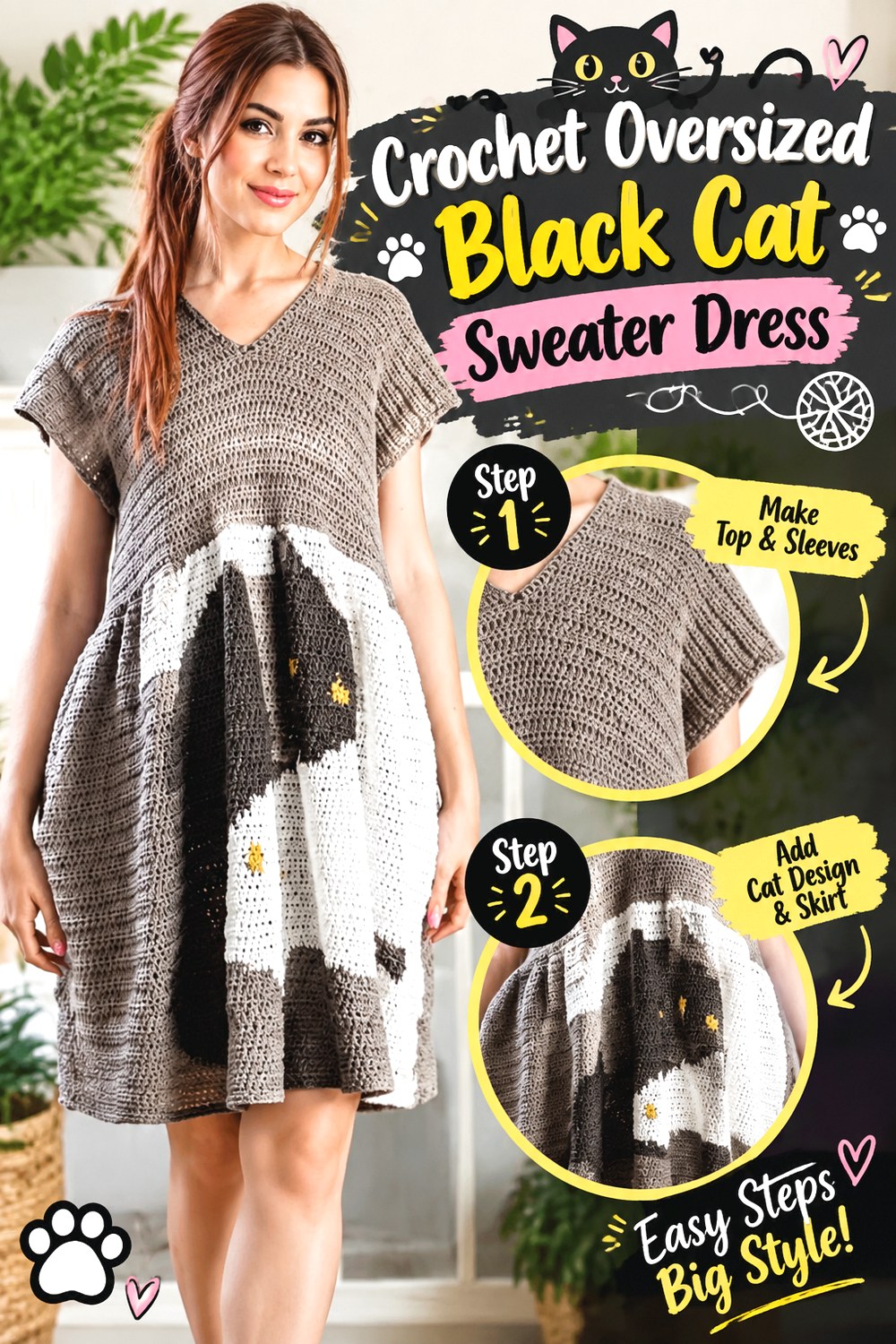
SAVEA sweater dress gives a large cat motif much more vertical room than a cropped pullover. Loops Only Crochet’s Meow Dress is an oversized crochet dress with a prominent intarsia cat motif and substantial pockets. The video tutorial demonstrates one size, while the creator notes that a separately available written pattern covers a broader size range.
A black-cat interpretation would recolor the feline motif rather than claim that the source garment already uses that exact palette. This format suits someone who wants the cat to dominate the front of the garment and prefers a longer silhouette that can function as a statement piece rather than a conventional hip-length sweater.
Dress Length Gives the Graphic More Breathing Room
Extra garment length can make a large vertical motif feel intentional instead of crowded between the hem and neckline. However, it also changes where the cat lands on the body. If adjusting length, decide whether you want to move the entire graphic, extend plain fabric around it, or preserve the source placement. Avoid altering a chart by guesswork when the creator provides the definitive construction information.
Pockets Add Weight as Well as Function
Large pockets are useful on a sweater dress, but their contents and the pocket fabric itself add weight to the front. A very soft or stretchy yarn substitution may behave differently once the garment is worn. If pocket sagging would bother you, assess the swatch’s recovery and the source fabric before committing to a significantly heavier or looser yarn.
Check the Tutorial’s Size Scope Before Adapting
The video itself is presented for a specific size, while the creator directs other sizes to the written pattern. If your measurements fall outside the demonstrated version, review the correct source rather than trying to scale the dress simply by adding stitches. Intarsia placement, pocket position, width, and length all need to remain coordinated.
Original Tutorial and Creator Credit
Creator: Loops Only Crochet
5. Crochet Balloon Sleeve Black Cat Stitch Cardigan
 SAVE
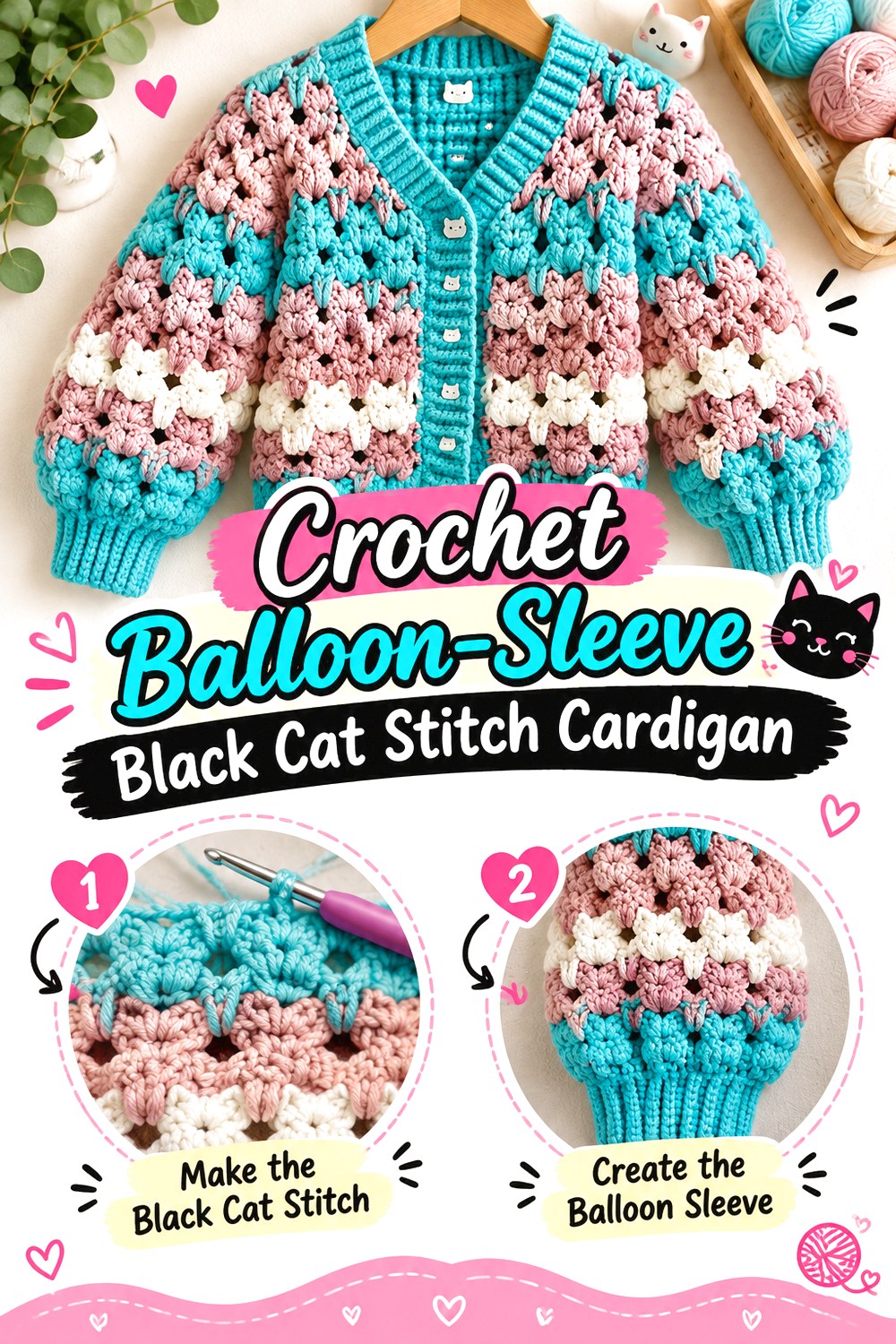
SAVEInstead of drawing one cat with colorwork, this cardigan uses cat stitch to repeat feline shapes through the fabric. Its Isa Morgan’s tutorial explains the cat-stitch fabric and builds it into an open cardigan composed of garment panels and finishing. The source notes rectangular sleeves that create a fuller, balloon-like result rather than closely shaped sleeves.
The original color treatment is not an all-black-cat palette. For this adaptation, black can become the color that defines the cat portions of the repeat, paired with a sufficiently contrasting neighboring shade. This route works well for readers who prefer an allover motif rather than one central picture.
Striping Controls Whether the Cats Read Clearly
Cat stitch depends heavily on the relationship between adjacent colors. If black is used for the cat shapes, another nearly black shade can reduce their visibility. Make a small practice section using the intended colors and view it from several feet away. The best combination is not necessarily the highest-contrast one aesthetically, but the cats should remain recognizable at the distance you expect the cardigan to be seen.
Rectangular Sleeves Favor Straightforward Length Changes
A rectangular sleeve construction can make length planning easier to visualize than heavily shaped pieces, although width, cuff treatment, and armhole compatibility still matter. Before lengthening sleeves, consider the intended balloon effect. Extra fabric can increase bunching and weight, particularly if the substituted yarn is heavier than the source material.
Sleeve Volume Should Balance the Body
Full sleeves create a different silhouette from a slim cardigan, so judge the finished look as a whole. A dense black-cat repeat can already make the fabric visually busy; large sleeves add another strong design element. If you prefer a calmer result, reduce the number of competing colors rather than trying to remove structural features without understanding the original construction.
Original Tutorial and Creator Credit
Creator/Site: Its Isa Morgan
6. Crochet Long Black Cat Colorwork Pullover
 SAVE
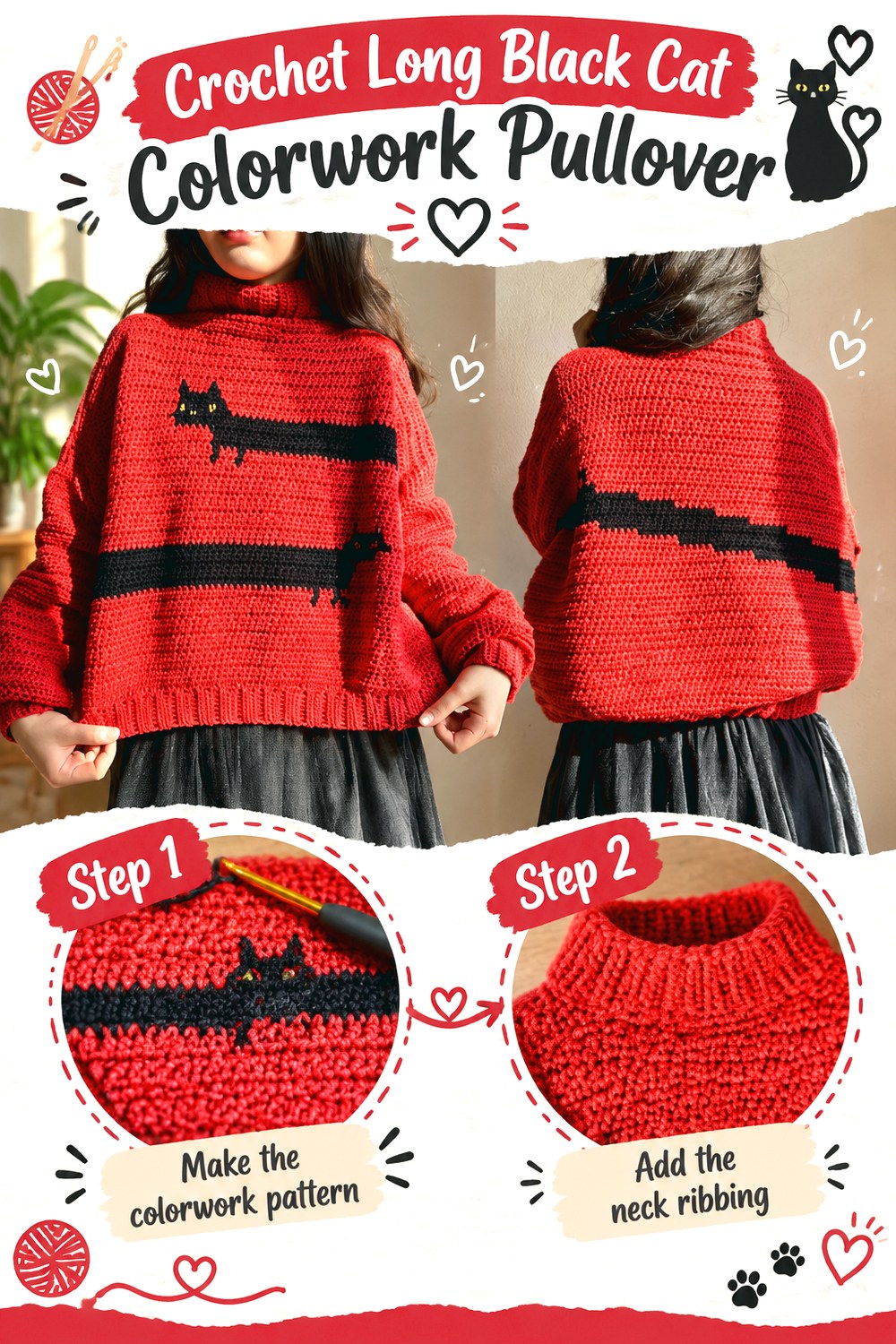
SAVEAutumn Olive Crochet’s long-cat colorwork graphic offers a very different visual direction: an elongated cat that can run prominently across a wearable instead of repeating in small motifs. The designer explicitly suggests using the graphic on projects including sweaters and cardigans.
This source is a colorwork graphic rather than a complete sweater pattern, so the idea requires a compatible pullover base. That limitation is important. A black version can make the elongated cat especially graphic against a light or saturated background, but the final garment sizing, neckline, sleeves, and fit must come from a separate legitimate sweater construction you understand and have permission to use.
Treat the Graphic and Sweater as Separate Systems
A reusable motif does not automatically fit every pullover. First identify the usable stitch area on the sweater front or back; then determine whether the graphic can fit without colliding with shaping. If it does not, choose another base rather than compressing the cat unpredictably. Scaling colorwork changes both width and height, so random partial reductions can distort the silhouette.
Scale the Long Cat Before You Commit
The elongated shape is the point of this graphic, which means its proportions deserve protection. Make a paper or digital mock-up of the approximate finished motif footprint using your actual gauge. This is not a substitute for the creator’s chart; it is simply a placement check that helps determine whether the selected sweater base offers enough uninterrupted space.
Avoid Placing Key Features Across Seams
A side seam, shoulder transition, or neckline can interrupt the face or another recognizable part of a graphic. If you deliberately wrap the motif around the body, decide which sections can tolerate that interruption. For the clearest black-cat statement, keep the face and other identity-defining details on an uninterrupted area whenever the sweater construction permits.
Original Tutorial and Creator Credit
Creator/Site: autumn olive crochet
7. Crochet Black Cat Granny Square Cardigan
 SAVE
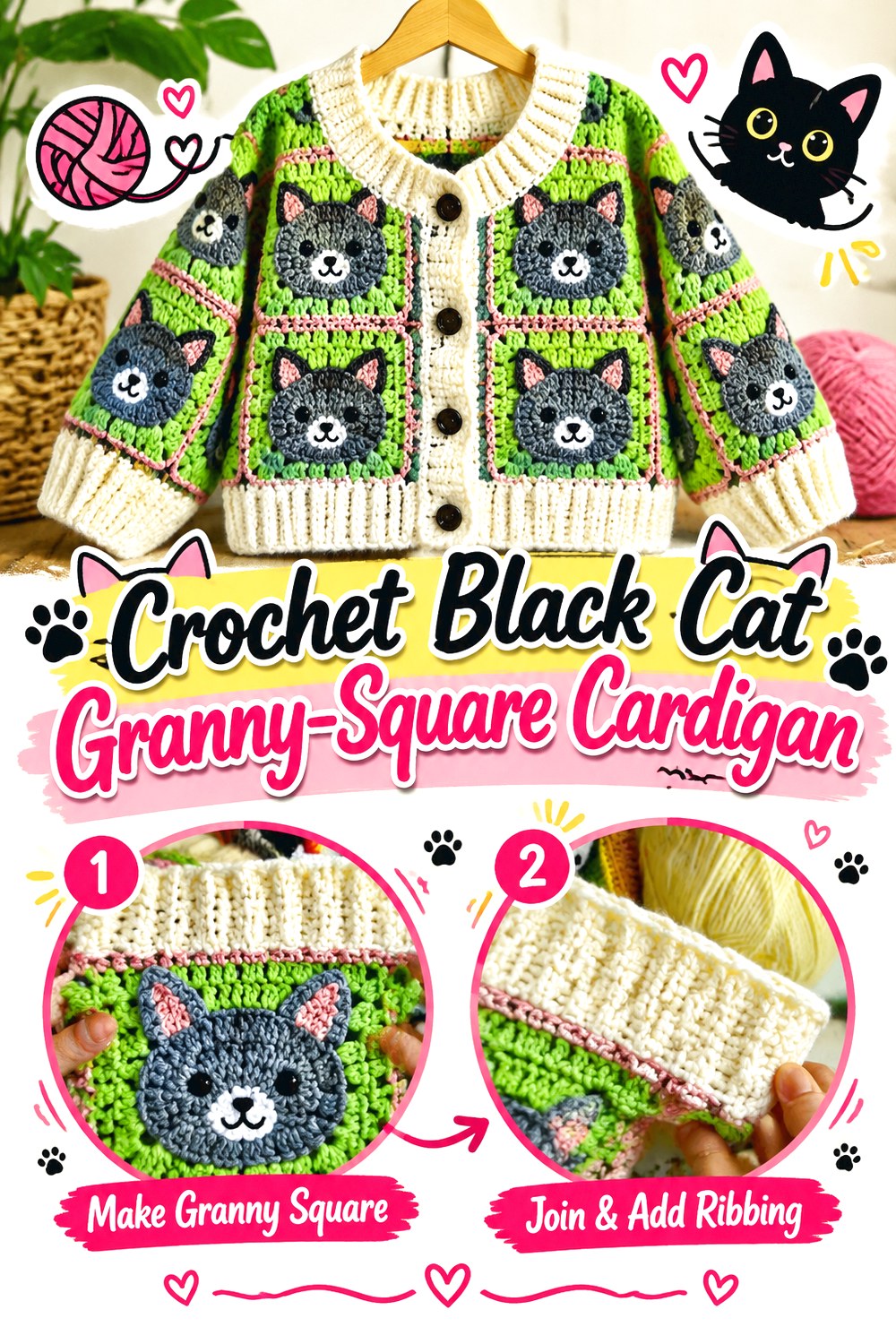
SAVEA granny-square cardigan changes the design problem from placing one continuous image to arranging modular blocks. Kira Goode’s tutorial teaches an animal granny-square cardigan format and points viewers to animal-square resources rather than presenting the garment as an exclusively black-cat design.
For this idea, the black-cat treatment is an adaptation: use compatible cat squares from a legitimate original pattern or motif source and repeat or mix them within the cardigan framework. This format can make each cat feel like a framed illustration and gives more freedom over where the feline blocks appear, while still requiring consistent square dimensions for a stable garment layout.
Square Size Becomes the Sizing Unit
In modular garments, individual square dimensions affect the final body width, length, and sleeve scale. That makes blocking and measurement important before joining. If several cat-square designs are involved, finish and measure sample blocks first. A collection of attractive motifs can still create an awkward cardigan if the modules do not reach compatible dimensions.
Standardize Motifs Before Assembly
Different cat motifs may use different stitch textures, borders, or colorwork density. Even when the outer dimensions match, one square may feel much firmer than another. Arrange the blocked squares on a flat surface and compare both size and fabric behavior. Concentrating several stiff motifs in one area can affect how the cardigan hangs.
Keep One Palette From Looking Repetitive
A black-cat theme does not require thirteen identical black cats on identical backgrounds. You can preserve the black cat as the unifying element while varying background shades, poses, borders, or neighboring non-cat squares. Repeating a limited background palette across the garment helps the modular design feel intentional instead of like unrelated samples joined together.
Original Tutorial and Creator Credit
Creator: Kira Goode
8. Crochet Retro Black Catghan Pullover
 SAVE
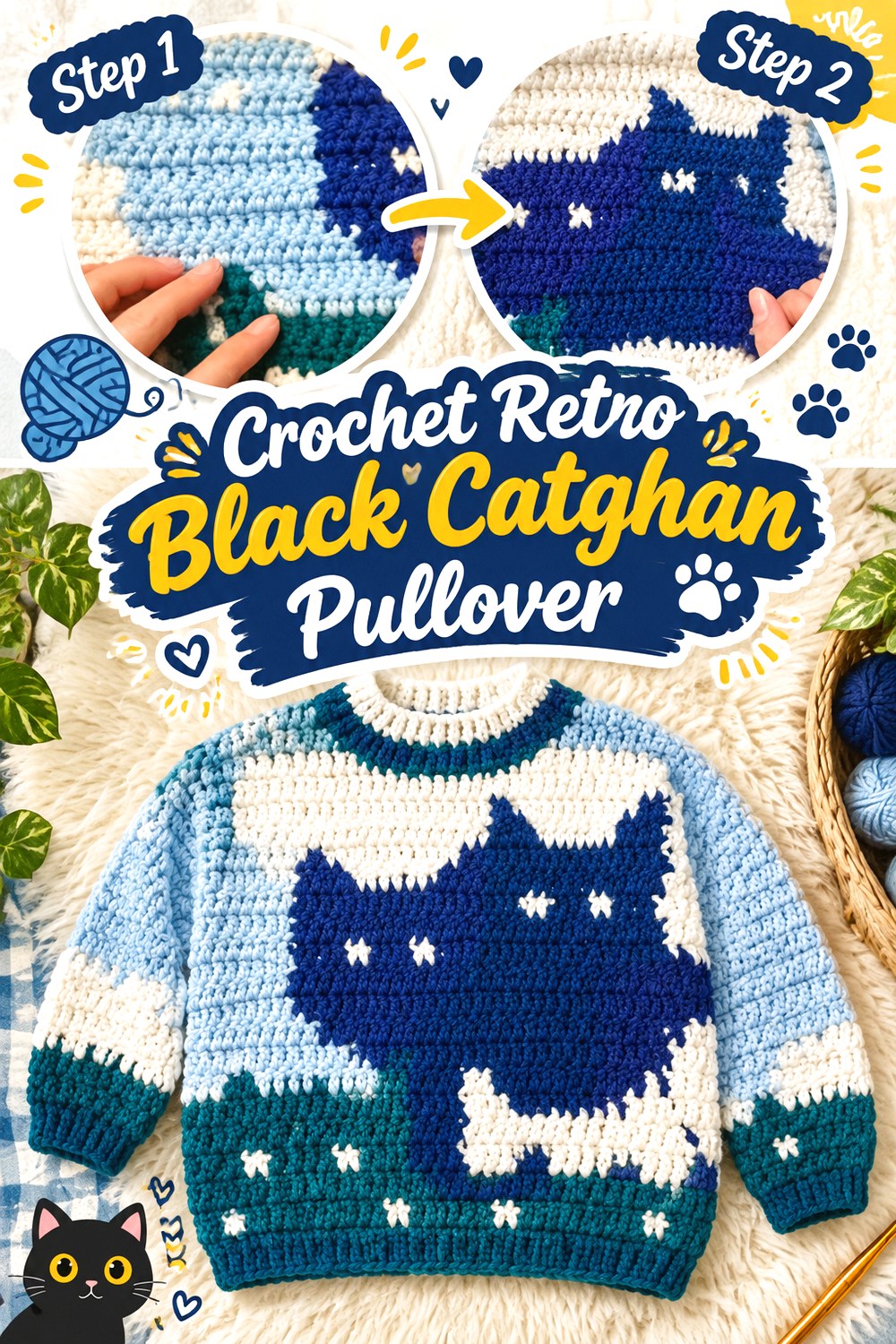
SAVEFor maximum feline impact, the vintage catghan sweater puts large cat blocks across the garment rather than using tiny accents. VivCrochets explains that the sweater is an adaptation of Sandra Miller Maxfield’s cat afghan design and credits that original blanket source. The video demonstrates how the cat imagery is translated into a wearable and notes that the many color changes add complexity.
A black-cat version could standardize the cats in black while changing their backgrounds or small details for contrast. The result would be more graphic and retro than the cat-stitch options, making this a strong choice when the feline imagery should dominate the sweater.
Large Cat Blocks Reward Strong Background Contrast
A big black silhouette needs enough tonal separation from the surrounding panel to remain readable. Test several background yarns beside the black before deciding. Pale shades are an obvious option, but saturated colors can also work when their value differs enough. The eyes and other small details should remain distinguishable from both cat and background.
Color Changes Can Tighten the Fabric
Frequent color changes can influence tension, particularly for crocheters who pull carried or joined yarn more firmly than their normal stitches. Compare the width of a colorwork sample with plain fabric made at the same nominal gauge. If the motif section contracts, solve the tension problem before making a full front panel rather than expecting blocking to correct a major discrepancy.
Plan the Inside Before Final Seaming
Graphic colorwork can leave more yarn management and finishing work than a single-color sweater. The creator specifically calls attention to the large number of color changes in this project. Think about how you prefer to handle ends and floats while working so the inside remains comfortable and does not become an afterthought once the panels are ready to assemble.
Original Tutorial and Creator Credit
Creator: VivCrochets
9. Crochet Patchwork Black Cat Halloween Cardigan
 SAVE
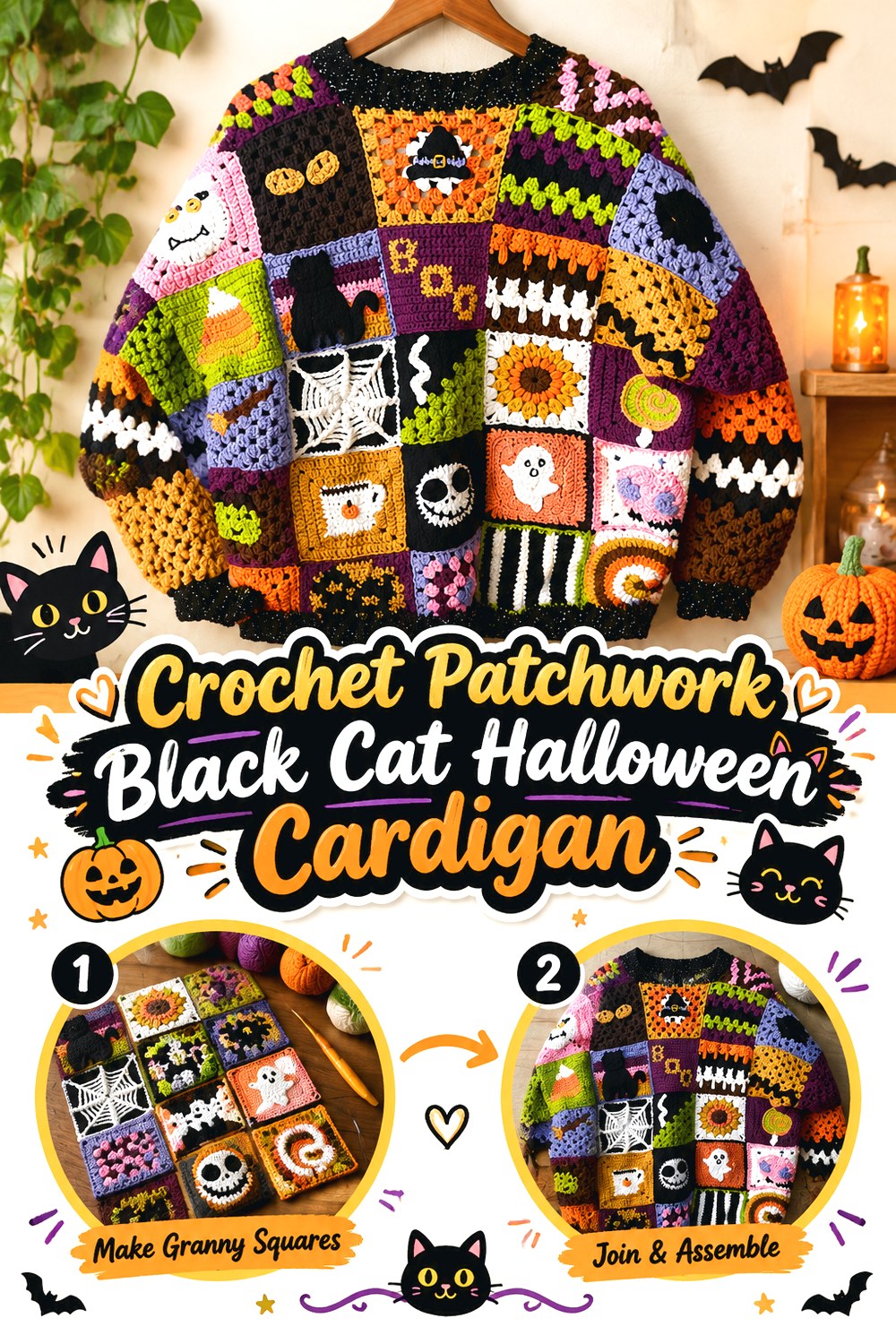
SAVEWooly Mama Crochet’s Halloween cardigan uses a deliberately mixed patchwork approach. The creator explains that the garment is assembled from many granny squares, with granny-stitch sleeves and ribbed finishing. Her source list includes both a Cat Outline square and Small Cats among numerous Halloween motifs, and she clearly credits outside designers where individual square patterns came from other sources.
For a stronger black-cat version, make cat squares the recurring visual anchor while retaining a smaller selection of moons, pumpkins, checks, or other seasonal blocks. The attraction here is not one giant cat but the way black-cat imagery can be distributed throughout a collage-like cardigan.
Patchwork Gives Each Cat Motif Breathing Room
A framed square naturally separates one motif from the next, so the black cats do not need to compete inside a continuous allover fabric. Use placement strategically: one strong cat on each front panel can establish symmetry, while additional cats across the back create interest without putting every square on the same theme.
Mixed Squares Must Finish to Compatible Size
The creator herself notes that squares coming from different sources may require adjustment and that blocking is important. That is the core technical issue with a mixed-motif cardigan. Do not join blocks simply because their stated dimensions sound similar. Finish, block, and compare the actual pieces first so seams are not forced to compensate for inconsistent sizes.
Seasonal Motifs Can Be Edited Down
A black cat does not have to make the cardigan Halloween-only. If you want longer seasonal use, pair the cats with moons, stars, checks, florals, or plain squares instead of concentrating on overtly Halloween imagery. Keep the cardigan construction source separate from any third-party motif patterns and follow the relevant original designers for those squares.
Original Tutorial and Creator Credit
Creator/Site: Wooly Mama Crochet
10. Crochet Raglan Black Cat Stitch Sweater
 SAVE
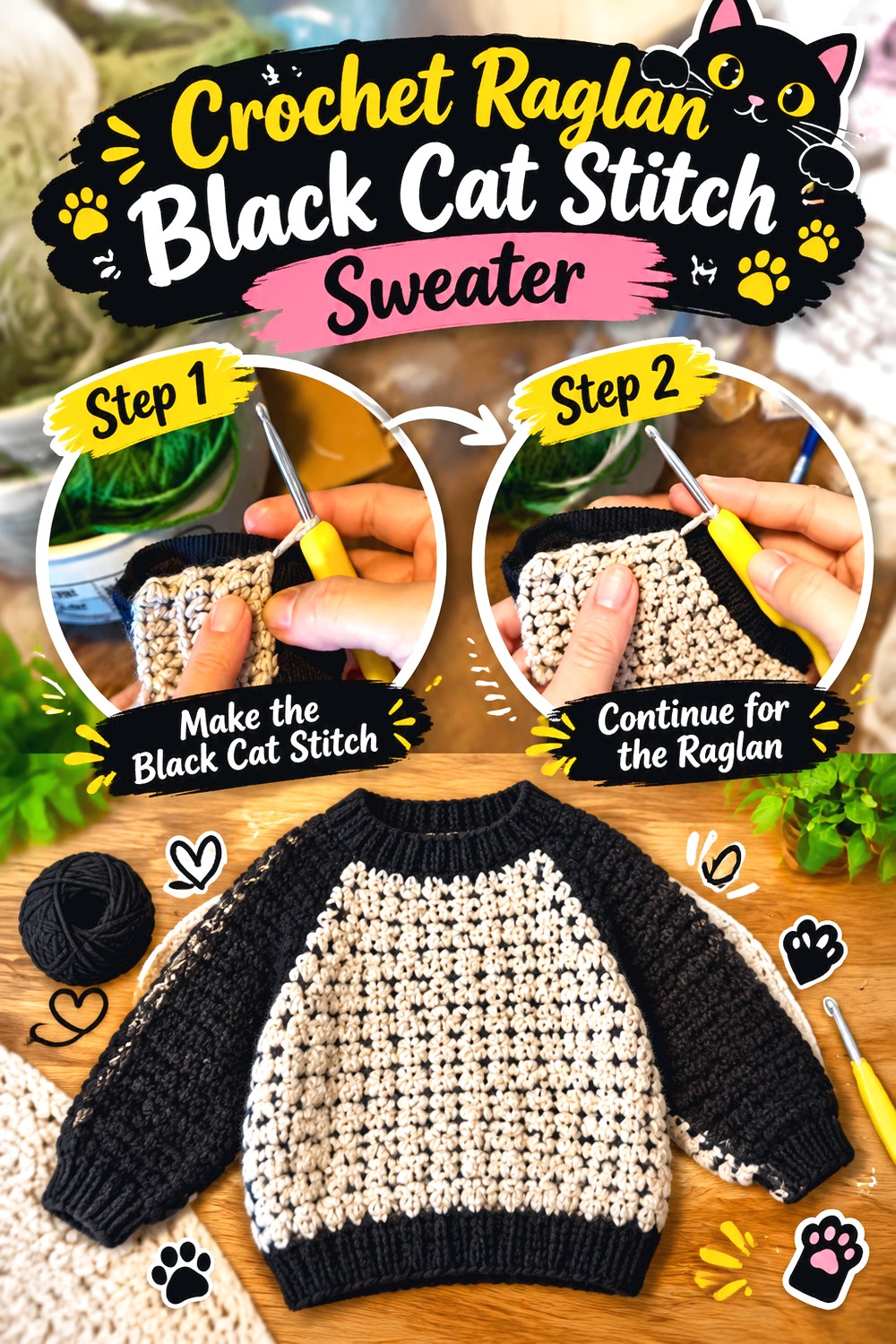
SAVEChez Yarn’s cat-stitch sweater changes both the opening and construction style seen in the cat-stitch cardigans. This is a raglan-style pullover taught across a three-part video series, and the creator describes the concept as customizable to different sizes.
For a black-cat version, use black strategically within the repeating cat stitch while maintaining enough contrast to see each motif. The raglan format makes this especially interesting for someone who prefers a closed pullover over a cardigan and wants the cat texture to continue through a garment whose upper body is shaped differently from simple rectangular front and back panels.
Raglan Construction Changes Motif Direction
A repeating motif has to coexist with increases and changing stitch counts around the upper body. That means the transition area deserves more attention than on a plain rectangular panel. Follow the creator’s method rather than assuming that a cat-stitch repeat can simply continue unchanged through every shaping point.
Customization Still Needs Measurement Checkpoints
A tutorial described as customizable is not permission to estimate the fit by eye. Compare the evolving garment with the intended wearer’s measurements and the creator’s guidance. Raglan depth, chest room, sleeve circumference, and body length interact; changing one area can affect where other sections begin or how the sweater sits when worn.
Preview All Tutorial Parts Before Starting
Because the source is a multi-part tutorial, look through the full series before buying yarn or altering the palette. The second video explicitly identifies the project as part of a three-part raglan cat-stitch tutorial. Previewing the sequence makes it easier to understand where color choices, fitting decisions, and later finishing will matter.
Original Tutorial and Creator Credit
Creator: Chez Yarn
11. Crochet Bold Black Cat Graphic Sweater
 SAVE
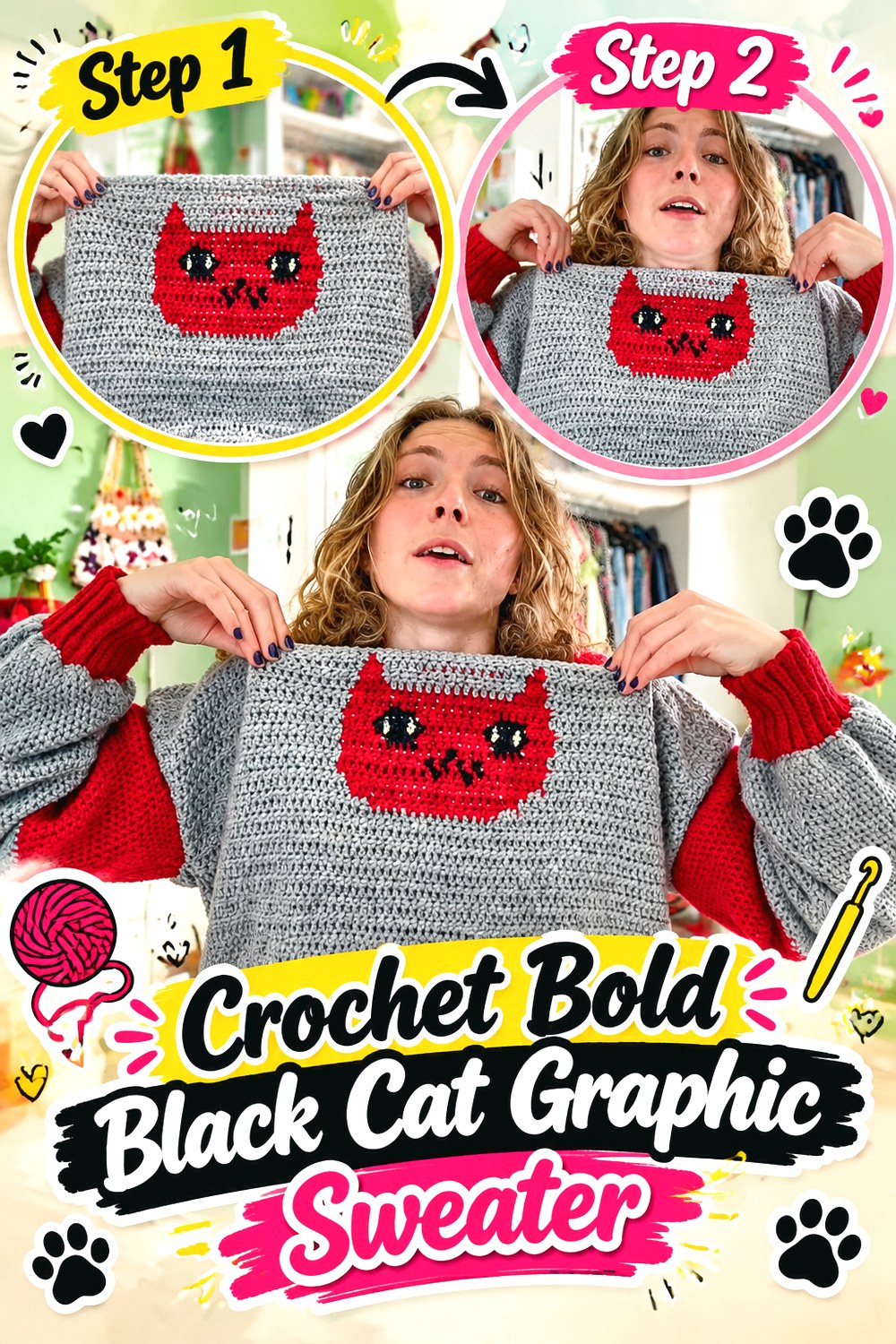
SAVECandywyfe’s video centers on crocheting a recognizable cat-graphic sweater and shares the creator’s own graph for the feline image. The source is more process-led than a fully graded garment pattern, so it is best approached by readers who are comfortable making fit decisions rather than expecting a complete size range supplied in the video.
For this roundup, turning the cat itself black is an intentional palette adaptation. The value of this idea is its restraint: one large graphic can carry the entire black-cat theme, leaving the rest of the sweater comparatively simple and allowing the cat to function almost like artwork on the front.
A Single Graphic Keeps the Theme Focused
One large cat creates a different mood from repeated cat stitch or patchwork. Because there are fewer competing motifs, small decisions such as cat height, horizontal centering, and background color become more noticeable. Mock up the motif footprint against the intended front-panel dimensions before starting the graphic area.
Process-Led Sources Need Extra Planning
A making video can be useful without functioning like a fully graded commercial pattern. Before choosing this project, determine which fit information the creator actually supplies and which garment decisions you will need to make independently. Do not invent scaling rules from a single finished example; use a sweater base or sizing method you can verify.
Keep the Central Cat Away From Neck Shaping
A central motif loses impact if ears, face, or other defining edges collide awkwardly with the neckline. When planning a large cat, identify the final neck depth and shoulder area first. The goal is not merely to fit the chart onto the fabric but to preserve a visually complete cat after the sweater becomes three-dimensional.
Original Tutorial and Creator Credit
Creator: candywyfe
12. Crochet Shaped Sleeve Black Cat Stitch Cardigan
 SAVE
SAVECarley’s cat-stitch cardigan uses a conventional seamed-panel approach but differs from the balloon-sleeve version because the tutorial explicitly includes sleeve increases. The garment consists of a back panel, two front panels, and two sleeves that are sewn together, with the video also covering measurements, color changes, front panels, sleeve shaping, and assembly.
A black-cat adaptation can use black as the defining cat color against contrasting stripes. Choose this version when you like repeated cat fabric but prefer shaped sleeves and a straightforward open-cardigan framework over a raglan pullover or intentionally rectangular balloon sleeves.
Seamed Panels Make Fit Changes Visible Early
Separate panels offer useful checkpoints. Before seaming, you can compare the back and fronts for consistent length and verify whether the combined width aligns with the intended fit. That does not mean every dimension can be altered independently; armhole depth, sleeve cap area, and front proportions still need to remain compatible.
Cat-Stitch Repeats Need Consistent Color Rhythm
Repeated cats look most intentional when the color sequence is planned before the cardigan is divided into separate pieces. If every panel begins at an unrelated point in the palette, the finished garment can feel visually fragmented. Decide whether you want the stripes to align across seams or deliberately offset them, then follow that choice consistently.
Sleeve Increases Can Disturb Motif Spacing
The tutorial includes increases within the sleeve construction. Any repeating stitch pattern becomes more demanding when the stitch count changes, because added fabric has to be integrated without creating obvious disruptions. Follow the source closely around those areas instead of extrapolating from the straight body panels.
Original Tutorial and Creator Credit
Creator: carley 🎀
13. Crochet Centered Black Cat Face Sweater
 SAVE
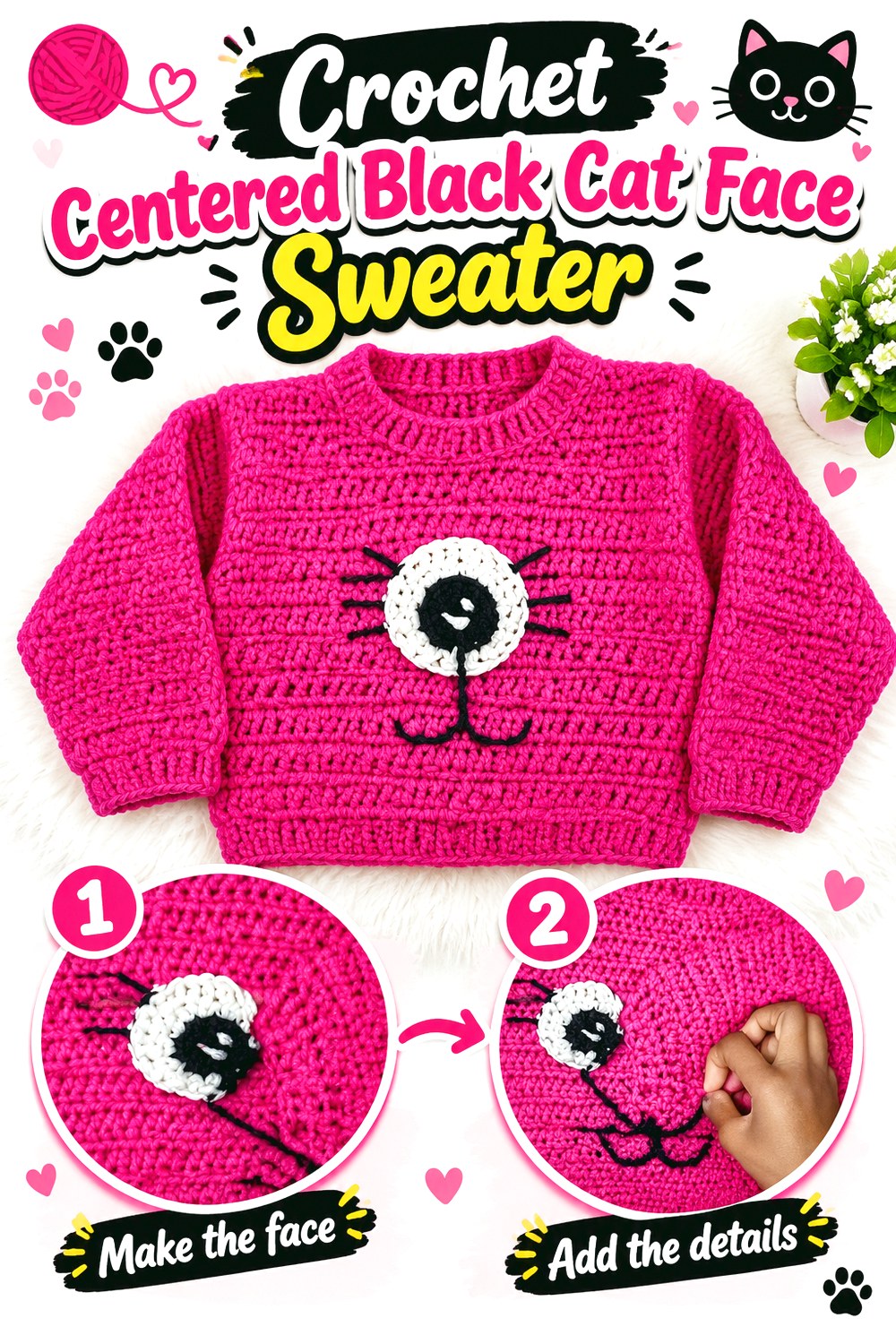
SAVEA centered cat face is a cleaner alternative to the large multi-cat catghan style. Daniela7even crochet world’s tutorial focuses specifically on making a cat-face sweater, keeping the feline identity concentrated in one main front graphic rather than distributing cats through pockets, squares, or repeated texture.
For a black-cat version, the central face can be worked as the dominant dark shape against a background that preserves its outline. This option suits a reader who wants the unmistakable appearance of a cat sweater but does not want a patchwork layout or continuous cat stitch. The single focal image also makes the final garment easier to style with otherwise simple colors.
Centered Placement Creates a Cleaner Statement
With only one main face, a small placement error is more noticeable. Check the usable front width, neckline depth, and intended sweater length before positioning the motif. Visual center and mathematical center are not always identical once a neckline is shaped, so assess the graphic in relation to the finished garment rather than only the foundation row.
Black Yarn Can Hide Facial Edges
A solid black cat head needs deliberate contrast around ears, eyes, and other small features. If the background is dark too, the outline may disappear first around pointed areas. Swatching a small color combination can reveal whether an accent needs to be lighter, brighter, or simply larger to remain visible at normal viewing distance.
Measure the Graphic Zone, Not Just the Bust
Bust or chest width tells you whether the sweater may fit, but it does not tell you how much uninterrupted space is available for a centered picture. Neck shaping and side construction reduce the safe graphic area. Establish those boundaries before choosing the final cat scale, especially if adapting the visual to a different garment size.
Original Tutorial and Creator Credit
Creator: Daniela7even crochet world
Which Crochet Black Cat Sweater Style Should You Choose?
For the most subtle everyday cat detail, the pocket cardigan keeps the motif contained, while the cat-ear hooded sweater uses silhouette instead of a picture. The centered face and long-cat options sit in the middle: both create one strong focal graphic without filling the whole garment with cats.
Choose the catghan or sweater dress when you want a larger statement and are comfortable managing more colorwork. The three cat-stitch designs suit readers who want feline shapes repeated through the fabric, with a choice between balloon-sleeve cardigan, shaped-sleeve cardigan, and raglan pullover construction. Modular crocheters may prefer the granny-square or Halloween patchwork cardigans because individual cat blocks can be positioned before final assembly. The Tunisian children’s sweater is the clearest dedicated option here for a younger wearer.
Conclusion
These 13 crochet black cat sweater ideas show how much the same theme can change when the cat moves from a pocket to a hood, repeated stitch, modular square, Tunisian motif, or full-scale colorwork image. For a quieter garment, start with localized pockets or one centered face. For maximum visual impact, consider the catghan, long graphic, or dress-length design. Cat stitch offers another route when you want the feline shape embedded throughout the fabric.
Whichever direction you choose, check fit, contrast, motif placement, and yarn behavior before making major adaptations. Use the original tutorials near the end of your planning process for their exact construction, sizing, colorwork, and finishing details.
Frequently Asked Questions
Can I turn a cat sweater tutorial into a black-cat sweater if the original cat is another color?
Usually, color is one of the safer visual adaptations when the pattern does not require a specific shade for construction. However, black can change how well a motif reads against its background. Preserve enough contrast around the silhouette and important facial details, and verify that you are changing only the palette rather than assuming unrelated construction or sizing changes.
What background colors make a black crochet cat motif easiest to see?
A background with clear light-dark separation will generally make a black cat easiest to recognize. Cream and pale neutrals are obvious choices, but brighter or lighter saturated shades can also create good separation. Rather than relying on color names, compare the actual yarns together in normal lighting. Two shades that seem different in the skein can still merge visually once crocheted.
Can I substitute yarn in a crochet black cat sweater?
Possibly, but match more than the printed yarn-weight category. Gauge, fiber, elasticity, texture, and fabric density can influence both fit and the clarity of a colorwork cat. A heavier substitution may add unwanted weight to long sweaters or pockets, while a very fuzzy yarn can soften small graphic details. Make a gauge swatch and follow any substitution advice given by the original creator.
How do I resize a cat graphic without distorting it?
Avoid changing only the width or only the height unless the designer specifically explains how. Graph-based motifs depend on proportion, and altering one axis can stretch the cat visually. First determine whether your garment has enough space for the original motif. If it does not, look for creator-provided resizing guidance or choose a legitimately designed smaller graphic rather than deleting arbitrary sections.
Is cat stitch the same as tapestry or intarsia crochet?
No. In these projects, cat stitch creates a repeated feline effect as part of the stitch fabric, while tapestry or intarsia-style approaches are used to build larger pictorial areas through planned color changes. That difference affects the finished look as well as planning. A repeated stitch emphasizes texture and rhythm; a graphic colorwork cat behaves more like a picture placed within the garment.
How should I care for a black cat sweater with pockets, embroidery, or several yarn colors?
There is no universal washing method for these sweaters. Care depends on the fiber, yarn construction, embellishments, and techniques used in the specific garment. Follow the yarn label and any instructions supplied by the original designer. When several materials are combined, use the requirements of the most care-sensitive component rather than assuming a plain crochet sweater’s usual routine will be appropriate.