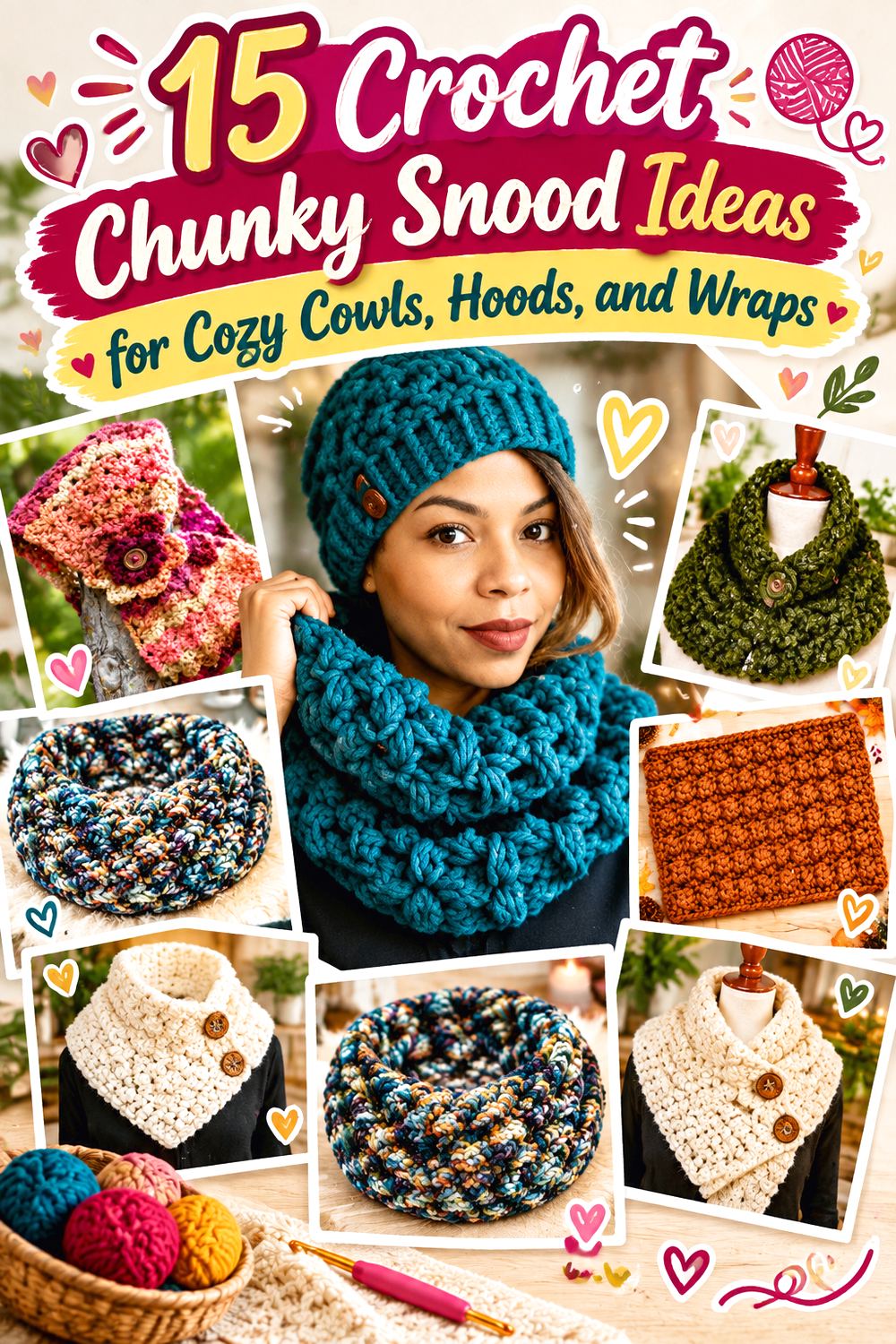
15 Crochet Chunky Snood Ideas for Cozy Cowls, Hoods, and Wraps
A chunky snood can be much more than a thick tube around the neck. Depending on its height, circumference, stitch texture, closure, and construction, it can sit close like a neck warmer, drape like an infinity scarf, cross at the front, fasten with buttons, or pull up to function as a hood.
The 15 projects below deliberately cover that wider range. Some emphasize compact warmth and strong texture, while others provide extra volume for double wrapping or head coverage. You will also find different approaches to getting a substantial fabric, including super-bulky yarn, multiple strands held together, airy stitches that reduce stiffness, and deliberate ribbing. Each idea is paired with an original tutorial so you can compare the finished form here, then visit the creator for exact construction details.
Quick List
- Crochet Horizontal-Rib Chunky Snood Cowl
- Crochet Oversized Mesh Hoodable Snood
- Crochet Buttoned Hood-and-Cowl Snood
- Crochet Double-Wrap Jumbo Puff Snood
- Crochet Alternating-Texture Chunky Cowl Snood
- Crochet Front-Crossover Chunky Snood
- Crochet Button-Band Chunky Neck Snood
- Crochet Berry-Texture Compact Snood
- Crochet Two-Strand Plush Cowl Snood
- Crochet Crunch-Stitch Split-Seam Snood
- Crochet Woven-Texture Hooded Snood
- Crochet Diagonal Post-Stitch Chunky Snood
- Crochet Knit-Look Fireside Snood
- Crochet Open-Shell One-Skein Chunky Snood
- Crochet Marled DIY Super-Chunky Snood
Choose Chunky Yarn by Fabric Behavior, Not Just the Label
A thick yarn can make a snood substantial quickly, but yarn weight alone does not determine whether the finished fabric will feel comfortable. A dense stitch worked tightly in super-bulky yarn can become quite rigid, while a taller or more open stitch may give similarly thick yarn considerably more movement. Fiber and construction matter too: a lofty yarn can produce volume without the same weight as a dense, tightly spun alternative.
Before substituting yarn, compare more than the weight category. Consider how easily the fabric bends around the neck, whether the intended snood must stretch over the head, and whether a tall version needs enough drape to fold naturally. Multiple strands held together are another option, but they create a different fabric from a single strand of factory-spun chunky yarn. Swatching is especially useful when comfort near the face is important.
Decide Whether You Want a Cowl, Double Wrap, or True Hood
The best circumference depends on how the snood is intended to behave. A close neck cowl needs enough room to pull on comfortably without creating excessive bulk. A double-wrap design needs considerably more length so its second loop does not become restrictive. A hoodable cowl also requires enough circumference and height to travel from the shoulders over the head without forcing the fabric.
Use your intended wearing position as the fitting checkpoint rather than assuming one standard snood measurement will suit every design. For pull-on versions, check the opening against the wearer’s head before finishing. With a tall hoodable piece, also consider whether the fabric collapses attractively when worn down. Buttoned designs offer a different solution because they may allow the neck opening or overlap to be arranged after crocheting.
1. Crochet Horizontal Rib Chunky Snood Cowl
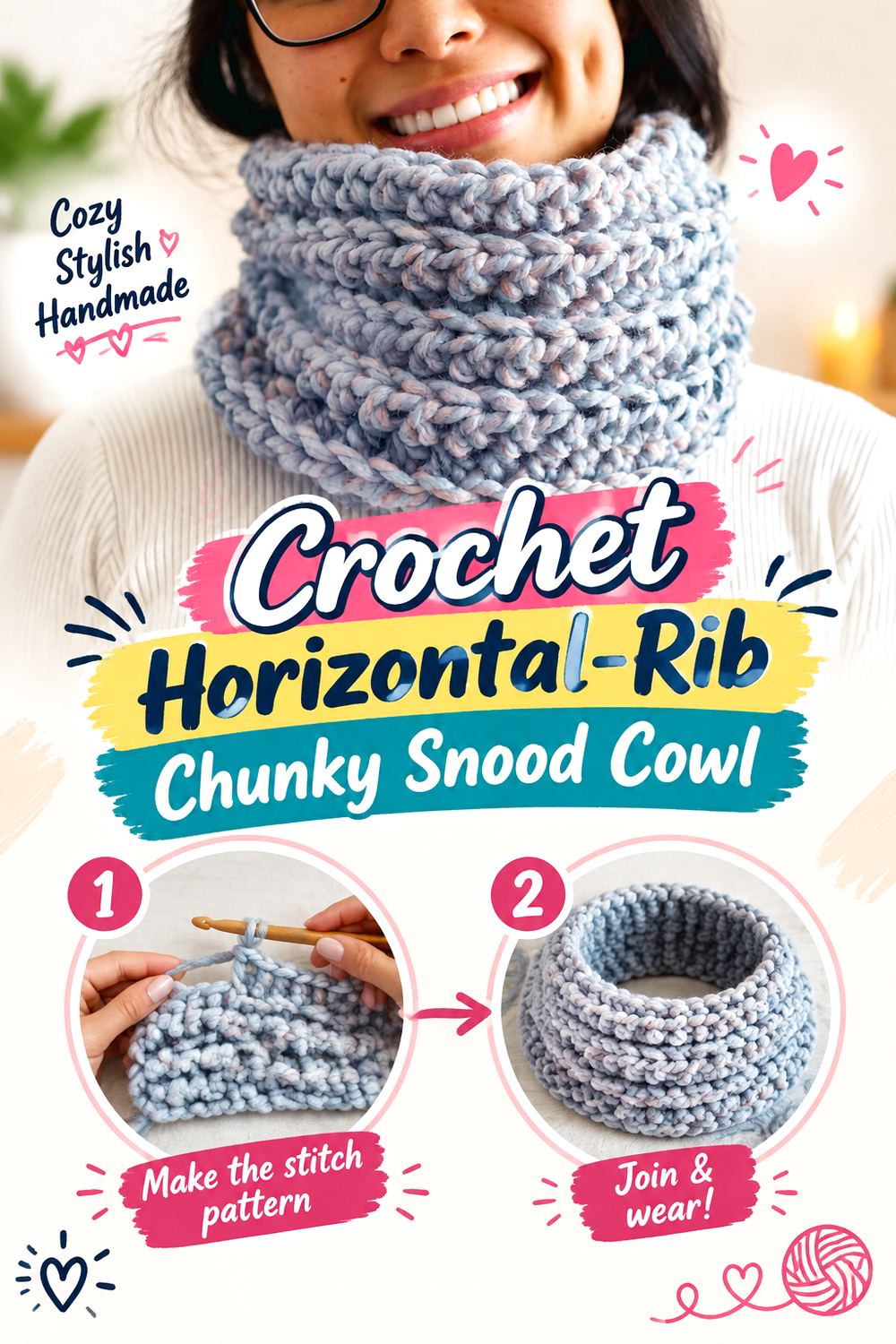
This streamlined snood keeps the emphasis on thick yarn and horizontal texture rather than extra decoration. For The Frills’ Arctic Ice Snood is worked in the round with super-chunky yarn, and the finished piece forms a straightforward pull-on neck cowl with pronounced horizontal ridging. The designer specifically chose this orientation after finding that a vertically ribbed prototype did not sit as naturally around the shoulders.
That makes the concept useful when you want a compact snood that visually wraps around the neck rather than standing upright like a rigid collar. It also separates this option from the taller hooded and double-wrap ideas later in the list.
Watch How the Lower Edge Meets the Shoulders
Thick cowls can feel comfortable at the neck yet flare awkwardly where they meet a coat or sweater. Horizontal texture encourages a different visual flow than vertical ribs, but the final result still depends on your yarn and tension. Try the snood over the outerwear you expect to use most. A slightly softer lower edge may sit more naturally than a very stiff cylinder.
Check the Pull-On Opening Early
Because there is no front closure to create extra entry space, the circumference needs to pass comfortably over the head. Test that relationship before you have invested much yarn. Changing to a thicker substitute without compensating for gauge can reduce the opening more than expected, while a looser fabric may stretch significantly during wear.
Keep Simple Fabric Intentional
A minimal snood benefits from especially clean finishing because there are few decorative elements to distract from uneven joins or loose ends. Pay attention to the round transition and weave in bulky yarn securely without creating a hard lump against the neck. With thick yarn, even small finishing inconsistencies can be visually prominent.
Original Tutorial and Creator Credit
Creator/Site: For The Frills
2. Crochet Oversized Mesh Hoodable Snood
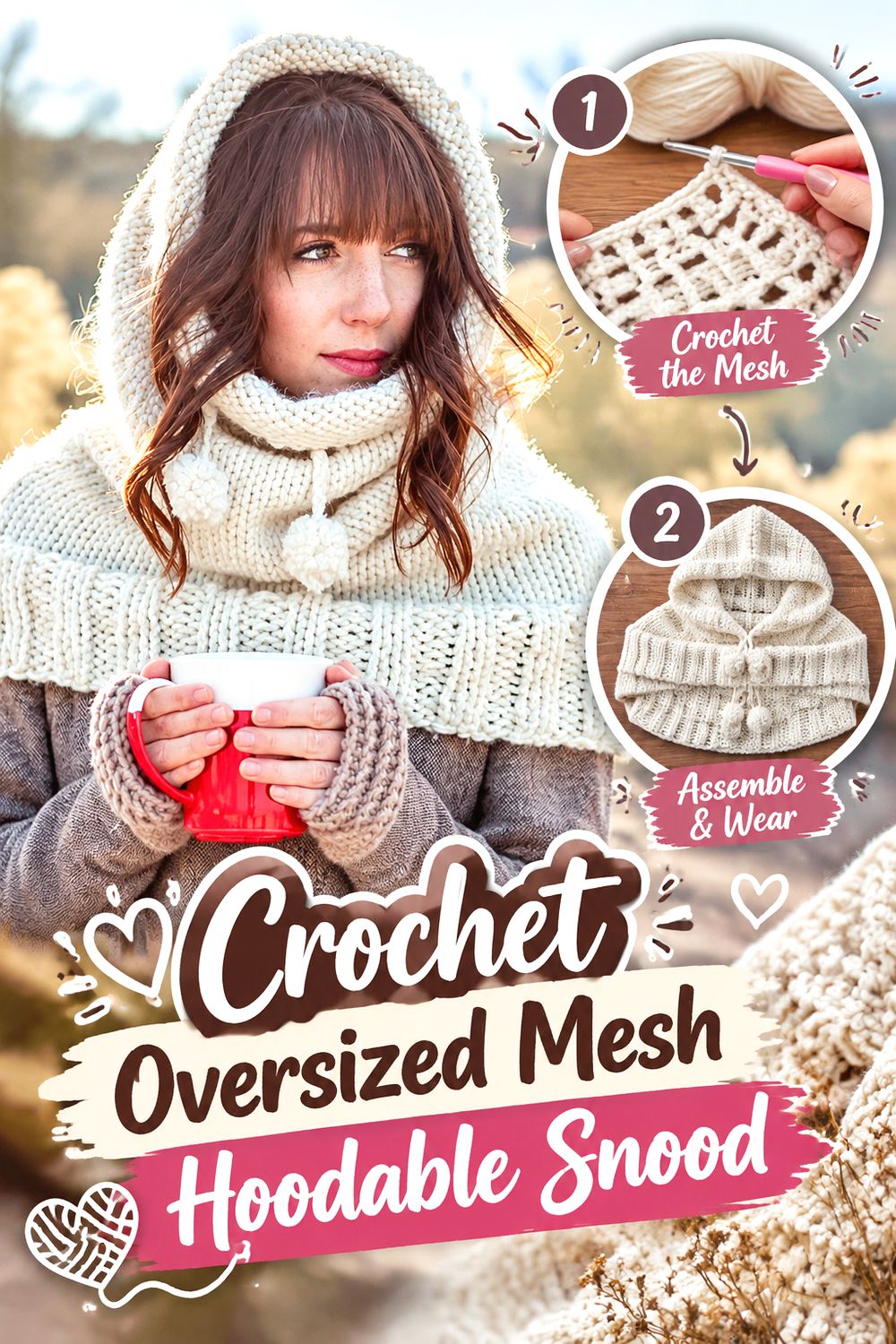
For a much looser silhouette, the Manchester Cowl from Make & Do Crew uses chunky yarn with an open, drapey texture to create an oversized neck cocoon. The finished cowl has enough scale to work as a substantial neck warmer or to be pulled upward like a hood, so it sits between an infinity-style cowl and a dedicated hooded snood.
Its more open fabric is the important contrast here. Instead of combining thick yarn with an equally dense surface, the design introduces visible spacing that allows the oversized piece to fold and drape. This is a strong direction when you like dramatic volume but do not necessarily want a solid wall of super-thick crochet around the neck.
Balance Openness Against Wind Protection
A mesh-like stitch reduces visual and physical heaviness, but the openings also make the fabric less closed than a compact ribbed cowl. Think about where the snood will actually be worn. An open structure can be comfortable for layering and indoor-to-outdoor use, while someone seeking maximum coverage in strong wind may prefer a denser option.
Give a Hoodable Snood Room to Move
A piece that must travel from shoulders to head needs more freedom than a neck-only cowl. When adapting size, check it in both positions instead of judging the fit solely around the neck. Enough circumference for head coverage is useful, but excessive width can cause the lowered cowl to bunch heavily at the front.
Let Chunky Yarn Drape Before Adding More Height
An oversized design can become progressively heavier as extra rounds are added. Before increasing the height, hold or wear the work as it will sit when finished. Additional fabric may create a deeper hood, but it can also change how the lower portion collapses around the shoulders.
Original Tutorial and Creator Credit
Creator/Site: Make & Do Crew
3. Crochet Buttoned Hood and Cowl Snood
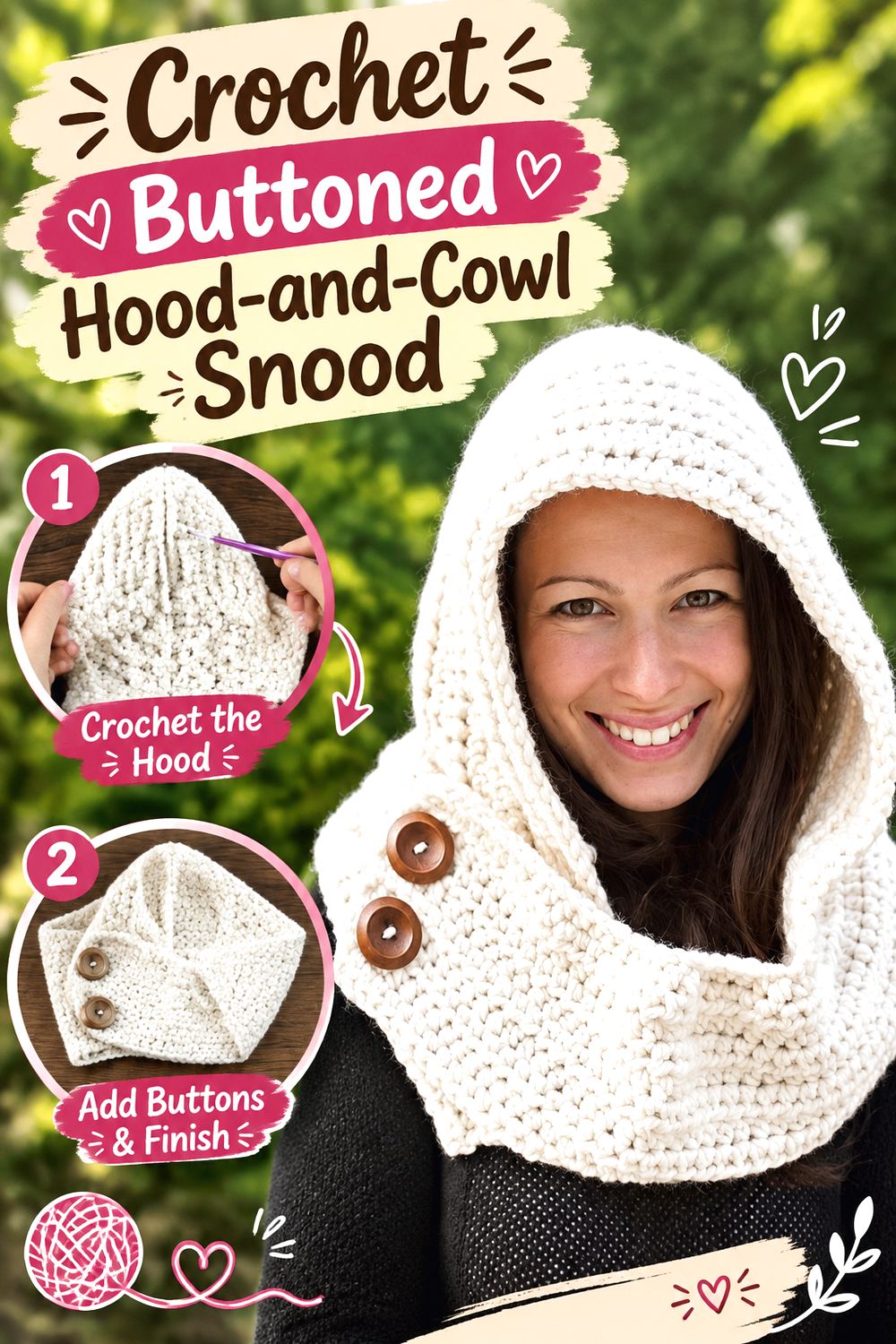
This option moves beyond a tall cowl into a clearly defined hood-and-neck construction. Repeat Crafter Me’s tutorial combines a chunky crochet hood with an extended cowl section and large button closures, giving the finished accessory more shape around the head than a simple tube pulled upward. The source shows the design in both adult and smaller proportions and emphasizes that the overall fit can be adjusted while working.
The buttons also distinguish the front from the back, which creates a more garment-like appearance than a seamless round cowl. Choose this style when reliable head coverage matters and you prefer an obvious hood silhouette instead of an oversized infinity loop.
Fit the Hood and Neck as Separate Zones
A hood that feels roomy around the head can still produce too much or too little fabric at the neckline. Treat those areas as separate fitting checkpoints. The hood should allow comfortable head movement, while the cowl section needs enough overlap to cover the front without becoming so bulky that it interferes with a coat collar.
Buttons Change Both Style and Function
Large buttons create a strong visual focal point, but placement also controls the front overlap. Before sewing them permanently, pin or temporarily position them and try the snood on. A small change in placement can alter how closely the cowl sits and how the front edge angles across the chest.
Use Extra Caution for Young Children
Buttons and other detachable embellishments can present a hazard if they come loose, especially for very young children. If making a hooded snood for a child, choose finishing and closures appropriate to the recipient and supervise as needed. The presence of a child-sized version in a pattern should not be treated as a universal safety guarantee.
Original Tutorial and Creator Credit
Creator/Site: Repeat Crafter Me
4. Crochet Double Wrap Jumbo Puff Snood
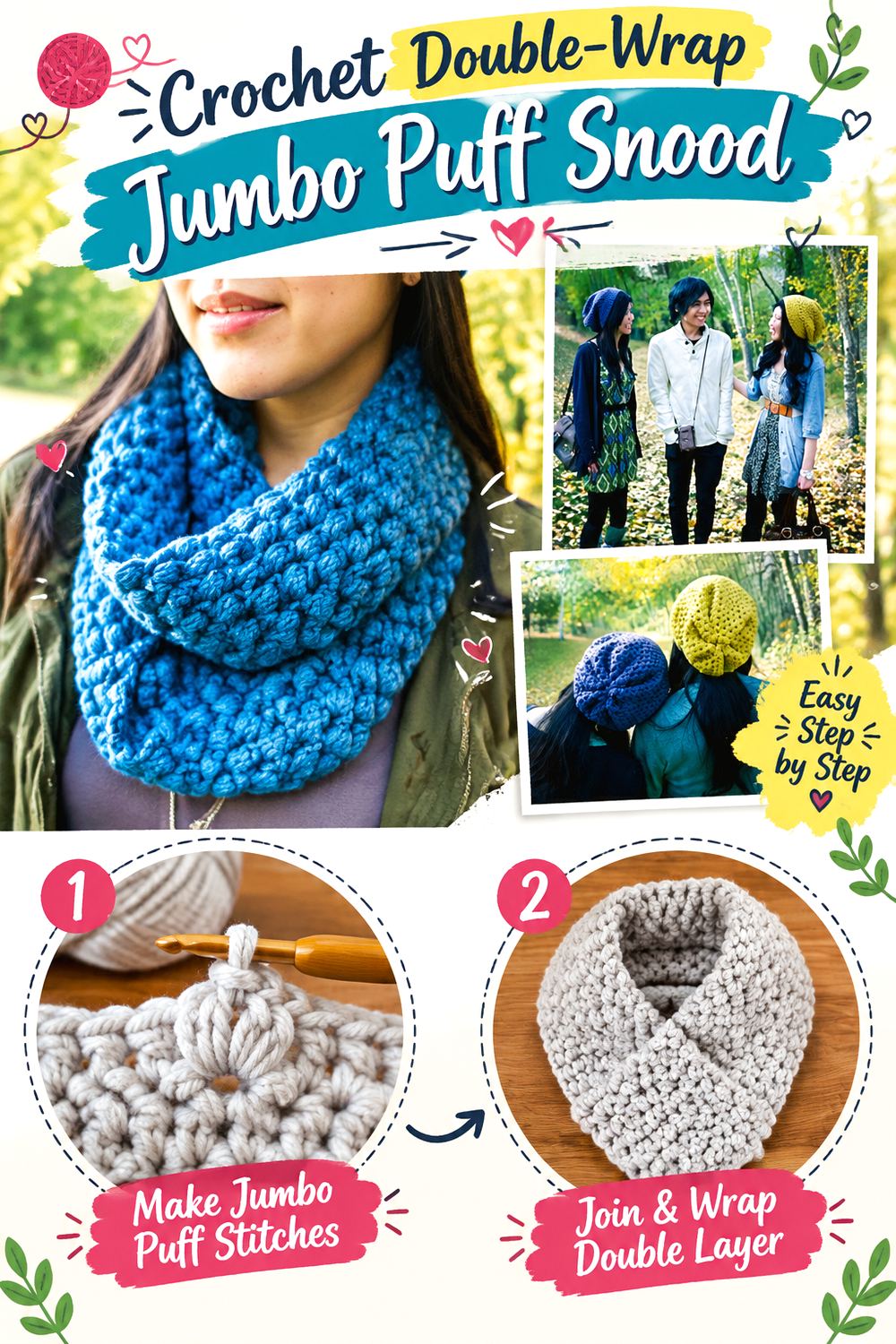
All About Ami’s Jumbo Puff Stitch Cowl takes the chunky snood idea in a softer, highly dimensional direction. It uses bulky yarn and repeated puff texture in a long circumference designed to wrap twice; the creator also demonstrates that the extra length and height allow the piece to be worn over the head as a snood.
Compared with a close cowl, this format gives you more styling flexibility and considerably more visible stitch texture. Puff stitches create rounded depth rather than straight ribs or mesh openings, making this a strong choice when the crochet surface itself should be the main feature. The trade-off is that a heavily textured, double-length piece can require more yarn and carry more bulk.
Make Sure the Second Loop Is Comfortable
A double-wrap snood can appear generously sized while laid flat yet feel tighter once one loop is crossed over the other. Evaluate the full wrapped position before deciding on final length. The fabric needs enough room for two layers without pressing uncomfortably against the throat or restricting head movement.
Consider the Weight of Dimensional Stitches
Raised stitches consume yarn and build thicker fabric than many flatter stitch patterns. When substituting, a dense heavy yarn can amplify that effect. If the sample feels weighty before completion, compare your yarn with the designer’s intended fabric rather than assuming more thickness will automatically improve warmth or appearance.
Keep Puff Texture Consistent
Highly dimensional stitches expose differences in loop height and tension. An occasional tighter puff can interrupt the otherwise regular surface, especially in a large-scale yarn. Practice the stitch with your chosen yarn before beginning the full cowl and periodically compare neighboring motifs rather than relying only on an overall gauge measurement.
Original Tutorial and Creator Credit
Creator/Site: All About Ami
5. Crochet Alternating Texture Chunky Cowl Snood
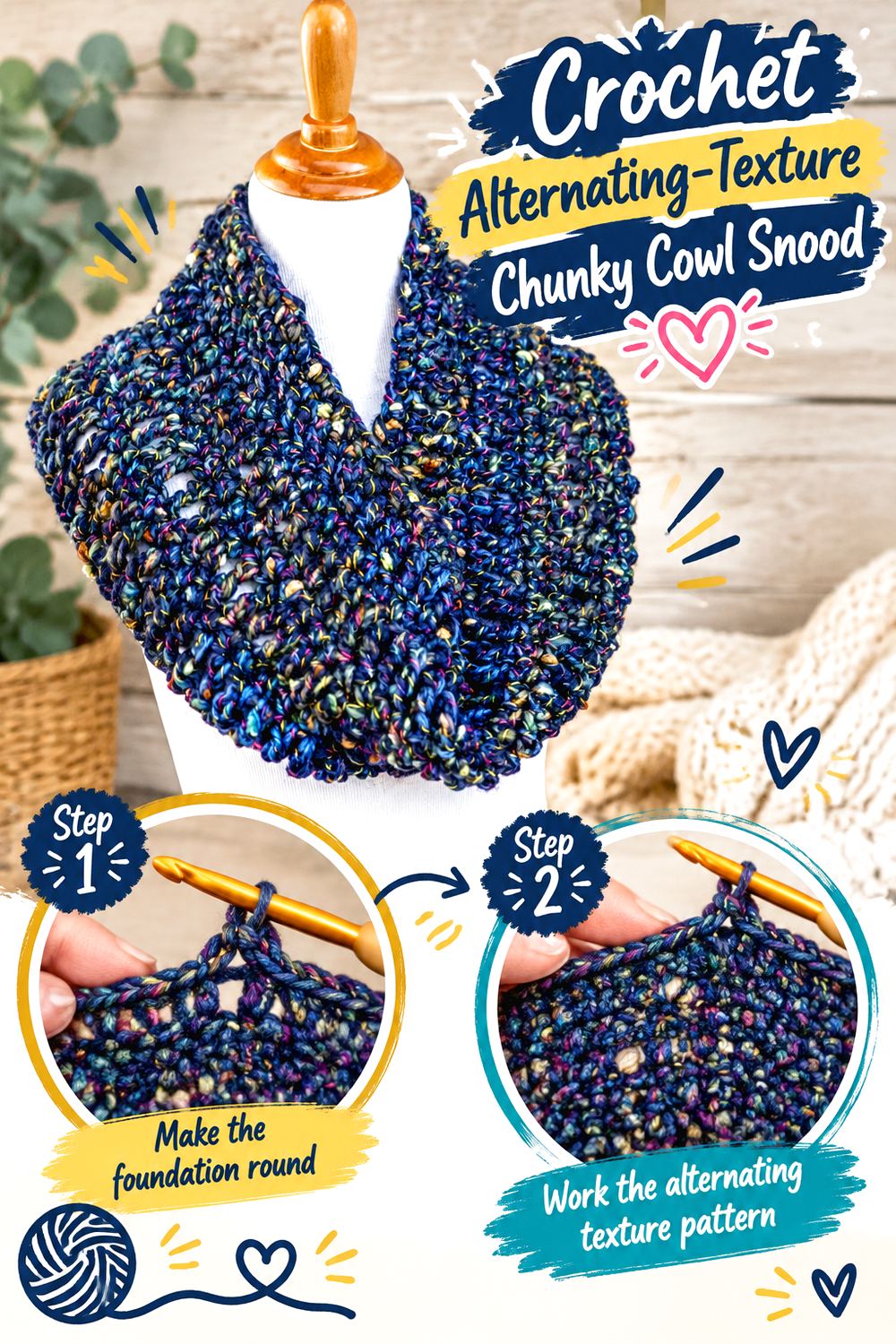
The Night Sky Crochet Cowl from Fiber Flux uses super-bulky yarn with alternating treble crochet and half double crochet sections. That change in stitch height produces horizontal textural variation without relying on cables, buttons, or a second color. The result remains recognizably chunky while avoiding the uniform surface of a basic single-stitch tube.
This is a useful middle ground between very plain cowls and heavily sculpted puff or post-stitch designs. Tall stitches introduce more visual openness and movement, while shorter sections help define the bands. For a reader who wants the yarn to remain prominent but still wants an obvious stitch pattern, the alternating-height approach offers a clear distinction.
Use Tall Stitches to Moderate Stiffness
Very thick yarn does not have to produce an inflexible fabric. Taller stitches generally create more vertical movement than tightly packed short stitches, although the exact effect depends on yarn and tension. If your snood feels rigid, compare the fabric before simply increasing the circumference; drape and fit are related but not interchangeable.
Check the Transition Between Textures
When stitch height changes noticeably, uneven tension can become visible where one section meets the next. Look at the fabric from a distance as well as close up. Smooth transitions make the alternating bands read as intentional texture rather than accidental changes in gauge.
Let Variegated Yarn and Texture Compete Carefully
A strongly multicolored chunky yarn may partly obscure alternating stitch bands. That can still be attractive, but decide which element you want viewers to notice first. A more restrained color can emphasize stitch architecture, while a dramatic yarn may turn the same construction into a color-led snood.
Original Tutorial and Creator Credit
Creator/Site: Fiber Flux
6. Crochet Front Crossover Chunky Snood
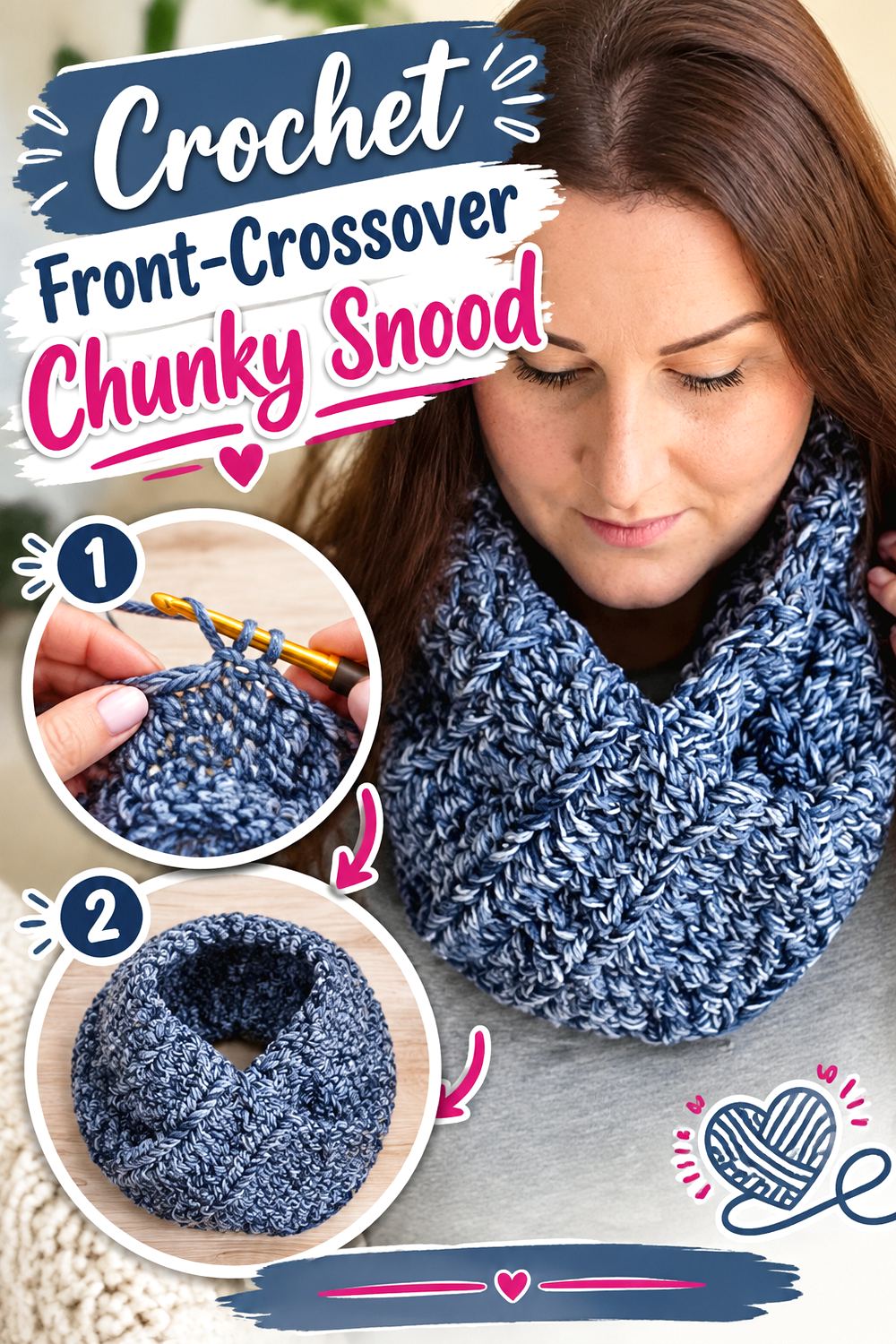
Instead of making an ordinary continuous tube, Blue Star Crochet’s chunky cowl introduces a deliberate crossover at the front. The project achieves its substantial fabric by holding four strands of DK-weight yarn together, and the center sections cross before the work returns to a continuous form. The designer also provides adjustment guidance for both height and circumference.
Visually, that crossover creates a focal point similar to the twist seen in some knitted headbands, giving a basic neck warmer a sculpted center without buttons. It is a particularly useful idea for stash-driven projects because several thinner strands can create the chunky effect, although substitution deserves more attention than simply matching the finished thickness.
Treat the Crossover as the Visual Center
Once a snood has a pronounced front twist, alignment becomes noticeable. Try the piece on before final finishing and make sure the crossover sits where you intend rather than drifting toward one shoulder. Thick fabric can resist repositioning more than a light cowl, so symmetry is worth checking early.
Multiple Strands Change More Than Yarn Weight
Holding several yarns together can create thickness quickly, but the combined strand may behave differently from a single super-bulky yarn. It can feel denser, split differently on the hook, or produce a more marled surface. Make a fabric sample before assuming an apparently similar diameter will give equivalent drape.
Reinforce Without Creating a Hard Spot
The source includes additional support at the crossover. More generally, any structural reinforcement on a neck accessory should remain comfortable against the body. If you secure a decorative intersection, distribute the attachment rather than pulling one point extremely tight, and check the reverse side for knots or ridges that could rub.
Original Tutorial and Creator Credit
Creator/Site: Blue Star Crochet
7. Crochet Button Band Chunky Neck Snood
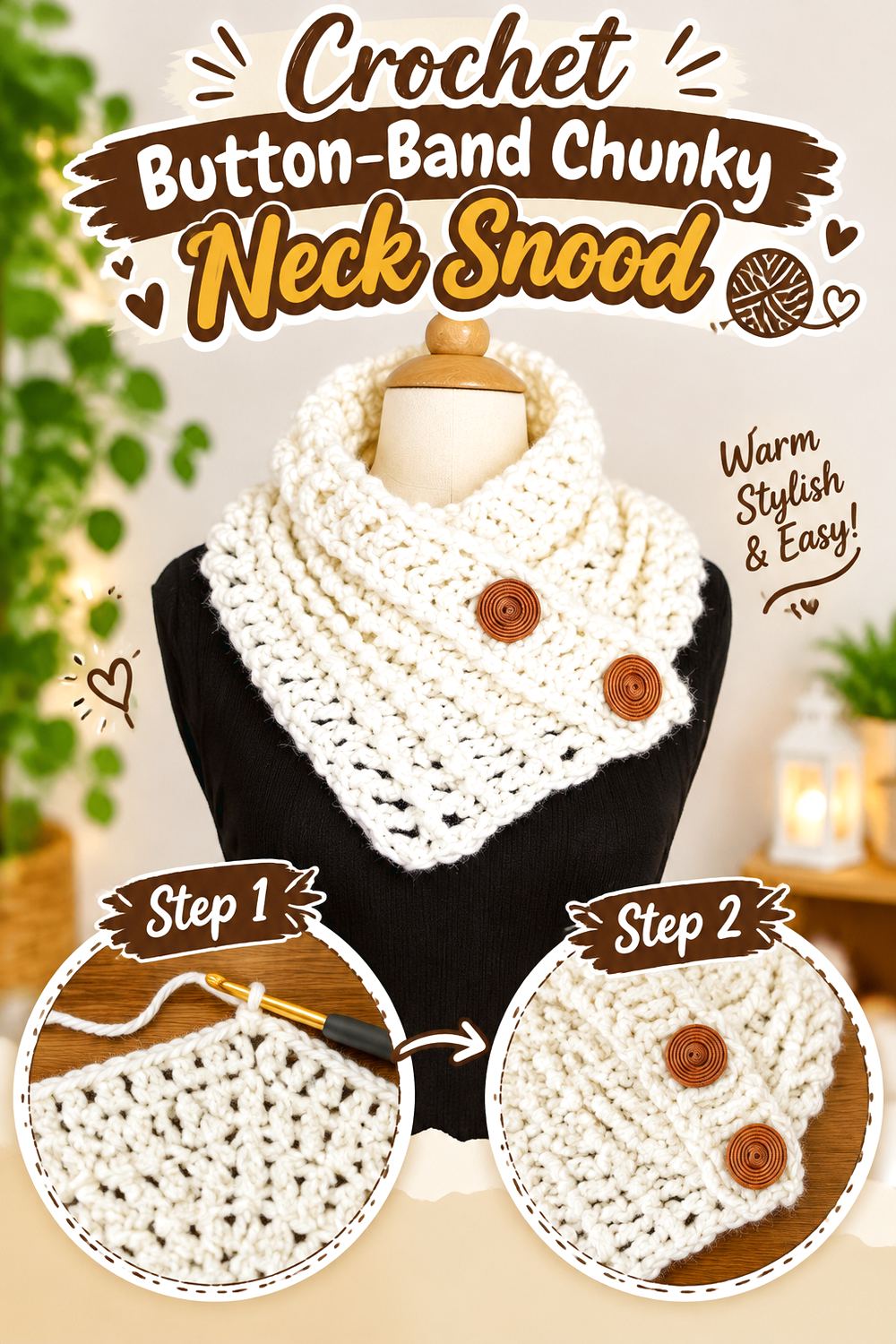
Crochet Dreamz’s Diana Button Cowl uses super-bulky yarn, strong horizontal texture, and a dedicated button band instead of forming a permanently closed tube. Two large buttons secure the finished piece, allowing the front overlap to become part of the design rather than hiding the join at the back.
This approach suits readers who like a chunky neck warmer but do not want to pull it over the head. It can also make the front silhouette more adjustable because the way the rectangle overlaps contributes to the final shape. The bold closure and textured surface give it a more tailored character than a soft infinity cowl.
Test the Overlap Before Attaching Buttons
Button placement determines more than decoration. It affects the circumference, front angle, and amount of fabric layered over the chest. Pin the cowl in the intended position and move your temporary button locations until the neckline feels secure without forcing the fabric into an unnatural fold.
Give the Button Band Enough Stability
A large button places repeated stress on the fabric around its attachment point and buttonhole. Thick yarn may look strong while still stretching locally. Check whether your chosen yarn creates a stable edge, and reinforce thoughtfully if needed without making the band noticeably rigid compared with the rest of the snood.
Plan for Hardware During Care
Buttons can change how a crocheted accessory should be handled. Wood, metal, plastic, and decorative finishes do not necessarily tolerate moisture, heat, or abrasion in the same way as the yarn. Follow appropriate yarn care information while also considering the button manufacturer’s recommendations before washing the completed snood.
Original Tutorial and Creator Credit
Creator/Site: Crochet Dreamz
8. Crochet Berry Texture Compact Snood
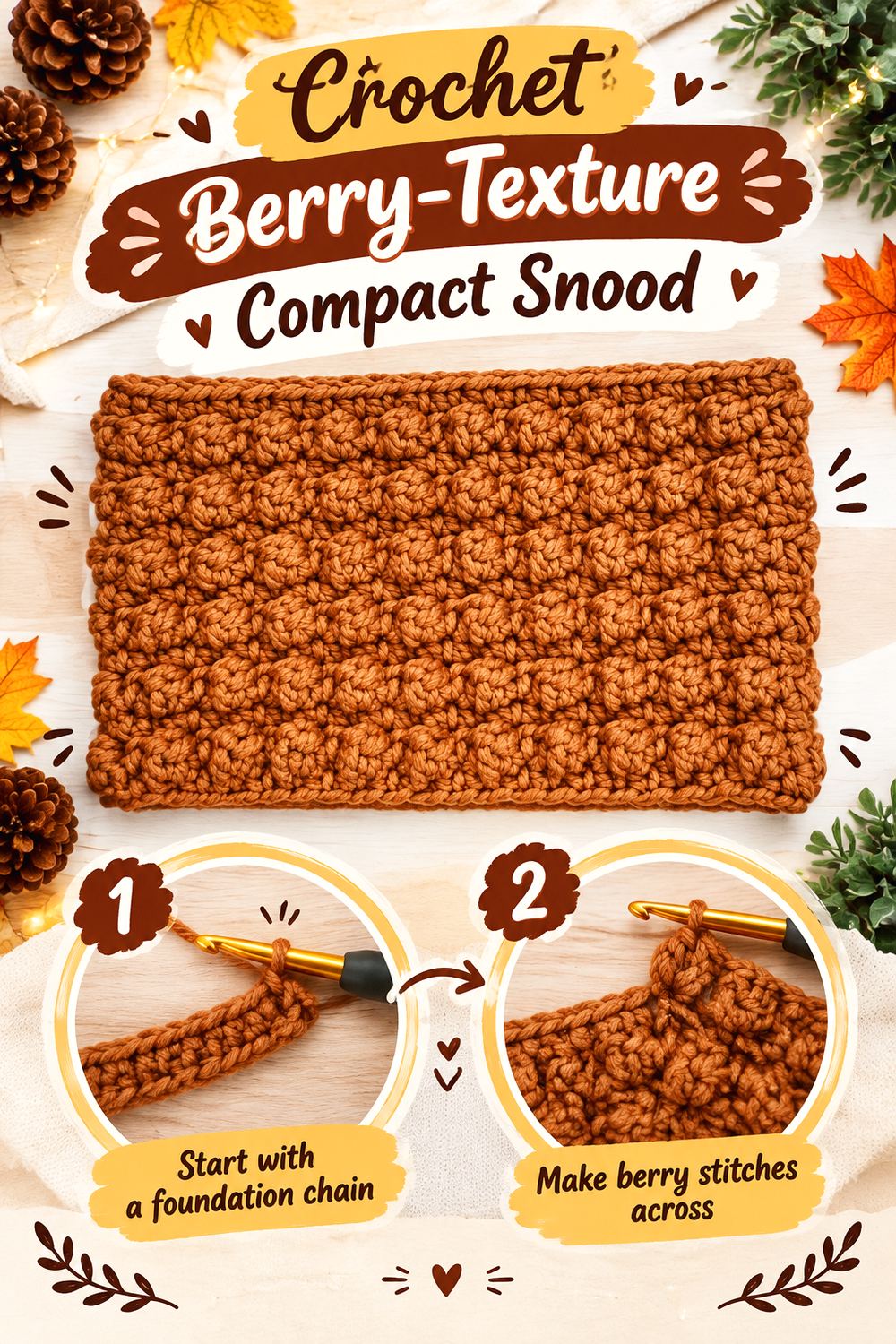
The Turtle Trunk’s Cloud Nine Cowl is a compact super-chunky cowl built around prominent berry-stitch texture. The original pattern includes child and adult sizing and uses less than a skein of its specified super-bulky yarn, creating a closer-fitting alternative to the long wraps and oversized hoodable snoods in this collection.
Its main appeal is concentrated texture. Instead of needing extra circumference to create visual interest, the raised stitch pattern gives the smaller silhouette plenty of surface definition. This makes it worth considering when you want the convenience of a simple pull-on neck warmer but do not want the appearance of a plain tube.
Leave Enough Ease for Raised Texture
Dimensional stitches can make fabric feel thicker on the inside as well as the outside. When evaluating circumference, judge the actual worn piece rather than relying only on a flat measurement. A snug smooth cowl and an equally sized berry-textured cowl may not feel identical around the neck.
Keep the Motifs Visually Even
Raised berry-like details are most effective when their size and spacing look deliberate. If your tension changes as you become familiar with the stitch, compare the first section with later work before finishing. A quick consistency check can prevent one side from appearing noticeably tighter or more pronounced than the other.
Size for the Actual Recipient
When a tutorial offers multiple sizes, use those as the designer’s framework rather than assuming age labels alone guarantee fit. Head circumference, hairstyle, preferred neck ease, and the stretch of substituted yarn can all change comfort. For pull-on cowls, the ability to pass over the head remains an essential checkpoint.
Original Tutorial and Creator Credit
Creator/Site: The Turtle Trunk
9. Crochet Two Strand Plush Cowl Snood
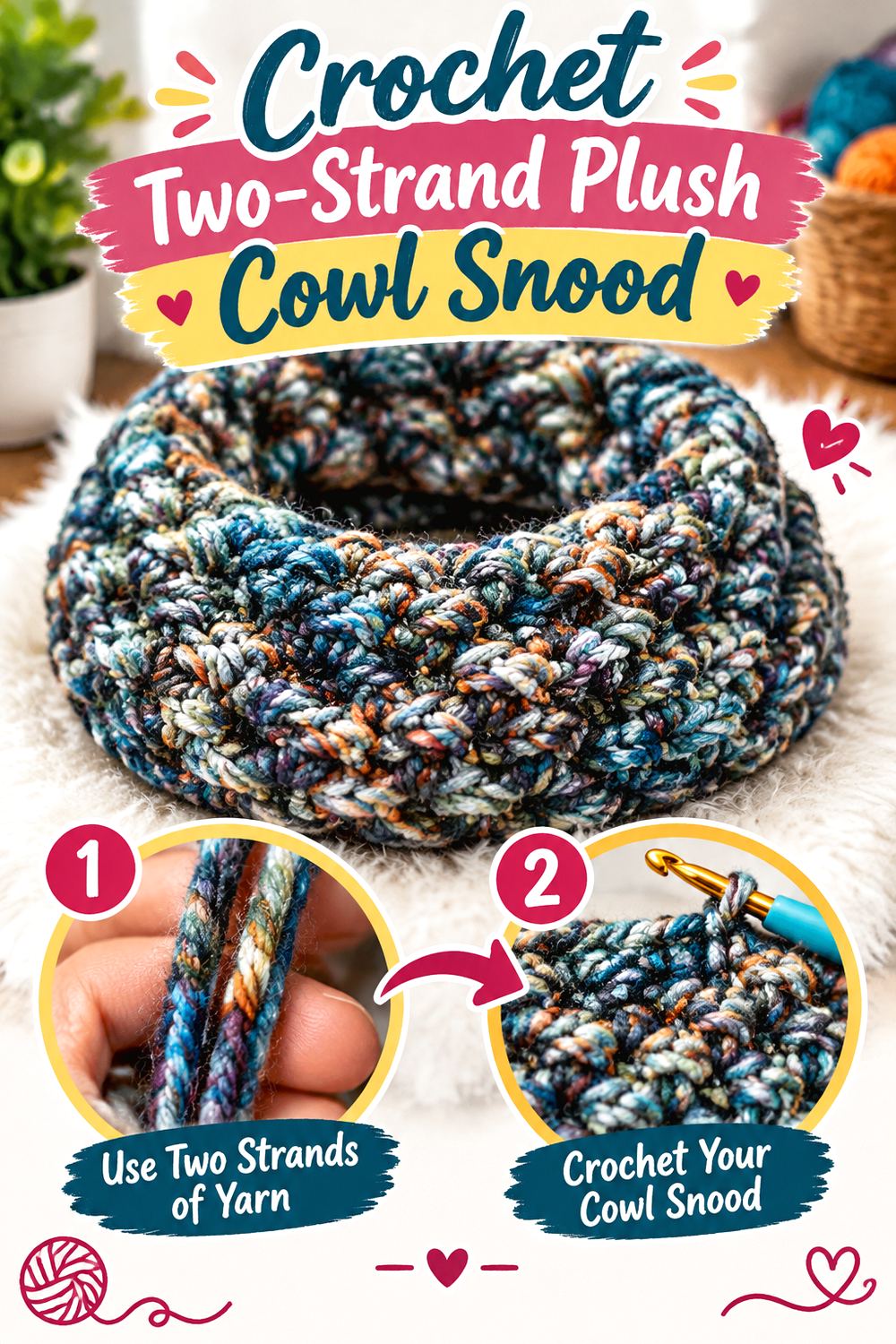
Heart Hook Home approaches chunky fabric differently in The Easiest Crochet Cowl. Rather than starting with a conventional single strand of super-bulky yarn, the project holds Lion Brand Homespun together with a coordinating worsted-weight strand to create a much thicker working yarn.
The result makes this idea especially relevant for crocheters interested in combining yarns rather than purchasing a specific jumbo skein. Pairing strands can also introduce subtle color blending and texture that a single solid yarn does not provide. Because the two yarns have different structures, however, the fabric should be judged on its own rather than treated as automatically equivalent to a standard super-bulky substitution.
Pair Yarns With Compatible Care Needs
Two attractive yarns are not necessarily a practical pair. Before combining them, compare fiber content and care instructions. If one requires much more delicate handling than the other, the finished snood inherits that limitation. Colorfastness and surface texture can also become more noticeable when unlike yarns are worked together.
Watch for Uneven Strand Feeding
One strand can occasionally tighten faster than the other, particularly when the yarns differ in texture or elasticity. Periodically check that both are entering each stitch together rather than allowing one to form hidden slack. Keeping the balls positioned so they unwind freely can make multi-strand crochet easier to manage.
Use Color Pairing as Part of the Design
A coordinating second strand can subtly deepen a color, soften a variegated yarn, or create a visibly marled fabric. Make a small sample before committing. Colors that look compatible as separate skeins can mix differently once their strands are repeatedly crossed throughout thick crochet stitches.
Original Tutorial and Creator Credit
Creator/Site: Heart Hook Home
10. Crochet Crunch Stitch Split Seam Snood
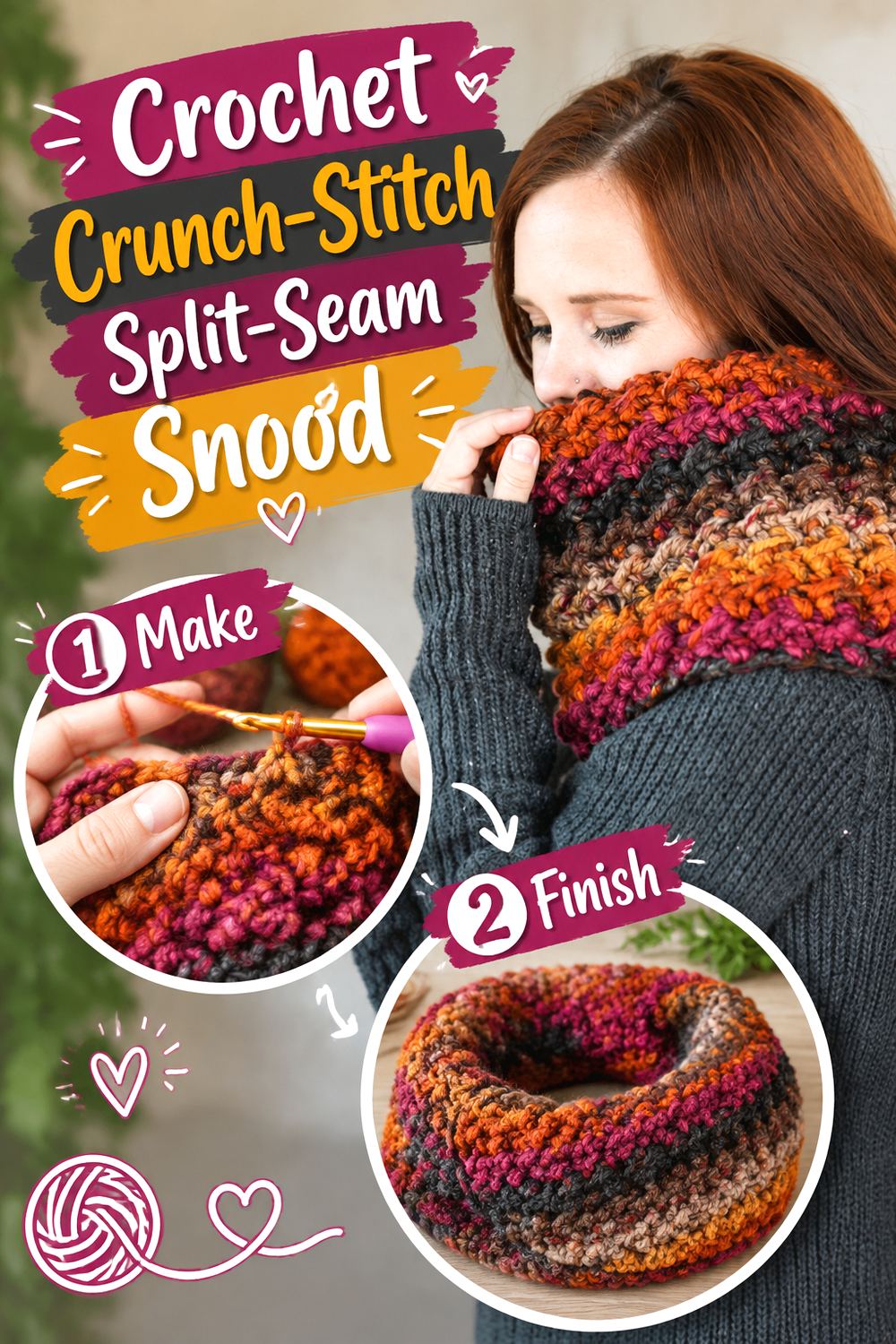
Hooked on Homemade Happiness uses super-bulky yarn and crunch stitch for this thick textured cowl, but the finishing gives the design an extra option: the rectangular piece may be sewn only partway at the ends rather than being closed along the full height.
That partial seam can give the upper fabric more freedom to open or fold, distinguishing the snood from completely closed cylinders. The alternating short-stitch texture remains relatively understated, so the shape and self-striping yarn shown by the designer can take more visual attention. It is a practical direction when you want chunky warmth with a less rigid upper opening.
Decide on the Seam Before Finishing
A partial seam and full seam create noticeably different wearing behavior. Pin the ends together at several heights and try the cowl on before committing. Leaving more of the upper section open can encourage a relaxed fold, while a longer seam may hold the snood closer and create a more controlled tube.
Account for Self-Striping Placement
When a rectangle is joined, the colors at opposite ends meet each other. If you are using a self-striping yarn, preview that meeting point before seaming. Depending on the color sequence, the join may either blend quietly or create a sharp transition that becomes part of the design.
Keep the Crunch Texture Flexible
Alternating compact stitches can create a substantial surface in very thick yarn. If your substitute feels stiff, check hook size, tension, and fiber behavior rather than simply making the snood larger. Increasing circumference does not solve a fabric that refuses to fold comfortably around the neck.
Original Tutorial and Creator Credit
Creator/Site: Hooked on Homemade Happiness
11. Crochet Woven Texture Hooded Snood
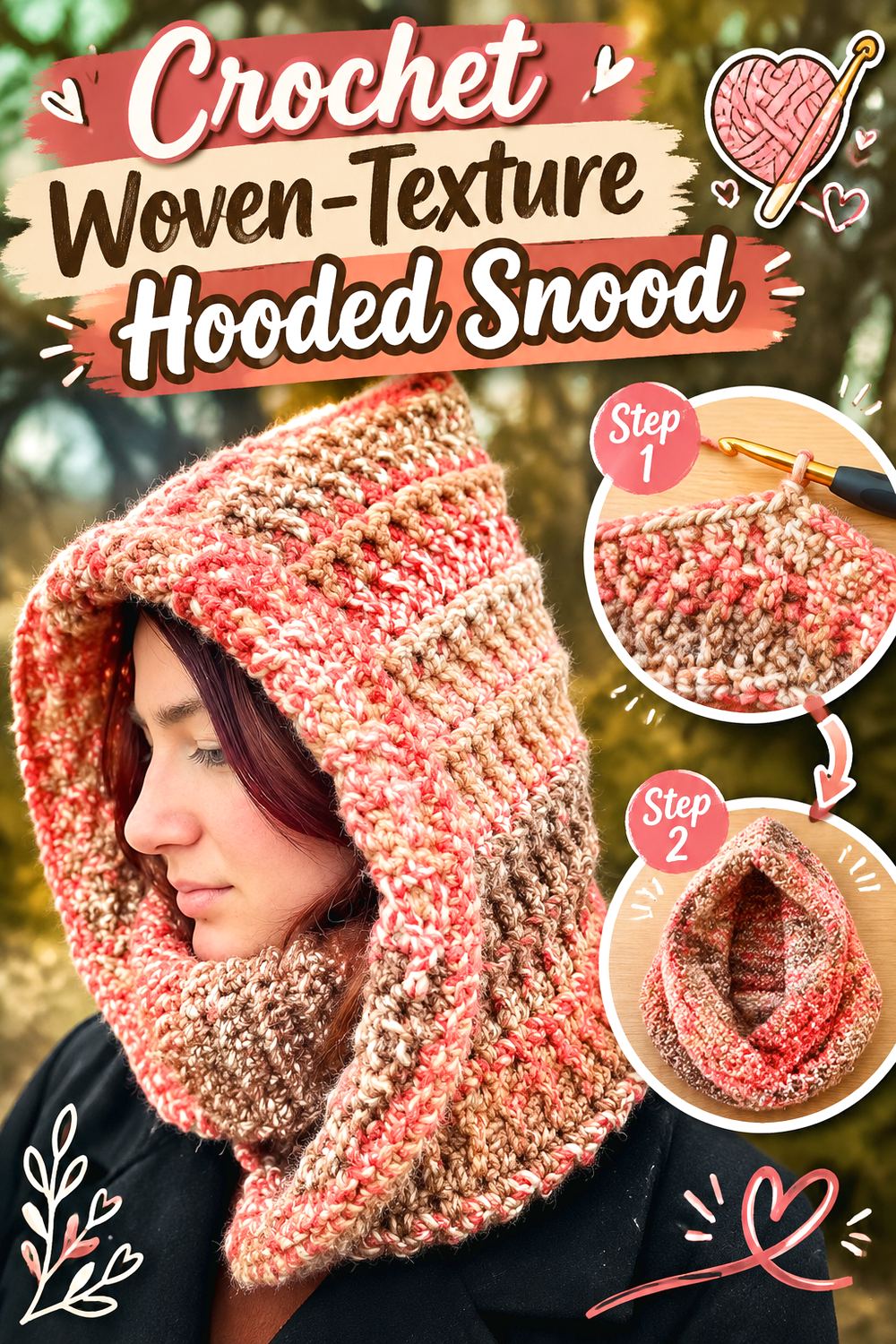
Nana’s Crafty Home’s Mountain Trail Hooded Cowl combines a deep ribbed neck section with a distinct hood worked in a woven-looking textured stitch. The designer uses bulky yarn and builds the project from the neck area upward, producing a true hood silhouette rather than simply making an oversized tube. The hood also incorporates color interaction that emphasizes the interlocking texture.
This is one of the more substantial ideas in the collection and is better suited to readers who actively want head coverage. The broad ribbed neck area provides a different visual base from the buttoned hood earlier, while the textured hood turns the upper portion into the main design feature.
Check Peripheral Room Around the Hood
A hood should provide coverage without forcing the fabric tightly across the face. Before final finishing, turn your head naturally and check whether the edges obstruct vision or pull at the neckline. Hair volume and the type of outerwear worn underneath can also change the amount of room that feels comfortable.
Let the Ribbing Support, Not Constrict
The lower ribbed section needs enough stretch to pass over the head and settle around the neck. Ribbing that looks beautifully compact while flat can feel quite different once stretched. Test recovery too: fabric that remains heavily stretched after wearing may stop holding the intended neckline.
Think Through Two-Color Yarn Management
A woven-look stitch can showcase contrast effectively, but strong color differences also expose irregular tension or unintended floats more clearly. Choose colors whose value contrast matches the visual effect you want, and check the reverse side periodically so carried or dropped yarn does not create uncomfortable loops.
Original Tutorial and Creator Credit
Creator/Site: Nana’s Crafty Home
12. Crochet Diagonal Post Stitch Chunky Snood
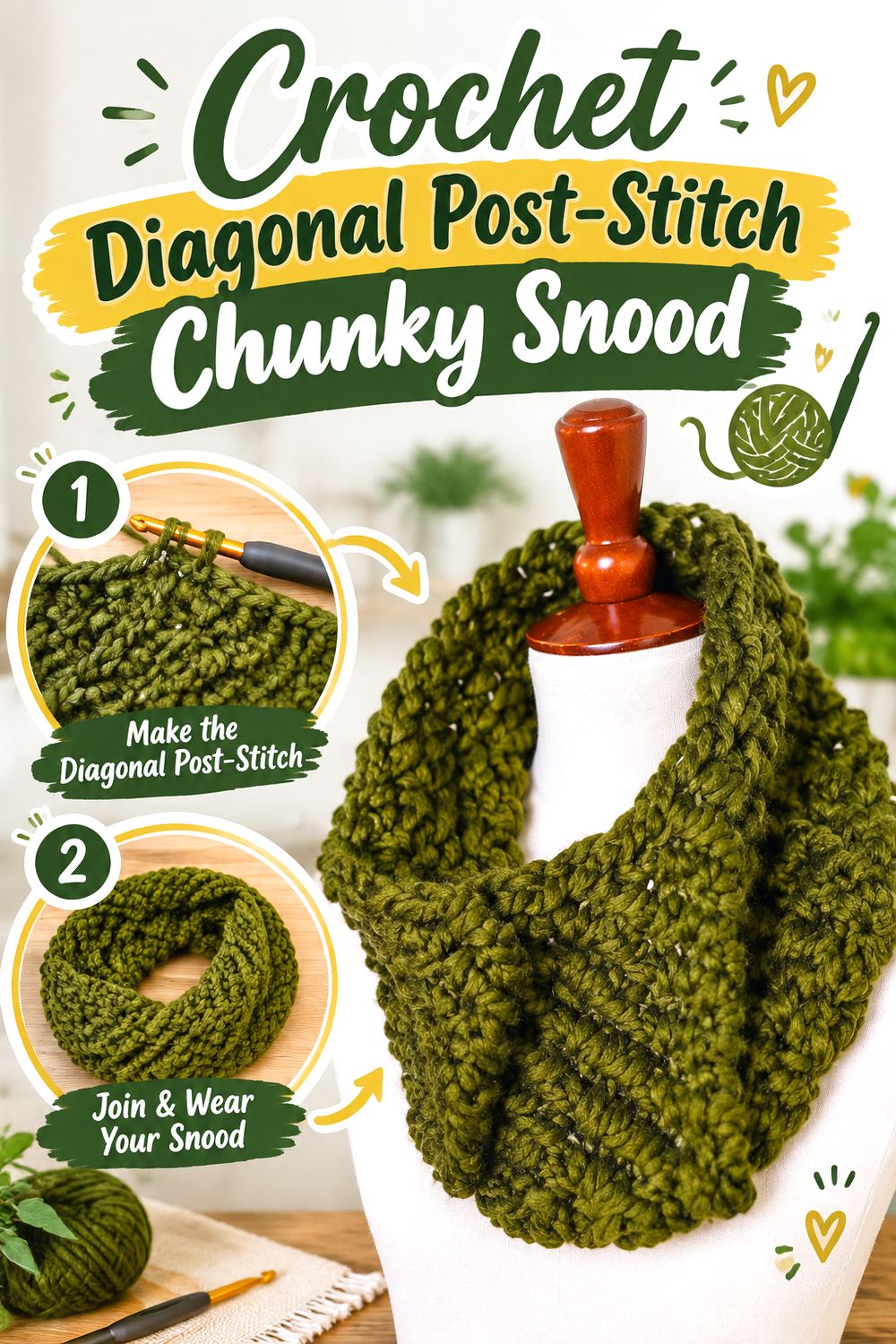
The Wildwood Chunky Cowl from The Unraveled Mitten uses super-bulky yarn with a combination of grit-style texture and front-post treble stitches. Those post stitches form a diagonal motif that appears to travel around the cowl, making directional texture the defining feature rather than a closure or dramatic change in silhouette.
The finished accessory is relatively compact and uses a very large hook with the designer’s chosen yarn, helping the thick fabric remain softer than it might with a tighter setup. This project fits readers who want an unmistakably chunky snood but prefer graphic stitch movement to puff stitches, cables, or open mesh.
Preserve the Direction of the Texture
A diagonal repeat depends on consistent stitch placement. An unnoticed shift can interrupt the visual path more obviously than it would in an all-over texture. Pause occasionally to look at the motif around the full circumference rather than concentrating only on the stitches immediately beside the hook.
Avoid Over-Tightening Post Stitches
Post stitches travel around the body of earlier stitches and can become noticeably tighter than neighboring fabric if pulled aggressively. In super-bulky yarn, that tension difference is magnified. Aim for loops that let the raised feature stand out without drawing the cowl inward at each textured column.
Judge the Fabric Before Downsizing the Hook
A very large hook may initially seem surprising with thick yarn, but hook size influences flexibility as much as stitch size. If substituting yarn, do not automatically choose a smaller hook simply because it produces neater-looking stitches. Compare drape and comfort against the designer’s intended fabric first.
Original Tutorial and Creator Credit
Creator/Site: The Unraveled Mitten
13. Crochet Knit Look Fireside Snood
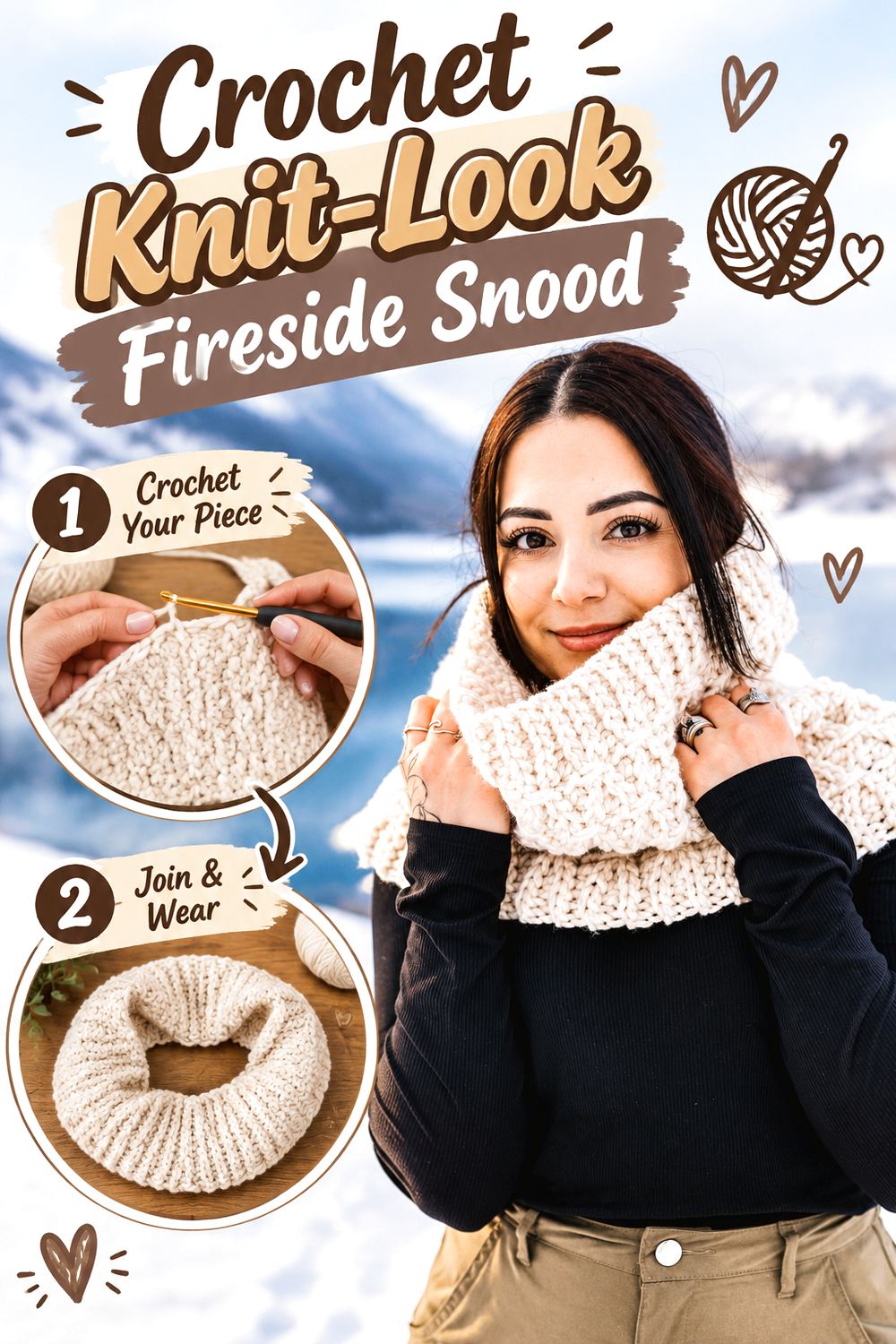
A Crocheted Simplicity’s Fireside Cowl focuses on creating a knit-like appearance with crochet. The project uses chunky weight yarn and is worked flat from side to side before being seamed, a construction that also allows the circumference to be assessed as the rectangle grows. The designer provides guidance for adjusting both height and overall fit.
This is a good alternative to the more obviously crocheted puff, berry, and post-stitch snoods. Its interest comes from restrained texture and clean vertical structure, so it can work well when you want a chunky accessory that feels visually simple rather than heavily embellished.
Use Flat Construction as a Fitting Advantage
A flat cowl gives you an opportunity to wrap the unfinished fabric around the neck before committing to the final seam. Use that advantage. Allow for the seam itself and remember that the fabric may relax after handling, particularly if your chosen fiber has more stretch than the original yarn.
Protect the Knit-Look Definition
Texture that imitates knitting relies heavily on clean stitch alignment. Highly variegated or fuzzy yarn may soften that appearance because the surface details become less visible. That is not necessarily a problem, but it changes the design emphasis from stitch structure toward yarn texture or color.
Make the Final Seam Discreet
On a simple snood, an uneven seam can become one of the most obvious construction features. Match the edges carefully and avoid pulling the joining yarn so tightly that the seam becomes shorter than the surrounding fabric. A consistent join also helps the finished tube hang evenly.
Original Tutorial and Creator Credit
Creator/Site: A Crocheted Simplicity
14. Crochet Open Shell One Skein Chunky Snood
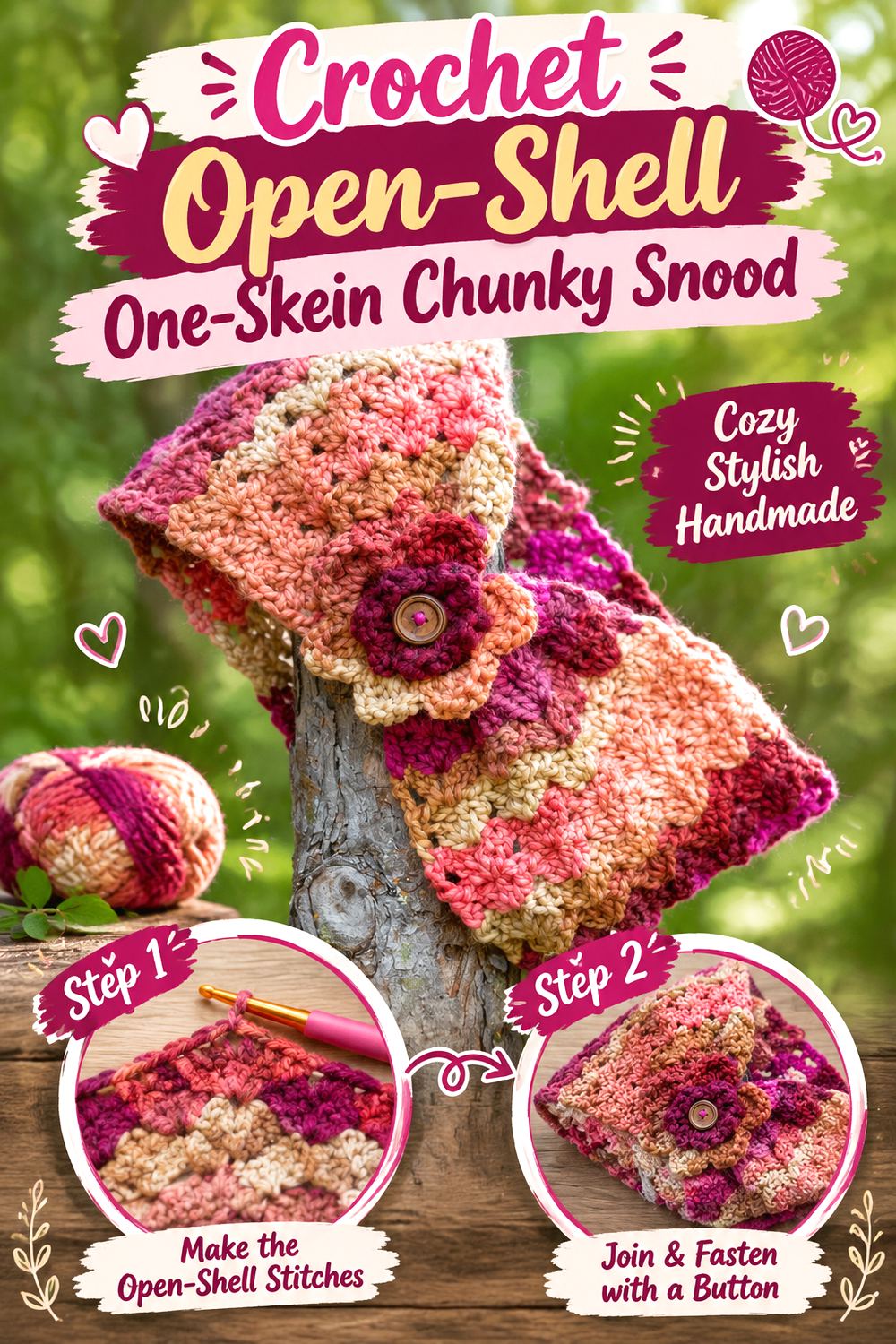
Kirsten Holloway Designs offers a different chunky balance with a one-skein cowl made from category 5 yarn and an airy, shell-like surface based largely on tall stitches. The openness gives the finished neck warmer more visual space than the dense berry, crunch, or post-stitch snoods while still retaining the scale of chunky yarn.
This makes the project useful when a thick accessory sounds appealing but a dense winter fabric feels too heavy. A self-striping yarn can also become a major part of the finished appearance because the simple repeating texture leaves room for color changes to show clearly.
Decide How Open You Want the Fabric
An open shell-like pattern can drape more easily than dense crochet, but it also lets more air pass through. Consider climate and intended layering. If you change hook size to close the openings significantly, you may also reduce the softness that makes the original chunky cowl hang comfortably.
Let Self-Striping Yarn Develop Naturally
Short color repeats and long color repeats can look dramatically different around a cowl circumference. Before cutting or deliberately controlling the sequence, work enough fabric to see how the colors pool or stripe. The yarn may produce a more interesting result when allowed to progress without forced matching.
Check Yardage Before Making It Larger
A one-skein concept can stop being a one-skein project as soon as circumference or height changes. If you want a looser or taller snood, calculate from your actual rate of yarn use or secure extra matching yarn first. Different colorways and substitutions may also contain different yardage even when their weight category appears comparable.
Original Tutorial and Creator Credit
Creator/Site: Kirsten Holloway Designs
15. Crochet Marled DIY Super Chunky Snood
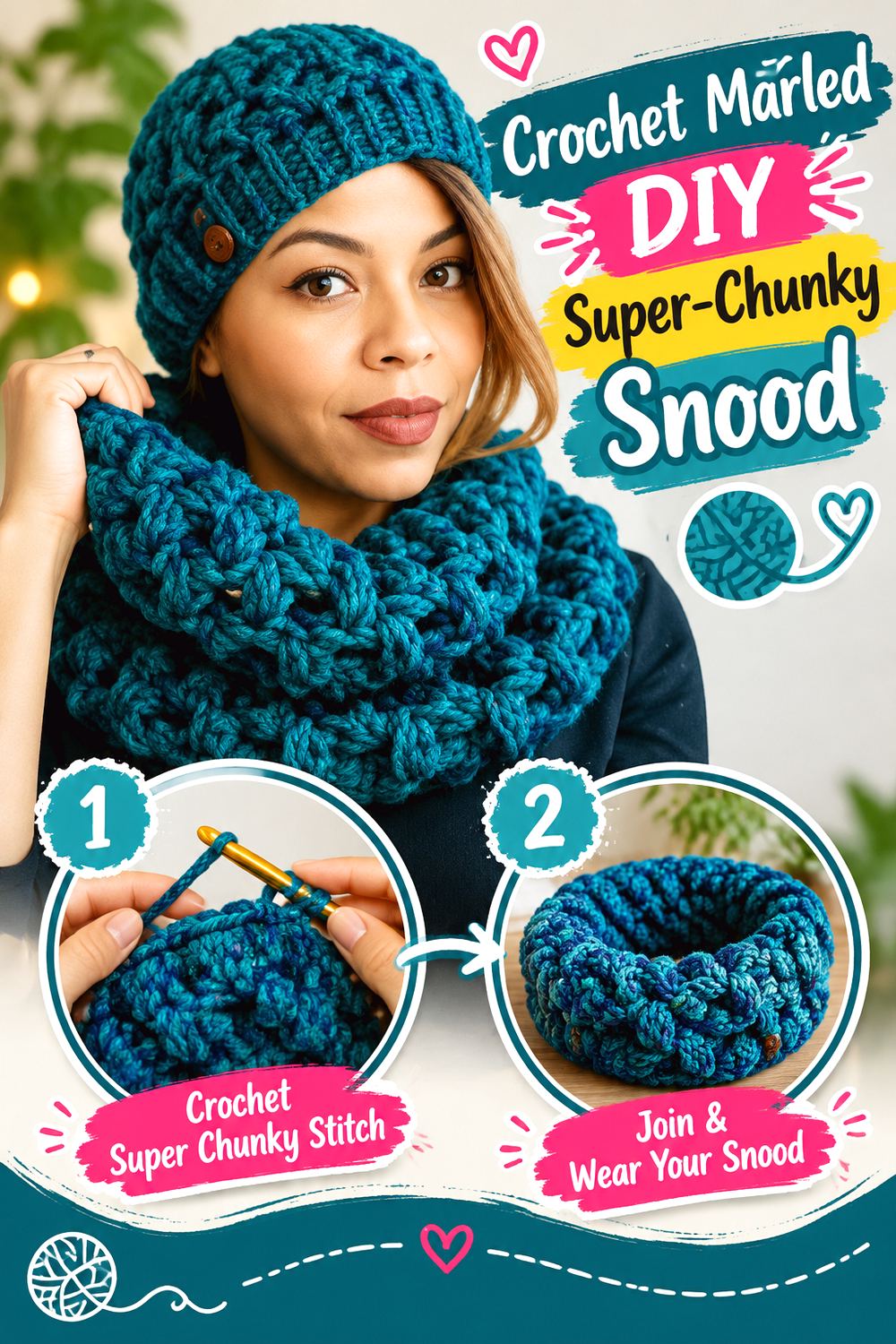
Littlejohn’s Yarn takes yarn substitution itself as part of the project. The video teaches a super-chunky crochet cowl while also demonstrating an approach to turning worsted-weight yarn into a much thicker working yarn, creating an alternative for crocheters who do not have a conventional super-bulky skein available.
That makes this final idea different from simply holding two contrasting strands together. The attraction is experimentation: a familiar lighter yarn can take on a much heavier visual scale and potentially a marled appearance. Because a constructed thick strand will not behave identically to every commercial super-bulky yarn, fabric testing becomes especially important.
Swatch the Constructed Yarn First
A homemade thicker strand can change considerably depending on the original yarn’s twist, elasticity, and fiber. Crochet a meaningful sample before deciding it is interchangeable with another super-bulky yarn. Check both stitch definition and the ease with which the fabric bends around the neck.
Watch the Finished Weight
Transforming a thinner yarn into a thick working strand does not make the underlying fiber lighter. A dense snood made from a large amount of worsted yarn can become heavier than expected. Hold the growing work around your neck periodically so weight is evaluated alongside circumference and texture.
Plan Ends and Joins Carefully
Chunky fabric magnifies bulky knots and abrupt joins. When creating or combining thicker strands, think ahead about how new yarn will be introduced and secured. Whatever joining method you choose should remain stable while avoiding a hard cluster that can be felt against the neck.
Original Tutorial and Creator Credit
Creator: Littlejohn’s Yarn
Comparing the 15 Chunky Snood Styles
The most useful distinction is not simply which snood looks thickest; it is how you want the accessory to behave. For close neck coverage, the horizontal-rib, berry-texture, diagonal post-stitch, and Fireside designs keep the silhouette relatively contained. The Manchester, jumbo puff, and other longer versions add enough volume for looser styling or head coverage.
For a defined hood rather than an oversized cowl, the buttoned hood-and-cowl and Mountain Trail designs are the clearest choices. The Diana cowl is worth considering when you prefer a closure instead of pulling the accessory over your head. If yarn experimentation matters most, the Blue Star crossover, Heart Hook Home two-strand cowl, and Littlejohn’s Yarn project offer three different ways to build a thick fabric without relying on exactly the same yarn setup.
Conclusion
These 15 crochet chunky snood ideas show how much the finished result can change when circumference, height, stitch density, texture, closures, and yarn construction are treated as design choices. A compact berry cowl and an oversized hoodable mesh snood may both use substantial yarn, yet they solve very different wardrobe needs. The same is true of a buttoned neck warmer compared with a true crochet hood.
Choose the silhouette first, then consider how much structure, stretch, drape, and texture you want near the face and neck. When substituting yarn or changing size, judge the actual fabric rather than yarn weight alone. Once you have chosen a direction, use the linked original tutorials for the creator’s exact construction details and project-specific requirements.
Frequently Asked Questions
Can I use bulky yarn instead of super-bulky yarn for a chunky snood?
Sometimes, but it should not be treated as a direct substitution unless the tutorial provides that option. A thinner yarn changes stitch size, circumference, height, density, and yardage. You may need a different hook and altered stitch or row counts, which means gauge and fit should be reassessed. Another option is combining thinner strands, as several projects above demonstrate, but the resulting fabric still needs to be sampled before committing.
How do I keep a chunky crochet snood from feeling too stiff?
Stiffness is influenced by yarn structure, hook size, stitch choice, and tension. A more open stitch or larger appropriate hook can allow thick yarn to move more freely, while tightly worked short stitches generally create greater density. Do not automatically enlarge the snood to compensate for rigidity; first check whether the fabric itself bends and folds the way you want. A small swatch is useful before starting a large hoodable design.
Which chunky snood style is best if I want to pull it over my head?
Look for designs intentionally given extra height and circumference, such as an oversized hoodable cowl, double-wrap snood, or dedicated hooded cowl. A close neck warmer may stretch over the head for dressing but still be too small to wear comfortably as a hood. Test both positions during construction whenever the pattern allows adjustments, and remember that a different yarn can change stretch significantly.
How can I tell whether a pull-on cowl is large enough?
The most practical checkpoint is whether the unfinished opening passes over the intended wearer’s head comfortably without excessive stretching. Then check how it sits around the neck once in place. Hair volume, yarn elasticity, stitch texture, and preferred ease all affect fit, so a generic circumference cannot guarantee the same result for everyone. Follow the selected tutorial’s sizing information and adjust only where the designer’s construction permits it.
Are buttoned crochet snoods suitable for children?
That depends on the child, the closure, and the intended use. Buttons or other detachable pieces can become hazardous if they loosen, particularly for babies and very young children. Do not assume a small size automatically makes every decorative closure appropriate. Secure components carefully and choose an alternative closure-free design when detachable hardware would be unsuitable for the recipient.
How should I wash a chunky crochet snood?
Follow the care information for the actual yarn used rather than assuming all chunky yarns can be treated alike. Wool, acrylic, blends, fluffy yarns, and multiple-strand combinations may have different requirements. Buttons and other embellishments can introduce additional restrictions. If you substituted yarn, use the replacement yarn’s label as your primary care reference and consider the most delicate component when deciding how to clean and dry the finished snood.