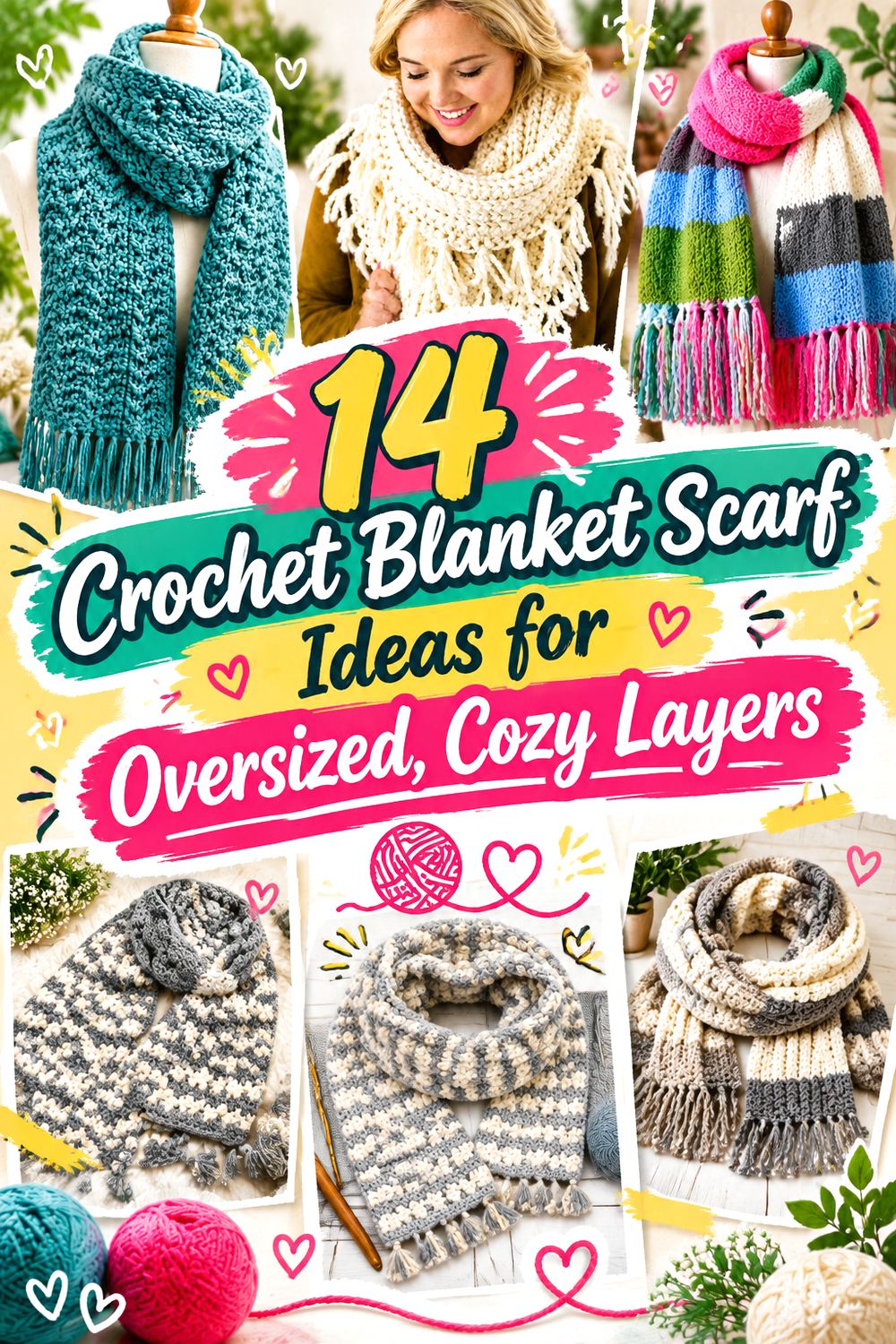
14 Crochet Blanket Scarf Ideas for Oversized, Cozy Layers
A crochet blanket scarf sits somewhere between a conventional neck scarf and a wearable wrap. Some designs stay relatively narrow but gain their impact from exceptional length, while others spread across the shoulders like small rectangular shawls. Yarn weight, stitch density, fringe, and construction direction can make two similarly shaped scarves behave very differently.
The 14 ideas below cover chunky rectangles, dropped-stitch stripes, reversible textures, color blocks, crossed stitches, Nordic C2C work, Tunisian crochet, woven accents, and dramatic tassels. Several are true blanket-scarf designs, while others are oversized “super scarves” that serve the same wrap-and-layer purpose.
Use the descriptions to compare fabric weight, proportion, texture, and styling possibilities. For exact stitch counts and construction, follow the credited original tutorial for each project.
Quick List
- Crochet Fireside Blanket Scarf With Twisted Fringe
- Crochet Dropped-Stitch Striped Blanket Scarf
- Crochet Color-Block Blanket Stitch Super Scarf
- Crochet Reversible Mock-Bobble Blanket Scarf
- Crochet Super-Bulky Ribbed Tassel Scarf
- Crochet Extra-Long Open-Texture Super Scarf
- Crochet Crisscross Back-Loop Blanket Scarf
- Crochet Nordic C2C Blanket Scarf
- Crochet Woven Two-Tone Scarf Wrap
- Crochet Soft Chevron Cloud Super Scarf
- Crochet Tunisian Color-Block Blanket Scarf
- Crochet Chunky Ribbed Fringe Blanket Scarf
- Crochet Crossed-Stitch Flow Super Scarf
- Crochet Smoky Mountain Cluster Super Scarf
Choosing the Right Blanket-Scarf Proportions
Blanket scarves become bulky surprisingly quickly, so width and length should be considered together. A narrower extra-long scarf can support several neck wraps without covering much of the torso, while a wider rectangle behaves more like a shoulder wrap. Designs in this collection range from roughly scarf-width proportions to pieces around 19 inches wide, with some extending well beyond standard scarf lengths.
Before changing a tutorial, compare its finished dimensions with a scarf or wrap you already own. Extra width adds shoulder coverage but also increases the amount of fabric gathered around the neck. Extra length gives more wrapping options but adds yarn weight. For a highly textured or super-bulky fabric, a slightly smaller overall rectangle may feel more manageable than the same dimensions worked in a lighter yarn.
Yarn Weight Changes More Than Warmth
Several of these designs use bulky or super-bulky yarn, while others achieve an oversized shape with medium-weight yarn. Those choices affect more than the temperature of the finished scarf. Thick yarn can produce a substantial statement piece quickly, but a very long scarf may also become heavy. Medium-weight yarn generally makes it easier to create broad dimensions without concentrating as much bulk around the neck.
Texture matters too. Fuzzy yarn can soften stitch definition, while smooth yarn highlights crossed stitches, ribs, colorwork, and open spaces. If substituting yarn, start with the original tutorial’s weight and gauge information rather than assuming that every yarn carrying the same category number will behave identically. Check fabric drape early, especially when the scarf will be wrapped more than once.
Plan Fringe, Edges, and Finishing Before the Last Row
Fringe can change the balance of a blanket scarf. Short corner tassels provide a different effect from fringe running across an entire edge, and the dense long-side tasseling used on some designs adds noticeably more visual and physical weight. The All About Ami wrap even integrates contrast strands into its fringe treatment.
Long rectangles also make uneven edges easier to notice. Count consistently and check the width periodically rather than discovering tapering at the end. Blocking may help settle a suitable fiber, but follow the yarn manufacturer’s care guidance and the designer’s recommendations. If you change the yarn, test any steaming or wet blocking on a swatch first. Decorative fringe may also require more careful storage and washing than an undecorated scarf.
1. Crochet Fireside Blanket Scarf With Twisted Fringe

This broad, straightforward rectangle is one of the clearest examples of a scarf designed to double as a small wearable blanket. Jewels and Jones lists the Fireside Blanket Scarf at approximately 17 by 67 inches and works the sample in super-bulky yarn, giving it considerably more surface area than a conventional narrow scarf. Its most recognizable finishing feature is twisted fringe worked along the ends rather than separate loose tassels.
The uncomplicated rectangular silhouette makes it useful for readers who value shoulder coverage and a substantial fabric more than elaborate shaping. It can be draped broadly across the upper body or gathered more tightly as a cold-weather scarf.
Think About Bulk Before Adding Width
With super-bulky yarn, increasing the width does more than increase coverage. It also puts more fabric around the neck when the scarf is folded or wrapped. If you want to customize the proportions, first crochet enough fabric to judge thickness in your own yarn. A wide blanket scarf that feels comfortable over the shoulders can become cumbersome when wrapped several times.
The designer provides gauge and finished-size information, so use those checkpoints rather than relying only on the starting chain.
Let the Fringe Remain a Design Feature
The twisted fringe differentiates this version from scarves finished with loose strands. Because the fringe is visually structured, uneven spacing will be more noticeable than it might be with intentionally shaggy tassels.
If you change the scarf width or yarn thickness, reconsider the fringe scale as well. A very heavy fringe can pull at an already substantial edge, while fringe that is too slight may disappear against thick fabric.
Original Tutorial and Creator Credit
Creator/Site: Jewels and Jones
2. Crochet Dropped Stitch Striped Blanket Scarf
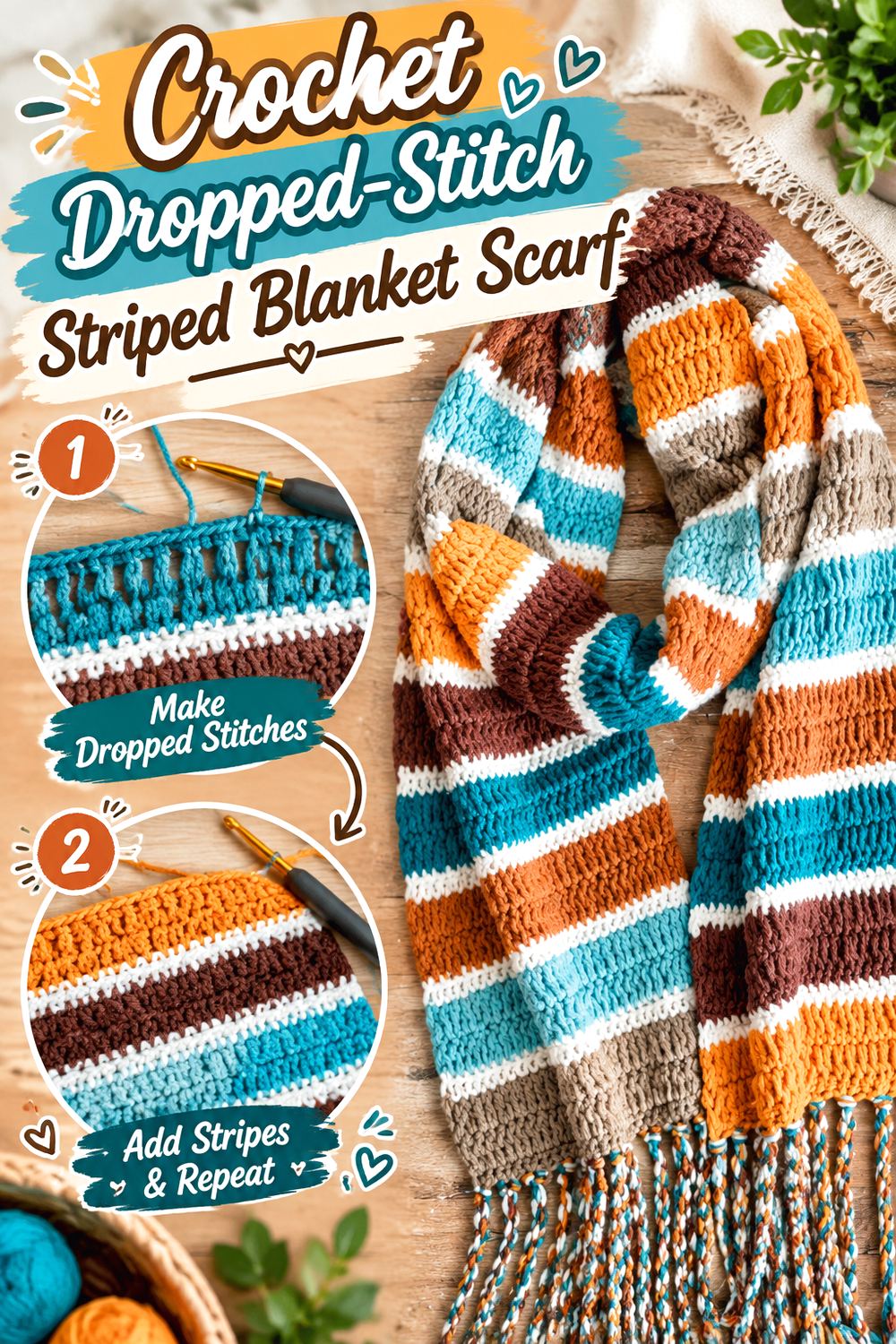
MJ’s Off The Hook Designs takes the blanket-scarf idea in a slimmer, longer direction. The Fall For You design measures 80 by 10.5 inches and combines stripes with elongated double crochet stitches that produce a dropped-stitch appearance. The result is less blanket-like in width than the previous idea but provides significantly more length for wrapping and draping.
This option makes sense when you want visible color changes and open vertical texture without moving into lace. The original sample uses worsted-weight wool rather than a super-bulky yarn, so its visual impact comes from length, stripe rhythm, and elongated texture rather than sheer thickness.
Decide Whether Color or Texture Leads
Both the stripe sequence and the elongated stitches command attention. If you substitute colors, consider whether you want the stitch architecture or the palette to be the dominant feature.
Closely related shades can make the dropped texture easier to notice, while high-contrast colors produce stronger horizontal divisions. Lay potential colors together before starting; a seven-color palette can feel very different once repeated across an 80-inch accessory.
Watch the Drape When Substituting Yarn
The tutorial uses worsted-weight yarn and provides gauge information. A substitute with dramatically different elasticity or density can change the way the elongated stitches hang.
Rather than choosing solely by yarn weight, make a swatch that includes the actual textured section. Hold it vertically, because gravity matters on a long scarf. If the swatch feels stiff or the elongated stitches collapse visually, adjust your material choice before committing to the full length.
Original Tutorial and Creator Credit
Creator/Site: MJ’s Off The Hook Designs
3. Crochet Color Block Blanket Stitch Super Scarf
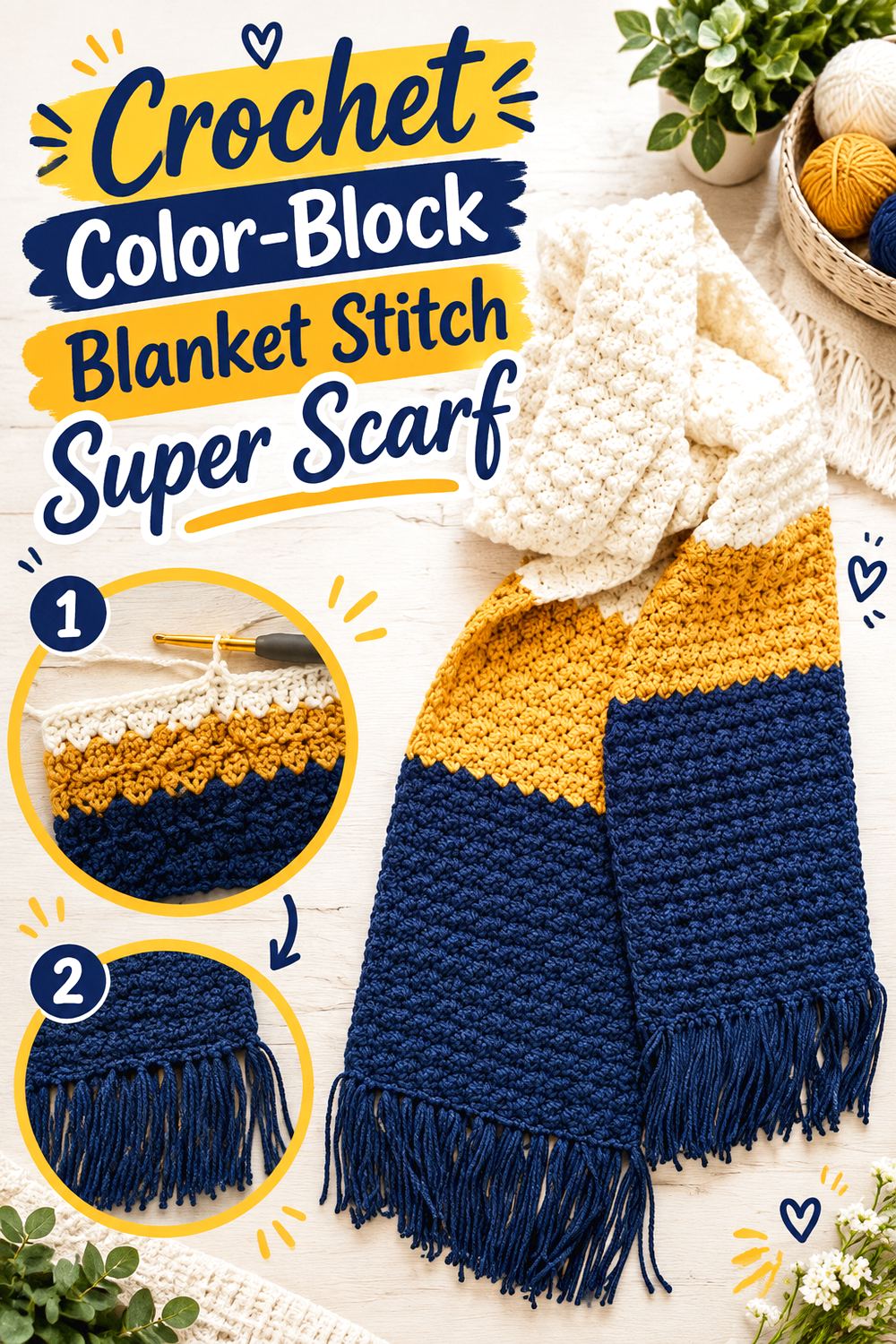
The Loophole Fox uses blanket stitch and clear color blocking to turn a simple oversized rectangle into a graphic accessory. The tutorial specifically identifies the piece as a super scarf designed wider and longer than a standard scarf and includes guidance for changing both dimensions.
Compared with fine striping, large color sections create fewer visual interruptions, making this a strong choice when you want bold contrast without managing constant color changes. The familiar rectangular form can be worn folded, looped around the neck, or left long. Because the stitch pattern itself contributes texture, the design can also work in a quieter palette when you want the fabric rather than the color changes to stand out.
Use Color Blocks to Control Visual Weight
Large blocks can make an oversized scarf look shorter or longer depending on their proportions. Many narrow bands create more visual movement, while fewer long sections emphasize the continuous length of the scarf.
Before crocheting, sketch the order of your colors or arrange the yarn skeins in sequence. That simple planning step is especially useful when using leftovers, because an accidental tiny final block may look less deliberate than an intentionally asymmetrical arrangement.
Resize Through the Pattern’s Own Logic
The designer provides specific resizing guidance and explains that the stitch pattern uses a multiple of three for width adjustments. Follow that framework rather than adding an arbitrary number of stitches.
Length deserves equal attention. If you reduce width substantially, the scarf may no longer feel like a blanket scarf even if it remains long. Aim for a proportion that still gives enough fabric to create the oversized effect you want.
Original Tutorial and Creator Credit
Creator/Site: The Loophole Fox
4. Crochet Reversible Mock Bobble Blanket Scarf
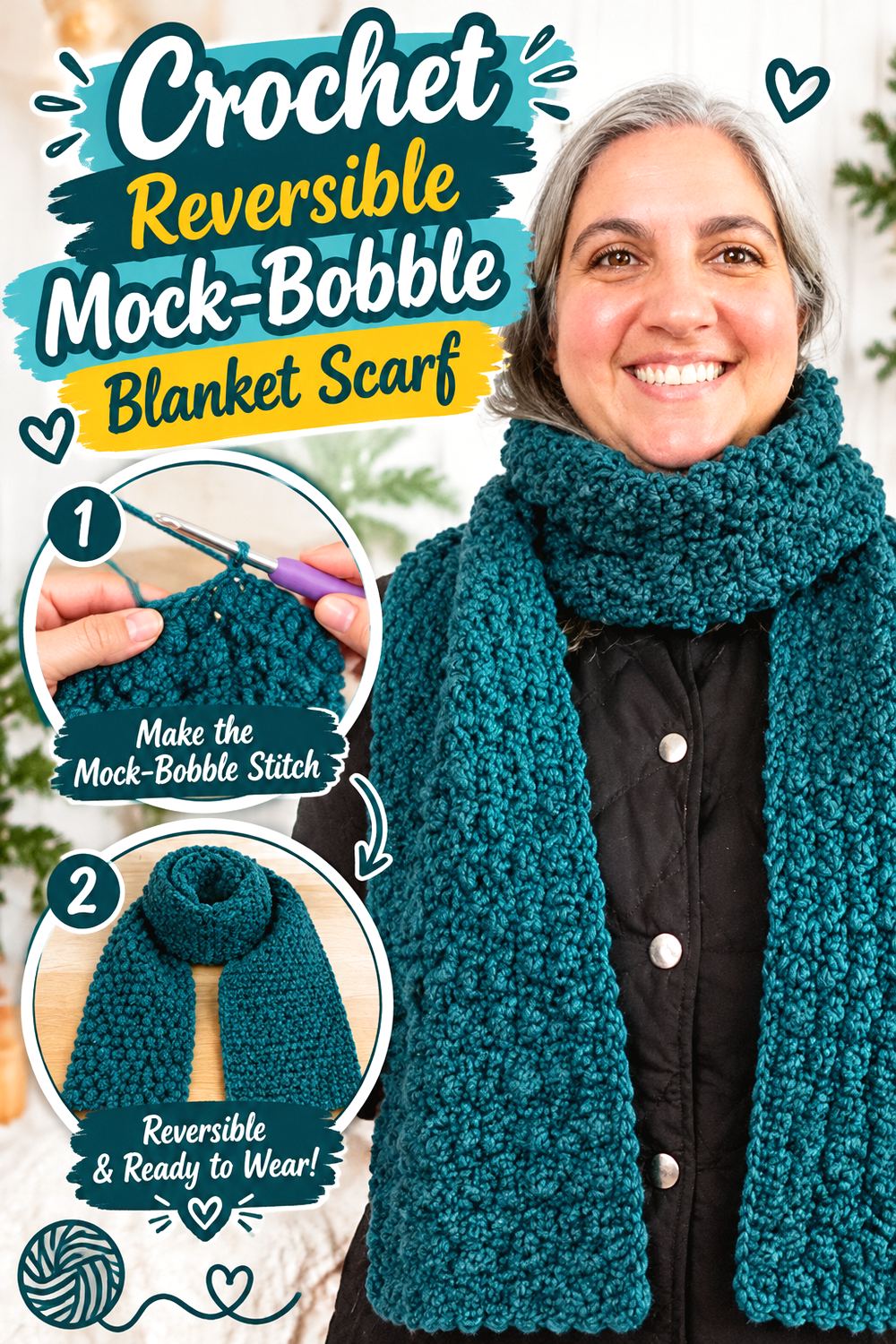
Underground Crafter’s super scarf uses a reversible mock-bobble texture rather than actual raised bobbles. The finished adult size is listed as 8 by 74 inches and the sample uses medium-weight yarn, producing an oversized scarf that is substantial without relying on super-bulky fiber.
The reversible quality is especially useful for a long scarf because both faces are likely to show as it twists around the body. This design occupies a useful middle ground in the roundup: it has enough texture to be visually interesting but avoids large fringe, complex colorwork, or an extremely wide wrap shape.
Reversibility Matters on Long Scarves
A blanket scarf rarely stays perfectly flat while being worn. Loops turn over, ends twist, and the back face often becomes visible. A reversible texture reduces the need to keep checking which side faces outward.
That makes this style a practical choice for casual layering. When adapting it, avoid adding a border or embellishment that creates an obvious “wrong” side unless you are comfortable giving up part of that reversible advantage.
Medium-Weight Yarn Can Reduce Neck Bulk
The original uses medium-weight yarn rather than the super-bulky materials seen in several other ideas. That can be appealing if you want an oversized silhouette but dislike thick stacks of fabric around your neck.
A different medium-weight fiber can still alter density significantly, so check the tutorial’s gauge and compare your swatch. For this design, preserving the relief of the mock-bobble texture is at least as important as matching a yarn category label.
Original Tutorial and Creator Credit
Creator/Site: Underground Crafter
5. Crochet Super Bulky Ribbed Tassel Scarf

For a narrower chunky option, The Unraveled Mitten’s super scarf measures about 8 by 80 inches and uses category 6 super-bulky yarn. Its back-loop double crochet creates pronounced horizontal ridges, while corner tassels give the ends weight and movement without covering an entire edge in fringe.
This is a good contrast to very wide blanket wraps. The length still creates an oversized effect, but the moderate width keeps the fabric more scarf-like when doubled around the neck. The ribbed surface also makes the project visually effective in one color, so there is no need to rely on striping to create definition.
Check Ribbing Before Making It Longer
Back-loop fabric often has more lateral movement than stitches worked conventionally through both top loops. On a long accessory, that flexibility can be comfortable, but it can also influence how the scarf settles after repeated wear.
If you plan to increase the original 80-inch length, make a generous swatch and pull it gently in the directions it will experience while worn. This gives you a better preview of the finished behavior than measuring the swatch flat on a table.
Scale the Tassels to the Fabric
Corner tassels suit this scarf because they punctuate the four corners without adding fringe to every row. If you substitute a much lighter yarn, however, copying the same tassel proportions may overpower the new fabric.
Conversely, very small tassels can look lost beside thick super-bulky ribbing. Treat the tassel as part of the overall proportion rather than as an automatic finishing step.
Original Tutorial and Creator Credit
Creator/Site: The Unraveled Mitten
6. Crochet Extra Long Open Texture Super Scarf

Simply Collectible Crochet pushes length much further with a scarf listed at 11 by 123 inches. It is worked flat and uses bulky yarn, with alternating sections that create a more open, dimensional surface than a solid rectangle of basic stitches.
That extreme length makes this a statement scarf rather than a discreet accessory. It can create dramatic hanging ends or multiple wraps, but the proportion deserves consideration before you begin. Someone who prefers less fabric, drives frequently while wearing scarves, or wants to tuck the piece under a fitted coat may prefer to shorten the design while maintaining its width and texture.
Extreme Length Needs a Practical Check
A 123-inch scarf provides styling possibilities that a standard scarf cannot, but it also leaves a lot of fabric to manage. Consider where the ends will fall when the scarf is wrapped in your preferred way.
You do not have to preserve the sample length simply because the project is described as a super scarf. Compare the measurement with your height, outerwear, and usual wrapping style, then consult the original construction before deciding where a safe alteration can be made.
Open Texture Can Help Balance Scale
Very long scarves can feel heavy if every inch is made from dense fabric. This design’s more open sections introduce negative space and visual relief.
That does not automatically make a substitute yarn lightweight. A dense fiber or tighter gauge can still create considerable weight across such a large piece. Make enough of the repeat to judge how the fabric bends before committing to the full length.
Original Tutorial and Creator Credit
Creator/Site: Simply Collectible Crochet
7. Crochet Crisscross Back Loop Blanket Scarf
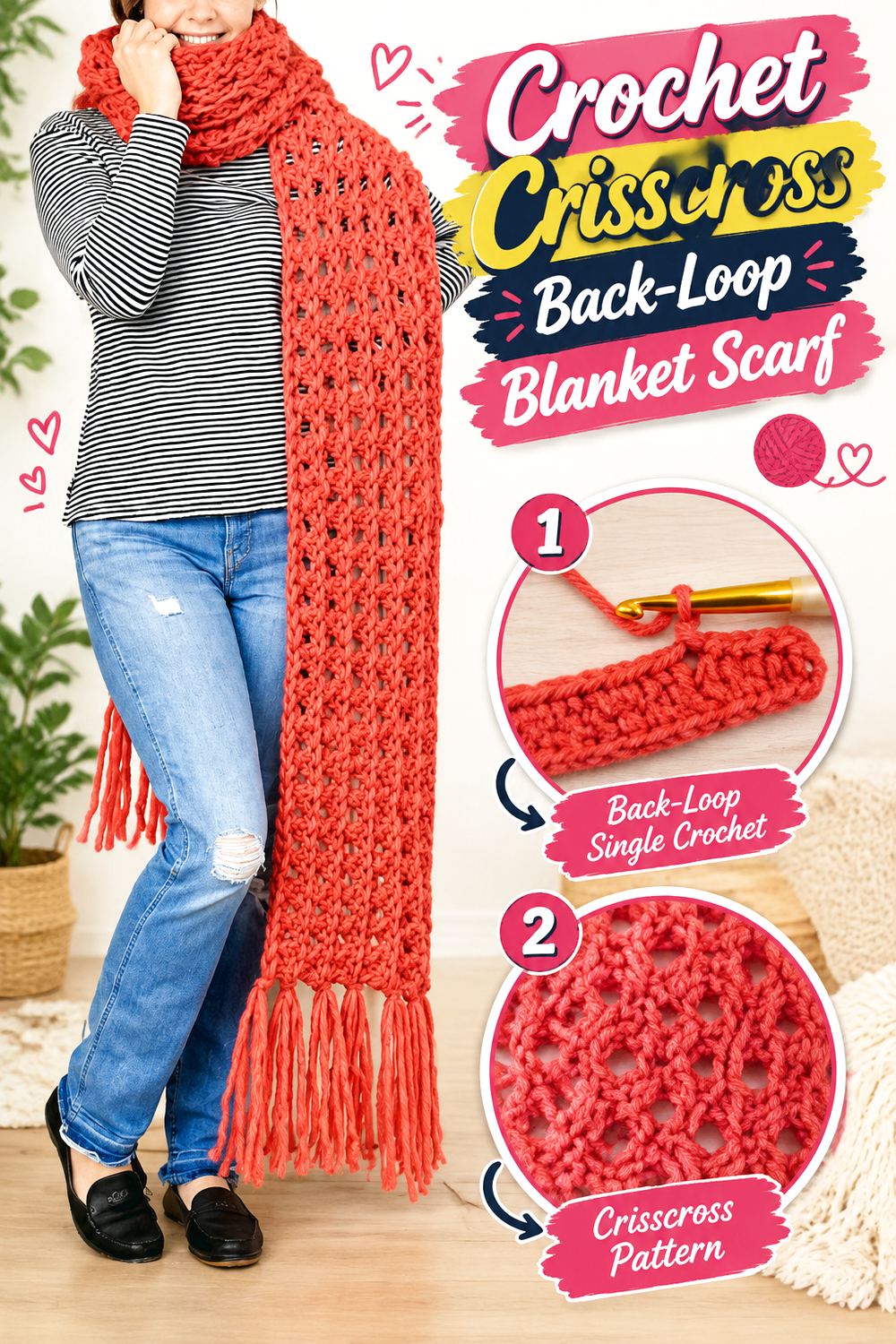
Dream a Little Bigger’s Crisscross Crochet Super Scarf measures approximately 108 inches long by 11 inches wide before fringe. Crossed double crochet creates the dominant texture, and the pattern is worked through back loops, giving the surface additional definition. Optional fringe finishes the short ends.
This design is notably long without becoming unusually wide, so it suits readers who like multiple wraps and long hanging ends more than shoulder-spanning coverage. The crossed stitches also provide a different type of texture from ribs or bobbles: the surface reads as interlaced rather than heavily raised.
Lengthwise Construction Changes the Commitment
The scarf is worked lengthwise, so each row spans the long dimension. That means you establish a major part of the final length early rather than gradually adding it row after row.
Measure the foundation carefully before continuing. A mistake at the beginning is more consequential on a 108-inch project than on a narrow scarf worked from one short end to the other.
Keep Crossed Stitches Relaxed
Crossed stitches can pull the fabric inward if they are worked much tighter than the surrounding rows. On a large rectangle, repeated tension differences may affect edge straightness and drape.
Periodically spread the scarf flat without stretching it and compare the width in several places. If the crossed sections pinch noticeably, review your tension and the original tutorial before continuing through many more long rows.
Fringe Can Soften Minor Edge Irregularity
The tutorial treats fringe as optional and places it on the short ends. Visually, that can make the ends feel softer and less abrupt.
It should not be used as a substitute for correcting major tension problems, though. If the scarf is narrowing or widening through the body, fix that issue first. Fringe works best as a finishing decision, not camouflage for structural distortion.
Original Tutorial and Creator Credit
Creator/Site: Dream a Little Bigger
8. Crochet Nordic CC Blanket Scarf

The Winter Wanderer from Make & Do Crew moves away from repeated horizontal rows and uses corner-to-corner crochet to build a long Nordic-inspired colorwork scarf. The finished design is approximately 102 by 10.5 inches and uses a graph to create repeating snowflake-style motifs.
This is the strongest graphic option in the list. Instead of relying on fringe or surface texture as the main attraction, the scarf uses motif placement and color contrast across an oversized rectangle. It suits makers who want their blanket scarf to function almost like wearable fiber art while retaining the practical wrapping possibilities of a long super scarf.
Motif Placement Makes Gauge More Visible
Gauge may not be as fit-critical here as it is for a sweater, but it still affects the final scale of every C2C motif. A larger-than-expected square compounds across a long graph.
Work enough C2C blocks to compare with the tutorial’s gauge before assuming the finished dimensions will match. This is particularly important if you substitute yarn, because the scarf already measures more than eight feet in length.
Choose Contrast for the Graph, Not the Skein
Two colors that look distinct when held separately can become harder to distinguish when worked into small adjacent blocks. Before committing, photograph your proposed colors in grayscale or place them side by side from a distance.
The goal is not necessarily maximum contrast, but enough value difference for the Nordic motifs to remain legible. A successful palette lets the graph read clearly without requiring harsh color combinations.
Manage Ends as Part of the Project
Colorwork can create more yarn management and finishing than a one-color rectangular scarf. Keep the working yarn organized and weave or secure ends according to the designer’s recommended method rather than leaving all finishing decisions for the last moment.
The extra organization is worthwhile if the graphic motif is the reason you chose this design, but it makes this project a different experience from a repetitive one-color super scarf.
Original Tutorial and Creator Credit
Creator/Site: Make & Do Crew
9. Crochet Woven Two Tone Scarf Wrap

All About Ami’s Two-Tone Scarf Wrap is substantially wider than many super scarves, measuring about 52 by 19 inches unstretched before fringe. Instead of simply changing yarn colors between rows, contrast chains are woven through the crocheted base to create a running-stitch effect. The finished piece is also visually reversible, with the two sides showing the contrast differently.
This makes it one of the most blanket-like options in the roundup. Its width favors shoulder draping, yet it can still be gathered around the neck. The woven surface treatment adds design interest without converting the entire fabric into dense colorwork.
Treat the Woven Strands as Structure and Decoration
The contrast strands sit within the base fabric, so their tension matters. If they are pulled too tightly, they may shorten or pucker the scarf. If they are left excessively loose, they can disrupt the clean running-stitch appearance.
The designer discusses how the scarf and contrast strips may stretch with wear. Follow that project-specific guidance rather than treating the woven chains as ordinary surface embroidery.
This Width Favors Shoulder Draping
At about 19 inches wide before stretching, the scarf has enough depth to sit more naturally across the shoulders than an 8- or 10-inch super scarf.
That also means there is more fabric to gather if you wear it close to the neck. If neck wrapping is your main goal, test a similarly wide shawl or folded blanket around your shoulders before choosing this format.
Fringe Completes the Woven Look
The designer coordinates the contrast strands with the fringe and frays the fringe for a fuller finish. That makes the edging part of the overall textile effect rather than an independent add-on.
If you omit fringe, expect the scarf to look more tailored and for the woven strand ends to require a different finishing solution. Consult the tutorial before changing this detail because the contrast construction and fringe are visually connected.
Original Tutorial and Creator Credit
Creator/Site: All About Ami
10. Crochet Soft Chevron Cloud Super Scarf

Moogly’s Hygge Cloud Super Scarf is a 10-by-90-inch design worked in bulky fuzzy yarn. Its stitch pattern creates a subtle chevron effect without relying on conventional increases and decreases, while optional corner tassels finish the ends.
This option is less about sharp stitch definition than soft surface and gentle movement. The fuzzy material used in the sample creates a clouded texture that visually blends individual stitch edges. That makes it particularly different from the crisp C2C colorwork and deeply ridged scarves elsewhere in the list. It is a useful choice when a soft, plush appearance matters more than highly defined crochet geometry.
Fuzzy Yarn Hides and Softens Detail
A halo can make an oversized scarf look softer, but it can also make individual loops harder to see. That matters if you frequently need to undo stitches or count by visually inspecting the previous row.
Before substituting another fuzzy yarn, work enough of the pattern to confirm that you can comfortably identify the spaces required by the design. A yarn you enjoy touching is not automatically one you will enjoy crocheting with for 90 inches.
Keep the Chevron Rhythm Consistent
Because the chevron effect comes from the stitch arrangement rather than large shaping changes, mistakes can interrupt the visual rhythm without immediately changing the overall width.
Check the pattern alignment every few rows rather than relying only on the total stitch count. Catching a misplaced stitch early is considerably easier than tracing the pattern through a fuzzy fabric later.
Original Tutorial and Creator Credit
Creator/Site: Moogly
11. Crochet Tunisian Color Block Blanket Scarf
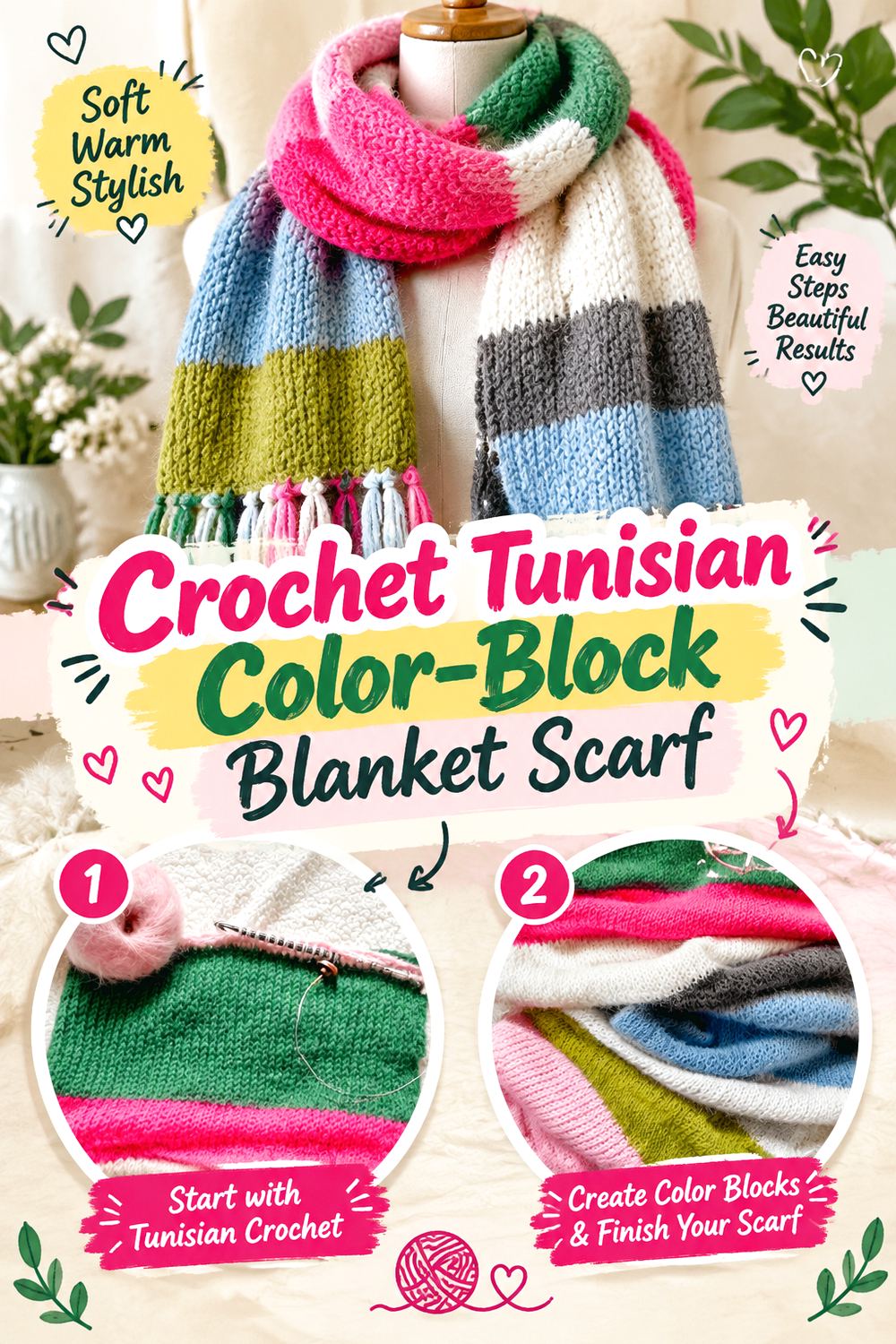
The Bestie Scarf from TL Yarn Crafts introduces Tunisian crochet to the collection. At 15 inches wide by 80 inches long, it has genuine wrap-like dimensions, while Tunisian knit stitch gives the fabric a surface that resembles knitted stockinette more than conventional crochet. The design uses a sequence of color blocks for a bold, elongated layout.
This is an appealing alternative when you want a broad blanket scarf but prefer smoother visual texture over shells, bobbles, or obvious crochet clusters. It also uses a Tunisian hook, so it represents a meaningful construction difference rather than simply another stitch variation on a standard hook.
Tunisian Fabric Needs Room on the Hook
A 15-inch-wide Tunisian project holds many active loops during the forward pass. Use the hook style specified or recommended by the designer, and make sure your hook or cable comfortably accommodates the width.
Trying to crowd a wide blanket scarf onto equipment that is too short can make tension and handling unnecessarily difficult. If Tunisian crochet is new to you, practice the featured stitch on a smaller swatch before moving into the full scarf.
Curling Should Be Evaluated Early
Tunisian knit stitch can have a tendency to curl depending on yarn, gauge, border, and finishing. The original tutorial includes its own finishing guidance.
Do not wait until 80 inches are complete to decide whether your substituted yarn behaves acceptably. Make a useful-sized swatch and let it rest. If it curls strongly, determine whether blocking and the pattern’s finishing treatment resolve it before proceeding.
Color Blocks Make Substitution Planning Easier
Large color sections can accommodate either a coordinated palette or a carefully planned stash selection. However, switching to yarns with different fibers or thicknesses from block to block can create uneven width.
If you want a scrappy version, choose yarns that behave similarly and compare each new yarn against your established gauge. Color diversity is useful; fabric inconsistency is usually less desirable in a broad scarf.
Original Tutorial and Creator Credit
Creator/Site: TL Yarn Crafts
12. Crochet Chunky Ribbed Fringe Blanket Scarf
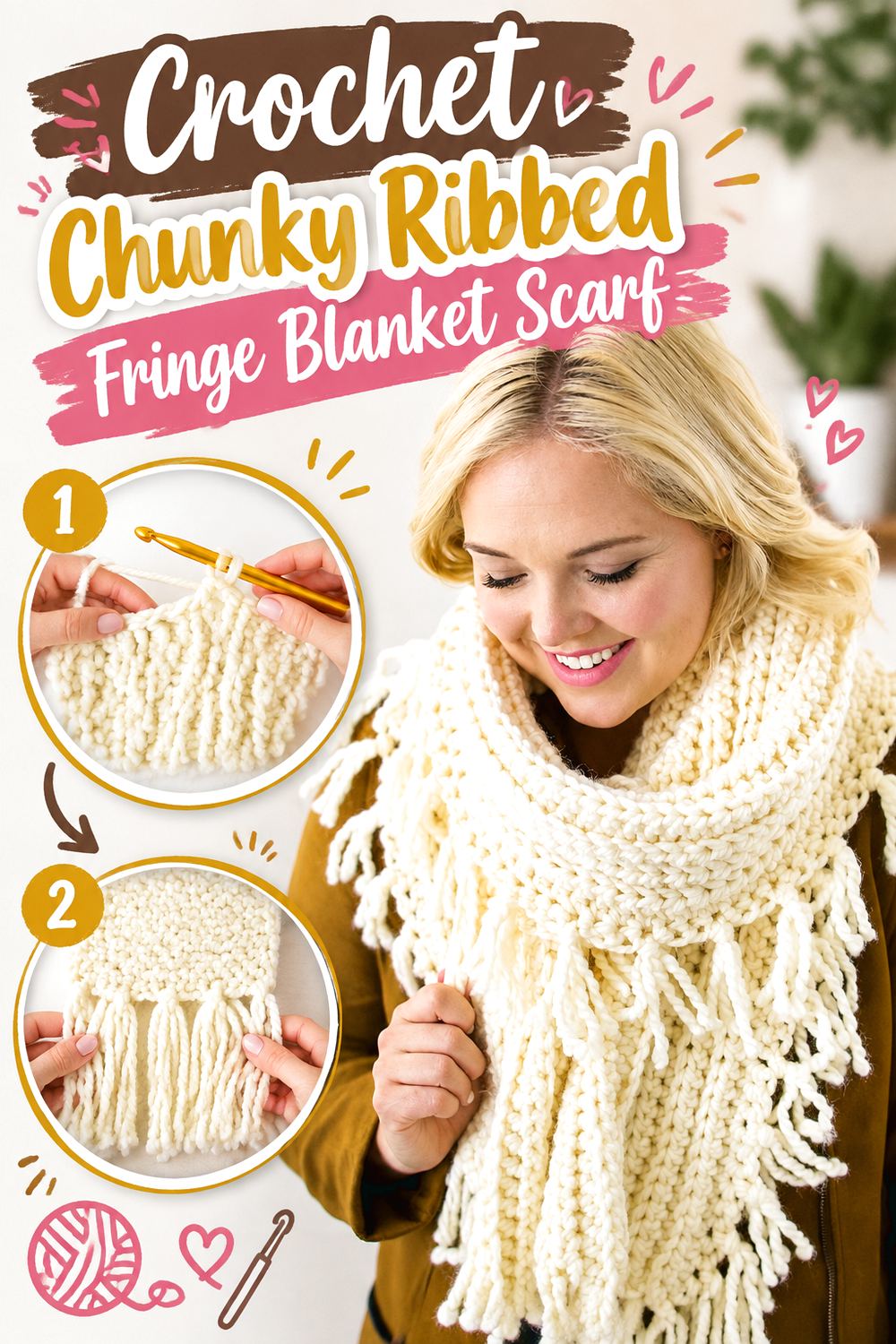
Persia Lou’s chunky scarf was directly inspired by the blanket-scarf trend. The finished piece measures about 76 by 10 inches before tassels, uses super-bulky yarn, and creates ribbing with back-loop stitches. Rather than limiting embellishment to four corners, tassels are distributed repeatedly along the long sides, making the fringe one of the most prominent visual features.
The scarf itself has a simple elongated form, but the combination of stretchable ribbing and extensive tasseling gives it a distinctly bohemian silhouette. Choose it when edge movement and texture appeal more than intricate stitch motifs or multicolor graphics.
Long-Side Tassels Change the Silhouette
Most scarves place fringe only across the short ends. Here, repeated tassels along the long edges create movement across much more of the scarf.
That can look dramatic when the piece is draped loosely but may feel busier when wrapped closely around the neck. Consider how you actually wear scarves before adopting the full tassel treatment. You can evaluate the look by pinning temporary yarn bundles along a finished swatch or comparable scarf.
Ribbing Adds Stretch to an Already Long Piece
The designer describes the ribbed fabric as stretchy. A scarf that measures 76 inches flat may therefore behave differently while hanging under its own weight.
If you substitute a heavier fiber, check vertical stretch before intentionally lengthening the piece. Gravity plus tassel weight can make a long, flexible accessory grow more than expected during wear.
Care Needs Extra Attention With Dense Fringe
Large numbers of tassels can tangle during washing or storage. Follow the yarn label and any designer care guidance rather than assuming a machine cycle is suitable.
For storage, keeping the tassels straight instead of tightly crushing the scarf into a small container can reduce unnecessary tangling. If low-maintenance care is a priority, this is one design where simplifying the fringe may be worth considering.
Original Tutorial and Creator Credit
Creator/Site: Persia Lou
13. Crochet Crossed Stitch Flow Super Scarf

My Hobby is Crochet’s Go with The Flow Super Scarf measures approximately 9.5 by 84 inches before fringe and is worked lengthwise in bulky yarn. Alternating front and back crossed double crochet produces a braided-looking texture when the scarf is viewed vertically.
This is a strong choice for someone who wants an oversized scarf with obvious stitch architecture but not the extra bulk of heavy bobbles or dense cables. Straight sections interrupt the crossed texture, giving the surface rhythm. Fringe at the short ends provides a conventional scarf finish, while the elongated length keeps the overall silhouette firmly in super-scarf territory.
Cross Direction Creates the Visual Effect
The appeal of this design depends on alternating different crossed-stitch orientations. If the front and back crossings become mixed unintentionally, the vertical braided appearance can lose continuity.
Pause after the first complete textured section and inspect the fabric from several feet away. It is much easier to identify a misplaced crossing when only a small section needs correction.
A Larger Hook Influences Drape
The designer explains that a larger hook than the yarn label suggestion was used to obtain the desired drape. That is a useful reminder that yarn labels provide general recommendations rather than project-specific fabric requirements.
When substituting yarn, prioritize the fabric you are producing. If your version is noticeably stiffer than the source, simply matching the nominal yarn category may not be enough.
Resizing Is Built Into the Construction
The tutorial explains how to alter length through the foundation and width through additional rows. That makes the design more adaptable than a motif scarf where resizing can disturb a graphic repeat.
Still, calculate the consequences before expanding both dimensions. Increasing width and length together raises yarn usage and finished weight much faster than changing only one measurement.
Original Tutorial and Creator Credit
Creator/Site: My Hobby is Crochet
14. Crochet Smoky Mountain Cluster Super Scarf
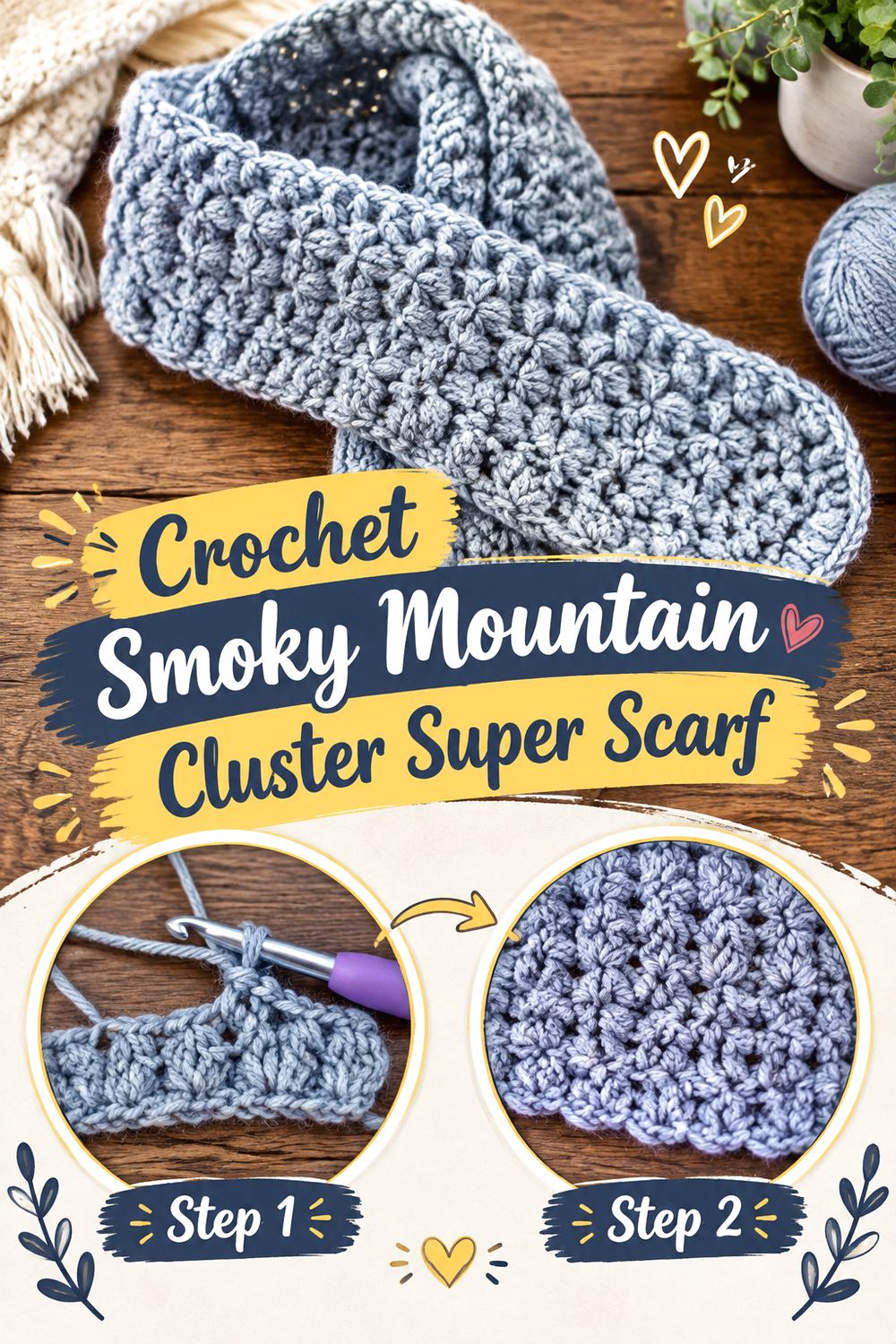
The Smoky Mountain Super Scarf from Whistle and Ivy is the longest design in this group, with the tutorial giving a finished measurement of approximately 125 by 9.5 inches. It uses super-chunky yarn and alternates smoother stitch sections with substantial two-double-crochet cluster texture.
Its narrow-to-moderate width keeps the extraordinary length from becoming a full shoulder blanket, but there is still a great deal of fabric available for dramatic wrapping. This is a statement choice for someone who enjoys oversized proportions and noticeable texture. It differs from the 123-inch Simply Collectible design through its chunkier cluster construction and surface rhythm.
Consider Where 125 Inches Will Hang
More length is not automatically more useful. At approximately 125 inches, this scarf can create multiple wraps and still leave visible ends.
Measure 125 inches of inexpensive cord and wrap it around yourself before starting. This simple check gives you a realistic sense of the length without changing the tutorial blindly. If it feels excessive for your height or wardrobe, review the construction to determine an appropriate shorter stopping point.
Cluster Sections Add Local Thickness
The two-double-crochet clusters create a different density from the smoother portions of the scarf. That variation is part of the design, but tight tension can make those areas disproportionately stiff.
Compare the flexibility of the first cluster section with the surrounding fabric. The scarf should remain comfortable enough to bend around the body rather than behaving like a rigid strip.
Super-Chunky Yarn Magnifies Small Changes
Changing a few rows or altering tension may have a larger physical effect in super-chunky yarn than in a finer material. Even small increases in width add noticeable volume when the scarf is wrapped.
If you substitute yarn, check both gauge and hand feel. Matching the dimensions while producing a much denser fabric can make this already oversized design substantially heavier than intended.
Original Tutorial and Creator Credit
Creator/Site: Whistle and Ivy
How to Choose Between These Crochet Blanket Scarf Ideas
Start with the way you expect to wear the finished piece. For maximum shoulder coverage, the Fireside and Two-Tone Scarf Wrap designs give you notably broader fabric. The Bestie Scarf is also wide at 15 inches but combines that scale with smoother Tunisian texture.
For dramatic length, the Simply Collectible and Smoky Mountain designs extend beyond 120 inches, while the Nordic and Crisscross scarves exceed 100 inches.
Texture-focused makers can compare mock bobbles, ribs, crossed stitches, clusters, or fluffy chevrons. If color is the main attraction, the C2C Nordic, color-block, dropped-stitch stripe, and woven two-tone designs offer four genuinely different ways to use it.
Conclusion
These 14 crochet blanket scarf ideas show how much an oversized rectangle can change through proportion and construction. A 19-inch-wide wrap behaves very differently from a 125-inch-long super scarf, even though both belong in the same broad cold-weather category. Texture also matters: ribbing provides movement, crossed stitches create architectural detail, Tunisian crochet offers a smoother surface, and C2C colorwork turns the scarf itself into a graphic motif.
Choose your project by deciding first whether you want shoulder coverage, dramatic wrapping length, strong texture, or colorwork. Then consider whether the original yarn weight will give you the amount of bulk you actually enjoy wearing. Use the credited original tutorials near each idea for exact construction, materials, gauge, and finishing details.
Frequently Asked Questions
How wide should a crochet blanket scarf be?
There is no single required width. The examples here range from roughly 8-inch super scarves to a wrap about 19 inches wide, and those proportions serve different purposes. Narrower versions are easier to gather around the neck, while wider pieces provide more shoulder coverage. Use an existing scarf, shawl, or folded piece of fabric to test the width against your preferred styling before changing a tutorial.
Can I make a blanket scarf with worsted-weight yarn instead of bulky yarn?
Possibly, but substituting yarn weight can change dimensions, drape, stitch definition, yardage, and the number of stitches required. Several designs here already use medium or worsted-weight yarn successfully, proving that a blanket scarf does not have to be super bulky. Follow the selected tutorial’s sizing logic and make a swatch. Do not assume you can replace bulky yarn stitch-for-stitch with worsted yarn and keep the same finished size.
How can I stop an oversized crochet scarf from becoming too heavy?
Consider yarn weight, fiber density, stitch openness, width, and total length together. Reducing only one dimension can make a meaningful difference. Open stitch patterns may use less material than very dense fabric, but the actual result still depends on yarn and gauge. Before making a very long version, weigh a substantial swatch or partially completed section and estimate whether the finished piece will be comfortable for the way you intend to wear it.
Should a crochet blanket scarf be blocked?
Blocking can help some scarves settle, even edges, or open texture, but the appropriate method depends on the fiber and construction. Natural fibers, acrylics, fuzzy yarns, and mixed-fiber materials should not automatically receive the same treatment. Check the yarn label and the designer’s finishing instructions first. If you substituted yarn, experiment on your gauge swatch before applying heat, steam, or water to an entire oversized scarf.
Is fringe necessary on a crochet blanket scarf?
No. Fringe changes the style but usually is not what makes a scarf oversized. Several projects use tassels or extensive fringe, while the visual identity of others comes from colorwork, Tunisian fabric, or texture. If you remove fringe, consider how the unfinished short edges will look and whether the tutorial relies on fringe to integrate color-change ends or other decorative elements. A clean border can sometimes replace it, but that is a modification rather than part of the original design.
How do I resize a crochet blanket scarf safely without rewriting the pattern?
Use resizing guidance provided by the original designer whenever possible. Some tutorials in this list explicitly give stitch multiples or explain which dimension is controlled by the starting chain and which by the number of rows. For motif or C2C designs, arbitrary resizing can disrupt the graphic layout. Make one change at a time, swatch first, and confirm that the altered size still produces a practical weight and proportion.