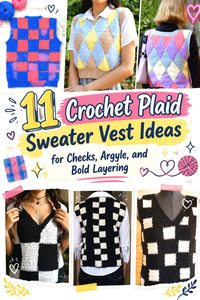
Plaid-inspired crochet sweater vests can look surprisingly different once you move beyond color alone. Some use crisp two-color checkerboards, others break the grid with solid columns, oversized diamonds, or argyle-style geometry, and true plaid designs may add overlapping colors and considerably more structure. Silhouettes vary too, from cropped pullovers and relaxed boxy layers to longer vests and substantial zip-front pieces.
This collection treats plaid in the broader visual sense, including checkerboard, chessboard, diamond, argyle, and traditional plaid constructions. The goal is not simply to find eleven color variations. Instead, each idea introduces a meaningful difference in motif scale, construction, length, fabric weight, surface detail, finishing, or intended styling. Use the comparisons and checkpoints below to decide which visual effect works with your preferred fit, yarn behavior, and tolerance for managing color changes.
Quick List
- Crochet Boxy Two-Tone Checkerboard Sweater Vest
- Crochet Cropped Checkerboard Sweater Vest
- Crochet Column-Interrupted Plaid Sweater Vest
- Crochet Paneled Wednesday Check Sweater Vest
- Crochet Fuzzy-Contrast Long Check Sweater Vest
- Crochet Classic Argyle V-Neck Sweater Vest
- Crochet Large-Diamond Sweater Vest
- Crochet Chunky Jacquard Plaid V-Neck Vest
- Crochet Double-Layer Zippered Plaid Vest
- Crochet Full-Front Chessboard Sweater Vest
- Crochet Mood Checkerboard Sweater Vest
Choose the Plaid Style Before the Vest Shape
“Plaid” can describe several very different visual systems in crochet. A straightforward checkerboard alternates square blocks and produces the strongest graphic grid. Argyle introduces diamonds and diagonal movement, while traditional plaid usually relies on multiple colors or overlapping-looking bands to create a more textile-like effect. These approaches do not respond to shaping in the same way.
Large checks make a vest feel bold but leave fewer opportunities to disguise changes around a V-neck or armhole. Smaller repeats can accommodate shaping more gradually, although they also increase the number of color transitions. Argyle needs particular attention near the center front because an off-center diamond can become more noticeable than a slightly interrupted checker. Decide which motif matters most before choosing the silhouette; otherwise, garment shaping may force compromises in the feature you wanted to emphasize.
Swatch for Drape, Colorwork Tension, and Layering Room
Colorwork can alter fabric behavior even when two yarns are labeled the same weight. Carried or enclosed strands may produce a denser fabric, while frequent changes can tighten individual sections if tension is inconsistent. Very chunky yarn magnifies both the checks and the thickness of the finished vest. Fuzzy yarn has the opposite visual effect: its halo can soften hard geometric boundaries.
For a wearable, evaluate more than stitch gauge. Let a useful swatch rest, then compare its width, vertical stretch, thickness, and flexibility with the kind of layer you want to wear underneath. A vest intended over a shirt may need different ease from one worn nearly as a top. When substituting yarn, compare the tutorial’s intended fabric with your sample rather than assuming that matching yarn weight alone will preserve the designer’s fit.
Plan Color Changes and Finishing Before You Start
Plaid and checkerboard projects can involve carried strands, crochet colorwork, separate panels, or frequent yarn changes. Each method brings a different finishing issue. Carrying yarn may add density. Cutting colors frequently creates more ends. Separate colorwork panels shift some of the challenge toward seam alignment.
Before committing to a large vest, examine the original tutorial’s approach and decide whether it suits how you like to work. Also consider where visual interruptions will occur. A crooked side seam may be inconspicuous on a solid garment but obvious when rows of checks are supposed to meet. Neckline borders, armhole edging, and ribbing can help visually frame a busy motif, yet overly tight finishing may pull the grid out of shape. Check the garment flat and on the intended wearer before treating an edge as finished.
1. Crochet Boxy Two Tone Checkerboard Sweater Vest
 SAVE
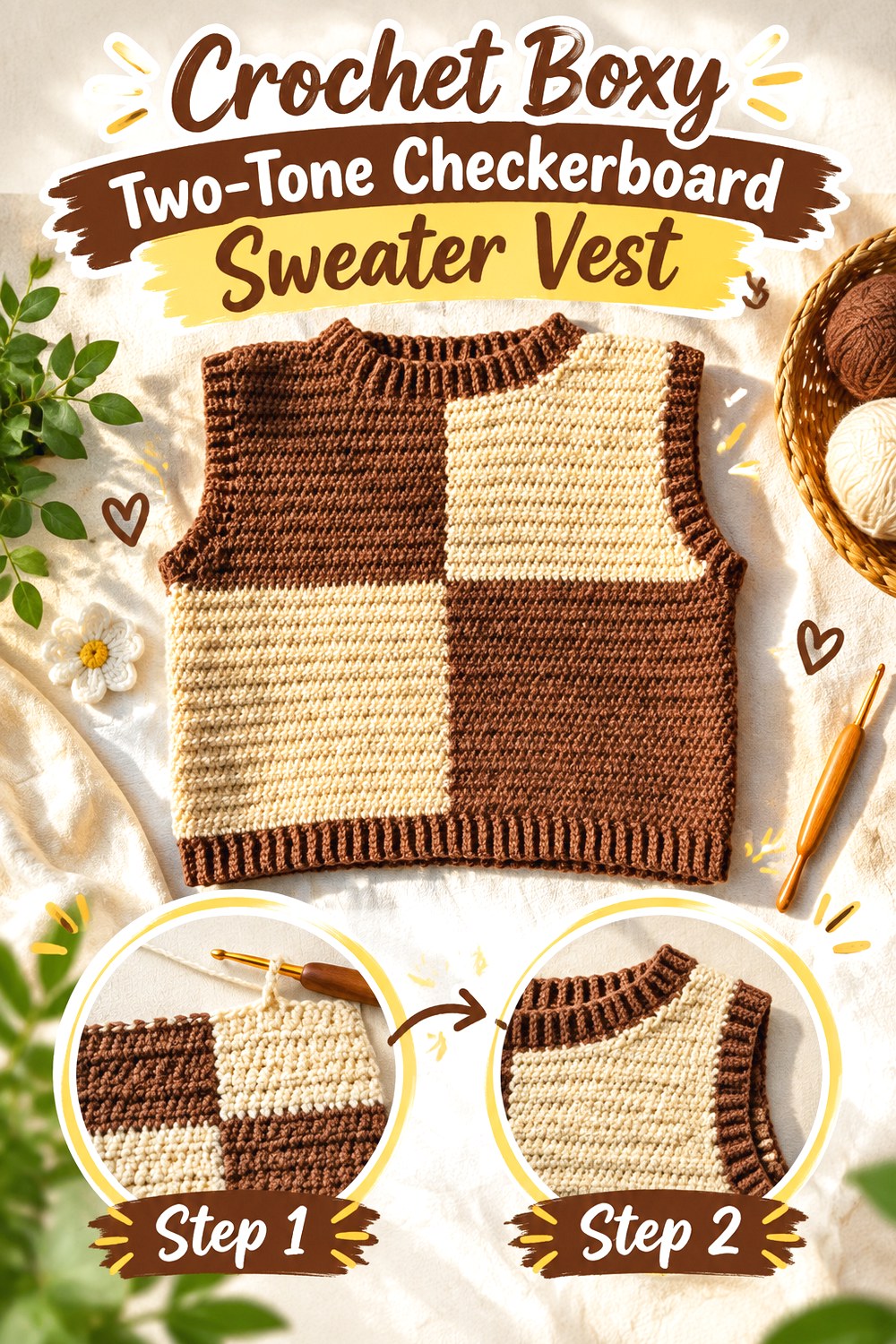
SAVEA clean two-color grid makes this version one of the clearest starting points for the plaid-inspired look. HayHay Crochet’s design uses a boxy, slightly oversized sweater-vest silhouette, with broad checks running continuously across the body. The original tutorial also shows ribbing as an optional finishing choice and provides guidance for a lighter, fluffier variation, which makes the same graphic concept useful for comparing different fabric personalities.
This style suits someone who wants the pattern to provide most of the visual interest without adding complicated surface decoration. Because the grid is so regular, fit and tension deserve equal attention: stretched or compressed sections can make individual squares appear noticeably different.
Decide How Boxy You Want the Body
A relaxed rectangular body gives checkerboard blocks room to remain visually regular, but “boxy” does not have to mean excessively wide. Compare the finished garment measurements supplied by the tutorial with both your body and a sweater vest you already like wearing. Think about what will sit underneath it as well. Extra room that feels intentional over a button-down can look quite different when the vest is worn alone.
Keep Checker Blocks Square After Blocking
A check can look square on the hook and become rectangular after the fabric relaxes. That does not automatically mean something is wrong, but it changes the finished visual rhythm. Use your swatch to see whether the fabric tends to grow more vertically or horizontally. When blocking or washing, avoid forcing only one section of the vest into shape, since uneven stretching can make neighboring checks appear mismatched.
Optional Ribbing Changes the Silhouette
The source specifically presents ribbing as optional, making the finishing choice part of the design rather than an automatic requirement. Without a strong border, the checkerboard can read as cleaner and more uninterrupted. Ribbing can create a more conventional sweater-vest frame and visually contain the pattern. Whichever finish you prefer, avoid making the hem or armhole border substantially tighter than the colorwork fabric unless that effect is intentional.
Original Tutorial and Creator Credit
Creator/Site: HayHay Crochet
2. Crochet Cropped Checkerboard Sweater Vest
 SAVE
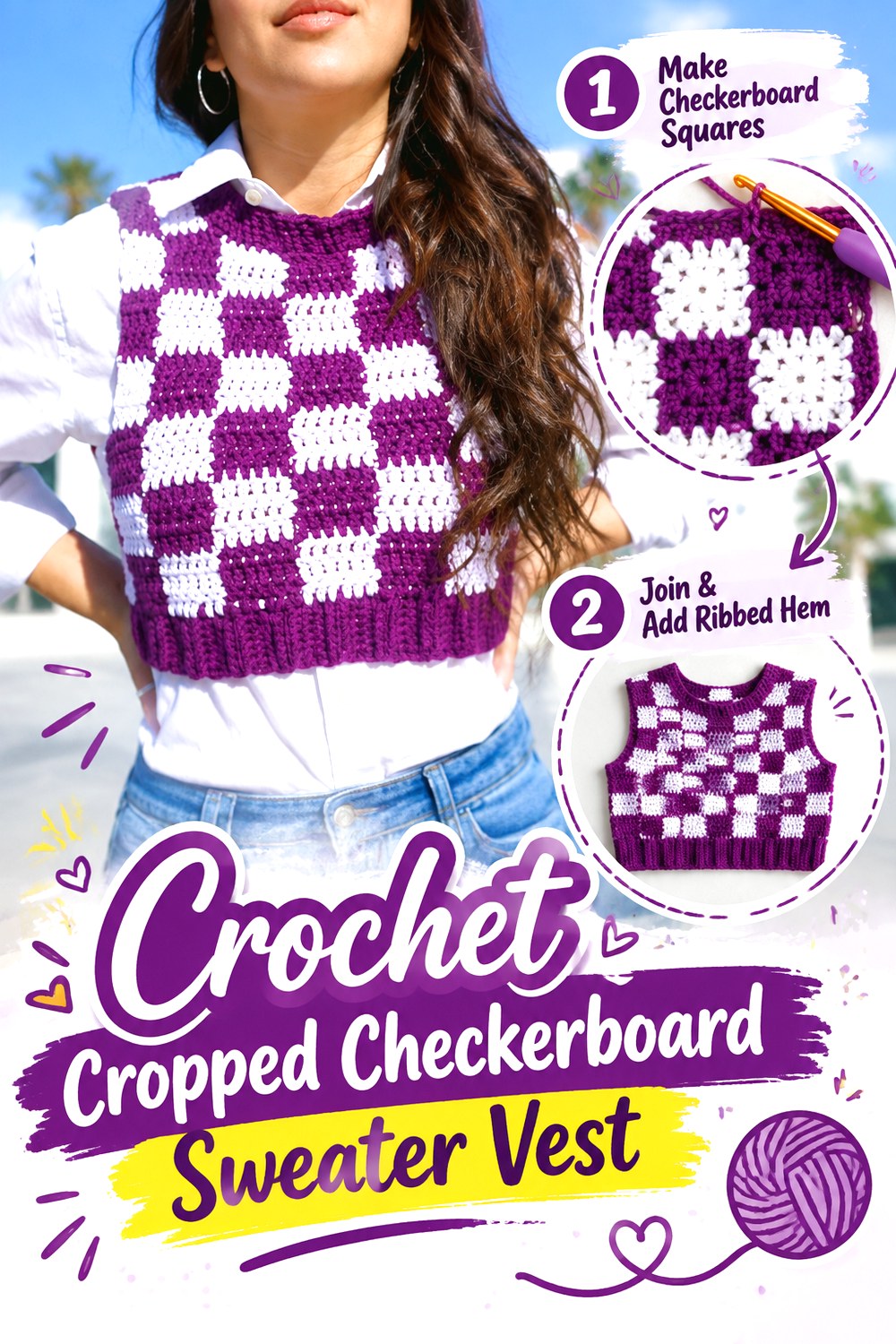
SAVEA cropped checkerboard shifts attention toward proportion rather than simply repeating the grid over a full-length torso. In it’s erin b.’s tutorial, the finished vest is deliberately shorter, and the creator notes that a longer version can be produced by continuing the check pattern. That makes the tutorial particularly relevant for readers deciding whether they want the checks to stop around the waist or continue into a more traditional sweater-vest length.
The shorter silhouette can work well over high-rise bottoms, dresses, or longer shirts because there is less crochet fabric competing with the outfit underneath. However, shortening a patterned garment also means fewer complete check repeats, so deciding the endpoint early produces a more deliberate composition.
Set the Crop Point Before Extending the Checks
The creator specifically identifies the sample as cropped while noting that additional checker rows can lengthen it. Before making that adjustment, hold a garment of similar length against the intended wearer rather than judging from row count alone. Body length, bust shape, and the height of the waistband underneath all influence where a crop visually lands.
Layering Changes the Width You Need
A short vest still needs adequate room through the chest and armholes. If you expect to wear it over a crisp shirt, measure with a comparable layer underneath. Extra width can also change where large checks sit relative to the side seams, so resizing is not only a comfort decision. When the motif is bold, even small width changes can shift the apparent center of the design.
Keep the Hem From Fighting the Grid
On a cropped garment, the hem sits closer to the main focal area and therefore attracts more attention. A border that cinches sharply can distort the bottom row of checks or cause the vest to balloon above it. Before finishing, compare the unstretched edge with the body width. A clean transition usually preserves the graphic quality of the checkerboard better than forcing a dramatic taper.
Original Tutorial and Creator Credit
Creator: it’s erin b.
3. Crochet Column Interrupted Plaid Sweater Vest
 SAVE
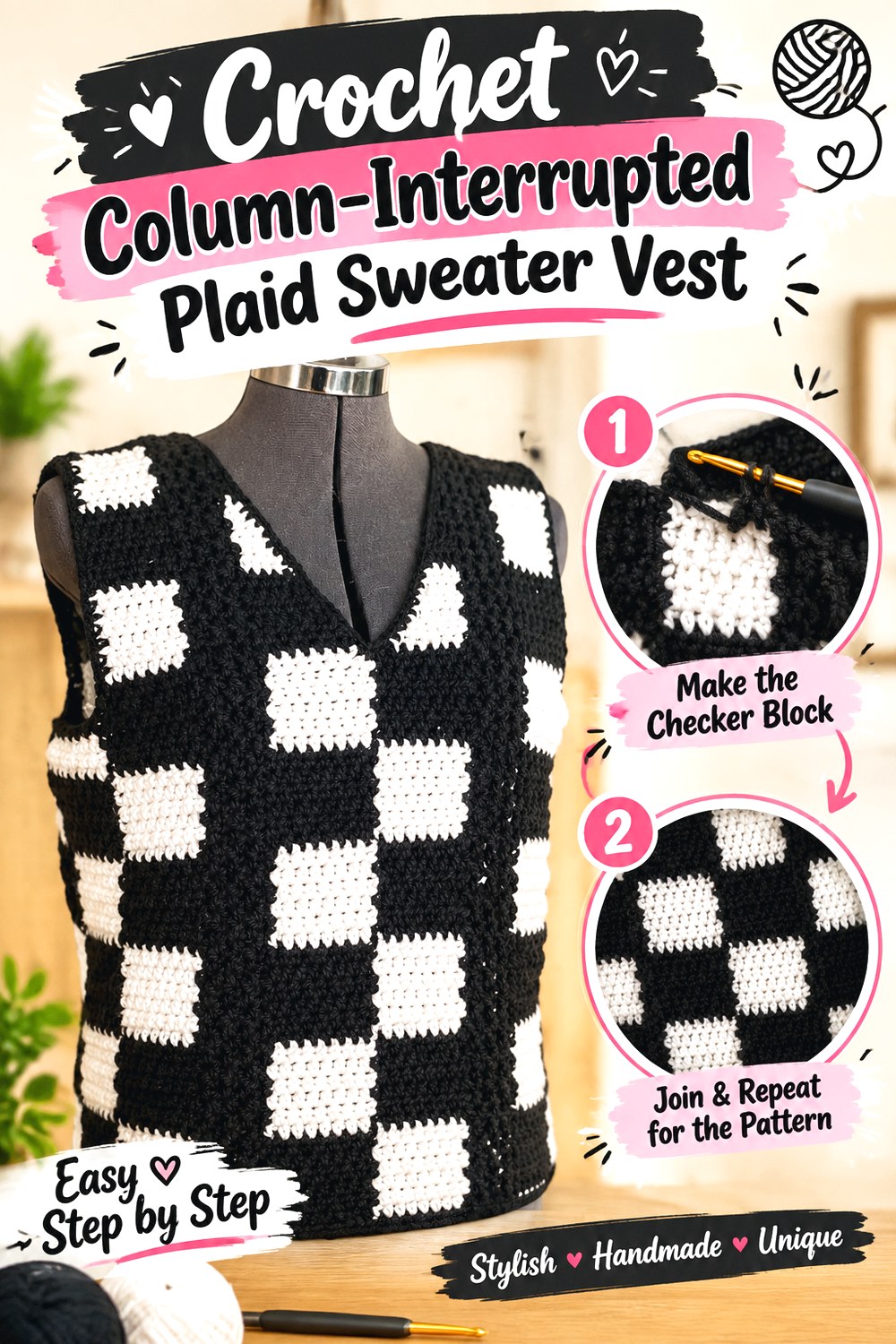
SAVEInstead of covering the vest with an uninterrupted checkerboard, the Pops de Milk design introduces solid black columns through the check pattern. That interruption changes the garment from a simple repeating grid into something more architectural. The written tutorial describes separate front and back pieces worked in rows, with neckline shaping added to the otherwise straightforward body form.
This is a useful direction when plain checkerboard feels too uniform. The darker vertical elements can visually organize the front and create a stronger relationship between the motif and the vest silhouette. Because those columns act as obvious landmarks, however, their alignment around the neckline and seams becomes part of the finished appearance rather than merely a construction detail.
Use the Solid Columns as Visual Anchors
A vertical band naturally attracts the eye, especially when it contrasts strongly with surrounding checks. Before altering width, consider whether your changes will leave the solid columns visually balanced across the torso. Adding space only at one side of a repeat can make the design look unintentionally shifted. When adapting, think in terms of the whole front composition rather than individual stitches.
Check Neckline Balance Before Seaming
The original project includes neckline shaping in the front and back pieces. With a strong geometric pattern, neckline symmetry is especially visible because the surrounding blocks provide a built-in reference grid. Lay both sides flat before joining shoulders and compare where the color sections end. Small discrepancies are easier to correct before seams and borders make the area less accessible.
Treat Block Size as a Fit Decision
Larger blocks create a bolder garment but also limit how gradually the pattern can respond to shaping. If you substitute a yarn that changes the block dimensions, the entire visual scale changes with it. Swatch the actual color sequence rather than only a solid patch so you can see both gauge and motif size. What looks balanced in a small sample may feel oversized once repeated across the torso.
Original Tutorial and Creator Credit
Creator/Site: Pops de Milk
4. Crochet Paneled Wednesday Check Sweater Vest
 SAVE
SAVEThis black-and-white vest takes a more segmented construction approach. The amazingishgrace video breaks the garment into checkered sections, solid side areas, joining, and finishing, so the final effect comes from arranging distinct parts rather than treating the entire torso as one uninterrupted grid.
That makes this idea useful for crocheters who like graphic checks but also want stretches of solid color to calm the pattern. The side sections can visually frame the checkerboard, while the panel construction creates natural points for evaluating width before everything is permanently joined. The trade-off is that seams become more important: poorly matched panel lengths or bulky joins can disrupt both fit and the crisp geometry that gives the vest its character.
Plan the Paneled Layout as One Composition
When solid and checkered sections meet, each panel affects how wide the motif appears on the finished body. Before joining, arrange the pieces in their final orientation and step back from them. This quick visual check can reveal whether one patterned section appears noticeably wider, narrower, or vertically shifted even when individual pieces seem correct in isolation.
Watch Seam Bulk Where Colors Meet
Dense colorwork can already be thicker than plain crochet. Adding a heavy join beside that fabric may create ridges that are visible from the front or uncomfortable at the side. Use the joining method indicated by the creator, then examine how it behaves with your yarn. If substituting fiber or weight, a seam sample can be more informative than guessing from the original fabric.
Judge the Pattern With the Vest Assembled
Flat panels do not always predict how the design will look once it wraps around a body. Shoulder slope, chest shape, and side seams can alter the apparent alignment of checks. Before final edge finishing, try on or carefully position the joined vest and inspect the motif from the front. It is easier to identify a twisting panel before adding another firm border.
Original Tutorial and Creator Credit
Creator: amazingishgrace
5. Crochet Fuzzy Contrast Long Check Sweater Vest
 SAVE
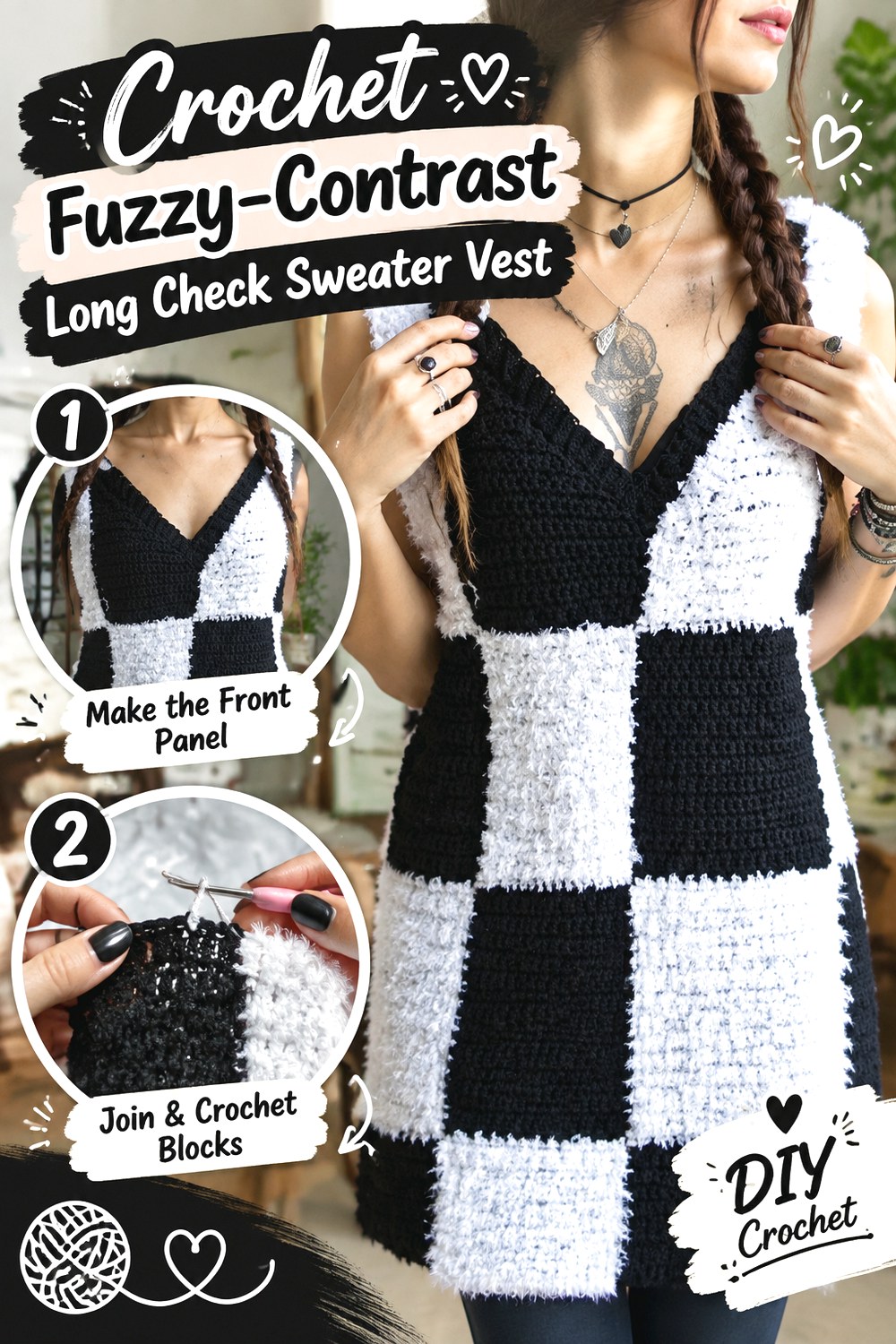
SAVEBloodimaryart Crochet’s version changes two variables at once: length and texture. The creator describes a longer Wednesday-inspired checkered vest and incorporates fuzzy white yarn together with black ribbing, giving the pale checks a softer surface than a standard smooth two-yarn checkerboard.
This approach is worth considering when you like strong black-and-white geometry but do not want every square to have the same crisp texture. The longer body also pushes the garment toward a more substantial layering piece. Those choices introduce practical consequences. A fuzzy yarn can obscure stitch definition and make color boundaries appear softer, while added length increases the importance of overall fabric weight, drape, and how much the vest may relax after wearing.
Fuzzy Contrast Softens Checker Edges
A haloed yarn changes more than surface feel. Fibers can blur the boundary where black and white blocks meet, producing a softer, almost brushed interpretation of the grid. Swatch both yarns together because differences in loft may affect apparent block size even when the stitch counts match. Also consider whether the fuzz makes it harder to identify stitches when correcting a color-placement mistake.
A Longer Body Needs Drape, Not Just Width
Extending a vest downward adds yarn weight, and that weight can pull the fabric vertically. This matters if you substitute a noticeably heavier fiber or make the garment longer than the sample. Check your swatch after it has hung for a while and compare the fabric’s movement with the intended silhouette. Extra length works best when it still falls cleanly rather than becoming rigid or excessively stretched.
Neck Ribbing Can Stabilize a Soft Fabric
The source’s use of black ribbing creates a strong visual boundary around the softer checkered body. More generally, an edge treatment can help a soft colorwork fabric look intentional, but it should not be so tight that the neckline puckers. Work enough of the border to test its behavior before committing to the entire opening.
Original Tutorial and Creator Credit
Creator: Bloodimaryart Crochet
6. Crochet Classic Argyle V Neck Sweater Vest
 SAVE
SAVEArgyle gives the plaid-family look a more traditional preppy direction. Instead of equal square blocks, flotjetops’ tutorial centers the design on diamond geometry across a sweater vest, creating diagonal movement that feels quite different from checkerboard.
The motif makes this a strong choice for readers who want pattern without covering the garment in a rigid grid. A V-neck pairs naturally with diamond shapes because both introduce angled lines, but those lines also make centering important. If the main diamonds drift noticeably to one side, the front may look asymmetric even when the physical dimensions are correct. Treat motif placement as part of fit planning from the beginning rather than as decoration added after sizing decisions.
Center the Diamonds Against the V-Neck
The center front is the strongest visual reference on an argyle vest. Before committing to a width adjustment, determine how the central diamond or gap will relate to the base of the V. If sizing changes require extra width, distributing it thoughtfully can preserve that relationship. An otherwise well-fitting vest can still look off-center when strong diagonal motifs no longer balance around the neckline.
Sample Diagonal Lines Before Committing
Diagonal colorwork can exaggerate inconsistent tension because the eye naturally follows the line across several rows. Make a motif sample rather than a plain gauge square. Look for sections that pull inward at color transitions or flare where strands are looser. Correcting your handling technique in a small sample is much simpler than trying to block repeated diamonds into alignment afterward.
Keep the Back Visually Connected
A dramatic front can make the back feel like an afterthought if color placement is not considered as part of the whole garment. Follow the original tutorial for its intended construction, and if you plan a personal color adaptation, preview front and back together. Repeating at least some of the same visual language can make the finished vest feel cohesive without requiring identical motif placement everywhere.
Original Tutorial and Creator Credit
Creator: flotjetops
7. Crochet Large Diamond Sweater Vest
 SAVE
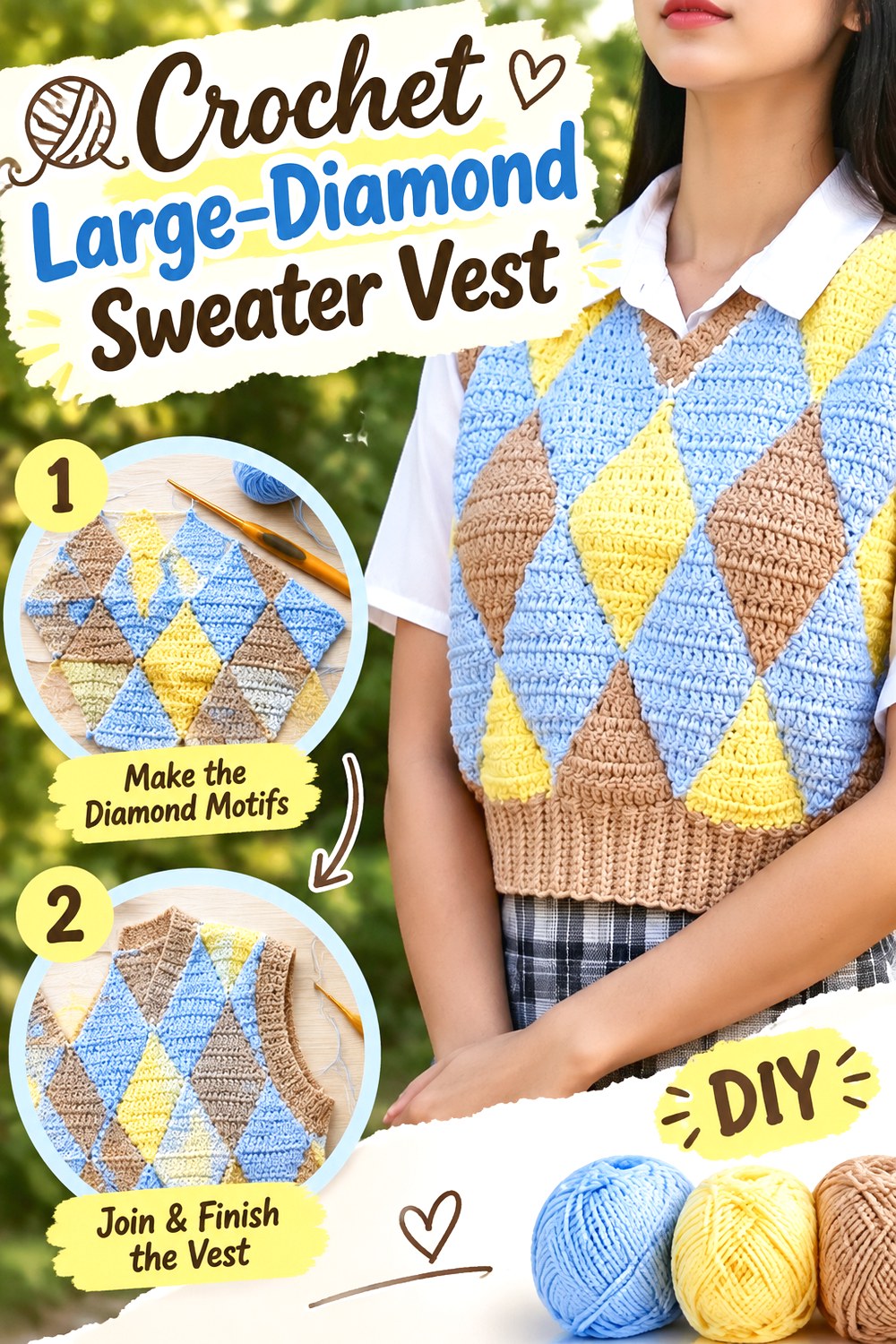
SAVEA larger diamond treatment gives geometric colorwork more breathing room. Chenda DIY’s tutorial focuses on a diamond vest inspired by another crochet design, using broad shapes rather than a dense field of tiny checks. This makes it a useful reference for readers whose idea of plaid leans toward bold argyle-like geometry rather than literal tartan.
With fewer, larger motifs, every placement decision becomes more visible. A diamond that meets an armhole awkwardly or disappears unevenly into the neckline can dominate the finished look. The advantage is clarity: large shapes allow contrasting colors to stand out strongly without requiring a very busy surface. This approach works particularly well when you want the vest itself to be the main graphic element of an outfit.
Large Diamonds Need More Negative Space
Bigger motifs benefit from enough surrounding background color to remain recognizable. Crowding several large diamonds into a narrow front can make the design feel compressed, especially near shaped edges. When planning a size adjustment, examine the ratio between motif width and total panel width. Enlarging the garment without reconsidering spacing may leave the original motif looking unexpectedly small; shrinking it can create the opposite problem.
Scale Motifs to the Finished Front Panel
Changing yarn weight, hook choice, or personal tension can change the physical size of each diamond. Instead of assuming the motif will remain proportional, measure a completed sample against your planned garment width. That check is particularly useful when adapting a visual tutorial, because a motif that looks balanced on the creator’s sample may occupy a different percentage of your own front panel.
Avoid Crowding the Armhole Shaping
Large color blocks leave fewer places to hide decreases or other shaping transitions. If a diamond approaches an armhole edge, review the original construction before changing its placement. General resizing is safest when it respects both fit and motif integrity. A slightly different spacing choice can often look more deliberate than squeezing nearly an entire diamond into an area that cannot accommodate it cleanly.
Original Tutorial and Creator Credit
Creator: Chenda DIY
8. Crochet Chunky Jacquard Plaid V Neck Vest
 SAVE
SAVEKatia’s Wednesday-inspired vest uses bold black-and-ecru checks, a V-neck, chunky yarn, and crochet colorwork in a substantially heavier-looking interpretation of the checkered vest. The original article identifies Victoria of @vicnaranjaviccristal as the designer and provides both the project instructions and guidance for adapting the sample to other measurements.
The appeal here is scale. Thick yarn turns each block into a major part of the garment instead of a small repeating accent. That can produce strong visual impact with relatively few checks, but it also means fabric thickness and gauge deserve close attention. This is not the version to resize casually by assuming another yarn will behave the same way; even modest changes in stitch size can alter both silhouette and checker proportions.
Chunky Yarn Makes Every Check More Dominant
When each stitch is physically larger, a small number of stitches can occupy a noticeable section of the torso. Katia’s tutorial uses a charted check system with chunky yarn, reinforcing how strongly gauge and motif scale are connected. If you want a subtler result, changing only the colors may be safer than changing yarn thickness without recalculating the garment.
Recheck Size When Changing Yarn Weight
Katia provides a specific method for adapting the garment through measurements and swatching rather than simply adding an arbitrary number of stitches. That principle is valuable for any substantial yarn substitution. Compare your swatch with the intended finished width and length, then consider whether the check proportions still suit the wearer before proceeding.
Keep Colorwork Tension Relaxed
The tutorial describes working with both color strands involved in the colorwork. In this kind of fabric, overly tight hidden or carried yarn can narrow individual sections and make the vest pucker. Check the reverse side periodically and spread the stitches naturally along the working section before tightening a color change. The goal is even fabric rather than loose loops or constrained checks.
Original Tutorial and Creator Credit
Creator/Site: Katia
9. Crochet Double Layer Zippered Plaid Vest
 SAVE
SAVEFor a more literal plaid rather than simple checkerboard, the Woodcutter’s Vest published by Interweave offers a distinctly structured direction. Jennifer Pionk’s design uses multiple plaid colors, and Interweave explains that the garment has separate checkered outer and black inner panels that are joined to create a two-layer vest. A separating zipper gives it an outerwear-like front rather than a pullover neckline.
That construction makes this the most substantial option in the roundup. It is useful when you want crochet plaid to behave more like a structured layer, but the extra fabric also raises the stakes for gauge, weight, seam accuracy, and closure alignment. Interweave specifically emphasizes swatching and steady tension because irregular blocks are easy to see in plaid.
Structure Matters More in a Zippered Vest
A zipper creates a fixed center-front edge, so the vest cannot simply stretch and settle in the same way as a loose pullover. Check the finished width and intended ease carefully before attaching a closure. If the body is significantly stretched while the zipper is installed, the edge may ripple or the plaid may appear distorted when the garment is relaxed.
Match the Two Layers Before Joining
The source notes that the checked exterior and black interior panels are made separately and then joined. Before joining comparable pieces, lay them together without stretching either layer. Any meaningful length or width difference is easier to address at that point. Forcing one layer to fit the other can create puckering that becomes especially obvious beside straight plaid lines.
Keep the Plaid Straight Along the Closure
A center-front zipper provides a strong vertical reference. If the plaid blocks tilt or change size as they approach it, the difference can catch the eye immediately. Interweave’s recommendation to maintain steady gauge is particularly relevant here. Periodically compare the working edge with a straight surface rather than relying only on stitch count.
Original Tutorial and Creator Credit
Creator/Site: Interweave
10. Crochet Full Front Chessboard Sweater Vest
 SAVE
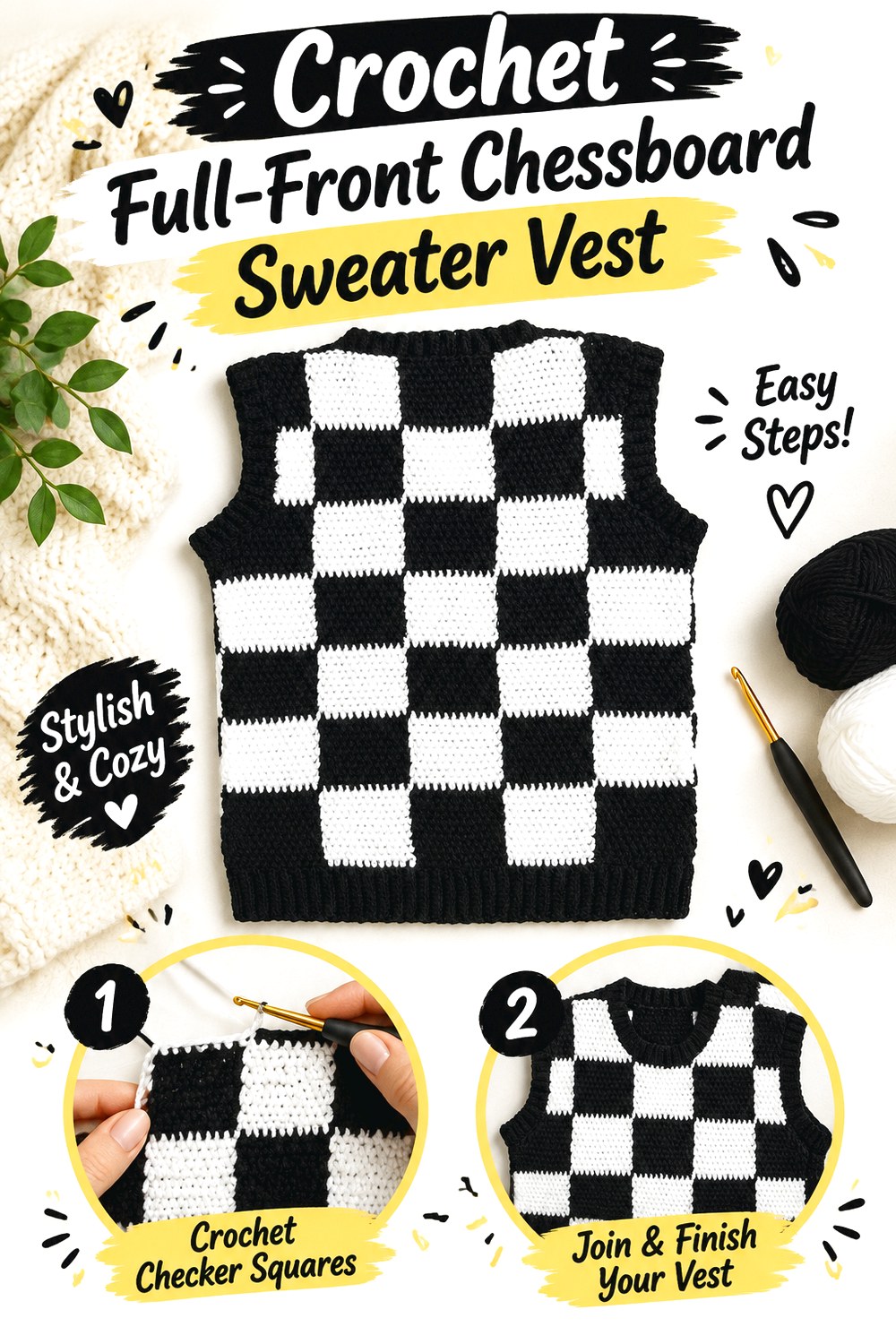
SAVECaron’s Chessboard Vest offers a polished all-over black-and-white grid with a conventional sweater-vest silhouette. Unlike versions that interrupt the checks with solid side panels or fuzzy texture, this design lets the chessboard effect dominate the entire front. Yarnspirations publishes the pattern across a broad listed size range and specifically reminds makers to use a gauge swatch to achieve the intended sizing.
This idea works when you want the visual logic to stay simple: two colors, a strong repeated grid, and familiar sleeveless layering proportions. Because there are few distractions from that geometry, uneven tension or a poorly centered neckline can become conspicuous. The pattern’s multi-size support also makes it a useful reference for readers who prefer established garment sizing rather than improvising a made-to-measure version.
Full-Surface Checks Emphasize Fit Errors
When checks extend across nearly the whole torso, they act like horizontal and vertical guide lines. A section that stretches over the bust, collapses under the arm, or pulls toward a seam can therefore look more obvious than it would in a solid vest. Judge fit with the garment in its intended wearing position instead of evaluating only the flat dimensions.
Use Gauge to Protect the V-Neck Geometry
Yarnspirations specifically stresses matching gauge for the intended size. That matters twice in a chessboard vest: gauge controls both garment dimensions and the physical size of each block. If your stitches are substantially larger or smaller, the neckline may still be recognizable while the surrounding checks no longer have the intended proportions.
Decide Whether You Want Strong or Soft Contrast
Black and white make the sample highly graphic, but the concept can be interpreted with colors closer in value if the pattern permits substitution. Before buying yarn, photograph the candidate colors together in grayscale. If their values are similar, expect a quieter grid. Strong value separation produces a clearer chessboard even when the hues themselves are not black and white.
Original Tutorial and Creator Credit
Creator/Site: Yarnspirations / Caron
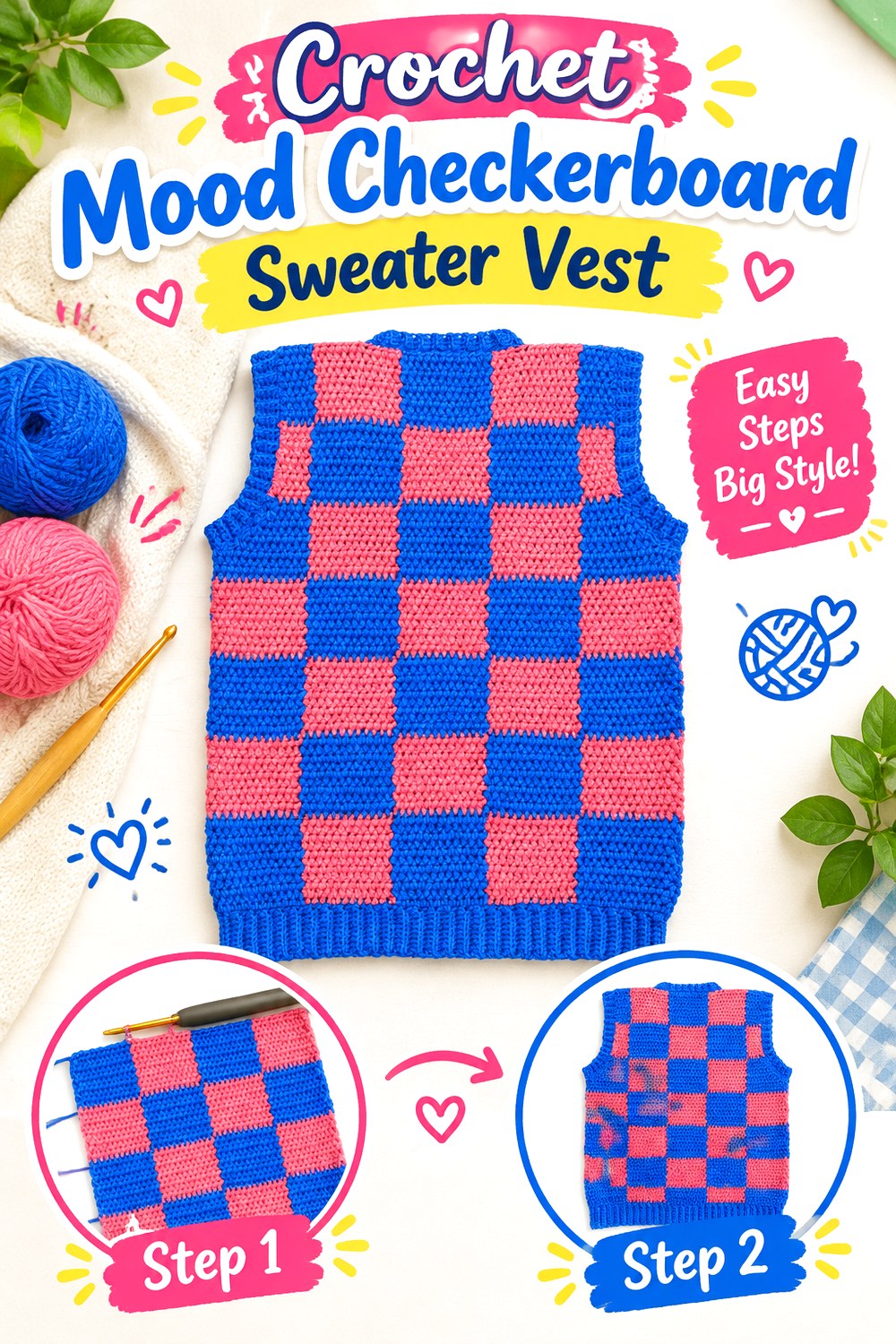
11. Crochet Mood Checkerboard Sweater Vest
 SAVE
SAVEThe Red Heart Checkerboard Mood Sweater Vest takes the grid in a playful direction by treating individual checks as spaces for expressive visual details rather than leaving every block plain. Yarnspirations describes the design as an “animated” crochet vest and publishes it in multiple garment sizes.
This idea earns its place because the checkerboard becomes a background for a second decorative layer. That changes how you plan the vest: block placement matters not only for the grid but also for where the expressive details will sit on the finished torso. It is a good choice when plain plaid feels too traditional and you want the garment to read more like graphic wearable art. Keep the overall palette organized so the extra details remain intentional rather than visually competing with the checkerboard.
Surface Details Add a Second Design Layer
Once individual squares carry extra motifs, the viewer reads both the large checkerboard and the smaller details inside it. Before adding or altering decoration, lay the vest flat and look at the spacing across the full front. Repeating details too evenly can feel rigid, while random placement without balance can make one side visually heavier. Follow the original pattern for its intended arrangement.
Keep Focal Squares Away From Awkward Shaping
Decorative checks near an armhole, side seam, or neckline may be partly interrupted by shaping. If you plan your own surface variation, reserve the most recognizable motifs for areas that remain fully visible when worn. This is particularly important around the chest and upper torso, where fabric curves differently from a flat panel and can change how a small image reads.
Plan Care Around Added Surface Details
Decorative stitching or other surface work can behave differently from the base fabric. Follow the fiber and pattern care information supplied for the project rather than assuming every customized version can be treated identically. Yarnspirations provides care information on the official project page. If you substitute fibers or add different materials, confirm their care requirements before combining them.
Original Tutorial and Creator Credit
Creator/Site: Yarnspirations / Red Heart
Which Crochet Plaid Sweater Vest Style Should You Choose?
The biggest choice is not simply which colors you prefer. Decide first whether you want the vest to behave like a lightweight graphic pullover, a preppy patterned layer, or a structured outer garment.
| Vest idea | Strongest visual feature | Main planning priority |
|---|---|---|
| Boxy Two-Tone Checkerboard | Clean oversized grid | Ease and square proportions |
| Cropped Checkerboard | Short graphic silhouette | Finished crop point |
| Column-Interrupted Plaid | Checks divided by vertical solids | Motif centering |
| Paneled Wednesday Check | Solid and checked sections | Seam alignment |
| Fuzzy-Contrast Long Check | Texture plus extra length | Drape and fabric weight |
| Classic Argyle V-Neck | Diagonal diamonds | V-neck motif placement |
| Large-Diamond | Oversized geometric shapes | Motif scale |
| Chunky Jacquard Plaid | Thick, dominant checks | Gauge and colorwork tension |
| Double-Layer Zippered Plaid | Traditional structured plaid | Layer and zipper alignment |
| Full-Front Chessboard | Continuous two-color grid | Fit and gauge |
| Mood Checkerboard | Decorative graphic squares | Surface-detail placement |
Choose the construction whose main challenge matches what you are comfortable checking as you work. A simple-looking two-color vest can demand very consistent colorwork, while a more elaborate paneled design may make fitting easier to evaluate in sections.
Conclusion
Crochet plaid sweater vests can range from clean checkerboard pullovers to traditional layered plaid, oversized argyle, chunky jacquard, fuzzy colorwork, and playful embellished grids. If you want a modern graphic layer, the cropped, boxy, or chessboard versions keep the focus on checks. Argyle and large diamonds offer a more preppy direction, while the double-layer zip vest is the strongest choice when structure matters as much as pattern.
Whichever style you choose, treat the motif and garment fit as connected decisions. Swatch in the actual colors, check how the fabric behaves, and evaluate important alignment points before finishing edges or seams. Use the linked original tutorials for exact construction, sizing, materials, and project-specific instructions.
Frequently Asked Questions
Can I turn a checkerboard sweater vest into traditional crochet plaid?
Not simply by adding another random color. Checkerboard and traditional plaid rely on different visual structures, and some plaid patterns use color placement or carried yarn in a specific way to create overlapping-looking bands. If you want a true plaid effect, starting with a tutorial designed as plaid—such as the structured Woodcutter’s Vest—is safer than altering a checkerboard pattern without understanding how the color repeats interact.
What yarn works best for a crochet plaid sweater vest?
There is no single best fiber or yarn weight for every vest. Smooth yarn usually makes geometric edges easier to see, fuzzy yarn softens them, and chunky yarn makes each block physically larger and the fabric more substantial. Start with the yarn specifications in your chosen tutorial. When substituting, make a colorwork swatch and evaluate gauge, drape, thickness, stretch, and contrast rather than matching the yarn’s weight category alone.
How can I keep crochet plaid blocks from looking uneven?
Consistent tension is one of the most useful checkpoints. Color changes can become tighter or looser than surrounding stitches, and carried strands may restrict the fabric if they are pulled too firmly. Work a representative swatch containing several complete color changes, not just one solid color. Measure it after the fabric relaxes and periodically compare blocks as the vest grows. Interweave likewise emphasizes steady gauge for keeping plaid blocks regular.
Can I resize a plaid sweater vest by adding more check blocks?
Sometimes, but adding an entire motif repeat can change the width much more than you expect. It may also shift the relationship between the checks, neckline, armholes, and side seams. Follow the resizing approach given by the original designer when one is provided. Katia, for example, bases adaptation on desired measurements and gauge rather than treating extra blocks as a universal sizing formula.
Should I carry yarn or cut it at every plaid color change?
That depends on the construction the tutorial was designed around. Carrying or enclosing the inactive color can reduce the number of ends but may make the fabric denser if tension is too tight. Cutting yarn creates more finishing work but can suit color sections that are far apart. Some patterns use their own specific colorwork system. Follow that method first before substituting another technique, because changing it can affect thickness, stretch, and appearance.
Do crochet plaid sweater vests need blocking?
Blocking can help even out the fabric and clarify geometric motifs, but the appropriate method depends on the fiber and the pattern’s care guidance. Do not assume every yarn should be treated with the same heat, moisture, or stretching. Check the yarn label and original tutorial first. When shaping a colorwork vest, aim to even the fabric rather than forcing individual checks into dimensions the swatch cannot naturally maintain.