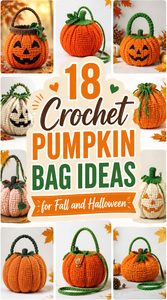
A crochet pumpkin bag can be much more than an orange pouch with a green stem. Some designs make the entire bag resemble a rounded pumpkin, while others use pumpkin granny squares, raised motifs, jack-o’-lantern faces, openwork fabric, or a transforming outer shell. Closures also vary considerably, from drawstrings and cinch tops to zippers and open treat-bag openings.
These 18 crochet pumpkin bag ideas are organized to make those differences useful. You can compare compact pouches with larger treat totes, decorative seasonal bags with more purse-like designs, and simple handheld options with straps intended for longer carry. The notes also highlight where stretch, lining, opening width, strap support, motif alignment, or embellishment placement may affect the finished bag. Each idea finishes with an original YouTube tutorial so you can use the creator’s instructions for the exact construction.
Quick List
- Crochet Pumpkin Cinch Carry Bag
- Crochet Foldaway Pumpkin Carry Bag
- Crochet Zippered Pumpkin Wallet Purse
- Crochet Pumpkin Granny Square Shoulder Bag
- Crochet Raised-Pumpkin Ruffle Pouch
- Crochet Textured Pumpkin Lined Shoulder Bag
- Crochet Rounded Pumpkin Leaf-Handle Bag
- Crochet Roomy Pumpkin Trick-or-Treat Tote
- Crochet Jack-O’-Lantern Reinforced-Handle Treat Bag
- Crochet Pumpkin Trick-or-Treat Purse
- Crochet Soft Pumpkin Drawstring Sack
- Crochet Openwork Pumpkin Wristlet Bag
- Crochet Compact Pumpkin Candy Handbag
- Crochet Mini Pumpkin Coin-and-Candy Pouch
- Crochet Pumpkin Bag-Charm Treat Pouch
- Crochet Child-Size Pumpkin Drawstring Bag
- Crochet Small Pumpkin Tendril Treat Bag
- Crochet Lined Jack-O’-Lantern Zipper Purse
Choose the Pumpkin Structure Before the Decoration
Start by deciding whether you want the bag itself to look like a pumpkin or prefer pumpkins placed on a familiar bag shape. Rounded and ribbed bodies create the strongest pumpkin silhouette, but curved sides and gathered tops can reduce usable space near the edges and opening. A granny-square, rectangular, or cylindrical body usually gives rigid objects a more predictable interior.
Motif-based bags offer another advantage: the seasonal design can be changed without completely changing the underlying bag form. Raised pumpkin stitches, granny squares, or a jack-o’-lantern face can provide the theme while the body remains relatively conventional.
This decision also affects how long the finished bag feels seasonal. A plain pumpkin with a leaf can suit general fall use, while a prominent jack-o’-lantern face reads much more specifically as Halloween.
Yarn, Fabric Density, and Lining Affect More Than Appearance
Crochet bags naturally respond to what is placed inside them, so fabric behavior deserves as much attention as color. A dense, relatively stable crochet fabric may preserve a rounded pumpkin outline better, while a softer fabric can produce more drape and movement. Raised pumpkin stitches add texture but do not automatically prevent the surrounding fabric from stretching.
Openwork designs create another trade-off. They can feel visually lighter, but very small objects may need a lining or separate inner pouch. A lining can also help isolate belongings from textured stitches or yarn floats and can reduce some distortion. It cannot compensate for weak strap attachment or an unsuitable opening, however.
If substituting yarn, judge the resulting crochet fabric rather than assuming that fiber type alone determines strength or stability. The most useful checkpoint is how the unfinished bag behaves when lightly loaded.
Match the Opening and Strap to How the Bag Will Be Used
Drawstrings work particularly well with pumpkin shapes because gathering the upper edge reinforces the rounded silhouette. The compromise is access: the narrowest part of the opening may be considerably smaller than the widest section of the bag. A zipper gives better containment for small personal items but requires a stable upper edge. Open treat totes favor fast access instead.
Straps deserve similar planning. A short handle, wrist loop, shoulder strap, and crossbody strap apply force differently to the upper bag. Extending a short handle does not automatically create a successful shoulder bag, especially when the crochet fabric stretches.
Before permanently finishing a strap, hold the bag in the intended carry position. If possible, add a few light representative objects and check whether the top edge pulls inward, the bag twists, or the strap stretches noticeably.
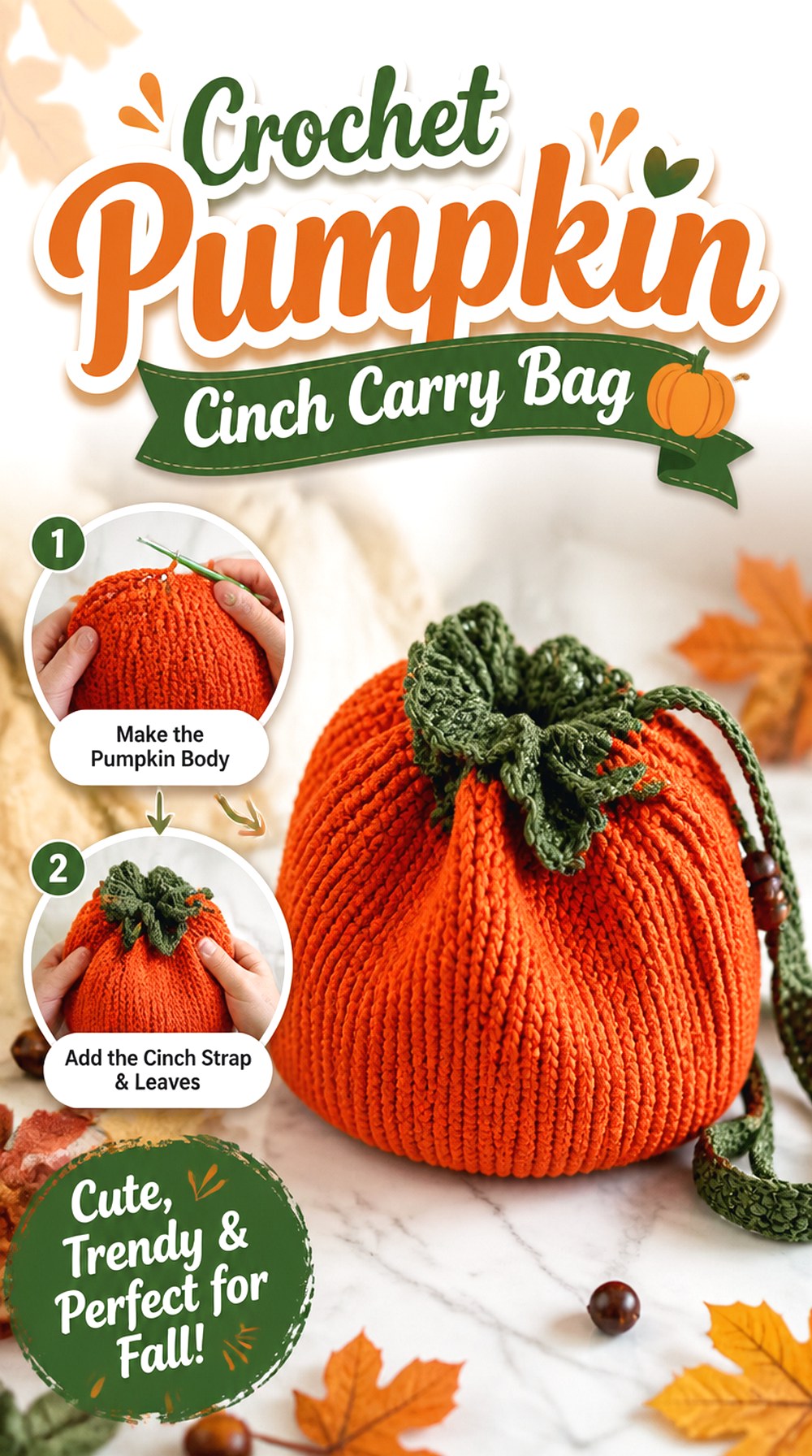
1. Crochet Pumpkin Cinch Carry Bag
 SAVE
SAVEThis pumpkin cinch bag puts the closure at the center of the design rather than hiding it inside a conventional purse opening. Basicstitchcolorado’s tutorial shows a wearable pumpkin-themed cinch bag, giving this option a different personality from the zippered and open-top bags later in the list.
The gathered top is useful when you want a bag that immediately reads as a pumpkin without needing a jack-o’-lantern face. It is also worth considering how the cinching action changes the upper shape. The lower body can look generous while the practical access point becomes smaller once the bag closes.
Cinch Tension Controls the Pumpkin Shape
A cinch closure has two jobs here: keeping the opening together and creating the visual gathering associated with a pumpkin. If the bag fabric is unusually stiff, the upper edge may resist gathering. If it is extremely loose, the body may lose definition farther down.
Test the closure before adding every decorative detail. It should move freely enough to open without a struggle and close without pulling the entire bag sharply out of shape.
Wearability Depends on Where the Support Lands
A wearable cinch bag should not be judged only while empty. Strap or cord placement affects whether the upper edge stays balanced once something is inside.
After the main body has enough structure to hold its shape, check where the carrying force is concentrated. If one section of the rim pulls more than the other, correct the balance before assuming decoration will disguise it.
Keep Seasonal Details Away From Moving Cords
Leaves, vines, or other pumpkin accents are most useful where they remain visible without interfering with the cinch mechanism. Decorations positioned directly in a moving cord path can twist, fold into the opening, or become harder to arrange after every use.
Open and close the bag several times while deciding placement. A slightly offset leaf can still communicate the pumpkin theme while leaving the functional parts free to move.
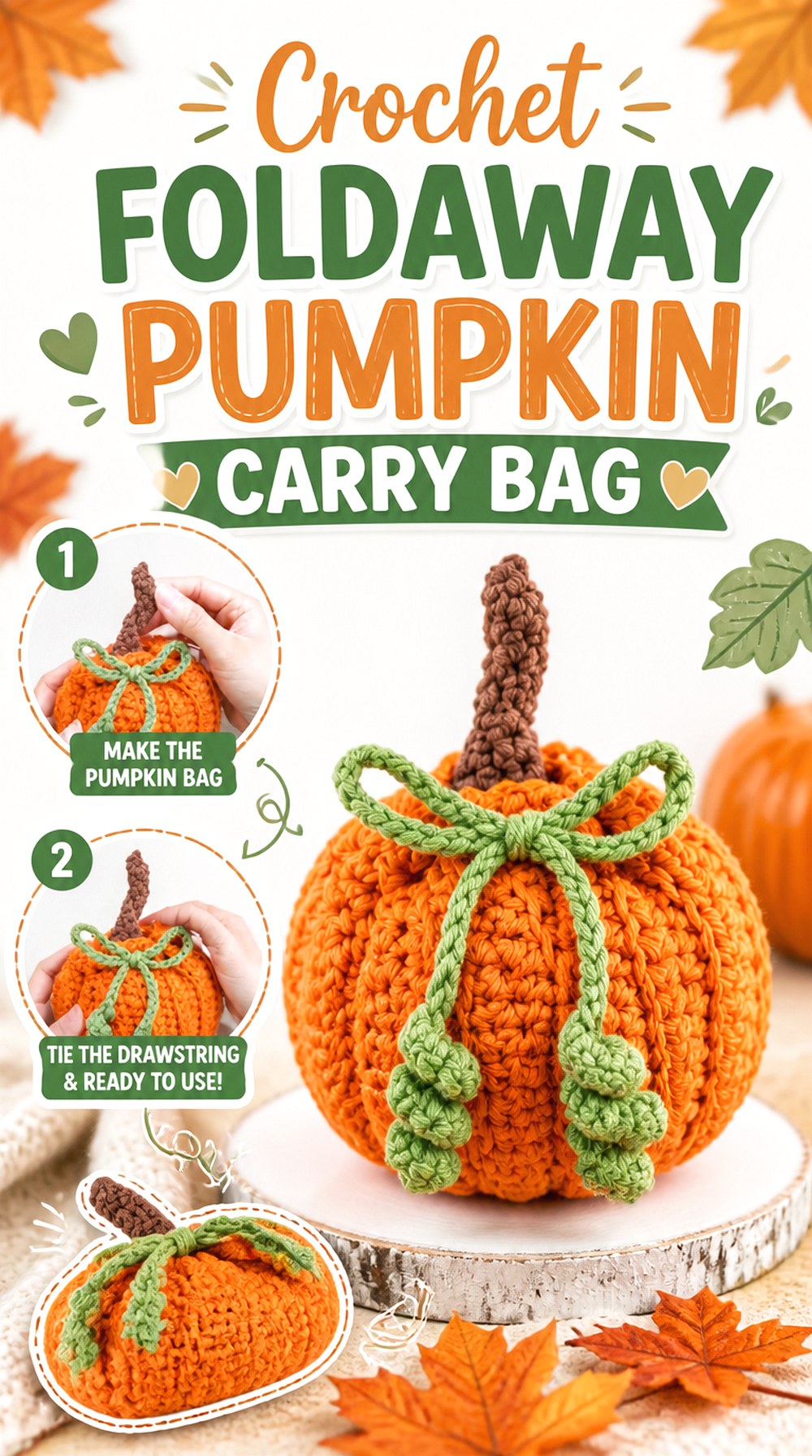
2. Crochet Foldaway Pumpkin Carry Bag
 SAVE
SAVEThis transforming design from meowmeowcrafts is one of the most structurally unusual ideas in the collection. The project begins with a recognizable pumpkin form but incorporates an inner bag and handles so the seasonal object can unfold into a functional carry bag. The tutorial also shows the outer shell, drawstring area, vine, and stem as parts of the transformation.
That makes it a strong choice if construction novelty matters more to you than having a conventional purse silhouette. It also introduces a planning problem most bags do not have: the finished object needs to look intentional in both its closed pumpkin state and its open carrying state.
The Closed Pumpkin and Open Bag Must Both Work
A normal bag is mainly judged in one configuration. This project needs two. A beautiful pumpkin shell is not enough if the opened bag bunches badly, and a useful open bag is less satisfying if it no longer packs cleanly back into the pumpkin.
Evaluate both states before making major material substitutions. The relationship between the outer shell and inner bag is more important than either piece considered alone.
Bulkier Yarn Can Disrupt the Fold
Increasing yarn thickness may seem like an easy way to create a larger bag, but extra bulk also accumulates when the inner section is tucked inside the pumpkin shell. That can make the closed form harder to shape neatly.
If you want to change scale, compare the thickness and flexibility of your sample fabric with the tutorial’s finished result. Size and packability need to change together rather than independently.
Test Both Handles Under Light Load
When the design is fully open, the handles become functional rather than decorative. Place a few light representative objects inside and check whether the two sides hang evenly.
Uneven handle tension can make the inner bag rotate or bunch toward one side. It is easier to address that before finishing every tail and decorative component than after the transforming structure is complete.
The Stem Area Is Part of the Transformation
On a standard pumpkin decoration, the stem is mostly visual. Here, the top area also sits close to a drawstring and folding mechanism. An oversized or rigid embellishment could make the closed bag look unbalanced or interfere with packing.
Keep the decorative scale tied to the closed pumpkin form and make sure the top still opens without requiring the stem or vine to be constantly repositioned.
Original Tutorial and Creator Credit
Creator: meowmeowcrafts
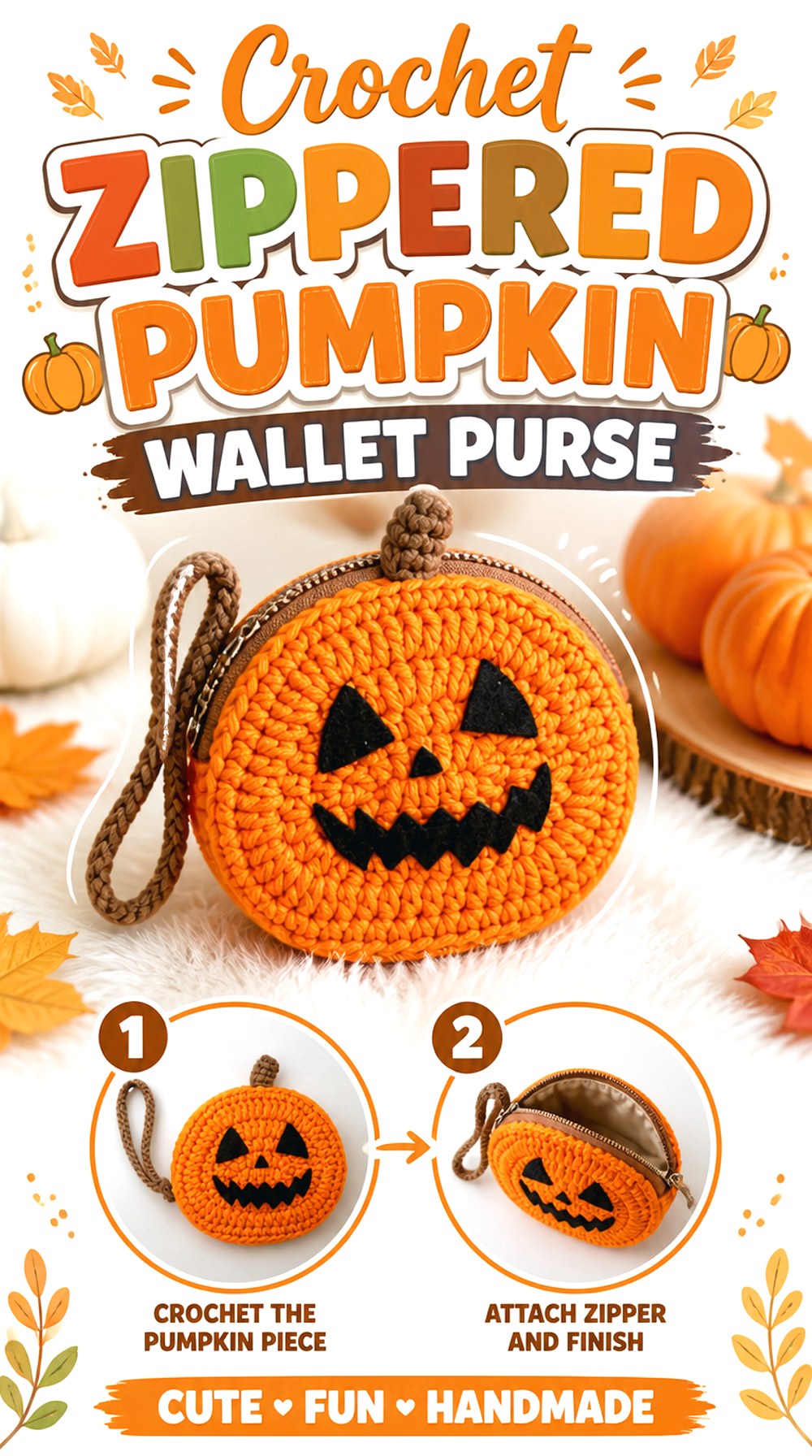
3. Crochet Zippered Pumpkin Wallet Purse
 SAVE
SAVEKane Crochet’s pumpkin wallet takes the theme in a much more compact, purse-like direction. The tutorial includes a zipper, straps, felt elements, and a shallow wallet-style body rather than the deep sack shape used by many pumpkin treat bags.
This is a useful option when containment matters more than candy-bag capacity. The flatter format also gives the decorative front a different visual role: instead of relying mainly on a rounded pumpkin silhouette, the project can communicate its Halloween theme across a relatively controlled surface. Because the interior is compact, deciding what actually needs to fit is important before changing yarn or scale.
A Zipper Makes This a True Small-Item Purse
A zipper keeps the opening clearly defined and can make a small crochet bag more practical for items that should not fall out. It also exposes problems at the rim. A wavy or badly stretched upper edge will be harder to disguise after zipper installation.
Check the opening shape first. Finishing hardware should follow a stable crochet edge rather than being expected to force that edge into alignment.
Felt Details Need a Clean Front Surface
Applied decorative pieces read most clearly when the crochet beneath them is reasonably even. Heavy bulging or distortion can shift the expression or make individual pieces appear misaligned.
Arrange any decorative elements with the bag closed and upright, not flattened unnaturally on a work surface. That gives a better preview of how the front will look when the wallet is actually carried.
Compact Depth Changes What Fits
A wallet-shaped bag can look wide enough for an item while still being too shallow or restrictive in another dimension. Do not judge capacity from the front panel alone.
If you want it for a specific phone, card case, or other rigid object, compare all relevant dimensions with the finished interior and zipper opening before committing to a major material substitution.
Original Tutorial and Creator Credit
Creator: Kane Crochet
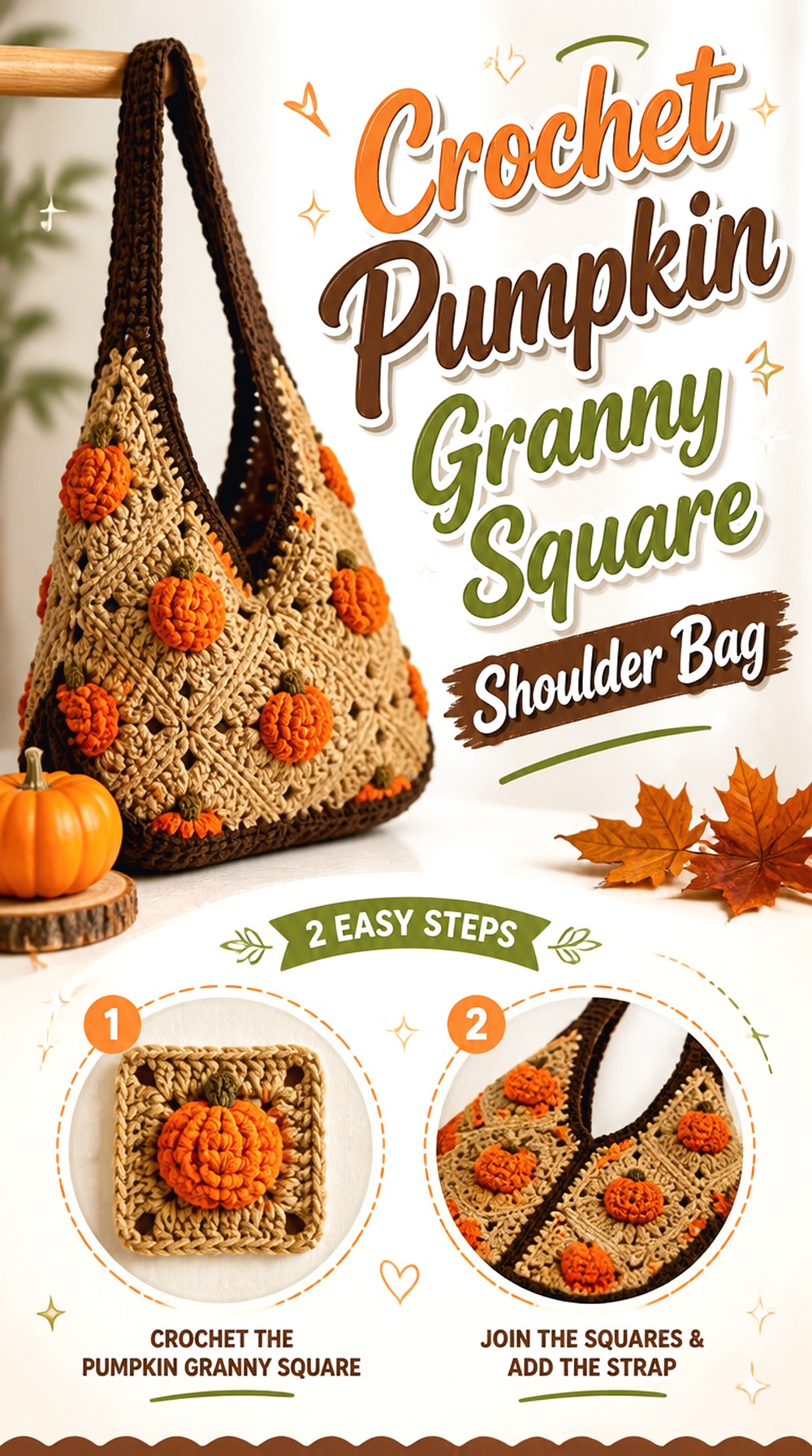
4. Crochet Pumpkin Granny Square Shoulder Bag
 SAVE
SAVERather than shaping the whole purse like a pumpkin, this version makes the pumpkin a repeated motif. Samantha Lopez’s tutorial turns pumpkin granny squares into a small bag with a crocheted strap, creating a flatter and more geometric alternative to rounded pumpkin pouches.
The motif approach works well when you enjoy square-based construction or want the seasonal image framed by a background color. It also makes planning more measurable: the dimensions of the finished squares determine much of the panel geometry. The biggest risk is not the pumpkin image itself but allowing nominally matching squares to reach noticeably different sizes before joining.
Block the Pumpkin Squares Before Joining
A granny square that looks only slightly uneven while loose can pull neighboring motifs out of alignment once several are joined. Compare the squares after they have settled into their intended finished state.
If you substitute another pumpkin motif, do not assume it will match simply because it has the same general shape or yarn category. Actual finished dimensions are what matter when planning a bag panel.
Joins Frame the Motifs
Joining lines can quietly disappear into the background or become a visible grid around every pumpkin. Neither approach is automatically better, but it changes the overall effect.
Lay several finished squares together before committing to the joining color and method. If the seams attract more attention than the pumpkin motifs, decide whether that strong framing is intentional or whether a quieter transition would suit the bag better.
Strap Pull Concentrates at the Upper Squares
Granny-square fabric contains corners and joins that behave differently from a continuous solid panel. A strap can concentrate tension near a relatively small section of that structure.
Inspect how the attachment spreads force across the upper edge. If you alter the bag size or strap significantly, avoid placing all the pull on one motif corner without considering whether that area needs additional support.
Original Tutorial and Creator Credit
Creator: Samantha Lopez
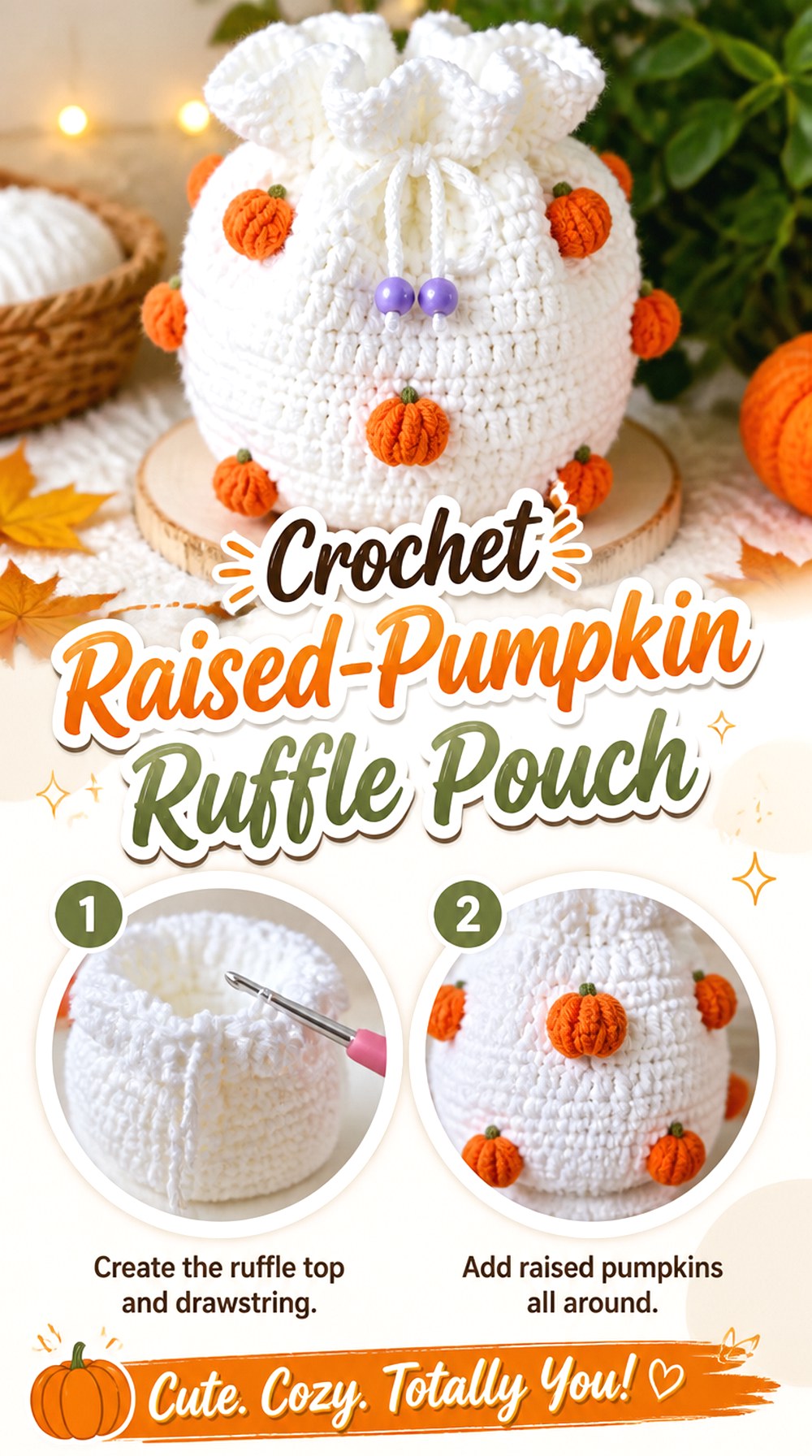
5. Crochet Raised Pumpkin Ruffle Pouch
 SAVE
SAVEVivi Crochet’s design takes a different route again: the bag body stays light in color while dimensional pumpkin motifs become the main seasonal feature. The tutorial also includes a ruffled upper edge, a long bag strap, and a separate pouch string.
This approach suits readers who want obvious pumpkin detail without turning the entire bag orange or shaping the body like one large gourd. Raised motifs introduce texture and visual rhythm across the surface, while the ruffle gives the top edge a softer finish. Because several features compete for attention, maintaining proportion among the motif, rim, and strap matters more than adding further embellishment.
Raised Pumpkins Add Texture Without Changing the Base Shape
Dimensional pumpkin stitches can create strong seasonal character on a relatively conventional bag body. That means you can evaluate the bag’s basic structure separately from its decoration.
Look at the fabric from the side as well as the front. If the raised areas distort surrounding stitches or make the body buckle, correct the fabric behavior before relying on the final ruffle to disguise it.
The Ruffle Changes the Opening
A ruffled edge adds volume exactly where the hand needs to enter the pouch. If the ruffle becomes too dense or stiff, it can make a small opening feel more crowded even when the lower body is roomy.
Check how the rim behaves with the pouch string loosened completely. Decorative fullness should frame the opening rather than folding inward and making access unnecessarily awkward.
A Long Strap Needs a Stretch Check
A long crochet strap has more opportunity to lengthen under load than a short handle. The effect depends on yarn, stitch structure, strap width, and what is carried.
Before declaring the final length, hold the pouch where you want it to sit and add only the kind of light contents you realistically expect to carry. Adjust from observed behavior rather than appearance while empty.
Original Tutorial and Creator Credit
Creator: Vivi Crochet 🌷
6. Crochet Textured Pumpkin Lined Shoulder Bag
 SAVE
SAVEYarn Symphony’s tutorial provides one of the more purse-oriented projects in this collection. The pumpkin theme comes from raised crochet texture across the body, while the video also covers a fabric liner and a crocheted strap.
That combination makes this a useful choice if you want seasonal texture without the strongly rounded shape of a pumpkin sack. The body behaves more like a shoulder bag, while the repeated pumpkin effect supplies the fall identity. A lining is particularly relevant here because textured crochet can look substantial from the outside while the underlying fabric still has spaces or stretch that matter when carrying small belongings.
The Lining Matters More on a Textured Body
Raised stitches can make a bag look thick without telling you how stable the base fabric is between those raised areas. A liner gives the interior a separate surface and can help keep small objects away from the textured crochet structure.
Fit the liner to the finished crochet body rather than using it to force the exterior into a different shape. Excessively tight lining can distort the texture from inside.
Popcorn Texture Can Catch Against Clothing
Dimensional pumpkin stitches are designed to stand away from the base fabric. That creates visual interest, but the outer surface will also rub against coats, sweaters, or the wearer’s hip.
Consider where the most pronounced texture falls when the bag hangs naturally. A decorative area that looks excellent on the front may be less convenient if repeated directly in a high-friction side zone.
Choose Shoulder Drop Before Finishing the Strap
A shoulder bag can sit close under the arm or lower toward the hip, and those placements change both comfort and appearance. A longer crochet strap may also stretch more noticeably.
Hold the completed body at the intended position before finalizing significant strap changes. This is more reliable than copying a length without considering the wearer or the behavior of the chosen yarn.
Original Tutorial and Creator Credit
Creator: Yarn Symphony
7. Crochet Rounded Pumpkin Leaf Handle Bag
 SAVE
SAVEHandwork diy’s tutorial centers on the classic pumpkin silhouette: a rounded bag body, leafy top detail, and visible handle. That makes the shape itself the strongest decorative element rather than relying on a face or repeated motif.
This direction works well for general autumn styling because the bag can read as a pumpkin without being tied exclusively to Halloween imagery. The curved body does create different storage behavior from a rectangular purse, however. The center may feel roomy while the edges and upper portion provide less usable width for rigid objects. Preserving the round profile is therefore part of both the visual and functional planning.
The Rounded Profile Is the Main Design Feature
If the lower body stretches into a long oval when loaded, much of the pumpkin effect disappears. Yarn substitutions, lining, and contents can all influence that shape.
View the bag upright with a small amount of weight inside before deciding whether additional support is useful. The goal is not to make the crochet rigid; it is to preserve enough of the intended contour for the silhouette to remain clear.
A Leafy Top Should Not Block Access
Top leaves are highly visible because they sit where the eye expects a pumpkin stem. They also occupy the same area as the bag opening.
Before sewing every decorative edge into place, open the bag fully and reach inside several times. Adjust the leaf position if necessary so it remains visible without folding repeatedly into the access path.
Handle Proportion Matters on a Round Bag
A small rounded body paired with a very heavy handle can look top-heavy, while a narrow unsupported handle may stretch. The visual and structural decisions need to agree.
Judge handle width against the completed body rather than selecting it independently. If adapting the tutorial to shoulder carry, also reconsider the attachment points because added length changes how the upper sides are pulled.
Original Tutorial and Creator Credit
Creator: Handwork diy
8. Crochet Roomy Pumpkin Trick or Treat Tote
 SAVE
SAVETLH Patterns offers a larger pumpkin bag intended for Halloween and trick-or-treat use, giving this collection a genuinely roomy option instead of another compact purse. The tutorial presents a substantial pumpkin-shaped body with a carrying handle.
A larger bag changes the practical questions. More interior space makes it tempting to add more contents, and added contents increase both sag and pull at the handle attachments. The rounded body can also project farther from the wearer than a flat tote. This is therefore a useful project when capacity and seasonal presence matter, but it deserves more structural attention than a tiny party-favor pouch.
More Interior Space Means More Sag Risk
Increasing bag volume does not automatically increase fabric stability. A large crochet body may look beautifully rounded while empty and become narrower at the top and heavier at the bottom once filled.
Observe the body with a light load before making major adaptations. If maintaining the pumpkin shape is important, consider fabric density and optional interior support early rather than after stretching has already occurred.
A Wide Pumpkin Body Sits Differently Beside the Wearer
Rounded bags occupy space outward as well as downward. That can be fun for costume or trick-or-treat use but may feel bulkier than a flat tote with similar apparent capacity.
Hold a similarly sized soft object at the planned carry position before changing the handle length. You may prefer a shorter hand carry rather than placing a wide pumpkin directly against the hip.
Treat-Tote Handles Need Load-Aware Reinforcement
The larger the bag, the more important the upper attachment areas become. Do not evaluate them only when the tote is empty.
Add a modest representative load and watch the stitches around each handle connection. If the rim visibly narrows or specific stitches carry most of the force, address support before using the tote for heavier contents.
Original Tutorial and Creator Credit
Creator: TLH Patterns
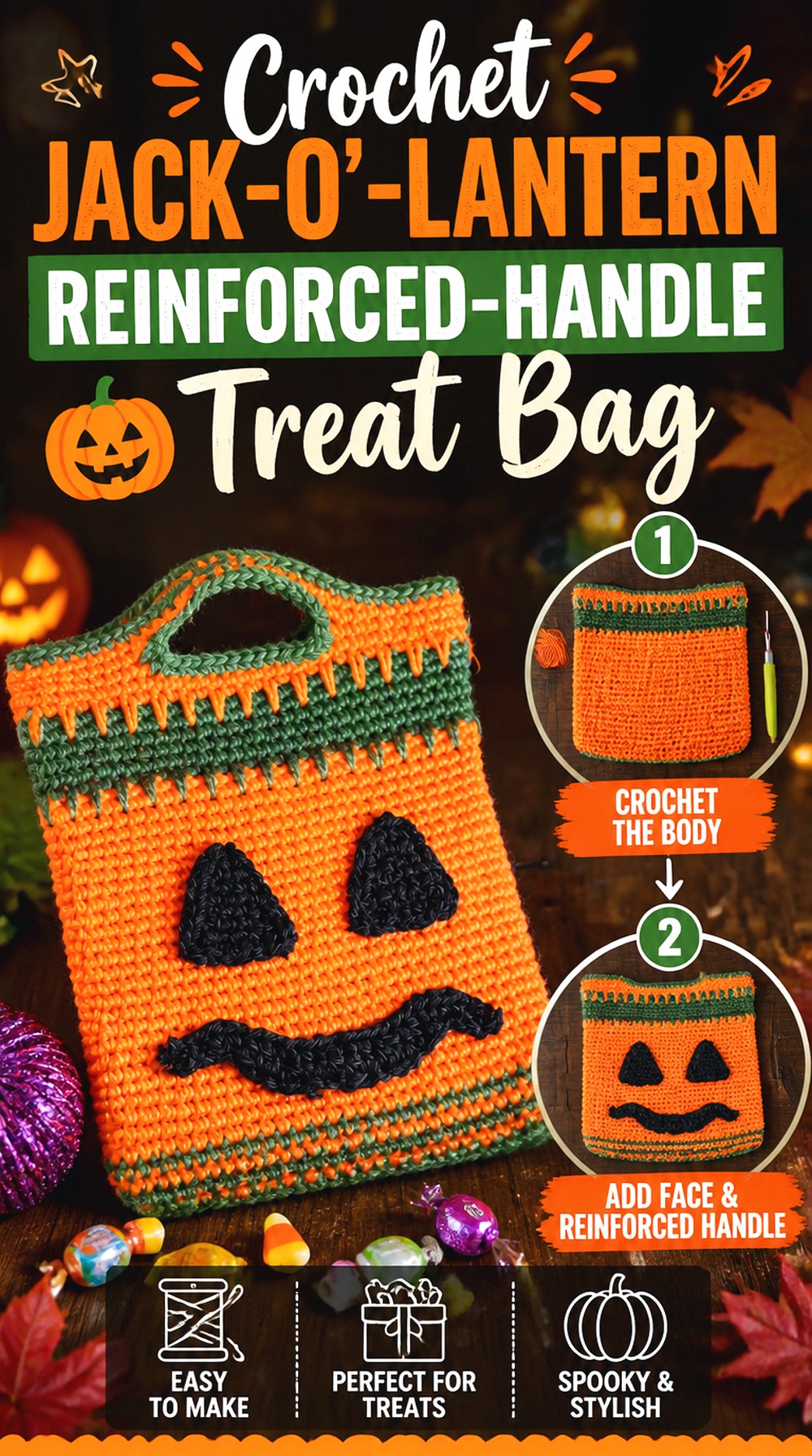
9. Crochet Jack O’ Lantern Reinforced Handle Treat Bag
 SAVE
SAVEThe Crochet Crowd’s project shifts attention from rounded pumpkin shaping to a recognizable jack-o’-lantern face. The accompanying tutorial material also specifically discusses strengthening the handles, making handle construction more central here than in many purely decorative Halloween bags.
This is a strong choice when you want the finished piece to read immediately as a Halloween treat bag rather than a subtle fall purse. Because the face establishes a clear front, distortion becomes more visible: a bulging or collapsing panel can move the eyes and mouth out of proportion. That makes both fabric behavior and handle support worth checking before the decorative front is considered finished.
Keep the Jack-O’-Lantern Face Readable
Graphic facial details depend on the front retaining enough shape for the expression to remain recognizable. Overfilling can stretch the center while an unsupported base can pull the lower face downward.
View the bag both empty and lightly filled before finalizing decorative placement. If the face shifts substantially between those states, consider whether the contents or body structure need adjustment.
Handle Strength Is a Functional Feature
The source tutorial includes handle-strengthening guidance, which is especially relevant on a treat bag because the contents can accumulate over time.
If you change handle length or yarn, re-evaluate the attachment instead of assuming the same reinforcement will behave identically. Longer handles and different fabrics distribute force differently across the upper edge.
Reflective Yarn Is Decoration, Not a Safety Substitute
The source project uses reflective yarn as part of the Halloween presentation. That can provide an interesting visual effect when illuminated, but it should not be treated as a replacement for purpose-designed visibility or safety equipment.
If you use specialty yarn, follow its own care information and check how it behaves beside the other materials in the bag.
Original Tutorial and Creator Credit
Creator: The Crochet Crowd
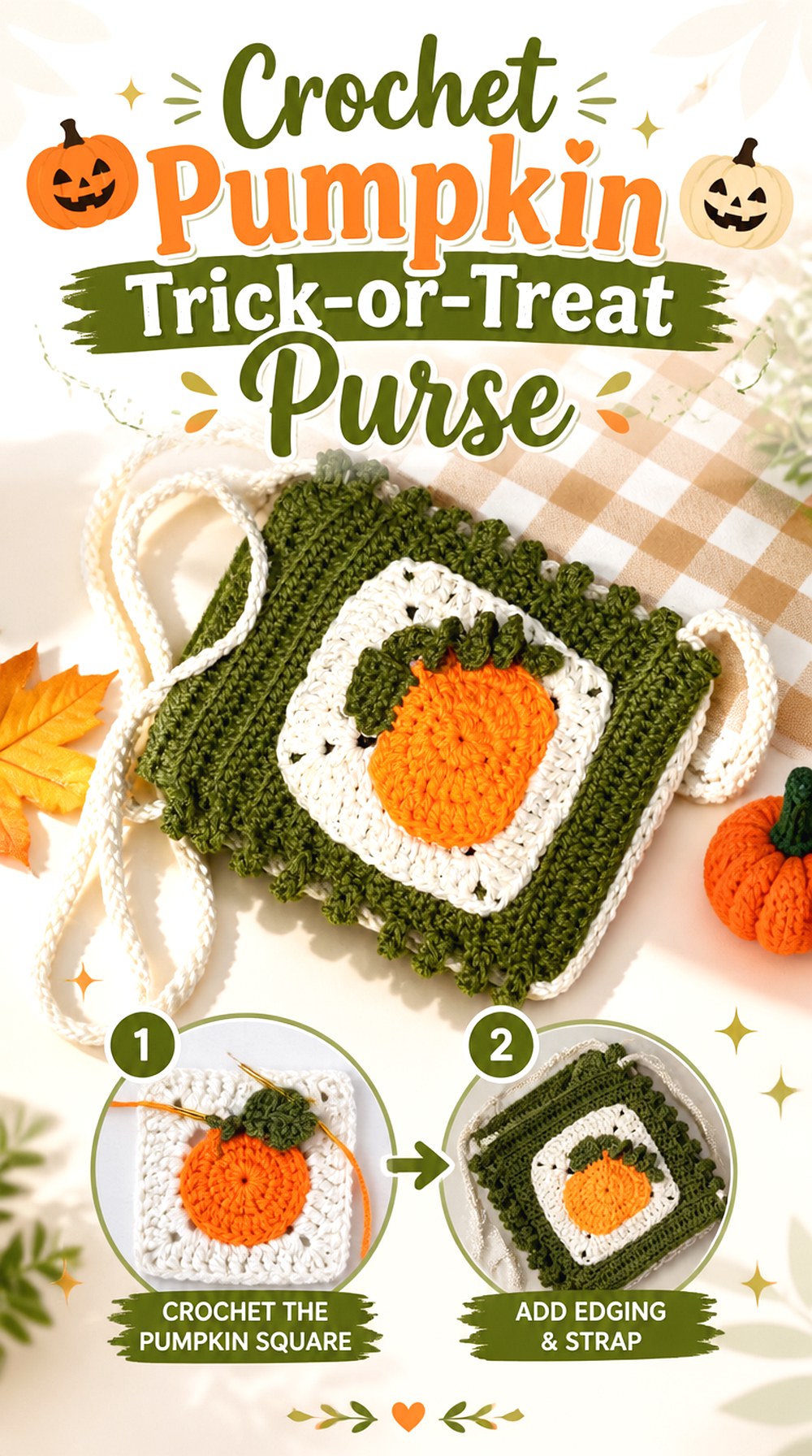
10. Crochet Pumpkin Trick or Treat Purse
 SAVE
SAVECustom Comfy Crochet By Dawn Marie presents a pumpkin project that can function as a purse, bag, or trick-or-treat accessory. That flexible use makes it a useful middle ground between the very small pouches and the oversized Halloween tote.
Rather than choosing it because of an assumed capacity, decide first which of those roles matters to you. A bag intended for a few personal items needs different opening and strap priorities from one carried mainly for candy. The same crochet body can look seasonal in both situations, but the finishing choices should follow the intended job instead of trying to serve every possible use equally.
Decide Whether It Is a Purse or a Candy Carrier
A purse generally benefits from more deliberate containment, while a treat bag favors quick access. Those goals can conflict if you add closures or extra decoration without deciding what the bag is primarily for.
Before customizing the top, list the kinds of objects you actually expect to carry. That simple decision helps determine whether easy opening or tighter containment deserves priority.
Keep the Top Edge Stable for Repeated Carry
A handle or strap repeatedly pulls on the upper edge, especially when the bag is picked up and set down throughout an event. If the rim begins to stretch unevenly, the whole silhouette can look less balanced.
Check both attachment points during finishing. Reinforcement is most useful when it spreads tension without making one section dramatically stiffer than the surrounding crochet.
Let the Pumpkin Theme Stay Clear Without Extra Clutter
A pumpkin bag already has a strong seasonal identity. Adding several competing leaves, ribbons, faces, charms, and hardware pieces can make the focal idea harder to read.
Choose one or two details that support the finished form and leave the functional opening clear. Restraint is particularly helpful if you want the project to work beyond a costume setting.
Original Tutorial and Creator Credit
Creator: Custom Comfy Crochet By Dawn Marie
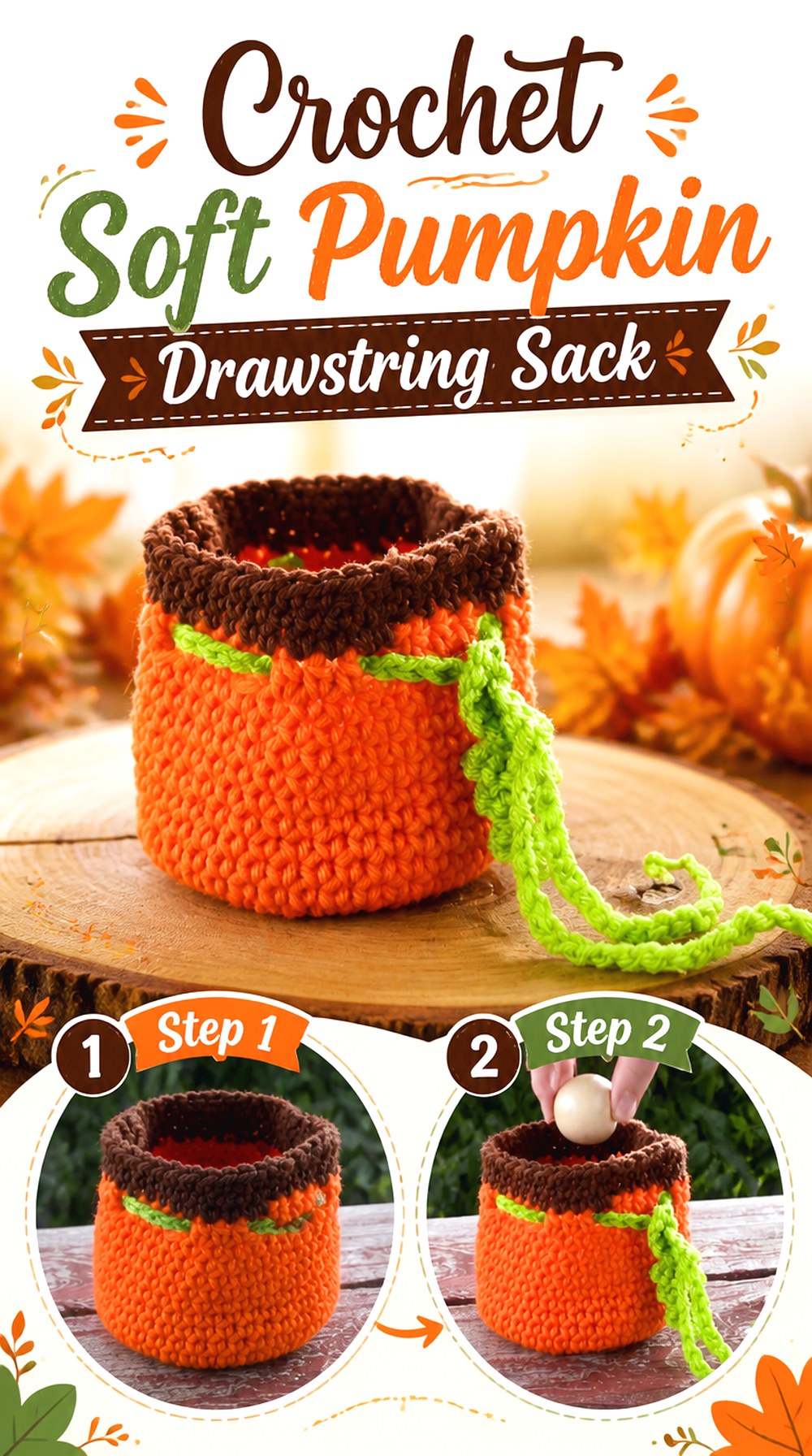
11. Crochet Soft Pumpkin Drawstring Sack
 SAVE
SAVEJayda InStitches’ pumpkin project uses a drawstring sack format, creating a softer and more relaxed silhouette than the zippered wallet or lined shoulder bags. The gathered closure naturally complements the pumpkin theme and keeps the construction focused on the pouch itself.
This option makes sense when you prefer an informal seasonal container for small gifts, treats, or lightweight belongings rather than a highly structured purse. A drawstring sack can look deceptively roomy, though. The lower body and the usable opening are two different measurements, and the object that fits inside still needs to pass through the narrower top.
The Drawstring Is Part of the Pumpkin Silhouette
Gathering the upper edge does more than close the bag. It visually narrows the top and helps the body read as a pumpkin.
For that reason, replacing the closure with a completely open rim could change the character of the project. If you customize the cord, make sure it still moves easily enough to gather the fabric rather than merely decorating the edge.
Check the Effective Opening, Not Just the Body Width
A wide lower sack can hold an object in theory while the object remains impossible to insert through the top. This matters most with rigid belongings.
Open the drawstring completely and compare the narrowest access point with what you plan to put inside. That practical check is more informative than estimating capacity from the bag’s widest exterior point.
Soft Sack Drape Is Different From Purse Structure
A relaxed drawstring bag is expected to change shape when filled. Trying to make it behave like a rigid purse may require so many alterations that another tutorial would be a better starting point.
Choose this idea because you like the gathered, flexible character. If a flat base, zipper, or highly controlled silhouette is essential, the more structured options elsewhere in this collection are closer matches.
Original Tutorial and Creator Credit
Creator: Jayda InStitches
12. Crochet Openwork Pumpkin Wristlet Bag
 SAVE
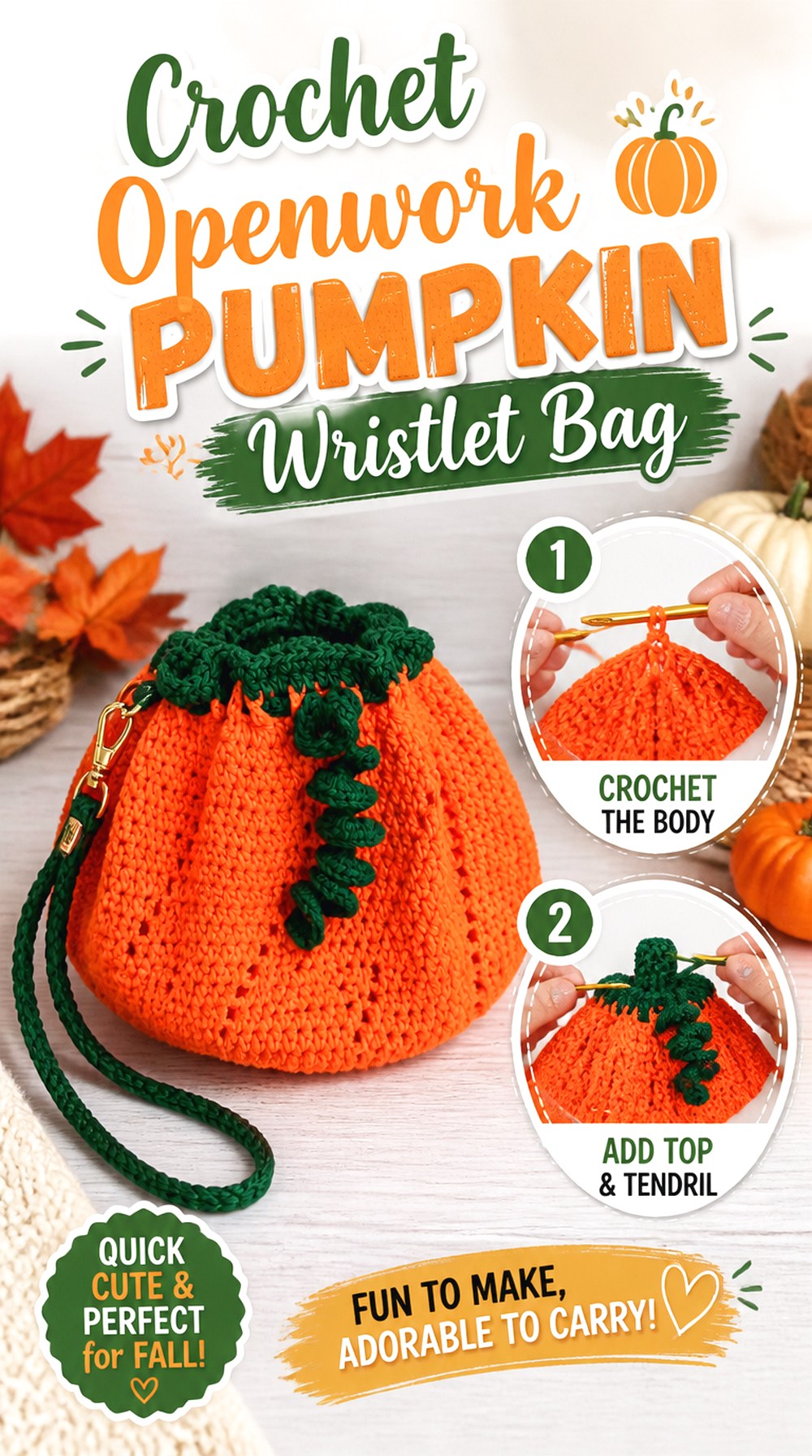
SAVENana’s Crafty Home | Tonya Bush offers a pumpkin treat bag with a sturdy base, slanted open texture, drawstring, curly vine detail, and an optional wrist strap. That combination creates a noticeably airier bag than the dense wallet and rounded pouch designs.
The wrist strap also changes its carrying role. Instead of planning a long shoulder drop, this option keeps the bag close to the hand and makes sense for short-distance carrying or seasonal gifting. The openwork sides are visually distinctive, but they make the interior contents more relevant because very small objects can interact differently with a fabric that contains intentional spaces.
Openwork Sides Change What Should Go Inside
A decorative open stitch can make a bag feel lighter and show the contents more readily. It can also be less suitable for loose tiny objects unless another layer contains them.
Before deciding whether you need lining, examine the actual size of the openings in your finished fabric. The answer depends on your yarn, tension, and intended contents rather than on the stitch style alone.
The Wrist Strap Makes Sense for Short Carry
A wrist loop avoids the stretch and fit questions of a long shoulder strap, but it places the bag’s weight close to one attachment area.
Check that connection after the bag is lightly loaded. If you substitute hardware or alter the loop, make sure the new configuration does not concentrate all the force on a weak section of the upper edge.
A Lining Can Shift It Toward Everyday Use
The designer notes lining as an option for turning the project toward fashion-bag use. A lining can keep small contents away from the openwork and produce a cleaner interior.
It will not automatically stop the crocheted exterior from stretching at the strap, however. Treat lining and handle support as separate decisions.
Original Tutorial and Creator Credit
Creator: Nana’s Crafty Home | Tonya Bush
13. Crochet Compact Pumpkin Candy Handbag
 SAVE
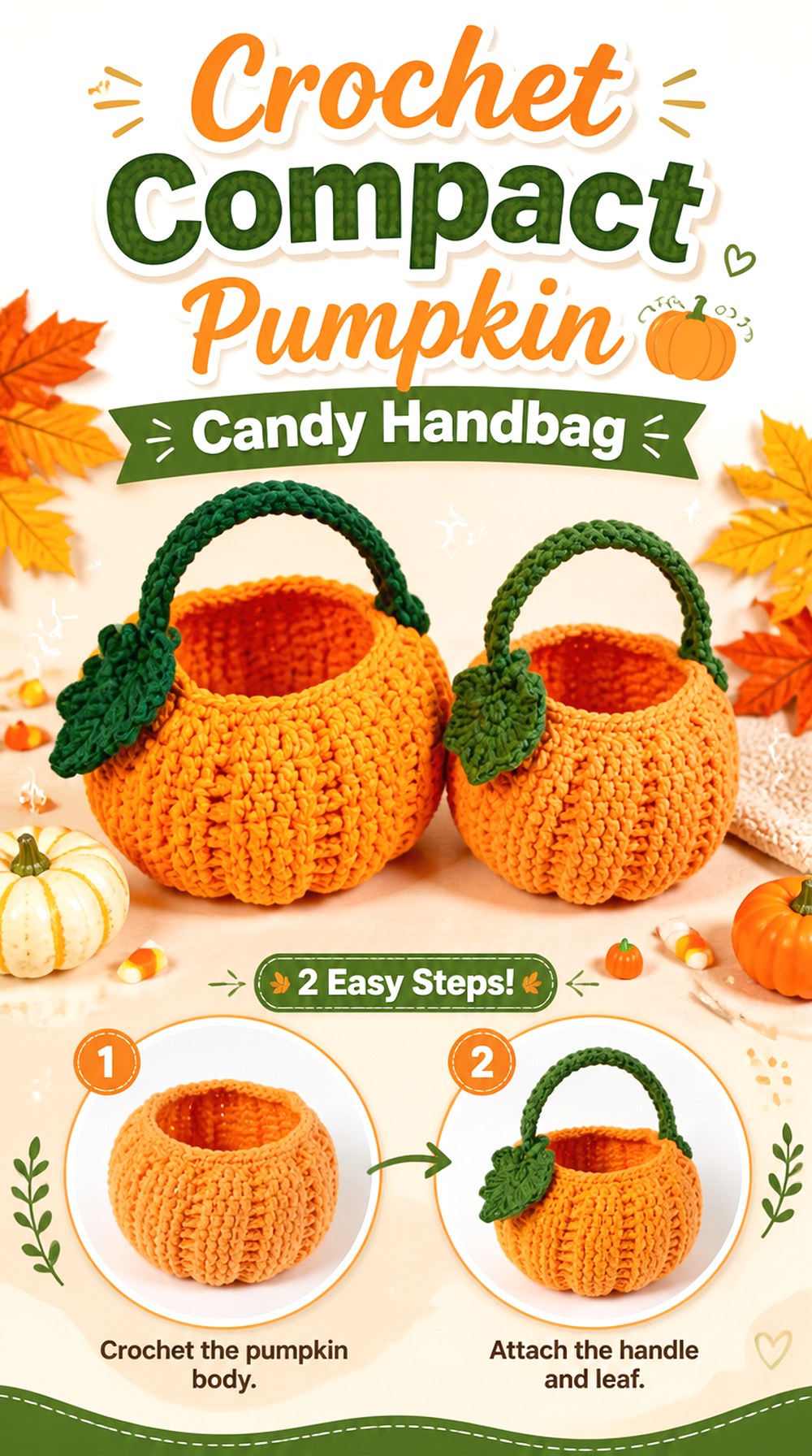
SAVEVicky Crochet’s tutorial focuses on a pumpkin candy bag and shows the carrying handle and decorative leaf as part of the finished project. It provides a useful smaller-scale alternative to the large TLH Patterns treat tote.
At compact scale, proportions become particularly noticeable. A handle that feels slightly heavy on a large tote may dominate a small pumpkin body, and top decoration can occupy a meaningful amount of the available opening. This idea therefore works well when you want the pumpkin itself to remain the focal point rather than treating the body as a blank surface for many additional Halloween elements.
Small Scale Makes the Handle Visually Important
Compact bags have less body area to balance a heavy strap or handle. Compare the carry element against the complete pumpkin before fastening it permanently.
The ideal proportion is not a universal measurement. It is the point where the handle provides enough support without visually overwhelming the rounded body or pulling the upper sides sharply inward.
The Leaf Should Stay Clear of the Opening
A green leaf quickly establishes the pumpkin identity, but it sits in one of the busiest functional areas of the bag.
Open the bag as far as possible and see where the leaf naturally falls. If it folds inward every time you reach inside, move or angle it so the decorative effect remains visible without reducing access.
Measure Rigid Essentials Against the Narrowest Access Point
A small pumpkin can be wider at its middle than at its opening. This matters when the intended contents do not bend.
Rather than assuming a phone, small wallet, or gift box will fit because the body looks wide enough, compare the object with the fully open top. That prevents a bag from having unused interior space that cannot actually be reached.
Original Tutorial and Creator Credit
Creator: Vicky Crochet
14. Crochet Mini Pumpkin Coin and Candy Pouch
 SAVE
SAVEFebe Andrian Crochet’s pumpkin pouch is positioned as a small candy or coin pouch, which gives it a more specific storage role than the full-size shoulder and trick-or-treat bags.
This is the kind of project where small differences at the opening matter more than overall volume. Tiny objects can escape from gaps that would be irrelevant in a tote, while overfilling a rounded pouch can quickly distort the pumpkin form. It is a useful choice for seasonal gifting, holding a few small items, or adding a functional pouch to a larger fall display without committing to a full handbag.
A Coin Pouch Needs a More Controlled Opening
When the contents are small, containment becomes more important than maximum access. Examine the closure when the pouch is turned, tilted, or lightly squeezed rather than only when it sits upright.
If you adapt the project for coins or similarly small objects, check for any gaps near the closure that become larger under tension. Decorative shape should not come at the expense of the intended storage function.
Keep the Pumpkin Shape From Becoming Overstuffed
A miniature rounded pouch has little room to absorb excess bulk. Filling it tightly can flatten the ridges, push the sides outward, and place unnecessary pressure on the opening.
Use it for the kind of compact contents its scale naturally supports. If you need significantly more capacity, a larger pumpkin bag is a better starting point than forcing this pouch to perform like a tote.
Original Tutorial and Creator Credit
Creator: Febe Andrian Crochet
15. Crochet Pumpkin Bag Charm Treat Pouch
 SAVE
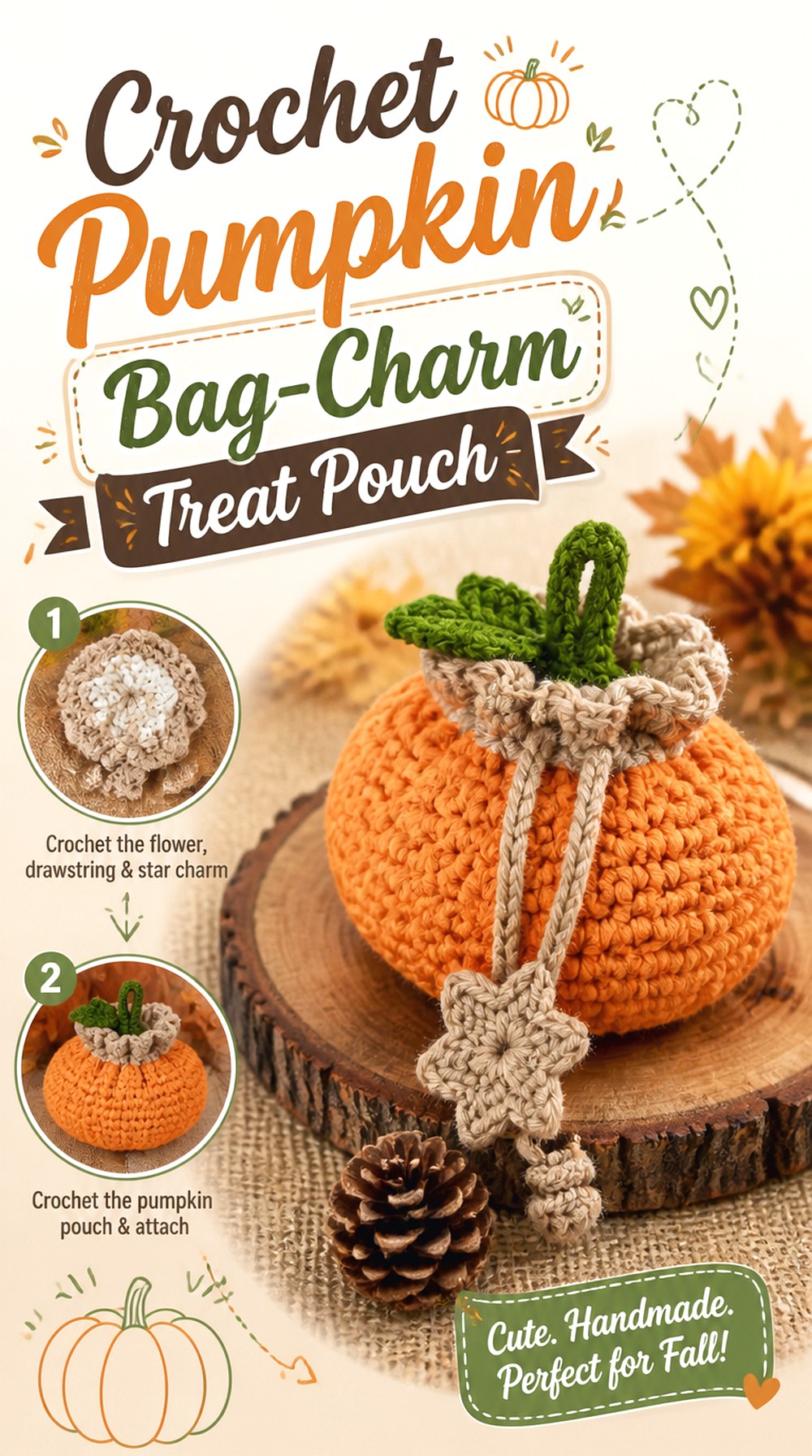
SAVEKukkacrochet By Putri pushes pumpkin-bag scale even smaller with a project designed as a bag charm that can also work as a tiny pouch. The tutorial includes a strap plus leaf and curly vine details, giving the miniature object a surprisingly complete pumpkin-bag identity.
This is useful when the goal is not normal purse capacity. It can hold a very small treat or object while functioning primarily as a decorative accessory attached to another bag. Because the scale is deliberate, enlarging it into a full purse should be treated as a redesign rather than a simple material swap.
Charm Scale Should Stay Charm Scale Unless You Replan
Switching to much thicker yarn may enlarge the pumpkin, but it also changes fabric stiffness, opening size, strap proportion, and the relative scale of the leaf and vine.
If you want a true purse inspired by this look, reconsider every functional element together. Otherwise, keep the miniature scale and let the charm do the small decorative job it was designed to do.
Vines and Leaves Can Snag Around Other Bags
A bag charm moves against zippers, handles, clothing, and the exterior of the host bag. Long loose decorative pieces therefore experience different friction from embellishments on a stationary pouch.
Position the vine and leaf so they remain visible without repeatedly catching around the attachment strap or nearby hardware. Secure finishing matters more when the object will swing during normal movement.
Original Tutorial and Creator Credit
Creator: Kukkacrochet By Putri
16. Crochet Child Size Pumpkin Drawstring Bag
 SAVE
SAVECrochetartcraft – Crochet Tutorial demonstrates a pumpkin bag specifically presented for kids, giving this collection a useful smaller-wearer option rather than another adult-size purse.
A child-scale bag should be evaluated for more than visual cuteness. Opening access, cord length, carry position, and securely attached decoration all matter. Do not infer a suitable strap or handle length solely from an age label or from how a finished bag looks in a video. The intended wearer’s proportions and the planned activity provide better checkpoints, particularly if the bag will be used while walking during Halloween events.
Child Scale Needs an On-Wearer Check
A bag that sits neatly on one child can hang too low or interfere with movement on another. Before finalizing any altered strap length, check the actual carry position over the kind of clothing the child will wear.
Make sure the bag does not swing around the knees or create an awkwardly long loop. A shorter hand or shoulder carry may be more appropriate than automatically converting it to crossbody length.
Long Cords and Loose Details Need Restraint
Seasonal bags often invite vines, beads, buttons, and dangling decorations, but added pieces should suit the intended user and situation.
Keep cords no longer than necessary for the bag’s function, secure attached components appropriately, and avoid casually adding loose embellishments that could detach. The simplest pumpkin treatment may be the most practical for active use.
Opening Width Matters for Treat Use
A trick-or-treat bag needs to be easy to reach into repeatedly. A beautifully rounded body is less useful if the top is frustratingly narrow.
Check the opening when completely loosened. If the bag will hold wrapped treats, make sure ordinary items can go in and come back out without forcing the crochet or catching constantly on decorative top details.
Original Tutorial and Creator Credit
Creator: Crochetartcraft – Crochet Tutorial
17. Crochet Small Pumpkin Tendril Treat Bag
 SAVE
SAVEPatrones Valhalla ENG offers a compact pumpkin treat bag with separate pumpkin details that include a tendril and leaf. The project is clearly aimed at Halloween treat use but stays much smaller than the roomy tote options in this collection.
That small scale makes it useful for a single gift, party favor, table place setting, or limited handful of treats rather than as a night-long candy tote. The recognizable pumpkin body still gives it visual presence, while the tendril provides detail without requiring a jack-o’-lantern face. This is also a good reminder that “pumpkin bag” can describe a tiny seasonal container, not only a wearable purse.
The Tendril Adds Identity at Tiny Scale
On a small bag, one curly tendril or leaf can contribute a large share of the finished character. There is less need to stack multiple embellishments around the opening.
Keep the decorative piece proportional and positioned where it remains visible after the bag closes. If the tendril is constantly crushed beneath the closure, its extra detail does little for the finished presentation.
Small Treat Bags Favor Light Contents
Compact crochet bags have small attachment and closure areas. Even if a dense object technically fits inside, that does not mean the pouch needs to be loaded heavily.
Use this scale for the kinds of lightweight treats or little gifts it naturally accommodates. If you want a reusable bag for larger quantities, choosing a tutorial designed around a bigger body gives you a more appropriate structural starting point.
Original Tutorial and Creator Credit
Creator: Patrones Valhalla ENG
18. Crochet Lined Jack O’ Lantern Zipper Purse
 SAVE
SAVEAtelier Joy’s jack-o’-lantern purse is one of the most fully purse-oriented choices here. The tutorial accompanies a design with a lining, interior patch pocket, zipper closure, and an adjustable strap concept, so the Halloween face sits on top of a more conventional accessory structure.
This makes it meaningfully different from both the Kane Crochet wallet and the open pumpkin treat bags. The zipper controls the opening, the lining creates a separate interior, and the pocket introduces organization rather than simple one-compartment storage. The jack-o’-lantern face keeps the look firmly seasonal, but the functional decisions are the same ones worth checking on any handmade purse.
The Zipper and Lining Work as a System
A zipper depends on a reasonably controlled upper edge, while a lining depends on fitting the crochet shell without pulling it inward or leaving excessive bulk.
Check the exterior body first. If the top edge is badly distorted, address that before installing either component rather than expecting the zipper and fabric to correct the crochet automatically.
An Interior Pocket Only Helps at the Right Scale
A patch pocket is useful when it suits the items you expect to separate from the main compartment. If the whole purse is compact, an oversized interior pocket can consume space or make one side noticeably bulkier.
Consider the finished interior rather than copying a pocket concept blindly when resizing. Storage features should support the bag’s actual role.
Strap Adjustment Should Be Checked on the Intended Wearer
The source notes that the strap can be adjusted for the wearer. That is more reliable than treating one fixed measurement as universally correct.
Before completing the strap, hold the bag at the preferred shoulder or crossbody position. Also account for any stretch observed in your own crochet strap once the purse contains the light everyday items you expect to carry.
Which Crochet Pumpkin Bag Style Fits Your Use?
| Bag direction | Useful when you want | Main checkpoint |
|---|---|---|
| Zippered pumpkin purse | Better containment for small personal items | Keep the upper crochet edge stable before installing the zipper |
| Pumpkin granny-square bag | A flatter bag with clearly framed seasonal motifs | Match finished square dimensions before joining |
| Foldaway pumpkin bag | A project that transforms between display and carry forms | Make sure the inner bag still packs comfortably into the outer shell |
| Drawstring or cinch bag | A gathered opening that reinforces the pumpkin silhouette | Check the usable opening when fully loosened |
| Large treat tote | More room and fast access for Halloween carrying | Watch handle attachments and lower-body sag as contents increase |
| Mini pouch or bag charm | Small gifts, coins, treats, or decorative use | Keep closure and embellishments proportional to the small scale |
| Lined textured shoulder bag | A purse-like body with pumpkin texture rather than pumpkin shaping | Fit the liner without flattening or distorting the raised exterior |
Conclusion
The right crochet pumpkin bag depends first on function, then on decoration. Choose a zippered or lined purse when containment and interior finishing matter, a granny-square or textured shoulder bag when you prefer pumpkins as surface design, and a rounded drawstring project when the pumpkin silhouette itself is the main attraction. Larger totes suit Halloween treat carrying, while the smallest pouches and charms make more sense for tiny gifts and seasonal accents.
Whatever style you choose, check the opening, fabric stretch, strap attachment, and intended contents before making major adaptations. Use the original tutorials linked with each project for the creators’ exact construction details, materials, and techniques.
Frequently Asked Questions
What yarn qualities help a crochet pumpkin bag keep its shape?
Look at the fabric the yarn creates rather than relying only on fiber name. A relatively dense, stable fabric generally preserves a defined pumpkin body better than one that stretches substantially under light weight. Softer fabric may be preferable when you want a relaxed drawstring sack instead. If changing yarn from a tutorial, crochet enough of the body or a useful sample to judge drape, stretch, and stitch definition before making conclusions about the finished bag.
When is lining worth adding to a crochet pumpkin bag?
Lining can be useful when the crochet has open spaces, raised texture, floats, or enough stretch that small belongings distort the body. It also creates a smoother interior for purse use. It is less essential when the project is simply a lightweight treat pouch and the crochet fabric already suits the contents. A lining should fit the finished shell without pulling it out of shape, and it should not be treated as a substitute for properly supported handles.
Why do crochet pumpkin bag straps stretch?
Crochet fabric can lengthen when it is placed under sustained tension, particularly in long straps. The amount depends on yarn construction, fiber, stitch choice, strap width, length, and carried weight. Test the strap with a light representative load before finalizing its length. If stretching is substantial, consider a more supportive strap concept or reinforcement compatible with the project rather than simply shortening the strap while it is unloaded.
Is a zipper or drawstring better for a crochet pumpkin purse?
Choose according to use. A zipper gives a clearly closed compartment and is useful for small personal belongings, but it needs a reasonably stable top edge. A drawstring naturally complements a rounded pumpkin because gathering the opening emphasizes the shape, though it reduces the effective access width when tightened. For a Halloween treat bag where repeated quick access matters, an open top or easily loosened drawstring can be more convenient than a carefully fitted zipper.
How can I keep pumpkin granny squares from making a crooked bag?
Compare the finished dimensions of the squares before joining them. Small differences in motif tension, borders, or blocking can become much more obvious once several squares form one panel. Arrange the completed motifs together and check the corners and edges instead of assuming that squares made from the same nominal pattern will automatically match. If you substitute a different pumpkin-square design, match its actual finished dimensions to the rest of the layout before joining.
What should I check before making a pumpkin bag for a child?
Check the bag on the intended wearer rather than relying only on an age description. The handle or strap should not hang so low that the bag interferes with movement, and cords or loose embellishments should be kept appropriate to the intended use. Secure decorative components carefully and avoid unnecessary dangling pieces. For a treat bag, also confirm that the opening is easy to access repeatedly and that wrapped treats can move through it without forcing the crochet.