Royal purple and juicy peach make a strong color pair for pocket-size crochet animals because they offer clear warm-and-cool contrast without requiring a large palette. Royal purple can cover the main body, back, wings, shell, or head, while juicy peach can highlight bellies, muzzles, ears, paws, fins, cheeks, or tails.
Small amigurumi needs deliberate color placement. A peach muzzle that looks minor in loose yarn can become one of the most noticeable parts of a tiny face, while a purple body can visually overpower small legs or ears if every surrounding detail is equally dark. Supporting shades such as cream, mint, seafoam, gray, and sage can create enough separation to keep the animal’s defining features readable.
The tutorials credited below support the pocket-animal construction concepts. The royal purple, juicy peach, and supporting palettes are independent color adaptations rather than claims about the creators’ original yarn colors.
Quick List
- Royal Purple, Juicy Peach, and Cream Crochet Pocket Frog
- Royal Purple, Juicy Peach, and Soft White Crochet Pocket Fox
- Royal Purple, Juicy Peach, and Caramel Crochet Pocket Bear
- Royal Purple, Juicy Peach, and Butter Yellow Crochet Pocket Owl
- Royal Purple, Juicy Peach, and Seafoam Crochet Pocket Whale
- Royal Purple, Juicy Peach, and Aqua Crochet Pocket Octopus
- Royal Purple, Juicy Peach, and Dusty Rose Crochet Pocket Pig
- Royal Purple, Juicy Peach, and Mint Crochet Pocket Axolotl
- Royal Purple, Juicy Peach, and Powder Blue Crochet Pocket Jellyfish
- Royal Purple, Juicy Peach, and Warm Taupe Crochet Pocket Hippo
- Royal Purple, Juicy Peach, and Charcoal Crochet Pocket Raccoon
- Royal Purple, Juicy Peach, and Silver Gray Crochet Pocket Elephant
- Royal Purple, Juicy Peach, and Sage Crochet Pocket Turtle
- Royal Purple, Juicy Peach, and Lemon Cream Crochet Pocket Duck
Decide Whether Royal Purple or Juicy Peach Covers the Pocket Animal Body
The body is the largest color area, so choosing it first establishes the hierarchy of the whole animal. Royal purple creates a deeper, cooler pocket animal and leaves juicy peach available for small features that need to stand out. A peach body creates a brighter result, while purple can define ears, feet, wings, shells, fins, or other smaller parts.
Avoid switching the two colors randomly across every appendage. On a very small amigurumi, consistent roles make the animal easier to read: one main body color, one strong secondary color, and an optional third shade for separation or defining features.
Protect Small Royal Purple and Juicy Peach Facial Details
Eyes, snouts, beaks, cheeks, ears, and other small features occupy little space but carry much of an animal’s character. If royal purple and another dark accent sit together around the face, the shapes may merge. Likewise, pale juicy peach can blend with cream or yellow when the values are too similar.
Compare the yarns before committing to the full piece and keep the clearest contrast around features that identify the animal. If a pocket animal is intended for a young child, consider securely embroidered facial features rather than assuming detachable eyes or other small parts are suitable.
1. Royal Purple, Juicy Peach, and Cream Crochet Pocket Frog
 SAVE
Royal purple can turn the compact frog body into the main focal area, while juicy peach works well on a belly, cheeks, or another controlled front detail. Cream is useful when the face needs an extra light break between purple and peach. Keep the palette concentrated around the rounded body rather than trying to give every small leg a different color.
Let Royal Purple Carry the Pocket Frog Body
Use royal purple across most of the head-and-body shape so the frog remains visually connected from front to back. Juicy peach can then occupy a smaller belly or cheek area without fragmenting the compact silhouette.
If peach also appears on the legs, repeat it symmetrically so one side does not look visually heavier.
Cream Can Separate Juicy Peach From Royal Purple Frog Features
Use cream around a small facial or belly detail when peach does not stand out enough against the purple body.
Keep cream limited to one functional role; too many pale spots can compete with the frog’s simple rounded construction.
Creator Credit: Móhu Makes
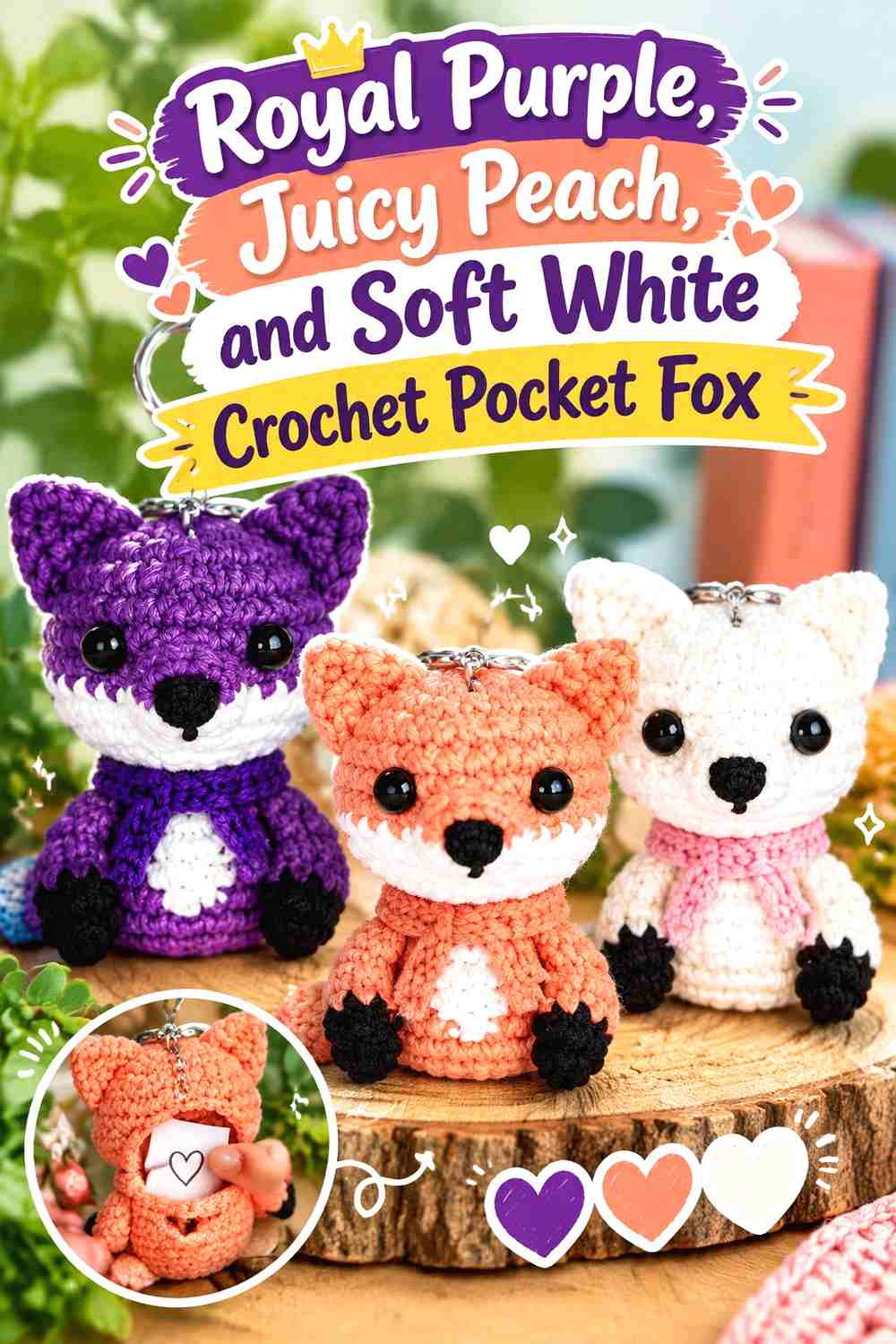
2. Royal Purple, Juicy Peach, and Soft White Crochet Pocket Fox
 SAVE
A fox has several natural color zones to reinterpret: body, muzzle, ears, paws, and tail tip. Royal purple can control the main body while juicy peach replaces the warmer secondary fur color and soft white clarifies the smallest contrasting sections.
Juicy Peach Can Warm the Royal Purple Fox Muzzle and Ears
Use juicy peach on the muzzle, inner ears, or another repeated warm detail rather than dividing the whole body equally between purple and peach.
Keeping the peach near the face directs attention toward the features that make the small fox recognizable.
Soft White Keeps Royal Purple and Juicy Peach Fox Details Distinct
A soft-white tail tip or narrow muzzle detail can provide a lighter break where purple and peach sit close together.
Avoid spreading white across too many paws and facial areas if you want juicy peach to remain the main secondary color.
Creator Credit: Luaji Crochet
3. Royal Purple, Juicy Peach, and Caramel Crochet Pocket Bear
 SAVE
Caramel adds a muted warm neutral that can soften the jump between royal purple and juicy peach. Let purple cover most of the bear, use peach where the face or paws need warmth, and keep caramel restricted to one supporting feature.
Royal Purple Should Stay Dominant Across the Pocket Bear
Keep the head and body royal purple so the bear has one consistent main surface. Juicy peach can appear on the muzzle or inner ears, where a smaller warm section creates enough contrast.
Large peach body panels would change the balance substantially, so use them only if a peach-led bear is intentional.
Caramel Can Ground Juicy Peach Details on a Royal Purple Bear
Caramel works on a small muzzle surround, paw detail, or restrained ear section when peach alone feels too bright against purple.
Give caramel a different placement from peach so the two warm shades do not become visually redundant.
Creator Credit: Amigurumis Atina
4. Royal Purple, Juicy Peach, and Butter Yellow Crochet Pocket Owl
 SAVE
An owl offers a useful opportunity to separate body color from eye-area and beak accents. Royal purple can cover the main rounded body, juicy peach can frame the face or wings, and butter yellow can stay concentrated around the smallest central detail.
Juicy Peach Can Frame the Royal Purple Owl Face
Use juicy peach around the face, wing edges, or another broad secondary section. Its warm contrast helps distinguish the facial area from a darker purple body.
Keep both sides balanced so the owl’s symmetrical front remains visually stable.
Butter Yellow Should Stay Smaller Than Juicy Peach on the Royal Purple Owl
Butter yellow can mark the beak or another tiny focal feature without needing the same coverage as peach.
If yellow expands across the eye area, wings, and feet, it can become more prominent than the requested purple-and-peach pairing.
Creator Credit: CrochetByGenna
5. Royal Purple, Juicy Peach, and Seafoam Crochet Pocket Whale
 SAVE
Royal purple gives a pocket whale a deep body color, while juicy peach can lighten the belly or fins. Seafoam introduces a cool lighter accent that can help tail and fin shapes remain visible without replacing purple.
Royal Purple Can Cover the Main Pocket Whale Body
Keep most of the rounded whale surface purple so the animal retains one uninterrupted shape.
Juicy peach can move to the underside or fins, where the warmer color helps those smaller features separate from the body.
Seafoam Can Clarify Juicy Peach Fins Against Royal Purple
Use seafoam on the tail, selected fin detail, or a small belly transition when peach needs another light-value partner.
Because both seafoam and peach can be relatively light, keep them in separate structural areas rather than tiny alternating sections.
Creator Credit: HoneyCookie Crochet
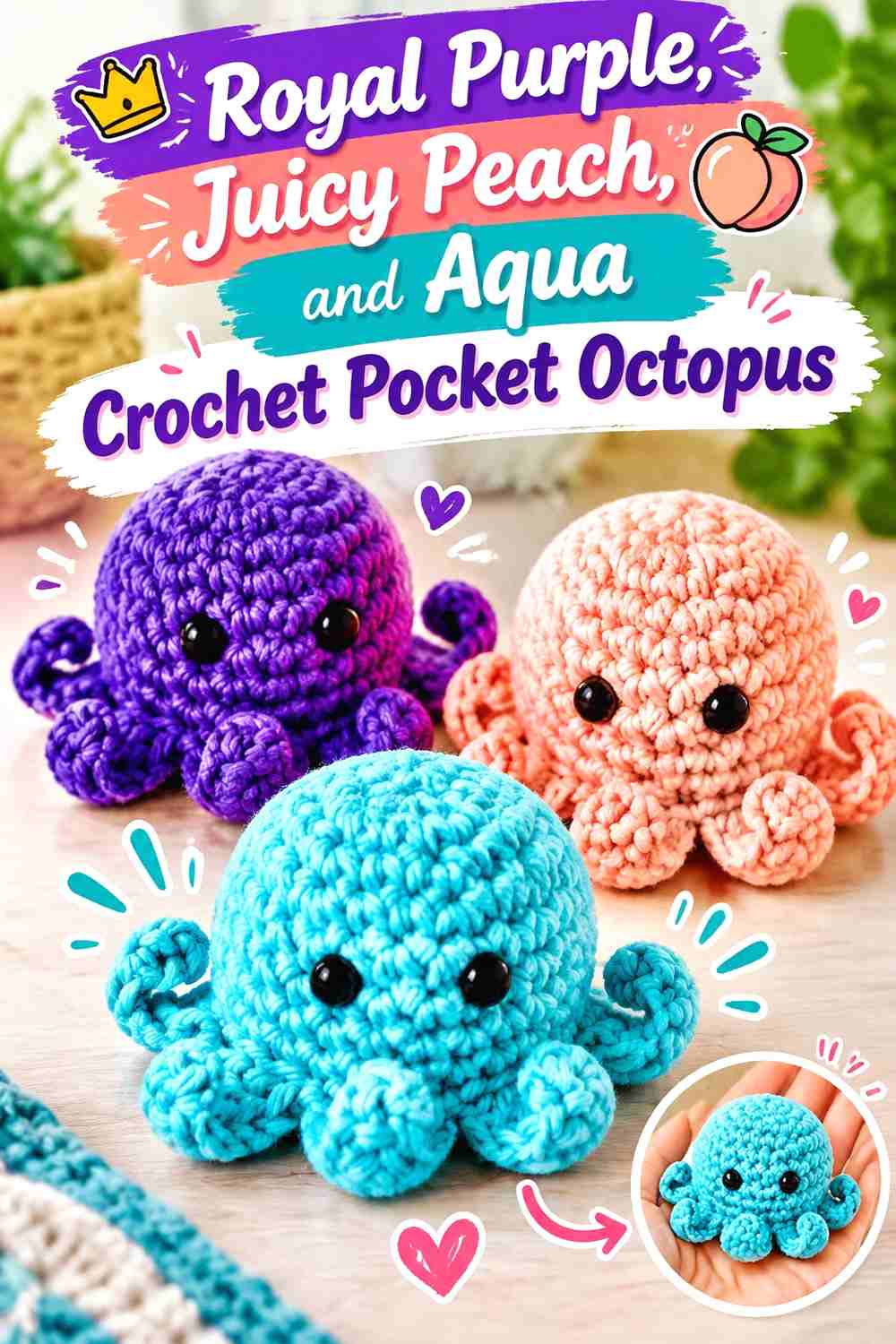
6. Royal Purple, Juicy Peach, and Aqua Crochet Pocket Octopus
 SAVE
The octopus body and arms create one continuous form, so color placement should preserve that movement. Royal purple can cover the head and most arms, while juicy peach marks a smaller underside or arm detail and aqua provides a cool highlight.
Keep Royal Purple Continuous Through the Pocket Octopus Arms
Use royal purple across most of the arms so the animal reads as one connected shape rather than a collection of differently colored appendages.
Juicy peach can repeat on selected arm tips if you want warmth distributed around the lower silhouette.
Aqua Should Support Juicy Peach on the Royal Purple Octopus
Reserve aqua for one controlled area such as a center accent or occasional arm detail. Equal peach and aqua coverage can make the palette busier than the small octopus needs.
Royal purple should remain the color that visually connects all the arms.
Creator Credit: VivCrochets
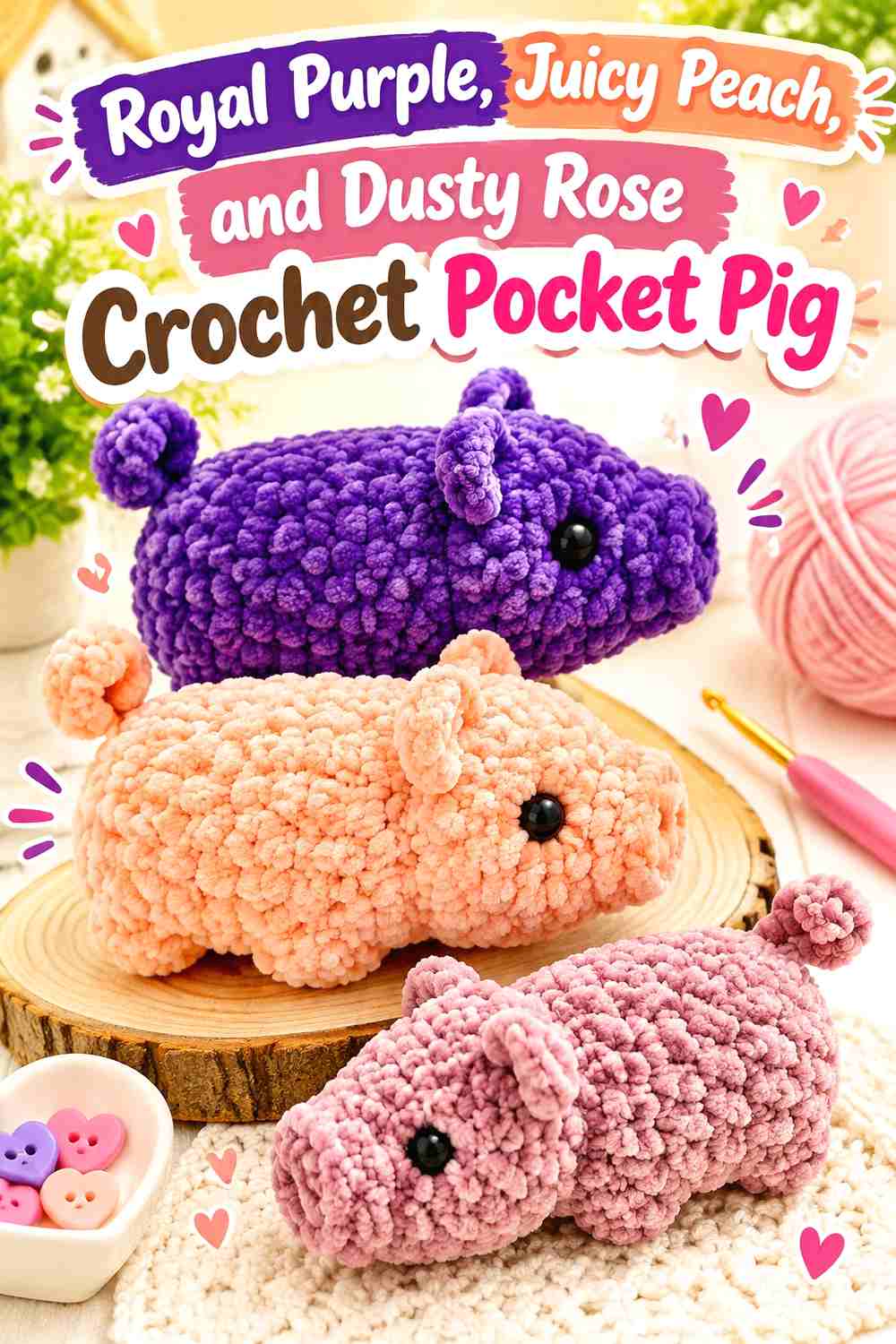
7. Royal Purple, Juicy Peach, and Dusty Rose Crochet Pocket Pig
 SAVE
Dusty rose gives juicy peach a softer neighboring shade and suits the pig’s snout-and-ear color zones. Royal purple can make the body distinctly unconventional while the two warmer colors concentrate around recognizable facial features.
Juicy Peach Should Highlight the Royal Purple Pig Snout
Use peach on the snout where a lighter warm color immediately distinguishes the face from the purple body.
Repeating peach on inner ears can connect the facial accent without covering too much of the animal.
Dusty Rose Can Soften Juicy Peach Against Royal Purple Ears
Dusty rose works best as a smaller transition or secondary warm detail rather than another full body color.
If peach and rose are extremely close in value, give them different areas instead of alternating them inside the same tiny ear or snout.
Creator Credit: Rose and Lily Crochet
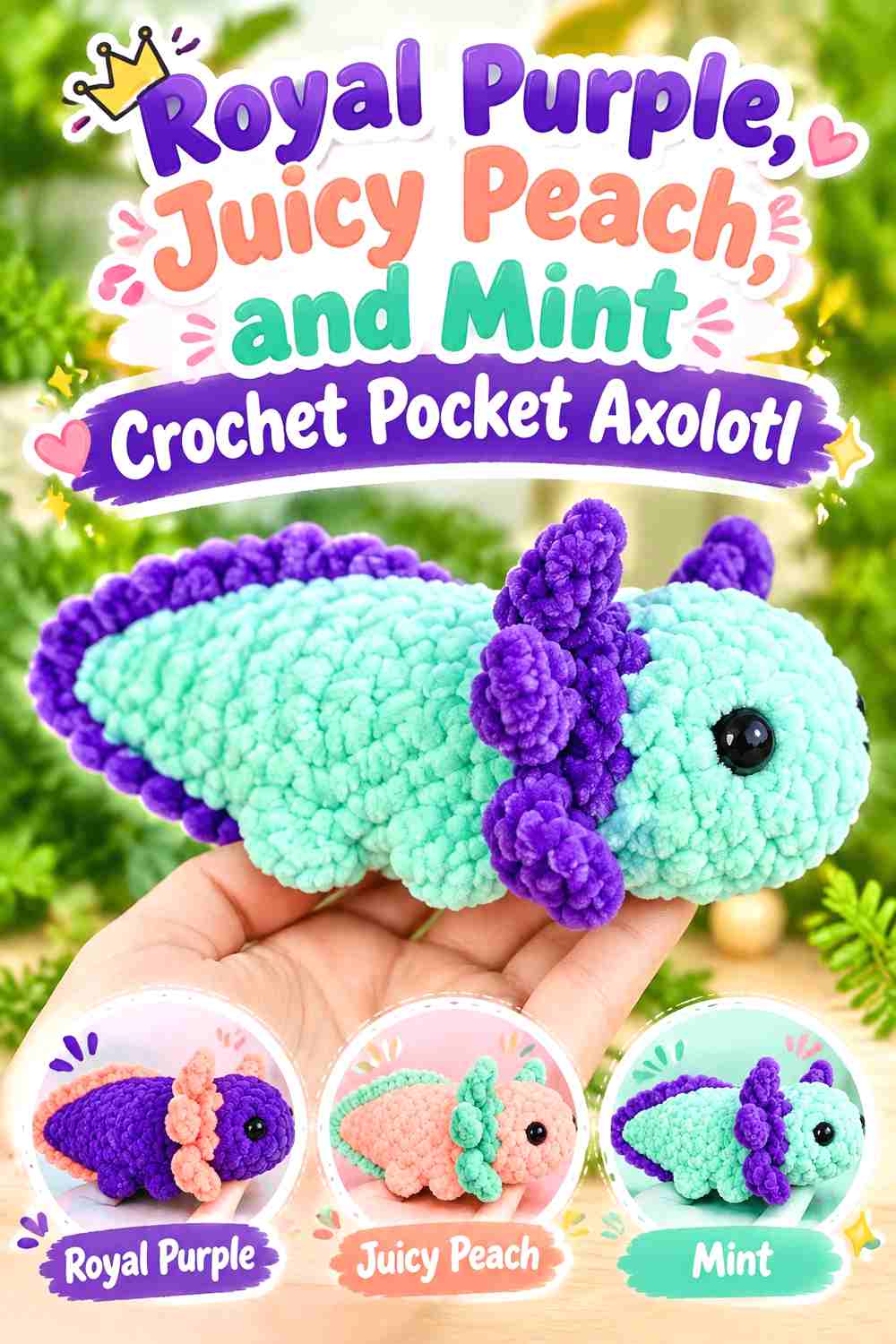
8. Royal Purple, Juicy Peach, and Mint Crochet Pocket Axolotl
 SAVE
An axolotl’s side frills create a natural place for a contrasting color. Royal purple can cover the body, juicy peach can emphasize the frills, and mint can provide a lighter secondary accent around the tail or smaller details.
Juicy Peach Can Make Royal Purple Axolotl Frills More Visible
Use peach consistently across the side frills so they remain easy to distinguish from the darker head and body.
Because those features are small, consistent color placement is more useful than changing the shade from frill to frill.
Mint Should Stay Secondary to Juicy Peach on the Royal Purple Axolotl
Use mint on a tail accent or another limited section where cool contrast adds variety.
Keeping mint smaller preserves the peach frills as the animal’s main secondary color and prevents three saturated hues from competing equally.
Creator Credit: Reigning Charmz
9. Royal Purple, Juicy Peach, and Powder Blue Crochet Pocket Jellyfish
 SAVE
A jellyfish separates naturally into a rounded upper body and hanging tentacles. Royal purple can anchor the top, while juicy peach and powder blue divide the lower details without interfering with the simple dome silhouette.
Let Royal Purple Cover the Pocket Jellyfish Dome
Keep the upper body mostly royal purple so the curved shape remains visually solid.
Juicy peach can begin underneath or appear on selected tentacles, creating a warm transition below the darker dome.
Powder Blue Can Separate Juicy Peach Tentacles Under Royal Purple
Alternate or group powder-blue and peach lower details in a predictable way rather than changing every strand randomly.
The lighter cool shade can keep a dense cluster of tentacles from becoming one warm-colored mass.
Creator Credit: Darling Maple Designs
10. Royal Purple, Juicy Peach, and Warm Taupe Crochet Pocket Hippo
 SAVE
A hippo provides a broad muzzle area that can carry the secondary palette clearly. Royal purple can cover the main body, juicy peach can define the underbelly or inner ears, and warm taupe can give the muzzle a softer transition.
Warm Taupe Can Define the Muzzle on a Royal Purple Hippo
Use taupe across the broad muzzle if you want it clearly separated from the purple head without introducing another highly saturated hue.
Juicy peach can then move to smaller details such as the inner ears or underbelly.
Juicy Peach Should Remain Visible Against the Royal Purple Hippo Body
Repeat peach in more than one small area if the taupe muzzle already occupies much of the face.
Keeping peach on both sides of the body or face prevents it from looking like an isolated accidental accent.
Creator Credit: Ami Amour
11. Royal Purple, Juicy Peach, and Charcoal Crochet Pocket Raccoon
 SAVE
Charcoal gives this palette the strongest dark supporting shade. Because charcoal and royal purple can be similar in value, use them in different structural zones and let juicy peach provide the warm contrast.
Keep Charcoal Separate From the Royal Purple Raccoon Body
Use charcoal on a face-mask area, tail bands, or another defined feature rather than mixing it through the whole purple surface.
The structural separation helps two dark colors remain recognizable at pocket scale.
Juicy Peach Can Break Up Royal Purple and Charcoal Facial Details
Place peach around the inner ears, muzzle, or another small face feature where the two darker shades need separation.
A compact warm accent can make the face easier to read without requiring a pale neutral.
Creator Credit: ComplicatedKnots
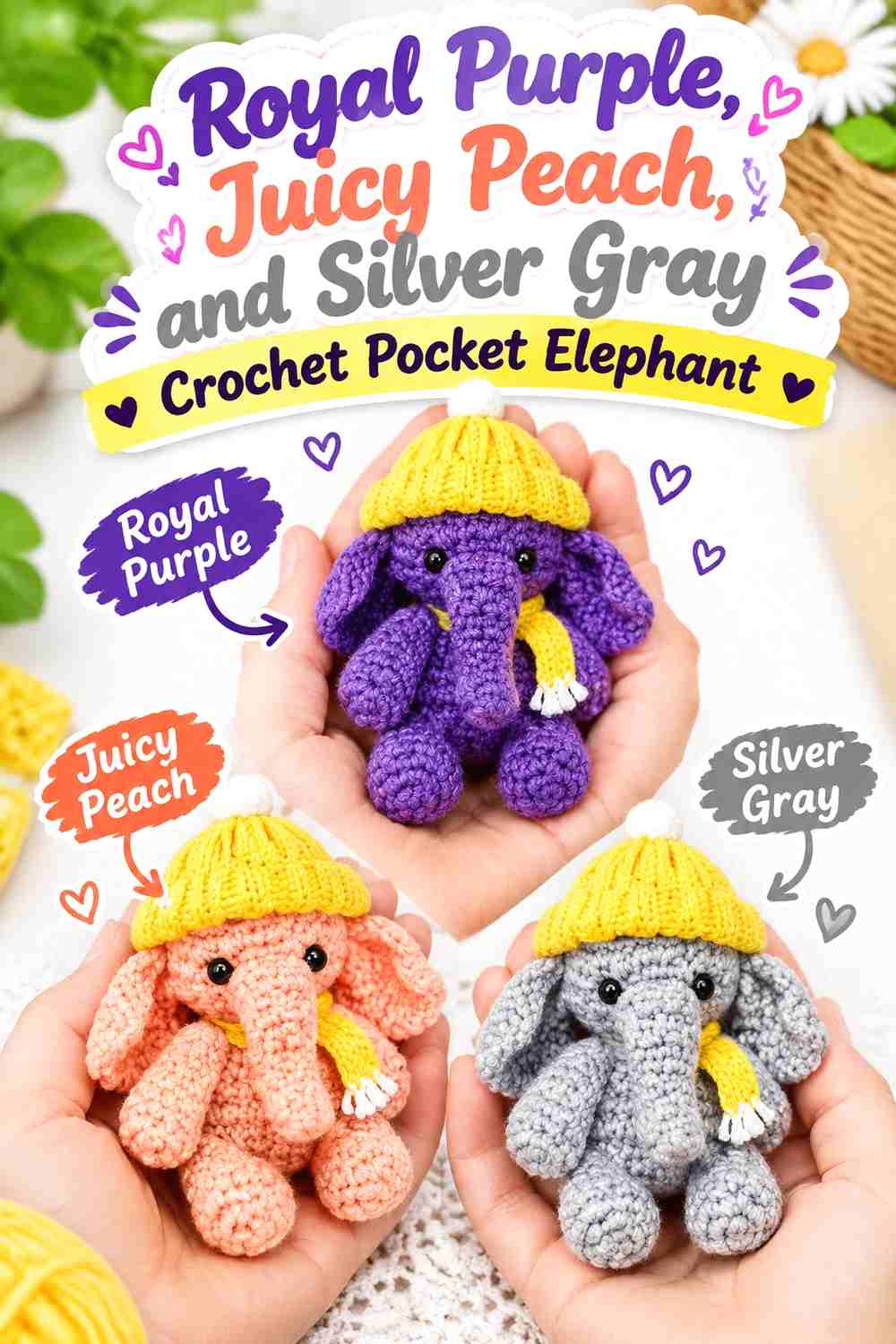
12. Royal Purple, Juicy Peach, and Silver Gray Crochet Pocket Elephant
 SAVE
An elephant’s large ears give the supporting colors more room than many other pocket animals. Royal purple can cover the head and body while juicy peach or silver gray creates clear inner-ear contrast.
Juicy Peach Can Warm Royal Purple Elephant Ears
Use peach on the inner-ear areas while leaving the outer ears purple. The contrast emphasizes one of the elephant’s defining shapes without dividing the main body.
Keeping the same peach placement on both ears preserves visual balance.
Silver Gray Can Separate Juicy Peach From the Royal Purple Elephant
Use silver gray on the trunk, feet, or another small supporting area rather than adding it to the inner ears as well.
Giving gray a separate role keeps the three-color palette readable on a miniature animal.
Creator Credit: Miniature Crochet
13. Royal Purple, Juicy Peach, and Sage Crochet Pocket Turtle
 SAVE
The turtle shell gives royal purple a large focal area while juicy peach and sage can divide the softer body and flipper details. The clearest version assigns the shell and body different color roles rather than scattering all three shades across every section.
Let Royal Purple Dominate the Pocket Turtle Shell
Use royal purple across most of the shell so its rounded back becomes the main visual feature.
Juicy peach can move to the head or flippers, creating a warmer contrast around the outside of the darker shell.
Sage Can Soften Juicy Peach Around the Royal Purple Turtle
Use sage for selected body sections or shell edging when peach alone feels too strong.
Avoid alternating sage and peach across every small flipper; repeated color roles make the turtle easier to read.
Creator Credit: DIY Fluffies
14. Royal Purple, Juicy Peach, and Lemon Cream Crochet Pocket Duck
 SAVE
A duck gives juicy peach an obvious place on the beak while royal purple creates an unexpected body color. Lemon cream can lighten the belly or wings without competing directly with the stronger peach facial accent.
Keep Royal Purple Broad Across the Pocket Duck Body
Use royal purple on the rounded body and head so the silhouette stays continuous.
Lemon cream can move to the belly or wings, where a lighter color helps smaller shapes remain visible against the main body.
Juicy Peach Should Stay Focused on the Royal Purple Duck Beak
Keep peach concentrated on the beak or feet rather than spreading it through the entire bird.
That controlled placement preserves a clear visual hierarchy: purple body, pale supporting detail, and peach focal accent.
Creator Credit: sein mit Nora
Which Royal Purple and Juicy Peach Pocket Animal Palette Should You Choose?
| If You Want | Try This Color Direction |
|---|---|
| Clear light facial contrast | Royal Purple + Juicy Peach + Cream |
| Crisp fox markings | Royal Purple + Juicy Peach + Soft White |
| Warm neutral softness | Royal Purple + Juicy Peach + Caramel |
| Brighter playful details | Royal Purple + Juicy Peach + Butter Yellow |
| Cool ocean contrast | Royal Purple + Juicy Peach + Seafoam |
| Strong aquatic color | Royal Purple + Juicy Peach + Aqua |
| Softer pink warmth | Royal Purple + Juicy Peach + Dusty Rose |
| Fresh cool accents | Royal Purple + Juicy Peach + Mint |
| Pale underwater contrast | Royal Purple + Juicy Peach + Powder Blue |
| Muted neutral muzzle details | Royal Purple + Juicy Peach + Warm Taupe |
| Dark graphic facial markings | Royal Purple + Juicy Peach + Charcoal |
| Cool elephant detailing | Royal Purple + Juicy Peach + Silver Gray |
| Soft natural turtle contrast | Royal Purple + Juicy Peach + Sage |
| Light cheerful bird contrast | Royal Purple + Juicy Peach + Lemon Cream |
Conclusion
Royal purple and juicy peach can work across very different pocket animals because one can establish the main body while the other highlights the feature that makes each animal recognizable. Peach is especially effective on muzzles, ears, bellies, fins, frills, beaks, and paws, while purple gives shells, bodies, heads, wings, and backs a strong cool anchor.
Cream, white, taupe, and gray are useful when the main pair needs more value separation. Seafoam, aqua, mint, powder blue, and sage create cooler variations, while caramel, dusty rose, butter yellow, and lemon cream keep the supporting palette warmer and more playful.
Before adapting a tutorial, make a small color test or compare the yarns directly. On pocket-scale amigurumi, a tiny feature can carry surprising visual weight, so it is usually more effective to give each color a clear job than to distribute every shade evenly across the animal.
Frequently Asked Questions
Should Royal Purple or Juicy Peach Dominate a Crochet Pocket Animal?
Either can lead, but royal purple gives a darker, cooler body while juicy peach creates a brighter warm result. Choose the body color first, then use the second shade on features such as ears, muzzles, paws, bellies, fins, wings, or tails.
Where Should Juicy Peach Go on a Royal Purple Pocket Animal?
Juicy peach is particularly useful on small warm focal areas: inner ears, cheeks, muzzles, bellies, beaks, paws, fins, or tail details. Concentrating it around one or two recognizable features usually creates stronger color organization than scattering peach everywhere.
What Neutral Works With Royal Purple and Juicy Peach Amigurumi?
Cream and soft white give the strongest light contrast, warm taupe and caramel create softer transitions, and silver gray provides a cooler neutral. Choose according to whether the third shade needs to clarify a feature or simply soften the purple-peach transition.
How Can I Keep Small Royal Purple Facial Details Visible?
Avoid placing similarly dark colors together around the eyes, nose, muzzle, or ear edges when those shapes need definition. Add a lighter peach, cream, gray, or another contrasting area nearby, or assign the two dark colors to separate structural features.
Can Royal Purple and Juicy Peach Work for Ocean Pocket Animals?
Yes. Purple can provide the main whale, octopus, jellyfish, or turtle surface while peach highlights fins, tentacles, bellies, or flippers. Seafoam, aqua, powder blue, or sage can add another cool supporting shade without replacing the main pair.
Do Pocket Animals Need Three Colors?
No. Royal purple and juicy peach can work as a complete two-color palette when their values have enough separation and each has a clear placement role. A third color is most useful when it clarifies facial details, separates adjacent features, or adds a specific accent.
What Should I Consider if the Crochet Pocket Animal Is for a Young Child?
Treat small detachable components carefully. Do not assume a pocket animal is suitable for a young child simply because it is handmade or small. Consider securely embroidered facial details instead of detachable pieces where appropriate, and follow the original tutorial’s construction and safety guidance.