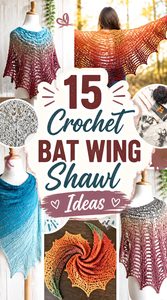
A crochet bat wing shawl can range from a recognizable two-wing silhouette to a softer fantasy wrap built around dragon tails, butterfly wings, stepped edges, or feather-like shaping. Those differences affect much more than appearance. Some designs spread dramatically across the back, while others wrap more naturally around the neck and shoulders. Dense ridges emphasize structure; lace and lighter fabrics emphasize movement.
The 15 ideas below cover that wider winged-shawl family. Some original tutorials specifically use bat terminology, while others teach dragon, butterfly, dove, or fantasy-wing constructions that can support a bat-inspired interpretation. Rather than treating dark yarn as the only defining feature, this guide compares silhouette, edge shape, drape, symmetry, coverage, and practical adaptation so you can choose a construction that fits the effect you actually want.
Quick List
- Crochet Classic Bat-Edge Shoulder Shawl
- Crochet Ribbed Dragon-to-Bat Wing Shawl
- Crochet Chain-Lace Fantasy Wing Shawl
- Crochet Velvet-Texture Bat Wing Wrap
- Crochet Bat-terfly Flap Wing Shawl
- Crochet Broad Butterfly-to-Bat Wing Shawl
- Crochet Fan-Spread Wing Shawl
- Crochet Full-Coverage Butterfly Bat Wing Shawl
- Crochet Two-Panel Dove-to-Bat Wing Shawl
- Crochet Asymmetrical Dragon-Tail Bat Shawl
- Crochet Nordic Stepped Bat Wing Shawl
- Crochet Gradient Dragon-Tail Wing Shawl
- Crochet Zig-Zag Bat Wing Shawl
- Crochet Triangular Dragon-Tail Bat Shawl
- Crochet Lightweight Empress Wing Shawl
How Wing Shape Changes the Finished Shawl
The first decision is whether you want a shawl that actually reads as a pair of wings or simply carries a wing-like edge. Centered, symmetrical constructions make the strongest visual statement when viewed from behind because both sides spread away from the spine. They suit costume styling and dramatic outer layers particularly well.
Asymmetrical dragon-tail constructions behave differently. Their graduated points travel toward one end, so the shawl often works more naturally as an everyday wrap while still giving you a fantasy silhouette. Crescent and fan shapes sit between the two extremes.
Before choosing, look at the tutorial’s finished piece from both the back and the front. A striking flat-lay outline does not automatically mean the same points will remain visible once the shawl is wrapped around the shoulders.
Drape Matters as Much as the Bat-Wing Edge
Sharp points are easier to notice when the fabric can open cleanly, while a plush or dense fabric may produce a softer, heavier interpretation. That does not make one option better. It changes the character of the wings.
Lighter, more open fabrics can emphasize negative space and long lower-edge points. More substantial fabrics provide greater visual coverage and can make raised ribs or wedges more prominent. A velvet-style yarn, meanwhile, may soften small stitch details even when the overall silhouette remains dramatic.
Do not substitute yarn solely by matching color. Compare the yarn category recommended by the creator, the hook guidance, the intended fabric, and any blocking information. If you change those elements, make a sample first and see how the fabric hangs before committing to a full shawl.
Plan the Back View, Shoulder Hold, and Lower Edge Together
Bat-inspired shawls are unusually dependent on their outline. Long points may look spectacular when spread flat but can overlap, curl, or disappear when the shawl is worn. A deep center back also creates a different effect from a wide, shallow wing.
Think about where you want the visual focus. For costume-style wings, back width and a recognizable lower contour may matter most. For a wearable wrap, shoulder stability and enough fabric to bring the ends forward can be more important.
Blocking can help many crochet shawls settle into their intended shape, but the appropriate method depends on fiber and construction. Follow the yarn’s care information and the tutorial’s finishing guidance rather than assuming every pointed wing should be stretched aggressively.
1. Crochet Classic Bat Edge Shoulder Shawl
 SAVE
SAVEThis option is the clearest place to start when the goal is an unmistakably bat-inspired finished object rather than a general fantasy shawl. Magic Dina’s tutorial specifically presents the project as a crochet “BAT” shawl, so the source and the intended silhouette are closely aligned.
The idea works well for a dark shoulder layer where the lower outline provides most of the character. Because the design itself already supplies the bat association, you do not have to rely on appliqués or novelty embellishments. Before choosing it, study how far the finished piece travels around the shoulders and whether that amount of coverage matches the way you expect to wear it.
Let the Lower Edge Do the Visual Work
For a bat shawl, a recognizable outline is more valuable than adding unrelated Halloween details. Strong changes of direction along the lower edge can suggest folded wing membranes even in a single solid color. If you plan to adapt the look, avoid piling heavy fringe onto the points; extra decoration can visually erase the very contour that makes the piece read as a wing.
Check the Shoulder Depth Before Scaling Up
Making a winged shawl wider is not always the same as making it easier to wear. Added depth can move the lowest points farther down the back and increase the amount of fabric sitting on the shoulders. Compare the tutorial’s worn view with your preferred coverage, then judge whether you want a compact shoulder cape effect or a more enveloping wrap before changing the scale.
Contrast Can Replace Extra Ornament
Black is the obvious gothic choice, but the silhouette can remain readable in charcoal, oxblood, plum, dark green, or another saturated shade. If you want more definition without changing construction, a contrasting garment underneath can make each point easier to see. That is often more effective than attaching decorations that add weight to the edge.
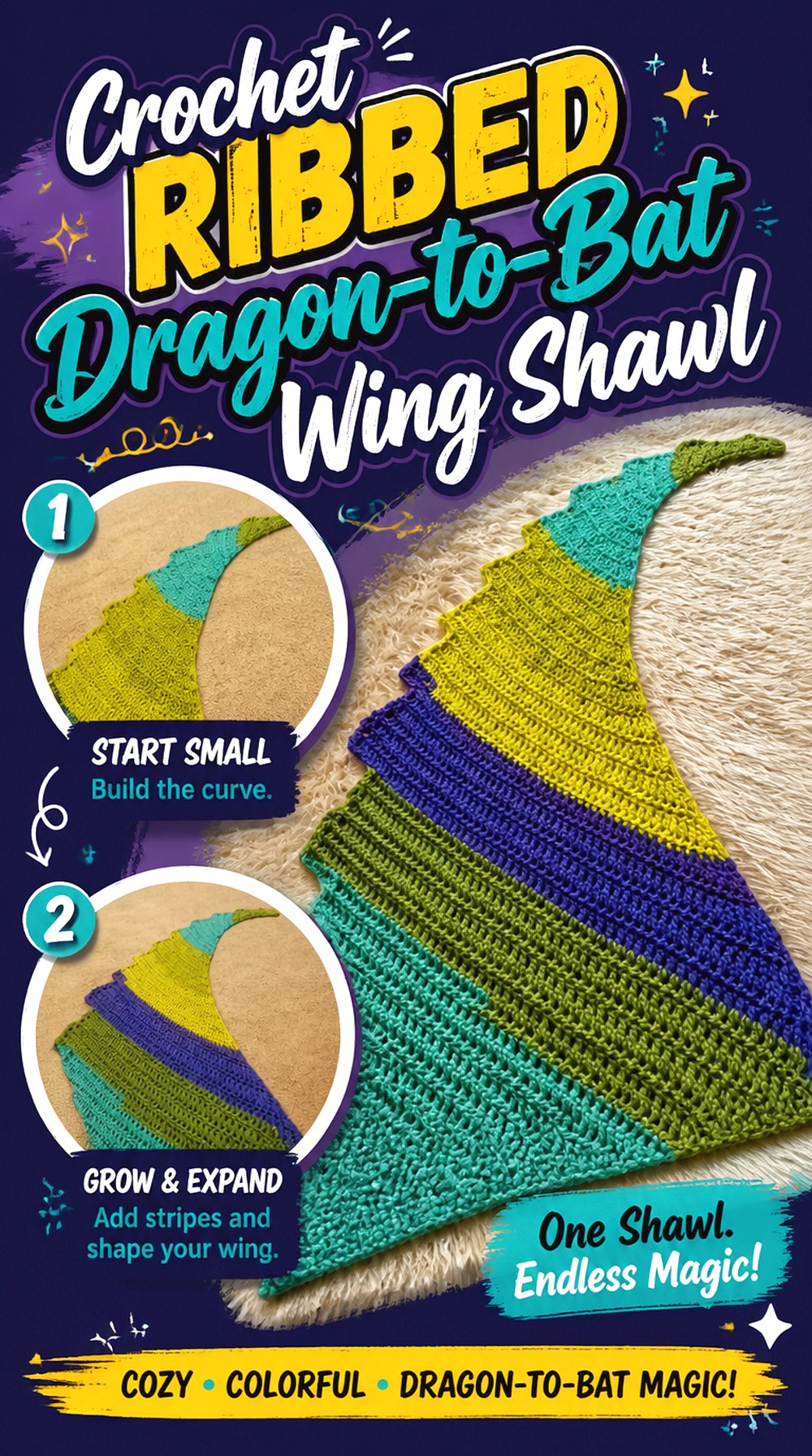
2. Crochet Ribbed Dragon to Bat Wing Shawl
 SAVE
SAVEFiber Spider’s Dragon Wing Shawl offers a different route to the same fantasy wardrobe: pronounced structural lines create a winged effect without requiring literal bat motifs. The result can translate especially well into a bat-inspired wrap when the color palette and finishing keep attention on the segmented silhouette.
Compared with a delicate lace wing, this idea puts more emphasis on texture and repeated ridges. That makes it useful for readers who want the shawl to suggest the framework of a wing even when it is not fully spread. It is also a good reminder that bat styling does not require every edge to reproduce an anatomical bat outline.
Raised Lines Strengthen the Wing Illusion
A wing can read as “bat-like” through internal structure as well as through its perimeter. Strong ribs visually divide the fabric into sections that resemble the supporting lines of a folded fantasy wing. When choosing colors, consider whether the yarn will allow those shadows and ridges to remain visible. Extremely busy color changes can compete with structural texture.
Half-Circle Coverage Changes the Back View
A broad wing-style shawl distributes its visual interest across more of the back than a narrow dragon-tail scarf. That can make it useful when you want a costume layer or statement wrap rather than a small neck accessory. Check how the tutorial’s finished shawl curves around the wearer, because the same broad shape that creates dramatic coverage also influences how much fabric gathers at the front.
Watch the Fabric Weight Near the Neck
Texture adds visual depth, but any larger shawl also accumulates more fabric as it grows. If you substitute a substantially heavier yarn, evaluate the resulting sample for weight and flexibility rather than assuming the same proportions will feel identical. A bat-inspired shawl should still rest comfortably when the wings are not being held open.
Original Tutorial and Creator Credit
Creator: Fiber Spider
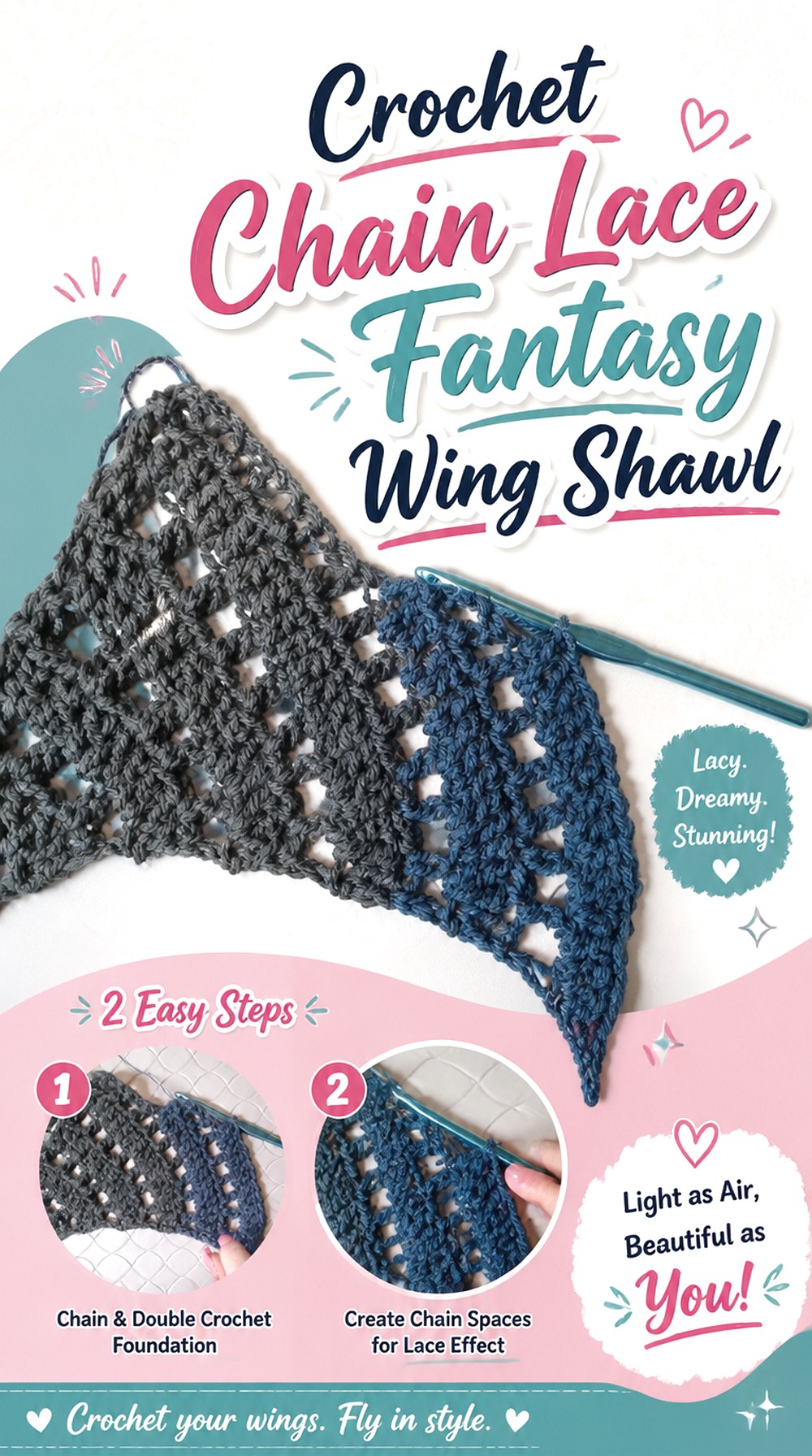
3. Crochet Chain Lace Fantasy Wing Shawl
 SAVE
SAVEThis version uses a dragon-wing tutorial built around double crochet and chain stitches, giving the finished shawl a more open appearance than heavily ridged alternatives. The creator describes the project as having a wing-like texture and notes that different yarn weights can be used, making fabric choice an important part of the planning rather than a cosmetic afterthought.
For a bat interpretation, the open spaces can create the suggestion of stretched membrane between structural lines. The approach suits someone who wants a dark fantasy wrap without making the finished object appear too visually dense. It can also work in colors other than black because the construction itself contributes to the wing effect.
Open Spaces Make the Silhouette Feel Lighter
Chain spaces let light pass through the fabric, which can make a large wing shape look less heavy across the back. That is useful when you want drama without a solid cape-like appearance. The trade-off is that the shawl’s outline and stitch definition become more visible, so uneven tension can attract more attention than it might in a plush, opaque fabric.
Yarn Substitution Changes the Scale of the Openwork
The tutorial allows flexibility in yarn choice, but switching weight changes more than thickness. Larger stitches can enlarge both the solid sections and the openings, while finer yarn can produce a more delicate-looking wing. Make a sample that includes both solid crochet and chain spaces, then judge the fabric after it relaxes rather than choosing only from the label recommendation.
Original Tutorial and Creator Credit
Creator: How to Crochet
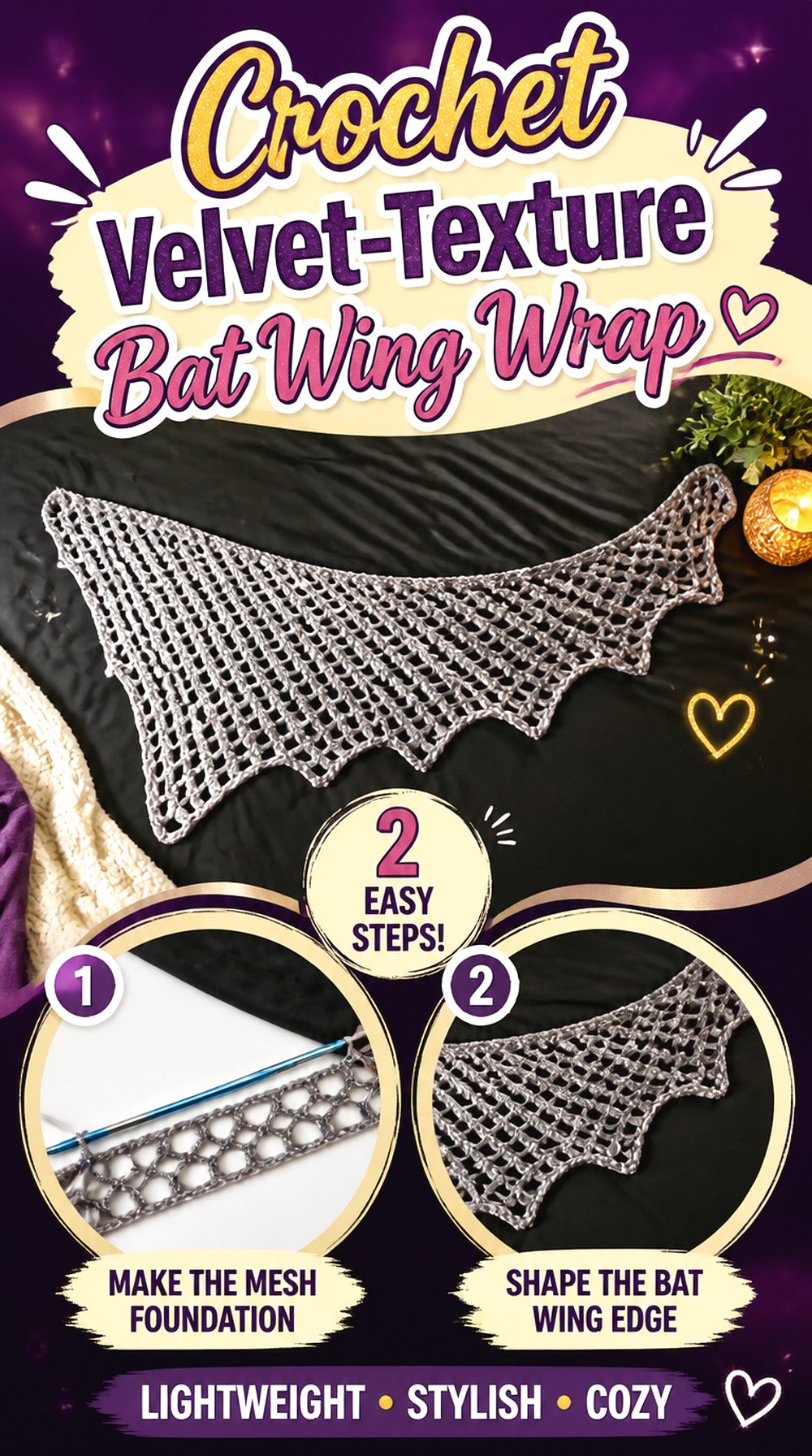
4. Crochet Velvet Texture Bat Wing Wrap
 SAVE
SAVEKyle Crochet’s velvet dragon wing shawl shifts attention from crisp lace to a much softer visual surface. For a bat-inspired adaptation, that creates an interesting alternative to the usual sharply blocked gothic shawl. The wing shape supplies the fantasy reference, while the plush texture gives the wrap a richer, softer character.
This version makes sense when warmth and tactile appearance matter as much as precise stitch definition. It can also work as an evening wrap where you want the silhouette to appear dramatic from a distance without every individual stitch becoming part of the look. The main planning question is how much edge definition you are willing to trade for softness.
Plush Yarn Softens Small Structural Details
Velvet-style yarn can visually blur fine texture, which means the overall outline becomes more important. If your ideal bat shawl depends on tiny points or intricate openwork, a very plush surface may hide some of that detail. If you prefer broad wing sections and a smooth, shadowy finish, the same quality can become an advantage rather than a limitation.
Judge the Weight With the Shawl Worn
A soft yarn can look airy in a skein yet produce a substantial finished wrap once a large amount of fabric is on the shoulders. When adapting the idea, periodically drape the developing piece around yourself rather than assessing it only on a table. That gives you a better sense of whether additional size improves coverage or simply increases weight.
Original Tutorial and Creator Credit
Creator: Kyle Crochet
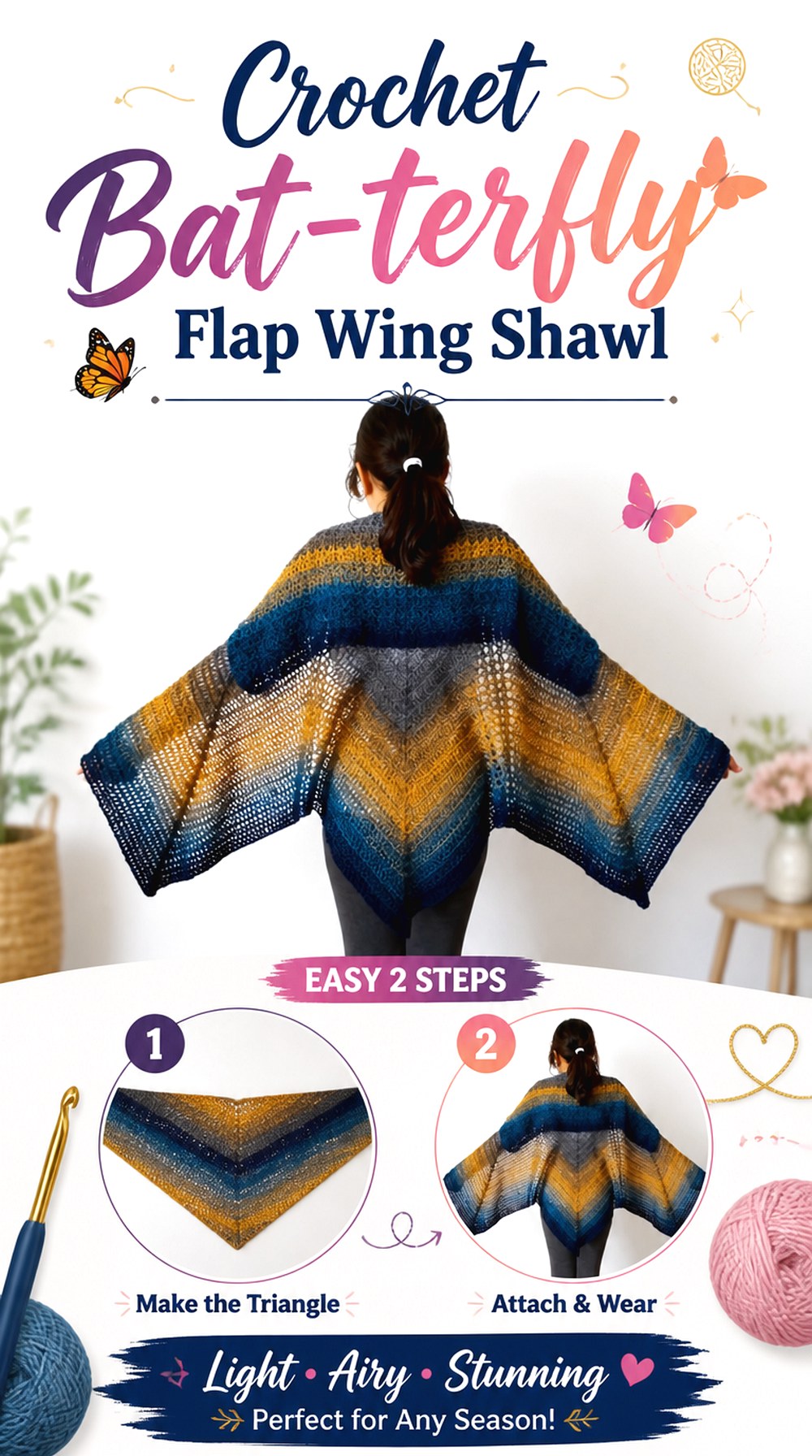
5. Crochet Bat terfly Flap Wing Shawl
 SAVE
SAVEThe Bat-terfly Shawl is particularly relevant because its name and development deliberately sit between butterfly and bat imagery. Meladora’s Creations for Crochet describes the piece as a butterfly shawl with a bat association, and the tutorial includes the distinctive flap element that helps shape its finished appearance.
For this list, it offers a useful middle ground between literal Halloween wings and flowing everyday shawls. The design has enough visual movement to feel fanciful while remaining recognizably a wearable wrap. It is worth considering if you like the idea of bat wings but prefer rounded or layered contours to a row of severe points.
The Flap Adds Movement to the Wing Shape
The extra shaped area changes the way the shawl reads when it hangs rather than lying flat. That matters because bat-wing projects are often photographed fully spread, while most of their real use happens with the fabric relaxed around the shoulders. Watch how this design moves in the tutorial and decide whether that softer layered effect matches the silhouette you want.
Dark Color Can Shift the Same Form Toward Gothic
Butterfly-inspired shaping does not lock the finished piece into a bright or delicate aesthetic. Deep black, charcoal, aubergine, burgundy, or another dark palette can shift attention away from “butterfly” and toward fantasy or bat styling without altering the underlying construction. Keeping the color treatment restrained also helps the outline remain the main design feature.
Check the Finishing Before Adding More Details
Because the shawl already has a shaped element, extra fringe, beads, or appliqués can change how that section hangs. Decide which feature should be dominant before embellishing it. If the movement of the flap is what attracted you to the project, additional weight along that area may work against the effect you chose the tutorial for.
Original Tutorial and Creator Credit
Creator: Meladora’s Creations for Crochet
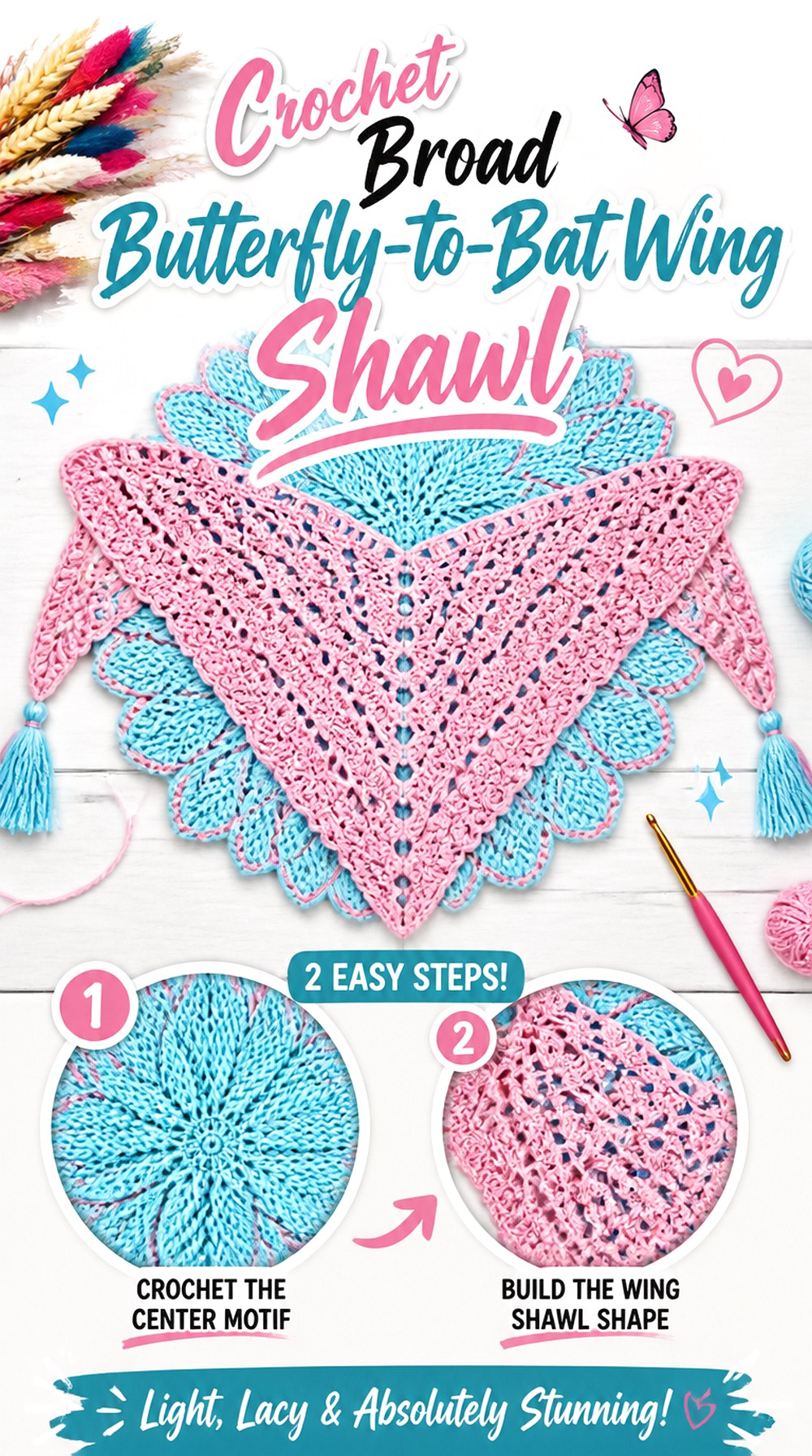
6. Crochet Broad Butterfly to Bat Wing Shawl
 SAVE
SAVENATALYA ROGATOVSKAYA’s Butterfly Wings Shawl uses a broad wing concept that can be pushed toward bat styling through palette and presentation. Instead of treating butterfly and bat shawls as unrelated categories, this idea focuses on what they share: a wide spread, a pronounced center, and fabric that becomes most dramatic when both sides are visible.
This is a useful choice for someone who values wingspan and back coverage over a sharply serrated bottom edge. It can make a strong costume layer, but the same broad silhouette may also work as a conventional shawl once the ends are brought forward.
Prioritize the Spread if You Want a Back Statement
A broad wing shawl needs enough open space around it for the silhouette to be seen. If you expect to wear the piece mostly beneath a coat or gathered tightly at the neck, much of that visual impact may disappear. For an event or costume, however, a wider spread can give you a clearer wing impression without adding separate costume wings.
Blocking Influences How Clearly the Wings Open
A winged shawl often looks different immediately off the hook than it does after appropriate finishing. The goal is not to force the fabric into an arbitrary size but to let the intended sections settle and open according to the fiber’s care requirements. Pay particular attention to symmetrical areas so one side does not appear visually tighter than the other.
Original Tutorial and Creator Credit
Creator: NATALYA ROGATOVSKAYA – вязание крючком
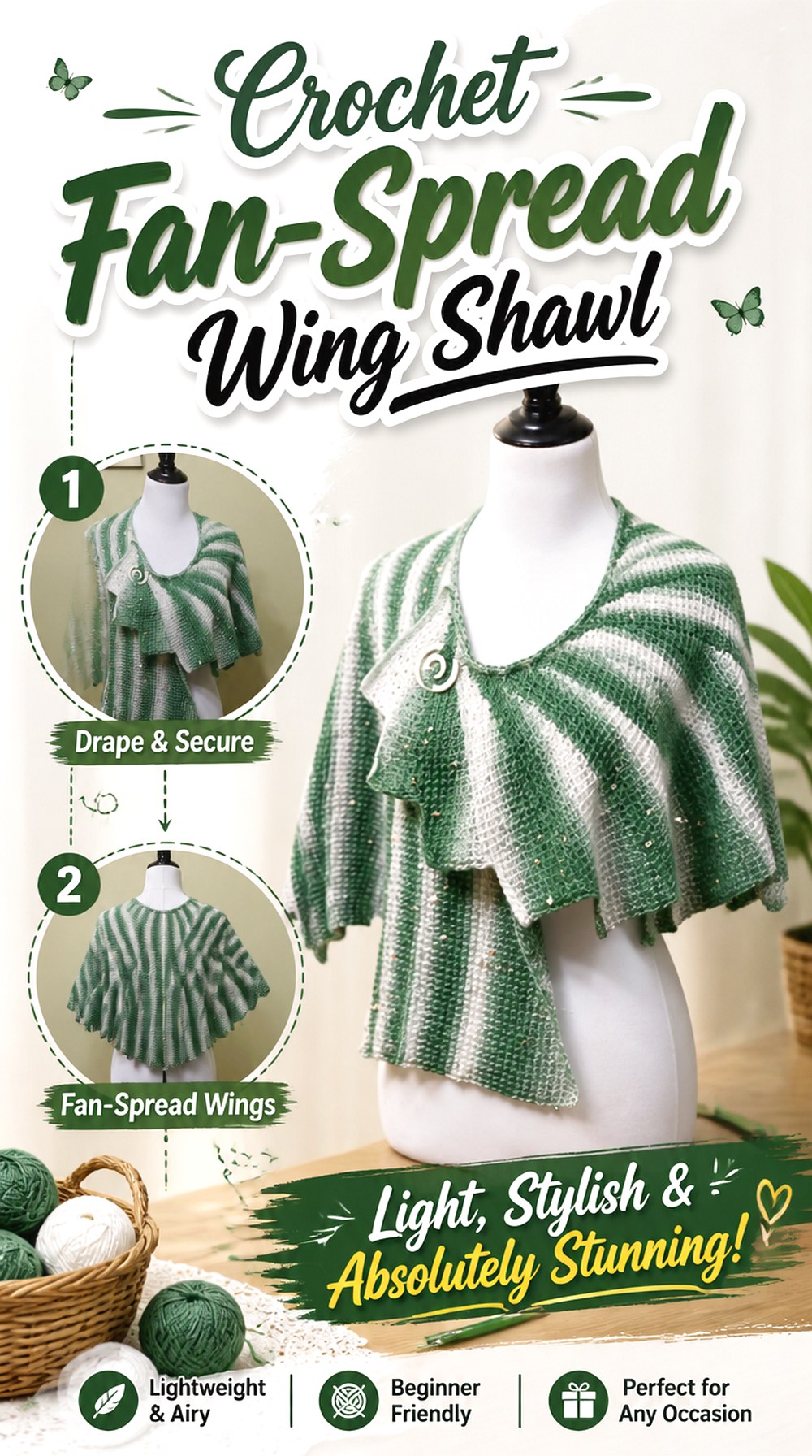
7. Crochet Fan Spread Wing Shawl
 SAVE
SAVEMilArt Marroquin’s Crochet Butterfly Wings Shawl provides another bilateral wing idea, but its appeal for a bat-inspired collection lies in the strong fan-like spread rather than literal bat motifs. With a dark palette, the expanding sections can read as stylized fantasy wings while still functioning as an elegant wrap.
This option is useful when you want the shawl to make sense outside a Halloween setting. The shape supplies drama, while the absence of obvious novelty elements makes it easier to style with dresses, coats, or simple tops. Before adapting it, decide whether your priority is a graceful wing suggestion or a sharper creature-like outline.
A Fan Shape Creates Drama Without Jagged Points
Not every bat-inspired shawl needs deep lower-edge teeth. Broad directional sections can suggest an open wing through their spread alone. This creates a cleaner result for readers who like gothic fashion but do not necessarily want a costume piece. Dark tonal changes can reinforce the direction of the sections without competing with their geometry.
Keep the Centerline Visually Balanced
When both halves contribute equally to a wing illusion, changes in tension from one side to the other become easier to notice. Check the work periodically in a fully spread position rather than only while it is folded in your lap. That simple visual checkpoint can reveal whether the two sides are opening evenly before finishing exaggerates the difference.
Original Tutorial and Creator Credit
Creator: MilArt Marroquin
8. Crochet Full Coverage Butterfly Bat Wing Shawl
 SAVE
SAVEBetengana’s tutorial is titled as a crochet butterfly shawl/blanket, giving this idea a noticeably more expansive starting point than a narrow scarf-like wing. For a bat-inspired interpretation, that extra visual coverage can make the piece read more like a dramatic mantle when it is spread across the back.
This approach suits readers who want a substantial statement rather than a minimal shoulder accent. The important distinction is scale: once a winged piece becomes broad and deep, the amount of fabric itself becomes part of the design. It can look impressive when displayed open, but you should also consider how that volume behaves when wrapped for ordinary wear.
More Coverage Changes the Styling Options
A fuller wing shawl can act almost like a lightweight outer layer, especially when both sides extend well beyond the center back. That makes it effective over a simple fitted outfit where the silhouette has room to show. Over bulky garments, the same volume can become crowded, so think about the clothing you plan to pair with it before choosing your finished scale.
Use Color Placement to Preserve the Wing Direction
If you use multiple colors, their placement can either reinforce or interrupt the expanding wing sections. A controlled gradient or repeated tonal sequence can guide the eye outward, while many unrelated color changes may make the silhouette harder to read. For a bat theme, monochrome does not have to mean flat; neighboring dark shades can still create depth.
Original Tutorial and Creator Credit
Creator: Betengana
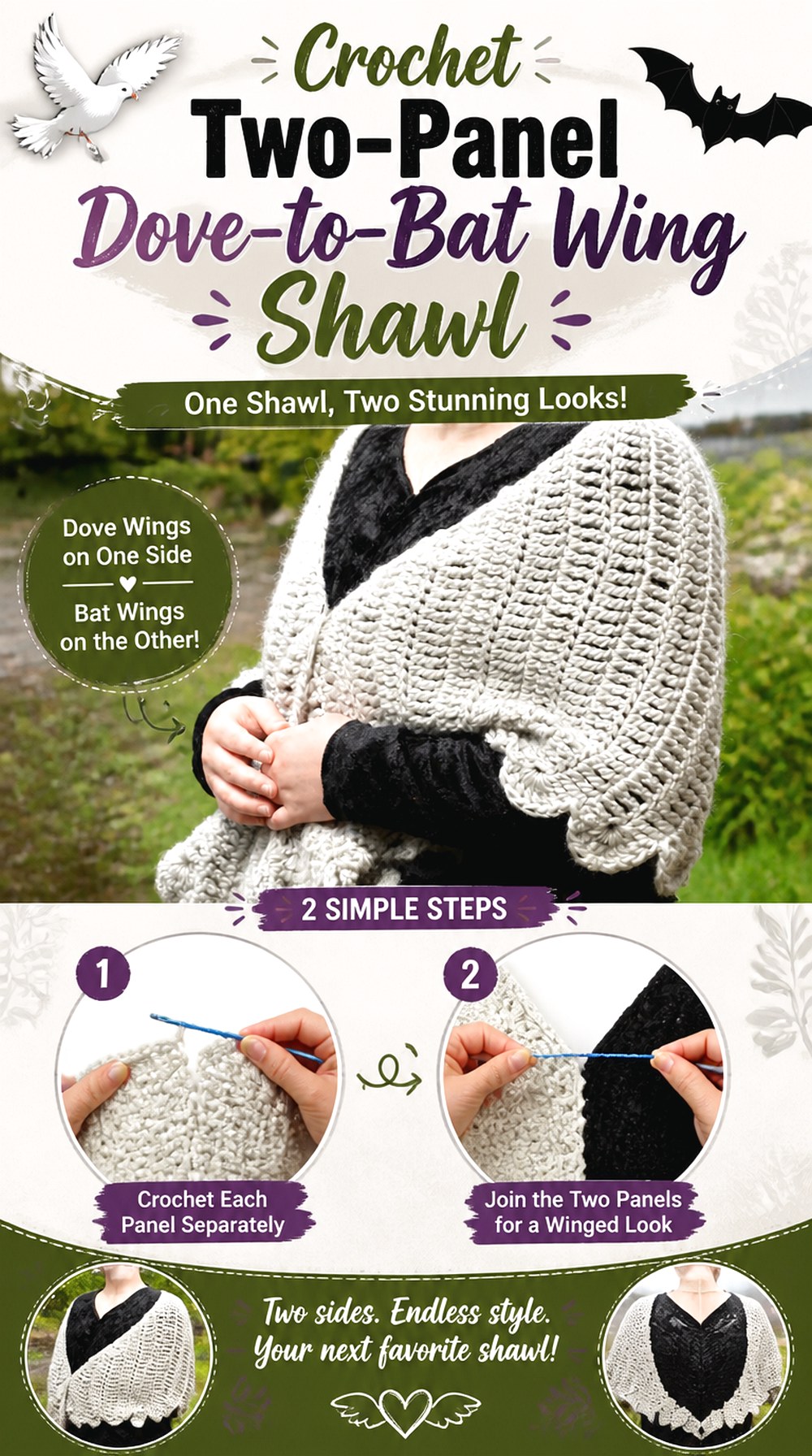
9. Crochet Two Panel Dove to Bat Wing Shawl
 SAVE
SAVEYarnAndy’s Dove Wings Shawl is structurally valuable for a bat-inspired adaptation because the tutorial explains two sides and their joining rather than relying on one continuous asymmetrical tail. The creator describes the finished piece as evoking open dove wings.
Change the visual language and the same two-sided principle becomes useful for a dark fantasy shawl. This is the choice to study if symmetry matters to you and you want a center-back meeting point to organize the design. The trade-off is that joined sections deserve extra attention: matching shape and finishing on both sides matters more than it does in a deliberately asymmetrical project.
Two Separate Sides Give You a Clear Center Back
A defined join can become an asset in bat styling because it creates an obvious “spine” between the wings. Before joining, compare the two pieces in the same relaxed or blocked state. Small differences that seem insignificant individually can become conspicuous when the corresponding edges sit directly beside one another.
Symmetry Requires Consistent Finished Dimensions
Using the same written instructions does not guarantee identical pieces if your tension changes between sessions. Lay both wings together while working the second side and check their overall dimensions at comparable stages. If the fiber responds to blocking, finish both pieces consistently before making final judgments about alignment.
The Join Should Support, Not Dominate, the Design
A center seam or joining line can reinforce the spine-like look, but a bulky join may make the shawl sit differently against the back. Follow the creator’s joining guidance first. If you later explore decorative adaptations, remember that every added layer of yarn at the center changes both appearance and flexibility.
Original Tutorial and Creator Credit
Creator: YarnAndy
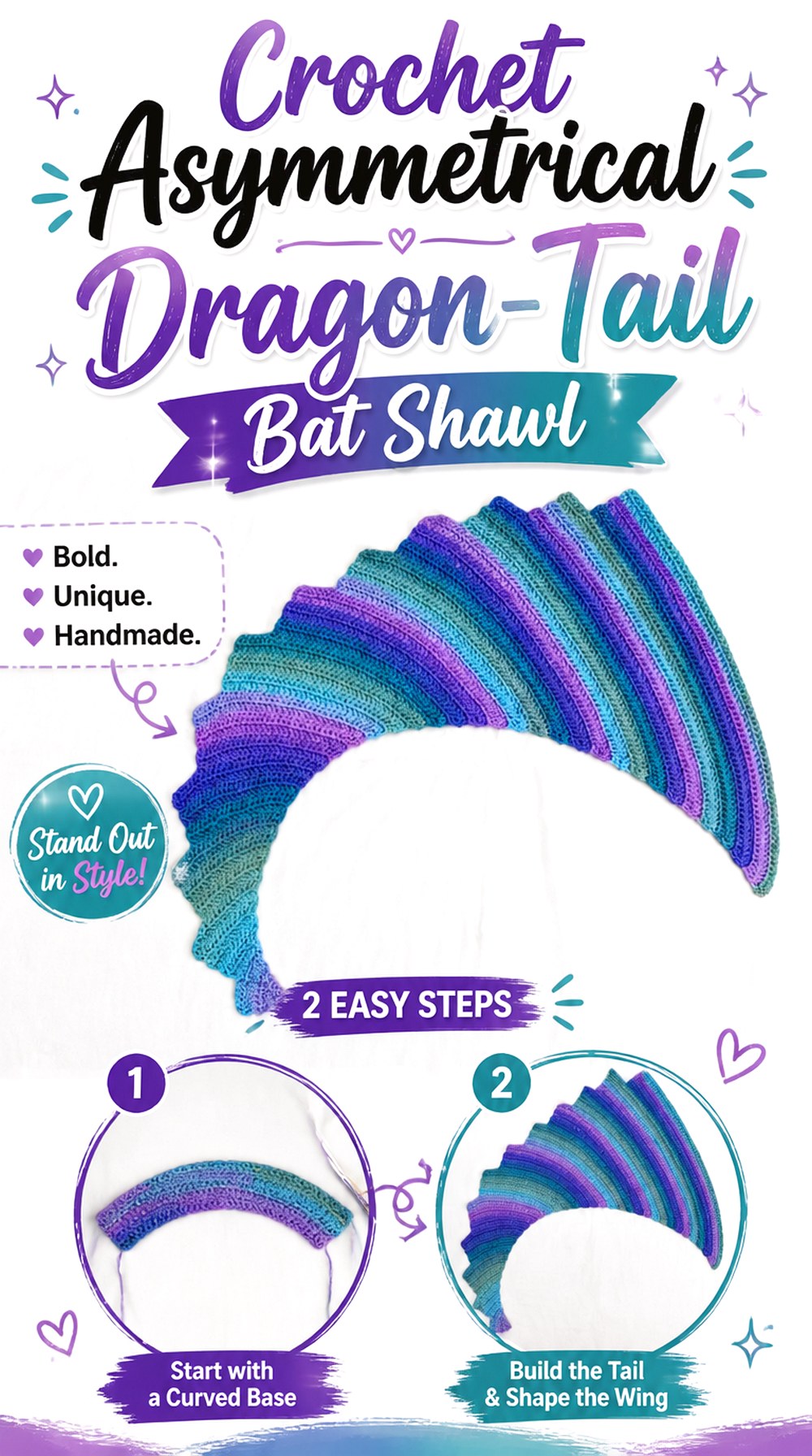
10. Crochet Asymmetrical Dragon Tail Bat Shawl
 SAVE
SAVEHopeful Turns teaches an asymmetrical shawl described as using a dragon tail or dragon wings crochet pattern. It does not imitate two spread bat wings, and that distinction is useful rather than a drawback. This project is for readers who want a pointed fantasy edge in a piece that can wrap more like a conventional shawl.
As a bat-inspired idea, it works through repeated direction changes and an elongated silhouette. Dark yarn can push it toward a gothic look, but the construction remains intentionally asymmetrical. Choose this route when everyday wrapping matters more than achieving a centered pair of wings across the back.
Asymmetry Makes the Fantasy Shape Easier to Wrap
A single long direction gives you more flexibility in how the shawl crosses the body or circles the shoulders. That can be practical if a full symmetrical wing feels too costume-like for your wardrobe. The trade-off is straightforward: you gain versatile wrapping, but the spread-back view will not create the same paired-wing illusion as a centered design.
Protect the Stepped Edge From Visual Clutter
The changing outer edge is the feature that carries the dragon-to-bat association. If you add a border, make sure it follows rather than obscures those directional changes. A thick contrasting edging may visually connect separate points and make the profile seem smoother, while a restrained finish lets the irregular silhouette stay readable.
Original Tutorial and Creator Credit
Creator: Hopeful Turns
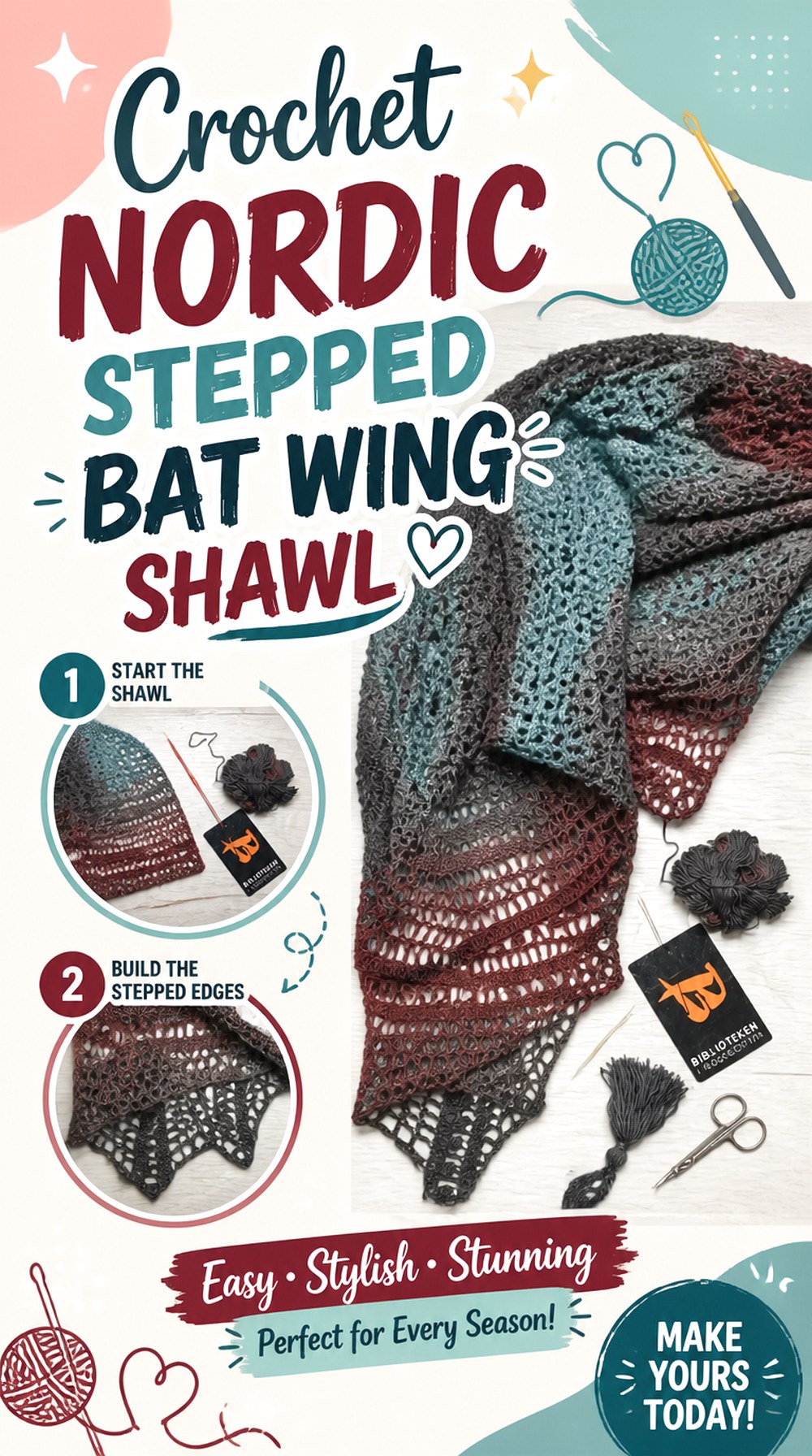
11. Crochet Nordic Stepped Bat Wing Shawl
 SAVE
SAVEThe Nordic Dragon Tail from Me and my yarn offers another asymmetrical construction, but the creator specifically discusses how different yarn weights can change the outcome: heavier yarn enlarges the visual effect, while lighter yarn produces a thinner, more delicate result. That flexibility makes the idea useful for planning a bat-inspired shawl at different visual weights.
The stepped tail is less literal than a two-wing bat shawl, yet it can deliver a strong gothic profile in a dark solid or gradient. Choose it when you like long directional edges and want the yarn itself to play a major role in determining how substantial the final piece feels.
The Stair-Step Profile Creates a Different Kind of Wing
Instead of radiating from a center spine, the shawl builds a sequence of changes along one side. Visually, that resembles a folded or trailing wing rather than a bat viewed straight from behind. This makes it a better match for asymmetrical styling, shoulder wrapping, or wearing one dramatic point lower than the other.
Yarn Weight Alters More Than Warmth
The creator explicitly allows a broad range of yarn weights, but the visual consequences matter. A lighter fabric can make the edge appear finer and more mobile; a heavier one enlarges the overall stitch scale and can produce a bolder contour. Compare those goals before substituting rather than assuming every yarn creates the same kind of bat-wing effect.
Original Tutorial and Creator Credit
Creator: Me and my yarn
12. Crochet Gradient Dragon Tail Wing Shawl
 SAVE
SAVEWoolpedia’s dragon-tail tutorial specifically centers gradient yarn, making color progression part of the visual structure rather than an afterthought. For a bat-inspired shawl, a gradient can move beyond standard solid black while keeping a dark fantasy mood. Think black fading to gray, burgundy moving toward charcoal, or another controlled progression rather than unrelated stripes.
Because this is another one-sided dragon-tail concept, it works best for readers comfortable with a stylized wing rather than a literal pair. The long changing edge allows the color flow and silhouette to reinforce each other, particularly when the darkest or lightest area is placed deliberately.
Gradient Direction Can Emphasize the Long Edge
A gradient naturally draws the eye from one area of the shawl to another. Decide whether you want that movement to travel toward the longest point or away from it. Either approach can work, but the visual result changes. If the cake or gradient yarn has a fixed sequence, inspect it before starting so the strongest contrast does not arrive somewhere you did not intend.
Keep the Silhouette Readable From a Distance
Color transitions can be dramatic enough to compete with the stepped outline. For a bat-inspired result, evaluate the shawl from several feet away while it is spread. If the color becomes the only thing you notice, a subtler gradient may preserve more of the wing character than a series of high-contrast transitions.
Original Tutorial and Creator Credit
Creator: Woolpedia
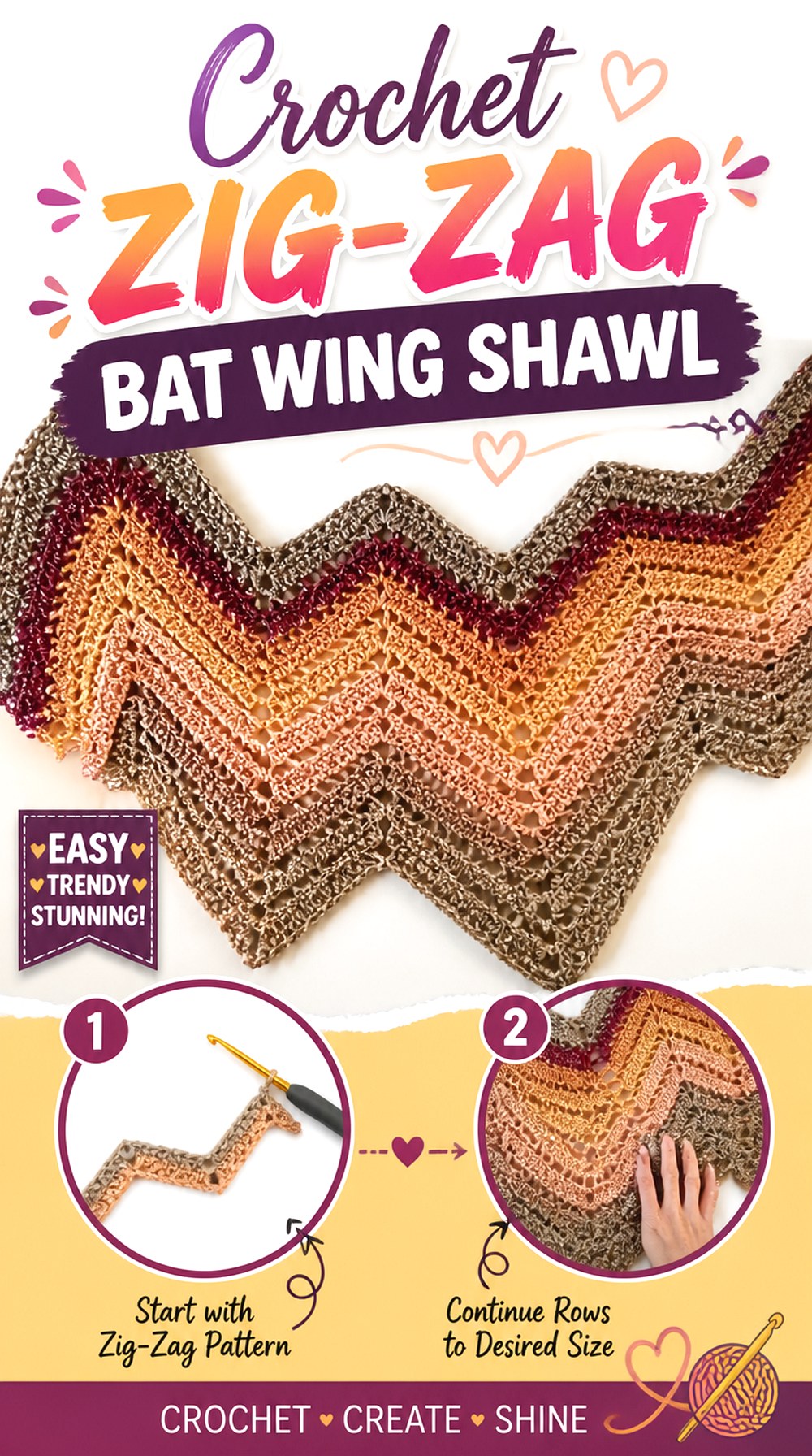
13. Crochet Zig Zag Bat Wing Shawl
 SAVE
SAVECrochet with GG’s Zig-Zag Wing Shawl puts the irregular edge directly in the project name, making it a useful source for a bat-inspired shawl built around repeated directional points. Compared with smoother butterfly-wing options, the zig-zag profile can create a sharper, more graphic silhouette even without additional gothic motifs.
This idea works well when the perimeter is your priority. It can be styled in black for a direct bat association, but strong solid jewel tones can also show the points clearly. Before making adaptations, inspect how the zig-zags look both spread flat and allowed to hang naturally.
Repeated Peaks Create a Graphic Wing Edge
A regular zig-zag can suggest membrane points without requiring realistic anatomy. Because the repetition itself is strong, it often benefits from a yarn that lets the edge stay visually crisp. If you use a highly textured novelty yarn, make sure it does not hide the transitions between the peaks and valleys that define the outline.
Scale Determines Whether the Edge Feels Sharp or Soft
Small, frequent direction changes create a different impression from broad, widely spaced points. If you change yarn or hook size, the apparent scale of those features can shift with the fabric. Rather than assuming a larger shawl automatically looks more dramatic, compare how large each visible zig-zag becomes relative to the whole piece.
Finish the Points Consistently
Irregular tension at the edge can make some peaks project farther than others. Before deciding that the construction is uneven, let the fabric relax and use the finishing method appropriate for your yarn. If shaping is part of the intended finish, treat equivalent points consistently so the repetition remains deliberate rather than accidental.
Original Tutorial and Creator Credit
Creator: Crochet with GG
14. Crochet Triangular Dragon Tail Bat Shawl
 SAVE
SAVELanas y ovillos presents its Dragon Tail Shawl as a triangular design, giving this option a more familiar shawl foundation than the highly sculptural bat and butterfly projects above. The dragon-tail character provides the fantasy connection, while the triangle makes it easier to integrate into an everyday wardrobe.
For bat-inspired styling, use this project when you want an angular wrap rather than a literal pair of wings. A dark palette and clearly defined outer points can move the finished piece toward gothic territory without requiring changes that interfere with the original construction. It is also a useful contrast for readers deciding how far they want the bat theme to go.
A Triangle Is More Wearable but Less Literal
The familiar base shape can settle naturally around the shoulders and gives you predictable front ends for wrapping. In exchange, the back view will not resemble two separate wings as strongly as a symmetrical bat construction. That makes this a good compromise for someone who wants fantasy detail to be noticeable without turning the shawl into a costume-only accessory.
Styling Can Supply the Bat Reference
When the construction is subtle, the garment underneath becomes part of the presentation. A high-contrast top can make dark points more visible, while a similarly dark outfit produces a quieter layered effect. Decide whether you want the shawl’s shape to be immediately obvious or to reveal itself only when the wrap is opened.
Original Tutorial and Creator Credit
Creator: Lanas y ovillos
15. Crochet Lightweight Empress Wing Shawl
 SAVE
SAVEKeely Robertson’s Empress Wing Shawl takes the collection in a lighter direction. The tutorial uses 4-ply cotton and describes the finished shawl as having lightweight texture and drape; it teaches the opening section before moving into the repeating structure.
That makes this idea useful for a bat-inspired shawl that needs to feel less costume-heavy. Rather than emphasizing thick ribs or plush yarn, it lets the overall wing shaping and flowing fabric carry the concept. A dark cotton or similarly appropriate yarn could create an understated gothic layer, but any substitution should be checked against the tutorial and accompanying pattern instead of relying on appearance alone.
Lighter Fabric Changes the Character of the Wing
A lightweight shawl tends to move more readily with the wearer, which creates a different effect from a stiff cape-like wing. For bat styling, that can make the piece feel elegant rather than theatrical. It is a useful route when you want a wing silhouette that can remain part of an outfit after a costume event has passed.
Repeating Structure Makes Scale an Important Decision
The tutorial demonstrates the initial rows and then moves into the repeat, so decide on the desired finished coverage before extending the shawl indefinitely. More repetitions affect both width and the amount of fabric you will carry around the shoulders. Use the creator’s pattern and tutorial together when determining where the design is intended to finish.
Which Bat Wing Shawl Shape Fits Your Goal?
| If you want… | Strong options to compare | Main trade-off |
|---|---|---|
| The clearest bat association | Classic Bat-Edge, Bat-terfly | More themed and less neutral |
| A dramatic centered back | Ribbed Dragon Wing, Butterfly-to-Bat Wing, Dove-to-Bat Wing | More fabric across the shoulders |
| Sharp fantasy edging | Zig-Zag Wing, Nordic Stepped Wing | Less literal two-wing symmetry |
| Everyday wrap styling | Asymmetrical Dragon-Tail, Triangular Dragon-Tail | Bat effect becomes more subtle |
| Soft, substantial texture | Velvet-Texture Wing | Fine edge details may appear softer |
| Light visual movement | Chain-Lace Wing, Lightweight Empress Wing | Open or fine fabric may show tension differences more clearly |
| Strong color movement | Gradient Dragon-Tail Wing | Color can compete with the outline if contrast is too busy |
Conclusion
The right crochet bat wing shawl depends on what you want the wings to do. For the most recognizable bat effect, begin with the classic bat shawl or the Bat-terfly concept. For a dramatic fantasy back, the ribbed, butterfly, dove, or zig-zag wing options put more emphasis on shape. Dragon-tail constructions are better choices when you want pointed fantasy styling in a wrap that behaves more like a conventional shawl.
Material matters just as much as color: plush yarn softens detail, open fabric emphasizes negative space, and lighter yarn can make broad wings feel more fluid. Once you have chosen the silhouette, use the original tutorial linked with each idea for its exact construction and finishing details.
Frequently Asked Questions
Can I use a dragon wing tutorial for a crochet bat wing shawl?
Yes, when you are intentionally creating a bat-inspired shawl rather than claiming the tutorial itself is a bat pattern. Dragon-wing and dragon-tail constructions often provide pointed or segmented silhouettes that translate well to darker fantasy styling. The important part is being clear about the difference. A centered two-wing design will usually look more literally bat-like than an asymmetrical dragon tail.
Which shawl shape looks most like actual bat wings?
A centered design with substantial width on both sides of the back and a visibly shaped lower edge generally creates the clearest paired-wing impression. Two-panel and symmetrical constructions are particularly useful because the center back naturally separates the left and right wings. Asymmetrical dragon-tail shawls can still look gothic and wing-inspired, but they create a more abstract interpretation.
What yarn should I choose for a bat wing shawl?
There is no single correct yarn for every design. Choose according to the fabric the construction needs. A lighter or more open fabric can highlight long points and movement, while a more substantial yarn can emphasize ridges and coverage. Plush yarn creates another effect by softening stitch definition. Check the individual tutorial’s recommendations before substituting, especially when changing yarn weight significantly.
How can I make pointed wing edges look more defined?
Start with consistent tension and a yarn that lets the edge structure remain visible. Appropriate blocking may help the finished sections settle and open, but the method depends on the fiber and the project’s construction. Follow the yarn care information and the creator’s finishing guidance. Avoid aggressively stretching points simply to make them sharper, since that can distort the surrounding fabric.
How do I decide how large my bat wing shawl should be?
Think in terms of the worn result rather than a universal shawl measurement. Decide how wide you want the wrap to spread, how low you want the center back to fall, and whether the ends need to come comfortably forward. Then compare those goals with the creator’s finished example and any dimensions the source provides. Do not assume that adding more width will preserve the same proportions.
Can I add a clasp, tie, or shawl pin to a winged shawl?
Potentially, but the fabric needs to support it without distorting the wing shape. A closure placed too low can pull the upper sections inward and hide the back silhouette; a heavy pin can also stress delicate openwork. First test how the shawl naturally sits on your shoulders. If the original construction includes closure guidance, use that as the safest starting point for modification.