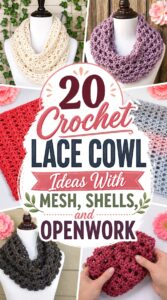
A crochet lace cowl can be anything from a close-fitting openwork neck warmer to a long infinity loop that folds into several airy layers. The designs below also move beyond standard tubes: there are puff and picot textures, shell patterns, hairpin lace, floral embellishment, a capelet-style shape, decorative lacing, fringe, and extremely open Solomon’s knot fabric.
Those differences matter when choosing a tutorial. A cowl that needs to slip over the head has different sizing concerns from one with an adjustable opening, while a lightweight mesh cowl behaves very differently from a fuller shell or puff-stitch design. This collection focuses on those practical distinctions so you can choose by wearing style, drape, lace density, and construction—not simply by color.
Quick List
- Crochet Airy Cluster Tube Cowl
- Crochet Summer Open-Mesh Cowl
- Crochet Puff-Lace Neck Cowl
- Crochet Picot Shell Round Cowl
- Crochet Joined Hairpin-Lace Cowl
- Crochet Irish-Inspired Floral Lace Cowl
- Crochet Fantail Shell Infinity Cowl
- Crochet Sculpted Shell Neck Cowl
- Crochet Lace Capelet Cowl
- Crochet Sofia Openwork Cowl
- Crochet Corset-Accent Lace Cowl
- Crochet Puff-and-Picot Collar Cowl
- Crochet Compact Shell-Stitch Cowl
- Crochet Convertible Lace Cowl-and-Scarf
- Crochet Solomon’s Knot Infinity Cowl
- Crochet Fringed Lace Loop Cowl
- Crochet Striped Cluster Lace Cowl
- Crochet Crossed-Lace Tall Cowl
- Crochet Braided Hairpin-Lace Infinity Cowl
- Crochet One-Skein Mesh Neck Cowl
Start With the Opening and Wearing Style
Before comparing lace motifs, decide how you want the cowl to go on. A fixed tube has to pass comfortably over the head, so the opening cannot be judged only by how closely you want it to sit at the neck. A long infinity loop gives more wrapping choices, while a capelet-style cowl needs enough width and drape to settle across the shoulder line. Decorative or adjustable openings introduce another option entirely.
When dimensions are important, use the creator’s finished measurements or sizing guidance rather than assuming one cowl circumference suits everyone. If you change yarn, hook, or stitch tension, check the resulting fabric before committing to the full piece. Construction, fit, drape, and opening style are more useful comparisons than color alone.
Match Yarn Behavior to the Lace You Want to See
Lace needs enough definition for its open spaces and texture to remain visible. Before making a major yarn substitution, crochet a sample and look at it both relaxed and after any finishing treatment you plan to use. A yarn that produces beautiful fluid mesh may not give the same look in pronounced shells or raised puff details.
Drape matters just as much. Infinity cowls generally benefit from fabric that can fold and wrap without becoming rigid, while decorative collars can tolerate more structure. Hairpin lace and Solomon’s knot rely heavily on deliberately open areas, so a change in tension can have a particularly visible effect. Use the source tutorial for its intended materials and gauge information, then evaluate substitutions by the finished fabric rather than by yarn label alone.
Decide How Much Coverage You Actually Want
“Lace cowl” does not automatically mean the same level of warmth or coverage. An open mesh or Solomon’s knot design leaves substantial air space. A long infinity version can compensate somewhat by overlapping layers when wrapped, whereas a short single-layer mesh cowl stays visually and physically lighter.
Shells, puff details, and closer openwork can create a fuller-looking surface without eliminating lace completely. At the other end of the spectrum, a capelet cowl extends the accessory toward the shoulders instead of concentrating all its fabric around the neck. Consider where and when you expect to wear the finished piece, then compare openness, number of layers, height, and yarn behavior. For cold-weather performance, do not infer insulation from appearance alone; check the actual fiber and construction used in the tutorial.
1. Crochet Airy Cluster Tube Cowl
 SAVE
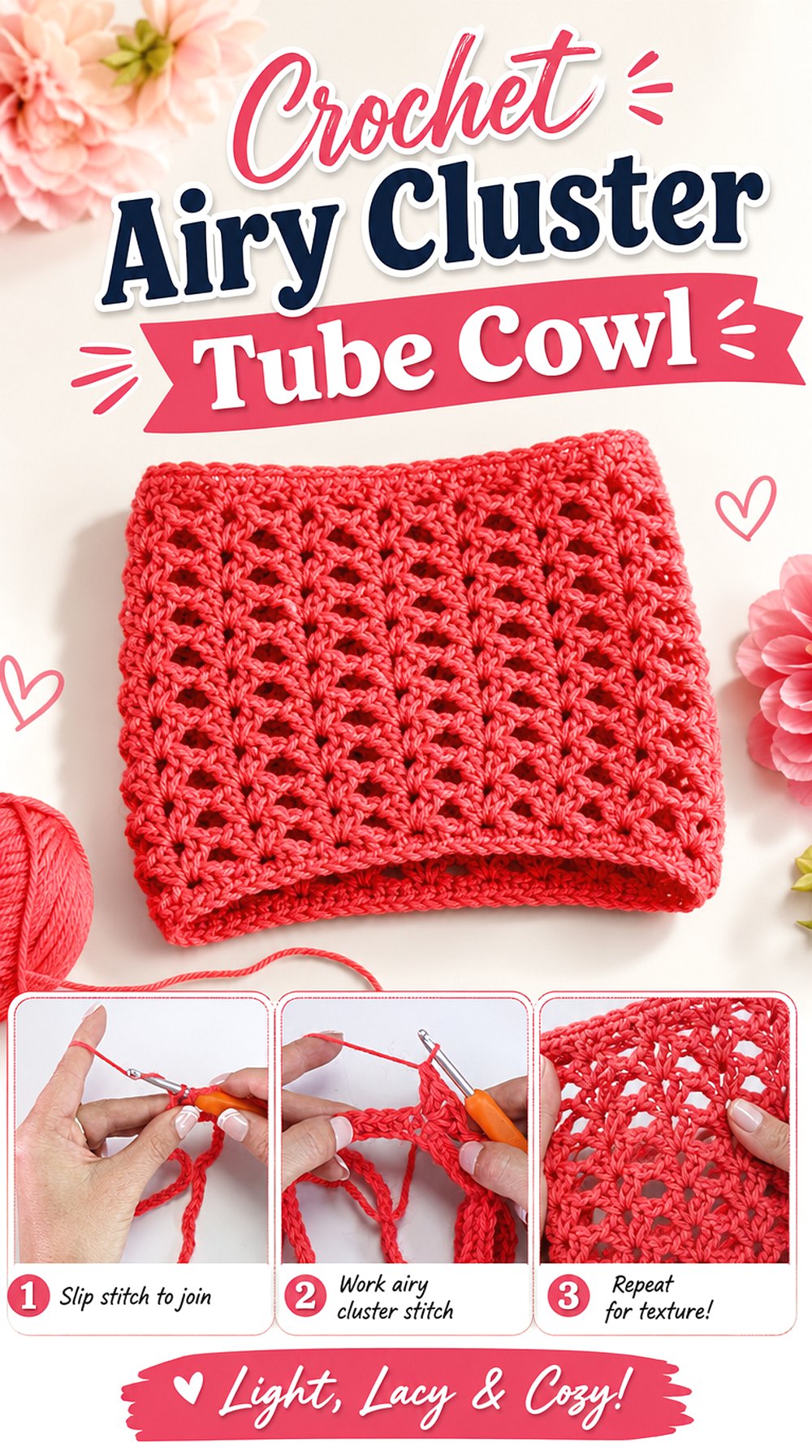
SAVEThis fixed tube cowl uses repeating lace clusters to create an open surface without turning the accessory into a very long scarf. Its relatively straightforward silhouette keeps the visual emphasis on the stitch pattern, making it useful when you want a traditional neck-cowl shape rather than extra wrapping length. Treasurie’s tutorial is specifically presented as a lace crochet cowl, and the accompanying pattern information describes a project worked around the neck in repeating lace texture.
Because the silhouette is uncomplicated, this option is also a useful reference point when comparing denser shells, adjustable openings, and infinity constructions later in the list.
A Fixed Tube Needs Enough Room to Pass Over the Head
For a cowl without a front opening, check the intended circumference before treating “close to the neck” as the only fit goal. The piece must first pass over the wearer’s head comfortably. If you alter the starting size, use the tutorial’s stitch-repeat requirements rather than adding an arbitrary amount, and remember that changing yarn or tension can alter the opening even when the stitch count stays unchanged.
Cluster Lace Can Change Noticeably With a Yarn Swap
The repeated open areas are a major part of this cowl’s appearance, so test a substitution before assuming a similar yarn weight will create identical fabric. Compare the sample for openness, flexibility, and stitch definition. If the clusters pull together too tightly, the result can read as a denser textured cowl rather than the airy lace effect that makes this version distinct.
Creator: Treasurie
2. Crochet Summer Open Mesh Cowl
 SAVE
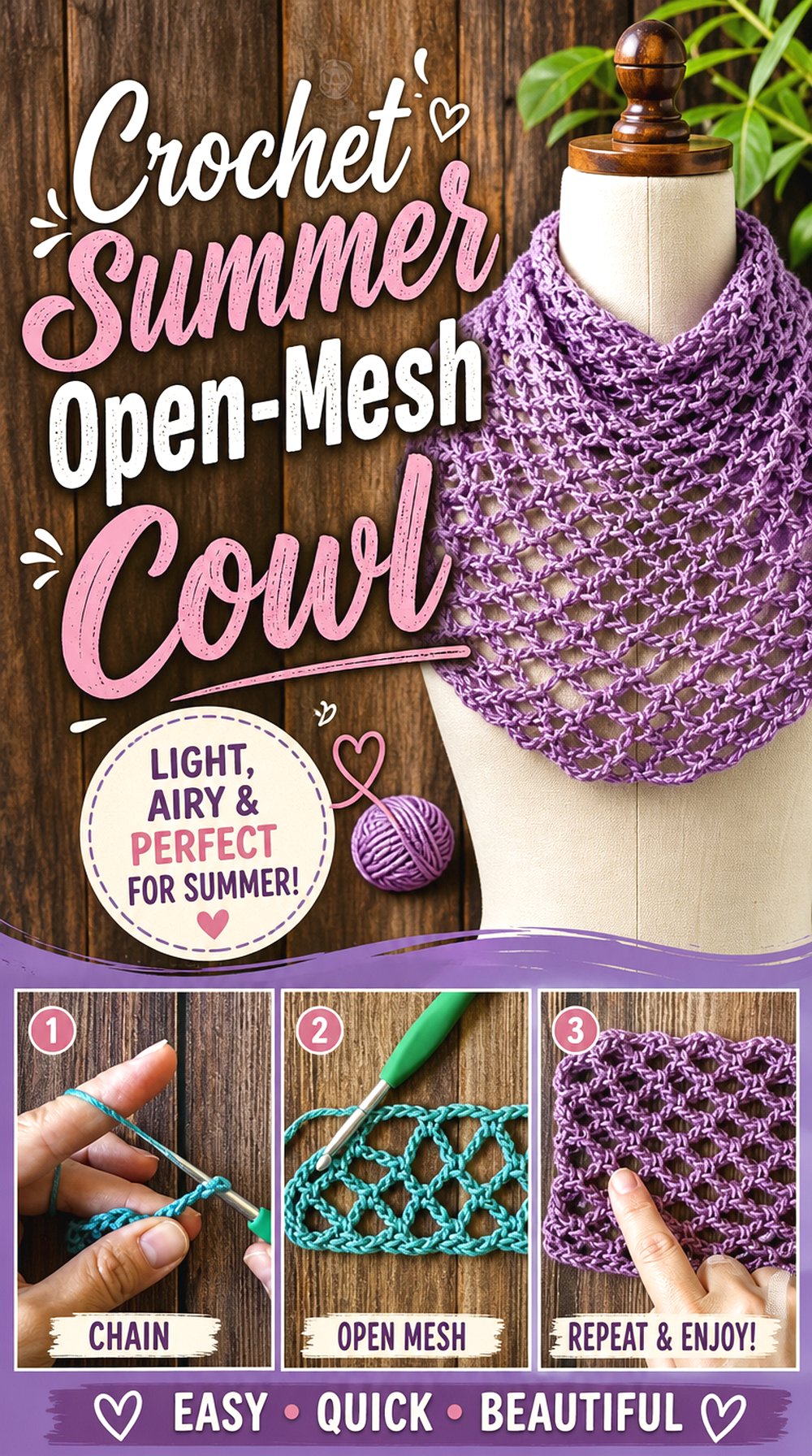
SAVEThis cowl moves toward the lightest end of the collection. ChristaCoDesign presents it as a drapey summer cowl made in open mesh, so the finished effect is intentionally more breathable and visually sparse than the shell-heavy and puff-textured options. The simple mesh surface also allows the folds of the cowl itself to become part of the design rather than competing with a strongly sculpted motif.
Choose this direction when you want a lace accessory that can accompany lighter clothing without producing the bulk of a thick winter neck warmer. Its main decision point is drape rather than maximum coverage.
Open Mesh Puts the Emphasis on Airflow
Large, repeated openings make this style a logical choice when visual lightness matters more than dense neck coverage. That does not make every open-mesh fabric suitable for the same season, because fiber, finished dimensions, and layering also matter. Compare the actual tutorial materials with any substitute and judge whether your sample still folds softly enough for the intended silhouette.
A Cotton-Based Example Is Useful for Comparing Drape
The source tutorial specifically uses 24/7 Cotton, giving you a concrete finished example to assess before substituting another fiber. Rather than assuming another yarn will hang the same way, compare how readily your fabric collapses into soft folds and how much it stretches vertically. The visual goal is a flowing mesh cowl, not simply matching a yarn category.
Creator: ChristaCoDesign
3. Crochet Puff Lace Neck Cowl
 SAVE
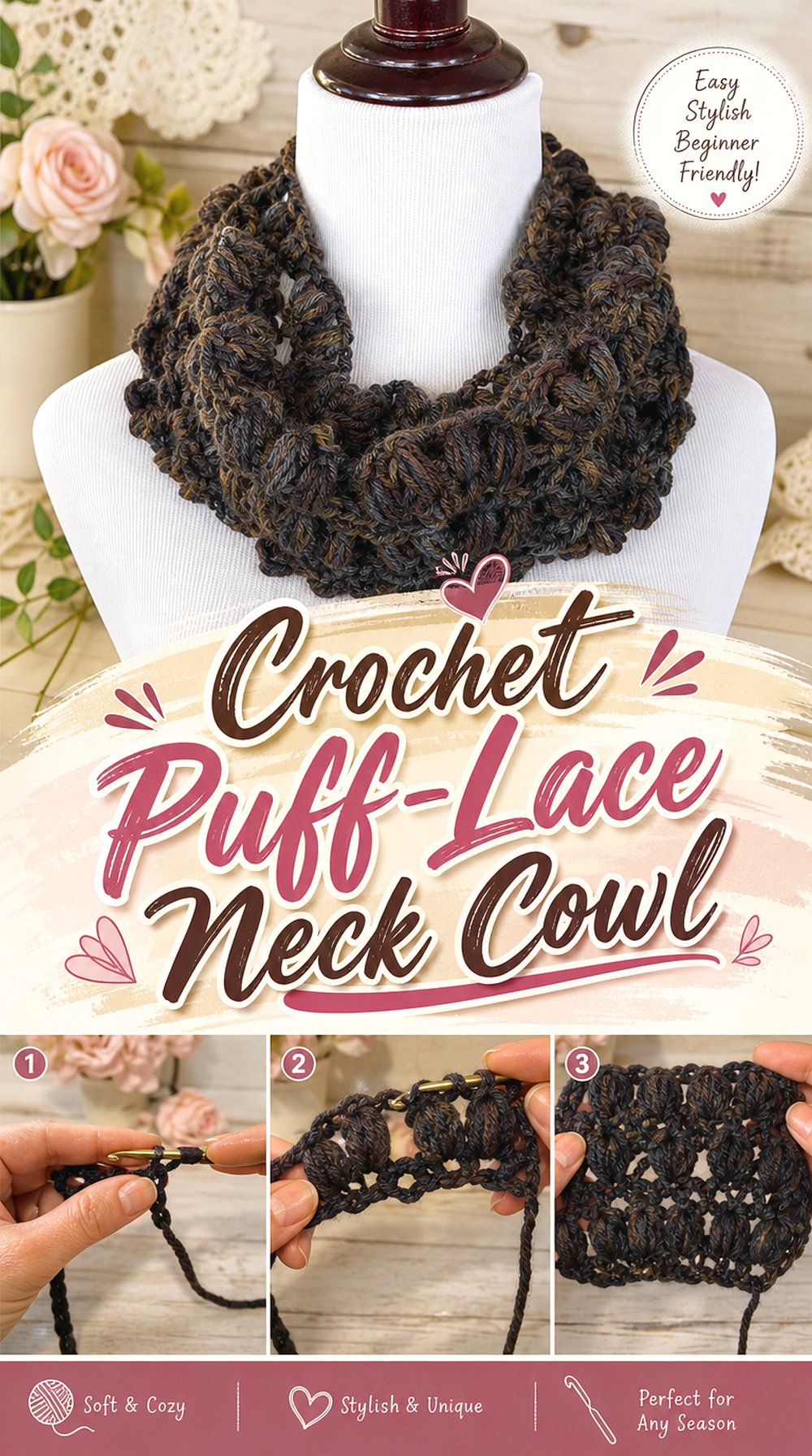
SAVEOlga Poltava’s cowl combines open lace with puff stitches, giving the surface more three-dimensional punctuation than a straightforward mesh repeat. That contrast makes it useful for readers who like airy fabric but do not want the finished accessory to look uniformly flat. The raised details create visible rhythm throughout the cowl while the surrounding spaces preserve its lacy character.
Compared with the summer mesh cowl above, this design puts more emphasis on individual stitch features. It is a good direction when texture needs to remain noticeable even when the cowl is gathered naturally around the neck.
Puff Details Give the Lace Stronger Visual Anchors
Raised stitches naturally become focal points within open fabric, so yarn choice should allow both the puffs and the spaces around them to remain legible. Before substituting, examine whether your sample makes the raised areas too bulky or lets them disappear into a fuzzy surface. Maintaining contrast between texture and open space is more important here than maximizing either feature alone.
Treat the One-Skein Example as Yarn-Specific
The tutorial was created around a one-skein project, but that does not establish a universal one-skein requirement for substitute yarns. Skein yardage, yarn weight, personal tension, and any size adjustment can change consumption. If using a different product, compare usable yardage with the tutorial information instead of relying on the number of skeins printed on the label.
Creator: Olga Poltava
4. Crochet Picot Shell Round Cowl
 SAVE
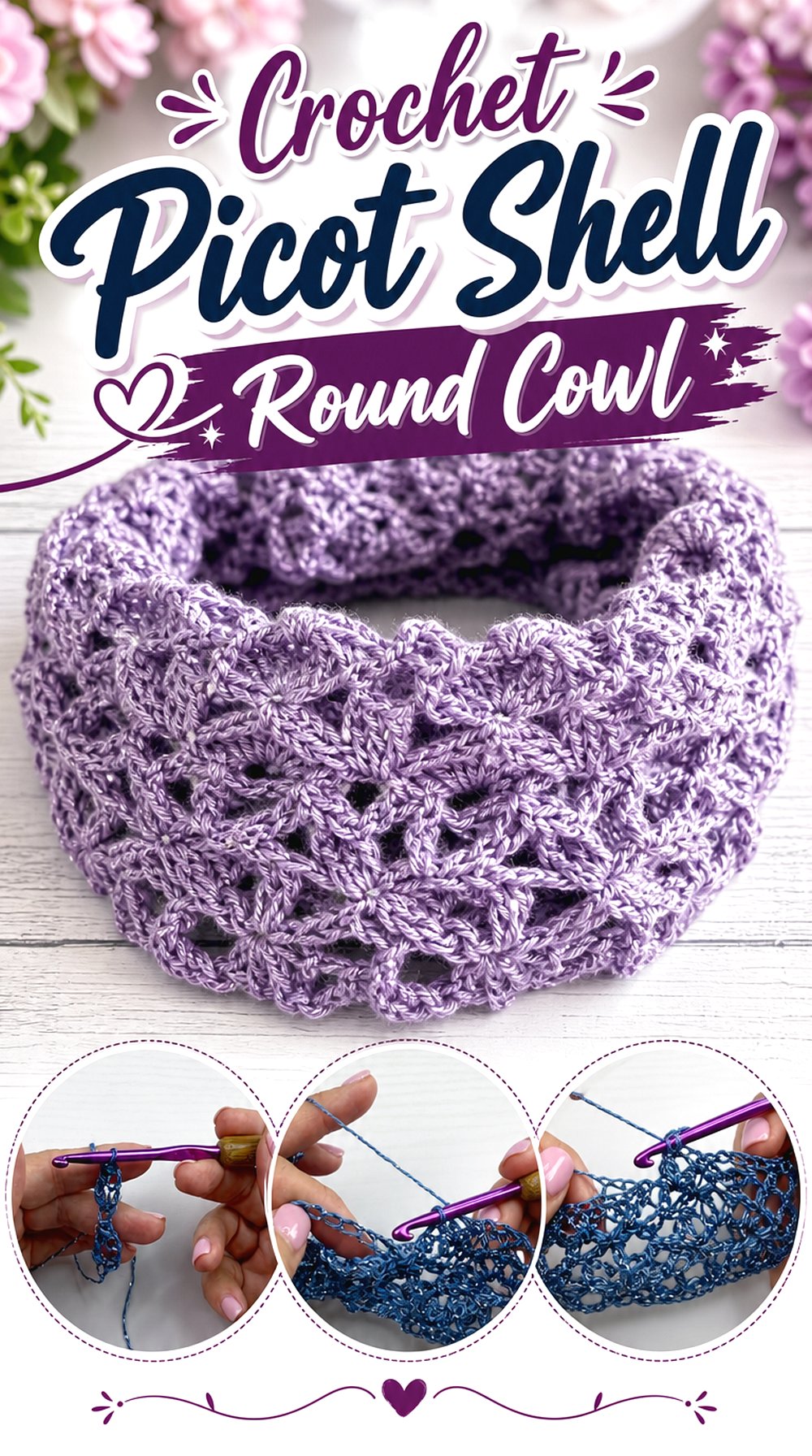
SAVEThis cowl combines offset shell lace with picot details and is worked in the round. Those elements give it a more ornamental surface than a plain mesh tube: shells establish the main repeat, while smaller pointed details sharpen the overall texture. Kristin Omdahl’s tutorial identifies both techniques directly, making this a clear choice when the stitch architecture itself is the main attraction.
It differs from the bulkier shell cowl later in the list because its look comes from the relationship between open lace, shells, and picots rather than from large sculptural shell masses.
Picots Make Small Edge-Like Details Part of the Fabric
Because picots create fine visual points, they can lose definition if a substitute yarn obscures smaller details. Examine a sample from normal viewing distance rather than only close up. If the shells remain visible but the smaller accents disappear, you may end up with a different overall texture even though the basic repeat still works.
In-the-Round Construction Removes a Long Side Seam
The tutorial is specifically built around lace worked in the round. That keeps the cowl’s main surface continuous, but it also means the initial join and round transitions deserve attention. Check that the starting loop is not twisted and follow the creator’s method for maintaining the established repeat rather than trying to convert it casually from flat crochet.
Offset Shells Reward Careful Repeat Tracking
An offset arrangement gains much of its appearance from how one section relates to the next. If you lose the repeat, the error may become more obvious several rounds later when the motifs no longer line up visually. Periodically inspect the overall lace pattern, not just the most recent stitches, before moving too far beyond a suspected mistake.
Creator: Kristin Omdahl
5. Crochet Joined Hairpin Lace Cowl
 SAVE
SAVEHairpin lace changes the construction logic entirely. Instead of creating an ordinary crocheted tube from a standard row or round repeat, this Kickin Crochet project builds its character from hairpin-lace strips and their joins. The tutorial focuses on the joining techniques used for the cowl, making the connections between strips an important part of both construction and appearance.
This is one of the clearest options in the collection for someone who wants the process itself to feel different. The open strips create strong vertical or banded visual structure that ordinary mesh does not reproduce.
Hairpin Strips Make Joining Part of the Design
With hairpin lace, the space between bands is not simply a seam to hide. The joining method helps determine how the strips relate visually and how wide the finished fabric becomes. Before completing every strip, make a small joined sample if possible so you can judge whether your tension produces the openness and flexibility you want.
Joining Tension Can Change the Cowl’s Shape
A join pulled much tighter than the hairpin loops can gather the strip edges; one worked too loosely can leave the connections looking uneven. Compare the joined section frequently against an unstrained surface. The goal is not to stretch the lace flat by force, but to let the joining rhythm support the intended cowl shape.
Color Can Emphasize the Strip Construction
The tutorial’s striped hairpin-lace concept makes color a structural tool rather than the only reason two projects look different. If you simplify the palette, the strip construction will become more subtle; if you contrast bands strongly, the joined architecture becomes more obvious. Decide which effect you want before making several strips so the overall layout feels deliberate.
Creator: Kickin Crochet
6. Crochet Irish Inspired Floral Lace Cowl
 SAVE
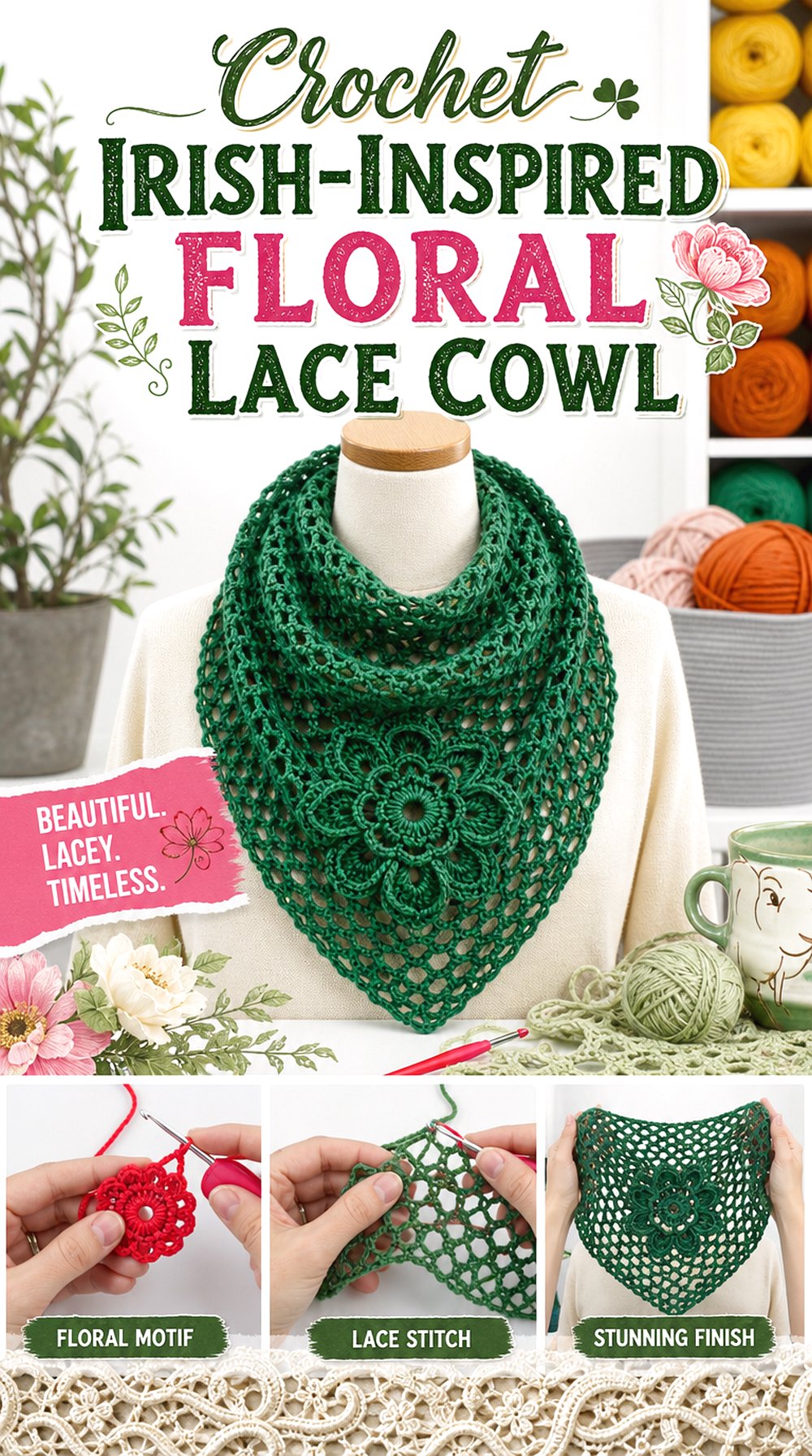
SAVEThe Irish-ish Lace Cowl uses a mesh base embellished with crocheted floral and leaf forms, giving it a layered surface instead of relying on one repeating stitch across the entire accessory. Creative Crochet Corner identifies the project as inspired by Irish crochet lace and shows flowers and leaves applied to the underlying lace fabric.
This makes it one of the strongest statement pieces here. It suits a reader who enjoys deciding where motifs will sit and how densely they should be distributed, rather than simply repeating the same lace unit around the neck.
Surface Motifs Create a Second Design Layer
The mesh base and decorative motifs perform different jobs: one establishes wearable fabric, while the other supplies focal detail. When adapting colors or motif placement, first make sure the base cowl has the drape and fit you want. Adding decoration cannot correct an opening that is too tight or fabric that already feels too stiff.
Motif Placement Does Not Have to Mean Perfect Symmetry
Flowers and leaves can be arranged to create deliberate balance without placing identical elements at mathematically mirrored points. Before attaching everything permanently, position the motifs on the finished or nearly finished cowl and view it in its worn shape. Areas that look evenly spaced while flat may overlap or disappear once the fabric gathers.
Leave Enough Mesh Visible for the Lace Base to Matter
If you add more embellishment than the tutorial shows, check the piece periodically from a distance. Covering most of the mesh can change both the visual character and the way the fabric hangs. Keeping some open background visible helps preserve the contrast between the delicate base and dimensional floral details.
Creator: Creative Crochet Corner
7. Crochet Fantail Shell Infinity Cowl
 SAVE
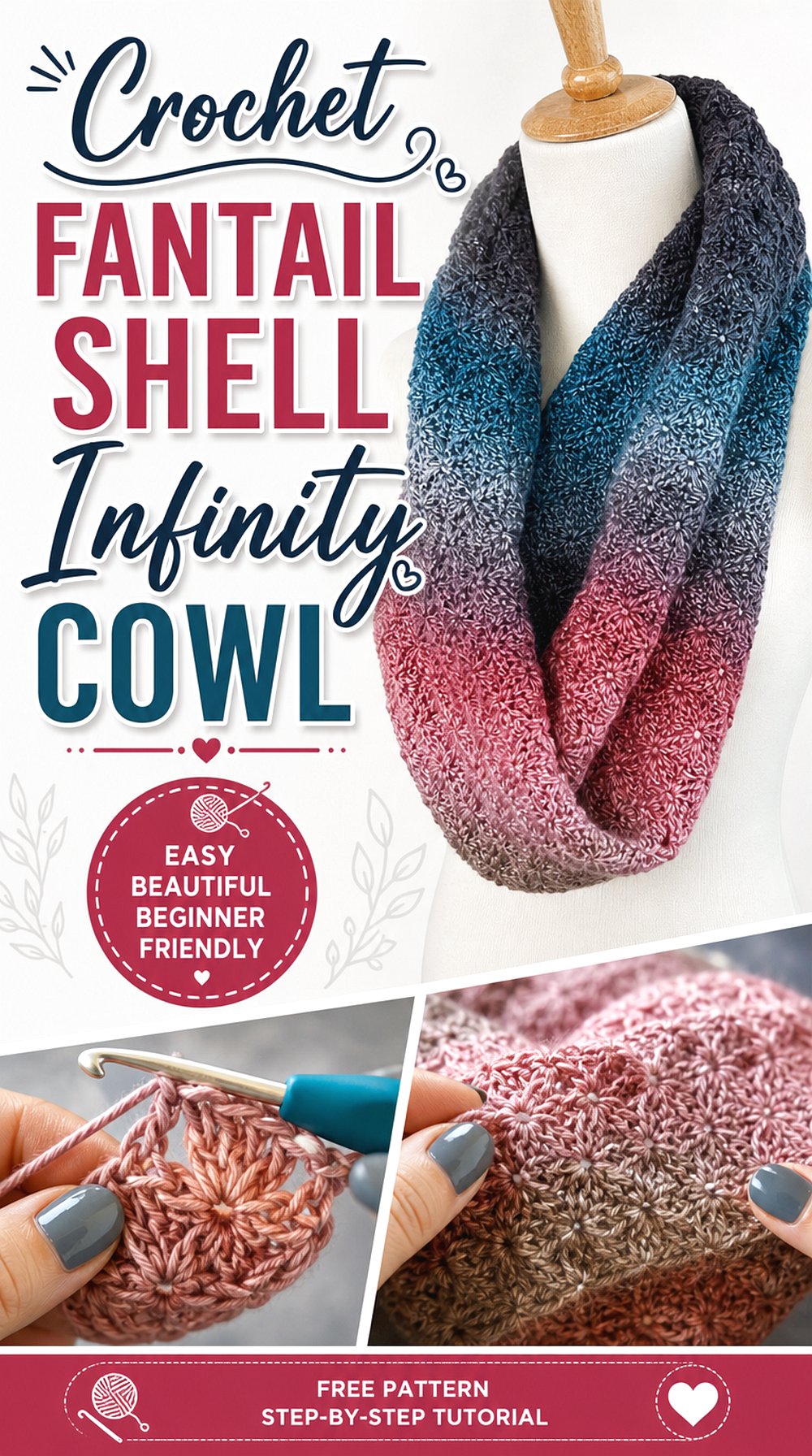
SAVEHooked by Robin’s fantail shell project is presented as an infinity scarf or cowl, giving it much more length and wrapping potential than a short fixed neck tube. The fabric is worked as a scarf before the ends are joined into a loop, so the final form combines a decorative shell repeat with the flexibility of an infinity accessory.
This format is worth considering if you enjoy lace but want it to create layered folds around the neck. The extra length also gives the fantail pattern more room to establish a continuous visual rhythm.
The Long Loop Gives You More Wearing Depth
An infinity format can sit as one long decorative loop or be wrapped, depending on the completed dimensions and the wearer. Before changing length, consider both states. A modification that looks attractive hanging long may become too bulky when doubled, while an overly short loop may reduce the flexible styling that distinguishes it from a standard cowl.
Fantail Shells Need Drape to Fold Gracefully
This shell texture is meant to remain visible even as the long loop moves and overlaps. If your substitution creates substantially stiffer fabric, the infinity shape may stand away from the neck rather than settling into folds. Make enough of a sample to judge movement, not merely whether the individual shell motif looks correct.
The Final Join Should Respect the Established Texture
Because the project begins as a scarf-like piece before becoming a continuous loop, finishing changes how the ends relate visually. Lay the fabric out without twisting unless the source specifically calls for another arrangement, and check motif alignment before securing the final join.
Creator: Hooked by Robin
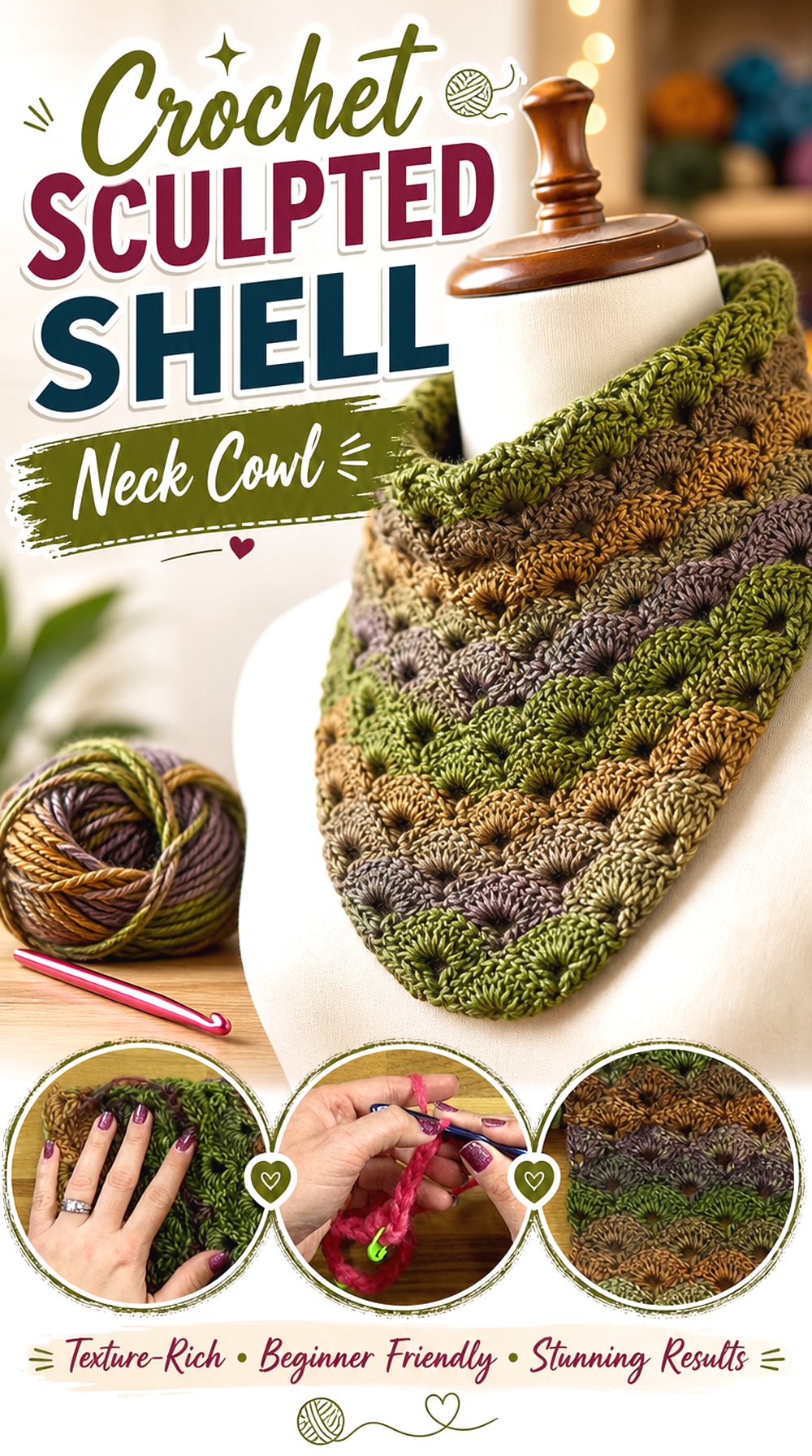
8. Crochet Sculpted Shell Neck Cowl
 SAVE
SAVEThe Blushing Shells Cowl from Marly Bird takes shell texture in a fuller, more sculptural direction. The accompanying project information also addresses seaming, so this is a useful contrast to shell cowls worked entirely as seamless rounds.
Choose this style when you want the shell forms to create visible body around the neck rather than disappearing into extremely light mesh. It also demonstrates why “shell cowl” is not a single category: yarn scale, construction, and motif spacing can make one shell design look airy and delicate while another appears much more substantial.
Larger-Looking Shell Texture Creates More Visual Volume
When a cowl has pronounced shells, evaluate the finished fabric in folds rather than only laid flat. A substitute that makes each shell thicker can amplify the overall volume quickly once the cowl gathers around the neck. If you prefer a flatter silhouette, look at drape and thickness together before finishing the full project.
Plan the Seam Before Final Finishing
A seamed cowl gives you an opportunity to position the join where it is least distracting. Before fastening permanently, bring the ends together and check how the shell motifs meet. If the edge treatment is directional, also confirm that both sides align in the orientation you want when the piece is worn.
Creator: Marly Bird
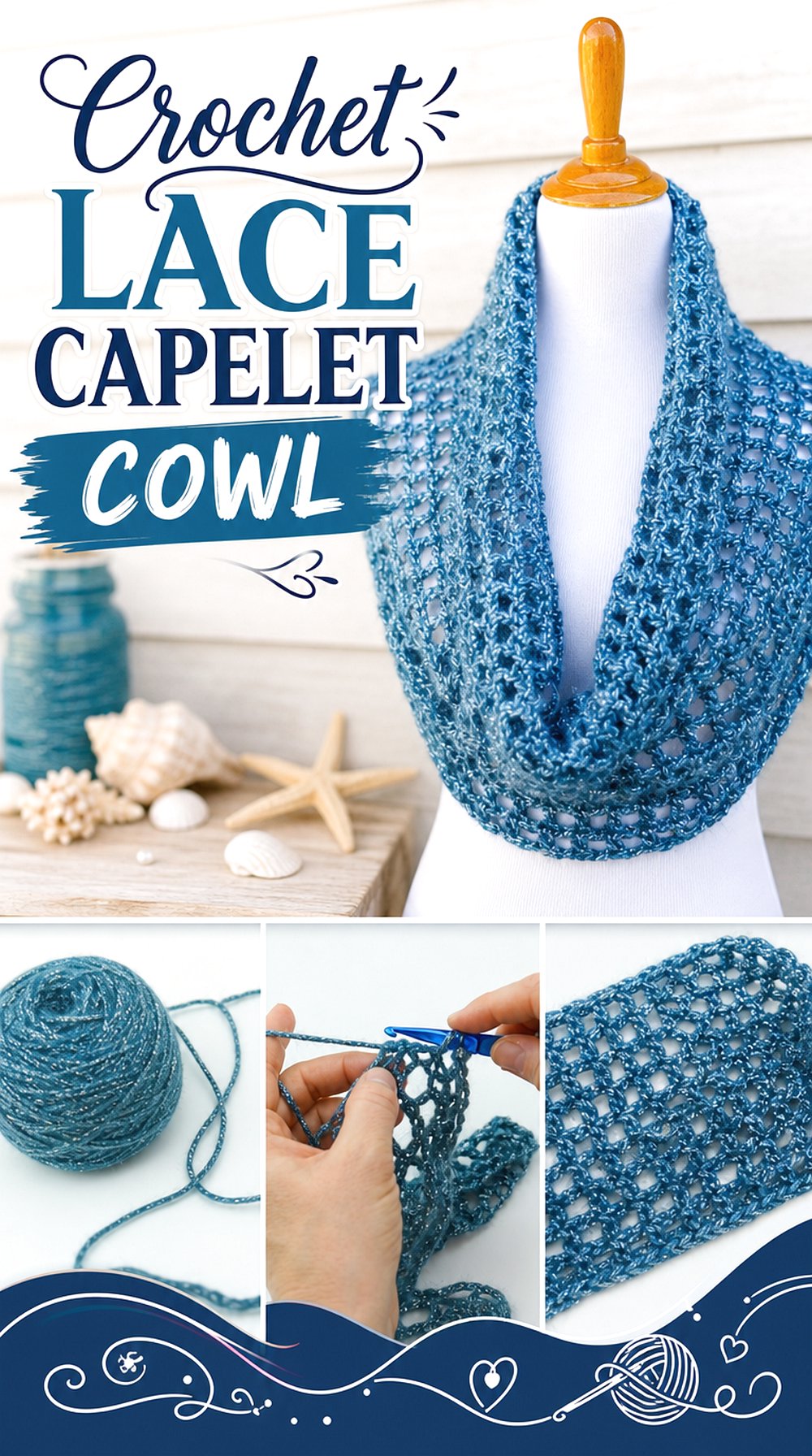
9. Crochet Lace Capelet Cowl
 SAVE
SAVEFiber Flux’s Ocean Shimmer design expands the usual cowl silhouette toward a capelet, allowing the fabric to sit around the shoulders as well as the neck. The accompanying pattern information describes a spiral construction and the option to wear the piece in this broader capelet form.
This makes the project substantially different from short cylindrical neck warmers. It works well for someone who wants lace to act as a transition between a cowl and a small shoulder accessory, especially over a simple top or dress where the wider silhouette can remain visible.
Capelet Width Changes Where the Fabric Settles
Once a cowl extends toward the shoulders, width becomes a styling decision rather than simply extra neck height. Check the tutorial’s finished presentation before changing dimensions, and try the work on periodically where construction permits. Too little width may keep it bunched at the neck, while excessive added fabric can change the intended capelet line.
Spiral Construction Gives the Lace a Different Direction
The Ocean Shimmer project is described with spiral construction, so its visual flow differs from lace organized strictly as stacked horizontal rounds. When substituting colors or yarns, consider whether you want to highlight that directional movement or keep it subtle. A self-striping or strongly contrasting choice can make the spiral effect more prominent.
Shoulder Wear Calls for Comfortable Drape
Fabric that feels acceptable in a narrow neck cowl may behave differently when spread across a broader shoulder area. If substituting yarn, test whether it can settle rather than stand rigidly away from the body. Also consider the clothing you expect to layer underneath when assessing the finished width.
Creator: Fiber Flux
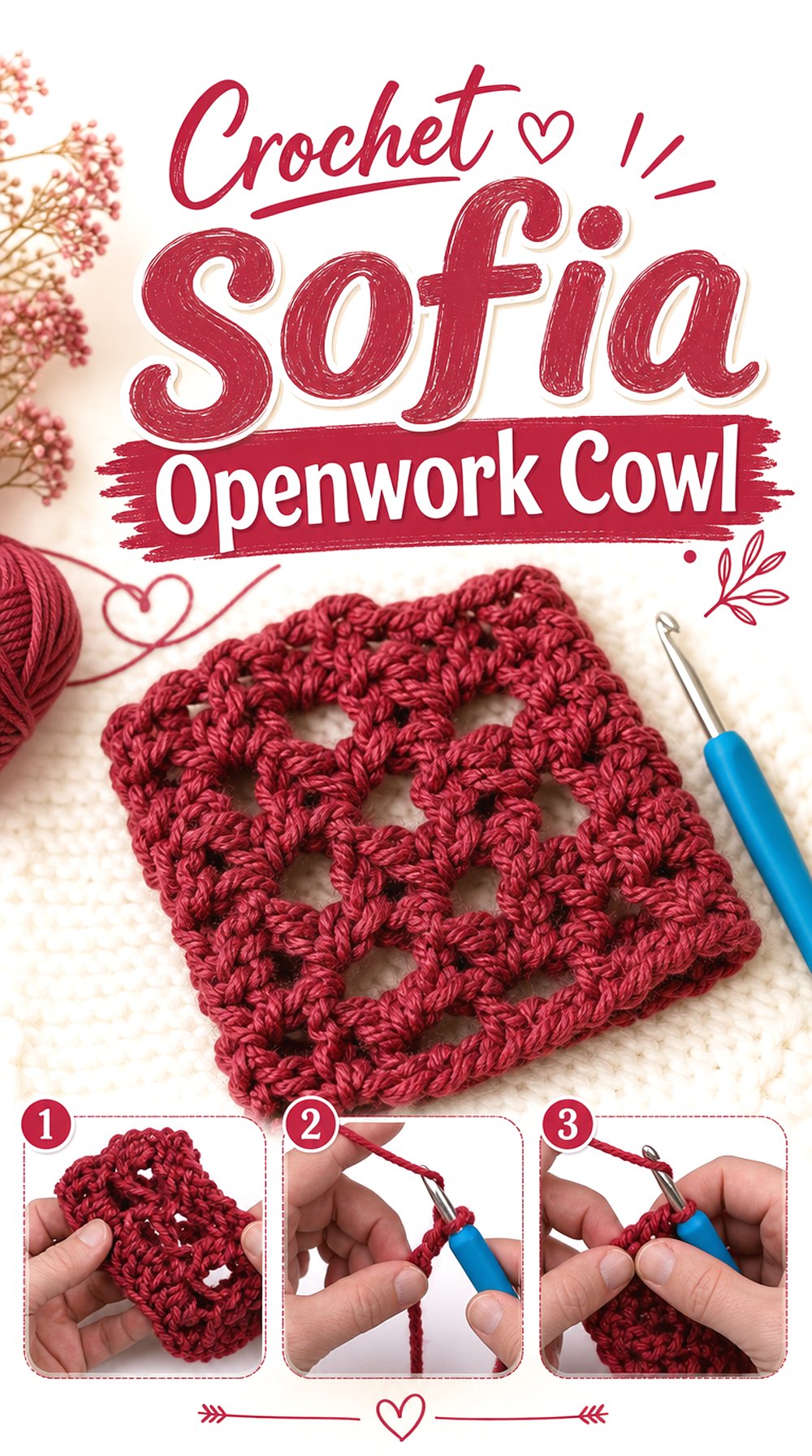
10. Crochet Sofia Openwork Cowl
 SAVE
SAVEhe Sofia Cowl from The Crochet Crowd provides another route to visible openness without using the extremely sparse construction of Solomon’s knot or hairpin lace. The tutorial is specifically presented as a crochet cowl with lacy visual interest, giving this option a useful middle position between simple mesh and denser textured neck warmers.
That middle ground can be appealing if you want holes and movement to show in the fabric but do not want the cowl dominated by oversized loops, applied motifs, or fringe. Let the finished tutorial sample guide how open your own fabric should look.
The Finished Sample Is the Best Reference for Lace Density
Labels such as “openwork” or “lacy” cover a wide range of fabrics. Compare your progress with the completed cowl shown by the creator rather than deciding from an isolated stitch close-up. If your version looks noticeably tighter, check tension, yarn characteristics, and the tutorial’s material information before continuing far enough that correction becomes inconvenient.
Use a Yarn Swap to Change Character, Not Accidentally Change Fit
A substitution can alter both texture and dimensions. If you deliberately want a firmer Sofia-style cowl, that may be a valid adaptation, but confirm that the opening remains functional and comfortable. Do not sacrifice the practical head opening merely to achieve sharper-looking stitches.
Creator: The Crochet Crowd
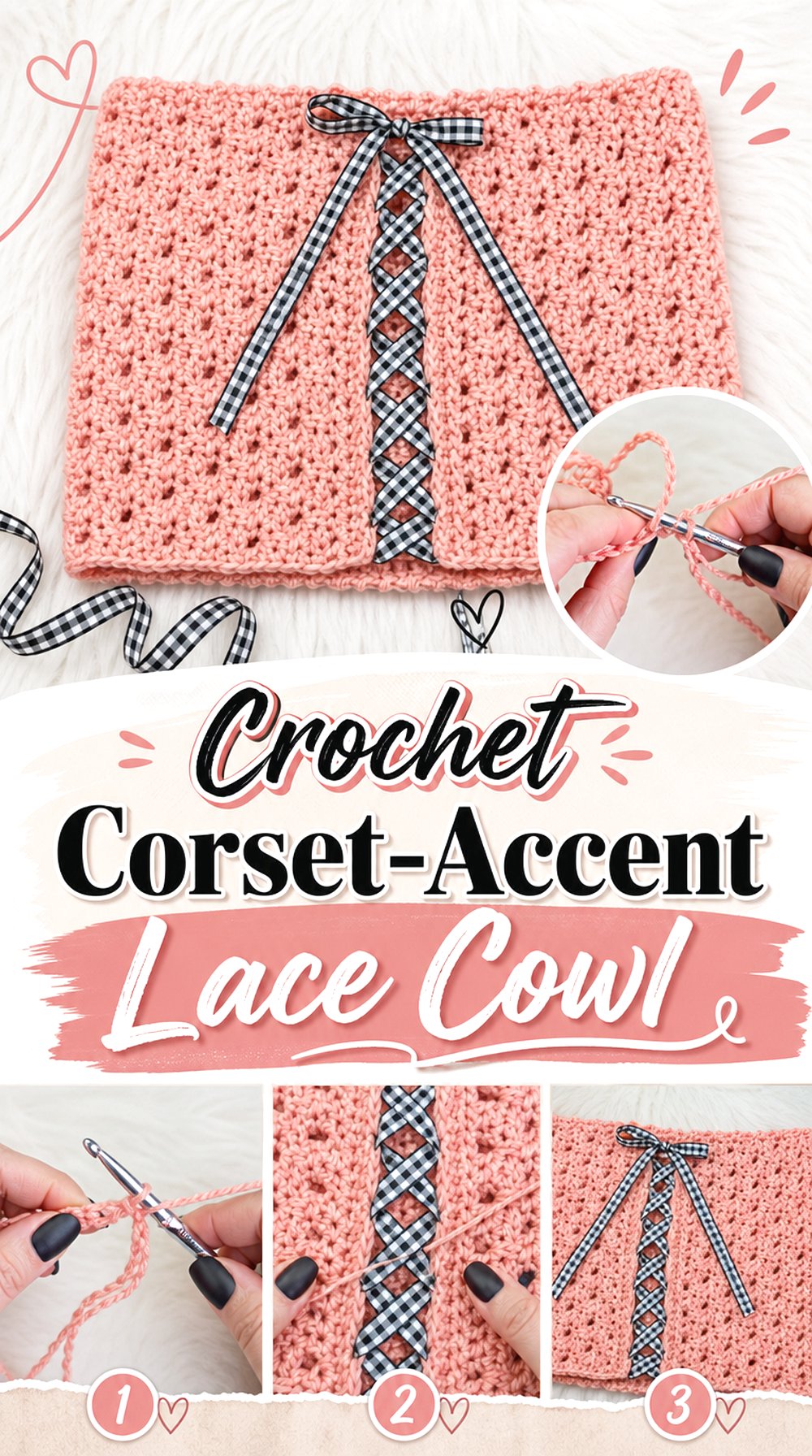
11. Crochet Corset Accent Lace Cowl
 SAVE
SAVEWoodland Stitchcraft’s design adds corset-style lacing details to a crochet lace cowl, turning part of the opening or edge treatment into a focal feature rather than hiding the closure. The creator describes the video as a full pattern tutorial for a lace cowl with corset accent details.
This is an especially strong option for readers who prefer accessories with a slightly dramatic finish. Unlike a seamless tube, the visible lacing contributes to the design language and can change how the front of the cowl sits when worn.
Corset Accents Turn Fastening Into Decoration
Because the lacing is meant to be seen, its spacing and tension affect the finished appearance. Avoid pulling the decorative ties so tightly that the adjacent crochet puckers unless that gathered look is intentional. Check the front while the cowl is worn or positioned on a form, because the same lacing can appear balanced flat but overly tight around the neck.
A Laced Opening Creates a Different Fit Check
This construction does not need to behave exactly like a fixed closed tube. Pay attention to the range allowed by the laced section and how securely it holds the preferred neckline. If you alter the opening, preserve enough overlap or structure for the decorative treatment to sit predictably rather than gaping unpredictably.
Keep the Accent Proportional to the Lace Fabric
If you substitute a much thicker cord, ribbon, or crocheted tie, the corset element can visually overpower a delicate cowl. Compare the scale of the lacing with the openings and edge around it. A good adaptation should make the closure clearer without making the surrounding crochet look incidental.
Creator: Woodland Stitchcraft
12. Crochet Puff and Picot Collar Cowl
 SAVE
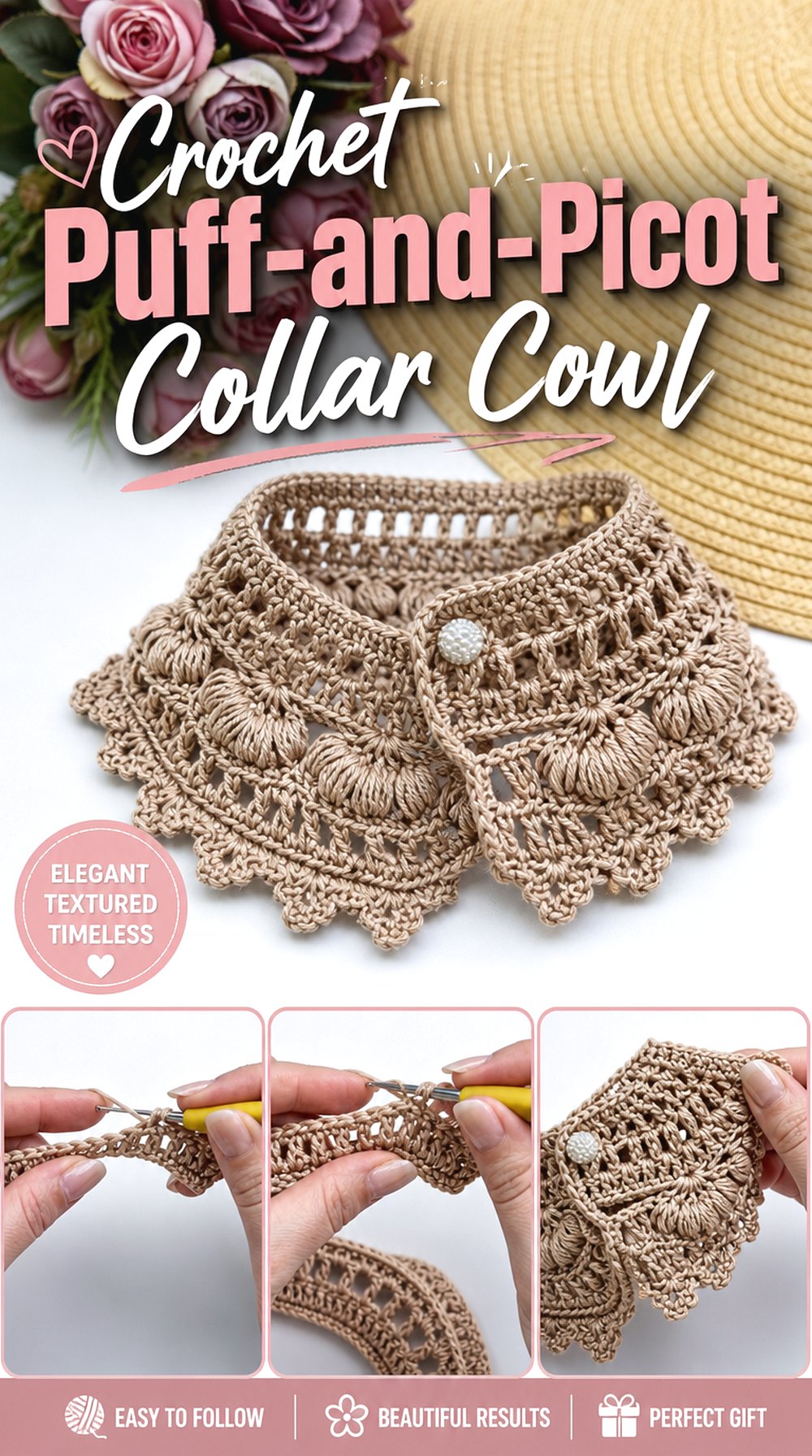
SAVEDiandra Schmidt Rosa’s lace cowl combines puff stitches and picot stitches, creating a delicate collar-like effect with both raised texture and small pointed details. The tutorial specifically identifies those two stitch features, which separates this project from the earlier puff cowl where the puffs are the dominant embellishment.
This option makes sense when you prefer a lace accessory that reads as decorative neckwear rather than as a bulky scarf replacement. The finer detailing deserves attention during yarn selection because multiple small features need to remain clear in the completed fabric.
Puff and Picot Details Need to Stay Visually Separate
The puffs provide dimensional areas while the picots add smaller points. If both merge into a fuzzy or very thick yarn surface, much of the contrast can disappear. Crochet enough of the pattern to see both elements together before deciding a substitute is suitable; judging only the puff stitch does not tell you whether the smaller detailing will remain readable.
Collar-Like Lace Benefits From Checking Finished Height Early
A decorative cowl can interact with shirt collars, jacket necklines, and hair differently from a tall gathered neck warmer. Compare the tutorial’s finished proportion with how you intend to wear yours. If you change the height, check that the modification does not hide the picot or puff arrangement that gives the design its character.
Creator: Diandra Schmidt Rosa
13. Crochet Compact Shell Stitch Cowl
 SAVE
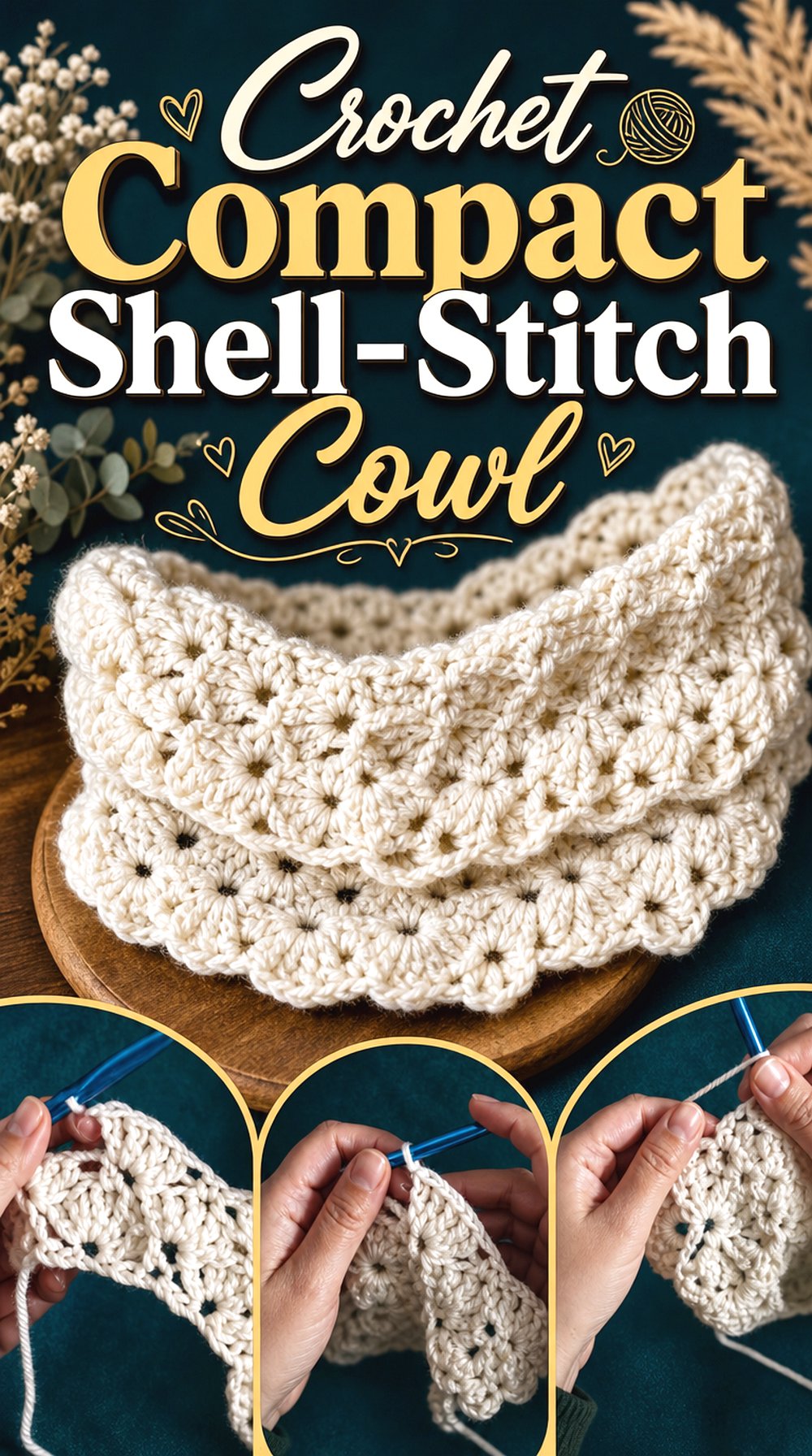
SAVECrochica NBF’s shell-stitch cowl keeps the concept focused: repeating shells form the principal texture across a straightforward cowl shape. That makes it less elaborate than the picot-shell design and less expansive than the fantail infinity loop, while still giving the fabric a clearly patterned, scalloped surface.
A compact shell cowl can be appealing when you want the stitch motif to provide enough interest on its own without adding applied flowers, fringe, elaborate closures, or a second construction technique. It is also a useful project for comparing how shell density affects the look of a shorter neck accessory.
Compact Shells Create a Continuous Scalloped Rhythm
The effectiveness of this style depends on the shells reading as a consistent surface rather than isolated motifs. When checking tension, step back and inspect several repeats together. A small difference in shell height or spacing may not look important individually but can become more obvious across the entire circumference.
Check the Opening Before the Cowl Is Finished
Shorter cowls can look deceptively generous while lying flat. If the piece is a closed loop, verify the functional opening at the stage recommended by the tutorial rather than assuming the final shell texture will compensate for an overly tight circumference. Stretch should be treated as a property to evaluate, not as a sizing plan.
Creator: Crochica NBF
14. Crochet Convertible Lace Cowl and Scarf
 SAVE
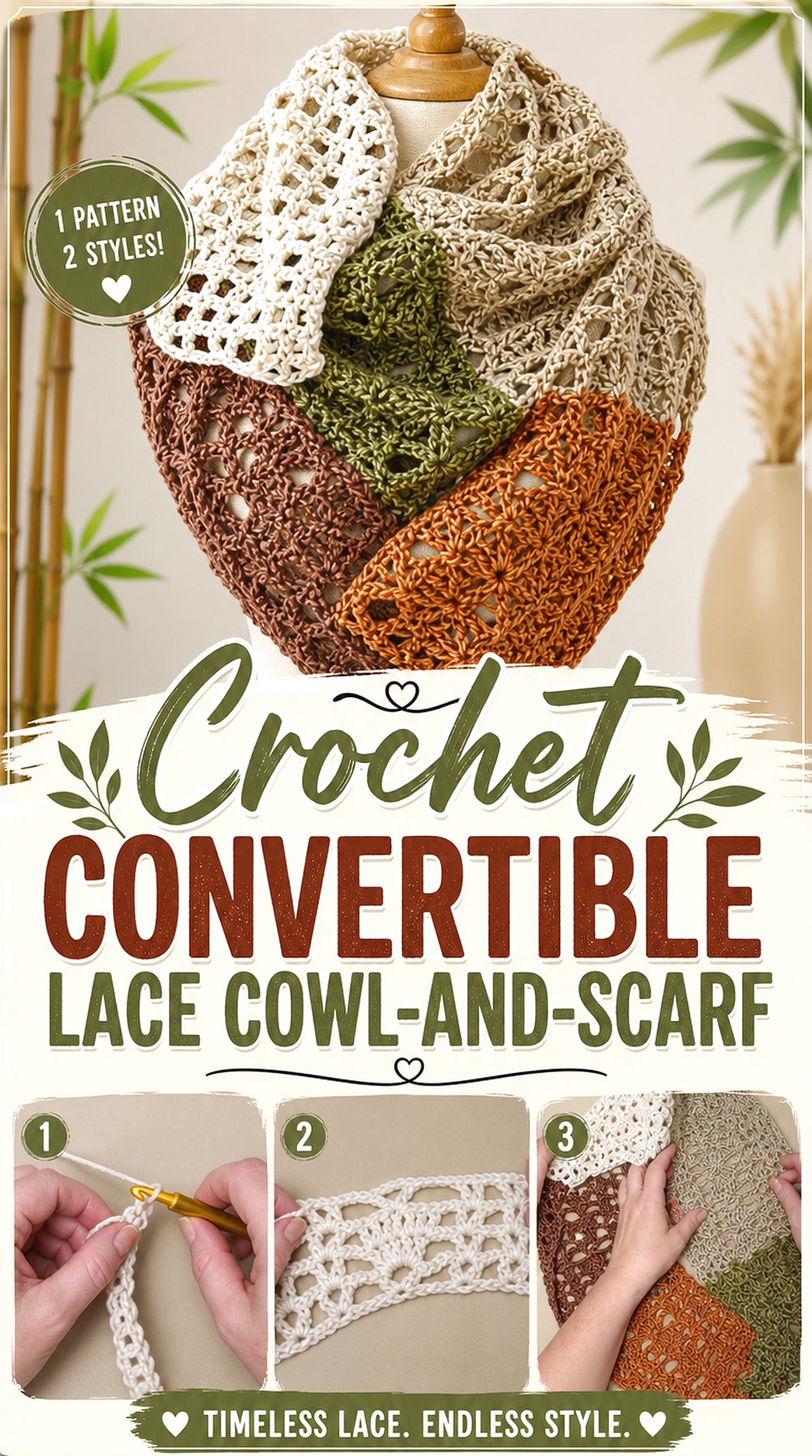
SAVESara Sach Crochet Designs presents the Bamboo Lace project as both a cowl and scarf, which makes its wearing flexibility the main reason to include it here. Rather than treating the finished object as a single fixed-neck silhouette, this direction lets lace function as a longer accessory that can be styled into cowl-like folds. The source tutorial is specifically dedicated to the Bamboo Lace Cowl and Scarf project.
This option is useful when you like lace cowls but are reluctant to commit to a short, permanently fixed tube. The extra length gives the fabric and repeat more room to show.
Convertible Use Rewards Flexible Drape
A scarf-to-cowl piece needs to work both extended and gathered. If the fabric becomes rigid after a yarn substitution, it may look fine as a flat scarf but resist forming comfortable folds at the neck. Test a substantial sample by bending and overlapping it rather than assessing only its appearance on a table.
The Lace Repeat Should Still Look Balanced When Wrapped
Longer lace fabric can overlap itself, which changes the apparent density. A very open section may look substantially fuller when doubled. Before changing the width or adding extra decorative borders, consider how much of the underlying pattern will remain visible once the piece is arranged as a cowl.
Creator: Sara Sach Crochet Designs
15. Crochet Solomon’s Knot Infinity Cowl
 SAVE
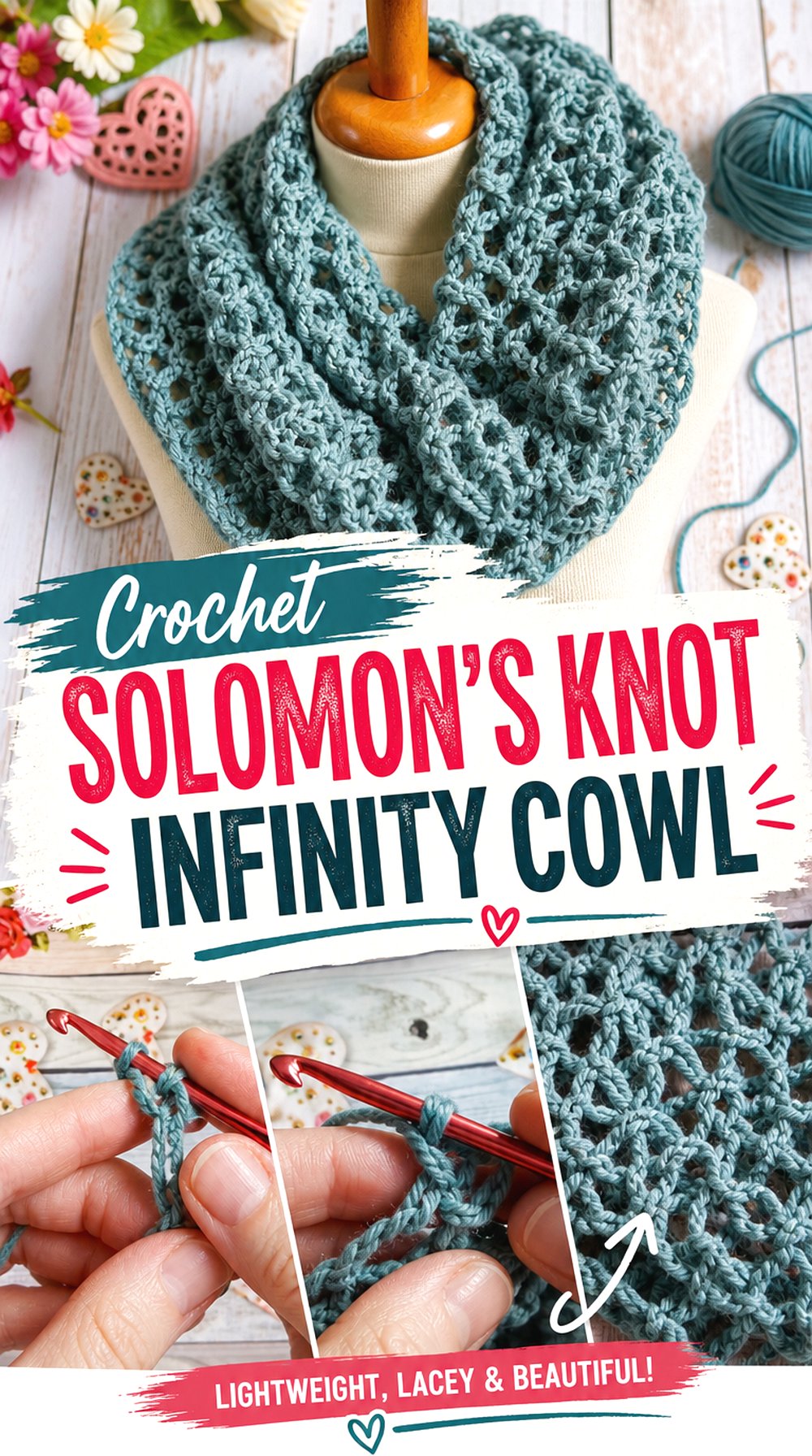
SAVETiara Lace Crochet’s infinity scarf uses Solomon’s knot, giving this project one of the most openly spaced fabrics in the collection. The tutorial explicitly teaches the knot as part of a lightweight infinity scarf, so the large looped lace structure—not merely a decorative edging—is central to the finished accessory.
This is a strong choice for dramatic negative space. Rather than creating warmth through a dense stitch surface, the infinity construction allows the open fabric to overlap when wrapped, giving a different balance of volume and lightness.
Solomon’s Knot Creates an Extremely Open Visual Structure
The large spaces are the design rather than gaps between denser motifs. That means the yarn remains highly visible as individual strands outlining each opening. When choosing a substitute, think about whether you want those strands crisp and graphic or softer and more blended, and make a test section large enough to show several adjacent knots.
Large Loops Make Consistent Tension Especially Noticeable
When a stitch depends on elongated loops, inconsistent loop size can interrupt the overall rhythm more visibly than small variations in dense crochet. Periodically lay the work down without stretching it and compare neighboring areas. Correcting tension habits early is easier than trying to disguise one noticeably compressed section after the scarf is complete.
Infinity Construction Lets Airy Fabric Build Layers
The long-loop format gives this sparse lace a way to create more presence around the neck when wrapped. If modifying the length, consider how many comfortable arrangements remain possible. An infinity scarf that is shortened substantially may no longer give the same layered effect that makes this open technique practical as a cowl.
Creator: Tiara Lace Crochet
16. Crochet Fringed Lace Loop Cowl
 SAVE
SAVEBag-O-Day Crochet’s Harriet lace infinity scarf adds fringe to a long-loop lace accessory, introducing movement at the edge that the other infinity designs do not have. The verified tutorial title identifies both the Harriet lace stitch and fringe, while YouTube playlist results confirm the video under Bag-O-Day Crochet.
This option suits readers who want more visual activity than a plain closed loop. When the scarf is wrapped as a cowl, both lace and fringe contribute to the overall silhouette, so finishing choices become particularly noticeable.
Fringe Changes How the Lower Edge Moves
Fringe adds weight and motion at specific points rather than across the whole fabric. Before committing to your finishing length, hold or pin a small sample at the edge and see where it falls when the loop is actually wrapped. A fringe proportion that looks balanced on a long hanging scarf may feel much more prominent once doubled around the neck.
A Long Lace Loop Can Carry More Edge Detail
The additional length gives fringe room to appear at different levels when the infinity scarf is arranged. That can create a lively layered effect, but it also means edge details may overlap the face or jacket front differently with each wrap. Consider your usual wearing arrangement before adding more fringe than the source design shows.
Check Fringe Against Practical Wear
If you adapt the trim, consider coats, zippers, jewelry, and bag straps that may sit near the cowl. Decorative strands should not be judged only in a styled flat photo. Trying the unfinished loop with your typical outer layer can reveal whether a shorter or less dense treatment would be more convenient.
Creator: Bag-O-Day Crochet
17. Crochet Striped Cluster Lace Cowl
 SAVE
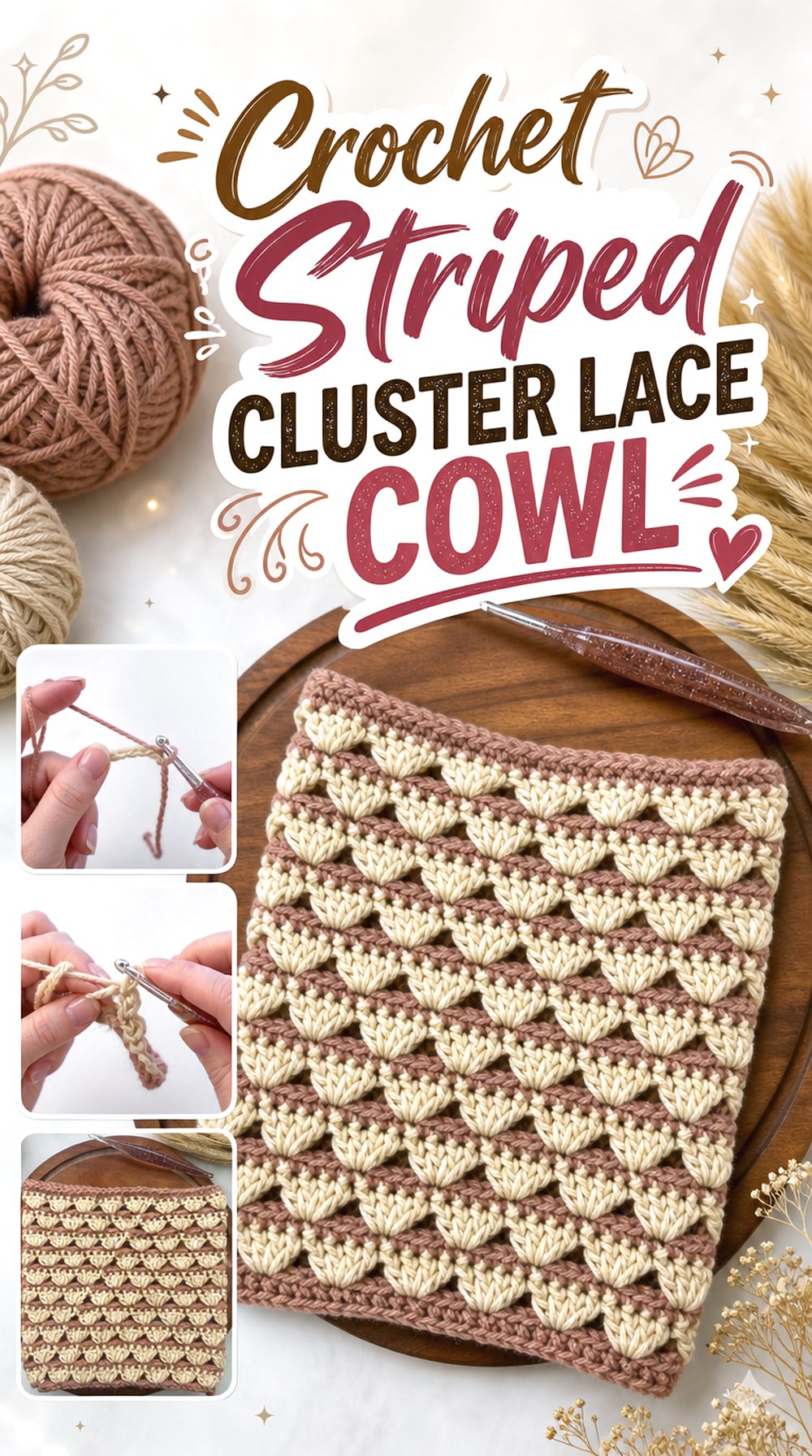
SAVEThe Riley Cowl from Blue Star Crochet uses alternating color and cluster texture in a seamless round construction. The designer’s published information places Riley among the site’s lace cowl projects and explains that the piece is worked continuously in joined rounds, making the stripe rhythm part of the full circumference rather than a flat panel later treated as an afterthought.
This is useful for readers who want color changes to reinforce texture. The finished effect is more graphic than the monochrome open-mesh cowls while remaining a practical closed neck accessory rather than a long infinity loop.
Stripe Changes Highlight the Cluster Rhythm
Alternating colors can make the boundaries between texture rounds more obvious. If you use colors with little contrast, the stitch texture will carry more of the visual work; stronger contrast makes the horizontal structure clearer. Neither choice is automatically better, but it is worth deciding before buying several colors simply because the original uses stripes.
Round Construction Keeps the Pattern Continuous
The Riley Cowl is worked as a seamless round piece, so there is no final long seam interrupting the stripes. That makes the round transition an important visual point. Follow the tutorial’s joining and color-management approach closely if clean continuity matters to you rather than inventing a new join midway through the project.
Adjust Height With Neck Bulk in Mind
Adding extra vertical repeats may look attractive when the cowl is flat, but every additional section has to gather somewhere once worn. If you want a taller version, periodically bunch the work around the neck or a form to see whether the fabric still settles comfortably instead of becoming overly bulky.
Creator: Blue Star Crochet | Veronika Cromwell
18. Crochet Crossed Lace Tall Cowl
 SAVE
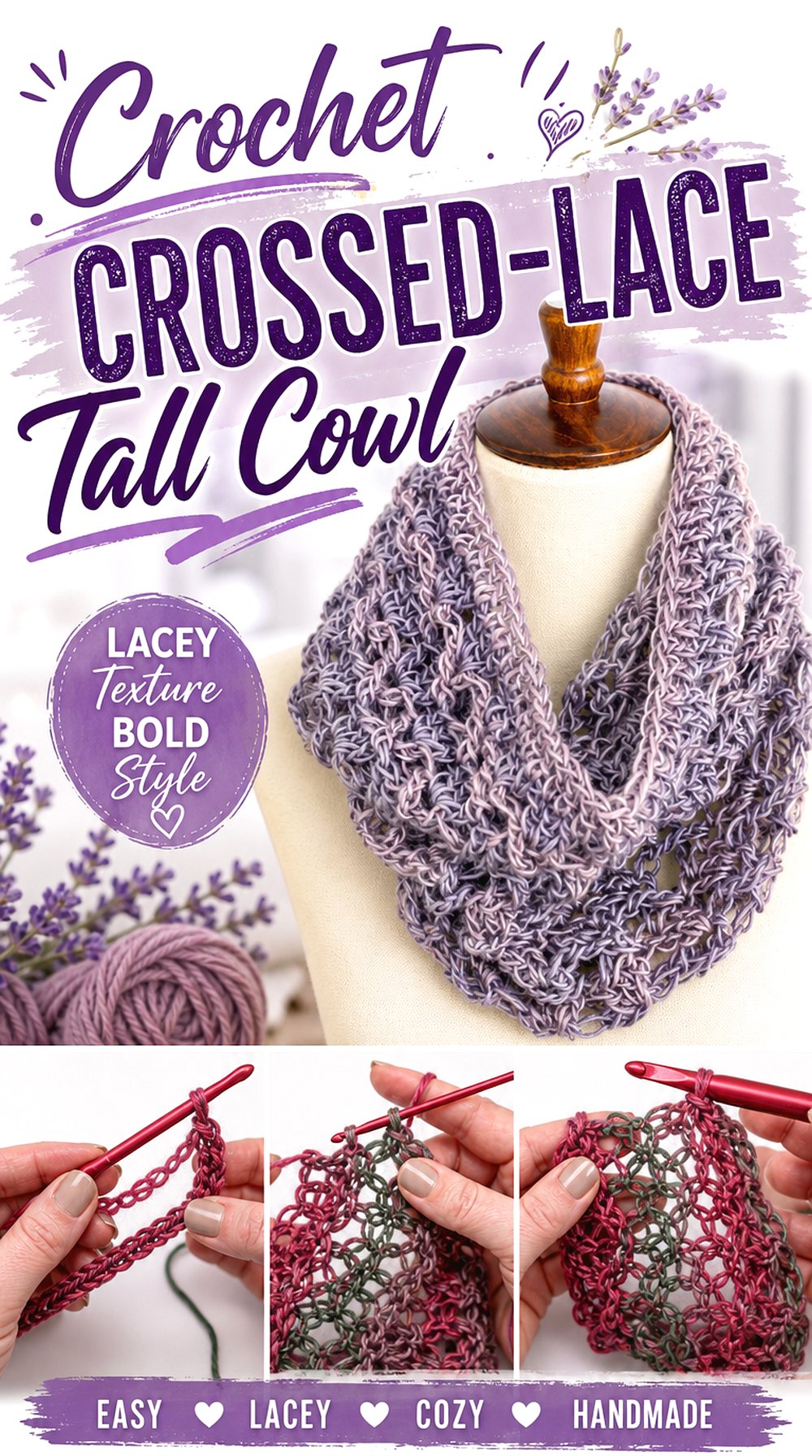
SAVEThe Lavender Kisses Cowl from Tamara Kelly – Moogly is deliberately tall and close enough to gather or “puddle” around the neck, with crossed stitches forming part of its repeating texture. Moogly’s tutorial page provides both right- and left-handed video support and describes the unusual tall proportion as a defining feature.
That height makes this cowl different from decorative collars and short shell tubes. Instead of adding wrapping length horizontally, it creates volume vertically, allowing the fabric to fold back on itself while staying a closed neck warmer.
Crossed Stitches Give Tall Fabric More Internal Pattern
A tall cowl could look visually heavy if it were simply a solid tube. The crossed texture breaks up the surface while maintaining a recognizable repeat. When substituting yarn, check whether the crossings remain readable once the fabric is gathered; a motif that looks clear when stretched flat can become subtler inside deeper folds.
Extra Height Lets the Cowl Puddle Rather Than Lie Flat
The source design intentionally uses substantial height so the fabric gathers around the neck. If you prefer less volume, use the creator’s customization guidance rather than randomly removing part of a repeat. Conversely, adding more height may eventually create bulk rather than graceful folds, so assess the piece in its worn shape as you adapt it.
A Larger Hook Still Requires Fabric Evaluation
The project uses an intentionally open fabric, but hook size alone does not determine how your substitute will behave. Personal tension and yarn structure can still produce a different result. Make a sample and compare it with the tutorial’s fabric before relying on the hook recommendation as a guarantee of identical drape.
Creator: Tamara Kelly – Moogly
19. Crochet Braided Hairpin Lace Infinity Cowl
 SAVE
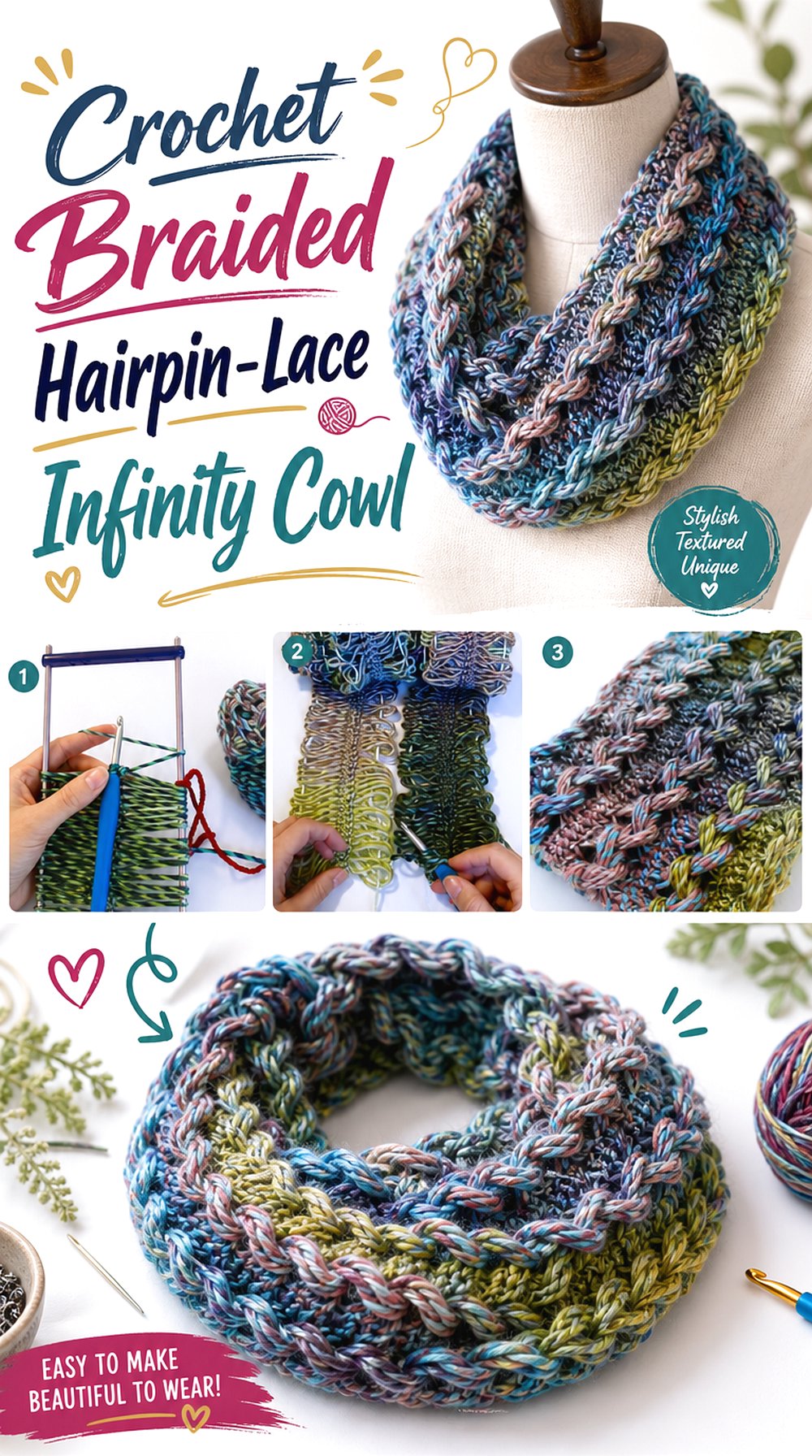
SAVEB.Hooked Crochet takes hairpin lace in a noticeably different direction from the joined strip cowl earlier in the article. This tutorial builds an infinity scarf around hairpin-lace construction, and associated references identify the finished concept as a braided hairpin-lace infinity scarf.
The combination of braiding and a long continuous loop creates more dimensional structure than a straightforward series of parallel hairpin strips. Choose this route if the unusual construction itself appeals to you as much as the finished lace effect.
Braiding Makes Hairpin Lace More Dimensional
Instead of allowing all the elongated loops to remain as parallel open bands, the braided arrangement introduces interlocking movement. That changes both the appearance and how the finished strip behaves. Keep the lace relaxed while arranging it; pulling too aggressively during the braiding stage can make one section narrower than another and reduce the evenness of the final loop.
The Infinity Join Has to Support the Braided Structure
Once the long lace element becomes a continuous scarf, the connection should preserve the visual flow rather than abruptly compressing the braid. Before securing the final join, arrange the full piece as it will be worn and check that the ends meet without an accidental twist unless the tutorial specifically requires one.
Keep Enough Flexibility for Wrapping
The construction is decorative, but the object still needs to function as an infinity scarf. If your yarn substitution makes the braid substantially stiffer, test the completed length around the neck before adding extra reinforcement or edging. Too much rigidity can reduce the folding and wrapping possibilities that distinguish this design from a short hairpin cowl.
Creator: B.Hooked Crochet
20. Crochet One Skein Mesh Neck Cowl
 SAVE
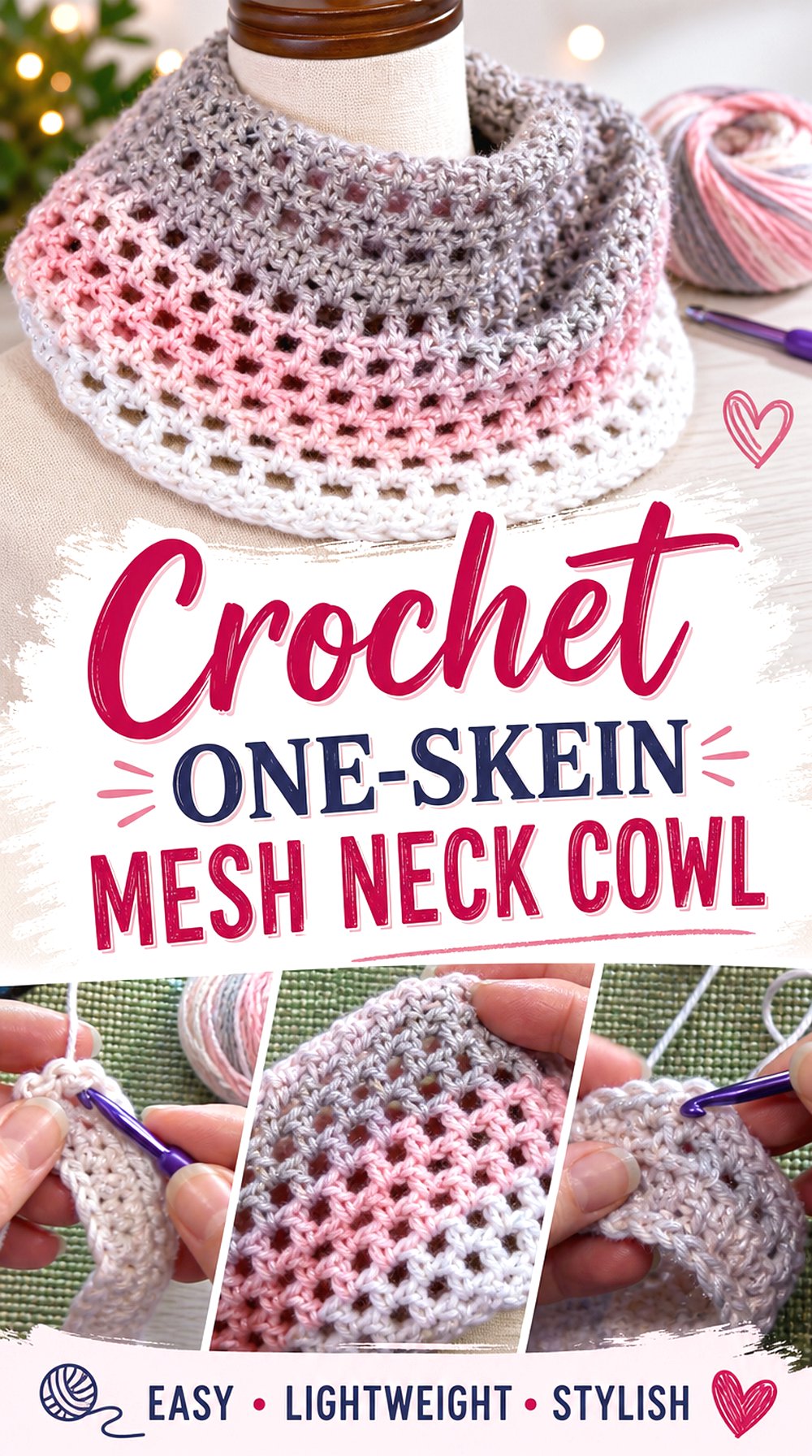
SAVEDonna Be Creates offers a one-skein mesh cowl built around a clearly open crochet fabric. The tutorial is specifically titled as an easy one-skein crochet mesh cowl, giving this final project a straightforward combination of light visual structure and a traditional neck-cowl format.
Compared with the ChristaCoDesign summer mesh cowl, this project provides another construction reference for readers interested in simple mesh without introducing shells, applied motifs, braiding, or fringe. It is a useful ending point for the collection because it shows how effective lace can be when the open grid itself supplies most of the visual interest.
Simple Mesh Keeps the Silhouette Visually Light
A repeated mesh lets clothing underneath remain visible through the cowl and avoids the strong raised texture of puff or shell designs. If you want a quiet accessory rather than a statement motif, this can be an advantage. Check the fabric as it gathers, though, because several overlapping mesh layers naturally look denser than one layer spread flat.
One-Skein Claims Depend on the Original Project
The creator describes this as a one-skein cowl and provides yarn usage for that particular version. A different skein may contain a different amount of yarn, and changes to dimensions or tension can alter consumption. Compare actual yardage and project specifications before assuming any single ball from your stash will be sufficient.
A Mesh Sample Reveals Stretch Before Joining
Open crochet can shift noticeably when handled or hung. Before committing to an adjusted circumference, let a sample relax and gently evaluate how it behaves without deliberately overstretching it. That gives you more useful information than measuring the piece only while it is pulled flat on a table.
Creator: Donna Be Creates
Which Crochet Lace Cowl Style Should You Choose?
For the most open appearance, start with the Solomon’s Knot Infinity Cowl, either hairpin-lace option, or one of the mesh cowls. If you want lace with more visible texture, the puff, picot, fantail, and sculpted-shell projects create stronger surface detail.
The Irish-Inspired Floral Lace Cowl and Corset-Accent Lace Cowl make the finishing details part of the focal design. For more fabric coverage, compare the Lace Capelet Cowl, Crossed-Lace Tall Cowl, and longer infinity loops. If construction variety is your priority, hairpin lace, the spiral capelet, applied Irish-inspired motifs, and decorative lacing offer the biggest departure from an ordinary round tube.
Conclusion
The right crochet lace cowl depends less on finding one universally superior stitch and more on deciding what you want the finished accessory to do. Choose open mesh or Solomon’s knot for visual lightness, shells and puffs for stronger texture, an infinity loop for layered wrapping, or the capelet and tall-cowl options when you want more coverage. Hairpin lace, floral embellishment, fringe, and corset lacing are better choices when construction and finishing details are part of the appeal.
Once you have narrowed the collection by shape and lace density, use the original tutorials for exact construction, sizing, materials, and finishing details before making substitutions.
Frequently Asked Questions
How loose should a crochet lace cowl fit?
There is no universal cowl circumference because the correct opening depends on construction and how the piece is intended to be worn. A closed tube must pass comfortably over the head, while an infinity loop needs enough length for its intended wrapping arrangement. Adjustable or laced openings work differently again. Compare the tutorial’s finished dimensions with the wearer and intended styling rather than applying one standard size to all 20 designs.
What yarn should I choose for a crochet lace cowl?
Choose by the fabric you want rather than assuming there is one ideal fiber. The yarn needs to produce enough stitch definition for the particular lace while giving the appropriate drape for the silhouette. Open mesh and infinity loops may need more flexibility than a structured decorative collar. When substituting, make a sample, compare it with the tutorial’s finished fabric, and verify yardage and care information for the exact yarn you plan to use.
Which lace cowl styles give the most coverage?
Within this collection, taller cowls, fuller shell or puff textures, a capelet shape, and infinity loops that can overlap generally create more fabric around the neck than a single layer of very open mesh, Solomon’s knot, or hairpin lace. That comparison describes construction and coverage rather than guaranteeing warmth. Actual comfort in cold conditions also depends on fiber, fabric density, fit, wind exposure, and how the finished piece is worn.
Can I turn a crochet lace scarf into a cowl?
Often the concept can be adapted, but joining the ends is not the only consideration. First check whether the scarf is long enough for the intended cowl arrangement, whether the stitch pattern is directional, and whether the two ends can meet cleanly. A long lace scarf may work as an infinity loop, while a shorter piece could become an uncomfortable closed tube. Follow the tutorial’s joining guidance when it already includes a cowl option.
Should I block a crochet lace cowl?
Blocking can help openwork settle and make the stitch pattern easier to evaluate, but the appropriate method depends on the yarn and project. Check the fiber’s care guidance and the creator’s finishing instructions rather than automatically applying heat, steam, or aggressive stretching. For fit-sensitive cowls, remember that changing the finished dimensions during blocking can also change the head opening or how closely the cowl sits.
How can I stop an openwork cowl from becoming too stretched?
Start by checking whether the change comes from yarn behavior, tension, construction, or the weight of the finished piece. Make and relax a sample before committing to a major substitution, especially for elongated techniques such as hairpin lace or Solomon’s knot. For long infinity designs, evaluate the fabric while hanging as well as flat. If the tutorial specifies gauge or finished measurements, use those as checkpoints rather than trying to correct excessive stretch only after finishing.