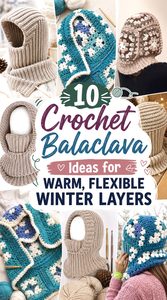
Crochet balaclavas range from snug ski-mask shapes to relaxed hoods that behave more like a cowl or scarf. The biggest differences are not simply color or stitch texture. Face-opening size, neck coverage, crown shaping, ribbing, motif placement, and overall looseness can change how a finished balaclava looks and how easily it layers with a coat.
These 10 crochet balaclava ideas cover several distinct routes, including a single-opening ski mask, mini granny squares, a four-square construction, slouchy shaping, moss stitch, knit-look ribbing, and a convertible version that can also be worn as a hat. Use the comparisons below to decide how much coverage and structure you want, then follow the credited creator’s original tutorial for the exact construction.
Quick List
- Crochet Checker-Accent Close-Fit Balaclava
- Crochet Single-Opening Ski Mask Balaclava
- Crochet Mini Granny Square Balaclava Hood
- Crochet Slouchy Balaclava Hood
- Crochet Collar-Base Balaclava Hood
- Crochet Moss-Stitch Turtleneck Balaclava
- Crochet Contoured Face-Opening Balaclava
- Crochet Knit-Look Ribbed Balaclava
- Crochet Four-Square Tie Balaclava
- Crochet Convertible Balaclava Hat
Choose the Face Opening Before the Decorative Details
The opening is one of the most important differences between balaclava styles. A ski-mask construction leaves less of the face exposed, while a conventional hood-shaped balaclava frames a larger area around the forehead, cheeks, and chin. Ribbing can make that edge look more defined, and an adjustable tie changes it again by allowing the front to draw inward.
Compare the finished tutorial views before choosing. Notice whether the opening sits close to the cheeks, whether the chin remains covered, and whether the front edge looks structured or relaxed. If you expect to wear glasses, large earrings, or a high coat collar, consider those items during fitting rather than judging the hood by head circumference alone.
Neck Coverage and Hood Ease Change the Way a Balaclava Layers
A short neck section can tuck neatly inside a jacket, while a longer turtleneck or cowl becomes a visible layer of its own. Neither approach is automatically warmer or more comfortable because fiber, fabric density, wind exposure, and garment layering also matter.
Ease around the crown deserves similar attention. A close-fitting balaclava produces a compact silhouette, while slouchy and baggier constructions leave more fabric behind or above the head. Before committing to a tutorial, decide whether you want the piece primarily under outerwear or worn as a prominent hood. For close-fitting projects, compare your measurements with the creator’s sizing guidance instead of assuming another balaclava tutorial will produce the same fit.
Match Yarn Behavior to the Shape You Want
Balaclavas sit directly around the face and neck, so softness matters, but structure also affects the result. A very fluid fabric can make a loose hood drape attractively while allowing a fitted face opening to relax more than intended. A firmer fabric may define ribbing and ski-mask shaping clearly but can feel bulkier around seams and the jaw.
Motif constructions introduce another consideration: joins create their own thickness and visual lines. Blocking individual motifs before final assembly can help you compare their dimensions consistently. Whatever style you choose, use the tutorial’s stated yarn and gauge information as the safest starting point when fit is important, and swatch substitutes rather than relying only on the yarn label.
1. Crochet Checker Accent Close Fit Balaclava
 SAVE
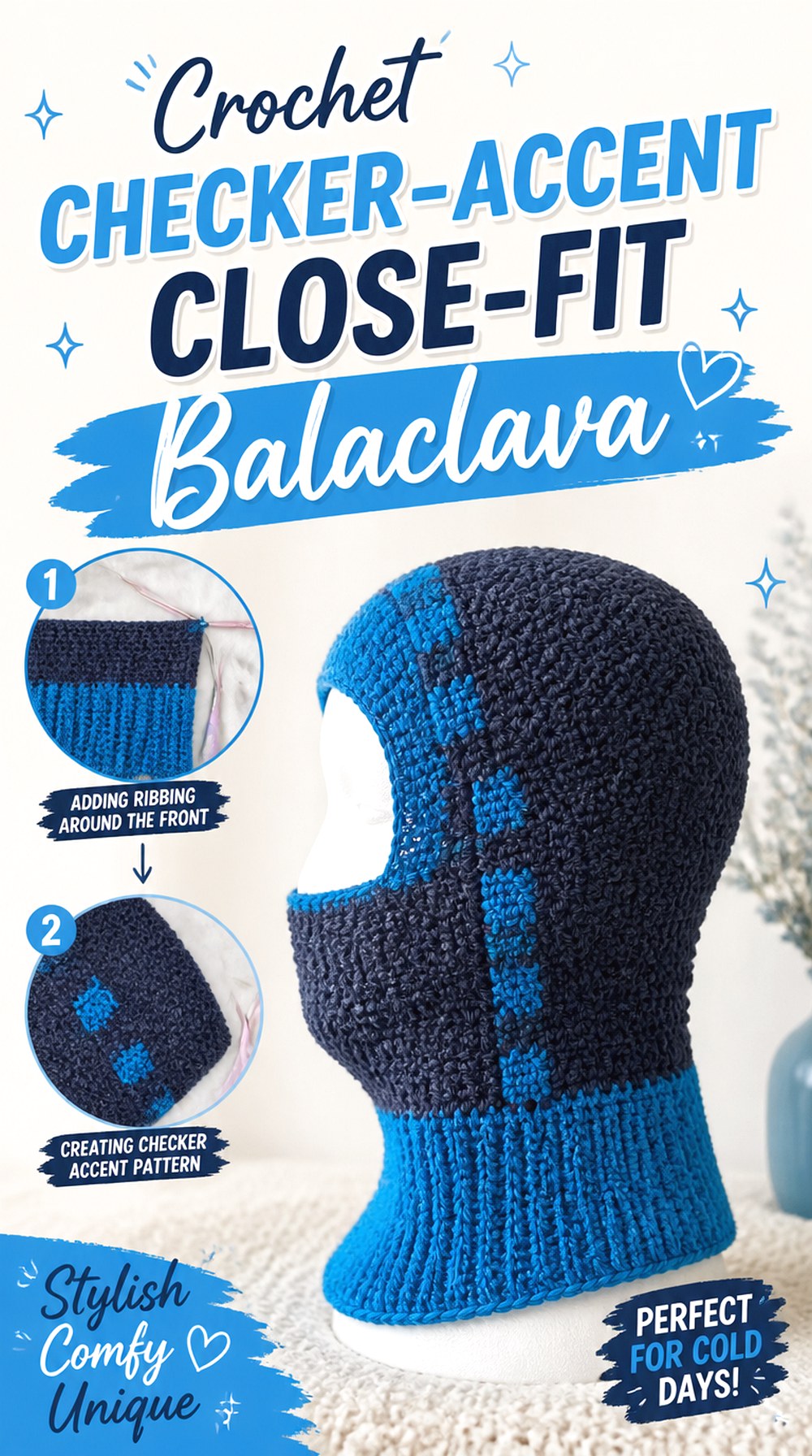
SAVEThis close-fitting balaclava combines a straightforward hood silhouette with pronounced ribbing around the lower section and face. Made in the Moment’s tutorial also includes an optional checker detail, making it useful for someone who wants a mostly streamlined winter hood with one graphic accent rather than an all-over motif design.
The relatively neat outline distinguishes it from the slouchier options later in this collection. It is especially worth studying if you like a balaclava that reads more like fitted headwear than an oversized hood. Because the front ribbing forms such a visible boundary around the face, that edge deserves as much fit attention as the crown itself.
The Face Ribbing Becomes Part of the Fit
Ribbing is not purely decorative here. A ribbed border can change how firmly the opening sits against the forehead, cheeks, and chin, so judge the project after the edging is in place rather than assuming the unfinished opening represents the final fit. If substituting yarn, compare stretch and recovery as well as thickness; two similar-looking yarns can behave differently once worked into a narrow ribbed edge.
Use the Checker Detail as an Accent, Not a Sizing Shortcut
The tutorial identifies the checker section as optional, which makes the concept easy to personalize without changing the entire visual identity of the hood. If you change colors or omit the accent, keep your attention on the underlying measurements and shaping. Decorative choices should follow the fit plan rather than becoming the reason you assume a different gauge or yarn will behave identically.
2. Crochet Single Opening Ski Mask Balaclava
 SAVE
SAVEFor more facial coverage, this crochet ski mask moves away from the wide hood opening used by many fashion balaclavas. ABoC Studio’s finished design centers on a smaller single opening and a closely shaped head covering, giving it a distinctly different purpose and silhouette from the cowl-like projects in this list.
This is the option to compare when facial coverage matters more than a relaxed draped appearance. It is also a good reminder that material substitutions can affect sizing: the creator specifically cautions that changing both yarn category and hook size changes the result. That makes gauge and try-on checks particularly important for this style.
A Smaller Opening Leaves Less Room for Fit Errors
With a broad hood, a small measurement difference may simply change the amount of drape. Around a ski-mask opening, the same difference can affect how the fabric sits near the eyes, nose, and cheeks. Confirm that you are comfortable with the finished opening shown by the creator before starting, and treat any modification around this area as a fit change rather than a purely cosmetic adjustment.
Material Changes Need Their Own Sizing Checks
ABoC Studio explicitly notes that using different yarn and hook choices will change sizing. If you substitute materials, do not keep every other assumption unchanged. Make a useful swatch, compare the resulting fabric with the tutorial, and check progress against the intended wearer’s measurements. This matters more in a close ski-mask shape than in a generously oversized hood.
Original Tutorial and Creator Credit
Creator: ABoC Studio
3. Crochet Mini Granny Square Balaclava Hood
 SAVE
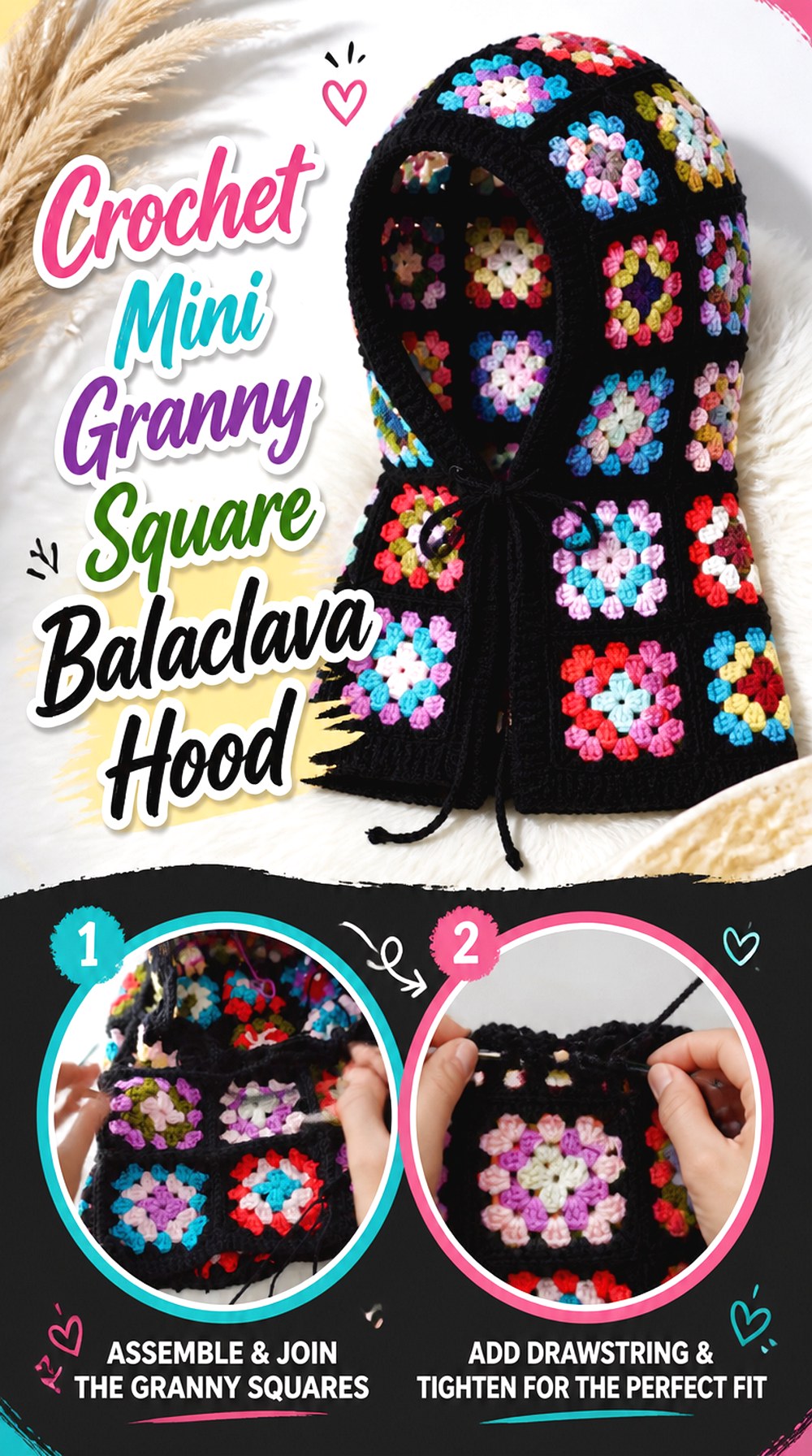
SAVEMini motifs give this balaclava a noticeably different surface from large-square patchwork. Crochet With Aisha builds the design from many small granny squares, creating repeated color blocks across a fitted hood instead of concentrating the motif effect into only a few large panels.
Aisha’s supporting project page states that an individual square measures 7.5 cm in the featured version and identifies a 3 mm hook, providing a useful reference for understanding the scale of the original design. Treat those as creator-specific details rather than universal balaclava measurements. If you want to adapt the palette or yarn, square dimensions need to be checked before planning the full arrangement.
Small Motifs Make Consistent Blocking More Important
A tiny difference between two motifs can seem unimportant on its own. Repeated across a hood, however, inconsistent square dimensions can distort seam lines or shift the face opening. Measure several blocked squares before assembly and compare both width and height. If they vary, solve the motif-size issue before joining rather than expecting the final edging to hide it.
Color Placement Can Emphasize the Hood’s Geometry
Because the construction repeats many separate squares, color decisions become part of the shape. Repeating a border color can visually connect the motifs, while stronger contrast between neighboring squares highlights the patchwork structure. Map the main colors before joining so that an accidental cluster does not dominate one side of the face or crown unless that asymmetry is intentional.
The Joins Add Texture as Well as Structure
Every motif boundary introduces a seam or joining line. That is one reason this balaclava will not feel or look identical to a smooth continuous hood, even when the overall measurements are similar. Before choosing it, decide whether you want those joins to be a visible design feature. Also inspect the inside finish if sensitivity to seam texture around the forehead or neck is a concern.
Original Tutorial and Creator Credit
Creator: Crochet With Aisha
4. Crochet Slouchy Balaclava Hood
 SAVE
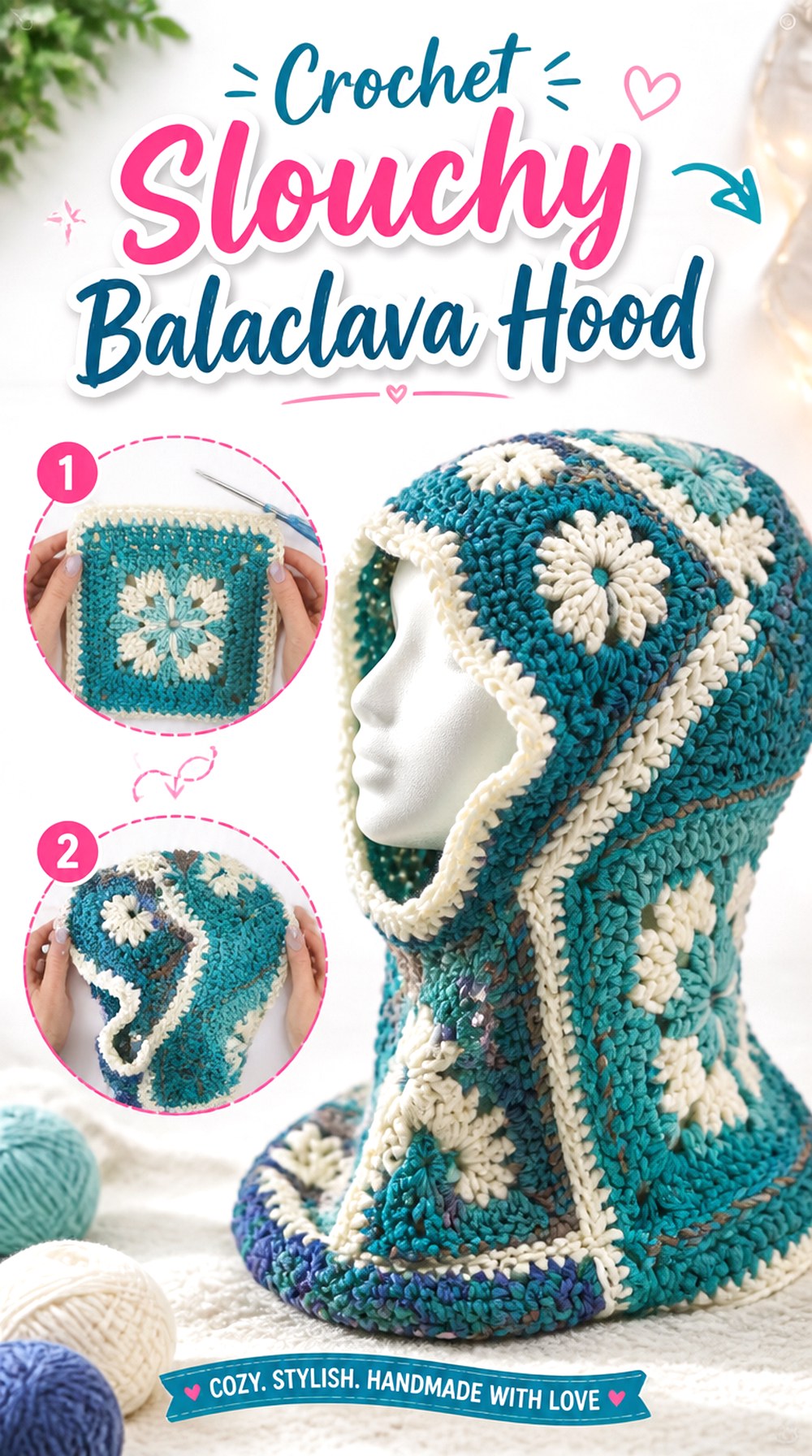
SAVESirin’s Crochet takes the opposite direction from a tightly fitted ski mask: the finished project is explicitly presented as a slouchy balaclava. That extra ease gives the hood a softer, more relaxed profile and makes it worth considering if you dislike a close crown or want the accessory to read more like outerwear.
The visual looseness is the main reason this idea earns its own place in the collection. A slouchy hood can accommodate styling differently from a fitted balaclava, but the added fabric also changes what happens beneath a jacket hood or around a high collar. Think about where that extra volume will sit when the piece is actually worn.
Extra Crown Ease Needs Somewhere to Go
A relaxed crown creates folds rather than hugging every contour of the head. That can be the intended feature, but check whether you prefer the excess fabric to sit mainly toward the back or distribute around the sides. When testing the fit, wear the hairstyle and outerwear you expect to pair with it; both can change how a slouchy hood settles.
Drape Matters More in a Relaxed Silhouette
A yarn that produces very firm fabric can make an oversized hood stand away from the head, while a more flexible fabric may collapse into softer folds. Neither result is automatically wrong. Decide which appearance you want and compare your swatch with the finished project shown in the video before making major yarn substitutions.
Original Tutorial and Creator Credit
Creator: Sirin’s Crochet
5. Crochet Collar Base Balaclava Hood
 SAVE
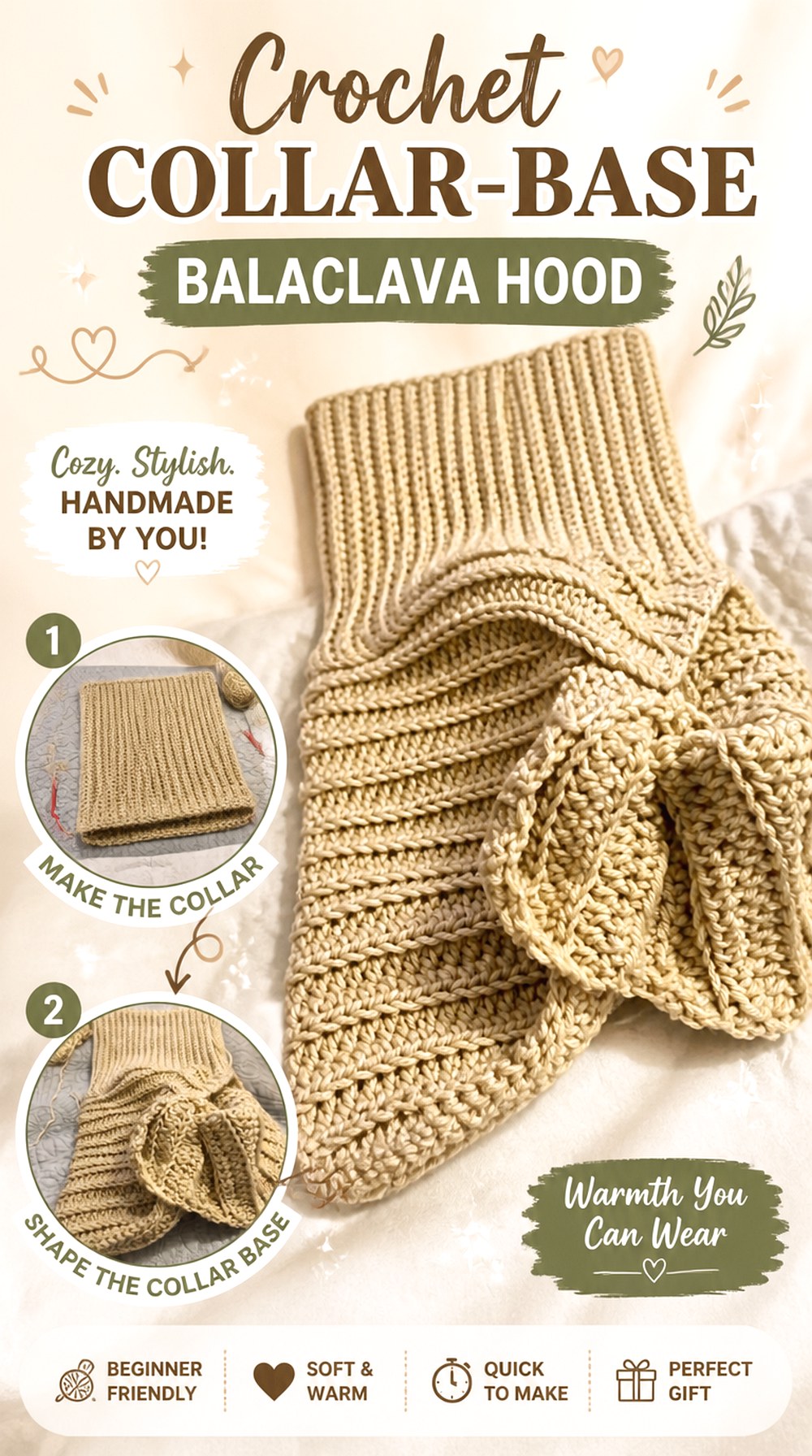
SAVELife by Susan’s version begins with a collar and develops into a hood, giving the neck section a stronger role in the overall construction. The creator describes the project as a warm hood with a collar, and the video’s chapters separate the collar, hood increases, straight hood section, and final joining.
That makes this a useful choice for anyone comparing a balaclava with substantial neck coverage against shorter styles that function primarily as headwear. Instead of thinking only about head circumference, consider how the lower section interacts with sweaters, coats, and other collars. The hood-and-collar relationship is the defining feature here.
Check the Collar Against the Clothes Beneath It
A collar that feels comfortable over a thin shirt may sit differently over a sweater or under a zipped winter coat. During fitting, test the layer combination you expect to wear most often. You are looking for enough room to move your head comfortably without creating so much bulk that the collar bunches underneath outerwear.
Hood Increases Affect More Than Crown Width
The tutorial specifically includes a hood-increase stage before moving into a straighter hood section. Visually, that transition helps determine how the fabric travels from neck to head. If you are adapting the concept, compare the hood profile while worn instead of evaluating the piece only when it is laid flat.
Original Tutorial and Creator Credit
Creator: Life by Susan | Crochet
6. Crochet Moss Stitch Turtleneck Balaclava
 SAVE
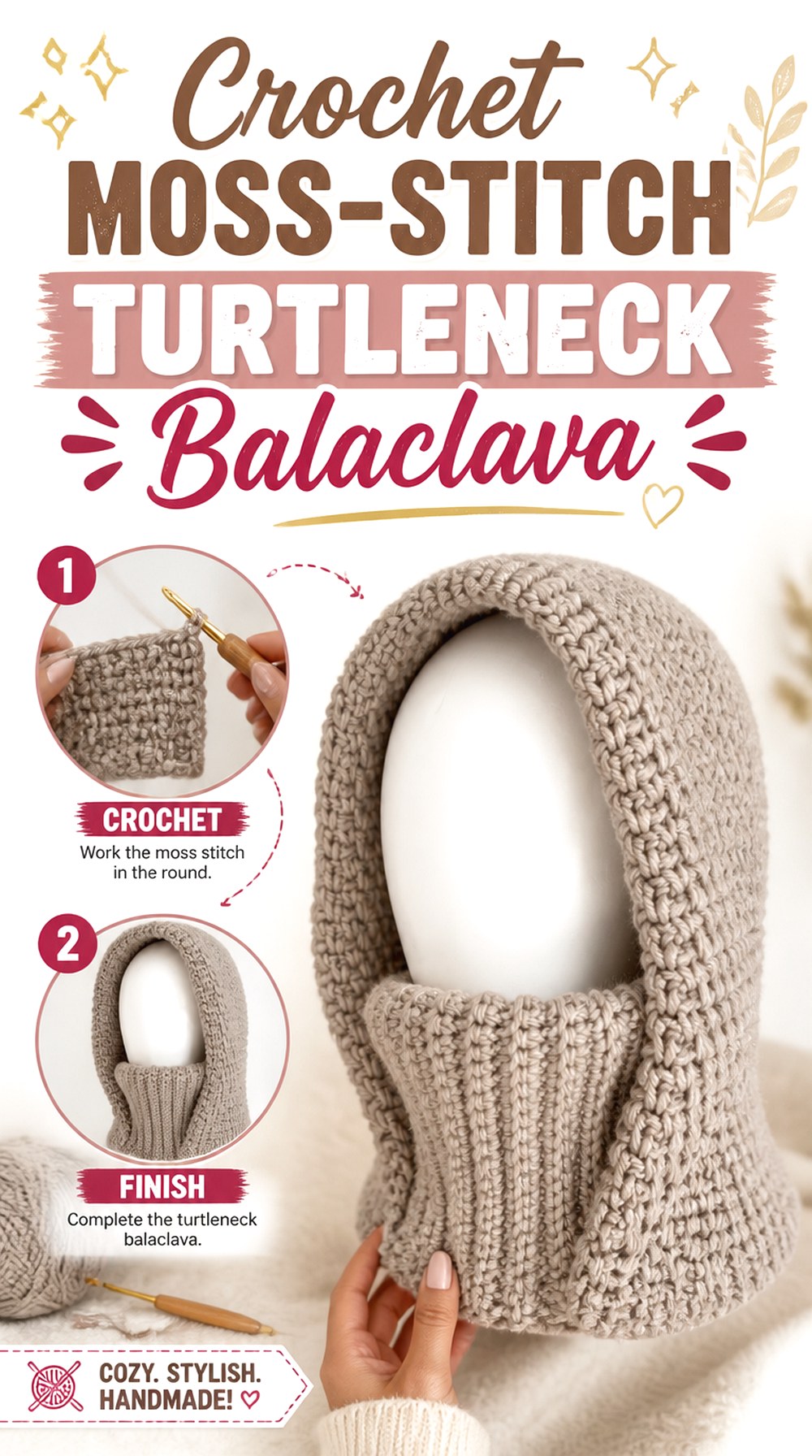
SAVEThis version combines a turtleneck-style base with a moss-stitch hood, producing a more garment-like balaclava than the compact ski-mask designs. Diving Ducks Crochet presents the project specifically as a moss-stitch balaclava turtleneck hoodie, with separate stages for the neck tube, hood increase, closing, finished result, and styling.
Choose this idea if neck coverage and visible texture are both priorities. The moss stitch gives the surface a different rhythm from strongly ribbed versions, while the tall lower section can stand in for part of what a separate cowl might otherwise do. It is therefore worth judging as both headwear and a neck layer.
Moss Stitch Gives the Surface a Softer Visual Rhythm
This texture does not create the same pronounced vertical channels as a knit-look ribbed balaclava. If stitch definition is part of the appeal, compare several yarns in a small swatch and view them from normal wearing distance. Highly variegated color can make a subtle texture less obvious, while a simpler palette may let the stitch pattern become the main visual feature.
The Turtleneck Changes Your Outerwear Options
A substantial neck tube can provide useful coverage, but it also occupies space beneath a coat. If you regularly wear high-neck outerwear, test the two pieces together before deciding that more neck length is automatically better. A lower jacket neckline may showcase the crochet turtleneck, whereas a closely zipped coat may compress or fold it.
Keep Hood Ease Separate From Neck Fit
The neck and hood solve different fit problems. A comfortable neck tube does not guarantee that the crown, face opening, or transition into the hood will suit you. Check each area independently as you work and rely on the creator’s exact construction for the pattern-specific shaping rather than trying to infer it from the finished photo.
Original Tutorial and Creator Credit
Creator: Diving Ducks Crochet
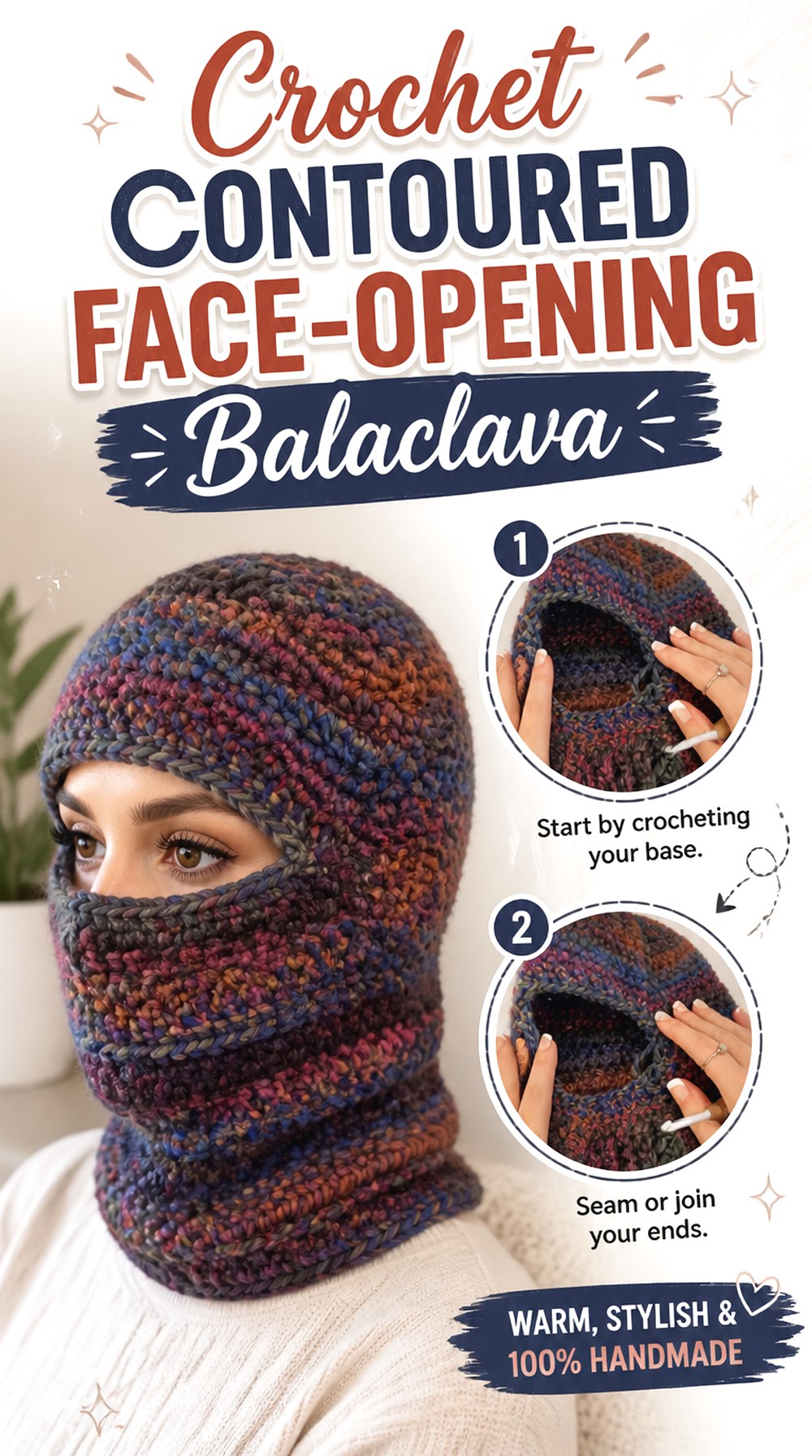
7. Crochet Contoured Face Opening Balaclava
 SAVE
SAVEBrittanyalicecrochet’s tutorial builds a conventional balaclava through several shaped sections, with multiple try-on checkpoints included in the video’s chapter structure. That makes this a useful middle ground between a very loose hood and the smaller eye-area opening of a full ski mask.
The finished style keeps a recognizable balaclava outline without relying on granny squares, a long scarf, or an exaggerated turtleneck. If your main priority is learning how a shaped hood develops around the head and face, this example is particularly relevant. It also demonstrates why fitting during construction is more informative than waiting until every edge has been completed.
Try-On Points Help Catch Proportion Problems Earlier
The creator includes several try-on moments throughout the tutorial. Use those pauses for more than checking whether the piece technically fits over your head. Look at where the opening begins, how the crown sits, and whether the lower section reaches the intended point on your neck. Small adjustments are easier to evaluate before later finishing locks the proportions together.
Face Shape Can Change How the Same Opening Looks
Two people with the same head circumference can prefer different amounts of exposure around the cheeks or chin. That is why finished measurements alone cannot describe every comfort issue. Compare the opening against your own face while keeping the hood level and untwisted; do not pull one edge aggressively into place just to match a photograph.
Original Tutorial and Creator Credit
Creator: brittanyalicecrochet
8. Crochet Knit Look Ribbed Balaclava
 SAVE
SAVEIf you like the vertical, stretchy appearance often associated with knitted accessories, yassuck’s crochet balaclava is an especially useful comparison. The creator explicitly describes the result as looking knit and breaks the project into separate panels, top closure, collar construction, and face ribbing.
The strong ribbed texture makes this project visually distinct even from other close-fitting hoods. It is a good direction for a solid or restrained palette where the fabric itself becomes the main design feature. Because the collar and face edge are both prominent, consistent tension matters throughout rather than only in the central hood panels.
Vertical Ribbing Can Change the Perceived Shape
Strong vertical lines naturally draw attention from crown to neck, making a simple color feel more dimensional. Before choosing a highly speckled or self-striping yarn, decide whether you want the color or the rib structure to dominate. A swatch viewed both stretched and relaxed can reveal how clearly the ribs remain visible during normal wear.
Panel Alignment Matters at the Top
A paneled construction places extra importance on matching edges before final joining. If corresponding sections are not the same length, the crown can twist or pull toward one side. Compare the panels while they are relaxed on a flat surface, then pin or temporarily align them before making a permanent seam. This is a general assembly checkpoint rather than a substitute for the creator’s joining method.
Test the Collar Before Finishing Its Join
The video includes both construction and try-on points around the collar. A comfortable collar should work with the head opening rather than becoming a second tight point that makes the balaclava awkward to pull on. Check that relationship before hiding ends, particularly if your yarn has less stretch than the tutorial’s fabric.
Original Tutorial and Creator Credit
Creator: yassuck
9. Crochet Four Square Tie Balaclava
 SAVE
SAVELarge granny squares create a bolder patchwork effect than the mini-motif project earlier in the collection. Vivi e cuci’s tutorial uses four granny squares and finishes the design with edging and a strap, making the lower portion visually adjustable and giving the balaclava a clear handmade, modular identity.
This is a strong choice if you want each motif to remain easy to see once the piece is worn. Because there are fewer, larger squares, individual color decisions carry more visual weight. The strap is another important distinction: it changes how the front is styled and secured compared with an uninterrupted turtleneck or a simple open neck.
Four Large Squares Make Every Motif More Prominent
With a small motif repeated many times, minor color variations merge into a broader pattern. Four large squares behave differently: each one occupies a substantial part of the finished hood. Lay them out in the proposed orientation before joining and check which colors will frame the face, sit at the crown, and appear from the side.
Verify Square Measurements Before Assembly
The video’s chapters include a specific granny-square measurement stage before joining. Follow that logic even if you choose another yarn. Large motifs that differ noticeably in size can make the hood pull unevenly, and the effect is difficult to disguise afterward. Block and compare them before committing to the final arrangement.
A Tie Changes Both Appearance and Practical Use
The strap allows the lower area to function differently from a fixed cowl. Think about whether you prefer the tie visible at the front or styled more discreetly, and make sure the finished length and placement feel comfortable around other clothing. Avoid excessively long loose cords when the garment is intended for a child or for activities where dangling ties could snag.
Original Tutorial and Creator Credit
Creator: vivi e cuci
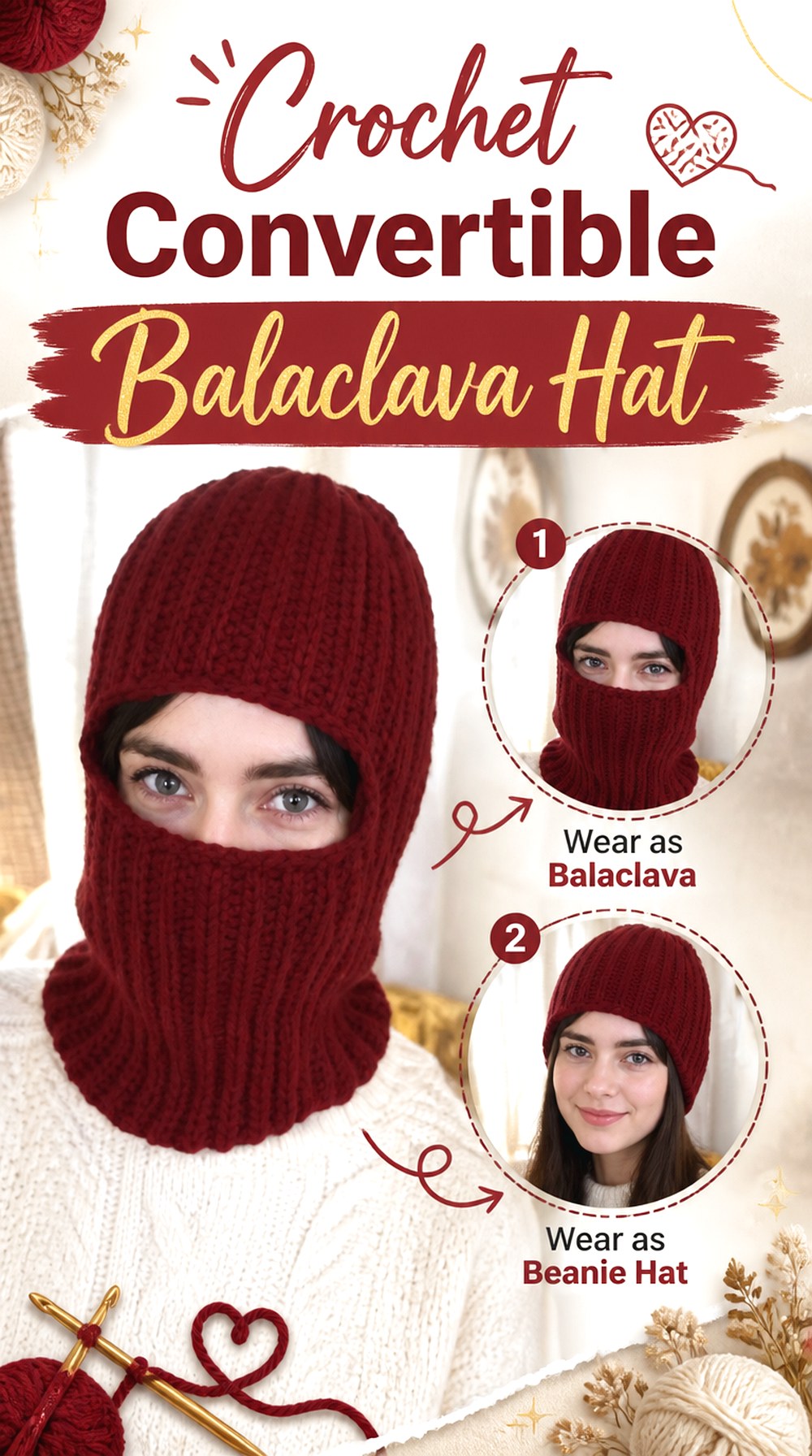
10. Crochet Convertible Balaclava Hat
 SAVE
SAVEA convertible design solves a different problem from the other nine projects: Michelle Jasek’s balaclava can also be styled as a hat. The creator presents the video as an experimental make rather than a conventional polished tutorial and explicitly notes that the project was developed while filming.
That distinction matters. This is best approached as inspiration for someone comfortable watching a maker work through fitting decisions, not as the strongest choice for a reader who wants a highly standardized pattern presentation. The convertible concept is nevertheless valuable because it asks whether you actually want a balaclava to stay in hood form every time you wear it.
Convertible Styling Rewards Flexible Fabric
A piece that changes from balaclava to hat has to behave well in more than one arrangement. Very rigid fabric may preserve structure but feel bulky when folded or repositioned. If adapting the idea, swatch enough fabric to fold it over itself and check the thickness before deciding that a visually appealing yarn will also work well for the second wearing mode.
Treat the Video as Process-Led Guidance
Michelle Jasek clearly states that the video is not a regular tutorial and describes making the balaclava as the process unfolds. That makes it useful for observing problem-solving, but readers who need exact, predetermined sizing should choose a more formal tutorial from this list. Match the learning format to your confidence level rather than assuming every YouTube crochet video teaches in the same way.
Check Both Wearing Modes Before Finishing
A modification that improves the balaclava position might make the hat configuration bulkier, and the reverse can also happen. If you experiment with the convertible concept, test both forms before permanently finishing borders or seams. The aim is not simply for each mode to fit individually, but for the transition between them to remain comfortable and practical.
Original Tutorial and Creator Credit
Creator: Michelle Jasek
Which Crochet Balaclava Style Should You Choose?
| If you want… | Start with… | Main point to compare |
|---|---|---|
| Maximum facial coverage | Single-Opening Ski Mask | Opening position and close fit |
| Small colorful motifs | Mini Granny Square Hood | Motif consistency and joins |
| Bold patchwork | Four-Square Tie Balaclava | Large-square layout and tie |
| More crown room | Slouchy Balaclava Hood | Drape and extra volume |
| Strong neck coverage | Moss-Stitch Turtleneck | Hood-to-neck proportions |
| A built-in collar | Collar-Base Balaclava | Outerwear compatibility |
| Knit-like texture | Knit-Look Ribbed Balaclava | Rib stretch and panel alignment |
| A conventional fitted hood | Contoured Face-Opening Balaclava | Try-on checkpoints |
| A graphic detail on a clean shape | Checker-Accent Balaclava | Face ribbing and accent placement |
| Two wearing options | Convertible Balaclava Hat | Fit in both configurations |
Conclusion
The most useful way to choose among these crochet balaclava ideas is by deciding what the finished piece needs to do. For closer facial coverage, start with the ski-mask or fitted options. If you want relaxed layering, compare the slouchy, collar-base, and turtleneck versions. Granny-square designs make the motifs part of the construction, while the knit-look project puts texture first. The convertible version is the most flexible in styling but uses a more process-led teaching format.
Once you have chosen the silhouette, check the face opening, neck depth, fabric stretch, and outerwear compatibility before committing to major adaptations. Use the original tutorials near each project for their exact construction details.
Frequently Asked Questions
How do I decide between a crochet balaclava and a crochet hooded cowl?
Look first at the face opening and neck section. A closer balaclava generally treats the head and face fit as the main feature, while a hooded-cowl style can place more visual and physical volume around the neck. The terms sometimes overlap in tutorial titles, so rely on finished views rather than the label alone. Choose according to the amount of facial coverage and collar bulk you actually want.
Should a crochet balaclava fit tightly around the face?
Not necessarily. Ski-mask designs are intended to sit much closer than slouchy or hood-style versions. The important checkpoint is whether the opening remains comfortable and stable in the particular design you are following. Do not assume “tighter” automatically means better. Compare your measurements with the tutorial’s guidance, try the project on during construction when possible, and account for how the yarn stretches.
Can I use a different yarn from the one in a balaclava tutorial?
You can often substitute yarn, but a similar label category does not guarantee identical fabric. Thickness, elasticity, fiber, twist, and your own tension can change both fit and drape. This matters especially around a close face opening. Swatch first and compare gauge where the creator provides it. ABoC Studio, for example, specifically warns that changing hook and yarn choices changes sizing.
How can I check granny squares before joining them into a balaclava?
Block the motifs in the manner appropriate for the yarn, then compare several rather than measuring only one. Check width, height, corner shape, and whether the border round behaves consistently. Lay out the proposed hood before joining so you can examine color placement and approximate coverage. A small difference repeated through several motifs can shift seam lines or the final opening.
Is ribbing useful around a crochet balaclava face opening?
It can be. Ribbing provides a defined visual finish and may add useful stretch or recovery depending on the stitch and yarn. However, it also changes the final dimensions of the opening, so fit should be evaluated after considering the border rather than only the unfinished hood. If you substitute yarn, check how the ribbing behaves both relaxed and gently stretched before completing the entire edge.
What should I check if I plan to wear a balaclava under a winter coat?
Test the neck and crown with the actual outerwear whenever possible. A tall turtleneck can bunch beneath a high zipped collar, while an oversized hood may create excess bulk beneath another hood. A shorter fitted balaclava generally layers differently. Also consider glasses, hair volume, and any scarf you normally wear. The right project is the one whose shape works with your complete layering setup, not just when worn alone.