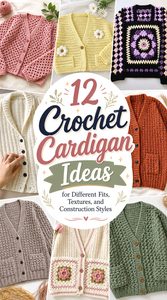
Crochet cardigans can be dramatically different even when they share the same open-front silhouette. One design may depend on dozens of patchwork pieces, while another starts with giant granny shapes, a raglan yoke, or a nearly rectangular body. Sleeve volume, cardigan length, fabric density, pockets, front bands, and motif placement also change how the finished garment feels and layers.
These 12 crochet cardigan ideas focus on those meaningful differences. You can compare a cocoon shape with a conventional drop shoulder, a long lace layer with a denser oversized cardigan, and statement granny constructions with quieter everyday designs. The planning notes also highlight where gauge, drape, weight, seams, and garment measurements deserve attention before you commit to a tutorial.
Quick List
- Crochet Patchwork Panel Cardigan
- Crochet Cocoon Cardigan with Ribbed Edges
- Crochet Seamless Raglan Layering Cardigan
- Crochet Long Side-Slit Lace Cardigan
- Crochet Relaxed Oversized Everyday Cardigan
- Crochet Open-Front Banded Cardigan
- Crochet Minimal Drop-Shoulder Ribbed Cardigan
- Crochet Four-Giant-Square Granny Cardigan
- Crochet Slouchy Pocket Cardigan
- Crochet Striped Balloon-Sleeve Cardigan
- Crochet Flower-Appliqué Open Cardigan
- Crochet Pink Granny Hexagon Cardigan
Choose the Construction Before Choosing the Color
Color is easy to change; construction is what determines how a cardigan behaves. A patchwork design divides the garment into many small units, so motif size and joining consistency become important. Hexagon and giant-granny constructions create fewer, larger shapes and can produce a roomier silhouette. Panel cardigans give clearer control over individual body and sleeve dimensions, while a top-down raglan lets the yoke establish the shoulder and upper-body fit before the lower body is completed.
A cocoon cardigan is different again because much of its relaxed shape comes from folding or joining a broad crochet fabric into a wearable form. Decide which construction process sounds manageable before getting attached to a color palette. It is much easier to recolor a suitable cardigan than to force an unsuitable construction to fit your expectations.
Fit Checkpoints That Matter on Crochet Cardigans
Bust measurement alone does not tell you whether a cardigan will feel right. Check shoulder width, armhole depth, upper-arm room, sleeve length, body length, and the amount of front coverage the design provides. Oversized cardigans intentionally allow extra space, while cropped or more conventional shapes can make a small difference in gauge much more noticeable.
For motif garments, measure the blocked motifs rather than relying on their unblocked dimensions. As a planning example, four blocked squares measuring 5 inches across would span about 20 inches before joins, edging, and garment ease are considered. That is only layout math, not a universal sizing formula. For sized tutorials, use the creator’s own measurement and gauge information rather than assuming your usual store-bought size will translate directly to crochet.
Yarn Weight, Drape, and Finished Garment Weight
Two yarns labeled with the same weight can still create very different cardigans. A soft, flexible yarn may make a long cardigan fall smoothly, while a firmer fiber can emphasize stitch definition and hold a boxier shape. Dense crochet, textured stitches, large collars, pockets, and many joined motifs can also add noticeable finished weight.
Swatching is especially useful when substituting yarn. Check not only whether the measurements match but whether you like how the fabric bends, stretches, and recovers. Open lace needs enough stability to keep its pattern readable, while ribbed cuffs and front bands need enough resilience to frame the garment. For care, follow the actual yarn label and consider storing heavier handmade cardigans folded rather than leaving all their weight on a narrow hanger.
1. Crochet Patchwork Panel Cardigan
 SAVE
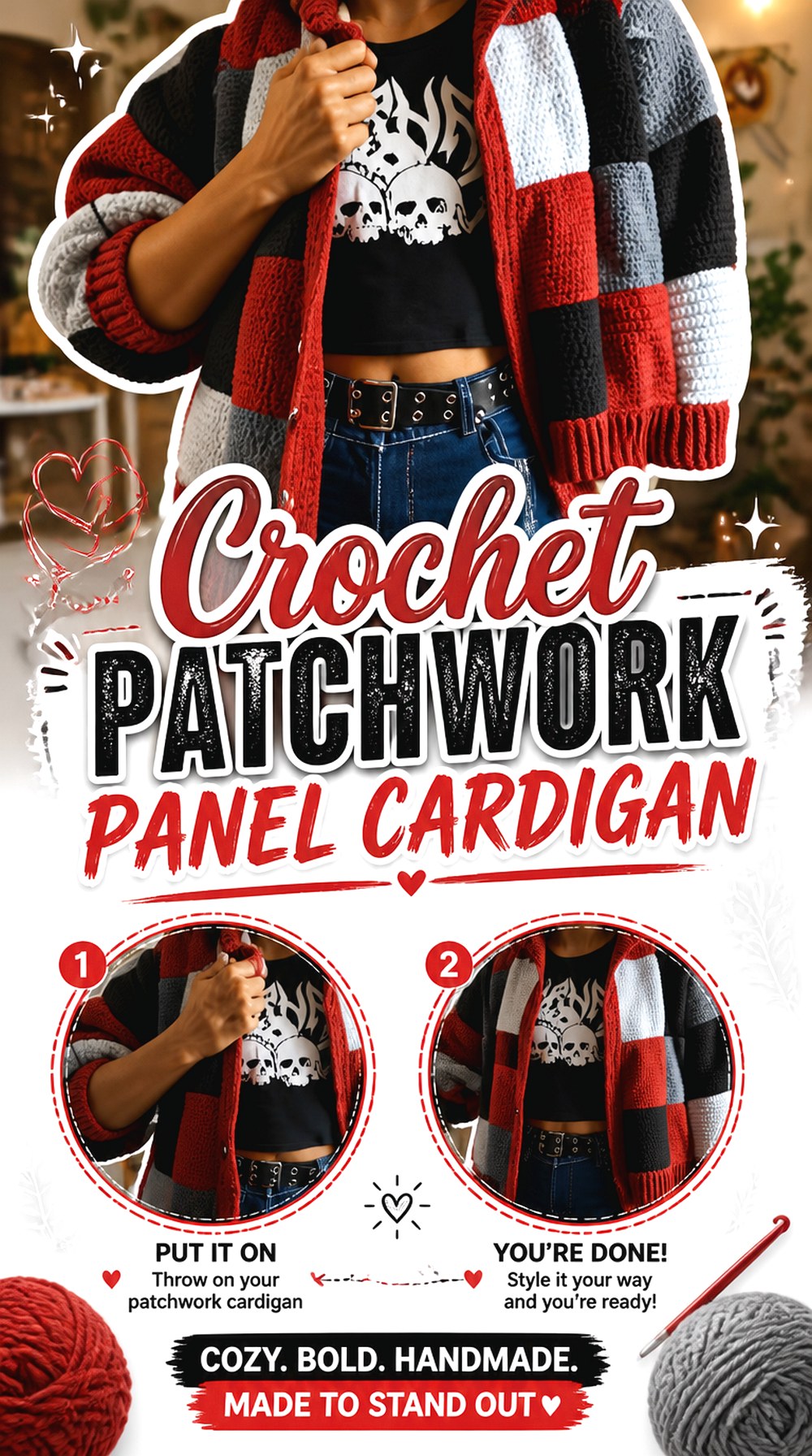
SAVEThis cardigan turns the entire garment into a patchwork composition rather than treating color as a small accent. Individual crochet blocks create the body and sleeves, with ribbed finishing and a buttoned front bringing the separate pieces together visually. It is a strong choice when planning colors and arranging blocks sounds as enjoyable as making the garment itself. Ikoxun’s tutorial visibly covers preparation, measurements, square planning, assembly, ribbing, the button band, collar, and buttons, making this much more construction-focused than a simple rectangular cardigan.
Block Size Controls More Than the Patchwork Look
A patchwork cardigan can only assemble cleanly when corresponding blocks have compatible dimensions. Measure completed and, where appropriate, blocked pieces before committing to the final layout. If several blocks differ, joining tension cannot reliably hide the problem without puckering or pulling. Correcting inconsistent pieces before assembly is usually cleaner than asking seams to compensate later.
Lay Out the Entire Color Plan Before Joining
Because every block remains visible in the finished garment, accidental color clustering becomes obvious. Arrange the pieces as a complete back, fronts, and sleeves before permanent joining. Check the arrangement from a few feet away as well as close up. Strong contrast can emphasize the patchwork grid, while closely related shades make the construction read more softly.
Buttons Make the Front Edge a Structural Feature
This version includes a button band rather than leaving the fronts completely open. That means edge tension and alignment matter: one front should not become noticeably longer than the other during finishing. If you change yarn or button size, confirm that the band still lies flat and that the chosen buttons work comfortably with the openings rather than relying on appearance alone.
2. Crochet Cocoon Cardigan with Ribbed Edges
 SAVE
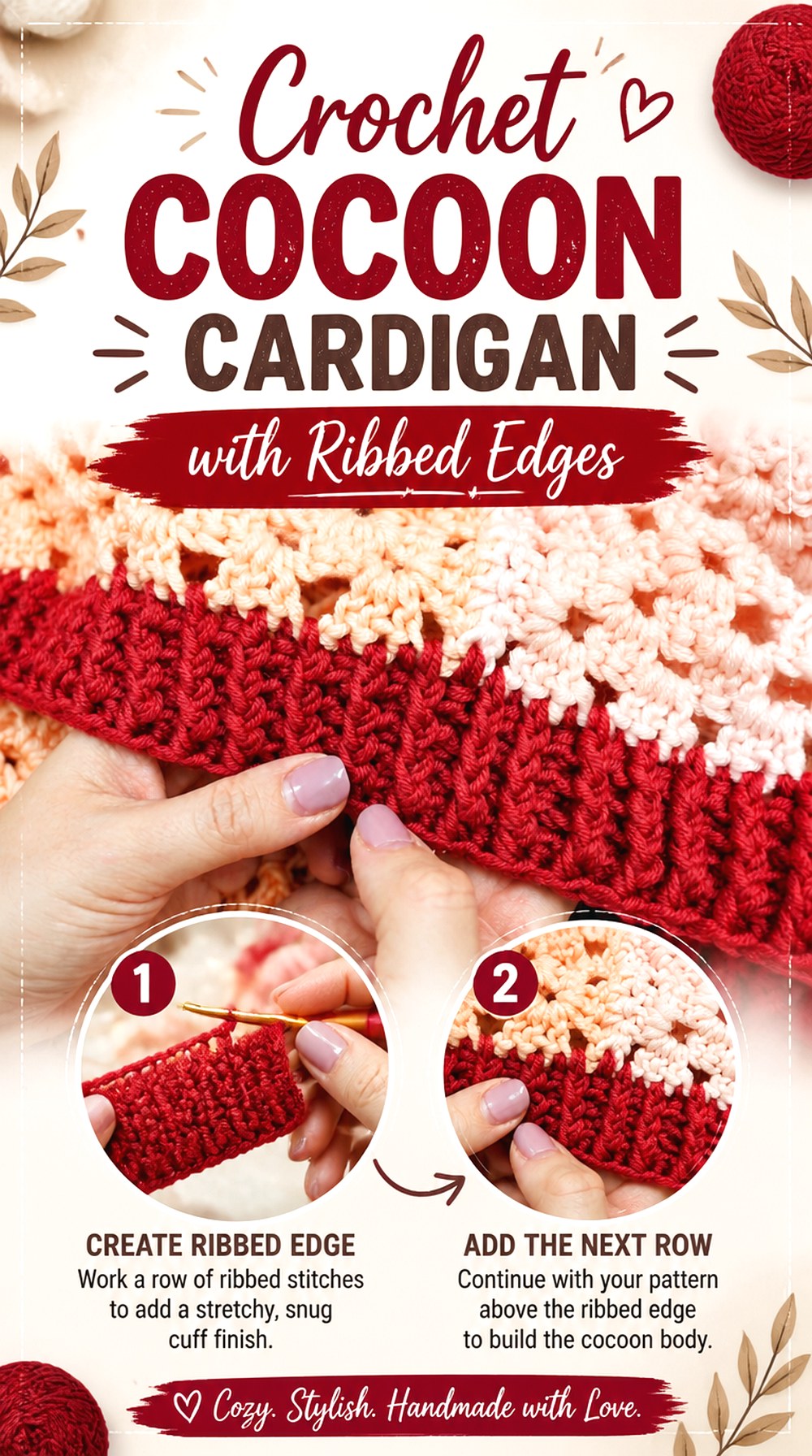
SAVEA cocoon cardigan prioritizes a broad, relaxed body rather than a tailored shoulder line. Bella Coco’s tutorial works alongside a pattern and shows the fabric coming together through joined sections before cuffs and outer ribbing complete the shape. The finished result is well suited to readers who want an enveloping layer and prefer less conventional garment shaping. Because a cocoon style distributes fabric differently from a fitted cardigan, choosing it should be about enjoying that generous drape rather than expecting it to imitate a standard set-in-sleeve sweater.
The Arm Opening Deserves an Early Comfort Check
Cocoon construction can create plenty of body room while the arm opening remains the more restrictive area. Before finishing every edge, compare the opening with the clothing you expect to layer underneath. A cardigan intended for a T-shirt may need less room than one you plan to wear over a substantial long-sleeve top.
Ribbing Helps Define an Otherwise Soft Silhouette
The cuffs and perimeter finishing provide visual control around a shape that is intentionally loose. If substituting yarn, swatch the ribbing as well as the main fabric. A yarn with little recovery can make cuffs spread, while an overly stiff substitute may reduce the relaxed effect that makes a cocoon cardigan distinctive.
Pattern Terminology Is Worth Confirming First
Bella Coco notes the distinction between UK and US crochet terminology in her tutorial resources. If you normally follow US instructions, confirm the terminology used by the accompanying pattern before starting. A stitch-name misunderstanding in a large garment creates much more rework than catching the difference during a small swatch.
Original Tutorial and Creator Credit
Creator: Bella Coco
3. Crochet Seamless Raglan Layering Cardigan
 SAVE
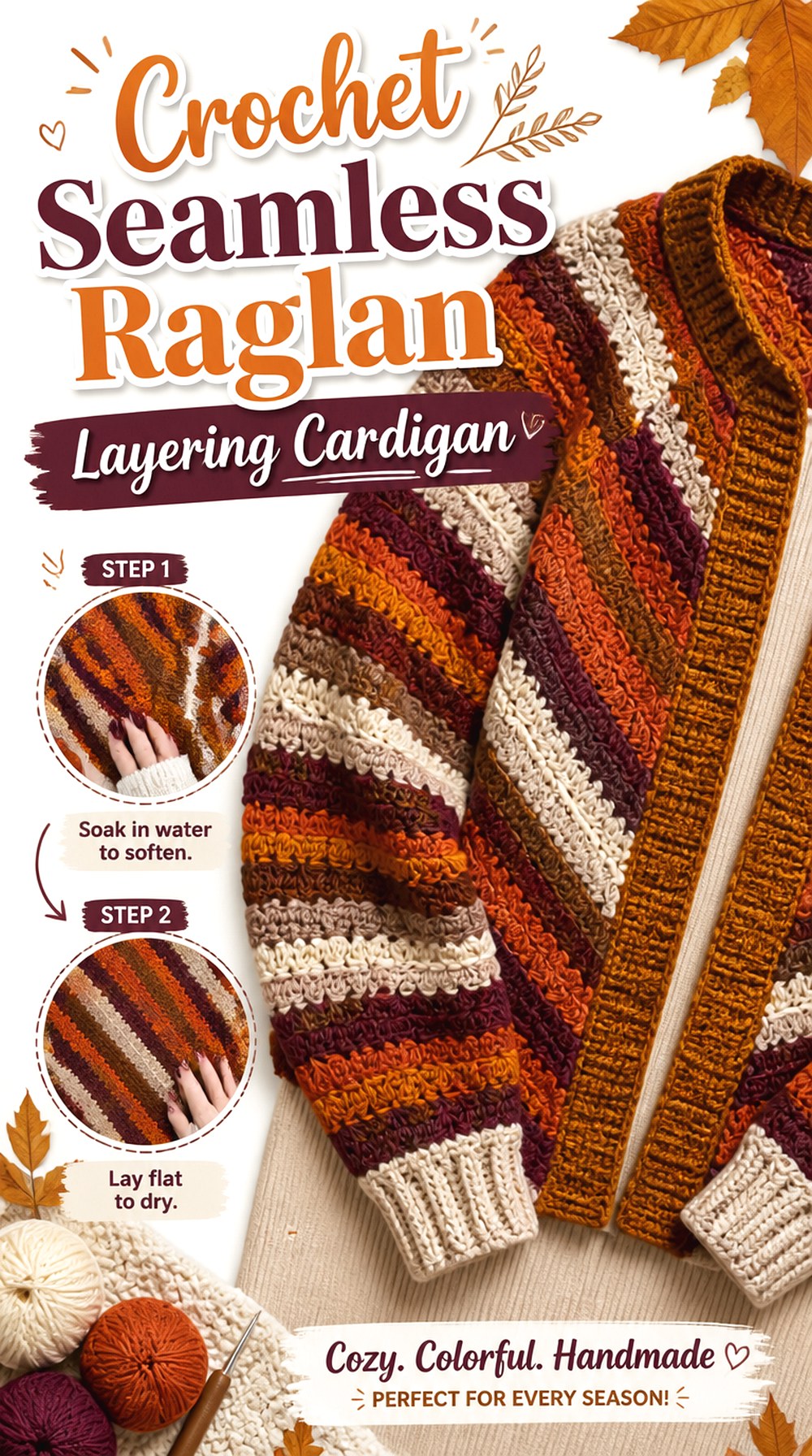
SAVEA top-down raglan changes the garment-making experience because the upper body develops as a connected yoke instead of separate front, back, and sleeve panels. MJ’s Off The Hook Designs uses a textured Suzette-stitch fabric, ribbed finishing, and offers long and shorter variations in the source pattern, with optional features including a hood and pockets. The pattern information covers sizes XS through 5X and identifies different yarn requirements for the long and short versions. This route makes sense for crocheters who want more integrated shaping and fewer major body seams.
Raglan Depth Determines When the Sleeves Separate
The yoke needs enough depth for comfortable movement before the sleeve sections are divided from the body. Do not judge that point only by how the piece looks lying flat. Compare the creator’s size information and gauge carefully, because a difference in row or stitch gauge can alter both upper-body width and armhole depth.
Long and Short Versions Serve Different Layering Needs
A longer cardigan gives more coverage and naturally creates more finished garment weight. A shorter buttoned version changes the proportions and can be easier to pair with higher-waisted bottoms. Decide which silhouette you actually want before buying yarn, since the creator lists substantially different requirements for the long and short versions.
Optional Pockets and a Hood Add More Than Decoration
A hood adds fabric around the neckline and upper back, while pockets add weight to the fronts. Those choices influence how the finished cardigan hangs. If you add either option, keep the creator’s construction guidance in view rather than treating them as independent embellishments that can be resized freely without affecting balance.
Original Tutorial and Creator Credit
Creator: MJ’s Off The Hook Designs
4. Crochet Long Side Slit Lace Cardigan
 SAVE
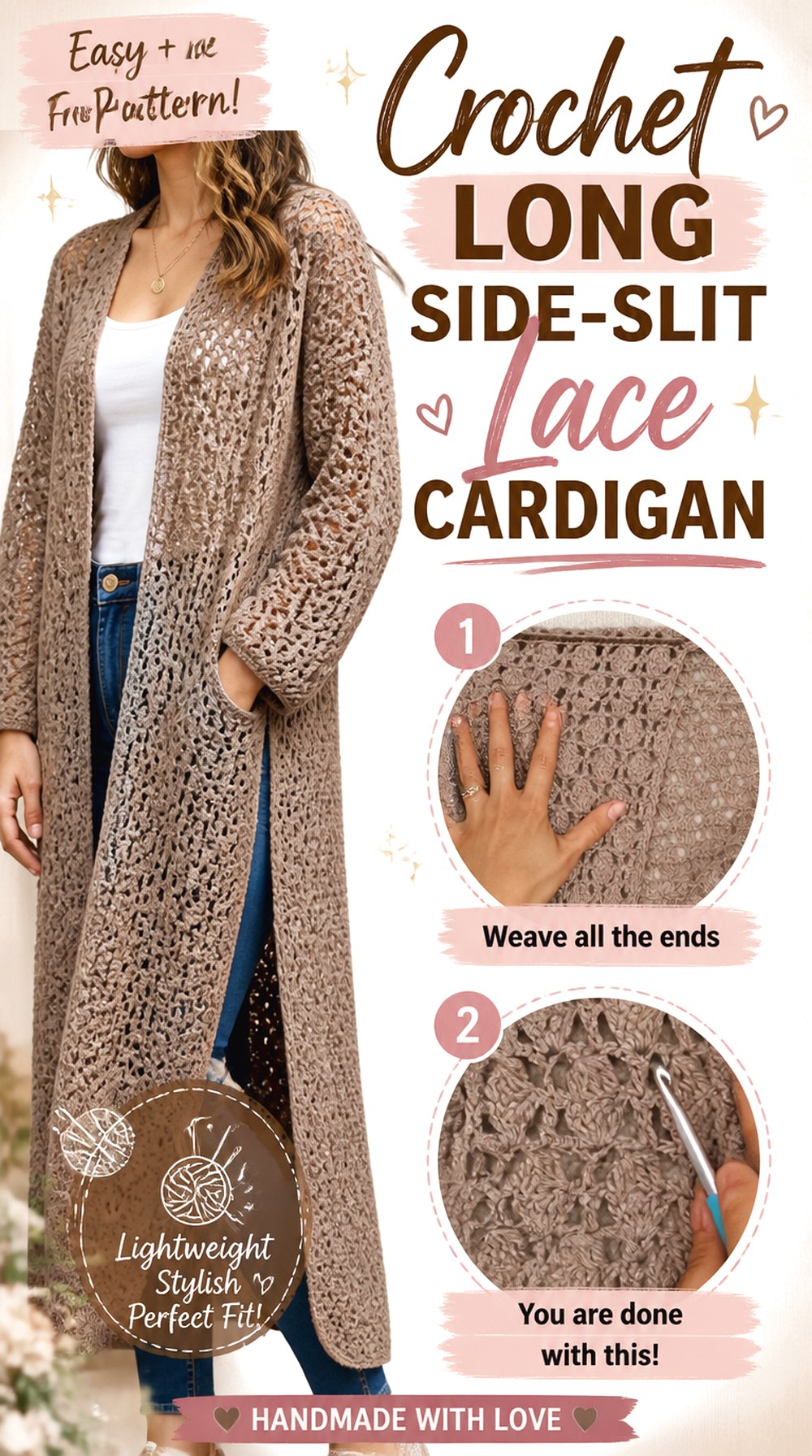
SAVEThis long cardigan combines a mixed lace body with simpler sleeves and pronounced side slits, giving it a much lighter visual structure than the dense patchwork and oversized options above. KnitcroAddict describes the design as bottom-up, with the front and back worked separately before shoulder joining, sleeves added, side seams completed, and edging worked around the garment. The tutorial also discusses making the cardigan with or without the side slits and adjusting length. Sizes XS through XXL are provided in the written source.
Side Slits Change Movement at the Hem
A long cardigan without slits can behave like one continuous tube of fabric around the lower body. Open sides let the front and back move more independently. If you change the length, consider where you want that opening to begin rather than assuming the original proportion will automatically suit a significantly shorter or longer version.
Lace Gauge Needs More Than a Quick Width Check
Open stitch patterns can change noticeably after blocking. The creator provides separate gauge information for the main patterned fabric and the sleeves, so treat those sections individually rather than expecting one swatch to represent the entire cardigan.
The Long Shape Makes Yarn Substitution More Visible
A long panel magnifies differences in drape. A substitute that is much stiffer may make the side slits flare rather than fall cleanly, while a very heavy yarn can pull downward over time. Match the intended gauge, then hang or handle a generously sized swatch long enough to judge how the fabric behaves under its own weight.
Original Tutorial and Creator Credit
Creator: KnitcroAddict
5. Crochet Relaxed Oversized Everyday Cardigan
 SAVE
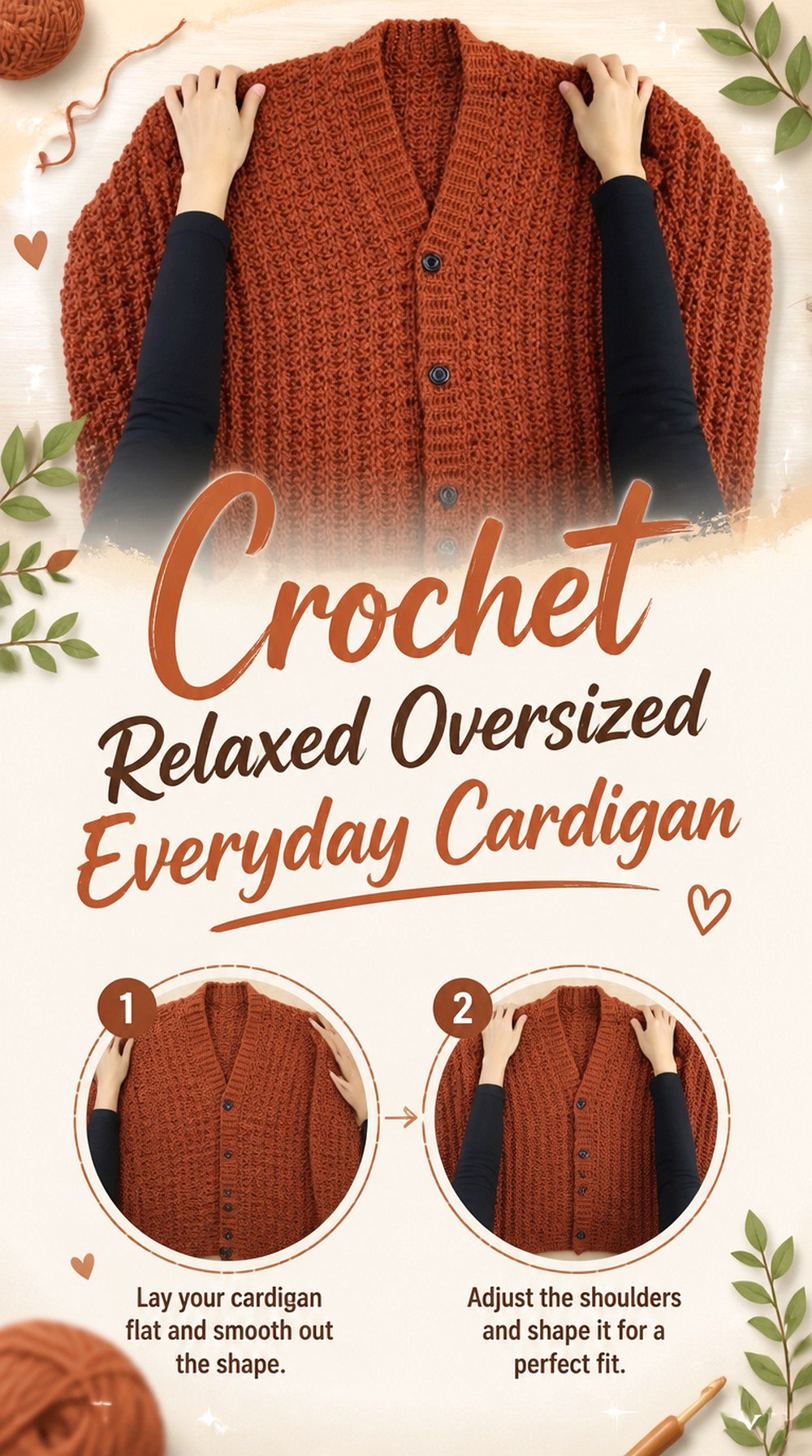
SAVEChenda DIY’s cardigan is centered on an oversized, uncomplicated silhouette rather than motif arrangement or dramatic lace. That makes it useful as a contrast to the more specialized constructions in this collection. The finished garment is roomy and designed as an easy throw-on layer, with the tutorial presented as a complete cardigan project rather than an inspiration clip. An oversized style like this is a good candidate when you value ease of layering and a casual shape more than a close shoulder or waist fit.
Oversized Does Not Mean Every Measurement Can Be Ignored
Extra body room can disguise small differences in width, but sleeve length and arm placement still matter. Compare your measurements with the developing garment rather than simply adding more width everywhere. Too much additional fabric at the upper body can shift the shoulder line farther down the arm than you intended.
Decide How Much Clothing Will Sit Underneath
A cardigan that feels comfortable over a tank may fit differently over a sweatshirt. Think about the thickest realistic layer you plan to wear with it. That decision gives “oversized” a practical meaning and helps prevent adding unnecessary bulk simply because the design is described as roomy.
Keep the Finishing Consistent With the Relaxed Shape
An oversized body looks most intentional when the edges remain even rather than stretched or wavy. Before final finishing, lay the cardigan flat and compare the two fronts, sleeve lengths, and side edges. Correcting an obvious mismatch before weaving in every end gives you more flexibility.
Original Tutorial and Creator Credit
Creator: Chenda DIY
6. Crochet Open Front Banded Cardigan
 SAVE
SAVEThis TCDDIY cardigan uses distinct front panels, a back panel, sleeves, cuffs, and a separate finishing band, creating a more traditionally assembled garment than the cocoon or hexagon choices. The tutorial’s front-panel sections include shaping before the shoulders, so the front opening is not simply two untouched rectangles. A defined band frames the neckline and opening and gives the finished piece a cleaner architectural edge. The creator’s source specifies category 4 yarn for the demonstrated cardigan and shows each major assembly stage.
Front Shaping Needs to Match on Both Sides
When right and left fronts are made separately, small inconsistencies become visible around the neckline. Compare them before attaching the shoulders. If one side has a different length or shaping angle, fixing it at that point is much cleaner than trying to disguise the difference with the final front band.
A Separate Band Can Expose Uneven Edge Tension
A border running along a long opening acts almost like a ruler: waviness becomes easy to see. Space your pickups or attachments according to the creator’s method and avoid stretching the cardigan edge while working. Pause periodically to lay it flat and check that the band is neither drawing the fronts upward nor flaring outward.
Sleeve and Cuff Proportions Work as a Pair
A cuff changes both the visual and practical sleeve length. Check the sleeve before and after accounting for the cuff depth rather than finishing the full sleeve length first and then adding an unexpected extra section. This is especially important when adapting the cardigan for shorter or longer arms.
Original Tutorial and Creator Credit
Creator: TCDDIY
7. Crochet Minimal Drop Shoulder Ribbed Cardigan
 SAVE
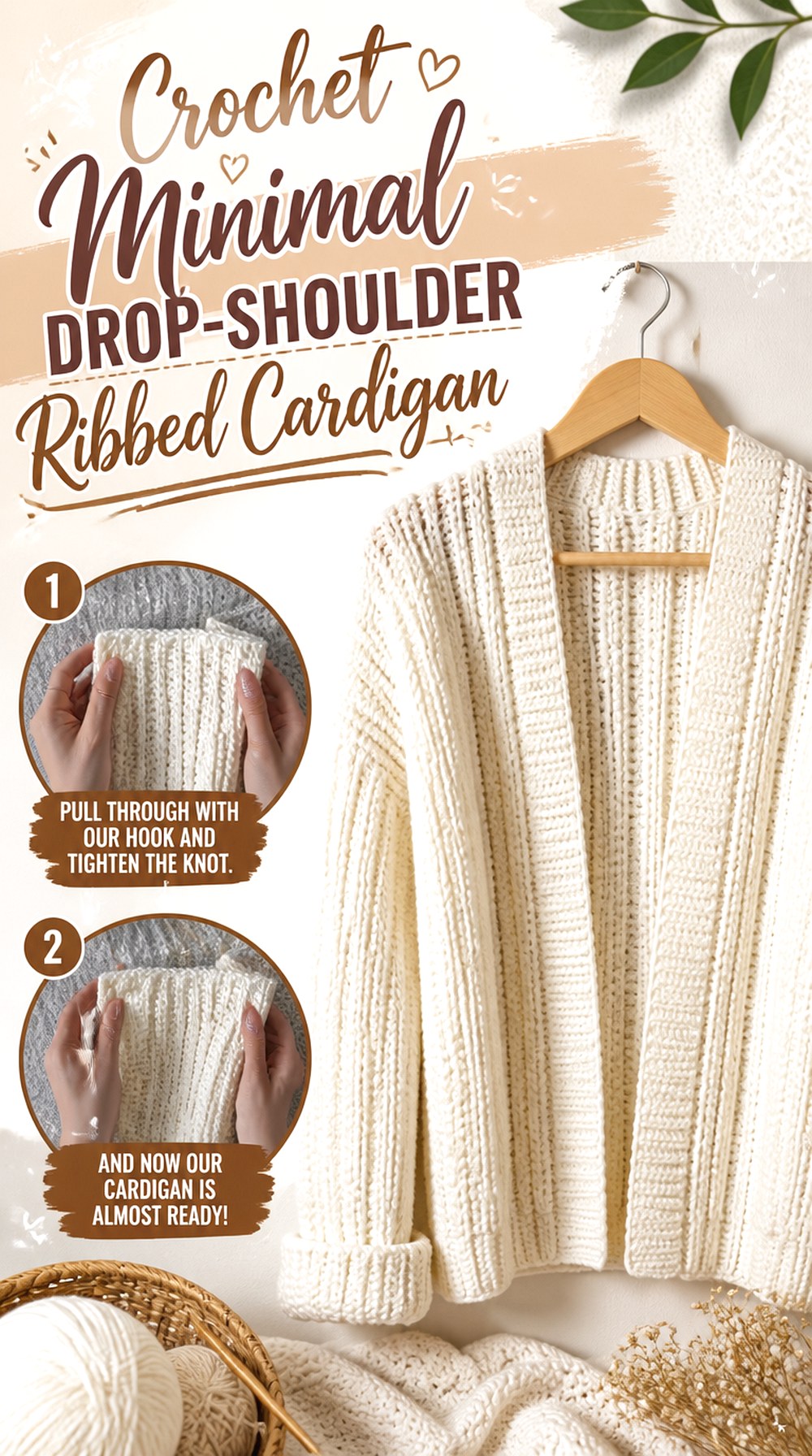
SAVEVivCrochets’ design is a streamlined drop-shoulder cardigan with ribbed finishes and a body construction that reduces the number of separate pieces. The creator describes the project as using one main stitch and three crocheted pieces rather than a conventional five-piece layout. That simplicity makes the finished shape the main attraction: a straightforward everyday cardigan without patchwork, pockets, lace panels, or decorative motifs competing for attention. It is a useful option when you want a neutral base for color changes or subtle yarn texture.
Drop Shoulders Shift the Sleeve Starting Point
Instead of fitting directly at the natural shoulder joint, this construction intentionally lets the shoulder line fall outward. Before deciding the body is too wide, look at the finished silhouette and consider how much drop is part of the design. Narrowing the body significantly could also change where the sleeves begin.
Ribbed Edges Need Enough Recovery
The ribbing is one of the few strong visual details, so yarn behavior matters. Stretch a ribbed swatch gently and see whether it returns toward its original width. If it remains permanently spread, the cuffs and edges may lose definition even when the main body fabric looks acceptable.
Fewer Pieces Make Symmetry Easier to Monitor
A reduced-piece construction gives you fewer seams, but it also means an error can travel across a larger section before you notice it. Check width and length periodically, especially around the points where the front and back portions divide. A quick measurement is easier than correcting a large connected panel later.
Original Tutorial and Creator Credit
Creator: VivCrochets
8. Crochet Four Giant Square Granny Cardigan
 SAVE
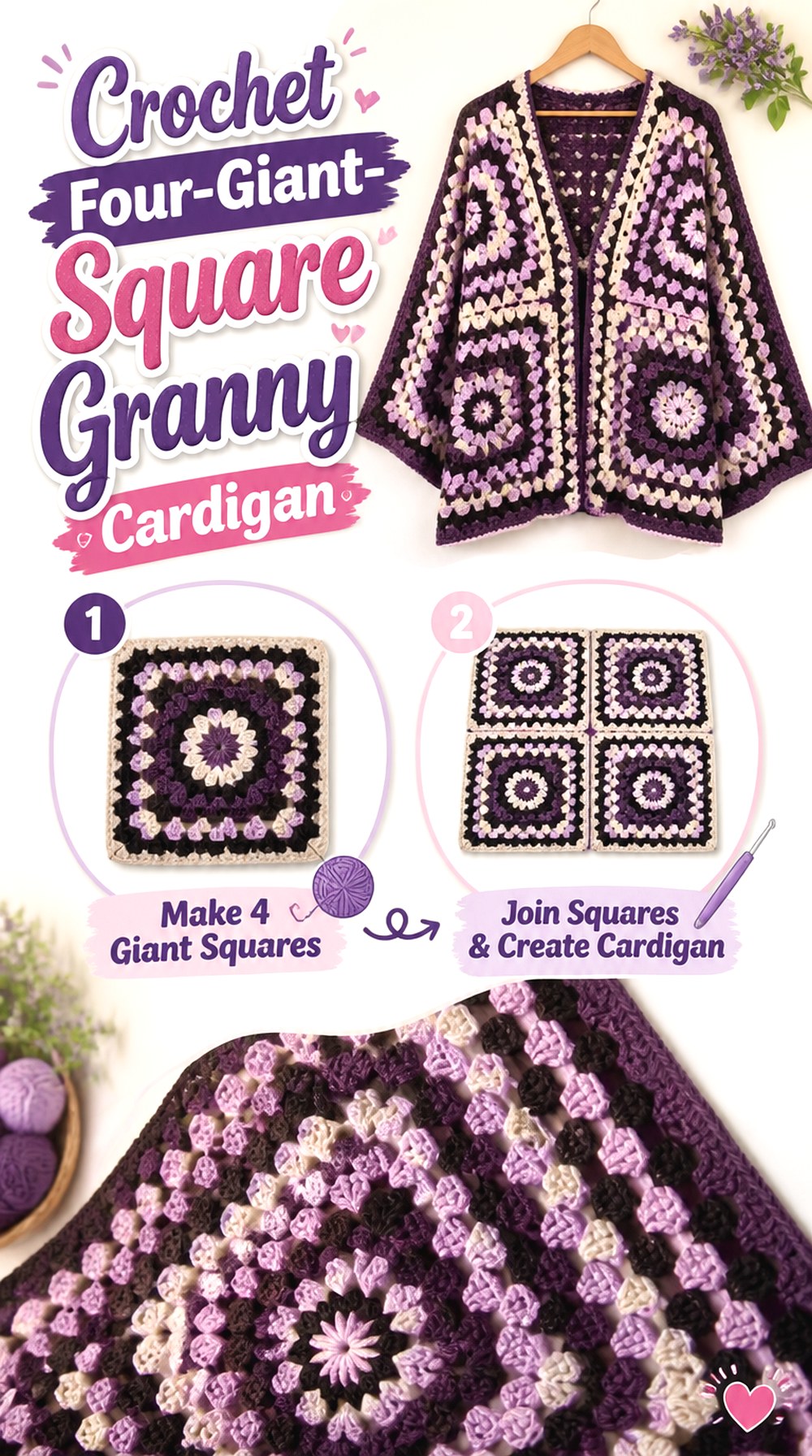
SAVEInstead of assembling a cardigan from many little motifs, this Yarnspirations project uses just four giant granny squares. The enlarged square becomes both a construction unit and the dominant visual element, so the garment feels bolder and less fragmented than conventional patchwork. Yarnspirations presents it as a complete cardigan tutorial and explicitly identifies the four-square construction. It is an appealing route if you like granny-style crochet but would rather manage a handful of large components than organize dozens of small pieces.
Giant Squares Amplify Small Proportion Changes
Adding another section to a small motif may barely affect a blanket layout, but enlarging a square that forms a major part of a garment can noticeably change width, sleeve placement, and length. Compare the developing square to the creator’s construction before assuming “one more round” is a minor adjustment.
Color Changes Become Large Graphic Decisions
With only four principal motifs, each color sequence occupies a large portion of the finished cardigan. Preview the palette at full scale where possible. A stripe that looks subtle in a small granny square can become a dominant band once the motif grows to garment size.
Check the Folded Shape Before Final Joining
Large squares can look surprisingly different once folded and positioned as cardigan pieces. Temporarily clip or loosely position the components before securing final seams. Check sleeve room, back coverage, and front opening at the same time rather than judging the project only as flat squares.
Original Tutorial and Creator Credit
Creator: Yarnspirations
9. Crochet Slouchy Pocket Cardigan
 SAVE
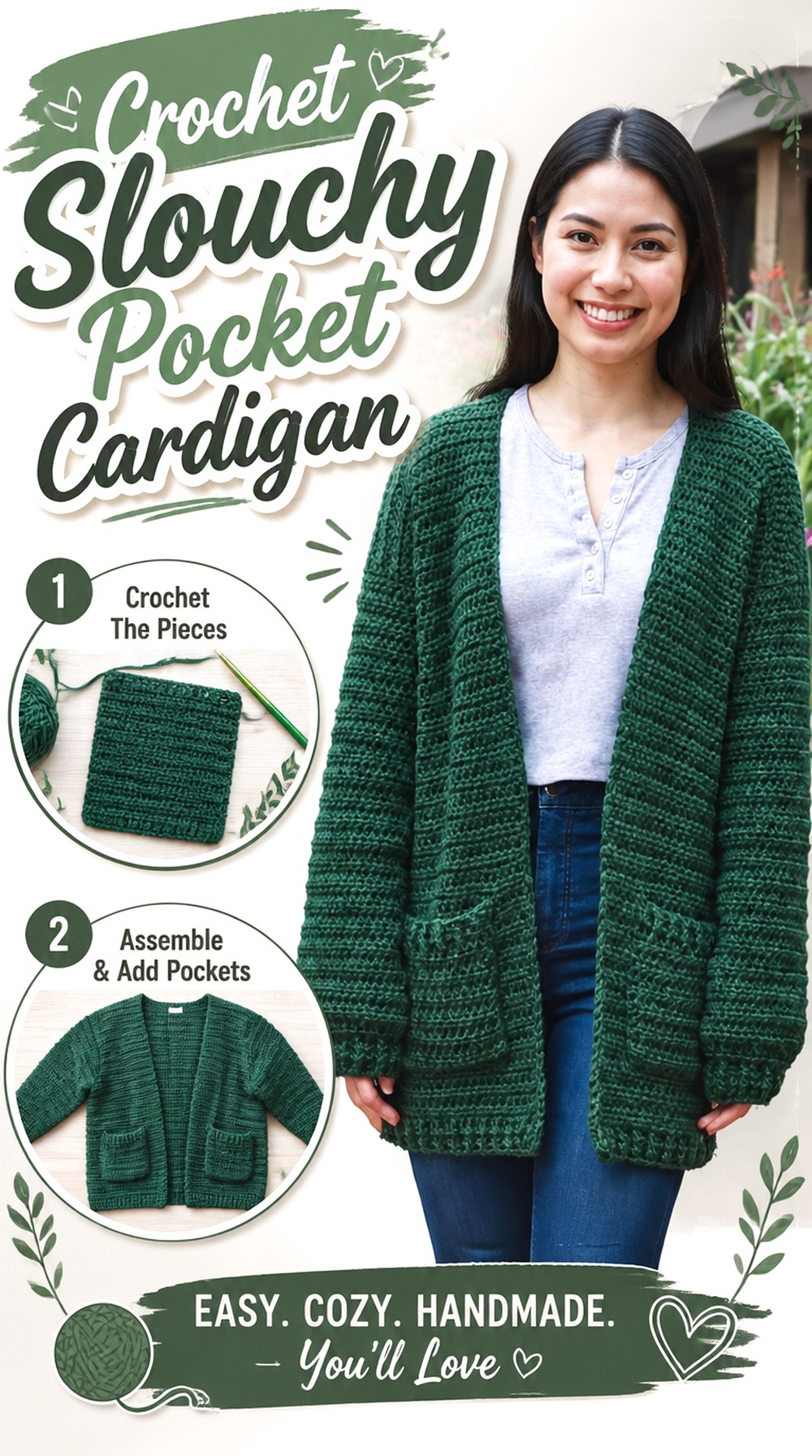
SAVEThe Briar-style cardigan from forthefrills combines a longer, oversized body with loose sleeves, ribbed finishing, and two visibly substantial patch pockets. Its construction differs from a standard five-panel cardigan because the back transitions into the two front sections within one main body piece; the sleeves are made separately and attached later. The creator provides sizes XS through 3XL in the tutorial information. This project makes sense when practical pockets and generous everyday coverage matter more than a cropped or fitted silhouette.
Pocket Placement Should Be Checked While Wearing the Body
Even when a pattern specifies placement, your arm length and preferred hand position can affect how natural the pockets feel. Before permanently attaching them, pin or mark their planned location and put the unfinished cardigan on. Confirm that both pockets sit level and that your hands reach them comfortably.
Large Pockets Add Weight to the Fronts
A patch pocket is another layer of crochet fabric, and anything placed inside adds more load. With a very soft or stretchy yarn substitute, watch for front edges pulling downward. Matching the pattern gauge and maintaining secure, even attachment around the pocket helps preserve the intended shape.
Length and Oversized Ease Work Together
Making an already roomy cardigan considerably longer can increase both coverage and weight. If you customize length, reassess how the fabric hangs before finishing the hem. A proportion that looks balanced at hip length may feel much more robe-like when extended substantially.
Original Tutorial and Creator Credit
Creator: forthefrills
10. Crochet Striped Balloon Sleeve Cardigan
 SAVE
SAVEThe Teatime Cardigan uses stripes and changing stitch texture to create surface interest while keeping a recognizable open-front cardigan shape. Its slightly oversized fit and balloon-style sleeves make it notably different from the straighter sleeves on several other projects here. Evelyn And Peter Crochet provides size information from XS through 5X on the accompanying written pattern and demonstrates a size small in the video, so readers using another size should keep the written instructions alongside the tutorial.
Stripe Placement Is Part of the Garment Design
Before substituting colors, look at where the stripe sections fall on the torso and sleeves. Replacing every original color is straightforward; changing the widths or rhythm of the stripe sections can alter the visual proportions. Sketch the palette first if you are working with several colors so one shade does not dominate unexpectedly.
Balloon Sleeves Need Room Without Excessive Weight
The fuller sleeve shape depends on extra fabric volume. A substantially heavier substitute yarn can make that fullness pull downward rather than gather softly toward the cuff. Swatch for both gauge and drape, and compare the upper-arm room specified by the actual pattern before adjusting the sleeve more broadly.
Use the Written Pattern for the Correct Size
The creator states that the video demonstrates size small while the blog contains the information for the complete XS–5X range. Watching alone is therefore not enough if you are making another size. Keep the appropriate size instructions visible so the visual demonstration supports, rather than replaces, the written numbers.
Original Tutorial and Creator Credit
Creator: Evelyn And Peter Crochet
11. Crochet Flower Appliqué Open Cardigan
 SAVE
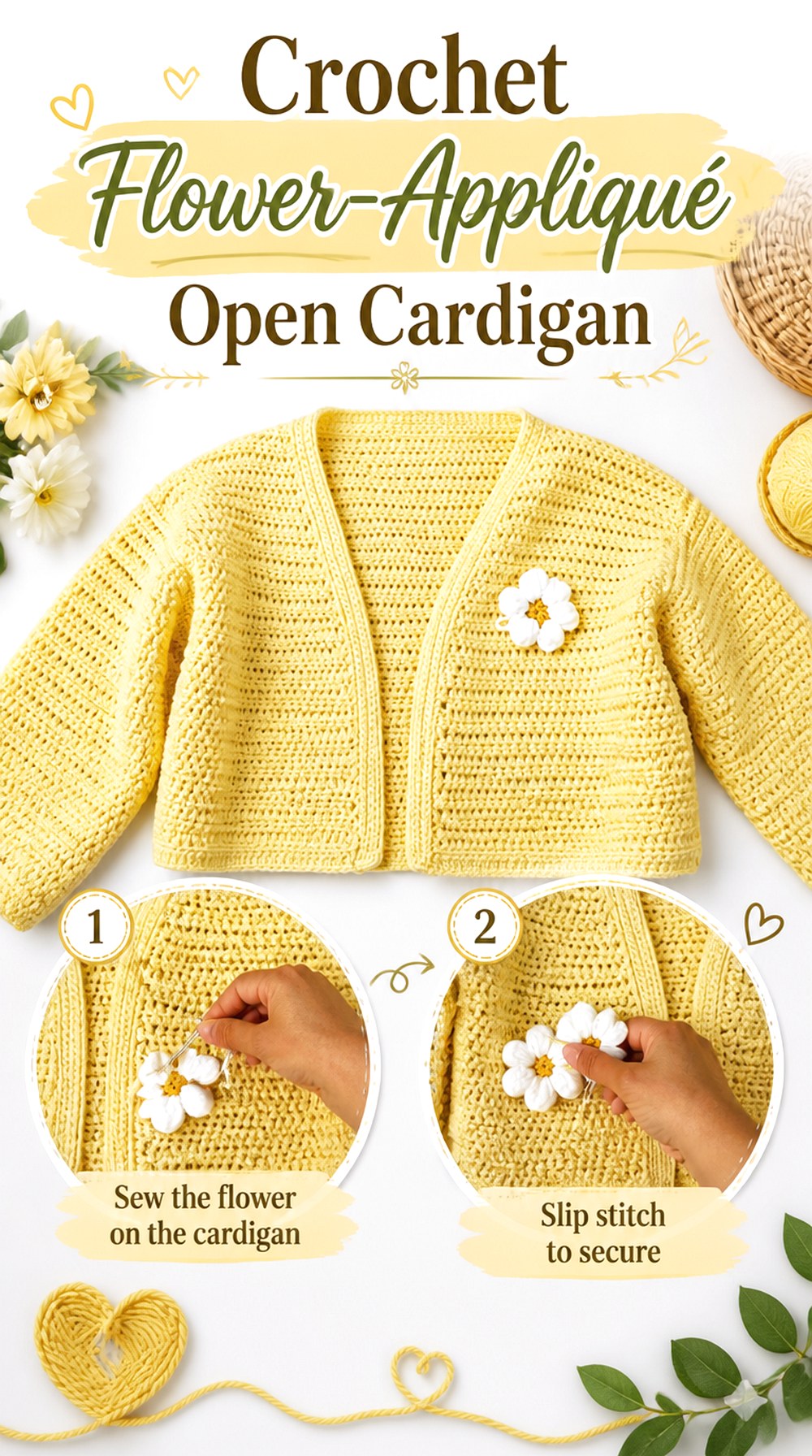
SAVEKrystal Everdeen’s cardigan stands apart because dimensional flower motifs become the focal point of the finished garment. The visible result uses a light cardigan base covered with contrasting puffy flowers, creating a playful surface rather than relying on complex allover stitch texture. The YouTube source is a full cardigan tutorial and specifically references crocheting the fluffy flowers as part of the project. This is a strong option when you want embellishment to be the main visual feature rather than stripes, pockets, or granny geometry.
Place the Flowers After Checking the Cardigan Shape
Dimensional motifs can look balanced on a flat panel yet feel crowded once the garment curves around shoulders and sleeves. Temporarily position several flowers before permanent attachment. Check the front, back, and sleeve view rather than filling one area completely before deciding how the rest should look.
Embellishment Adds Localized Weight
Each flower adds another small amount of yarn to the base fabric. A few motifs are unlikely to behave like a heavy pocket, but repeated embellishments across soft crochet can still influence drape. Distribute them intentionally and secure them well enough that one small attachment point is not carrying the whole motif.
Contrast Determines How Dimensional the Surface Looks
Light flowers on a darker or saturated base will emphasize every motif, while similar values create a quieter textured effect. If you want the shapes to read clearly, test one complete flower against the actual cardigan yarn before committing to an entire palette.
Original Tutorial and Creator Credit
Creator: Krystal Everdeen
12. Crochet Pink Granny Hexagon Cardigan
 SAVE
SAVESelina Veronique Crochet’s pink hexagon cardigan uses the familiar two-hexagon concept to create a relaxed, oversized garment while keeping the classic granny texture visible across the body. The supporting source identifies the tutorial as a complete step-by-step cardigan project and notes sizes S through 5XL in the associated pattern information. Compared with the giant-square design, the hexagons create a different fold and sleeve relationship, so this is worth considering when you want granny-style repetition with fewer traditional panel seams.
The Hexagon Must Be Judged Folded, Not Only Flat
A crochet hexagon can look strangely ruffled while it is still a flat shape. Its usefulness becomes clearer when folded into the cardigan configuration. Periodically fold the piece as intended and check sleeve room and body depth before deciding it simply needs to become larger in every direction.
Extra Width and Extra Length Are Not the Same Adjustment
Increasing the basic hexagon affects multiple garment dimensions at once. Once the core shape is large enough, targeted extensions may be more appropriate than endlessly enlarging the whole motif. Follow the creator’s sizing and finishing method rather than assuming every fit issue should be solved with another complete round.
Granny Fabric Can Grow After Finishing
Open cluster fabric may relax differently from a dense stitch pattern, particularly with a soft or heavy yarn. Make and treat a swatch as you intend to treat the finished garment, then compare the post-blocking behavior. That gives you better information than choosing a hook solely because the yarn label recommends it.
Which Crochet Cardigan Construction Should You Choose?
For maximum color planning, the patchwork cardigan gives you the most individual pieces to arrange. The four-giant-square and hexagon cardigans retain the granny aesthetic with much larger construction units. If you prefer conventional garment logic, the TCDDIY and VivCrochets options use recognizable body, sleeve, and finishing sections.
The raglan cardigan is the clearest choice here if you specifically want top-down integrated shaping. For relaxed layering, compare the cocoon, Chenda oversized cardigan, and forthefrills pocket design—their silhouettes are all roomy, but their construction and functional details differ. The side-slit lace cardigan is the most open and elongated option, while the flower and striped cardigans put decorative surface design at the center of the finished look.
Conclusion
Choosing a crochet cardigan is easier when you compare construction before aesthetics. Start with the patchwork or granny options if motif building appeals to you, the raglan or panel cardigans if garment shaping is the main interest, and the cocoon or oversized pocket styles if relaxed coverage matters most. For a lighter statement layer, the long lace cardigan offers a very different fabric structure, while the striped balloon sleeves and flower appliqués create visual impact without patchwork assembly.
Once you have chosen the shape, swatch the intended yarn and check the measurements that actually control fit. Use the original tutorials near the end of your planning for the creators’ exact construction details, counts, and size-specific instructions.
Frequently Asked Questions
Which crochet cardigan construction is easiest to resize?
There is no universally easiest method because resizing depends on how the pattern was designed. Made-to-measure and some hexagon projects can offer useful adjustment points, while a graded panel or raglan pattern gives you established size instructions. The safer approach is to identify which dimensions can be changed independently. If increasing one section also enlarges the sleeves, body, and neckline, customization may be less flexible than it first appears.
Should I block cardigan pieces before joining them?
For motif cardigans, blocking before final layout can be particularly helpful because it lets you compare the true dimensions of squares or other repeated pieces. For conventional garment panels, follow the designer’s recommendations and the needs of the yarn. Whatever method you use, avoid forcing noticeably mismatched pieces together through aggressive seaming; solve the size discrepancy before the final join when possible.
How do I know how much positive ease I want?
Measure a cardigan you already like and compare its finished chest width with your body measurement. That difference gives you a practical reference for how much room you enjoy wearing. Then compare that preference with the designer’s finished garment measurements or intended fit. Do not automatically size up just because you want an oversized look when the pattern is already designed with substantial ease.
Can I use a different yarn weight for a crochet cardigan tutorial?
Sometimes, but changing yarn weight can alter gauge, drape, garment weight, sleeve bulk, and the size of every component. A made-to-measure tutorial may offer more flexibility than a graded pattern based on fixed stitch counts. Before substituting, make a generous swatch using the actual stitch pattern. If you cannot match the required gauge without creating fabric you dislike, choose a closer yarn instead.
Why does my crochet cardigan front edge look wavy?
A wavy band or border often means the pickup rate, stitch spacing, or tension does not suit the main fabric. Stop before completing the whole edge and lay the cardigan flat. If the band flares, too much fabric may be entering the edge; if it pulls upward, there may be too little. Follow the tutorial’s finishing method and correct the issue rather than hoping blocking will completely remove severe distortion.
How can I keep a heavy crochet cardigan from stretching?
Yarn choice, stitch density, garment length, pockets, and decorative pieces all contribute to weight. Match the intended gauge, avoid making components substantially larger without considering the extra mass, and support the garment properly during washing and drying according to the yarn label. For storage, folding can reduce prolonged stress on the shoulders compared with hanging a substantial crochet garment from a narrow hanger.