A crochet plaid scarf can get its checked appearance in surprisingly different ways. Some designs switch yarn colors while the fabric is being crocheted, while others start with stripes or an open grid and add the crossing lines afterward. Gingham produces orderly blocks, traditional tartan relies more heavily on intersecting lines, and oversized versions can feel closer to a wearable wrap than a narrow winter scarf.
Those construction differences matter as much as the color palette. They affect yarn management, fabric thickness, drape, finishing work, and how noticeable the reverse side may be. The 12 options below give you several ways to approach the plaid look while helping you compare structure, finishing, color placement, fringe, and adaptation possibilities before committing to a tutorial.
Quick List
- Woven Grid Crochet Plaid Scarf
- Classic Color-Change Crochet Plaid Scarf
- Ember Woven Crochet Plaid Scarf
- Three-Color Gingham Crochet Plaid Scarf
- Two-Color Checkerboard Crochet Plaid Scarf
- Hand-Woven Accent Crochet Gingham Scarf
- Traditional Tartan Crochet Plaid Scarf
- Woven-Line Crochet Tartan Scarf
- Two-Tone Cord Crochet Checkered Scarf
- Openwork Woven Crochet Plaid Scarf
- Vertical-Strip Crochet Checked Scarf
- Oversized Crochet Tartan Super Scarf
Choose the Plaid Construction Before Choosing the Colors
The biggest decision is whether you want the checks formed during crochet or added after the base fabric is complete. Direct colorwork produces blocks as you crochet, so clean color changes and controlled yarn carrying become important. Marly Bird’s gingham scarf, for example, uses tapestry-style colorwork, while Crochet For You’s checked scarf also works with alternating colors and carried yarn.
Woven and surface-decorated versions work differently. Delia Creates builds an open striped grid and later weaves strands through it, while other tartan approaches add crossing lines to an established base.
Choose by the technique you want to manage, not just by the photograph. Construction, drape, finishing, and adaptation are the decisions that make one plaid scarf meaningfully different from another.
Yarn Choice Can Change Plaid Definition and Drape
Plaid depends on readable intersections, so color contrast and stitch definition deserve attention. Similar-value colors can produce a subtle blended check, while a stronger contrast makes individual blocks and crossing lines easier to see. Before buying yarn, place the proposed colors next to one another and consider whether you want understated tartan or graphic checks.
Fiber and yarn thickness also affect the scarf itself. Delia Creates specifically uses a lighter yarn for a woven construction and notes that changing fiber can affect gauge and drape. A dense checkerboard made by carrying unused yarn can naturally feel different from an airy base that receives woven strands later.
When substituting yarn, compare the tutorial’s stated yarn category and make a small sample before committing to the full length. A scarf does not need garment-level fitting, but excess stiffness or weight can still make it uncomfortable to wrap.
Keep Plaid Lines Straight Before Adding Fringe
A plaid scarf magnifies small alignment problems. If horizontal blocks gradually shift in height or vertical lines lean, the finished checks can look less deliberate. With carried-yarn colorwork, watch the width of your repeated color sections. With woven plaid, keep the underlying grid even before adding the crossing strands.
Tension matters especially when surface crochet or woven strands are introduced. Pulling an added line too tightly can shorten that section and make the surrounding fabric pucker. Crafting Happiness specifically warns about overly tight surface-crochet tension in its plaid construction.
Leave fringe and tassel trimming until the main scarf lies the way you want. Finishing cannot correct a distorted grid, so straighten the fabric, compare the edges, and resolve uneven tension before making the decorative ends permanent.
1. Woven Grid Crochet Plaid Scarf
 SAVE
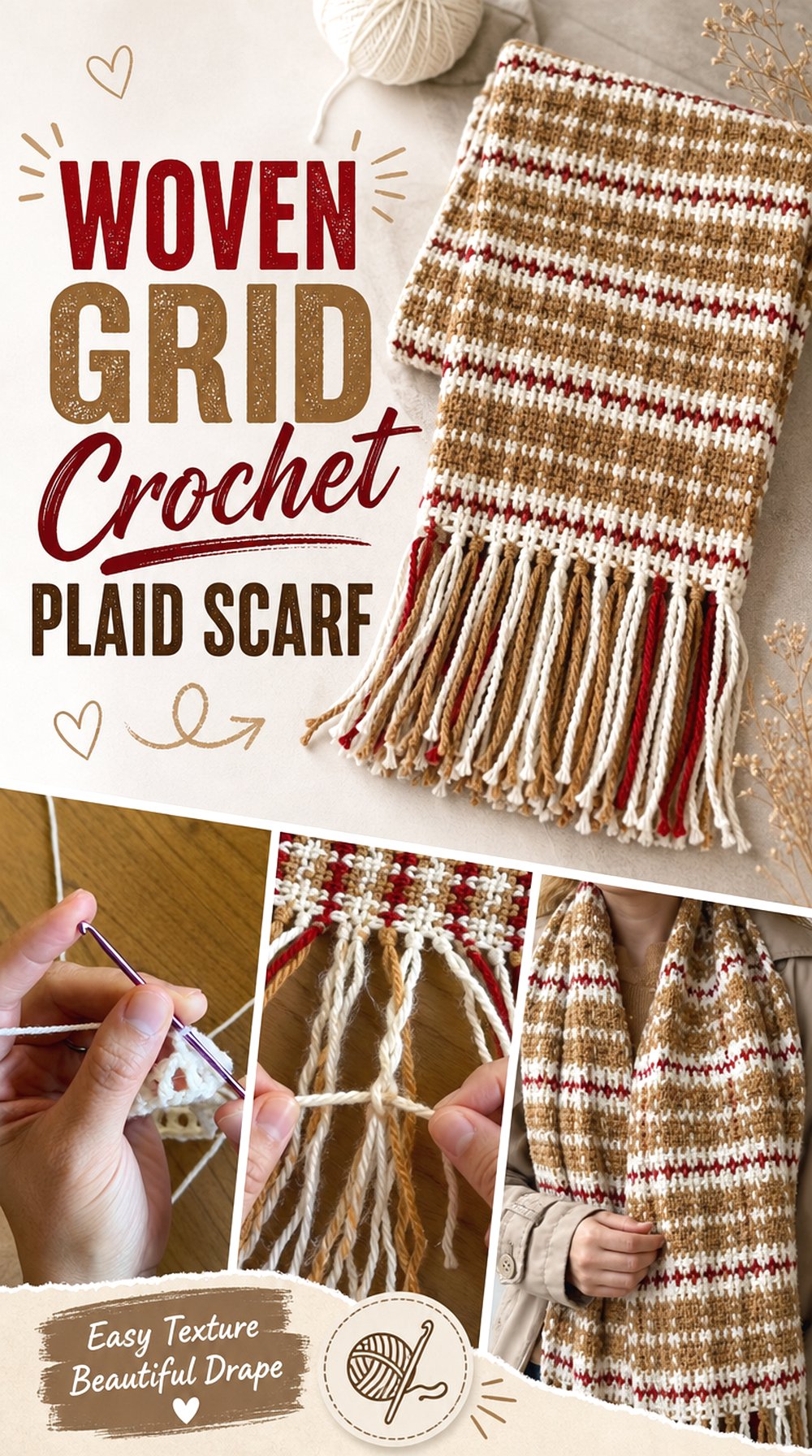
This crochet plaid scarf begins with a mesh-like striped base and develops its stronger plaid identity when additional yarn strands are woven through the openings. The result is a useful choice when you like the appearance of intersecting woven lines but would rather avoid changing colors repeatedly within every row. Delia Creates describes the project as a crocheted grid with strands woven through it, producing a denser finished surface while retaining drape.
The woven construction also makes color planning especially visible. Instead of judging isolated stripes, you can think about how every vertical strand will cross the base colors and alter the apparent shade at each intersection.
The Crochet Grid Has to Stay Square
Because the later strands depend on the spaces in the base, irregular openings can become more obvious after weaving. Watch the first part of the scarf for leaning columns or gradually narrowing edges before continuing a long distance. Correcting tension at the grid stage is easier than trying to disguise uneven plaid lines after the additional strands have been inserted.
Woven Strands Add More Than Decoration
The second set of lines contributes extra yarn to the finished fabric, so this construction can feel different from a simple striped scarf of the same dimensions. When substituting yarn, consider both the crocheted base and the strands that will pass through it. A bulky substitute may crowd the openings, while a much finer replacement may produce less visual coverage.
Twisted Fringe Becomes Part of the Plaid
The creator’s finished design includes distinctive twisted fringe, so the ends contribute to the overall style rather than functioning as an afterthought. If you change the color order, preview the fringe colors alongside the body before cutting everything. Repeating key plaid colors at the ends can make the scarf look more intentionally balanced.
Creator: Delia Creates
2. Classic Color Change Crochet Plaid Scarf
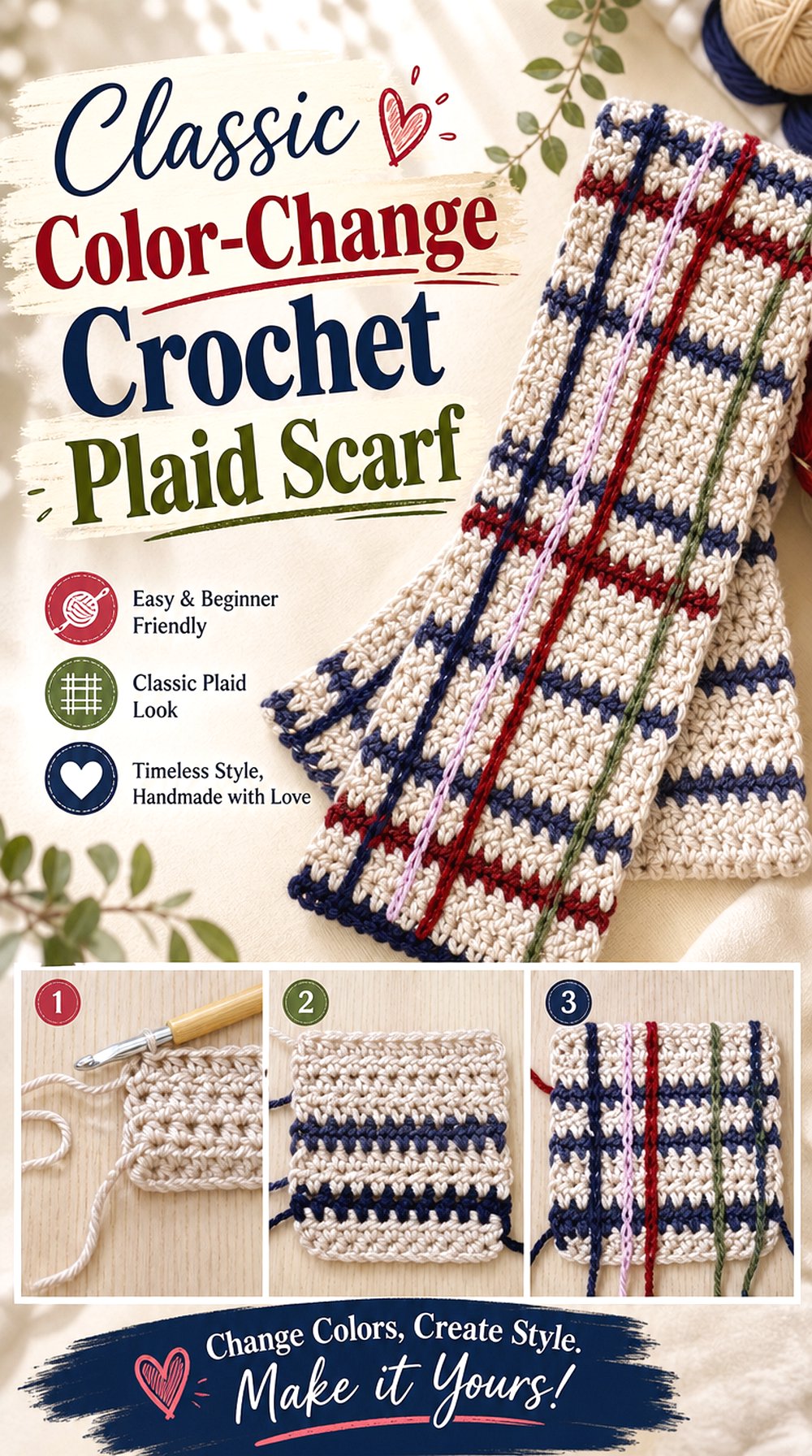 SAVE
This option creates a recognizable crochet plaid scarf through repeated color placement rather than relying primarily on a separate finishing layer. That makes it a useful contrast to the woven-grid designs in this collection. The tutorial visibly focuses on building the scarf, managing color changes, and continuing the plaid repeat through a long rectangular accessory.
Choose this route if you want the plaid structure to develop while you crochet and enjoy seeing each section of the pattern appear row by row. It also gives you a straightforward way to experiment with traditional autumn colors, neutrals, or a less expected palette without changing the basic rectangular scarf format.
Clean Transitions Matter at Every Color Boundary
Repeated color changes create many opportunities for an untidy transition to interrupt the check pattern. Pay particular attention to the final stitch before a new color begins and compare the boundaries from several rows away. A small inconsistency may look insignificant close up but become much more noticeable once identical blocks repeat across the scarf.
Watch the Side Edges as the Pattern Grows
A long scarf makes gradual width changes easy to miss. Lay the work flat periodically and compare both edges instead of relying only on stitch rhythm. If the scarf begins widening or narrowing, resolve the counting or edge-tension problem early; blocking may improve presentation, but it should not be expected to fix a substantial change in width.
Creator: eliznuts
3. Ember Woven Crochet Plaid Scarf
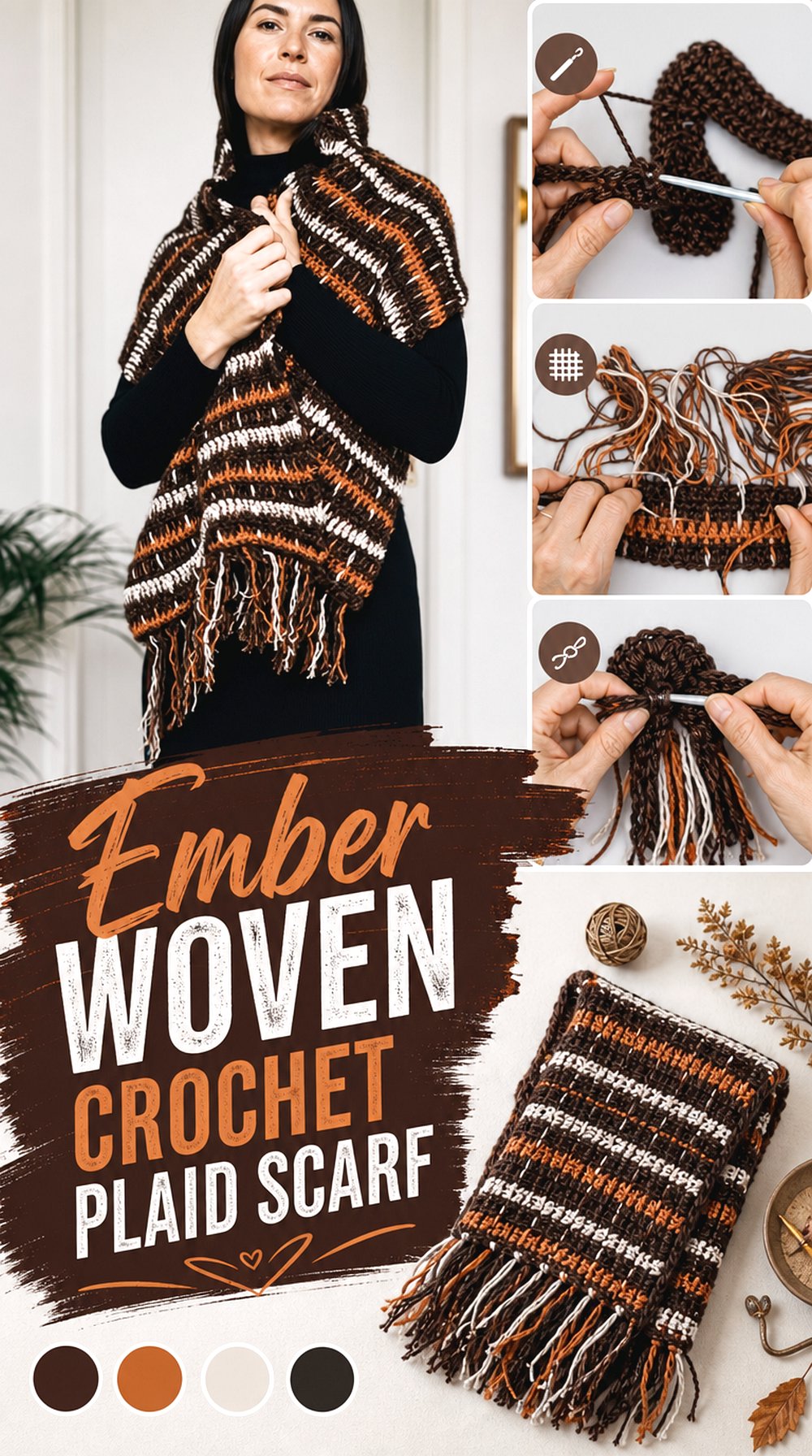 SAVE
The Ember-inspired option combines a crocheted base with a weaving stage that brings the plaid pattern into sharper focus. Loops Only Crochet describes the tutorial as covering both the base and the weaving technique used to create the finished design.
This construction suits readers who enjoy a transformation near the end of a project. Much of the scarf establishes the foundation, then the added strands make the crossing pattern substantially more apparent. It is also a practical alternative when you like multicolored plaid but prefer organizing colors into distinct stages rather than switching between several active strands constantly.
Plan the Crossing Colors Before the Weaving Stage
Do not wait until the base is complete to decide how the added lines will interact with it. Place small lengths of your candidate yarns across a sample or against the crocheted fabric. You are checking whether the added color will remain visible at every crossing or disappear into one of the background shades.
A Smooth Base Makes Weaving Easier to Judge
Before inserting the secondary strands, lay the scarf flat and examine the openings intended to receive them. Unevenly spaced passages can make one woven line look tighter than its neighbors. If the base is noticeably distorted, address that first rather than assuming the weaving stage will automatically straighten it.
Fringe Can Extend the Woven Visual Rhythm
When the inserted strands continue toward the scarf ends, fringe provides an opportunity to echo the same colors. Decide whether you want every plaid shade represented or a quieter edge dominated by the main color. This choice can make a multicolored scarf feel either more decorative or more restrained without altering its central construction.
Creator: Loops Only Crochet
4. Three Color Gingham Crochet Plaid Scarf
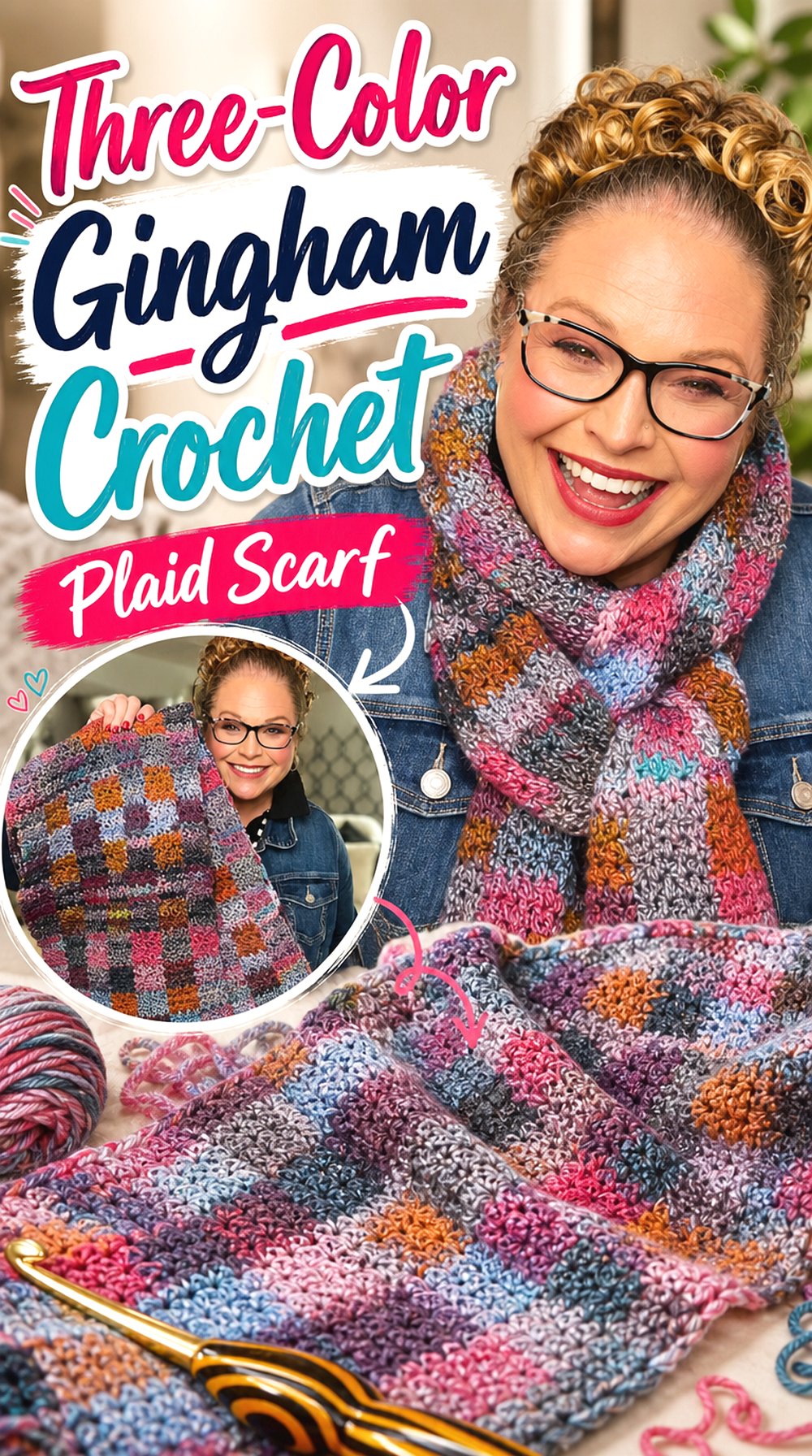 SAVE
Marly Bird’s scarf takes a more block-based approach to plaid. The finished accessory uses three colors and tapestry-style crochet to produce a gingham-inspired arrangement of repeating checks. This gives the scarf a noticeably different character from tartan designs built from thin crossing lines.
Choose a gingham route when you want the individual color blocks to dominate the design. Because the checks are integrated into the crocheted fabric, this version also puts more emphasis on managing the unused yarn and maintaining consistent color boundaries as you work.
Three Colors Create More Depth Than a Basic Checkerboard
The third shade lets the intersections read differently from the main background and contrast blocks. When developing your own palette, think in roles rather than simply picking three favorite colors: background, contrast, and connecting shade. Test them together under normal daylight to make sure the intended checks do not visually merge.
Carried Yarn Can Affect Fabric Density
The project uses tapestry crochet, meaning contrasting yarn is carried while other stitches are worked over it. That can change the feel of the fabric compared with a one-strand scarf. Keep the hidden strand relaxed enough that it does not pull the active stitches inward, and compare the sample’s drape before making the entire scarf.
Exposed Row Edges Deserve Extra Attention
The published project notes that its edges remain visible rather than being automatically concealed by an edging. That makes consistent turning and color handling at the sides particularly important. If you plan to alter the finishing, first check how an added border would interact with the existing thickness and check pattern.
Creator: Marly Bird
5. Two Color Checkerboard Crochet Plaid Scarf
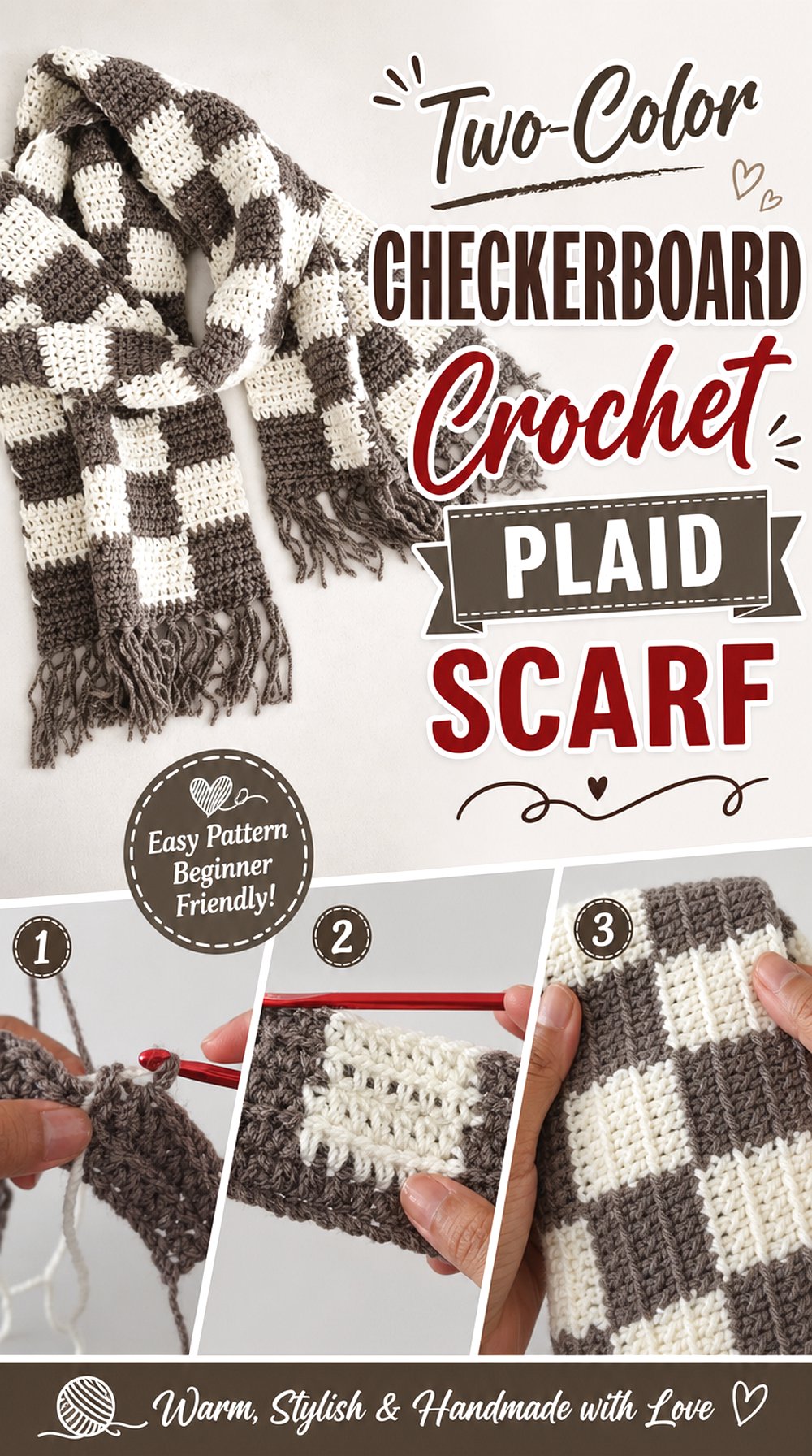 SAVE
This scarf reduces the palette to two colors and emphasizes bold, clearly defined blocks. Crochet For You’s project works its checked texture through color switching while carrying the unused yarn along the work. The result feels closer to a graphic checkerboard than a fine-lined tartan.
A two-color scheme is useful when you want the pattern to remain visually strong without coordinating three or four shades. High contrast creates a bolder accessory, while two neighboring tones can soften the pattern considerably. Either way, consistency between repeated blocks becomes the main visual checkpoint.
Carried Yarn Should Disappear Without Tightening the Scarf
The unused color is worked over so it stays within the fabric rather than hanging loosely behind the checks. Periodically stretch the current section gently to its natural width. If the carried strand is shorter than the surrounding stitches, the block can pull inward and make the side of the scarf look pinched.
Block Height and Width Need Visual Balance
A checkerboard looks most intentional when the repeated sections appear proportionate. You do not need to assume a universal square measurement because yarn, hook choice, and tension change the result. Instead, make a sample using the tutorial’s method and decide whether the visible blocks look suitably square before committing to a long scarf.
Fringe Can Soften a Very Graphic Pattern
Strong two-color checks can produce a crisp visual edge. Fringe changes that impression by adding movement at the scarf ends. If you use it, decide whether alternating fringe colors should continue the checkerboard feeling or whether one solid fringe color should calm the finish.
Creator: Crochet For You
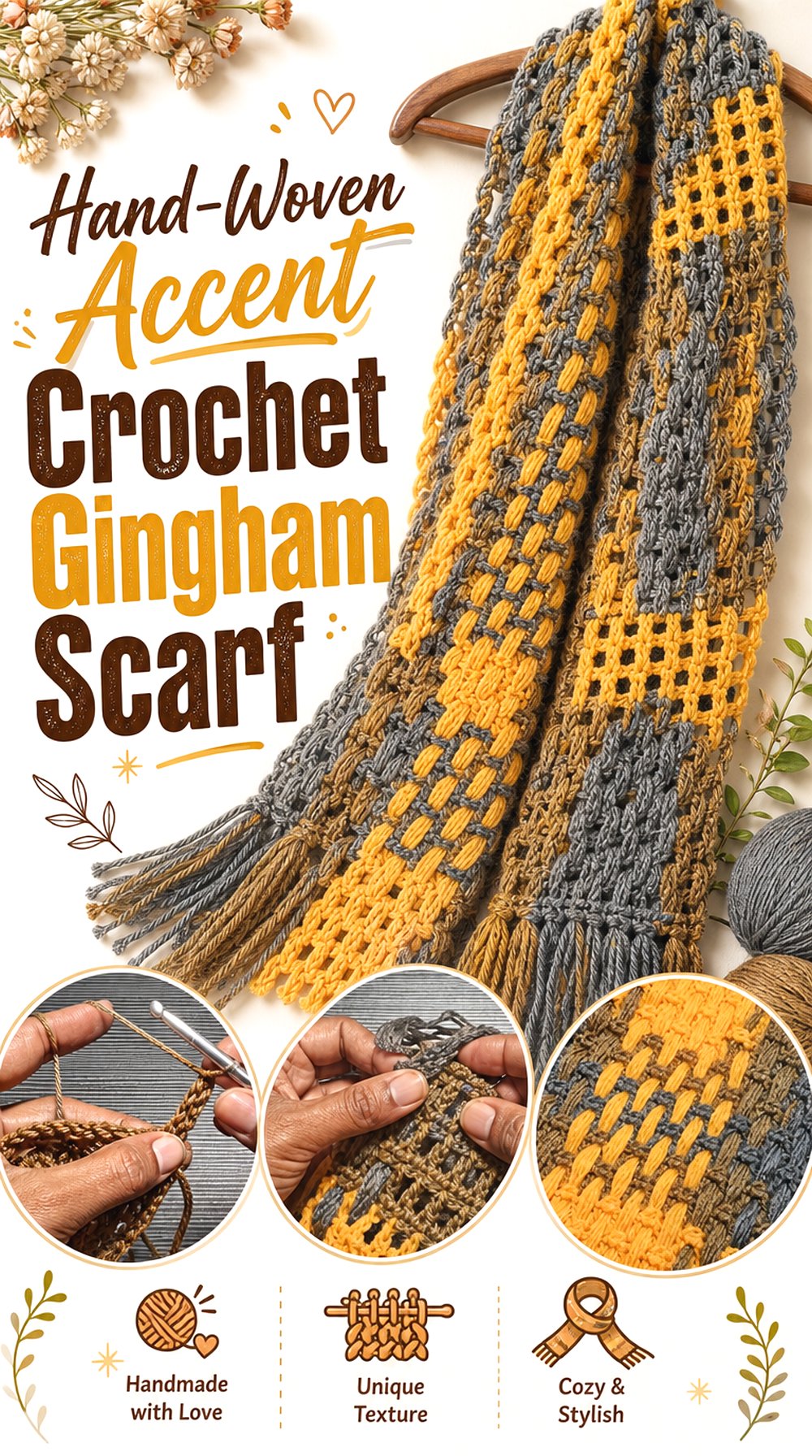
6. Hand Woven Accent Crochet Gingham Scarf
 SAVE
Poya Stitches takes the gingham idea in a woven direction. The tutorial specifically includes a hand-weaving technique, creating another route to checks without relying entirely on conventional block-by-block colorwork.
This design is worth comparing with the Marly Bird gingham scarf because the finished theme is related but the construction experience is different. If you enjoy adding the defining visual feature after part of the crochet work is established, the woven method may feel more intuitive than managing repeated color changes throughout every row.
The Weaving Stage Needs Even Spacing
When a secondary yarn is threaded through a crocheted base, irregular spacing can make neighboring vertical lines appear thicker or closer together. Check several sections at once instead of focusing only on the strand currently being inserted. The goal is a balanced field of checks across the full width.
Contrast Determines Whether the Gingham Reads Clearly
A woven strand that is too close in value to the base may create a subtle texture instead of obvious gingham. That can be attractive, but it should be intentional. Photograph a small color sample in grayscale or simply squint at the colors side by side; if they blend completely, expect a softer finished pattern.
Creator: Poya Stitches
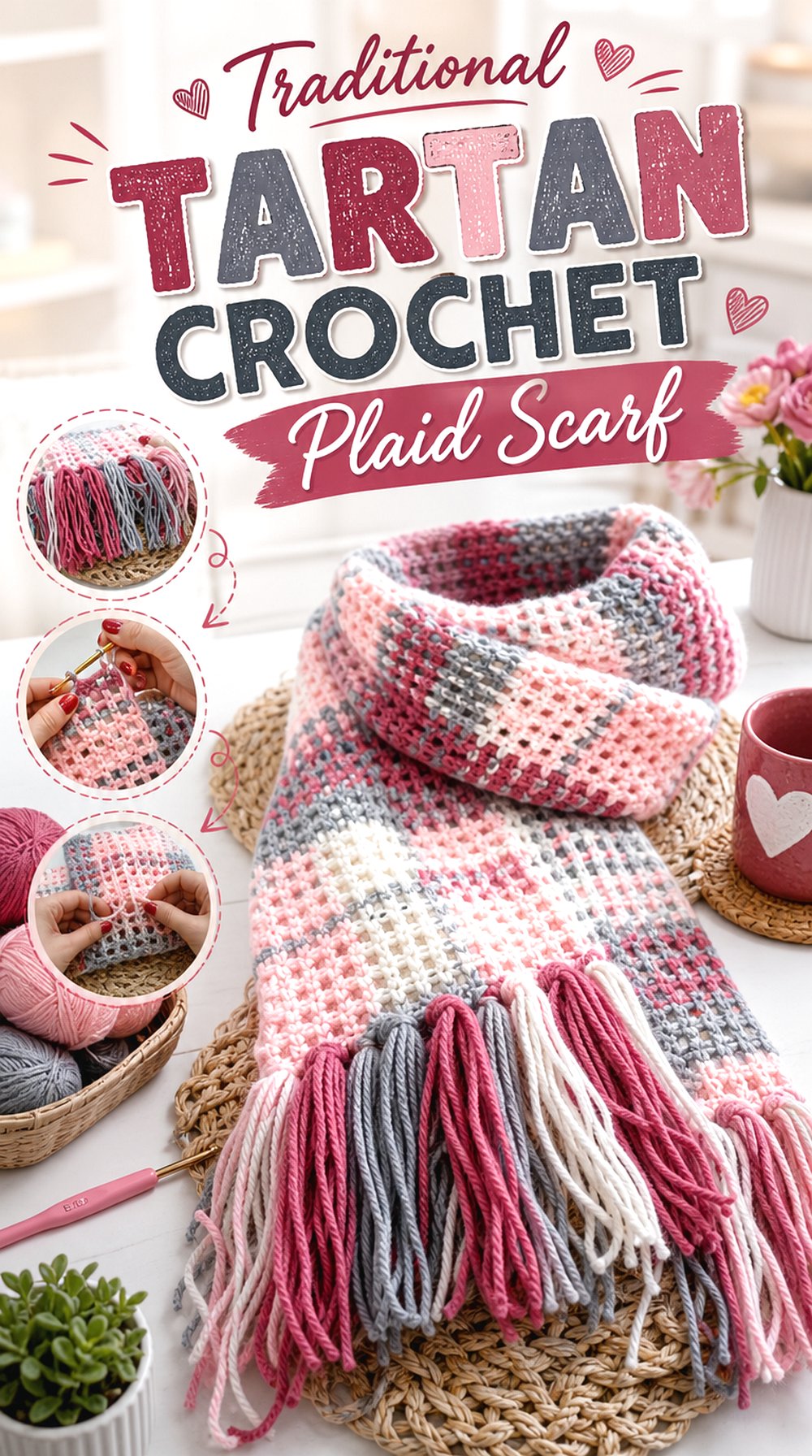
7. Traditional Tartan Crochet Plaid Scarf
 SAVE
This crochet tartan scarf leans into the classic appearance of intersecting colored lines rather than large checkerboard blocks. LullabyLab21 presents the project as a dedicated tartan scarf tutorial, making it a good option when your main goal is a more traditional plaid impression.
Tartan palettes often contain several visual layers, so color hierarchy becomes important. One shade can dominate the field, secondary shades can establish wider bands, and a stronger accent can create the narrow crossing lines that give the scarf its recognizable character.
Build the Palette Around One Dominant Shade
Using several equally strong colors can make a narrow scarf visually busy. Begin with the shade you want to see most often, then evaluate each additional color against it. This is especially useful when adapting a tartan-inspired design to everyday wardrobe colors rather than attempting to reproduce a specific historic tartan.
Thin Crossing Lines Reveal Tension Problems Quickly
Narrow plaid lines behave almost like rulers across the fabric: puckering and inconsistent spacing become easy to see. As each line is established, lay the scarf flat and confirm that it follows the base without drawing it inward. Correcting a tight decorative line early is much easier than redistributing tension after the entire scarf is finished.
Keep Decorative Complexity Proportional to Scarf Width
A blanket can support many bands before the design feels crowded; a scarf has much less horizontal space. If customizing the color arrangement, preview one complete width first. Make sure the narrow lines remain distinct rather than compressing into an unreadable cluster of colors.
Creator: LullabyLab21
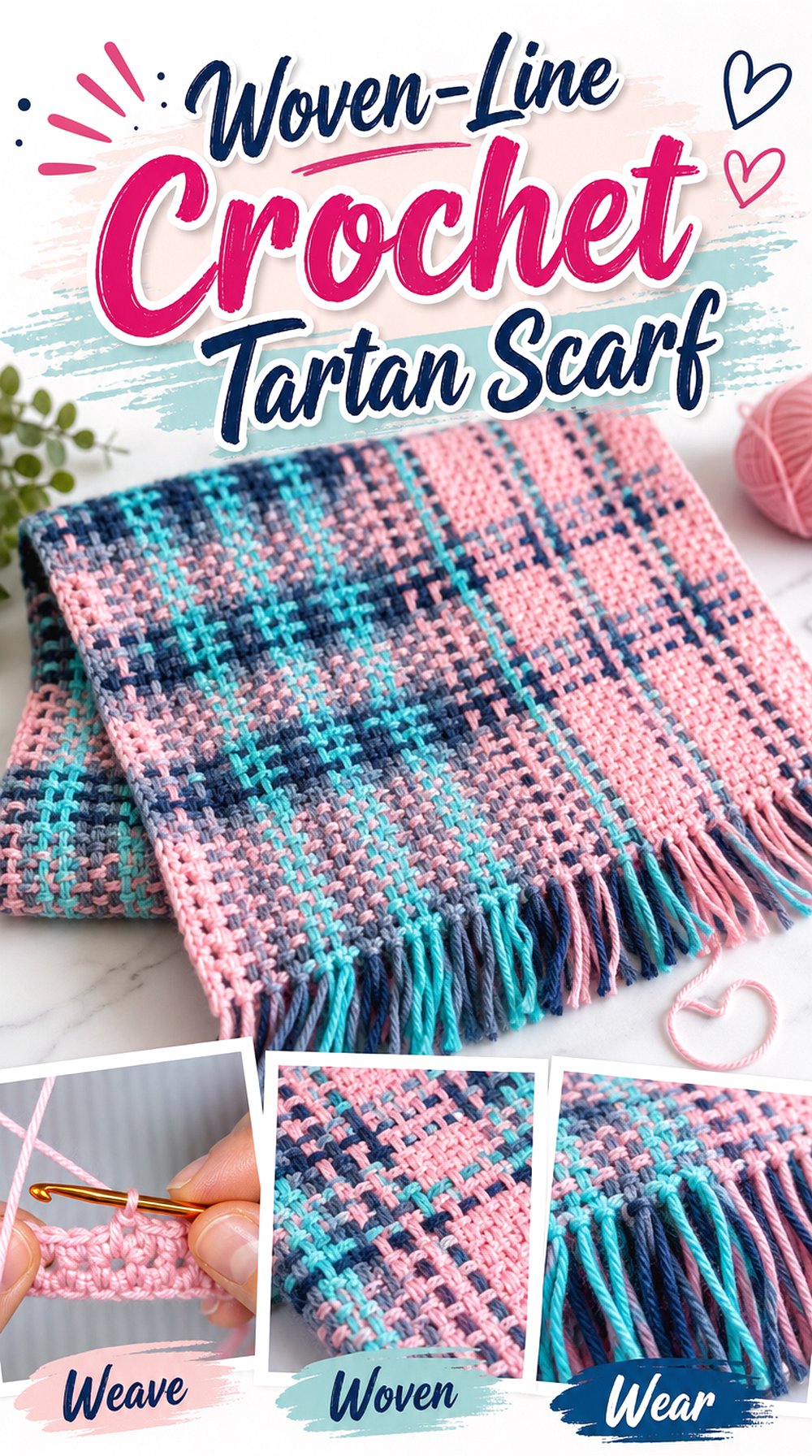
8. Woven Line Crochet Tartan Scarf
 SAVE
This version combines the strong visual language of tartan with a woven scarf approach. The tutorial from Crochet Square & Tutorials specifically presents a step-by-step woven tartan scarf, making it a useful middle ground between simple gingham checks and more complex colorwork.
The woven treatment is particularly effective if you want long continuous lines running through the scarf rather than building every intersection from separate color blocks. It also lets you evaluate the base fabric on its own before deciding how strongly the secondary colors should stand out.
Straight Channels Produce Cleaner Long Lines
Before weaving the contrasting strands, follow the intended path from one end of the scarf to the other. Any shift between neighboring channels can make a long line wander. Checking alignment across the full length is more reliable than correcting the direction a few inches at a time.
Keep Added Strands Relaxed Through the Entire Length
A line may look loose enough near the starting end yet become progressively tighter as it is pulled through more fabric. After completing each long pass, smooth the scarf from the center outward and compare its length with the unwoven edge. The goal is to preserve the original drape rather than compress the base around the decorative yarn.
Creator: Crochet Square & Tutorials
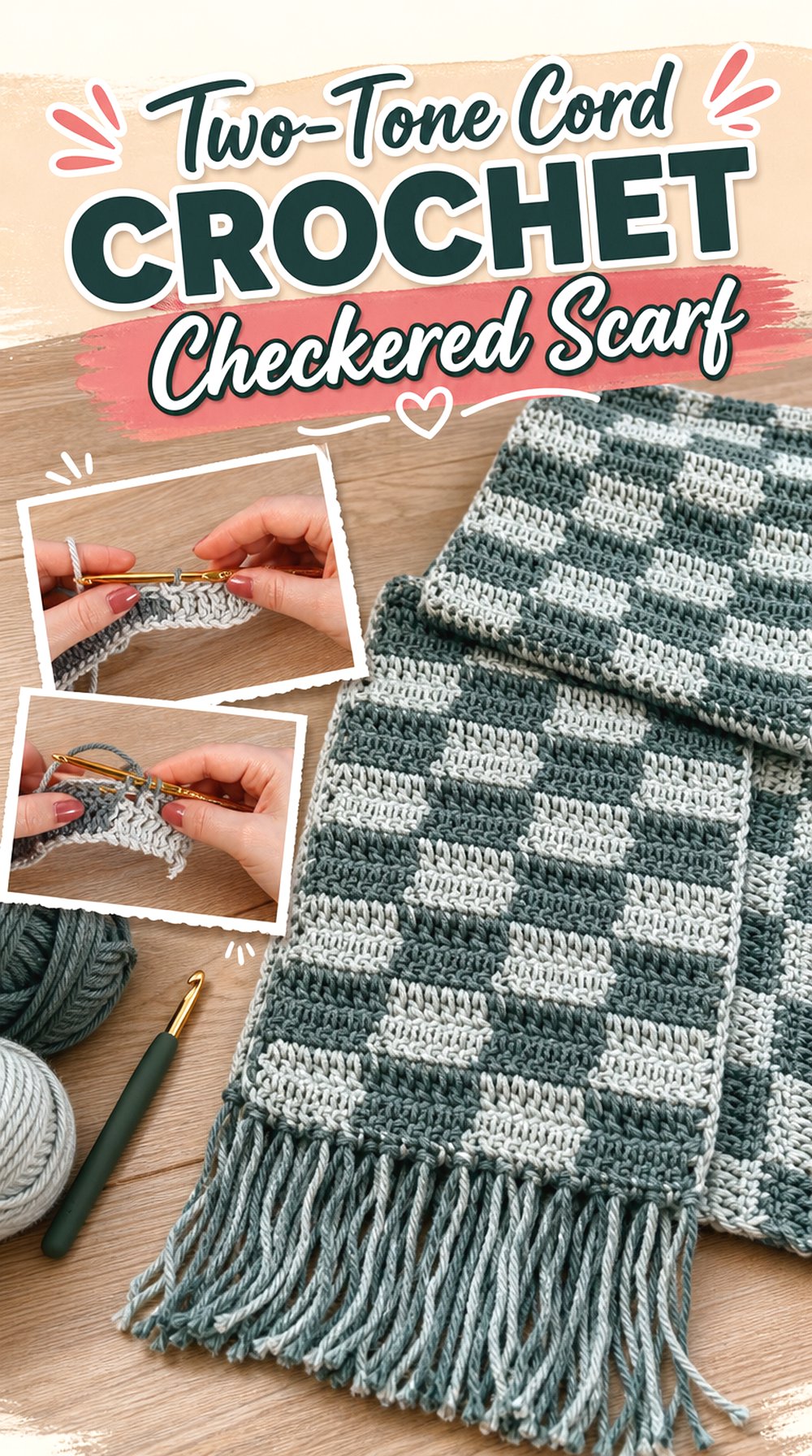
9. Two Tone Cord Crochet Checkered Scarf
 SAVE
Bobbiny’s checkered scarf stands apart because the company demonstrates the project using its 3-ply macramé rope rather than presenting it as a conventional soft-yarn scarf. Visually, the large two-color checks create a contemporary graphic accessory.
That material choice is important when comparing this project with the others. A cord-like fiber can emphasize stitch structure and block definition, but a substitute chosen for a softer neck scarf may behave differently. Use the finished appearance as inspiration while checking the tutorial’s materials before assuming another yarn will produce the same scale or firmness.
Material Substitution Can Change the Entire Character
A rope or cord behaves differently from many lofty winter yarns, so swapping materials is not purely a color decision. If you want a softer scarf, sample the proposed yarn and compare the firmness of the resulting check. Changing fiber or thickness may also alter how large each visible block becomes.
Large Checks Need Particularly Consistent Corners
With bigger two-tone blocks, the meeting points between colors are visually prominent. Examine the corners where four sections appear to meet and make sure the transitions remain aligned from one repeat to the next. A slight shift is often easier to notice in a bold checkerboard than in a more irregular tartan.
Skip Extra Decoration When the Blocks Already Dominate
A large-scale checkerboard already supplies considerable visual interest. Before adding fringe, tassels, or a contrasting border, view the finished rectangle on its own. A restrained edge can keep attention on the blocks, while additional decoration may be better reserved for a quieter color combination.
Creator: Bobbiny
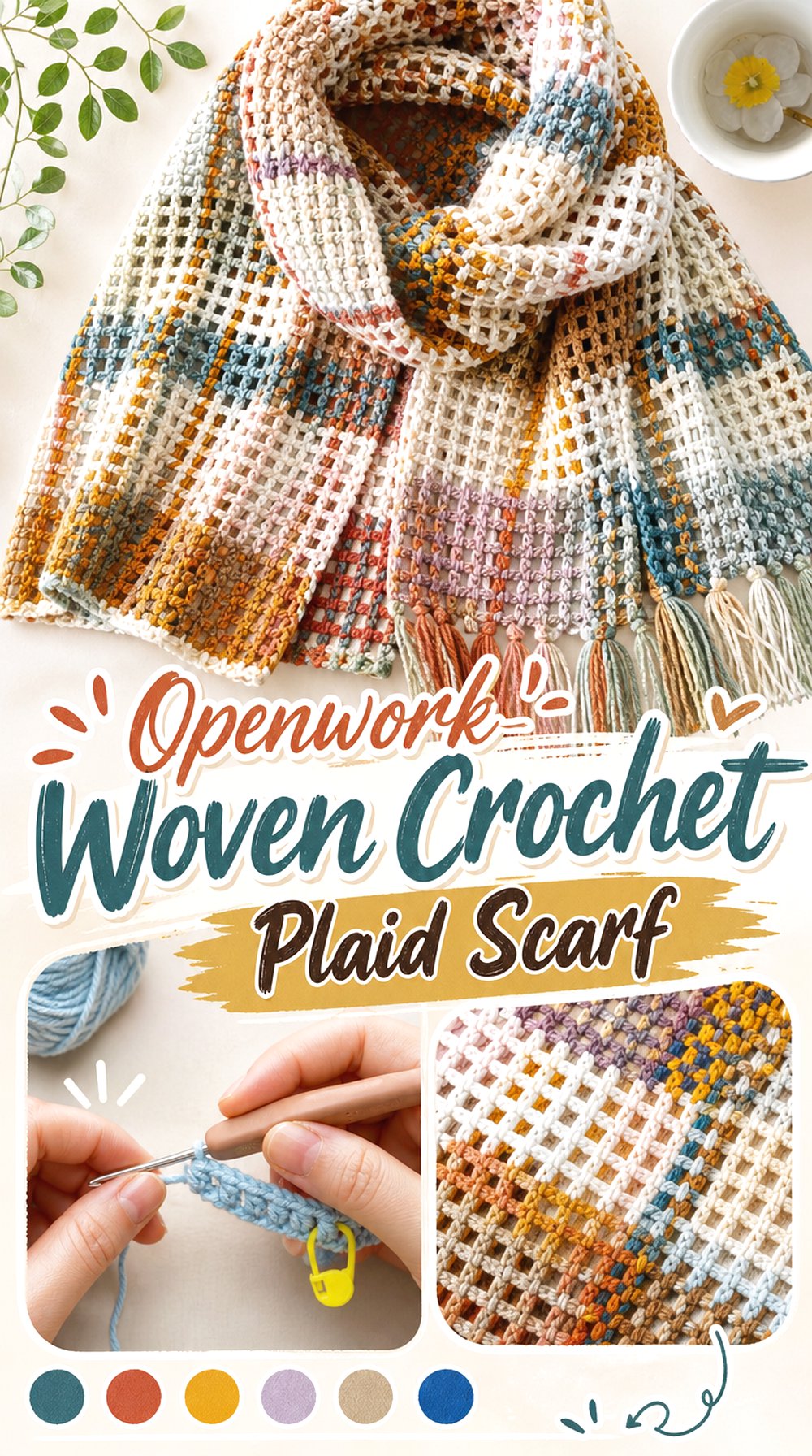
10. Openwork Woven Crochet Plaid Scarf
 SAVE
Susan’s Family uses an openwork base that is visibly transformed into plaid through woven elements. The accompanying project information describes an openwork pattern woven into a plaid design, giving this scarf a lighter visual framework than a dense checkerboard.
This is a useful choice if you like clearly separated plaid lines and want some openness between them. It also creates an opportunity for multiple colors to interact without requiring every part of the scarf to be equally dense.
Open Spaces Must Still Support the Woven Lines
A very loose base can lose definition when extra yarn is threaded through it. Before completing the full scarf, check that the openings are large enough for easy weaving but stable enough to hold the crossing strands where they belong. The best balance depends on the yarn and tension shown in the tutorial.
Use Color Placement to Control Visual Weight
A dark or saturated woven strand can dominate a pale openwork base. That may be ideal if you want sharp tartan lines, but it can overwhelm subtler secondary colors. Arrange short test strands across the base in the planned order before cutting the full lengths.
Fringe Should Continue the Airy Finish
Because the body has visible openness, extremely heavy fringe can make the ends feel visually disconnected from the scarf. Compare the density of the proposed fringe with the body first. A lighter arrangement can preserve the airy character, while fuller fringe creates a stronger frame.
Creator: Susan’s Family 蘇蘇姐家
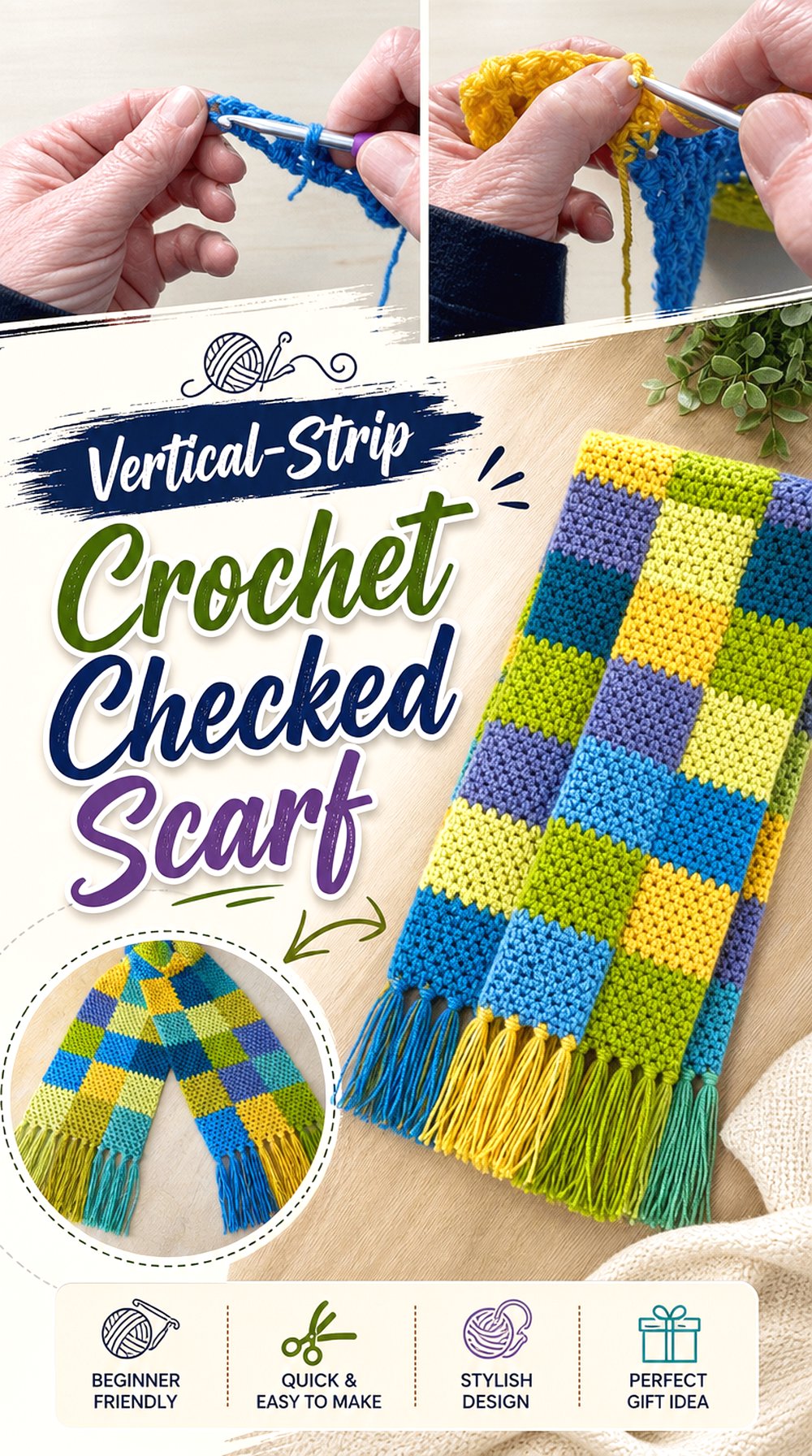
11. Vertical Strip Crochet Checked Scarf
 SAVE
The Crochet Swirl takes a construction route that is quite different from the carried-yarn and woven-grid options. The published project is formed from vertical strips of colored blocks that are joined as the scarf develops. That produces a patchwork-like checked appearance while turning the joining method into part of the construction.
This can appeal to crocheters who prefer working smaller widths at a time rather than managing the entire scarf width with several active colors. It also offers considerable visual variety because different shades can be distributed along each strip.
Matching Block Lengths Keeps the Strips Aligned
The main checkpoint is not merely the width of each strip but where one color block ends relative to the neighboring strip. Lay completed sections alongside each other periodically. If one strip is growing at a different rate, investigate the tension before the mismatch accumulates across many blocks.
Join-As-You-Go Changes the Finishing Work
Because subsequent strips are attached during construction, you are not simply making several independent pieces and saving every seam for the end. Watch the joining edge carefully so it remains flexible enough to drape like the surrounding fabric rather than creating a stiff ridge down the scarf.
A Multicolor Palette Benefits From Repetition
When many yarn colors are involved, repeat at least a few shades or value relationships throughout the length so the scarf feels cohesive. You can vary the exact order without making every block unique. Before starting, arrange the yarn together and remove any color that disrupts the overall balance more than intended.
Creator: The Crochet Swirl
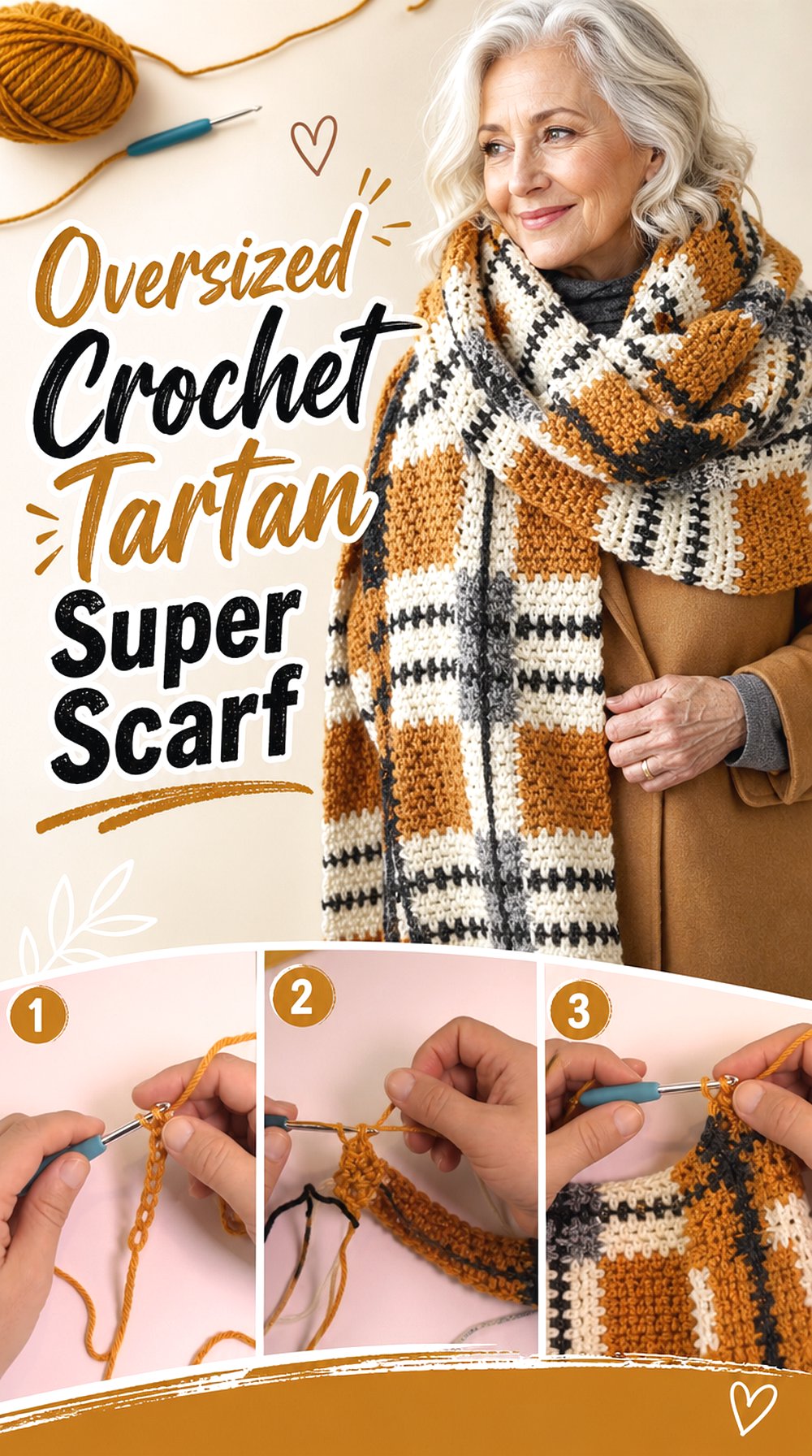
12. Oversized Crochet Tartan Super Scarf
 SAVE
This final option expands plaid into a much larger accessory. The Crochet Crowd presents the design as a big tartan scarf, with an oversized format intended to make the tartan treatment a major part of the finished look.
A super scarf behaves differently from a narrow neck scarf. More width gives the tartan room to develop, but it also increases the amount of fabric being wrapped, folded, and carried. Choose this direction when you specifically want generous coverage and a statement-scale plaid rather than automatically enlarging a standard scarf.
Greater Width Gives Tartan More Breathing Room
Multiple horizontal and vertical lines are easier to distinguish when the design has a broad surface. That makes an oversized scarf well suited to complex-looking plaid. If adapting colors, preview an entire pattern section rather than judging only one stripe because the interaction between several bands creates the final tartan effect.
Extra Fabric Makes Drape More Important
A fabric that feels pleasantly substantial in a narrow scarf can become cumbersome when multiplied across a much wider accessory. Make a generous swatch and fold it over itself several times. This gives you a better sense of how the chosen yarn may behave when the finished scarf is actually wrapped around the neck and shoulders.
Fringe Has More Visual Presence at Super-Scarf Scale
On a broad scarf, the fringe spans a larger edge and becomes a significant finishing feature. Keep its thickness in proportion to the body. If you alter yarn weight or width, do not assume the original fringe treatment should automatically be scaled up in the same way.
Creator: The Crochet Crowd
Which Crochet Plaid Scarf Construction Should You Choose?
For the cleanest block-based look, start with the gingham or two-color checkerboard options. These make the checks part of the crocheted fabric and suit readers who do not mind managing active colors.
For a woven textile appearance, Delia Creates, Loops Only Crochet, Poya Stitches, Crochet Square & Tutorials, and Susan’s Family offer variations in which later strands contribute strongly to the final plaid.
The Crochet Swirl is the standout choice for strip-based construction, while the LullabyLab21 and Crochet Crowd projects move more strongly toward traditional tartan styling.
Your best match therefore depends less on a favorite color scheme and more on whether you prefer carrying yarn, weaving lines, joining sections, or working at oversized scale.
Conclusion
A crochet plaid scarf can be a compact checkerboard, a soft gingham accessory, a woven-grid design, a traditional tartan, or a wide super scarf. If frequent color switching sounds appealing, compare the Marly Bird and Crochet For You options. For a more dramatic before-and-after transformation, look at the woven designs from Delia Creates, Loops Only Crochet, Poya Stitches, or Susan’s Family. The Crochet Swirl offers a completely different strip-joined route, while The Crochet Crowd provides the most generous scale in this collection.
Once you have chosen the construction method, select colors and yarn for the drape you actually want. Use the original tutorials near each project for the creators’ exact construction details.
Frequently Asked Questions
What is the difference between crochet gingham and crochet tartan?
Gingham usually reads as a regular arrangement of repeated checks, often created from a small number of colors. Tartan tends to emphasize intersecting horizontal and vertical bands with more variation in line width and color placement. In crochet, however, either appearance can be produced through several techniques, including tapestry colorwork, surface crochet, or weaving strands through a crocheted base.
Is a woven crochet plaid scarf easier than carrying several yarn colors?
It depends on which task you find easier. A woven design can reduce the need to manage multiple active colors during every row, but it introduces a separate stage in which long strands must be inserted evenly through the base. Direct colorwork avoids that weaving stage but requires consistent color changes and careful control of carried yarn. Compare both processes before choosing solely by the finished appearance.
Why is my crochet plaid scarf puckering after I add vertical lines?
Added vertical strands are a common place for tension problems. If surface crochet or woven yarn is pulled shorter than the relaxed scarf, it compresses the surrounding fabric and creates ripples or puckering. Crafting Happiness specifically cautions against overly tight surface-crochet tension in its plaid scarf construction. Lay the scarf flat after adding each section and loosen the decorative line if it is shortening the base.
Can I use different yarn from the one shown in a plaid scarf tutorial?
You can consider substitution, but compare yarn thickness, fiber behavior, stitch definition, and drape rather than choosing by color alone. A different yarn can change the size of the checks, openness of a weaving grid, weight of the scarf, and how easily strands pass through the fabric. Delia Creates, for example, notes that changing fiber can affect gauge and drape in the woven scarf. Make a sample first.
How can I make plaid color changes look cleaner on both sides of the scarf?
Start by identifying how the chosen tutorial manages unused yarn. Some designs crochet over carried strands, some cut and rejoin colors, and others avoid much of the issue by adding vertical lines later. Keep color transitions consistent and avoid long uncontrolled strands on the reverse. Because methods differ considerably between these projects, use the creator’s tutorial for the exact technique rather than applying one universal color-change method.
Should I block a crochet plaid scarf before adding fringe?
Blocking can be useful before final fringe trimming when the yarn and project instructions support it because it lets you evaluate the scarf’s width, line alignment, and overall shape first. This is particularly helpful for plaid, where crooked grids are easy to see. Do not assume every fiber should be treated identically; check the yarn label and creator guidance before washing, steaming, or applying heat.
How do I choose colors that will make the plaid pattern visible?
Look for enough contrast between the shades assigned to neighboring blocks or crossing lines. You do not always need dramatic black-and-white contrast, but the colors should remain distinguishable if you want the plaid geometry to be obvious. Test small lengths together in natural light before starting. For a quieter scarf, intentionally choose closer values; for a graphic checkerboard, increase the contrast between the main colors.