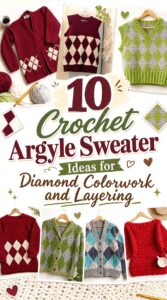
Crochet argyle sweaters can take surprisingly different forms. Some build the design from individual diamond pieces, while others create the pattern directly in the fabric. You can also find sweater vests, long-sleeve pullovers, open cardigans, oversized silhouettes, and Tunisian crochet versions that give the diamonds a different visual character.
This collection focuses on those meaningful differences so you can choose a project by more than its color palette. The first six tutorials directly feature argyle garments. The remaining four are closely related diamond sweater or vest tutorials that can serve as construction references when planning an argyle-inspired adaptation; they should not be treated as complete argyle conversion instructions. Along the way, pay attention to fit, diamond scale, fabric weight, motif placement, and how much colorwork planning you actually want to manage.
Quick List
- Patchwork Diamond Crochet Argyle Sweater Vest
- Oversized V-Neck Crochet Argyle Sweater Vest
- Deep-Contrast Crochet Argyle Sweater Vest
- Planned-Pooling Crochet Argyle Cardigan
- Tunisian Crochet Argyle Tie Cardigan
- Retro-Inspired Crochet Argyle Sweater Vest
- Cropped Crochet Argyle Diamond Vest
- Full-Panel Crochet Argyle Diamond Vest
- Long-Sleeve Crochet Argyle Diamond Pullover
- Relaxed Crochet Argyle Diamond Sweater
Choose the Argyle Construction Before Choosing the Colors
Two argyle garments can look similar from across the room while requiring very different planning. A patchwork version lets individual diamonds become the building blocks of the garment. A planned-pooling cardigan relies on the color sequence within the yarn. Tunisian crochet creates another route, while a conventional diamond sweater can provide a base for an independently planned argyle-inspired color scheme.
That distinction affects what you need to check before committing. For motif construction, compare finished diamond dimensions before assembling a garment. For colorwork worked directly into panels, watch whether the design stays centered as the garment widens or narrows. For planned pooling, changing yarn can alter the color sequence that produces the pattern. Pick the construction method first; choosing colors becomes much easier afterward.
Plan Fit Around the Diamonds, Not the Other Way Around
Argyle makes fit adjustments more visible because increasing or reducing garment width can interrupt the diamond layout. Before copying a tutorial size, compare the tutorial’s finished shape with the amount of room you want at the chest, shoulders, armholes, and hem.
For a motif-built vest, a simple planning example helps: if a finished blocked diamond or square occupies a known width, multiplying that dimension by the number of motifs gives a rough panel span before joins, borders, and intended ease are considered. That is planning math rather than a universal sizing formula.
With continuous panels, make a fabric sample and decide whether adding width leaves the argyle centered. A well-fitting silhouette is more useful than forcing an extra diamond into a space where it distorts the proportions.
Yarn, Drape, and Contrast Change the Finished Sweater
Argyle needs enough visual separation for its diamonds to read clearly, but maximum contrast is not mandatory. A tonal palette can make a sweater quieter, while a strongly contrasting outline turns the diamond grid into the focal point. Before buying all the yarn, place candidate colors together under ordinary daylight and check whether the shapes remain distinguishable.
Also consider what kind of fabric you want. An oversized sweater generally benefits from enough movement that the body and sleeves do not feel rigid, while a vest may tolerate a firmer fabric because it has no sleeve weight. Swatching is especially useful when substituting yarn because the same diamond arrangement can look larger, smaller, softer, or more compact when the yarn and hook combination changes.
1. Patchwork Diamond Crochet Argyle Sweater Vest
 SAVE
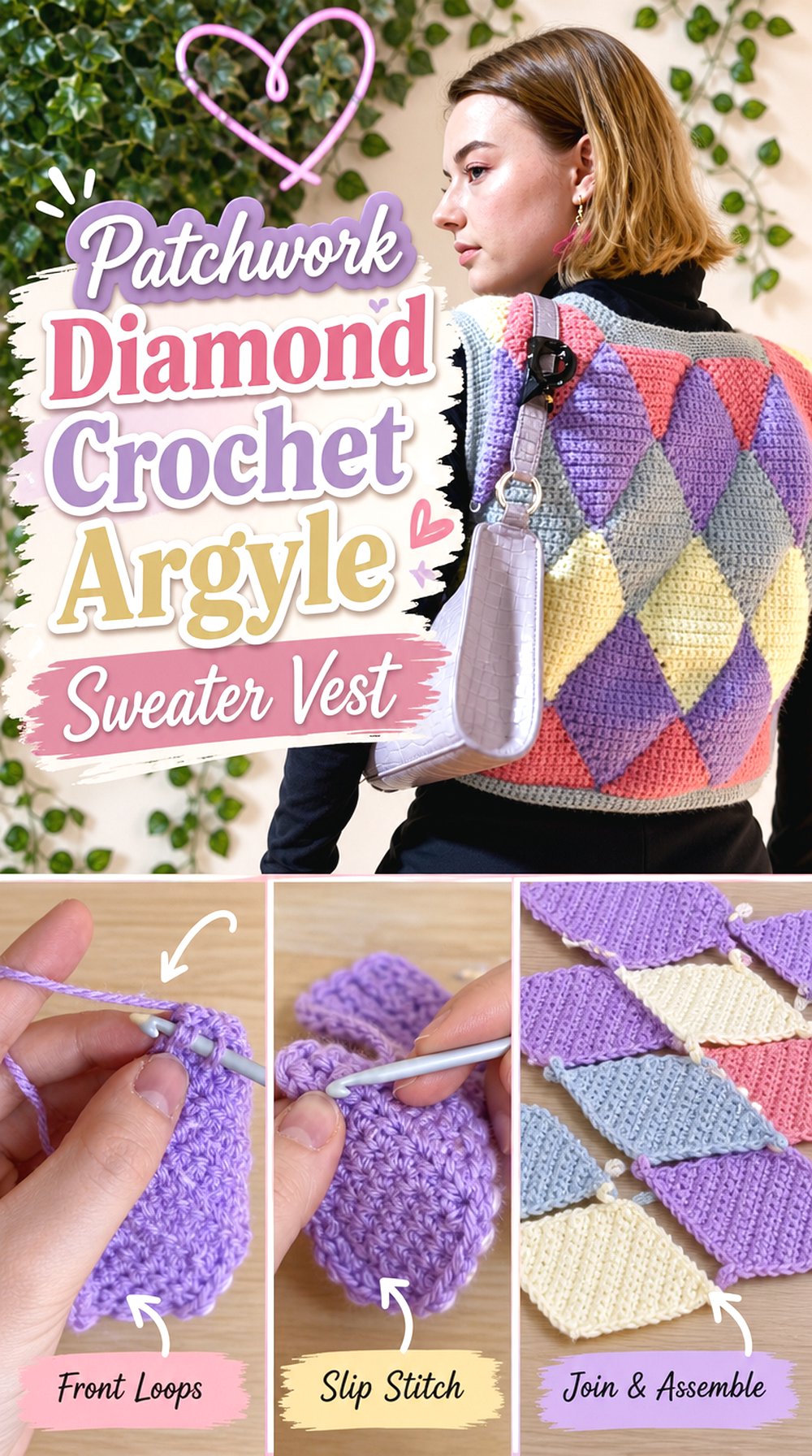
SAVEThis vest makes the geometry itself part of the construction. Instead of treating argyle simply as surface decoration, the design is assembled around crocheted diamond pieces, giving the finished vest a visibly patchworked character. That makes it a strong option when you want the individual color blocks to remain obvious rather than blending into a continuous panel.
Because repeated motifs control much of the shape, this style also rewards careful planning before final assembly. Lay the pieces out as a complete front and back arrangement first, especially if you want to alter the width, length, or placement of the contrasting diamonds.
Match Every Diamond Before Final Assembly
Small differences between repeated motifs become much easier to see once geometric pieces meet edge to edge. Compare the finished pieces before joining them and set aside any noticeably different ones. If you plan to change yarn or hook size from the tutorial, make several diamonds first rather than assuming they will occupy the same space as the originals.
Use the Layout to Control Visual Weight
A full field of alternating diamonds creates a busier garment than a design with more background color around the neckline or sides. Before joining, photograph or sketch the layout. This gives you a chance to move stronger colors away from an area where they feel crowded and helps prevent accidentally repeating an unwanted color sequence.
Neckline Edging Has to Work With the Patchwork
The raw motif layout and the finished neckline are two different visual stages. Check how much the border changes the opening before deciding that the vest feels too wide or too angular. If you adapt the layout, make sure the motifs around the neck leave enough room for a clean finishing edge rather than forcing the border to compensate for an uneven opening.
Creator: flotjetops
2. Oversized V Neck Crochet Argyle Sweater Vest
 SAVE
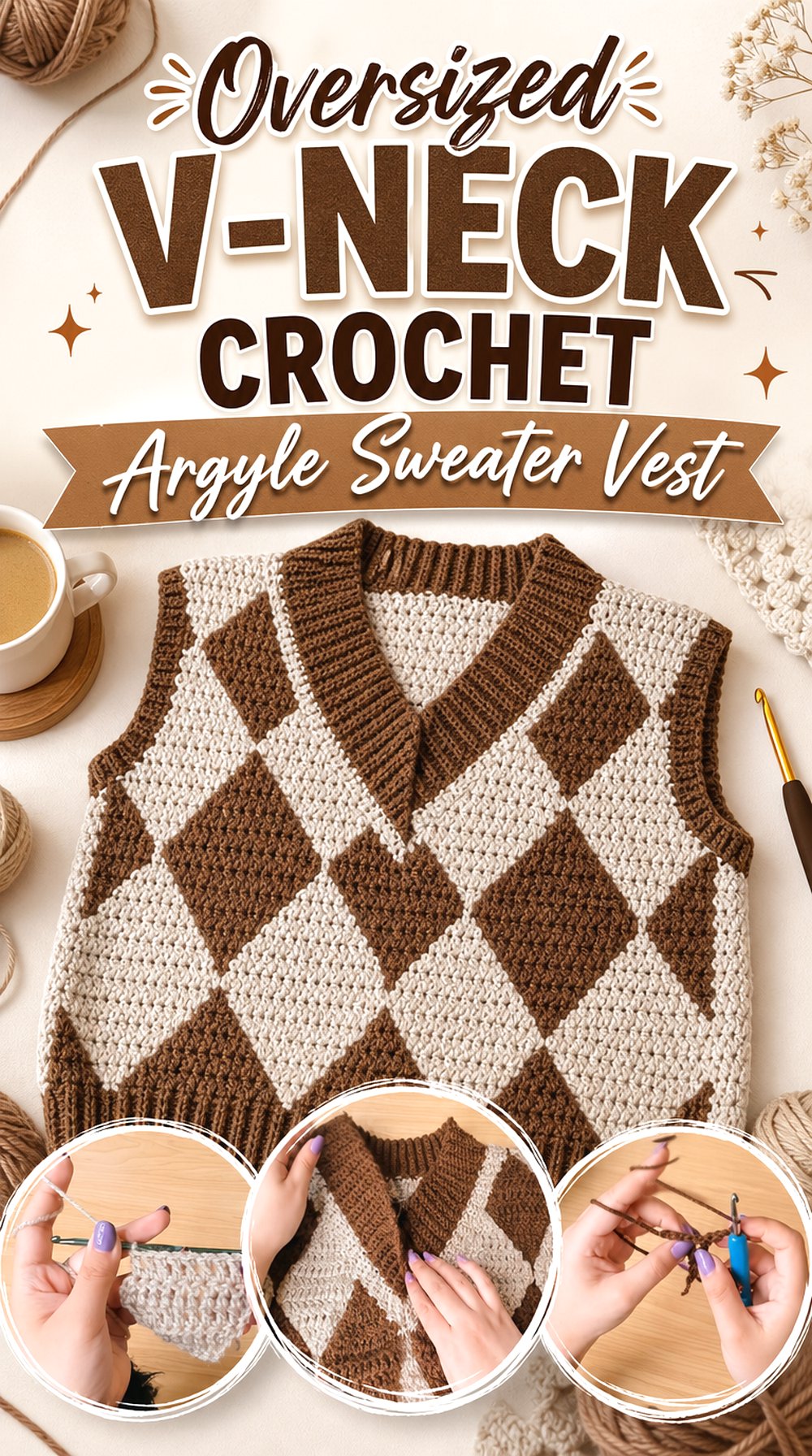
SAVEAn oversized V-neck changes the feel of argyle from neat and traditional to relaxed and graphic. This version is particularly useful if you want a vest that can sit over a shirt, long-sleeve tee, or other light layer without looking closely fitted. The larger body also provides more uninterrupted space for the diamond arrangement.
The tutorial itself identifies the project as an oversized argyle sweater vest, making it a useful reference for readers who care as much about silhouette as the motif. Before adapting the dimensions, focus on shoulder width and armhole room rather than simply adding more width everywhere.
Oversized Should Not Mean an Uncontrolled Shoulder
Extra chest room and extra shoulder width do not create the same result. A wider shoulder can intentionally produce a dropped look, but too much width may also make the armhole sit farther down than expected. Compare a garment you already like with the tutorial silhouette and decide where you actually want the additional room.
Let the V-Neck Break Up the Diamond Field
A V-neck naturally interrupts the grid at the center front. Instead of treating that interruption as a problem, use it to balance a busy argyle layout. Before committing to your colors, imagine which diamonds will be cut visually by the neckline and whether the strongest color should sit directly beside the opening or farther toward the sides.
Check the Vest Over the Layer You Will Wear
A sweater vest that feels roomy over a thin top can fit differently over a collared shirt or thicker layer. When assessing your work, try it over the type of clothing you expect to pair with it. That gives a more useful fit checkpoint than measuring the vest in isolation.
Creator: Cherilyn Q
3. Deep Contrast Crochet Argyle Sweater Vest
 SAVE
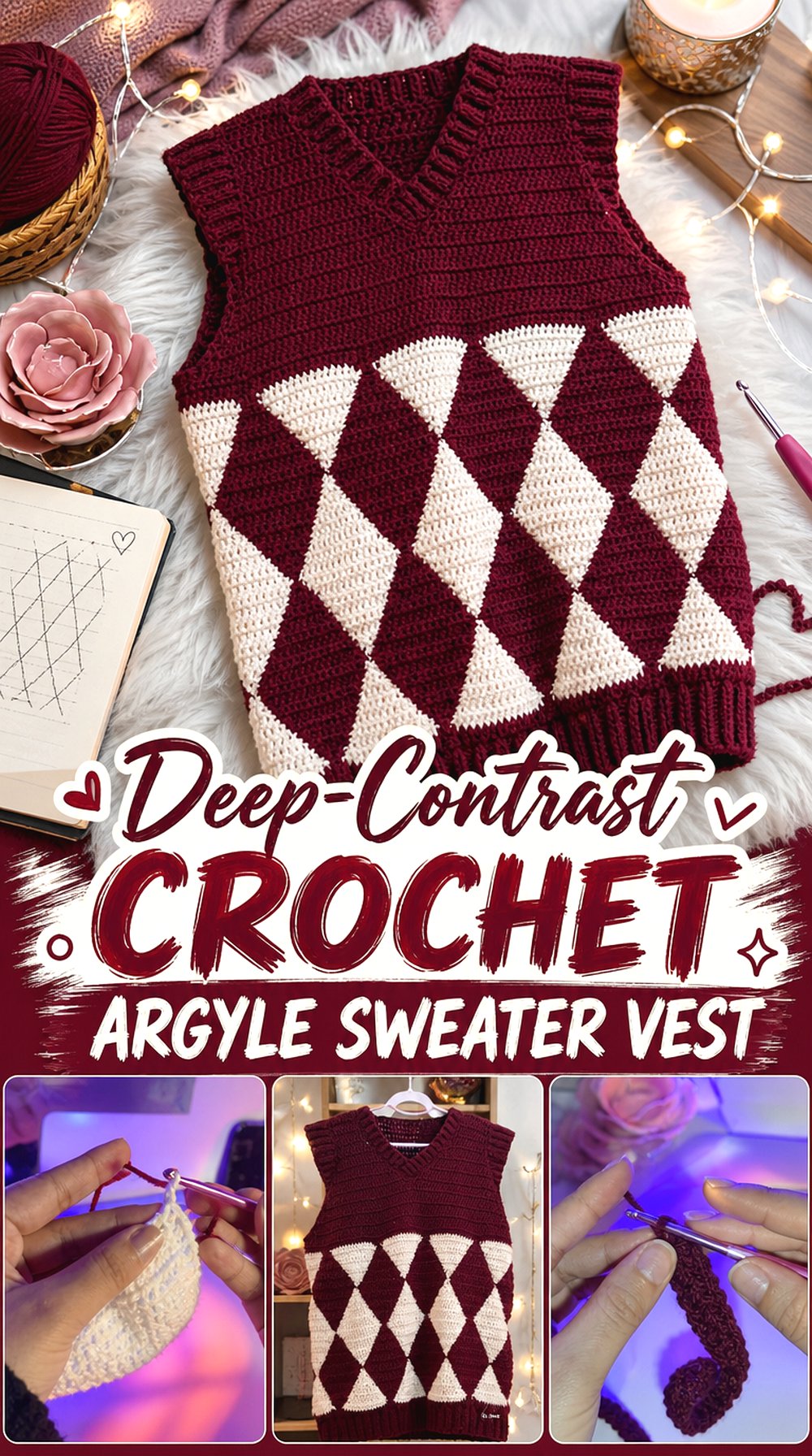
SAVEThis argyle vest uses a strong multicolor diamond treatment, making it a useful reference when the pattern itself is meant to dominate the garment. The source tutorial specifically presents an oversized argyle sweater vest and includes the diamond motif, assembly, and border portions of the project.
A high-contrast approach deserves more planning than simply choosing three colors you like individually. The eye follows repeated diamonds across the body, so a color that seems minor in one motif can become surprisingly prominent once it repeats across an entire panel.
Test the Palette as Repeating Diamonds
Make your color decision with repetition in mind. A small yarn bundle does not show how ten or more strong shapes will interact across a garment. Arrange sample diamonds together, or use a simple colored sketch, to see which shade becomes dominant once the motif repeats.
Keep Assembly Lines Visually Consistent
On a geometric garment, joins can become part of the design whether you intend them to or not. As you assemble motifs, periodically lay the work flat and look along the diagonal lines. If a join pulls one diamond out of alignment, correcting it early is easier than trying to disguise the shift with the final border.
Ribbing Can Calm a Busy Body
A strongly patterned vest often benefits from a visually quieter neckline, armhole, and hem treatment. If you change the border color, compare a matching shade with a neutral or background shade before deciding. The edging can either frame the argyle or introduce another competing line around it.
Creator: mytearsarecrocheting
4. Planned Pooling Crochet Argyle Cardigan
 SAVE
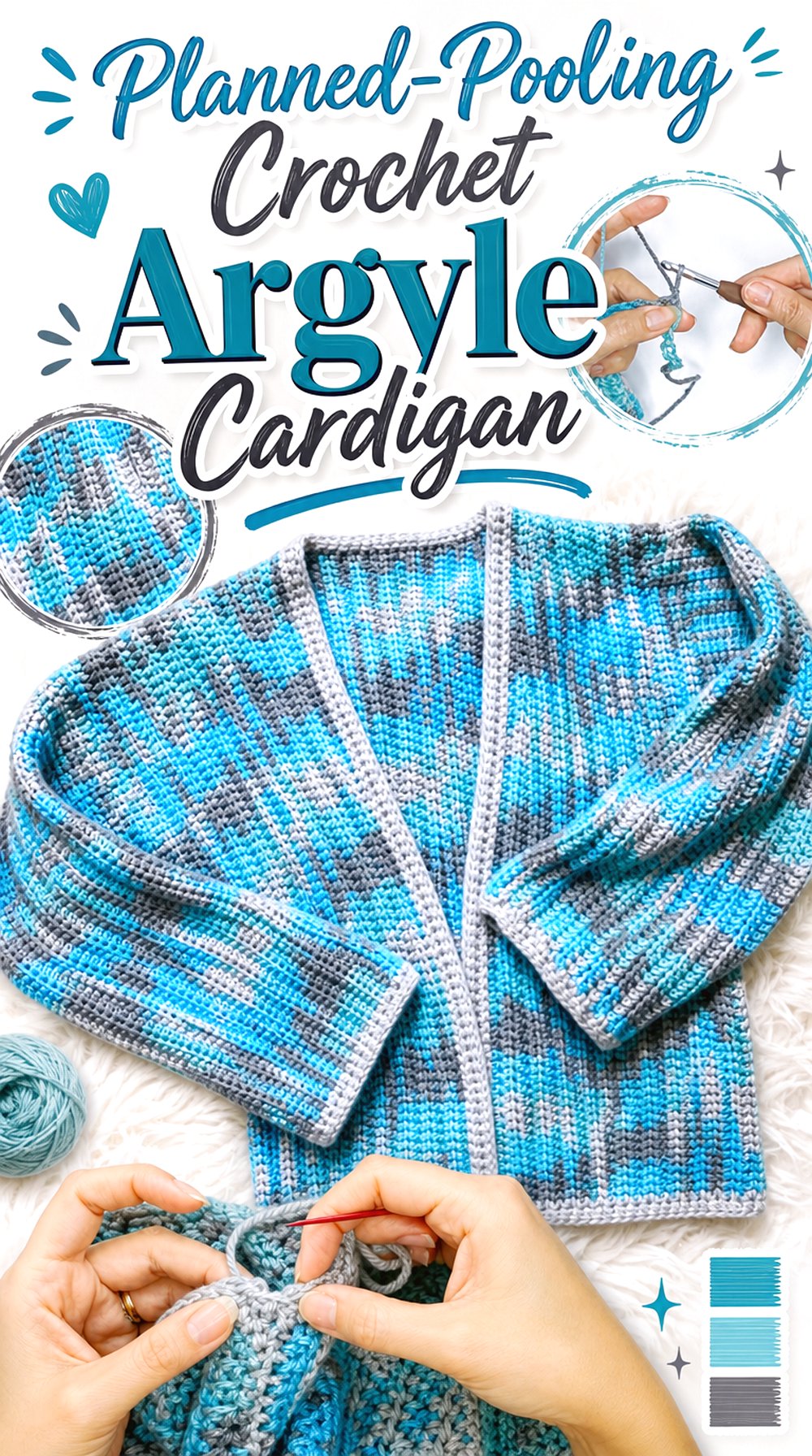
SAVEThis cardigan takes a completely different route from separately crocheted diamonds. The tutorial creates an argyle cardigan through planned pooling, using the repeating color sequence of the yarn to form the pattern. That makes it one of the most distinctive choices in this collection for anyone more interested in controlled color placement than patchwork assembly.
The open cardigan format also changes how the argyle is viewed. Instead of one uninterrupted front panel, the design is divided by the opening, so symmetry and pattern alignment become useful things to watch while the garment develops.
The Yarn Sequence Is Part of the Design
With planned pooling, variegated yarn is not simply decorative. Its color sequence helps determine the visible pattern. If you substitute another yarn, do not assume it will produce the same argyle effect because the colors look similar in the skein. Test the repeat first and confirm that the pooling behavior suits the intended fabric.
Check Both Fronts as a Pair
An open cardigan is viewed as two front sections at once. Lay them side by side periodically and check whether you like the relationship between the pattern on the left and right. Perfect mirroring may not be necessary, but an accidental shift can look more obvious when the opening creates a strong center line.
Sleeve Weight Can Change the Hang
Cardigans have more fabric than sweater vests, so sleeve and body weight matter when assessing the finished drape. Before adding extra length, consider how much fabric the shoulder area will be supporting. A cardigan that looks balanced laid flat can hang differently once the sleeves and borders are attached.
Creator: TheKnottyLace
5. Tunisian Crochet Argyle Tie Cardigan
 SAVE
SAVETunisian crochet gives the argyle cardigan another visual direction. Mode Bespoke’s tutorial is specifically an argyle cardigan made with Tunisian crochet, and the video includes panel construction, assembly, and ties. The result offers a useful alternative for crocheters who want a more continuous diamond field without using the same method as a patchwork vest.
The tie-front detail also changes the garment’s function. Instead of a broad button band or fully open front, the closure remains light, allowing the patterned panels to stay prominent.
Sample the Tunisian Fabric Before Sizing
Do not transfer measurements from a conventional crochet vest directly to a Tunisian version without checking the actual fabric. Make a sample using the intended yarn and technique, then evaluate both dimensions and hand. The goal is to know how your fabric behaves before committing to a full panel.
Decide Where the Front Ties Should Meet
A tie closure creates a focal point at the center front. When considering length or placement changes, look at where the ties will sit relative to the diamonds. Moving the closure significantly can alter the visual balance even if the cardigan still fits around the body.
Give the Panels a Flat Checkpoint
Geometric colorwork is easiest to evaluate when the panels can be viewed flat. Before final assembly, compare the major diamond lines and check for obvious differences in panel length or width. This is also the point to decide whether blocking or minor finishing adjustments are needed before joining.
Creator: Mode Bespoke
6. Retro Inspired Crochet Argyle Sweater Vest
 SAVE
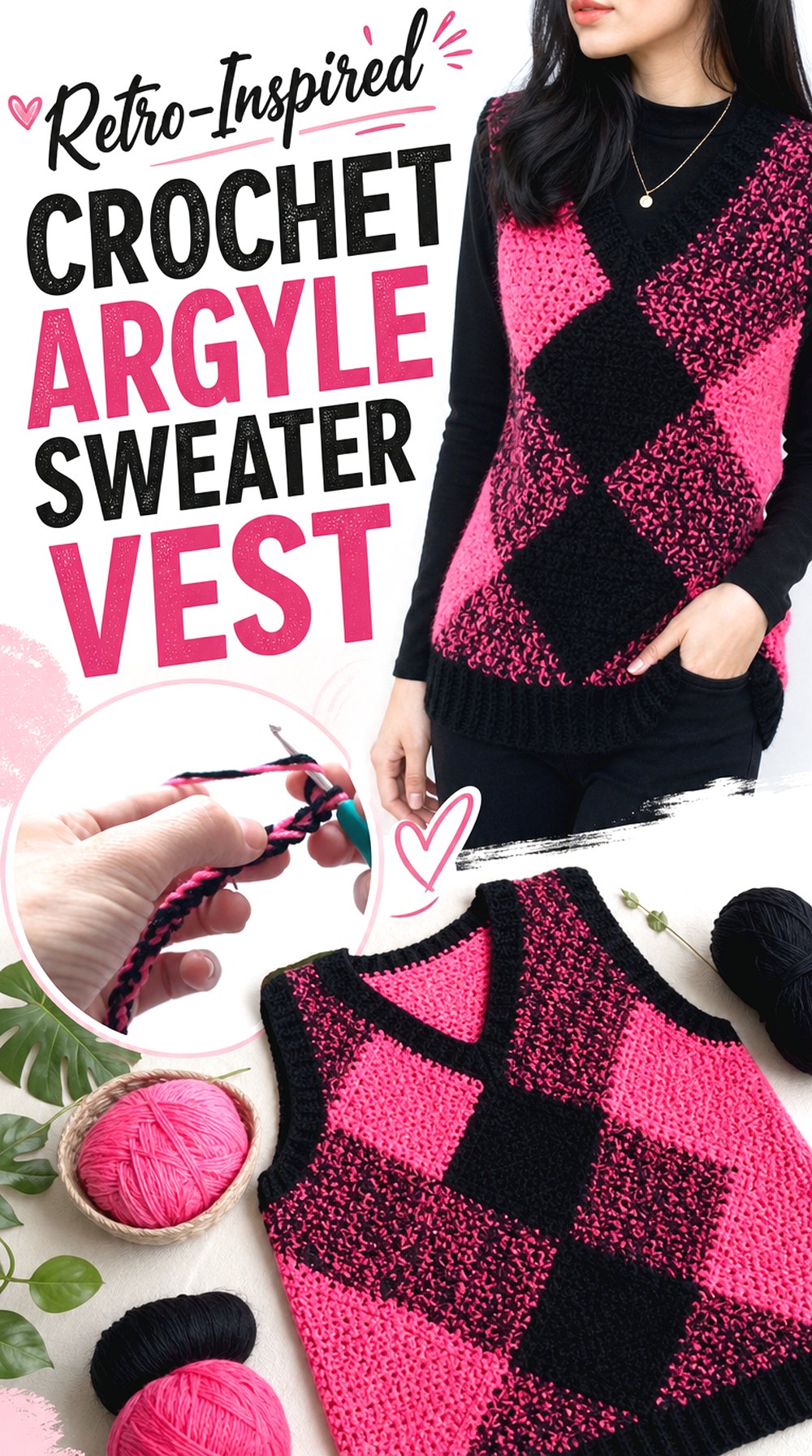
SAVEA classic sweater-vest silhouette lets the diamonds carry most of the personality without competing with sleeves or a cardigan opening. By StellaM’s tutorial specifically presents a crochet argyle sweater vest associated with an Emily in Paris inspiration. That makes it useful for readers drawn to a fashion-forward interpretation of a traditionally preppy motif.
This is also a good project type for experimenting with a more deliberate front panel. Because the vest is visually compact, the relationship between neckline, diamond placement, hem, and armholes becomes especially noticeable.
Center the Motif Before Adjusting the Width
If you need a wider or narrower vest, decide first what must remain visually centered. Adding space only at one side of a geometric pattern can make the front look shifted even when the garment measurements are correct. Map the center front and work outward when planning any significant change.
Treat the Armholes as Part of the Composition
An armhole removes fabric from the upper sides of the diamond field. Check what happens to the outer motifs as the opening develops. If an adaptation leaves only a small fragment of a contrasting diamond beside the armhole, decide whether that fragment looks intentional or whether the color layout should move inward.
Keep Retro Styling Separate From Fit
A vintage-inspired appearance does not require copying the exact proportions of the tutorial. You can preserve the argyle palette and V-neck character while choosing a body length or amount of ease that better suits your wardrobe. Separate the features you like visually from the measurements that need to work for you.
Creator: By StellaM
7. Cropped Crochet Argyle Diamond Vest
 SAVE
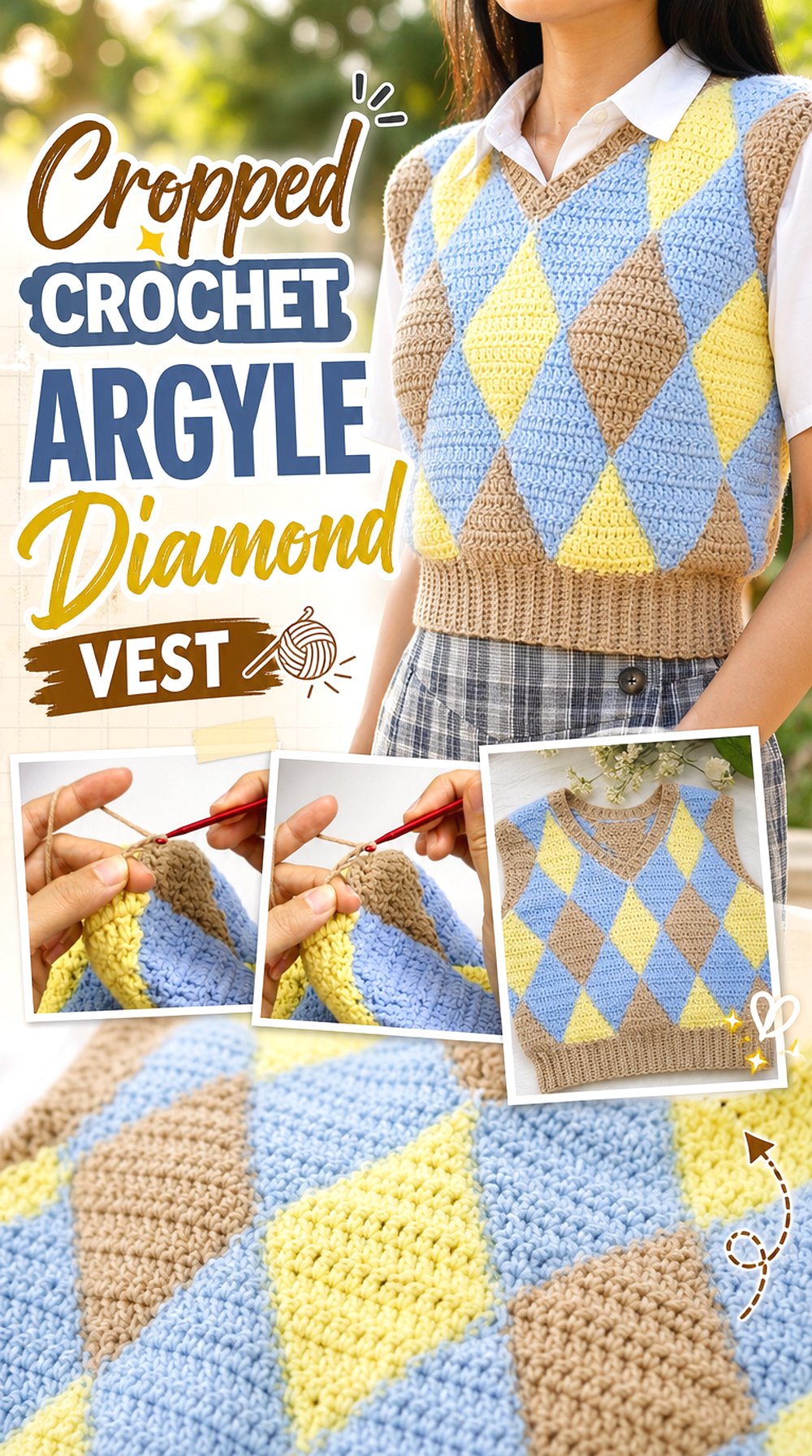
SAVEChenda DIY’s source is a diamond vest tutorial rather than a dedicated classic argyle tutorial. It belongs here as an adaptation reference for readers who want a shorter, more compact diamond vest and are prepared to plan the argyle color arrangement separately.
The cropped scale can make an argyle layout feel especially bold because fewer motifs occupy the body. Instead of squeezing in every color idea, this shape works better when the diamond arrangement is planned around the available vertical space before construction begins.
Fewer Rows of Diamonds Make Placement More Important
On a shorter vest, each major motif occupies a larger share of the visible garment. Sketch the front at roughly the intended proportions and decide what should happen at the neckline and hem. A diamond that would disappear harmlessly on a long sweater may become an awkward half-motif when there is less vertical room.
Confirm the Cropped Length on Your Body
“Cropped” is a styling description, not one fixed measurement. Measure from the shoulder to the point where you want the vest to end, then compare that with a garment you already wear comfortably. Remember that any hem finishing will also affect the final visual endpoint.
Adapt the Colorwork Independently
The tutorial supports the diamond-vest construction, not a complete classic argyle conversion. If you want contrasting diamonds plus crossing accent lines, plan those additions as a separate design decision and make a sample first. Avoid assuming that a decorative technique can simply be added after the garment is complete without affecting the fabric.
Creator: Chenda DIY
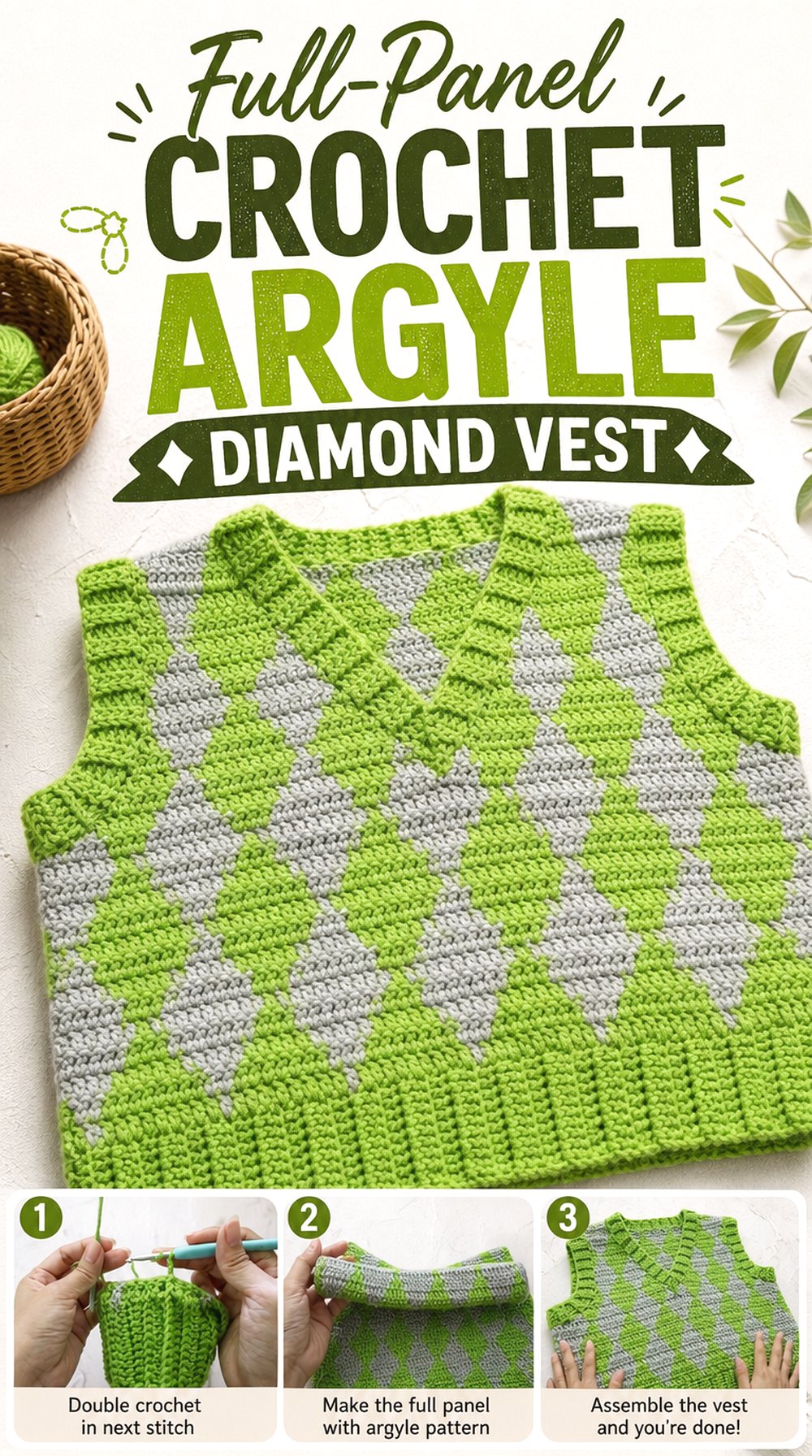
8. Full Panel Crochet Argyle Diamond Vest
 SAVE
SAVEVyva ‘s Crochet provides another diamond-vest construction reference, with the finished garment organized around repeated diamond shapes. For an argyle article, its value is the opportunity to think in larger uninterrupted panels rather than treating every vest as the same patchwork layout.
This source is not presented as a complete traditional argyle conversion tutorial. Instead, use it to study a diamond-focused vest silhouette and decide independently whether contrasting colors, outlines, or another argyle treatment will suit the structure.
A Larger Diamond Changes the Rhythm
Diamond scale influences how busy a finished vest looks. Fewer large diamonds can read as graphic blocks, while many small ones create a denser repeat. Before adapting the colors, consider whether your preferred argyle look depends on numerous repeated motifs or a smaller number of statement diamonds.
Watch the Side Edges of the Pattern
A front panel can look centered while still ending awkwardly at the sides. When mapping an argyle-inspired arrangement, check both the center and outer edges. Decide whether partial diamonds at the side seams look intentional and whether the back should continue the same rhythm or use a quieter treatment.
Finish the Neck Before Judging the Proportions
Neckline finishing can make a substantial visual difference to a diamond vest because the V or scoop creates a strong boundary against the motif. Evaluate the garment again after the border is in place rather than deciding too early that the upper diamonds appear incomplete.
Creator: Vyva ‘s Crochet
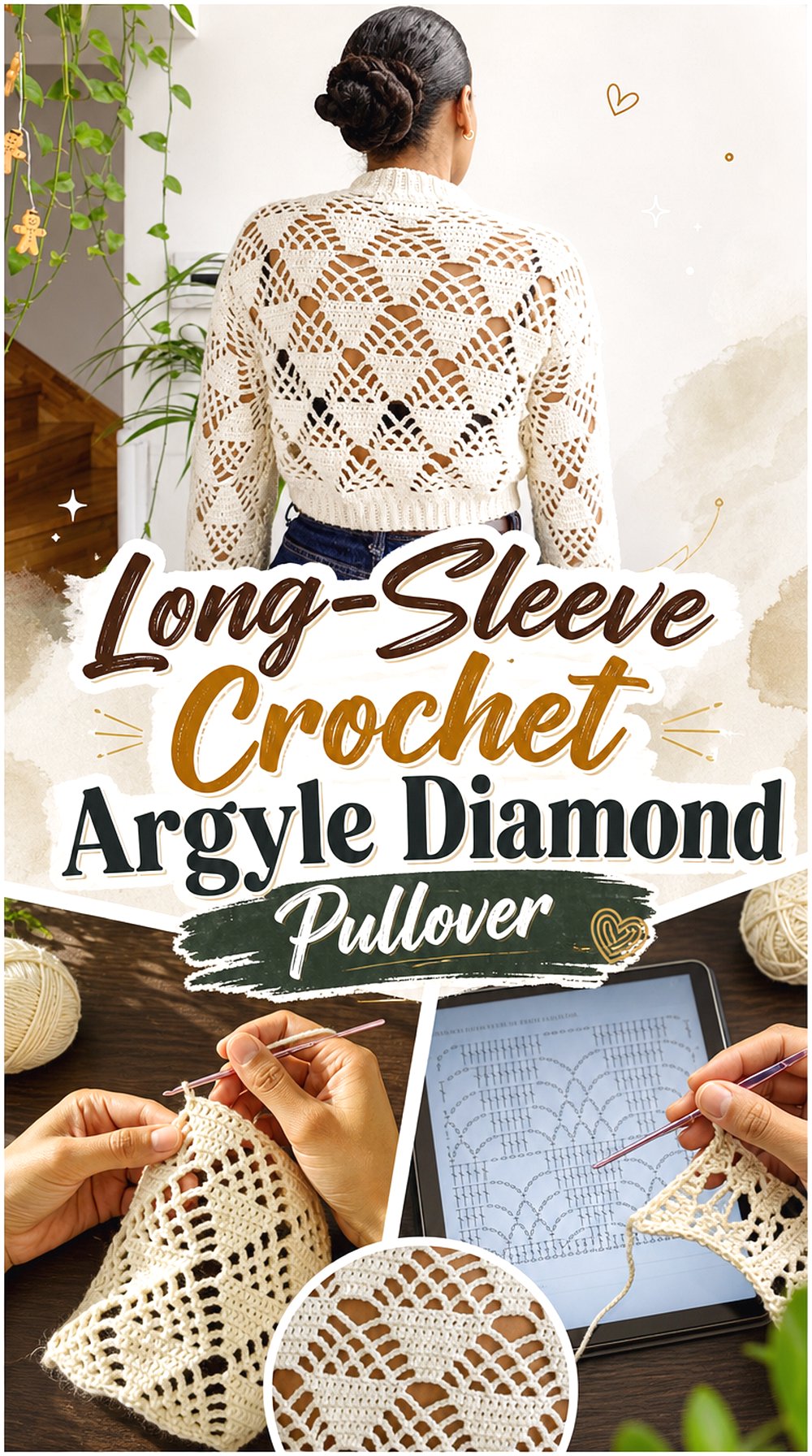
9. Long Sleeve Crochet Argyle Diamond Pullover
 SAVE
SAVEA long-sleeve pullover gives argyle much more surface area than a vest. Crochet With Aisha’s source is a full diamond sweater tutorial, not an explicitly classic argyle tutorial, so it works here as a garment-construction reference for readers planning their own argyle color treatment. The channel lists the tutorial as a full-length crochet diamond sweater project.
The extra sleeve area creates an important design choice: continue the diamonds beyond the body, or let the sleeves become a quieter frame for a patterned front and back.
Decide Whether the Sleeves Need Argyle
Repeating full argyle across the sleeves can create a much denser garment than keeping the motif mainly on the torso. Sketch both options before starting. Plain, tonal, striped, or selectively patterned sleeves can preserve the sweater’s diamond identity without requiring every surface to carry equal visual weight.
Shoulder Alignment Becomes More Noticeable
When a strong diamond field approaches a shoulder or sleeve seam, interruption is unavoidable. Rather than trying to hide every break, decide where you want the motif to stop. A deliberate boundary often reads more cleanly than squeezing partial diamonds into narrowing garment sections.
Allow for the Weight of a Full Sweater
A long-sleeve pullover contains much more crocheted fabric than a sleeveless vest. When selecting yarn or adding length, assess a substantial sample rather than judging only a small swatch. The finished fabric needs to suit the amount of garment it will become, especially around the shoulders and sleeves.
Creator: Crochet With Aisha
10. Relaxed Crochet Argyle Diamond Sweater
 SAVE
SAVEFor readers who want a full sweater rather than a vest or cardigan, SIL TODESCHINI’s diamond sweater provides a second long-sleeve construction direction. The source is explicitly a crochet diamond sweater tutorial, but not a dedicated classic argyle tutorial.
That distinction matters. The project is useful for exploring how a diamond texture or arrangement behaves across a larger pullover silhouette, while the argyle palette and crossing-line effect—if desired—should be treated as an independent adaptation rather than something supplied by the source.
Tonal Argyle Can Keep the Sweater Quieter
A full pullover already carries a large amount of visible crochet texture. If high contrast feels too busy, consider neighboring shades rather than abandoning the diamond concept. Test them together first; the key is retaining enough distinction for your intended pattern to remain readable.
Keep the Hem From Competing With the Diamonds
The lower edge creates another strong horizontal line beneath a geometric body. Before adding a visually heavy border, compare how the sweater looks with a simple frame. A quieter hem can let the diamonds remain dominant, while a contrasting hem intentionally creates a more graphic outline.
Treat Any Argyle Overlay as a Separate Sample
If you want to add crossing lines or surface decoration to create a stronger argyle impression, test the technique on a swatch made from the same fabric first. Check the reverse side, flexibility, and distortion before applying it to an entire sweater. The goal is an adaptation that works with the base fabric rather than fighting it.
Creator: SIL TODESCHINI
Which Crochet Argyle Sweater Style Should You Choose?
For the clearest classic sweater-vest look, start with the flotjetops, Cherilyn Q, mytearsarecrocheting, or By StellaM options. They put the diamond arrangement at the center of a sleeveless garment, making the motif easy to compare before you commit to sleeves.
Choose TheKnottyLace if planned pooling is the technique you want to explore, while Mode Bespoke offers the most distinct alternative through Tunisian crochet.
The final four ideas are better treated as adaptation routes. Chenda DIY and Vyva ‘s Crochet are useful when the desired silhouette is a diamond vest, while Crochet With Aisha and SIL TODESCHINI provide full-sweater references. For those projects, plan the actual argyle color treatment separately rather than assuming the tutorial includes it.
Conclusion
The most useful way to choose a crochet argyle sweater is to start with construction and silhouette. Pick a patchwork vest if you enjoy arranging individual geometric pieces, an oversized V-neck if layering space matters, planned pooling if the yarn’s color repeat interests you, or Tunisian crochet if you want a different fabric-building approach. Full pullovers give you more room for diamonds but also make yarn weight, sleeve treatment, and pattern placement more important.
For the four diamond-based adaptation ideas, separate the garment construction from your argyle planning and sample the proposed color treatment first. Once you choose a direction, use the original tutorials for their exact construction details rather than trying to reconstruct the creators’ methods from a roundup.
Frequently Asked Questions
What is the difference between a crochet diamond sweater and a crochet argyle sweater?
A diamond sweater only needs a visible diamond design, which may come from texture, lace, motifs, or colorwork. Classic argyle usually relies on repeated diamonds plus an additional diagonal-line effect. That is why a diamond-sweater tutorial can be useful for garment construction without automatically teaching a full argyle design. Check the finished result before assuming the terms are interchangeable.
Should I choose my argyle colors before deciding on the sweater construction?
Choose the construction first whenever possible. Separate motifs, continuous colorwork, planned pooling, and Tunisian crochet place different demands on the yarn. A palette that is simple to manage with individual diamonds may be less practical for another technique. Once the method is clear, test your colors together and make sure the diamond boundaries remain readable.
How can I resize a motif-based crochet argyle sweater vest?
Start with the dimensions of the actual finished motifs and the body measurements you want the vest to accommodate. Arrange the motifs physically or on paper before joining. Adding one complete motif can create a relatively large jump in panel width, so sometimes changing borders, motif scale, or the overall layout works better than simply adding another full column.
Should the argyle pattern continue onto sweater sleeves?
It does not have to. Continuing the diamonds can create a highly patterned statement sweater, while simpler sleeves keep attention on the torso and reduce the number of motif interruptions around shaping. Sketch both versions before committing. For a full long-sleeve garment, also consider whether repeating dense colorwork across the sleeves creates more visual or physical weight than you want.
What should I check before substituting yarn in an argyle sweater tutorial?
Make a sample with the substitute yarn and compare its dimensions, flexibility, stitch definition, and color contrast with what you want from the finished garment. This matters even more with planned pooling because the yarn’s repeating color sequence contributes directly to the pattern. For motif projects, confirm the finished motif dimensions before making the entire set.
Do I need to block crochet diamonds before assembling an argyle vest?
When separate motifs need to meet in an orderly geometric arrangement, comparing them in their finished, settled dimensions can make layout planning easier. Follow the care instructions appropriate to the yarn and the creator’s guidance rather than assuming one blocking method suits every fiber. The practical goal is to identify inconsistent motif dimensions before permanent assembly.