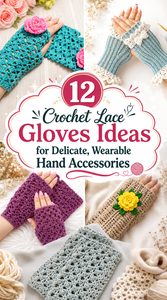
Crochet lace gloves can range from barely-there fishnet accessories to fitted fingerless mitts with enough fabric to feel practical in cooler weather. The biggest differences are not simply decorative. Cuff construction, lace density, thumb shaping, yarn thickness, finger coverage, and overall length all change how a pair fits and how easily it can be worn.
The 12 ideas below cover full-finger mesh gloves, bridal lace, floral accents, Victorian styling, shell patterns, open mesh, and compact wrist designs. Rather than treating them as interchangeable, use the fit and material notes to decide which construction suits your intended outfit and level of hand coverage. For exact stitch sequences and assembly, follow the credited original tutorials.
Quick List
- Crochet Full-Finger Mesh Lace Gloves
- Crochet Fantail Lace Fingerless Mitts
- Crochet Pearl-Button Lace Wrist Gloves
- Crochet Ribbed-Cuff Cluster Lace Gloves
- Crochet Bridal Fan-Lace Fingerless Gloves
- Crochet Shell-Lace Wrist Warmers
- Crochet Flower-Accent Lace Fingerless Gloves
- Crochet Long Open-Mesh Fingerless Gloves
- Crochet Fishnet Statement Gloves
- Crochet One-Piece V-Stitch Fingerless Gloves
- Crochet Victorian Ribbon-Accent Fingerless Gloves
- Crochet Lightweight Lacy Fingerless Gloves
Check Hand Fit Before Choosing a Lace Glove Style
Lace is visually open, but that does not mean fit is forgiving. A mesh that stretches comfortably across the palm can still pull around the thumb opening, while a cuff that looks narrow may stretch considerably if its construction has good recovery.
Before choosing a tutorial, compare your wrist, the widest area of your hand, and the length you want the glove to cover. If a creator provides gauge or finished measurements, use those rather than assuming a general size label will fit. Also notice where the least stretchy part sits. A decorative cuff, dense border, or fitted finger section can become the limiting point even when the main lace fabric has room.
For fingerless designs, try-on checkpoints around the thumb base and knuckles are especially useful because that is where proportion differences become noticeable.
Lace Density and Yarn Choice Change the Finished Character
Two gloves can both be described as lace while behaving very differently. Large chain spaces create a light, graphic mesh with plenty of skin showing through. Shells, fans, and clusters produce a denser surface with decorative openings between motifs. Fine thread emphasizes detail, while a thicker yarn can make the same general idea feel more like a hand warmer.
Fiber matters too. A yarn with resilient recovery can help a fitted glove return toward its original shape after stretching over the hand. Smoother fibers may highlight intricate lace particularly well, while fuzzy yarn can soften or obscure small openings.
When substituting yarn, do not compare weight alone. Make a sample, stretch it gently, and decide whether the resulting fabric gives you the definition, drape, and recovery you want.
Choose Coverage According to How You Plan to Wear the Gloves
Full-finger lace gives the most traditional glove silhouette, but it also requires the closest attention to finger fit. Fingerless gloves leave the fingertips completely available and are generally easier to combine with everyday tasks. Fishnet and large mesh options work especially well when the accessory is meant to be seen rather than provide substantial coverage.
Cuff length changes the styling too. Short designs sit close to the wrist and are easy to layer with sleeves. Longer versions create more visual impact and need enough room through the wrist and lower forearm to stay comfortable.
For formal outfits, fine lace, fan motifs, or vintage detailing may be the priority. For casual wear, a more substantial shell or cluster fabric may offer the balance you want.
1. Crochet Full Finger Mesh Lace Gloves
 SAVE
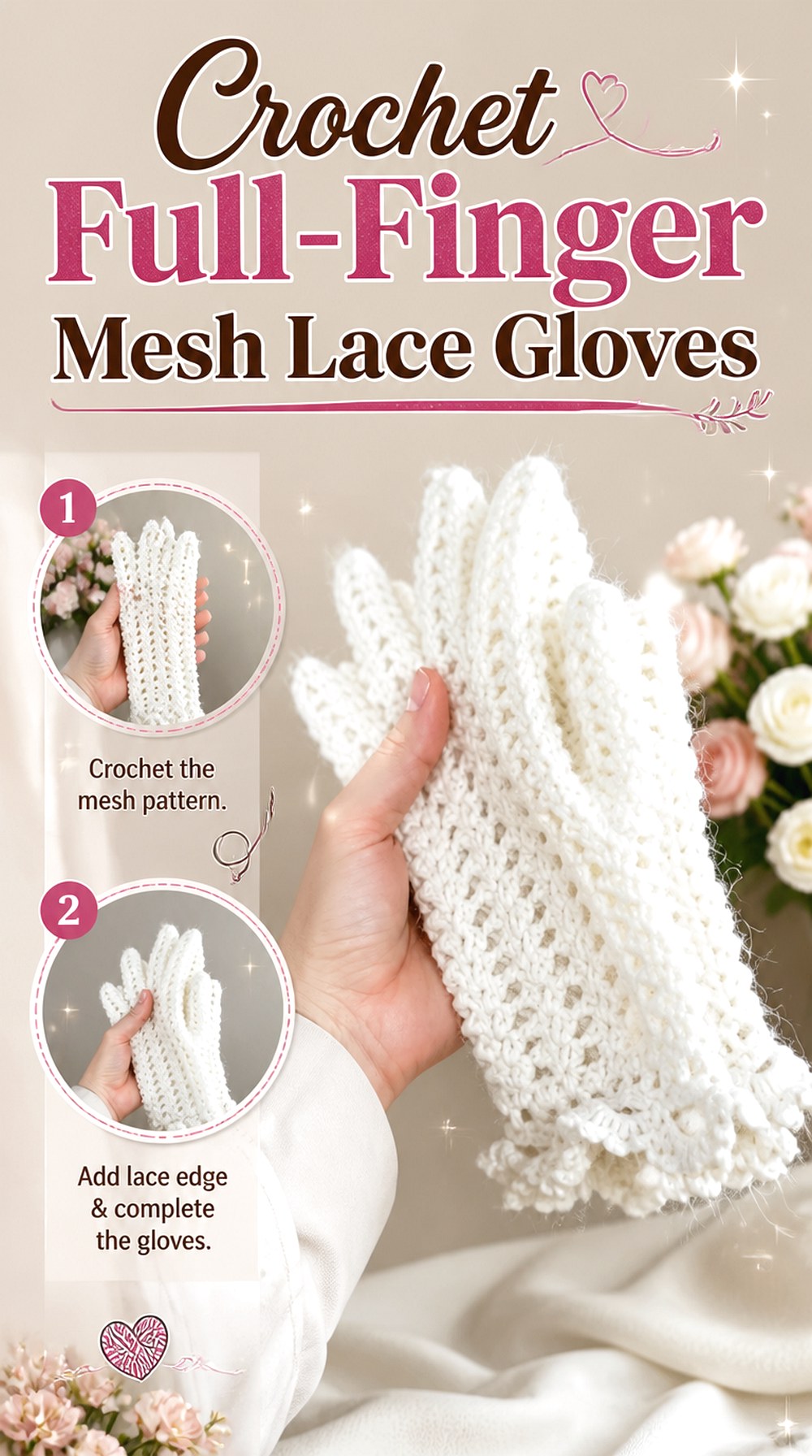
SAVEThis is the most glove-like option in the collection because the finished piece continues beyond the hand into individual fingers rather than stopping at the knuckles. DIYGuru’s tutorial combines an open mesh body with a decorative lace edge, producing a retro-inspired silhouette with noticeably more coverage than the fingerless projects below. The finished shape makes sense when you want delicate openwork without giving up the visual effect of traditional gloves.
Because separate fingers introduce more fit points, this is also a project where hand proportions matter. Check the tutorial’s sizing information and try-on guidance rather than concentrating only on palm circumference.
Separate Fingers Make Fit More Exacting
With fingerless mitts, extra room near the knuckles may be tolerable. Individual crocheted fingers are less forgiving because differences in finger length and circumference become visible and can affect movement. Pay attention to how the tutorial establishes its fit, and compare your own hand as the work develops.
If you plan to substitute yarn, make sure the new fabric does not become dramatically stiffer. A beautiful mesh that cannot flex comfortably around finger joints will not behave like the original fabric.
The Lace Border Becomes a Deliberate Finish
The decorative edge is more than an afterthought here because it contrasts with the mesh over the hand and helps establish the vintage look. If you change yarn or color, inspect whether that edging still has enough stitch definition to remain visible.
This style is a strong choice when you want the lace itself to be the focal point. For very casual use, a simpler fingerless construction may require less detailed fitting and finishing.
2. Crochet Fantail Lace Fingerless Mitts
 SAVE
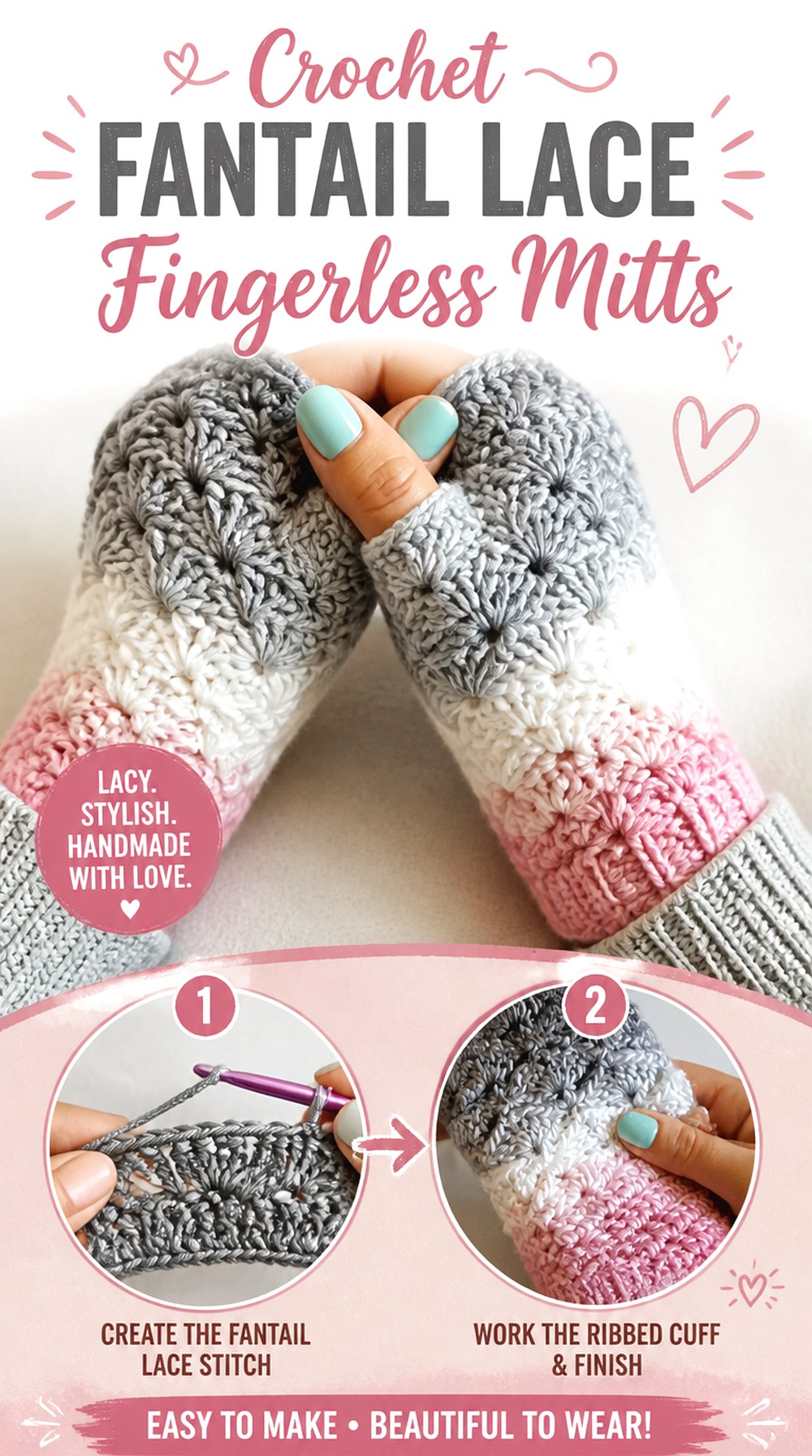
SAVEThese Crochet Fantail Lace Fingerless Mitts use repeating shell-like fans to make the surface itself decorative. Unlike an extremely open fishnet glove, the motif creates larger areas of crochet surrounded by smaller openings, so the finished pair has a more substantial visual presence. Hooked by Robin’s tutorial works the fan texture across a fingerless glove with a dedicated thumb opening, making it a useful direction for anyone who wants lace without the sparse appearance of large mesh.
The curved motif also makes multicolor or gradually changing yarn visually prominent. If you prefer the stitch pattern to be easier to read, a quieter color treatment can keep the fan shapes from competing with color changes.
Fantail Motifs Need Room to Stay Recognizable
A decorative repeat can lose much of its identity when the fabric is forced too tight across the hand. When evaluating fit, look not only at whether the glove goes on but whether the fan shapes remain open and balanced once stretched.
The opposite problem matters too. Excess room may let the motifs collapse or shift instead of sitting neatly against the hand. Use the creator’s fit information as your starting point and adjust only when you understand how the fabric behaves.
This Lace Has More Visual Weight Than Mesh
Fantail shells create a fuller surface than chain-heavy fishnet, making these mitts useful when you want the accessory to read as crochet from a distance. That difference can also affect styling: the texture already supplies a lot of detail, so additional embellishment is not necessary for the motif to stand out.
If your yarn has a strong halo, sample first. Soft fuzz can be attractive, but it may blur the clean edges that make repeated fans easy to see.
Original Tutorial and Creator Credit
Creator: Hooked by Robin
3. Crochet Pearl Button Lace Wrist Gloves
 SAVE
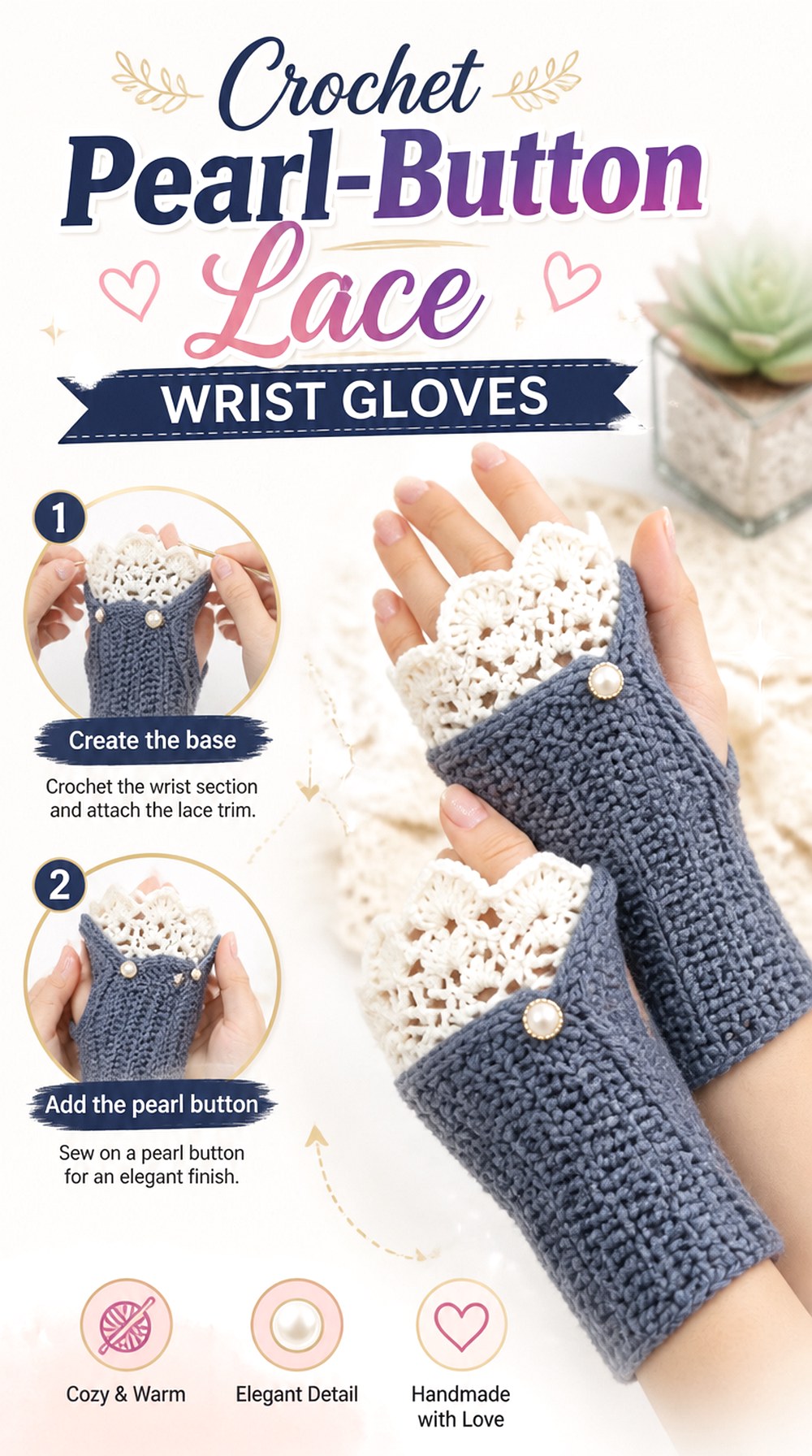
SAVEThese gloves take a more restrained approach to lace. Knot So Hard’s design combines a relatively simple wrist-warmer form with decorative lace edging and a pearl-button accent, so the embellishment is concentrated rather than spread through every part of the fabric. That makes this concept noticeably different from full mesh or all-over fan lace.
The shorter wrist-focused silhouette can work well when you want a decorative accessory peeking from a sleeve instead of a glove extending far over the hand. It is also an interesting direction for formal or vintage-inspired styling because the trim and button supply the focal detail without requiring a complicated all-over motif.
Concentrated Lace Keeps the Main Shape Quiet
When the lace is primarily used as edging, proportion becomes important. A very bulky trim can overwhelm a compact wrist glove, while lace that is too small or soft may disappear against the main fabric.
If you substitute materials, compare the finished body and border together before deciding whether the combination works. The edging should look intentional rather than like a separate decorative strip that happened to be attached afterward.
Treat the Button as an Accent Unless the Design Says Otherwise
The tutorial presents a pearl-button accent, so do not automatically assume the button is responsible for adjusting or securing fit. Decorative and functional closures have different requirements.
If you change the embellishment, think about comfort as well as appearance. A large or heavy button at the wrist may catch under fitted sleeves. A flatter accent can preserve the dressy look when the gloves will be worn beneath a jacket or coat cuff.
Original Tutorial and Creator Credit
Creator: Knot So Hard
4. Crochet Ribbed Cuff Cluster Lace Gloves
 SAVE
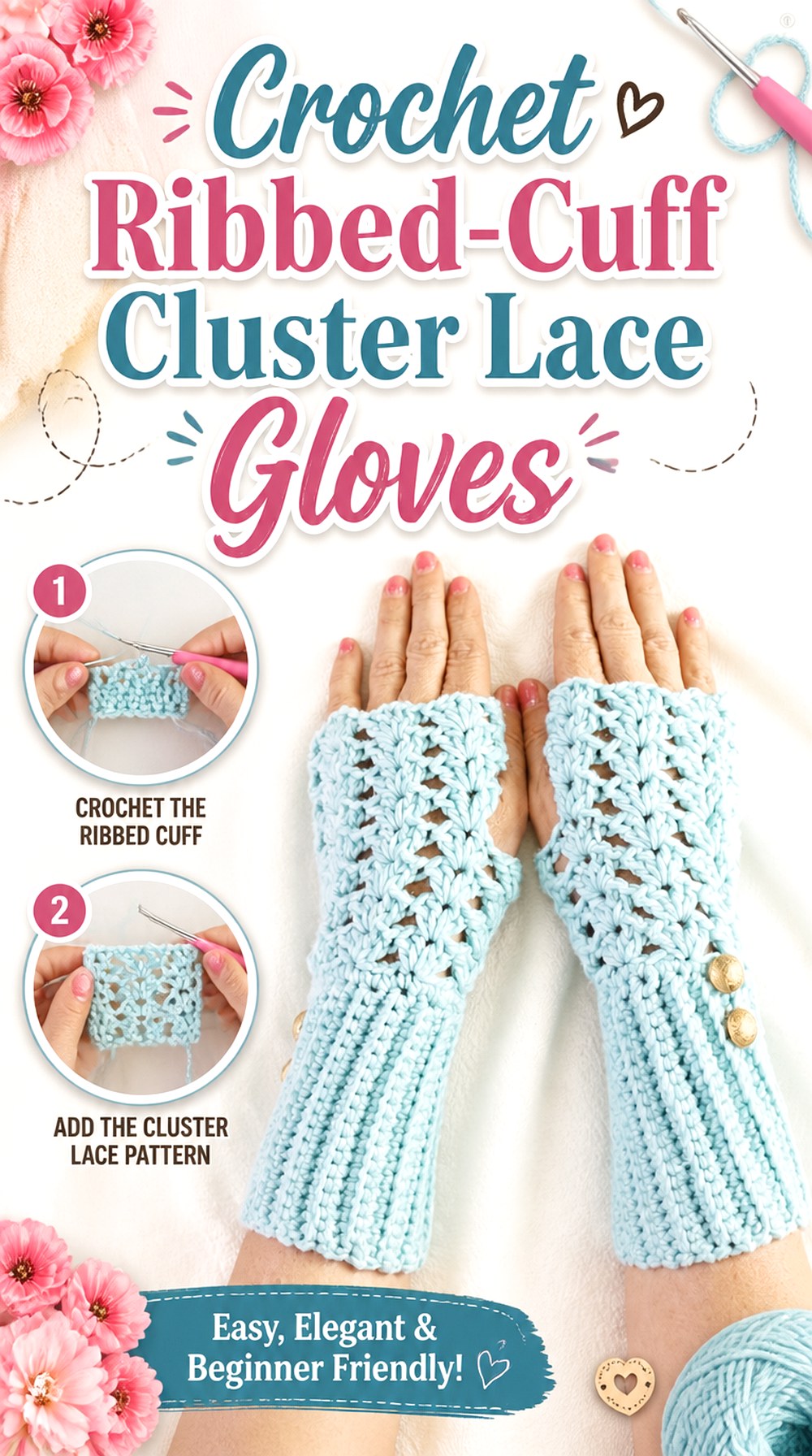
SAVEA defined ribbed cuff gives this pair a practical anchor before the fabric changes into open lace clusters over the hand. Treasurie’s tutorial specifically shows a snug, stretchy cuff and a fingerless lace upper section, creating a clear contrast between fit-focused ribbing and decorative openwork.
That construction is worth considering if you like an airy hand section but worry that a fully open lace tube could shift at the wrist. Decorative buttons can be added, but the underlying ribbed-cuff structure remains the most important design difference. The longer cuff also gives the gloves more presence below the wrist than a minimal texting-glove shape.
The Cuff and Hand Do Different Jobs
The ribbing is designed to sit more closely around the wrist while the lace section provides visual openness over the hand. If you alter the yarn, test both characteristics. A substitute that creates attractive clusters may not necessarily produce a cuff with the same recovery.
This is one reason adjusting a glove only by changing hook size can have mixed results. A change that improves one section can alter the behavior of another. Follow the tutorial’s sizing approach before making broader substitutions.
Check the Thumb Area Before Adding More Length
Longer cuffs are comparatively straightforward to visualize, but changing the hand section affects where the thumb opening and top edge land. Try the glove against the intended hand before deciding to extend the lace farther toward the fingers.
If you want a more dramatic forearm effect, extending the cuff side is usually a different design decision from extending the hand side. Keep those two proportions separate when planning the finished look.
Original Tutorial and Creator Credit
Creator: Treasurie
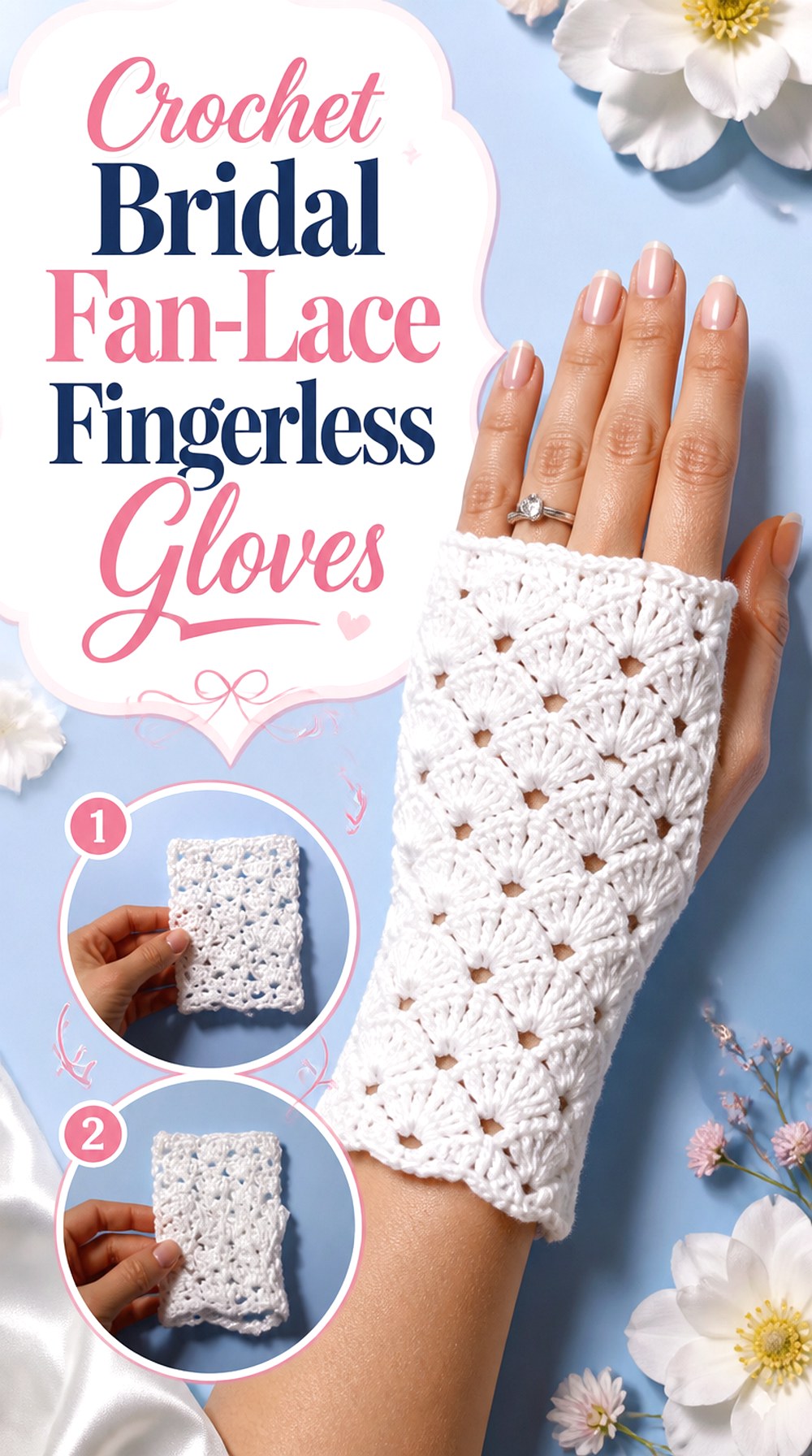
5. Crochet Bridal Fan Lace Fingerless Gloves
 SAVE
SAVEFor a formal interpretation, these Crochet Bridal Fan-Lace Fingerless Gloves place decorative fan stitches front and center. Jayda InStitches presents the design specifically as a lacy fingerless accessory suitable for bridal or other dressy occasions, so it is a stronger match for a wedding-inspired look than the casual mesh and winter wrist warmers elsewhere in this list.
The fingerless shape also keeps rings and fingertips visible, which can be useful when the glove is worn mainly as an accessory. Because fan lace already creates an ornate surface, color, yarn sheen, and finishing quality have a large effect on whether the finished pair feels understated or highly decorative.
Formal Lace Makes Tension Irregularities More Visible
Repeated fans depend on visual rhythm. If one glove is worked noticeably more tightly than the other, the difference can show in width, motif openness, and cuff length.
For a pair intended for a formal outfit, compare the two gloves frequently instead of waiting until both are finished. Lay them side by side without aggressively stretching them and check whether motif spacing and overall proportions remain consistent.
Plan Around Jewelry and Sleeve Details
A fingerless bridal glove can sit beside rings, bracelets, cuffs, embroidery, or gown lace. More detail is not always better. If the dress already has prominent lace at the wrist, a simpler yarn color and minimal additional embellishment may keep the two textures from competing.
Also check where the glove ends relative to the sleeve. A top or bottom edge landing directly under a structured cuff may create unnecessary bulk.
Original Tutorial and Creator Credit
Creator: Jayda InStitches
6. Crochet Shell Lace Wrist Warmers
 SAVE
SAVEThese Crochet Shell-Lace Wrist Warmers offer a more casual interpretation of decorative openwork. WoolyWondersCrochet’s tutorial uses shell stitch in a fingerless wrist-warmer format and notes that the design can be adjusted for size.
Compared with the finer bridal style above, the visual emphasis here is on a repeated shell texture that can work as an everyday hand accessory. The construction leaves the fingers completely free, so it is more practical for tasks that require direct fingertip contact. This idea suits readers who like lace-inspired texture but do not necessarily want a fine-thread, highly formal result.
Shell Scale Changes With Yarn Thickness
A shell made in a heavier yarn has a different visual impact from the same general motif in fine yarn. Larger stitches can turn delicate lace into bold texture, which may be exactly what you want for casual wrist warmers.
Before substituting yarn, make a small sample and stretch it to approximately the way it will sit on the hand. Judge both the openings and the shell definition while the fabric is under light tension.
Leave Enough Freedom Around the Thumb
Fingerless construction removes individual finger fitting, but the thumb opening still needs to sit comfortably. An opening that is positioned well but too tight can pull the whole glove toward the palm; one that is too loose may let the fabric rotate.
Use the tutorial’s sizing method as the reference point. If adapting the circumference, verify the thumb relationship again rather than assuming every proportion will scale automatically.
Original Tutorial and Creator Credit
Creator: WoolyWondersCrochet
7. Crochet Flower Accent Lace Fingerless Gloves
 SAVE
SAVEA floral element gives this pair a different focal point from gloves that rely entirely on the stitch repeat. Crafting Wheel’s tutorial shows fingerless gloves with a flower design, turning the accessory into a combination of wearable lace and decorative motif work.
This approach can suit romantic, cottage-inspired, or gift-focused styling because the flower draws the eye to a specific area instead of distributing detail evenly across the glove. It also gives you a useful customization decision: keep the glove and flower closely matched for a quieter finish, or emphasize the motif with a contrasting treatment while preserving the original construction.
Flower Placement Should Look Intentional on Both Hands
An appliqué can make mismatched placement more obvious than an all-over repeat. Before permanently securing decorative motifs, put on both gloves and compare how the flowers sit when the hands are in a natural position.
Think about whether you want mirrored placement or the same orientation on each glove. The most visually balanced choice depends on the motif and the way the gloves are worn, so previewing the pair is more useful than judging one glove alone.
Added Motifs Change Surface Bulk
Even a small crocheted flower creates more thickness than flat lace. That may be fine on the back of the hand but inconvenient if the motif lands where it rubs against a sleeve edge, bag handle, or another accessory.
If you adapt the flower size or add extra decorations, keep that practical contact in mind. A flat embellishment can preserve the floral character while remaining easier to layer.
Original Tutorial and Creator Credit
Creator: Crafting Wheel
8. Crochet Long Open Mesh Fingerless Gloves
 SAVE
SAVEKatia Creates uses a chain-based mesh structure to produce a noticeably airy fingerless glove. The tutorial continues the mesh through a longer hand-and-wrist shape before finishing the borders, giving this option a more elongated silhouette than compact wrist warmers.
Because the openings are large and regular, the finished glove has a graphic quality rather than the denser texture of shell or fan motifs. That makes it a good concept for layering over the hand as a visible fashion accessory. It is also a useful design to compare with fishnet: both are open, but the border treatment and mesh scale create different finished impressions.
Large Mesh Shows the Layer Underneath
With open chain spaces, skin tone, sleeves, jewelry, and anything worn beneath the glove become part of the overall look. If you plan to coordinate the gloves with a long-sleeved top, test the combination before committing to a yarn color.
High contrast will emphasize every opening. Low contrast creates a quieter texture. Neither is inherently better; the right choice depends on whether you want the mesh itself to dominate the outfit.
Long Mesh Needs Stable Borders
The edges of an open tube have to control a fabric that may otherwise spread considerably. If you change yarn or enlarge the glove, pay attention to how the finishing borders behave rather than focusing only on the center mesh.
A border that is too restrictive can cause puckering. One with too little structure may not help the glove stay in position. Compare the finished circumference at the edge with the main mesh under normal wear.
Original Tutorial and Creator Credit
Creator: Katia Creates
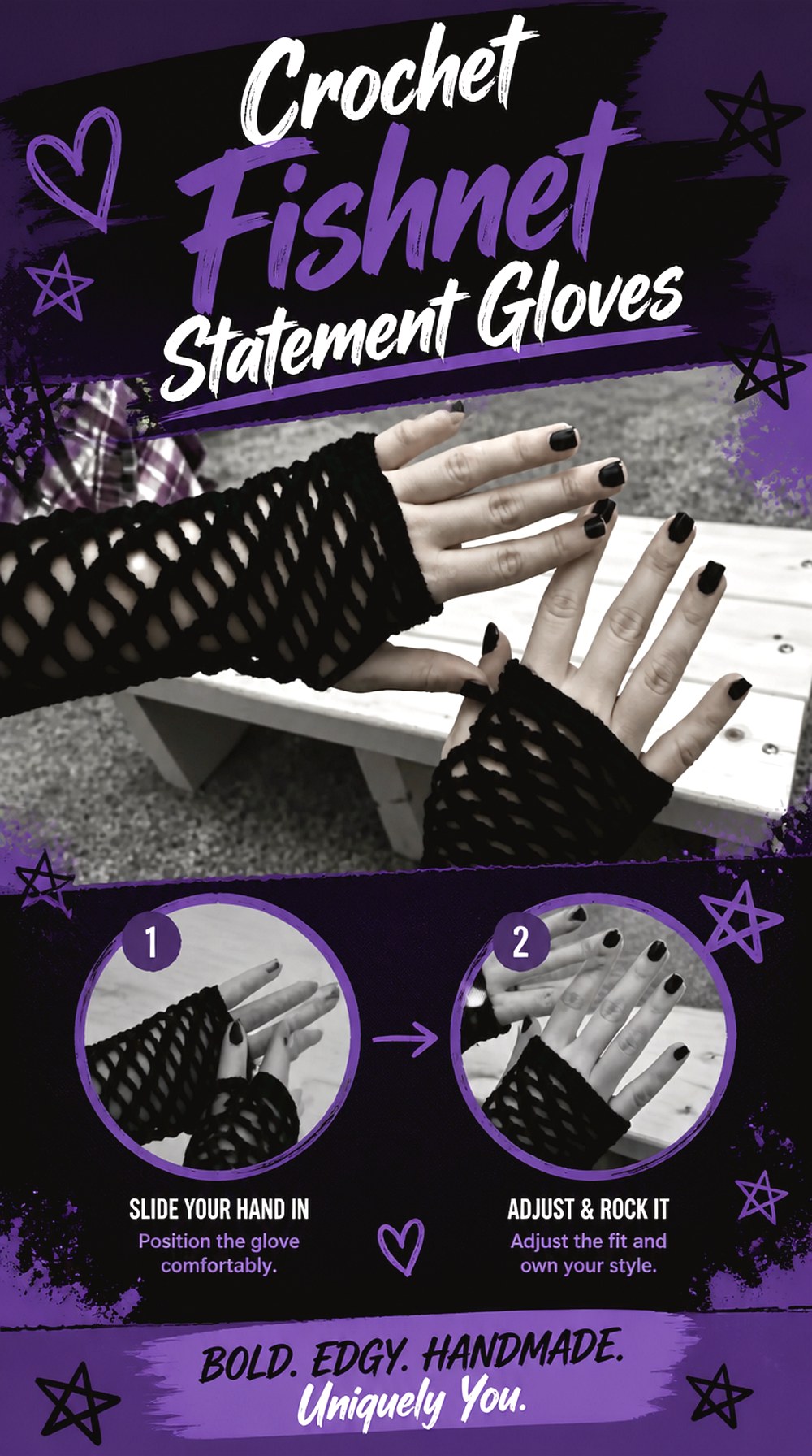
9. Crochet Fishnet Statement Gloves
 SAVE
SAVEThese Crochet Fishnet Statement Gloves push openness farther than most traditional lace mitts. The tutorial from ☆ crochet by j ☆ presents a fishnet fingerless style associated with alternative fashion aesthetics, so the finished effect is graphic, lightweight, and intentionally less covered than shell- or cluster-based gloves.
This is a strong option when the glove is primarily an outfit accessory rather than an attempt to create substantial hand coverage. Large openings also make yarn color particularly important because the skin or clothing underneath remains highly visible. Compared with bridal lace, the same broad category of openwork produces a much sharper, more contemporary visual effect.
Fishnet Scale Determines the Mood
Smaller openings can make a mesh read more like conventional lace. Larger openings create the recognizable fishnet effect and expose more of what is underneath.
Avoid assuming you can simply enlarge every space without consequences. Changing mesh scale can affect stretch, the number of visible repeats around the hand, and how securely the fabric stays positioned. If you want a different look, sample the mesh first rather than altering the entire glove immediately.
Snagging Matters More With Large Openings
A large-loop structure can catch more readily on jewelry, hardware, or rough surfaces than a dense crochet fabric. That does not make fishnet unsuitable, but it changes how and where you may want to wear it.
If the gloves will be paired with rings or bracelets, check for projecting settings and clasps. For costume or event wear, also inspect the fabric after use rather than pulling a snagged loop aggressively, which can distort neighboring openings.
Original Tutorial and Creator Credit
Creator: ☆ crochet by j ☆
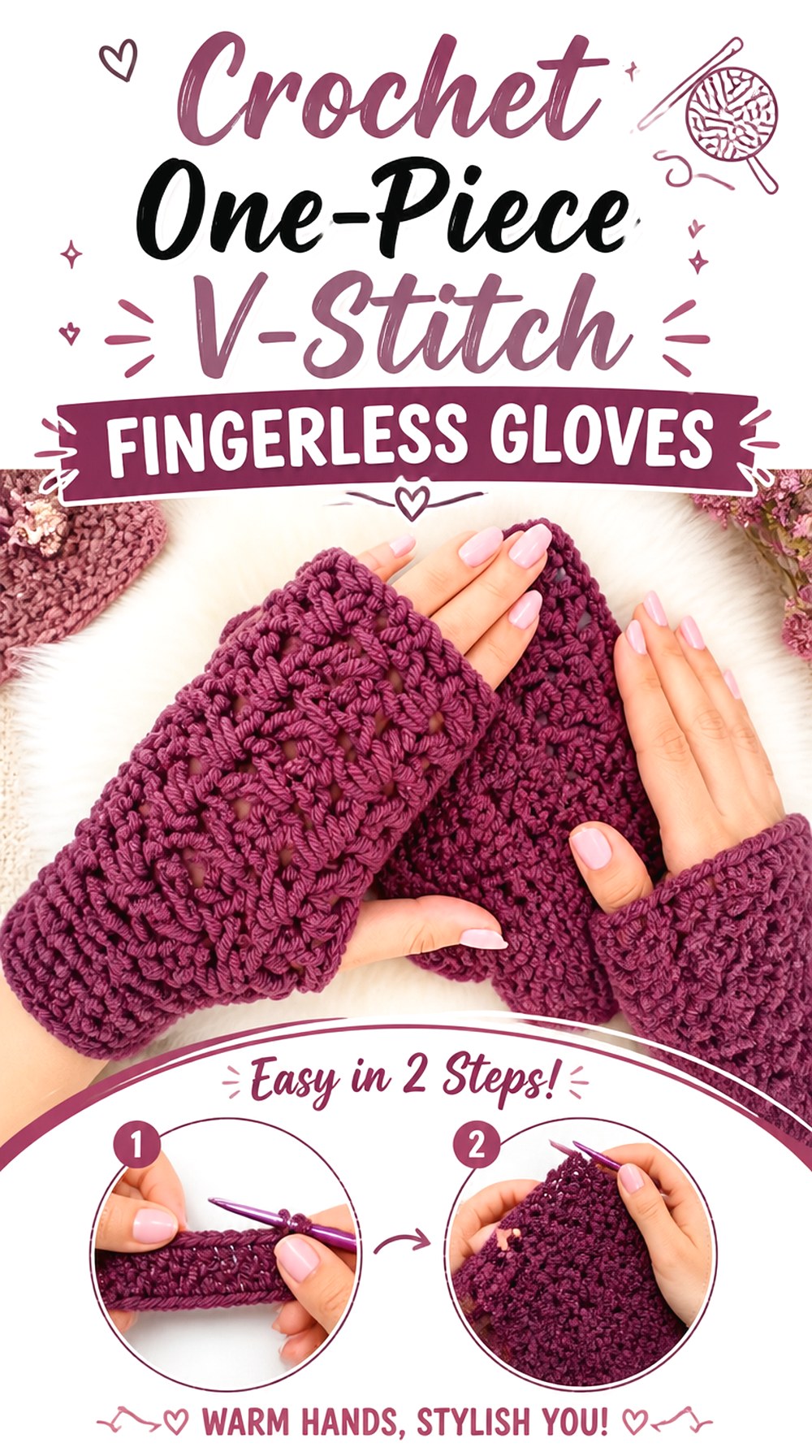
10. Crochet One Piece V Stitch Fingerless Gloves
 SAVE
SAVEThe V-stitch gives these fingerless gloves evenly spaced openings while keeping more yarn in the fabric than an exaggerated fishnet. Yoyo Crochet describes the design as a one-piece V-stitch glove, which gives this idea its own construction identity as well as a recognizable openwork texture.
This middle ground may appeal if you want obvious lace openings but prefer a more continuous surface than large mesh. The one-piece concept is also worth considering when you are comparing how different tutorials form the basic glove body. As always, verify how the tutorial sizes and joins its construction before modifying circumference or length.
V-Stitches Create a Regular Vertical Rhythm
Repeated V shapes make changes in tension easy to see. If the stitches gradually become looser, the glove can widen or the openings can look progressively larger.
Compare the fabric periodically rather than relying only on a final measurement. Consistent visual spacing is particularly important when making a pair, because two gloves can measure similarly while still looking different if their lace openings are worked at different tensions.
One-Piece Construction Simplifies the Silhouette, Not Fit
A simple construction route does not eliminate the need for fitting. The glove still has to accommodate the transition from wrist to palm and the location of the thumb.
If you change the width, confirm that the fabric still sits where the tutorial intends around the thumb area. Avoid adding or removing repeats solely to chase a circumference measurement unless the stitch multiple and shaping remain compatible with the original design.
Original Tutorial and Creator Credit
Creator: yoyo crochet
11. Crochet Victorian Ribbon Accent Fingerless Gloves
 SAVE
SAVEThis project shifts the emphasis from modern mesh to vintage-inspired detailing. Crochet Decor’s tutorial presents Victorian-style fingerless gloves made with two colors and an optional ribbon or bow, creating a more decorated silhouette than the minimalist mesh designs.
The idea is particularly useful when you want a glove that can coordinate with costume, romantic, or period-inspired styling without moving into individual full fingers. Contrast yarn can highlight borders or structural divisions, while a closely related color combination gives the lace a more unified appearance. Because the embellishment is optional, you can also decide how strongly you want the Victorian reference to read.
Contrast Color Changes the Way the Construction Reads
A second color can make edges, motifs, or transitions stand out that would be much less obvious in a solid glove. Before choosing a high-contrast pairing, look at where the color changes occur in the original tutorial.
If your main goal is delicate lace, tonal colors may keep the eye on stitch texture. If you want the glove to read as decorative costume styling, stronger contrast can emphasize its structure.
Ribbon Placement Needs Both Comfort and Balance
A ribbon or bow can instantly reinforce the vintage look, but its position should not interfere with wrist movement or catch repeatedly under sleeves.
Before fixing an embellishment permanently, put the gloves on with the clothing you expect to wear. Check the view from both the back and side of the hand. What looks centered on a flat glove may sit differently once the fabric stretches around the wrist.
Original Tutorial and Creator Credit
Creator: Crochet Decor
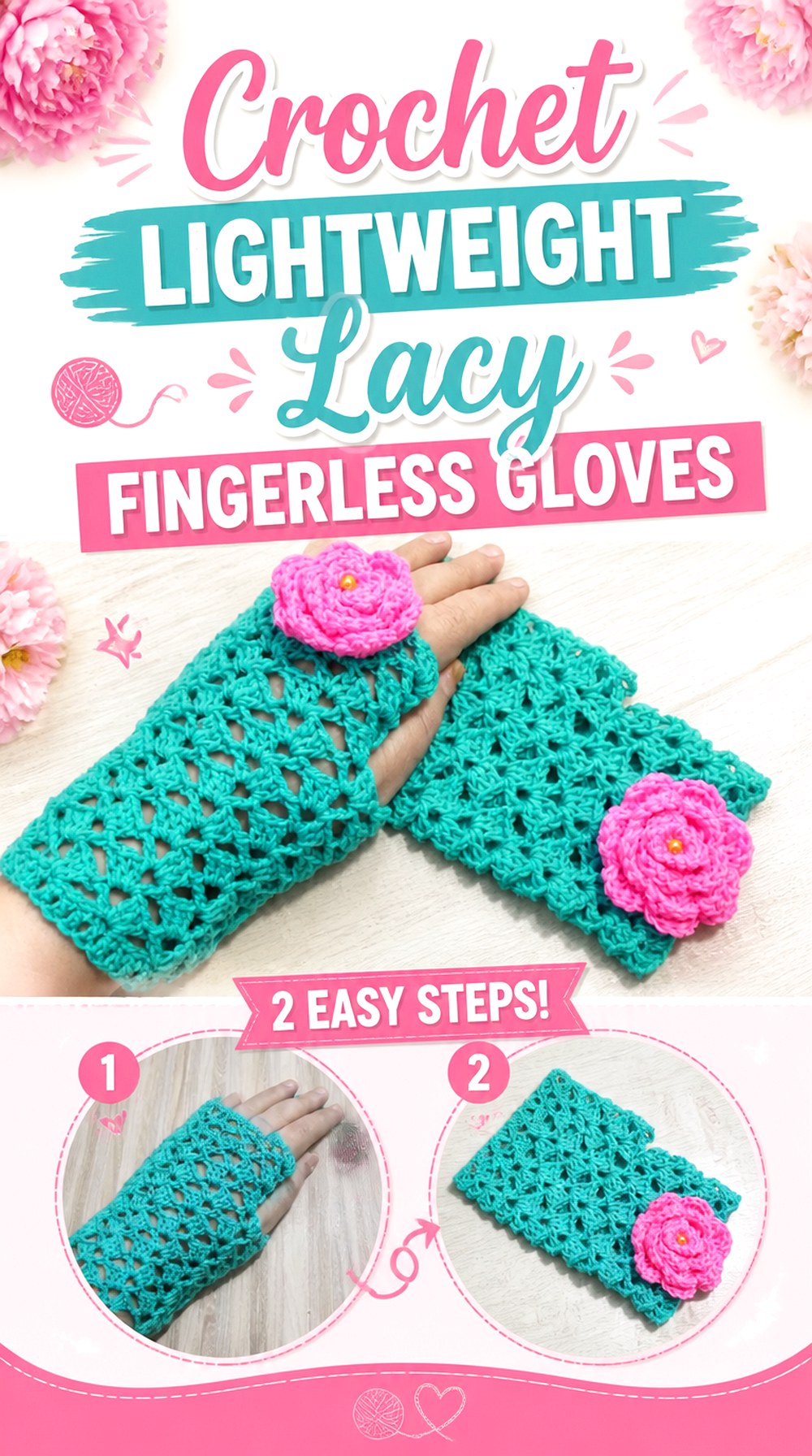
12. Crochet Lightweight Lacy Fingerless Gloves
 SAVE
SAVEFor the final idea, crochet-crosia demonstrates a straightforward lacy fingerless glove intended for girls or ladies. The appeal here is the all-over open texture and uncomplicated hand-accessory silhouette rather than a dramatic embellishment, unusually long cuff, or individual fingers.
That makes this a useful reference when you want lace itself to provide the interest but do not need the stronger stylistic commitment of bridal fans, Victorian bows, flowers, or fishnet. Because the source discusses multiple sizes through accompanying guidance, verify the sizing information directly instead of assuming that a generic “ladies” label will match a particular hand.
A Simple Silhouette Makes Fabric Quality More Noticeable
When there is no large flower, contrast border, or ornate closure to draw attention away, even lace tension becomes part of the finish. Consistent openings and clean edges matter.
If you are deciding between two yarns, crochet a sample of the lace and place it against the hand. A yarn that looks attractive in the skein may create openings that are either too soft and indistinct or too firm for the effect you want.
Use the Intended Wearer’s Hand, Not an Age Label
Terms such as “girls” and “ladies” are not precise measurements. Hand proportions vary enough that an age or general category should not replace the creator’s actual sizing instructions.
For a gift, obtain a hand measurement when possible or compare against a glove that already fits the recipient. If that is not practical, choose a construction with some adjustment flexibility rather than guessing a precise fitted size.
Original Tutorial and Creator Credit
Creator: crochet-crosia
Which Crochet Lace Glove Style Should You Choose?
For the greatest hand coverage, the Crochet Full-Finger Mesh Lace Gloves stand apart because they include individual fingers. If you want formal styling without covered fingertips, start with the Crochet Bridal Fan-Lace Fingerless Gloves or the Crochet Victorian Ribbon-Accent Fingerless Gloves.
The Crochet Fishnet Statement Gloves and Crochet Long Open-Mesh Fingerless Gloves expose much more of the hand and work especially well when openwork is the main fashion feature. Shell, fantail, cluster, and V-stitch options sit between those extremes, creating visible lace while retaining more crochet fabric.
For embellishment, choose the flower-accent or pearl-button styles. For a quieter everyday accessory, the ribbed-cuff, shell, or straightforward lacy options are easier to integrate with ordinary sleeves and outfits.
Conclusion
The most useful way to choose among these 12 crochet lace gloves ideas is to decide on coverage first, then fit structure, and finally decorative style. Full-finger mesh needs closer fitting, while fingerless shell, cluster, and V-stitch designs leave more freedom at the fingertips. Fishnet creates the airiest statement; bridal fans, flowers, buttons, and ribbon details move the finished pair toward occasion wear.
Whichever direction you choose, check how the cuff stretches, where the thumb opening lands, and whether your yarn keeps the lace clear without becoming uncomfortably rigid. Use the original tutorials near each idea for the creators’ exact construction, sizing, and finishing details.
Frequently Asked Questions
Should crochet lace gloves fit tightly around the hand?
They should generally stay in position without restricting normal hand movement, but the intended fit depends on the construction. Large mesh can stretch substantially, while decorative borders or denser cuffs may stretch less.
Do not judge fit from palm circumference alone. Check the wrist, thumb opening, knuckle area, and any individual fingers. When a tutorial provides gauge or finished dimensions, those are more useful than assuming all lace gloves should have the same amount of snugness.
Is crochet thread always better than yarn for lace gloves?
No. Fine crochet thread can create very crisp, delicate lace and is well suited to some bridal or vintage looks, but thicker yarn can produce attractive shell, fan, cluster, or mesh gloves too.
The important question is what fabric the material produces. Compare stitch definition, softness, flexibility, and recovery after stretching. If you substitute a dramatically different yarn thickness, you may also alter the glove’s dimensions and motif scale, so follow the tutorial’s sizing guidance rather than treating the substitution as purely cosmetic.
How can I tell whether a mesh glove will stretch too much?
Make a sample in the planned yarn and gently stretch it several times in the direction the glove will be pulled over the hand. Release it and see how well it returns toward its original dimensions.
Also examine the edges. A stable cuff or border can help control an open fabric, but it should not be so tight that it becomes the difficult part to pull over the hand. Testing both the mesh and border behavior is more informative than testing either one alone.
Can I turn a short lace glove into an elbow-length design?
Possibly, but extending length is not always as simple as repeating the same section. The forearm generally changes circumference as the glove becomes longer, so a straight tube that works at the wrist may not sit correctly farther up the arm.
Look for a tutorial that explains its adjustment method or explicitly supports additional length. If you adapt a shorter design independently, check circumference at several points rather than measuring length alone.
What should I check when making crochet lace gloves as a gift?
Hand circumference is useful, but also consider wrist circumference, desired glove length, and whether the recipient prefers fingerless or full-finger coverage. A glove that fits the palm can still be uncomfortable at the thumb opening or wrist.
If you cannot measure the recipient directly, a fingerless construction with some stretch may be more forgiving than a fitted full-finger glove. Avoid relying on broad labels such as “adult” or “ladies” when the source provides more specific sizing information.
How do I keep two crochet lace gloves looking like a matched pair?
Use the same yarn, hook, and working tension, and compare the gloves during construction rather than only after the second one is finished. Repeated lace motifs make differences in spacing particularly noticeable.
Lay the pieces side by side periodically and compare their relaxed dimensions and motif placement. For gloves with flowers, buttons, bows, or other accents, preview both embellishments while the gloves are being worn so their placement looks intentionally coordinated.