
A crochet doily top can mean more than one construction. Some designs turn a full circular motif into the focal point of a crop top, while others use half-mandalas, paired motifs, star-shaped lace, or large circular backs for vests and toppers. On YouTube, creators often use terms such as mandala top, circular motif top, and circle vest for garments that produce the same radial, decorative look associated with crochet doilies. Maison Saint Bonnet, for example, explicitly describes its circular top motif as doily-style.
The ideas below focus on meaningful differences in fit, coverage, motif position, openings, and garment structure rather than presenting minor color changes as separate projects.
Quick List
- Crochet Sunburst Circular-Motif Crop Top
- Crochet Color-Spoked Mandala Tank Top
- Crochet Lightweight Mandala Crop Top
- Crochet Twin-Mandala Lace Top
- Crochet Boho Round-Motif Festival Top
- Crochet Rainbow Crystal Medallion Crop Top
- Crochet Star-Doily Halter Crop Top
- Crochet Spring Sun Circle Vest Topper
- Crochet Half-Mandala Halter Top
- Crochet Camellia Corset-Back Mandala Top
- Crochet Summer-Collar Mandala Vest Top
- Crochet Priscilla Circle-Mandala Vest Top
- Crochet Sugar Baby Mandala Bolero Top
- Crochet Long Mandala Vest Topper
- Crochet Lace-Edged Mandala Cardigan Topper
- Crochet Center-Mandala Open-Back Halter Top
Plan the Motif Around Fit, Not Just Appearance
A round motif changes size in every direction at once, which is why doily-style tops need a different planning mindset from rectangular crochet garments. Before committing to a large motif, compare its blocked width with the part of the body or garment it needs to cover. A beautiful circle that is too small may leave unwanted gaps; one that grows too far can shift the neckline, side opening, or armhole position.
For paired motifs, compare both pieces after blocking rather than assuming matching stitch work produces identical dimensions. For halters, pay particular attention to where the motif ends and the supporting straps or body fabric begin. Circle vests add another issue: armholes have to sit comfortably before the outer rounds become dramatically larger. Try-on checkpoints matter more than chasing a nominal clothing size.
Yarn Choice Changes the Doily Effect
Fine or lightweight yarn can emphasize the delicate, lacy quality people associate with doilies, while thicker yarn makes each section of a mandala visually stronger and can increase the overall weight of a large motif. Neither approach is automatically better.
For a fitted crop or halter, consider how the fabric behaves after it hangs on the body. Very open crochet can stretch differently from denser borders, so check the finished motif rather than evaluating it only while it lies flat. Cotton is used in several of the featured tutorials, including the circular-motif top from Maison Saint Bonnet and the mandala projects from Olivia Tully and Hey Carrie. If substituting fiber or yarn weight, treat the creator’s finished dimensions and fit as references rather than guarantees.
Decide How Much Coverage You Want Before Starting
Doily-style crochet is often intentionally open. That can be ideal for festival wear, swim-cover layering, or wearing over a camisole, but the same openness may not suit every setting. Look at the entire finished garment—not only the central motif—and check side coverage, neckline depth, back opening, and the spaces created between lace sections.
A halter with a dramatic open back has different support needs from a two-mandala top joined at the sides. A circle vest offers the most flexible coverage because it functions as a layer over another garment, while fitted medallion tops put the decorative crochet directly at the center of the outfit. Decide whether you want the doily motif to provide the garment’s main coverage or act as a decorative layer before choosing a tutorial.
1. Crochet Sunburst Circular Motif Crop Top
 SAVE
SAVEThis version makes the circular motif itself the visual center of the garment. Maison Saint Bonnet describes the project as a lace circular-motif top made from a doily-style motif, making it one of the closest matches to the literal idea of a crochet doily top. The radiating lace works well when you want the design to read as one uninterrupted medallion rather than a collection of smaller squares or panels. The creator demonstrates the top in cotton and provides a finished motif measurement for the demonstrated size, so compare that information carefully with your own intended coverage before treating the motif as ready to wear.
The Circle Diameter Controls More Than Length
Because the central shape expands outward in all directions, increasing its diameter can affect width, neckline placement, and lower coverage simultaneously. That is different from simply adding length to a rectangular tank. If you need a larger version, check how the creator handles sizing rather than adding extra decorative rounds without considering where the circle will sit on the torso.
Keep the Outer Lace From Becoming Too Heavy
A circular design can look light in the center while accumulating much more fabric toward the edge. If substituting a heavier yarn, stop periodically and hold the motif vertically. This gives a better picture of drape than viewing it flat on a table and helps reveal whether the outer sections are pulling the center downward.
2. Crochet Color Spoked Mandala Tank Top
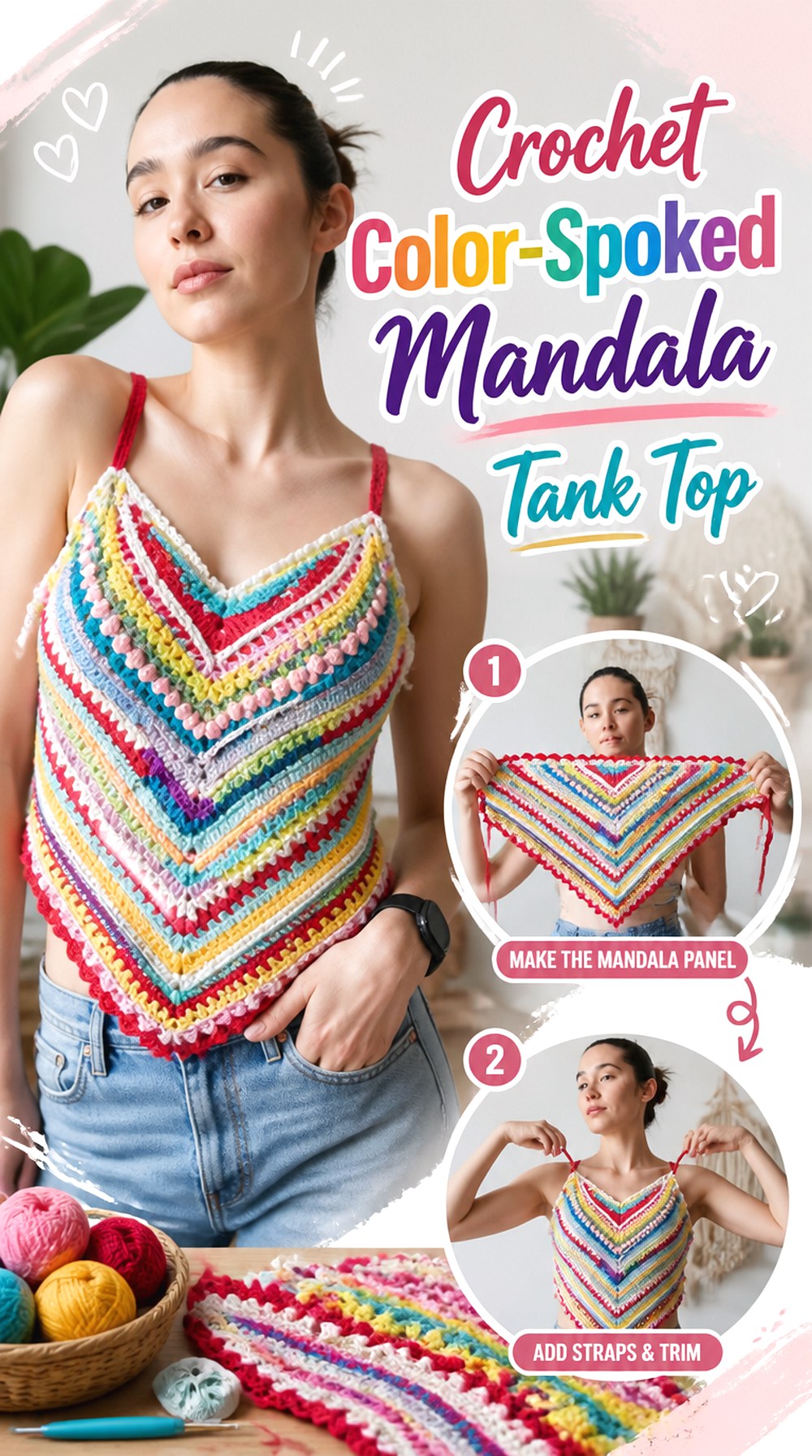 SAVE
SAVEOlivia Tully’s mandala top takes the radial idea in a noticeably more colorful direction. Instead of relying on one neutral lace circle, the design uses many color changes to make the separate sections of the mandala visible. The finished look has a strong V-shaped garment outline around the motif, which helps it read as a top rather than a decorative circle attached to straps. The creator states that cotton in multiple colors was used, making this a useful option for readers interested in treating color placement as part of the motif architecture rather than merely changing the final shade.
Color Changes Can Clarify the Radial Structure
High-contrast changes can make every spoke, ring, or widening section of a mandala more obvious. A lower-contrast palette will make the same construction appear calmer and more unified. Decide which effect you want before distributing scraps, especially if the outer sections require more yarn than the small center rounds.
Check the V Shape Against Your Preferred Neckline
The motif may be circular, but the finished garment silhouette does not have to be. Look at where the surrounding crochet turns the round center into a wearable V shape. That transition is a useful checkpoint if you want to change coverage without losing the recognizable mandala center.
Many Ends Change the Finishing Work
A multicolor doily top can create substantially more yarn ends than a solid version. Plan how you will manage them as the work progresses. Neat finishing matters particularly in open crochet because the reverse side and joins are more visible than they would be in a dense sweater fabric.
Original Tutorial and Creator Credit
Creator: Olivia Tully
3. Crochet Lightweight Mandala Crop Top
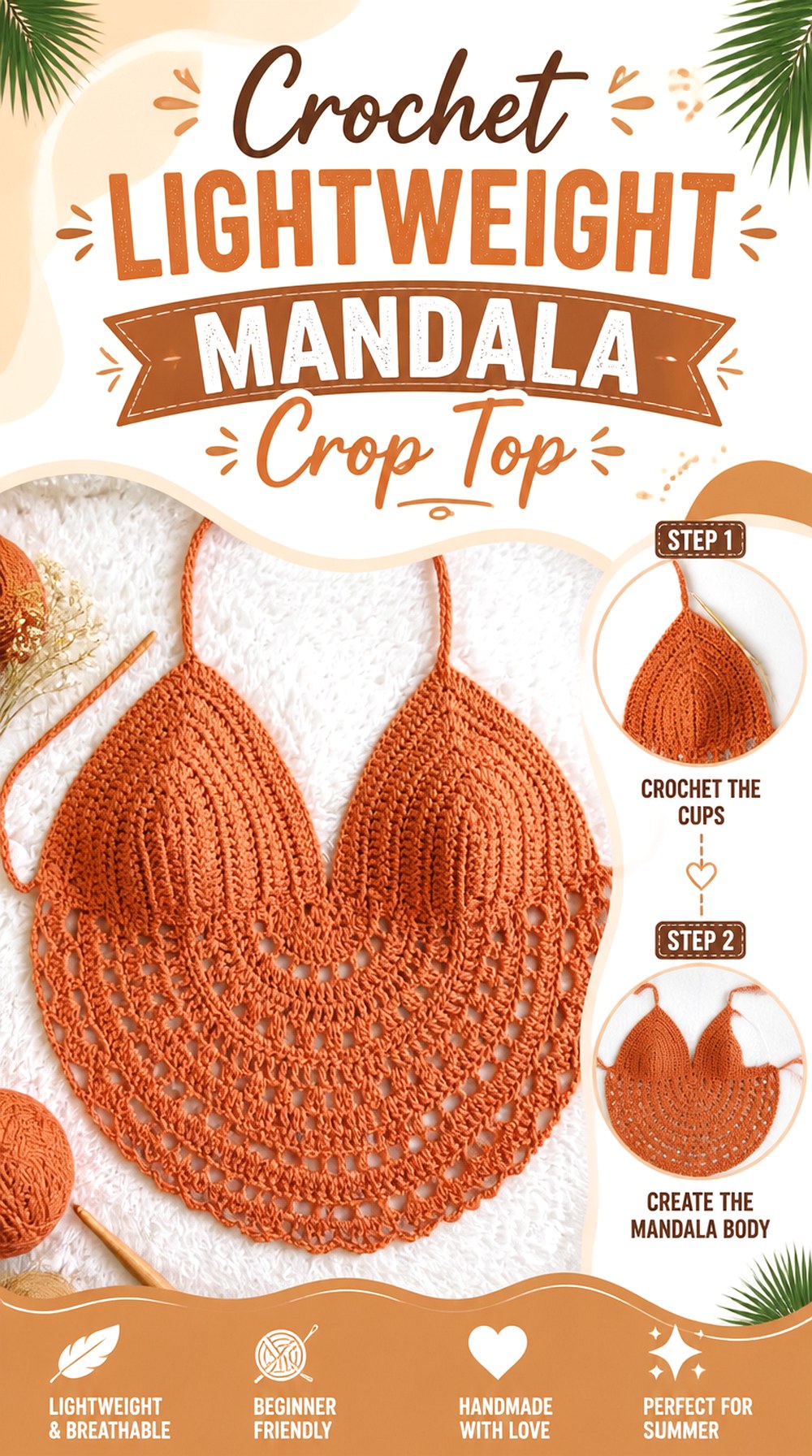 SAVE
SAVEHey Carrie’s mandala crop top is a useful direction if you prefer the visual delicacy of a large motif worked with comparatively light yarn. The creator lists weight 2 or 3 cotton and uses more than one hook size in the tutorial, reinforcing that fabric behavior matters in this style of garment. Rather than choosing this idea simply because it is cropped, consider it when you want a mandala that stays visually fine and open instead of becoming bulky around the torso. The crop length also keeps the circular detail concentrated in a smaller area, which can make the motif itself more prominent.
Fine Yarn Gives the Motif More Visual Breathing Room
Smaller stitches and lighter yarn can preserve the decorative spaces between sections of a mandala. The trade-off is that the fabric may take longer to grow to wearable dimensions. Avoid switching to a much heavier yarn simply to gain size faster unless you are comfortable with a more substantial finished texture.
Judge the Crop Length While the Top Is Hanging
Lace can change once gravity is acting on it. Before finalizing lower edging or ties, assess the piece vertically or on the body rather than relying only on a flat measurement. This is especially helpful when the motif contains long chain spaces or other open sections that may relax.
Original Tutorial and Creator Credit
Creator: Hey Carrie
4. Crochet Twin Mandala Lace Top
 SAVE
SAVEInstead of asking one large circle to cover the whole body, this idea uses two mandala motifs and joins them into a garment. Regina Benge’s tutorial focuses specifically on the joining portion of the Mandala Top and shows two motifs being connected at the sides. This makes the project structurally different from the single-medallion tops above. It can be an appealing route when you want repeating doily shapes to dominate the finished garment while maintaining a balanced front-and-back concept. Because the motifs must meet correctly, consistency between the two finished pieces matters more here than it does with a one-motif halter.
Block Both Mandalas Before Committing to the Join
Two motifs made from the same instructions can still finish slightly differently because of tension. Compare their blocked dimensions and edge behavior before connecting them. If one is noticeably smaller, joining immediately can create twisting, puckering, or an uneven lower edge that becomes harder to correct later.
The Side Connection Determines Wearable Ease
A decorative motif can lie perfectly flat and still feel too restrictive once joined into a top. Before completing both sides permanently, check the amount of room created between motifs. The important question is not only whether the edges meet, but whether the joined piece moves comfortably around the torso.
Let the Repeated Circles Stay Visually Balanced
If you change colors, borders, or yarns between motifs, compare their visual weight as well as their dimensions. A very dark or dense motif on one side can make the garment look unbalanced even if the physical construction is symmetrical.
Original Tutorial and Creator Credit
Creator: Regina Benge
5. Crochet Boho Round Motif Festival Top
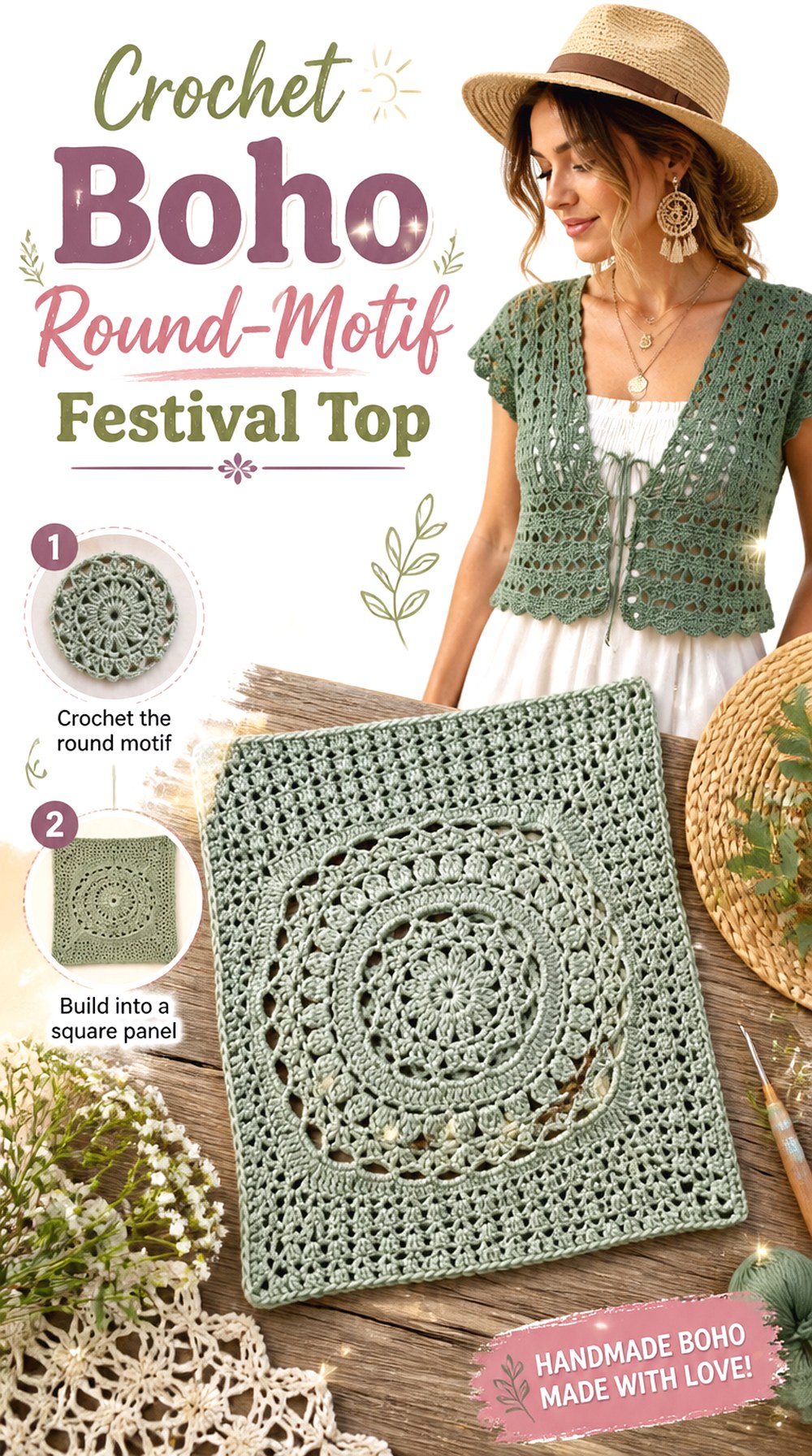 SAVE
SAVELilacroch’s boho mandala top offers another single-motif interpretation, but its appeal is the relaxed festival-style presentation rather than the more polished medallion look of some other designs. The tutorial is presented as a full mandala-top project rather than a separate decorative motif lesson, so it is a practical option when you want the round crochet element to dictate the overall style of the garment. Keep the intended use in mind: an openwork festival top can look balanced over minimal layers, while everyday styling may call for a camisole or bralette underneath depending on the finished spacing.
Look at Coverage Between the Motif and Garment Edges
The center may attract most of your attention, but gaps usually develop where a round motif transitions toward shoulders, sides, or lower edges. Those areas determine how revealing the top feels. Check them before deciding whether the finished project works as a stand-alone garment or as a layering piece.
A Boho Silhouette Benefits From Flexible Edges
Overly tight finishing around an airy motif can make the garment look pinched. When reviewing the tutorial, pay attention to how the outer edges relate to the center rather than treating the border as an afterthought. A relaxed motif needs surrounding fabric that can move with it.
Original Tutorial and Creator Credit
Creator: Lilacroch
6. Crochet Rainbow Crystal Medallion Crop Top
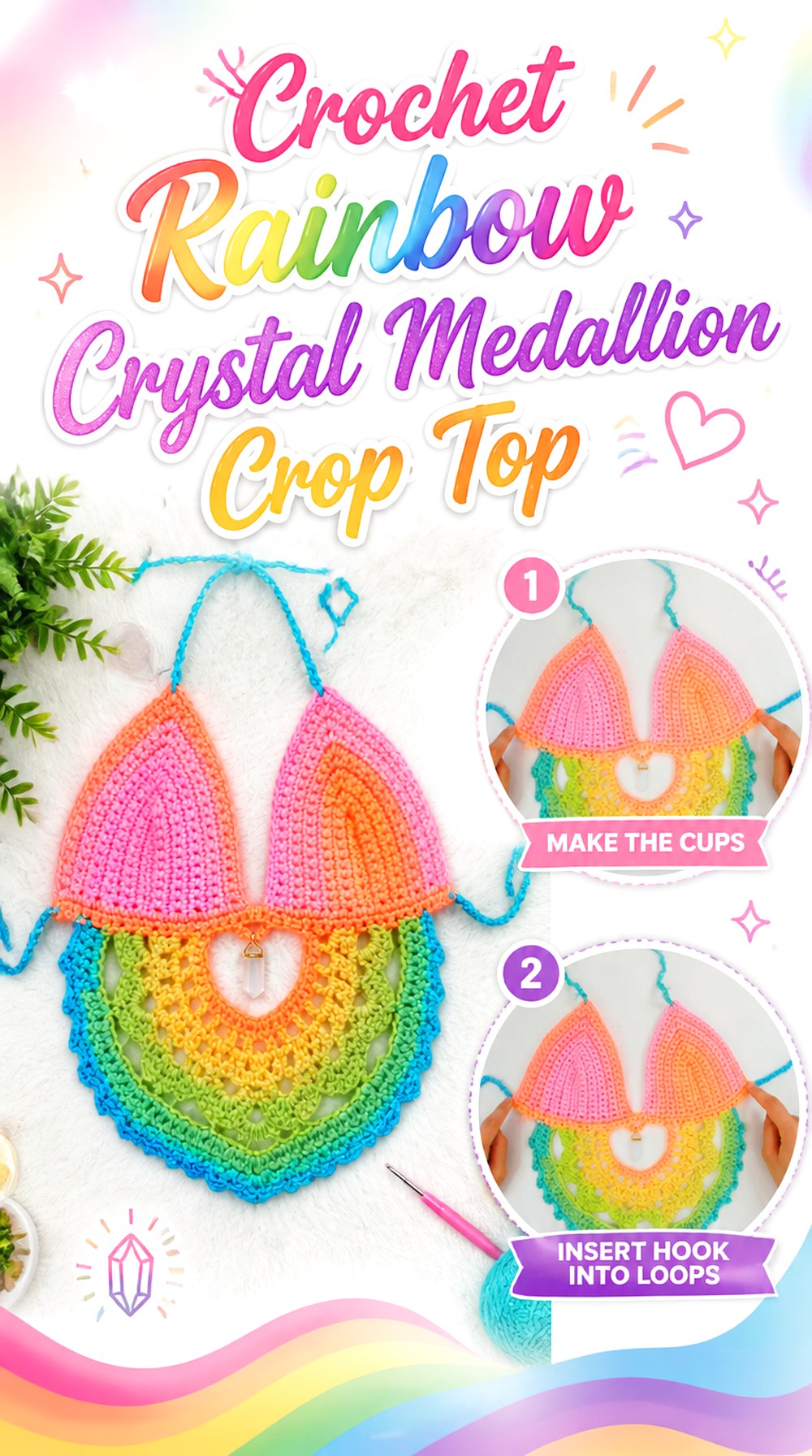 SAVE
SAVETCDDIY’s rainbow crystal mandala crop top adds two features that immediately separate it from a plain doily top: striped color movement and a crystal pendant accent. The creator presents it as another variation on a mandala crop-top concept and notes a correction within the video, so viewers should follow the tutorial itself rather than relying on a quick visual impression. This is a strong choice when you want the center of the top to feel more like a piece of jewelry or festival adornment, with the crochet motif serving as a frame for a focal embellishment.
Treat the Pendant as an Optional Design Decision
A hanging embellishment changes the visual center and adds weight to one point of the crochet. If you prefer a cleaner doily look, the motif can remain the main focus. If you do add a pendant or similar decoration, check that the attachment area does not distort when the top hangs naturally.
Striped Yarn Creates Automatic Ring Changes
Self-striping yarn can produce color transitions without fastening off for every new round. The trade-off is less control over where each shade begins and ends. For a highly symmetrical medallion, decide whether spontaneous color placement suits the effect or whether separate solid colors would give you more deliberate rings.
Keep Decorative Weight Away From Weak Openwork
Very open lace is attractive but provides fewer sturdy attachment points. Before adding beads, pendants, or other details, inspect the surrounding crochet for a structurally sensible location. The decoration should not force one chain space or delicate section to carry all of its weight.
Original Tutorial and Creator Credit
Creator: TCDDIY
7. Crochet Star Doily Halter Crop Top
 SAVE
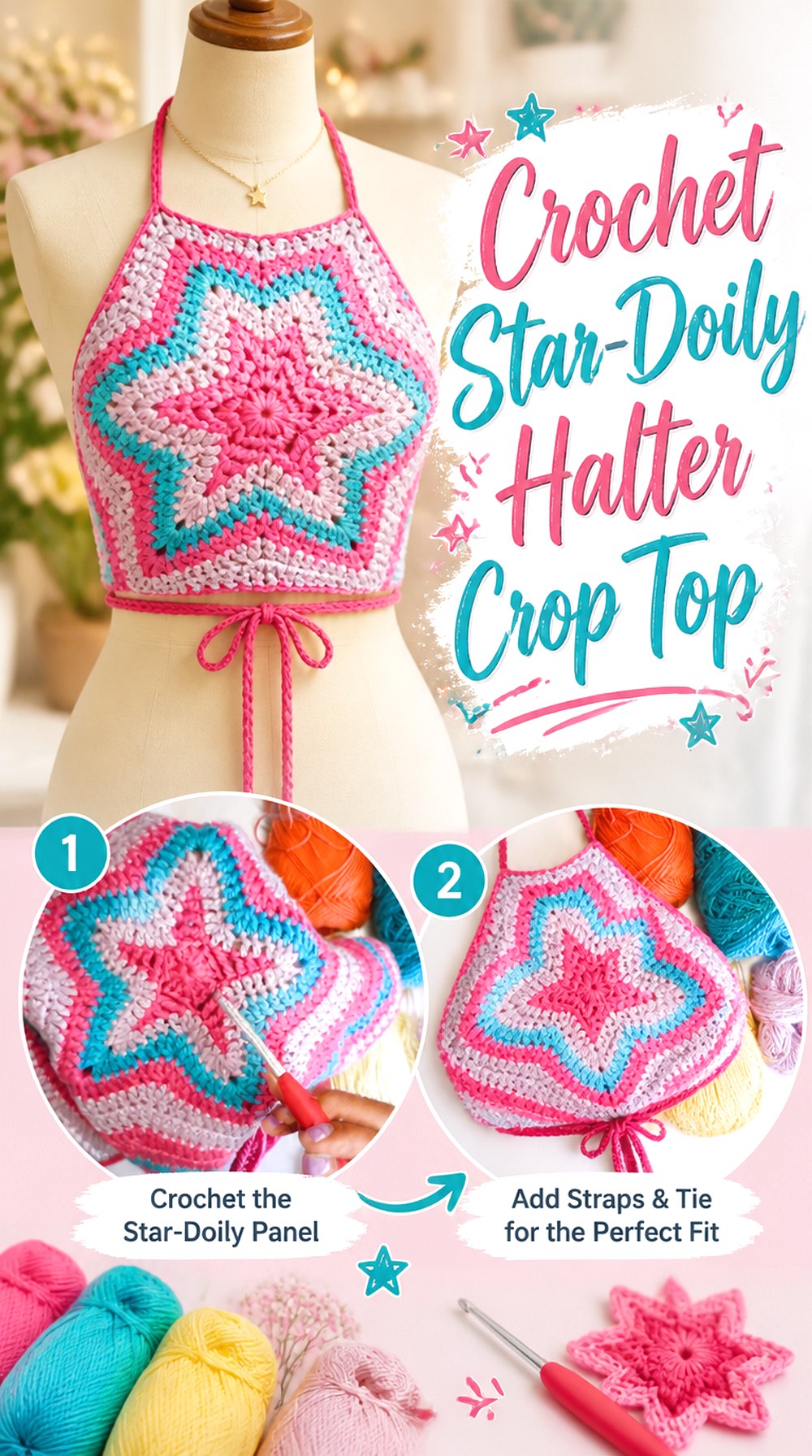
SAVEA doily-inspired top does not have to end in a perfect circle. Mrs Moon & Heaven’s star halter uses a large radiating star panel that expands outward from the center and is then developed into a halter crop top with straps and borders. Visually, it keeps the same center-out logic as a crochet doily while producing pointed edges instead of a round medallion. That makes it one of the strongest alternatives for someone who likes radial lace but wants a sharper, more graphic silhouette. The halter construction also shifts more of the garment’s fit responsibility to the neckline and side ties.
Star Points Change Where Coverage Falls
A circle distributes its edge evenly, but a star creates alternating high and low areas. Check where those points sit relative to the bust, neckline, and sides before assuming the motif has grown large enough. The widest point is not necessarily the area that needs the most coverage.
Halter Ties Carry More Responsibility Than Decoration
In this construction, straps help position the decorative front panel. Test whether the motif stays at the intended height without over-tightening the neck. A heavier yarn or additional edging can change that balance, so strap placement should be assessed after most of the front panel is complete.
Original Tutorial and Creator Credit
Creator: Mrs Moon & Heaven🌙
8. Crochet Spring Sun Circle Vest Topper
 SAVE
SAVEThe Spring Sun design turns the mandala toward the back of the body and uses it as the foundation for an open-front vest. That produces a very different relationship between motif and fit: the decorative circle does not have to provide bust coverage because it functions as a layering garment. YARNutopia’s tutorial shows a large circular vest and provides specific information for the demonstrated piece, including notes about adjustment. Choose this route when you want dramatic doily detail without the exposure or close fit of a crop top. It also gives a large motif room to be appreciated almost like wearable textile art.
Armholes Are the Critical Fit Checkpoint
In a circle vest, continuing the decorative rounds is tempting, but armhole placement needs attention first. Test the circle across the back and verify that the openings sit comfortably before investing in the outermost sections. A beautiful mandala cannot compensate for armholes that pull or sit too far apart.
Outer Rounds Add Garment Weight Quickly
The circumference increases as the circle grows, so later rounds consume more yarn and add more weight than the small center suggests. Hold the piece from the shoulders as it develops. If the outer edge begins to drag the back downward, that is useful information before adding still more length.
Let the Center Motif Stay Visible Over Simple Layers
Because the doily effect sits across the back, highly patterned clothing underneath can compete with it. A simple contrasting layer can make the radial construction easier to see and preserves the vest’s main visual purpose.
Original Tutorial and Creator Credit
Creator: Fuad Azmat / YARNutopia by Nadia
9. Crochet Half Mandala Halter Top
 SAVE
SAVEMayaLunaCorazon’s tutorial concentrates on a half mandala intended for a halter-top application rather than building one complete circle. The creator specifically describes the motif as something that can be attached to a bra cup or used in other projects. That makes this idea more modular than most of the full-mandala designs. It is useful when you like radial lace but want it as an accent rather than the entire front panel. A half-circle can also follow the lower line of a fitted top more naturally than a complete medallion, so motif placement becomes part of the garment design rather than the sole structure.
A Half Motif Needs a Strong Transition Point
The straight edge of a half mandala has to meet another garment component. Check how that transition is handled before substituting a completely different cup or body panel. A mismatch in width or stretch can cause the decorative lower section to flare or pull.
Keep Both Sides Visually Centered
Half-mandala details are particularly noticeable if they drift off center. Before final attachment, mark the midpoint of the garment section and the midpoint of the motif. This simple comparison prevents a small placement error from becoming obvious once the full top is worn.
Original Tutorial and Creator Credit
Creator: MayaLunaCorazon DIY CROCHET & BUSINESS
10. Crochet Camellia Corset Back Mandala Top
 SAVE
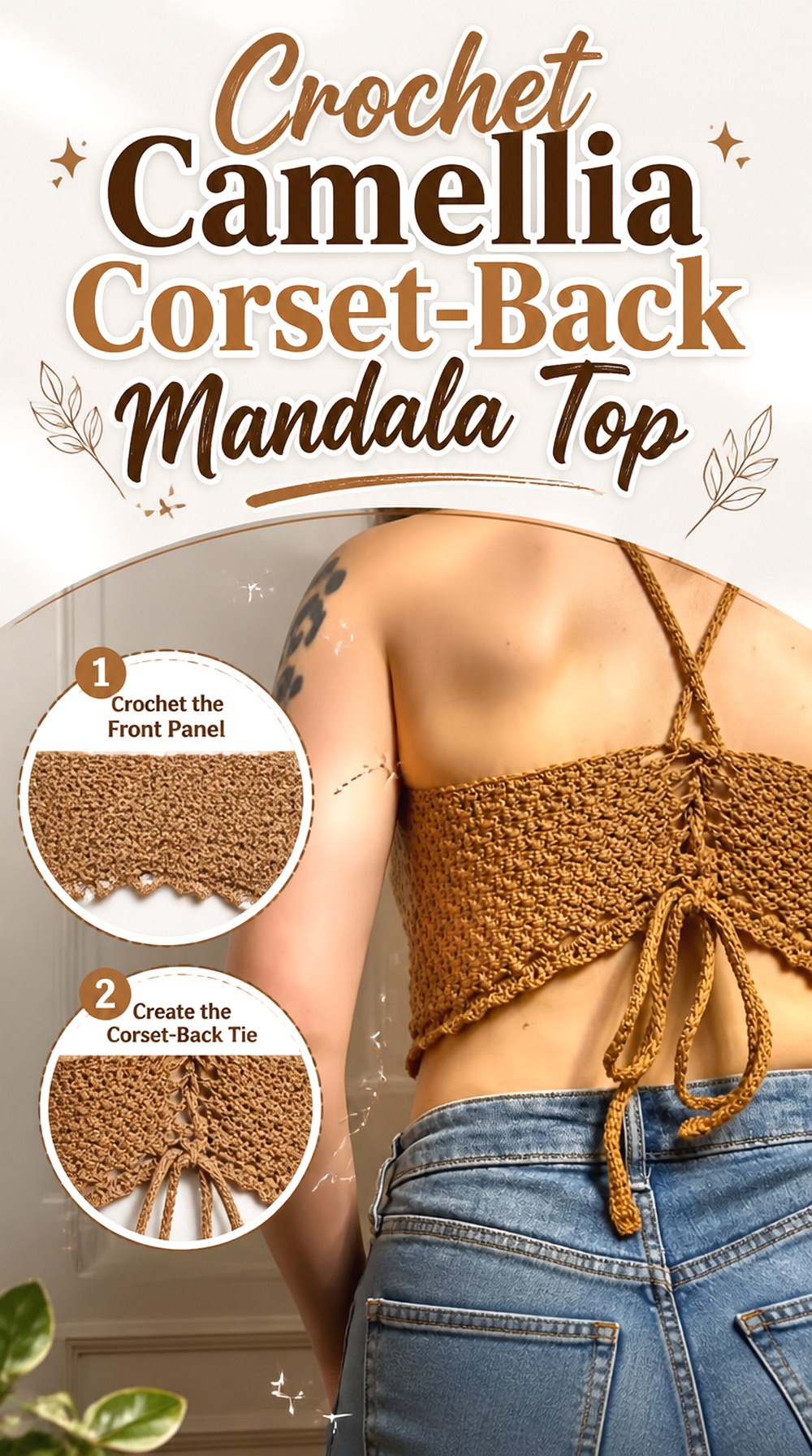
SAVEThe Camellia Mandala Top combines a central decorative motif with a more conventional fitted body and a corset-style back. Brooke Daly’s pattern information describes it as made to measurement, worked in one piece, and adjustable in length, with the mandala serving as the starting detail rather than the complete garment. This makes it a useful choice for readers who love the doily look but want more fabric surrounding the motif. The laced back also provides a different way to manage fit than fixed side seams, and the result reads more like a fitted summer top than a free-hanging circular panel.
The Corset Back Adds Adjustable Fit
A laced opening gives you some control over how closely the garment sits, but it does not remove the need to size the main body correctly. Aim for a body section that already provides suitable coverage, then use the lacing for refinement rather than trying to correct a major width mismatch.
Keep the Mandala Centered as the Body Grows
Once additional fabric surrounds a statement motif, it becomes easier for an uneven increase or edge to make the central design appear shifted. Lay the piece flat periodically and check that the body remains balanced on both sides of the mandala before adding more length.
Extra Body Fabric Makes Layering Less Necessary
Compared with a top made almost entirely from one open circle, this construction offers more opportunity to control coverage through the surrounding body section. That can make it a better starting point for someone who wants the doily detail to be decorative rather than defining every open space of the garment.
Original Tutorial and Creator Credit
Creator: Ferny’s Crafting Corner
11. Crochet Summer Collar Mandala Vest Top
 SAVE
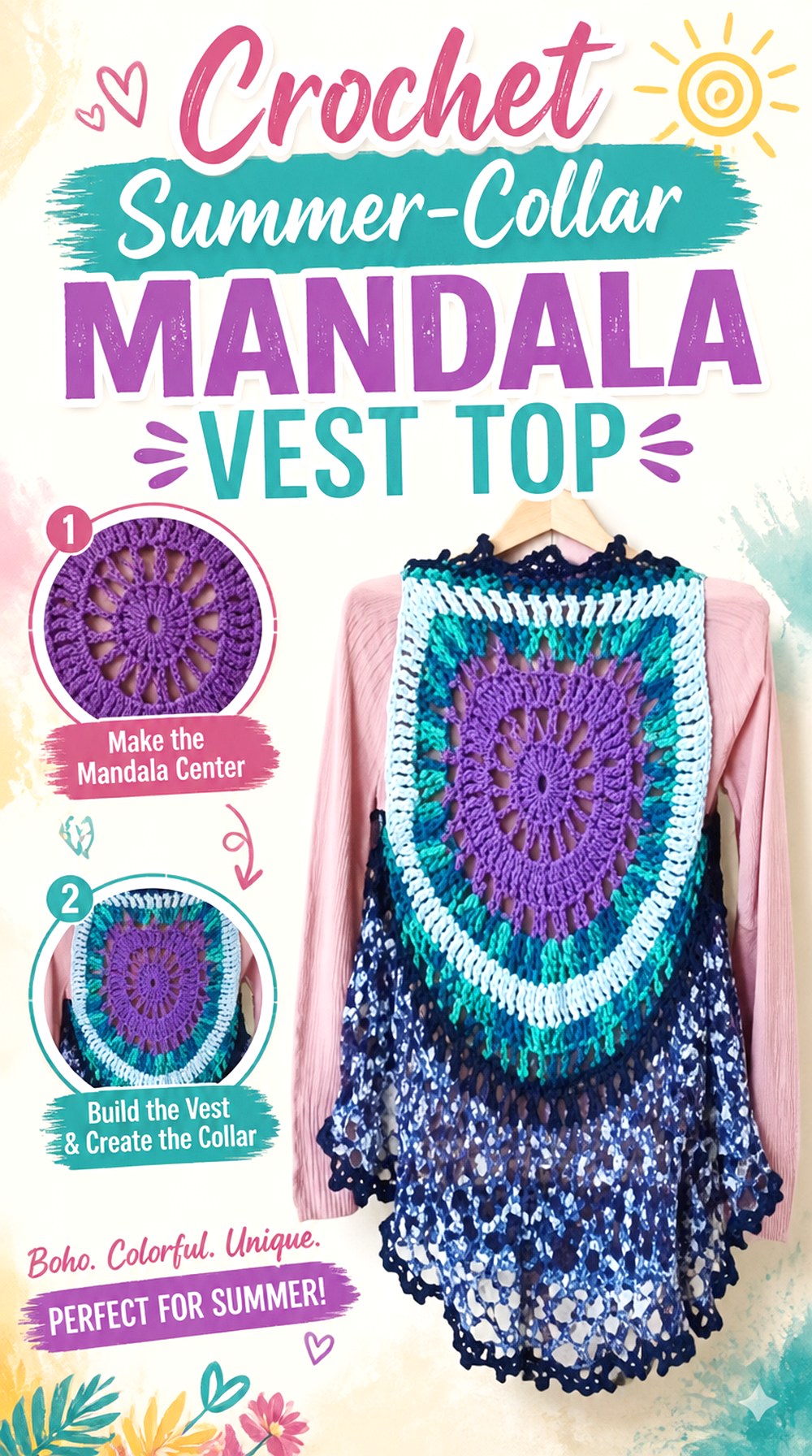
SAVEHectanooga1’s mandala vest brings the radial motif into a sleeveless, open layering silhouette and specifically distinguishes its summer-style collar from a heavier shawl-collar look. The creator’s tutorial demonstrates the adult-small version and points viewers to broader sizing information separately. This idea suits someone who wants a doily-inspired garment that feels more like a traditional vest around the neckline. Because the collar visually frames the front opening, the eye does not stay only on the back mandala; the garment has a stronger front-and-back relationship than a simple circle with armholes.
The Collar Changes the Front Silhouette
A circular back can dominate a vest, but an intentional collar gives the front edge more structure. If you alter yarn thickness, check whether the collar still folds and sits as intended. A material that is much stiffer than the original can make an otherwise relaxed opening feel bulky.
Use the Demonstrated Size as Information, Not a Shortcut
The creator identifies the size range associated with the demonstrated free version. If your measurements fall outside that range, use the creator’s appropriate sizing resources rather than assuming a larger hook alone will produce proportional shoulders, armholes, and front opening.
Original Tutorial and Creator Credit
Creator: Hectanooga1
12. Crochet Priscilla Circle Mandala Vest Top
 SAVE
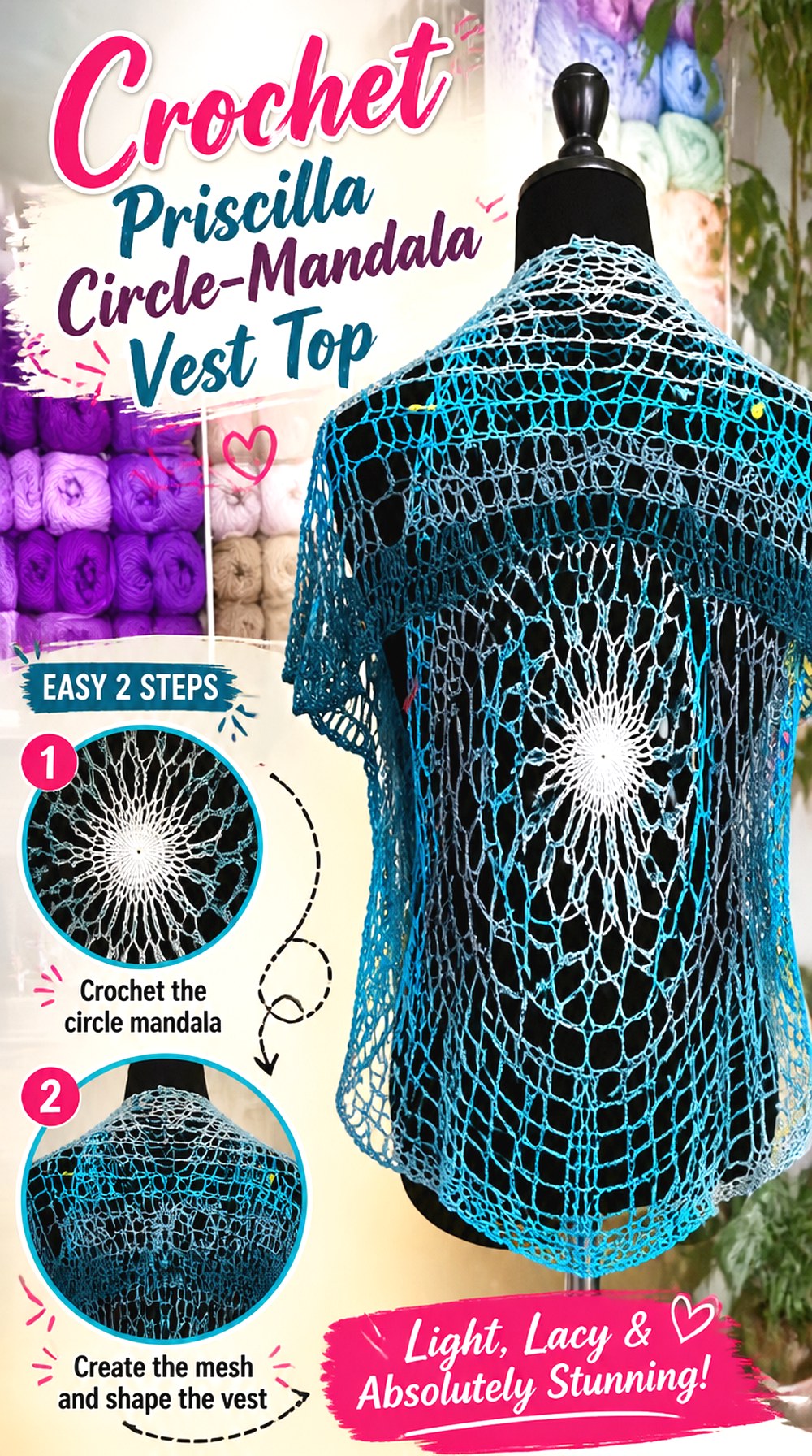
SAVEKristin Omdahl’s Priscilla design uses a full circle-mandala construction and is taught through a multi-part tutorial series. Part one covers the beginning of the circular motif, while the complete series develops it into a vest. For this roundup, it works as a more refined lace-circle option: the emphasis is on a deliberately patterned mandala rather than treating any generic flat circle as a vest base. It is a good direction for readers who enjoy watching a decorative motif become progressively more complex before it turns into a garment.
A Multi-Part Tutorial Rewards Early Planning
Before starting, review the full tutorial sequence and any accompanying pattern information so you know where garment-specific changes appear. The early rounds may resemble a decorative doily, but later decisions about armholes and wearable dimensions are what turn the circle into clothing.
Fine Lace Makes Dimension Checking More Important
An intricate circle can tempt you to judge progress by the number of decorative sections completed. For a wearable, blocked dimensions and body placement are more useful checkpoints. Measure the actual piece instead of assuming a certain visual stage will fit the same way with substituted yarn.
Protect the Pattern Definition During Blocking
Detailed radial lace gains much of its effect from clearly opened sections. Block according to the fiber and creator guidance rather than stretching aggressively for extra size. Distorting the motif to obtain garment width can alter the symmetry that makes the doily-style back attractive.
Original Tutorial and Creator Credit
Creator: Kristin Omdahl
13. Crochet Sugar Baby Mandala Bolero Top
 SAVE
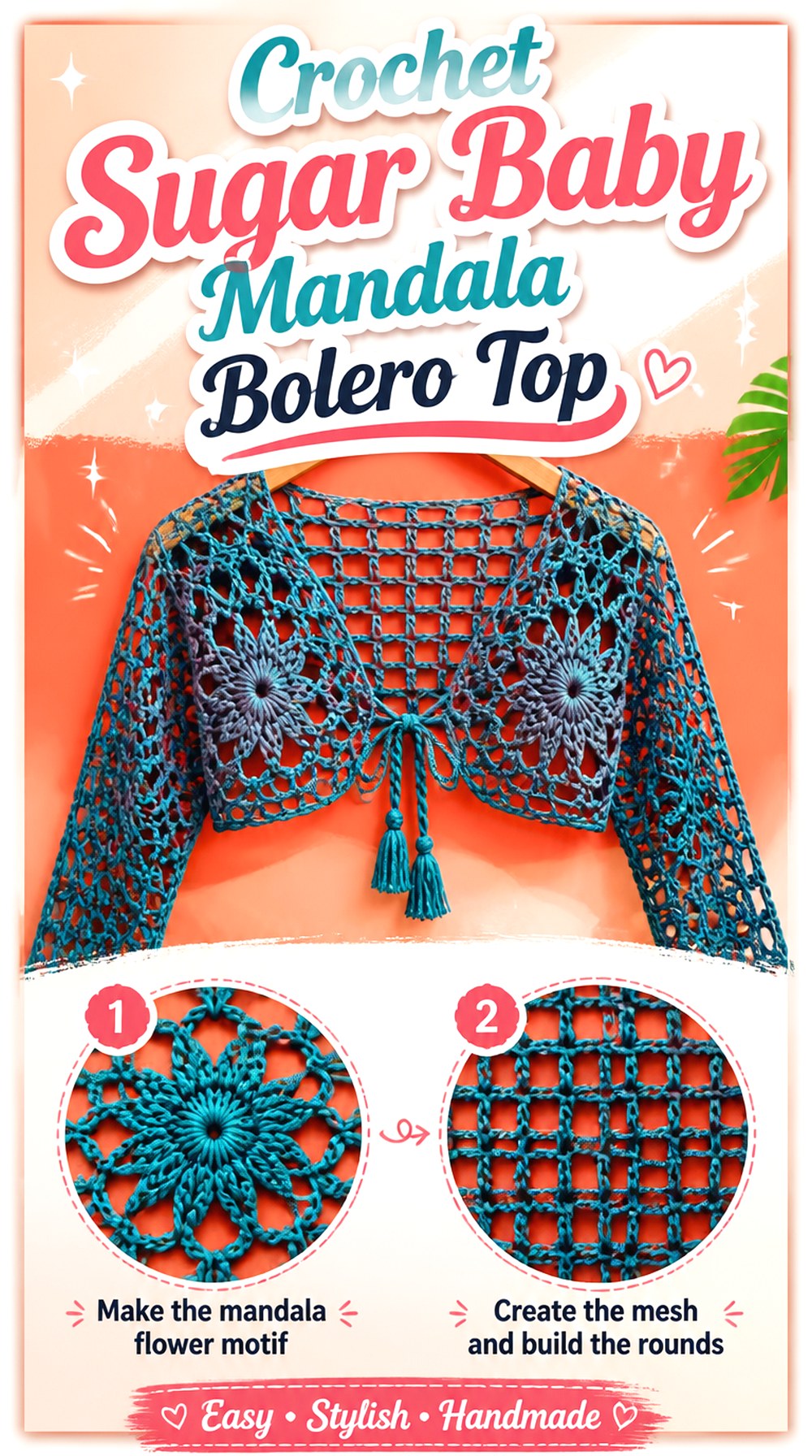
SAVEThis bolero-style interpretation shortens the circular garment so the doily motif feels compact around the upper body rather than extending into a long vest. ALEX CROCHET’s tutorial presents the Sugar Baby mandala bolero vest as a circular wearable, giving readers a useful middle ground between a fitted crop top and a dramatic long circle vest. The bolero shape is especially appealing if you want the round motif across the back but do not want a large amount of crochet hanging below the waist. It can function as a decorative top layer over dresses, tanks, or sleeveless outfits.
A Short Circular Layer Keeps the Motif Near the Shoulders
Where a long vest spreads the design over much of the back, a bolero concentrates attention higher. Check the circle’s position on your shoulder blades and upper back before adding optional decorative length. Too much outer growth can quickly shift the silhouette from bolero toward full vest.
Front Closure Is a Styling Choice, Not an Afterthought
A small circular layer may sit differently when worn open versus lightly closed at the front. Decide how you expect to wear it before adding any closure or tie. A closure can pull the circular back forward and alter how the lace spreads across the shoulders.
Original Tutorial and Creator Credit
Creator: ALEX CROCHET UNCINETTO MODERNO DI ALEX
14. Crochet Long Mandala Vest Topper
 SAVE
SAVELaura Cepeda’s mandala vest extends the circular concept into a noticeably longer garment. The first tutorial installment begins the large mandala and lists light-weight yarn for the demonstrated project. Length changes the practical behavior of a circle vest: the lower portion becomes a major part of the silhouette, and the finished garment can have more swing and visual movement than a cropped bolero. This makes the design suitable for readers who want the crochet doily idea to function almost like a long outer layer rather than a conventional top.
Length Magnifies Any Uneven Drape
A small difference in tension may be hard to notice near the center but more visible along a long outer edge. As the circle expands, hang the work periodically and check that the lower portion falls evenly rather than twisting to one side.
Consider the Outfit Under a Long Openwork Vest
The garment covers a larger area than a short mandala top, but much of that coverage is lace. A simple base outfit allows the motif to remain visible and prevents the long circular pattern from competing with another busy print or textured layer.
Support the Shoulder Area Before Adding More Length
More outer rounds mean more yarn hanging from the upper section. If you plan to adapt the garment beyond the tutorial’s demonstrated length, pay attention to how the shoulder and armhole areas handle the increasing weight rather than judging only the lower hem.
Original Tutorial and Creator Credit
Creator: Laura Cepeda English
15. Crochet Lace Edged Mandala Cardigan Topper
 SAVE
SAVECrochet Builder’s circle cardigan shows how the same basic mandala idea can move beyond a sleeveless vest. The tutorial describes the project as a circle cardigan, vest, or shrug and includes optional sleeve treatment, making it more adaptable than a fixed doily crop top. Its lace edging gives the outside of the circle a deliberate finish rather than leaving the final round as a purely structural stopping point. Choose this concept when you want the doily to remain visible across the back but prefer a cardigan-like layer with more arm coverage.
Sleeves Change How the Circle Sits
Once sleeves are added, the armholes are no longer passive openings. They help anchor the garment to the body. Before extending sleeve length, check whether the circular back still centers correctly and whether the front edges remain where you want them.
The Outer Edging Should Complement, Not Distort, the Mandala
A decorative finish can enhance the doily effect, but an edge worked too tightly may pull the circle inward. If your yarn or tension differs from the tutorial, check the outer circumference after a small section rather than completing the entire border before noticing rippling or contraction.
Original Tutorial and Creator Credit
Creator: Crochet Builder
16. Crochet Center Mandala Open Back Halter Top
 SAVE
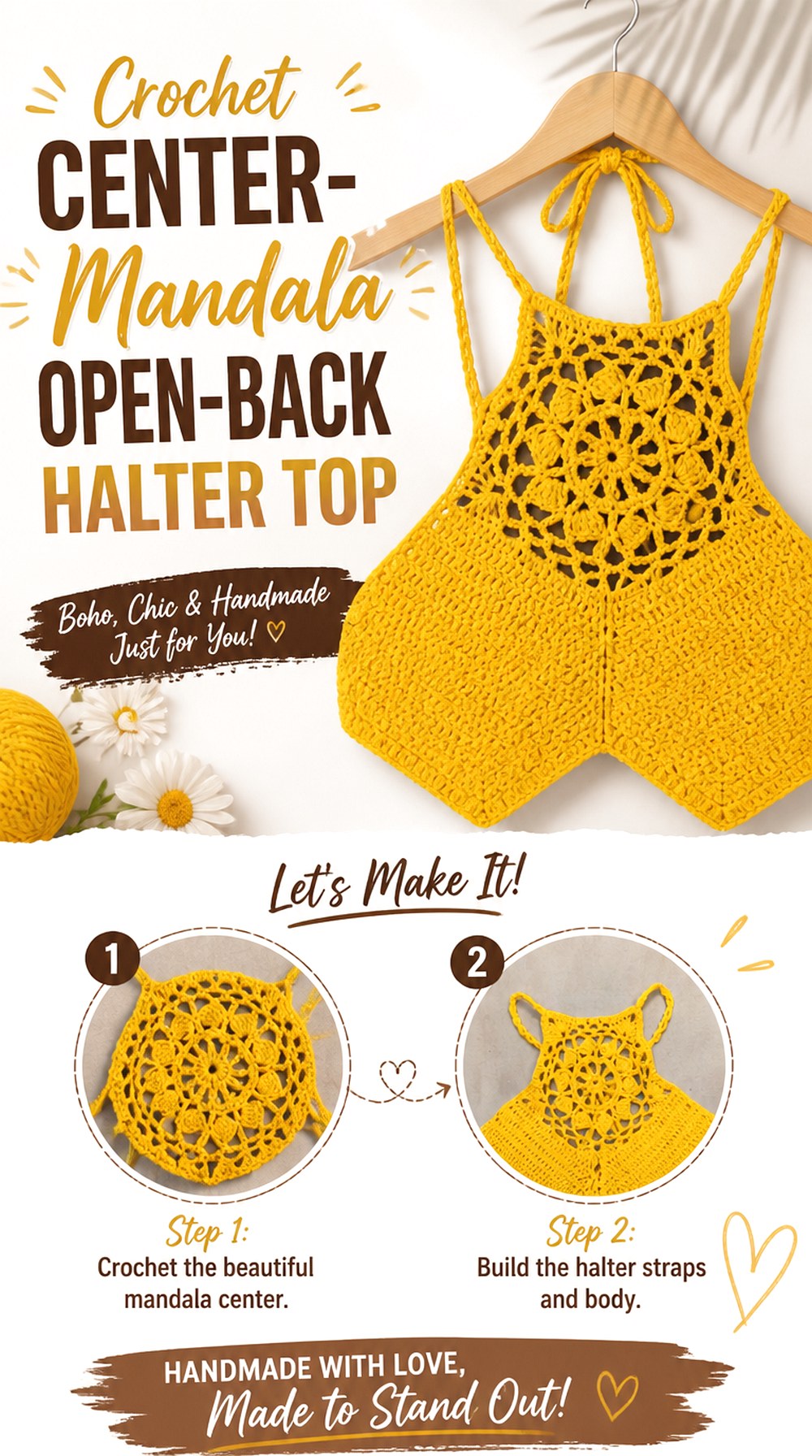
SAVEShyler crochets places the mandala high on the front of a fitted halter, giving the decorative circle a very different role from the full-panel tops and back-centered vests. The creator describes the design as a halter with a mandala detail at the center of the chest and an open back. This makes it a strong choice if you want the doily effect to operate almost like a decorative neckline feature rather than covering the entire torso. The open back keeps the garment visually light, while the surrounding crochet gives the central motif a defined garment shape.
Chest Placement Needs to Be Deliberate
A smaller mandala used as a focal detail looks best when it is visibly centered within the finished top. Assess the motif while wearing or pinning the garment at its intended height rather than judging placement on a flat surface, where the relationship to the neckline is harder to see.
An Open Back Shifts Fit to the Front and Ties
With less fabric stabilizing the back, the front panel and securing straps have more responsibility for holding the garment in position. Avoid making fit changes only at the neck. Side and back ties should work together so the top feels secure without excessive tension in one area.
Use the Smaller Motif for a More Subtle Doily Look
Not every doily top needs one enormous circle. A compact medallion surrounded by solid or textured crochet can be easier to style and offers more controlled coverage while still keeping the radial lace as the main decorative feature.
Original Tutorial and Creator Credit
Creator: Shyler crochets
Choosing Between Fitted Doily Tops and Circular Layers
For the strongest classic doily effect, start with the Sunburst Circular-Motif Crop Top, Twin-Mandala Lace Top, or Priscilla Circle-Mandala Vest, because the radial crochet remains the dominant visual feature. If you want more controlled coverage, the Camellia Corset-Back Mandala Top and Center-Mandala Open-Back Halter surround a smaller decorative motif with more garment structure.
For layering, the choice is mainly about scale. The Sugar Baby Bolero keeps the circle high and compact, the Spring Sun Vest creates a substantial open-back statement, and the Long Mandala Vest adds the most vertical drama. If neck support is something you would rather minimize, these open-front circle constructions may also be more appealing than tie-on halter styles.
Conclusion
The most useful way to choose among these 16 crochet doily top ideas is to decide where you want the radial lace to sit. A full chest medallion creates a strong statement, half-mandalas and smaller motifs offer more controlled coverage, and circle vests move the doily to the back so it works as an outer layer. Yarn weight and motif size also affect how much the finished crochet stretches, drapes, and weighs once worn.
Before adapting any design, compare actual motif dimensions with your intended coverage and check fit while the piece is hanging naturally. Use the original tutorials near the end of each idea for the creators’ exact construction details rather than guessing at stitch counts or assembly.
Frequently Asked Questions
What makes a crochet top look like a doily top?
The strongest doily effect usually comes from crochet worked outward from a central point with repeated radial sections, decorative open spaces, or lace-like rings. The finished garment may be called a mandala, medallion, circular-motif, or circle top instead. What matters visually is the center-out structure and ornamental lace rather than the creator using the word doily in the project title.
Should I block a mandala before deciding whether it is large enough for a top?
Usually, it is more useful to assess the motif after the fabric has settled into its intended finished condition. Lace can open noticeably during appropriate blocking, so an unblocked motif may give a misleading idea of coverage. Follow the care guidance for your yarn and the creator’s project, then compare the finished motif with the body or garment area it needs to cover.
Can I use an ordinary crochet doily pattern to make a wearable top?
Possibly, but a decorative doily is not automatically a garment pattern. A wearable also needs appropriate coverage, armholes or straps, transitions around the body, and enough structural support for its own weight. If adapting a decorative circle, use its blocked dimensions as a planning reference and rely on a compatible garment construction rather than assuming the final doily round corresponds to a clothing size.
How can I make an openwork doily top less revealing?
The simplest option is often styling rather than changing the motif: wear the crochet over a bralette, camisole, fitted tank, dress, or swim layer that suits the amount of openness. If you want the crochet itself to provide more coverage, choose a construction such as the Camellia style, where additional body fabric surrounds the mandala, instead of a design formed almost entirely from one open circle.
Why does a circular crochet top start to ruffle instead of lying flat?
Ruffling usually indicates that the fabric is gaining circumference faster than it can lie flat, although the correct amount of shaping depends on the specific design. Do not automatically remove increases from a creator’s pattern. First confirm that your yarn, hook, and tension are compatible with the tutorial, because substituting materials can change how a circular motif behaves.
Which crochet doily top style is easiest to adjust for coverage?
Designs with separate supporting sections generally give you more places to make fit decisions than a top formed almost entirely from one circle. A central-motif halter with added body fabric, a corset-back mandala top, or an open circular vest can therefore be more adaptable in concept. For any specific tutorial, check the creator’s sizing or adjustment guidance before changing its construction.