
Persimmon and Espresso Brown create a warm crochet combination with enough contrast to support both large color blocks and smaller finishing details. Persimmon can provide the brighter focal area, while Espresso Brown brings deeper visual weight to borders, cuffs, handles, joins, and backgrounds.
The balance matters more than simply alternating the two shades. A Persimmon cardigan may look more cohesive when Espresso Brown is confined to ribbing and edges, while an Espresso Brown pillow can give Persimmon much more influence through repeated motifs. Projects with granny squares, checks, or mosaic-style surfaces can distribute the colors more evenly because the construction already organizes the contrast.
The tutorials linked below support the crochet project concepts. The Persimmon and Espresso Brown placements are independent palette adaptations, so you can use the construction as a starting point while planning the two colors around your own yarns.
Quick List
- Persimmon Crochet Oversized Cardigan With Espresso Brown Ribbing
- Espresso Brown Crochet Ribbed Beanie With Persimmon Brim
- Persimmon Crochet Basket With Espresso Brown Rim
- Persimmon And Espresso Brown Crochet Checked Tote
- Espresso Brown Crochet Waffle Shoulder Bag With Persimmon Panels
- Persimmon And Espresso Brown Crochet Textured Shawl
- Espresso Brown Crochet Coasters With Persimmon Centers
- Persimmon Crochet Poncho With Espresso Brown Borders
- Espresso Brown Crochet Hooded Vest With Persimmon Trim
- Persimmon Crochet Market Tote With Espresso Brown Base
- Espresso Brown Crochet Mosaic Pillow With Persimmon Motifs
- Persimmon Crochet Bucket Hat With Espresso Brown Brim
- Espresso Brown Crochet Infinity Scarf With Persimmon Bands
- Persimmon Crochet Bandana With Espresso Brown Border
- Espresso Brown Crochet Mug Cozy With Persimmon Accent
- Persimmon And Espresso Brown Crochet Granny Stripe Blanket
- Espresso Brown Crochet Fingerless Gloves With Persimmon Cuffs
- Persimmon And Espresso Brown Crochet Granny Square Pillow
- Espresso Brown And Persimmon Tunisian Crochet Cowl
- Persimmon Crochet Cushion Cover With Espresso Brown Framing
How to Balance Persimmon and Espresso Brown in Crochet
Persimmon often becomes noticeable quickly because its orange-red direction separates from the deeper brown. That means a relatively small Persimmon section can carry more visual emphasis than its physical size suggests. If you want Espresso Brown to remain dominant, give it broad uninterrupted areas and place Persimmon at specific features rather than distributing both colors equally.
For Persimmon-led projects, Espresso Brown can do more than act as a neutral. It can frame the item, separate motifs, define garment openings, reinforce a bag base visually, or create darker intervals between warm sections.
Projects built from repeated units are an exception. Granny squares, checks, mosaic motifs, and repeated stripes can handle a more balanced split because the construction provides a consistent system for the color changes.
Use Value Contrast to Keep Persimmon Visible Against Espresso Brown
Persimmon and Espresso Brown are different hues, but some yarn selections can still sit surprisingly close in lightness. A dark, muted Persimmon beside a medium Espresso Brown may produce less definition than expected.
Compare the actual yarns side by side before planning detailed colorwork. Viewing a photo in grayscale is a simple way to check whether one color is noticeably lighter than the other.
When the values are similar, use larger Persimmon panels, wider stripes, or bigger motifs. Small details depend more heavily on light-and-dark separation than broad color blocks do.
Let Espresso Brown Frame Persimmon at Structural Crochet Details
Espresso Brown becomes especially useful when its placement follows the shape of the project. Cardigan ribbing, hat brims, bag bases, pillow borders, shawl edges, and glove cuffs already function as visual boundaries, so a darker color can reinforce those features.
Avoid adding Espresso Brown randomly just because the project needs a second color. Connecting the darker shade to an edge, join, panel, or repeated motif gives the palette a stronger visual logic.
1. Persimmon Crochet Oversized Cardigan With Espresso Brown Ribbing
 SAVE
SAVEPersimmon can carry the broad body and sleeve areas of an oversized cardigan, while Espresso Brown concentrates around the ribbing and openings. This keeps the garment warm and Persimmon-led without turning every panel into a separate color block. The darker brown also gives cuffs, hem, and front finishing a clear relationship to one another.
Keep Persimmon Continuous Across the Crochet Cardigan Body
Use Persimmon through the main front, back, and most of the sleeve surfaces when you want the cardigan to remain visually unified. Large uninterrupted panels give the color enough room to establish the garment’s overall direction.
If the fabric includes visible texture, work a Persimmon sample first. The actual stitches will show whether the color preserves enough shadow and definition for the surface you want.
Repeat Espresso Brown Across the Persimmon Crochet Cardigan Ribbing
Bring Espresso Brown into more than one finishing area, such as cuffs, hem, or front edging. Repetition makes the dark contrast look planned rather than attached to a single isolated section.
The ribbed areas do not need equal widths. A deeper Espresso Brown cuff can coexist with narrower brown edging while Persimmon remains clearly dominant.
Creator Credit: forthefrills
2. Espresso Brown Crochet Ribbed Beanie With Persimmon Brim
 SAVE
SAVEA ribbed beanie gives Espresso Brown a compact but continuous surface where stitch texture can remain the main detail. Persimmon can then define the lower brim, creating a warm band without interrupting the vertical ribbing throughout the crown.
Let Espresso Brown Carry the Crochet Beanie Crown
Keep Espresso Brown consistent through the crown and main body so the ribbing does not compete with frequent color changes. The result stays brown-led even when the Persimmon brim has a stronger hue.
Check the ribbing in the actual Espresso Brown yarn before finishing the whole hat. Very dark brown can reduce visible stitch shadows under softer lighting.
Give Persimmon Enough Width on the Espresso Brown Crochet Beanie Brim
A very narrow Persimmon stripe may look incidental. Letting it occupy a recognizable brim gives the accent an obvious structural role.
If you want less Persimmon, reduce the brim area rather than scattering small orange-red stripes across the Espresso Brown crown.
Creator Credit: VivCrochets
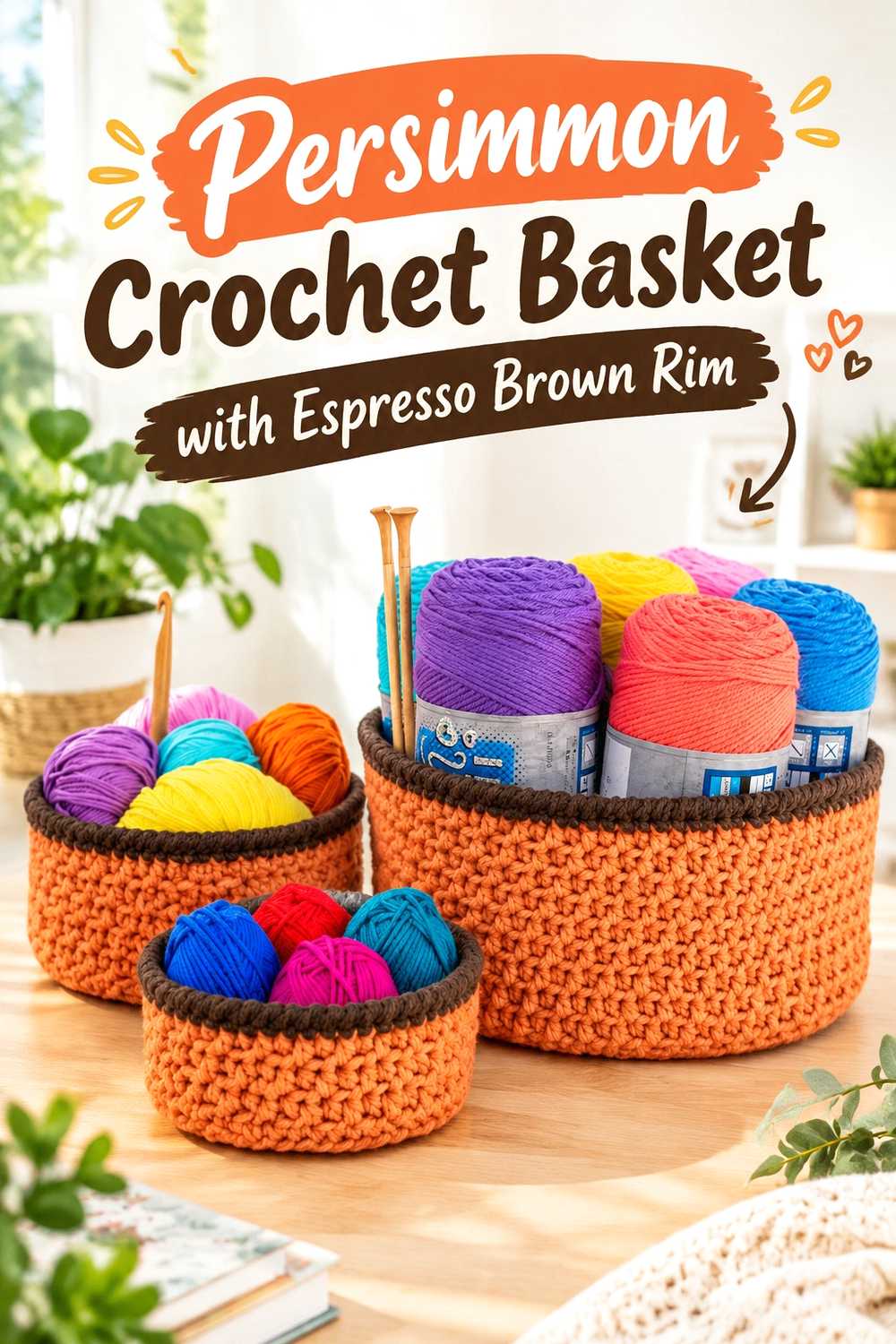
3. Persimmon Crochet Basket With Espresso Brown Rim
 SAVE
SAVEA crochet basket can use Persimmon across most of its body while Espresso Brown defines the opening. Because the darker color sits at a genuine structural boundary, even a relatively narrow brown section can have enough visual influence.
Keep Persimmon Around the Main Crochet Basket Body
Use Persimmon continuously around the sides when you want the basket to read as one warm form. This also prevents visible stitch texture from being divided unnecessarily by multiple color changes.
If the base is visible during normal use, continuing Persimmon into that area keeps the lower portion connected to the sides.
Use Espresso Brown to Frame the Persimmon Crochet Basket Opening
Place Espresso Brown around the rim to create a darker finish where the basket body ends. The contrast can define the opening without requiring equal amounts of both colors.
If you repeat Espresso Brown elsewhere, connect it to another structural feature rather than adding unrelated patches through the Persimmon body.
Creator Credit: naztazia
4. Persimmon And Espresso Brown Crochet Checked Tote
 SAVE
SAVEA checked tote allows the two colors to participate more evenly than most projects because the repeated grid organizes the contrast. Persimmon can provide the warmer squares while Espresso Brown supplies darker blocks and visual separation. The main checkpoint is whether the two yarns remain distinct at the scale of the checks.
Check Persimmon and Espresso Brown Contrast Before Making Small Crochet Squares
Work enough of the repeat to judge it from normal viewing distance. If Persimmon and Espresso Brown are close in value, small checks may blend into a softer pattern instead of producing a crisp grid.
Increasing the block size is one option. Choosing a slightly lighter Persimmon while keeping its muted warmth can also strengthen separation.
Keep Persimmon and Espresso Brown Repetition Consistent Across the Crochet Tote
Once you establish the checked rhythm, repeat it deliberately across the visible bag surface. Large unexplained clusters of one shade can interrupt the grid.
The handles do not need to continue the full check pattern. A solid Espresso Brown or Persimmon handle can simplify the upper section while still repeating a color already established in the body.
Creator Credit: HayHay Crochet
5. Espresso Brown Crochet Waffle Shoulder Bag With Persimmon Panels
 SAVE
SAVEWaffle texture already creates a strong surface pattern, so the colors should support rather than compete with it. Espresso Brown can cover the main textured body while Persimmon appears in larger panels, the upper section, or another defined structural area.
Test Espresso Brown on the Crochet Waffle Texture First
Dark brown can give the bag substantial visual weight, but it may also reduce the shadows that make raised texture noticeable. Work a useful-sized Espresso Brown sample and view it in ordinary lighting before assigning it to the whole body.
If the texture becomes too subdued, shift some of the most dimensional areas into Persimmon.
Put Persimmon on Defined Espresso Brown Crochet Bag Sections
Use Persimmon where the bag construction already creates a boundary, such as an upper panel, side area, or handle section. Larger warm blocks are easier to distinguish against the textured brown surface than scattered small details.
If the strap is Persimmon, repeat that shade somewhere on the bag body so the color feels connected.
Creator Credit: Brunaticality
6. Persimmon And Espresso Brown Crochet Textured Shawl
 SAVE
SAVEA shawl gives both shades enough space for broad color sections. Persimmon can occupy the center or another major area, while Espresso Brown appears toward the widest edge, or the arrangement can be reversed if you want a darker overall result.
Let Persimmon Highlight Crochet Shawl Texture That Needs Visibility
If your Persimmon yarn is lighter than Espresso Brown, place it where raised stitches, openwork, or other surface changes deserve more definition. The warmer shade can keep those details from disappearing into one dark field.
Avoid changing color every time the texture changes. A few larger Persimmon areas usually make the stitch pattern easier to read.
Use Espresso Brown to Anchor the Persimmon Crochet Shawl Edge
Espresso Brown can create a strong finish along the widest part of the shawl. Because that edge covers a long distance, the darker color does not need to occupy much of the center to influence the finished piece.
Keep the brown border shallower if you want Persimmon to remain unmistakably dominant.
Creator Credit: ExpressionFiberArts
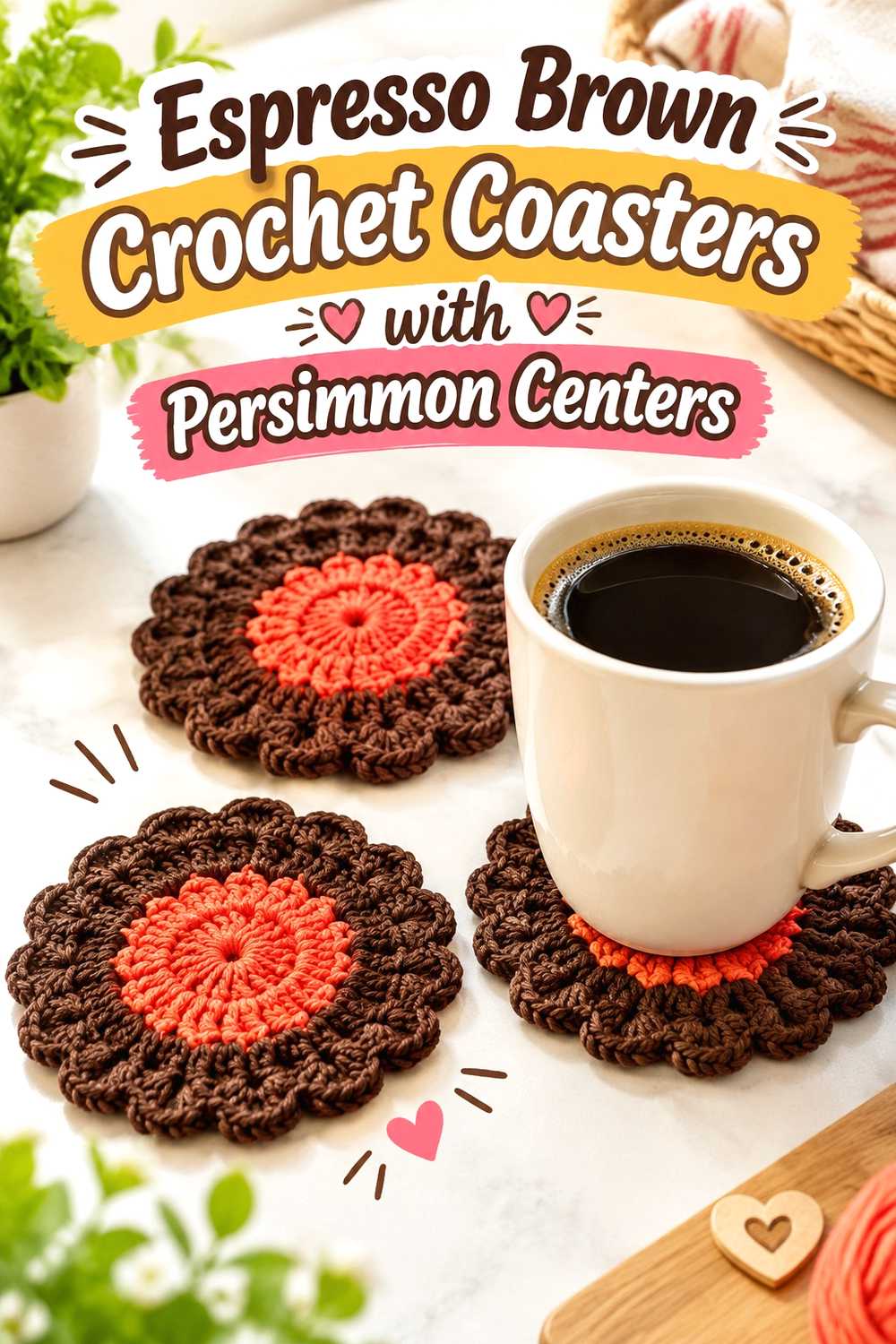
7. Espresso Brown Crochet Coasters With Persimmon Centers
 SAVE
SAVESmall coasters are a useful place to reverse the usual hierarchy. Espresso Brown can define most of the outer area while Persimmon creates a warmer center. Because the surface is limited, even a modest Persimmon circle or motif can become the focal point.
Give Persimmon Enough Space Inside the Espresso Brown Crochet Coaster
Keep the center large enough that Persimmon reads as an intentional focal color rather than a tiny dot surrounded by brown.
Make one complete coaster and judge the proportion before repeating it across the set. Small changes in border width have a noticeable effect at this scale.
Keep Espresso Brown Consistent Around Every Persimmon Crochet Coaster
Repeating the same darker outer area can make the set feel connected even if the Persimmon centers contain minor variations.
If you reverse the colors on some coasters, repeat that reversal as a deliberate pattern rather than giving every piece a different balance.
Creator Credit: Jayda InStitches
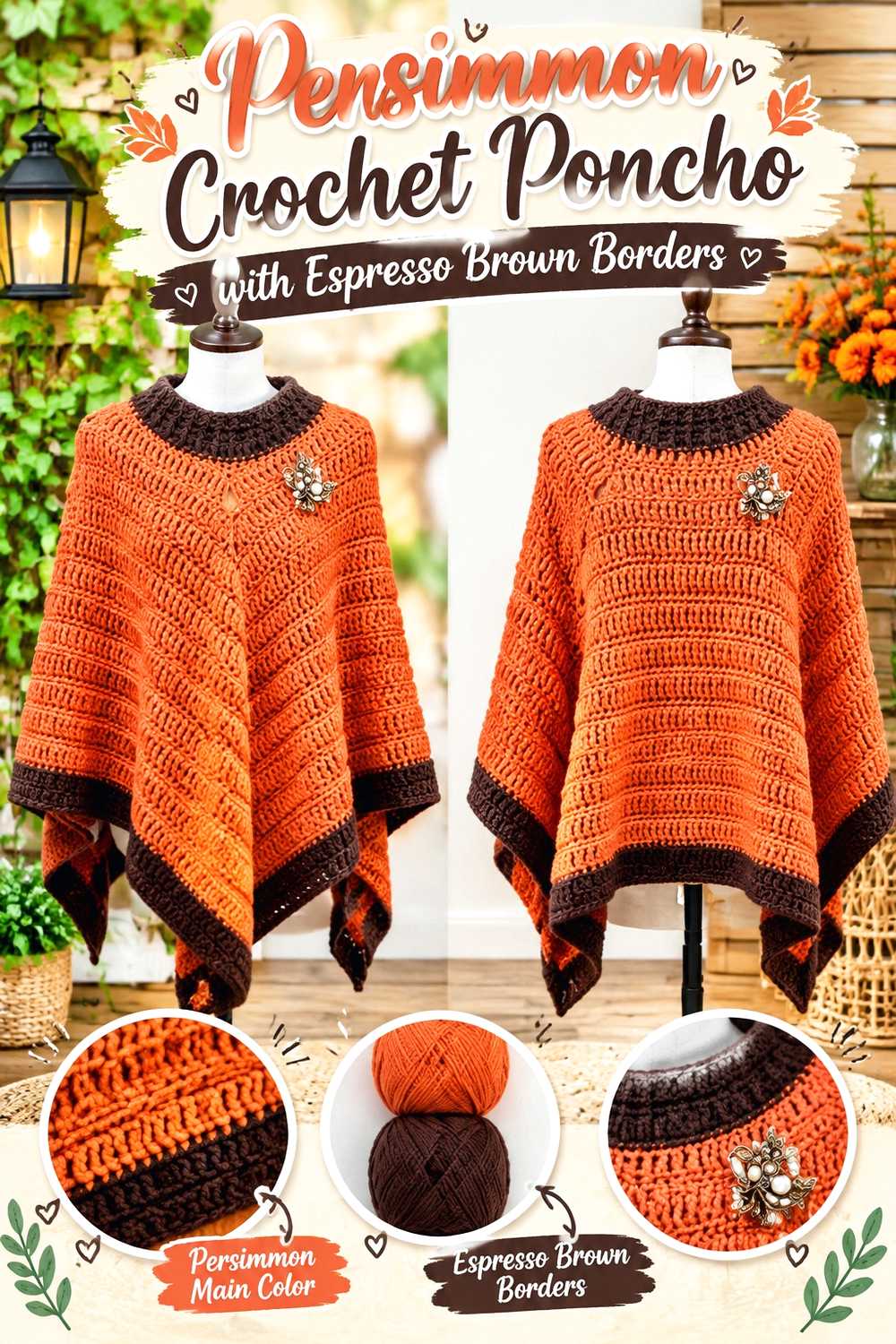
8. Persimmon Crochet Poncho With Espresso Brown Borders
 SAVE
SAVEA poncho provides enough uninterrupted fabric for Persimmon to dominate comfortably. Espresso Brown can follow the neckline and lower edge, creating dark framing without cutting the body into numerous stripes.
Keep Persimmon Broad Across the Crochet Poncho Body
Use Persimmon through the major body areas when you want the garment to stay visually warm and continuous. The large surface already creates impact, so additional small brown blocks are not necessary.
Check any textured sections in Persimmon before committing to the full garment, especially if the yarn is dark or muted.
Repeat Espresso Brown Around More Than One Persimmon Crochet Poncho Edge
A brown neckline alone may feel detached from the rest of the garment. Repeating Espresso Brown at the hem or another major edge gives the dark shade a clearer system.
The two borders can differ in width. Their shared color is enough to connect the top and bottom.
Creator Credit: Bag-O-Day Crochet
9. Espresso Brown Crochet Hooded Vest With Persimmon Trim
 SAVE
SAVEAn Espresso Brown vest creates a deeper foundation that gives Persimmon trim plenty of influence even in relatively small amounts. The neckline, hood edge, armholes, and lower finishing provide several natural places to repeat the warm accent.
Let Espresso Brown Connect the Crochet Vest and Hood
Keeping Espresso Brown across the main body and hood prevents the upper section from looking detached from the vest. This also gives the garment a stable background for Persimmon finishing details.
If the hood and body use different stitch textures, the common Espresso Brown color can visually connect them.
Repeat Persimmon Around Espresso Brown Crochet Vest Openings
Use Persimmon around two or more visible openings, such as the hood edge and armholes. Repetition makes the trim feel intentional without requiring large Persimmon body panels.
Watch the total amount of trim. Very wide Persimmon edging around every opening can quickly change the vest from brown-led to nearly balanced.
Creator Credit: KnitcroAddict
10. Persimmon Crochet Market Tote With Espresso Brown Base
 SAVE
SAVEA market tote can use color to emphasize its vertical structure. Espresso Brown works well across the base and lower area, while Persimmon rises through the main bag body. That creates a clear transition rather than alternating narrow stripes throughout the tote.
Use Espresso Brown to Ground the Persimmon Crochet Market Tote
Keep Espresso Brown across enough of the lower section to read as a real color block. A few dark rows near the bottom may disappear once the bag is filled or viewed from above.
If the base and side walls meet visibly, continuing brown slightly upward can strengthen the grounding effect.
Carry Persimmon Through the Main Crochet Tote Body
Let Persimmon take over the broad middle and upper areas when you want it to be the main visible shade. A continuous warm field also prevents openwork or mesh from becoming overly busy.
For handles, either continue Persimmon or return deliberately to Espresso Brown. Both work when the chosen color already appears elsewhere.
Creator Credit: Hey Carrie
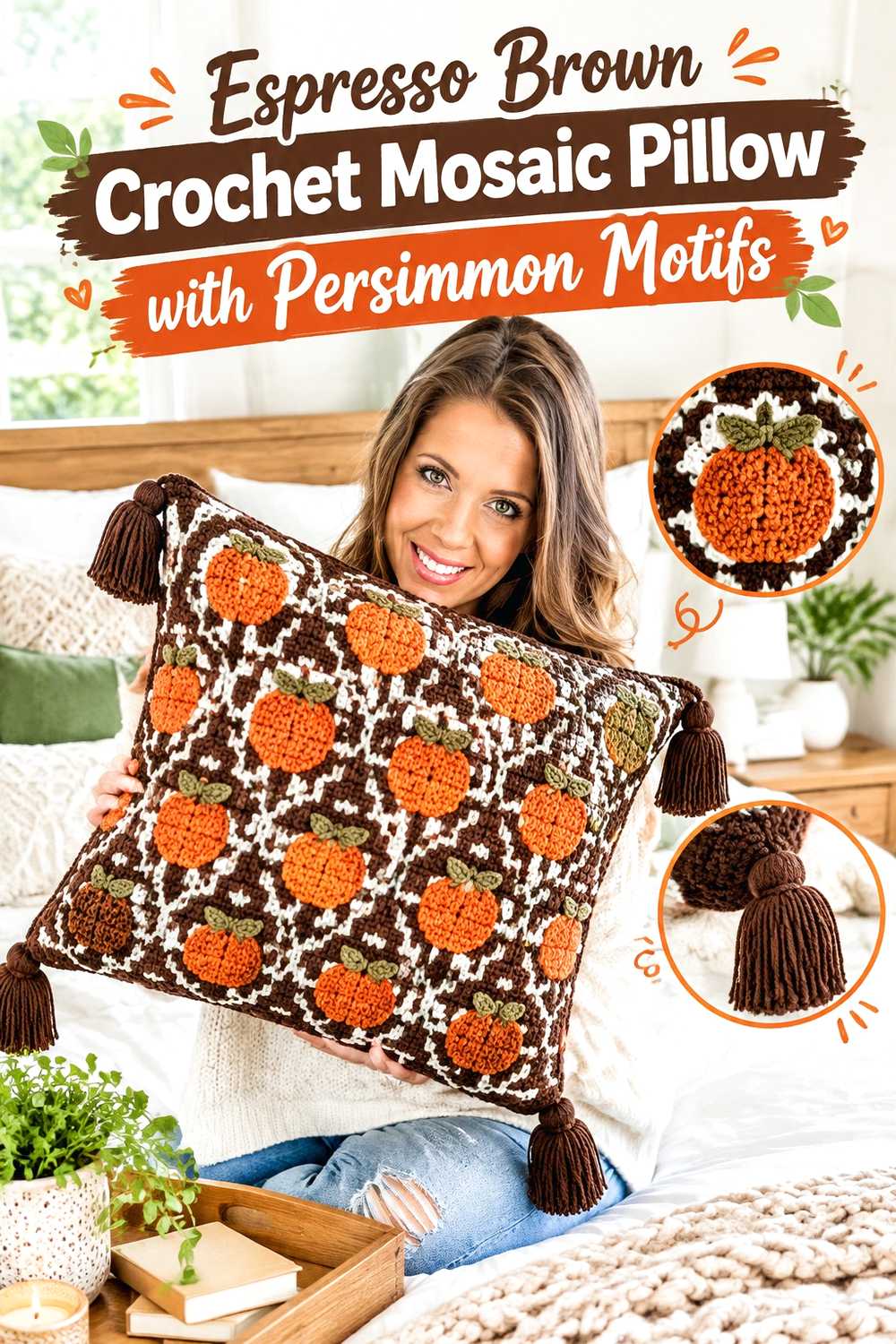
11. Espresso Brown Crochet Mosaic Pillow With Persimmon Motifs
 SAVE
SAVEMosaic-style surfaces put more pressure on contrast because individual motifs must remain recognizable. Espresso Brown can serve as the darker background while Persimmon forms repeated shapes, but the two yarns need enough value separation for the pattern scale you choose.
Leave Espresso Brown Visible Around Persimmon Crochet Pillow Motifs
Give each Persimmon motif enough surrounding Espresso Brown to keep its outline distinct. If the warm shapes become too large or crowded, the background loses its role and the pillow moves toward an even color split.
Evaluate a complete repeat rather than deciding from one tiny section.
Check Persimmon Against Espresso Brown Before Detailed Crochet Colorwork
Photograph the yarns together and view them in grayscale. If they become almost identical, detailed motifs may merge even though the colors look different in the skein.
A lighter Persimmon or deeper Espresso Brown can improve separation while preserving the same two-color concept.
Creator Credit: MJ’s Off The Hook Designs
12. Persimmon Crochet Bucket Hat With Espresso Brown Brim
 SAVE
SAVEA bucket hat has clearly defined crown, side, and brim zones, making color placement straightforward. Persimmon can flow continuously over the crown and sides while Espresso Brown takes over at the brim.
Carry Persimmon Through the Crochet Bucket Hat Crown and Sides
Keeping the upper hat Persimmon prevents an unnecessary break between the crown and side walls. If those areas use different stitch directions, the shared color can help them read as one unit.
This also preserves Espresso Brown for the most visibly separate part of the silhouette.
Let Espresso Brown Define the Persimmon Crochet Bucket Hat Brim
A full Espresso Brown brim gives the darker shade enough surface area to matter when the hat is viewed from different angles.
For a more Persimmon-heavy result, keep the color change close to the start of the brim rather than bringing brown farther up the sides.
Creator Credit: Tamara Kelly – Moogly
13. Espresso Brown Crochet Infinity Scarf With Persimmon Bands
 SAVE
SAVEAn infinity scarf folds over itself when worn, so narrow accents can disappear. Espresso Brown can form the continuous foundation, while Persimmon appears in broader repeated bands that remain visible after wrapping.
Keep Espresso Brown Continuous Through Most of the Crochet Infinity Scarf
A broad Espresso Brown base keeps the accessory visually connected even when several sections overlap around the neck.
If the stitch pattern itself changes, avoid introducing a color change at every transition. The fabric already has enough visual movement.
Repeat Persimmon Bands Across the Espresso Brown Crochet Scarf
Use Persimmon in more than one location so a single warm section does not disappear inside the folds. Broader bands are more likely to remain visible in the finished loop.
Before finalizing the placement, loosely arrange the scarf as it will be worn and check whether both shades can still be seen from the front.
Creator Credit: Bella Coco
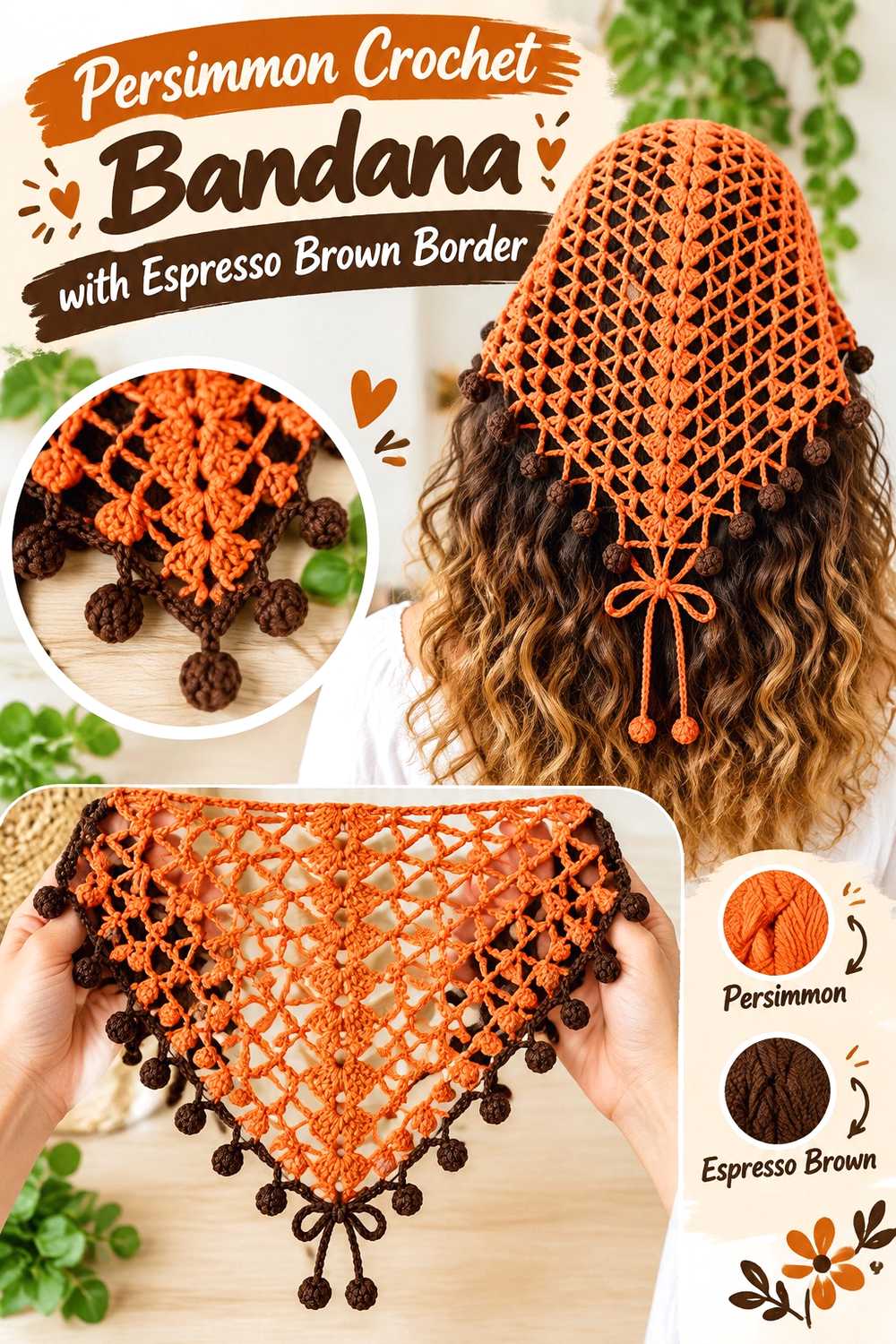
14. Persimmon Crochet Bandana With Espresso Brown Border
 SAVE
SAVEA triangular bandana gives Persimmon a broad center while Espresso Brown can follow the expanding lower edges. The placement naturally emphasizes the outline of the triangle instead of interrupting its interior with unnecessary stripes.
Keep Persimmon Across the Main Crochet Bandana Triangle
Use Persimmon throughout most of the center when you want the triangular shape and stitch texture to remain visually uninterrupted.
If the bandana contains open spaces, the single main color can also prevent the surface from becoming overly busy.
Follow the Persimmon Crochet Bandana Edge with Espresso Brown
Espresso Brown can travel around the visible outer edge and into finishing areas, creating a defined frame against the Persimmon center.
If ties are part of the construction, decide whether to continue the brown border into them or return to Persimmon. Repeating one established color role keeps the palette coherent.
Creator Credit: zhaia croche
15. Espresso Brown Crochet Mug Cozy With Persimmon Accent
 SAVE
SAVEA mug cozy has very little surface area, so the color plan should stay simple. Espresso Brown can provide the main wraparound field, while Persimmon appears as a center band, motif, edge, or other clearly defined accent.
Keep Espresso Brown Broad Across the Crochet Mug Cozy
Use Espresso Brown across most of the cozy if you want the texture and shape to remain connected around the mug.
Several narrow color changes can make such a small piece feel fragmented, particularly if the stitch pattern already has visible detail.
Give Persimmon One Clear Role on the Espresso Brown Crochet Mug Cozy
Choose a recognizable Persimmon feature instead of scattering tiny accents. A broader band, motif area, or edge gives the warm shade enough presence to be deliberate.
If the accent is very small, stronger value contrast becomes more important because there is less surface area to distinguish the colors.
Creator Credit: Katia Creates
16. Persimmon And Espresso Brown Crochet Granny Stripe Blanket
 SAVE
SAVEA granny-stripe blanket can repeat both colors over a large surface without requiring complex motif planning. The key is controlling stripe width and frequency so one shade clearly leads—or deliberately allowing both to share the surface.
Use Persimmon in Broad Crochet Blanket Sections for a Warmer Result
Wider Persimmon areas make the blanket read warm first, while Espresso Brown functions as a darker interruption. This works well when you want Persimmon to remain dominant despite repeated brown sections.
Avoid reducing every color section to the same narrow width unless a highly regular striped effect is intentional.
Repeat Espresso Brown Through the Persimmon Crochet Blanket at Planned Intervals
Bring Espresso Brown back consistently rather than placing one large dark section in an otherwise Persimmon blanket. Repetition helps the darker shade feel integrated across a large surface.
You can also use Espresso Brown near the outer edge to echo the interior bands and visually connect the border to the blanket body.
Creator Credit: Fiber Flux
17. Espresso Brown Crochet Fingerless Gloves With Persimmon Cuffs
 SAVE
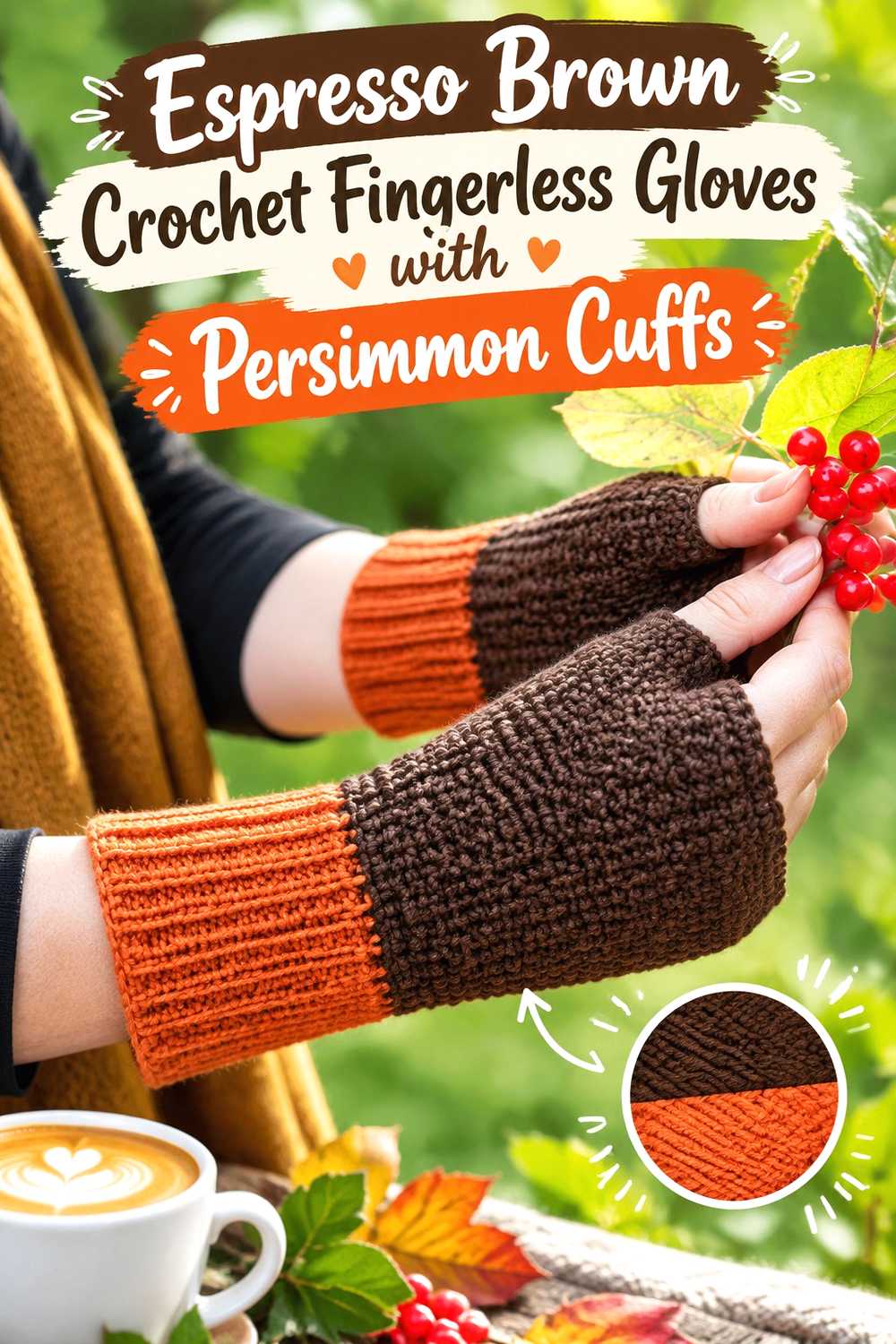
SAVEFingerless gloves have a natural division between the wrist and hand. Espresso Brown can cover the hand section while Persimmon forms the cuffs, giving the warmer color a visible role without complicating the areas around the fingers and thumb.
Keep Espresso Brown Consistent Across Both Crochet Glove Hands
Use the same brown placement on both gloves so the pair reads as a coordinated set. A continuous Espresso Brown hand area also prevents color changes from competing with openings and surface texture.
Compare the two pieces while working to keep their visual balance consistent.
Make Persimmon Cuffs Substantial Against Espresso Brown Crochet Gloves
Give Persimmon enough depth to form recognizable cuffs rather than a thin finishing line. Since both wrists will usually be seen together, the repeated warm blocks can have considerable impact.
If you want Persimmon higher on the hand, use a restrained repeated detail so the cuff remains the primary accent.
Creator Credit: Rich Textures Crochet
18. Persimmon And Espresso Brown Crochet Granny Square Pillow
 SAVE
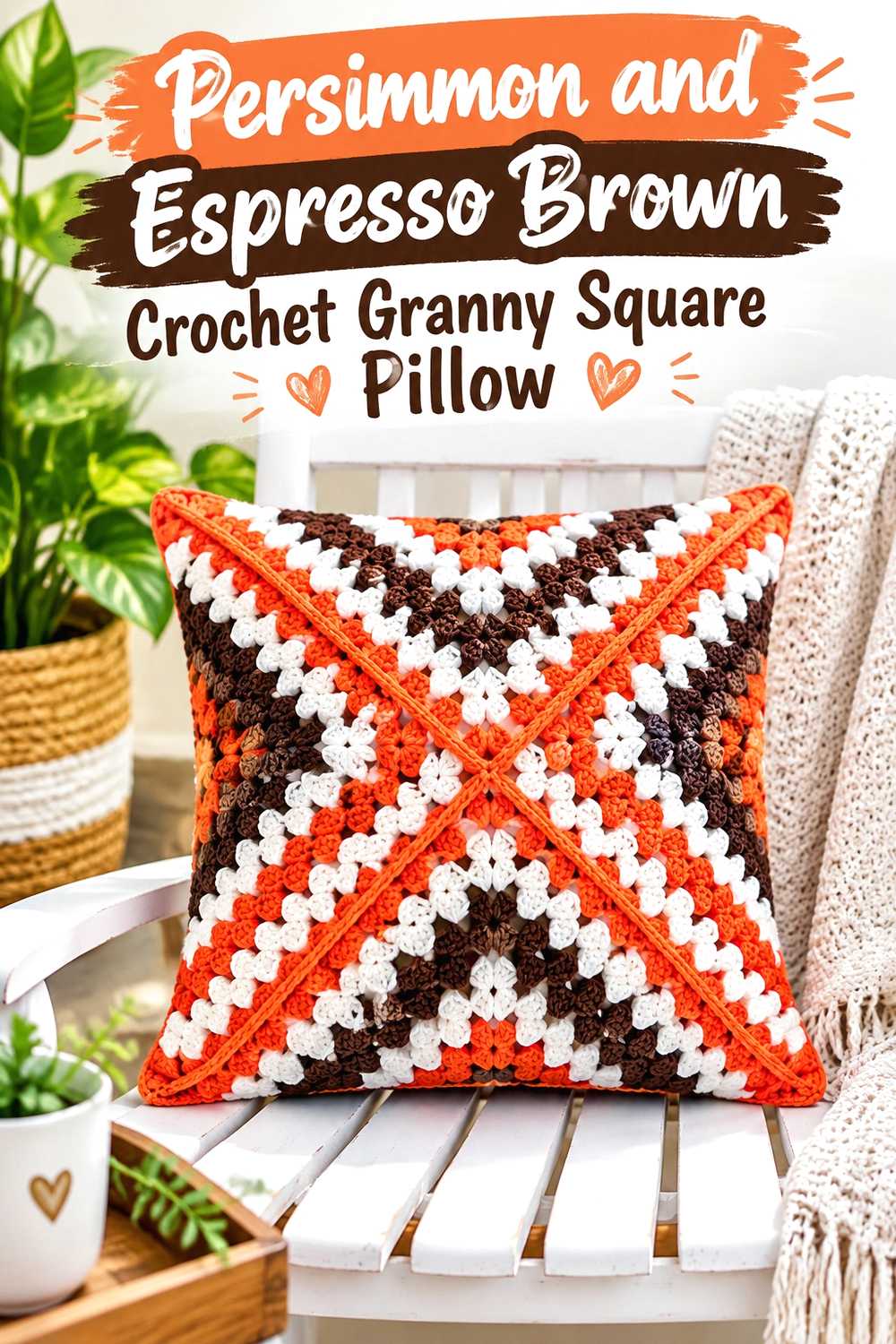
SAVEA granny-square pillow allows Persimmon and Espresso Brown to switch roles across centers, outer rounds, joins, and borders. Unlike a large solid pillow, the repeated motifs provide enough structure for both colors to appear frequently without looking random.
Alternate Persimmon and Espresso Brown Roles Across Crochet Granny Squares
Some motifs can begin with Persimmon and move outward into Espresso Brown, while others reverse the order. Repeat the arrangements rather than improvising every square independently.
Controlled alternation creates variety while preserving a recognizable system across the pillow face.
Choose Espresso Brown or Persimmon Deliberately for the Crochet Pillow Joins
The joining shade can influence the entire grid. Espresso Brown joins create darker outlines that separate the squares, while Persimmon joins carry more warmth between them.
Lay several completed motifs together with both yarns between the edges before deciding. The join color often occupies more visual space than expected.
Creator Credit: B.Hooked Crochet
19. Espresso Brown And Persimmon Tunisian Crochet Cowl
 SAVE
SAVEA Tunisian crochet cowl can use broad color blocks to emphasize fabric texture without relying on many small stripes. Espresso Brown can cover the larger field, while Persimmon interrupts it in one or more substantial sections that remain visible when the cowl folds.
Let Espresso Brown Carry Most of the Tunisian Crochet Cowl
Keep Espresso Brown across the largest sections when you want the texture to remain visually continuous. A deep brown field can also give Persimmon stronger emphasis when it eventually appears.
Check the fabric while slightly folded, since the surface may read differently than it does stretched flat.
Make Persimmon Blocks Wide Enough on the Espresso Brown Crochet Cowl
A narrow Persimmon stripe can disappear once the cowl gathers around the neck. Broader warm sections are more likely to stay visible from several angles.
Repeat Persimmon if needed, but leave enough Espresso Brown between blocks for the dominant shade to retain its role.
Creator Credit: TL Yarn Crafts
20. Persimmon Crochet Cushion Cover With Espresso Brown Framing
 SAVE
SAVEThis cushion direction uses broad Persimmon surface coverage rather than repeated granny motifs. Espresso Brown can frame the face through side panels, edging, or another continuous outer section, giving the darker shade a clear relationship to the cushion shape.
Let Persimmon Cover the Main Crochet Cushion Face
Use Persimmon across the largest front area when you want the color and crochet texture to remain the focal point.
If the surface includes raised stitches, check a swatch in your Persimmon yarn before deciding how much of the face to cover. Texture visibility matters more here than matching an exact shade name.
Keep Espresso Brown Around the Persimmon Crochet Cushion Perimeter
Place Espresso Brown along side sections or continuous edging so the darker color follows the cushion’s outline. This frames the Persimmon center more clearly than scattered brown accents would.
Control the width carefully. A very broad Espresso Brown frame can reduce the Persimmon center enough to change which color appears dominant.
Creator Credit: Crochet MC
Persimmon-Led vs Espresso Brown-Led Crochet Combinations
| Color Direction | Projects to Consider | Persimmon Role | Espresso Brown Role |
|---|---|---|---|
| Persimmon-led | Cardigan, basket, poncho, market tote, bucket hat, bandana, cushion cover | Main surface or body | Ribbing, rim, base, brim, border |
| Espresso Brown-led | Beanie, waffle bag, vest, mosaic pillow, scarf, mug cozy, gloves, cowl | Brim, motif, trim, bands, cuffs | Main field or body |
| More balanced | Checked tote, shawl, blanket, granny square pillow | Broad blocks or repeated sections | Broad blocks, outlines, or repeated sections |
| Small accent focus | Coasters, mug cozy, gloves | Center or warm focal point | Background, outer field, or structural frame |
A Persimmon-led combination works well when you want the warm shade to cover broad visible surfaces and Espresso Brown to sharpen the edges. An Espresso Brown-led project produces a deeper overall result and allows relatively small Persimmon sections to become focal points.
For projects based on checks, granny sections, stripes, or repeated motifs, a more balanced division can work because the construction itself organizes the two colors.
Conclusion
Persimmon and Espresso Brown can produce much more variety than a simple orange-and-brown stripe combination. Persimmon can dominate a cardigan, poncho, basket, market tote, bucket hat, or cushion while Espresso Brown controls the edges and structural details. Reversing that relationship works particularly well for the vest, cowl, beanie, gloves, scarf, and mosaic pillow.
Choose the checked tote, granny-stripe blanket, textured shawl, or granny-square pillow when you want both colors to play larger roles. Those constructions give repeated color changes an established structure rather than relying on isolated accents.
Before beginning a larger project, compare your actual yarns together and test the intended stitch texture. Preserve the relationship that matters most—Persimmon as the warmer focal shade, Espresso Brown as the deeper anchor, or a deliberate balance between the two.
Frequently Asked Questions
Do Persimmon and Espresso Brown work together in crochet?
Yes. Persimmon supplies a warmer orange-red direction, while Espresso Brown gives the palette a deeper brown anchor. The contrast can work in large color blocks, borders, garments, home decor, or repeated motifs.
The important decision is how much visual space each shade receives rather than simply using equal quantities.
Should Persimmon or Espresso Brown be the dominant crochet color?
Use Persimmon as the dominant color when you want the finished item to look warmer and more color-forward. Use Espresso Brown across the largest surfaces when you want a deeper overall result with Persimmon acting as the focal accent.
For checks, granny squares, or repeated stripes, both can share more of the surface because the construction controls the color distribution.
How can I tell whether Persimmon and Espresso Brown have enough contrast?
Place the yarns beside each other and view them from several feet away. You can also photograph them and examine the image in grayscale.
If the two shades become difficult to distinguish, use them in larger sections or choose a somewhat lighter Persimmon or darker Espresso Brown when crisp motif definition matters.
Where should Espresso Brown go on a mostly Persimmon crochet project?
Use Espresso Brown at structural features such as cuffs, borders, brims, bag bases, side panels, joins, rims, or garment openings. These areas give the darker color a clear purpose.
Repeating Espresso Brown at two related features usually creates a stronger palette than adding one isolated dark section.
Can Persimmon and Espresso Brown work for detailed crochet motifs?
They can, provided the actual yarns have enough light-and-dark separation. Detailed mosaic patterns, small checks, and compact granny motifs depend more heavily on value contrast than broad panels do.
If the colors blend, increase the motif scale or adjust the depth of one shade while preserving the same overall palette.
What can I substitute for Persimmon or Espresso Brown?
For Persimmon, look for another muted warm orange, orange-red, or rust-leaning shade that preserves its warmer, more noticeable role. For Espresso Brown, choose a deep neutral or slightly warm brown that remains darker than the Persimmon if that contrast is central to the project.
When substituting either color, compare the two yarns again rather than relying on their shade names alone.