
Wasabi and Camel create an unusual crochet pairing because the colors contribute very different kinds of warmth. Wasabi brings a yellow-green accent that can become noticeable quickly, while Camel provides a softer tan foundation that can quiet the palette and give crochet texture more room to show.
That contrast makes proportion important. A small Wasabi cuff or border may be enough to influence an otherwise Camel garment, while a Wasabi-dominant bag or cardigan can use Camel around edges and structural details to keep the brighter green from covering every surface.
These 12 ideas vary the dominant shade, placement, scale, and type of contrast. Some use Camel as the main background, others let Wasabi control larger surfaces, and motif-based projects give both colors more equal roles.
Quick List
- Wasabi Crochet Cardigan With Camel Ribbing
- Camel Crochet Ribbed Beanie With Wasabi Brim
- Camel And Wasabi Crochet Market Bag
- Wasabi And Camel Crochet Textured Shawl
- Camel Crochet Coasters With Wasabi Centers
- Wasabi Crochet Poncho With Camel Borders
- Camel Crochet Vest With Wasabi Edging
- Wasabi Crochet Bucket Hat With Camel Brim
- Camel Crochet Infinity Scarf With Wasabi Bands
- Wasabi And Camel Granny Square Crochet Pillow
- Camel Crochet Fingerless Gloves With Wasabi Cuffs
- Wasabi Crochet Twist Headband With Camel Sections
Decide Whether Wasabi or Camel Should Dominate the Crochet Project
Wasabi can command attention even when it covers less surface than Camel. If you want a project to remain Camel-led, use Camel through broad panels or the main body and reserve Wasabi for edges, cuffs, motif centers, brims, or other defined features.
For a Wasabi-led project, Camel can soften the transition around the brighter green without introducing a third color. Camel works particularly well on ribbing, bag bases, joins, borders, and framing sections because those areas already have a visual reason to differ from the main body.
Balanced amounts are most useful when the construction itself organizes the colors. Granny squares, broad stripes, and repeated blocks can accommodate a closer split because the repeat prevents the palette from looking arbitrary.
Check Wasabi and Camel Contrast Before Small Crochet Colorwork
A green and a tan can look obviously different in the skein yet still be similar in lightness. This matters most for compact motifs, thin stripes, and narrow edging.
Place the yarns together and look at them from several feet away. You can also check a grayscale photo. If Wasabi and Camel become difficult to distinguish without hue, consider using larger blocks rather than very small colorwork.
You can also adjust the shade relationship without abandoning the palette. A lighter Camel can create more separation from a medium Wasabi, while a deeper Camel can give a pale Wasabi stronger definition.
Use Crochet Structure to Place Wasabi and Camel
Color changes are easiest to understand when they correspond with the object itself. A Camel cardigan cuff, Wasabi hat brim, darker bag base, granny-square join, or shawl border already marks a meaningful area.
Random color changes inside otherwise continuous sections can make the palette feel less organized. Before starting, identify the project’s major visual zones and decide which of those should carry Wasabi and which should carry Camel.
1. Wasabi Crochet Cardigan With Camel Ribbing
 SAVE
SAVEWasabi can cover the cardigan’s broad body panels and sleeves, while Camel moves to the cuffs, hem, and opening. This makes Wasabi unmistakably dominant without requiring the green to occupy every finishing detail. Camel also creates a quieter transition around the edges of the garment.
Keep Wasabi Continuous Across the Crochet Cardigan Panels
Use Wasabi through the largest front, back, and sleeve areas when you want the garment to remain clearly green-led. Keeping these surfaces connected prevents the cardigan from becoming a collection of unrelated color blocks.
If the cardigan includes substantial stitch texture, work a Wasabi swatch first. The way that particular green reflects light will affect how clearly ribs, raised stitches, and other surface details remain visible.
Repeat Camel Around the Wasabi Crochet Cardigan Ribbing
Bring Camel into more than one finishing area, such as cuffs, hem, or front edging. Repetition helps the tan shade function as part of the palette instead of looking like an isolated replacement yarn.
The Camel areas do not need equal widths. Wider cuffs paired with narrower opening trim can still feel coordinated while leaving Wasabi dominant.
Creator Credit: forthefrills YouTube tutorial
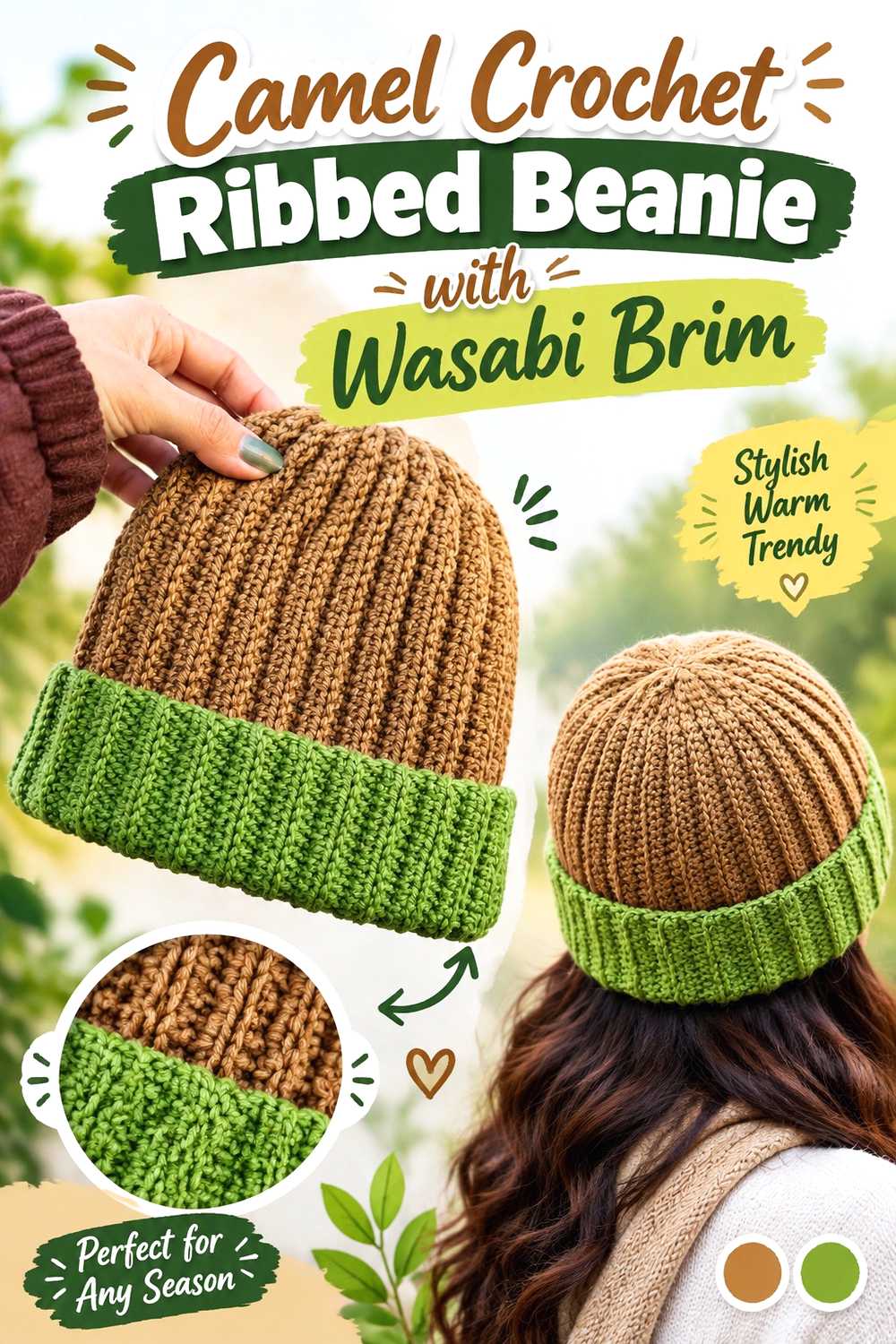
2. Camel Crochet Ribbed Beanie With Wasabi Brim
 SAVE
SAVEA ribbed beanie benefits from simple color placement because the vertical texture already creates plenty of repetition. Camel can cover the crown and body, while Wasabi forms a defined lower brim. Concentrating the brighter shade at the bottom keeps the hat Camel-led even though Wasabi remains highly visible.
Let Camel Carry the Crochet Beanie Ribbing
Keeping Camel continuous through the crown gives the ribbed texture a consistent background. Multiple Wasabi stripes could interrupt those vertical lines and make a small accessory feel busier than necessary.
Check the Camel yarn in the actual ribbed fabric rather than judging it only from the skein. A lighter or more heathered Camel may show shadows differently from a flatter tan.
Give Wasabi Enough Width on the Camel Crochet Beanie Brim
Wasabi needs enough surface area to look intentional. A recognizable brim usually works better than one very thin green line around a mostly Camel hat.
If you want less Wasabi, reduce the depth of the brim rather than scattering additional small green sections through the crown.
Creator Credit: VivCrochets YouTube tutorial
3. Camel And Wasabi Crochet Market Bag
 SAVE
SAVEA market bag offers several natural color zones: base, main body, upper section, and handles. Camel can establish the lower foundation while Wasabi moves through the more visible body, or the relationship can reverse if you prefer a quieter overall bag. Using broad sections works particularly well when the crochet fabric already contains decorative stitch changes.
Use Camel to Ground the Wasabi Crochet Market Bag
A Camel lower section gives Wasabi somewhere to begin rather than covering the entire tote from base to handles. Keep the Camel area substantial enough to remain visible when the bag is upright.
A tiny strip directly under the bag can disappear from normal viewing angles, so extend Camel into the lower body when you want it to play a real supporting role.
Carry Wasabi Through the Camel Crochet Bag’s Main Body
Let Wasabi occupy the larger middle or upper section when you want the brighter color to lead. A broad Wasabi field is easier to read against the Camel base than several small green stripes.
For the handles, either continue Wasabi or return to Camel. Whichever color you choose should already appear elsewhere so the handles remain part of the established palette.
Creator Credit: Winding Road Crochet YouTube tutorial
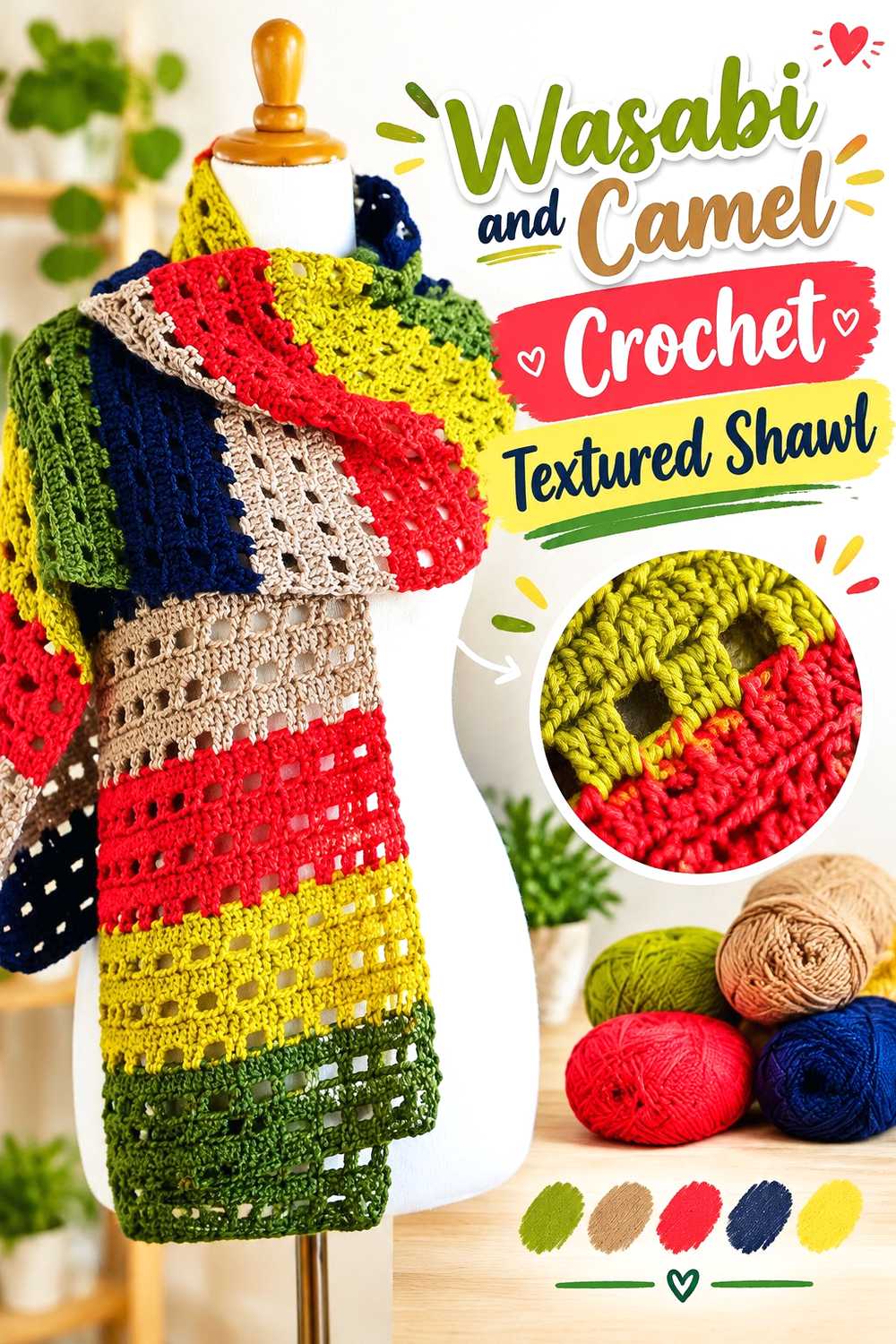
4. Wasabi And Camel Crochet Textured Shawl
 SAVE
SAVEA shawl provides enough area for Wasabi and Camel to appear in substantial sections without forcing frequent color changes. Camel can form the quieter center while Wasabi expands through selected bands or the outer edge, or Wasabi can lead through the body with a Camel finish.
Use Camel Where the Crochet Shawl Needs a Quiet Background
Camel can give openwork, eyelets, or other surface changes a restrained field that does not compete with every stitch. If your Camel yarn is noticeably lighter than Wasabi, it may also make subtle texture easier to see.
Keep the Camel sections broad enough to remain distinct when the shawl is draped rather than laid flat.
Let Wasabi Define Important Camel Crochet Shawl Sections
Wasabi can emphasize a broad band or outer border without appearing throughout the entire shawl. Because a shawl widens across its shape, an accent near the larger outer area can have considerable visual impact.
If Wasabi begins to dominate more than intended, reduce the width of the final green section rather than adding another color to rebalance the piece.
Creator Credit: Fiber Flux YouTube tutorial
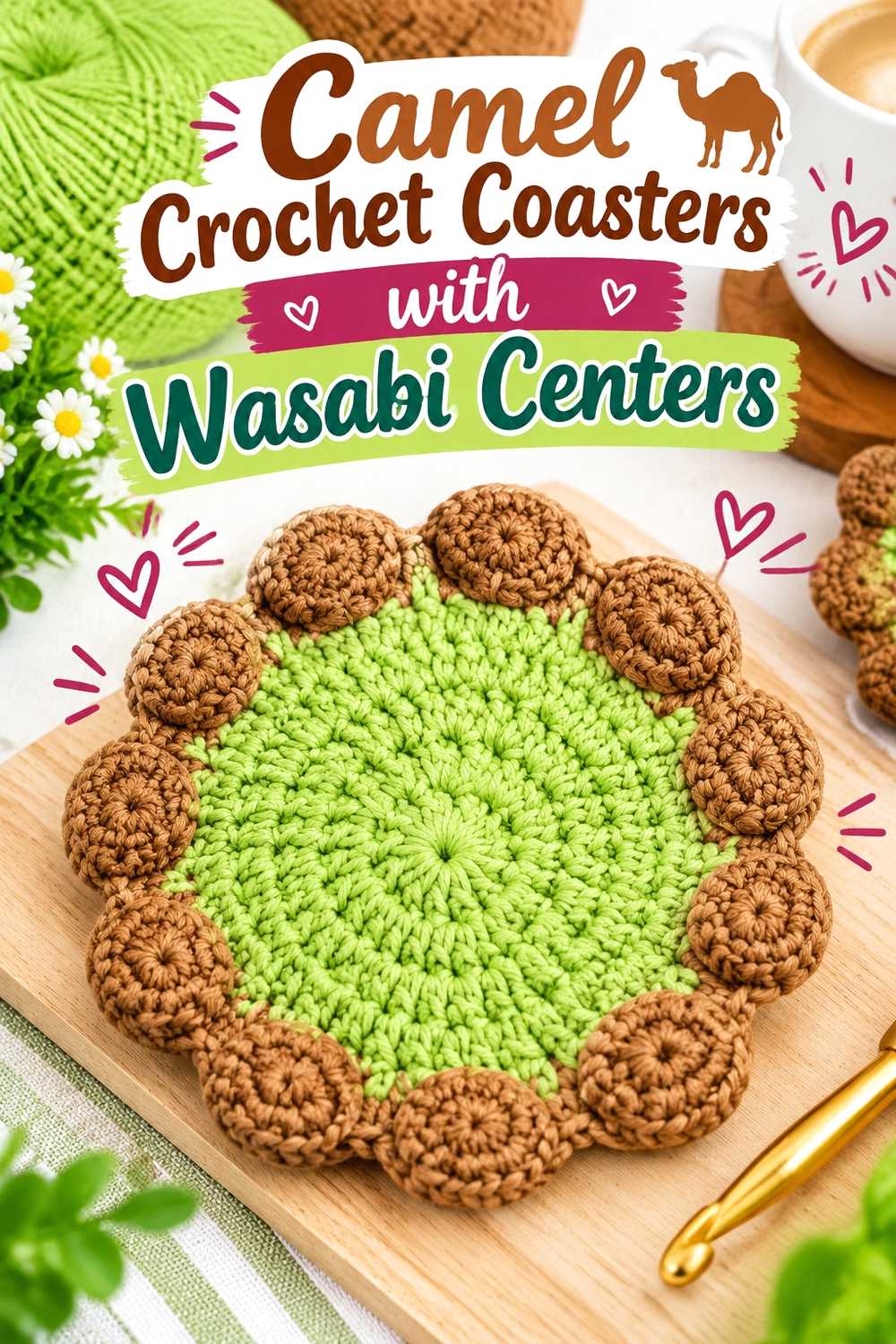
5. Camel Crochet Coasters With Wasabi Centers
 SAVE
SAVECoasters provide a compact way to test this pairing before using it on a larger crochet piece. Camel can occupy most of the outer area while Wasabi creates a defined central motif. Because the project is small, even a modest Wasabi center can become the strongest visual element.
Give Wasabi Enough Space Inside the Camel Crochet Coaster
Do not reduce Wasabi to such a small center that it disappears once the coaster is viewed from a normal distance. Increase the green section until it feels intentional against the surrounding Camel.
Make one complete coaster before committing to an entire set; small changes in border proportion have a large effect on an item this size.
Keep Camel Consistent Around Each Wasabi Crochet Coaster
Repeating the same Camel outer field connects the set even if the Wasabi centers vary slightly.
If you want some reversed coasters, create a deliberate pattern—such as alternating Wasabi-led and Camel-led pieces—rather than changing the balance independently on every coaster.
Creator Credit: Chompu Handicrafts YouTube tutorial
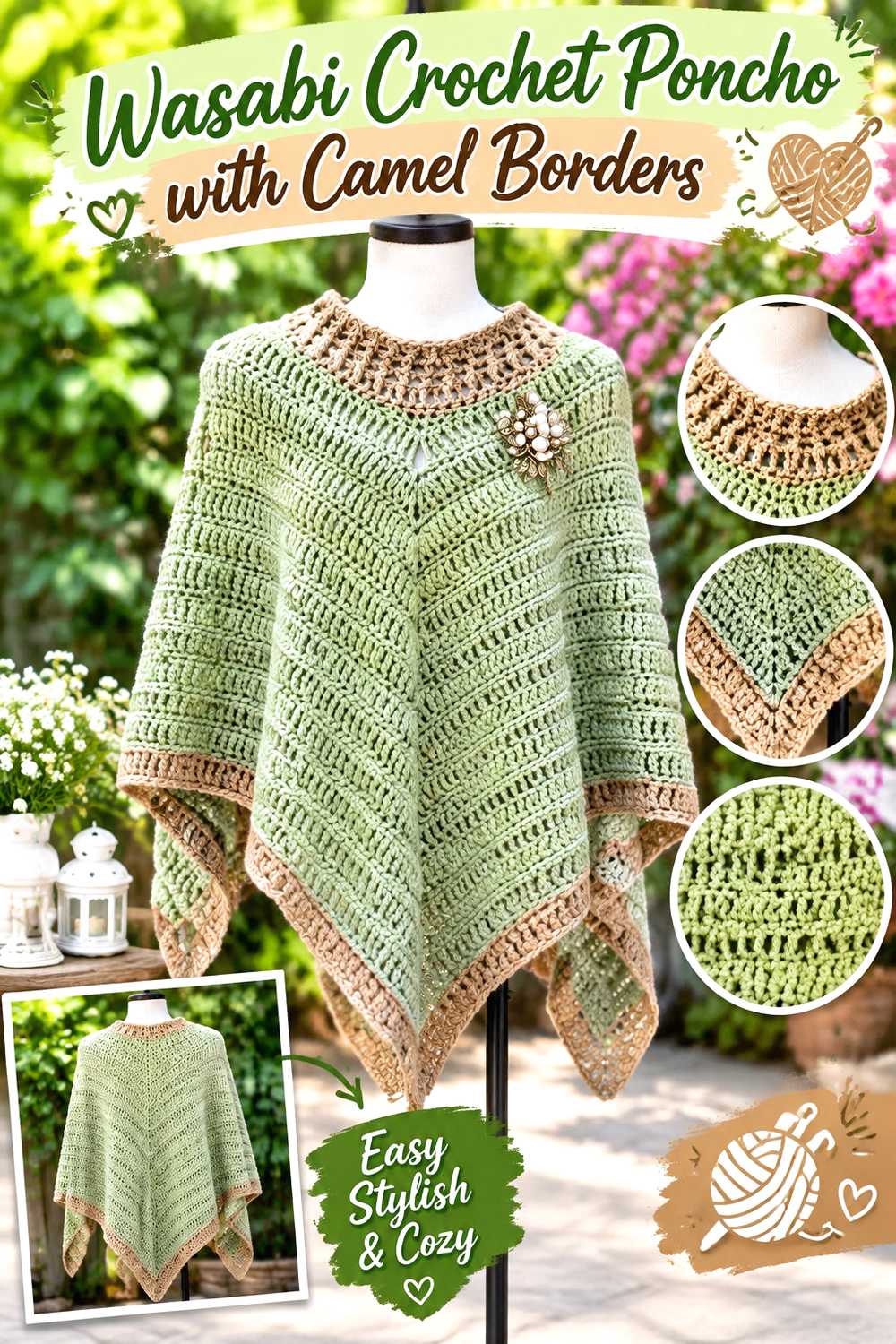
6. Wasabi Crochet Poncho With Camel Borders
 SAVE
SAVEA poncho gives Wasabi enough uninterrupted space to make a strong statement while Camel can soften the neckline and lower perimeter. Because those borders run across long sections of the garment, Camel does not need to cover much of the main body to become part of the design.
Keep Wasabi Broad Across the Crochet Poncho Body
Use Wasabi across most of the main surface when you want the poncho to stay decisively green-led. Broad uninterrupted color also lets the silhouette and drape remain easier to read than a sequence of narrow alternating stripes would.
If your chosen Wasabi is very saturated, check a large enough swatch to judge how it looks across repeated crochet texture.
Repeat Camel Around More Than One Wasabi Crochet Poncho Edge
Camel only at the neckline may feel like a separate finishing choice. Bring it back along the hem or another major edge to connect the palette from top to bottom.
The Camel sections can have different depths; repetition is more important than making every border identical.
Creator Credit: Bag-O-Day Crochet YouTube tutorial
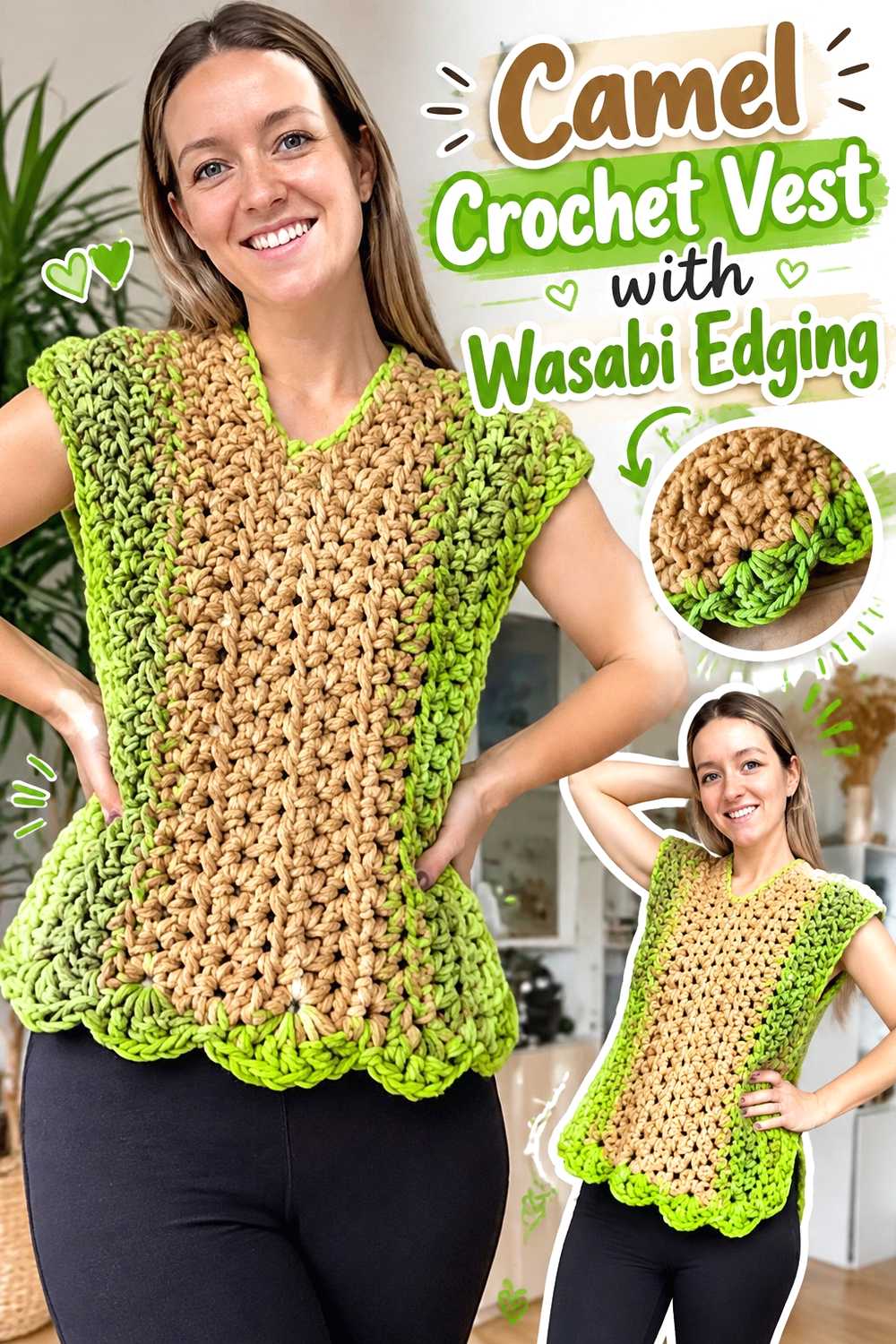
7. Camel Crochet Vest With Wasabi Edging
 SAVE
SAVEA Camel-dominant vest keeps the largest surfaces quiet and gives Wasabi a chance to work as a concentrated accent around armholes, neckline, or hem. With no sleeves competing for color placement, the contrast around the openings becomes an important part of the garment.
Keep Camel Across the Main Crochet Vest Panels
Use Camel consistently across front and back when you want the vest to remain neutral-led. Large continuous tan panels also provide a stable background for Wasabi finishing.
If the vest includes strong stitch texture, compare a Camel swatch with a Wasabi one before choosing which areas deserve the brighter color.
Use Wasabi Around Camel Crochet Vest Openings
Wasabi works particularly well around the neckline and armholes because those sections already frame the garment. A small amount can be enough to change the overall appearance.
If you also use Wasabi at the hem, watch the combined amount. Very wide green edging around every opening can turn a Camel-dominant vest into a nearly balanced two-color garment.
Creator Credit: by Kristine YouTube tutorial
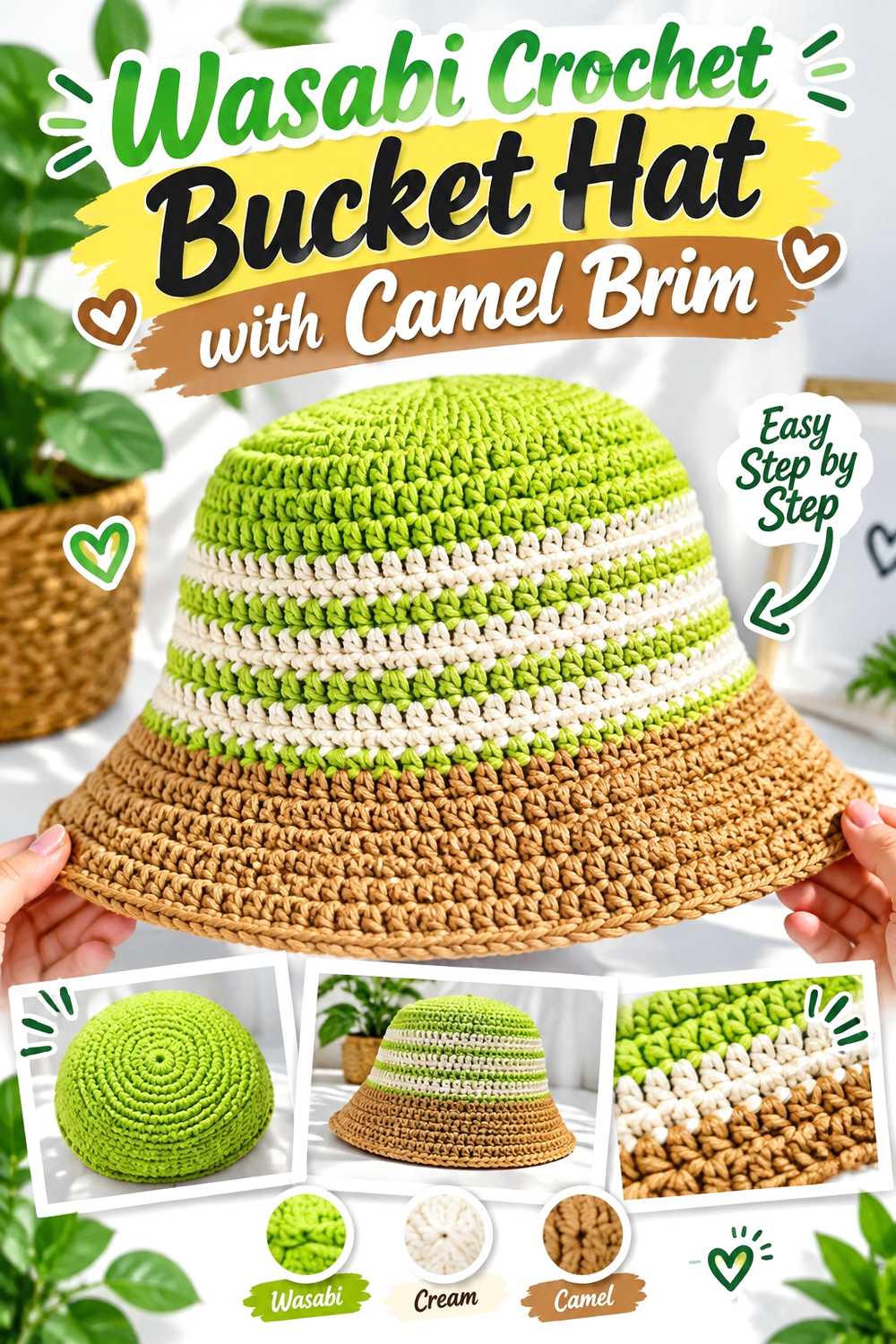
8. Wasabi Crochet Bucket Hat With Camel Brim
 SAVE
SAVEA bucket hat naturally separates into crown, sides, and brim, so it is easy to build a strong two-color hierarchy. Wasabi can cover the upper hat while Camel defines the outward-facing brim. The result uses a large color break without adding unnecessary stripes.
Carry Wasabi Through the Crochet Bucket Hat Crown and Sides
Keeping Wasabi consistent through the upper sections prevents an extra color interruption between crown and side walls. This is especially useful when the stitch direction or texture already changes between those areas.
The continuous Wasabi field also gives the Camel brim a clear starting point.
Let Camel Define the Wasabi Crochet Bucket Hat Brim
A full Camel brim provides enough tan surface to balance the stronger green without overtaking the hat.
If you want Wasabi to remain very dominant, start the Camel only when the brim begins rather than allowing it to move upward into the side walls.
Creator Credit: Tamara Kelly – Moogly YouTube tutorial
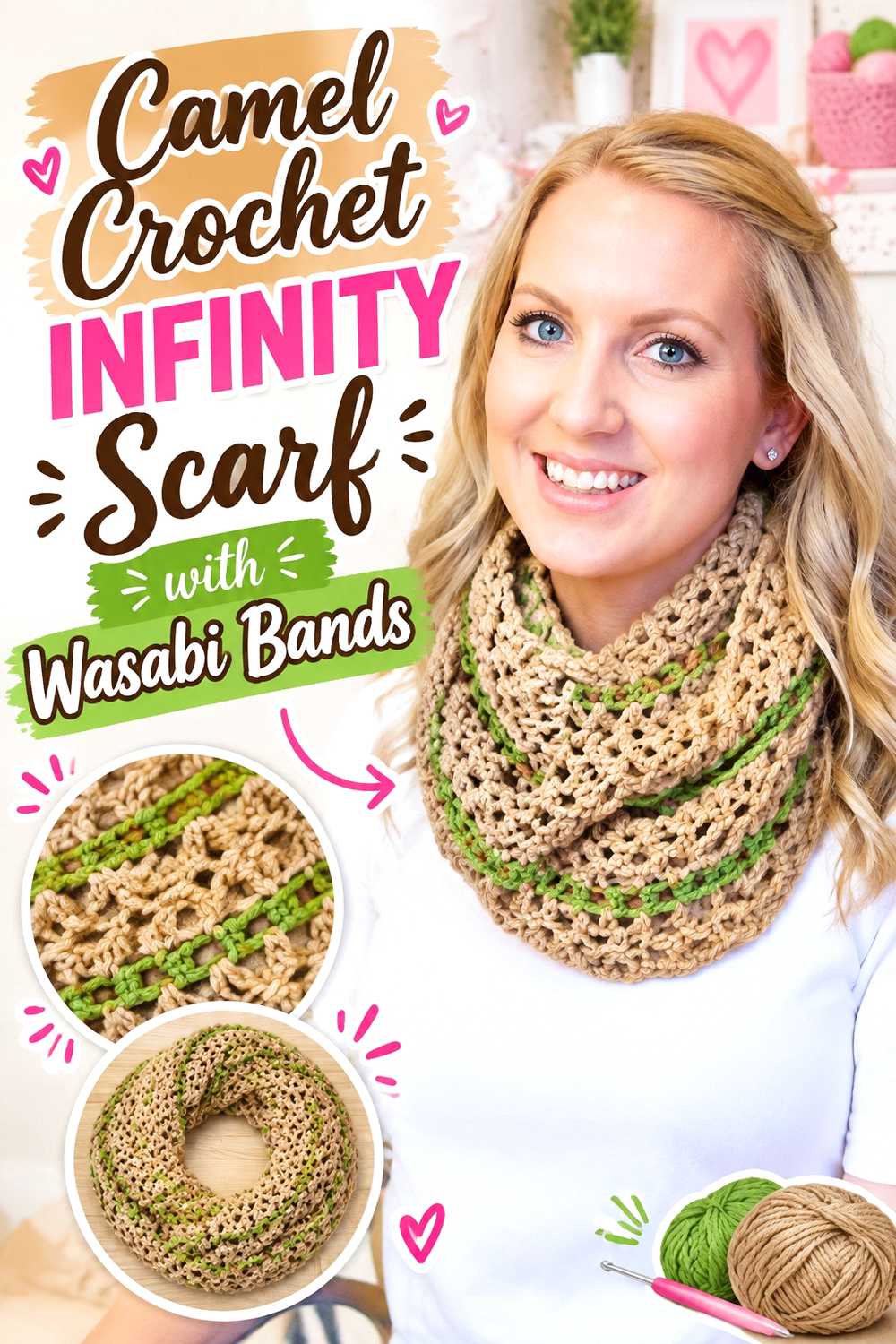
9. Camel Crochet Infinity Scarf With Wasabi Bands
 SAVE
SAVEAn infinity scarf folds and overlaps when worn, so extremely narrow accent stripes can disappear. Camel can provide the continuous base while broader Wasabi bands recur at intervals. This keeps the brighter color visible even after the scarf loops around the neck.
Let Camel Connect the Crochet Infinity Scarf
Use Camel through most of the length when you want a subdued foundation that stays visually connected despite folds and overlaps.
If the scarf already has changing stitch texture, avoid pairing every texture change with a color change. Too many transitions can make the finished loop appear fragmented.
Repeat Wasabi Bands Across the Camel Crochet Infinity Scarf
One Wasabi band can disappear inside the wrapped scarf. Repeat the color in several broader sections so at least some green remains visible from different angles.
Before finishing, arrange the scarf approximately as it will be worn. This shows whether the Wasabi sections are too close together, too narrow, or hidden inside the loop.
Creator Credit: Bella Coco YouTube tutorial
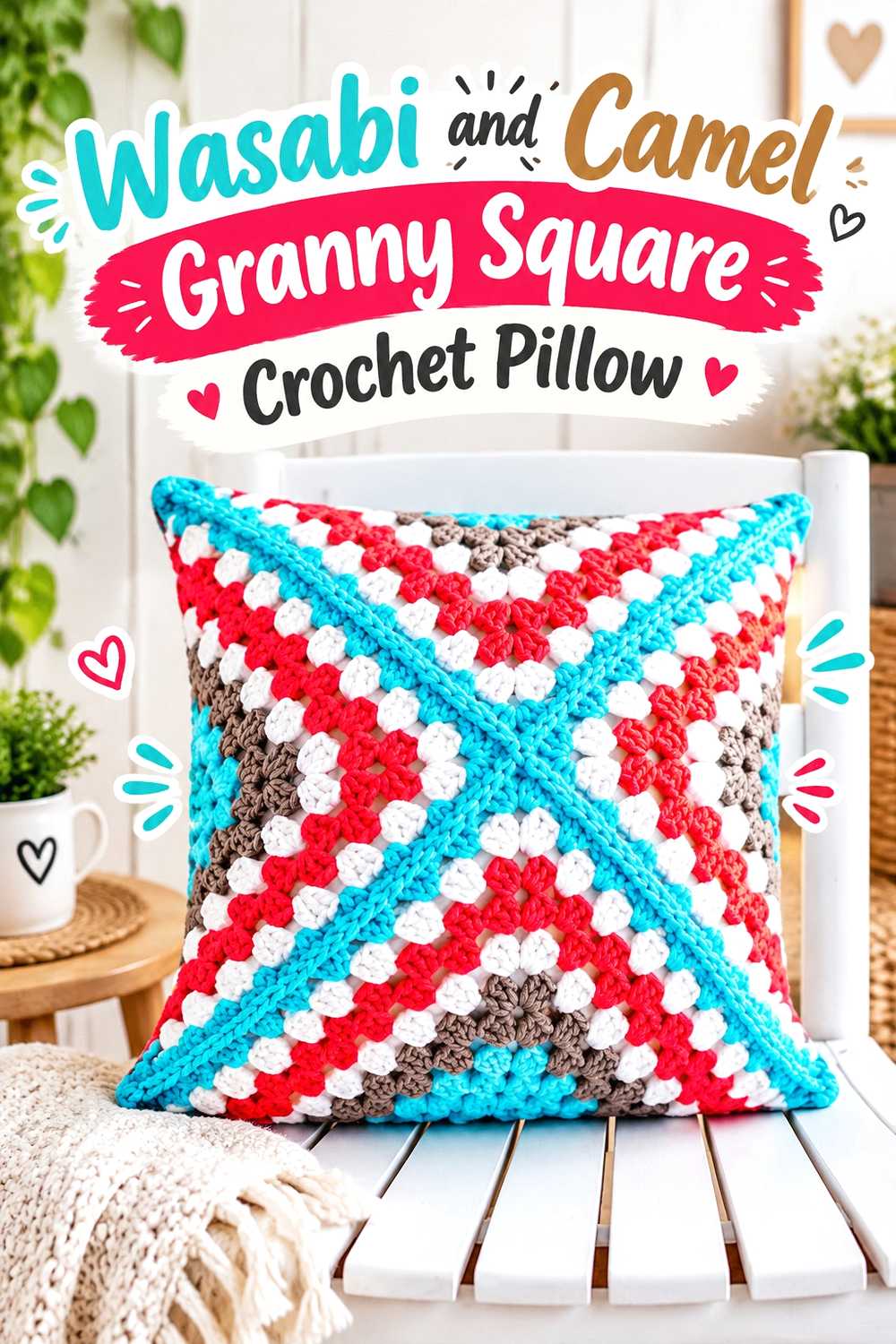
10. Wasabi And Camel Granny Square Crochet Pillow
 SAVE
SAVEGranny squares allow Wasabi and Camel to alternate through centers, outer rounds, joins, and borders. Because the motifs provide a repeating framework, both colors can occupy substantial areas without needing one to function only as trim.
Alternate Wasabi and Camel Across the Crochet Granny Square Centers
Some motifs can begin with Wasabi while others begin with Camel. Repeating two or three planned arrangements produces variation while keeping the pillow face coherent.
Avoid changing every square independently. A compact pillow surface can become visually crowded when each motif follows a completely different color order.
Choose Camel or Wasabi Carefully for the Crochet Pillow Joins
The joining shade affects the entire grid. Camel joins create a quieter framework between motifs, while Wasabi joins make the divisions more noticeable and can increase the green share of the pillow substantially.
Lay several completed squares together with both yarns between them before choosing. The joining color often has more visual influence than expected.
Creator Credit: B.Hooked Crochet YouTube tutorial
11. Camel Crochet Fingerless Gloves With Wasabi Cuffs
 SAVE
SAVEFingerless gloves naturally divide into wrist and hand sections, giving the palette a straightforward placement strategy. Camel can cover the hands while Wasabi creates defined cuffs. Keeping both gloves consistent is especially important because they are normally viewed as a pair.
Keep Camel Consistent Across Both Crochet Glove Hands
Use Camel through the main hand sections so the stitch texture stays continuous around the thumb openings and fingers.
Compare both gloves while working rather than evaluating each separately. Matching the color proportions helps the pair remain visually balanced.
Give Wasabi Enough Depth on the Camel Crochet Glove Cuffs
Wasabi should occupy enough wrist area to look like a deliberate color block rather than a narrow finishing line.
If you want to repeat Wasabi on the hand, keep the secondary detail restrained so the cuffs remain the clear focal feature against the Camel body.
Creator Credit: Rich Textures Crochet YouTube tutorial
12. Wasabi Crochet Twist Headband With Camel Sections
 SAVE
SAVEA twist headband has one obvious focal feature, making it useful for directional color placement. Wasabi can cover the front-facing area or most of the band, while Camel occupies a quieter rear section or supports the twist with a contrasting block.
Position Wasabi Where the Crochet Headband Twist Remains Visible
If you want Wasabi to draw attention to the front, place enough of the green around the twist that it stays visible after the fabric folds.
A narrow Wasabi section may shrink visually once the headband is folded and joined, so test the placement by temporarily forming the twist before finishing.
Use Camel to Quiet the Wasabi Crochet Headband Away From the Twist
Camel can cover the back or another broad section so the brighter Wasabi does not surround the entire head.
Keep the transition simple. On a narrow accessory, two or three large color zones usually read more clearly than numerous alternating Wasabi and Camel stripes.
Creator Credit: Daisy Farm Crafts YouTube tutorial
Comparing Wasabi-Led and Camel-Led Crochet Combinations
| Color Direction | Projects to Consider | Wasabi Role | Camel Role |
|---|---|---|---|
| Wasabi-led | Cardigan, basket, poncho, bucket hat | Main body or broad surface | Ribbing, rim, border, brim |
| Camel-led | Beanie, vest, coasters, scarf, gloves | Brim, edging, centers, bands, cuffs | Main field or body |
| More balanced | Market bag, shawl, granny square pillow | Large blocks or repeated sections | Large blocks, joins, or background |
| Small focal placement | Headband, coasters, gloves | Twist, centers, cuffs | Quieter surrounding field |
Choose a Wasabi-led project when you want the green to remain immediately noticeable across the finished item. Camel-led projects reduce the amount of Wasabi but can actually make it more prominent by placing it against a broad tan background.
The granny-square pillow, market bag, and shawl are better options when you want both colors to occupy substantial areas rather than assigning one shade only to trim.
Conclusion
Wasabi and Camel work most effectively when each color has a defined role. Wasabi can lead across a cardigan, basket, poncho, or bucket hat while Camel controls the edges and finishing details. Reversing that hierarchy works well for a vest, ribbed beanie, infinity scarf, coasters, or fingerless gloves.
For a more balanced combination, use projects whose construction already creates color zones, such as the market bag, shawl, or granny-square pillow.
Before committing to a larger piece, compare your actual Wasabi and Camel yarns in the intended crochet texture. Check their light-and-dark separation as well as their hue difference, then adjust the size of borders, motifs, and panels so neither shade disappears or dominates by accident.
Frequently Asked Questions
Do Wasabi and Camel work together in crochet?
Yes. Wasabi provides a stronger yellow-green direction while Camel gives the palette a quieter tan foundation. The pairing can work particularly well when one color is clearly dominant and the other is connected to borders, panels, motifs, or trim.
Using both shades in equal quantities is not necessary.
Should Wasabi or Camel be the dominant crochet color?
Choose Wasabi as the dominant shade when you want the project to read green first. It can cover cardigan panels, basket sides, a poncho body, or the upper part of a hat.
Use Camel as the dominant shade when you want Wasabi to function more selectively through cuffs, brims, centers, edging, or stripes.
How can I tell if Wasabi and Camel have enough contrast?
Compare the actual yarns side by side and step away from them. A grayscale photo can also show whether they have enough light-and-dark separation for detailed colorwork.
If they look nearly identical in grayscale, larger blocks and broader borders may work better than tiny motifs.
Where should Camel go on a mostly Wasabi crochet project?
Camel works well at structural boundaries such as cardigan ribbing, basket rims, poncho borders, bag bases, hat brims, and motif joins.
Repeating Camel at two or more related features usually creates a more deliberate result than placing one isolated tan section somewhere in the project.
Can Wasabi and Camel work in crochet granny squares?
Yes. Wasabi can occupy centers or selected outer sections while Camel separates motifs or forms joins. You can also reverse the order across alternating squares.
Lay several motifs together before joining them so you can see whether Wasabi is becoming more visually dominant than expected.
What can replace Wasabi in this crochet palette?
Choose another yellow-leaning or slightly muted green that preserves the role Wasabi plays in the project. Pay attention to lightness and saturation rather than matching a commercial shade name exactly.
If the substitute is much darker or more subdued, compare it with Camel again before committing to small motifs.
What can replace Camel with Wasabi?
Look for another warm tan, light brown, beige-brown, or muted neutral that maintains enough separation from your Wasabi yarn.
If Camel was intended as the quieter or lighter background, preserve that relationship when substituting rather than choosing a shade solely because it has a similar name.


