Wasabi and Warm Cream create a crochet palette that can move between soft and graphic depending on proportion. Wasabi brings the stronger yellow-green note, while Warm Cream can provide a lighter field that separates motifs, opens up darker-looking textures, and gives the green a quieter background.
The combination does not need to be divided evenly. A Warm Cream cardigan can use Wasabi only around cuffs and edging, while a Wasabi basket can reverse that arrangement and reserve Warm Cream for the rim. On granny squares, blankets, and market bags, both colors can take larger roles because the construction already divides the surface into recognizable sections.
These 15 ideas use different color hierarchies and placement strategies so the same two shades do not produce fifteen nearly identical projects. The linked tutorials support the crochet construction; the Wasabi and Warm Cream palette is an independent color adaptation.
Quick List
- Warm Cream Crochet Cardigan With Wasabi Ribbing
- Wasabi Crochet Ribbed Beanie With Warm Cream Brim
- Wasabi Crochet Basket With Warm Cream Rim
- Warm Cream And Wasabi Crochet Market Tote
- Warm Cream Crochet Shawl With Wasabi Border
- Wasabi Crochet Coasters With Warm Cream Edging
- Wasabi Crochet Poncho With Warm Cream Borders
- Warm Cream Crochet Hooded Vest With Wasabi Trim
- Wasabi Crochet Bucket Hat With Warm Cream Brim
- Warm Cream Crochet Infinity Scarf With Wasabi Bands
- Wasabi And Warm Cream Crochet Granny Square Pillow
- Warm Cream Crochet Fingerless Gloves With Wasabi Cuffs
- Wasabi Crochet Twist Headband With Warm Cream Sections
- Warm Cream Crochet Mug Cozy With Wasabi Accent
- Wasabi And Warm Cream Crochet Color Block Blanket
Decide Whether Wasabi or Warm Cream Should Lead
Wasabi usually attracts attention quickly, so it does not need to occupy half of every project to influence the finished look. If you want Warm Cream to remain dominant, let it cover the main cardigan panels, shawl center, glove hands, or scarf body and use Wasabi at features such as cuffs, borders, and bands.
A Wasabi-led project benefits from the opposite strategy. Use the green across the large field, then place Warm Cream where it can define a rim, brim, join, edging, or secondary panel.
For motif projects, a closer balance can work because repeated squares or blocks provide their own structure. The important part is establishing a consistent color system rather than changing roles unpredictably.
Check Wasabi and Warm Cream Value Contrast Before Small Motifs
Warm Cream will often be lighter than Wasabi, which can help small crochet details separate clearly, but the exact relationship depends on the yarns you choose.
Place the two yarns beside each other and view them from a short distance. A grayscale photo can help reveal whether there is enough light-and-dark difference for small granny-square centers, narrow stripes, or compact decorative motifs.
If the contrast is softer than expected, increase the size of the color blocks rather than forcing intricate two-color detail that disappears from normal viewing distance.
Use Warm Cream to Give Wasabi Crochet Texture More Space
A strong Wasabi field can become visually dense when both color and stitch texture are competing for attention. Warm Cream can interrupt that field around borders, open sections, motifs, cuffs, or joins.
This is especially useful on projects with raised stitches, ribbing, granny clusters, or dimensional surfaces. Instead of changing color randomly, place Warm Cream where it helps a real structural or textured feature remain distinct.
1. Warm Cream Crochet Cardigan With Wasabi Ribbing
 SAVE
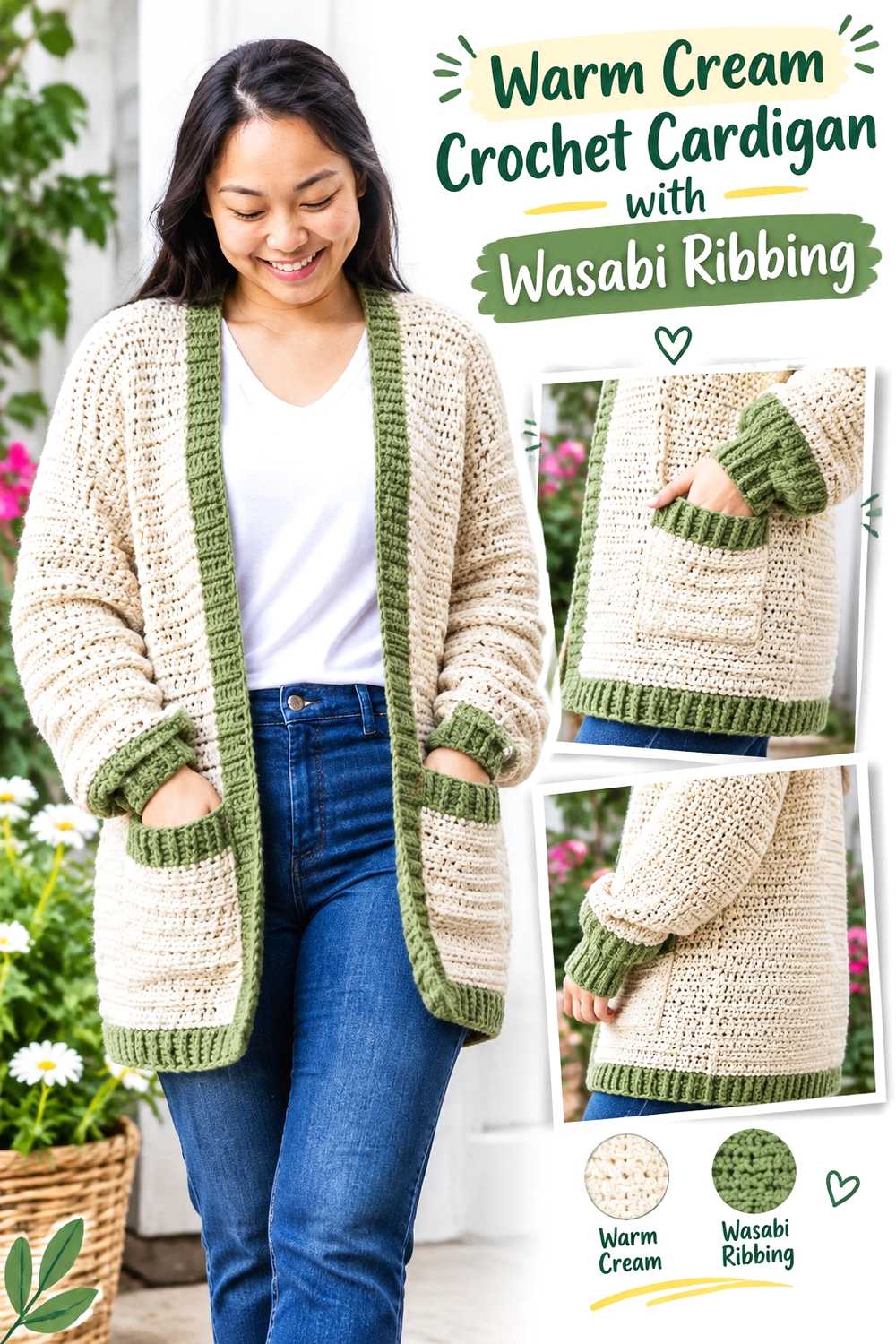
SAVEWarm Cream can cover the main cardigan body and sleeves, creating a light foundation that lets Wasabi finishing details stand out without taking over the whole garment. Cuffs, hem, and front edging are natural places for the stronger green because they already form a repeated visual frame.
Keep Warm Cream Continuous Across the Crochet Cardigan Panels
Use Warm Cream through the largest front and back areas when you want the cardigan to remain light-led. Carrying the same shade across most of the sleeves also keeps the garment visually connected.
If the cardigan uses pronounced texture, test that texture in Warm Cream first. The lighter field can make shadows easy to see, but the finished swatch is the best way to judge how much surface definition you actually get.
Repeat Wasabi Around the Warm Cream Crochet Cardigan Ribbing
Bring Wasabi into more than one finishing zone, such as the cuffs and lower ribbing or the cuffs and opening edge. Repetition prevents one green section from looking disconnected.
Keep the Wasabi widths proportional. Deep cuffs can carry more green than a narrow neckline or front edge without changing the cardigan into a 50/50 color split.
Creator Credit: forthefrills
2. Wasabi Crochet Ribbed Beanie With Warm Cream Brim
 SAVE
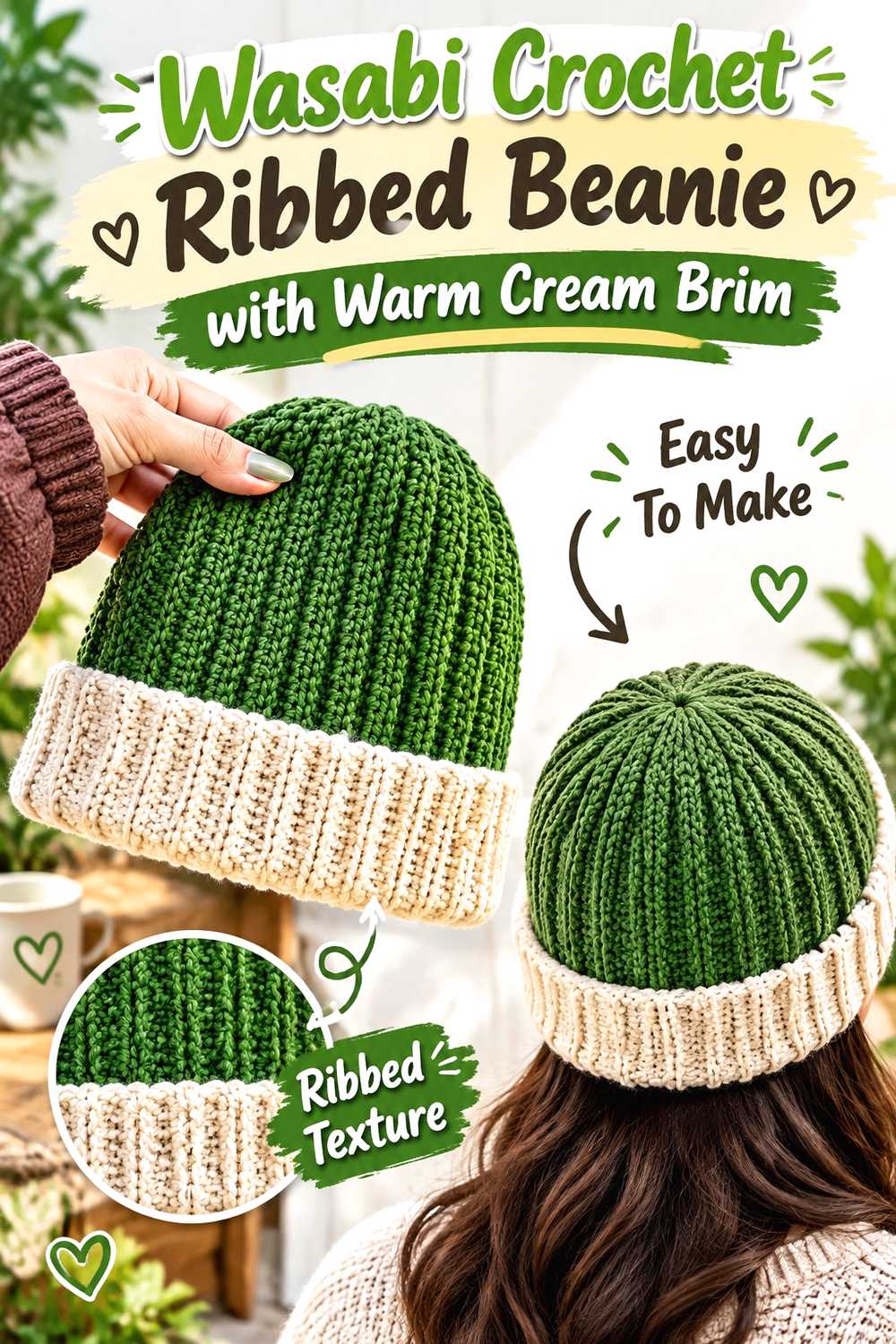
SAVEA ribbed beanie benefits from a simple two-part arrangement. Wasabi can run through the crown and main body while Warm Cream forms the lower brim, giving the lighter color a clear function instead of breaking the vertical ribbing with several narrow stripes.
Keep Wasabi Continuous Through the Crochet Beanie Crown
Use Wasabi from the top through most of the body when you want the hat to remain decisively green-led. The uninterrupted color allows the ribbed texture to create the visual movement.
If your Wasabi shade is very bright or light, check the ribbing from a normal viewing distance to see whether the stitch shadows remain noticeable enough for your preference.
Give Warm Cream Enough Space on the Wasabi Crochet Beanie Brim
A very thin Warm Cream line may look more like finishing than a real part of the palette. Let the cream occupy a recognizable brim if you want both colors to remain visible.
For a more Wasabi-heavy result, make the cream section shallower instead of adding extra cream stripes higher on the crown.
Creator Credit: VivCrochets
3. Wasabi Crochet Basket With Warm Cream Rim
 SAVE
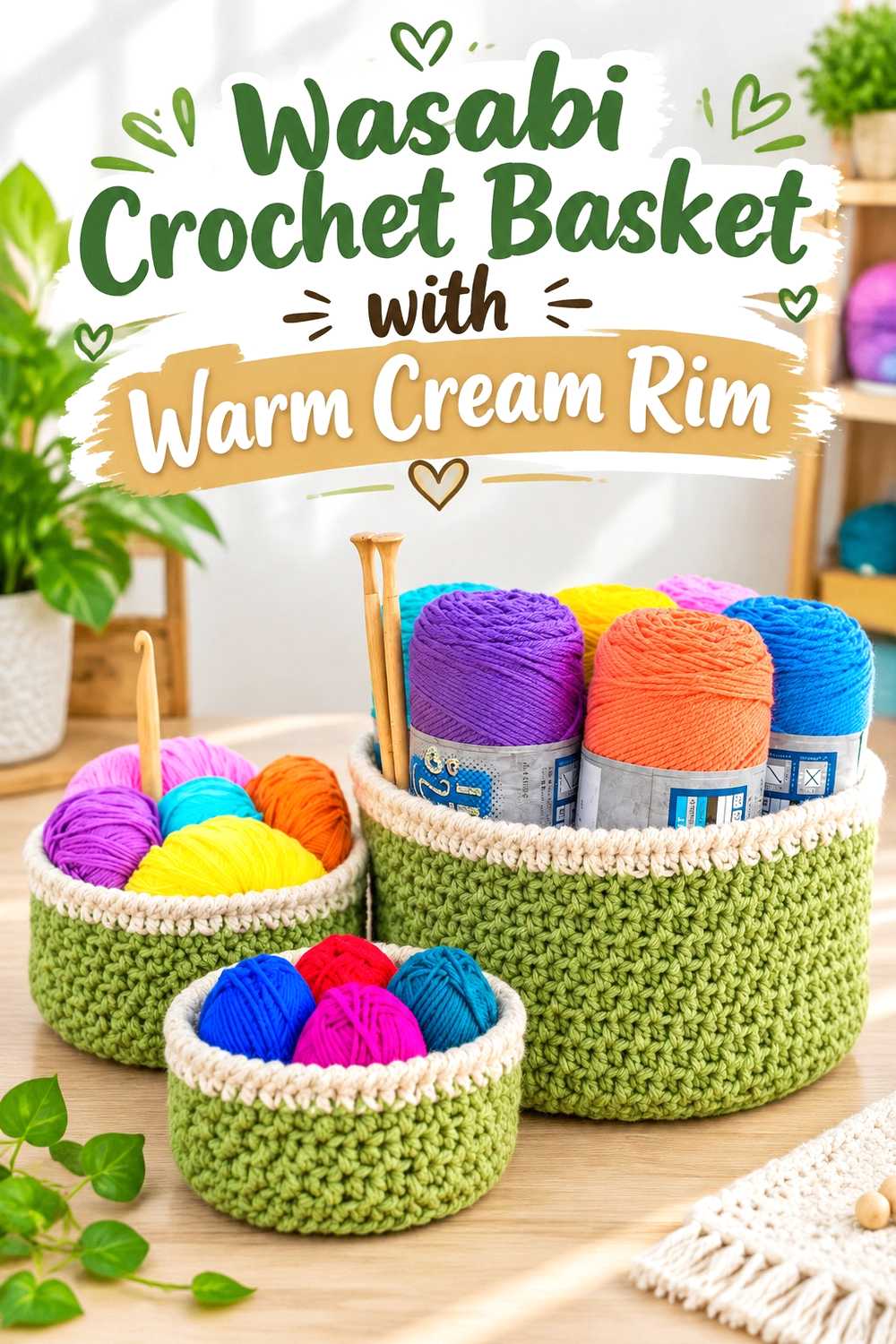
SAVEA basket gives Wasabi enough uninterrupted area to work as the main surface, while Warm Cream can define the opening with a clean lighter edge. The color break follows the basket structure, so it feels deliberate without requiring a complex pattern.
Let Wasabi Cover the Main Crochet Basket Body
Keep Wasabi around most of the sides when you want the green to establish the basket’s overall direction. A continuous field also lets any dense crochet texture remain easier to read than multiple alternating bands would.
If the base is visible, carrying Wasabi underneath can keep the lower section connected to the side walls.
Use Warm Cream to Frame the Wasabi Crochet Basket Opening
Place Warm Cream around the rim to create a lighter finish where the sides meet the opening. Because the color follows a real edge, even a modest cream band can have a clear visual role.
If you repeat Warm Cream elsewhere, connect it to another structural feature rather than scattering small cream sections through the Wasabi body.
Creator Credit: Naztazia
4. Warm Cream And Wasabi Crochet Market Tote
 SAVE
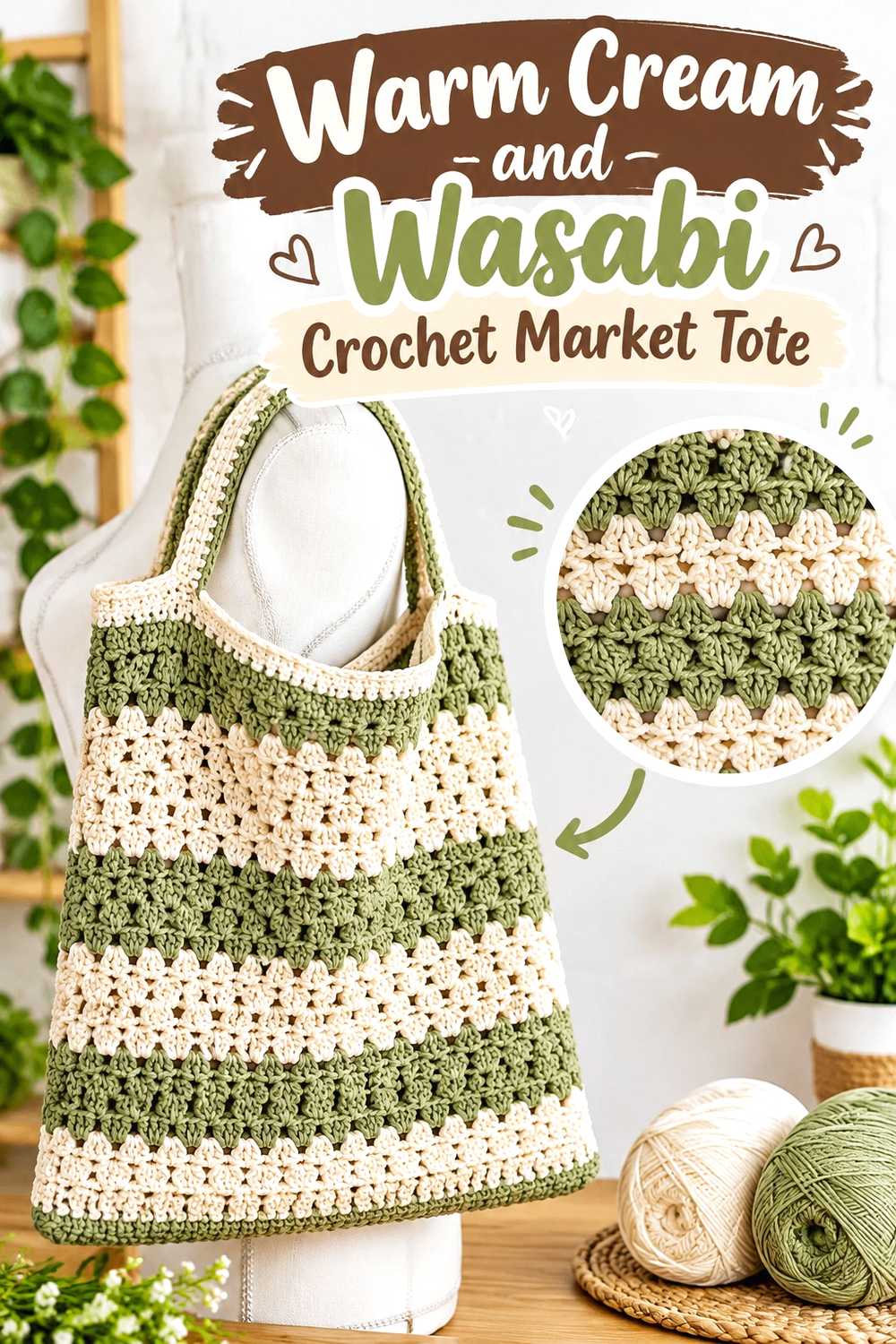
SAVEA market tote provides natural color zones at the base, body, upper section, and handles. Warm Cream can establish the lower or central field while Wasabi occupies broader accent sections, allowing the brighter green to remain visible without dominating every part of the bag.
Let Warm Cream Connect the Crochet Market Tote Body
Warm Cream can cover the largest area when you want the bag to stay visually light. This is especially useful if the tote has openwork or changing stitch textures because one quiet background color keeps the surface organized.
Avoid changing to Wasabi every time the stitch pattern changes; the crochet structure already supplies plenty of variation.
Use Wasabi on Warm Cream Crochet Tote Panels and Handles
Place Wasabi in substantial zones such as the upper body, base, or handles rather than reducing it to isolated stitches.
If the handles are Wasabi, repeat the same green somewhere on the bag body. That visual echo keeps the handles connected to the rest of the palette.
Creator Credit: Winding Road Crochet
5. Warm Cream Crochet Shawl With Wasabi Border
 SAVE
SAVEWarm Cream can give a shawl a broad light field where openwork and surface texture remain visible, while Wasabi becomes more concentrated near the outer edge. Because a shawl usually grows wider toward its perimeter, a border can give Wasabi substantial impact without requiring large green areas through the center.
Keep Warm Cream Broad Across the Crochet Shawl Center
Use Warm Cream through most of the center when you want the stitch pattern to remain the main source of detail.
A continuous cream section also makes it easier to see where the shawl’s texture changes without asking the color changes to mark every transition.
Control the Wasabi Crochet Shawl Border Against Warm Cream
A Wasabi border can create a strong outer frame, but its width determines how much the entire shawl shifts toward green.
Keep the Wasabi shallower for a Warm Cream-led result. Increase it only when you want the border to become one of the main visual features rather than simple finishing.
Creator Credit: Fiber Flux
6. Wasabi Crochet Coasters With Warm Cream Edging
 SAVE
SAVESmall coasters make the color proportions especially noticeable. Wasabi can fill the main center while Warm Cream creates a lighter outer frame, making it easy to test the combination before using it on a larger project.
Give Wasabi Enough Space in the Crochet Coaster Center
Let Wasabi cover enough of the coaster to remain clearly dominant. A very wide cream border can quickly reduce the green to a small center spot.
Complete one coaster before repeating the proportions across the whole set, since small changes in border width have a large effect on compact projects.
Repeat Warm Cream Around Every Wasabi Crochet Coaster
Using the same Warm Cream edge across the set can visually connect several coasters even if their centers vary slightly.
If you reverse the colors on selected pieces, repeat that reversal deliberately rather than giving every coaster a different arrangement.
Creator Credit: Jayda InStitches
7. Wasabi Crochet Poncho With Warm Cream Borders
 SAVE
SAVEA poncho offers enough broad fabric for Wasabi to lead without needing frequent color changes. Warm Cream can follow the neckline and lower edge, providing a lighter frame around the stronger central field.
Keep Wasabi Broad Across the Crochet Poncho Body
Use Wasabi through the largest sections when you want the garment to remain clearly green-led. Broad uninterrupted color also prevents the poncho from becoming divided into too many horizontal bands.
If the fabric has raised texture, work enough of a Wasabi sample to check whether that texture remains visible across a larger area.
Repeat Warm Cream Around More Than One Wasabi Crochet Poncho Edge
Warm Cream only at the neckline can feel isolated. Repeating the lighter shade at the lower edge creates a clear top-to-bottom relationship.
The borders do not need identical widths. A narrower neckline and deeper hem can still feel coordinated while keeping Wasabi dominant.
Creator Credit: Bag-O-Day Crochet
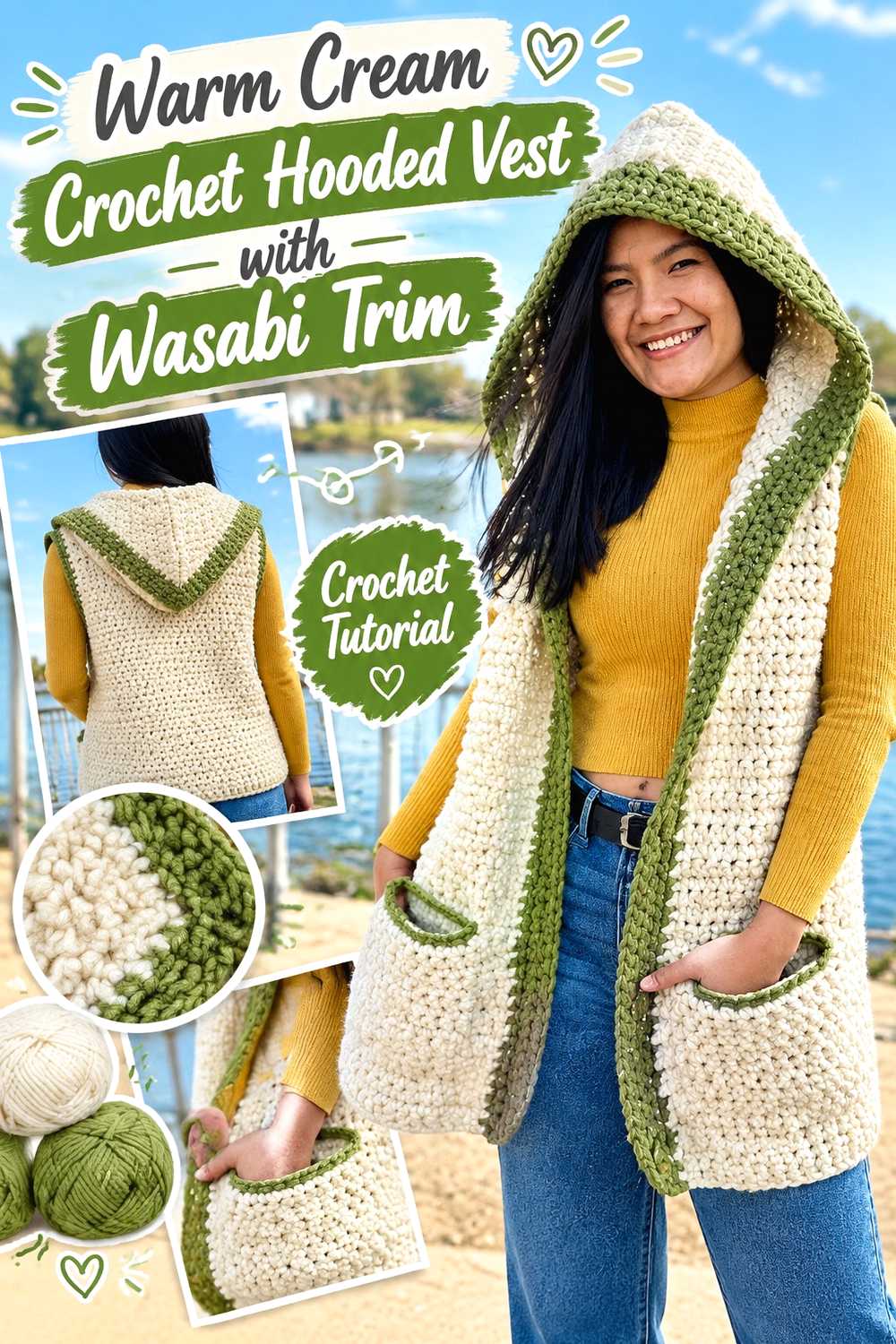
8. Warm Cream Crochet Hooded Vest With Wasabi Trim
 SAVE
SAVEA hooded vest gives Warm Cream several large connected areas—the body and hood—while Wasabi can define openings and finishing details. The absence of sleeves also makes the edging around armholes and the hood more noticeable.
Let Warm Cream Connect the Crochet Vest and Hood
Use Warm Cream across both the body and hood so the two sections read as one garment even if their shapes or stitch directions differ.
This broad light field also provides a consistent background for Wasabi accents around several different openings.
Repeat Wasabi Around Warm Cream Crochet Vest Openings
Use Wasabi around the hood edge, armholes, front opening, or lower finishing, but avoid making every green edge equally wide by default.
A few controlled Wasabi sections can frame the garment effectively while still leaving Warm Cream as the clear dominant shade.
Creator Credit: KnitcroAddict
9. Wasabi Crochet Bucket Hat With Warm Cream Brim
 SAVE
SAVEA bucket hat offers clear color zones through its crown, side walls, and brim. Wasabi can cover the upper two sections while Warm Cream defines the lower silhouette, creating a strong division without adding multiple stripe changes.
Carry Wasabi Through the Crochet Bucket Hat Crown and Sides
Keeping Wasabi continuous from the crown into the side walls helps the upper hat read as one unit.
If the stitch direction changes between those sections, maintaining the same green can prevent the construction from looking more segmented than necessary.
Let Warm Cream Define the Wasabi Crochet Bucket Hat Brim
A full Warm Cream brim gives the lighter shade enough area to stay visible from several viewing angles.
If you want a stronger Wasabi result, keep Warm Cream confined to the brim rather than extending it upward into the side walls.
Creator Credit: Tamara Kelly – Moogly
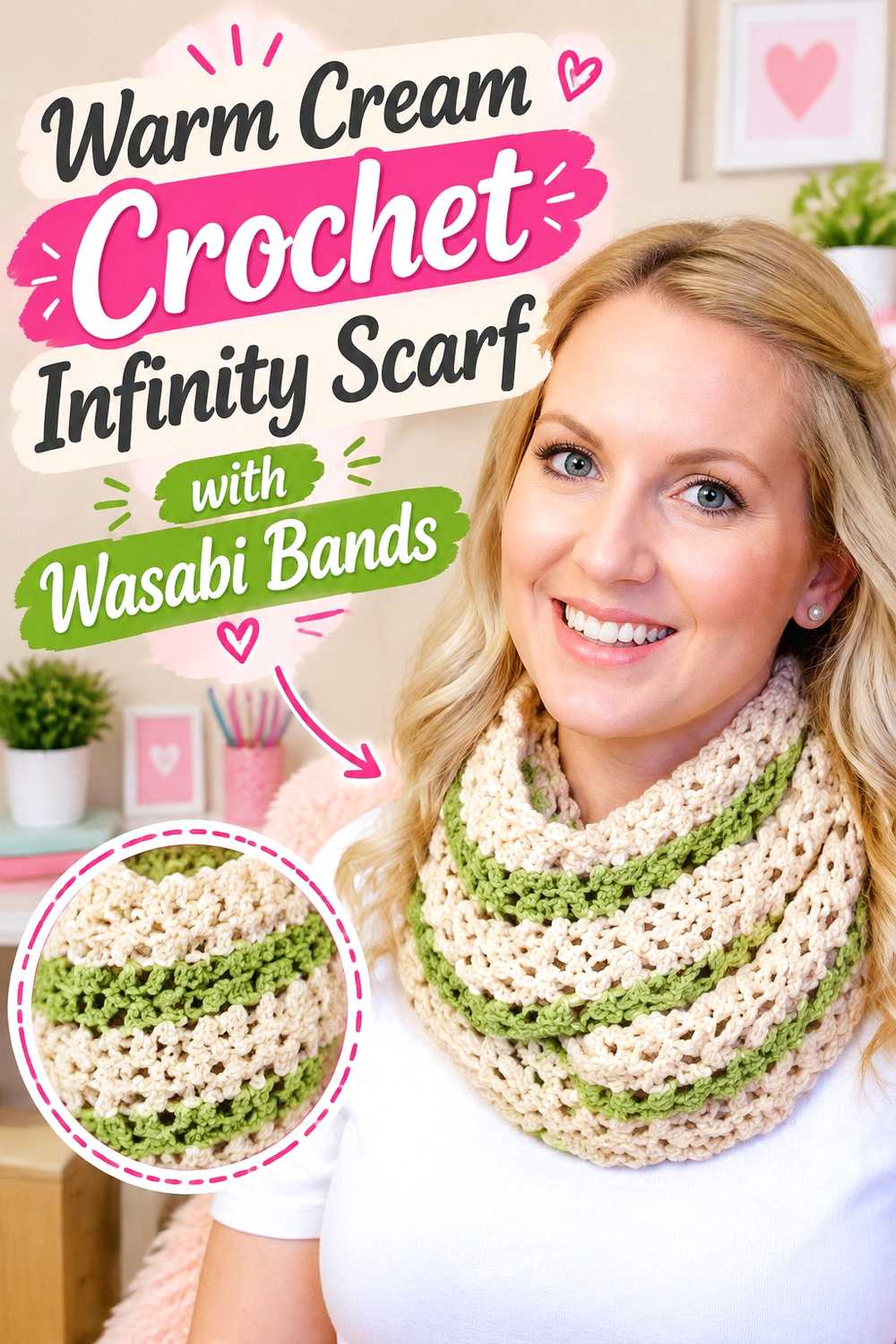
10. Warm Cream Crochet Infinity Scarf With Wasabi Bands
 SAVE
SAVEAn infinity scarf folds and overlaps when worn, so very narrow accents can disappear. Warm Cream can form the continuous base while broader Wasabi bands repeat at intervals and remain visible after the scarf is looped.
Use Warm Cream to Connect the Crochet Infinity Scarf
Keep Warm Cream through most of the length when you want the scarf to feel light and cohesive even when different parts overlap.
If the fabric already contains a visible stitch repeat, avoid pairing every texture change with another color change.
Repeat Wasabi Bands Across the Warm Cream Crochet Scarf
Use Wasabi in more than one substantial section so the green does not disappear inside the wrapped scarf.
Before finishing, loosely arrange the scarf as it will be worn. This simple check reveals whether Wasabi sections are hidden, too narrow, or clustered in one place.
Creator Credit: Bella Coco
11. Wasabi And Warm Cream Crochet Granny Square Pillow
 SAVE
SAVEGranny squares give both colors natural roles through motif centers, outer sections, joins, and borders. Unlike a solid pillow, this construction can support a more balanced distribution because the repeated squares organize frequent color changes.
Alternate Wasabi and Warm Cream Across Crochet Granny Square Centers
Create two or three repeated arrangements instead of changing every motif independently. Some squares can start with Wasabi and move outward into Warm Cream, while others reverse that order.
Controlled repetition keeps the pillow lively without turning the surface into unrelated color sequences.
Choose Warm Cream or Wasabi Carefully for the Crochet Pillow Joins
Warm Cream joins create lighter separation between motifs and can make each Wasabi section appear more distinct. Wasabi joins increase the green share and produce stronger lines across the pillow face.
Place several finished squares together with both possible joining colors between them before deciding. The join can influence the overall palette more than expected.
Creator Credit: B.Hooked Crochet
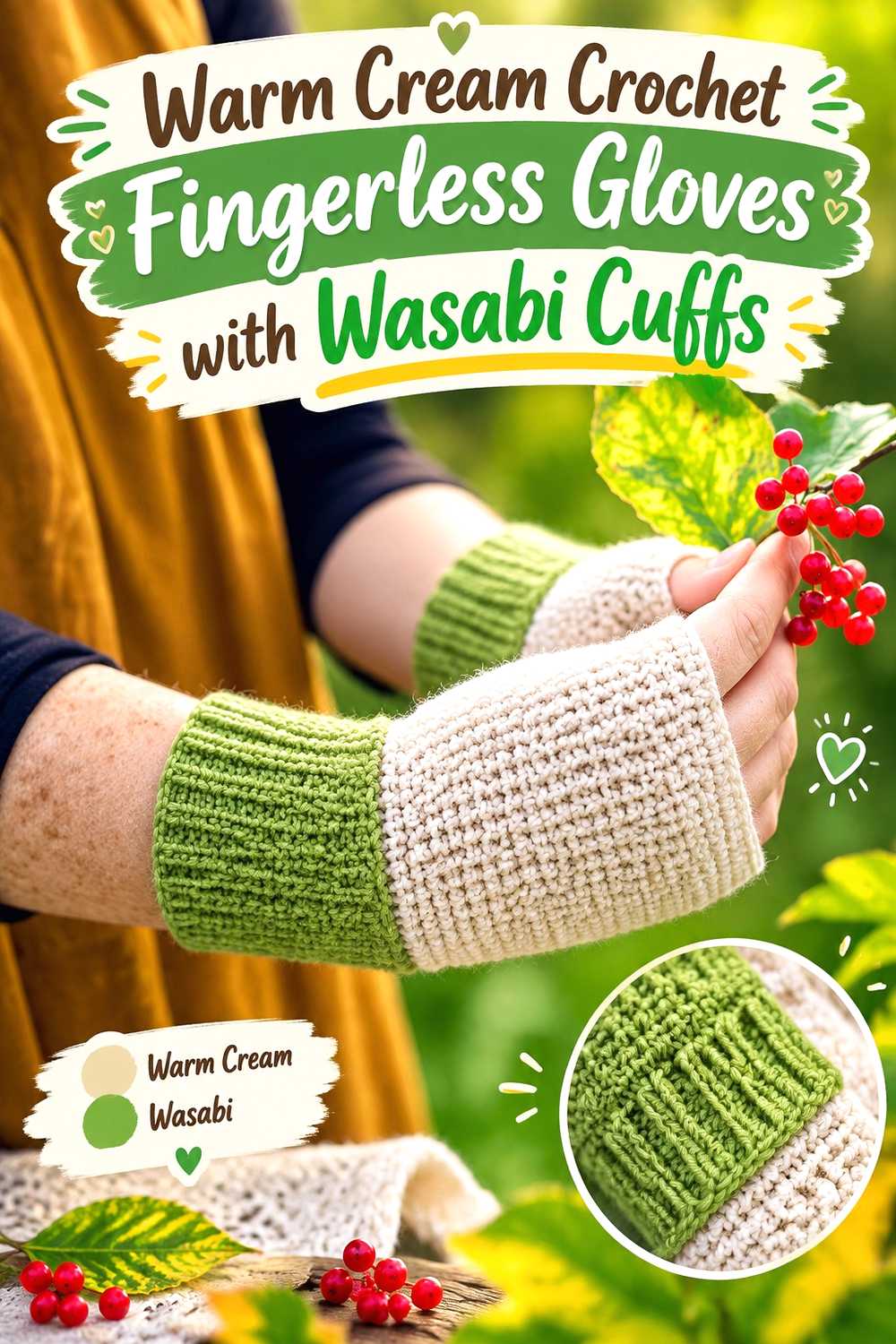
12. Warm Cream Crochet Fingerless Gloves With Wasabi Cuffs
 SAVE
SAVEFingerless gloves naturally separate into wrist and hand zones. Warm Cream can cover the hands while Wasabi defines the cuffs, keeping the stronger green away from the more structurally detailed thumb and finger areas.
Keep Warm Cream Consistent Across Both Crochet Glove Hands
Use Warm Cream across the main hand sections on both gloves so the pair remains visually coordinated.
Compare the gloves while working rather than judging each independently. Matching the Warm Cream coverage keeps the pair balanced when worn together.
Give Wasabi Enough Depth on the Warm Cream Crochet Glove Cuffs
Make the Wasabi cuffs substantial enough to read as deliberate color blocks rather than thin finishing lines.
If you repeat Wasabi higher on the hand, use a restrained detail so the wrist remains the main focal area against the Warm Cream body.
Creator Credit: Rich Textures Crochet
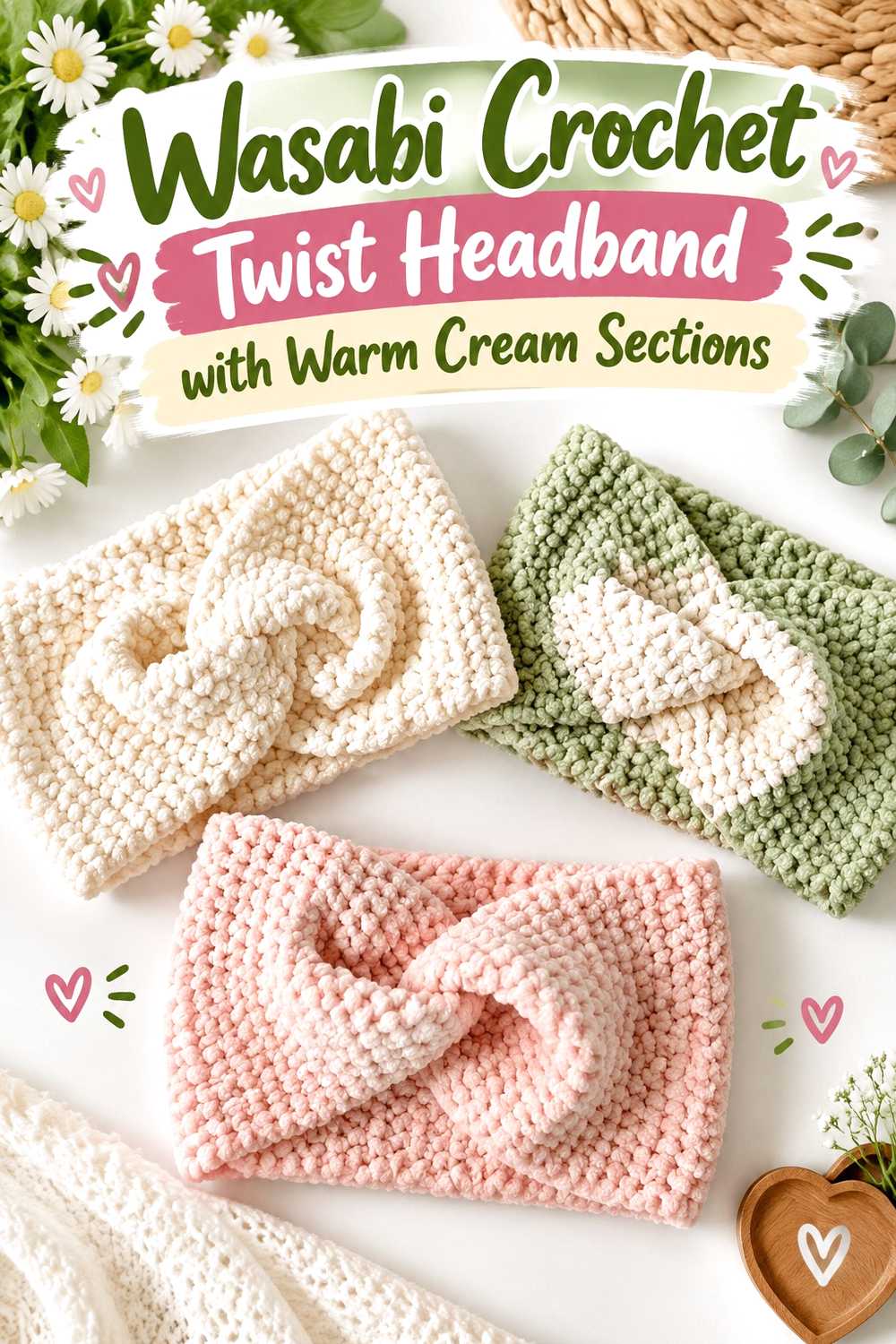
13. Wasabi Crochet Twist Headband With Warm Cream Sections
 SAVE
SAVEA twist headband has a clear focal point at the front, so color placement can reinforce that feature. Wasabi can occupy the twist area while Warm Cream covers the back, or the green can run through most of the band with cream placed around the transition.
Position Wasabi Where the Crochet Headband Twist Stays Visible
If the twist is intended to be the strongest green feature, give Wasabi enough length that the color remains visible after the fabric is folded.
A section that looks large while flat can become much smaller once the twist is formed, so temporarily shape the band before deciding where the color should end.
Use Warm Cream to Quiet the Wasabi Crochet Headband Away From the Twist
Warm Cream can cover the rear or side portion to keep the bright green from surrounding the entire accessory.
On such a narrow piece, two large color zones usually read more clearly than several alternating Wasabi and Warm Cream stripes.
Creator Credit: Daisy Farm Crafts
14. Warm Cream Crochet Mug Cozy With Wasabi Accent
 SAVE
SAVEA mug cozy has limited surface area, so one clear accent works better than several competing color changes. Warm Cream can form the wraparound body while Wasabi appears as a broad band, edge, or focal section.
Keep Warm Cream Broad Across the Crochet Mug Cozy
Use Warm Cream through most of the cozy so the small item remains visually connected around the mug.
If the stitch texture is already prominent, a simple cream field prevents the combination of texture and color changes from becoming crowded.
Give Wasabi One Clear Role on the Warm Cream Crochet Mug Cozy
Choose one recognizable Wasabi element, such as a central band or defined outer section.
A single larger green area usually gives stronger color direction than several tiny Wasabi accents that are difficult to see once the cozy is wrapped around the mug.
Creator Credit: Katia Creates
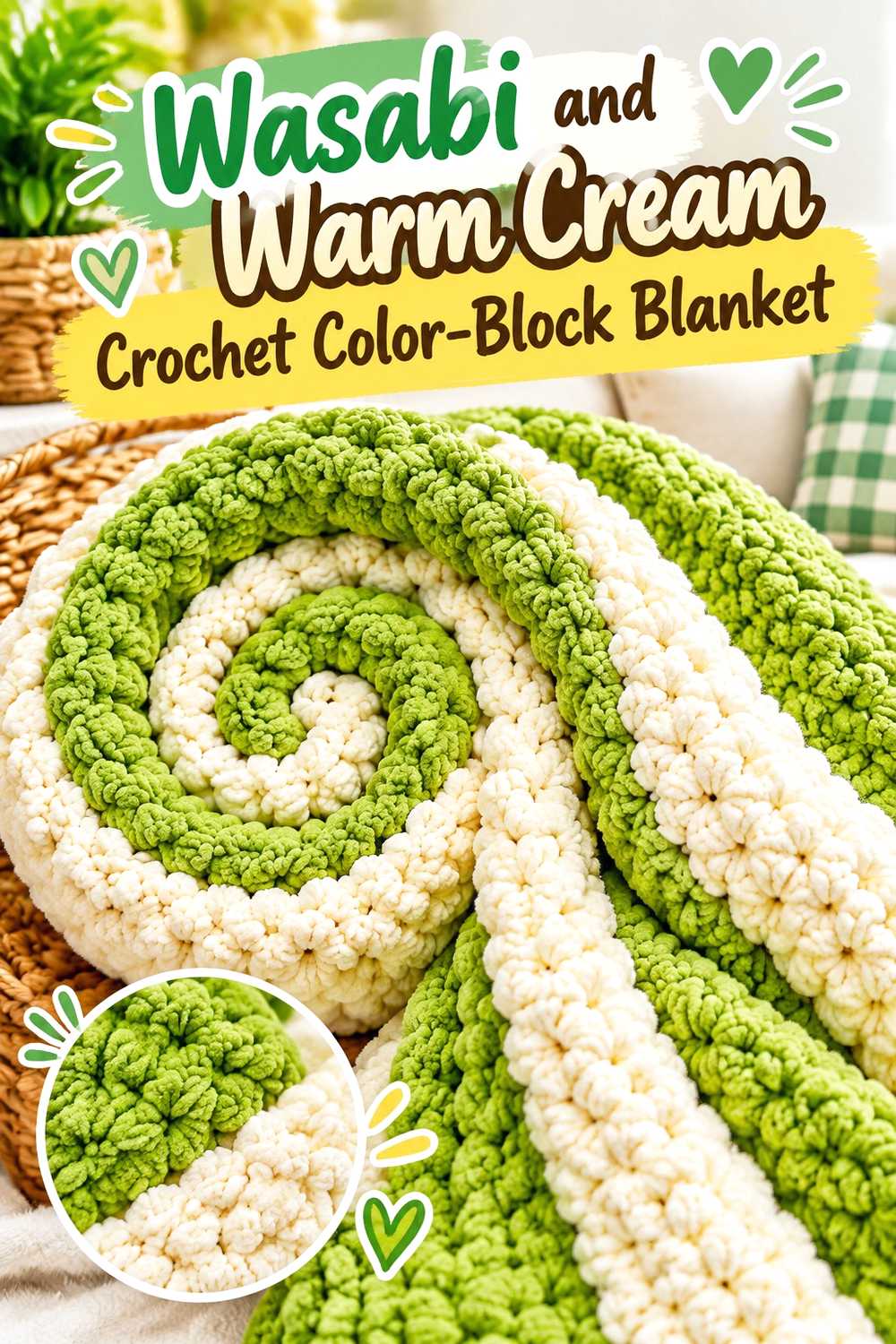
15. Wasabi And Warm Cream Crochet Color Block Blanket
 SAVE
SAVEA blanket gives both colors enough room to work in broad sections. Wasabi can appear in substantial bands or blocks while Warm Cream separates those areas and keeps the overall surface from becoming one uninterrupted green field.
Make Wasabi Crochet Blanket Blocks Wide Enough to Matter
On a large blanket, very thin Wasabi stripes can lose impact when viewed from across the room. Give the green sections enough width to function as genuine blocks rather than narrow lines.
Repeat Wasabi through the blanket instead of concentrating the color in one isolated area.
Use Warm Cream to Separate Wasabi Crochet Blanket Sections
Warm Cream can create lighter intervals that prevent several Wasabi sections from visually merging into one large field.
Repeating Warm Cream at the outer border can also connect the center color plan to the edge without introducing a third shade.
Creator Credit: Hooked by Robin
Comparing Wasabi-Led and Warm Cream-Led Crochet Combinations
| Color Direction | Projects to Consider | Wasabi Role | Warm Cream Role |
|---|---|---|---|
| Wasabi-led | Beanie, basket, poncho, bucket hat | Main body or broad field | Brim, rim, border, framing |
| Warm Cream-led | Cardigan, shawl, vest, scarf, gloves, mug cozy | Ribbing, borders, bands, cuffs, accent | Main surface or background |
| More balanced | Market tote, granny square pillow, blanket | Blocks, motifs, handles, repeated bands | Blocks, joins, separators, borders |
| Small focal use | Coasters, headband, mug cozy | Center, twist, accent band | Surrounding field or edging |
Choose a Wasabi-led project when you want green to control the first impression and Warm Cream to define the edges. A Warm Cream-led layout gives Wasabi less physical area but can make the green more noticeable because it is isolated against a light background.
Projects based on blocks or motifs work well when you want the two shades to share more of the surface without losing organization.
Conclusion
Wasabi and Warm Cream can create very different crochet results depending on where the color change occurs. Wasabi works well across the main surface of the basket, poncho, beanie, or bucket hat, with Warm Cream acting as a lighter frame. The cardigan, shawl, vest, scarf, gloves, and mug cozy reverse that relationship and use Wasabi more selectively.
For a more balanced two-color approach, the market tote, granny square pillow, and color-block blanket give both shades enough area to influence the finished piece.
Before starting a larger project, compare the actual yarns together and test them in the intended stitch pattern. Preserve the role you want—Wasabi as the stronger focal color, Warm Cream as the light background, or a deliberately balanced combination—rather than assuming the two shades should always be used in equal amounts.
Frequently Asked Questions
Do Wasabi and Warm Cream work together in crochet?
Yes. Wasabi supplies the stronger yellow-green direction while Warm Cream gives it a light, softer background. The combination can work in garments, bags, blankets, pillows, and small accessories when the two colors are given clear roles.
They do not need to occupy equal amounts of the project.
Should Wasabi or Warm Cream be the dominant crochet color?
Use Wasabi as the dominant shade when you want a stronger green result across a hat, basket, poncho, or other broad surface.
Use Warm Cream as the main shade when you want Wasabi to function as an accent around cuffs, borders, motif centers, bands, or trim.
How can I tell if Wasabi and Warm Cream have enough contrast?
Place the actual yarns side by side and view them from several feet away. A grayscale photo can also reveal their light-and-dark separation.
If their values are closer than expected, increase the size of the color blocks instead of relying on very small motifs or narrow stripes.
Where should Warm Cream go on a mostly Wasabi crochet project?
Warm Cream works well around structural boundaries such as rims, brims, borders, edging, joins, or cuffs.
Repeating Warm Cream in two related places usually creates a clearer palette than placing one isolated cream section in the middle of an otherwise Wasabi project.
Can Wasabi and Warm Cream work in crochet granny squares?
Yes. Wasabi can occupy motif centers while Warm Cream forms outer sections or joins, or you can reverse those roles across alternating squares.
Before joining the motifs, place several together to see whether the chosen joining color changes the overall balance more than expected.
What can replace Wasabi in this crochet combination?
Choose another yellow-leaning or muted green that preserves Wasabi’s role relative to Warm Cream. Pay attention to lightness and saturation rather than matching a commercial color name exactly.
If the replacement is much darker, test the contrast again before using it for detailed motifs.
What can replace Warm Cream with Wasabi?
Look for another warm off-white, ivory-like neutral, or soft cream that stays visibly separate from Wasabi.
If Warm Cream is serving as the lighter background, preserve that light-and-dark relationship when selecting a substitute so small borders and motifs remain easy to distinguish.