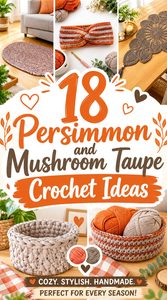
Persimmon and Camel make a warm crochet combination without requiring several extra colors to create depth. Persimmon can supply the stronger orange-toned focal color, while Camel works as a quieter tan support that gives stitch texture, edges, and larger panels room to breathe.
The balance does not need to stay the same from project to project. A Persimmon cardigan can use Camel only around cuffs and edging, while a Camel vest can reverse the hierarchy and reserve Persimmon for the neckline and hem. Small projects such as coasters and headbands can use sharper divisions, while larger wearables benefit from broader uninterrupted color areas.
These 18 ideas show different ways to distribute the same two-color palette across garments, accessories, bags, and home decor. The linked tutorials support the crochet construction; the Persimmon and Camel arrangements are independent palette adaptations.
Quick List
- Persimmon Crochet Cardigan With Camel Edging
- Camel Crochet Ribbed Beanie With Persimmon Brim
- Persimmon Crochet Basket With Camel Rim
- Camel And Persimmon Crochet Market Tote
- Persimmon Crochet Wave Shoulder Bag With Camel Panels
- Camel Crochet Shawl With Persimmon Border
- Persimmon Crochet Coasters With Camel Edging
- Persimmon Crochet Poncho With Camel Borders
- Camel Crochet Sweater Vest With Persimmon Trim
- Persimmon Crochet Mesh Sweater With Camel Cuffs
- Persimmon And Camel Crochet Granny Stitch Hood
- Camel Crochet Mosaic Pillow With Persimmon Motifs
- Persimmon Crochet Bucket Hat With Camel Brim
- Camel Crochet Twist Headband With Persimmon Center
- Persimmon And Camel Crochet Infinity Scarf
- Camel Crochet Bandana With Persimmon Border
- Persimmon And Camel Crochet Granny Square Mug Cozy
- Camel Crochet Fingerless Gloves With Persimmon Cuffs
How to Balance Persimmon and Camel in Crochet
Persimmon usually attracts more attention than Camel because of its stronger orange direction, so equal quantities do not necessarily create equal visual weight. If you want a project to remain Camel-led, give Camel substantially more surface area and use Persimmon at deliberate structural points such as a brim, border, cuff, handle, or motif.
For a Persimmon-led project, Camel can act almost like a soft neutral. It can separate Persimmon sections, frame a garment opening, define a bag panel, or keep a warm-colored pillow from becoming one uninterrupted block.
Decide on the hierarchy before starting. A dominant/supporting relationship makes later choices about borders and trim much simpler.
Check Persimmon and Camel Contrast Before Small Crochet Details
Color names alone do not tell you how strongly two particular yarns will separate. A pale Camel paired with a deep Persimmon can produce obvious light-and-dark contrast, while a dark Camel and muted Persimmon may sit much closer together in value.
Place the yarns side by side and view them from several feet away. A grayscale photo is another useful check when you are planning mosaic motifs, narrow edging, granny-square details, or small colorwork.
If the values are close, larger sections can still work well. Broad panels and borders do not depend on the same level of contrast as tiny motifs.
Use Camel to Control Strong Persimmon Crochet Areas
Camel is particularly useful when Persimmon already covers a large section of the project. Instead of adding another saturated color, Camel can create visual breaks around cuffs, joins, edges, handles, and borders.
The placement should follow the item. Camel around a cardigan neckline reinforces the garment opening; Camel on a bag side panel emphasizes its shape; Camel around a pillow motif gives the design separation.
That structural connection makes the palette look deliberate rather than simply alternating colors wherever a change is convenient.
1. Persimmon Crochet Cardigan With Camel Edging
 SAVE
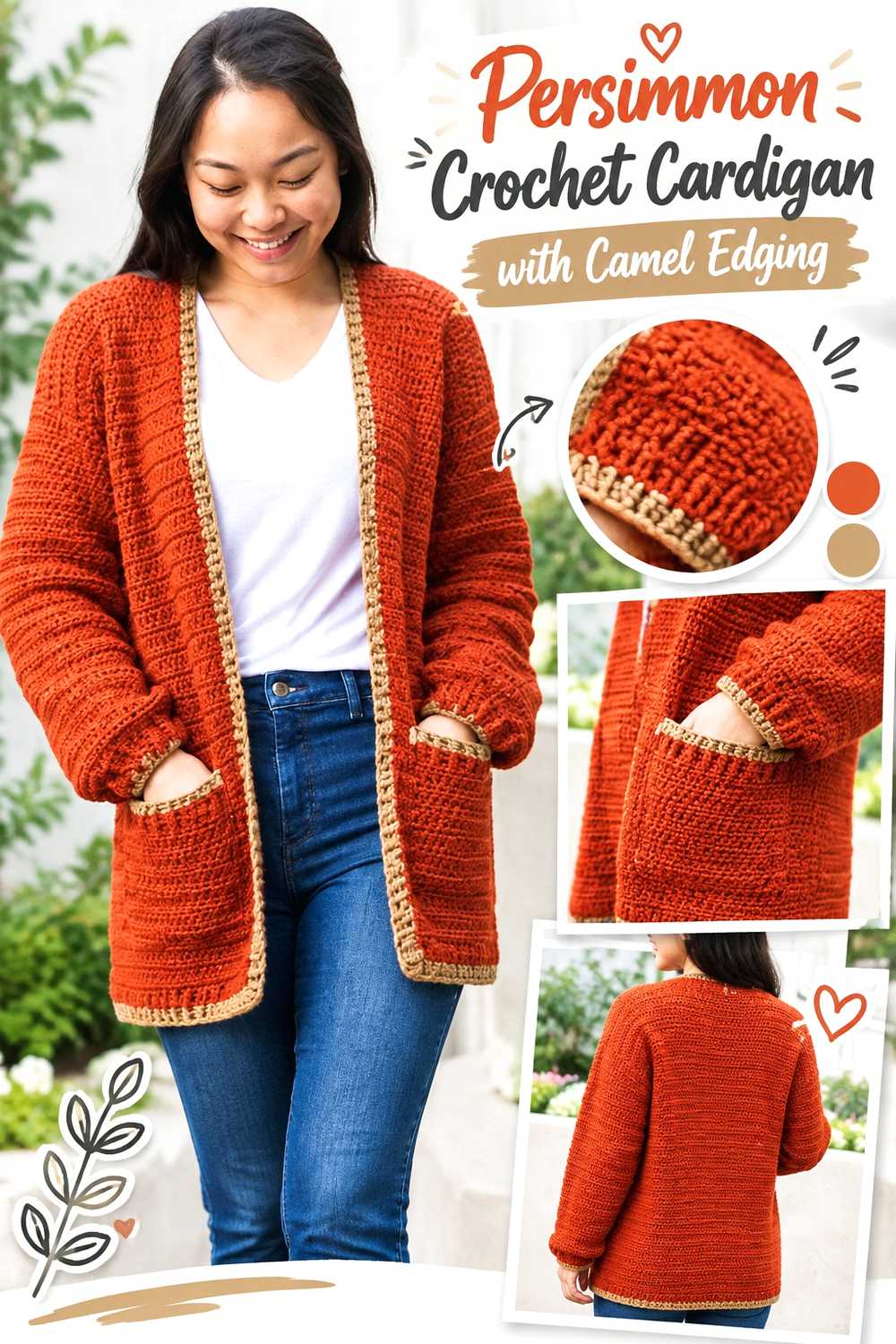
SAVEPersimmon can cover the main cardigan panels and sleeves, giving the garment a consistent warm base. Camel works better here as a controlled supporting shade around the opening, cuffs, or lower edge rather than competing across the entire body. This arrangement also lets you adjust the amount of Camel without changing the main cardigan construction.
Keep Persimmon Continuous Across the Crochet Cardigan Panels
Use Persimmon across the front and back panels when you want the cardigan to read as one cohesive color rather than several separate blocks. Carrying it through most of the sleeves reinforces that continuity.
If your stitch pattern has visible texture, make a Persimmon swatch before committing to the whole garment. The finished fabric tells you more about texture visibility than the yarn skein alone.
Repeat Camel Around the Persimmon Crochet Cardigan Edges
Camel can outline the front opening, cuffs, and possibly the lower edge. Repeating it in several finishing areas makes the supporting color feel connected.
Avoid making every Camel border equally wide by default. Wider cuffs create much more visual weight than a narrow neckline edge, so adjust each section according to how much Camel you want in the finished cardigan.
Creator Credit: forthefrills
2. Camel Crochet Ribbed Beanie With Persimmon Brim
 SAVE
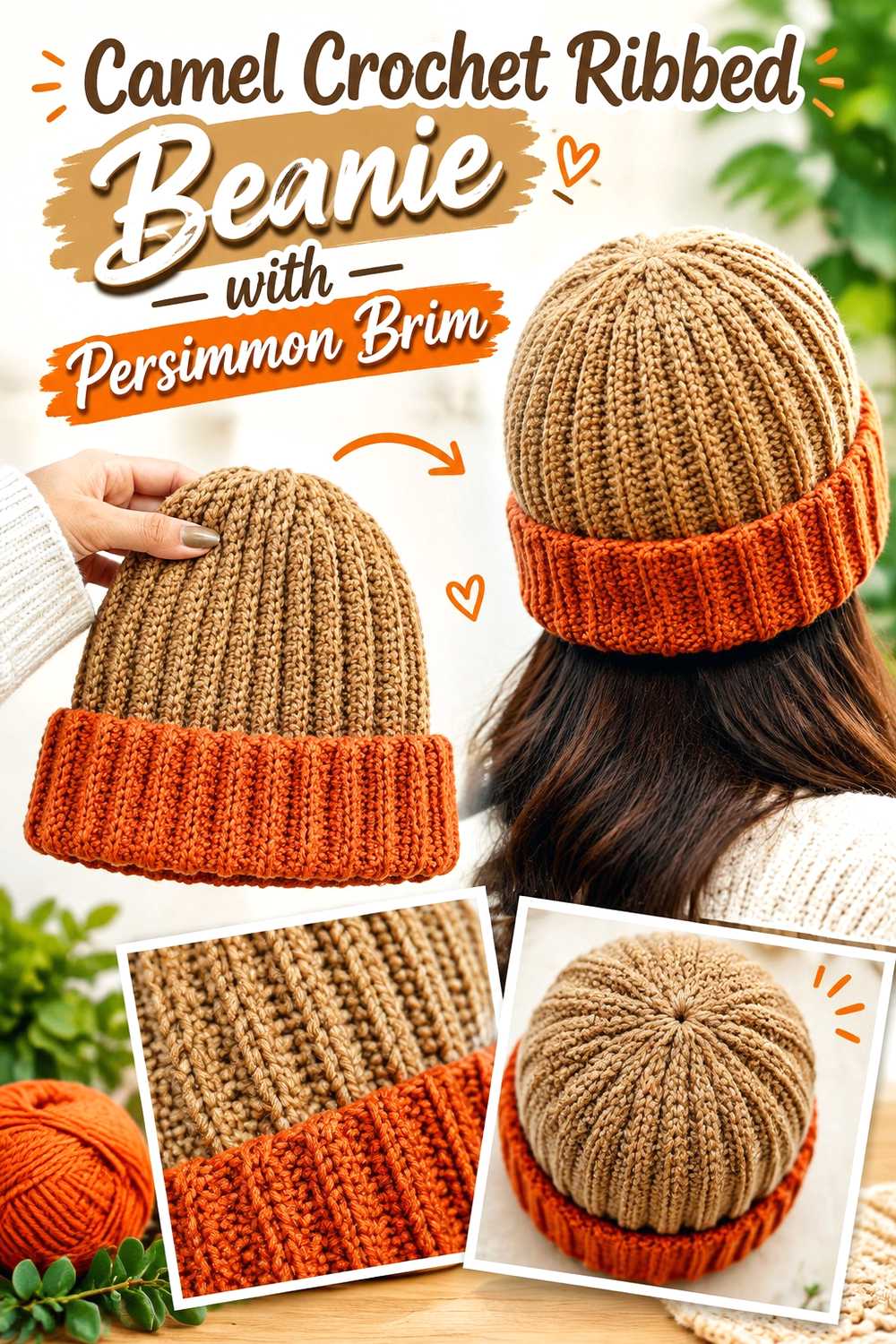
SAVEA ribbed beanie is compact enough that a simple color split usually has more impact than numerous narrow stripes. Camel can cover the crown and main body, while Persimmon creates a distinct lower band or folded brim. The warmer color then stays concentrated around a recognizable structural feature.
Let Camel Show the Crochet Beanie Ribbing
Keeping Camel uninterrupted through the crown allows the vertical ribbed texture to remain the primary surface detail. A lighter Camel can also make stitch shadows easier to see than a much darker color.
Check the fabric after working enough ribbing to judge it properly; a very small swatch may not show the full visual rhythm.
Give Persimmon Enough Space on the Crochet Beanie Brim
A single narrow Persimmon line can look incidental against a mostly Camel hat. Give the color enough depth to establish a real brim or lower color block.
If you want Persimmon to remain an accent, stop there rather than adding unrelated stripes throughout the Camel crown.
Creator Credit: VivCrochets
3. Persimmon Crochet Basket With Camel Rim
 SAVE
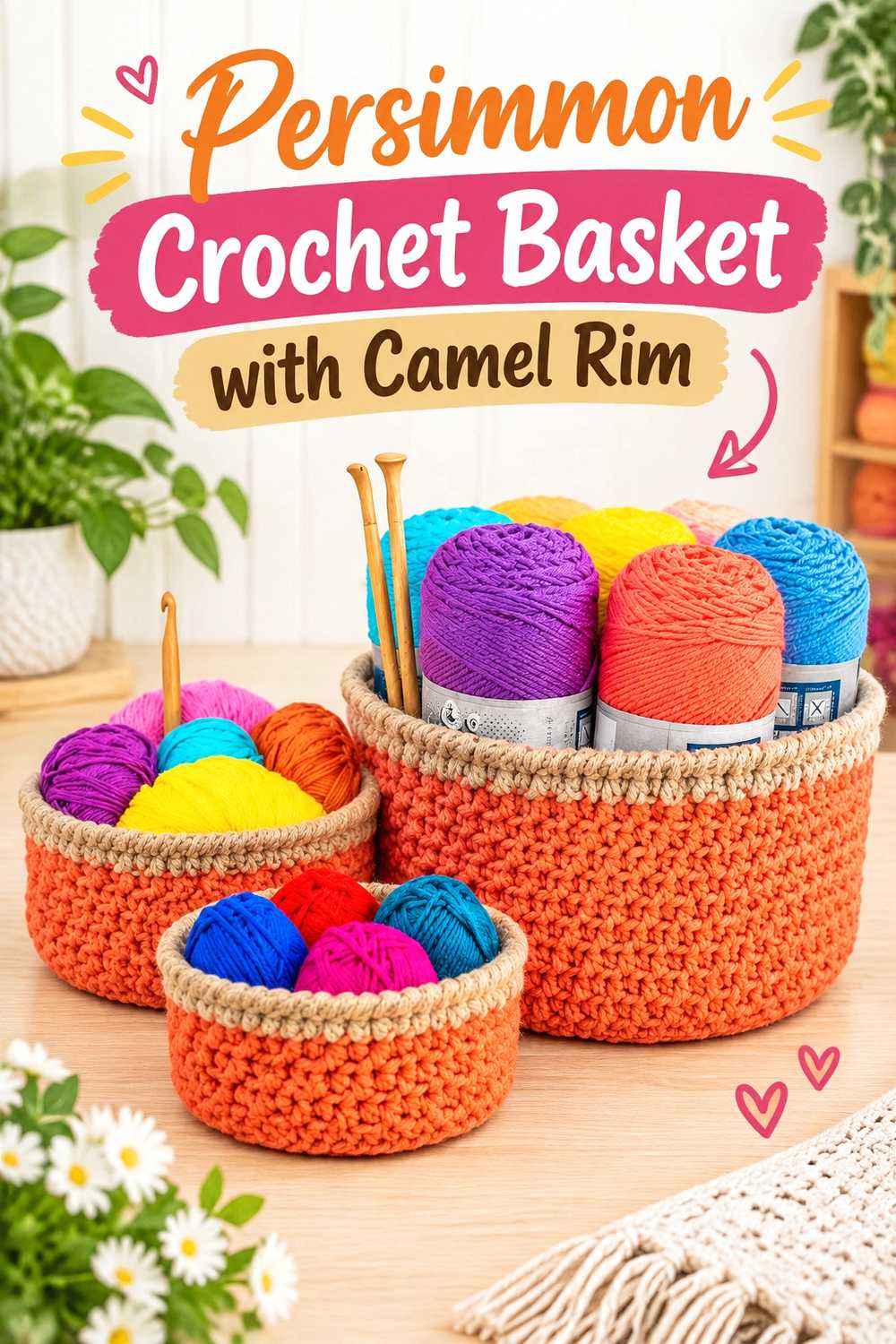
SAVEA crochet basket gives Persimmon enough surface area to function as a strong main color without becoming visually complicated. Camel can define the opening and, if useful, reappear near the base or handles. Keeping the accent near structural boundaries lets the color division reinforce the basket shape.
Keep Persimmon Around the Main Crochet Basket Body
Use Persimmon continuously across most of the sides when you want the basket to remain strongly color-led. A single main shade also keeps visible stitch texture from being interrupted by excessive color changes.
If the base remains visible when the basket is in use, continuing Persimmon underneath can make the lower portion feel more unified.
Frame the Persimmon Crochet Basket with a Camel Rim
Camel around the upper edge can create a clear transition between the basket body and opening. The contrast does not need to be dramatic to work because the placement itself marks a structural change.
If you add Camel elsewhere, repeat it sparingly at another functional feature rather than scattering small tan patches across the Persimmon body.
Creator Credit: naztazia
4. Camel And Persimmon Crochet Market Tote
 SAVE
SAVEA market tote provides more opportunities for balanced color blocking because the base, main body, upper edge, and handles can each carry a distinct role. Camel can anchor the lower area while Persimmon occupies a larger middle or upper section, allowing both colors to remain clearly visible.
Use Camel to Ground the Persimmon Crochet Market Tote
A Camel base or lower band creates a quieter starting point before the warmer Persimmon takes over the bag body. This can be especially useful when the tote includes openwork because the color areas remain broad even when the fabric itself is airy.
Keep the transition aligned with a natural section of the bag when possible.
Carry Persimmon Into the Crochet Tote Handles or Upper Band
If Persimmon dominates the middle of the tote, repeating it at the handles or upper section keeps that color connected from body to finish.
Alternatively, use Camel handles when you want to visually return to the lower color. Either choice works better when the handle color repeats somewhere else on the bag.
Creator Credit: The Crochet Crowd
5. Persimmon Crochet Wave Shoulder Bag With Camel Panels
 SAVE
SAVEA shoulder bag with visible panel or wave movement can use color to reinforce those changes. Persimmon can remain the main face color, while Camel takes over selected sides, upper sections, or broader wave areas. The contrast works best when it follows the bag’s structure rather than cutting randomly through it.
Let Persimmon Lead the Crochet Shoulder Bag Face
Use Persimmon on the largest front-facing area if you want the bag to read warm first. Keeping the main face relatively uninterrupted also prevents the stitch pattern and color blocking from competing equally for attention.
Camel then has a clearer supporting role around the edges of that focal area.
Align Camel Crochet Bag Panels with Real Construction Changes
Place Camel on side sections, an upper panel, strap area, or another visible boundary. Color changes that follow the shape of the bag are easier to understand visually than isolated blocks inside one continuous panel.
If the strap is Camel, echo Camel somewhere on the bag body so the strap feels integrated.
Creator Credit: Brunaticality
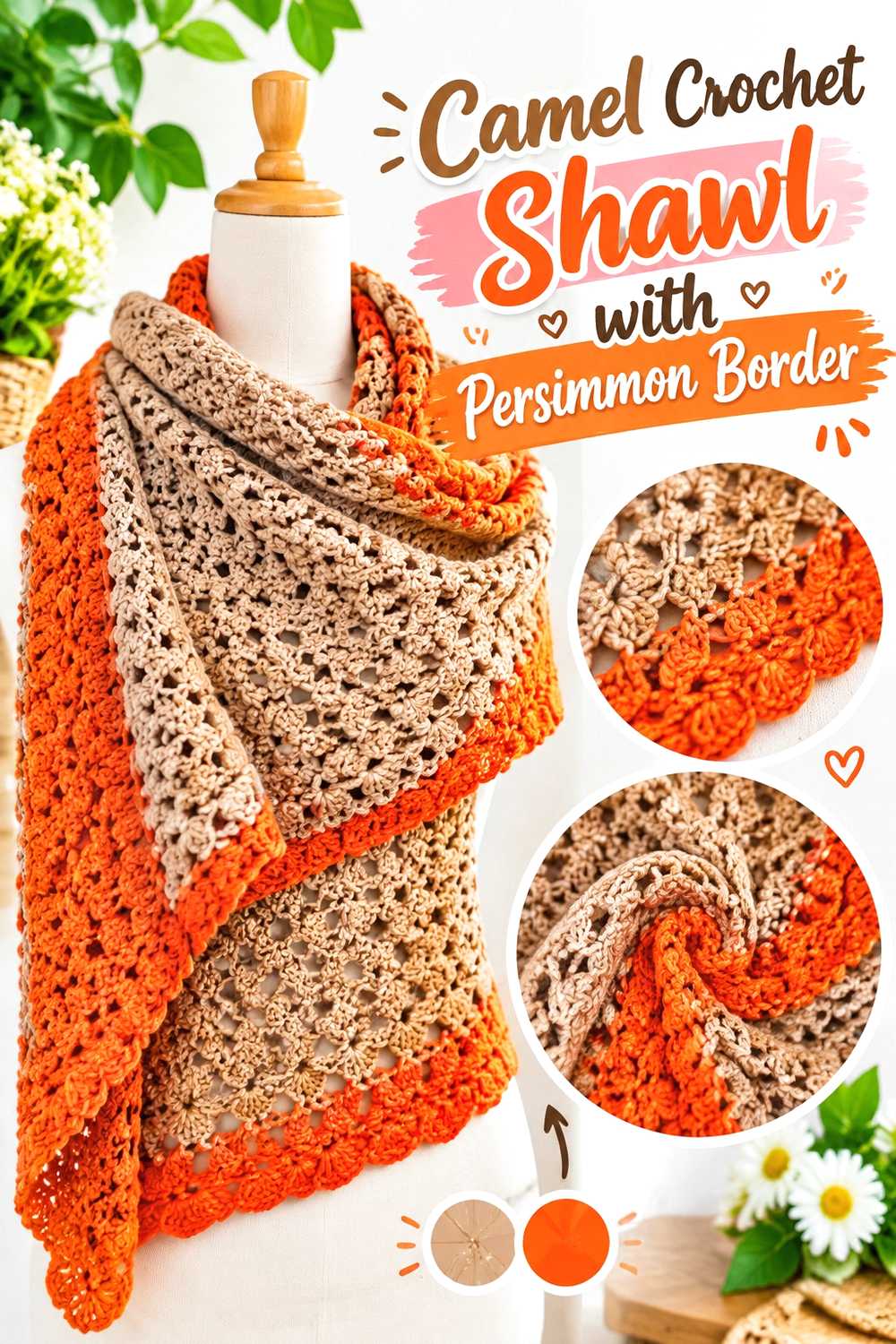
6. Camel Crochet Shawl With Persimmon Border
 SAVE
SAVEA shawl gives Camel a large field where openwork or changing stitch texture can remain visible, while Persimmon can concentrate around the widest outer edge. This reverses the more common Persimmon-dominant arrangement and lets the stronger color function as a frame.
Keep Camel Broad Across the Crochet Shawl Center
Use Camel across most of the shawl when you want the stitch pattern and silhouette to carry more visual attention than repeated color changes.
If your particular Camel yarn is significantly lighter than Persimmon, it can also make detailed texture easier to see across the center.
Control the Width of the Persimmon Crochet Shawl Border
Persimmon can have substantial impact even without covering much of the total shawl. A defined border around the widest edge may be enough to establish the second color.
Before making the border very deep, check the overall proportions. Too much Persimmon can shift the shawl from Camel-led to nearly equal color blocking.
Creator Credit: Fiber Flux
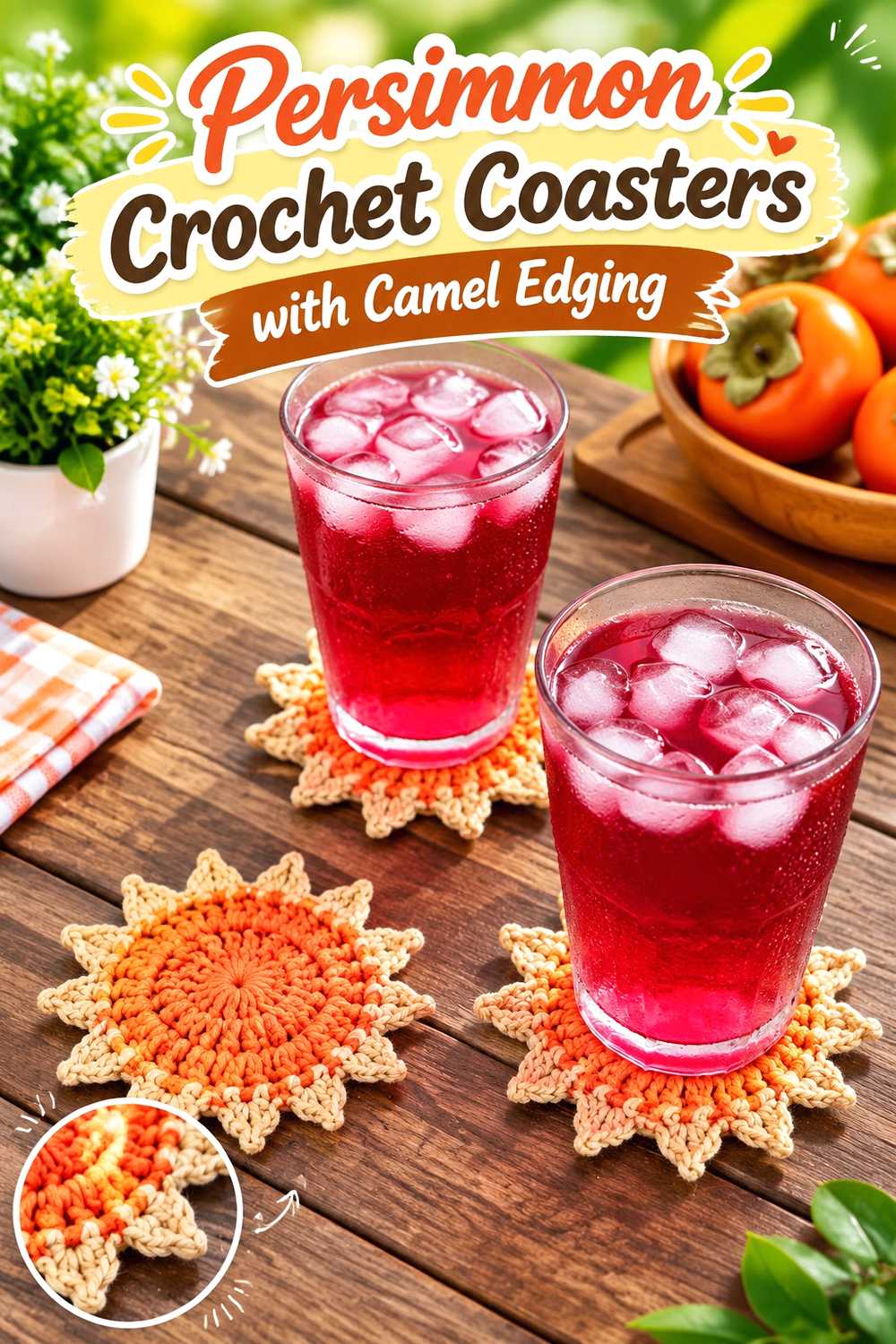
7. Persimmon Crochet Coasters With Camel Edging
 SAVE
SAVECoasters are useful for trying the combination on a small scale. Persimmon can fill the center, while Camel defines the outer shape. Because the total surface is limited, border width becomes an important part of the color balance.
Keep Persimmon Visible in the Crochet Coaster Center
Give Persimmon enough uninterrupted area to remain the obvious central color. A very wide Camel edge can quickly reduce the Persimmon center to a small spot.
Make one complete coaster before committing to the same proportions across an entire set.
Repeat Camel Edging Around Every Persimmon Crochet Coaster
A consistent Camel edge can visually connect the set even if you vary small center details. Repetition is particularly useful when several coasters will be seen together.
If you reverse the palette on some pieces, repeat the reversal deliberately rather than making every coaster follow a different arrangement.
Creator Credit: Jayda InStitches
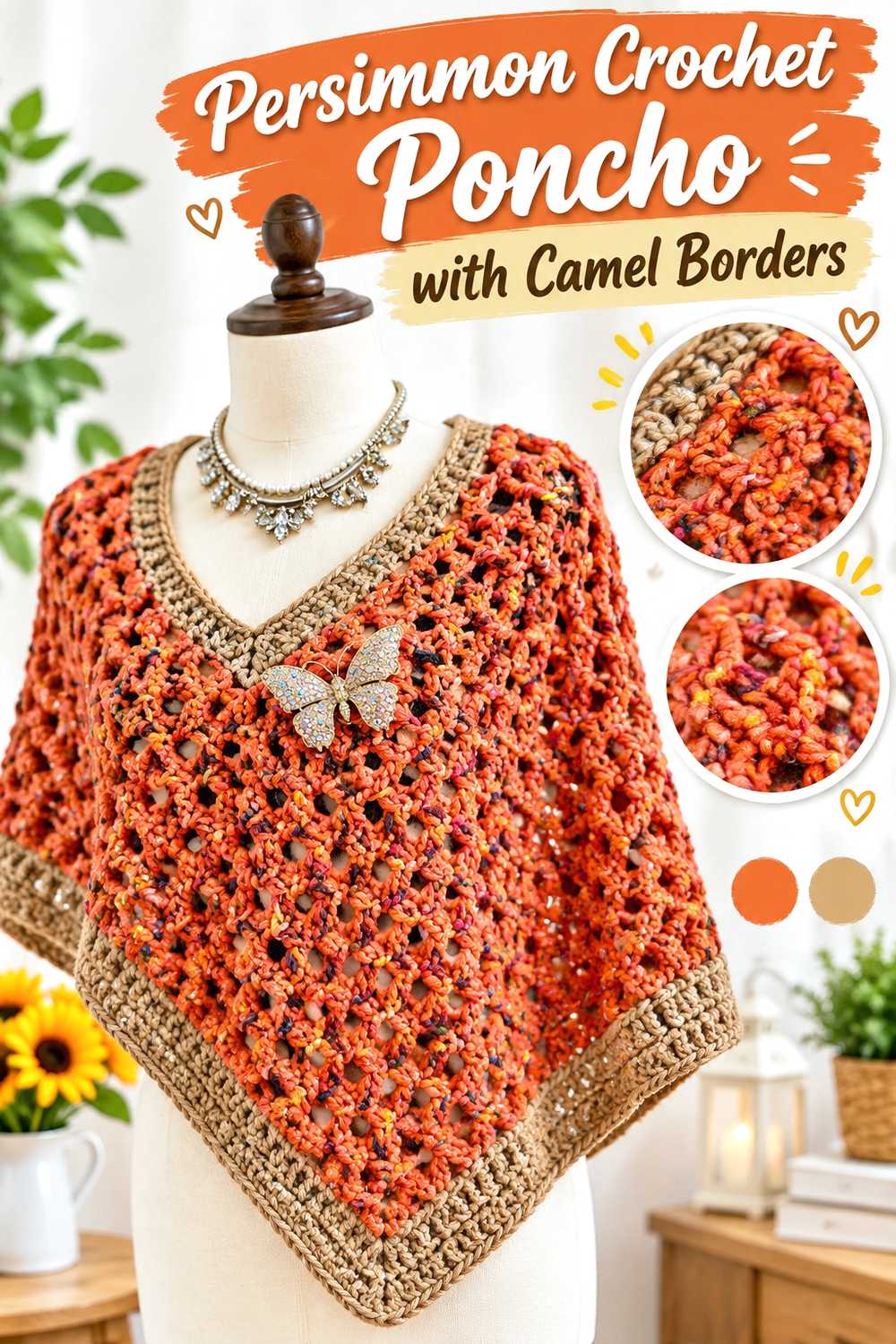
8. Persimmon Crochet Poncho With Camel Borders
 SAVE
SAVEA poncho has enough uninterrupted fabric for Persimmon to dominate without constant color changes. Camel can travel around the neckline, lower edge, or another long finishing section. Because those borders extend across a broad silhouette, even a moderate amount of Camel can remain noticeable.
Keep Persimmon Across the Main Crochet Poncho Surface
Use Persimmon through the largest body sections if you want a strongly warm finished garment. Broad continuous color also keeps the poncho from becoming visually segmented.
When the fabric uses pronounced texture, test Persimmon in that texture first and make sure the stitch definition remains as visible as you want.
Repeat Camel at Two Persimmon Crochet Poncho Edges
Camel used only around the neckline can feel isolated. Repeating it along the hem or another major edge creates a clearer color relationship from top to bottom.
The two Camel sections can differ in width; they only need enough repetition to feel related.
Creator Credit: Bag-O-Day Crochet
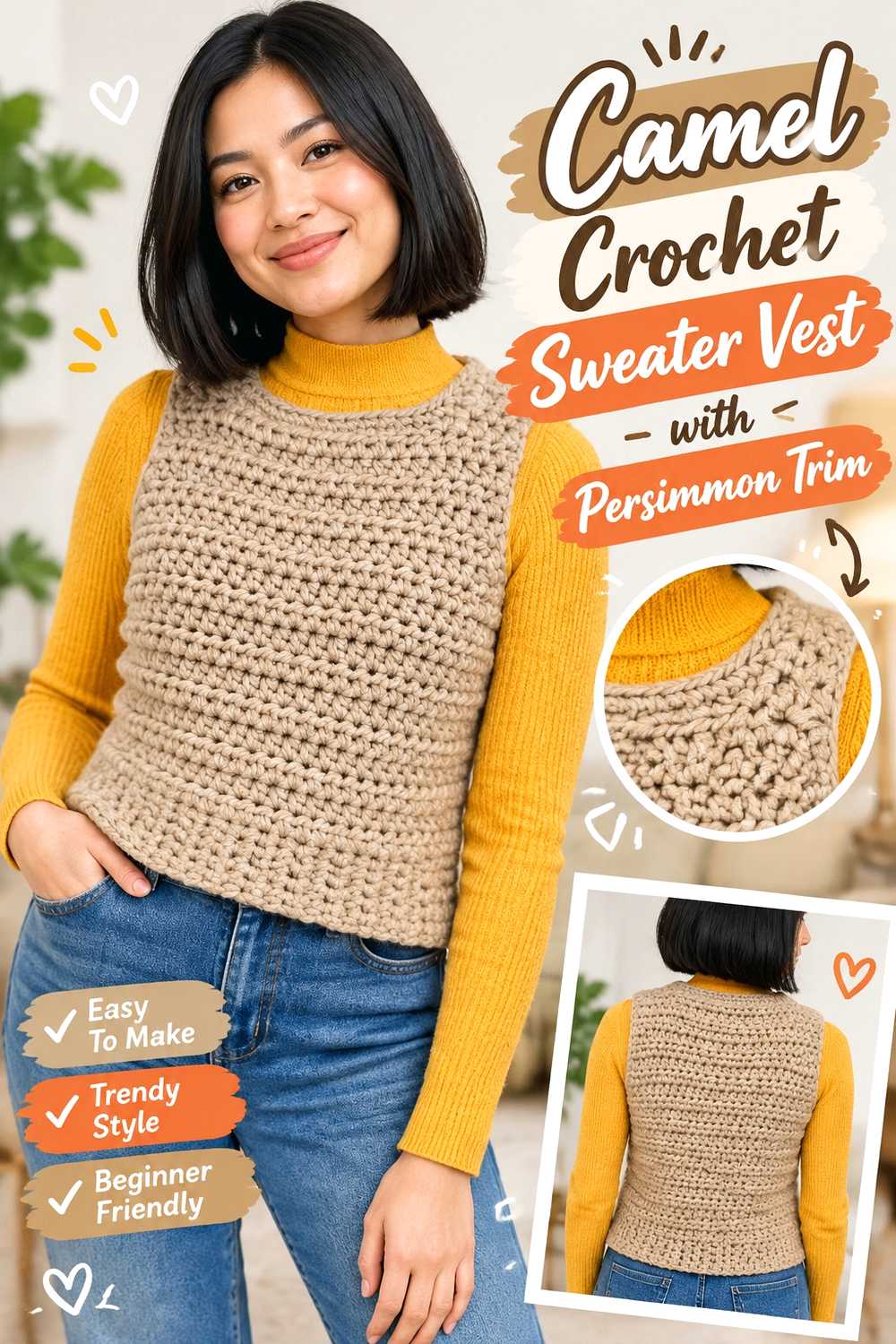
9. Camel Crochet Sweater Vest With Persimmon Trim
 SAVE
SAVEA sweater vest is well suited to a Camel-dominant arrangement because the main front and back panels can stay visually quiet while Persimmon outlines the neckline, armholes, or hem. With no sleeves competing for color placement, the trim becomes a stronger part of the finished composition.
Let Camel Connect the Crochet Sweater Vest Panels
Using Camel across both major panels gives the vest a consistent foundation. Keep that color moving through the widest areas instead of inserting isolated Persimmon blocks solely for variety.
This leaves the shape and stitch surface of the vest easy to read.
Use Persimmon Around Camel Crochet Vest Openings
Persimmon can outline the neckline and armholes, drawing attention to the edges without overtaking the Camel body.
A Persimmon hem can complete the frame, but consider whether all three trim areas need the same width. A narrower armhole finish and deeper lower band can produce a more deliberate hierarchy.
Creator Credit: KnitcroAddict
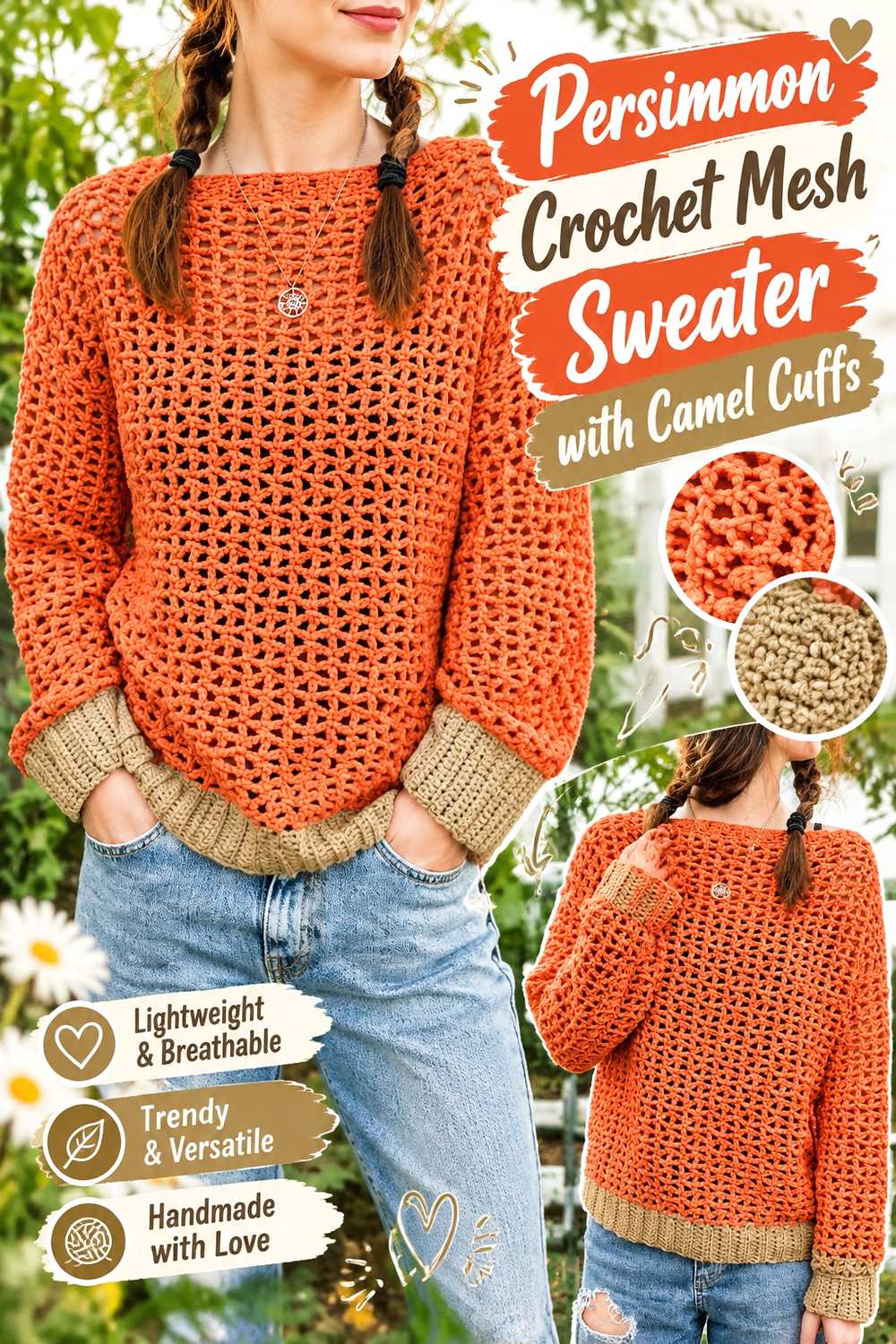
10. Persimmon Crochet Mesh Sweater With Camel Cuffs
 SAVE
SAVEMesh changes how color reads because the layer underneath can remain visible through the crochet. Persimmon can cover the main mesh body, while denser Camel cuffs and finishing areas provide more solid blocks of the quieter shade.
Test Persimmon Crochet Mesh Against a Typical Underlayer
Before committing to the whole sweater, hold a Persimmon mesh swatch over a few simple clothing colors you are likely to layer beneath it. The visible background can change how strong or light the mesh appears.
Keeping one dominant color across the main mesh also helps the open structure remain visually connected.
Put Camel on Denser Persimmon Crochet Sweater Finishes
Cuffs, neckline edging, and lower finishing areas give Camel more continuous fabric on which to register.
Repeat Camel in at least two locations if possible. One isolated tan cuff against an otherwise Persimmon sweater would feel less connected than cuffs plus neckline or hem finishing.
Creator Credit: Hey Carrie
11. Persimmon And Camel Crochet Granny Stitch Hood
 SAVE
SAVEGranny-style fabric gives both colors natural places to repeat. Persimmon can appear through selected clusters or larger sections while Camel creates quieter intervals. Because a hood occupies a relatively compact area, controlled repetition works better than giving every section a different color order.
Repeat Persimmon Through the Camel Crochet Granny Hood
Instead of concentrating Persimmon in one isolated area, bring it back at deliberate intervals. Repetition helps the warm shade look integrated with the Camel rather than added afterward.
Use larger repeats if your Persimmon and Camel yarns are close in value, since tiny changes may be less distinct.
Use Camel to Separate Persimmon Crochet Granny Sections
Camel can function as visual breathing room between stronger Persimmon areas. This is useful when the granny texture already produces a pronounced repeat.
Check the hood both flat and in its worn shape. Some color sections that seem widely separated on a flat piece may sit much closer together once the hood curves.
Creator Credit: PassioKnit Kelsie
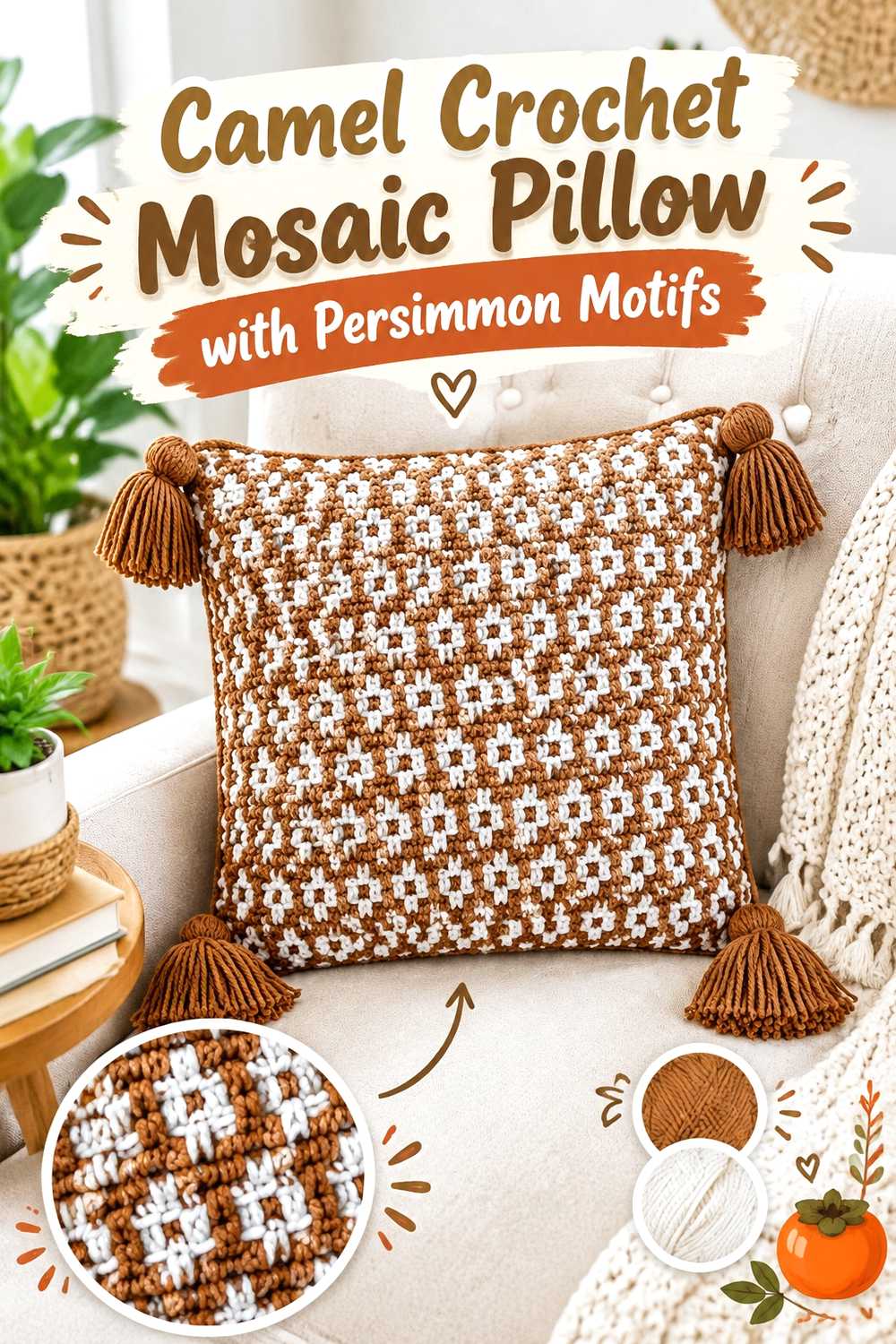
12. Camel Crochet Mosaic Pillow With Persimmon Motifs
 SAVE
SAVEA mosaic-style pillow is one of the projects where contrast deserves extra attention. Camel can create the main background while Persimmon forms the repeated motif. The design will depend not only on the hue difference but also on whether the two yarns are separated enough in lightness.
Give Persimmon Crochet Pillow Motifs a Clear Camel Background
Leave enough Camel surrounding each Persimmon motif for the shape to remain recognizable. When motifs become too densely packed, the pillow may stop looking Camel-led and become visually closer to a 50/50 arrangement.
Judge the complete repeat rather than one small section.
Check Persimmon and Camel Value Before Detailed Crochet Mosaic Work
Take a grayscale photo of the two yarns before committing to detailed motifs. If they become almost identical, the pattern may appear softer than expected.
You can preserve the two-color concept by selecting a lighter Camel or deeper Persimmon rather than adding a third color solely for separation.
Creator Credit: MJ’s Off The Hook Designs
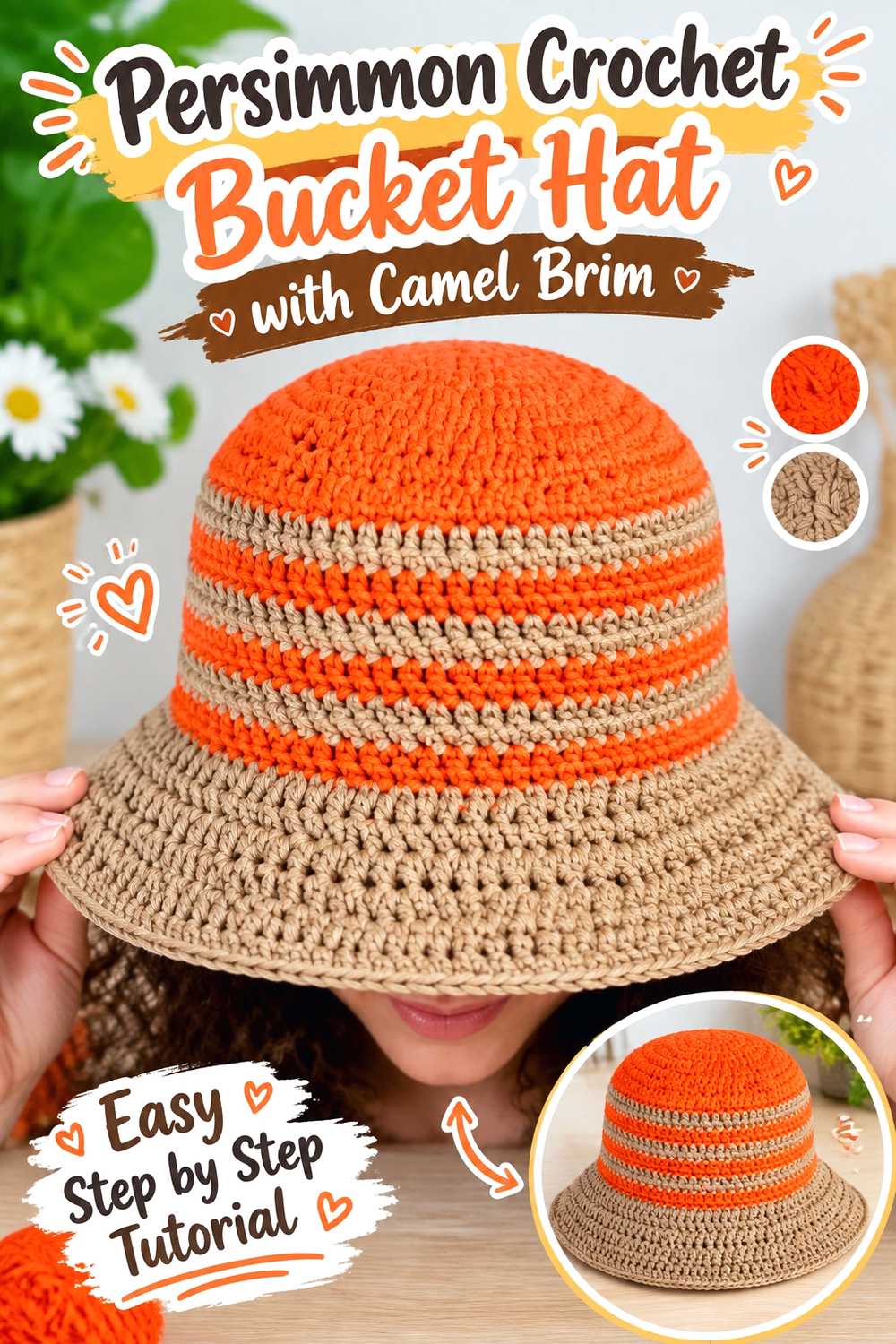
13. Persimmon Crochet Bucket Hat With Camel Brim
 SAVE
SAVEA bucket hat has three easy-to-read zones: crown, sides, and brim. Persimmon can cover the crown and side walls while Camel defines the outward-facing brim. This gives the neutral a substantial role without dividing the upper hat into several smaller blocks.
Carry Persimmon From the Crochet Bucket Hat Crown Into the Sides
Keeping Persimmon continuous across the upper sections lets the hat remain clearly Persimmon-led. It also avoids interrupting the silhouette with a color change before the brim begins.
If texture changes between crown and sides, the consistent color can help tie those sections together.
Make Camel Define the Persimmon Crochet Bucket Hat Brim
A Camel brim creates a distinct lower frame and gives the second color enough area to remain visible from several angles.
If you want a smaller Camel presence, use it on only part of the brim rather than introducing scattered Camel patches around the Persimmon crown.
Creator Credit: Moogly
14. Camel Crochet Twist Headband With Persimmon Center
 SAVE
SAVEThe twist creates a natural focal point at the front of a headband. Camel can cover most of the band, while Persimmon concentrates near the twist or appears as a controlled center section. Because the project is narrow, the color change should stay simple enough to preserve the shape.
Keep Camel Continuous Around Most of the Crochet Headband
A broad Camel field lets the twist construction remain visible without multiple competing stripes. It also gives Persimmon a clear area to contrast against.
Check where the finished seam or twist will sit before deciding exactly where to change color.
Position Persimmon Where the Camel Crochet Headband Twists
Placing Persimmon near the focal area can draw attention to the shape instead of creating a random band elsewhere.
Keep the Persimmon section wide enough to remain visible after the fabric is folded and twisted; a color block that looks sufficient while flat may become much smaller in the finished headband.
Creator Credit: Daisy Farm Crafts
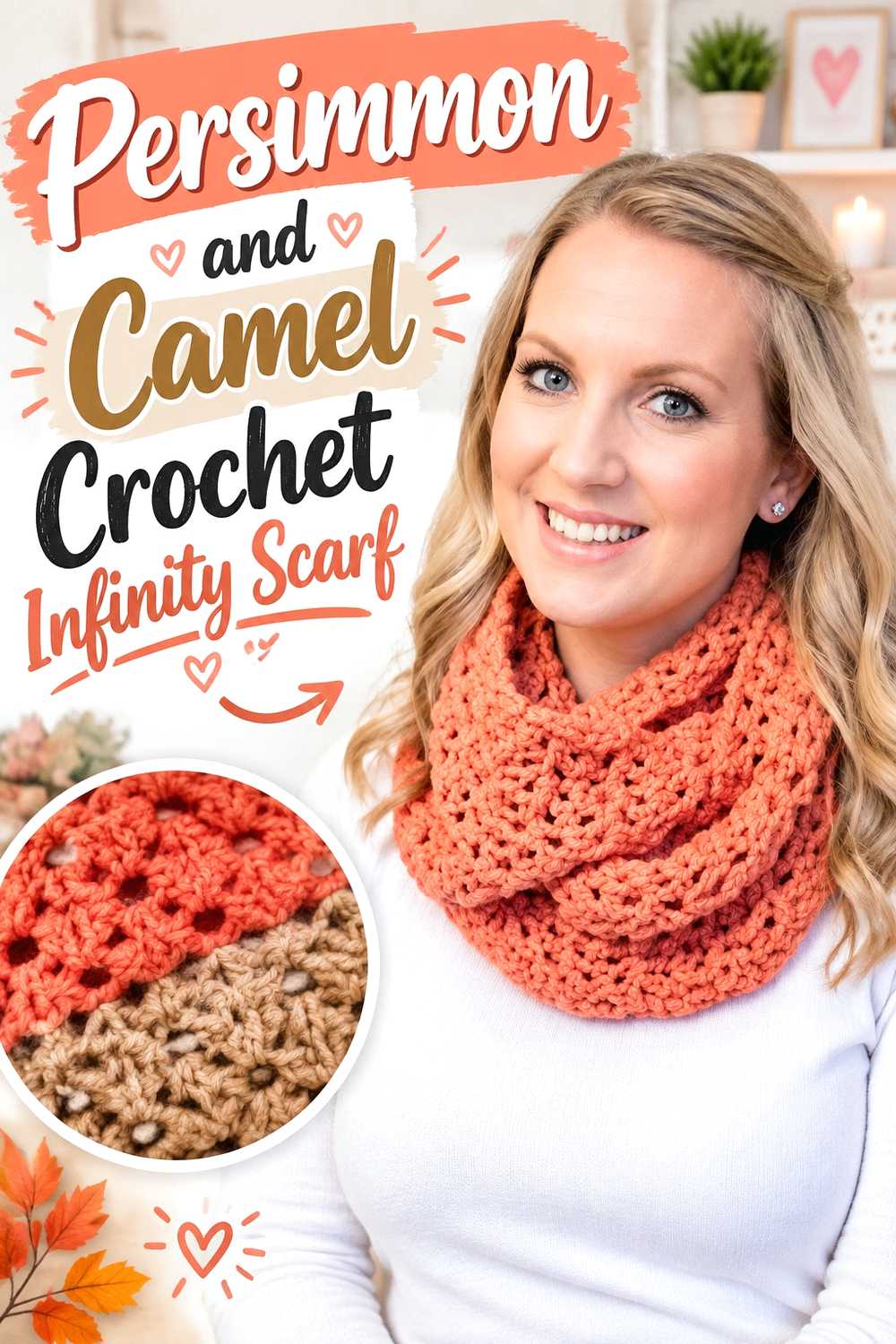
15. Persimmon And Camel Crochet Infinity Scarf
 SAVE
SAVEAn infinity scarf changes appearance as it loops and folds, so perfectly symmetrical color placement is less important than repetition. Broad Persimmon and Camel sections can remain recognizable after wrapping, while very narrow stripes may disappear among the folds.
Use Broad Persimmon Sections on the Crochet Infinity Scarf
Give Persimmon enough length to remain visible when the scarf doubles around the neck. One tiny warm section can easily become hidden inside the wrapped fabric.
Repeating Persimmon at more than one point reduces the chance that the entire accent disappears when worn.
Let Camel Separate Persimmon Crochet Scarf Blocks
Camel can create calmer intervals between the stronger Persimmon sections. Broader Camel areas also prevent the scarf from reading as a dense orange stripe pattern.
Before finishing, loosely loop the scarf as it will be worn and check whether both colors remain visible from the front.
Creator Credit: Bella Coco
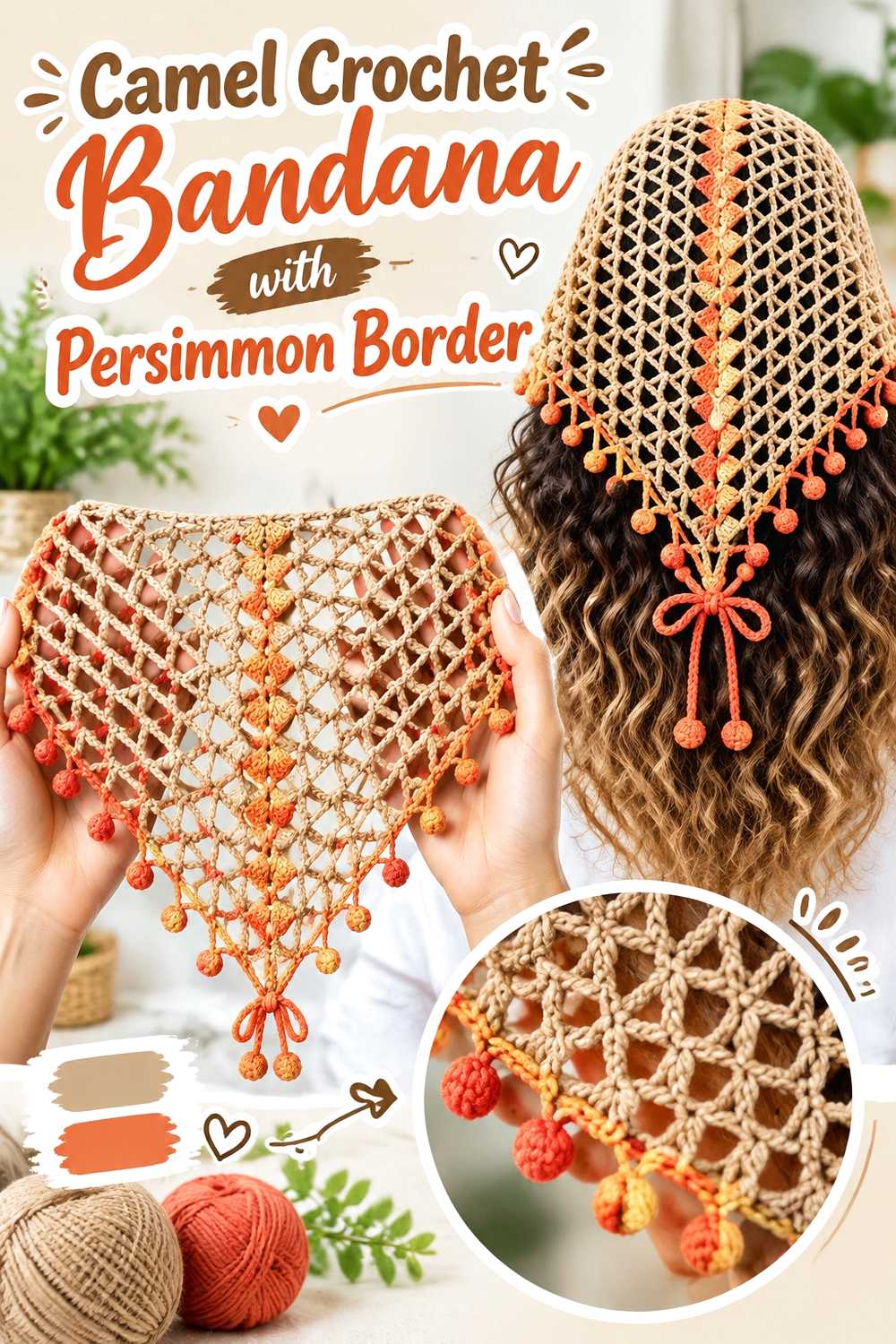
16. Camel Crochet Bandana With Persimmon Border
 SAVE
SAVEA triangular bandana can keep Camel through the central fabric and use Persimmon around the expanding outer edge. This makes the color placement follow the shape naturally and gives Persimmon increasing visibility as the triangle becomes wider.
Keep Camel Across the Main Crochet Bandana Triangle
Camel can act as the uninterrupted center so the triangular construction remains easy to read. This is especially useful when the fabric already includes open spaces or other visible texture.
A consistent center also leaves plenty of room for the warmer border to have impact.
Follow the Camel Crochet Bandana Edge with Persimmon
Persimmon works well around the lower diagonal edges or outer finishing section because the accent follows the actual silhouette.
If ties are part of your adaptation, decide whether they should continue the Persimmon border or return to Camel. Repeating one of the established roles is usually more coherent than introducing a new color.
Creator Credit: zhaia croche
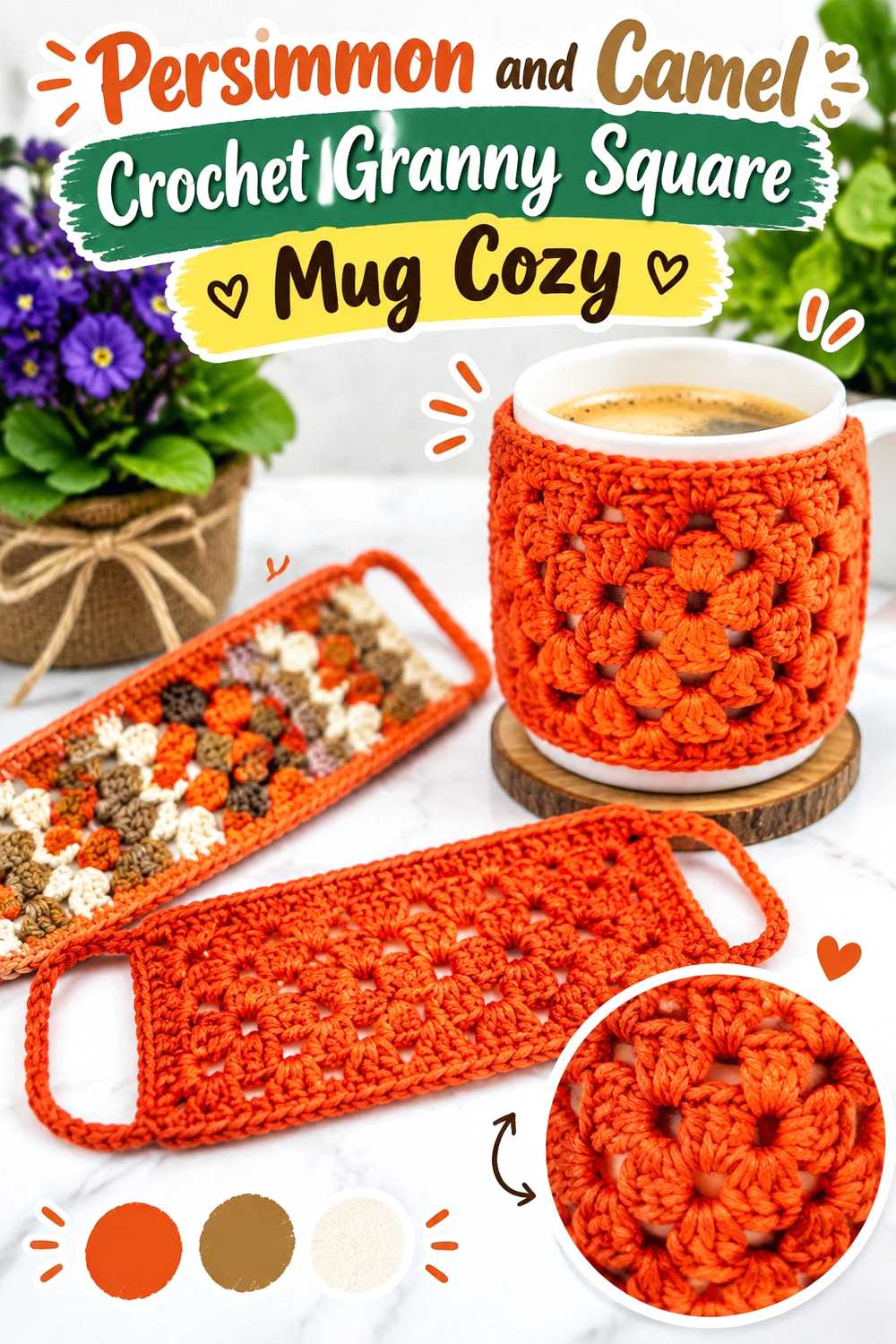
17. Persimmon And Camel Crochet Granny Square Mug Cozy
 SAVE
SAVEA granny-square construction gives this small project enough internal structure for both colors to participate strongly. Persimmon can occupy the square center or selected rounds, while Camel surrounds it and continues into the side sections or handle area.
Put Persimmon at the Crochet Mug Cozy’s Granny Square Focus
Use Persimmon where you want the eye to land first—often the center or another clearly defined motif area. Because the cozy is small, even a modest Persimmon section can have considerable impact.
Avoid adding numerous tiny Persimmon changes if the central block already provides enough emphasis.
Use Camel to Connect the Persimmon Crochet Mug Cozy Sections
Camel can surround the motif and continue into adjoining parts of the cozy, giving the small project a continuous supporting color.
This approach is particularly useful when Persimmon occupies the granny-square focal area: Camel prevents the rest of the cozy from competing with it.
Creator Credit: Katia Creates
18. Camel Crochet Fingerless Gloves With Persimmon Cuffs
 SAVE
SAVEFingerless gloves provide two useful color zones: the hand and the wrist. Camel can cover most of the hand so the texture remains consistent, while Persimmon creates a warmer cuff. Repeating the same proportions on both gloves is important because the pair will usually be viewed together.
Keep Camel Consistent Across Both Crochet Glove Hands
Use Camel through the main hand sections when you want the gloves to remain neutral-led. A continuous main color also prevents the hand area from becoming visually fragmented around the thumb opening.
Check both pieces together as you work so their color placement stays balanced as a pair.
Give Persimmon Crochet Glove Cuffs Enough Visual Weight
Persimmon cuffs should be substantial enough to read as a deliberate design choice rather than a thin finishing line.
If you want to repeat Persimmon higher on the gloves, use a restrained detail rather than dividing the whole Camel hand into several stripes. This keeps the cuff as the main warm accent.
Creator Credit: Rich Textures Crochet
Comparing Persimmon and Camel Crochet Color Directions
| Color Direction | Projects to Consider | Persimmon Role | Camel Role |
|---|---|---|---|
| Persimmon-dominant | Cardigan, basket, poncho, mesh sweater, bucket hat | Main body or large surface | Edging, cuffs, rims, borders |
| Camel-dominant | Beanie, shawl, vest, mosaic pillow, headband, bandana, gloves | Brim, border, motif, focal detail | Main field or body |
| More balanced | Market tote, shoulder bag, granny hood, infinity scarf, mug cozy | Large blocks or repeated features | Large blocks or separators |
| Small home accents | Coasters, mosaic pillow, mug cozy | Center or motif emphasis | Frame, background, connecting area |
If you want Persimmon to remain the unmistakable focus, use it on a large garment or bag surface and let Camel handle finishing details. For a quieter palette, reverse the balance and give Camel most of the project while Persimmon appears only where the construction naturally calls for emphasis.
The projects with motifs, granny sections, or repeated blocks are better suited to a more even split because their construction already organizes the two colors.
Conclusion
Persimmon and Camel can create very different crochet results depending on which color receives the largest area. The cardigan, basket, poncho, mesh sweater, and bucket hat show how Persimmon can lead while Camel controls edges and finishing details. The vest, shawl, bandana, headband, and fingerless gloves reverse that hierarchy and allow Camel to become the foundation.
For a stronger two-color treatment, the market tote, granny hood, infinity scarf, mosaic pillow, and mug cozy give both shades more substantial roles.
Before committing to a large project, compare the actual yarns together and test them in the intended stitch texture. Preserve the relationship you want—Persimmon as the stronger warm focal color, Camel as the softer support, or a deliberately balanced combination—rather than choosing proportions solely from the shade names.
Frequently Asked Questions
Do Persimmon and Camel work together for crochet?
Yes. Persimmon can supply a stronger warm color while Camel provides a quieter tan counterpoint. The combination is particularly useful when you want two related warm shades without making every part of the project equally saturated.
The finished result depends heavily on proportion, so decide which shade should dominate before choosing borders or trim.
Should Persimmon or Camel be the main crochet color?
Use Persimmon as the dominant color when you want a stronger orange-toned surface across a cardigan, poncho, basket, hat, or bag. Use Camel as the main shade when you want Persimmon to function more selectively at cuffs, borders, motifs, or other focal points.
Neither hierarchy is required; block-based projects can give both colors substantial space.
How can I tell if Persimmon and Camel have enough contrast?
Place the yarns side by side and view them from a distance. A grayscale photo can help you compare their light-and-dark values without being distracted by hue.
If they appear almost identical in grayscale, use larger blocks for clearer separation. Detailed mosaic motifs or narrow edging may benefit from a lighter Camel or deeper Persimmon.
Where should Camel go on a mostly Persimmon crochet project?
Use Camel where the item already creates a meaningful boundary: cardigan cuffs, a basket rim, a poncho border, bag panels, hat brims, pillow backgrounds, or scarf sections.
Repeating Camel in two or more related places generally makes it feel intentional rather than added as an isolated accent.
Can Persimmon and Camel be used in crochet granny squares?
Yes. Persimmon can occupy the centers or selected rounds while Camel separates and connects the stronger sections. You can also reverse the order across alternating squares.
Before joining multiple motifs, place several together to see whether one color is becoming much more dominant than expected.
What can replace Persimmon in this crochet combination?
Choose another muted warm orange, orange-red, or soft rust-like color that preserves Persimmon’s role relative to Camel. Focus on warmth, saturation, and lightness rather than finding an exact commercial shade name.
If the substitute is much darker than the original Persimmon, recheck the contrast against Camel.
What can replace Camel in a Persimmon crochet palette?
Look for another warm tan, muted beige-brown, or similarly restrained neutral that remains distinct from Persimmon. If Camel was intended as the lighter supporting color, keep that light-and-dark relationship when choosing the substitute.
A significantly darker replacement can make the palette feel heavier and may reduce the visibility of detailed two-color work.