Plum Noir and Copper give crochet projects two very different kinds of visual weight. Plum Noir can create the dark foundation, while Copper introduces a warmer break that becomes especially noticeable around borders, cuffs, geometric sections, and textured details.
The main challenge is deciding how much space each color should occupy. A Copper accent can disappear when it is reduced to a tiny line against a large Plum Noir surface, while equal amounts of both colors can make some projects look more divided than intended. The proportions should respond to the actual crochet item.
The ideas below use the same two-color family in different ways. Some are Plum Noir-led, others give Copper more surface area, and several use both colors in stronger blocks or repeating motifs.
Quick List
- Plum Noir And Copper Crochet Color Block Blanket
- Plum Noir Crochet Cardigan With Copper Cuffs
- Plum Noir Crochet Ribbed Beanie With Copper Brim
- Copper Crochet Basket With Plum Noir Rim
- Plum Noir And Copper Crochet Market Tote
- Plum Noir Crochet Cowl With Copper Ribbing
- Copper Crochet Shoulder Bag With Plum Noir Panels
- Plum Noir And Copper Crochet Ripple Scarf
- Copper Crochet Shawl With Plum Noir Border
- Plum Noir And Copper Crochet C2c Pillow
- Copper Crochet Coasters With Plum Noir Edging
- Plum Noir Crochet Poncho With Copper Borders
- Copper Crochet Sweater Vest With Plum Noir Neckline
- Plum Noir Crochet Mesh Sweater With Copper Cuffs
- Plum Noir And Copper Crochet Granny Square Hood
- Copper And Plum Noir Crochet Mosaic Pillow
Decide Whether Plum Noir or Copper Should Lead
Start by assigning one color the larger visual role. For a dark blanket, poncho, or cardigan, Plum Noir can cover most of the fabric while Copper appears in deliberately repeated areas. This keeps the warm color noticeable without breaking the project into too many pieces.
Copper can also become the dominant shade. On a basket, vest, pillow, or small home accessory, a larger Copper field gives Plum Noir enough contrast to work as an edge, motif color, or structural divider.
Equal proportions make more sense when the design already has a clear repeat, such as blocks, granny squares, corner-to-corner sections, or mosaic-style motifs. The construction then gives the two colors an organizing system.
Check Plum Noir and Copper for Light-and-Dark Contrast
Different hues can still have similar value. If your Plum Noir is not particularly dark or your Copper is a deep brown-orange, the two yarns may blend more than their names suggest.
Compare the yarns side by side and step back from them. A grayscale photo is another useful check. If the shades become difficult to distinguish, reserve the combination for broad panels or large motifs rather than tiny colorwork.
For narrow borders, checks, or detailed motifs, stronger value separation generally makes the color placement easier to read.
Use Copper to Break Up Large Plum Noir Crochet Surfaces
Copper has the most impact when its placement corresponds with a real feature of the item. Cuffs, blanket bands, bag sides, pillow geometry, scarf stripes, and neckline finishing give the contrast a reason to exist.
Scattering small Copper details randomly across a Plum Noir project can weaken that effect. When possible, repeat the warm accent in two or more visible areas so it feels integrated into the construction.
1. Plum Noir And Copper Crochet Color Block Blanket
 SAVE
SAVEA blanket provides enough surface area to let Plum Noir establish a deep base while Copper appears in substantial blocks rather than tiny accents. Large Copper sections can interrupt the dark field at planned intervals, making the two colors readable from across a room. This approach is particularly useful when the crochet texture already adds plenty of visual activity.
Let Plum Noir Cover the Largest Crochet Blanket Areas
Use Plum Noir for the widest or most frequently repeated sections if you want the blanket to stay clearly dark-led. Keeping several adjoining areas Plum Noir prevents the blanket from turning into a strict 50/50 stripe pattern.
The same strategy can help textured sections remain organized. Instead of changing colors every time the stitch texture changes, let Plum Noir continue through several sections and use Copper at selected transition points.
Give Copper Enough Width to Register Across the Crochet Blanket
Very narrow Copper lines may disappear against a large Plum Noir blanket, especially when viewed from a distance. Wider Copper blocks or bands give the secondary color enough visual area to matter.
Repeat Copper later in the blanket or at the outer border so the first warm section does not look isolated.
Creator Credit: Hooked by Robin
2. Plum Noir Crochet Cardigan With Copper Cuffs
 SAVE
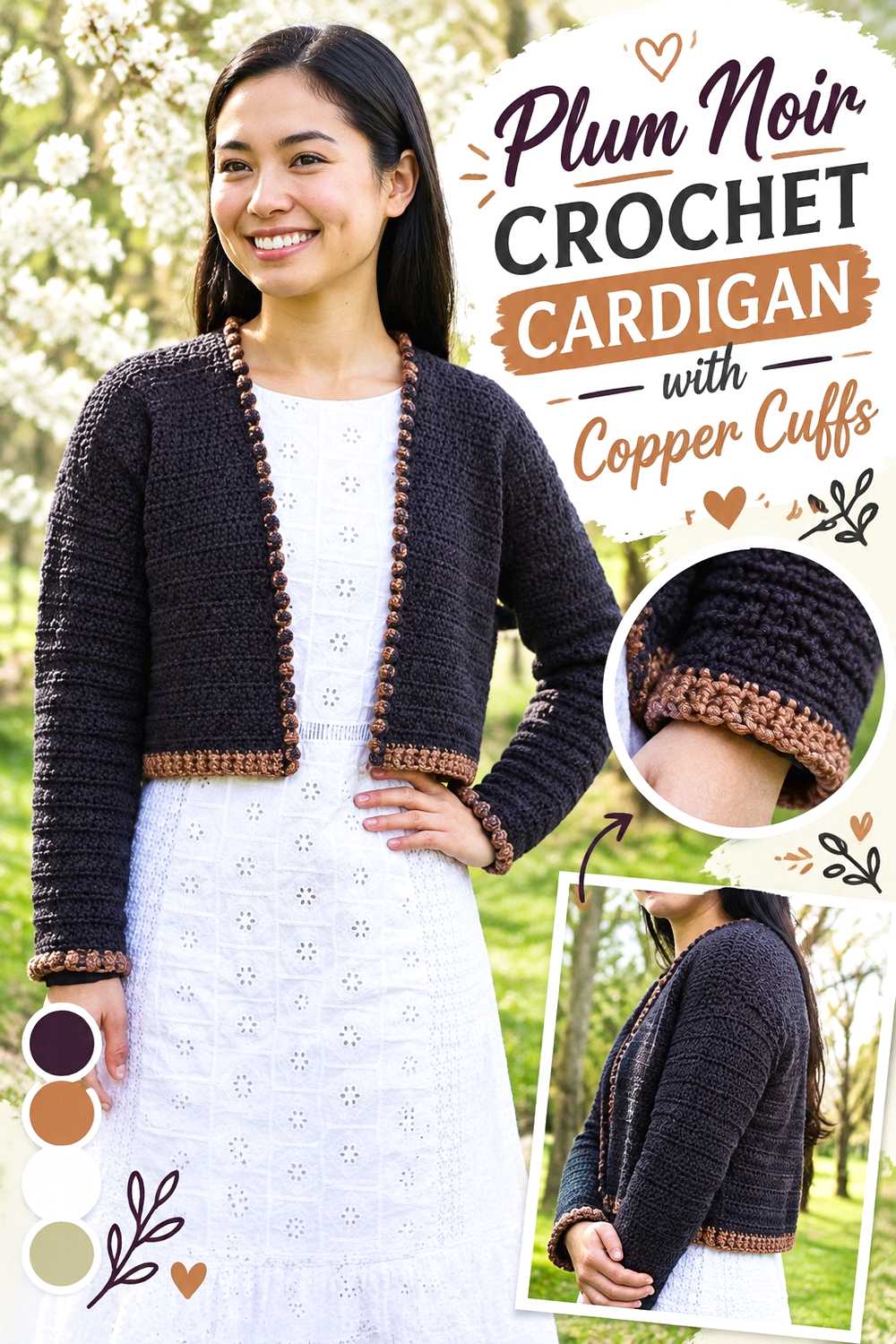
SAVEA cardigan naturally separates into body panels, sleeves, cuffs, neckline, and edging, giving Plum Noir and Copper several useful placement options. Keeping the broad garment sections Plum Noir allows Copper to define finishing areas without breaking the body into too many color blocks.
Keep Plum Noir Continuous Across the Crochet Cardigan Body
Use Plum Noir on the main front and back panels when you want the garment to read as predominantly plum. Extending that color through most of the sleeves reinforces the continuous dark base.
If the cardigan has strong stitch texture, swatch it first in Plum Noir. Very dark yarn can reduce visible stitch shadows, so check the actual fabric rather than assuming the texture will remain equally clear.
Repeat Copper Around the Crochet Cardigan Cuffs and Neckline
Copper cuffs can feel disconnected when they are the only warm-colored areas. Bring Copper back around the neckline, front edging, or another finishing detail to establish repetition.
The widths do not have to match. Narrow Copper neckline finishing can still visually connect with broader Copper cuffs.
Creator Credit: forthefrills
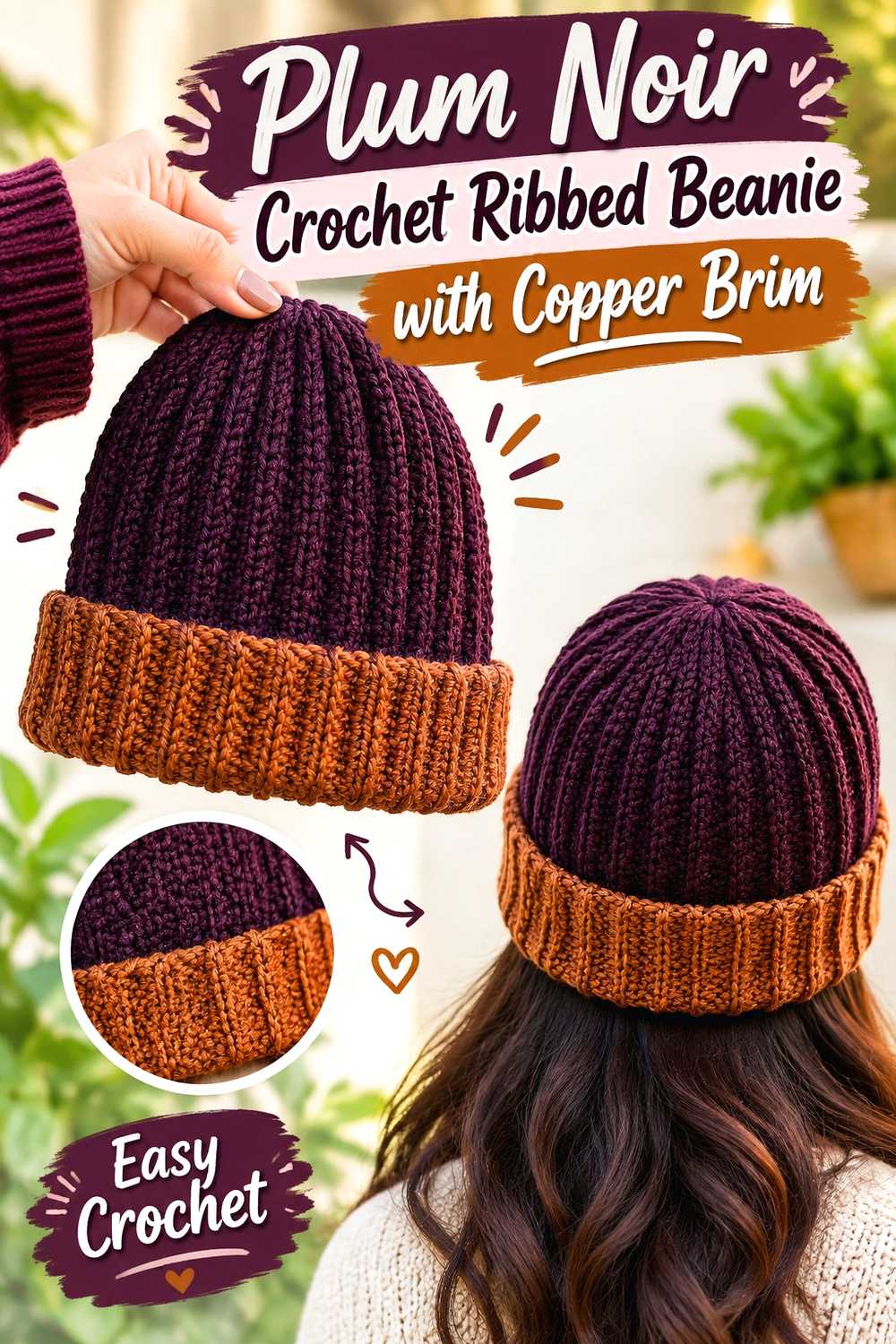
3. Plum Noir Crochet Ribbed Beanie With Copper Brim
 SAVE
SAVEA ribbed beanie does not need many color changes because its texture already creates strong vertical movement. Plum Noir can cover the crown and main body, while Copper forms a recognizable lower band or folded brim.
Preserve Plum Noir Ribbing Across the Crochet Beanie Crown
Keeping Plum Noir uninterrupted through the crown allows the ribbed structure to remain the main surface detail. Several small Copper stripes could compete with those vertical lines.
Check the ribbing in normal indoor light before committing to the entire hat. If the darkest Plum Noir option hides too much texture, choose a slightly lighter plum while preserving the overall color relationship.
Make the Copper Crochet Beanie Brim a Deliberate Color Block
Copper needs enough height to look intentional against a mostly Plum Noir hat. A recognizable brim has a clearer role than a very narrow line placed near the edge.
For a subtler result, reduce the Copper section rather than adding more small Copper stripes across the crown.
Creator Credit: VivCrochets
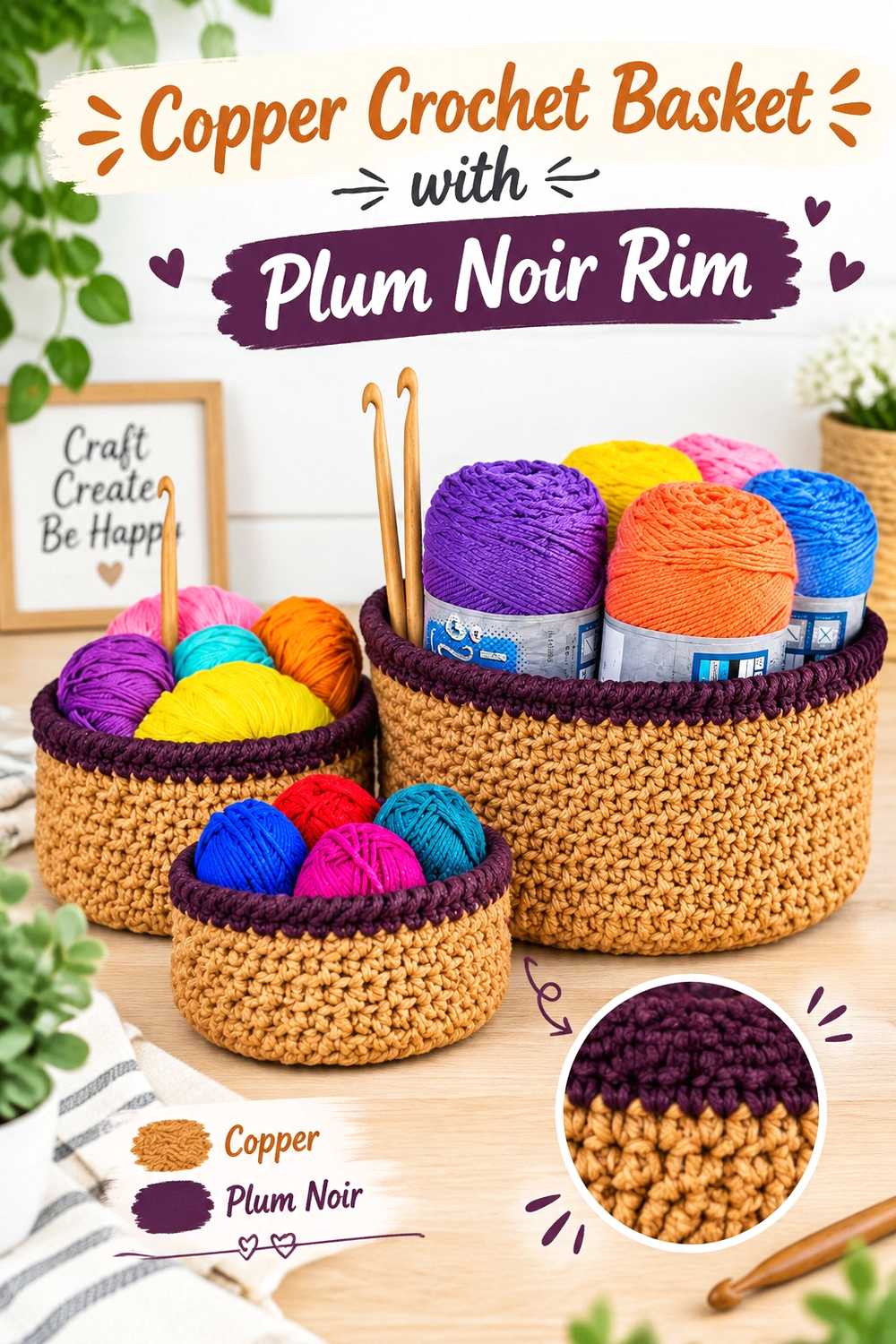
4. Copper Crochet Basket With Plum Noir Rim
 SAVE
SAVEReversing the usual hierarchy gives this project a warmer overall appearance. Copper can cover the main basket body, while Plum Noir creates definition around the opening. Because the rim corresponds with a structural edge, the dark accent has a clear reason for being there.
Let Copper Surround the Main Crochet Basket Body
Keeping Copper continuous around the sides makes the basket look visually unified. If the construction also reveals the base from certain angles, continuing Copper underneath prevents an unnecessary extra division.
For a highly textured basket, compare how the Copper and Plum Noir yarns show that texture before assigning the dominant color.
Use Plum Noir to Define the Crochet Basket Opening
A Plum Noir rim creates a concentrated dark frame at the top instead of distributing dark patches across the entire basket.
If the rim feels too heavy, make the Plum Noir section narrower before introducing additional colors. The two-shade palette works more clearly when each color keeps a specific role.
Creator Credit: naztazia
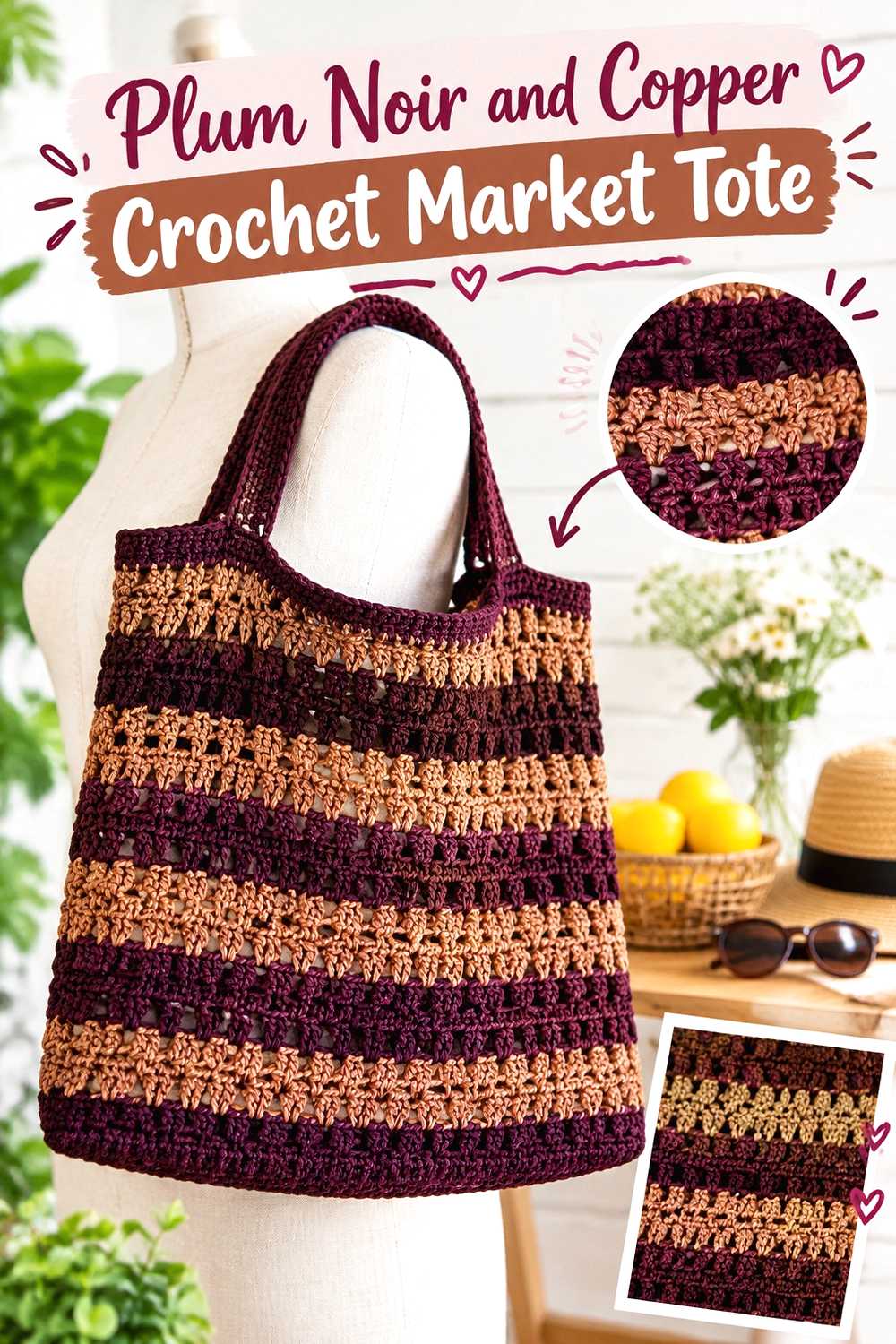
5. Plum Noir And Copper Crochet Market Tote
 SAVE
SAVEA market tote offers several natural zones for color: base, openwork or textured body, upper band, and handles. Plum Noir and Copper can therefore appear in substantial sections without needing a complicated repeat.
Put Plum Noir Where the Crochet Market Tote Needs a Dark Anchor
A Plum Noir base can visually ground the bag and create a strong starting point for a Copper body. Another option is to continue Plum Noir farther up the lower portion before making the color transition.
Avoid reducing Plum Noir to a few isolated stitches near the bottom. On a larger tote, a recognizable color block generally reads more clearly.
Carry Copper Through Enough of the Crochet Market Tote to Balance Plum Noir
Copper can take over the middle body, upper area, or handles depending on how warm you want the finished bag to appear.
If the handles are Copper, repeating Copper somewhere on the bag body keeps them connected to the palette instead of making them look like a separate addition.
Creator Credit: Winding Road Crochet
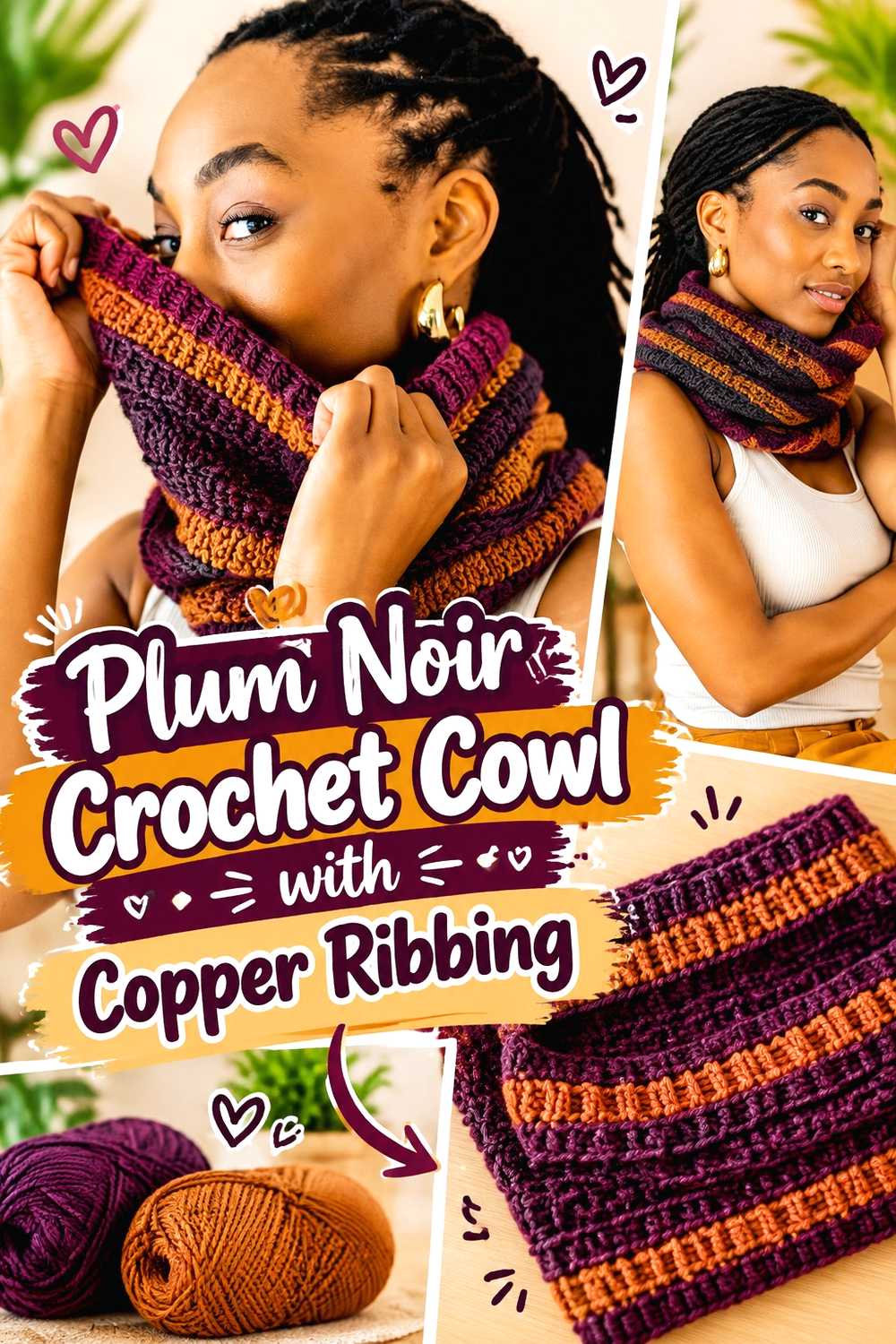
6. Plum Noir Crochet Cowl With Copper Ribbing
 SAVE
SAVEA cowl folds and gathers when worn, which can hide narrow stripes. A simpler division works better here: Plum Noir through most of the body and Copper around clearly defined ribbed or edge sections.
Keep Plum Noir Across the Main Crochet Cowl Surface
A broad Plum Noir body lets any stitch pattern remain visually continuous even when the cowl bunches around the neck.
Before choosing a very dark plum, fold your swatch loosely. Texture that looks obvious while lying flat can become much subtler once the fabric gathers.
Give Copper Crochet Cowl Ribbing Enough Depth to Stay Visible
A tiny Copper edge may vanish when the cowl folds over itself. A more substantial ribbed section can maintain its identity while the accessory is worn.
Repeating Copper at both upper and lower edges can create a stronger frame if the construction allows it, while leaving Plum Noir dominant through the center.
Creator Credit: TL Yarn Crafts
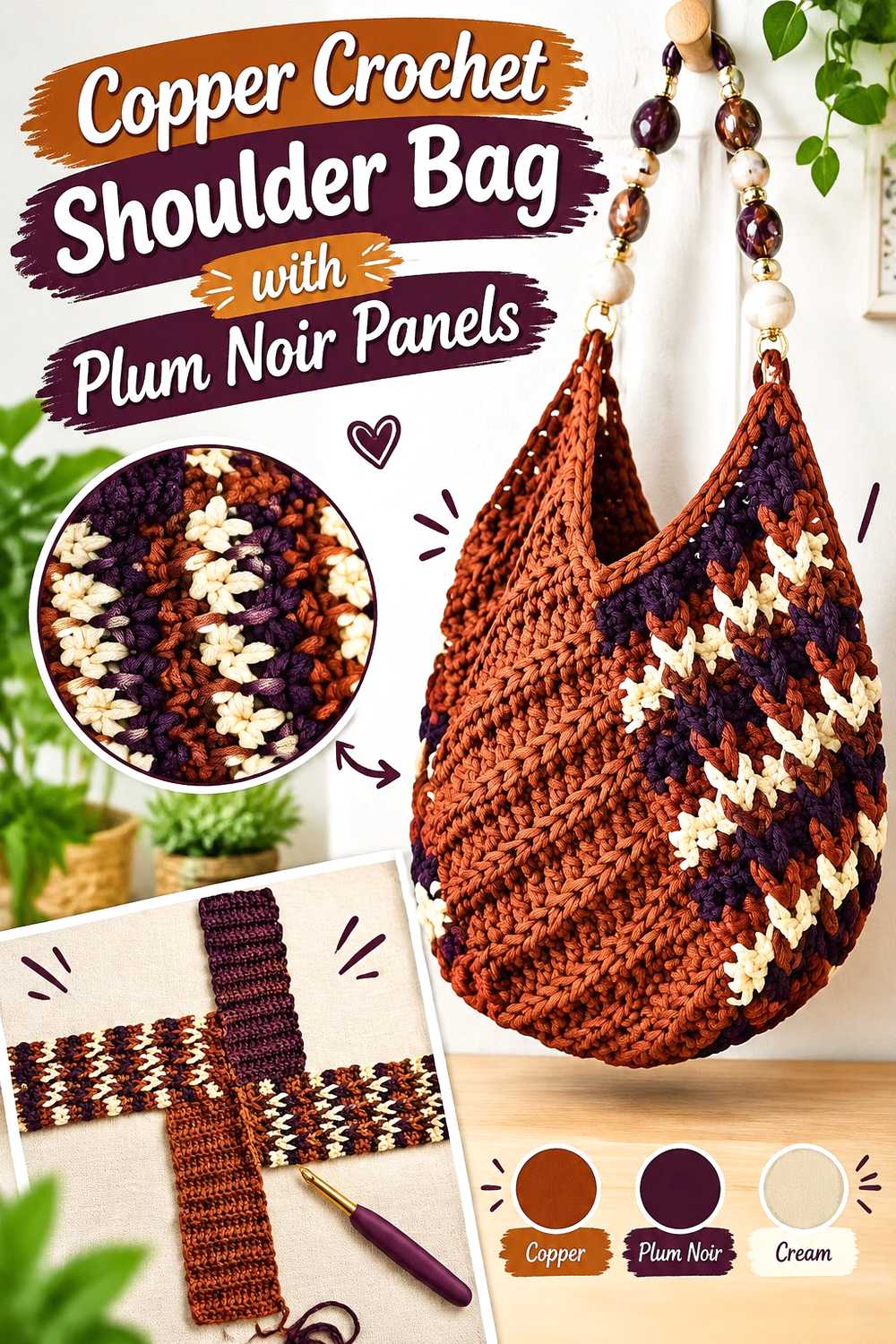
7. Copper Crochet Shoulder Bag With Plum Noir Panels
 SAVE
SAVEThis arrangement shifts Copper into the leading role while allowing Plum Noir to define selected panels. A paneled shoulder bag is particularly suitable because the construction already supplies natural boundaries for large-scale color blocking.
Let Copper Cover the Largest Crochet Shoulder Bag Panels
Use Copper across the most visible panels if you want the bag to read warm first and dark second. Keeping several connected sections Copper creates continuity around the bag.
If the project uses noticeable texture, Copper may also make that surface easier to see than a very dark Plum Noir yarn.
Place Plum Noir Along Structural Crochet Bag Sections
Plum Noir can work on side panels, a lower panel, an upper band, or another section that already has a defined edge.
Aligning the color change with the construction gives the contrast more purpose than inserting a dark block halfway through an otherwise continuous area.
Creator Credit: Brunaticality
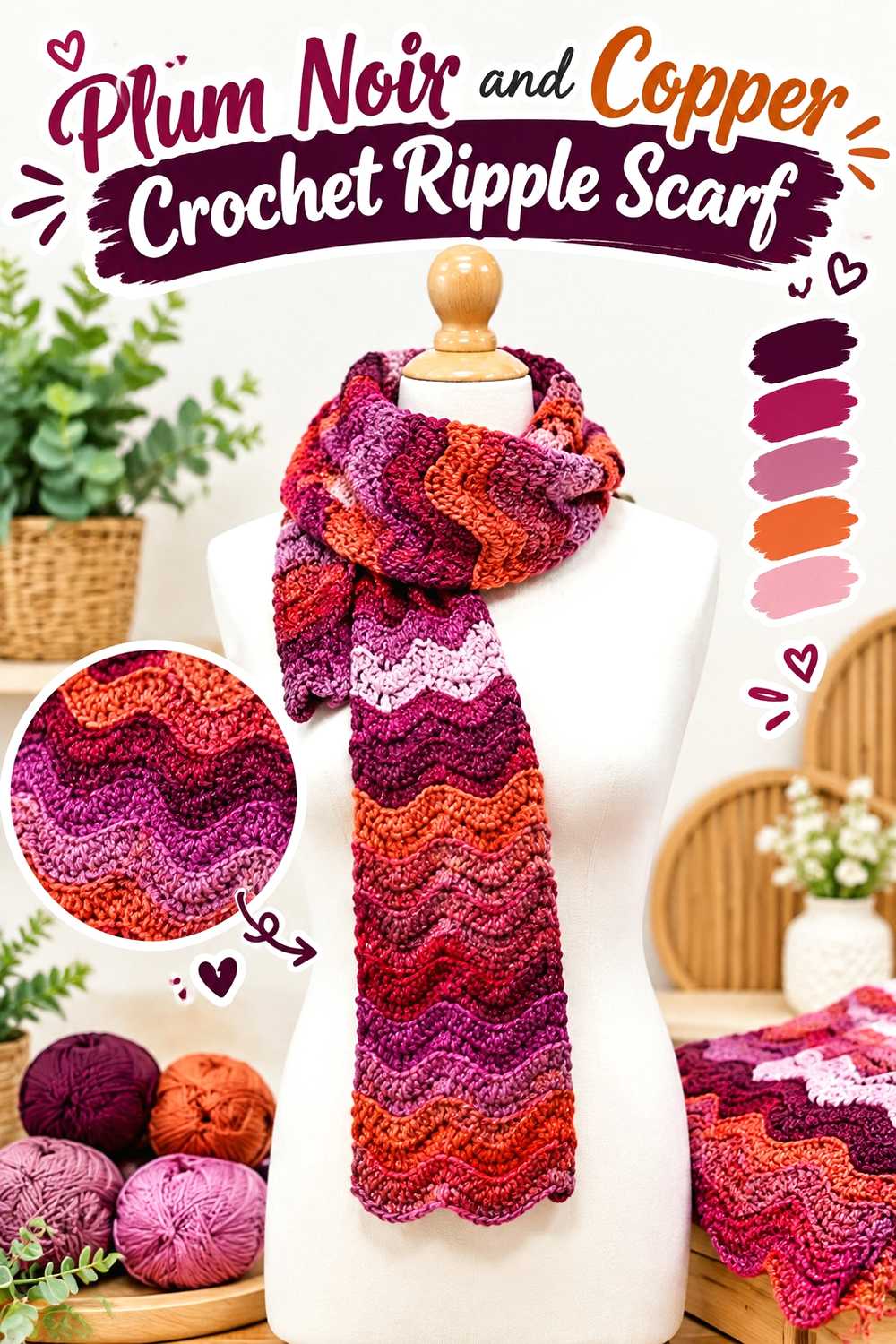
8. Plum Noir And Copper Crochet Ripple Scarf
 SAVE
SAVERipple texture naturally creates lines across a scarf, making it useful for controlled two-color repetition. Plum Noir can occupy the broader sections while Copper follows selected waves, or the colors can trade dominance along the length.
Use Plum Noir to Connect the Crochet Ripple Scarf
Keeping Plum Noir present through most sections gives the scarf a stable visual base. The repeated dark color also helps separate multiple Copper accents from one another.
Avoid changing color at every possible ripple unless a highly striped look is intentional. The stitch movement already adds repetition.
Position Copper Along Crochet Scarf Waves That Need Emphasis
Copper can highlight selected peaks and valleys when used in broad enough sections to remain visible from a distance.
Keep the Copper spacing predictable. Repeating the warm shade at planned intervals usually looks more connected than placing one Copper section near the beginning and never returning to it.
Creator Credit: Bella Coco
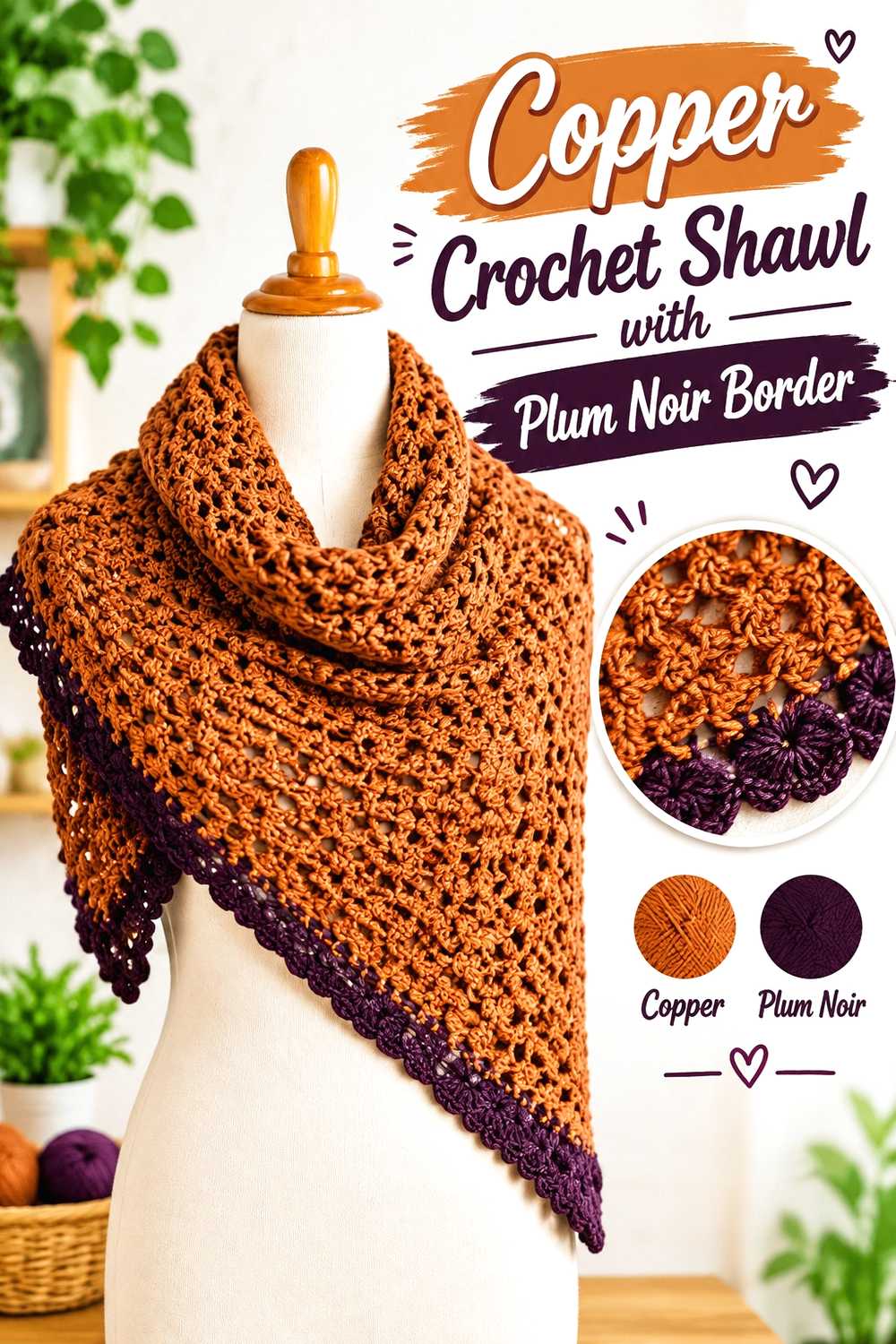
9. Copper Crochet Shawl With Plum Noir Border
 SAVE
SAVEA shawl gives Copper a large uninterrupted area where openwork or textured stitch patterns can remain visible, while Plum Noir can move to the outer edge. This reverses the darker-body approach used in several other projects and gives the same palette a lighter overall balance.
Let Copper Reveal the Main Crochet Shawl Texture
Use Copper across most of the shawl when you want the stitch pattern, open spaces, or repeating fans to carry the visual interest.
If your chosen Copper yarn is considerably lighter than Plum Noir, it can also provide clearer definition across detailed sections.
Use Plum Noir to Give the Copper Crochet Shawl a Defined Edge
A Plum Noir border can create a strong finish around a Copper field. The darker edge becomes especially noticeable along a wide lower section.
Do not automatically make the border extremely wide. If Plum Noir occupies too much of the outer area, it can shift the entire shawl from Copper-led to dark-led.
Creator Credit: Fiber Flux
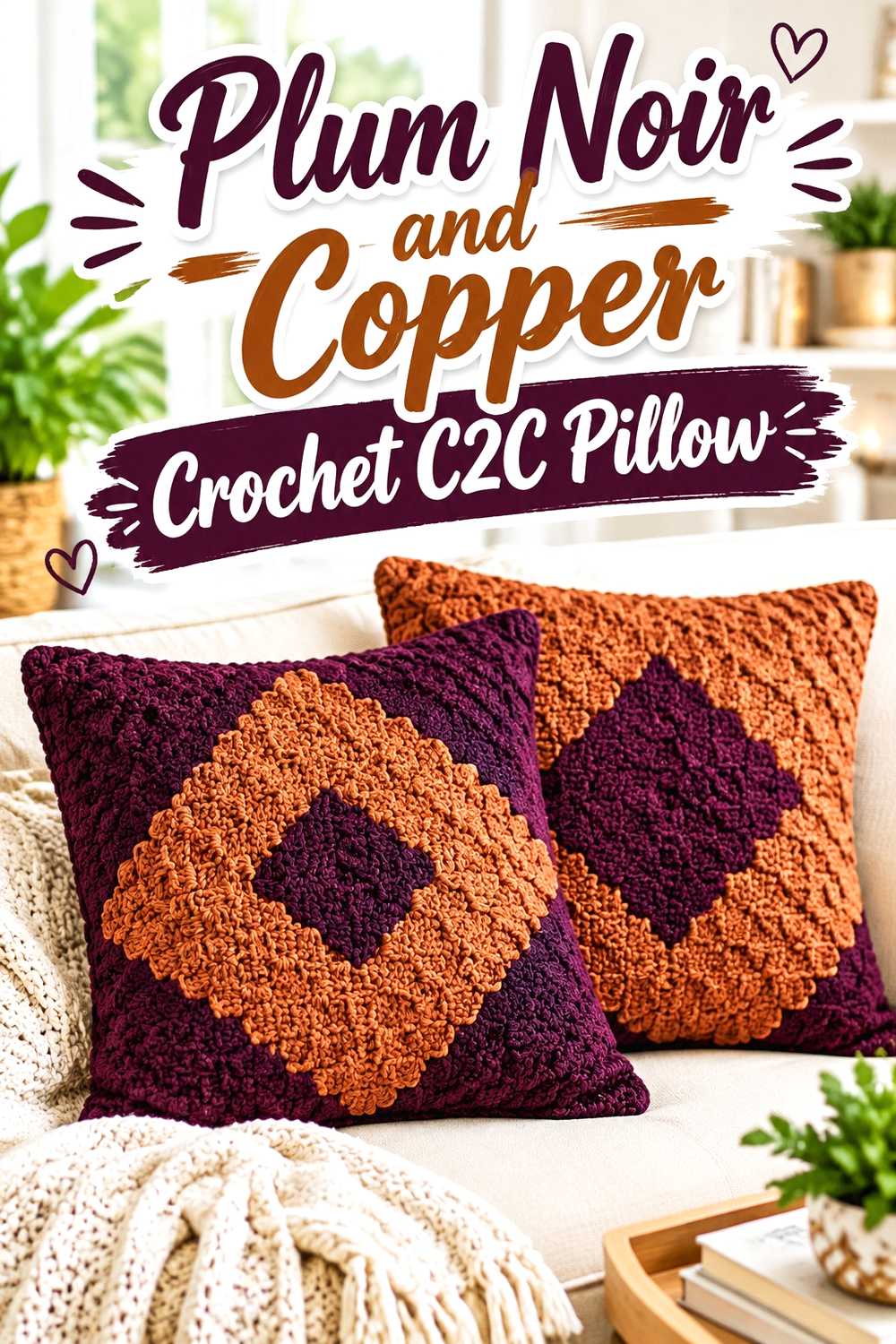
10. Plum Noir And Copper Crochet C2c Pillow
 SAVE
SAVECorner-to-corner construction can turn two colors into clear geometric sections. Plum Noir and Copper work particularly well when the transition follows the diagonal movement rather than appearing as unrelated horizontal stripes.
Use Plum Noir to Anchor One Side of the Crochet C2C Pillow
Concentrate Plum Noir around one corner or a large portion of the pillow face. This gives the darkest shade enough room to establish a strong geometric area.
A small Plum Noir triangle surrounded by Copper will have a very different effect, so decide early which shade should carry the larger portion.
Let Copper Follow the Crochet Pillow’s C2C Geometry
Bring Copper into the design along the same diagonal logic as the construction. That relationship helps the color placement reinforce the pillow rather than compete with it.
View the panel from a few feet away before assembly. Geometric color blocks often read differently at room distance than they do while you are crocheting them.
Creator Credit: The Crochet Crowd
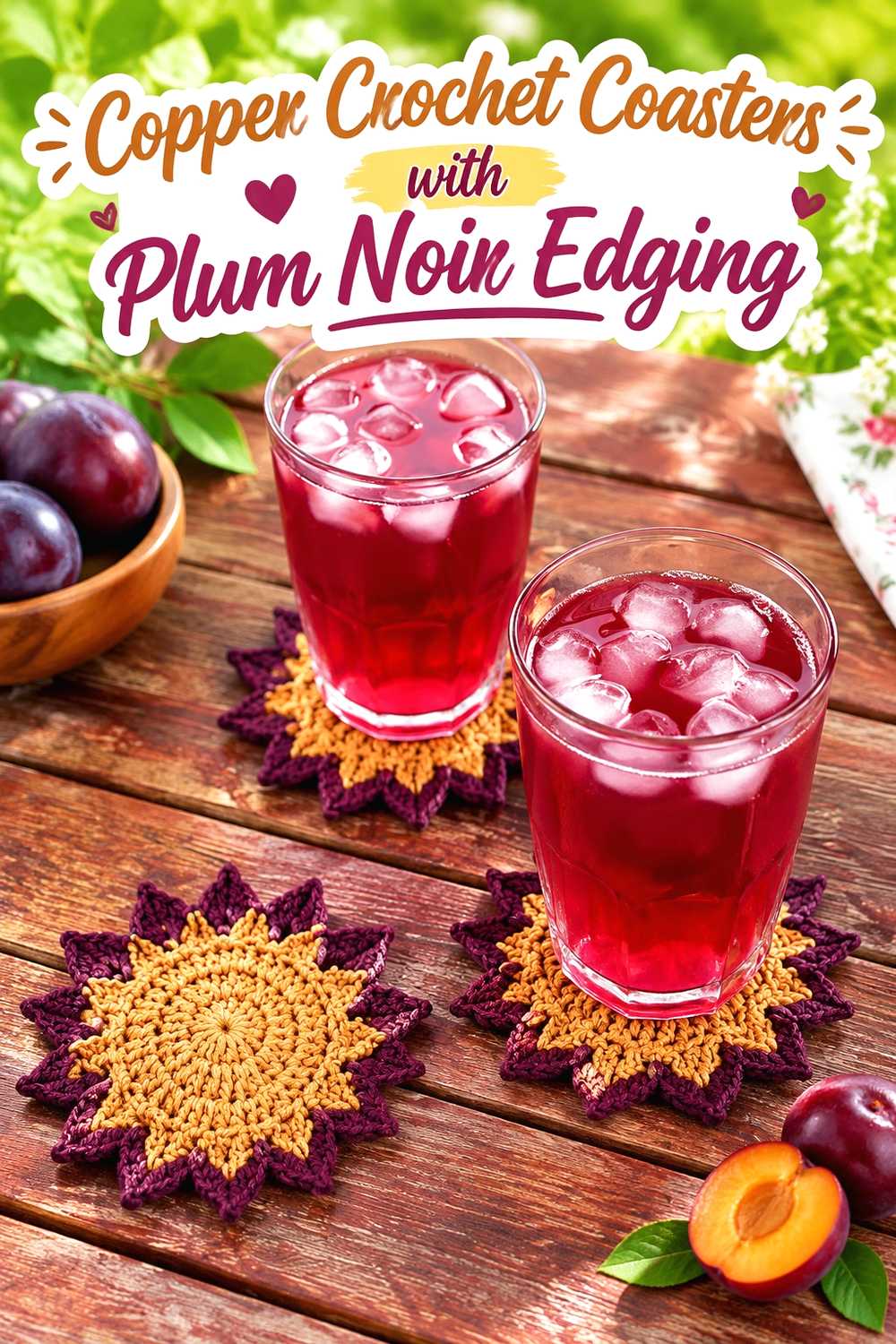
11. Copper Crochet Coasters With Plum Noir Edging
 SAVE
SAVESmall coasters make it possible to use Plum Noir and Copper without needing complicated color distribution. Copper can fill most of each center, while Plum Noir provides a consistent frame around the set.
Keep Copper Dominant in the Crochet Coaster Centers
A coaster offers limited surface space, so Copper needs enough room to remain recognizable when Plum Noir is introduced around the perimeter.
If the border becomes too wide, the center can quickly feel secondary. Compare the proportions after the first coaster before repeating the whole set.
Repeat Plum Noir Edging Across Every Copper Crochet Coaster
Using the same Plum Noir outer edge is an easy way to connect multiple coasters even if their centers have slight variations.
If you want to reverse the colors on one or two pieces, do it as an intentional repeated variation rather than making each coaster follow a completely different balance.
Creator Credit: Jayda InStitches
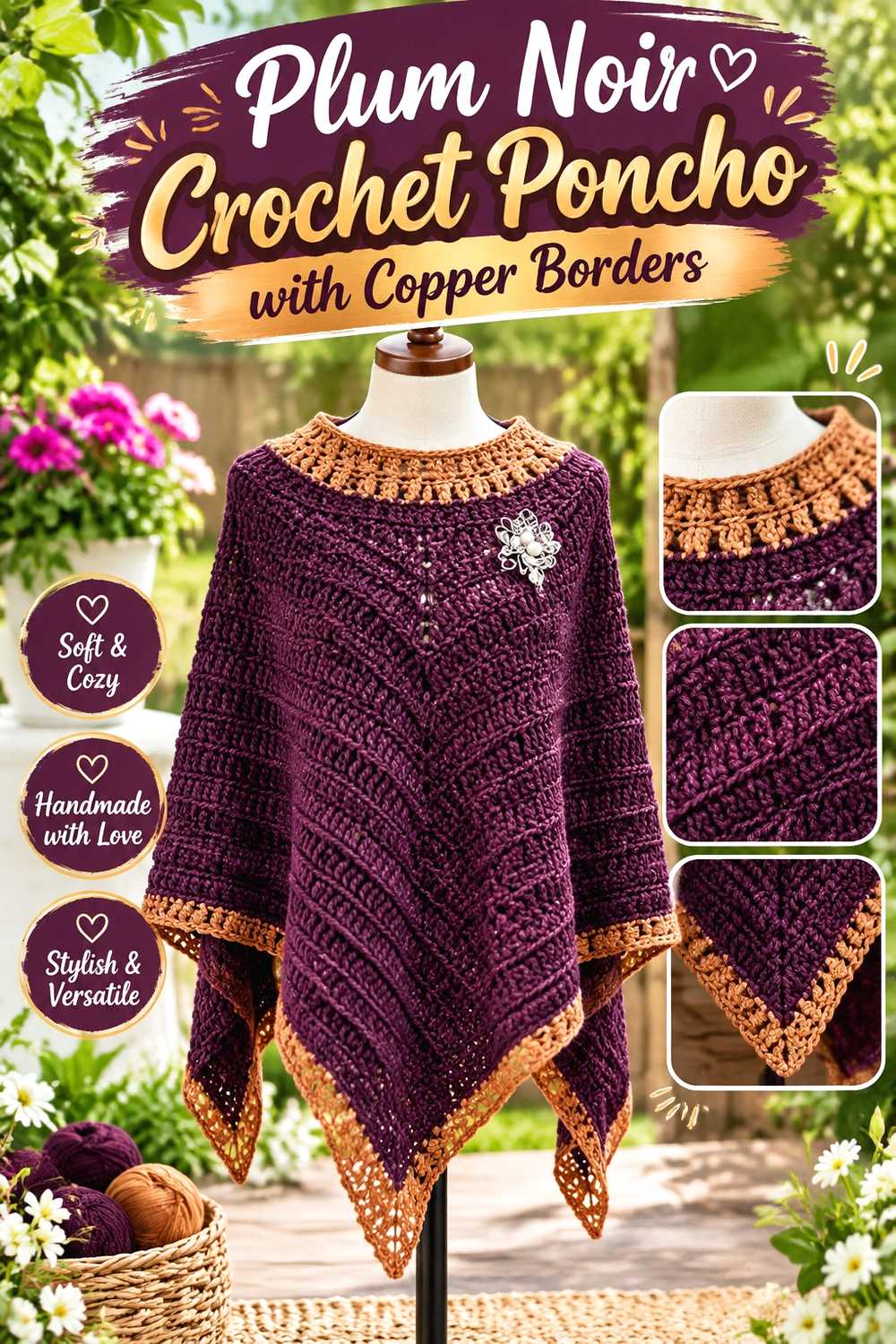
12. Plum Noir Crochet Poncho With Copper Borders
 SAVE
SAVEThe broad body of a poncho makes it suitable for an overwhelmingly Plum Noir palette. Copper can then travel around long edges, the neckline, or selected bands where even a modest accent repeats over enough distance to remain noticeable.
Keep Plum Noir Broad Across the Crochet Poncho Body
Large Plum Noir surfaces preserve the dramatic dark direction of the palette and avoid dividing the garment into many competing stripes.
If the poncho relies heavily on raised or dimensional texture, work a Plum Noir sample first. Moving some of the most detailed sections into Copper is an option when the darker yarn hides too much definition.
Repeat Copper Around More Than One Crochet Poncho Edge
A Copper neckline alone may feel disconnected from an otherwise all-Plum Noir garment. Bringing the same shade back around the hem or another visible finishing edge creates a stronger relationship.
The Copper borders do not have to be identical in width. Repetition matters more than exact symmetry.
Creator Credit: Bag-O-Day Crochet
13. Copper Crochet Sweater Vest With Plum Noir Neckline
 SAVE
SAVEA sweater vest lets Copper dominate a large wearable without requiring color changes across sleeves. Plum Noir can concentrate around the neckline, armhole edging, and lower ribbing to frame the Copper body.
Keep Copper Consistent Across the Crochet Sweater Vest Panels
Using Copper across both front and back panels prevents the vest from becoming visually split. The color then acts as the garment’s clear foundation.
If you want additional variation, introduce Plum Noir through structural finishing rather than inserting unrelated dark blocks into the main panel.
Use Plum Noir Around the Copper Crochet Vest Openings
Neckline and armhole edges provide natural places for Plum Noir. Repeating the dark shade at several openings can frame the Copper body from more than one direction.
A Plum Noir lower band can strengthen the effect further, but check the proportions before making every border equally wide.
Creator Credit: KnitcroAddict
14. Plum Noir Crochet Mesh Sweater With Copper Cuffs
 SAVE
SAVEOpen crochet fabric creates another challenge: the clothing worn underneath can influence how the colors appear. Keeping most of the mesh Plum Noir establishes the main tone, while Copper cuffs and neckline finishing provide warmer areas that remain recognizable despite the open fabric.
Let Plum Noir Unify the Crochet Mesh Sweater Panels
Using Plum Noir continuously across the main body and sleeves helps the openwork read as one connected surface.
Test the mesh against the type of layer you expect to wear underneath. Background color can change how dark open Plum Noir sections appear.
Put Copper on Solid Crochet Sweater Finishing Areas
Cuffs, hems, and neckline finishing are useful places for Copper because denser areas can display the warm color more continuously than open mesh.
Repeating Copper in at least two finishing zones prevents one isolated cuff or neckline section from looking unrelated to the rest of the garment.
Creator Credit: Hey Carrie
15. Plum Noir And Copper Crochet Granny Square Hood
 SAVE
SAVEGranny squares naturally divide color into centers, rounds, and joins, so this project can give Plum Noir and Copper more equal influence. Instead of treating Copper as trim, use both shades repeatedly across the individual squares.
Alternate Plum Noir and Copper Roles Across Crochet Granny Squares
One square can begin with Plum Noir and move outward into Copper, while another can reverse the order. Repeating those arrangements creates variation without introducing a third color.
Keep the sequence controlled. Randomly changing the balance of every square can make a compact hood look more fragmented than a larger blanket.
Choose Plum Noir or Copper for the Crochet Hood Joins
A visible joining color can affect the whole finished piece. Plum Noir joins create darker outlines between the squares, while Copper joins keep more warmth running through the grid.
Before joining everything, place several completed squares together with both candidate yarns between them. The join color can have much more visual impact than expected.
Creator Credit: PassioKnit Kelsie
16. Copper And Plum Noir Crochet Mosaic Pillow
 SAVE
SAVEA mosaic-style pillow lets both colors participate directly in the surface pattern. Copper can form the warmer background while Plum Noir creates the darker repeated motif, giving the pillow more detailed contrast than the broad C2C color blocks used earlier.
Give Copper Enough Crochet Pillow Background Around Plum Noir Motifs
The background needs enough uninterrupted Copper area for the Plum Noir shapes to remain recognizable. If dark motifs become too large or too densely repeated, the pillow can quickly become Plum Noir-dominant.
Assess the entire repeat instead of judging one small motif in isolation.
Check Plum Noir and Copper Contrast Before Starting the Crochet Mosaic
Detailed motifs depend more heavily on value separation than large panels do. If your Plum Noir and Copper yarns appear very similar in grayscale, some of the mosaic pattern may visually merge.
Preserve the palette by adjusting shade depth rather than automatically adding a third color. A lighter or more muted Copper can maintain the two-color concept while improving separation from Plum Noir.
Creator Credit: MJ’s Off The Hook Designs
Comparing Plum Noir and Copper Crochet Color Directions
The same palette changes considerably depending on how the two colors divide the surface.
| Color Direction | Ideas to Consider | Plum Noir Role | Copper Role |
|---|---|---|---|
| Plum Noir-dominant | Blanket, cardigan, beanie, cowl, poncho, mesh sweater | Main body or largest surface | Bands, cuffs, borders, ribbing |
| Copper-dominant | Basket, shawl, coasters, sweater vest | Rim, border, neckline, edging | Main body or center |
| Balanced blocks | Market tote, shoulder bag, scarf, C2C pillow | Large contrasting sections | Large contrasting sections |
| Repeated motif contrast | Granny square hood, mosaic pillow | Motifs, joins, square sections | Backgrounds, alternating motifs |
Choose a Plum Noir-dominant direction when you want the finished crochet item to remain mostly dark with concentrated warm accents. Copper-led ideas make the palette noticeably warmer, while geometric and motif-based projects allow the two shades to share the surface more evenly.
Conclusion
Plum Noir and Copper do not need equal amounts to feel like a complete two-color palette. In many of these projects, the strongest arrangement comes from giving one shade a clear dominant role and repeating the second where the item’s structure naturally creates an edge, panel, motif, band, cuff, or border.
Choose the blanket, poncho, cardigan, cowl, or mesh sweater when you want Plum Noir to control most of the finished surface. The basket, shawl, coasters, and sweater vest shift the emphasis toward Copper. For a more balanced treatment, the market tote, C2C pillow, granny square hood, and mosaic pillow give both colors substantial visual jobs.
Before beginning a larger project, compare the actual yarns together and test them in the intended stitch pattern. Their lightness, depth, and texture visibility will determine whether your specific Plum Noir and Copper combination produces soft blending or stronger definition.
Frequently Asked Questions
Do Plum Noir and Copper work together in crochet?
Yes, particularly when the two shades are assigned clear roles. Plum Noir can provide the dark foundation while Copper creates a warmer supporting color, or the arrangement can be reversed.
The important issue is not simply whether purple and copper belong together, but how much of each shade appears and whether their values are separated enough for the chosen crochet design.
Should Plum Noir or Copper be the dominant crochet color?
Use Plum Noir as the dominant shade when you want a darker overall blanket, garment, bag, or pillow. Let Copper dominate when you want the project to read warmer and use Plum Noir mainly for framing and definition.
For granny squares, C2C projects, checks, or mosaic surfaces, both shades can take more balanced roles because the construction organizes the color changes.
How can I tell whether Plum Noir and Copper have enough contrast?
Place the yarns beside each other and view them from a normal distance. You can also photograph them and turn the image to grayscale.
If the two shades become almost identical in grayscale, they have similar light-and-dark values. That can work for subtle blocks, but small motifs and narrow borders may need greater separation.
Where should Copper go on a mostly Plum Noir crochet project?
Use Copper where the crochet item already has natural divisions. Cuffs, necklines, bag panels, blanket bands, borders, brims, handles, and pillow sections are useful choices.
Repeating Copper in more than one visible location usually makes the accent feel better integrated than placing one isolated patch of color.
Can I use Plum Noir and Copper for detailed crochet colorwork?
Yes, but test the contrast first. Detailed mosaic motifs, small checks, or compact granny-square color changes rely more heavily on light-and-dark separation than large blocks do.
If the shades merge, try a lighter Copper or a deeper Plum Noir while keeping the same overall palette.
What can I substitute for Plum Noir?
Choose another deep plum, muted aubergine, or dark purple that maintains the same visual role. Pay particular attention to darkness rather than matching a shade name exactly.
If your substitute is substantially lighter, reconsider the color balance because Copper may no longer function as the lighter supporting shade.
What can I substitute for Copper?
Look for a warm muted orange-brown, cinnamon-toned, rust-leaning, or copper-like shade that maintains clear separation from Plum Noir.
The replacement does not need to match an exact commercial yarn color. Preserve its warmth, relative lightness, and role within the project instead.