
Crochet doily shoulder bags can range from delicate lace accessories to sturdier round bags that borrow the radial symmetry of a traditional doily. That gives color an important job. A light background can make lace openings easier to see, a dark outer round can define a circular motif, and a contrasting lining can completely change how an openwork doily appears.
The ideas below deliberately use different palette strategies. Some keep the bag nearly monochromatic so texture does the work. Others separate the center, outer rounds, gusset, strap, or decorative flower with contrasting colors.
The supporting tutorials also cover a wider doily-inspired family: round shoulder bags, mandala bags, granny circles, flower motifs, textured medallions, and circular purses. Use the original tutorial for construction while treating the suggested colors as independent palette adaptations.
Quick List
- Ivory And Sage Crochet Radial Doily Shoulder Bag
- Dusty Rose And Burgundy Crochet Granny Circle Doily Shoulder Bag
- Cream And Terracotta Crochet Round Doily Shoulder Bag
- Mustard And Chocolate Crochet Flower Motif Doily Shoulder Bag
- Teal And Oatmeal Crochet Circle Motif Doily Shoulder Bag
- Blush And Taupe Crochet Boho Doily Shoulder Bag
- Charcoal And Cream Crochet Zippered Doily Shoulder Bag
- Plum And Mauve Crochet Textured Flower Doily Shoulder Bag
- Olive And Rust Crochet Buttoned Doily Shoulder Bag
- Navy And Ivory Crochet Circular Doily Shoulder Bag
- Black And Camel Crochet Spiral Doily Shoulder Bag
- Forest Green And Natural Crochet Rope Doily Shoulder Bag
- Burnt Orange And Beige Crochet Button Loop Doily Shoulder Bag
- Wine And Cream Crochet Chain Strap Doily Shoulder Bag
- Lavender And Oatmeal Crochet Three Motif Doily Shoulder Bag
- Sage And Peach Crochet Flower Applique Doily Shoulder Bag
- Denim Blue And Cream Crochet Color Ring Doily Shoulder Bag
- Deep Teal And Sand Crochet Mandala Doily Shoulder Bag
Choose Doily Bag Colors Around Lace Visibility
Open crochet behaves differently from a dense bag fabric because the space behind the stitches becomes part of the design. Pale lace over a dark lining can make every arch and petal obvious, while a lining close to the yarn color produces a quieter surface.
For a strongly patterned doily face, first decide whether you want the stitch pattern or the color contrast to dominate. Highly contrasting centers, borders, lining, and straps can all compete with an already intricate motif.
Use Borders and Straps to Repeat the Accent Color
A shoulder bag usually has several natural places for secondary colors: outer rounds, gussets, openings, straps, tassels, and closures. Repeating one accent in two or three of those areas can connect the palette more effectively than inserting unrelated colors into the middle of a doily.
The strap deserves particular attention because it creates a long visual line. A strongly contrasting strap can become as noticeable as the bag itself, while a strap matching the outer motif rounds lets the decorative face remain dominant.
Let the Lining Support the Crochet Doily Palette
If the doily is open enough to reveal fabric underneath, lining color becomes part of the exterior palette. A similar lining color emphasizes texture gently. A contrasting lining makes holes, petals, spokes, and arches considerably more graphic.
Choose the lining after seeing the finished crochet whenever possible. Small yarn samples cannot fully predict how much background fabric will show through a complete circular motif.
1. Ivory And Sage Crochet Radial Doily Shoulder Bag
 SAVE
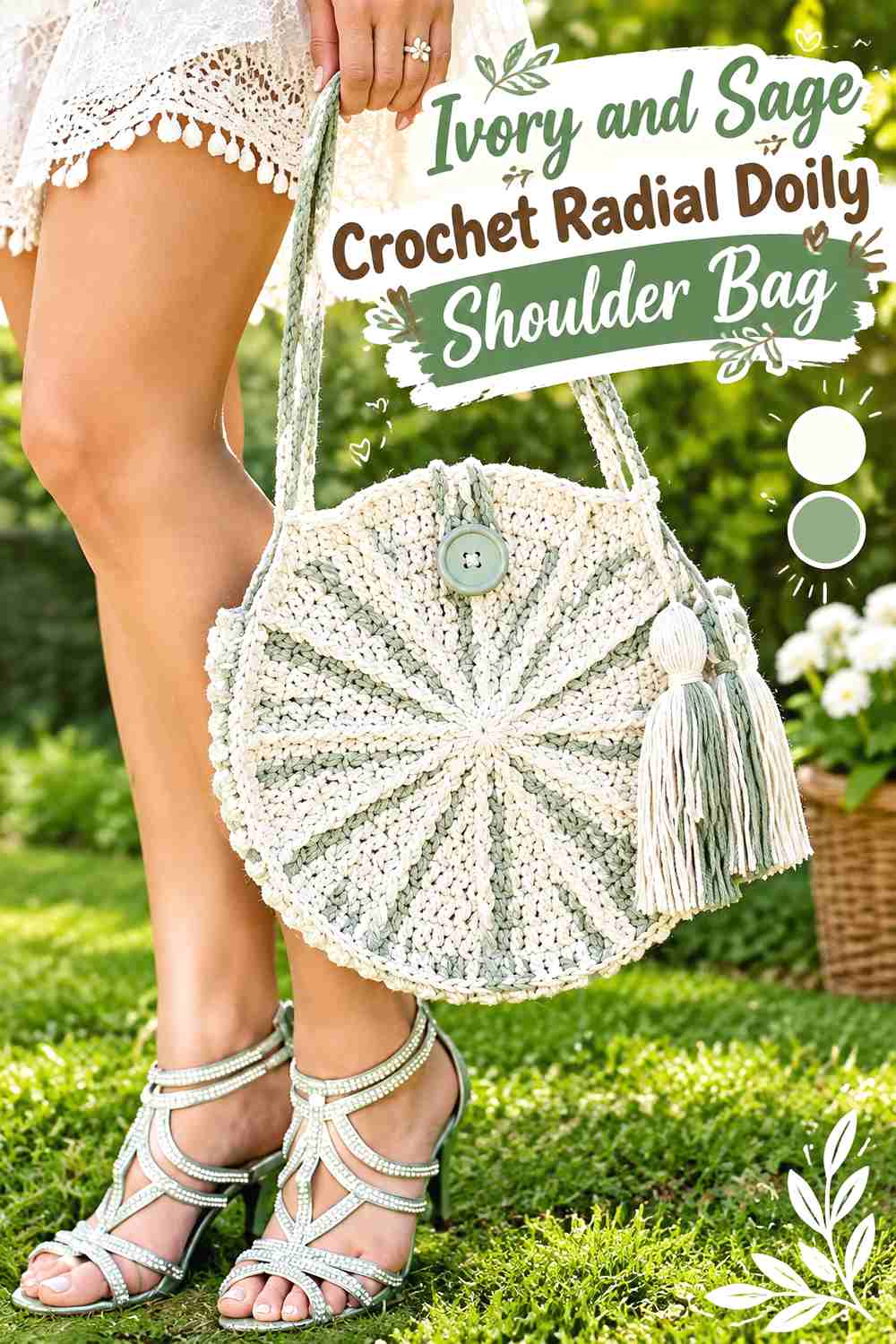
Ivory and sage suit a radial doily bag when you want the center-out structure to remain more important than high color contrast. Keep most of the circular face ivory and use sage around selected outer sections, the closure area, or the strap. The pale center allows raised spokes and shadows to remain visible without introducing several competing hues.
Ivory Keeps the Crochet Doily Spokes Visible
Use ivory across the main radial face when the stitch pattern already creates strong lines from the center outward. A continuous light field allows shadows around raised stitches to provide definition.
If you introduce sage too frequently between the spokes, color changes can begin competing with the radial texture. Reserve sage for a larger, clearly defined area instead.
Sage Can Connect the Ivory Doily Border and Strap
Repeating sage around the outer edge and again in the shoulder strap gives the supporting color two structural roles.
Check the balance before adding more sage to the center. If the border and strap already create a clear frame, the ivory motif may need no additional color interruption.
Creator Credit: naztazia — YouTube tutorial
2. Dusty Rose And Burgundy Crochet Granny Circle Doily Shoulder Bag
 SAVE
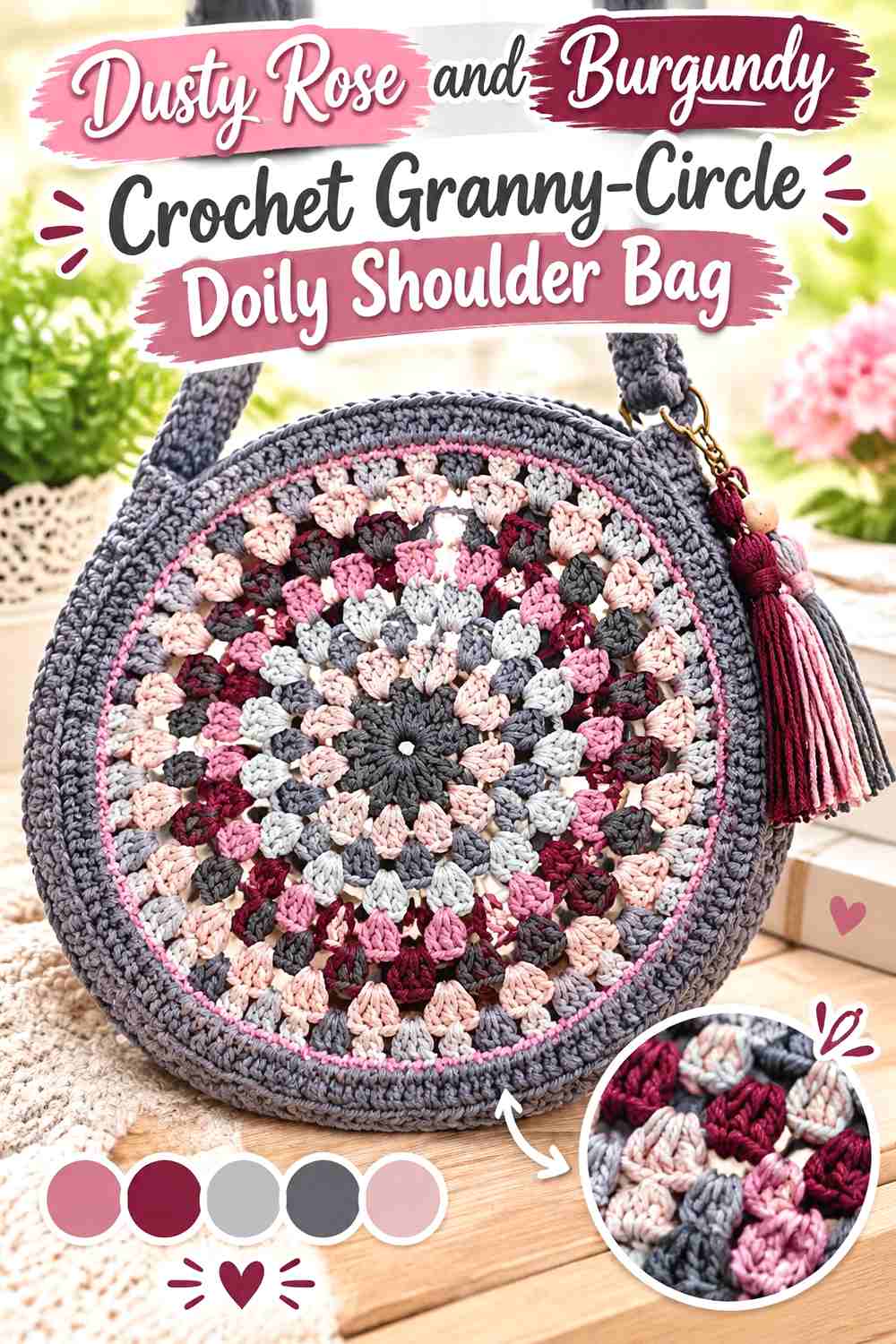
A granny-circle bag is a good place to use changing rings of dusty rose and burgundy because the construction already emphasizes repeated rounds. Let dusty rose occupy the wider areas and use burgundy selectively toward the center, outer frame, or strap.
Dusty Rose Can Soften Burgundy Granny-Circle Rings
Dusty rose gives darker burgundy rounds enough space to remain distinct without turning the entire doily face dark.
Before crocheting the second panel, compare the first panel from a distance. If burgundy already dominates, increase the dusty rose coverage instead of adding more narrow dark rings.
Burgundy Can Frame the Dusty Rose Crochet Doily Bag
An outer burgundy round can define the circular silhouette and provide a logical color for the shoulder strap.
Using the same burgundy at the edge and strap also reduces the need for a third color at the joining area.
Creator Credit: Rich Textures Crochet — YouTube tutorial
3. Cream And Terracotta Crochet Round Doily Shoulder Bag
 SAVE
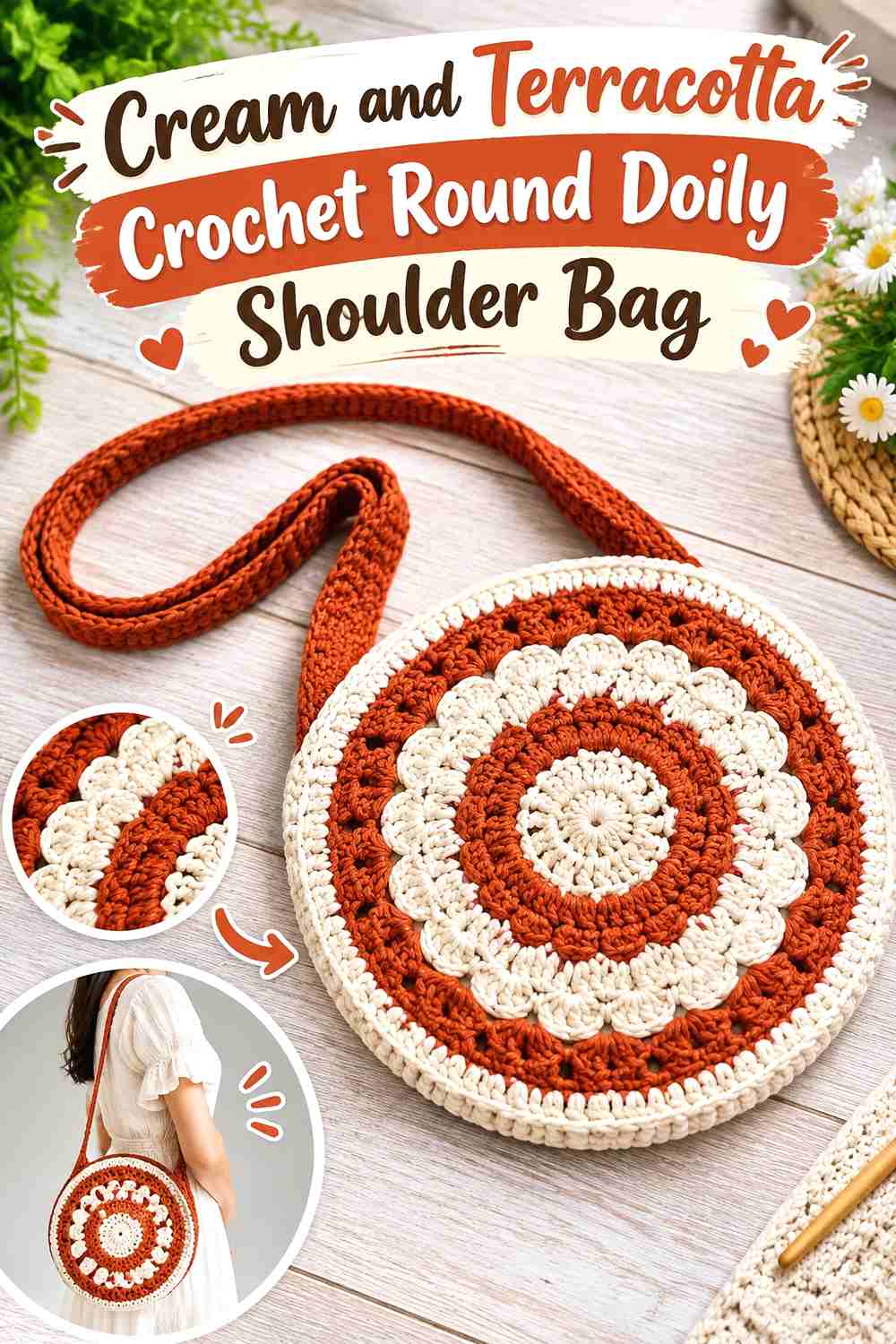
Cream and terracotta create a warmer doily-inspired bag without requiring an elaborate multicolor sequence. Cream can cover most of both circles, while terracotta marks the outer rounds, side section, or strap.
Cream Gives Terracotta Doily Details Strong Separation
Cream works well behind a terracotta center or outer ring because the light background keeps the warmer accent easy to locate.
For a simple radial pattern, avoid adding thin terracotta stripes everywhere. Larger uninterrupted cream sections let the circular construction read more clearly.
Terracotta Can Define the Cream Crochet Shoulder Bag Edge
Place terracotta where the round body transitions into the joining or side section. That gives the accent a structural reason to be there.
Repeating terracotta in the strap can complete the frame without changing the cream-led character of the bag.
Creator Credit: Creggy’s Crochet — YouTube tutorial
4. Mustard And Chocolate Crochet Flower Motif Doily Shoulder Bag
 SAVE
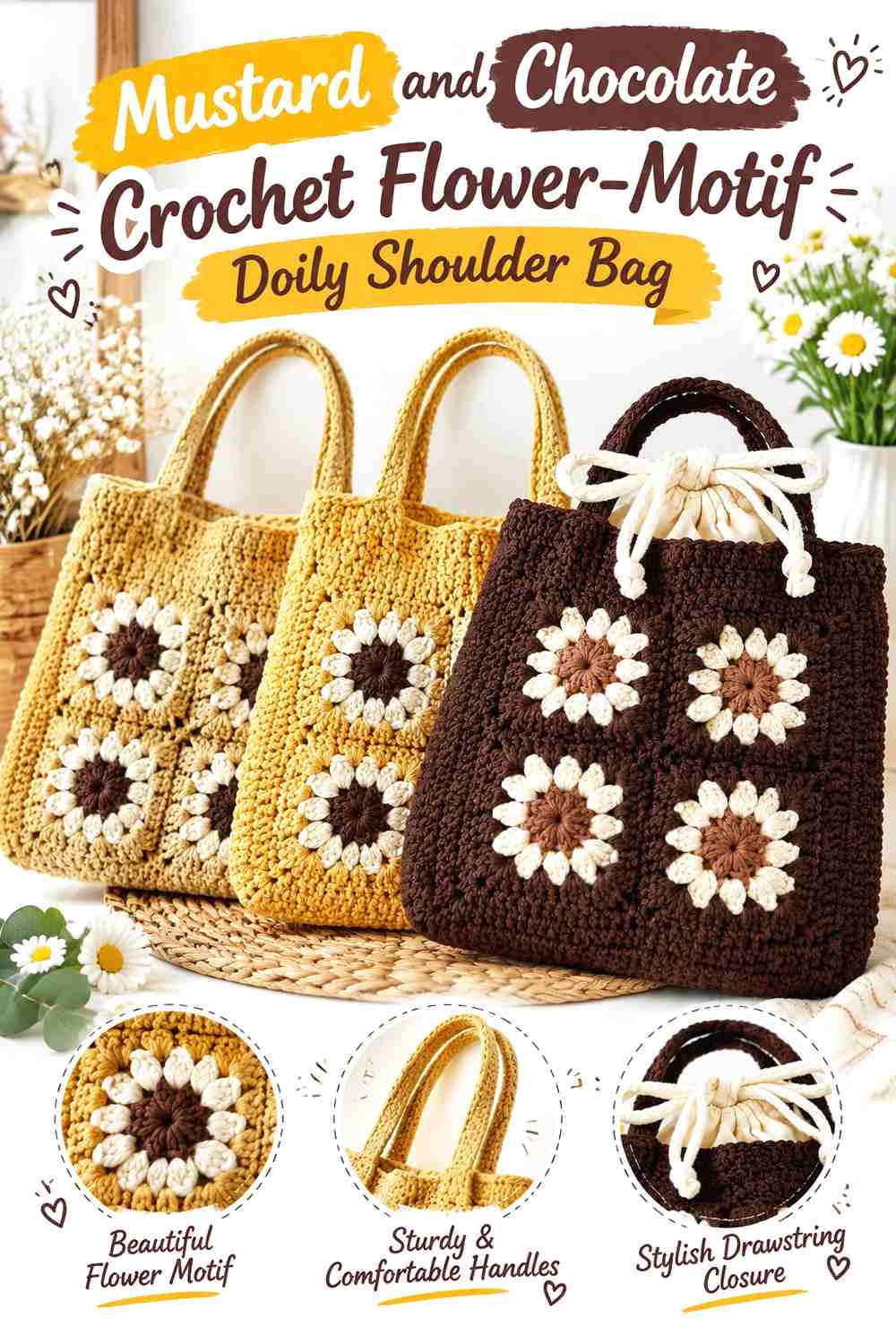
A flower-motif bag can distribute mustard and chocolate according to the motif anatomy instead of alternating colors randomly. Mustard works well toward the petals or centers, while chocolate can create a darker frame around the motifs and continue into the handle.
Mustard Should Stay Visible Inside Chocolate Crochet Motifs
Give mustard enough surface area that the flower centers or petals remain recognizable from normal carrying distance.
If the motif contains several small sections, putting chocolate between every mustard detail may fragment the flower. Keep the warm color grouped where the floral shape needs continuity.
Chocolate Can Organize the Mustard Doily Shoulder Bag
Chocolate around motif edges or joins can visually connect several floral pieces into one bag.
Repeating it at the handle further separates structural areas from decorative mustard flowers without adding another neutral.
Creator Credit: KOTOKANA [Knitting] — YouTube tutorial
5. Teal And Oatmeal Crochet Circle Motif Doily Shoulder Bag
 SAVE
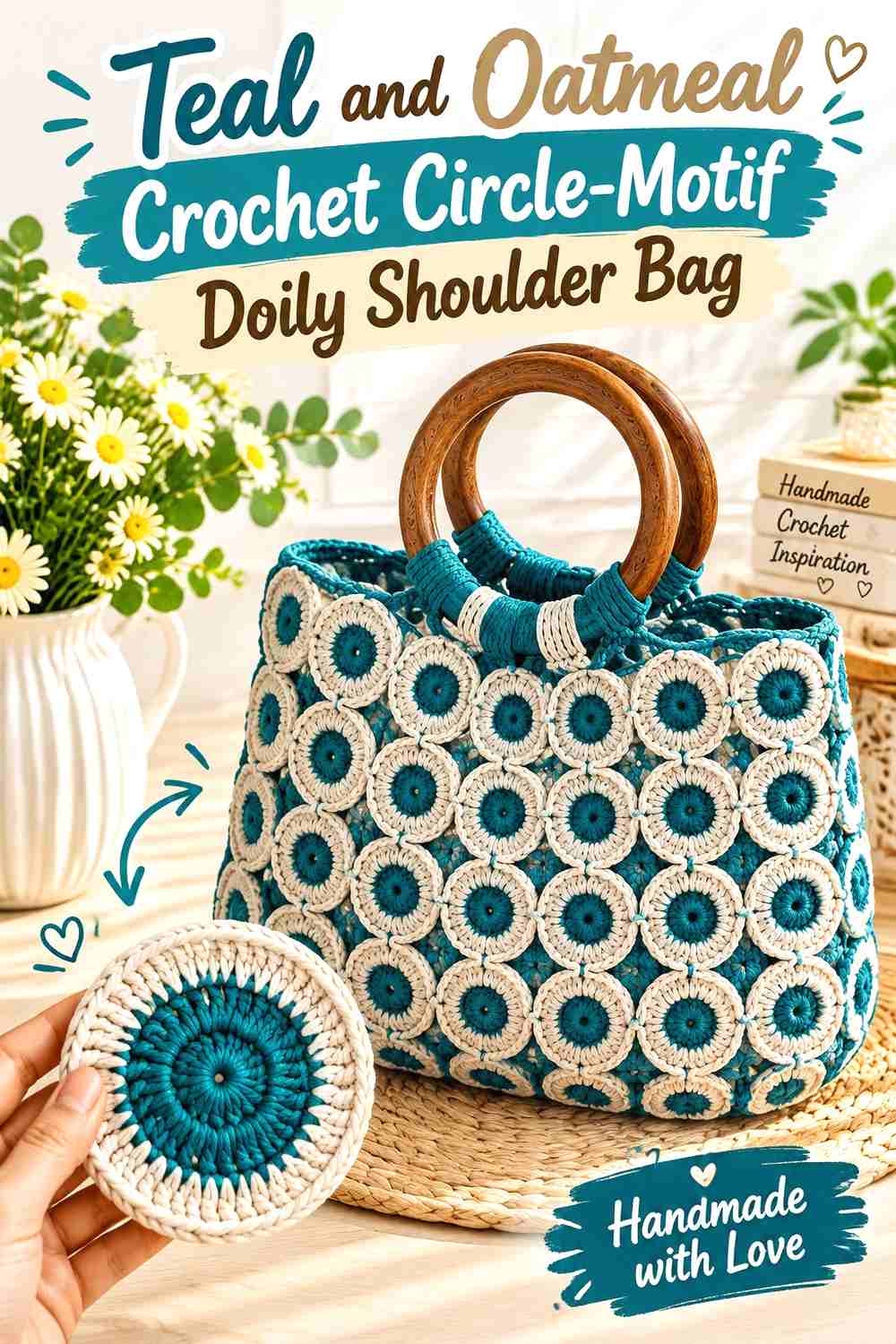
Teal and oatmeal offer stronger light-and-dark separation for a bag assembled from circular motifs. Oatmeal can provide the background or joining field, while teal becomes the color that defines each medallion.
Teal Can Make Each Oatmeal Crochet Circle Motif Distinct
Use teal consistently in the same portion of repeated motifs if you want the circles to look related rather than individually improvised.
A teal outer motif round is especially effective when oatmeal appears between the circles because the darker boundary prevents adjacent light areas from visually merging.
Oatmeal Keeps Teal Doily Motifs From Becoming Too Heavy
Leaving meaningful oatmeal space around teal circles gives the eye a resting area and preserves the individual motif outlines.
If teal begins occupying most of the finished surface, switch the strap or outer trim to oatmeal to restore the lighter balance.
Creator Credit: Knitting Home — YouTube tutorial
6. Blush And Taupe Crochet Boho Doily Shoulder Bag
 SAVE
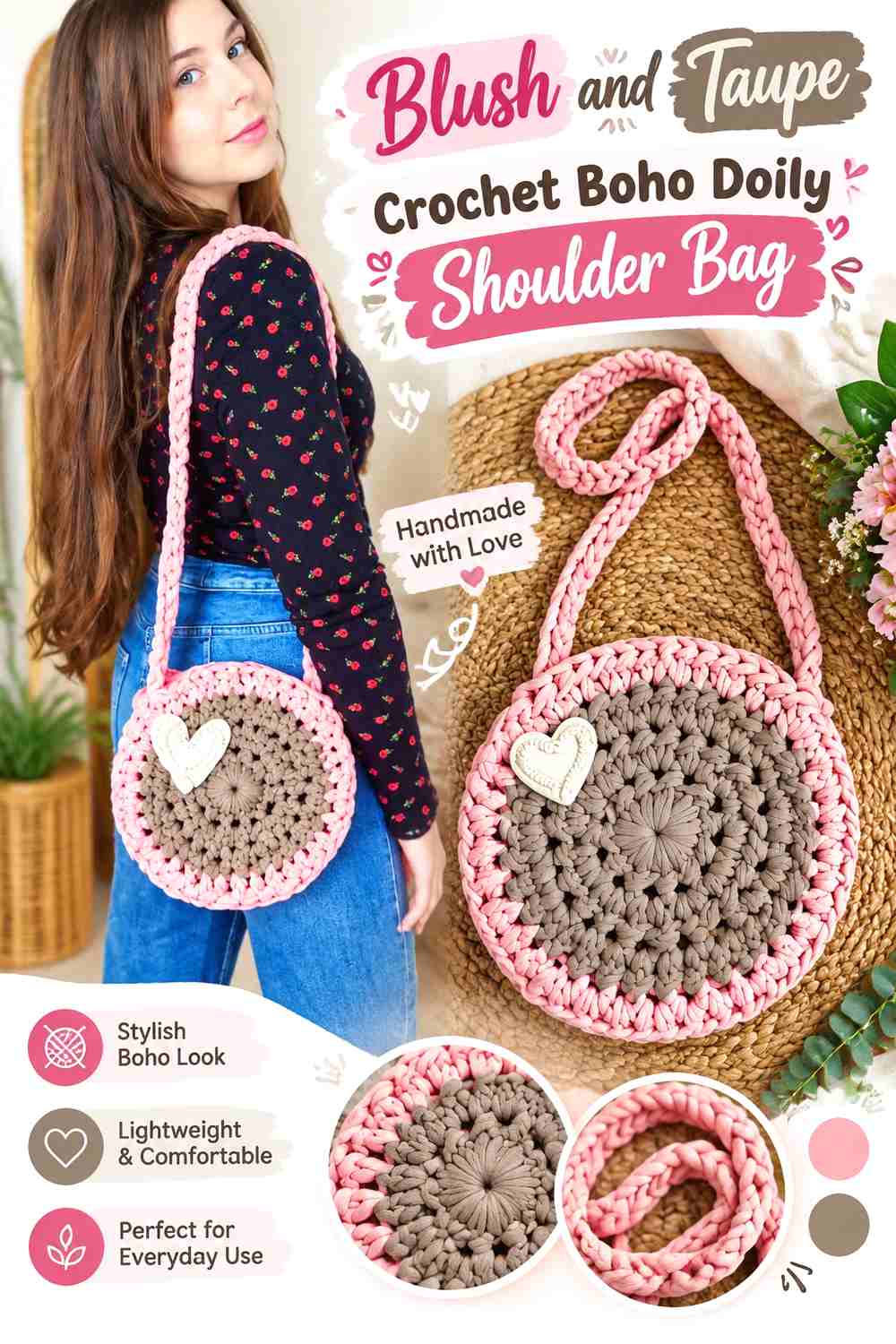
Blush and taupe create a muted alternative to bright festival palettes. Use blush across the round panels and taupe at the perimeter, strap, or lining-facing edges so the bag retains a soft look without losing its circular outline.
Blush Can Lead the Crochet Doily Bag Without Looking Flat
A blush main field benefits from visible radial or circular stitch changes because those shadows add definition without requiring extra colors.
If the motif is simple, use taupe in one substantial outer area instead of scattering tiny taupe accents through the blush body.
Taupe Can Ground the Blush Crochet Doily Strap
A taupe strap gives the muted palette a slightly darker structural line and keeps the carrying section visually separate from the decorative face.
Repeating taupe around the bag opening helps the strap feel connected rather than attached as a completely independent element.
Creator Credit: Selina Veronique Crochet — YouTube tutorial
7. Charcoal And Cream Crochet Zippered Doily Shoulder Bag
 SAVE
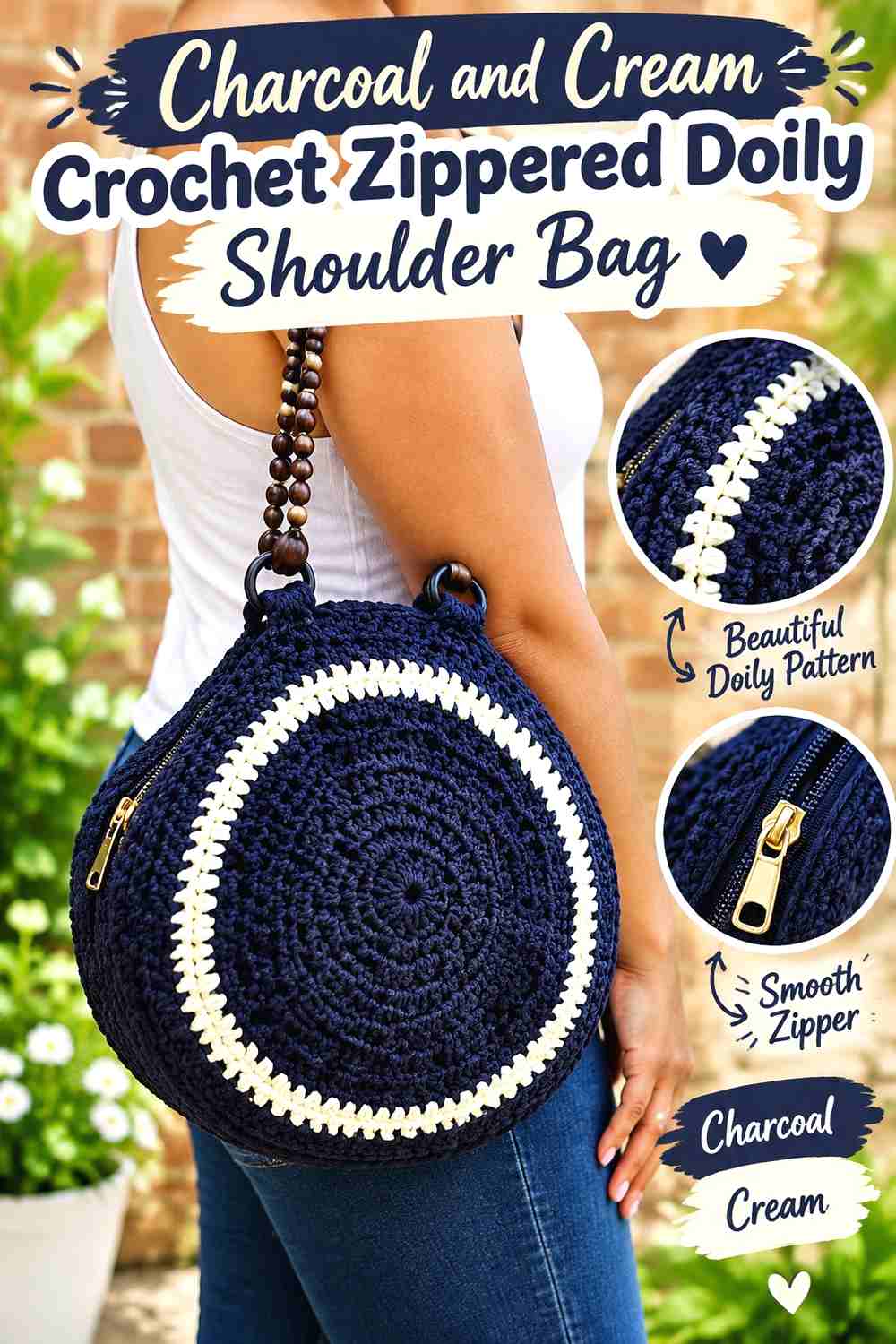
A zipper gives a round bag a strong horizontal feature at the top, making charcoal and cream particularly useful. Cream can cover most of the circular face, while charcoal defines the zipper area, perimeter, and carrying details.
Cream Keeps the Charcoal Crochet Doily Face From Feeling Too Dark
Keep cream across the central medallion if you want radial stitches or open areas to remain easy to see.
Charcoal can then be concentrated near functional components rather than occupying every decorative round.
Charcoal Can Integrate the Cream Doily Bag Zipper
A charcoal upper section can visually absorb a dark zipper more naturally than placing the zipper directly against a completely cream edge.
Continue a small amount of charcoal around the perimeter or handle area so the dark top does not look disconnected from the rest of the bag.
Creator Credit: Ahsel Anne by Felicia — YouTube tutorial
8. Plum And Mauve Crochet Textured Flower Doily Shoulder Bag
 SAVE
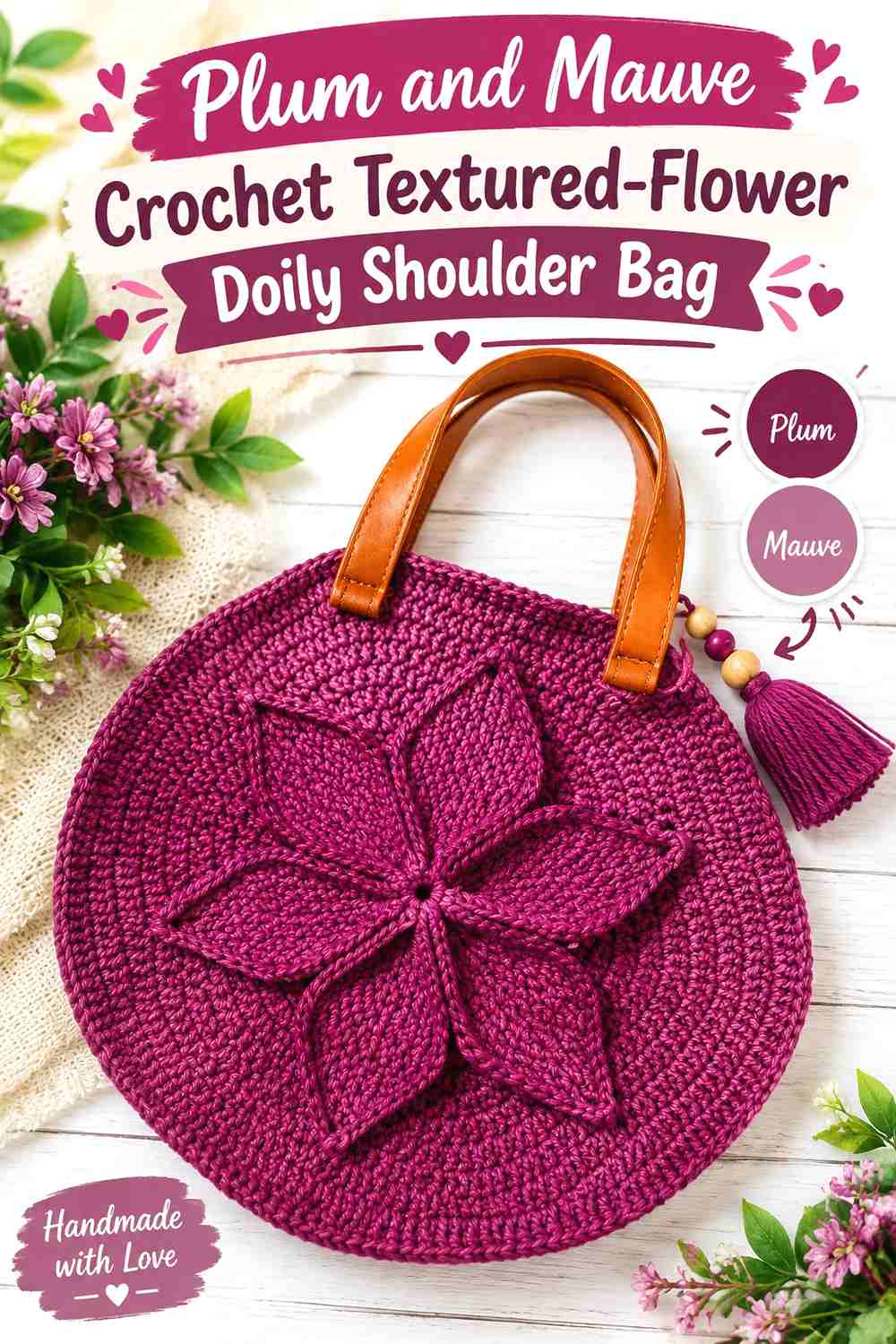
A dimensional flower already creates a strong focal point, so plum and mauve work best as a controlled tonal palette. Keep the central raised flower plum and allow mauve to spread into the surrounding circular field.
Plum Can Concentrate Attention on the Mauve Crochet Flower Center
Use plum where the dimensional flower is most pronounced instead of carrying the darkest shade through every round.
The darker center enhances the transition from raised flower to flatter mauve background while keeping the palette limited.
Mauve Should Give Plum Doily Texture Enough Breathing Room
A larger mauve field prevents the dimensional center from becoming visually crowded.
If additional trim is needed, consider repeating mauve instead of adding another plum border when the flower already supplies enough dark color.
Creator Credit: The Lazy Hobbyhopper — YouTube tutorial
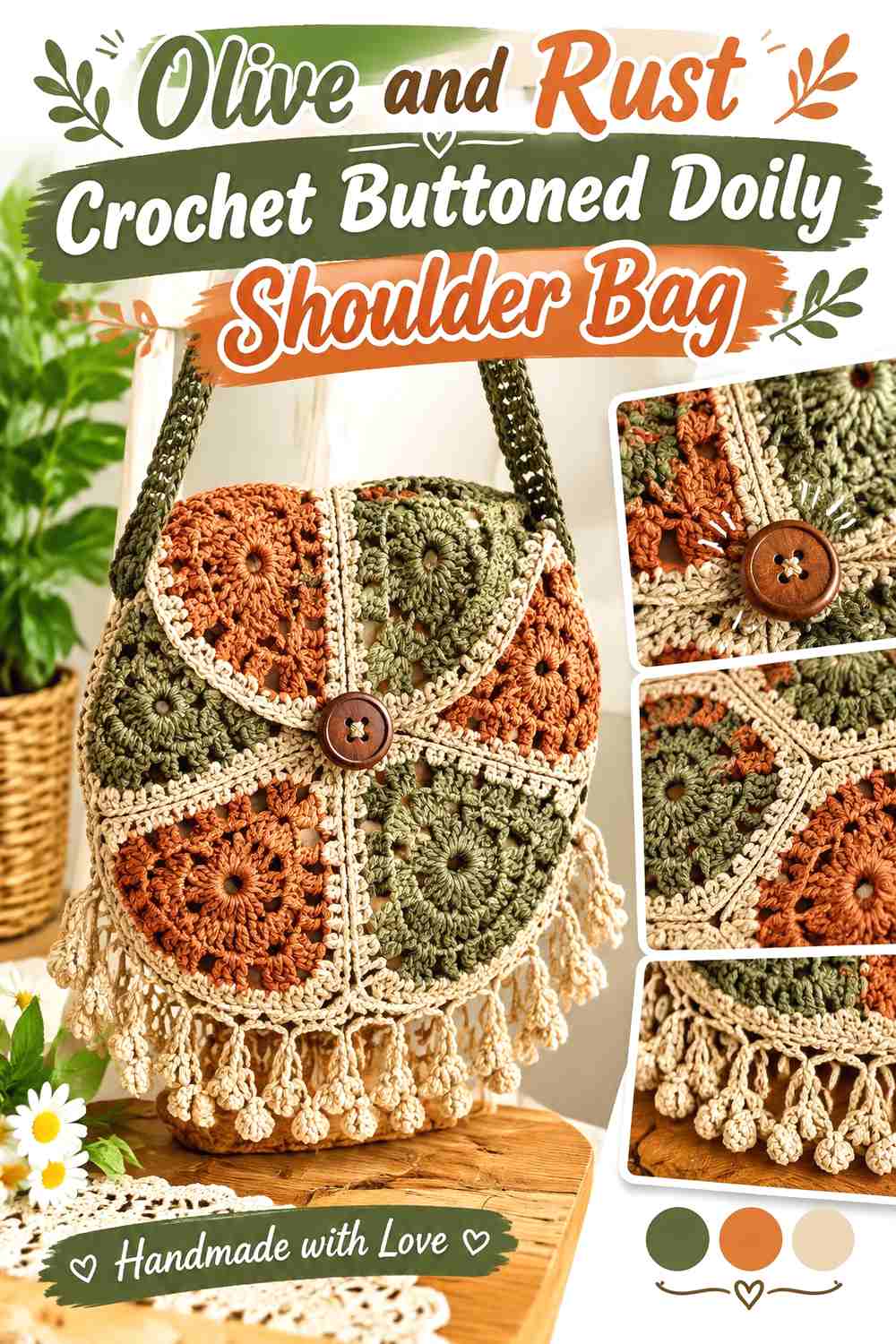
9. Olive And Rust Crochet Buttoned Doily Shoulder Bag
 SAVE
Olive and rust are well suited to a boho-style circular bag with prominent buttons or fringe. Olive can establish the main bag surface while rust identifies the outer decoration and selected finishing areas.
Olive Can Keep the Rust Crochet Doily Details Controlled
Use olive for most of the circular face so rust remains an accent rather than competing equally across every round.
This is especially useful when the bag also includes decorative buttons or fringe, since those features already introduce additional visual activity.
Rust Can Repeat Around Olive Doily Buttons and Fringe
Rust can appear near the button area and again in selected fringe or border details, connecting the upper and lower parts of the bag.
Keep the rust repetition deliberate. Too many scattered orange-brown details can obscure the original circular motif.
Creator Credit: Posh Pooch Designs — YouTube tutorial
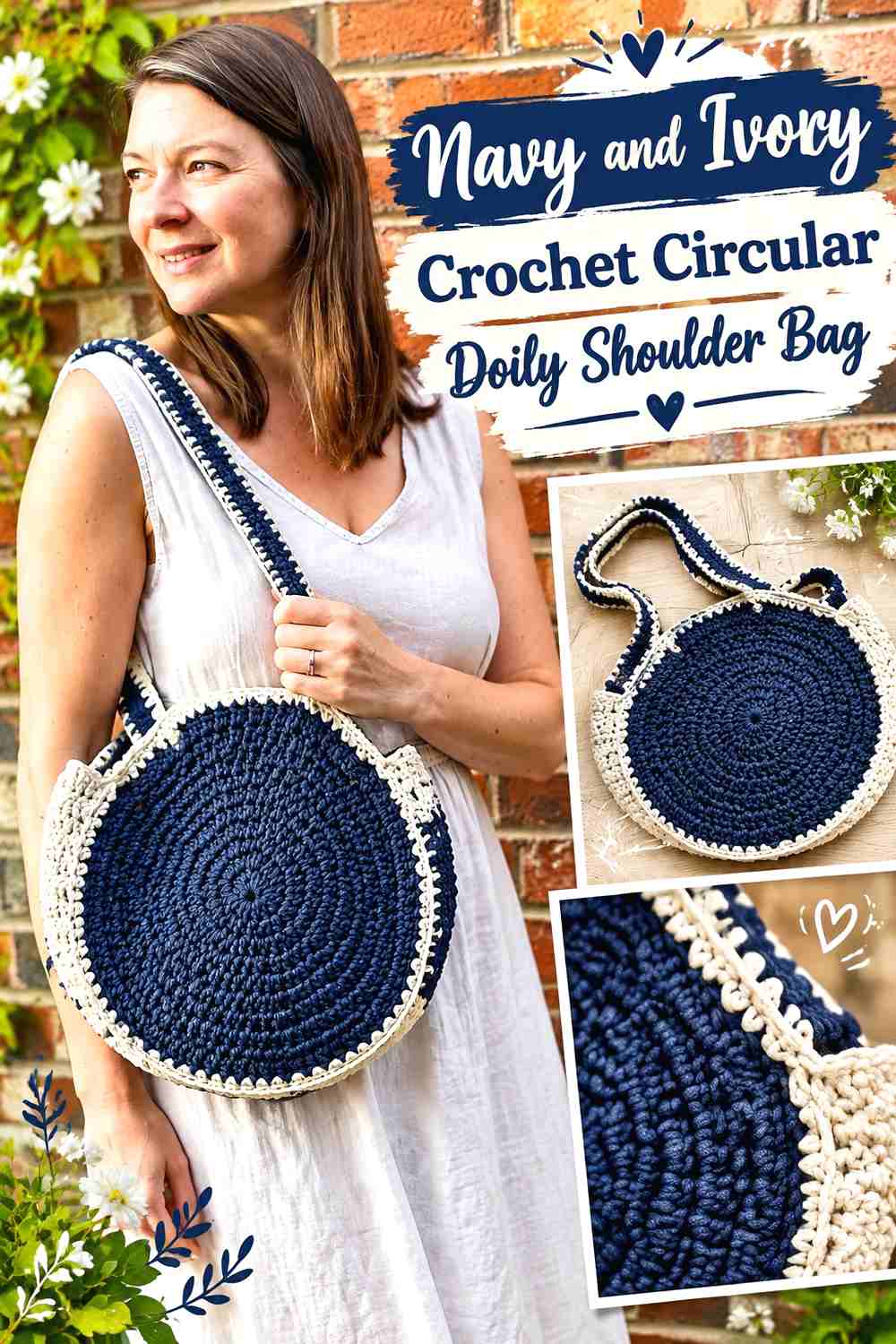
10. Navy And Ivory Crochet Circular Doily Shoulder Bag
 SAVE
Navy and ivory create one of the clearest contrast directions in this collection. Ivory can form the central radial face while navy defines the surrounding side structure and handles or shoulder-carry adaptation.
Ivory Can Showcase the Navy Crochet Doily Outline
A mostly ivory circle makes the outer navy boundary easy to read and gives textured stitches plenty of light-and-shadow definition.
If the center contains several stitch changes, keep them ivory rather than changing color at every structural transition.
Navy Can Give the Ivory Circular Doily a Defined Frame
Navy around the sides visually contains the pale circular panel and separates the decorative front from the bag’s depth.
Repeating navy in the carrying section preserves that frame when the bag is viewed from the side.
Creator Credit: Ophelia Talks Crochet — YouTube tutorial
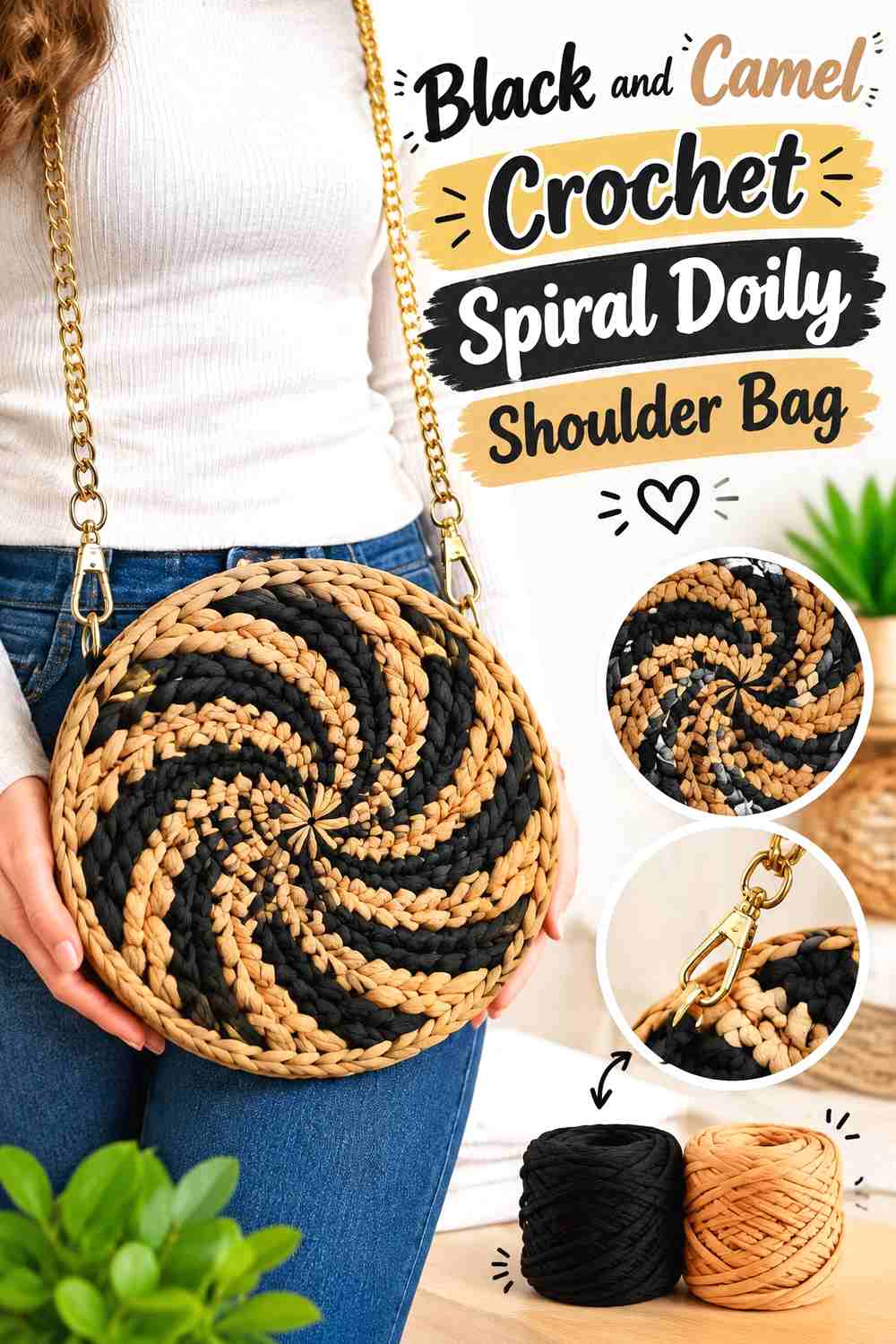
11. Black And Camel Crochet Spiral Doily Shoulder Bag
 SAVE
A spiral already creates movement, so black and camel should emphasize that motion rather than divide the surface into unrelated sections. Camel can cover most of the circular panel, with black tracing the outer structure, sidewall, or opening.
Camel Keeps the Black Crochet Spiral From Becoming Visually Dense
Camel provides a medium-light field where spiral stitch direction remains easier to follow.
If black is introduced inside the spiral, use it in a controlled section rather than switching colors repeatedly enough to disguise the underlying movement.
Black Can Define the Camel Doily Bag Sidewall
A black sidewall or upper edge creates a strong boundary around the camel circular panels.
Repeating black near the strap attachments also helps visually connect the functional parts of the bag while leaving the spiral face dominant.
Creator Credit: Crochet with Julia — YouTube tutorial
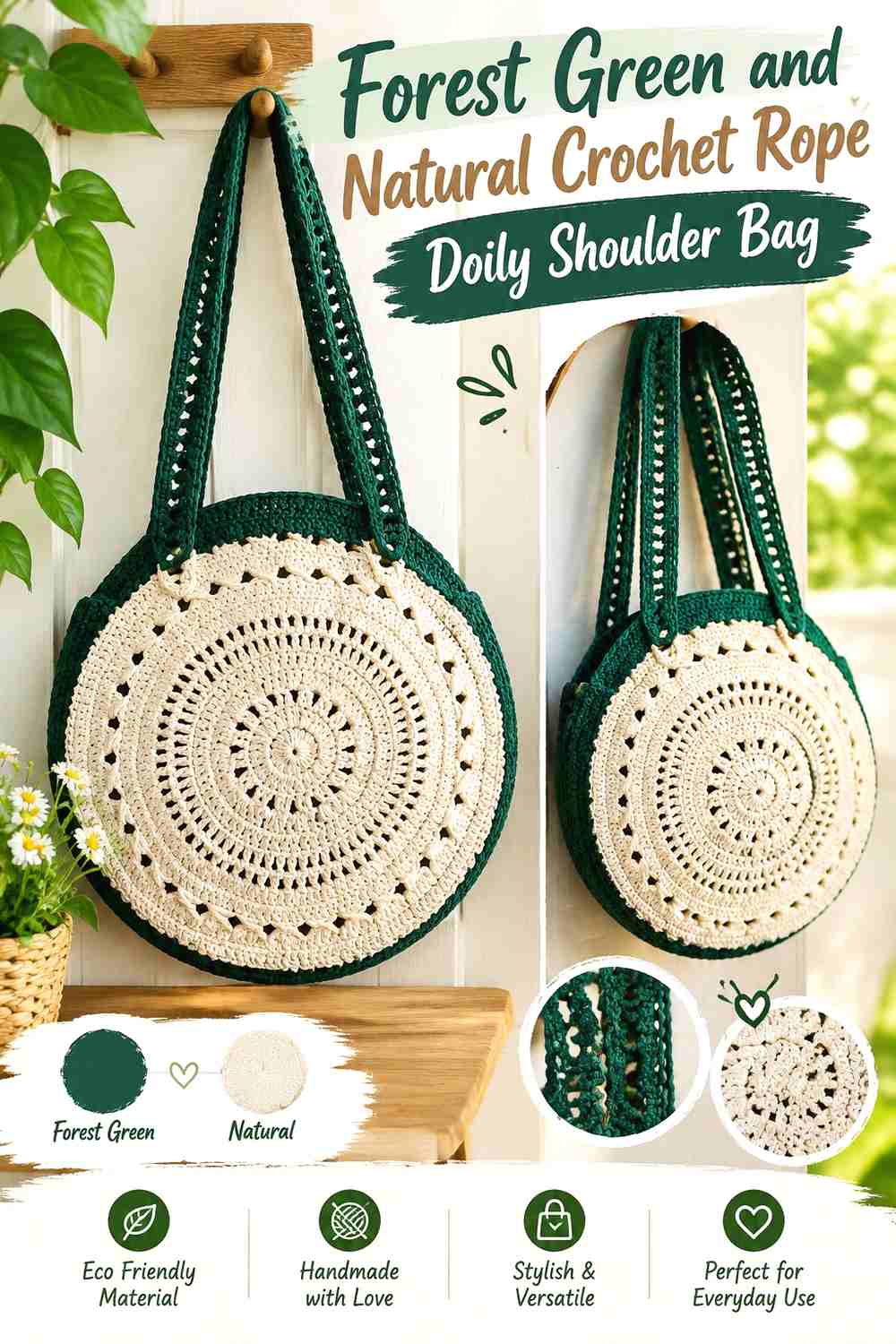
12. Forest Green And Natural Crochet Rope Doily Shoulder Bag
 SAVE
A substantial rope bag benefits from a restrained palette because thick stitches already create significant visual weight. Forest green can define the central or outer medallion while a natural neutral occupies the larger field.
Natural Yarn Lets Forest Green Crochet Doily Rounds Stand Out
Use the natural shade across broad areas and reserve forest green for one or two important concentric sections.
With thick material, even a narrow green round can occupy considerable visual space, so assess the developing circle before increasing the accent coverage.
Forest Green Can Connect the Natural Doily Border and Strap
A forest-green perimeter followed by a matching strap creates a clear dark frame around the lighter body.
Avoid adding additional decorative colors at the same time. Rope texture, circular structure, and the two-color contrast already provide plenty of information.
Creator Credit: Chompu Handicrafts — YouTube tutorial
13. Burnt Orange And Beige Crochet Button Loop Doily Shoulder Bag
 SAVE
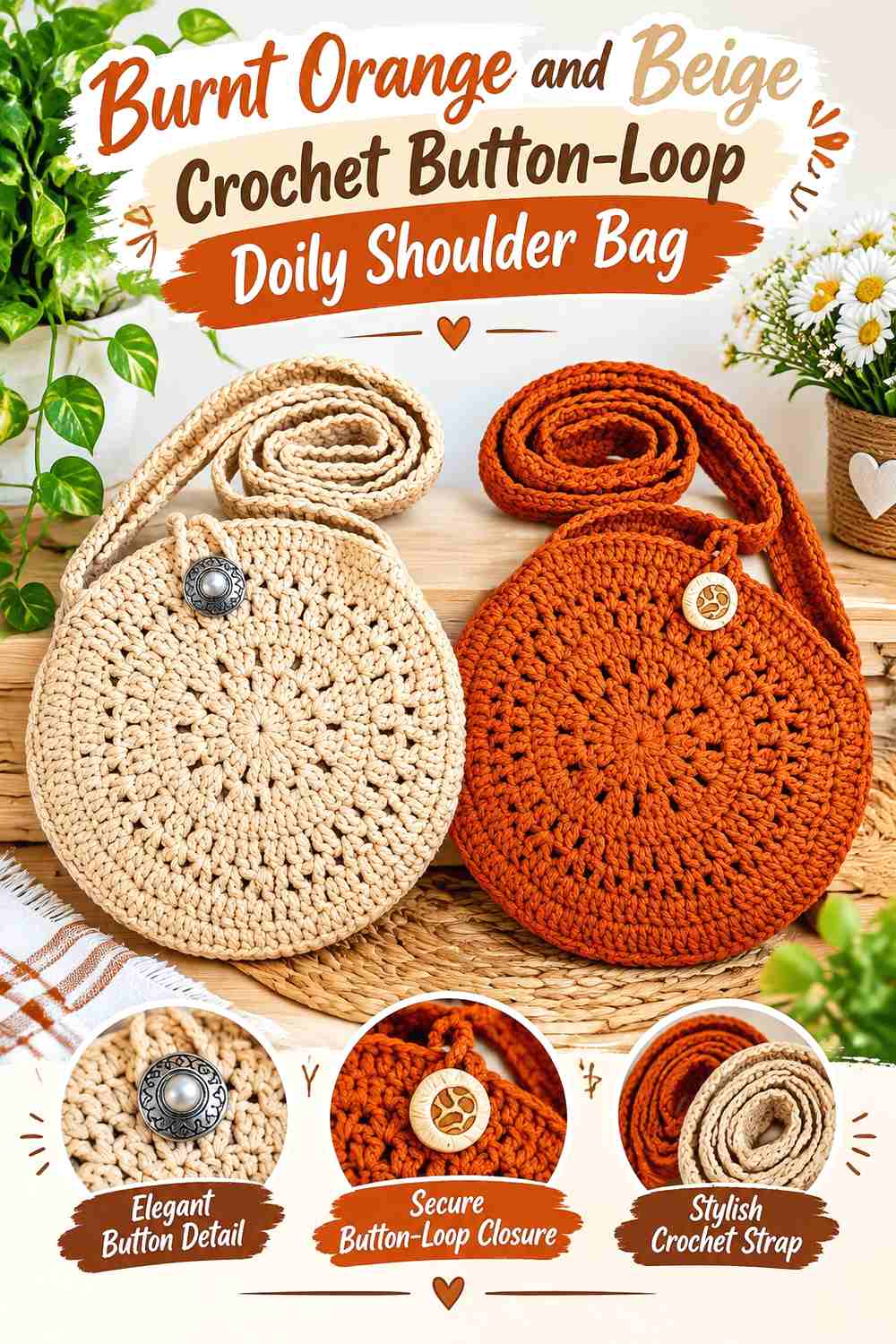
Burnt orange and beige work well on a simple round crossbody because the restrained circular surface gives color placement room to become the main decorative feature. Beige can dominate, while burnt orange defines the center, closure, or perimeter.
Beige Can Keep Burnt Orange Crochet Doily Rings Clear
Large beige sections separate strong burnt-orange areas and keep the circular design from becoming visually compressed.
If you want multiple orange rounds, space them intentionally rather than placing every orange section directly next to another.
Burnt Orange Can Highlight the Beige Doily Button Loop
Repeating burnt orange at the closure and one other location, such as the outer round, makes the small button-loop detail feel connected to the body.
A contrasting closure attracts attention, so keep it centered relative to the circular face.
Creator Credit: Crochet Musings — YouTube tutorial
14. Wine And Cream Crochet Chain Strap Doily Shoulder Bag
 SAVE
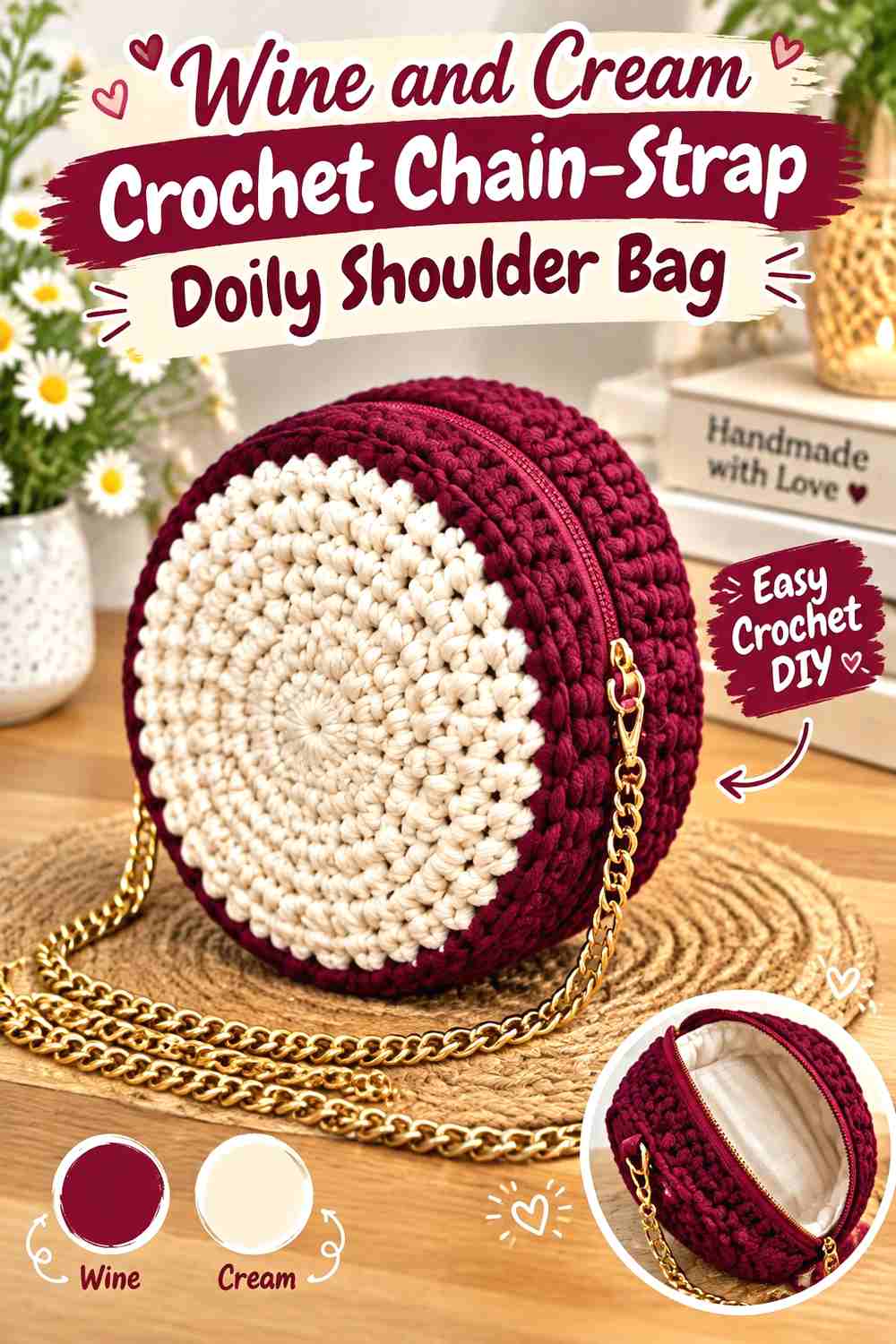
A chain strap separates the carrying component visually from the crochet, allowing wine and cream to remain concentrated in the circular body. Cream can form the lace-like or radial center, while wine adds a darker perimeter.
Cream Can Brighten the Wine Crochet Doily Center
Place cream where small openings or radial details need the clearest visibility. The light center naturally contrasts with a wine-colored outer area.
Keep the cream pattern broad enough to remain noticeable when the bag is worn rather than viewed flat on a table.
Wine Can Frame the Cream Doily Without Competing With the Chain
Wine around the perimeter provides a strong color boundary while the chain supplies a separate material contrast.
Because the hardware already attracts attention, avoid adding several extra wine embellishments near the strap attachments.
Creator Credit: KnitcroAddict — YouTube tutorial
15. Lavender And Oatmeal Crochet Three Motif Doily Shoulder Bag
 SAVE
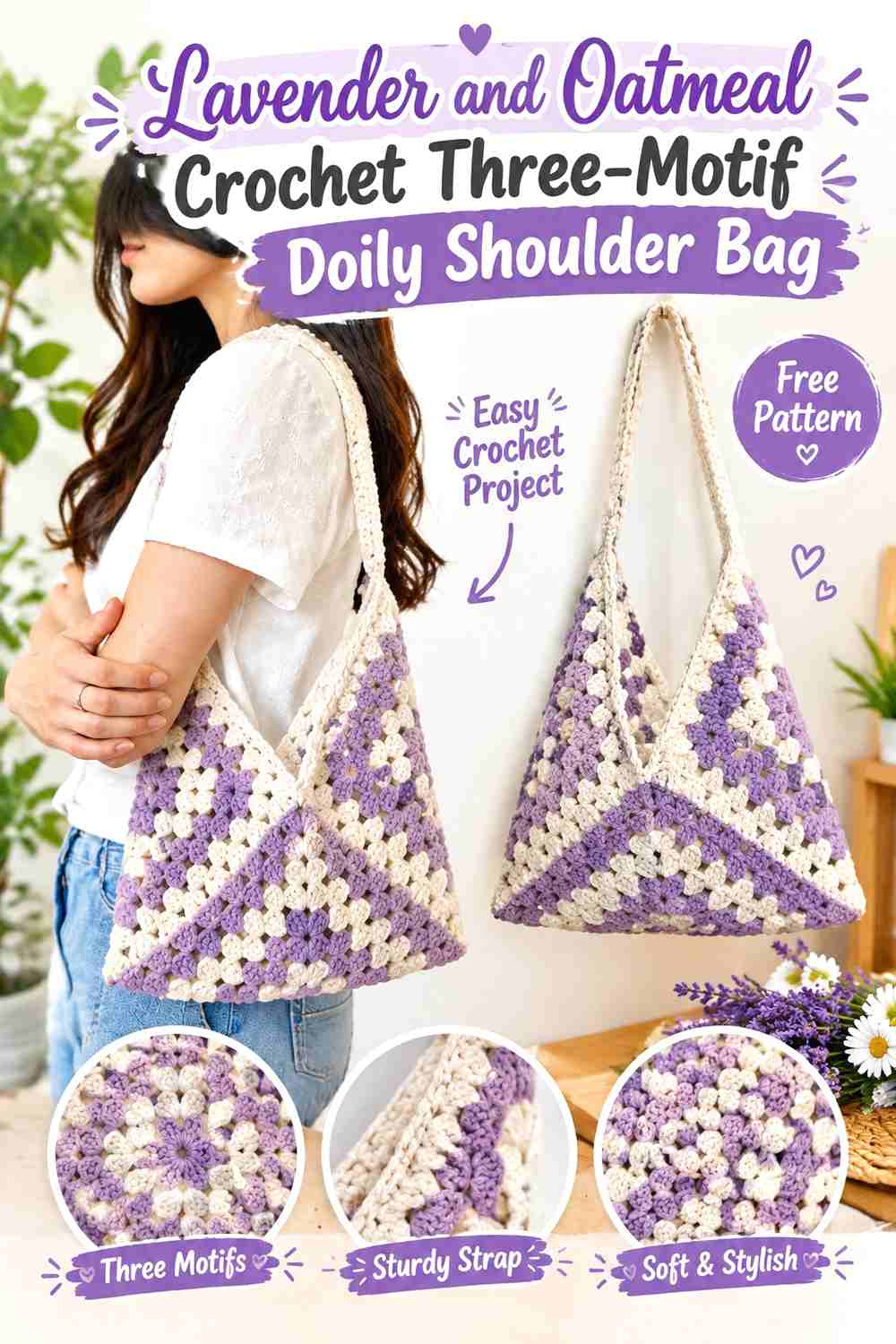
A three-motif construction distributes decoration differently from one large circular doily. Lavender can appear in each motif center while oatmeal acts as the repeated outer field, allowing all three panels to look related.
Lavender Should Repeat Consistently Across Oatmeal Crochet Motifs
Use lavender in a comparable location on each major motif so the separate panels belong to the same palette.
If one motif contains substantially more lavender than the others, place the pieces together before assembly and decide whether the asymmetry is intentional.
Oatmeal Can Connect Three Lavender Doily Panels
Repeating oatmeal around the outer portions of each motif gives you a consistent joining environment.
It also keeps lavender from forming three isolated dark spots surrounded by unrelated border colors.
Creator Credit: VivCrochets — YouTube tutorial
16. Sage And Peach Crochet Flower Applique Doily Shoulder Bag
 SAVE
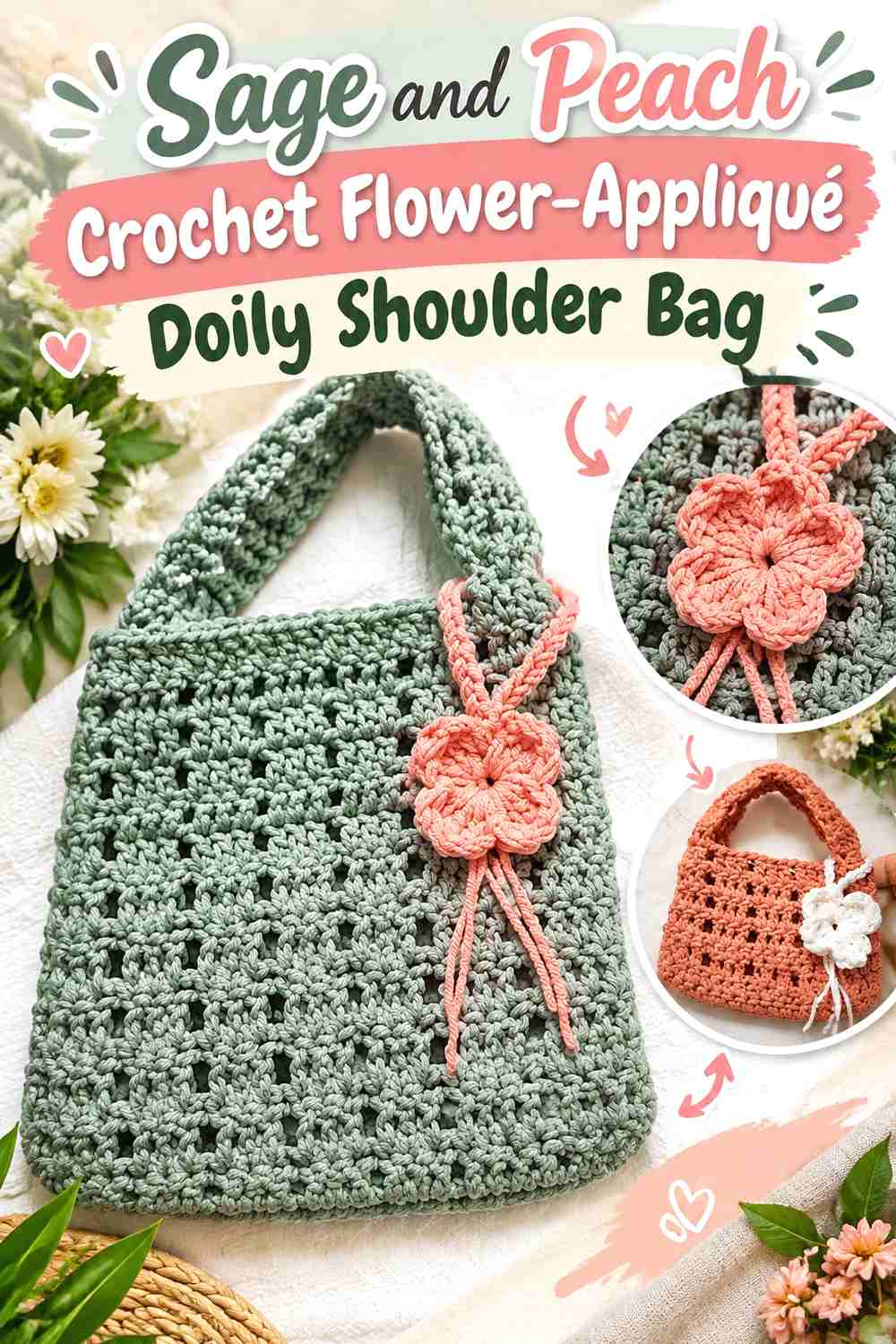
A flower appliqué lets you separate decoration from the structural bag fabric. Sage can cover the main shoulder bag while a peach flower or small doily-like medallion creates the focal point.
Sage Gives the Peach Crochet Doily Appliqué a Quiet Background
Using sage across the bag body prevents the appliqué from competing with multiple body colors.
Position the peach motif while the bag is hanging so the color focal point stays centered after the fabric settles under its own weight.
Peach Should Stay Away From Sage Bag High-Wear Areas
Concentrate delicate peach decoration on the broad front rather than repeating it around strap connections and other constantly moving areas.
This keeps the palette clearly visible while letting the sage structural sections remain comparatively simple.
Creator Credit: SandraStitches Crochet — YouTube tutorial
17. Denim Blue And Cream Crochet Color Ring Doily Shoulder Bag
 SAVE
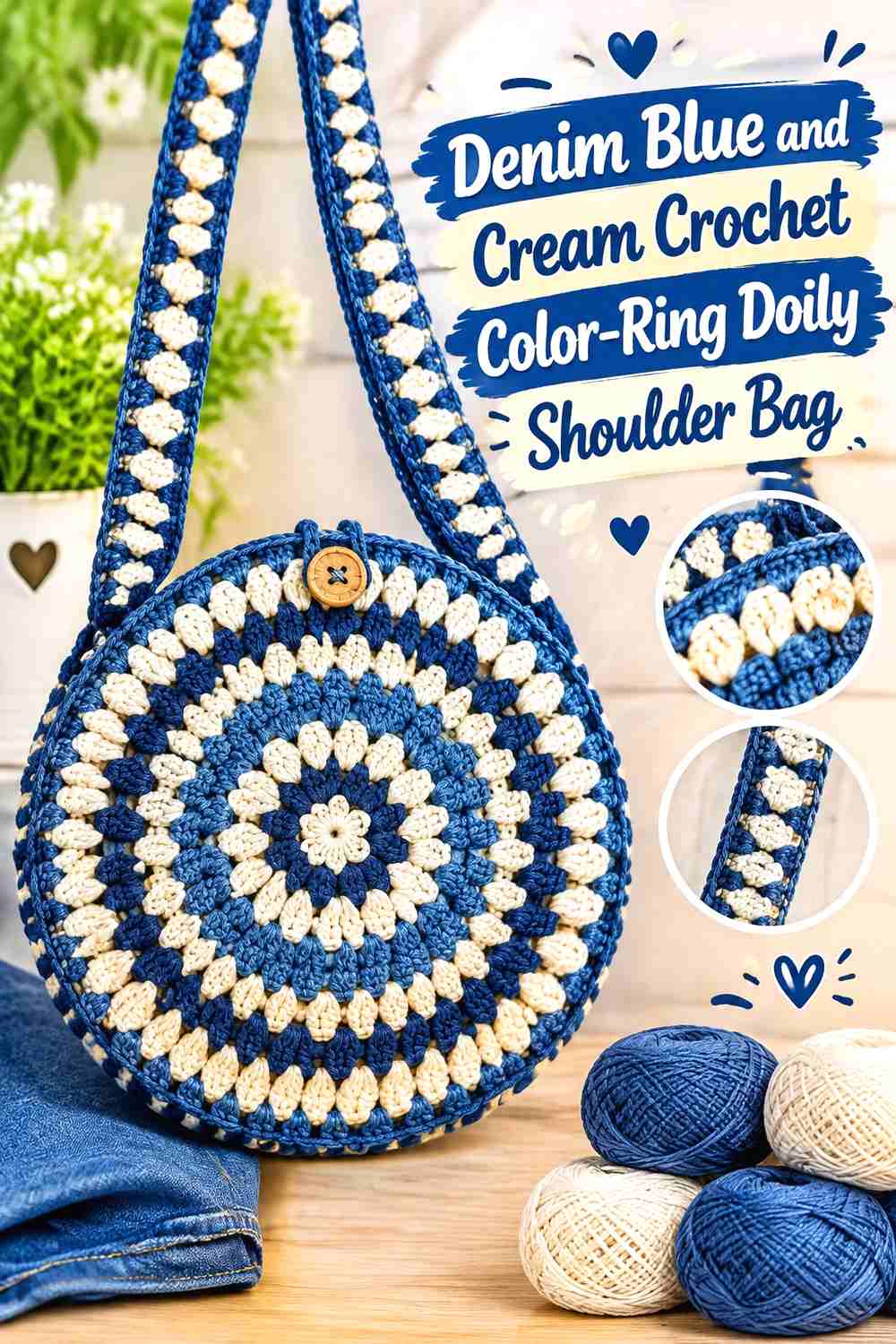
Concentric color changes can create a modern doily effect even without traditional lace. Denim blue and cream work especially well when one color repeats at intervals instead of every round changing unpredictably.
Cream Can Separate Denim Blue Crochet Doily Rings
Place cream between selected denim-blue areas when you want the circular sequence to remain clear from a distance.
You do not need equal-width bands. A broad cream area followed by a narrower blue ring can create stronger hierarchy than evenly alternating every round.
Denim Blue Can Define the Cream Doily Outer Edge
Using denim blue in the final visible rounds provides a clear frame around the lighter center.
Repeating blue in the strap or closure then connects the outside of the medallion with the rest of the shoulder-bag structure.
Creator Credit: Littlejohn’s Yarn — YouTube tutorial
18. Deep Teal And Sand Crochet Mandala Doily Shoulder Bag
 SAVE
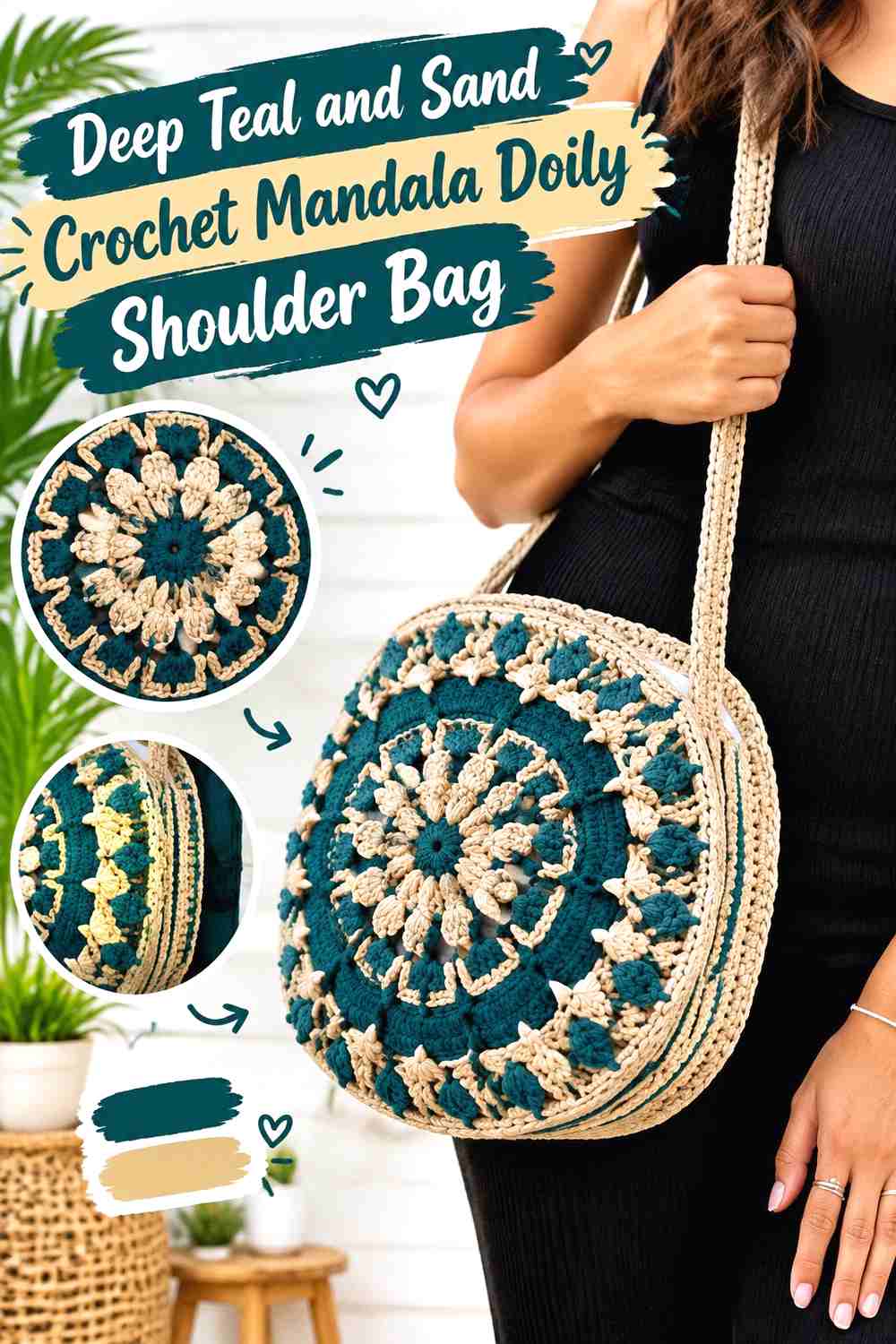
A mandala is a natural match for deliberate color rings. Deep teal can form the strongest focal rounds while sand acts as the quieter supporting shade, allowing the center-out pattern to remain complex without becoming multicolored.
Deep Teal Can Mark the Strongest Crochet Mandala Rounds
Choose a few rounds where deep teal will have the most visual effect rather than using it at every possible color change.
A darker center and outer ring can create a useful visual echo, with sand occupying enough space between them to keep both teal areas distinct.
Sand Can Keep the Deep Teal Doily Shoulder Bag Balanced
Sand gives intricate mandala stitches a calmer field and prevents the entire circular face from becoming dark.
If the strap is also deep teal, keep enough sand visible near the upper part of the bag so the dark strap does not merge visually into an equally dark perimeter.
Creator Credit: Susana Gonzalez, everything in crochet — YouTube tutorial
Comparing the 18 Crochet Doily Shoulder Bag Color Directions
For the lightest, most lace-forward appearance, the ivory and sage, cream and terracotta, navy and ivory, and wine and cream combinations give the pale shade enough room to reveal radial texture and openwork.
For an earthy or bohemian direction, consider olive and rust, forest green and natural, burnt orange and beige, or mustard and chocolate. These palettes work especially well when the accent repeats at the border, strap, closure, or motif edge.
If you prefer softer tonal contrast, plum and mauve, blush and taupe, and lavender and oatmeal reduce the jump between colors while still providing enough variation to organize the motifs.
For a stronger graphic doily effect, charcoal and cream, black and camel, teal and oatmeal, and denim blue and cream provide clearer boundaries between centers, rings, and outer frames.
Conclusion
The most useful way to plan a crochet doily shoulder bag palette is to assign colors to parts of the bag rather than simply choosing two or three appealing yarns. Decide which shade belongs to the decorative center, which one frames the outer motif, and whether the strap, gusset, closure, or lining should repeat either color.
Open lace generally gives the lining more visual influence, while dense circles, rope, granny clusters, and textured flowers let the yarn colors carry more of the finished design. For intricate motifs, avoid letting too many equally strong colors compete with the stitchwork.
Before committing to several motifs or a second circular panel, view the first piece vertically and from normal carrying distance. That simple check can reveal whether the main color, accent, border, and center still have the hierarchy you intended.
Frequently Asked Questions
What colors work well for a crochet doily shoulder bag?
Both low-contrast and high-contrast combinations can work. Soft neutrals and muted colors keep intricate lace understated, while combinations such as cream with navy, charcoal, wine, or teal make radial details more graphic. Choose according to how clearly you want the doily pattern to show.
Should the darkest color go around the crochet doily border?
It can, but it is not required. A dark outer round creates a strong frame around the motif. A lighter or tonal border produces a softer edge. Consider the strap color as well because the border and strap are usually viewed together.
Should an openwork crochet doily shoulder bag have a contrasting lining?
A contrasting lining can make every lace opening more visible, while a lining close to the yarn color keeps the pattern quieter. Test fabric behind the completed motif before sewing because the amount of visible lining depends on the actual openwork.
How many colors should I use in a crochet doily shoulder bag?
Two or three colors are often enough to create substantial variation across the center, outer rounds, border, and strap. More colors can work for mandala or granny-circle styles, but they benefit from intentional repetition rather than giving every round a different unrelated shade.
Can the front and back crochet doily panels use different colors?
Yes, provided the two sides still share enough color or structure to look connected. Reversing a two-color sequence can work well. Completely unrelated palettes may make the finished shoulder bag look like two separate projects joined together.
How can I make a crochet doily motif stand out more?
Increase the light-and-dark difference between adjacent colors, simplify the surrounding palette, or use a contrasting lining behind openwork. For raised texture, a single solid or lightly varied color can sometimes show shadows more clearly than frequent color changes.
Should the crochet shoulder strap match the doily border?
Matching them is an effective way to connect the decorative face with the carrying structure, but it is not mandatory. A contrasting strap becomes a stronger design feature, so compare it with the completed doily before deciding whether that extra emphasis improves the bag.