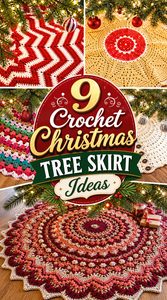
A crochet Christmas tree skirt can do much more than cover a stand. Its construction determines how easily it goes around an already decorated tree, how much floor space it occupies, how clearly decorative stitches show, and how practical it is to fold away after the holidays.
These nine ideas range from fluffy faux-fur fabric and chunky farmhouse texture to granny stripes, geometric shaping, pine colorwork, and a delicate filet-crochet mini skirt. Some open with ties or buttons, while others form an uninterrupted ring that needs to be positioned during tree setup. Use the differences below to choose a style that works with your tree stand, decorating routine, yarn preferences, and available storage—not simply the color scheme you like most.
Quick List
- Crochet Alpine Faux-Fur Snow Tree Skirt
- Crochet Pine Colorwork Ring Tree Skirt
- Crochet Bobble-and-Fur Button Tree Skirt
- Crochet Hexagon Christmas Cheer Tree Skirt
- Crochet Farmhouse Knit-Look Button Tree Skirt
- Crochet Granny-Stripe Wraparound Tree Skirt
- Crochet Filet Jingle-Bell Mini Tree Skirt
- Crochet Two-Color Tie-Front Tree Skirt
- Crochet Gingerbread Convertible Tree Skirt
Plan the Diameter Around the Stand and Lowest Branches
Tree-skirt sizing works better when you start with the actual space beneath your tree rather than relying on a label such as small, medium, or large. Measure the tree stand or base first, then look at how far the lowest branches extend. A skirt that barely covers the stand may disappear visually, while one extending far beyond the branches can occupy useful walking or gift space.
For a non-pattern-specific planning example, if a stand measures 22 inches across and you want about 8 inches of skirt visible beyond the stand on each side, a target diameter near 38 inches gives you a useful starting point: 22 + 8 + 8. That is planning math only. The actual size still depends on the tutorial’s construction, gauge, edging, and how the fabric settles on the floor.
Decide How the Skirt Will Go Around the Tree
An opening is a functional feature, not just a finishing detail. A flat-worked skirt with ties or buttons can wrap around a tree after the stand and tree are already in place. That is convenient if you decorate first, change skirts during the season, or do not want to lift the tree.
A continuous ring behaves differently. Briana K’s Pine design, for example, is worked without a slit, so the source specifically notes that it needs to be positioned with the stand rather than simply wrapped around the trunk afterward.
Before choosing a tutorial, think through your normal setup order. Buttons provide a tidy visible closure, ties are adjustable and unobtrusive, and a closed ring gives uninterrupted patterning but requires more planning on decorating day.
Match Yarn Texture to the Look—and the Storage Space
Tree skirts sit flat enough that yarn texture becomes a major part of the design. Faux-fur yarn creates a snow-like surface but makes individual stitches harder to see while crocheting. Smooth yarn gives stronger definition to colorwork, filet motifs, granny clusters, and geometric shaping. Thick yarn can create a plush, substantial skirt quickly, but the finished piece will also take more space in a holiday storage bin.
Think about maintenance before substituting yarn as well. Check the care instructions for the exact fiber you choose rather than assuming a decorative yarn can be washed or dried in a particular way. If your design includes several colors, make a small sample when practical to see whether the shades remain visually distinct under warm Christmas lights.
1. Crochet Alpine Faux Fur Snow Tree Skirt
 SAVE
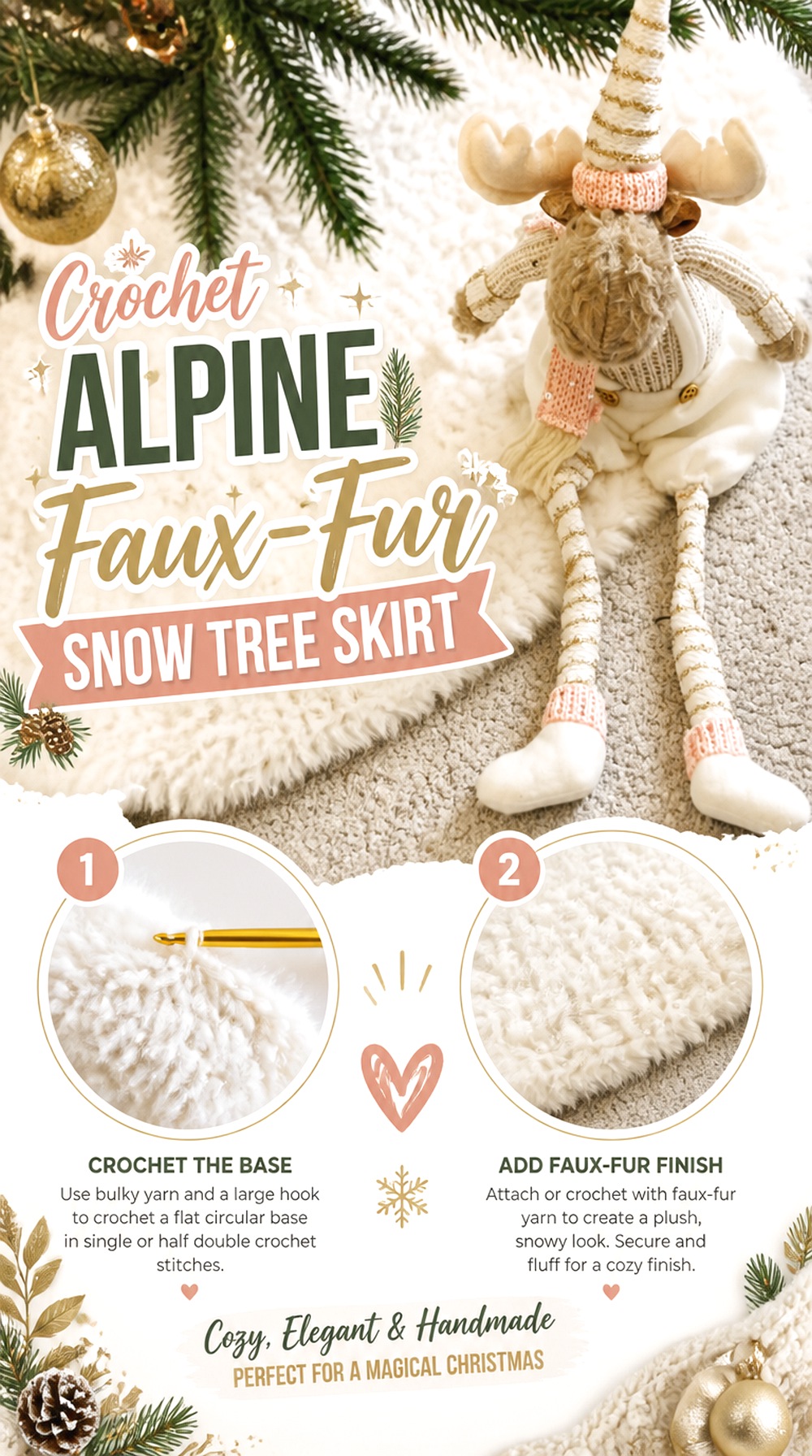
SAVEThis crochet tree skirt is built around one very specific visual effect: a soft, snowy surface under the tree. Bella Coco’s Alpine tutorial uses a fur-effect yarn and a large hook, producing a skirt where texture matters more than sharply visible stitch anatomy. The source also includes attached ties, which makes this an opening-style skirt rather than a permanent closed ring. That combination suits rooms where you want the base of the tree to blend into white, cream, winter-neutral, or woodland decor instead of adding another strong graphic pattern.
Fur Yarn Changes How You Read Your Work
With smooth yarn, it is easy to identify stitch tops visually. Long fuzzy fibers obscure them, so this is a project where tactile checking can matter as much as sight. Stitch markers can be useful if you have trouble relocating important positions.
If you substitute a smooth super-bulky yarn, expect the character of the finished skirt to change substantially. The construction may still be recognizable, but the snowy effect and soft blended surface are what make this version distinctive.
The Tied Opening Simplifies Final Placement
Ties allow the skirt to be positioned after the tree is standing. That can be especially useful with a large artificial tree or a stand you would rather not disturb after assembly.
Before finishing, check where the ties fall relative to the trunk and stand. You want the center opening to sit naturally rather than pulling tightly against hardware. If you change yarn thickness or size, confirm the opening while the project is still easy to adjust.
Original Tutorial and Creator Credit
Creator: Bella Coco
2. Crochet Pine Colorwork Ring Tree Skirt
 SAVE
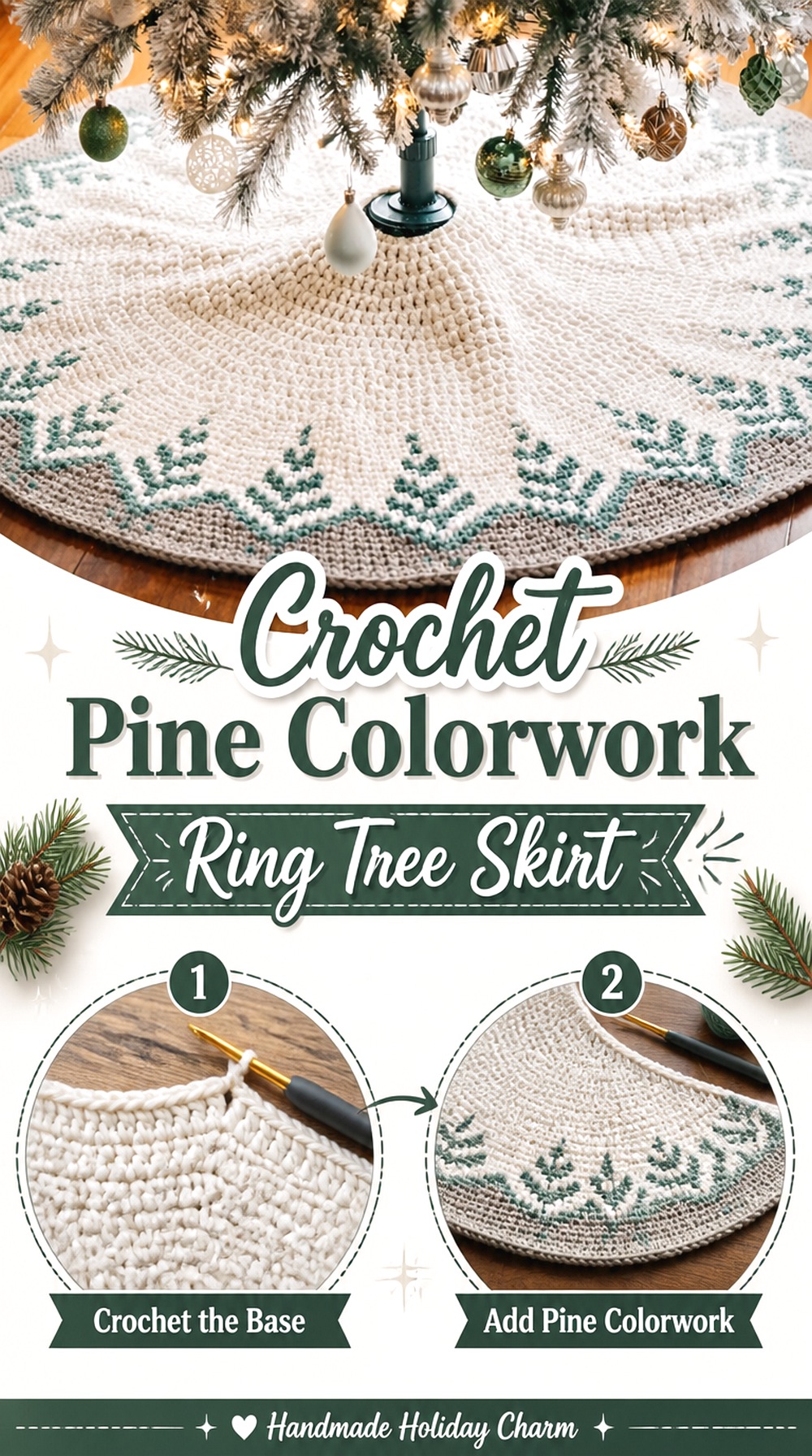
SAVEFor a more graphic tree base, this crochet Christmas tree skirt uses pine motifs worked into a dense colorwork fabric. Briana K’s tutorial demonstrates Fair Isle-style crochet colorwork and a continuous circular construction. Unlike an open tree skirt, the design has no slit; the designer’s supporting information explains that it must go over or beneath the tree stand during setup. That uninterrupted construction is a major visual advantage because the pine motif can travel around the skirt without a front opening interrupting the pattern.
A Closed Ring Requires a Different Decorating Order
Choose this construction only after thinking about when the skirt will go in place. It is much easier to position the skirt before the tree is fully decorated than to discover afterward that there is no opening.
The trade-off is a cleaner continuous perimeter and uninterrupted colorwork. If your main goal is a strong all-around design rather than easy midseason removal, the closed format makes sense.
Color Contrast Controls Whether the Pines Read Clearly
Detailed colorwork depends on visual separation between the motif and its background. Two shades that look different in a skein can appear much closer once stitched together.
Before committing to a large skirt, place your chosen colors next to each other in the lighting used near the tree. Strong value contrast usually makes a repeated motif easier to recognize from across the room, while closer shades create a quieter effect.
Carried Yarn Adds More Than Color
Colorwork can affect thickness and flexibility because additional strands may travel through or behind the fabric. That matters for a project intended to lie flat.
Follow the creator’s guidance for tension rather than pulling color changes tightly. If carried strands shorten the surrounding fabric, the skirt can lose its smooth circular shape. Check flatness periodically instead of waiting until finishing to notice distortion.
Original Tutorial and Creator Credit
Creator: Briana K
3. Crochet Bobble and Fur Button Tree Skirt
 SAVE
SAVEThis crochet tree skirt combines three highly visible details: raised bobbles, a fluffy contrasting trim, and a buttoned opening. MJ’s Off The Hook Designs uses super-bulky materials in the original project, so the result reads as thick holiday decor rather than a flat lace-like mat. The buttons also make the opening a decorative feature instead of something that needs to be hidden at the back. It is a useful option when you want the tree skirt itself to contribute texture to a neutral, farmhouse, woodland, or cozy Christmas scheme.
Bobbles Look Best When Their Spacing Stays Organized
Raised texture attracts the eye, so irregular spacing is more noticeable than it would be in plain fabric. Lay the skirt flat occasionally and look at it from a few feet away instead of evaluating each bobble only from hook distance.
This also helps you catch flare or cupping. If the background fabric is changing shape, correcting the underlying tension matters more than trying to disguise the problem with the final trim.
Fur Trim Adds a Strong Outer Frame
A fluffy border makes the circumference visually heavier and can hide some minor variation along the final edge. It also changes the balance of the design: the body supplies repeating texture while the fur creates a continuous frame.
If you substitute a non-fur border, expect a cleaner and more stitch-defined finish. Neither treatment is automatically better; decide whether you want the edging to blend softly into the floor or outline the skirt clearly.
Buttons Become Part of the Display
Because this design uses a button closure, button size, material, and placement affect both function and appearance. Check that the buttonholes and buttons work comfortably before sewing everything permanently.
Large decorative buttons can reinforce a rustic look, while low-contrast buttons keep attention on the bobbles. Avoid adding heavy embellishments simply for appearance if they cause the opening edge to sag or twist.
Original Tutorial and Creator Credit
Creator: MJ’s Off The Hook Designs
4. Crochet Hexagon Christmas Cheer Tree Skirt
 SAVE
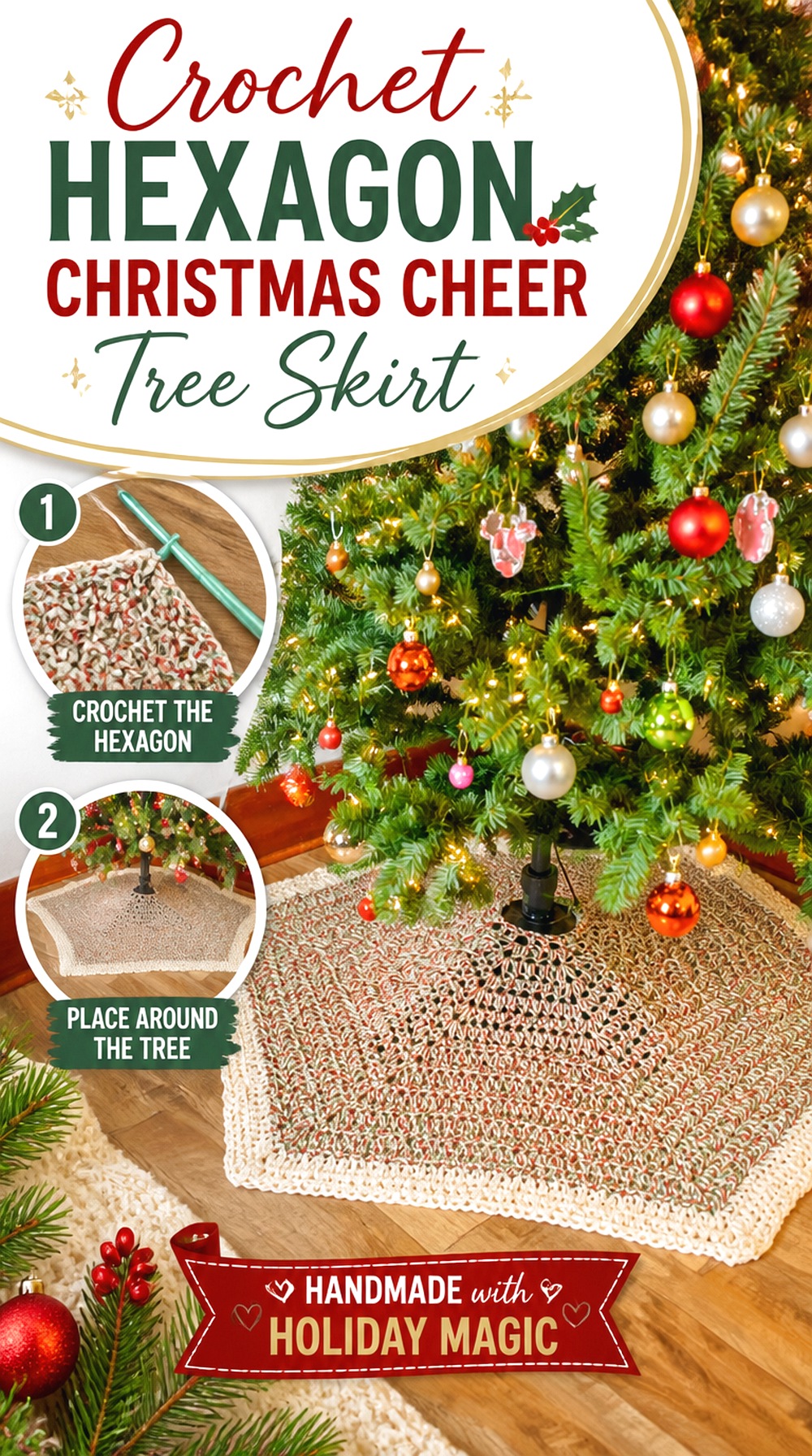
SAVEA hexagonal crochet Christmas tree skirt gives the base of the tree more visible geometry than a smooth circular design. The Turtle Trunk’s Christmas Cheer tutorial creates a six-sided silhouette and is designed so the size can be extended through the established repeat. The original tutorial also demonstrates the project using either two strands of medium-weight yarn together or a single bulky strand, paired with a large hook. That makes it a useful reference when you want a substantial tree skirt without relying on faux fur or raised bobbles for visual impact.
The Corners Define the Finished Silhouette
With a circular tree skirt, small shaping differences can disappear into the curve. On a hexagon, the corners are part of the design, so each point should lie consistently.
During the project, place the fabric on a flat surface and compare the six sections. If one side looks noticeably longer or more gathered, investigate the shaping or tension before adding more width. Repeating an imbalance only magnifies it.
Double-Stranding Changes More Than Thickness
Holding two strands together can create a sturdy, visually substantial fabric, but it also changes hand feel, yarn consumption, and how clearly multiple colors blend.
If you use two different colors together, they may create a marled effect rather than a clean stripe. If you prefer crisp color blocks, use matching strands or choose a single bulky yarn that already gives the thickness you want.
Original Tutorial and Creator Credit
Creator: The Turtle Trunk
5. Crochet Farmhouse Knit Look Button Tree Skirt
 SAVE
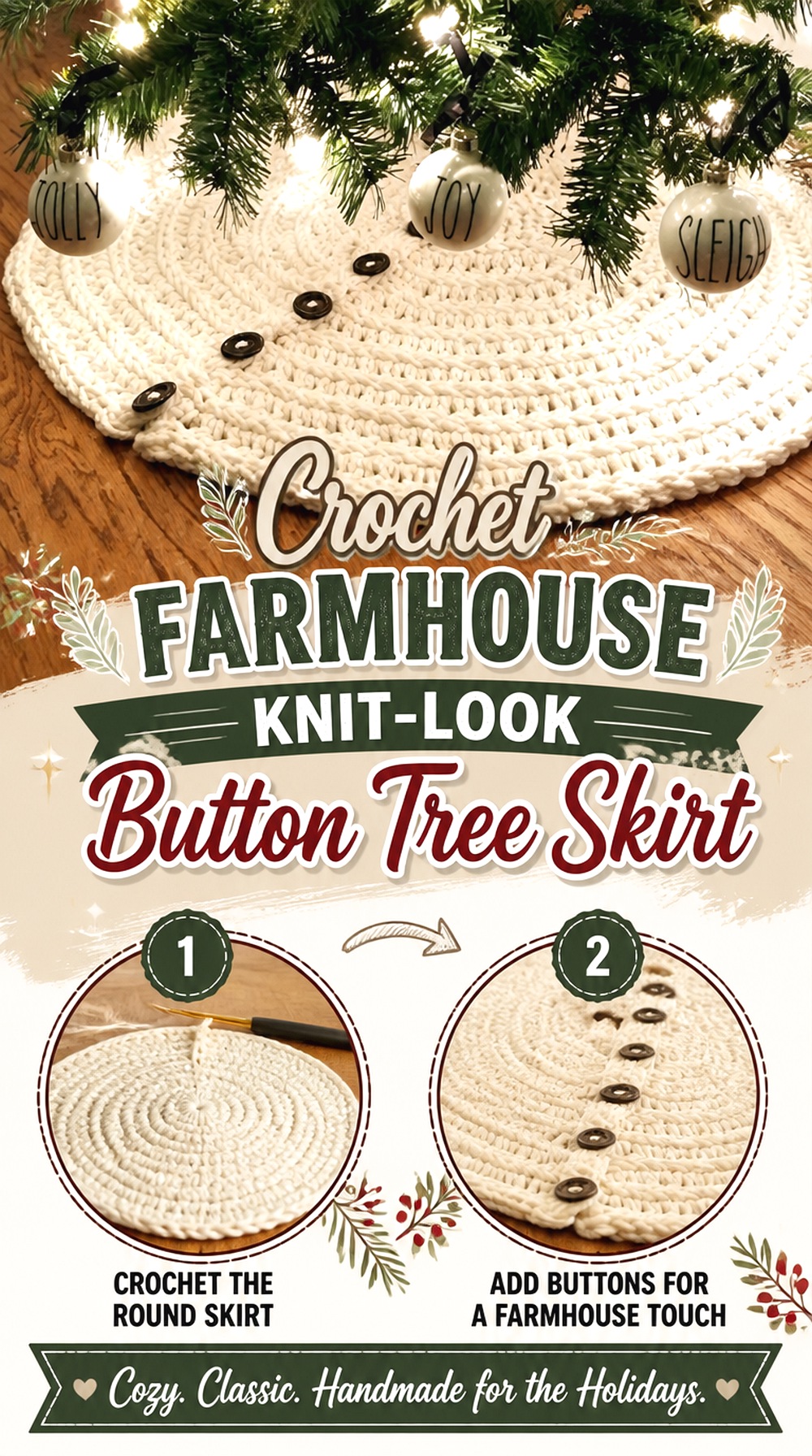
SAVEThe standout feature of this crochet tree skirt is its ribbed, knit-like surface. Cozy Nooks Designs uses thick yarn and stitch placement that creates strong horizontal texture, then finishes the skirt with buttons. The finished result is less motif-driven than the pine or jingle-bell options and relies instead on fabric texture, neutral styling, and a substantial edge. The tutorial also discusses multiple sizes through its supporting pattern information, so it is a useful design to examine when you want a classic farmhouse base rather than an obviously pictorial Christmas motif.
Knit-Look Texture Depends on Stitch Definition
If the ribbed effect is the reason you choose this design, yarn selection should support that texture. Very fuzzy fibers can soften the ridges until the surface looks more blended than structured.
A smooth or lightly textured yarn makes the directional lines easier to see. Before making a major substitution, work enough of a sample to see the fabric from normal viewing distance rather than judging the yarn only in the skein.
Thick Fabric Needs Enough Room to Settle
A substantial tree skirt may not drape around stand legs in the same way as a thin granny or filet fabric. Check the center area around your actual stand and make sure the opening is not being forced upward by bulky hardware.
The same thickness matters after Christmas. A dense skirt can occupy significant storage space, so fold it loosely and avoid compressing dimensional texture more than necessary.
Button Placement Can Fine-Tune the Opening
Buttons let the slit close neatly without permanently joining it. That gives you some practical flexibility if the tree stand or trunk covering changes slightly from year to year.
Before attaching buttons, temporarily pin the edges where you want them and place the skirt around the stand. A flat tabletop test cannot fully show how the closure will behave around real hardware.
Original Tutorial and Creator Credit
Creator: Cozy Nooks Designs
6. Crochet Granny Stripe Wraparound Tree Skirt
 SAVE
SAVEA granny-style crochet tree skirt gives you a completely different color-planning experience from solid textured fabric. Play Hooky with Me’s tutorial uses classic granny clusters in a skirt worked flat, allowing it to wrap around the tree rather than forming a closed ring. The source shows a multicolor version and explains how the repeating construction can be resized, making this style particularly appealing when you want to coordinate several ornament colors or use a planned holiday palette across repeated rows.
Color Rhythm Becomes the Main Design Tool
Granny clusters naturally create horizontal bands, so the sequence of colors can make the skirt feel orderly, playful, traditional, or very modern.
Lay your skeins in the planned order before starting. If two neighboring shades are extremely similar, they may visually merge into one wide stripe. Deliberate contrast makes each band more distinct, while repeated neutrals can calm a brighter palette.
Flat Construction Makes Resizing Easier to Monitor
Because this style opens and wraps around the tree, you can check its developing span against the actual setup without threading a stand through the center.
Do not resize by diameter alone, though. Watch the center opening and the amount of flare at the same time. Extending a skirt is useful only if the additional fabric continues to lie flat rather than becoming overly ruffled or tight.
Buttons or Loops Should Close Without Distorting the Granny Fabric
Open granny fabric has more visible gaps than dense single-crochet colorwork. A closure that pulls too firmly can stretch the edge and make the first or last sections look different from the rest.
Test the closure with the skirt lying in its natural position. The goal is to bring the sides together neatly, not to use the button as a way to force an undersized center around the stand.
Original Tutorial and Creator Credit
Creator: Play Hooky with Me
7. Crochet Filet Jingle Bell Mini Tree Skirt
 SAVE
SAVE8. Crochet Two Color Tie Front Tree Skirt
 SAVE
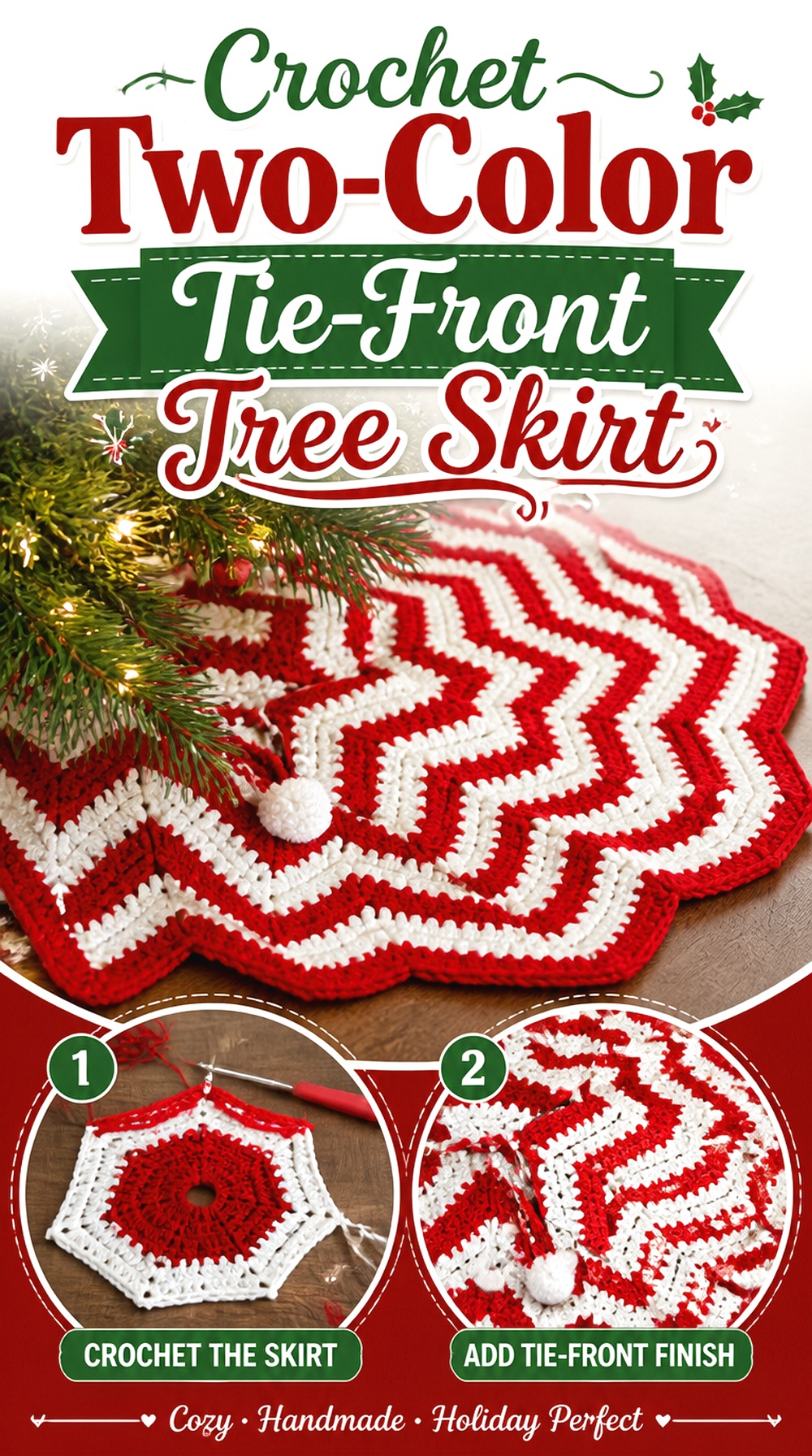
SAVECosy Rosie Crochet’s tree skirt offers a straightforward two-color route for readers who want visible holiday striping without pictorial colorwork. The tutorial sample uses red and white worsted/Aran-weight acrylic yarn and finishes the project with an edging and ties. Because it is an opening-style design, it can wrap around a tree already positioned in its stand. The creator also discusses continuing the established construction for different tree sizes in the accompanying pattern information.
Two Colors Can Look Cleaner Than a Large Palette
A limited palette makes the overall tree base easier to coordinate with ornaments, ribbon, and gift wrap. Red and white create an obvious Christmas effect, but the same design logic could work with two neutrals or another carefully chosen pair if the tutorial’s yarn requirements are respected.
Before substituting, compare not just hue but contrast. A dark green and charcoal combination, for example, may read as much subtler striping than red against white.
Ties Offer Adjustment Without Decorative Hardware
Ties are useful when you want an opening but do not want visible buttons. They can also tolerate small differences in how closely the two edges meet.
Do not pull them so tightly that the center opening puckers. Arrange the skirt around the stand first, allow the fabric to settle, and then tie only firmly enough to keep the opening positioned.
Watch the Outer Edge as the Diameter Grows
Whenever a flat crochet piece expands outward, the perimeter tells you whether the shaping and tension are cooperating. If the edge begins to wave strongly, simply adding more rows may make the problem more noticeable.
Lay the skirt flat at intervals. A small tension difference can sometimes be addressed before finishing, while a severe shape issue is harder to disguise with edging alone.
Original Tutorial and Creator Credit
Creator: Cosy Rosie Crochet
9. Crochet Gingerbread Convertible Tree Skirt
 SAVE
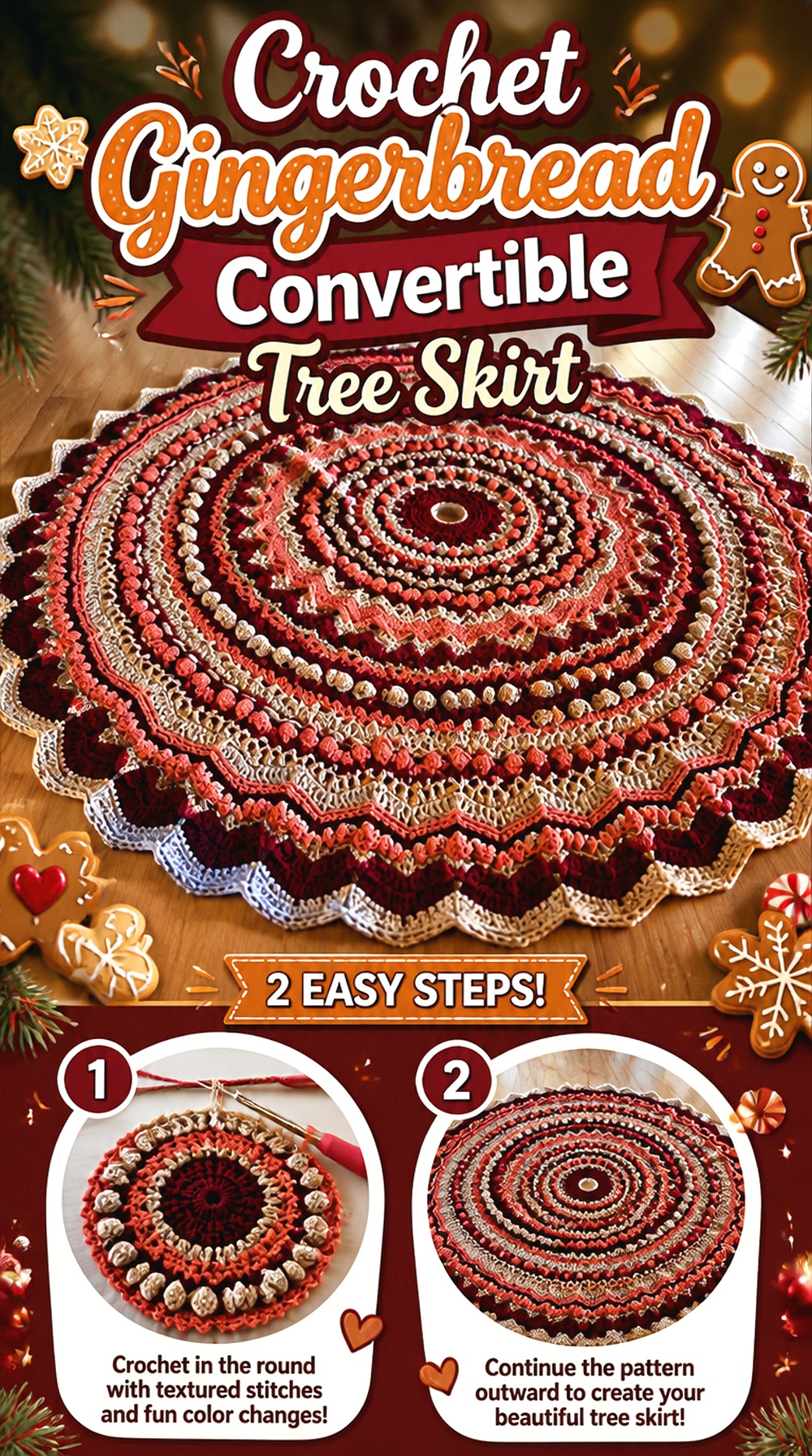
SAVEThe Crochet Crowd’s project stands apart because the source is designed as a two-in-one gingerbread afghan or Christmas tree skirt. For the skirt version, the creator specifically prefers a design without a slit, meaning the piece is positioned with the stand rather than wrapped around it later. This makes the project interesting for crocheters who like a more continuous decorative surface and also appreciate a design concept that can translate into another large home-decor format.
The No-Slit Format Keeps the Surface Continuous
A closed center avoids breaking the design with buttons, ties, or an open seam. Visually, that gives the tree base a more complete circular presentation.
Functionally, it means setup order matters. Put the skirt in position when assembling the tree rather than treating it as an accessory you can casually add at the very end. This is the same trade-off to consider with other closed-ring designs.
A Two-in-One Design Rewards Careful Purpose Planning
Although the source covers both afghan and tree-skirt use, decide which finished object you actually want before choosing colors or final scale. A palette that looks balanced beneath a tree may create a different visual effect when spread across a sofa or bed.
Follow the creator’s exact instructions for the version you are making rather than assuming dimensions or finishing choices transfer automatically between the two uses.
Long Tutorials Can Be Useful for Checking Repeated Sections
This tutorial runs through the project in substantial detail, including many individual rounds and a separate tree-skirt starting point. That format can suit crocheters who prefer to see repeated shaping demonstrated rather than relying only on a short overview.
Use the chapter markers to return to the relevant stage instead of trying to memorize the entire construction at once.
Original Tutorial and Creator Credit
Creator: The Crochet Crowd
Which Crochet Christmas Tree Skirt Style Fits Your Setup?
For the simplest after-the-tree-is-standing placement, focus on the open versions with ties or buttons: the Alpine faux-fur skirt, Bobble-and-Fur design, Farmhouse knit-look skirt, Granny-Stripe option, and two-color Cosy Rosie design. You can wrap these around the base without threading the tree through a center hole.
If shape is your main priority, the Christmas Cheer hexagon gives a visibly geometric perimeter, while the Pine colorwork skirt emphasizes an uninterrupted circular motif. The Gingerbread design also uses a closed setup, making both better choices when you are comfortable positioning the skirt during tree assembly.
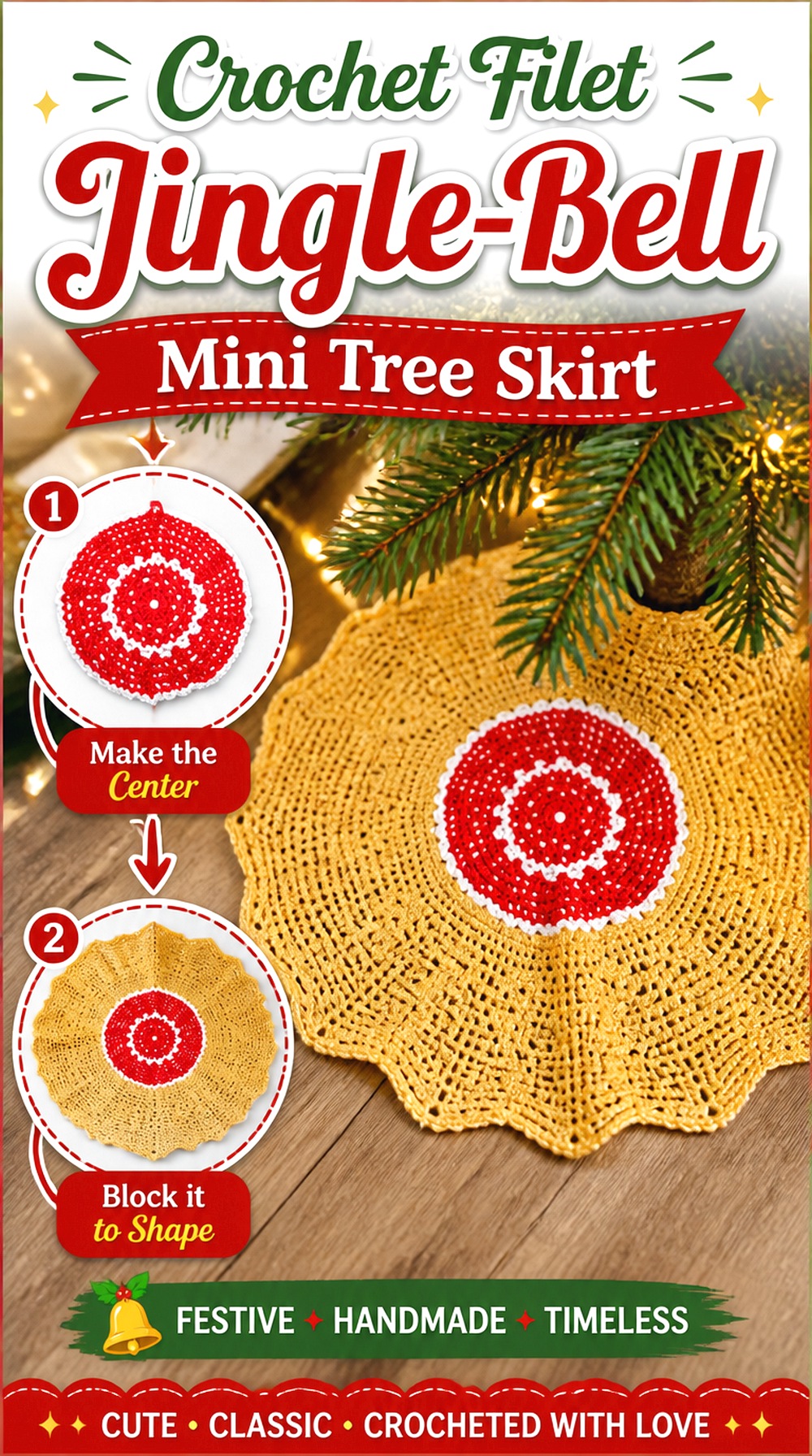
For smaller-scale decorating, the Jingle-Bell filet version is the clear outlier. Its fine thread, open motif, and compact sample create a much lighter effect than the bulky and super-bulky projects.
Conclusion
The most useful way to choose among these nine crochet Christmas tree skirt ideas is to start with setup and scale. Pick buttons or ties if you want easy access after the tree is standing, a closed ring if uninterrupted patterning matters more, a chunky textured project for visual weight, or granny and filet styles when color rhythm or openwork is the main attraction.
Also consider how much of the skirt will remain visible once gifts are arranged and how much storage space the finished fabric will need after the holidays. Once you have chosen the construction that fits your tree and decorating routine, use the original tutorial for the creator’s exact sizing, stitch sequence, and finishing details.
Frequently Asked Questions
How large should a crochet Christmas tree skirt be?
There is no single diameter that fits every Christmas tree. Measure the stand first, then consider the spread of the lowest branches and how much skirt you want visible beyond the stand. Also account for nearby furniture and walking space. If you are following a specific tutorial, use the creator’s sizing information rather than assuming you can add rows indefinitely without changing the shaping.
Is a tree skirt with a slit better than a closed crochet tree skirt?
Neither construction is universally better. A slit with ties or buttons is easier to place around a tree that is already standing. A closed ring creates uninterrupted patterning but generally needs to be positioned when the tree and stand are assembled. Choose according to your decorating routine. If you change skirts during the season, an opening is usually more convenient.
What yarn qualities work well for a crochet Christmas tree skirt?
Match the yarn to the visual effect you want. Smooth yarn shows colorwork, granny clusters, filet motifs, and geometric shaping clearly. Bulky yarn creates a thicker, more substantial fabric, while faux fur creates a soft snowy surface but hides individual stitches. Also check the fiber’s care label and consider how much storage space the finished skirt will require.
How can I stop a crochet tree skirt from becoming wavy?
A strongly wavy edge can indicate that the outer circumference is expanding faster than the fabric needs. Tight cupping can indicate the opposite problem. Because every tutorial handles increases differently, do not automatically add or remove stitches from a creator’s pattern. First check your gauge and tension, compare your work with the tutorial, and lay the skirt flat regularly so shaping problems are caught early.
Should I block a crochet Christmas tree skirt?
Blocking can help even the shape and improve stitch or motif definition, especially with openwork such as filet crochet. However, the appropriate method depends on the exact fiber. Always check the yarn manufacturer’s care guidance before applying water, steam, or heat. Bulky texture and faux-fur projects may need different finishing treatment from smooth cotton or acrylic fabric.
Can I change the colors in these Christmas tree skirt tutorials?
Color changes are usually one of the safest ways to personalize the overall look, but think about contrast as well as hue. Pine, bell, and other graphic motifs need enough visual separation to remain readable. Granny and striped skirts can handle larger palettes, although too many similar shades may blur together. Changing yarn type or weight is a bigger modification because it can affect gauge, drape, diameter, and yarn requirements.