
Crochet spider webs can become much more than a single round Halloween motif. Depending on the construction and finishing, the same open, radiating theme can work as a long table centerpiece, a compact coaster, a moving wind spinner, a dreamcatcher center, a wreath insert, or an oversized wall display.
The important differences are scale, support, yarn weight, blocking, and how the finished web will be displayed. Some pieces need to lie completely flat, while others look better stretched, stiffened, framed, or allowed to move. This collection focuses on those practical differences so you can choose a project that suits the space you actually want to decorate rather than making eleven nearly identical webs.
Quick List
- Crochet Spider Web Table Runner for a Long Centerpiece
- Crochet Spider Web Dreamcatcher Center for Framed Hanging Decor
- Crochet Round Spider Web Table Mat for a Single Focal Setting
- Crochet Spider Web Wind Spinner for a Moving Porch Display
- Crochet Spider Web Garland for Mantels and Doorways
- Crochet Spider Web Coasters for Small Table Accents
- Crochet Vintage Spider Web Doily for Lace-Look Decor
- Crochet Spider Web Wreath Insert for a Layered Door Display
- Crochet Stiffened Spider Web Hanging for Crisp Shape
- Crochet Oversized Spider Web Wall Decor for a Statement Backdrop
- Crochet Fine-Lace Spider Web Backdrop for Photos or Wall Styling
Choose the Display Style Before the Web Shape
A useful spider-web project starts with placement. Flat décor such as runners, mats, coasters, and doilies needs even edges and a stable finished surface. Hanging webs depend more on attachment points and the amount of tension used to open the lace. Garland and spinner projects add another concern because separate motifs or moving sections must hang consistently rather than simply lie flat.
For a large blank wall, scale may matter more than fine stitch detail. On a dining table, the opposite can be true: a smaller web with clean negative space may look more intentional than a thick oversized motif. Decide first whether you want horizontal décor, framed décor, moving décor, or a single statement piece. That immediately narrows the most useful tutorials below.
Yarn, Blocking, and Tension Change the Finished Look
Open crochet only looks web-like when the negative space remains visible. A finer yarn can emphasize delicate lines, while thicker yarn creates a bolder graphic shape that reads from farther away. Neither approach is automatically better; it depends on where the piece will be seen.
Blocking deserves extra attention with circular and radial designs. Small differences in tension can pull one spoke farther than another, and a web that looks uneven directly off the hook may become much cleaner once it is shaped. Some tutorials below deliberately use stiffener or stretching, while framed projects rely on an external support. Before substituting yarn, consider whether you want drape, firmness, or a web that can be pulled taut.
Plan Scale Around Storage and Reuse
Large Halloween décor can be impressive in October and awkward to store in November. Soft webs are easier to fold or loosely roll, while heavily stiffened pieces need enough storage space to avoid snapped or bent sections. Framed webs take more room but can usually return to the wall without reshaping.
Scale also affects setup. A tiny coaster needs little support, but a wall-size web may require several attachment points before its geometry becomes visible. If you plan to reuse the piece each year, think about how it will be removed, stored, and rehung before committing to the largest possible version.
1. Crochet Spider Web Table Runner for a Long Centerpiece
 SAVE
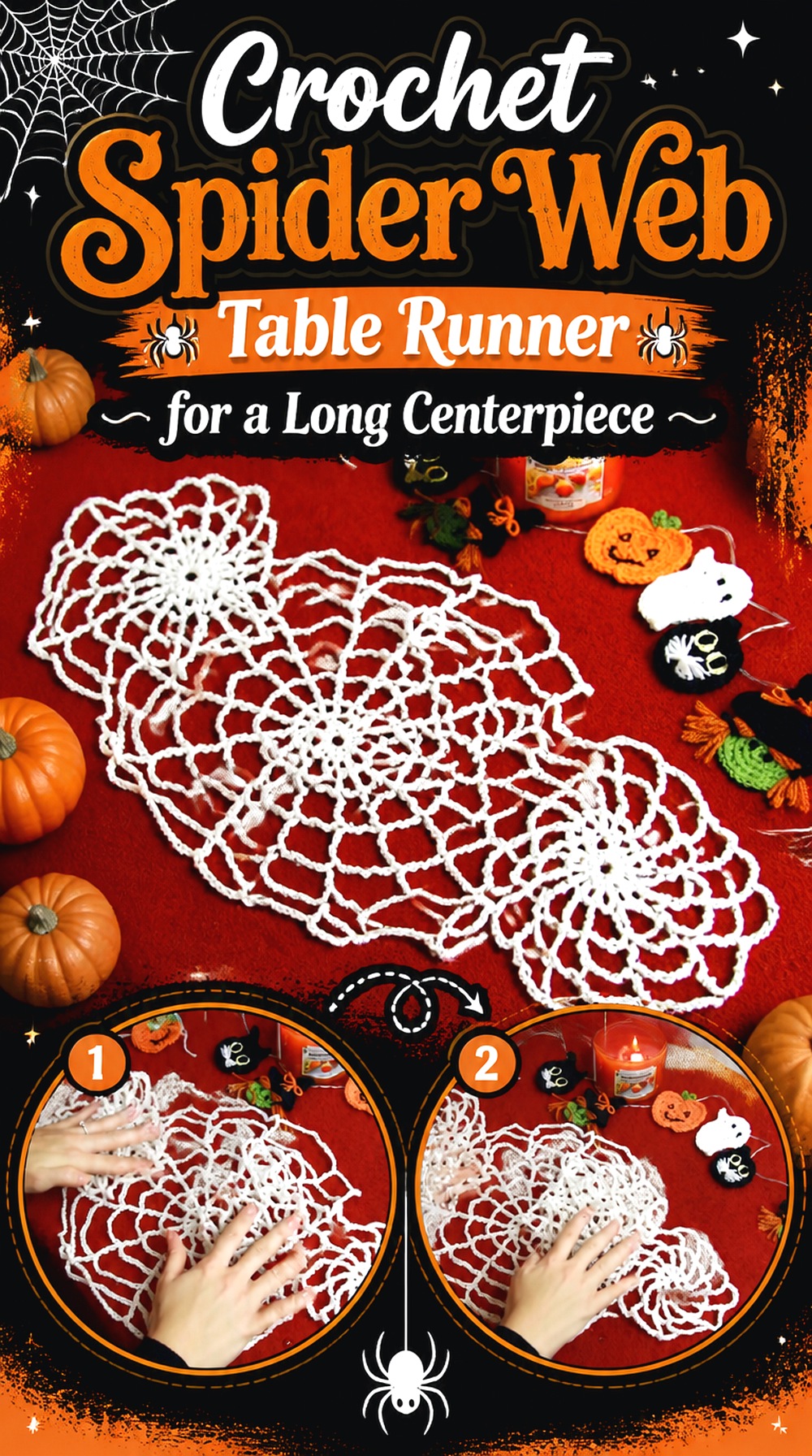
Instead of treating a spider web as a small isolated motif, this idea expands the geometry into a table-focused statement. Brunaticality’s tutorial is specifically presented as a crochet spiderweb table runner and demonstrates an expanding circular web concept with multiple size possibilities.
This format suits a dining or coffee table where the negative space can contrast with the surface underneath. It feels more dramatic than a coaster or doily because the web itself becomes the visual anchor for the entire arrangement. Before choosing it, measure the usable tabletop area and decide whether the crochet should sit beneath other decorations or remain mostly visible.
Runner Size Should Follow the Furniture
A tutorial can demonstrate how the web grows, but your stopping point should come from the table rather than a preset round count. Leave enough uncovered surface that plates, candles, pumpkins, or other décor do not completely hide the openwork.
A large circular piece on a narrow table can also overhang in unexpected places. Check the projected width against the tabletop before extending the motif further.
Open Webbing Needs a Calm Background
Spider-web lace depends on contrast. A highly patterned tablecloth beneath it can visually erase the radiating lines, while a relatively plain tabletop allows the geometry to stand out.
That makes color selection partly a background decision. Before buying yarn, place a short strand against the table or cloth you intend to use. If the edge disappears from a normal viewing distance, a stronger contrast may produce a clearer finished display.
Separate Decoration From Heat Protection
An open crochet runner should be treated as decoration unless the yarn and pattern are specifically intended for another function. Do not assume it can safely replace a trivet or other heat-resistant table accessory.
If hot serving dishes will be part of the setup, give them their own appropriate protective surface rather than relying on the crocheted web.
Original Tutorial and Creator Credit
Creator: Brunaticality
2. Crochet Spider Web Dreamcatcher Center for Framed Hanging Decor
 SAVE
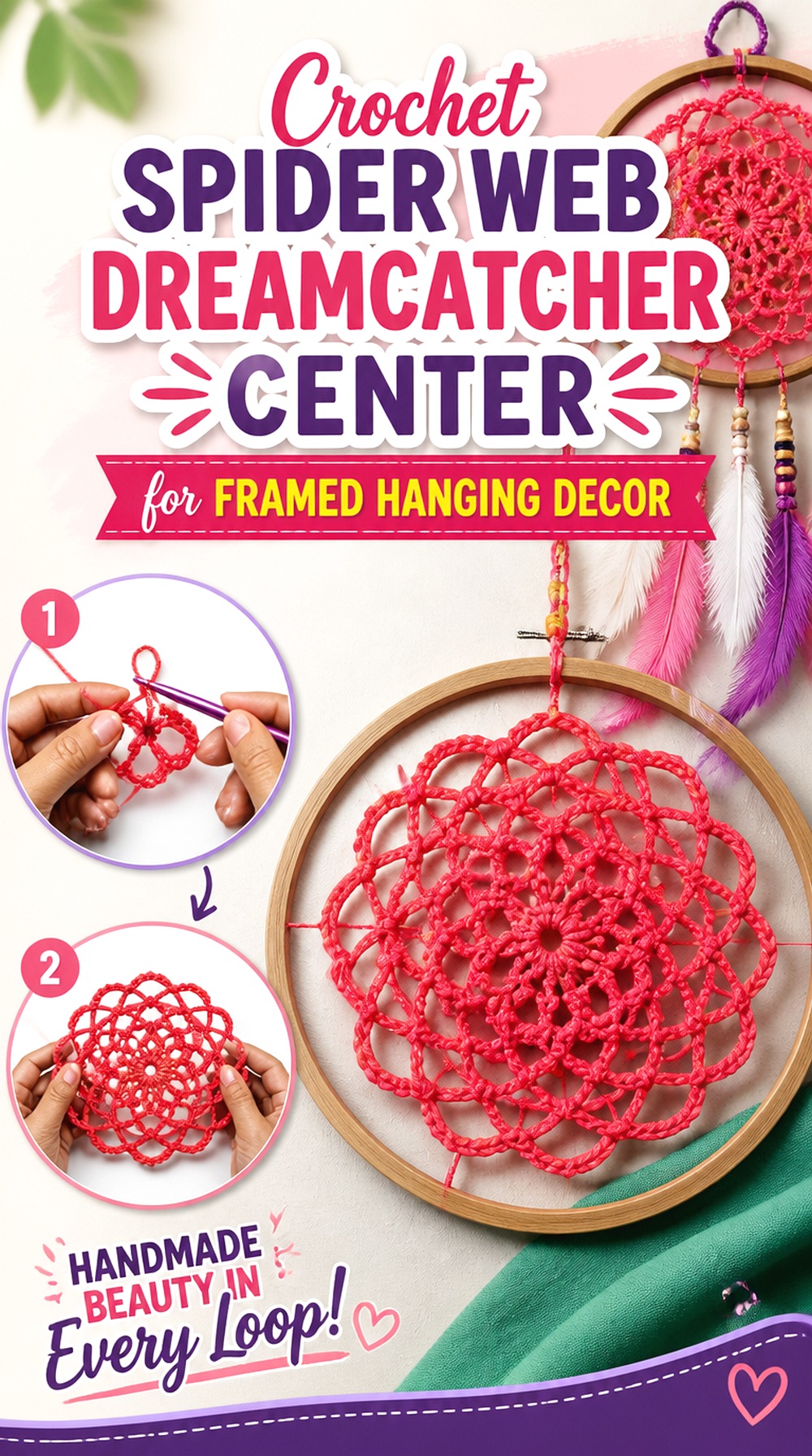
A dreamcatcher-style web changes the project from loose lace into framed wall décor. Mariie Crochet’s tutorial focuses specifically on crocheting the spiderweb portion for a dreamcatcher and identifies the video as the first part of the larger project.
The surrounding ring gives the web a defined outer boundary, which can make the geometry look more controlled than a freely hanging motif. This is a good direction when you want a vertical decoration that feels finished even without covering a large area. Because the web must relate to the frame, the important planning question is not simply how many rounds to make, but when its diameter is appropriate for the support you plan to use.
The Frame Defines the Final Geometry
A loose web can stretch in several directions. Once attached to a ring, those attachment points determine how evenly the spokes open.
Check the web against the intended frame before final assembly. If one section requires much more pulling than the others to reach the edge, the finished shape may look distorted. A compatible web-to-frame relationship is more important than forcing every motif onto a ring you already own.
Decorative Tails Change Visual Weight
Dreamcatcher-inspired décor often adds hanging elements below the central ring. Those details can shift the composition from a simple spider web toward a fuller statement piece.
If the center is already dense, consider keeping the lower embellishment lighter. If the web is very open, more substantial hanging details may balance it. Plan both sections together rather than finishing the center and treating everything beneath it as an afterthought.
Keep It Decorative Rather Than Load-Bearing
The crocheted center is designed for appearance, not for supporting objects. Avoid hanging additional heavy decorations directly from delicate web strands unless the construction specifically provides a supported attachment point.
For layered embellishments, use the rigid frame whenever practical so extra weight does not pull the lace out of shape.
Original Tutorial and Creator Credit
Creator: Mariie Crochet
3. Crochet Round Spider Web Table Mat for a Single Focal Setting
 SAVE
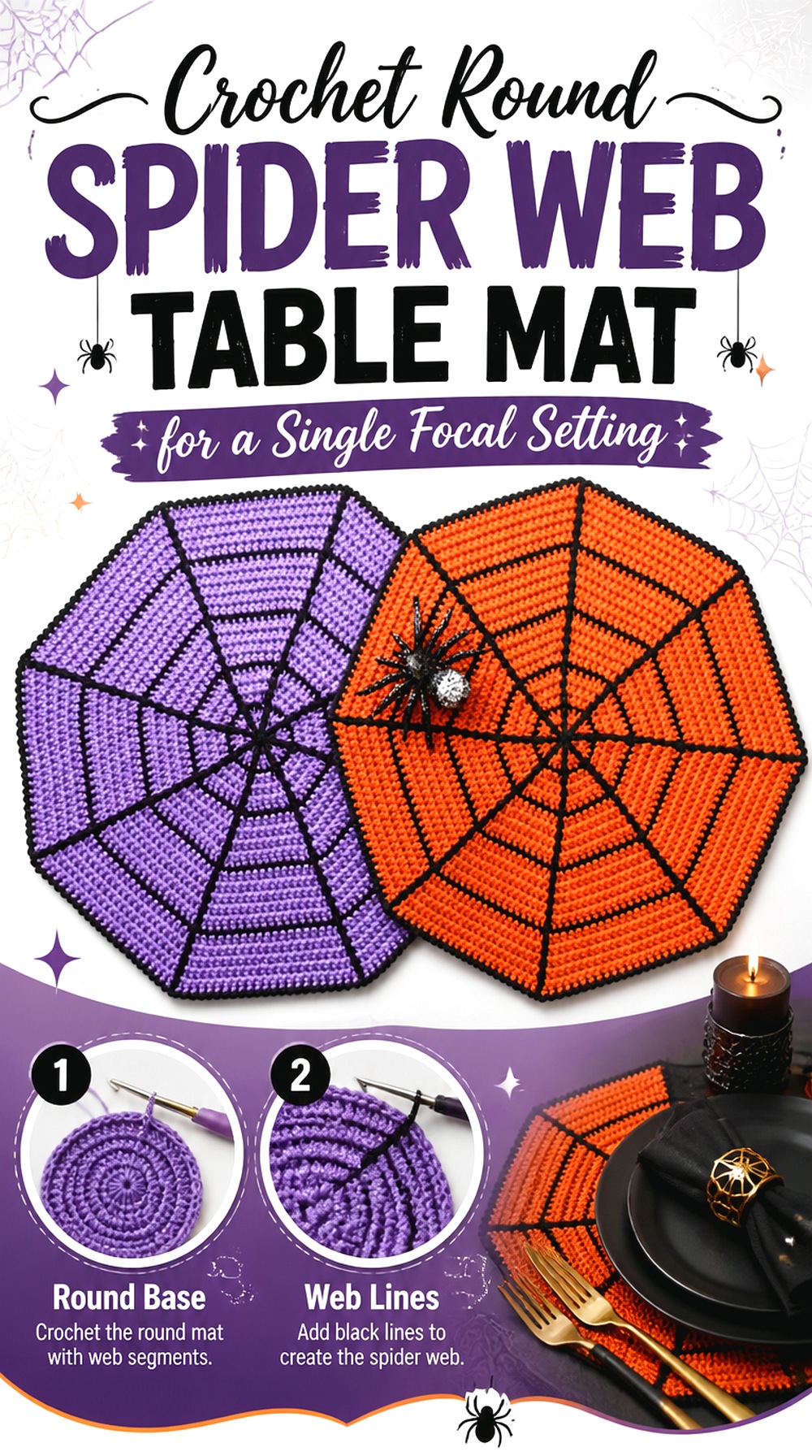
A round table mat occupies the middle ground between a small coaster and a full runner. HandmadebyRaine’s spiderweb tablemat tutorial shows a finished piece reported at about 15 inches in diameter and uses the format as a distinct piece of Halloween table décor.
That scale can work well beneath a centerpiece, on a side table, or as a single visual anchor on a larger dining surface. Because the entire round outline remains visible, symmetry matters more than it does in a partially hidden runner. This option suits readers who want a noticeable decorative web without committing to a very large wall or tabletop project.
A Single Round Mat Creates a Clear Focal Point
A runner directs the eye along the length of a table. A circular mat concentrates attention in one spot.
Use that difference deliberately. A central mat works well when the rest of the tabletop is relatively restrained, while several large circular pieces can quickly compete with one another. Decide whether the web itself is the centerpiece or a background for another seasonal object.
Flat Blocking Matters More on a Table
A hanging web can tolerate some natural movement, but a table mat looks less polished if edges lift or the center forms a noticeable bump.
After finishing, assess the piece on the actual surface where it will be used. If the web does not settle evenly, the blocking guidance associated with the tutorial becomes especially relevant before you arrange decorations on top.
Do Not Assume a Decorative Mat Is Heat-Safe
The tutorial demonstrates a table mat, but that does not automatically make every yarn substitution suitable beneath hot cookware.
Treat the finished web as decorative unless the specific fiber and intended use support something more demanding. Hot pans, baking dishes, and similar items should have a purpose-made heat-protective layer.
Original Tutorial and Creator Credit
Creator: HandmadebyRaine
4. Crochet Spider Web Wind Spinner for a Moving Porch Display
 SAVE
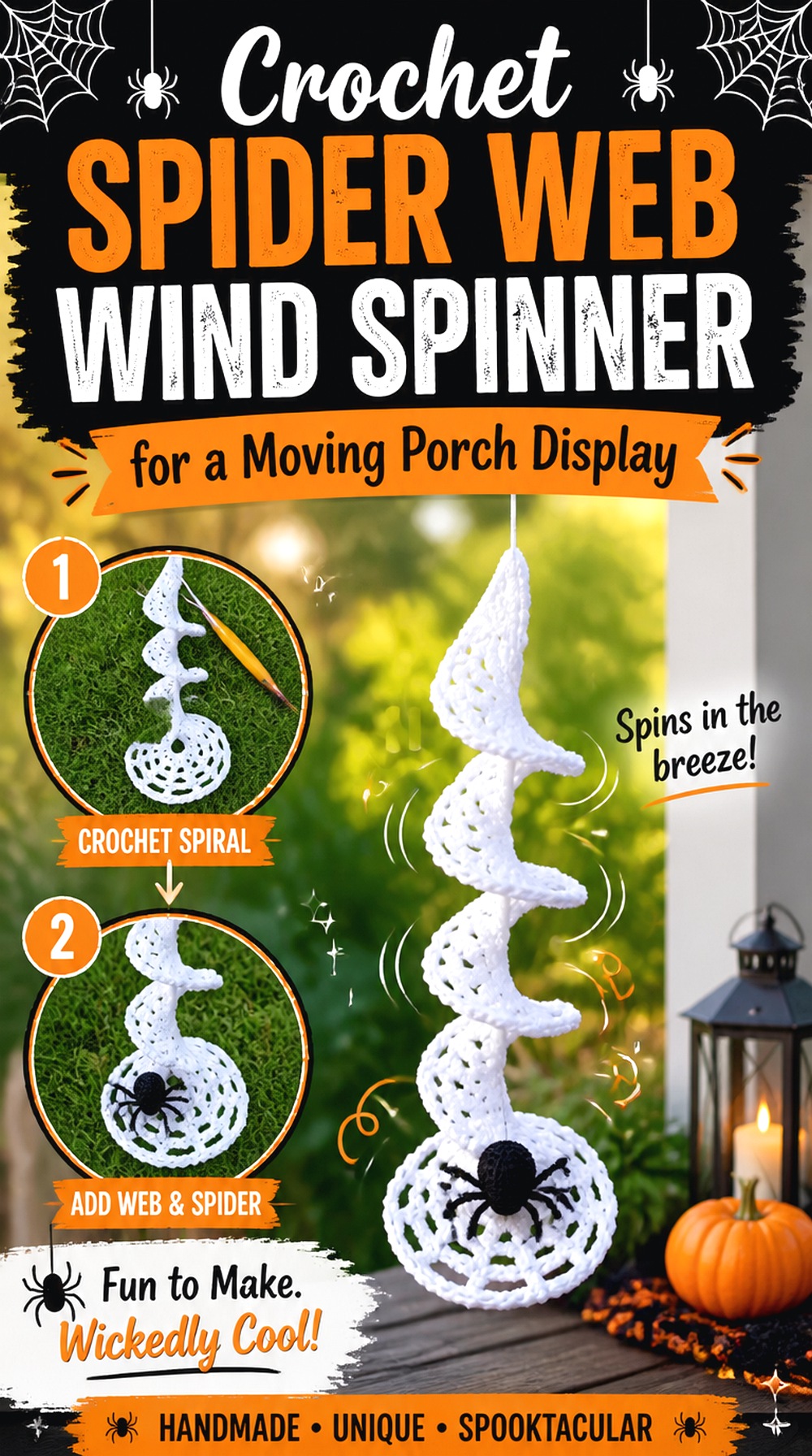
A wind spinner creates one of the biggest departures from a flat spider-web motif. Crafty Crochet Castle combines the web theme with a hanging spinner and a tarantula, producing a vertical decoration designed to move rather than remain stretched against a surface. The creator reports a 14-inch finished example using the materials shown in the tutorial.
This format is better suited to a hanging display point than a table or framed wall arrangement. Movement becomes part of the design, so finishing and suspension matter as much as the crochet itself. It is also a stronger thematic choice if you want the spider to be as noticeable as the web.
Movement Makes the Top Attachment Important
A wall web distributes tension across several points. A spinner concentrates most of the hanging load near the top.
Before displaying it, inspect the attachment area and make sure the yarn has not been stretched or weakened during assembly. If you plan to relocate the spinner repeatedly, handle it from the supported hanging section rather than pulling on decorative web strands.
Outdoor Display Needs Realistic Expectations
A porch location exposes yarn to more moisture, dust, sunlight, and movement than an indoor wall. The tutorial does not establish universal outdoor durability for every possible yarn substitution.
If you want to hang the spinner outside, consider a sheltered position and check the care information for the fiber you choose. Bring it in when conditions would leave the piece wet, tangled, or heavily stressed.
Small Added Parts Need Secure Finishing
The tutorial materials include optional pipe cleaners and either safety eyes or yarn details for the spider.
If the finished decoration will be placed where children or pets can reach it, loose embellishments deserve extra attention. Secure decorative components appropriately, or use simpler stitched details when detachable parts are not suitable for the location.
Original Tutorial and Creator Credit
Creator: Crafty Crochet Castle
5. Crochet Spider Web Garland for Mantels and Doorways
 SAVE
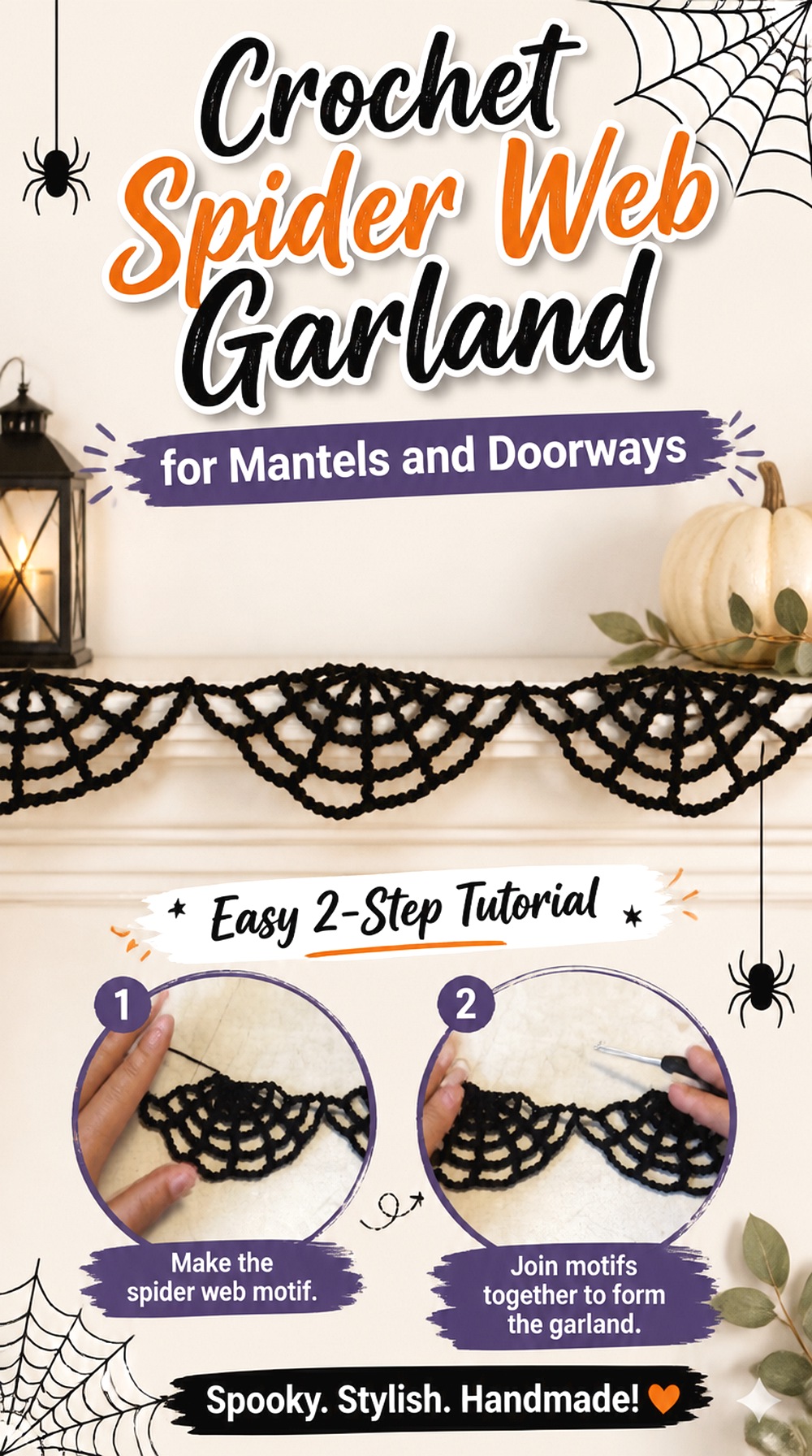
Garland turns one web into a repeated decorative rhythm. Alextitia Tuto Crochet’s tutorial demonstrates separate spiderweb motifs and then shows them being assembled into a garland.
This makes the idea particularly adaptable to mantels, doorways, shelf edges, and other horizontal spaces where one large circular web would feel awkward. Repetition is the main design feature, so consistency between motifs matters more than maximum size. You can also change the visual density by altering the space between webs rather than making each motif larger, which gives you a useful way to fit the decoration to different rooms.
Spacing Controls the Garland Rhythm
Identical motifs can look very different depending on the gap between them. Tight spacing creates a dense band of webbing, while wider spaces make each shape easier to recognize individually.
Lay the finished motifs on the floor or a table before permanently connecting the strand. Testing the spacing first is much easier than discovering after assembly that the garland feels crowded across a short mantel.
Repeated Webs Suit Narrow Horizontal Areas
A single large web needs height as well as width. Garland spreads the theme sideways, making it useful where vertical room is limited.
Consider it for the top of a bookcase, across a window, or beneath a shelf where a round wall hanging would not fit comfortably. Measure that display width before deciding how many motifs you actually need.
Plan the Hanging Points Before Final Length
Garlands often sag slightly between attachment points. That can be attractive, but excessive sag can make carefully spaced motifs bunch together.
Identify where the ends will attach and whether a long span needs an additional center support. The practical hanging arrangement should determine the finished length instead of adding webs indefinitely.
Original Tutorial and Creator Credit
Creator: Alextitia Tuto Crochet
6. Crochet Spider Web Coasters for Small Table Accents
 SAVE
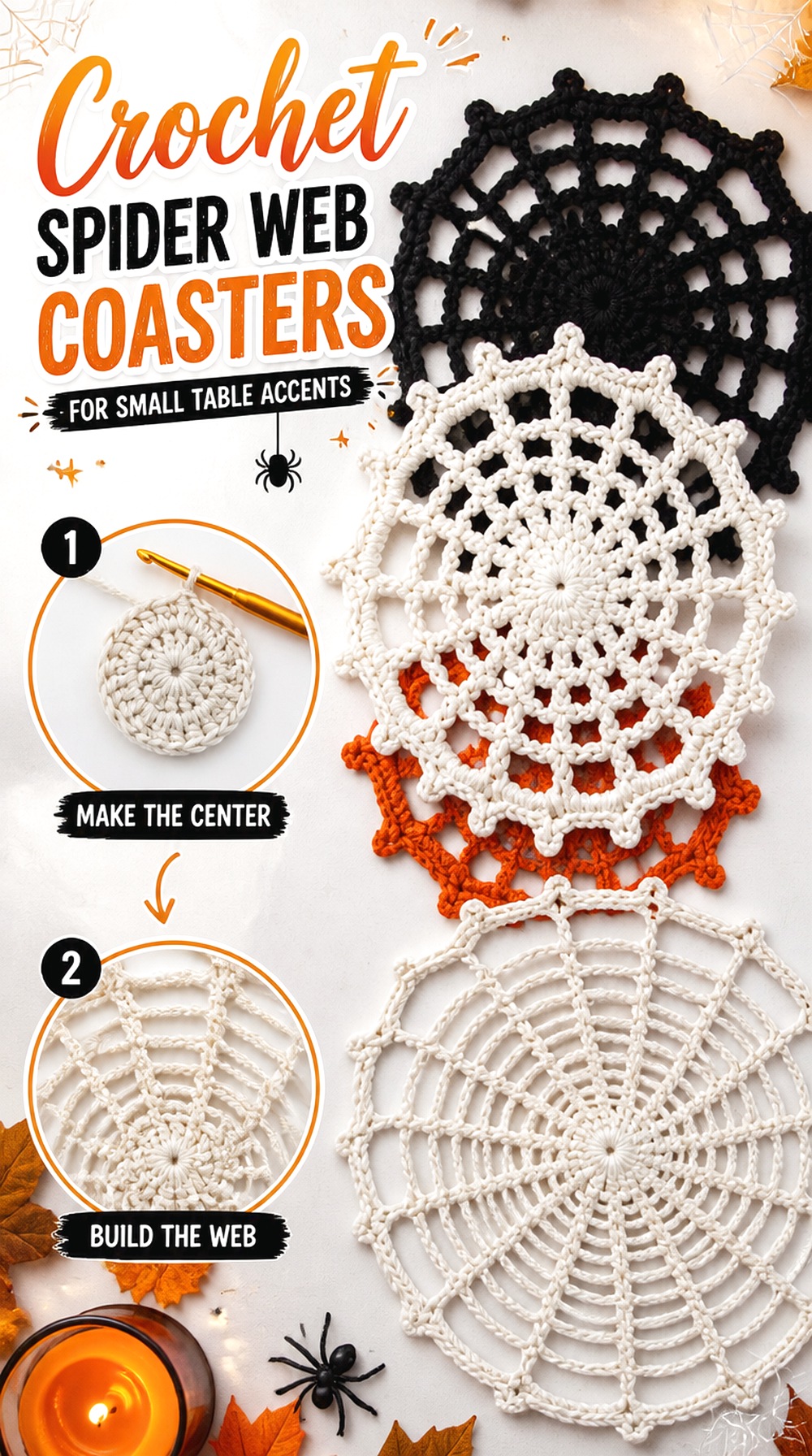
Spider-web coasters bring the theme down to a practical decorative scale. Hopeful Turns demonstrates a web pattern that can be made in different sizes and specifically notes that smaller versions can function as coasters while larger versions can become a doily, placemat, or table cover.
This flexibility makes the project useful when you want several matching pieces without filling the room with large Halloween decorations. A coaster also lets you experiment with color and fiber on a small scale before committing to a bigger version. For a coordinated table, make the finished dimensions consistent and check each piece after blocking rather than relying on unblocked measurements.
Small Scale Makes Yarn Choice More Obvious
On a large wall web, bold yarn can become part of the statement. On a coaster, very thick yarn may reduce the amount of visible negative space and change how clearly the web reads.
Compare the yarn thickness to the intended coaster diameter. If the spokes dominate the open spaces, a finer option may preserve more of the spider-web effect.
Keep the Center Stable Under Drinkware
A decorative coaster looks better when the base of a mug or glass can sit without rocking noticeably.
Before making a full matching set, place your usual drinkware on the first finished and blocked sample. That simple check can reveal whether your yarn choice or finishing leaves the center flatter than it first appeared in your hand.
Original Tutorial and Creator Credit
Creator: Hopeful Turns
7. Crochet Vintage Spider Web Doily for Lace Look Decor
 SAVE
For a more traditional interpretation, a thread-crochet doily gives the spider-web theme a finer and more decorative appearance. The Vintage Modern Homemaker follows a spider web doily pattern dating from 1935 and uses size 30 crochet thread with a steel hook in the demonstration.
Compared with chunkier Halloween webs, this version emphasizes lace detail rather than bold graphic lines. It can suit a small accent table, dresser, tray display, or vintage-inspired Halloween arrangement. Fine thread changes the working experience as well as the finished appearance, so this project makes the most sense if the delicate scale is part of what attracts you to it.
Fine Thread Creates the Vintage Character
Substituting a much heavier yarn may still produce a web motif, but it will not have the same lace-like visual scale as the tutorial example.
If you prefer a bold modern statement, another project in this list may suit you better. Choose this one when the smaller stitches and finer openwork are part of the desired look rather than simply a way to use whatever yarn is nearby.
Edge Blocking Helps the Lace Read Clearly
Intricate thread work can lose visual definition when the outer points are uneven or the piece is allowed to bunch.
Give yourself enough finishing space to shape the full circumference rather than blocking only the most distorted section. A consistently shaped edge helps the repeated web structure look intentional from every side.
Match the Effort to the Display Location
Fine-thread crochet can visually disappear if it is placed far from the viewer or against a busy patterned surface.
Before choosing a delicate doily for a large room display, consider viewing distance. A close-up dresser or tabletop location gives small lace details more opportunity to be noticed than a high wall or deep doorway.
Original Tutorial and Creator Credit
Creator: The Vintage Modern Homemaker
8. Crochet Spider Web Wreath Insert for a Layered Door Display
 SAVE
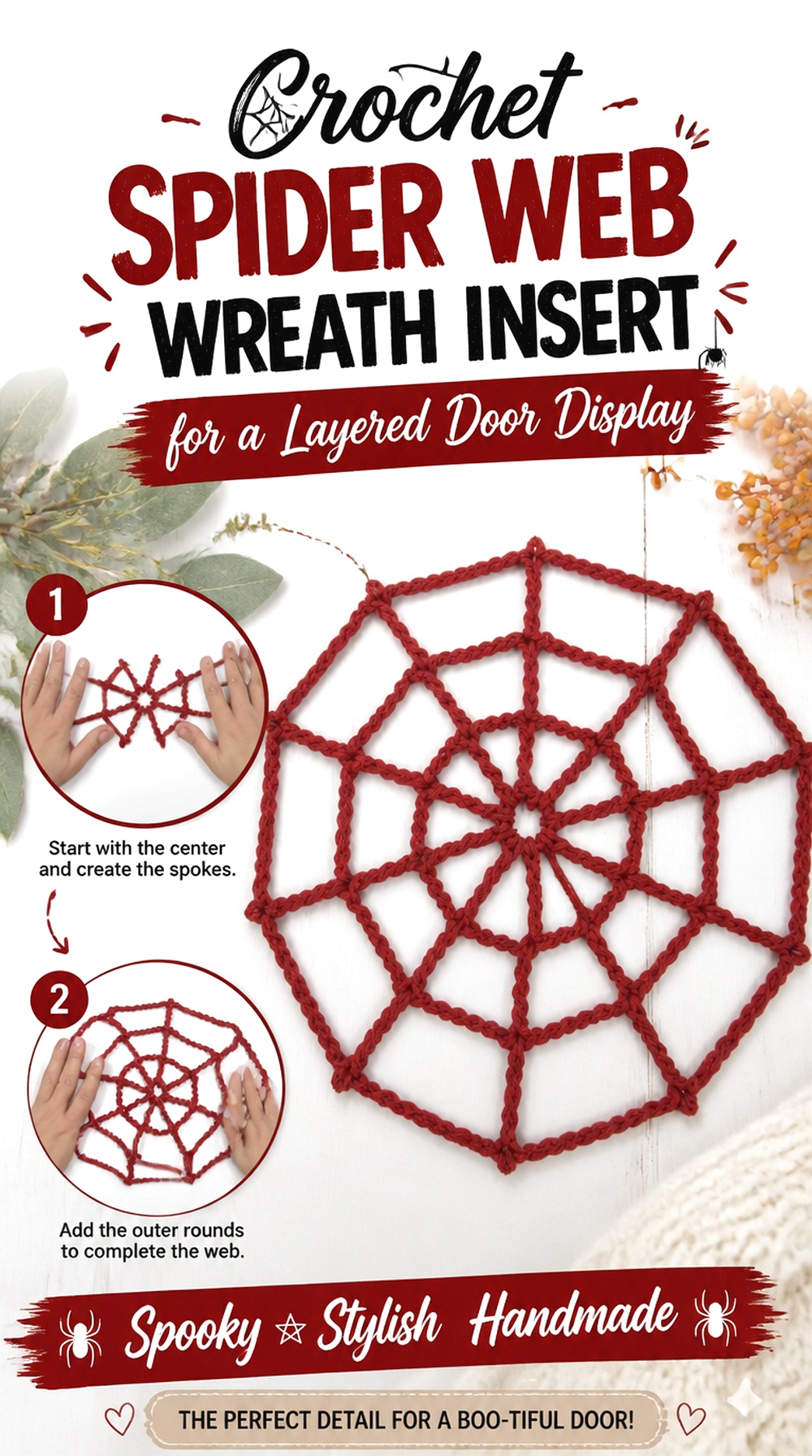
A wreath gives a crochet web instant structure and a clear place to live. The Crochet Crowd’s spider-web tutorial presents the web as Halloween home décor, and the accompanying project imagery includes a wreath arrangement with crocheted pumpkins. The creator also notes that the web can be made larger.
This approach works differently from a free-hanging wall web because the frame determines the outer shape and provides attachment points. It also creates opportunities to layer additional crochet motifs without needing to enlarge the web itself. The main design decision is how much of the web should remain visible once the surrounding wreath decorations are added.
The Wreath Frame Supplies the Structure
The web does not need to hold its shape entirely on its own when it is stretched across a rigid ring or wreath form.
Attach opposite areas gradually rather than pulling one side completely tight first. Even tension around the frame is more likely to preserve the radial layout and prevent the center from being dragged noticeably off-center.
Extra Motifs Can Hide the Web
Pumpkins, spiders, bows, leaves, and other seasonal details add personality, but too many can cover the negative space that makes the web recognizable.
Arrange embellishments temporarily before securing them. If the center starts reading as a cluster of objects instead of a spider web, remove or relocate a few accents and let the crochet geometry do more of the visual work.
Make Attachment Removable When Reuse Matters
A removable web can make it easier to restyle the same wreath form in another season. Permanent attachment may make more sense when the frame is dedicated to Halloween.
Decide which type of wreath you want before final assembly. That one choice affects how carefully you need to preserve both the frame and the crochet for future use.
Original Tutorial and Creator Credit
Creator: The Crochet Crowd
9. Crochet Stiffened Spider Web Hanging for Crisp Shape
 SAVE
Some crochet webs look best when they hold a defined outline without being stretched permanently between hooks. Craft Fix knitting & crochet demonstrates an adjustable-size spider web and specifically includes stiffening and pinning in the tutorial, including a curved-web example.
That finishing approach makes this project useful for standalone hanging décor, shelf displays, or arrangements where a soft web would collapse. Stiffening changes the character of the finished object, so it is worth deciding beforehand whether you value crisp geometry more than flexible storage. It also creates an opportunity to shape the web into something other than a perfectly flat circle.
Stiffener Turns Soft Lace Into a Defined Object
A freshly crocheted open web naturally wants to move. Stiffening can preserve a more deliberate arrangement of spokes and outer edges after it is removed from the blocking surface.
Apply this idea when the web needs to maintain its own silhouette. If it will always be stretched inside a frame, additional stiffness may be less important than it is for an unsupported hanging piece.
Curved Pinning Changes the Silhouette
The Craft Fix tutorial includes pinning guidance for a curved web as well as the standard shape.
That opens up useful placement options around shelf corners, mirrors, frames, or grouped Halloween displays. Choose the final outline while the web is being shaped rather than trying to force a fully hardened piece into a new curve afterward.
Storage Should Influence How Firm You Make It
A flexible web can usually be stored more compactly. A highly rigid web needs space where the outer points will not be crushed or bent.
If seasonal storage is limited, think about whether a lightly shaped piece would meet your decorating goal. The crispest possible finish is not always the most convenient one to keep year after year.
Original Tutorial and Creator Credit
Creator: Craft Fix knitting & crochet
10. Crochet Oversized Spider Web Wall Decor for a Statement Backdrop
 SAVE
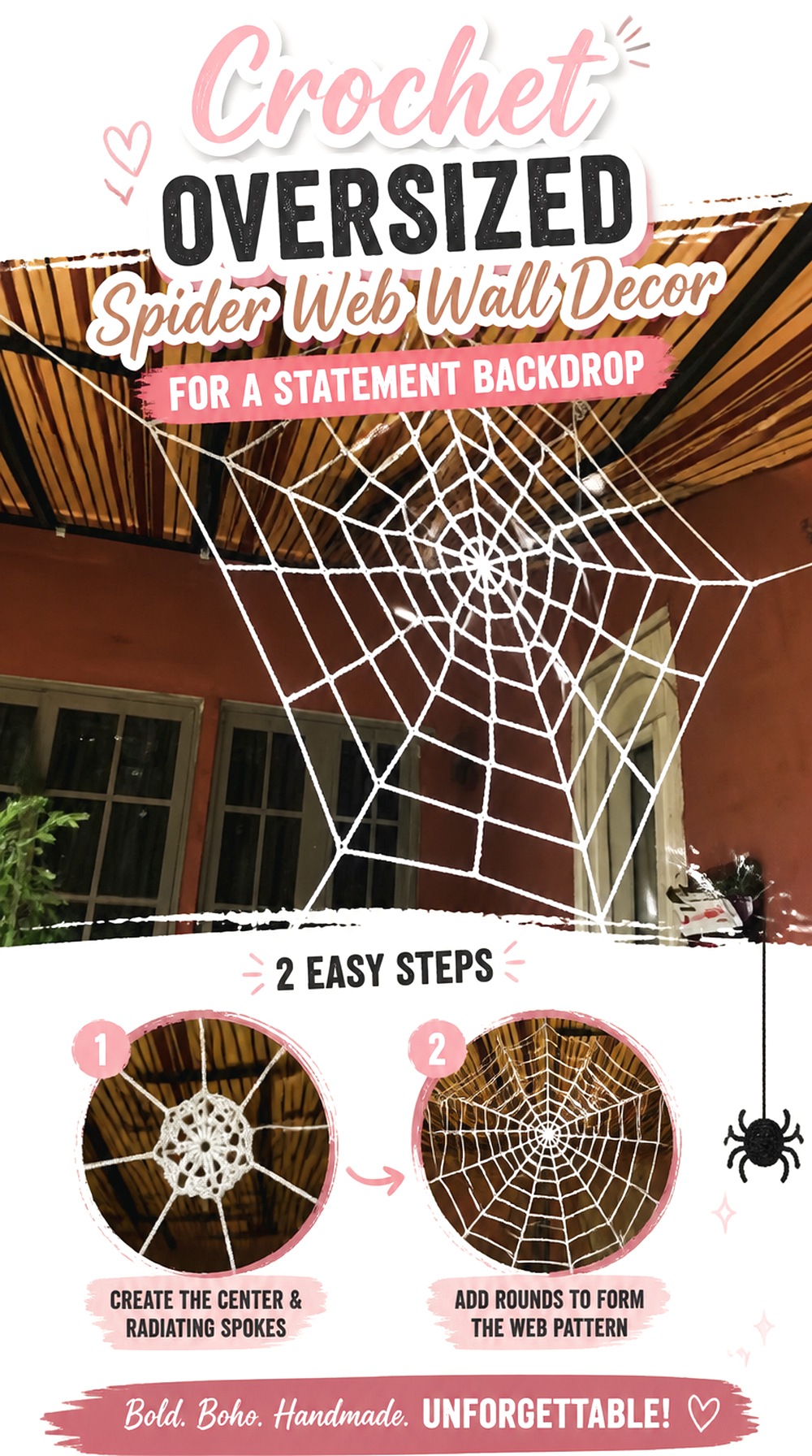
When the goal is visual impact from across a room, a heavier, larger web can work better than fine thread. JolieKnots Handmade presents a decorative spiderweb tutorial with two size options and shows examples using single-stranded and double-stranded medium-weight yarn.
That makes the concept a useful starting point for a bold wall display, party backdrop, or large Halloween focal area. At this scale, the web becomes architectural décor rather than a small accent. The bigger the piece grows, however, the more obvious uneven tension and attachment become, so plan the wall space and hanging points before making size the only priority.
Larger Webs Magnify Uneven Tension
A small difference between two spokes may barely register on a coaster. Once enlarged across a wall, the same imbalance can pull the center noticeably to one side.
Test-hang the web before finalizing all attachment points. Adjust the tension around the perimeter gradually until the center and outer arcs look balanced from normal viewing distance.
Double-Stranding Produces a Bolder Look
The JolieKnots Handmade tutorial includes examples using different strand arrangements for different sizes.
A thicker fabric is easier to see from farther away but also carries more visual and physical weight. Choose that treatment for a statement wall rather than assuming a large web must always mimic the delicacy of a real spiderweb.
Match Wall Hardware to the Finished Piece
A larger crochet web may require several anchors to keep the geometry open. Do not rely on one small hook simply because the yarn itself feels lightweight in your hand.
Assess the finished piece, wall surface, and intended duration of the display together. Temporary decorating products should also be checked for compatibility with the wall finish before use.
Original Tutorial and Creator Credit
Creator: JolieKnots Handmade
11. Crochet Fine Lace Spider Web Backdrop for Photos or Wall Styling
 SAVE
Diving Ducks Crochet demonstrates an open spiderweb using cotton yarn and notes that the finished piece can be hung on a wall, draped over a table, or used as a backdrop for Halloween photos.
The backdrop use makes this version different from a permanently framed wreath or a heavily stiffened web. It can remain light and flexible while still filling visual space behind a party table, chair, mirror, or photo setup. Because most of the design consists of negative space, what appears behind the web matters almost as much as the crochet. Plan the background at the same time you choose yarn color.
Fine Cotton Keeps the Negative Space Open
The tutorial example uses cotton yarn with a 3.5 mm hook.
For backdrop styling, that relatively open appearance can be useful because the web adds texture without completely hiding the wall or scene behind it. If you substitute much bulkier yarn, expect the lines themselves to become a stronger part of the photograph.
Background Contrast Determines Visibility
A white or pale web can disappear against a very light wall, while a black web may vanish into a dark party backdrop.
View the proposed combination from several feet away before committing. If the web is difficult to distinguish with your eyes at that distance, it is unlikely to become clearer once surrounded by other decorations in a photograph.
Use Attachments That Suit a Temporary Backdrop
Photo displays are often installed briefly and removed after a party or seasonal shoot. That makes attachment choice different from permanent wall art.
Use enough support to open the web without stretching individual strands excessively, and choose hanging methods appropriate for the wall or backdrop surface rather than attaching directly to delicate crochet loops wherever convenient.
Original Tutorial and Creator Credit
Creator: Diving Ducks Crochet
Which Spider Web Decor Format Fits Your Space?
| If you want… | Strong options from this list | Main checkpoint |
|---|---|---|
| A long horizontal display | Table runner or garland | Measure the furniture or doorway first |
| A compact tabletop accent | Coasters, doily, or table mat | Check flatness after blocking |
| A framed hanging piece | Dreamcatcher or wreath insert | Match web size to the support |
| Décor with movement | Wind spinner | Reinforce and inspect the hanging point |
| A rigid standalone shape | Stiffened hanging web | Plan storage before stiffening |
| A dramatic room-scale feature | Oversized wall web | Distribute tension across several points |
| A light temporary background | Fine-lace backdrop | Choose strong contrast with the background |
Conclusion
The most useful choice depends less on which spider web looks prettiest in isolation and more on where you intend to put it. Coasters and doilies suit small surfaces, while the table mat and runner make the web part of a larger tablescape. Garland works well across narrow horizontal spaces, the wind spinner adds movement, and framed or stiffened webs solve the problem of keeping open lace in a defined shape.
For a large seasonal focal point, the oversized wall web or flexible photo backdrop gives the motif more visual reach. Once you choose the format, use the original tutorials above for the creators’ exact construction details and finishing methods.
Frequently Asked Questions
Do all crochet spider webs need to be blocked?
No. The amount of shaping needed depends on how the finished web is displayed. A web stretched across a frame or wall may open naturally under controlled tension, while a table mat or doily usually benefits more from careful flat shaping. A standalone web may need stronger blocking or stiffening to retain a crisp outline. Judge the finished fabric and intended display rather than assuming every web requires the same treatment.
What yarn works well for crochet spider web decor?
Start with the effect you want. Finer yarn or thread emphasizes delicate negative space, while thicker yarn creates a more graphic web that can be easier to see from across a room. Fiber behavior also affects drape and blocking. If you substitute the tutorial yarn, make a small sample first and check whether the open spaces remain clear enough for the intended scale.
Can I make a spider web tutorial larger than the demonstrated version?
Some tutorials in this collection specifically describe their web as expandable, including the Craft Fix, Hopeful Turns, The Crochet Crowd, and Diving Ducks Crochet examples.
That does not mean every spider-web design can be enlarged indefinitely without adjustment. Follow the creator’s guidance for the specific construction and stop periodically to check whether the piece remains flat and proportionate.
How can I keep a large crochet wall web from sagging?
Large webs usually need tension distributed around several outer points rather than being suspended from only one or two locations. Position the center first, then adjust opposite sides gradually so one spoke does not carry most of the pull. The appropriate attachment method depends on the wall surface and finished weight. Test the display before any party or event rather than assuming the first arrangement will stay evenly tensioned.
Can crochet spider web coasters or mats protect a table from heat?
Do not assume so. A project being called a coaster, mat, runner, or doily does not establish that every yarn or finished version is suitable beneath hot cookware. Fiber composition, construction, and intended use all matter. Use spider-web table pieces primarily as decoration unless the specific materials and design are confirmed for the type of heat exposure you have in mind.
How should stiffened spider web decorations be stored?
Give rigid webs enough space that their outer points and open arches are not crushed. A shallow box or protected flat shelf may suit a stiffened piece better than folding it with soft seasonal textiles. Flexible framed or unstiffened webs can often tolerate different storage methods, but avoid tight creases in areas you want to reopen cleanly next season. Labeling the storage container can also prevent heavier decorations from being stacked on top.13 Crochet Striped Cardigan Ideas for Color, Fit, and Layering