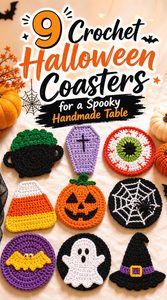
Halloween coasters can be much more interesting than the same round design worked in different colors. This collection ranges from recognizable flat silhouettes, including ghosts, bats, candy corn, and coffins, to designs that use surface texture or unusual edging to create pumpkins, spiderwebs, eyeballs, skulls, and bubbling cauldrons.
The differences matter when the coaster will actually sit under a drink. An open web does not handle condensation the same way as a dense pumpkin, while pointed wings or a narrow coffin outline leave a different usable cup area than a circle. The ideas below highlight those practical trade-offs, along with finishing, yarn, flatness, and set-planning considerations, so you can choose a Halloween coaster for more than appearance alone.
Quick List
- Crochet Ghost Silhouette Coaster
- Crochet Spiderweb Lace Coaster
- Crochet Candy Corn Wedge Coaster
- Crochet Skull Face Coaster
- Crochet Bat Wing Coaster
- Crochet 3D Pumpkin Texture Coaster
- Crochet Bloodshot Eyeball Coaster
- Crochet Coffin-Shaped Coaster
- Crochet Bubbling Cauldron Coaster
Choose Yarn for the Coaster, Not Just the Halloween Colors
Black, orange, white, purple, and acid green can establish the Halloween theme, but the fiber and fabric deserve equal attention. A coaster used under cold drinks needs enough surface area to catch condensation, while a piece used mainly under coffee mugs may benefit more from a flat, stable fabric. Cotton is a common coaster choice because it can absorb moisture, and several tutorials here specifically use cotton. Other creators use acrylic successfully for decorative or textured designs.
When substituting yarn, compare the new yarn’s thickness and behavior with the tutorial material rather than matching color alone. A much thicker yarn can enlarge a shaped silhouette, and a softer or stretchier yarn may make points, wings, handles, or narrow edges less defined. Always follow the yarn manufacturer’s care information when washing or blocking.
Keep Novelty Shapes Flat Enough for a Cup
The most dramatic Halloween shapes often have the smallest practical cup area. Bat wings, ghost tails, coffin corners, and cauldron handles look great outside the footprint of a mug, but the center still needs to sit reasonably flat.
Before making a full set, finish one coaster and place the drinkware you normally use on it. Check whether the base rests on an even section of crochet, whether raised decoration causes wobbling, and whether condensation would simply pass through large open spaces. Also look at the back: knotted or bulky finishing can create an uneven surface even when the front appears flat. If a motif curls after finishing, use a blocking method appropriate for that particular fiber instead of assuming every yarn should be treated the same way.
1. Crochet Ghost Silhouette Coaster
 SAVE
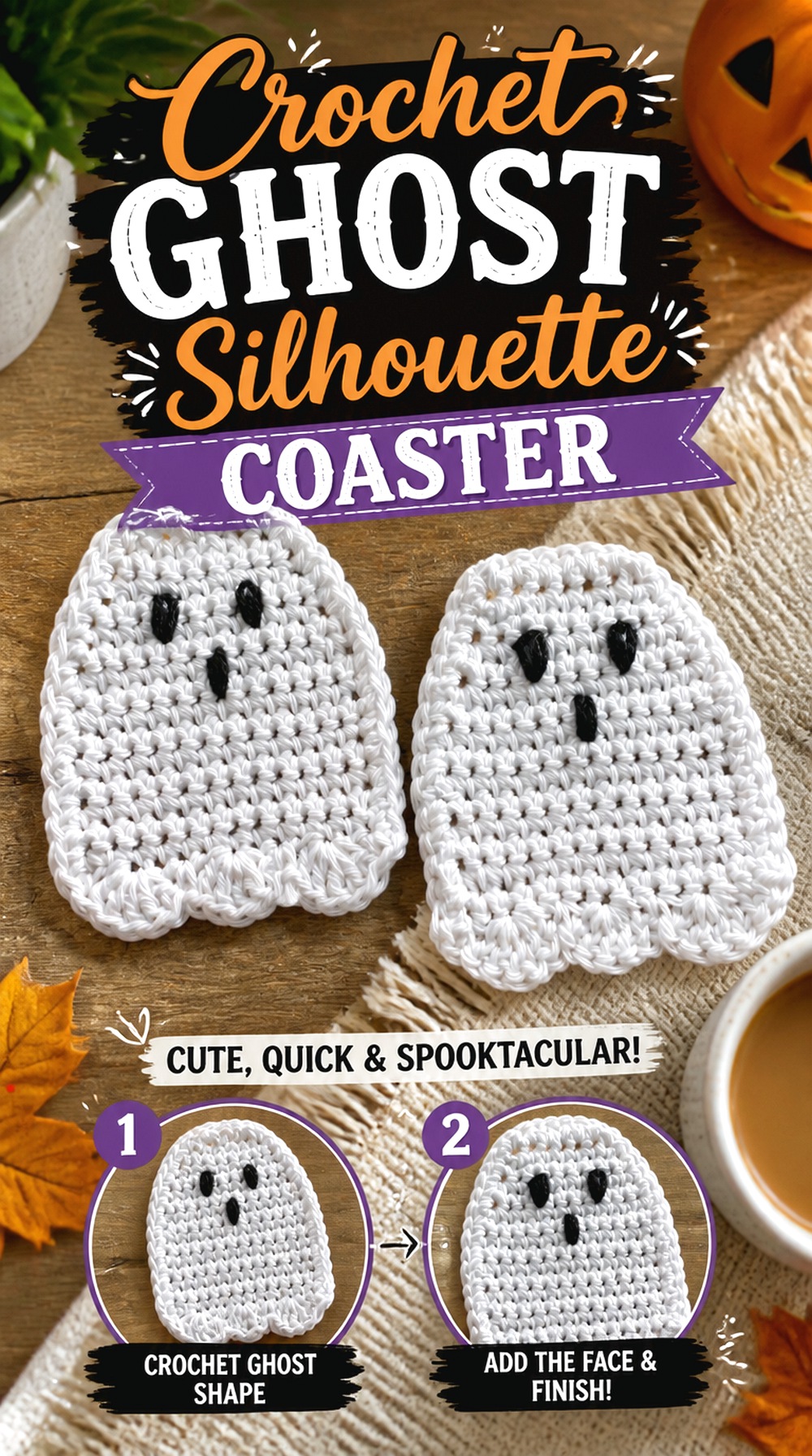
SAVEInstead of forcing a Halloween character into a standard circle, this crochet ghost coaster uses the ghost itself as the finished outline. The white body gives you a broad central area for a mug while the shaped lower edge creates the recognizable floating-ghost effect. Facial details turn an otherwise simple white silhouette into seasonal table decor without requiring a complicated color layout across the whole coaster.
This option makes sense when you want a character design that still reads clearly from across the table. Because the face and irregular bottom edge provide most of the personality, neat finishing matters more here than elaborate surface texture.
The Broad Ghost Body Leaves a Useful Cup Area
The upper and middle portions are visually simpler than the shaped tail, which is useful for a functional coaster. When evaluating your finished piece, center your usual mug on the body rather than judging the project by its maximum width. A decorative edge can make a coaster look large while offering less truly flat space than its overall dimensions suggest.
Face Details Need a Smooth Reverse Side
The tutorial adds the ghost’s facial features after shaping the body. Any embroidered or sewn detail should be secured without leaving an unnecessarily bulky knot directly beneath the drink area. Turn the coaster over before considering it finished and check whether the back rests evenly on the table.
Check the Tail Shape Before Making a Matching Set
Irregular silhouettes make small differences in tension easier to notice than they would be on plain circles. If you plan several matching ghosts, compare the first two finished outlines before producing the entire set. That gives you an opportunity to correct a noticeably tighter edge or inconsistent shaping early.
Original Tutorial and Creator Credit
Creator: Caro-stitched
2. Crochet Spiderweb Lace Coaster
 SAVE
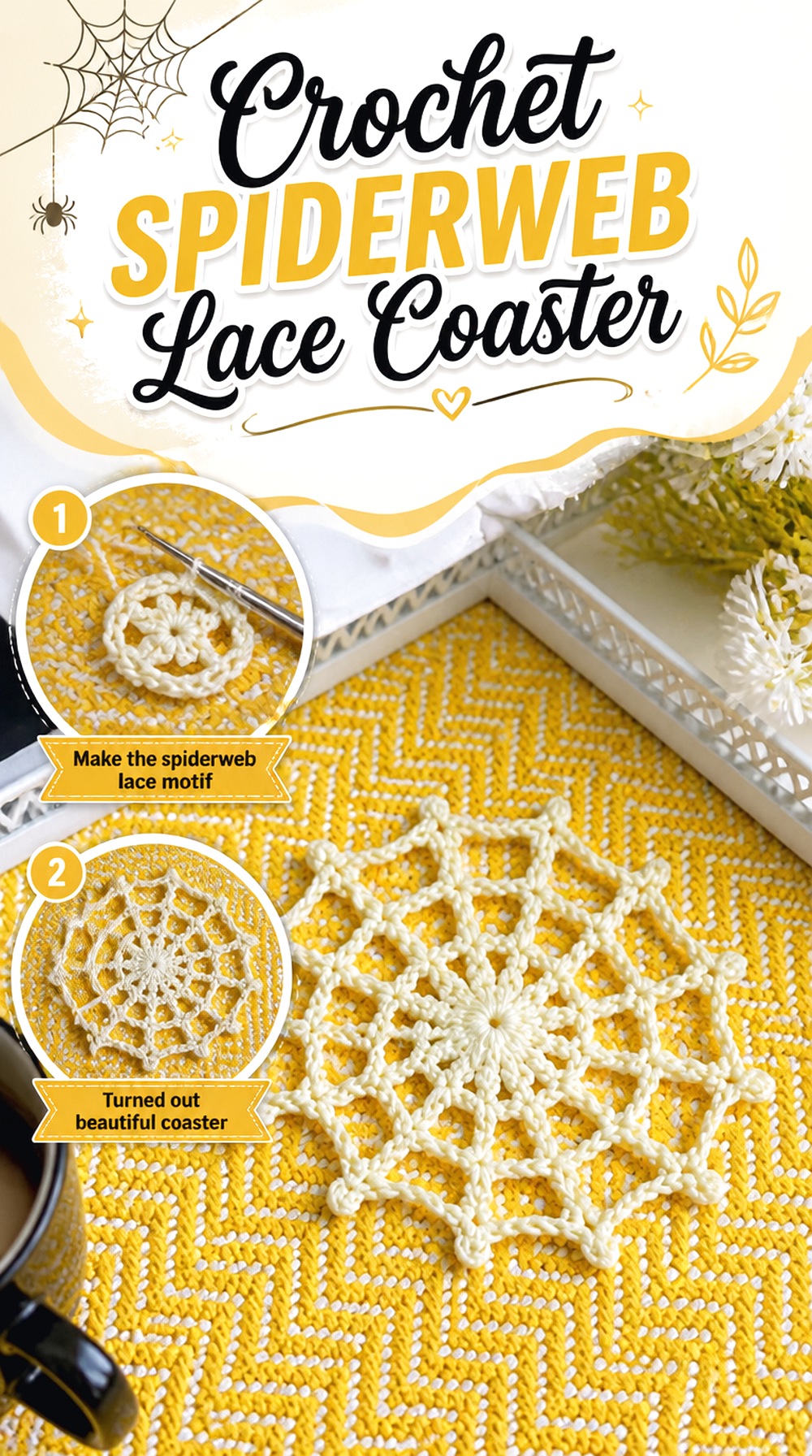
SAVEA spiderweb coaster takes almost the opposite approach from a solid ghost. The Halloween identity comes from open spaces and radiating lines rather than a character face or dense silhouette. That gives the finished piece a lighter visual presence and makes it useful when you want spooky decor that does not dominate the rest of a table setting.
The openness is also its main practical trade-off. A web can frame a mug beautifully, but gaps provide less material for catching condensation than a dense coaster. This is therefore a good design to choose deliberately: prioritize the web effect when appearance matters most, and compare the finished openings with the type of drinkware you plan to use.
Open Webbing Changes How the Coaster Handles Moisture
Large open areas can allow condensation to reach the surface underneath. If protecting a moisture-sensitive tabletop is the main goal, compare this design with one of the denser options in the collection. For decorative party settings or mugs that produce little condensation, the visual web may be the more appealing trade-off.
Blocking Is Part of the Web’s Geometry
The creator includes blocking guidance in the tutorial, which is particularly relevant to a design built from radiating lines and spaces. Uneven points are much more visible in a geometric web than on an organic character shape. Use only a blocking approach appropriate for your chosen fiber and its care instructions.
High Contrast Makes the Web Structure Easier to Read
A spiderweb does not need to be black. What matters visually is the relationship between the yarn, the tabletop, and any surrounding Halloween decor. A pale web on a dark table can be just as recognizable as a black web on a light one. Test the coaster where you intend to use it before deciding a subtle color combination has enough contrast.
Original Tutorial and Creator Credit
Creator: Little Lemon Stitches Co.
3. Crochet Candy Corn Wedge Coaster
 SAVE
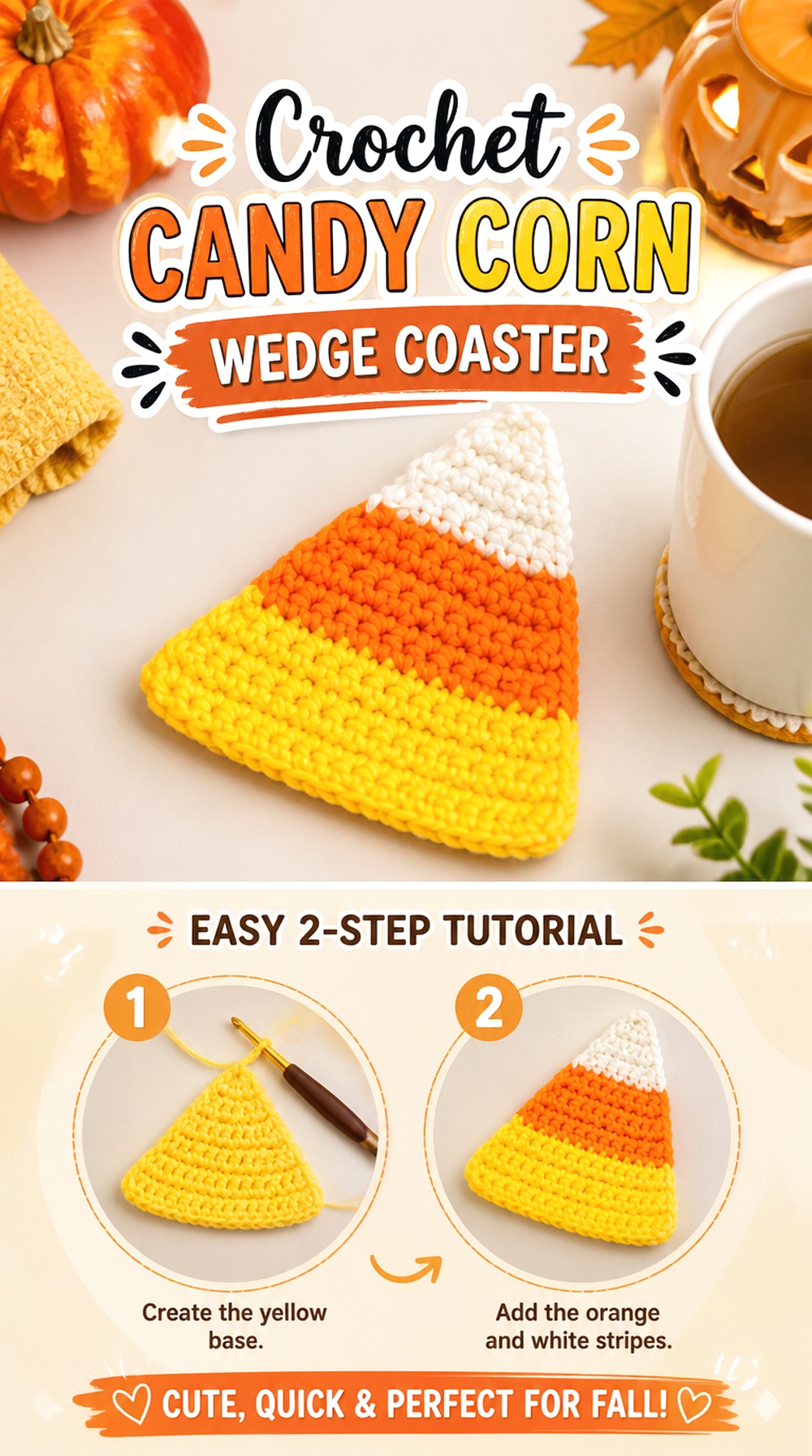
SAVEThis crochet candy corn coaster swaps the usual circular coaster profile for a broad triangular wedge. The familiar stacked color bands make the Halloween reference immediately recognizable, while the simple geometric outline gives it a different visual rhythm from the character-based designs.
The strongest reason to choose this style is its graphic look. A set can bring several Halloween colors to the table without adding faces, eyes, or dimensional embellishments. Because the point of the candy corn extends beyond the main drink area, judge functionality using the wider center rather than the complete silhouette. It is also worth paying attention to clean color transitions, since the three-band layout makes uneven changes much more noticeable.
The Triangle Needs a Stable Center
A pointed silhouette can appear larger than the area that actually supports a cup. Once the coaster is finished, place your usual mug over the center and check that the base is not balanced partly over the narrowing tip or irregular outer edge.
Three Color Bands Put Transitions on Display
The candy corn effect depends on distinct sections of color, so joins and yarn ends have more visual importance than they do on a one-color coaster. Before making multiples, decide which side you want to present as the front and keep your finishing consistent from piece to piece.
Matching Wedges Make a Set Look More Intentional
A slightly different outline may not matter for one coaster, but variation becomes obvious when several triangular pieces sit beside one another. Compare completed pieces by overall silhouette and color placement rather than trying to force an unverified universal finished measurement.
Original Tutorial and Creator Credit
Creator: crochet with katie 🧶
4. Crochet Skull Face Coaster
 SAVE
SAVEThe crochet skull coaster has a stronger gothic look than the softer ghost or candy corn designs. Its identity comes from the relationship between the rounded head, dark eye areas, and narrower jaw rather than from color alone. That makes it a good choice for a Halloween table built around black, white, gray, or other restrained colors.
It is also more shape-dependent than a conventional round coaster. The jaw and eye details have to read clearly without making the drinking surface unnecessarily awkward. Before making a full set, look at the finished coaster with an actual mug in place. A design can look excellent in a flat photograph yet lose important facial details once the cup covers its center.
Eye Openings Create the Main Visual Focus
The eyes carry much of the skull identity, so their placement and symmetry deserve more attention than tiny cosmetic differences elsewhere. Lay the coaster flat and view it from normal table distance before deciding the face needs additional embellishment.
Jaw Shaping Separates It From a Plain Round Coaster
The narrower lower section is what helps the piece read as a skull rather than a circle with eyes. That also means the maximum overall dimensions do not tell you the full story about usable drink space. Check the broad head area against your preferred cup.
Border Tension Can Distort the Skull Outline
A tight outer finish can pull in an otherwise balanced shape, while a loose edge can make the skull look ruffled. If the outline changes significantly after finishing, correct the edge issue before adding more decorative detail rather than trying to disguise the distortion.
Original Tutorial and Creator Credit
Creator: Hooked and Smithen
5. Crochet Bat Wing Coaster
 SAVE
SAVEWith wings stretching to both sides, this crochet bat coaster creates one of the widest silhouettes in the collection. The shape can work as both seasonal table decor and a small appliqué-style motif, which gives it more display flexibility than a conventional coaster.
The extended wings are also the feature that requires the most practical thought. A bat’s full width is not the same as its flat central cup area, and pointed wing sections can curl more noticeably than a simple round edge. Choose this design when the silhouette itself is part of your Halloween setup, then evaluate the center separately for everyday drink use.
Wing Tips Create More Outline Than Cup Space
Do not choose drinkware based on the bat’s full wingspan. Place the cup over the central body and see how much stable crochet remains beneath the base. This is especially useful if you plan to use the coasters with wide mugs rather than narrow glasses.
Cotton Can Give the Silhouette Clear Definition
The creator demonstrates the coaster using medium-weight cotton yarn. If you substitute another fiber, focus on whether it preserves the wing shape and lies flat rather than assuming the same visual result from any yarn of a similar color.
Decide Whether It Is a Coaster or Appliqué First
Because the tutorial also presents the bat as an appliqué possibility, decide on its main job before changing materials or scale. A decorative bat attached elsewhere has different requirements from one expected to sit flat beneath a drink.
Original Tutorial and Creator Credit
Creator: Pora Pora Crochet
6. Crochet 3D Pumpkin Texture Coaster
 SAVE
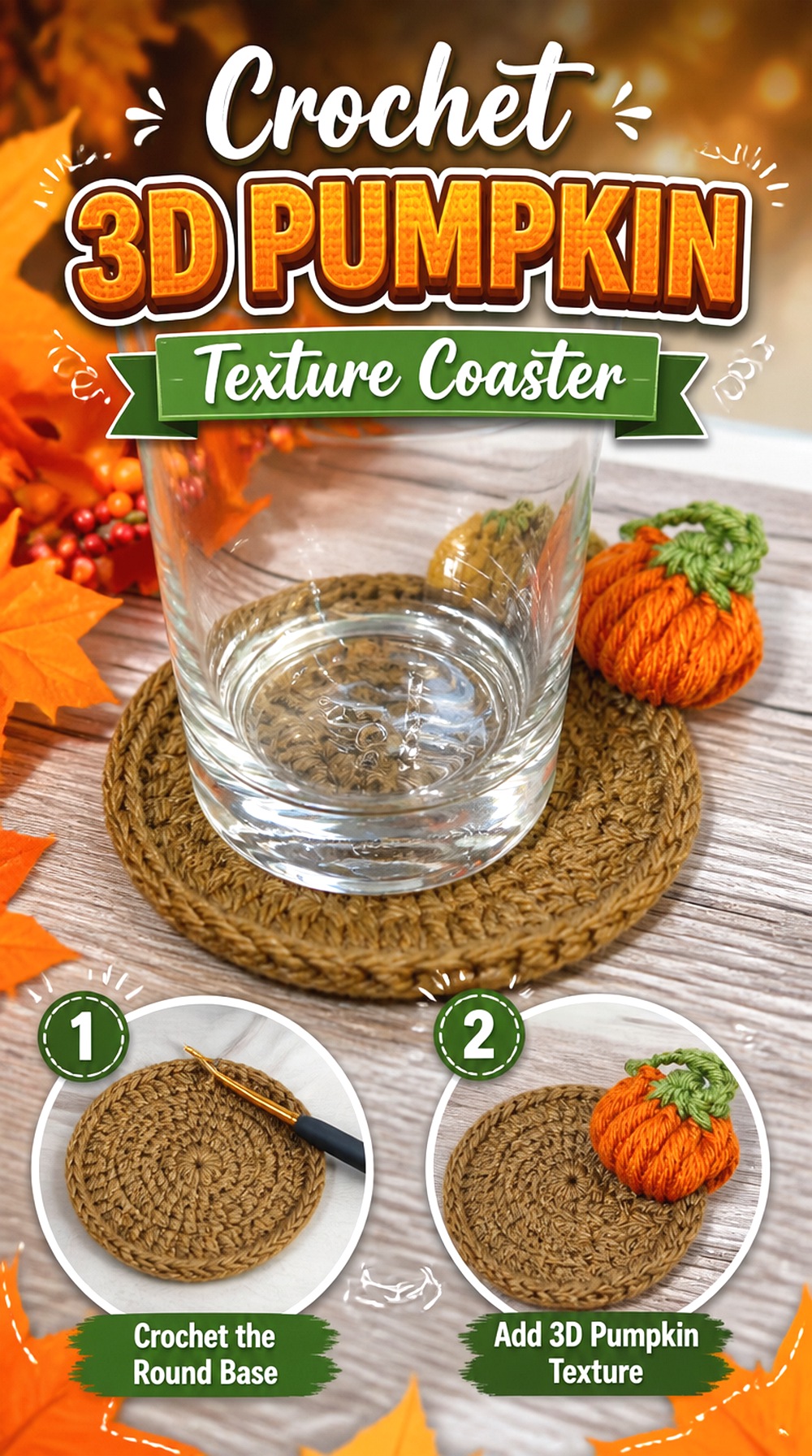
SAVEThis pumpkin stands apart from the flatter Halloween silhouettes because the seasonal motif is built into a raised, dimensional surface. The result is closer to textured table decor than a plain orange circle with a pumpkin face. That can make a single coaster feel substantial enough to use as an accent piece alongside simpler designs.
Texture introduces a functional question, however: a coaster can look impressively dimensional while being less suitable for narrow or unstable drinkware. If you choose this option, evaluate how evenly your cup sits over the raised areas. It is a particularly good candidate for a mixed set where one or two textured pumpkins contrast with flatter ghosts, webs, or coffins.
Raised Pumpkin Texture Adds Noticeable Surface Depth
The creator’s design uses a three-dimensional pumpkin treatment rather than relying only on color. That makes the texture the focal point, so substitutions should preserve definition if you want a similar visual effect.
Stable Drinkware Matters More on a 3D Coaster
Before using a tall or narrow glass, set it on the completed coaster and gently check whether its base rests evenly. If the raised texture creates noticeable rocking, reserve that coaster for broader mugs or decorative use rather than assuming every vessel will behave the same way.
Color Changes Can Modernize the Pumpkin Without Removing Its Identity
Because the texture already communicates the pumpkin motif, you do not have to rely exclusively on bright orange. Cream, muted rust, brown, or other fall colors can shift the styling while preserving the dimensional feature that distinguishes this design.
Original Tutorial and Creator Credit
Creator: MUSHYY
7. Crochet Bloodshot Eyeball Coaster
 SAVE
SAVEThe eyeball is one of the easiest designs in this collection to recognize from its color layout alone. A dark pupil, colored iris, pale eye area, and red outer detailing create a strong concentric composition without requiring an irregular outer silhouette. That gives the coaster a practical advantage: most of its visual complexity can stay within a familiar rounded footprint.
It is an especially useful option if you want to customize a Halloween set for different people. Changing the iris color gives each coaster an obvious identifier while preserving the same overall motif. The main finishing challenge is managing multiple color changes without creating an untidy or uneven reverse side.
Concentric Color Rings Reveal Uneven Expansion Quickly
Circular designs make rippling, cupping, and off-center growth easy to see because each new section emphasizes the previous one. Lay the coaster down periodically instead of waiting until all of the decorative color changes are complete before checking the shape.
The Red Edge Adds Detail Without Changing the Core Silhouette
The creator’s finished design uses red detailing around the pale eye area to produce the bloodshot effect. Because the central eye remains the main structure, this is a good example of adding Halloween character without depending on wings, tails, or other projecting edges.
Multiple Colors Make the Back Worth Inspecting
Frequent yarn changes can leave more tails and joins than a one-color coaster. Before calling it finished, turn the eye over and make sure the back is tidy enough to rest flat. A neat front does not compensate for a bulky point directly beneath the cup.
Original Tutorial and Creator Credit
Creator: Martenitsa Spirit
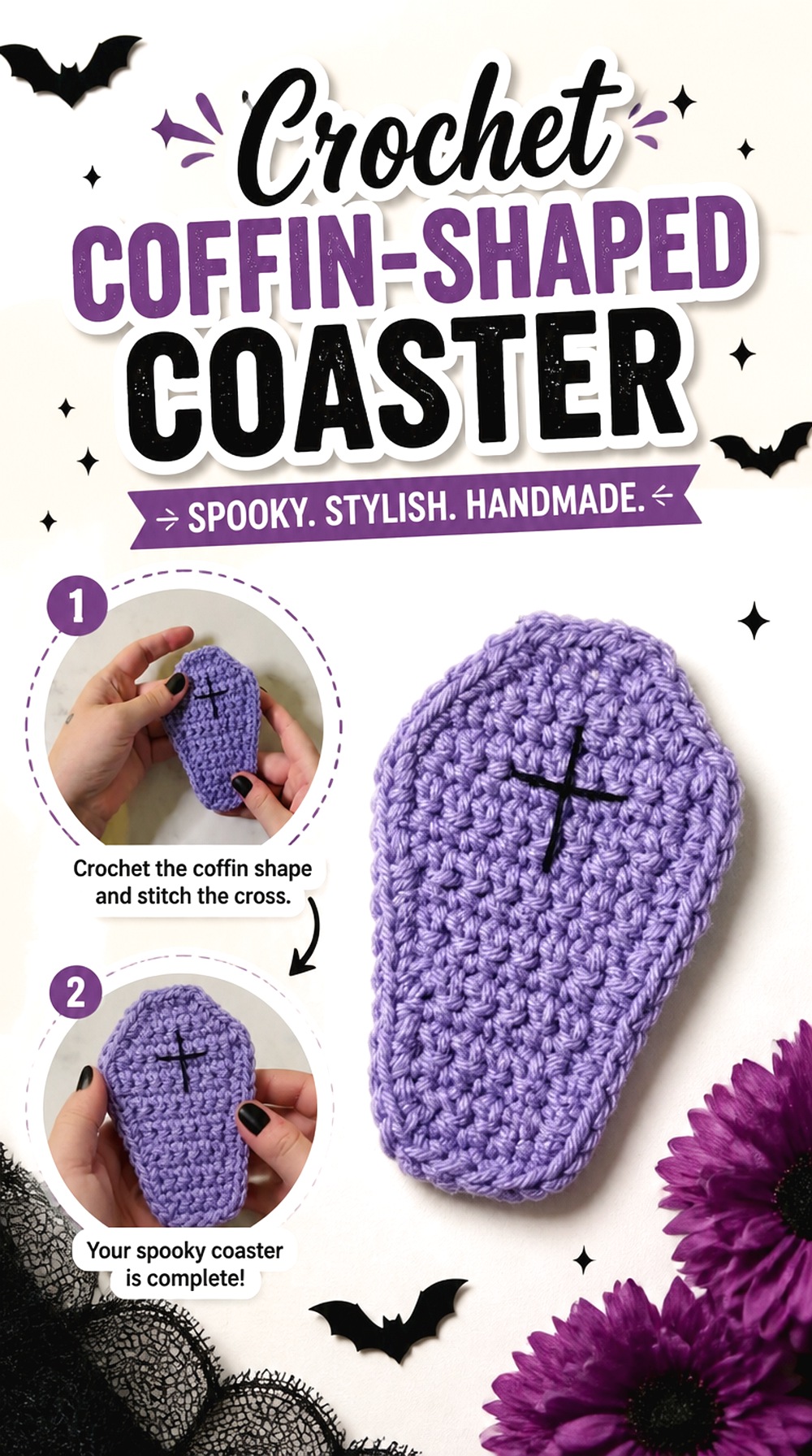
8. Crochet Coffin Shaped Coaster
 SAVE
SAVEA coffin gives the collection a distinctly gothic option without depending on a face or complicated multicolor motif. The long angular silhouette does most of the visual work, while a contrasting border and stitched cross can sharpen the finished look. The same basic shape can also function as seasonal bunting, an ornament, or an appliqué, according to the creator.
As a coaster, its proportions deserve extra attention. A coffin is longer than it is wide, so maximum length tells you little about what will fit comfortably across its narrower sections. This is a better choice for someone who values a strong decorative silhouette and is willing to check cup placement rather than assuming conventional round-coaster proportions.
Check Cup Placement Across the Narrow Upper Section
Set your usual mug on the finished coffin and look at how much of the base is supported across the width. If the cup extends well beyond the narrower portion, reposition it toward the broader center rather than trying to use the entire silhouette equally.
The Border Defines the Angled Profile
The creator adds a border after forming the base, and that outer line contributes strongly to the coffin shape. If your border tension pulls the angles inward or produces waves, address that before adding decorative surface details.
Keep the Cross or Other Decoration Low-Profile
Surface embellishment can make a plain coffin more dramatic, but anything placed beneath the cup should remain relatively flat. If you customize the motif, check the reverse side as well as the front so decorative stitching does not introduce a lump under the drink.
Original Tutorial and Creator Credit
Creator: Heather Corinne Crochets
9. Crochet Bubbling Cauldron Coaster
 SAVE
SAVEThe cauldron closes the collection with a shape that combines a recognizable silhouette and pronounced texture. Rather than simply placing a potion-colored circle inside a black border, the tutorial incorporates varied stitches and separate visual elements that help the top resemble a bubbling brew. Handles further distinguish the outline from an ordinary round coaster.
This is a strong choice when you want a coaster to function as a small Halloween centerpiece even when no cup is sitting on it. The trade-off is additional surface activity. Before making several, complete one and test the type of mug you intend to use so you know whether the textured upper area feels stable enough for that drinkware.
Side Handles Make the Cauldron Read From Across the Table
The handles extend the silhouette beyond its main drinking area, giving the coaster a clear cauldron identity even in a dark solid color. Treat those side elements as decorative extensions rather than assuming they contribute to the support area beneath the mug.
Puff and Bobble Texture Suggests the Bubbling Potion
The creator specifically demonstrates textured stitches, including puff and bobble elements, to develop the cauldron effect. If you enjoy tactile crochet, this provides a very different experience from the flat candy corn or coffin options.
Test the Sculpted Edge Before Setting Out Tall Glasses
Raised crochet can affect stability more than a flat border. Once your coaster is complete, check it with the actual glass or mug you expect guests to use. A broad mug may behave differently from a narrow tumbler on the same textured surface.
Original Tutorial and Creator Credit
Creator: CrafteeManatee
Which Crochet Halloween Coaster Should You Choose?
| Coaster | Main Visual Feature | Practical Point to Check |
|---|---|---|
| Ghost | Character silhouette | Keep face finishing flat |
| Spiderweb | Open geometric spaces | Less material for condensation |
| Candy Corn | Triangular color blocking | Use the broad center for cups |
| Skull | Face and shaped jaw | Watch border tension |
| Bat | Extended wings | Judge cup area separately from wingspan |
| 3D Pumpkin | Raised texture | Check drink stability |
| Eyeball | Concentric color layers | Keep color-change finishing tidy |
| Coffin | Long angular silhouette | Check usable width |
| Cauldron | Handles and textured bubbles | Test raised areas with drinkware |
For the most conventional drinking surface, the eyeball gives you strong Halloween graphics inside a relatively compact rounded shape. The ghost provides a good balance between character and a broad center, while the spiderweb prioritizes visual openness. Bat and coffin designs are more silhouette-driven, and the pumpkin and cauldron stand out when dimensional texture is part of the appeal.
Conclusion
Choose your crochet Halloween coasters according to how you plan to use them. For a functional party set, the ghost, eyeball, candy corn, or skull keeps most decoration relatively close to the drinking area. Spiderwebs offer a lighter decorative look, while bats and coffins make stronger silhouettes around the cup. The 3D pumpkin and bubbling cauldron are the most texture-focused choices and deserve an extra stability check with your usual drinkware.
Mixing several shapes can create a more interesting Halloween table than repeating one design nine times. Once you have selected your favorites, use the original tutorials for the creators’ exact construction details and finishing methods.
Frequently Asked Questions
What yarn works well for crochet Halloween coasters?
Start with the yarn specified by the tutorial when you want the closest result. Cotton is commonly used for coasters because it can handle condensation well, while some of the featured creators use acrylic for particular textured designs. If substituting, compare yarn thickness, stretch, stitch definition, and care instructions. A fiber that looks perfect in the skein may produce softer points or more flexible edges than the original.
How can I keep shaped Halloween coasters from curling?
First identify where the distortion begins. An overly tight border can pull a flat center inward, while uneven tension can affect points and corners. Spiderwebs and other geometric designs can make those differences especially visible. Appropriate blocking may help some projects, but the method should match the fiber and its care instructions. Correct a significant tension problem before making an entire matching set.
Are crochet spiderweb coasters as functional as solid coasters?
They serve the same basic table-setting role, but the open spaces create an important difference. Condensation can pass through a web more easily than through a dense crochet fabric. If moisture protection is your priority, a solid ghost, eyeball, skull, or candy corn may make more sense. If the Halloween appearance is the priority, an open web can provide a striking decorative effect.
Can I mix several of these tutorials into one matching coaster set?
Yes. The easiest way to make different shapes feel coordinated is to repeat a limited color palette rather than trying to force every coaster to the same construction. You should still compare the finished scale and usable cup area of your first examples. A broad bat and narrow coffin can have similar overall dimensions while supporting drinkware very differently.
Can I make a Halloween coaster larger just by using thicker yarn?
Thicker yarn and a corresponding hook can change the finished scale, but they may also change the proportions, stiffness, texture, or appearance of a shaped motif. Enlarging a bat, skull, or coffin is not simply about getting a wider coaster. Make one sample first and check whether the silhouette and drink area still work before committing to a complete enlarged set.
Can these crochet coasters be used as potholders or trivets?
Do not assume a coaster pattern is suitable for hot cookware. The tutorials here are intended as coasters or decorative pieces, and fiber behavior varies significantly with heat. Use a purpose-designed heat-protective project when handling hot pans or bakeware, and verify the yarn manufacturer’s guidance rather than treating a Halloween coaster as heat-resistant simply because the fabric feels thick.