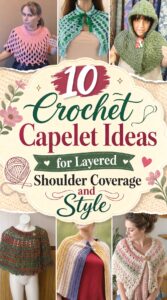
Crochet capelets sit between a shawl, poncho, collar, and short wrap, which makes this category useful for very different looks. Some sit close around the shoulders, some drape more like a mini poncho, and others add details such as ties, buttons, hoods, collars, or lace-style shaping.
This collection focuses on capelet tutorials that give readers different choices instead of repeating the same silhouette. You will find vintage-inspired pieces, lighter cover-ups, cozy shoulder layers, and designs that can work over dresses, simple tops, or cooler-weather outfits. The main things to compare are coverage, neckline, closure, and how much structure or drape you want from the finished piece.
Quick List
- Crochet Vintage Edwardian Shoulder Capelet
- Crochet Brianna-Inspired Button Capelet
- Crochet Easter Capelet with Child and Adult Sizing
- Crochet 1891 Ribbon-Style Capelet
- Crochet Mossy Hooded Capelet
- Crochet Cozy Collar Capelet Shawl Poncho
- Crochet Beatrice Draped Capelet
- Crochet Self-Striping Button Capelet
- Crochet Lacy Capelet Shrug Cover-Up
- Crochet Stroll on the Beach Capelet Poncho
What to Compare Before Choosing a Crochet Capelet
Capelets can look similar at first glance, but small design choices change how they wear. A short shoulder capelet gives light coverage and may suit dress layering, while a longer capelet-poncho shape creates more wrap across the upper body. A hood changes the look completely and may need more attention to back shape and neckline placement.
Closure is another useful difference. Some capelets tie at the front, some use a button, and others sit open or slip over the head. Before choosing a tutorial, check whether the finished piece is shown from the front, back, and side, and whether the creator gives size or measurement information. For wearable projects, the most important decision is not just the look, but how the neckline, shoulders, and length will sit on the person wearing it.
1. Crochet Vintage Edwardian Shoulder Capelet
 SAVE
SAVEA vintage-inspired shoulder capelet gives this project a dressed-up look without becoming a full poncho. The finished shape is short, feminine, and meant to sit around the upper shoulders, with a decorative edge and front ties creating a soft historical feel. This option stands apart from the more casual capelets in the list because it is designed more like a small wrap for styling over a dress, blouse, or simple fitted top.
The tutorial source also connects this capelet to an Edwardian look, so it suits readers who want a piece with a more delicate vintage direction rather than a sporty or everyday poncho shape.
Front Ties Shape the Finished Look
The front tie detail matters because it controls how the capelet sits at the neckline. A tied capelet can look softer and more adjustable than a fixed button closure, but readers should still confirm how the tie placement works with their preferred neckline. This is especially important if the piece will be worn over a dress or blouse where the front opening needs to sit neatly.
Decorative Edging Is the Main Style Feature
The border gives this capelet much of its personality. A reader choosing this project should pay close attention to how the finished edge frames the shoulders, because that detail is what makes the piece feel more vintage than plain. The edging also affects how formal the capelet appears, so it is worth viewing the finished photos and final model view before selecting colors.
Size Notes Need Careful Matching
Because this is a wearable shoulder piece, sizing should be checked before supplies are chosen. The creator provides multiple size information in the source, but readers should still compare the finished width and length with the person who will wear it. A capelet that is too short may feel more like a collar, while extra length moves it closer to a small wra
Creator: Selina Veronique Crochet
2. Crochet Brianna Inspired Button Capelet
 SAVE
SAVEThis capelet has a character-inspired look with a practical shoulder-covering shape. It is not as long as a full poncho, and the finished style appears focused around the upper body, making it useful for readers who want a short layer with a recognizable rustic feel. The buttoned front gives it a more fixed closure than tie-front capelets, which can be helpful when comparing how secure and styled each option may look.
Compared with the lace and summer-style choices later in the list, this one feels more structured and outfit-focused. It may suit readers who want a capelet that reads as a garment rather than only a decorative shawl.
The Button Closure Sets It Apart
A button closure changes how a capelet sits across the front. It can give the piece a clear focal point and may keep the neckline more controlled than an open cover-up. Readers should check the button placement, the size of the opening, and whether the closure feels compatible with the way they plan to wear the capelet over other layers.
Shoulder Fit Is the Key Detail
The finished project is meant to rest around the shoulders, so fit matters more than it would for a loose shawl. A useful point to verify is how the capelet sits from the front and side. If the shoulder shaping is too narrow or too broad for the wearer, the finished piece may not drape as intended.
Use the Measurement Sections Carefully
The source includes measurement points, which are worth reviewing before starting. For a capelet, measurements help readers judge whether the finished item will sit close to the neck, cover the upper arms, or fall lower across the shoulders. It is safer to compare those details with an existing garment than to choose by appearance alone.
Creator: Ophelia Talks Crochet
3. Crochet Easter Capelet with Child and Adult Sizing
 SAVE
SAVEA child-and-adult capelet is useful when readers want a matching-style project or a capelet that can be adapted for more than one wearer. The finished look has a sweet spring direction, but the main value is the sizing range and closure flexibility. It can work as a light shoulder layer for seasonal outfits, photos, church wear, or a simple dress cover-up when the weather is not cold enough for a heavy wrap.
This idea differs from the vintage and hooded choices because it feels lighter and more occasion-friendly. The shape is also practical for readers who want to compare smaller and larger finished versions from the same tutorial source.
Child and Adult Fit Should Be Compared Separately
A capelet that works for both children and adults still needs careful size selection. The shoulder width, neck opening, and length can change the way the finished piece looks on different bodies. Readers should not rely only on the project name; they should review the creator’s size notes and finished views for the specific version they want to make.
Closure Options Affect the Style
This capelet is associated with button, tie, or ribbon-style closure options. That detail gives readers room to choose a softer or more secure front finish, depending on the intended outfit. A ribbon may look more decorative, while a button can feel simpler and more fixed. The best choice depends on the wearer and how often the capelet will be handled.
Original Tutorial and Creator Credit
Creator: Jayda InStitches
4. Crochet 1891 Ribbon Style Capelet
 SAVE
SAVEA historical capelet brings a very different mood to the collection. This one is based on an 1891 crochet capelet style and includes a ribbon accent, which makes the finished piece feel more like a vintage garment detail than a modern poncho. It is a good option for readers interested in costume styling, historical-inspired wardrobes, or a shoulder piece that has a clear old-fashioned shape.
The ribbon detail helps this idea stand apart from the buttoned and hooded versions. It also gives readers another type of front finish to compare, especially if they want a capelet that looks decorative even when worn over a simple base layer.
Ribbon Placement Creates the Character
The ribbon is not just an extra trim; it helps define the vintage look of the finished capelet. Readers choosing this project should pay attention to where the ribbon sits and how visible it is when worn. That placement can affect whether the piece looks delicate, dramatic, or costume-inspired.
Historical Shape May Fit Differently
A vintage-style capelet may not fit like a modern shoulder wrap. The proportions, neckline, and front finish can be part of the historical look, so readers should check the final view carefully before expecting a relaxed everyday layer. This is especially important if the project is intended for regular wear instead of display, costume, or themed styling.
Watch the Finishing View for Balance
With a historical capelet, finishing details carry a lot of the visual weight. The final edge, ribbon, and neckline should look balanced together. Readers may want to pause at the finished display and compare both sides of the capelet before deciding whether this is the right style for their wardrobe or project goal.
Original Tutorial and Creator Credit
Creator: Just Vintage Crochet
5. Crochet Mossy Hooded Capelet
 SAVE
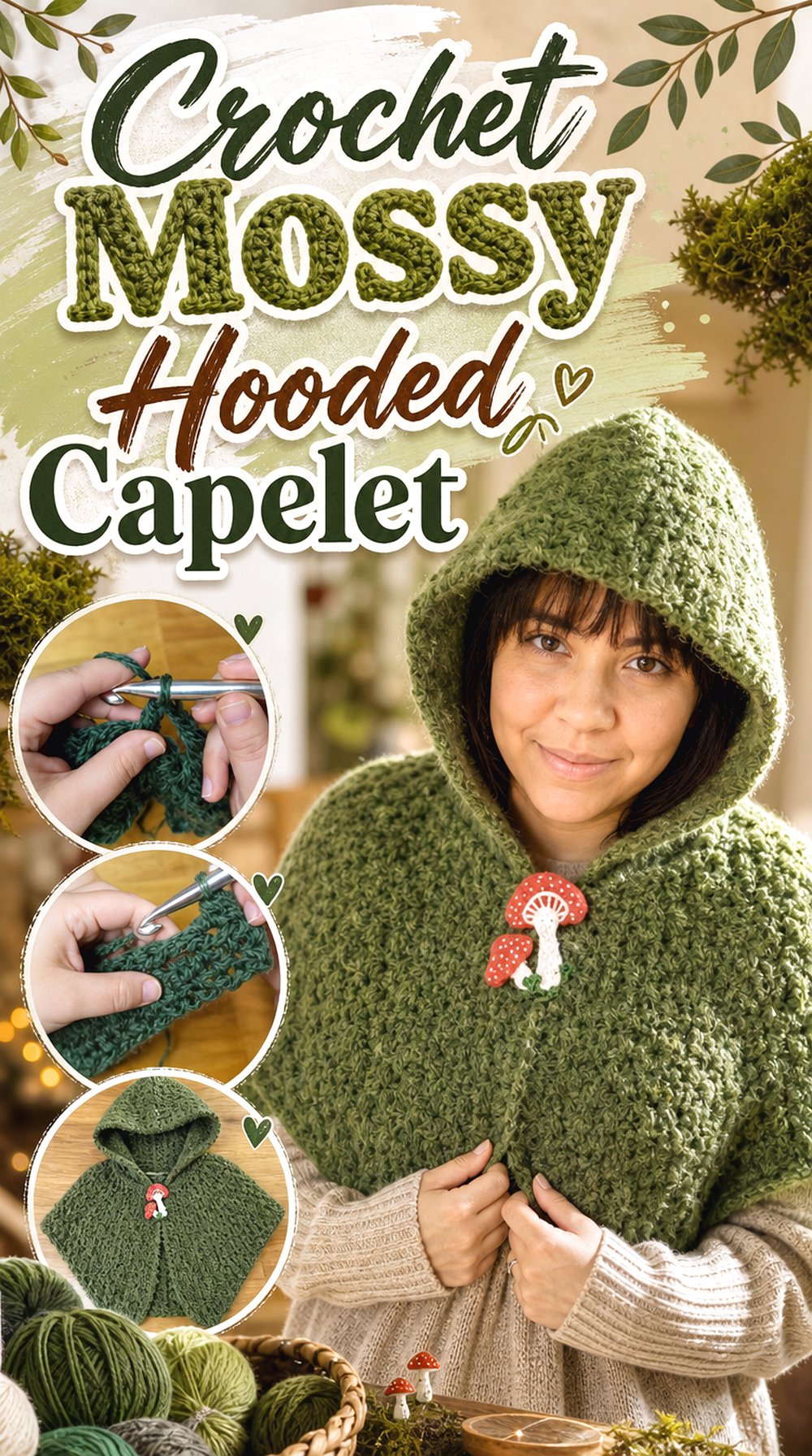
SAVEA hooded capelet offers more coverage and a more storybook shape than the shorter shoulder pieces. The hood is the main feature, and it changes the project from a simple wrap into something closer to a small cloak. This option may interest readers who want a soft upper-body layer with a dramatic back view, especially for cottagecore, fantasy-inspired, or cool-weather styling.
Unlike the tie-front and button-front capelets, this project depends heavily on the hood shape and how it joins into the neckline. Readers should look closely at the finished back and side views before choosing it, because the hood will be the detail people notice first.
The Hood Needs a Good Back View
For this project, the back view matters as much as the front. A hood can look neat when laid flat but sit differently when worn. Readers should check how the hood rests at the neckline, how much it covers, and whether the finished shape matches the look they want. This is also helpful for deciding whether the capelet is more decorative or more practical.
Neckline Placement Changes the Drape
A hooded capelet needs enough room at the neck to sit comfortably over the shoulders without pulling the hood out of shape. The neckline is worth watching closely because it affects both the front opening and the way the hood falls. Readers who plan to layer it over thicker clothing should compare the finished fit with that use in mind.
A More Themed Option Than a Plain Wrap
This capelet has a stronger visual identity than a simple lace cover-up or spring capelet. That can be a benefit when the goal is a statement piece, but it may not be the most neutral choice for everyday outfits. Readers should choose it when the hooded shape is part of the appeal, not just because they want general shoulder coverage.
Original Tutorial and Creator Credit
Creator: Lizfaerie Crafts
6. Crochet Cozy Collar Capelet Shawl Poncho
 SAVE
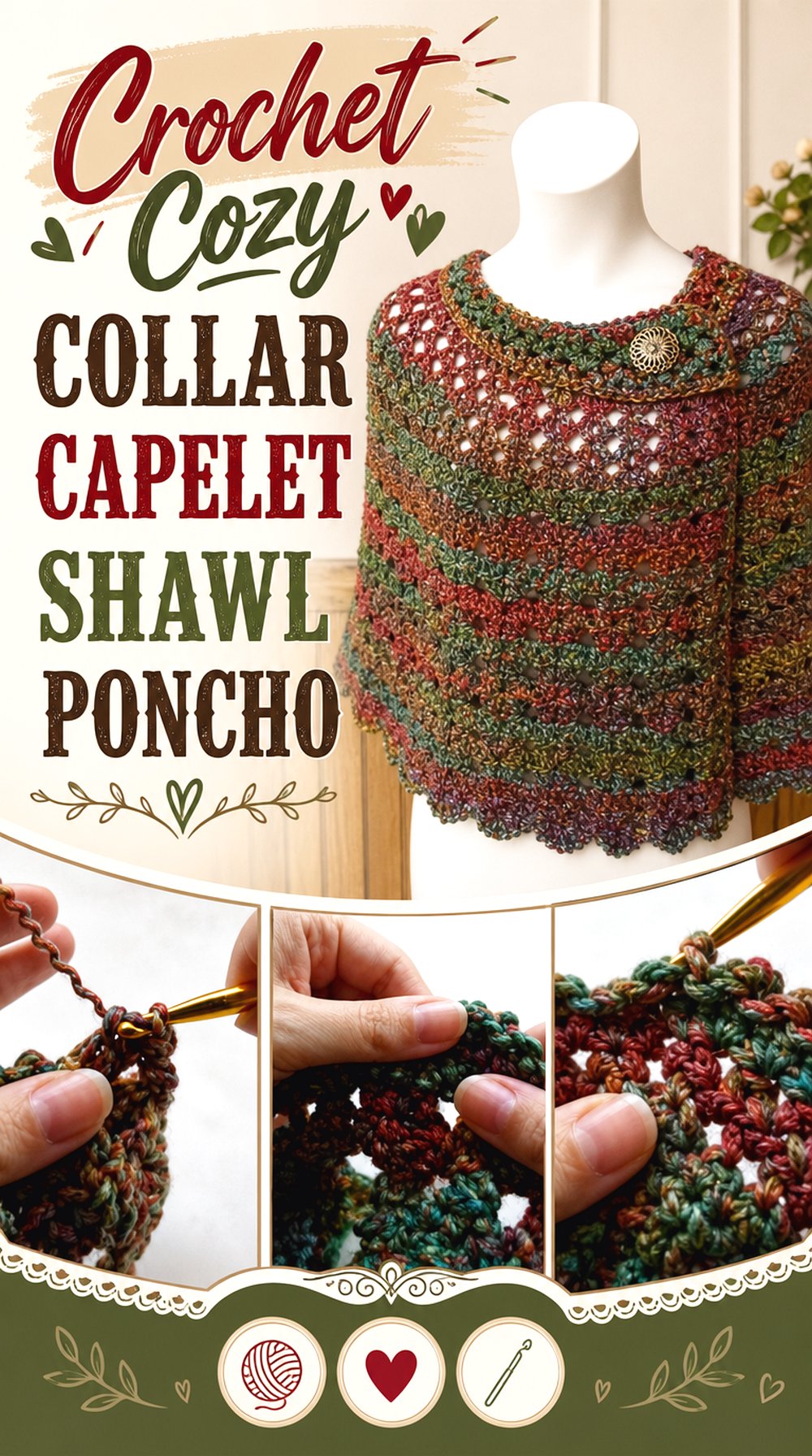
SAVEThis capelet-shawl-poncho project has a fuller upper-body feel than the shortest capelets in the list. The collar is the detail that makes it different, giving the neckline more presence and making the finished piece look cozy without becoming a long garment. It can suit readers who like shoulder coverage but want something with more body than a narrow decorative capelet.
The project is also useful for comparing capelets that slip toward poncho styling. Instead of focusing only on a front tie or button, this one draws attention upward to the collar and neckline shape.
The Collar Is the Main Decision
A collar can make a capelet feel warmer, fuller, and more finished around the neck. Readers should decide whether they want that extra neckline detail before choosing this project. A collar may be useful over simple tops, but it can compete with shirts or dresses that already have a high neckline.
Fuller Coverage Changes the Use
Because this project leans toward a shawl-poncho shape, it may cover more of the shoulders and upper arms than a small capelet. That makes it a different kind of layer. Readers looking for a delicate dress cover may prefer a shorter option, while readers wanting a cozier shoulder piece may find this shape more useful.
Shape Adjustment Should Be Verified
The source indicates the design can be adjusted, but readers should review how that information is presented before changing anything. Capelet adjustments can affect neck opening, shoulder fall, and lower edge width. It is better to understand the intended finished shape first, then decide whether a longer or shorter version makes sense.
Original Tutorial and Creator Credit
Creator: Bag-O-Day Crochet
7. Crochet Beatrice Draped Capelet
 SAVE
SAVEThe Beatrice capelet has a soft, wearable shape that sits between a small poncho and a shoulder wrap. It is a good option for readers who want a named capelet design with a clear finished garment look rather than a quick accessory feel. The drape appears to be the main attraction, giving the piece movement around the shoulders without the sharper historical effect of the ribbon-style capelet.
This project differs from the hooded and collar versions because it keeps the focus on the body of the capelet. It may work best for readers who want a simple outer layer where the overall silhouette matters more than one dramatic detail.
Drape Matters More Than Decoration
The appeal of this capelet comes from the way the finished fabric falls. Readers should study the final worn view and decide whether they prefer a soft drape or a firmer shoulder shape. This is also a useful point when choosing yarn, because the final result should match the movement shown by the original creator.
Neck Opening and Shoulder Fall Work Together
For a draped capelet, the neck opening affects the entire garment. If the neckline sits differently than expected, the lower edge may also shift. Readers should check how the capelet rests on the shoulders and whether the finished shape looks centered. This matters most if the project will be worn over a dress or fitted top.
Written Support May Be Helpful
The tutorial is tied to a named pattern, so readers who prefer to follow more than video alone should see what written support is available from the creator. A capelet with drape can be easier to track when the maker can compare the source instructions with the final shape shown on screen.
Creator: Loopy Mabel Crochet
8. Crochet Self Striping Button Capelet
 SAVE
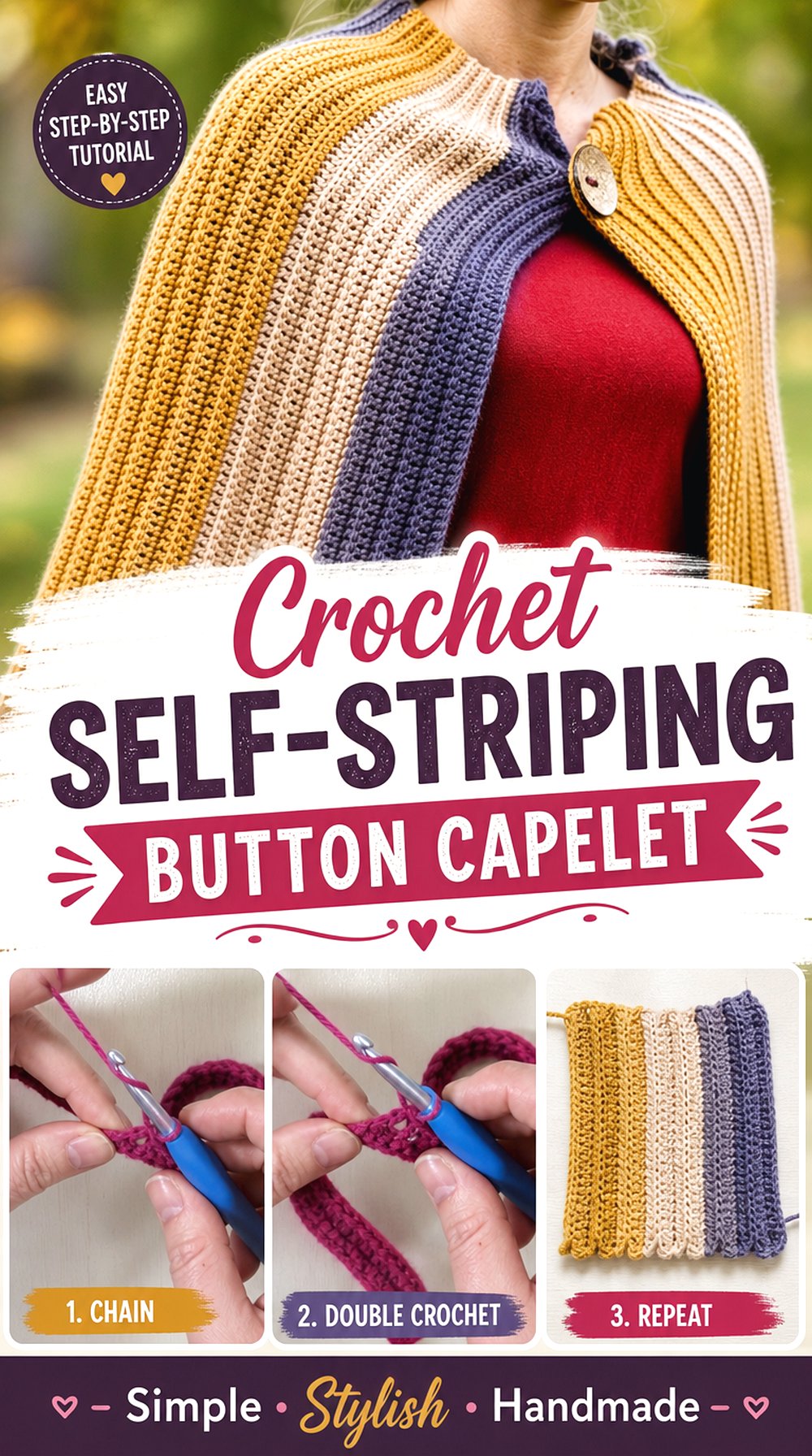
SAVESelf-striping yarn gives this capelet its visual movement, so it can be a useful choice for readers who want color changes without a lot of separate color planning. The finished project includes a buttoned cape shape and a subtle textured look, making it different from the solid vintage capelets and the lacy shrug-style option.
This idea works well for someone who wants the yarn color flow to do part of the styling. The button closure also gives the front a clear finish, so the capelet can look complete without needing a ribbon or tie.
Color Flow Drives the Look
Because the design is connected with self-striping yarn, color placement is one of the first things to notice. Readers should look at how the stripes move across the capelet and decide whether they want a soft gradient, bold stripes, or a quieter color change. The yarn choice will strongly affect the finished appearance.
Button Placement Needs Attention
The button is a practical and visual detail. It can help define the neckline, but the exact placement affects how the capelet sits at the front. Readers should check the finished closure view and make sure the button style suits the yarn colors. A high-contrast button may stand out, while a matching button keeps the focus on the striping.
Creator: Nana’s Crafty Home | Tonya Bush
9. Crochet Lacy Capelet Shrug Cover Up
 SAVE
SAVEA lacy capelet shrug gives lighter coverage than the cozier collar and hooded options. The open, airy look makes it more of a cover-up layer than a heavy shoulder wrap, so it may suit dresses, sleeveless tops, or warmer-weather outfits where full coverage is not the goal. This design stands apart because it has shrug influence, meaning readers should think about shoulder placement and arm movement as well as the neckline.
The lace effect is the main reason to choose this tutorial. It adds texture and visibility to the stitch pattern without making the capelet look bulky.
Open Texture Affects Coverage
A lacy capelet will not cover in the same way as a dense capelet. Readers should decide whether they want light visual coverage or a more solid layer. This is especially important if the project will be worn over a formal outfit, because the base garment will remain part of the finished look.
Shrug Influence Changes the Fit Question
Since this design is described as capelet-inspired and shrug-like, fit around the shoulders matters. Readers should check whether the finished piece stays in place in the final view and how much it covers the upper arms. A shrug-style capelet may need more attention to movement than a simple round capelet.
Creator: ThePatternfamily
10. Crochet Stroll on the Beach Capelet Poncho
 SAVE
SAVEThis tutorial offers both capelet and poncho direction, making it a helpful choice for readers who are still deciding how much coverage they want. The capelet version keeps the project shorter, while the poncho option gives a fuller layer. That comparison makes this source useful for anyone who likes one stitch style but wants to choose the final length or coverage level more carefully.
This idea belongs at the end of the list because it bridges two categories. It is still useful for a capelet roundup, but it gives readers a chance to think about whether a true capelet or a longer poncho-like finish better suits their wardrobe.
Capelet or Poncho Is the Main Choice
The strongest feature here is the two-direction format. Readers should decide early whether they want the shorter capelet effect or the fuller poncho version. That decision affects how the finished piece will be used, especially over dresses, casual tops, or beach-style outfits.
Finished Length Changes the Styling
A shorter capelet can feel decorative and light, while a longer poncho shape becomes more of an outer layer. Before choosing this project, readers should check the final comparison and decide where they want the lower edge to fall. The same general design idea can feel very different depending on finished length.
Timestamps Can Help With Navigation
The source includes sections for the capelet and poncho completion, which can help readers stay focused on the version they want. This is useful because a two-in-one tutorial can be easy to confuse if the maker does not track where the capelet direction changes into the poncho direction.
Creator: Sabrina Melodieuse
Choosing Between These Crochet Capelet Styles
Choose the vintage Edwardian or 1891 ribbon-style capelet when the goal is a decorative shoulder piece with a historical feel. The Brianna-inspired and self-striping button capelets give more defined front closures, while the Easter capelet is useful when size range is the main concern. For more coverage, the cozy collar capelet and Stroll on the Beach capelet-poncho move closer to small ponchos. The mossy hooded capelet has the strongest statement shape, and the lacy shrug cover-up is the lightest-looking option. The Beatrice capelet sits in the middle, with a softer draped style that does not rely on a hood, ribbon, or bold closure.
Conclusion
These crochet capelet ideas give readers several ways to approach shoulder coverage. A tied vintage capelet feels delicate, a buttoned capelet looks more fixed, a hooded capelet creates a stronger silhouette, and a capelet-poncho gives more length and wrap. Lacy and self-striping versions are better when the surface look matters most, while child-and-adult sizing is useful when fit range is the priority.
Before starting, compare the neckline, closure, finished length, and views shown by the creator. The original tutorials should be used for exact construction details, measurements, supplies, and any pattern-specific instructions.
FAQs
What is the difference between a crochet capelet and a crochet poncho?
A capelet is usually shorter and focuses on shoulder or upper-body coverage, while a poncho often extends farther down the body. Some tutorials blend both shapes, so the name alone is not enough. Check the finished length, neckline, and side coverage before choosing a project.
How do I choose the right crochet capelet size?
Start by checking the creator’s size or measurement notes, then compare those details with the wearer’s shoulders, neckline preference, and desired length. A capelet that looks right on one person may sit differently on another. For child and adult versions, review the exact size section before buying yarn.
Which crochet capelet style is best for wearing over a dress?
A shorter vintage, lacy, or tie-front capelet may work well over a dress because it covers the shoulders without hiding the full outfit. A collar or hooded capelet can look heavier and may compete with formal necklines. The best choice depends on the dress shape and how much coverage is needed.
Should I choose a button, tie, or open crochet capelet?
Choose a button when you want a clear front closure, ties when you want a softer adjustable look, and an open or slip-over style when you prefer less hardware. Always check how the closure is shown in the finished project, because it affects both fit and styling.
Can I change the yarn for a crochet capelet tutorial?
Yarn changes can affect drape, size, texture, and how the capelet sits on the shoulders. If the tutorial gives gauge or measurement guidance, use that before substituting. For self-striping or lacy capelets, yarn choice also changes the visible design, so compare the finished look carefully.
Can finished capelets from YouTube tutorials be sold?
Do not assume selling is allowed just because the tutorial is public. Check the creator’s written terms, video description, linked pattern page, and any license notes. Local labeling, fiber, and business rules may also apply, especially for wearable items.