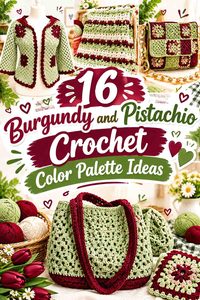
Burgundy and pistachio create a crochet palette with a naturally noticeable light-and-dark relationship. Burgundy can provide the deepest visual anchor, while pistachio brings a lighter green note that can separate motifs, brighten borders, or prevent a large dark surface from becoming visually heavy.
The most useful question is not simply whether the two colors work together. It is where each color belongs on the finished crochet item. A blanket can repeat them across broad stripes, while a cardigan may benefit from burgundy cuffs and pistachio panels. Bags can place the darkest color at the base or handles, and floral projects can use the pair across petals and foliage.
The following ideas use burgundy and pistachio in different proportions, placements, and contrast patterns so the same two-color palette does not produce the same result sixteen times.
Quick List
- Burgundy And Pistachio Striped Crochet Blanket
- Pistachio And Burgundy Striped Crochet Cardigan
- Burgundy Crochet Hooded Scarf With Pistachio Pockets
- Pistachio Crochet Bucket Hat With Burgundy Brim
- Burgundy Crochet Beanie With Pistachio Crown Detail
- Pistachio Crochet Vest With Burgundy Ribbing
- Burgundy And Pistachio Granny Square Crochet Bag
- Burgundy And Pistachio Crochet Carnation Bouquet
- Burgundy Crochet Poncho With Pistachio Border
- Pistachio Crochet Market Bag With Burgundy Base And Handles
- Burgundy Crochet Granny Bandana With Pistachio Edging
- Pistachio Crochet Cropped Sweater With Burgundy Trim
- Burgundy And Pistachio Patchwork Crochet Cardigan
- Pistachio Granny Square Crochet Cardigan With Burgundy Borders
- Pistachio Crochet Tulip Blanket With Burgundy Floral Accents
- Burgundy Crochet Mesh Market Bag With Pistachio Handles
Decide Whether Burgundy or Pistachio Should Lead
Giving one color a clear dominant role usually makes this palette easier to control. Burgundy has considerably more visual weight when paired with a pale or medium pistachio, so it does not necessarily need to cover half the project to feel important.
For a darker result, let burgundy cover the body, main panels, or largest motifs and repeat pistachio through trim and smaller details. For a lighter direction, reverse the balance: use pistachio across most of the surface and reserve burgundy for edges, ribbing, handles, motif centers, or repeated accent areas.
Check Burgundy and Pistachio Value Contrast Before Crocheting
The exact shades matter. A pale pistachio against a deep burgundy can create strong separation, while a darker muted green and softer burgundy may produce a much more blended result.
Place the yarns together before beginning a motif-heavy project. A grayscale photo is also useful when the design depends on visible checks, stripes, flower centers, borders, or granny-square rounds. If the colors become surprisingly similar in grayscale, increase the area of the lighter shade or adjust one of the yarn choices.
1. Burgundy And Pistachio Striped Crochet Blanket
 SAVE
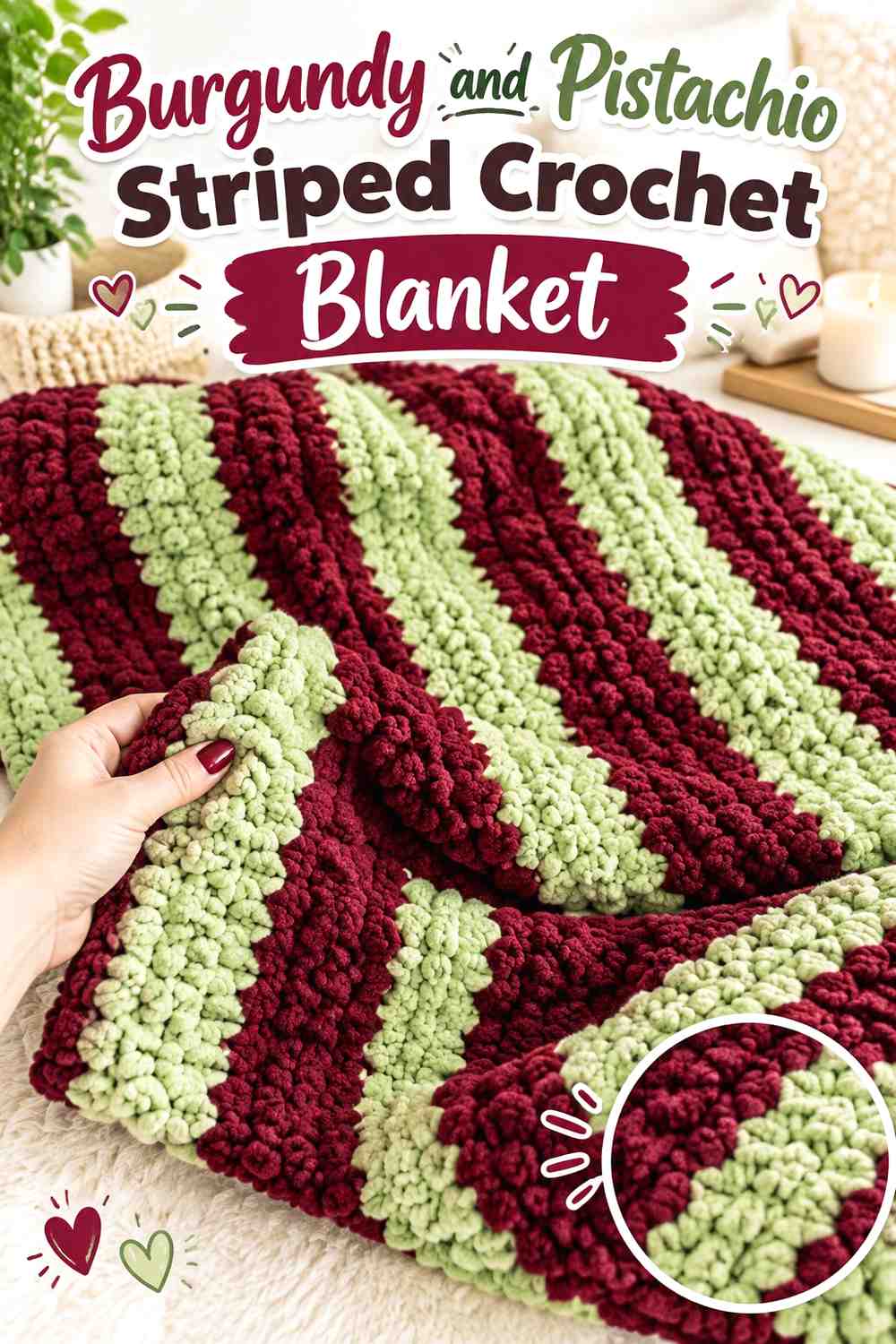
SAVEA striped blanket gives both colors enough surface area to establish a clear rhythm. Let burgundy create the broad visual foundation and introduce pistachio as recurring lighter bands. The pistachio does not have to appear as often as burgundy; regular repetition matters more than equal coverage.
Burgundy Can Carry the Broad Crochet Blanket Stripes
Use burgundy across some of the widest sections when you want the blanket to read as burgundy first. Because large dark areas can reduce the visibility of subtle texture, check a burgundy swatch before deciding whether the stitch pattern needs additional color breaks.
Pistachio Can Separate Burgundy Without Taking Over the Blanket
Pistachio works well as a lighter interruption between burgundy sections. Repeat it at predictable intervals rather than inserting one or two isolated green stripes. You can also bring pistachio back near the outer edge so the border connects visually with the interior color changes.
Creator Credit: Bella Coco
2. Pistachio And Burgundy Striped Crochet Cardigan
 SAVE
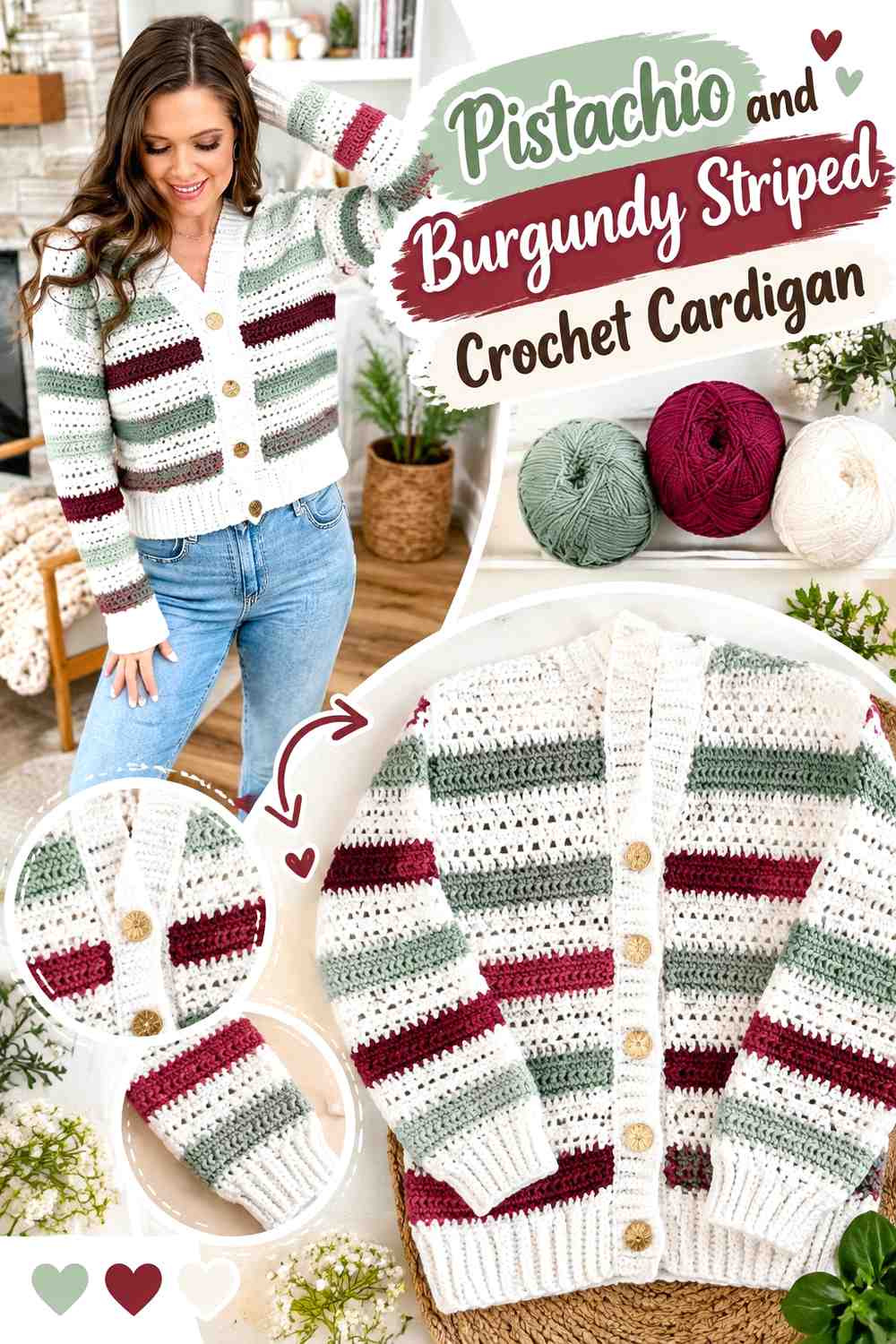
SAVEA pistachio-led cardigan gives the palette a lighter overall direction while allowing burgundy to define specific garment areas. Keep most of the front, back, or broad stripes in pistachio, then repeat burgundy at cuffs, edging, or selected body stripes.
Pistachio Keeps the Crochet Cardigan Panels Visually Light
Allow pistachio to occupy the largest sections when you want the cardigan to stay green-forward. Wider pistachio areas also give smaller burgundy stripes more definition, especially when the burgundy is substantially darker.
Burgundy Can Connect Pistachio Sleeves, Cuffs, and Edging
Repeat burgundy in structurally related places rather than adding it to one isolated panel. Cuffs, front edging, neckline details, and selected sleeve bands can create a repeated dark framework around a pistachio body.
Creator Credit: MJ’s Off The Hook Designs
3. Burgundy Crochet Hooded Scarf With Pistachio Pockets
 SAVE
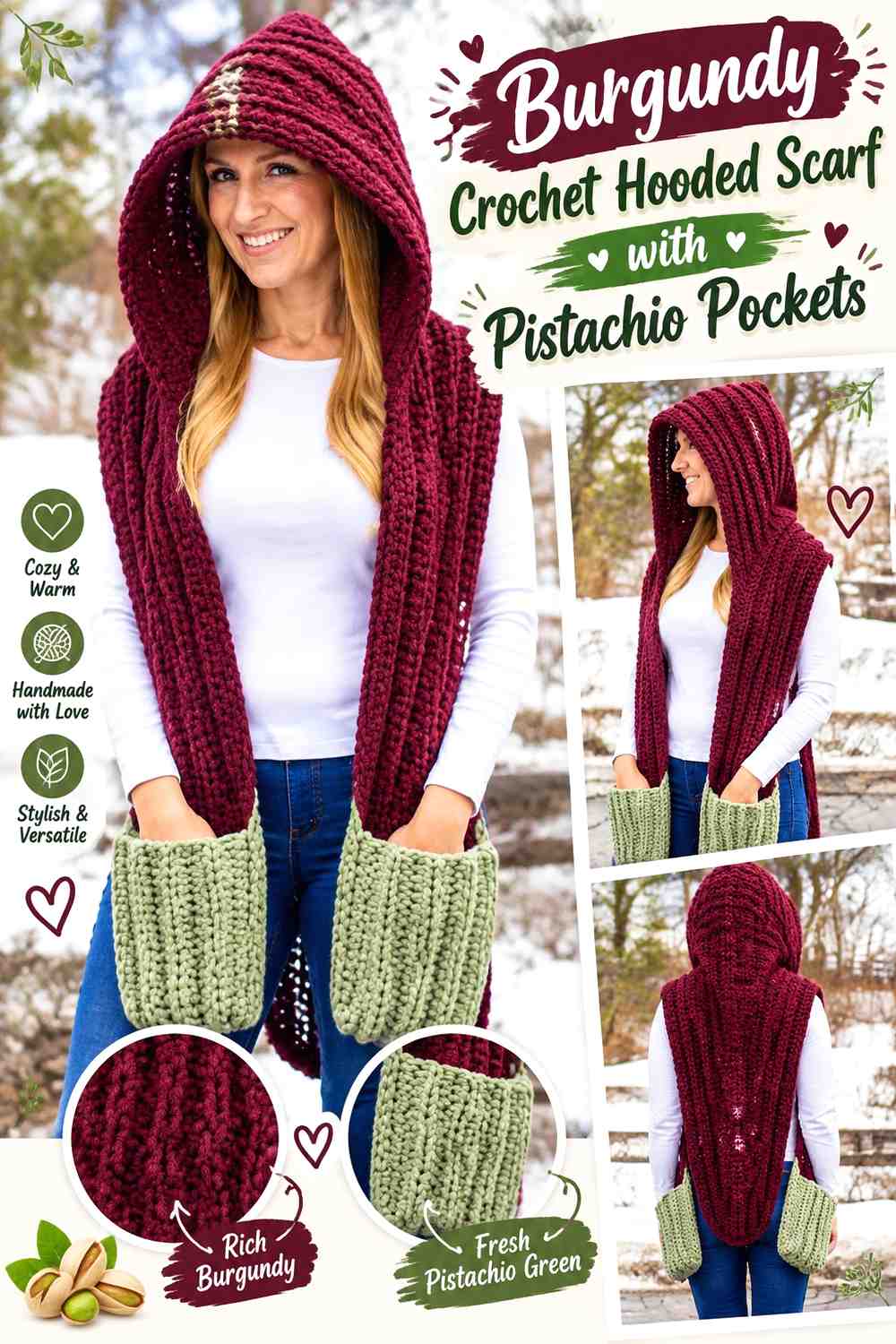
SAVEA hooded scarf has several distinct areas that can carry color without relying on ordinary stripes. Burgundy can cover the scarf and hood, while pistachio appears on the pocket fronts or along the hood opening. That makes the lighter color functional in the composition as well as decorative.
Burgundy Creates a Continuous Crochet Scarf and Hood
Using burgundy across the long scarf sections and main hood keeps the project visually connected from one end to the other. If the fabric has noticeable texture, examine it in the burgundy yarn before committing the entire scarf to the darker shade.
Pistachio Can Make Burgundy Crochet Pockets More Noticeable
Pistachio pocket fronts can create a clear break at both scarf ends. Repeat a small amount of pistachio around the hood or another finishing area so the pockets do not look like two unrelated blocks attached to an otherwise burgundy project.
Creator Credit: naztazia
4. Pistachio Crochet Bucket Hat With Burgundy Brim
 SAVE
SAVEA bucket hat naturally divides into crown, sides, and brim, making a two-color palette easy to organize. Keep pistachio across the top and sides and introduce burgundy when the brim begins. The structural transition gives the color change a clear reason.
Pistachio Can Cover the Main Crochet Bucket Hat
Using pistachio throughout the crown and sides keeps the majority of the hat lighter. Avoid placing a single burgundy patch near the crown unless you intend to repeat that detail around the hat.
Burgundy Makes the Pistachio Crochet Brim More Defined
Because the brim is highly visible from the front and sides, burgundy can become a substantial accent even when it occupies less total fabric. Look at the hat from several angles before deciding whether the dark brim needs any additional burgundy elsewhere.
Creator Credit: VivCrochets
5. Burgundy Crochet Beanie With Pistachio Crown Detail
 SAVE
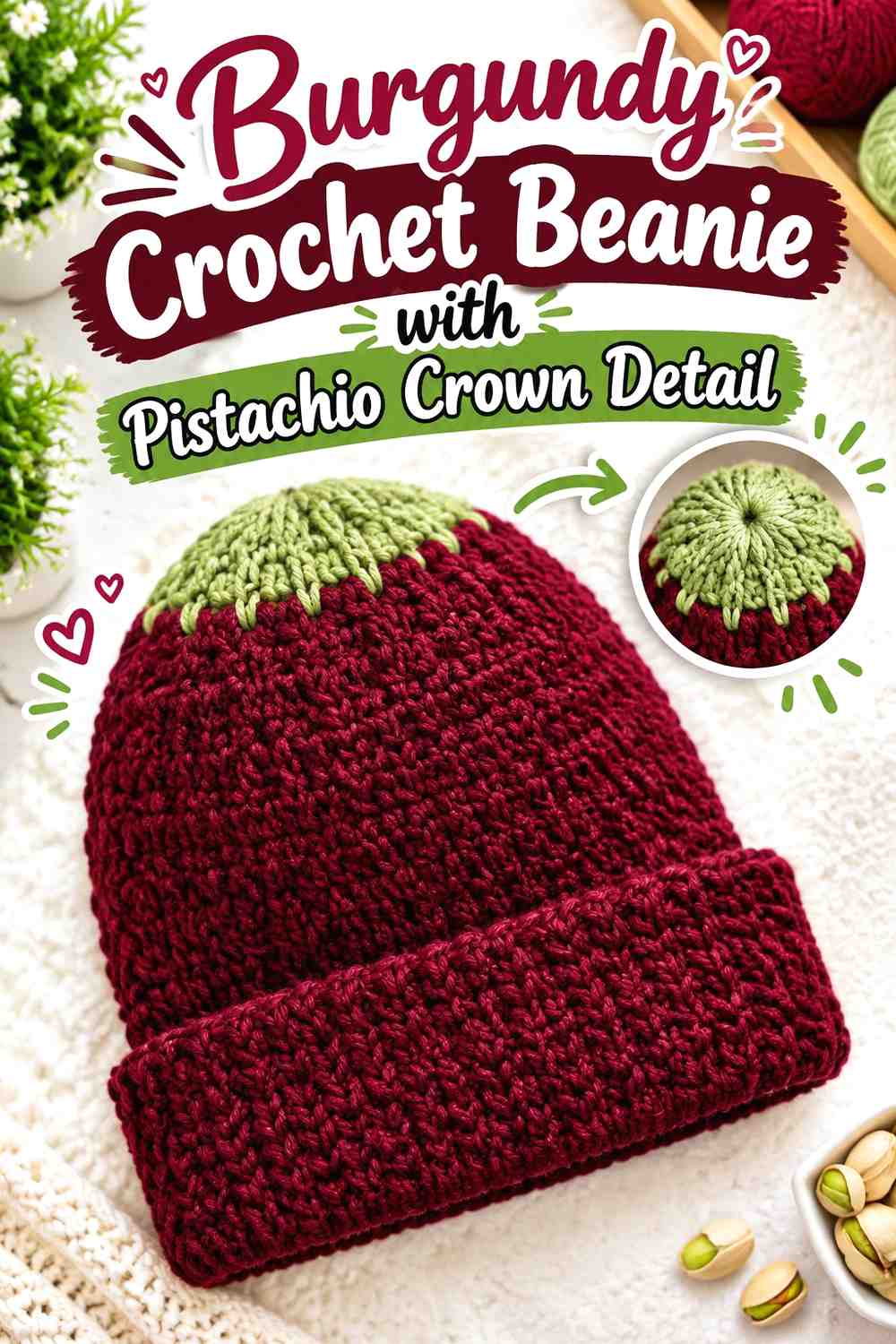
SAVEThis version keeps the hat mostly dark but prevents burgundy from becoming one uninterrupted block. A pistachio section near the crown or a repeated narrow band can provide enough lighter contrast without changing the character of the beanie.
Burgundy Gives the Crochet Beanie Its Dark Main Field
Use burgundy through the lower and middle sections when you want the beanie to be clearly burgundy-led. If the construction creates prominent ridges or ribbing, check whether they remain visible in your chosen burgundy.
Pistachio Can Break Up the Burgundy Crochet Crown
Introduce pistachio near the upper portion rather than scattering tiny green details everywhere. One deliberate pistachio section can create a clearer hierarchy than numerous unrelated accents, especially on a small item such as a beanie.
Creator Credit: lerugi crochets
6. Pistachio Crochet Vest With Burgundy Ribbing
 SAVE
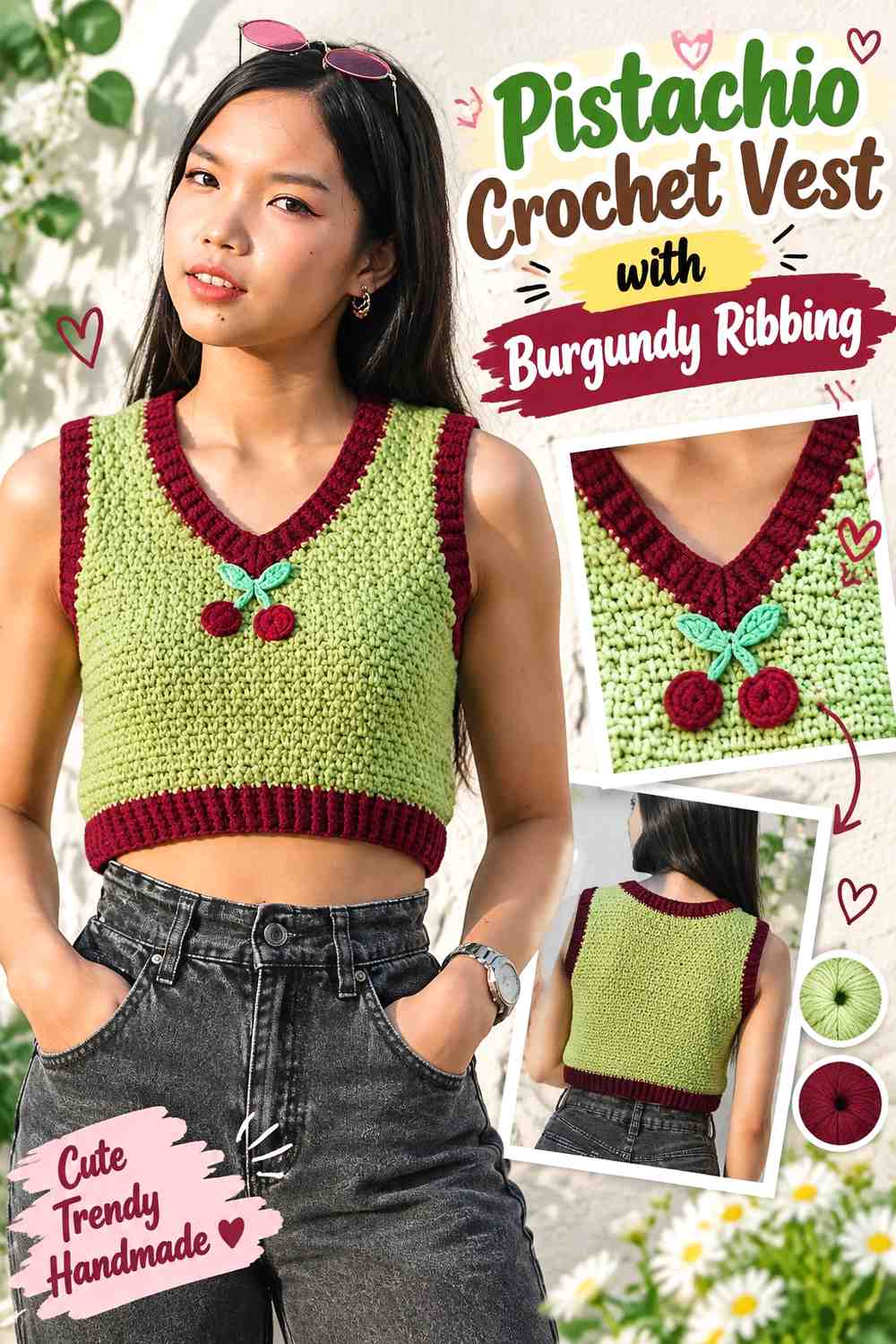
SAVEA vest offers several edges that can carry a darker color without interrupting the main panels. Use pistachio across the front and back, then repeat burgundy around the hem, armholes, and neckline.
Pistachio Keeps the Crochet Vest Body Continuous
Large pistachio panels can make the vest feel visually cleaner than alternating colors repeatedly through the body. If you want an additional burgundy detail, place it symmetrically or repeat it so the body does not look randomly divided.
Burgundy Can Frame the Pistachio Crochet Vest
The neckline, armholes, and lower edge provide logical places for burgundy. Compare their visual widths before completing all the finishing areas; an extremely deep burgundy hem with very narrow neckline edging can put too much visual weight at the bottom.
Creator Credit: Chenda DIY
7. Burgundy And Pistachio Granny Square Crochet Bag
 SAVE
SAVEGranny squares make it possible to distribute burgundy and pistachio inside individual motifs instead of separating them into large blocks. Burgundy can form darker centers or outer rounds while pistachio keeps adjacent motifs from merging into one dark surface.
Burgundy Can Anchor the Pistachio Crochet Granny Squares
Place burgundy consistently in the same part of several motifs if you want the bag to feel organized. Repeating burgundy centers, for example, creates more unity than changing the dominant color arrangement in every square.
Pistachio Can Separate Burgundy Motifs Across the Crochet Bag
Use pistachio where adjacent granny squares need breathing room, especially if burgundy appears in outer rounds. Pistachio joins or lighter motif sections can stop the completed bag panel from becoming a continuous burgundy mass.
Creator Credit: Brunaticality
8. Burgundy And Pistachio Crochet Carnation Bouquet
 SAVE
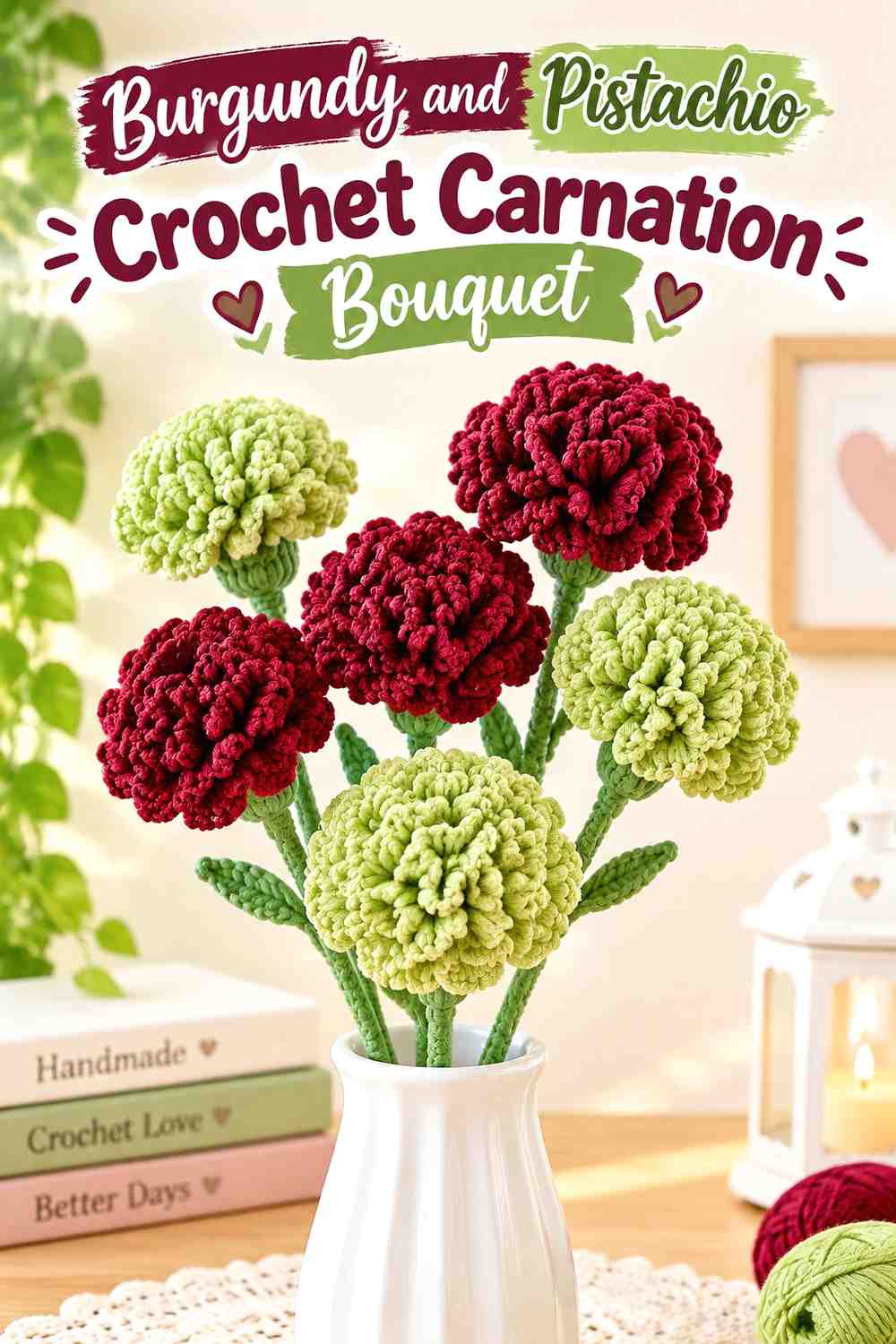
SAVEA flower bouquet allows burgundy and pistachio to perform completely different roles. Burgundy can dominate the flower heads, while pistachio works through leaves and other green details. This keeps the contrast connected to the recognizable parts of the arrangement.
Burgundy Can Lead the Crochet Carnation Flowers
Use burgundy across several flower heads rather than creating only one dark flower in a mostly green arrangement. Distribute those burgundy blooms throughout the bouquet so the darkest color does not collect on one side.
Pistachio Can Support Burgundy Crochet Flowers Through Foliage
Pistachio leaves provide a lighter green partner for deep burgundy petals. If the pistachio is extremely pale, use it repeatedly so the foliage still reads as part of the complete bouquet rather than disappearing between the darker flowers.
Creator Credit: Lingzhi Handmade
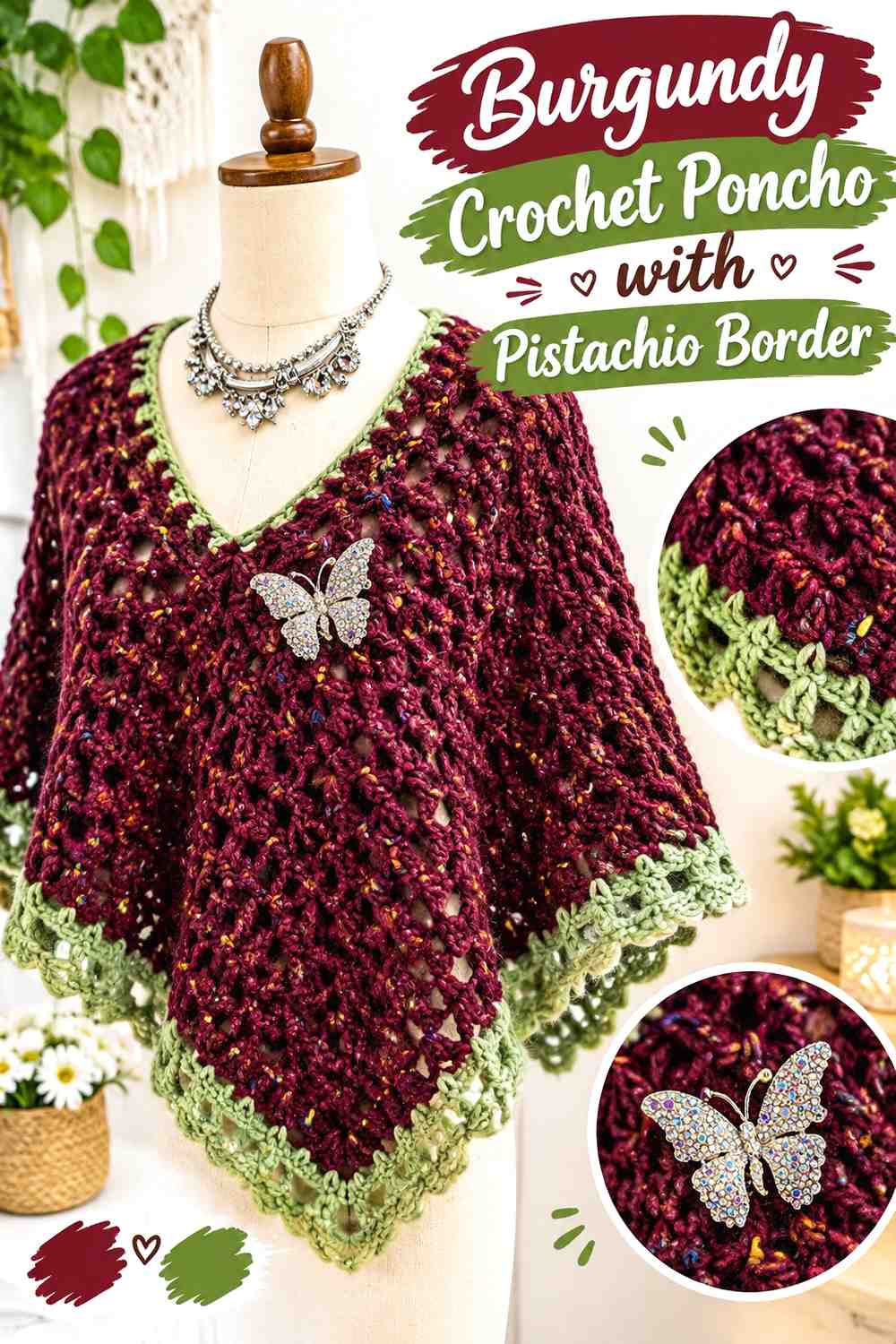
9. Burgundy Crochet Poncho With Pistachio Border
 SAVE
SAVEA poncho gives burgundy a large uninterrupted surface, so pistachio works particularly well around an edge where it can define the garment without fragmenting the body.
Burgundy Can Keep the Crochet Poncho Visually Unified
Let burgundy dominate the central body when you want a strong dark result. Because a poncho presents a large visible area, check whether the stitch texture remains distinct enough in burgundy before making the whole piece in the darkest shade.
Pistachio Can Outline the Burgundy Crochet Poncho
A pistachio outer border can create a clean light edge around burgundy. If the neckline also receives pistachio, the two lighter areas can visually connect the center and perimeter rather than leaving the green confined to the bottom.
Creator Credit: Bag-O-Day Crochet
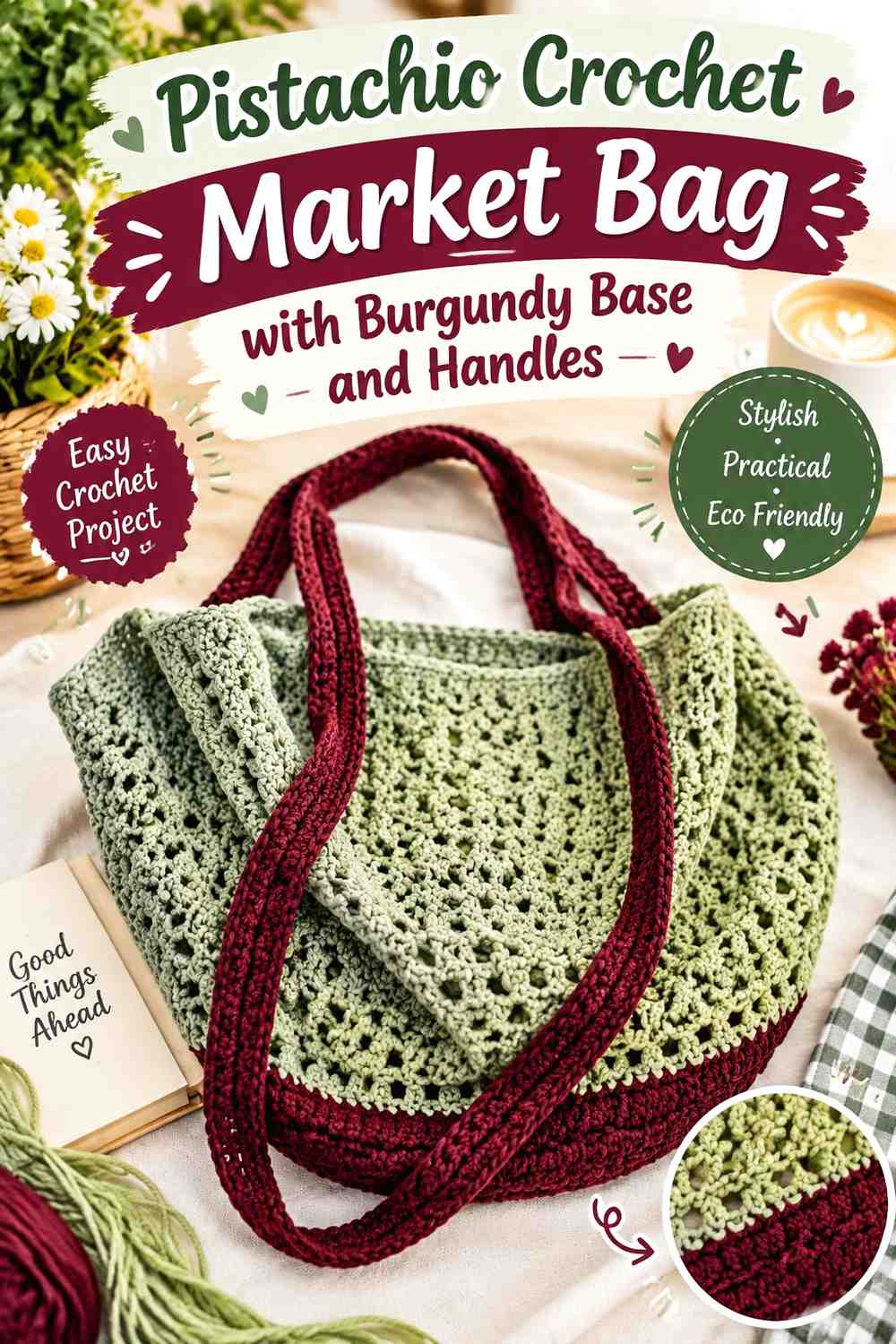
10. Pistachio Crochet Market Bag With Burgundy Base And Handles
 SAVE
SAVEFor a practical bag shape, the darkest color can be concentrated at structural-looking areas rather than spread evenly across the body. Pistachio can carry most of the bag, while burgundy defines the base and returns at the handles.
Pistachio Keeps the Crochet Market Bag Body Light
Use pistachio through most of the side walls when you want the bag to read primarily as green. If the crochet fabric is open or textured, check the finished appearance with whatever will normally be visible behind it because background colors can affect how pale pistachio appears.
Burgundy Can Link the Pistachio Bag Base and Handles
Repeating burgundy at both the bottom and top gives the dark accent a clear visual route through the project. A burgundy base with completely unrelated handles would lose that connection, while matching handle color brings the palette back together.
Creator Credit: Just Be Crafty
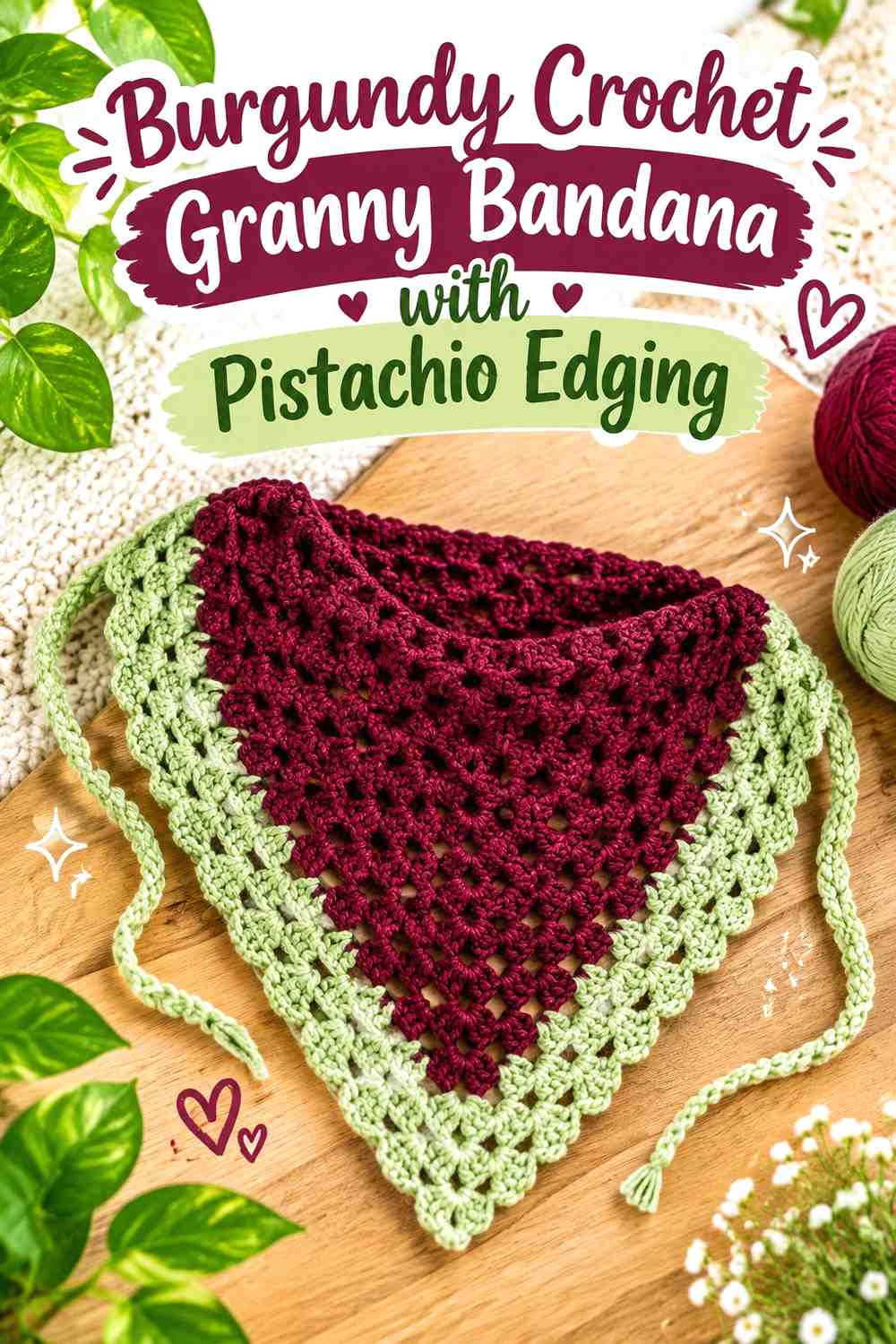
11. Burgundy Crochet Granny Bandana With Pistachio Edging
 SAVE
SAVEA triangular bandana gives you a large central field plus a clearly defined perimeter. Burgundy can form the granny-style body while pistachio highlights the outer edging and ties.
Burgundy Keeps the Crochet Bandana Center Consistent
Working the central triangle mainly in burgundy allows the open spaces and repeated clusters to create the visual interest. Before committing to the entire triangle, make sure the darker color does not hide the stitch pattern more than you want.
Pistachio Can Highlight Burgundy Crochet Edging and Ties
Use pistachio along the decorative edge and carry it into the ties so the lighter color has more than one visible job. This approach can provide stronger balance than using pistachio on a tiny edge detail and nowhere else.
Creator Credit: HayHay Crochet
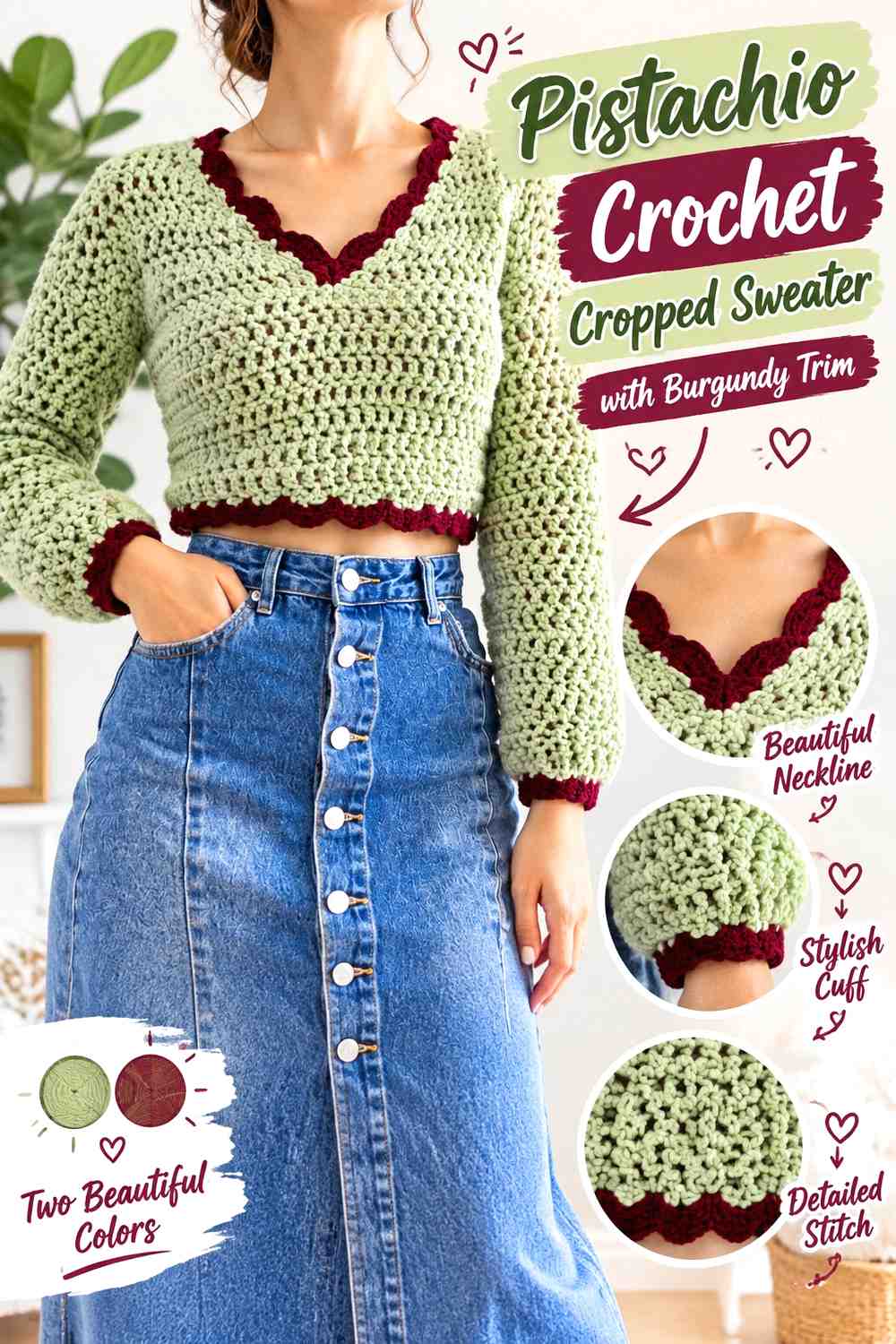
12. Pistachio Crochet Cropped Sweater With Burgundy Trim
 SAVE
SAVEA pistachio sweater can use burgundy to emphasize openings and finishing areas. The neckline is particularly useful because a dark trim creates a clear boundary between the garment and the layer underneath.
Pistachio Can Lead the Crochet Sweater Panels and Sleeves
Use pistachio through the largest sections when you want the sweater to retain a lighter color identity. Keeping both front and back consistent also prevents burgundy accents from making one side appear much heavier than the other.
Burgundy Can Define the Pistachio Crochet Neckline and Cuffs
Repeat burgundy at the neckline and cuffs rather than limiting it to one small decorative edge. If you also add burgundy at the hem, compare all three areas before making them equally wide; a smaller accent can be enough when burgundy is significantly darker.
Creator Credit: forthefrills
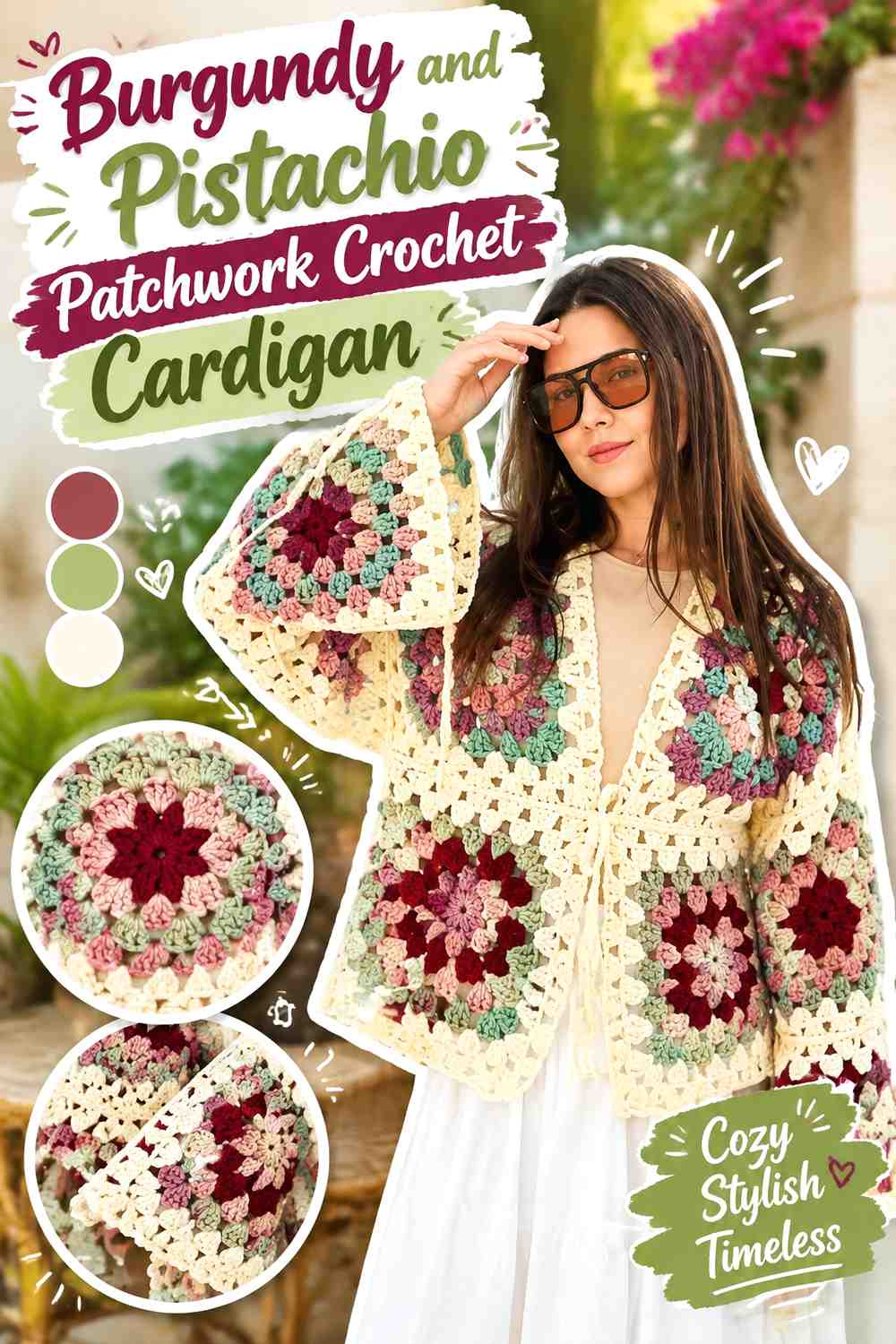
13. Burgundy And Pistachio Patchwork Crochet Cardigan
 SAVE
SAVEPatchwork lets both colors share the garment without requiring traditional stripes. Alternate burgundy-led and pistachio-led granny squares, then use a consistent joining strategy so the cardigan does not become visually scattered.
Burgundy Should Repeat Predictably Across Pistachio Crochet Squares
Distribute burgundy across the front, back, and sleeves instead of allowing all the darkest motifs to collect in one panel. Planning the layout before joining helps prevent one sleeve or one side of the cardigan from becoming noticeably heavier.
Pistachio Can Keep Burgundy Patchwork Crochet Motifs Separate
Use pistachio in alternating centers, outer rounds, or connecting areas. Because it is lighter, pistachio can create visible breaks between dark motifs and make individual squares easier to distinguish after assembly.
Creator Credit: Lyubava
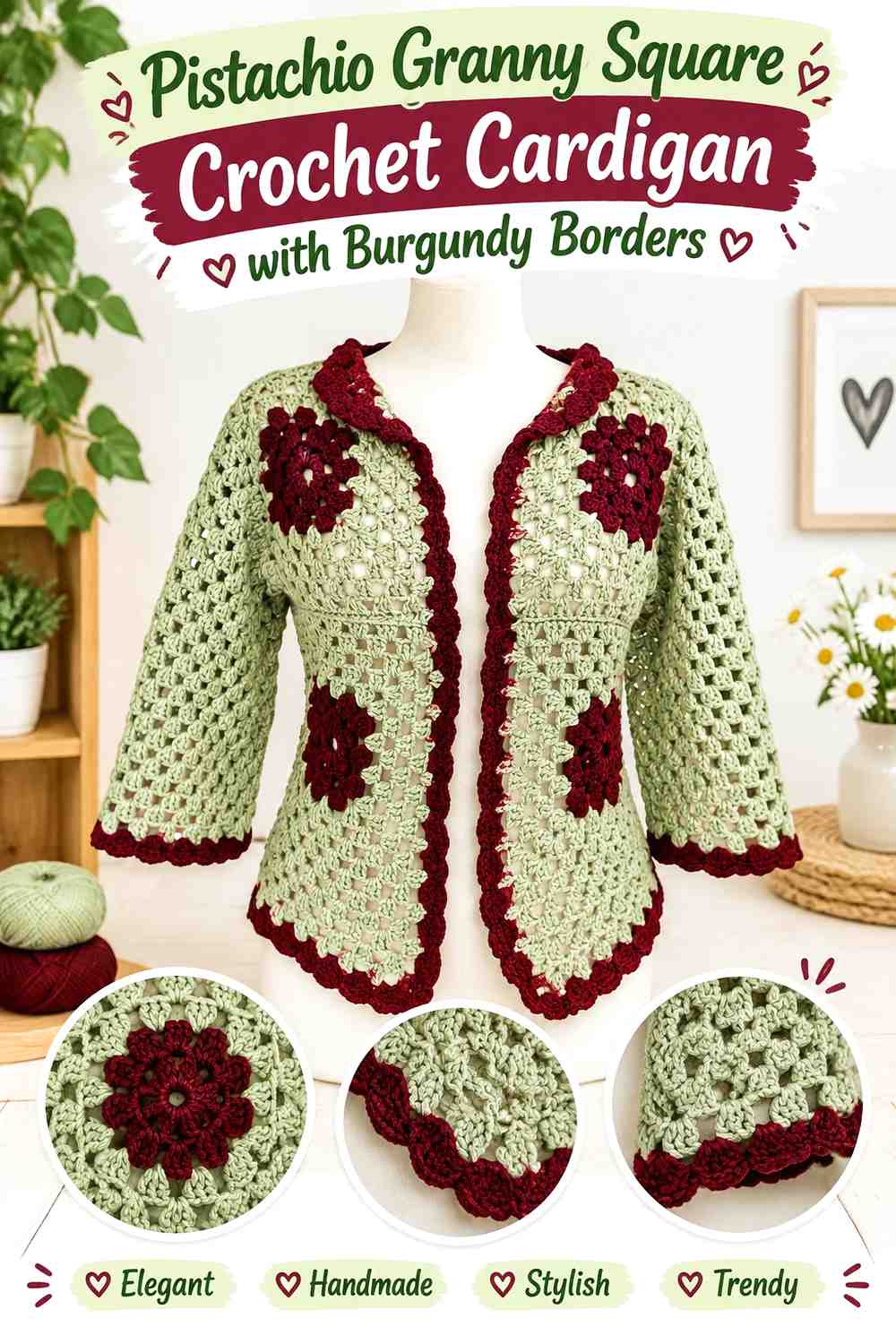
14. Pistachio Granny Square Crochet Cardigan With Burgundy Borders
 SAVE
SAVEThis cardigan uses a different balance from the previous patchwork option. Instead of giving burgundy and pistachio equal motif roles, let pistachio dominate each square and reserve burgundy for selected outer rounds and garment finishing.
Pistachio Can Unify the Crochet Granny Square Cardigan
Repeat pistachio in every major motif to create a common background across the cardigan. Even if burgundy placement changes from square to square, the recurring green gives the garment one consistent visual thread.
Burgundy Can Define Pistachio Granny Square Borders
Use burgundy around selected motifs or at the cardigan’s outer edging to give the light squares stronger boundaries. Avoid surrounding every small detail with burgundy if you want pistachio to remain the clearly dominant color.
Creator Credit: Nati Crochet
15. Pistachio Crochet Tulip Blanket With Burgundy Floral Accents
 SAVE
SAVEA floral blanket lets pistachio perform as more than a neutral-looking background. It can act as the broad field while burgundy supplies repeated flower-related accents, creating a darker point of interest across a lighter surface.
Pistachio Gives Burgundy Crochet Floral Details Space
Use pistachio consistently through the main blanket field so repeated burgundy details remain visible. This is particularly useful when the floral element is smaller than the surrounding background and needs clear value separation.
Burgundy Should Repeat Across the Pistachio Crochet Blanket
Distribute the burgundy accents throughout the blanket rather than concentrating them in one corner or single row. Regular repetition creates a stronger connection between the floral details and the overall palette.
Creator Credit: Daisy Farm Crafts
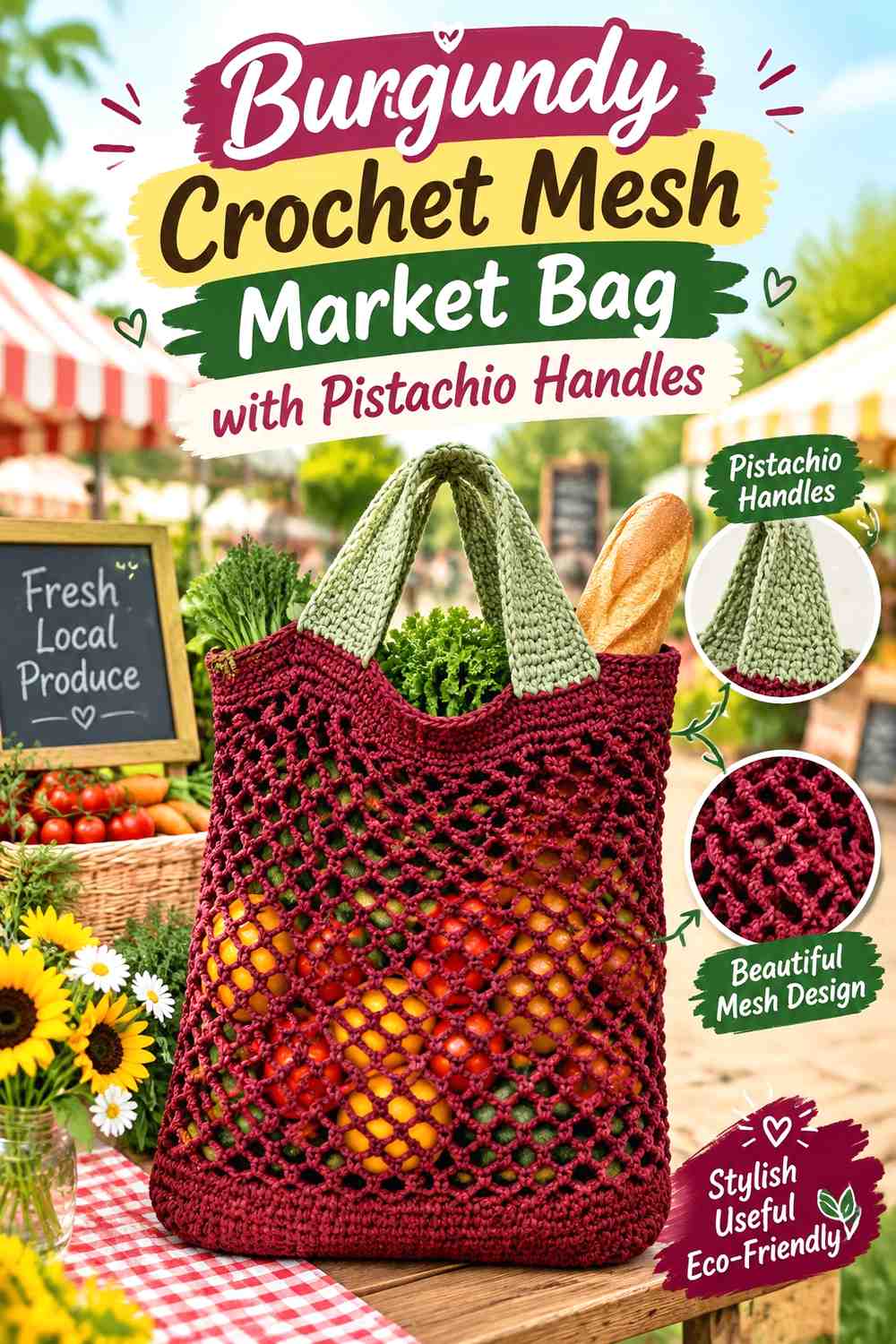
16. Burgundy Crochet Mesh Market Bag With Pistachio Handles
 SAVE
SAVEA mesh bag behaves differently from a denser tote because the background can be visible through the open fabric. Burgundy can make the mesh itself the dominant feature, while pistachio handles and upper edging provide a lighter finish.
Burgundy Keeps the Crochet Mesh Bag Visually Strong
Use burgundy through the main openwork body when you want the mesh pattern to remain the darkest part of the bag. Remember that the contents behind the open stitches can alter how the color reads, so judge the finished effect with something inside the bag as well as when it is empty.
Pistachio Can Separate the Burgundy Bag Body From the Handles
Introducing pistachio at the upper edge creates a transition between burgundy mesh and pistachio handles. Repeating the same green along the opening prevents the handles from looking like a completely separate component added after the body was finished.
Creator Credit: The Crochet Crowd
Comparing the Burgundy and Pistachio Crochet Color Palettes
| If You Want | Try This Color Direction |
|---|---|
| Mostly burgundy | Blanket, hooded scarf, beanie, poncho, bandana, or mesh bag |
| Mostly pistachio | Cardigan, bucket hat, vest, market bag, sweater, or tulip blanket |
| Equal two-color presence | Granny square bag or patchwork cardigan |
| Burgundy concentrated around edges | Pistachio vest, sweater, or granny cardigan |
| Pistachio concentrated around edges | Burgundy poncho, bandana, or blanket |
| Strong motif separation | Granny square bag, patchwork cardigan, or floral blanket |
| Color tied to natural-looking project details | Carnation bouquet |
| Simple large-scale color blocking | Bucket hat or market bag |
Conclusion
Burgundy and pistachio can move from dark and dramatic to considerably lighter depending on which shade receives the largest surface area.
For a burgundy-forward palette, start with the blanket, hooded scarf, beanie, poncho, bandana, or mesh market bag. Pistachio then works as a deliberate contrast around borders, pockets, handles, or repeated stripes.
For a lighter result, make pistachio the field color on a cardigan, vest, sweater, bucket hat, or floral blanket and use burgundy to define the edges and structural details.
Motif projects need the most advance planning. Granny squares and floral details can lose definition when the two yarns are too close in value, so compare the actual yarns before settling on placement. Use the linked tutorials for exact construction guidance and treat these burgundy-and-pistachio arrangements as independent color adaptations.
Frequently Asked Questions
Do burgundy and pistachio work together in crochet?
They can create a clear two-color relationship when the pistachio is noticeably lighter than the burgundy. Burgundy provides the dark anchor while pistachio can separate motifs, lighten larger sections, or define selected details.
Should burgundy or pistachio be the main crochet color?
Either can lead. Choose burgundy when you want a darker finished piece and pistachio when you want a lighter surface with burgundy definition. The item’s structure can also guide the choice: large panels can carry the dominant shade while borders, cuffs, handles, or motif centers carry the secondary color.
How much pistachio should I use with burgundy?
There is no required ratio. For a burgundy-dominant project, a smaller but regularly repeated amount of pistachio can be enough. If pistachio is the dominant shade, burgundy may need even less surface area because the darker color can remain visually prominent in borders and accents.
How can I check burgundy and pistachio contrast?
Place the yarns side by side and look at them from a distance. You can also photograph them and view the image in grayscale. Clear light-dark separation is particularly useful for granny squares, narrow stripes, floral motifs, and other small details.
What should I do if my pistachio yarn is darker than expected?
Decide whether you want a tonal result or clearer contrast. If the colors merge too much for the intended motif, substitute a lighter or slightly less saturated green while keeping the pistachio character. For broad panels or large stripes, a softer value difference may still work well.
Can I add a neutral to burgundy and pistachio crochet?
Yes, when the project needs additional separation. A light neutral can be placed between burgundy and pistachio in motifs or checks, but keep its role controlled if you want the two named colors to remain the focus.
How do I stop a burgundy and pistachio crochet project from looking busy?
Give the colors clear jobs. One can dominate the main surface while the other repeats through edges, handles, cuffs, motifs, stripes, or joining areas. Avoid changing colors simply because a new crochet section begins; connect each color change to the item’s actual structure.