Cool blue and silver can give a crochet star garland a distinctly New Year look without depending on the usual Christmas palette. Cool blue supplies the main color and enough depth to define each star, while silver introduces the reflective, disco-inspired note that makes the garland feel ready for a celebration.
The most useful color decision is not simply whether to alternate blue and silver stars. You can also place silver around blue star edges, use it at star centers, reserve it for the connecting strand, or repeat it in smaller stars between larger blue motifs. Each approach changes how much visual attention the metallic-looking accent receives.
The tutorials credited throughout this collection support crochet star motifs that can be repeated or adapted into garland components. The cool blue, silver, and supporting palettes below are independent color plans rather than claims about the colors used by the tutorial creators.
Quick List
- Cool Blue And Silver Crochet Disco Star Garland
- Cool Blue Silver And Snow White Crochet Disco Star Garland
- Cool Blue Silver And Navy Crochet Disco Star Garland
- Icy Blue And Silver Crochet Disco Star Garland
- Cool Blue Silver And Charcoal Crochet Disco Star Garland
- Powder Blue Cool Blue And Silver Crochet Disco Star Garland
- Cool Blue Silver And Deep Teal Crochet Disco Star Garland
- Cool Blue Silver And Pearl Gray Crochet Disco Star Garland
- Cool Blue Silver And Midnight Blue Crochet Disco Star Garland
- Cool Blue Silver And Frost Blue Crochet Disco Star Garland
Decide How Much Silver the Crochet Star Garland Needs
Silver works best when it has a defined role rather than appearing randomly throughout the garland. For a blue-led design, make most of the stars cool blue and use silver on selected stars, centers, borders, or the connecting strand. That keeps the metallic-looking color special instead of making every motif compete equally.
For a more obvious disco direction, increase the silver repetition but keep some uninterrupted blue stars between the lighter accents. The darker color gives the eye a place to rest and makes the silver areas appear more pronounced by comparison.
Keep Cool Blue Star Points Visible Against Silver
A star garland depends heavily on recognizable silhouettes. If cool blue and silver are similar in lightness, their boundaries can become less obvious when one is used as an edging color around the other.
Compare the yarns side by side and consider a grayscale photo before committing to multiple motifs. When additional definition is needed, introduce navy, charcoal, or another darker cool shade in a limited role rather than adding several unrelated colors.
Plan Cool Blue and Silver Repetition Across the Garland
Look at the garland as one long composition instead of treating every star independently. Repeating a silver accent at predictable intervals can make separate motifs feel connected, while irregular repetition creates a more playful party look.
The connecting strand matters too. A cool blue strand visually blends with blue motifs, whereas silver or pale gray makes the line between stars more noticeable. Choose according to whether you want attention on individual stars or on the entire hanging structure.
1. Cool Blue And Silver Crochet Disco Star Garland
 SAVE
SAVEThe simplest version gives the two headline colors all the attention. Let cool blue dominate most stars and use silver on selected motifs, edges, or centers. The limited palette makes repetition especially important because placement, rather than additional colors, creates the variation.
Cool Blue Can Dominate the Crochet Star Sequence
Use more cool blue than silver when you want a clearly blue-led New Year garland. A run of blue stars interrupted periodically by silver creates stronger focal moments than an arrangement in which every other motif changes color mechanically.
Silver Can Define Selected Cool Blue Star Details
Instead of making every silver area a complete star, consider using the lighter shade on a limited border or center. Concentrating silver in a few repeated locations gives the disco reference a clear visual job.
Cool Blue and Silver Need a Consistent Connecting Color
A blue connecting strand keeps attention on the silver motifs, while a silver strand creates a more continuous light accent across the entire garland. Decide which effect you want before joining the stars so the strand supports rather than competes with the motifs.
Creator Credit: VivCrochets
2. Cool Blue Silver And Snow White Crochet Disco Star Garland
 SAVE
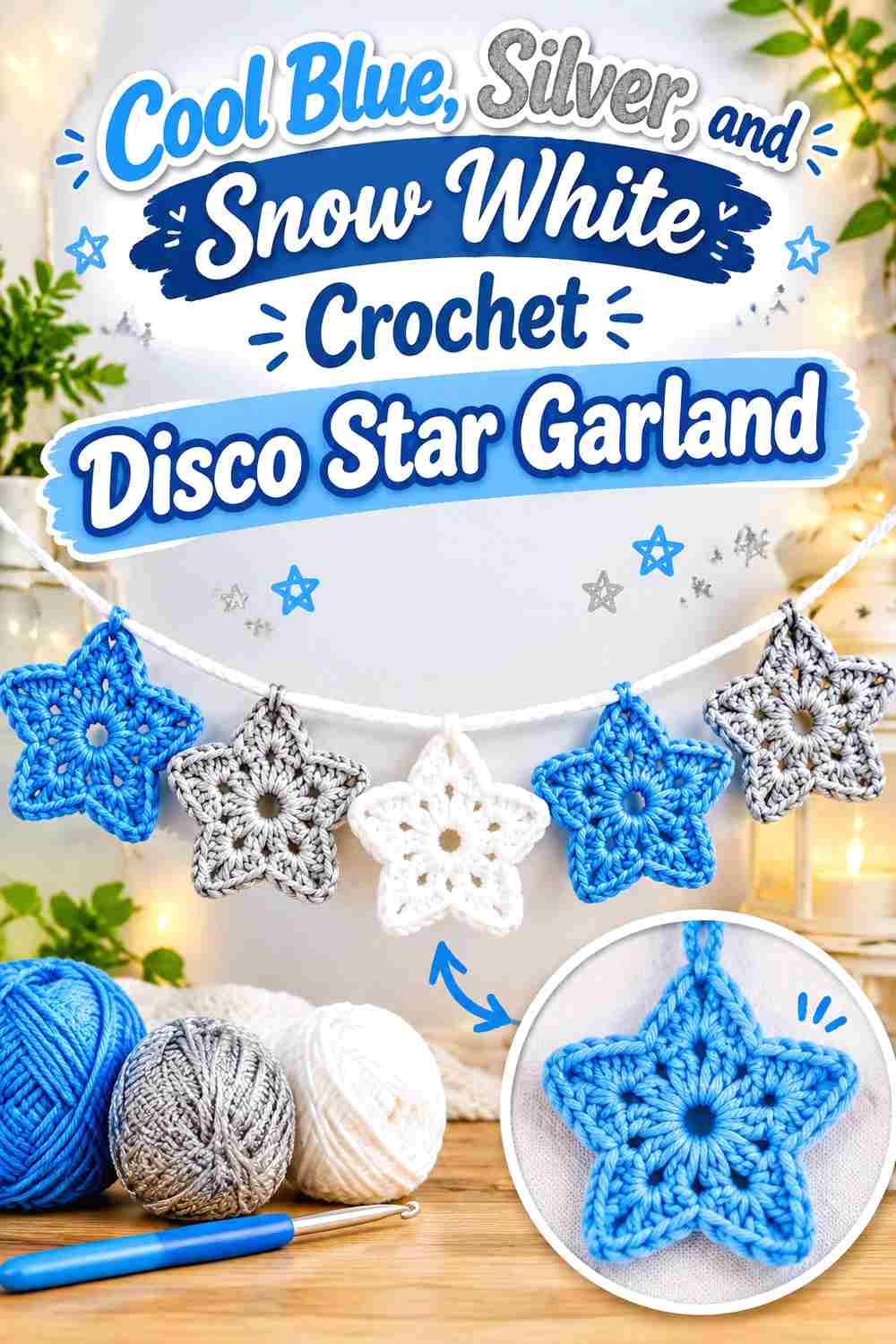
SAVESnow white introduces a third light color, making this version crisp and high contrast when cool blue remains dominant. Silver should stay visually separate from white by occupying a different part of the star or garland rather than placing the two pale shades together everywhere.
Cool Blue Gives Silver and Snow White a Darker Star Background
Use blue around or between the lighter colors so their individual roles remain clear. A cool blue center with silver edging, for example, gives silver a stronger boundary than a silver-and-white combination alone.
Silver Should Stay Distinct From Snow White Stars
Silver and white may appear different in skeins yet have similar lightness once crocheted. If that happens, place cool blue between them or assign silver to the connecting strand while white remains on selected star motifs.
Snow White Can Create Breaks Between Cool Blue Star Groups
A limited white star can interrupt a long run of blue without adding another saturated color. Keep the white repetition controlled so silver still carries the disco-inspired accent.
Creator Credit: GratiaProject
3. Cool Blue Silver And Navy Crochet Disco Star Garland
 SAVE
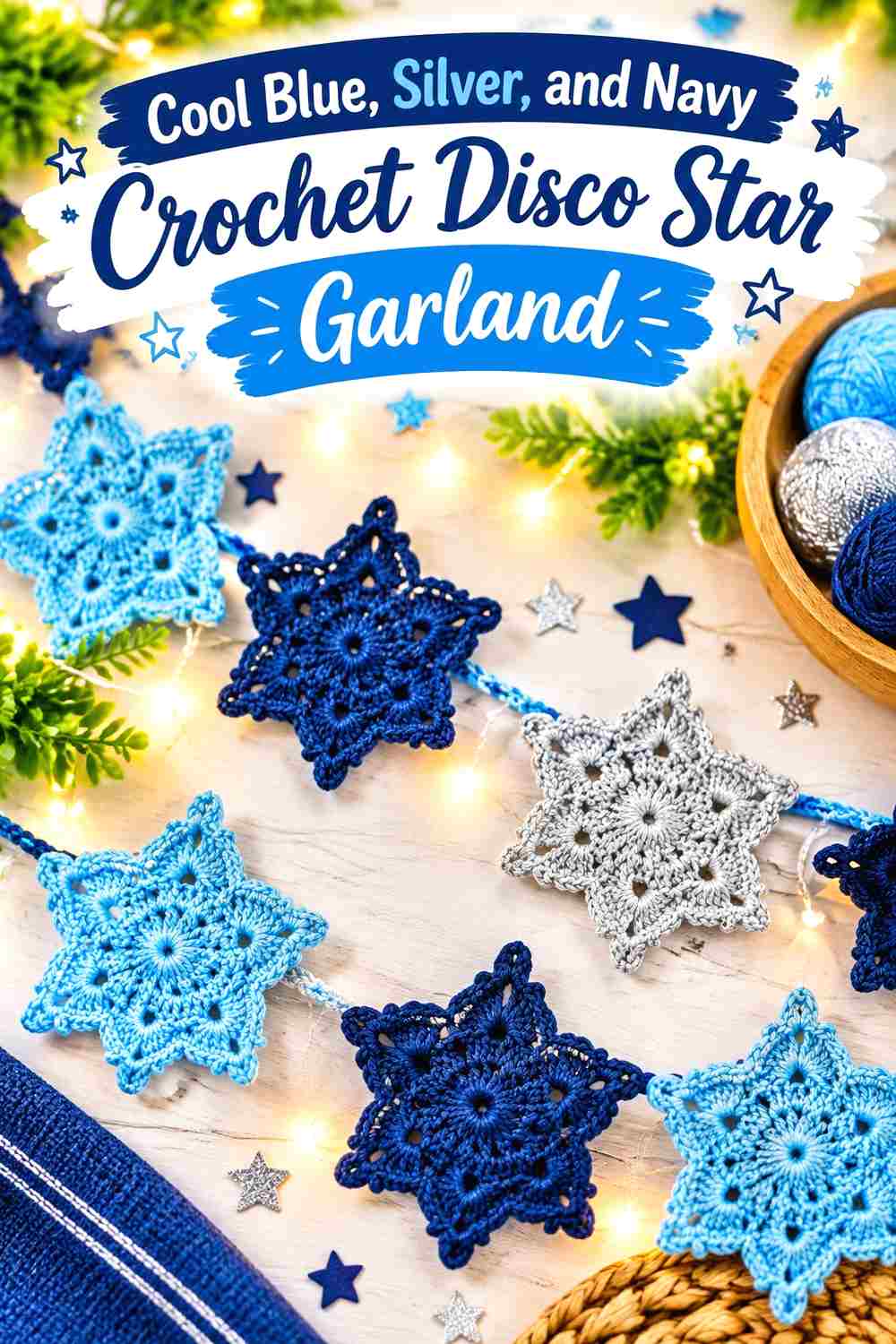
SAVENavy gives the palette a much darker endpoint. Cool blue can remain the main star color, silver can provide the lightest accent, and navy can appear in centers, edges, or occasional full motifs to create stronger value variation.
Navy Gives Cool Blue Crochet Stars More Depth
Use navy selectively rather than replacing most of the cool blue. A darker center or occasional navy star creates depth while keeping the medium blue clearly visible across the garland.
Silver Becomes Brighter Beside Navy Star Details
Silver benefits from the value difference created by navy. A small silver detail can become much more noticeable when placed directly beside the darkest blue, so large silver areas may not be necessary.
Cool Blue Can Bridge Navy and Silver Across the Garland
Cool blue sits visually between the darkest and lightest colors. Repeating it most often prevents the garland from looking like alternating blocks of very dark navy and very light silver.
Creator Credit: Kristines Crochets
4. Icy Blue And Silver Crochet Disco Star Garland
 SAVE
SAVEIcy blue produces a much lighter version of the New Year palette. Because both colors are pale, this scheme depends less on dramatic light-dark contrast and more on careful color placement and recognizable star silhouettes.
Icy Blue Should Cover Enough of Each Crochet Star to Stay Visible
Avoid reducing icy blue to tiny details surrounded entirely by silver. Larger icy-blue centers or complete blue motifs make the color easier to identify across a hanging garland.
Silver Can Outline Icy Blue Without Covering the Star Points
A controlled silver edge can emphasize the party theme, but a broad light border may reduce the visible share of icy blue. Keep enough blue at each point to preserve the two-color distinction.
Icy Blue and Silver Need a Contrast Check Before Joining
View several finished motifs together before making the entire garland. If the two colors merge from a distance, consider giving one shade a larger uninterrupted area rather than introducing a third color immediately.
Creator Credit: AllFreeCrochet
5. Cool Blue Silver And Charcoal Crochet Disco Star Garland
 SAVE
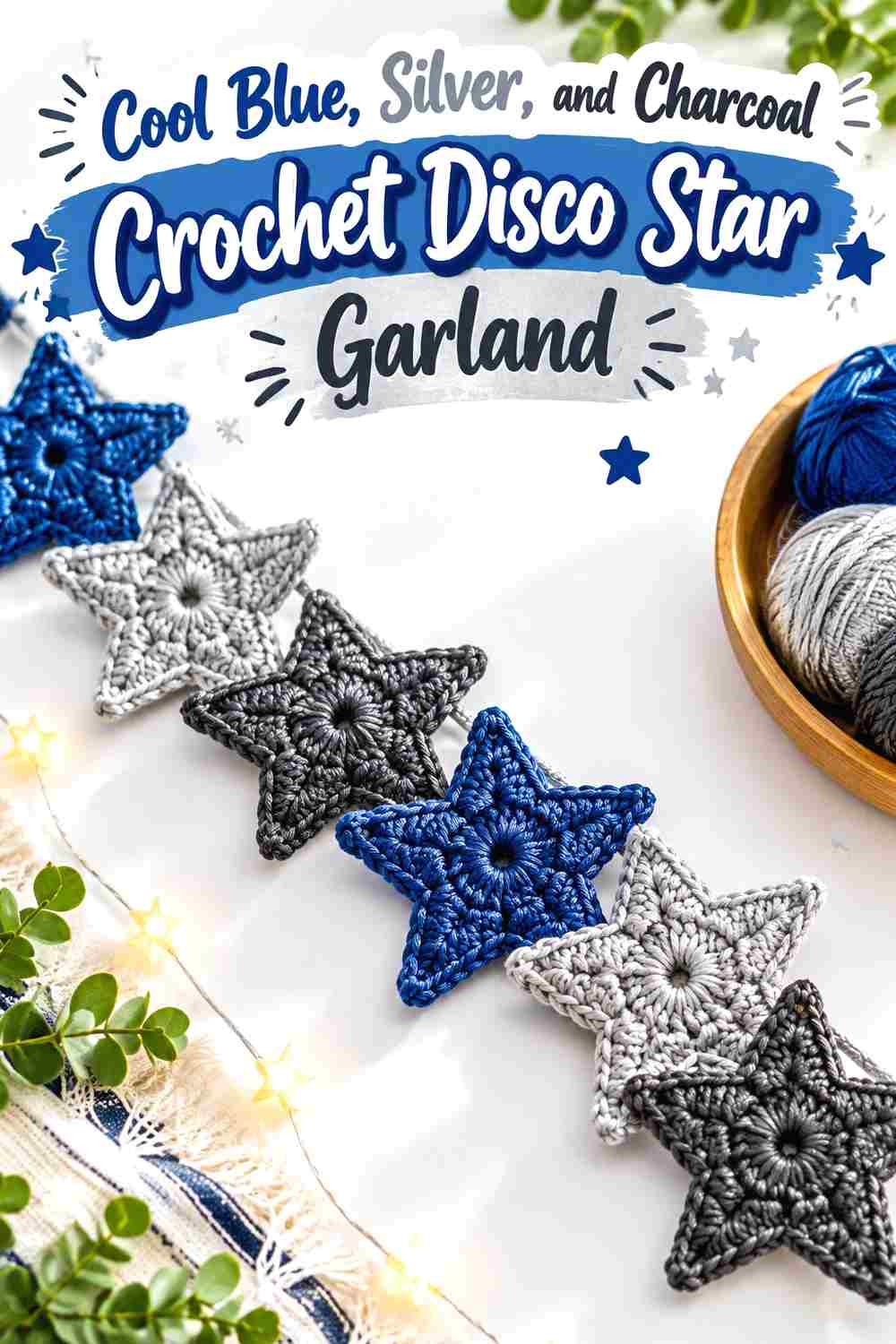
SAVECharcoal adds a neutral dark anchor without introducing another strong hue. It can define star centers, narrow edges, or the joining strand while cool blue remains the dominant color and silver supplies the New Year shine.
Charcoal Can Sharpen Cool Blue Star Points
A narrow charcoal detail around selected areas can make the blue silhouette more distinct, especially when silver is also present. Keep charcoal limited so the garland does not become gray-led.
Silver Stands Out Against Charcoal Crochet Details
The light-dark relationship between silver and charcoal can create the strongest contrast in this palette. Use that relationship selectively at centers or joins instead of repeating it on every part of every star.
Cool Blue Should Remain the Largest Color Area
Charcoal and silver can easily turn the design into a primarily neutral garland. Keeping most star surfaces blue preserves the requested color identity while the two neutrals provide definition.
Creator Credit: B.Hooked Crochet
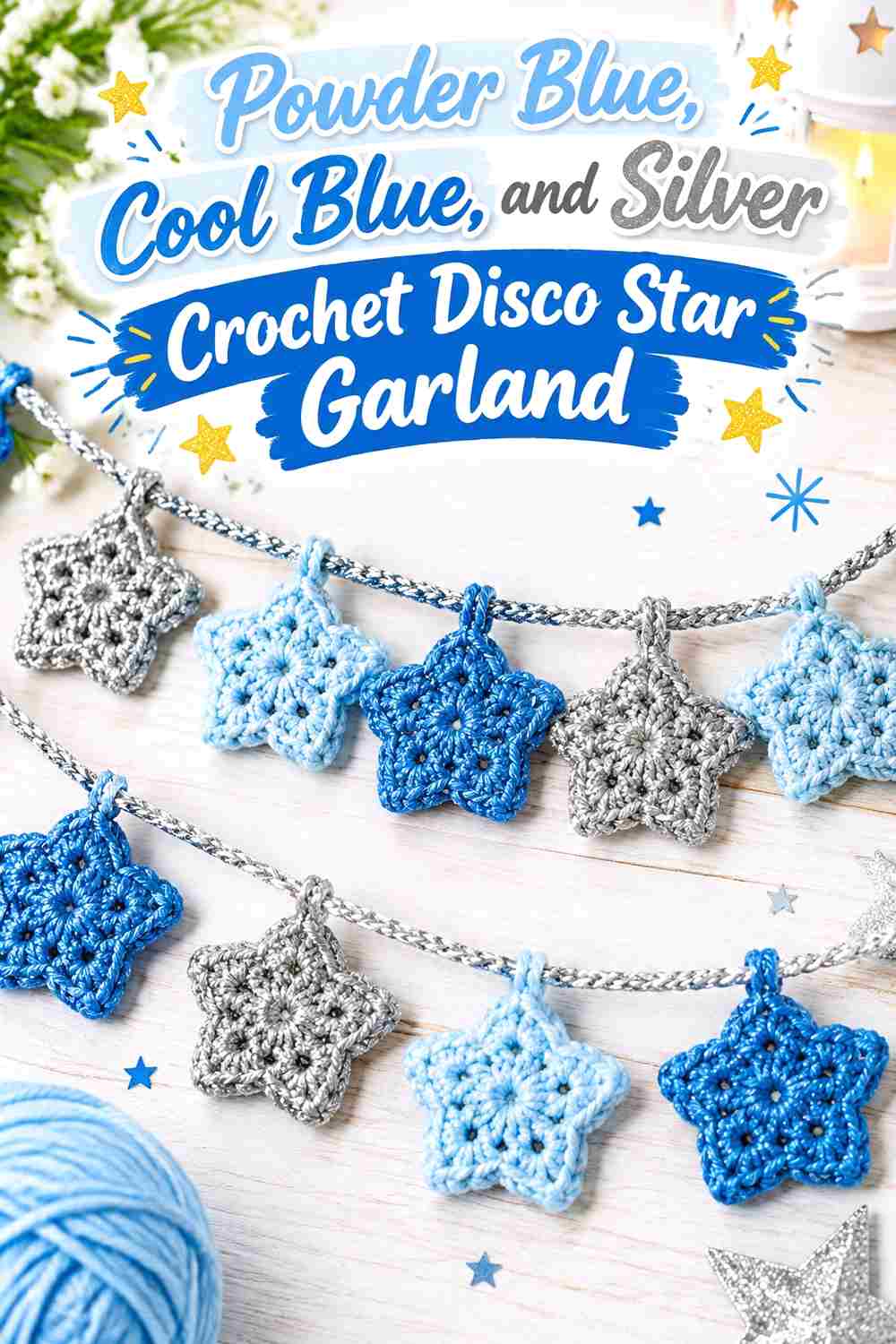
6. Powder Blue Cool Blue And Silver Crochet Disco Star Garland
 SAVE
SAVEUsing two blues creates a tonal alternative to adding another neutral. Powder blue supplies the lighter blue, cool blue creates the middle value, and silver can be restricted to small accents that give the garland its New Year character.
Cool Blue Can Anchor Powder Blue Crochet Stars
Make cool blue the more frequently repeated shade if you want enough depth around pale powder blue. The darker blue can appear on complete stars or around selected edges.
Powder Blue Creates a Softer Transition Toward Silver
Powder blue can visually bridge medium blue and silver, but the two light shades still need separation. Avoid placing every silver detail directly against powder blue if their values are very similar.
Silver Should Remain the Smallest Accent in the Blue Garland
Because two blues already provide variation, silver does not need to cover large areas. A repeated center, edge, or occasional complete silver star can establish the disco direction without overwhelming the tonal blue scheme.
Creator Credit: HappyBerry Crochet
7. Cool Blue Silver And Deep Teal Crochet Disco Star Garland
 SAVE
SAVEDeep teal adds a blue-green note while remaining within a cool palette. Use cool blue for the main sequence, deep teal as the darker supporting color, and silver as the concentrated light accent.
Deep Teal Can Ground Cool Blue Star Centers
A deep teal center gives a cool blue star more visual depth without using black or gray. Keep enough cool blue around the center so the motif still reads as blue-led from a distance.
Silver Gives Deep Teal Crochet Stars a Light Counterpoint
A silver edge or small central accent can provide strong separation from deep teal. Since that contrast is already noticeable, avoid adding silver to every section of the same motif.
Cool Blue Should Connect Deep Teal and Silver Motifs
Repeat cool blue between the darker teal and lighter silver sections. This keeps the palette cohesive and prevents the supporting colors from becoming two separate visual themes.
Creator Credit: Hooked by Robin
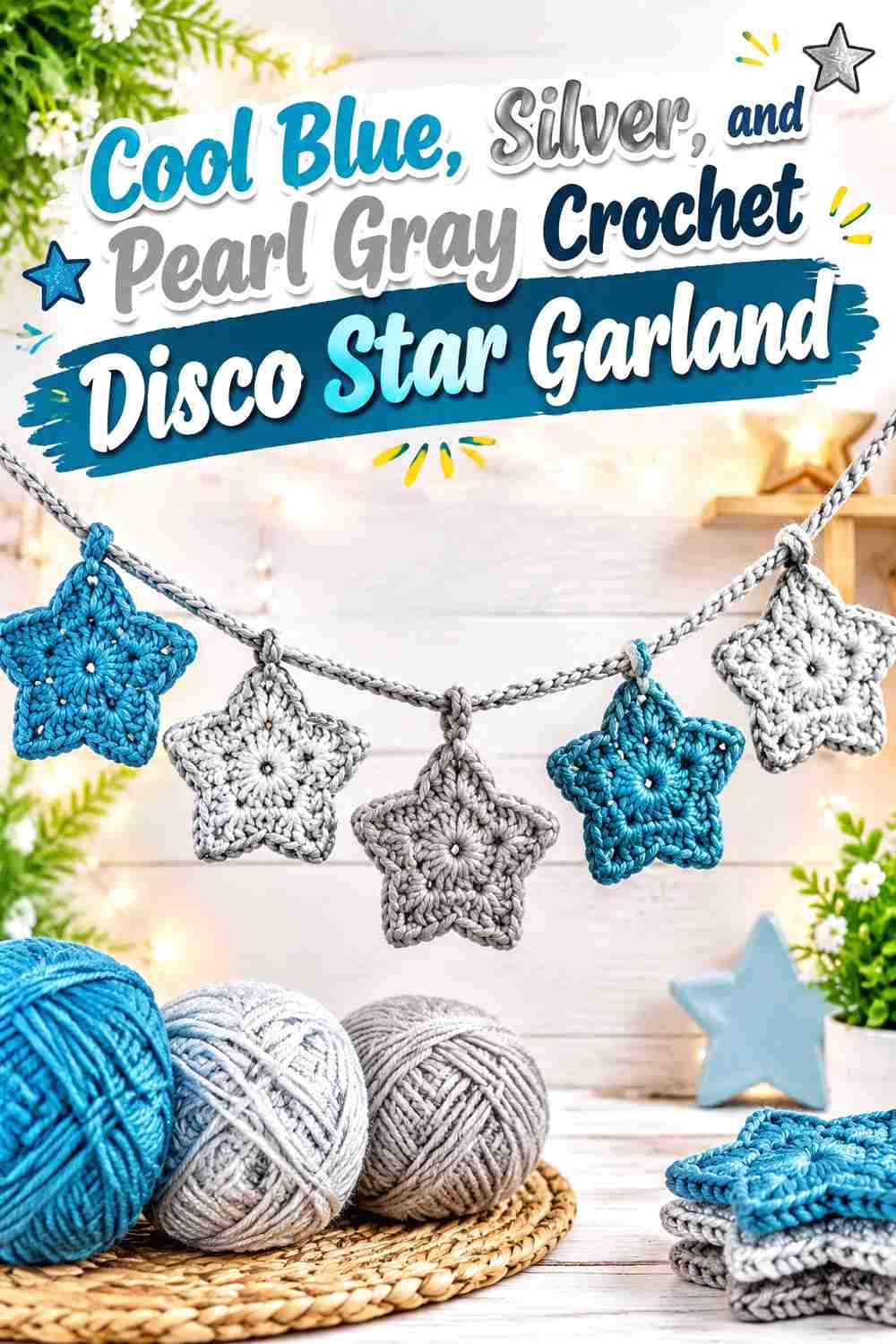
8. Cool Blue Silver And Pearl Gray Crochet Disco Star Garland
 SAVE
SAVEPearl gray creates a softer neutral bridge than charcoal. It can work particularly well on the connecting strand or secondary stars, leaving cool blue to lead and silver to mark the most celebratory details.
Pearl Gray Can Keep Silver Star Accents From Feeling Isolated
A gray connecting strand provides a neutral transition between blue and silver motifs. Because it is less visually strong than either headline color, it can unify the garland without becoming the main feature.
Cool Blue Needs More Surface Than Pearl Gray
If gray covers too many full stars, the garland can lose its blue emphasis. Keep the largest share of complete motifs cool blue and use gray as a support color.
Silver Should Be Noticeably Different From Pearl Gray
Silver and pearl gray can be close in lightness. Place them beside your cool blue before deciding their roles; if they look too similar, use silver for smaller concentrated accents and gray for the larger connecting areas.
Creator Credit: Mary Matthews Handmade
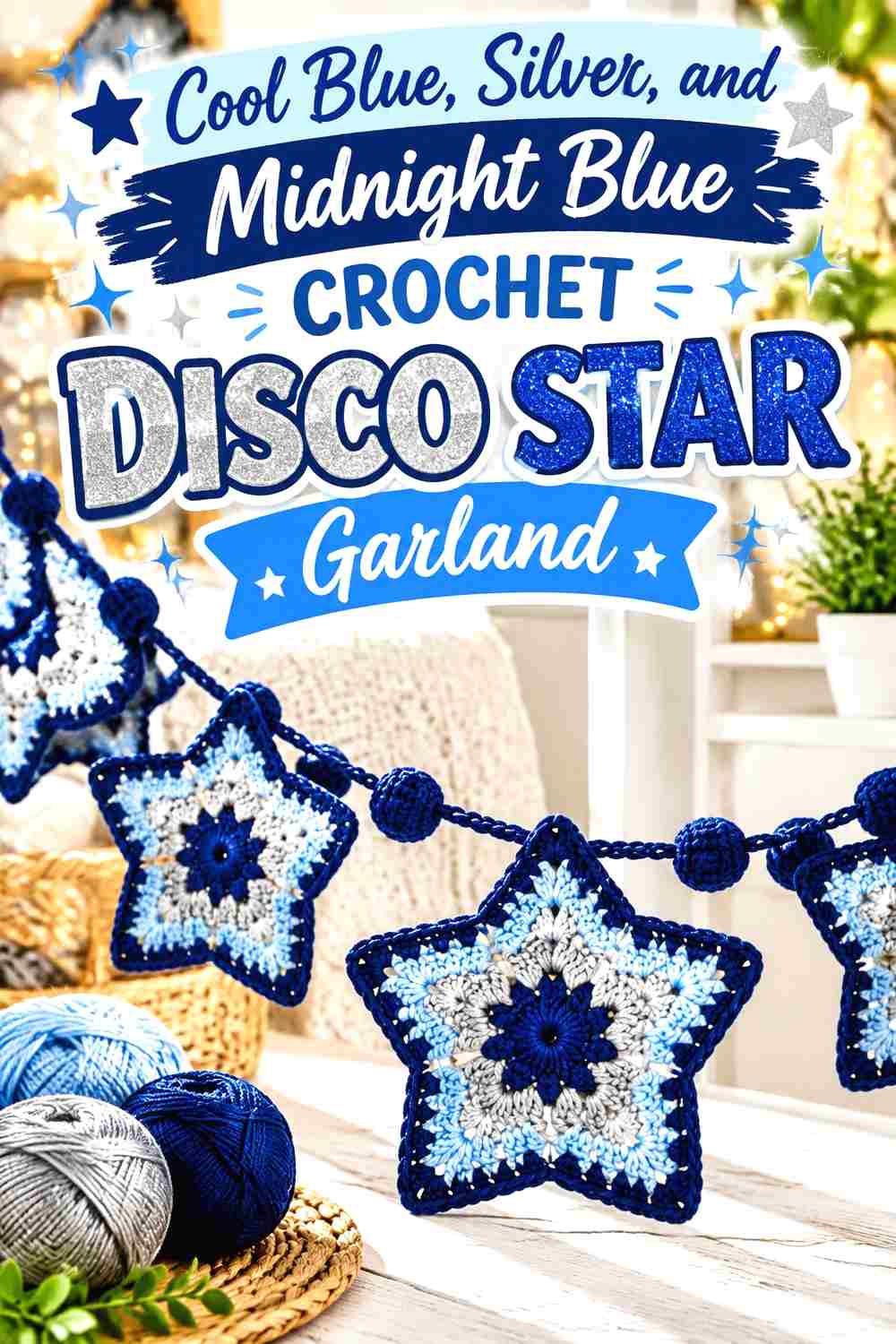
9. Cool Blue Silver And Midnight Blue Crochet Disco Star Garland
 SAVE
SAVEMidnight blue creates the most dramatic dark-blue variation in the collection. It can provide occasional deep stars or centers, while cool blue prevents the garland from becoming too dark and silver supplies the strongest light contrast.
Midnight Blue Can Create Dark Focal Stars
Instead of repeating midnight blue as frequently as cool blue, use it at selected intervals. These deeper motifs can visually divide a long garland into smaller groups.
Silver Has Strong Separation Against Midnight Blue
A silver center or edge becomes especially noticeable against a very dark blue. Use that contrast where you want attention rather than applying it identically to every star.
Cool Blue Can Keep Midnight Blue From Making the Garland Too Heavy
Place medium cool-blue motifs between the darkest stars. The tonal progression from midnight through cool blue to silver creates variation without introducing unrelated warm colors.
Creator Credit: CrochetCraftsmann
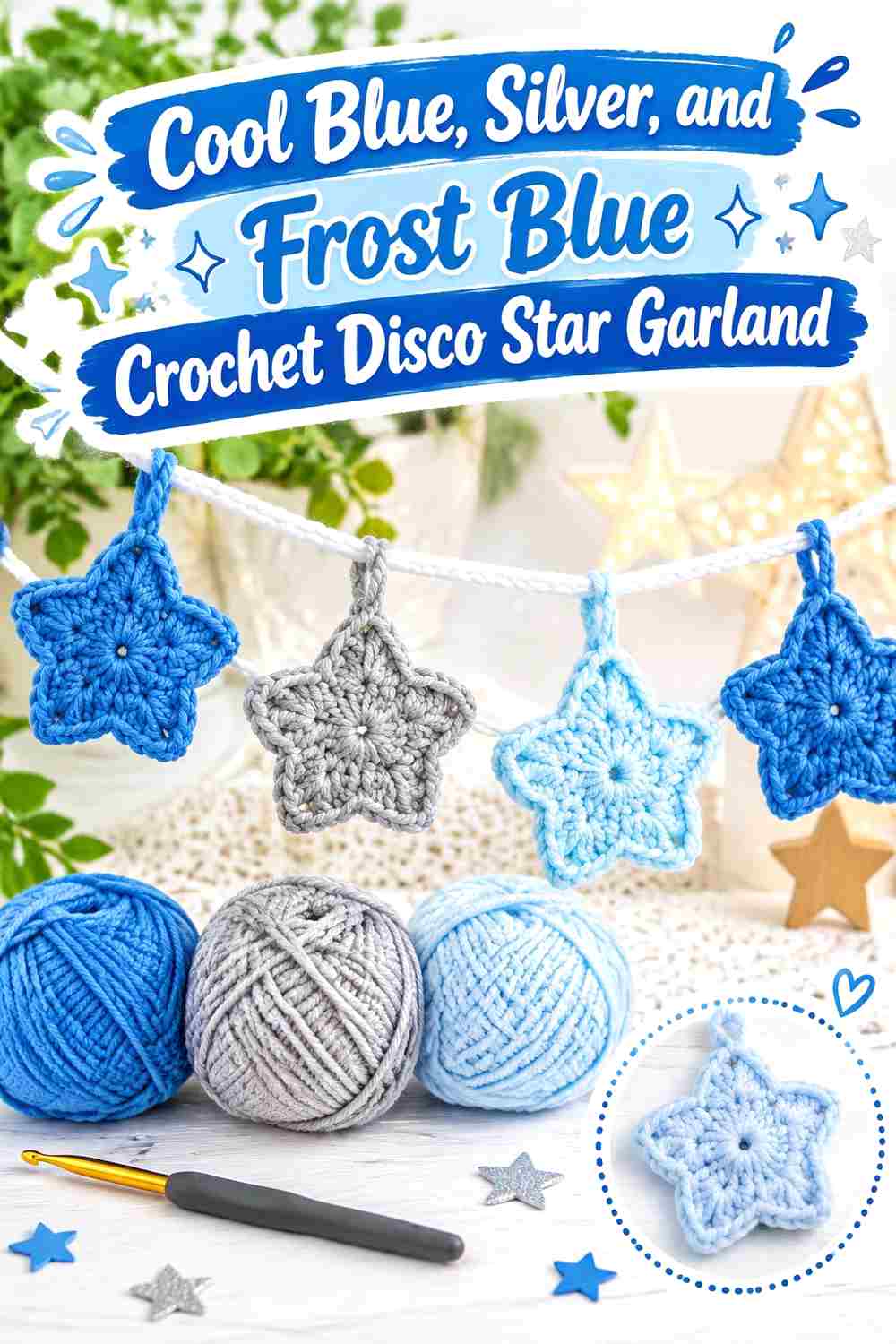
10. Cool Blue Silver And Frost Blue Crochet Disco Star Garland
 SAVE
SAVEFrost blue keeps the final palette light but gives it more tonal range than a simple icy-blue-and-silver pairing. Cool blue can anchor the sequence, frost blue can lighten selected stars, and silver can appear at strategic intervals.
Cool Blue Can Define Frost Blue Crochet Star Groups
Use cool blue between pale frost motifs so the lighter stars retain clear boundaries. This becomes particularly important when the garland is viewed from across a room rather than close up.
Frost Blue Can Reduce the Jump From Cool Blue to Silver
A pale blue provides a visual midpoint between medium cool blue and a light silver accent. Use it on full stars or substantial star sections rather than tiny details where the tonal distinction may disappear.
Silver Can Mark the New Year Rhythm Between Blue Stars
Instead of alternating all three colors evenly, consider placing silver at wider intervals and using cool blue and frost blue more frequently. The occasional silver motif then functions almost like a visual beat across the garland.
Creator Credit: Thao Homemade Crochet
Comparing the Cool Blue and Silver Disco Star Garland Palettes
For the clearest two-color statement, the first cool blue and silver palette keeps every decision focused on proportion and placement. Adding snow white creates a crisp, icy variation, while pearl gray gives the same basic palette a quieter neutral transition.
Navy, charcoal, and midnight blue are useful when stronger light-dark contrast is the goal. Silver becomes particularly noticeable beside these deeper colors, so you can use less of it while still maintaining the disco-inspired direction.
Powder blue, icy blue, and frost blue create softer tonal garlands. They require more careful contrast checking because the light blues can approach silver in value. Deep teal offers a different route by adding another cool hue while preserving a darker supporting role.
Conclusion
Start with cool blue and silver alone when you want the cleanest New Year disco-star theme. If the stars need stronger definition, navy, midnight blue, or charcoal can provide a darker anchor without taking the palette in a warm direction.
For a lighter garland, icy blue, frost blue, powder blue, white, or pearl gray can expand the palette while keeping the overall appearance cool. The important checkpoint is making sure silver does not visually disappear into another pale shade.
Whichever version you choose, plan the entire garland before joining the motifs. Decide which color dominates, how often silver repeats, whether the connecting strand should be visible, and where the darkest or lightest stars belong. Use the credited tutorials for their star construction guidance while applying the cool blue and silver color plan independently.
Frequently Asked Questions
Should Cool Blue or Silver Dominate a Crochet New Year Star Garland?
Cool blue is a practical dominant color when you want silver to function as a noticeable disco-inspired accent. Silver can then appear on selected stars, centers, borders, or the connecting strand. A silver-dominant version is also possible, but it creates a substantially lighter overall garland.
How Can I Make Silver Stand Out Against Cool Blue Crochet Stars?
Check the light-dark difference between the two yarns first. Silver usually becomes more noticeable when surrounded by a medium or dark blue. If your cool blue is very pale, adding navy, midnight blue, or charcoal in limited areas can create stronger definition.
Can I Mix Several Blue Shades in a Silver Crochet Star Garland?
Yes. Cool blue can remain the anchor while powder, frost, icy, navy, or midnight blue provides tonal variation. Give each shade a clear role rather than changing blues randomly from star to star.
What Connecting Color Works With Cool Blue and Silver Crochet Stars?
Cool blue makes the connecting strand less prominent among blue motifs, while silver or pearl gray makes the strand more visible. Navy creates a darker line between stars. Choose according to whether you want the eye to focus on individual motifs or the complete garland structure.
How Do I Keep Pale Blue and Silver Crochet Stars From Blending Together?
Compare the finished colors from a distance and use a grayscale photo as an additional check. If the values are too close, increase the amount of medium cool blue between them or assign the pale blue and silver to different parts of the garland.
Do All the Crochet Stars Need the Same Color Placement?
No. Repetition can come from the palette rather than identical color placement. Some stars can be solid blue, others can use silver centers or borders, and occasional silver stars can create focal points. Repeating those treatments intentionally keeps the garland connected.
How Can I Give a Cool Blue and Silver Crochet Garland More of a New Year Disco Look?
Keep silver in noticeable, repeated positions and use cool blues rather than traditional red-and-green holiday colors. Strong contrast between silver and deeper blue details can emphasize the star shapes, while controlled silver repetition gives the garland a more celebratory visual rhythm without requiring every star to be metallic-looking.