
Burgundy and copper sit in the same warm color family but carry different visual weights. Deep burgundy can anchor a crochet project, while copper introduces an orange-brown lift that keeps the combination from becoming one continuous dark field. Because the colors are related in temperature, the success of this palette often depends more on light-and-dark contrast, repetition, and placement than on hue difference alone.
For this article, copper refers to the color direction—a warm brown-orange or rusted orange tone. Metallic yarn is not required. A blanket can use broad burgundy fields with copper stripes, while garments can place copper around cuffs, necklines, hems, and panels. Motif projects offer another direction by letting burgundy define centers or borders while copper opens up smaller details.
Quick List
- Burgundy And Copper Striped Crochet Blanket
- Copper And Burgundy Striped Crochet Cardigan
- Burgundy Crochet Woven Scarf With Copper Details
- Copper Crochet Daisy Blanket With Burgundy Centers
- Burgundy Crochet V Neck Sweater With Copper Trim
- Burgundy Crochet Ribbed Beanie With Copper Accent
- Burgundy Copper And Cream Gingham Crochet Tote
- Copper Crochet Bucket Hat With Burgundy Brim
- Copper Textured Crochet Pillow With Burgundy Border
- Burgundy And Copper Crochet Rose Bouquet
- Burgundy And Copper Crochet Garland
- Copper Crochet Vest With Burgundy Ribbing
- Burgundy And Copper Two Tone Crochet Skirt
- Copper Crochet Market Bag With Burgundy Handles
- Burgundy Crochet Poncho With Copper Edging
- Burgundy And Copper Granny Square Crochet Bag
- Copper Crochet Headband With Burgundy Center Detail
- Burgundy Crochet Mesh Market Bag With Copper Handles
Decide Whether Burgundy or Copper Should Dominate
Burgundy usually has greater visual weight when it is paired with a medium or lighter copper. That means you do not necessarily need equal amounts of both colors. A narrow burgundy border can still feel prominent around a copper pillow, while copper may need a broader area to have the same impact on a burgundy garment.
For a darker result, make burgundy the body color and repeat copper through smaller structural details. For a warmer and lighter result, reverse the hierarchy and use copper for the main panels, motifs, or surface while burgundy defines borders and finishing areas.
Check Burgundy and Copper Contrast Before Using Small Motifs
Burgundy and copper can look distinct in yarn balls but move closer together visually once they are crocheted into small sections. Compare the yarns side by side before using them for tiny flower centers, gingham checks, narrow stripes, or intricate granny-square rounds.
A grayscale photo can help reveal whether there is enough light-and-dark difference. If both shades become nearly identical gray values, reserve the combination for broader color blocks or replace one shade with a lighter copper or deeper burgundy when stronger definition is important.
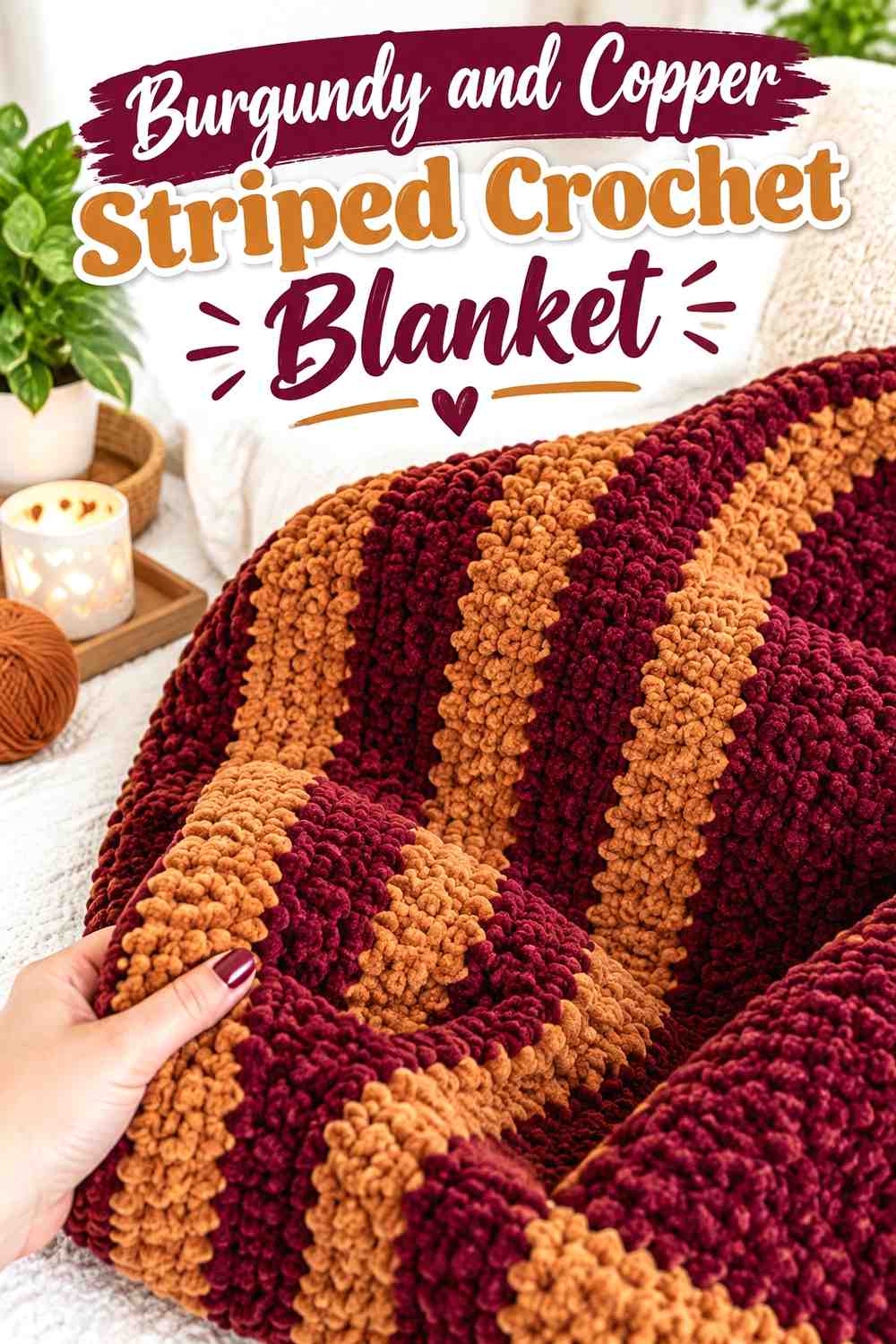
1. Burgundy And Copper Striped Crochet Blanket
 SAVE
SAVEA striped blanket gives this warm palette enough space for both colors to develop. Use burgundy across the broadest areas when you want a darker blanket, then introduce copper at recurring intervals so the warmer orange-brown shade creates visible breaks without competing equally across every section.
Burgundy Can Carry the Broadest Crochet Blanket Stripes
Let burgundy cover several substantial sections so the blanket has a consistent dark foundation. If the crochet texture is subtle, test it in burgundy first because very dark yarn can make smaller surface changes less noticeable.
Copper Can Break Up Burgundy Across the Crochet Blanket
Repeat copper regularly rather than adding a single isolated stripe. Copper can also return near the final border so the lighter warm shade connects the blanket edge to the interior stripe pattern.
Creator Credit: Bella Coco
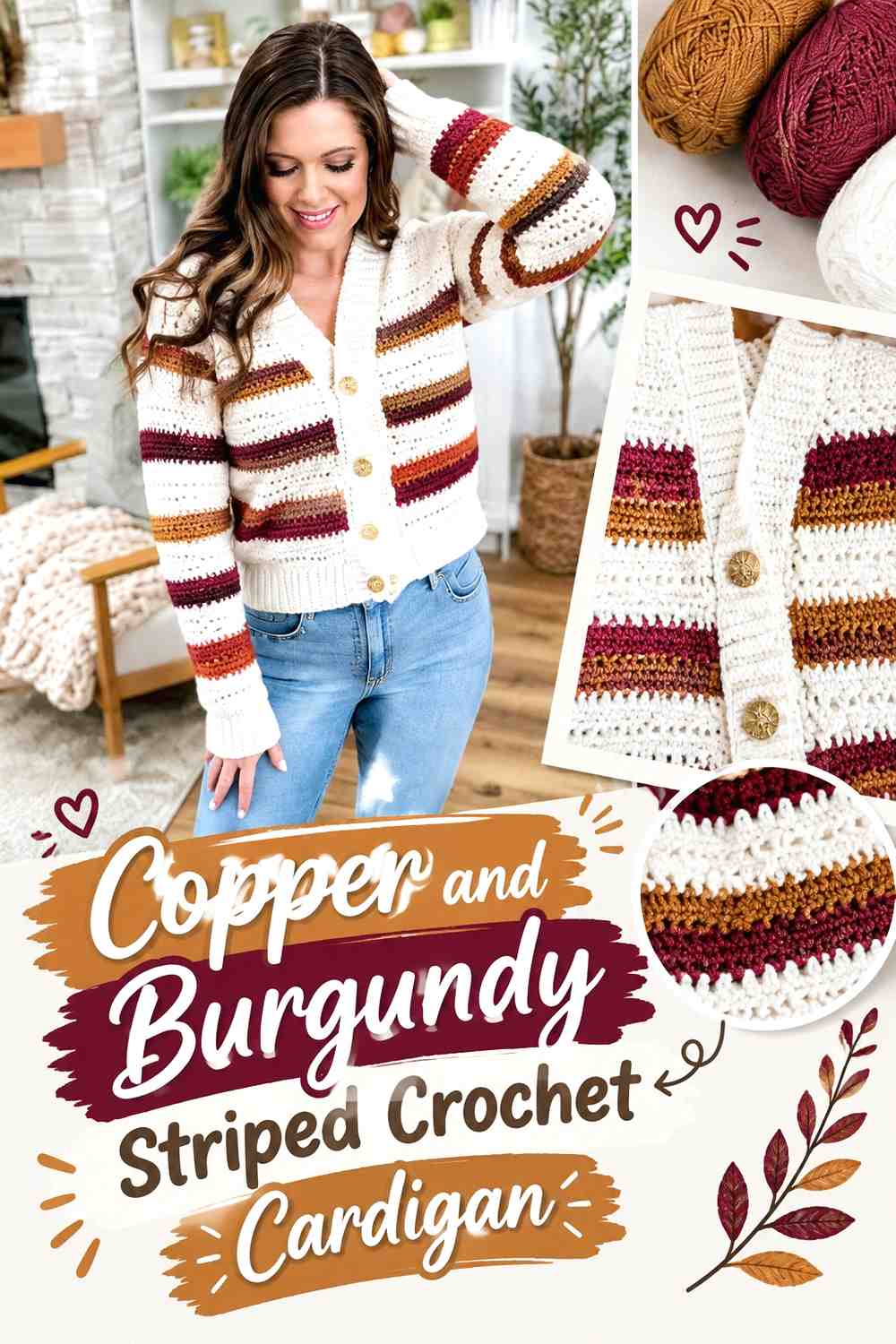
2. Copper And Burgundy Striped Crochet Cardigan
 SAVE
SAVEA copper-led cardigan keeps the garment warmer and lighter while burgundy provides stronger definition. Copper can cover the largest front and back areas, with burgundy appearing through selected stripes, cuffs, or front edging.
Copper Keeps the Crochet Cardigan Panels Visually Continuous
Use broad copper sections across the body if you want the cardigan to read as copper first. Fewer, more deliberate burgundy interruptions usually preserve the continuity of the main panels better than frequent narrow color changes.
Burgundy Can Connect Copper Cardigan Cuffs and Front Edging
Repeat burgundy in more than one finishing area. Burgundy cuffs combined with burgundy front or neckline edging create a dark framework that surrounds the copper body instead of leaving the accent concentrated on the sleeves.
Creator Credit: MJ’s Off The Hook Designs
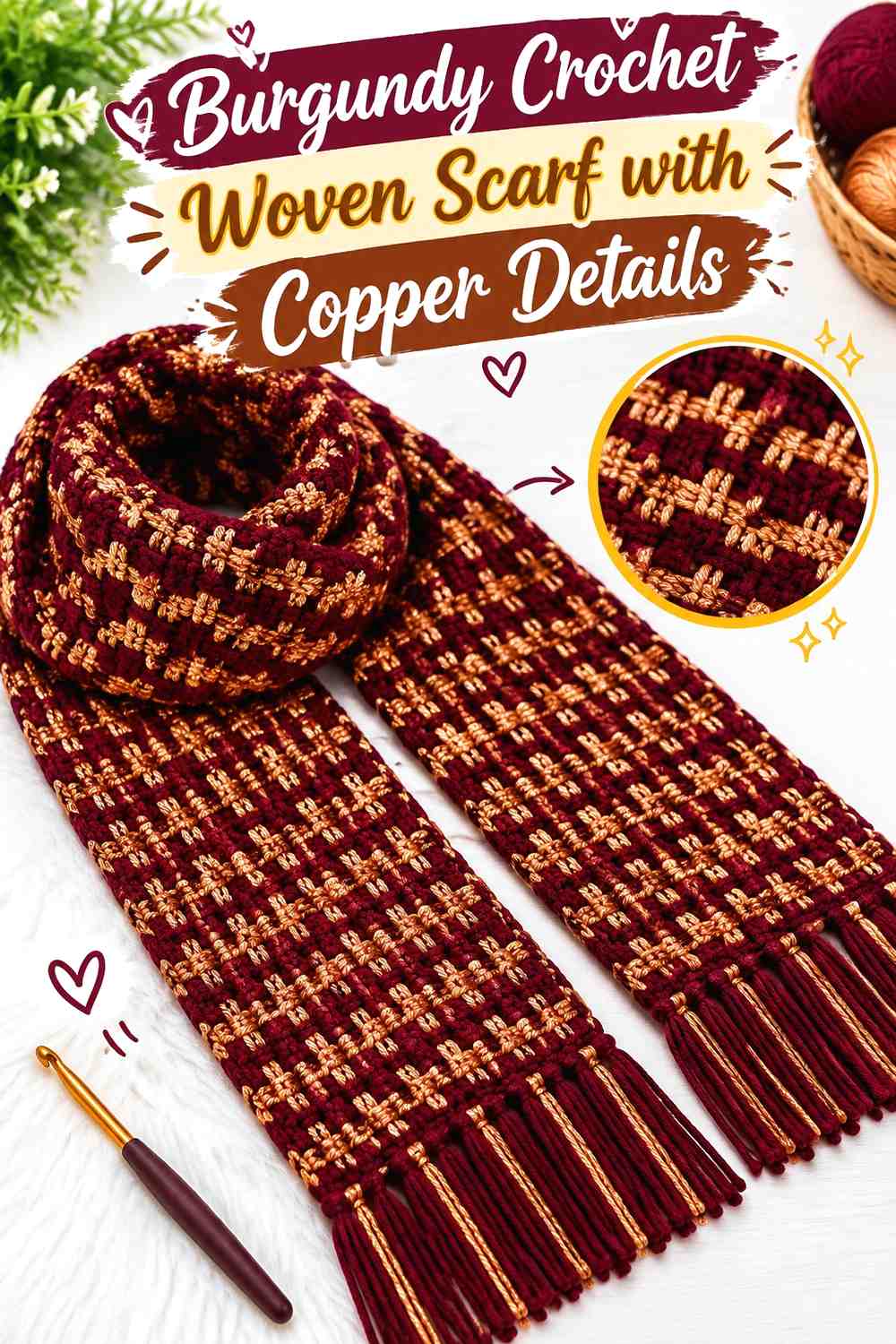
3. Burgundy Crochet Woven Scarf With Copper Details
 SAVE
SAVEA woven-look scarf offers an alternative to standard burgundy-and-copper stripes. Burgundy can form the primary crochet structure while copper passes through the openings as a secondary visual layer. Giving each color a different job creates clearer organization.
Burgundy Gives the Crochet Scarf a Consistent Structural Base
Keep the underlying scarf burgundy if you want the finished accessory to stay dark overall. Because the woven details already add visual movement, the burgundy foundation does not need additional unrelated colors.
Copper Makes the Burgundy Crochet Openings More Noticeable
Use copper through the woven sections where it can contrast against the burgundy structure. Test a short portion before completing the full scarf; if the copper is too dark, narrow woven details may disappear into the burgundy from a distance.
Creator Credit: naztazia
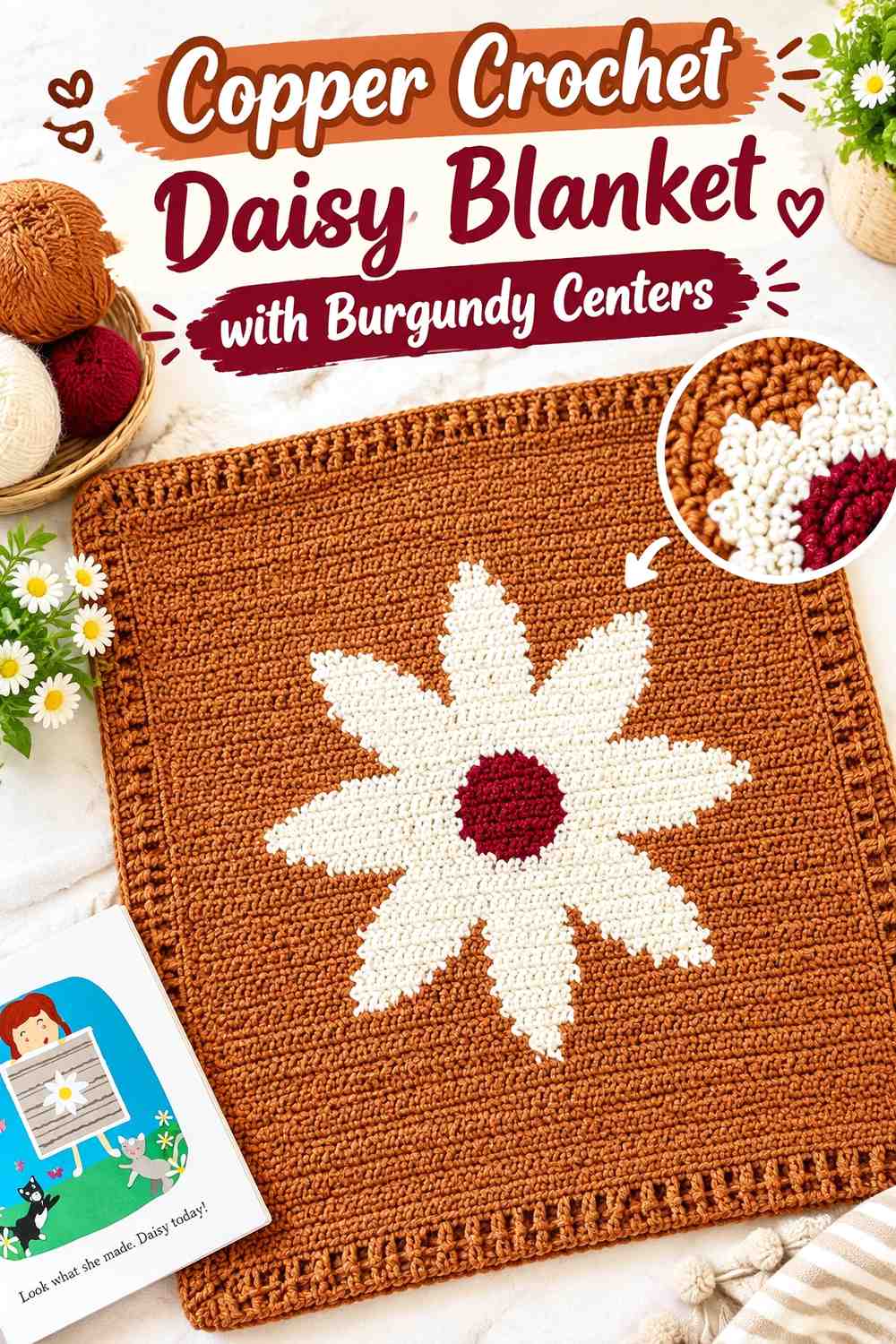
4. Copper Crochet Daisy Blanket With Burgundy Centers
 SAVE
SAVEA floral blanket can use copper as the surrounding field and burgundy as a small repeated focal color. A light neutral for petals can separate the two warm shades and keep each flower easy to distinguish from the copper background.
Copper Gives Burgundy Crochet Flower Centers More Breathing Room
Let copper repeat consistently through the blanket background rather than changing the field color around individual flowers. A stable copper surface helps recurring burgundy centers form a recognizable rhythm.
Burgundy Needs Clear Separation From Copper Crochet Motifs
If the copper is deep and rusty, burgundy flower centers may not create enough contrast on their own. A cream or other pale neutral around the centers can provide the lighter value that keeps each floral motif defined.
Creator Credit: Daisy Farm Crafts
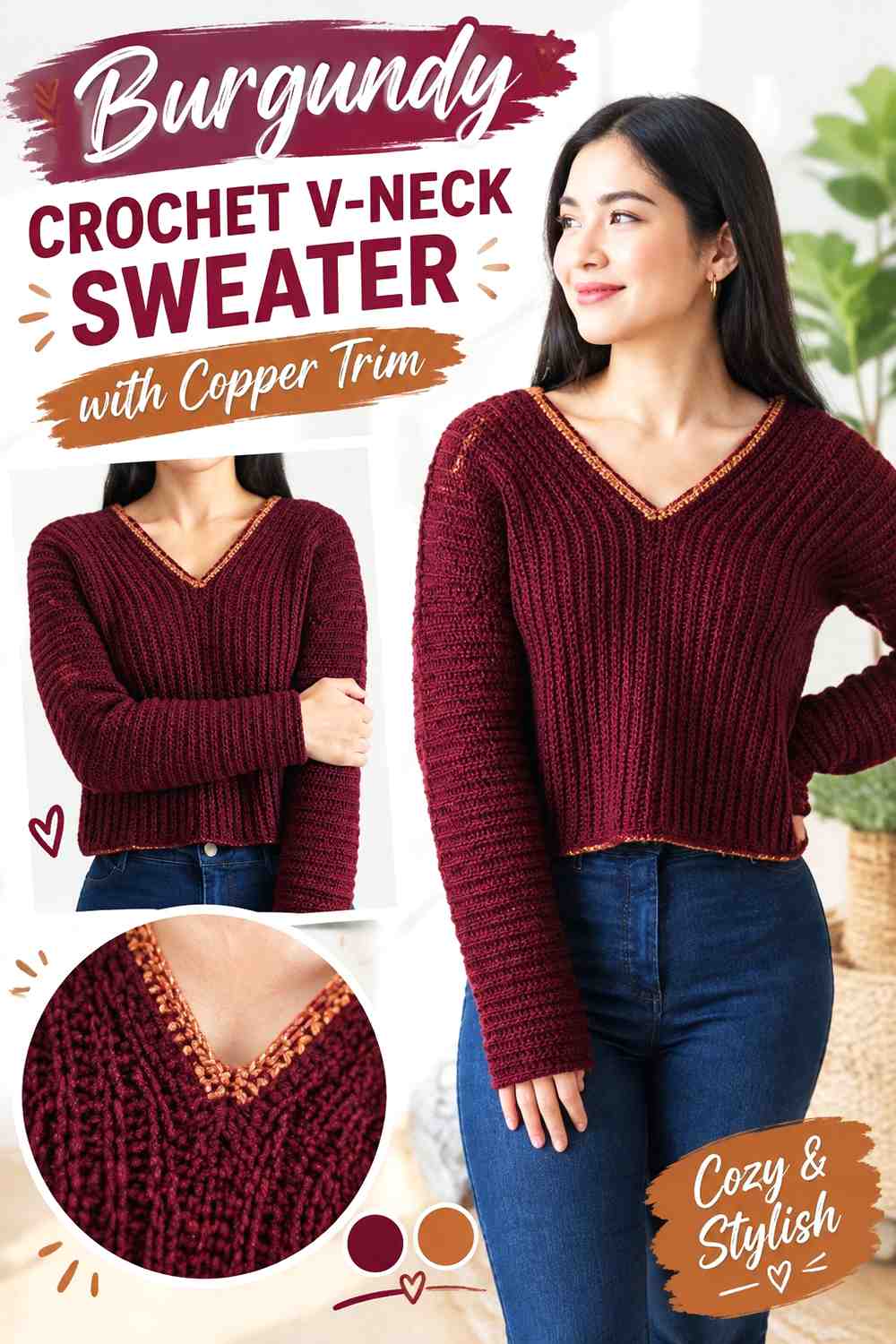
5. Burgundy Crochet V Neck Sweater With Copper Trim
 SAVE
SAVEA burgundy sweater gives this palette one of its darkest directions. Copper can follow the V-neck, cuffs, or hem so the lighter warm shade emphasizes the garment edges without fragmenting the main body.
Burgundy Can Lead the Crochet Sweater Body and Sleeves
Keep most of the front, back, and sleeve surface burgundy for a strongly burgundy-led result. If the sweater design includes subtle texture, work a burgundy sample first to check whether the stitch definition remains visible enough.
Copper Can Trace the Burgundy Crochet Neckline and Cuffs
The V-neck is a strong location for copper because its shape naturally creates a visible outline. Repeating copper at the cuffs brings that accent farther down the garment and stops the neckline from becoming the only light area.
Creator Credit: forthefrills
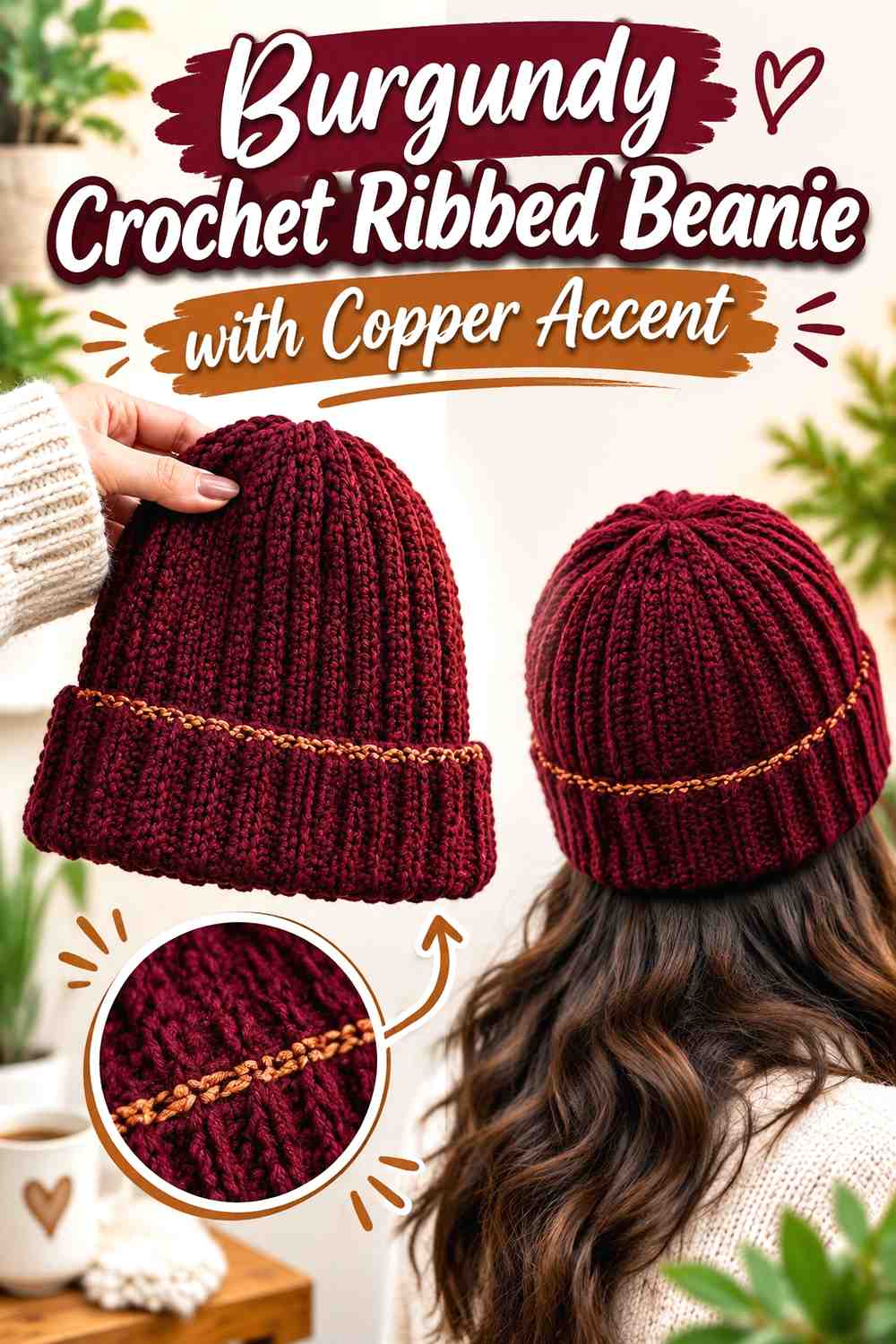
6. Burgundy Crochet Ribbed Beanie With Copper Accent
 SAVE
SAVEA ribbed beanie has limited surface area, so the burgundy-and-copper distribution should remain simple. Burgundy can cover the main hat while copper appears near the brim or crown as one clear secondary section.
Burgundy Keeps the Crochet Beanie Visually Unified
Let burgundy run through most of the ribbed fabric when you want the darkest version of this palette. The repeated ridges can provide enough surface interest that several additional color changes are unnecessary.
Copper Can Define the Burgundy Crochet Beanie Brim
A copper brim gives the supporting shade a logical location and makes the lower edge easy to distinguish. If the brim is folded, remember that copper may occupy a larger visible area when worn than it does while the hat is lying flat.
Creator Credit: VivCrochets
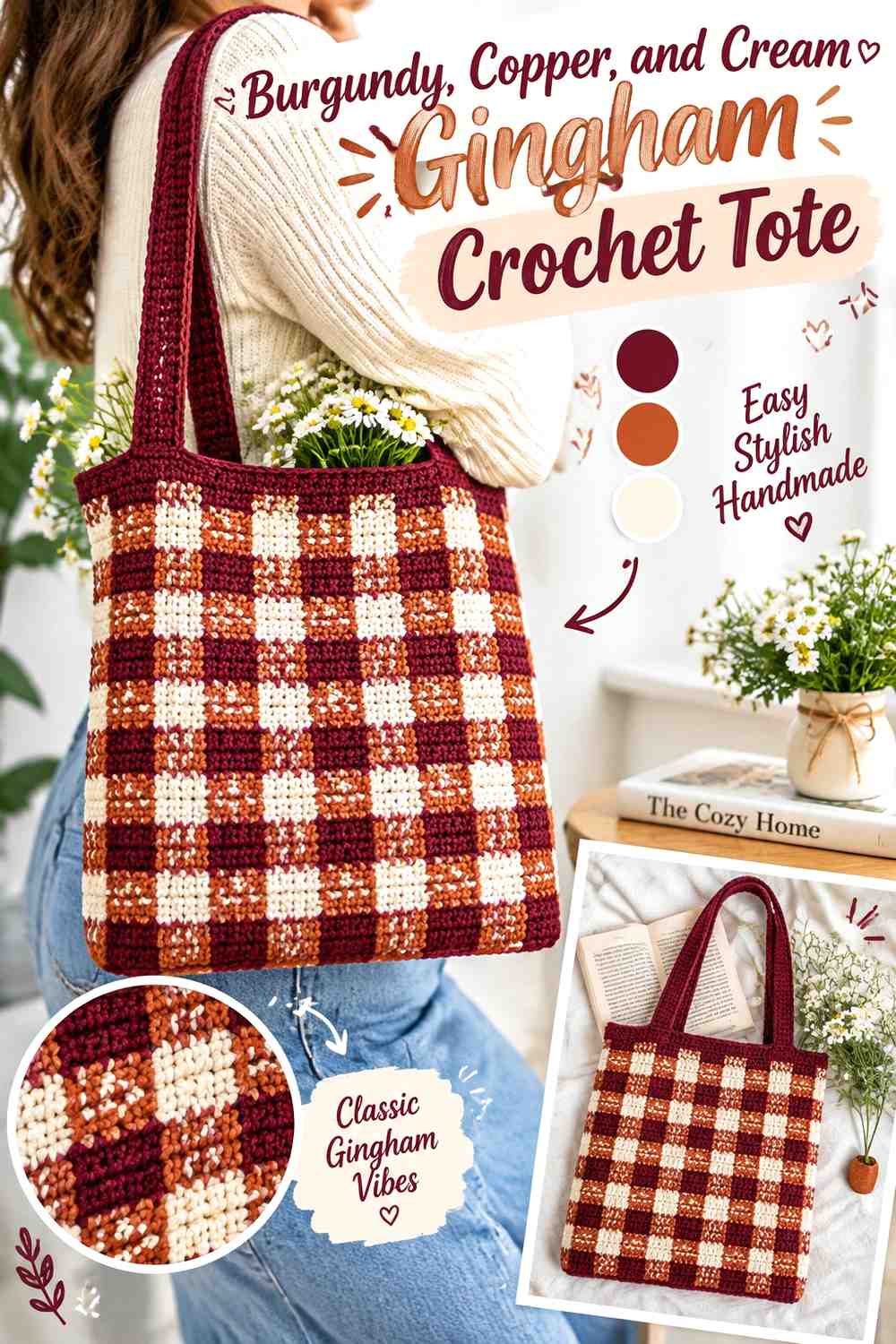
7. Burgundy Copper And Cream Gingham Crochet Tote
 SAVE
SAVEGingham benefits from three clearly different values. Burgundy can supply the darkest checks, copper the middle warm tone, and cream the lightest. This keeps the tote connected to the burgundy-and-copper theme while giving the checked pattern enough separation.
Burgundy Should Remain the Darkest Crochet Gingham Check
Use burgundy consistently wherever the pattern needs its strongest visual anchor. Check the three yarns in grayscale before committing to the bag because a dark copper can sit unexpectedly close to burgundy in value.
Copper Can Bridge Burgundy and Cream Across the Crochet Tote
Copper works effectively as the middle step between the darkest and lightest shades. Its placement should repeat evenly across the bag rather than becoming concentrated on one panel.
Cream Can Keep Burgundy and Copper Crochet Checks Separate
Use cream selectively as the lightest point in the pattern. If you prefer less contrast than bright white would create, choose a softer pale neutral while still keeping it clearly lighter than the copper.
Creator Credit: HayHay Crochet
8. Copper Crochet Bucket Hat With Burgundy Brim
 SAVE
SAVEThe crown and brim of a bucket hat naturally create separate color zones. Use copper across the crown and sides, then change to burgundy where the brim begins. The shift follows the actual construction instead of introducing a random band.
Copper Can Cover the Main Crochet Bucket Hat
A copper crown keeps the largest portion of the hat warmer and lighter than an all-burgundy version. Keep the copper uninterrupted if you want the brim transition to be the main color statement.
Burgundy Gives the Copper Crochet Brim Stronger Definition
Burgundy works well at the outer section because the darker shade emphasizes the hat silhouette. View the hat from the side as well as the front before adding more burgundy elsewhere; the brim may already provide enough dark visual weight.
Creator Credit: PassioKnit Kelsie
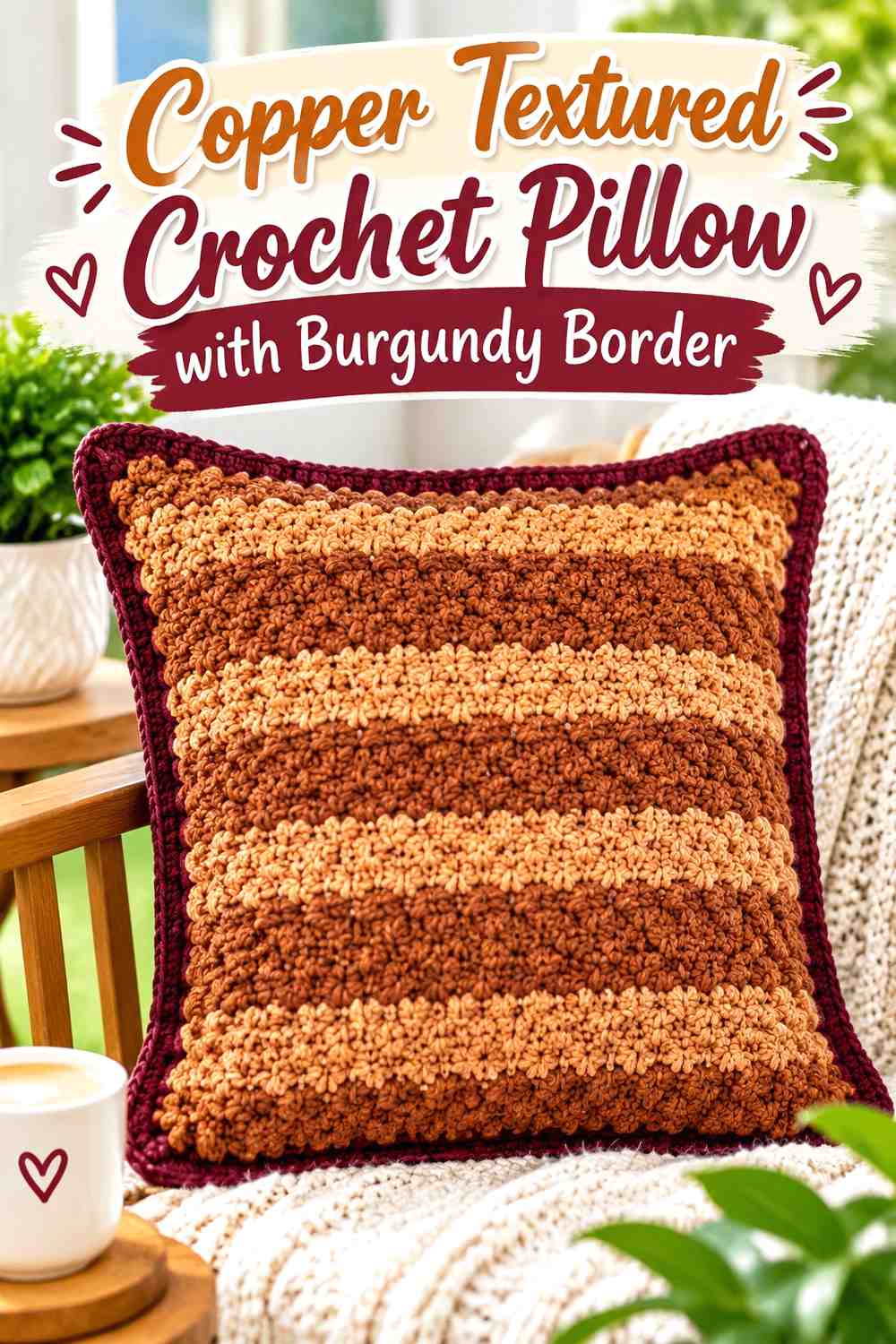
9. Copper Textured Crochet Pillow With Burgundy Border
 SAVE
SAVEA textured pillow gives copper a large uninterrupted area where raised stitches can remain the main feature. Burgundy can frame that surface through the border or joining edge without competing with the central texture.
Copper Can Keep Crochet Pillow Texture More Visible
Use copper across most of the pillow face when the stitch texture is more important than complex color changes. Compare a textured copper sample with the same texture in burgundy if you are unsure which shade reveals the surface more clearly.
Burgundy Can Frame the Copper Crochet Pillow Face
Place burgundy around the perimeter so the darker shade creates a visual stopping point around the copper center. If burgundy also appears inside the pillow face, repeat it deliberately rather than inserting a single isolated dark row.
Creator Credit: Rich Textures Crochet
10. Burgundy And Copper Crochet Rose Bouquet
 SAVE
SAVEA bouquet lets burgundy and copper appear as separate flowers rather than as stripes. Use burgundy roses as the darkest blooms and copper roses as the lighter warm counterpart, then distribute both colors through the arrangement instead of dividing the bouquet into two color blocks.
Burgundy Roses Can Anchor the Copper Crochet Bouquet
Place burgundy blooms in several parts of the arrangement so the darkest shade is balanced from more than one viewing angle. A single dense burgundy cluster can make one side of the bouquet appear much heavier.
Copper Roses Can Separate Burgundy Crochet Flowers
Place copper roses between burgundy blooms to create warmer value breaks. Judge the colors on completed flowers rather than yarn balls alone because layered petals can make both shades appear visually deeper.
Creator Credit: The Yarnling
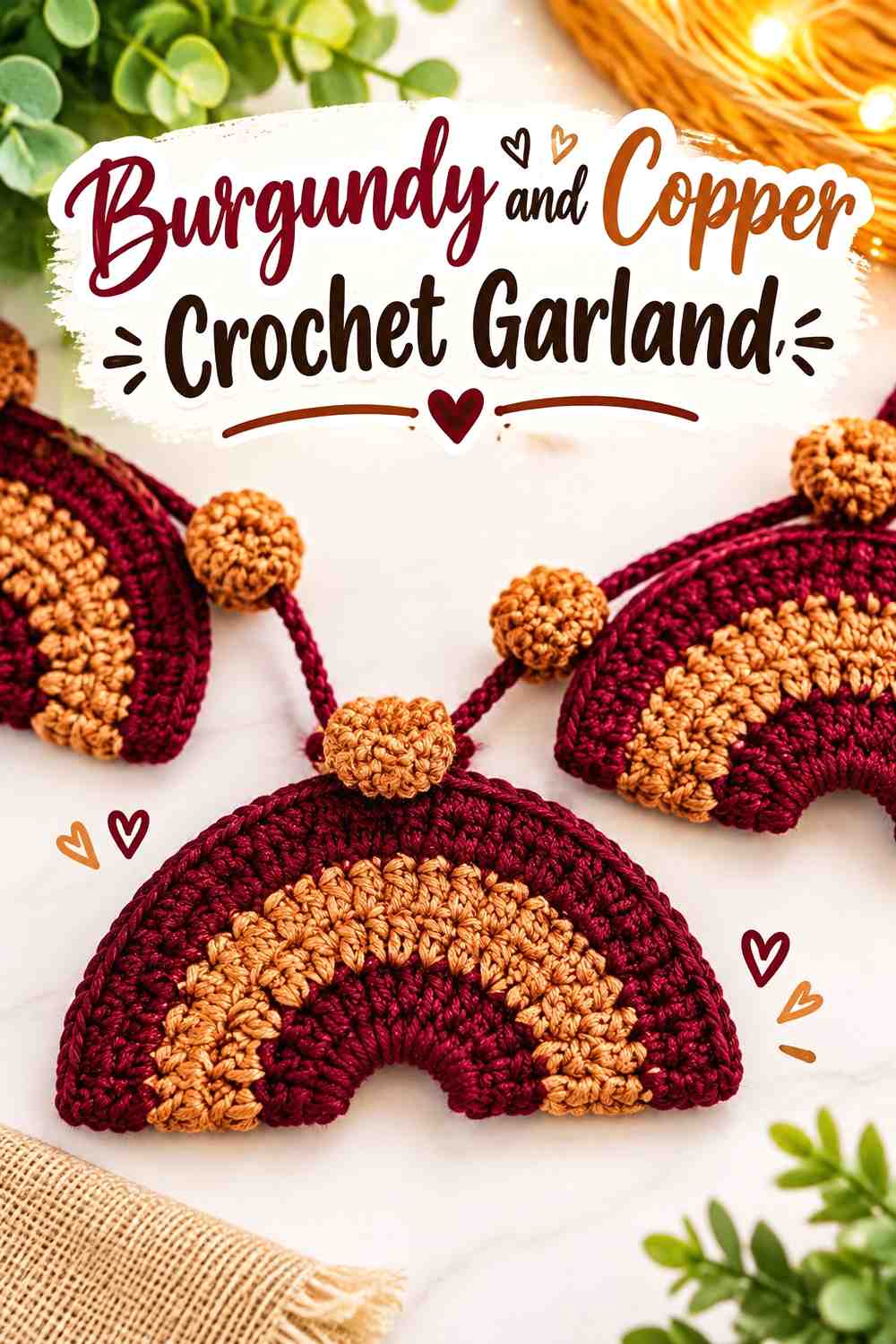
11. Burgundy And Copper Crochet Garland
 SAVE
SAVEA garland is especially suited to repeated two-color planning. Alternate burgundy and copper motifs or use one color for the center and the other for the outside of every motif. Consistency matters more than using equal quantities.
Burgundy Can Create a Repeating Dark Rhythm Across the Crochet Garland
Space burgundy motifs at deliberate intervals so the eye follows the darker color across the entire garland. Avoid placing most burgundy pieces at one end unless an intentionally asymmetrical look is the goal.
Copper Can Lighten Burgundy Crochet Garland Motifs
Copper can alternate with burgundy or surround darker motif centers. If the garland will hang against a warm brown background, check whether the copper still has enough contrast with the wall or furniture behind it.
Creator Credit: Hooked by Robin
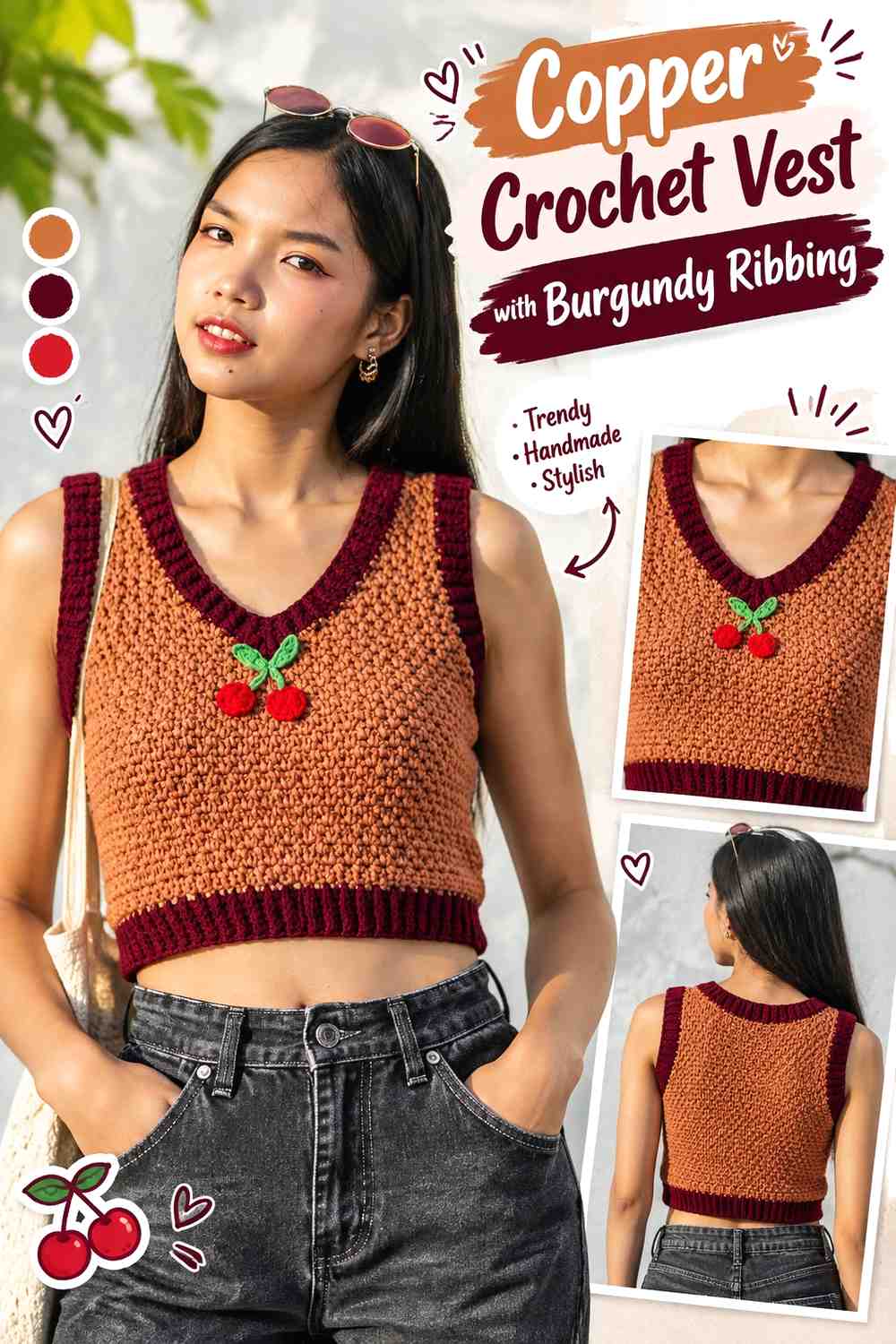
12. Copper Crochet Vest With Burgundy Ribbing
 SAVE
SAVEA vest offers several useful finishing areas for a darker accent. Copper can cover the front and back panels while burgundy defines the hem, neckline, and armholes.
Copper Can Keep the Crochet Vest Panels Continuous
Use copper across the main body when you want the vest to stay copper-forward. Keeping the panels mostly one color can also prevent the shorter garment shape from becoming visually chopped into too many horizontal sections.
Burgundy Can Connect Copper Crochet Ribbing Around the Vest
Repeat burgundy around several edges rather than using it only at the hem. A matching burgundy neckline and armhole finish can make the darker color look integrated with the whole garment.
Creator Credit: Chenda DIY
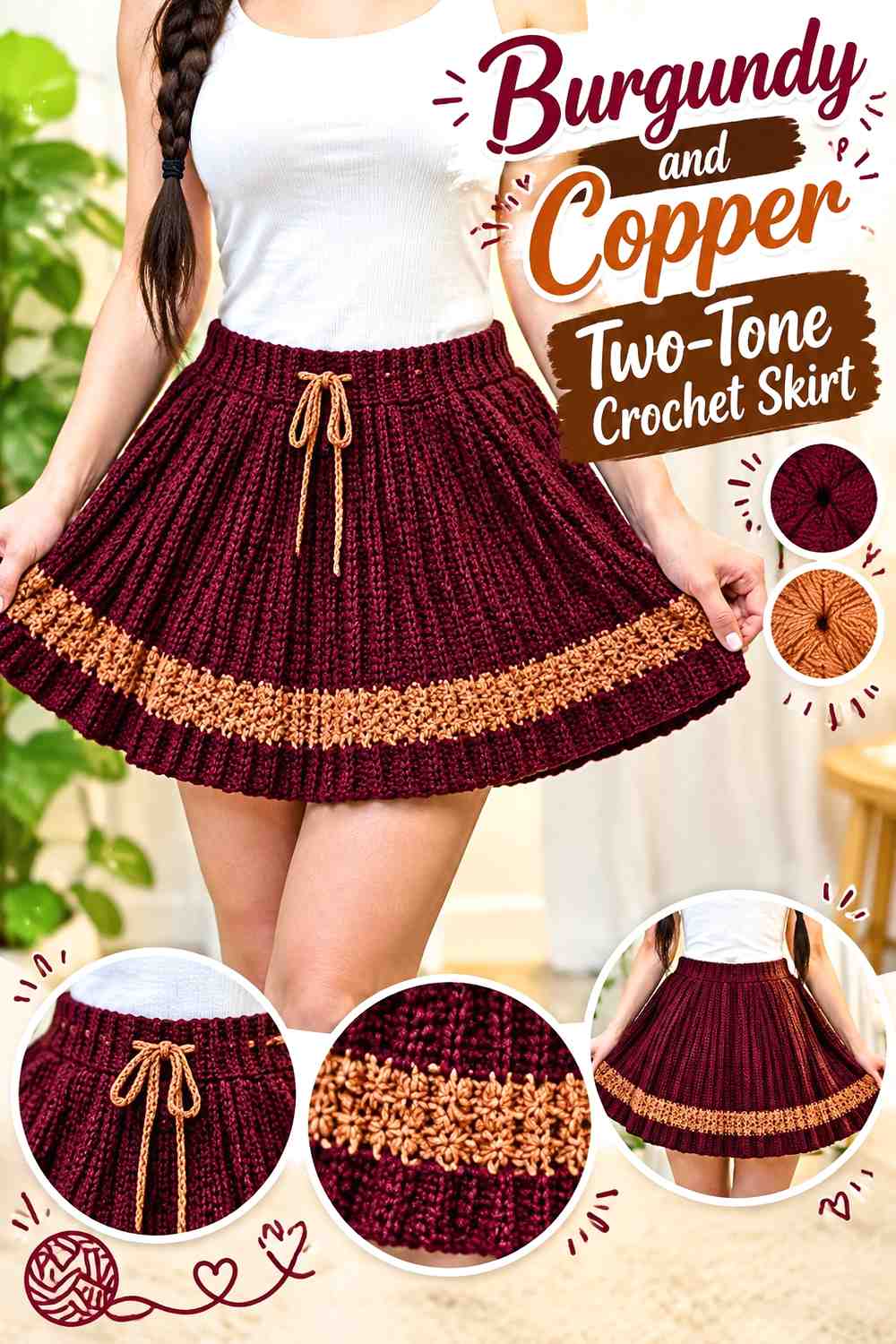
13. Burgundy And Copper Two Tone Crochet Skirt
 SAVE
SAVEA two-color skirt needs to look balanced from the front, sides, and back. Burgundy can form the main body while copper highlights the waistband or repeated sections. Plan the placement around the complete circumference rather than judging only the front panel.
Burgundy Can Carry Most of the Crochet Skirt Body
Use burgundy across the largest area when you want the skirt to retain a deep color direction. Because the surface is substantial, decide where every copper repeat will occur before beginning the full color layout.
Copper Can Separate the Burgundy Crochet Waistband and Body
Copper at the waistband gives the supporting color a clear structural purpose. Bring copper back lower in the skirt if needed so the waistband does not become the only place where the lighter warm shade appears.
Creator Credit: TCDDIY
14. Copper Crochet Market Bag With Burgundy Handles
 SAVE
SAVEA market bag can keep the main body copper while placing burgundy where the eye naturally notices the upper and lower edges. Burgundy handles are particularly effective when another dark section is repeated near the base.
Copper Can Carry the Crochet Market Bag Body
Use copper through most of the bag walls when you want the project to stay warm and medium-toned. For open fabric, view the bag with something inside it because the background visible through the stitches can change how the copper appears.
Burgundy Can Connect Copper Crochet Handles to the Bag Base
Repeat burgundy at the base or opening if the handles are burgundy. That second dark area helps the handles relate to the rest of the project rather than looking like an unrelated color added at the end.
Creator Credit: Crochet with Julia
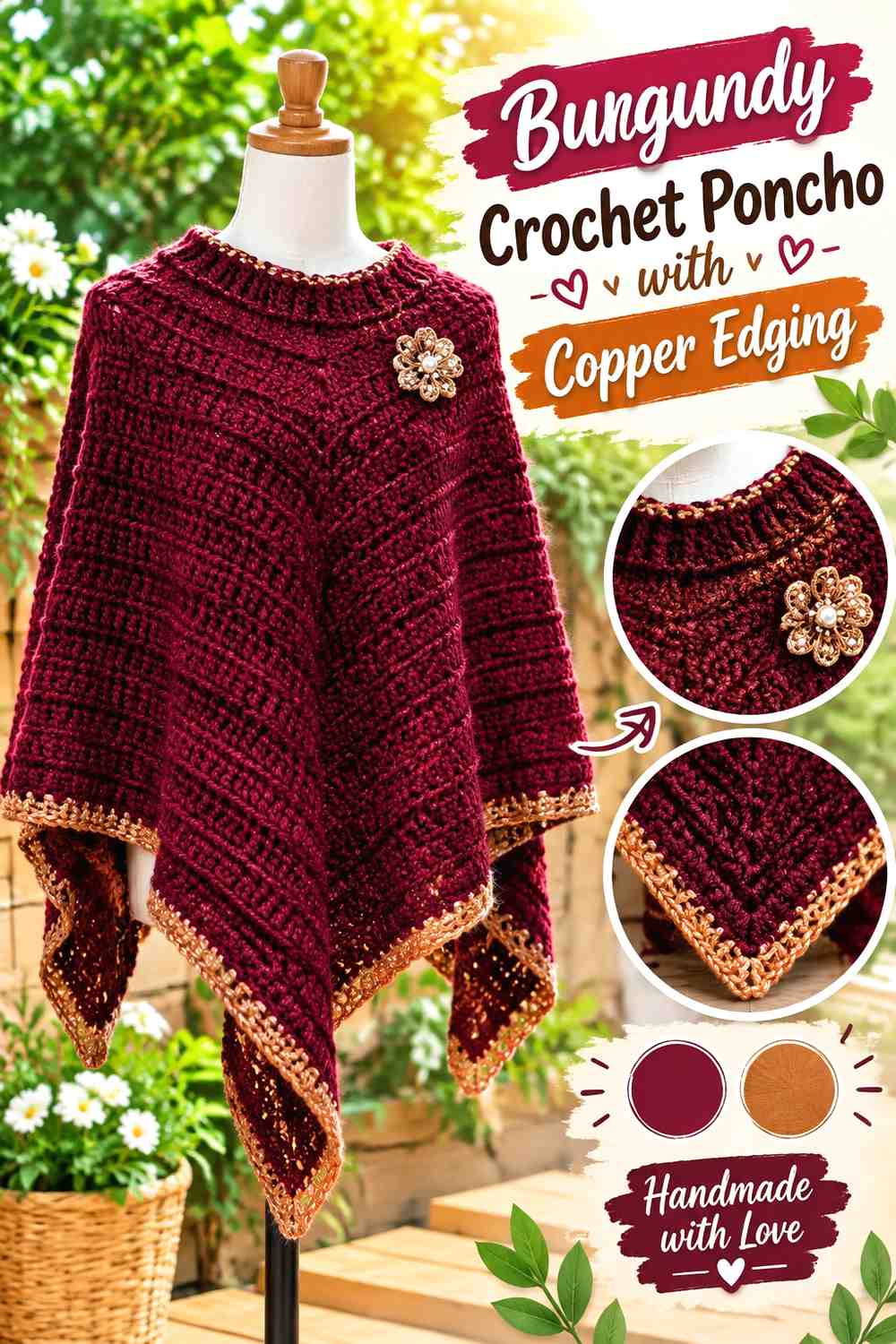
15. Burgundy Crochet Poncho With Copper Edging
 SAVE
SAVEA poncho creates a broad surface where too many color changes can compete with the garment shape. Use burgundy for most of the body and reserve copper for a perimeter border, neckline detail, or another clearly repeated edge.
Burgundy Can Keep the Crochet Poncho Body Cohesive
A continuous burgundy field gives the poncho a clear dark foundation. If the construction includes noticeable texture or openwork, test that area in burgundy before deciding that the darkest shade should cover every major section.
Copper Can Outline the Burgundy Crochet Poncho
Use copper around the lower perimeter to emphasize the poncho silhouette. Repeating a smaller amount around the neckline can connect the center opening with the outer edge and keep copper from appearing only at the bottom.
Creator Credit: Bag-O-Day Crochet
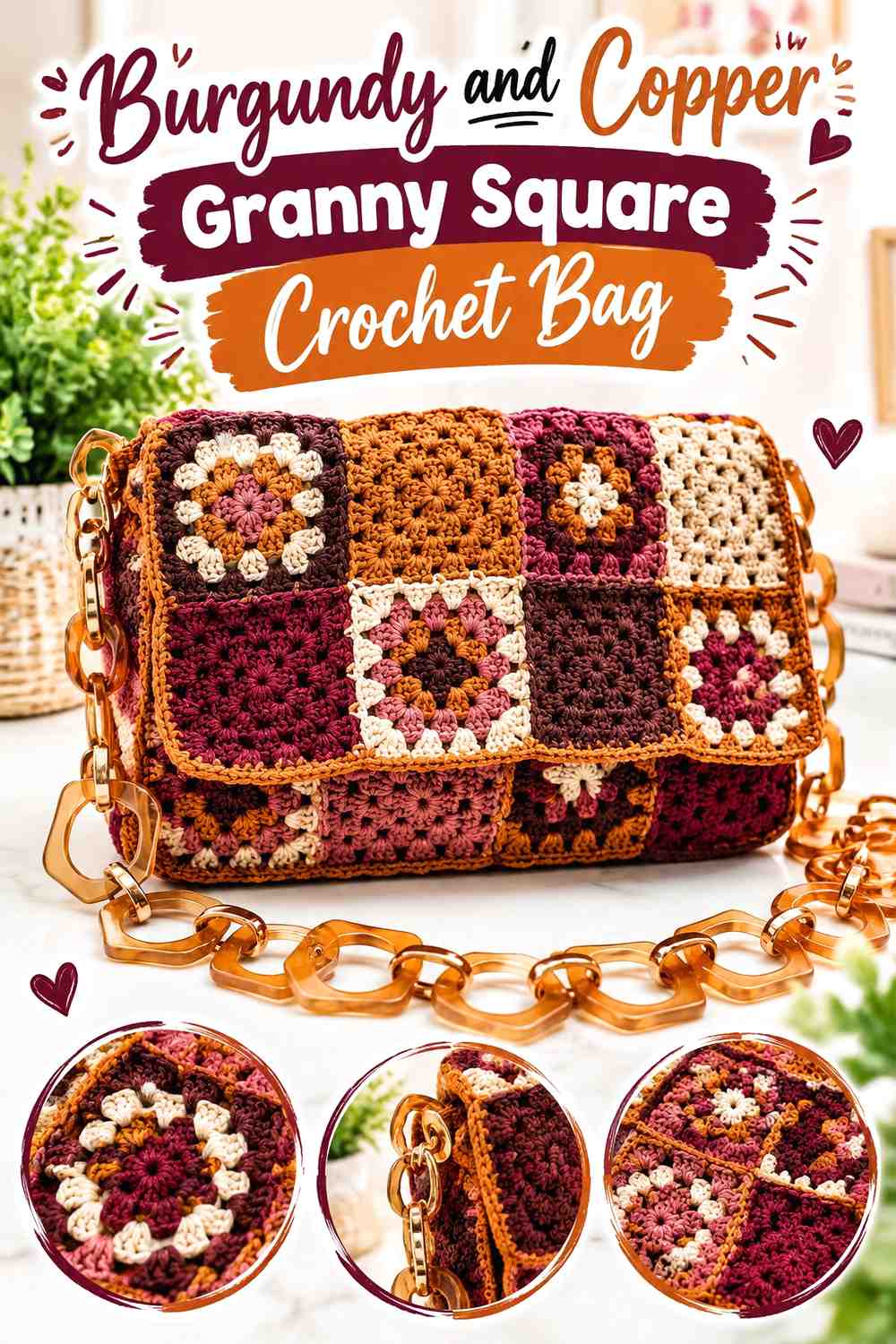
16. Burgundy And Copper Granny Square Crochet Bag
 SAVE
SAVEGranny squares give burgundy and copper several placement options within one motif. Burgundy can define centers or outer rounds, while copper fills the middle rounds and keeps neighboring squares from visually merging.
Burgundy Can Anchor Copper Crochet Granny Square Centers
Repeat burgundy in the same motif position across several squares if you want a more orderly bag surface. Consistent centers create a stronger overall relationship than completely changing the color hierarchy in every square.
Copper Can Separate Burgundy Granny Squares Across the Crochet Bag
Place copper around burgundy centers or near outer rounds where it can keep the dark sections distinct. Before joining the bag, arrange all squares together to make sure burgundy is not concentrated in only one corner.
Creator Credit: Brunaticality
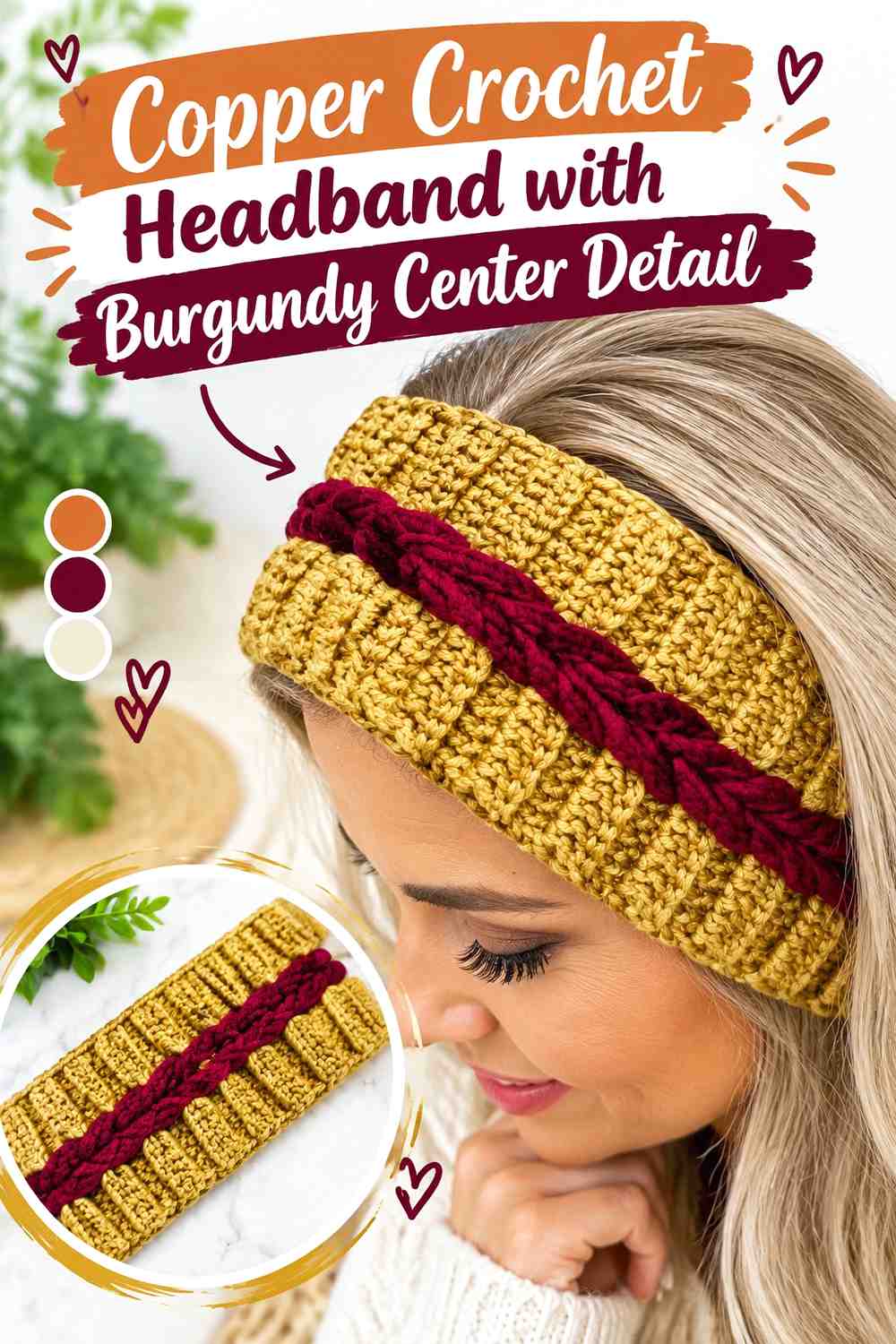
17. Copper Crochet Headband With Burgundy Center Detail
 SAVE
SAVEA headband offers little space for complicated color distribution, so one strong contrast point is usually enough. Copper can form the main band while burgundy defines the center join, twist area, or another repeated structural detail.
Copper Can Keep the Crochet Headband Light Across Most of Its Width
Use copper across the long main section so the accessory remains copper-forward. A consistent color also lets the crochet texture stay visible without frequent changes interrupting the band.
Burgundy Can Emphasize the Copper Crochet Headband Center
Introduce burgundy where the design naturally draws attention to the middle. Because the headband is small, even a narrow burgundy area can have strong visual weight, so additional dark accents may not be necessary.
Creator Credit: Di’s Handicrafts (Crochet and Knitting)
18. Burgundy Crochet Mesh Market Bag With Copper Handles
 SAVE
SAVEA mesh market bag allows burgundy to remain the main visible structure while copper defines the upper edge and handles. The open fabric creates a different color effect from a dense tote because whatever sits behind the stitches can influence the appearance of the burgundy.
Burgundy Can Keep the Crochet Mesh Bag Body Dominant
Use burgundy through the full mesh area when you want a strong dark framework. Evaluate the bag both empty and filled because lighter contents can make the open burgundy stitches appear more pronounced.
Copper Can Separate Burgundy Crochet Mesh From the Handles
Begin the copper transition around the upper edge rather than changing color only when the handles start. That small connecting section helps the copper handles look integrated with the burgundy body.
Creator Credit: The Crochet Crowd
Comparing Burgundy and Copper Crochet Directions
| If You Want | Consider |
|---|---|
| A strongly burgundy-led project | Blanket, sweater, beanie, poncho, or mesh bag |
| More copper across the surface | Cardigan, bucket hat, pillow, vest, or market bag |
| Clear geometric color separation | Gingham tote or striped blanket |
| Burgundy concentrated at edges | Copper vest, pillow, bucket hat, or market bag |
| Copper concentrated at edges | Burgundy sweater, poncho, or beanie |
| Repeated motif color | Daisy blanket, granny square bag, or garland |
| Separate burgundy and copper objects | Crochet rose bouquet |
| A small two-color accessory | Headband or beanie |
Conclusion
Burgundy and copper work especially well when each color is assigned a clear visual role. Use burgundy across the largest area when you want a deep, dark result and let copper interrupt it through borders, stripes, handles, or trim. Reverse the balance when you want copper to control the surface while burgundy provides sharper definition around edges and structural details.
For motif-heavy projects such as gingham, granny squares, and floral blankets, check value contrast before committing to the full project. Burgundy and deep copper can become surprisingly close once worked into small crochet sections. A lighter copper or a restrained pale neutral can provide more separation when the motif itself needs to remain clear.
Use the original tutorials for exact construction guidance, then apply the burgundy-and-copper placements independently to suit the visual balance you want.
Frequently Asked Questions
Do burgundy and copper work together in crochet?
Yes. Both belong to a warm color direction, while burgundy normally provides the deeper value and copper introduces a warmer orange-brown contrast. The amount of separation depends on the exact yarn shades you choose.
Should burgundy or copper be the dominant crochet color?
Either can dominate. Burgundy creates a darker project when used across the main body, panels, or background. Copper produces a warmer and often lighter overall result when it covers those larger areas and burgundy is reserved for edges or accents.
How can I make burgundy and copper more distinct in crochet motifs?
Compare the yarns in grayscale. If they have similar lightness, choose a lighter copper, a deeper burgundy, or add a pale neutral between them where the design requires clear motif separation.
Can I add cream to a burgundy and copper crochet palette?
Yes. Cream can provide a light separating value, particularly in gingham, granny squares, and floral motifs. Keep it in a supporting role when burgundy and copper are meant to remain the main palette.
Does copper crochet yarn need to be metallic?
No. Copper can simply describe a warm orange-brown yarn color. Metallic fibers are a separate material choice and are not necessary for creating a burgundy-and-copper palette.
Where should copper go in a mostly burgundy crochet garment?
Cuffs, neckline edging, hems, borders, selected stripes, and pockets can all provide controlled places for copper. Repeating it in at least two related areas can make the supporting color feel more integrated.
How do I keep burgundy and copper crochet from becoming too dark?
Increase the surface area of copper or choose a lighter copper shade. On motif projects, a restrained cream or another pale neutral can also create additional separation without replacing the two main colors.
How can I keep burgundy and copper from looking too busy?
Give the colors different jobs. Let one shade dominate the main surface and repeat the other in predictable borders, motifs, handles, stripes, or finishing details instead of changing colors at every available opportunity.