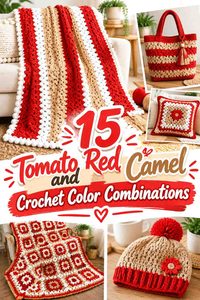
Tomato red and camel give crochet projects a strong warm-color contrast without requiring a large palette. Tomato red can become the obvious focal shade across stripes, panels, motif centers, or trim, while camel provides a quieter tan background that can keep the brighter red from occupying every part of the project.
The balance can also be reversed. Camel can cover most of a cardigan, basket, hat, or bag while tomato red is concentrated around cuffs, handles, borders, pockets, and other structural details. Because red can attract attention even in relatively small areas, it does not need to cover half of the project to remain important.
The tutorials credited below support the crochet project or construction concept. The tomato red and camel palettes are independent color adaptations, so the creators do not necessarily use these exact colors in their tutorials.
Quick List
- Tomato Red And Camel Granny Crochet Blanket
- Camel Crochet Pocket Cardigan With Tomato Red Trim
- Tomato Red And Camel Granny Square Crochet Tote
- Camel Crochet Waffle Pillow With Tomato Red Accents
- Tomato Red And Camel Color Block Crochet Scarf
- Camel Crochet Ribbed Beanie With Tomato Red Brim
- Tomato Red Crochet Bucket Hat With Camel Band
- Camel Crochet Vest With Tomato Red Edging
- Tomato Red And Camel Solid Crochet Granny Squares
- Tomato Red Crochet Flower Appliques With Camel Centers
- Camel Crochet Shawl With Tomato Red Border
- Camel Crochet Storage Basket With Tomato Red Rim
- Tomato Red And Camel Crochet Market Bag
- Camel Crochet Cowl With Tomato Red Bands
- Tomato Red Crochet Headband With Camel Contrast
Decide Whether Tomato Red or Camel Should Lead
Tomato red can create a strong focal area even when camel occupies more physical space. On a camel cardigan, for example, tomato-red cuffs and pockets may attract attention before the larger neutral body. Think about visual emphasis separately from yarn quantity.
For a red-led project, give tomato red one substantial uninterrupted area and let camel provide relief around borders, joins, ends, or secondary panels. For a camel-led project, repeat tomato red in two or three related locations so the brighter shade looks intentional rather than isolated.
Equal proportions are useful when you deliberately want strong color blocking, but they are not necessary for every project. A wider camel field with narrower tomato-red accents often gives crochet texture and construction details more room to remain visible.
Check Tomato Red and Camel Contrast in the Actual Yarn
Color names do not tell you everything about value. A light camel beside a deep tomato red may create obvious light-and-dark separation, while a darker brownish camel can sit much closer to the red in grayscale.
That difference matters around small granny-square centers, narrow borders, flower details, and textured stitches. Place the yarns together before committing to the full project, and consider checking a grayscale photograph when detail visibility matters.
Texture also changes the balance. Tomato red used on raised ribbing may look more prominent than the same amount worked into open crochet. Plan both the amount of each color and where the fabric itself will create extra emphasis.
1. Tomato Red And Camel Granny Crochet Blanket
 SAVE
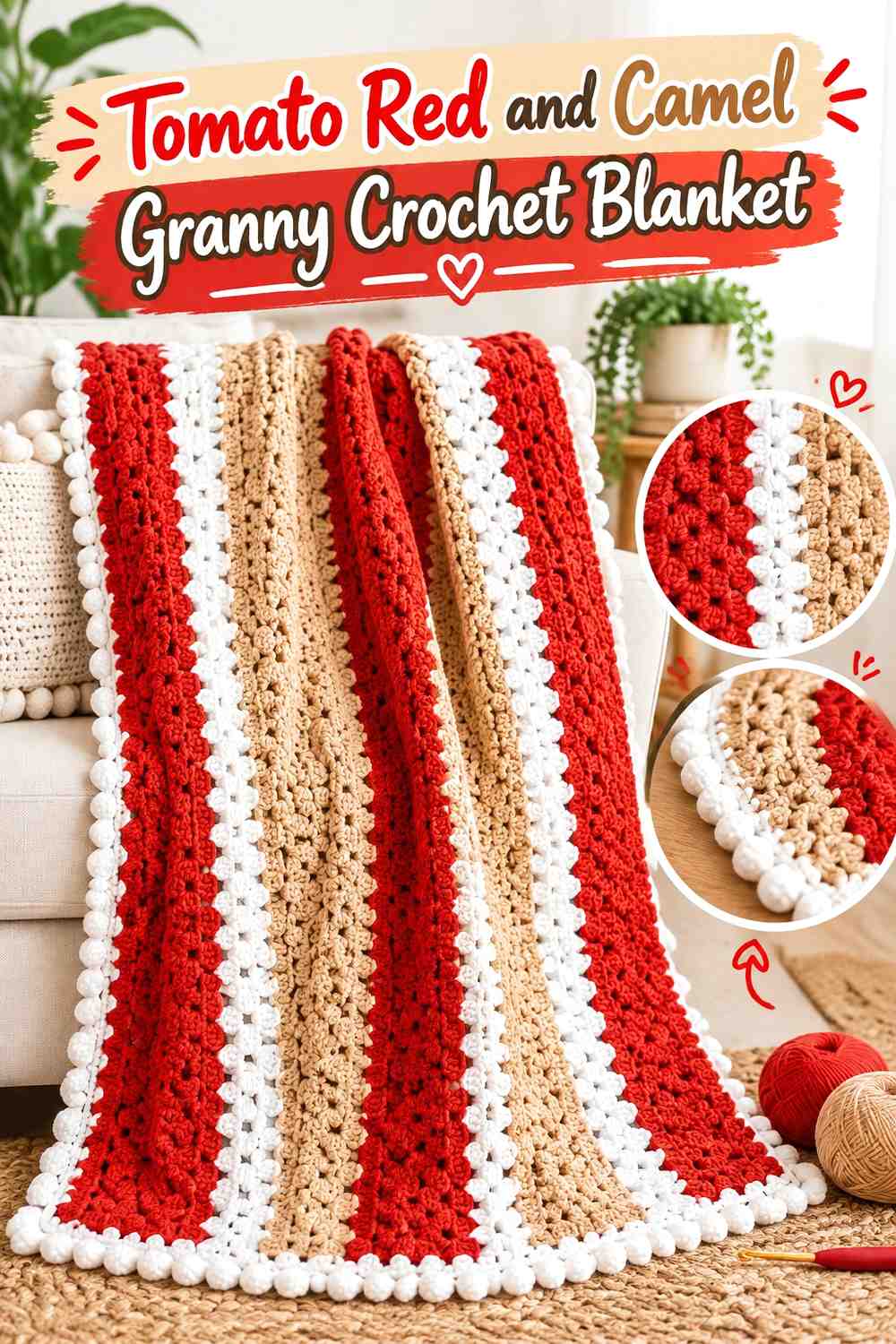
SAVEA granny-style blanket gives tomato red and camel enough space to repeat without forcing every stripe to have equal width. Tomato red can create the major color sections while camel breaks them apart and prevents the saturated red from becoming one uninterrupted field.
For a softer overall result, reverse the balance and use camel for most of the blanket with tomato-red sections appearing at controlled intervals. A repeated border color can then connect the stripes to the outer edge.
Let Tomato Red Create the Main Crochet Blanket Rhythm
Broad tomato-red sections establish a noticeable repeating pattern across the blanket. Keeping those areas larger than the camel interruptions makes the blanket read as red-led even when camel appears regularly.
If the stitch pattern itself already creates a lot of movement, reduce the number of color changes. Larger red sections keep texture and color from competing at every row.
Use Camel to Separate Tomato Red Crochet Blanket Sections
Camel can provide visual pauses between stronger tomato-red areas. Give the camel stripes enough width to remain visible from normal viewing distance rather than reducing them to thin lines that disappear inside the texture.
Camel can also work around the outside edge. If the blanket already contains a lot of camel, a tomato-red final border can reverse the hierarchy and emphasize the perimeter instead.
Creator Credit: Daisy Farm Crafts
2. Camel Crochet Pocket Cardigan With Tomato Red Trim
 SAVE
SAVEA pocket cardigan provides useful structural places for tomato red without breaking the camel body into numerous blocks. Camel can cover the front, back, and sleeves while tomato red appears on pockets, cuffs, neckline edging, or lower ribbing.
Because pockets occupy noticeable space on the front, red pockets alone may already create a strong focal point. Repeat the red elsewhere, but do not assume every edge needs the accent.
Keep Camel Across the Main Crochet Cardigan Panels
Camel gives the cardigan a consistent main field and lets the garment construction remain visually connected from front to back. It also creates a quieter background against which tomato-red details can be clearly read.
If you want to increase the amount of red, extend it through part of the sleeves or a lower band before dividing the main body panels.
Repeat Tomato Red Around Camel Cardigan Pockets and Cuffs
Tomato-red pockets become easier to integrate when the same color appears at the cuffs or neckline. These separated repeat points distribute red across the garment without turning the cardigan into an equal color split.
Check the full garment before making the hem red as well. Pockets, cuffs, neckline, and hem together can give the accent far more visual weight than each section suggests on its own.
Creator Credit: forthefrills
3. Tomato Red And Camel Granny Square Crochet Tote
 SAVE
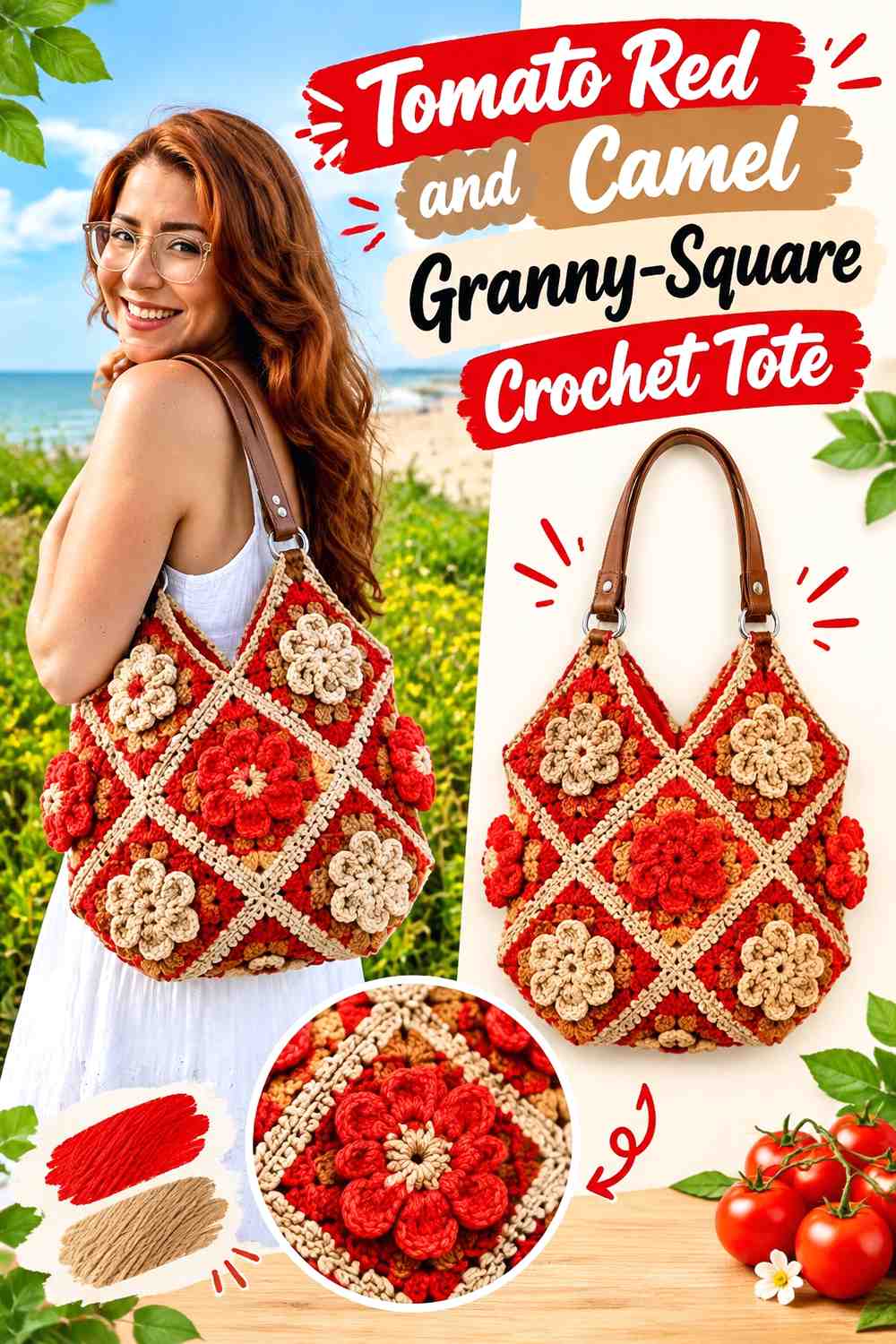
SAVEA granny-square tote can distribute tomato red and camel through repeated motifs instead of large flat panels. Tomato red can occupy the centers while camel forms outer rounds, joins, or straps, giving the stronger shade a repeated focal role.
You can also reverse selected squares so camel appears in the center and red moves outward. Keep those reversals systematic so the bag still has a recognizable motif arrangement.
Put Tomato Red at the Center of Camel Crochet Tote Squares
Tomato-red centers can remain noticeable even when camel occupies more of each square. This is useful if you want the bag to feel warm and neutral overall while preserving a strong repeated red detail.
Make the red center large enough to survive visually after joining. A tiny center may look important in one square but nearly disappear once several motifs are assembled.
Use Camel to Connect Tomato Red Crochet Tote Motifs
Camel joins can separate red-heavy squares and create a common framework across the bag. Continuing camel into the handles extends that supporting color beyond the motif grid.
If camel already dominates the outer rounds, joins, and handles, add a small tomato-red repeat around the opening so the brighter color is not confined entirely to the square centers.
Creator Credit: Brunaticality
4. Camel Crochet Waffle Pillow With Tomato Red Accents
 SAVE
SAVEWaffle texture already creates a strong pattern of raised and recessed areas, so this pillow does not need constant color changes. Camel can cover most of the textured face while tomato red is reserved for a border or selected bands.
This arrangement lets the texture stay readable while the brighter shade provides a deliberate focal area. A red-dominant version will feel much more graphic, especially if the entire border is camel.
Let Camel Show the Crochet Pillow Waffle Texture
A camel field can allow shadows across the raised texture to contribute much of the surface variation. Keeping the center one color also avoids slicing the waffle pattern into many unrelated color blocks.
Before adding tomato red inside the pillow face, check whether a border alone gives enough contrast. Strong texture often needs less additional color than a flat surface.
Tomato Red Can Frame the Camel Crochet Pillow
A tomato-red border creates a clear perimeter and gives the brighter color a specific structural role. It can also be repeated in one narrow internal band if the border otherwise feels disconnected.
Keep the frame proportional to the camel center. A very wide red border can visually shrink the neutral textured field.
Creator Credit: Yarnspirations
5. Tomato Red And Camel Color Block Crochet Scarf
 SAVE
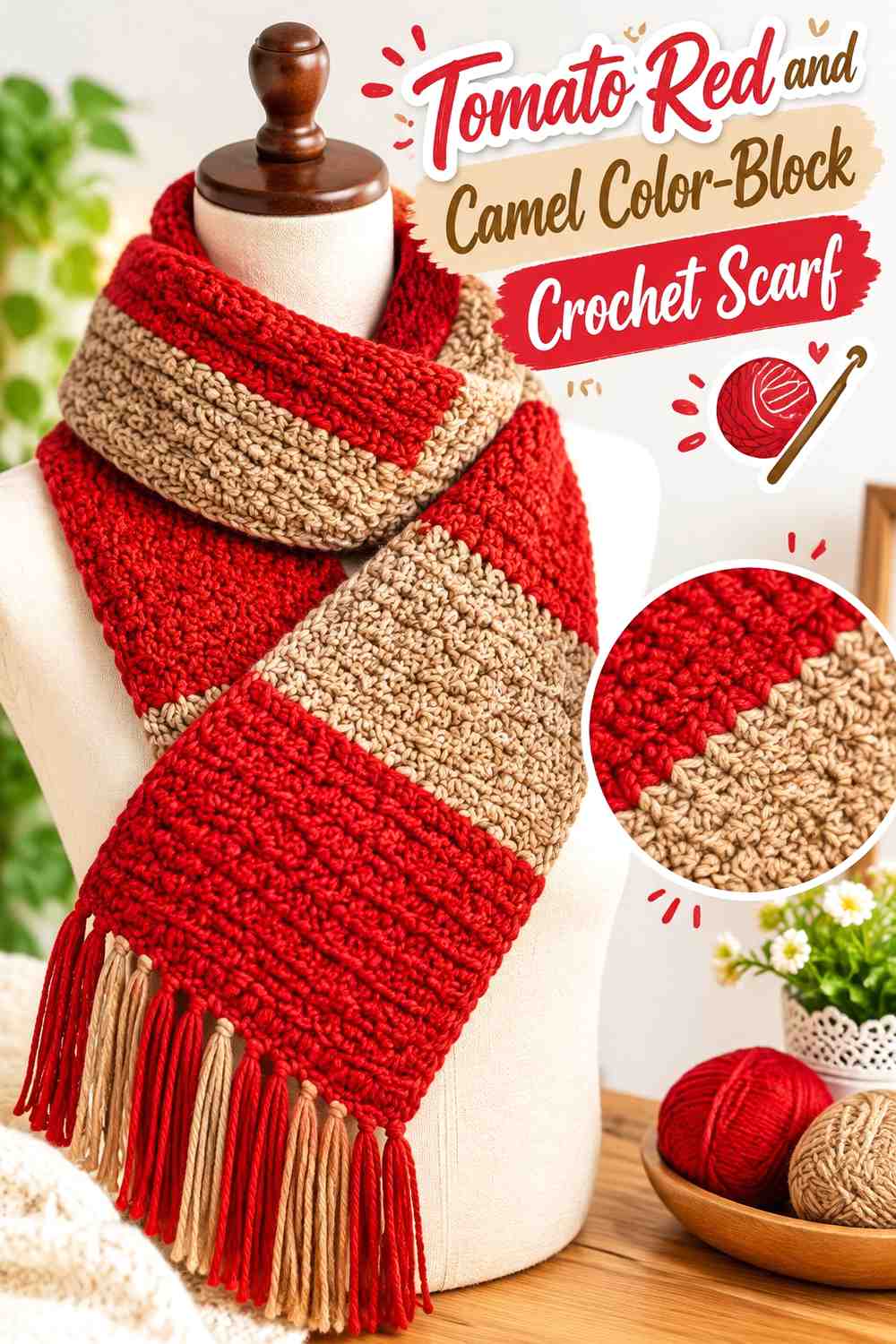
SAVEA scarf offers enough length to use tomato red and camel in large sections instead of frequent stripes. Tomato red can occupy the center while camel finishes both ends, or camel can lead through most of the scarf with one large red block placed off-center.
Large blocks are particularly useful with this combination because they let both colors appear clearly without making every few inches a new transition.
Keep Tomato Red Through the Main Crochet Scarf Length
A substantial tomato-red center makes the stronger color unmistakably dominant and keeps the scarf visually connected when it is wrapped.
If more camel is wanted, introduce one larger camel section rather than several narrow interruptions. That preserves the color-block character.
Camel Can Soften the Tomato Red Crochet Scarf Ends
Camel end sections create a quieter finish after the saturated red center. Matching both ends gives symmetry, while one camel end produces a more asymmetric arrangement.
If fringe is included, tomato-red fringe against camel ends can reconnect the finishing area with the scarf’s dominant center color.
Creator Credit: Hooked by Robin
6. Camel Crochet Ribbed Beanie With Tomato Red Brim
 SAVE
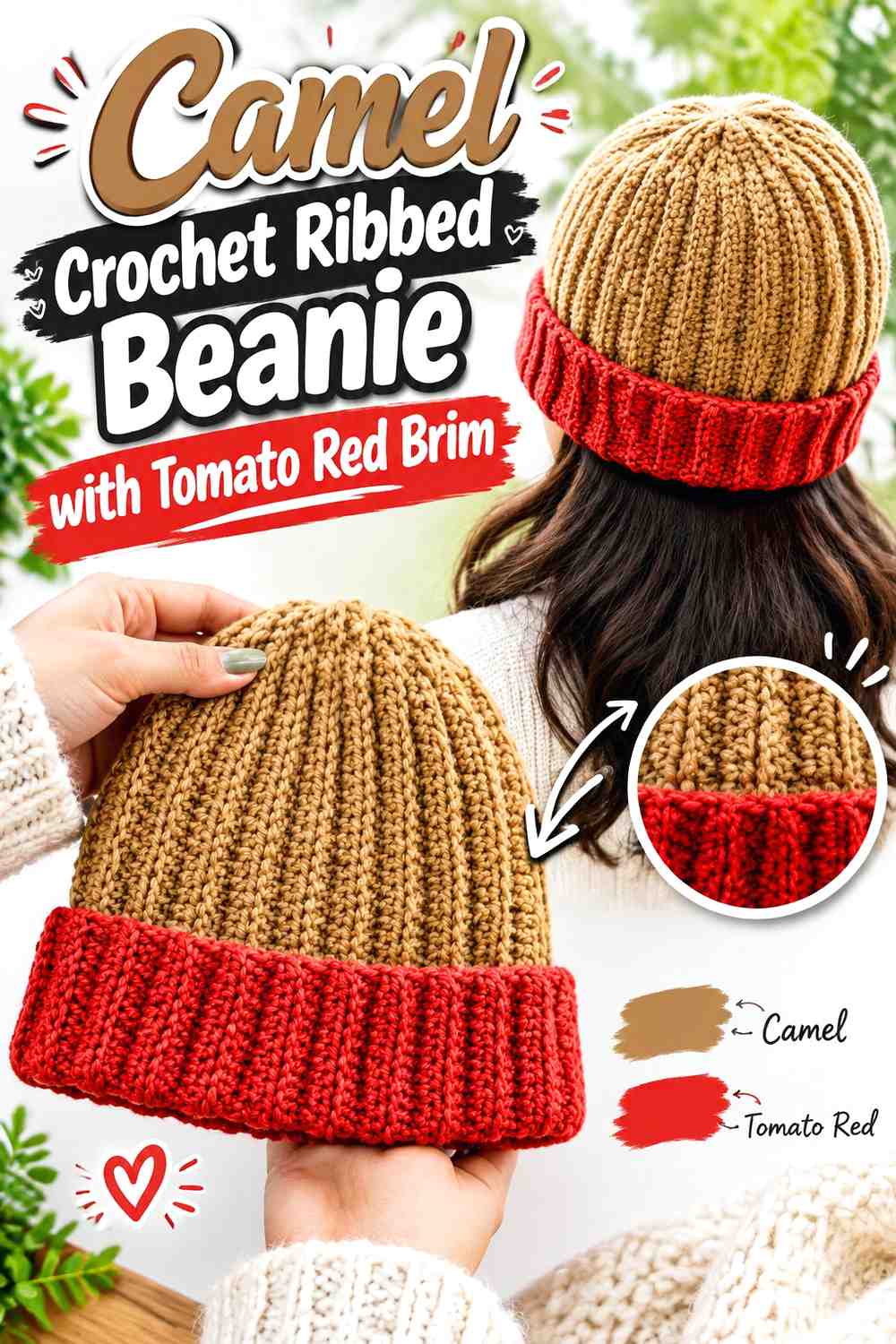
SAVEA ribbed beanie has a compact surface, so a straightforward crown-and-brim division keeps the colors readable. Camel can cover the crown while tomato red forms a noticeable lower band.
This arrangement also lets the vertical ribbing stay visually consistent instead of interrupting it with many narrow horizontal changes.
Keep Camel Across the Main Crochet Beanie Crown
A camel crown provides one continuous neutral field and allows the ribbed construction to create its own pattern.
If the camel is fairly dark, compare it with tomato red in a small sample before deciding how narrow the red section can be while still remaining distinct.
Give the Camel Crochet Beanie a Tomato Red Brim
A tomato-red brim creates a strong base around the lower edge and makes the color combination obvious without spreading red through the entire hat.
If the brim becomes too dominant, work part of it in camel and keep tomato red to a narrower lower band.
Creator Credit: VivCrochets
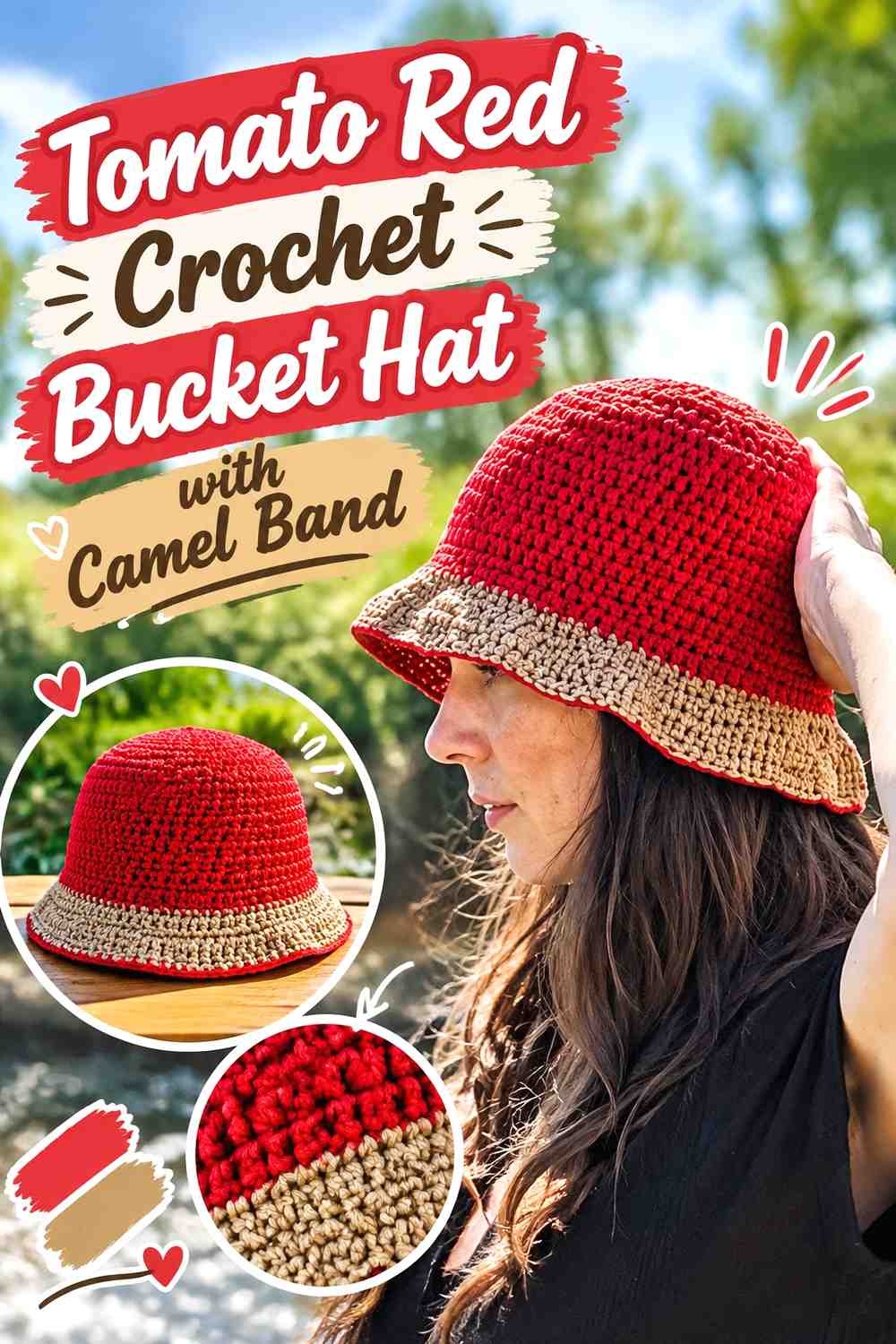
7. Tomato Red Crochet Bucket Hat With Camel Band
 SAVE
SAVEA bucket hat has three easy-to-read zones: crown, sides, and brim. Tomato red can cover the crown and sides while camel circles the hat in a defined band or occupies the brim.
Because a band repeats around the entire hat, camel can have significant impact even when it uses much less surface area than the red.
Let Tomato Red Cover the Main Crochet Bucket Hat
Keeping the crown and most of the sides tomato red creates one strong field and avoids turning the hat into several small competing sections.
If you want more camel, enlarge one structural area such as the brim instead of adding multiple thin camel stripes.
Use Camel to Break Up the Tomato Red Crochet Bucket Hat
A camel band around the side can divide the crown from the brim while remaining visible from every direction. That makes the supporting color look intentional rather than decorative.
For a more neutral finish, make the full brim camel. For a red-led version, keep the brim tomato red and restrict camel to the side band.
Creator Credit: Zeens and Roger
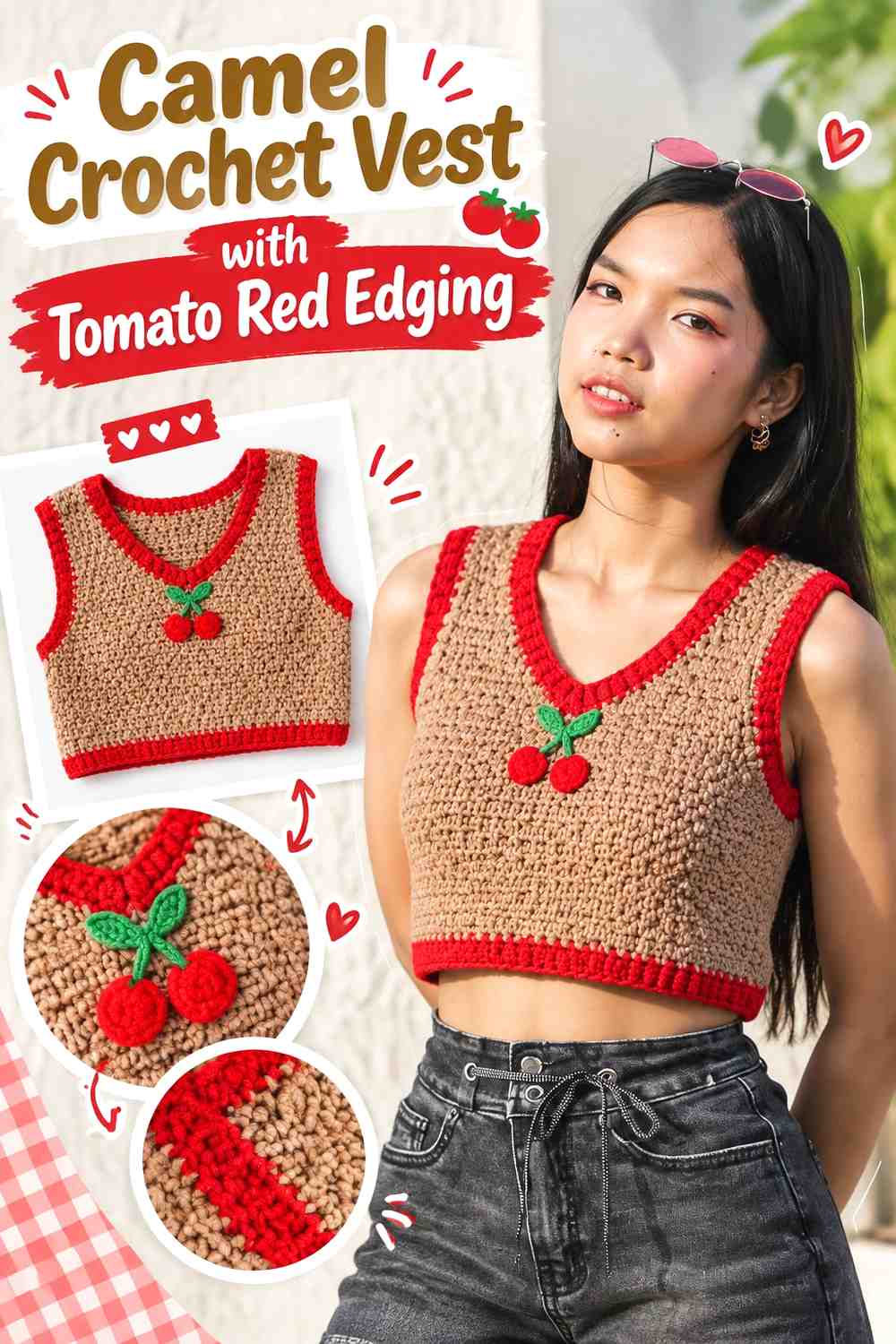
8. Camel Crochet Vest With Tomato Red Edging
 SAVE
SAVEA vest gives camel a broad central surface while tomato red can outline the neckline, armholes, and lower edge. These repeat points allow the brighter color to trace the garment shape without dividing the front and back into numerous blocks.
A wider tomato-red lower band can increase the accent when thin edging does not provide enough color presence.
Keep Camel Continuous Across the Crochet Vest Body
Camel across the main panels creates a coherent base and leaves ribbing, stitch texture, or shaping easy to follow.
If you want additional tomato red, expand one existing trim area before inserting unrelated red patches into the center of the vest.
Tomato Red Can Outline the Camel Crochet Vest Openings
Tomato-red neckline and armhole edging puts the brighter shade around structural boundaries where it can be repeated naturally.
The lower edge can also be red, but it does not need the same width as the armhole trim. A broader hem with narrower upper edging can create a clearer hierarchy.
Creator Credit: Chenda DIY
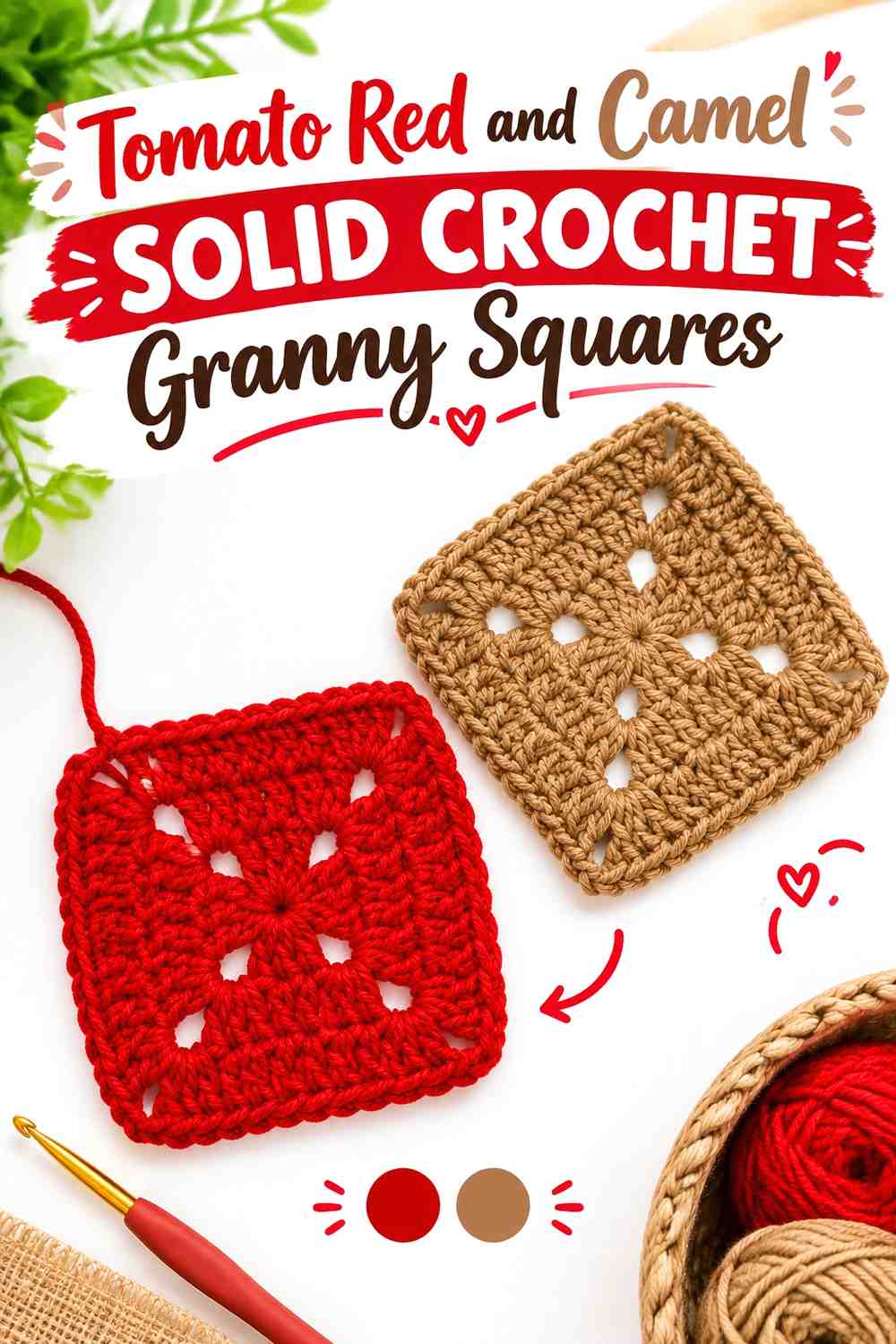
9. Tomato Red And Camel Solid Crochet Granny Squares
 SAVE
SAVESolid granny squares give the colors more visual density than traditional open motifs, making the location of each shade especially important. Tomato red can form the center while camel expands around it, or the relationship can be reversed for selected squares.
The outermost color will strongly affect how the motifs look when arranged together, so decide whether you want visible individual squares or a more continuous surrounding field.
Use Tomato Red Centers Inside Camel Crochet Granny Squares
A tomato-red center gives each motif a warm focal point while camel provides a broader neutral area around it.
Keep the center placement consistent on enough squares to establish repetition. Changing every square independently can make a two-color layout feel more complicated than necessary.
Camel Outer Rounds Can Separate Tomato Red Crochet Motifs
Camel around the outside gives red-centered squares a lighter frame and helps individual motifs stay visible when placed next to one another.
If camel is also the joining color, test two squares together first. The outer rounds may visually merge with the join, which can either create a useful continuous background or reduce the visibility of each square boundary.
Creator Credit: Bella Coco
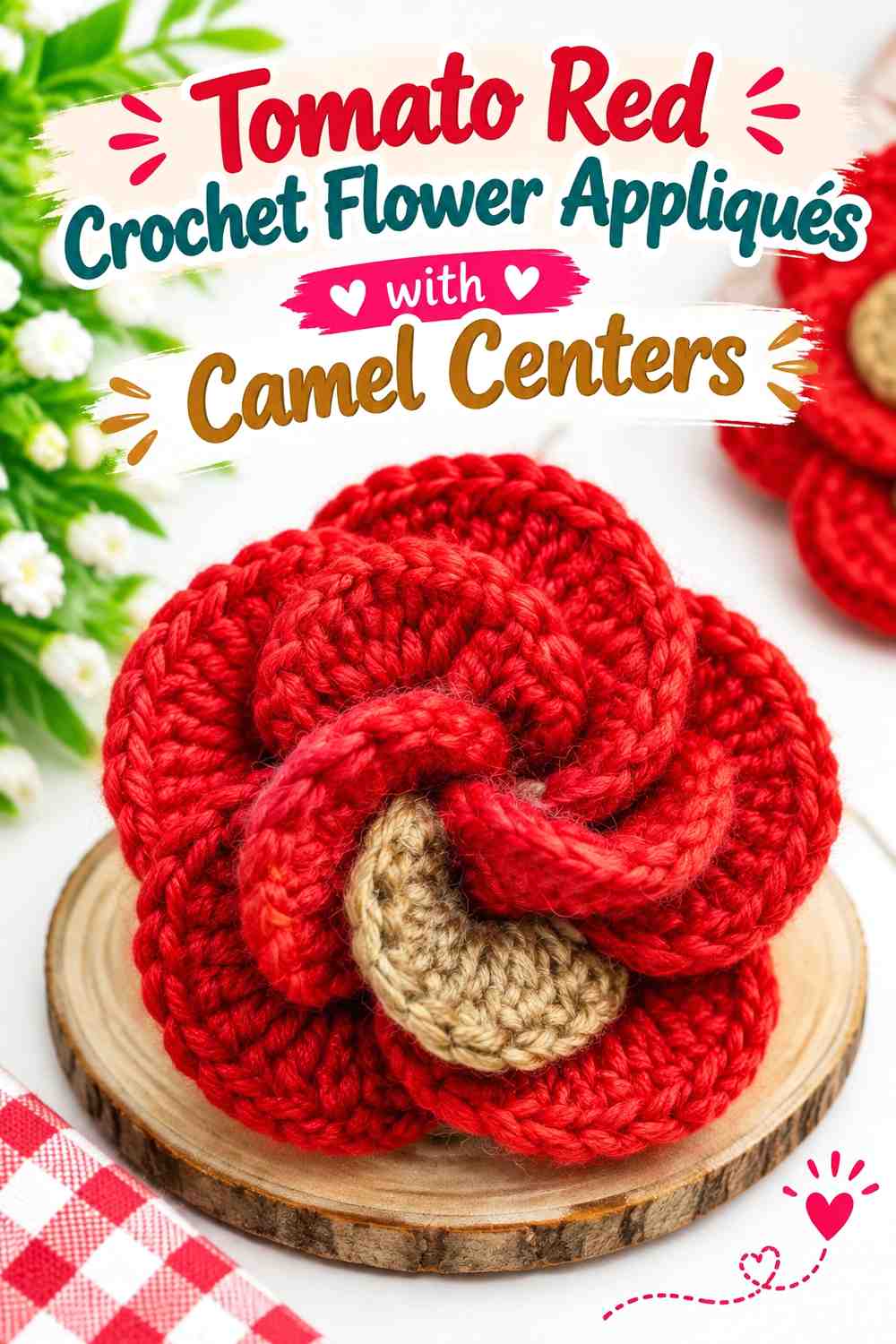
10. Tomato Red Crochet Flower Appliques With Camel Centers
 SAVE
SAVESmall crochet flowers give tomato red enough area across the petals while camel provides a quieter center. This is a simple way to use the palette on bags, pillows, garments, garlands, or other surfaces without introducing several flower colors.
For a group of motifs, reverse some flowers by using camel petals and tomato-red centers. The same palette remains intact while the focal point changes.
Let Tomato Red Define the Crochet Flower Petals
Tomato-red petals give the brighter shade most of the motif surface, which helps the flower remain noticeable once it is attached elsewhere.
Test the appliqué against its intended background before making a large batch. A flower that has strong internal red-and-camel contrast may still blend into a similarly colored project surface.
Camel Can Keep Tomato Red Crochet Flower Centers Quieter
A camel center provides separation without competing with the larger red petal area. It can also connect the flower to camel sections elsewhere on the finished project.
If the center is too small to remain visible, enlarge the camel area rather than adding unrelated camel details to each petal.
Creator Credit: NotikaLand crochet and knitting
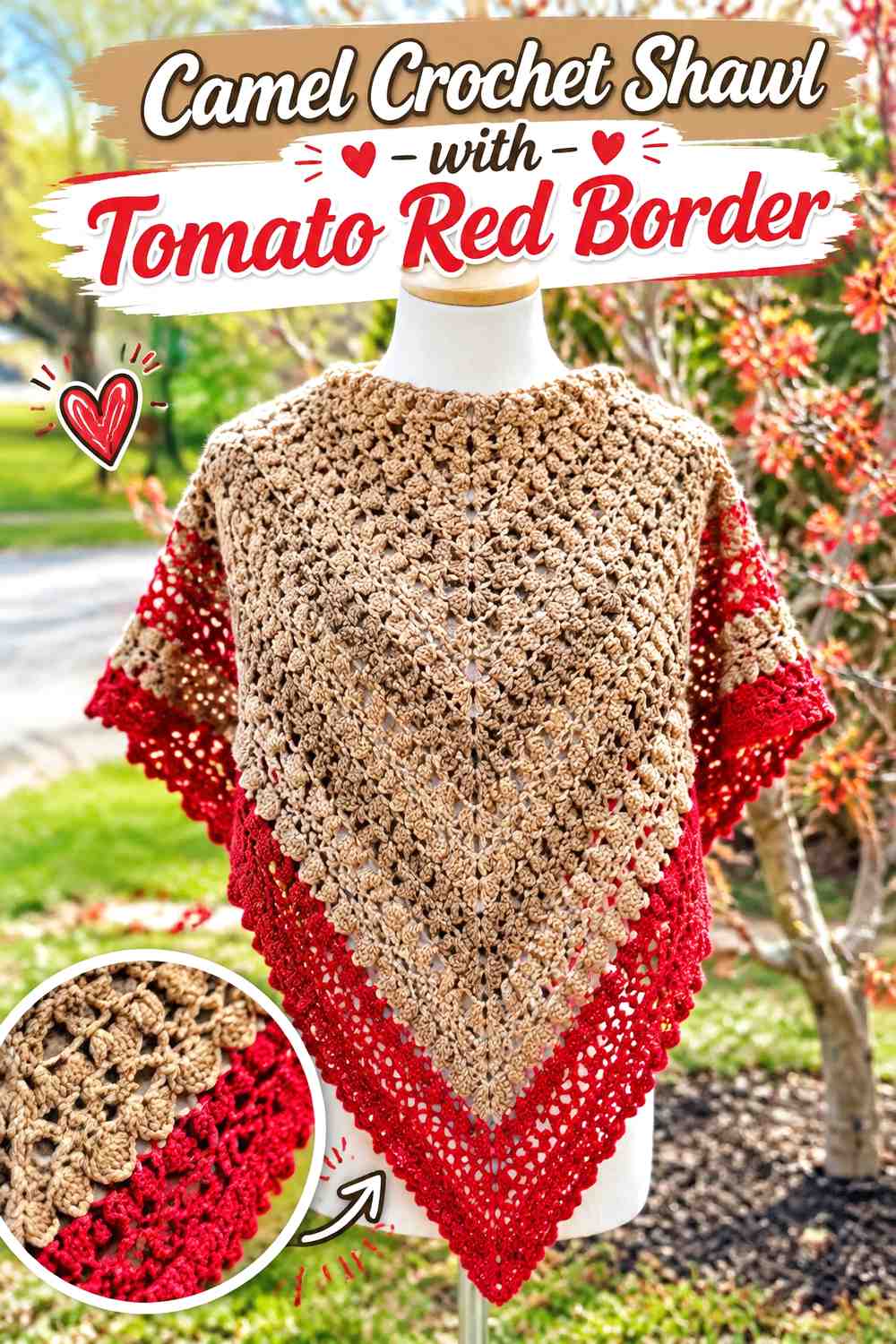
11. Camel Crochet Shawl With Tomato Red Border
 SAVE
SAVEA shawl provides a large expanding surface where camel can act as the dominant field and tomato red can become more noticeable toward the outer edge.
Because the final sections of a shawl often occupy more visible area than the early center, even a limited tomato-red border can make a substantial contribution to the finished palette.
Let Camel Establish the Main Crochet Shawl Field
Camel across the central and middle sections creates a quieter base and leaves openwork or texture to supply visual movement.
If the camel field feels too continuous, introduce one tomato-red section before the border instead of scattering many thin stripes throughout the shawl.
Repeat Tomato Red Before the Camel Crochet Shawl Ends
A tomato-red outer border can feel more integrated when a narrower red band appears earlier in the camel body.
The two red areas do not have to be equal. A small inner repeat followed by a broader outer section creates progression while camel remains dominant.
Creator Credit: Bag-O-Day Crochet
12. Camel Crochet Storage Basket With Tomato Red Rim
 SAVE
SAVEA storage basket is well suited to a camel-led palette because the broad walls provide a large neutral field. Tomato red can define the upper edge, handles, or a lower base section.
The red should be placed where it remains visible during normal use. A tomato-red base that is hidden on a shelf contributes less to the finished palette than a rim or handle.
Keep Camel Across the Main Crochet Basket Walls
Camel walls make the basket feel visually continuous and allow any surface texture to repeat without frequent changes.
If you want more tomato red, introduce it at a structural transition such as the top band instead of placing a single isolated stripe halfway up the wall.
Tomato Red Can Define the Camel Crochet Basket Opening
A tomato-red rim gives the upper edge a clear boundary and remains visible even when the basket is filled.
Repeating red on handles can connect the accent to another functional area, but keep one of those sections narrower if camel should remain the obvious dominant shade.
Creator Credit: Jayda InStitches
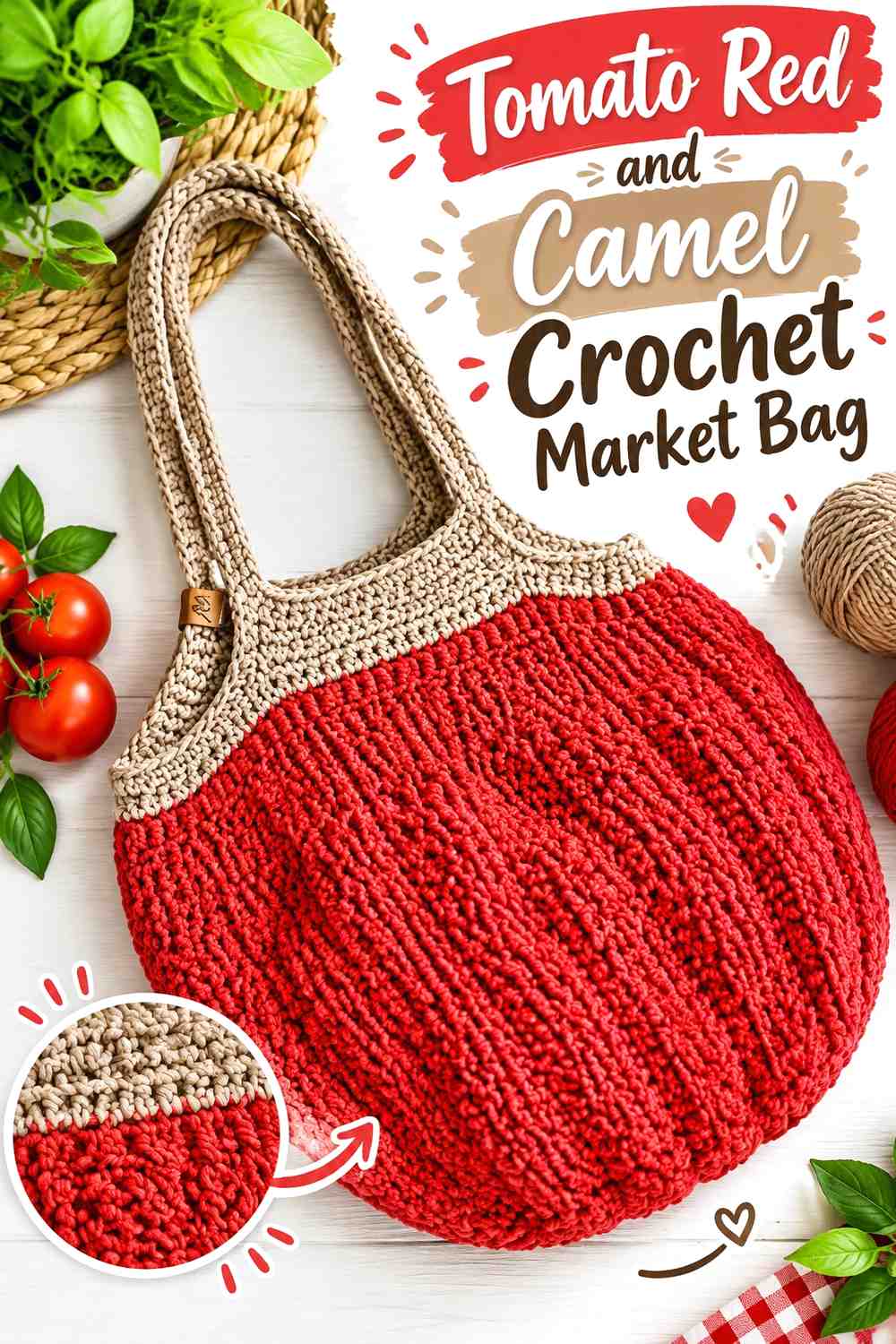
13. Tomato Red And Camel Crochet Market Bag
 SAVE
SAVEAn openwork market bag allows the color of whatever is inside to show through, so the palette can appear lighter than it would in dense crochet. Tomato red can cover the open body while camel forms the denser-looking upper section, handles, or base.
Reversing the colors creates a quieter camel bag with red concentrated at highly visible structural areas.
Let Tomato Red Fill the Open Crochet Market-Bag Body
Using tomato red through the main mesh or openwork gives the bag one continuous color field and avoids interrupting every open section.
Check the finished effect with items inside the bag before deciding the red needs more contrast. The visible contents may change how strong the yarn color appears.
Use Camel to Anchor the Tomato Red Crochet Market Bag
A camel base can create a quieter lower foundation beneath the red body. Repeating camel around the upper edge or handles connects the two ends of the bag.
If both the base and handles are substantial, additional camel stripes through the red body may be unnecessary.
Creator Credit: MJ’s Off The Hook Designs
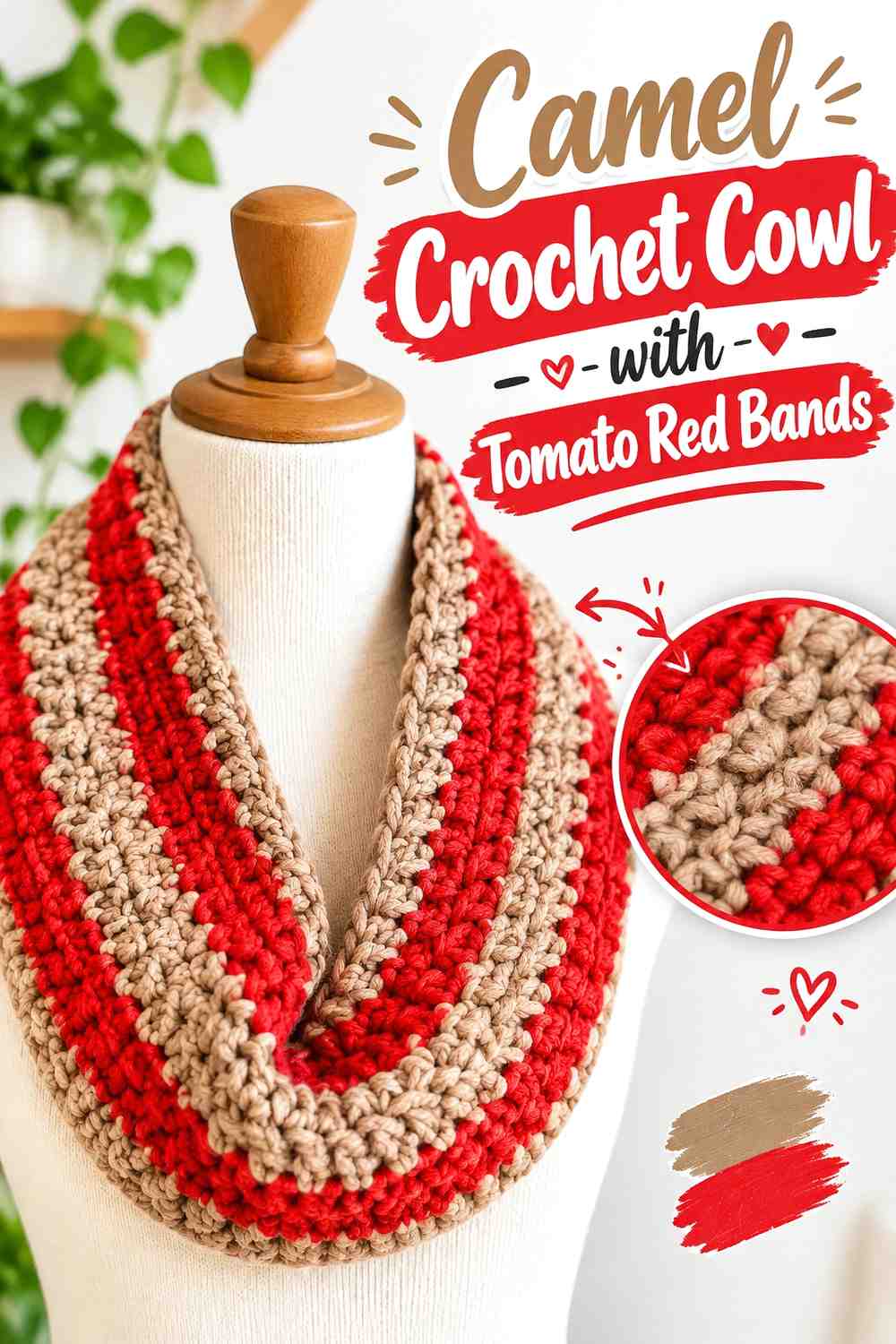
14. Camel Crochet Cowl With Tomato Red Bands
 SAVE
SAVEA cowl concentrates the colors into a compact area around the neckline, so only one or two tomato-red bands may be needed against a camel body.
Camel can carry the main texture while tomato red marks an upper edge, lower edge, or single center section. This keeps the small wearable from turning into many narrow competing stripes.
Let Camel Carry the Main Crochet Cowl Texture
A continuous camel section provides space for ribbing, clusters, or other texture to remain visible without color changes becoming the dominant feature.
If the camel texture already provides enough variation, use tomato red only where you want a deliberate focal line.
Place Tomato Red at a Clear Edge of the Camel Crochet Cowl
A tomato-red upper edge puts the stronger color in a highly visible location while leaving the center neutral.
For more repetition, add a narrower red section along the lower edge. Keeping the two bands unequal prevents the cowl from looking mechanically divided into three equal zones.
Creator Credit: Fiber Flux
15. Tomato Red Crochet Headband With Camel Contrast
 SAVE
SAVEA headband has little surface area, so a simple color hierarchy works better than numerous tiny changes. Tomato red can cover most of the band while camel highlights the center, twist, join, or side panels.
The contrasting area should remain visible once the headband is worn. A camel section hidden entirely beneath a twist or seam contributes little to the finished color plan.
Keep Tomato Red Across the Main Crochet Headband Surface
Tomato red across most of the band gives the small accessory one clear dominant color. It also lets ribbing or other stitch texture provide the repetition instead of many color transitions.
If the front contains a twist, maintaining red immediately around it can make camel used inside the focal area stand out more clearly.
Put Camel Where the Tomato Red Crochet Headband Changes Direction
Camel can highlight the central fold, join cover, or another construction feature that already draws attention.
Make the camel area substantial enough to remain visible from the front. If it disappears once the headband is assembled, move some camel onto the adjoining surface rather than adding unrelated accent stripes elsewhere.
Creator Credit: Blossom Crochet
Comparing Tomato Red and Camel Crochet Color Balance
For a stronger tomato-red result, the blanket, tote, scarf, bucket hat, flowers, market bag, and headband give red enough uninterrupted space to become the immediate focal color. Camel then works as a separator, frame, join, base, or quieter finishing shade.
For a more camel-led project, consider the cardigan, pillow, beanie, vest, shawl, basket, or cowl. These ideas let camel occupy the larger visual area while tomato red is concentrated around details where a relatively small amount still has noticeable impact.
The solid granny squares offer the easiest way to alternate the hierarchy repeatedly. You can reverse tomato red and camel between motifs while keeping the same two-color palette across the full project.
Conclusion
Tomato red and camel work best when each shade has a specific job. Tomato red can create strong centers, stripes, borders, pockets, rims, and bands, while camel can provide larger fields, joins, structural sections, and visual pauses around the brighter color.
For a restrained two-color result, choose one dominant shade and repeat the supporting shade at a few related points. Tomato-red cuffs can connect with a red neckline on a camel garment, while a camel bag base can connect with camel handles around a tomato-red body.
Before starting a large project, compare the actual yarns together and look at them in the stitch texture you intend to use. Preserve the difference in lightness and color intensity that made you choose the pairing rather than relying on the shade names alone. Use the credited tutorials for exact construction while adapting the tomato red and camel placement to your preferred balance.
Frequently Asked Questions
Should tomato red or camel be the dominant crochet color?
Either can lead. Tomato red produces a stronger, more saturated overall direction, while camel gives you a quieter main surface with red concentrated around focal details. The finished item and the amount of visual intensity you want should determine the hierarchy.
How can I tell whether tomato red and camel have enough contrast?
Compare the actual yarns side by side rather than judging from color names. A grayscale photograph can help reveal their light-and-dark separation, which is especially useful for small granny-square sections, narrow borders, textured details, and appliqués.
Where should tomato red go on a mostly camel crochet garment?
Cuffs, pockets, neckline trim, hems, armhole edging, and controlled color blocks are useful locations. Repeat red in a few related places instead of automatically applying it to every edge.
Can camel be used as more than a background color?
Yes. Camel can dominate cardigans, pillows, hats, vests, shawls, baskets, cowls, and many other projects. Tomato red can then provide smaller high-impact areas such as rims, borders, pockets, or bands.
How do I make tomato red and camel crochet look less busy?
Reduce the number of color changes and increase the size of the color zones. One broad tomato-red section against camel usually creates a clearer hierarchy than many narrow alternating stripes.
What can I substitute for tomato red?
Choose another warm red that maintains the intended contrast with camel. If tomato red is meant to be the stronger accent, avoid replacing it with a highly muted red that becomes too similar to the camel in visual weight.
What can I substitute for camel?
Choose another warm tan, beige-brown, or similarly muted neutral that preserves its supporting relationship with tomato red. If camel is supposed to be the lighter shade, make sure the substitute remains visibly separated from the red rather than matching only the general brown family.