
Chartreuse and deep navy give crochet projects a strong bright-versus-dark relationship without relying on black. Chartreuse can make motifs, textured panels, stripes, and trim immediately noticeable, while deep navy provides a darker foundation that can organize those brighter areas and keep a multisection project from looking scattered.
The proportions matter as much as the two colors themselves. A chartreuse cardigan with deep navy cuffs will look much brighter than a deep navy vest outlined with chartreuse ribbing, even though both projects use exactly the same palette. Likewise, chartreuse granny-square centers surrounded by deep navy create a different rhythm from equal-width navy and chartreuse blanket stripes.
These 20 ideas explore different ways to distribute the same palette across garments, accessories, bags, amigurumi, and home decor so you can choose a placement strategy that fits the actual crochet item.
Quick List
- Chartreuse And Deep Navy Crochet Cardigan
- Chartreuse And Deep Navy Crochet Granny Square Tote
- Chartreuse And Deep Navy Crochet Bucket Hat
- Chartreuse And Deep Navy Crochet Blanket
- Chartreuse And Deep Navy Crochet Scarf
- Chartreuse And Deep Navy Crochet Beanie
- Chartreuse And Deep Navy Crochet Vest
- Chartreuse And Deep Navy Crochet Tank Top
- Chartreuse And Deep Navy Crochet Crossbody Bag
- Chartreuse And Deep Navy Crochet Frog
- Chartreuse And Deep Navy Crochet Flower Coasters
- Chartreuse And Deep Navy Crochet Wall Hanging
- Chartreuse And Deep Navy Crochet Skirt
- Chartreuse And Deep Navy Crochet Sweater
- Chartreuse And Deep Navy Crochet Poncho
- Chartreuse And Deep Navy Crochet Fingerless Gloves
- Chartreuse And Deep Navy Crochet Shawl
- Chartreuse And Deep Navy Crochet Storage Basket
- Chartreuse And Deep Navy Crochet Market Bag
- Chartreuse And Deep Navy Crochet Headband
Decide Whether Chartreuse or Deep Navy Should Dominate
Chartreuse attracts attention quickly, so it does not always need to occupy half of a project. On a deep navy vest, sweater, bag, or wall hanging, relatively small chartreuse sections can still become the focal points. This makes the palette useful when you want a dark finished item without losing the bright yellow-green character entirely.
When chartreuse takes the dominant role, deep navy works particularly well at structural boundaries. Cuffs, brims, bag handles, waistbands, borders, and motif joins already divide one part of a crochet project from another, so using the darker color there makes the contrast look deliberate.
For striped and motif-based projects, decide on the hierarchy before starting a large repeat. Equal amounts give both colors similar visual importance. Wider chartreuse sections produce a brighter result, while larger deep navy fields make chartreuse behave more like an accent.
Keep Chartreuse Visible Against Deep Navy Crochet Texture
The value difference between chartreuse and deep navy can make borders and motifs easy to separate, but texture still affects the result. Ribbing, bobbles, shells, raised stitches, and openwork introduce their own shadows, which can change how much of the darker color you need.
If chartreuse carries the main textured area, consider leaving reasonably large sections uninterrupted. Too many narrow deep navy stripes can break a raised texture into small pieces and make the color changes more noticeable than the stitches.
Deep navy is especially useful for joins and outlines. Around granny squares, flower motifs, or flat wall-hanging elements, the darker shade can create negative space that keeps neighboring chartreuse sections from merging visually.
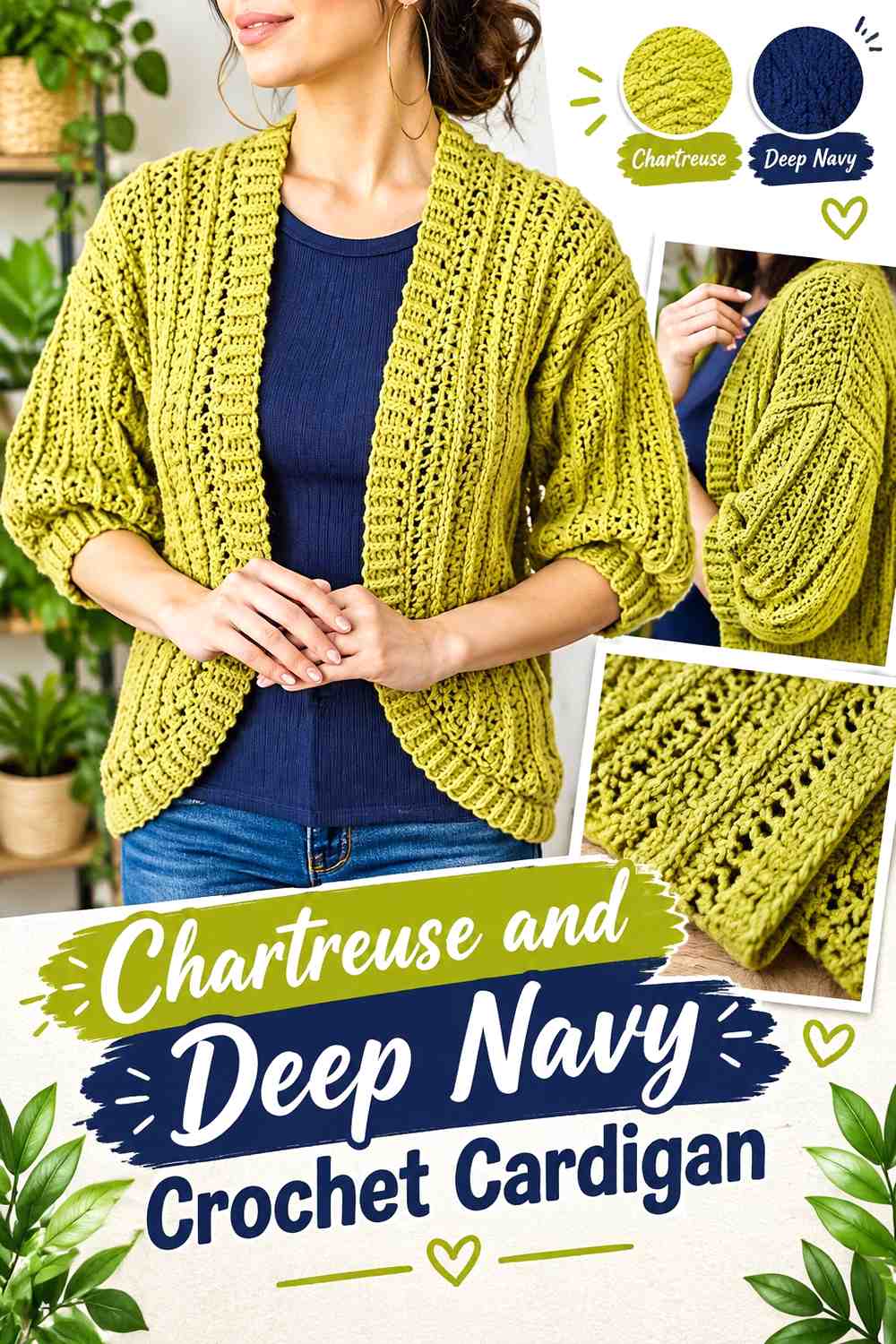
1. Chartreuse And Deep Navy Crochet Cardigan
 SAVE
SAVELet chartreuse cover the largest cardigan panels and bring deep navy into the cuffs, front bands, and selected edging. This keeps the garment clearly chartreuse-led while using the darker shade where the cardigan naturally changes direction. The result is more controlled than scattering narrow navy stripes throughout every panel.
Let Chartreuse Lead the Crochet Cardigan Panels
Keeping the front, back, and most of the sleeves chartreuse gives stitch texture a continuous surface. It also prevents the dark trim from dividing the torso into too many visual sections.
If you want a larger share of deep navy, widening the cuffs is usually more coherent than inserting unrelated dark patches across the body.
Use Deep Navy to Connect Chartreuse Crochet Cardigan Edges
Deep navy cuffs and front bands can repeat the same dark boundary around separate areas of the garment. Before adding a wide navy hem as well, view the cardigan as a whole; dark trim on every edge may overpower the chartreuse center.
A narrower lower edge can repeat the color without making the bottom of the cardigan feel disproportionately heavy.
Creator Credit: TCDDIY
2. Chartreuse And Deep Navy Crochet Granny Square Tote
 SAVE
SAVEA granny-square tote gives deep navy a useful organizational role. Place chartreuse in the centers or inner motif rounds, then use deep navy farther outward or at the joins. The dark framework separates each square while the repeated chartreuse creates continuity across the bag.
Repeat Chartreuse Through the Deep Navy Crochet Granny-Square Centers
Consistent chartreuse centers give the eye one repeating point across multiple motifs. They can remain relatively small because their brightness gives them enough presence against deeper surrounding rounds.
Lay the completed squares out before joining so chartreuse is balanced across both faces of the tote.
Let Deep Navy Organize the Chartreuse Crochet Tote Joins
Deep navy around motif edges can make the grid easy to read after assembly. It is particularly effective when several chartreuse sections would otherwise touch and visually merge.
If the joins already create substantial navy lines, consider keeping the handles simpler rather than adding another oversized dark border around the bag opening.
Creator Credit: mahum 🎀
3. Chartreuse And Deep Navy Crochet Bucket Hat
 SAVE
SAVEA bucket hat has obvious zones for two-color placement. Make the crown and walls chartreuse, then use deep navy for the brim. This produces a clean transition at a structural point rather than breaking the crown into frequent stripes.
Keep Chartreuse Continuous Across the Crochet Bucket-Hat Crown
A solid chartreuse crown allows any visible stitch pattern to continue without interruption. Because the top and sides are seen from multiple angles, that large bright area establishes the hat’s main color immediately.
If you want a small navy repeat above the brim, a narrow transition band is usually enough.
Let Deep Navy Anchor the Chartreuse Crochet Bucket-Hat Brim
The brim can occupy more visible area than expected because it extends outward. A deep navy brim therefore creates a substantial dark foundation even without additional navy on the crown.
Check the brim depth before increasing the amount of navy elsewhere. If the brim already feels prominent, let chartreuse remain uninterrupted above it.
Creator Credit: VivCrochets
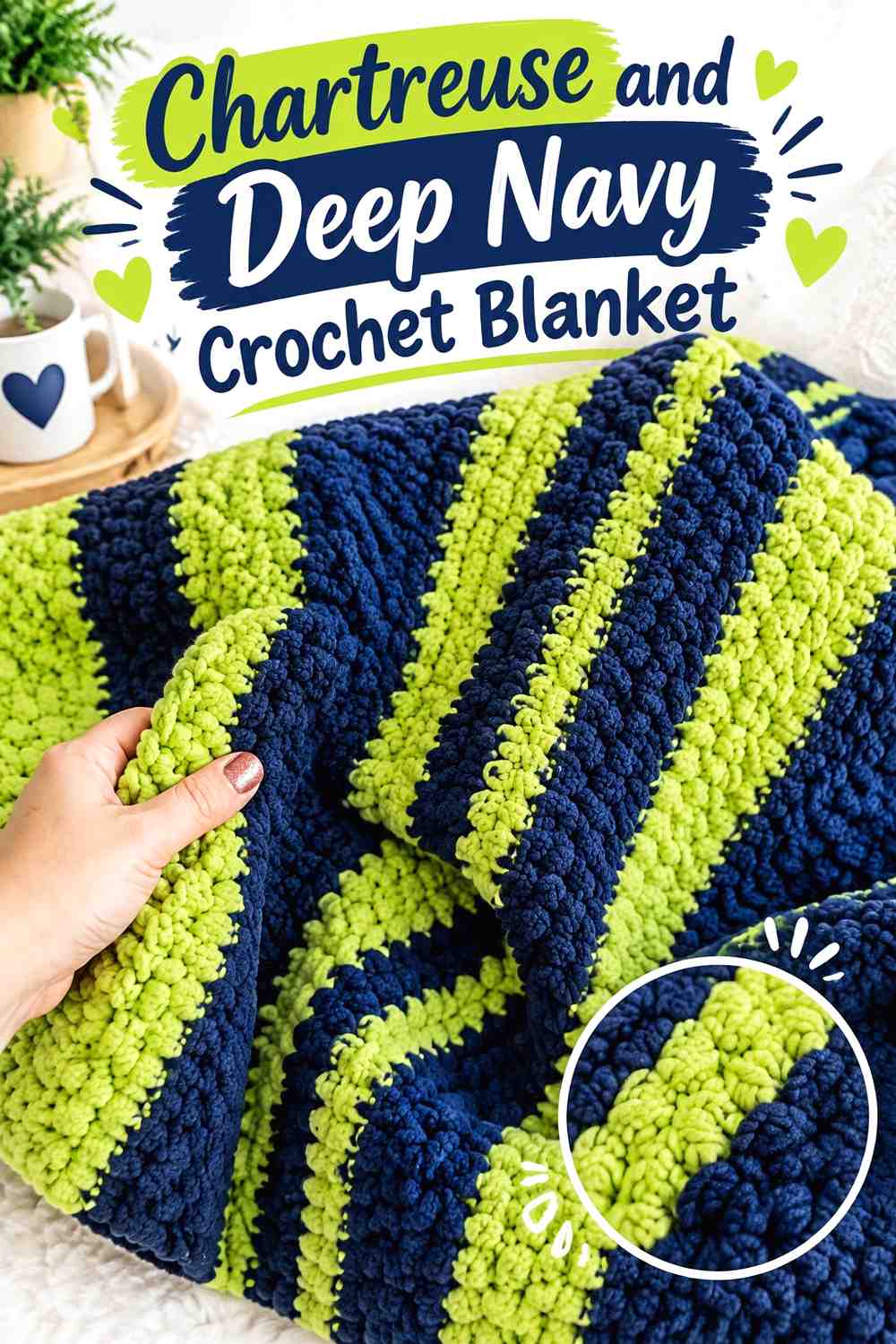
4. Chartreuse And Deep Navy Crochet Blanket
 SAVE
SAVEA blanket has enough surface area to support repeated color changes, but equal stripes are only one option. Deep navy can create a broad background while chartreuse appears in wider statement bands, or chartreuse can dominate with narrower navy separators.
Use Deep Navy to Separate Wide Chartreuse Crochet Blanket Bands
Navy stripes can act as visual pauses between larger chartreuse sections. Keeping the navy separators relatively consistent helps the brighter sections feel related even when their widths vary.
This approach also avoids turning the blanket into a strict one-to-one stripe sequence.
Keep Chartreuse Strong Enough Against the Deep Navy Crochet Blanket Border
If deep navy already appears frequently inside the blanket, a thick navy outer border can make the perimeter substantially darker. A narrow navy finish may be enough.
For a brighter edge, return to chartreuse before the final navy round so the border connects back to the main stripe pattern.
Creator Credit: Bella Coco Crochet
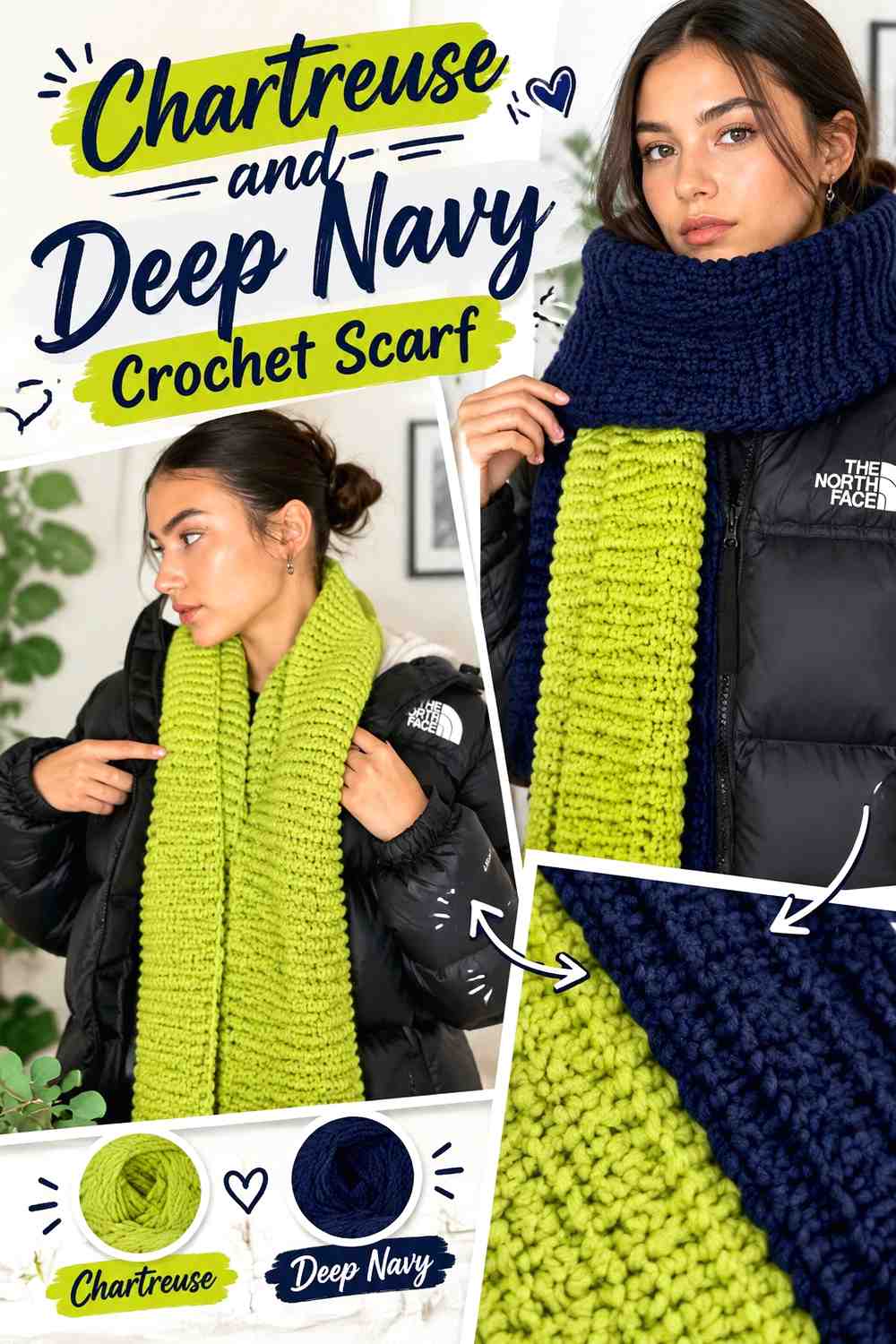
5. Chartreuse And Deep Navy Crochet Scarf
 SAVE
SAVEA long scarf works well with deep navy as the dominant field and chartreuse concentrated near the ends. That gives the brighter shade two repeated focal areas rather than dozens of small stripes across the full length.
Let Deep Navy Carry the Main Crochet Scarf Length
A continuous navy center creates a stable background for texture and keeps the scarf relatively dark overall. It also gives the chartreuse end sections more impact when they appear.
If the stitch pattern is highly textured, test it in deep navy first to make sure the surface definition is visible enough for your preference.
Make Chartreuse Crochet Scarf Ends Large Enough to Contrast With Deep Navy
A very narrow chartreuse finishing row may look more like edging than a planned color block. Give the end sections enough depth to establish a deliberate repeat.
If you add fringe or tassels, continuing chartreuse into them extends the bright block; switching back to navy gives the scarf a darker final edge.
Creator Credit: crochet daniela
6. Chartreuse And Deep Navy Crochet Beanie
 SAVE
SAVEKeep the crown and body chartreuse and use deep navy for a ribbed or folded brim. The transition falls at a natural boundary, which gives the hat a strong two-part design without interrupting the main crown texture.
Keep Chartreuse Dominant Across the Crochet Beanie Crown
Chartreuse works particularly well across vertical ribs or other repeated texture because the color remains continuous from the crown toward the brim.
Avoid adding many narrow navy stripes if the stitch direction is already an important visual feature.
Use Deep Navy to Define the Chartreuse Crochet Beanie Brim
A folded brim can occupy a large portion of the visible hat, so evaluate the palette with the brim positioned as it will actually be worn.
If deep navy becomes too dominant, reduce the brim depth instead of adding more chartreuse details to compensate.
Creator Credit: lerugi crochets
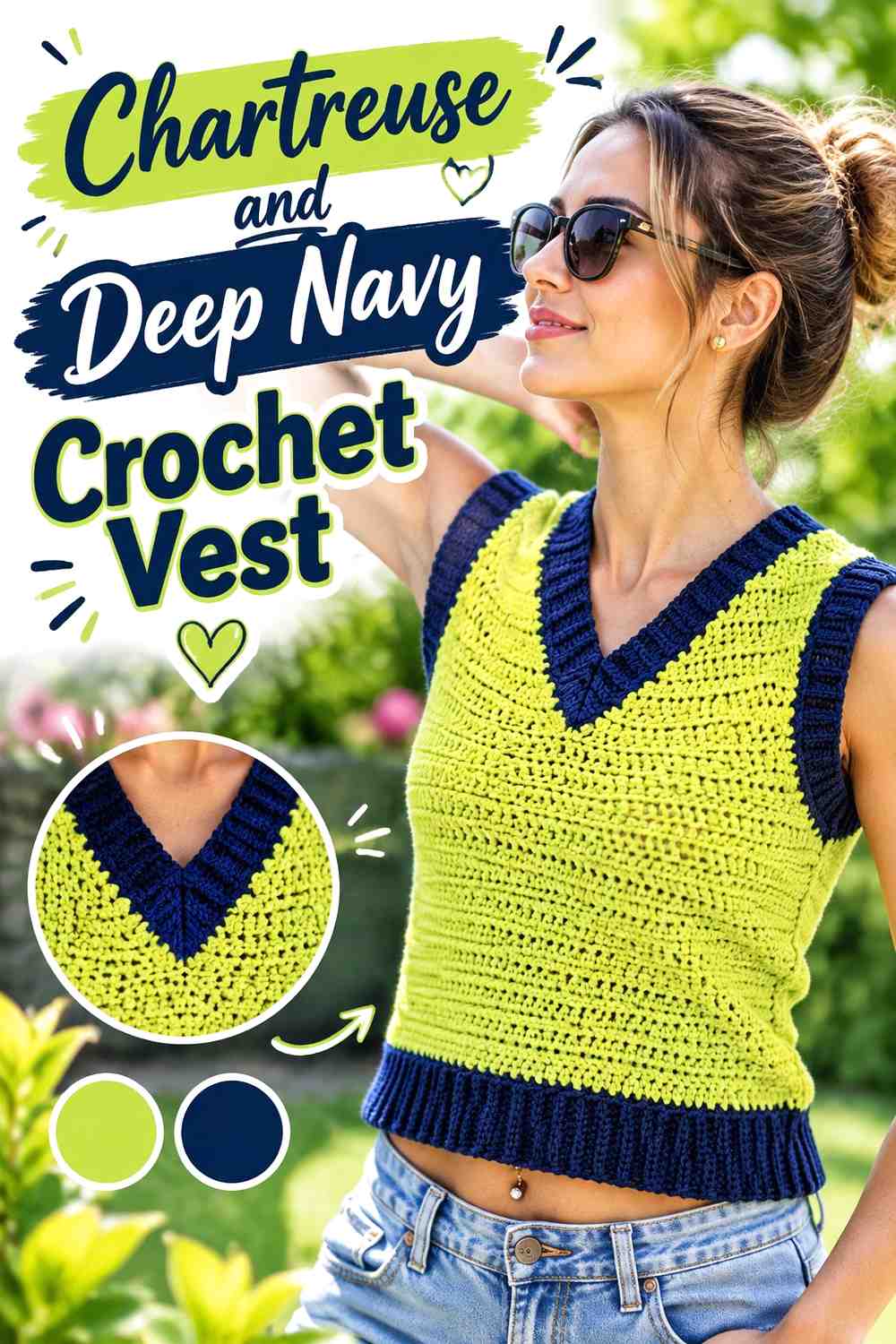
7. Chartreuse And Deep Navy Crochet Vest
 SAVE
SAVEReverse the hierarchy by making deep navy the main vest color and using chartreuse around the neckline, armholes, and possibly the lower ribbing. A relatively small amount of chartreuse can still create a complete visual outline.
Let Deep Navy Cover the Main Crochet Vest Panels
Deep navy across the front and back gives the vest one continuous dark field. That makes chartreuse ribbing more noticeable without requiring bright stripes through the torso.
If the vest uses subtle texture, sample it in navy first because very dark yarn can make small stitch changes less apparent.
Carry Chartreuse Around the Deep Navy Crochet Vest Openings
Repeating chartreuse around the neckline and armholes links three separate edges. Adding chartreuse at the hem creates a full bright frame; leaving the hem navy keeps the accent concentrated higher on the garment.
Choose the distribution before edging so the bright trim does not expand gradually without a clear plan.
Creator Credit: Leelee Knits
8. Chartreuse And Deep Navy Crochet Tank Top
 SAVE
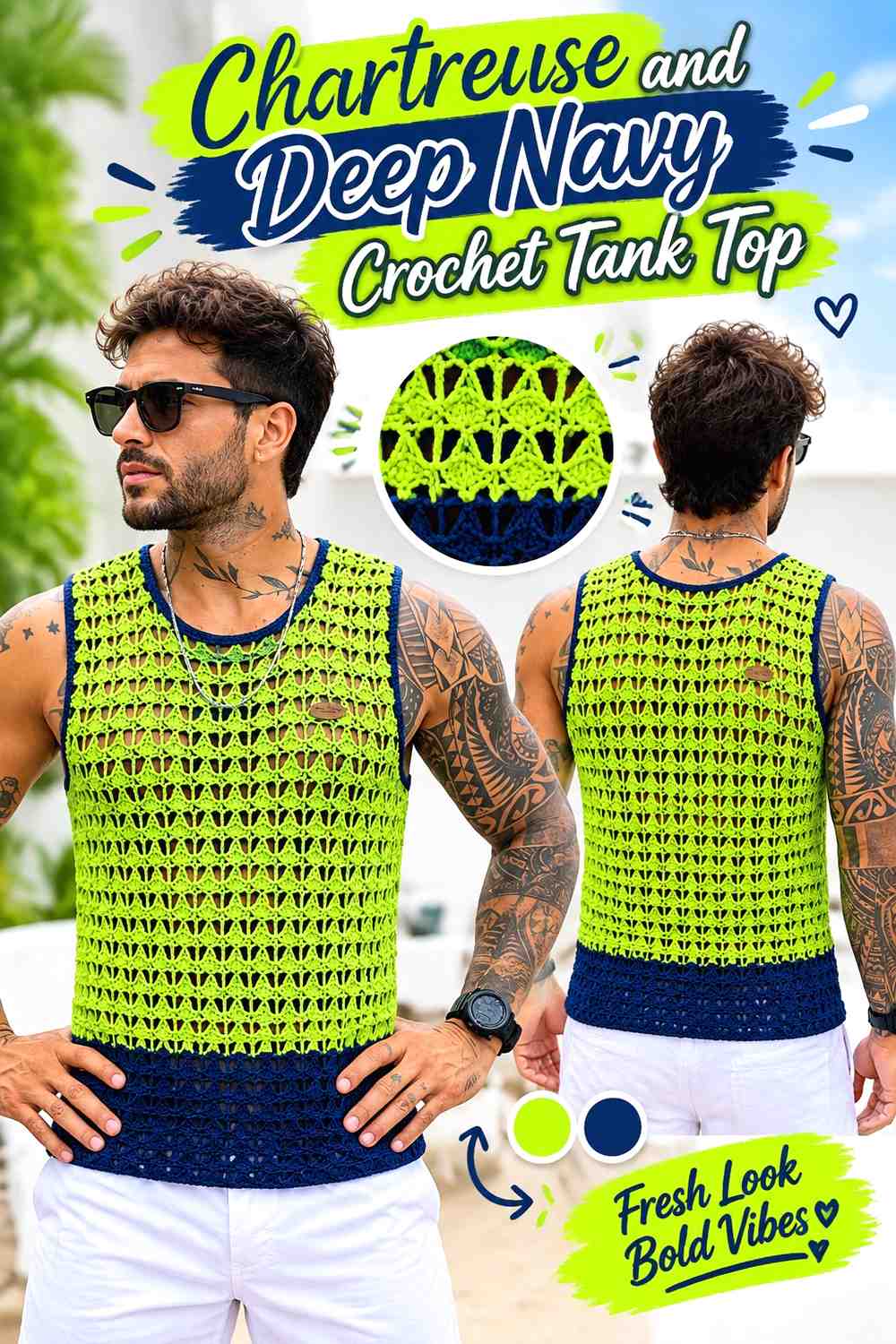
SAVEA chartreuse tank top can use deep navy on straps, neckline edging, and a restrained lower border. Because those areas naturally outline the garment, the dark contrast looks integrated rather than decorative for its own sake.
Keep Chartreuse Across the Main Crochet Tank-Top Panels
Using chartreuse over most of the torso gives openwork or textured stitches room to repeat without frequent dark interruptions.
For a very open crochet fabric, also consider how the clothing layer beneath the top will affect the apparent chartreuse-and-navy contrast.
Use Deep Navy to Connect Chartreuse Crochet Tank-Top Straps
Deep navy straps become two clear vertical accents. Repeating navy around the neckline helps those straps look connected to the garment instead of added separately.
Keep a navy hem narrower if the straps are already wide; otherwise the dark color can become visually heavy at both ends of the top.
Creator Credit: Taylor xavier croche
9. Chartreuse And Deep Navy Crochet Crossbody Bag
 SAVE
SAVEUse deep navy for most of the bag body and reserve chartreuse for a front panel, flap section, or concentrated motif. The bright color then becomes an obvious focal area while navy handles the larger structural surface.
Let Deep Navy Anchor the Crochet Crossbody Bag Body
A deep navy base gives the bag a continuous dark shape and leaves visual space for closures, seams, and straps. This is useful when the front already contains a noticeable chartreuse element.
Avoid placing chartreuse on every seam if you want one clear focal area.
Place Chartreuse Where the Deep Navy Crochet Bag Needs Focus
A chartreuse panel or motif on the main face of the bag can carry enough color without covering the entire accessory. Repeat a small amount near the strap attachment only if the first bright section feels isolated.
A fully chartreuse strap creates a much stronger diagonal line when the bag is worn, so use that option when a brighter overall result is intentional.
Creator Credit: Dana B
10. Chartreuse And Deep Navy Crochet Frog
 SAVE
SAVEChartreuse can cover most of a frog amigurumi while deep navy appears in clothing-like accents, small decorative sections, or embroidered details. The body shape should remain easy to read rather than being divided into equal dark and bright patches.
Keep Chartreuse Continuous Across the Crochet Frog Body
A mostly chartreuse body gives the amigurumi a clear silhouette and lets three-dimensional shaping provide the visual interest.
If you introduce navy on the limbs as well as the torso, repeat it intentionally instead of changing colors independently on every small piece.
Limit Deep Navy on Small Chartreuse Crochet Frog Details
Deep navy can remain obvious in relatively small areas against chartreuse. That makes it useful for accents without requiring large dark sections across the body.
When separate embellishments are used, consider their attachment and intended use rather than selecting them only for color contrast.
Creator Credit: Crafter Frog
11. Chartreuse And Deep Navy Crochet Flower Coasters
 SAVE
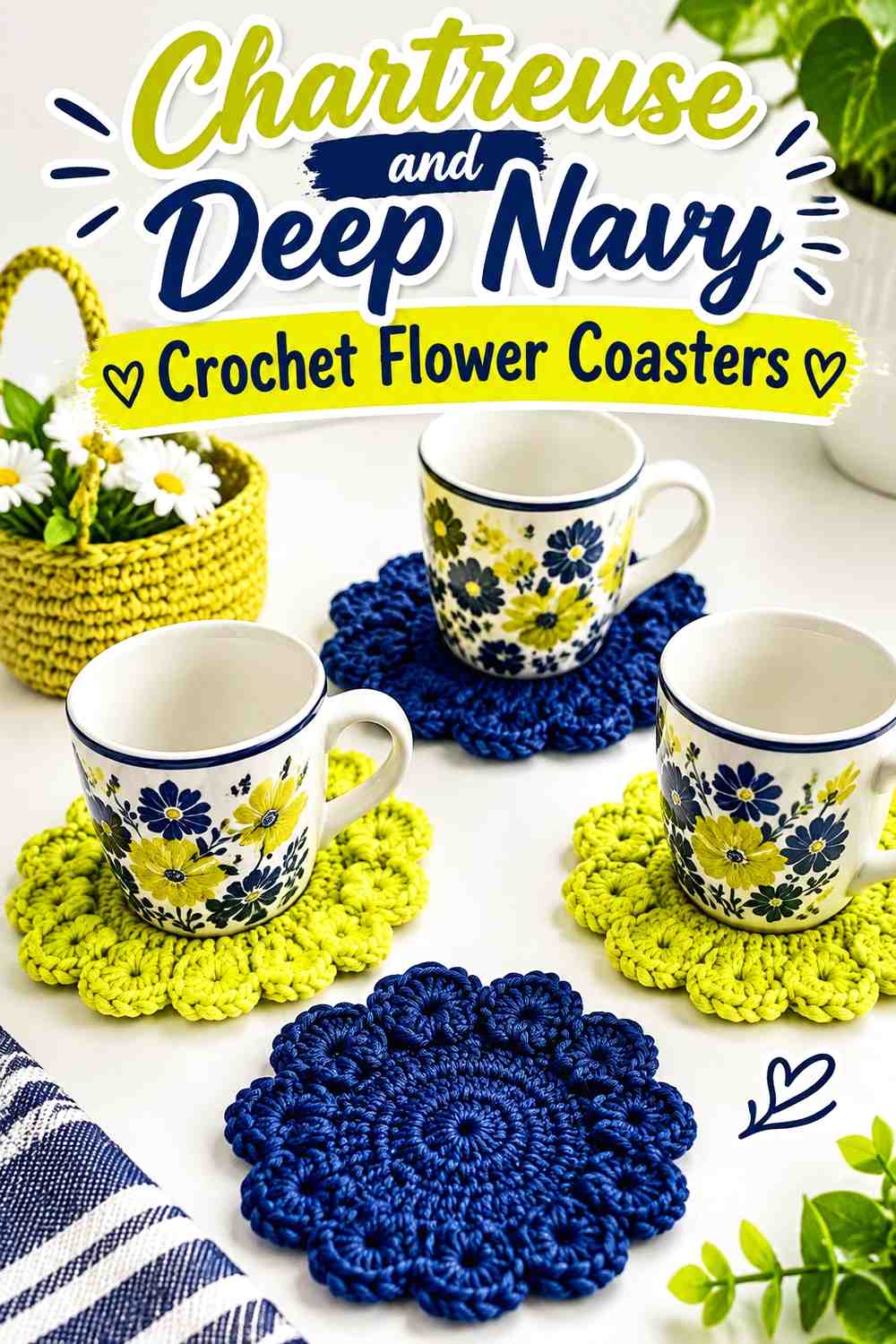
SAVEFlower coasters allow the two colors to switch roles within a compact motif. Deep navy petals with chartreuse centers create bright focal points, while chartreuse petals with navy centers make the entire flower appear lighter.
Use Chartreuse Centers to Focus Deep Navy Crochet Flowers
A chartreuse center gives each navy flower one obvious focal point. Repeating that center treatment throughout the set helps the coasters coordinate even when minor placement details vary.
Because the center is small, chartreuse does not need to dominate the overall coaster to remain visible.
Keep Deep Navy Borders Narrow Around Chartreuse Crochet Coasters
If you use chartreuse across the petals, a navy outer round can define the flower shape. Keep the border restrained when navy also appears in the center.
Using dark color at both the center and perimeter can compress the visible chartreuse area more than expected on such a small project.
Creator Credit: Brunaticality
12. Chartreuse And Deep Navy Crochet Wall Hanging
 SAVE
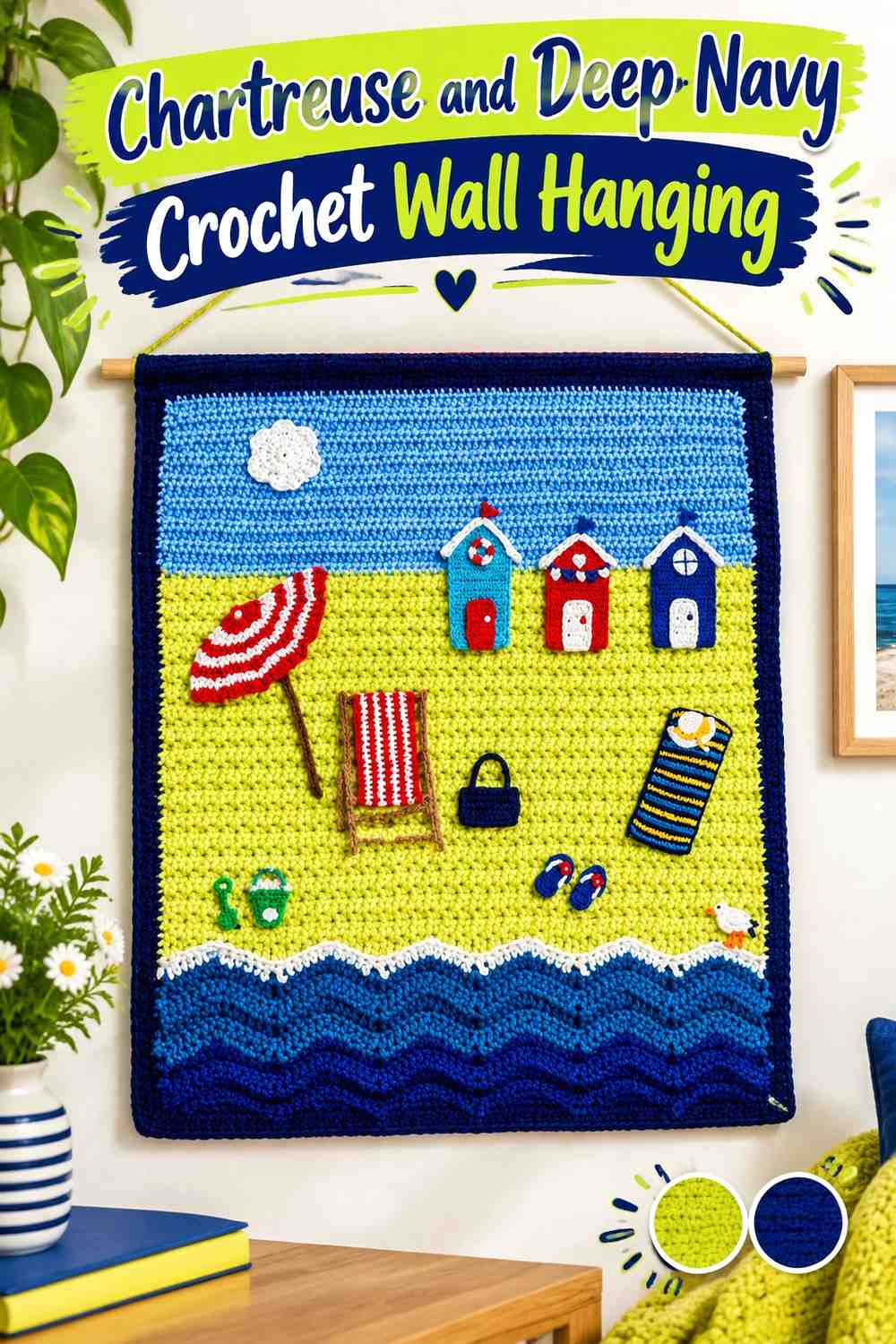
SAVEA wall hanging can use the palette more graphically than most wearables. Deep navy can become the background or negative space, while chartreuse forms recognizable motifs, blocks, waves, or repeated shapes.
Give Chartreuse Clear Shapes on the Deep Navy Crochet Wall Hanging
Chartreuse will usually read more clearly from across a room when it forms substantial shapes rather than scattered isolated stitches.
Plan the broad color areas first so the brightest parts support the composition instead of appearing randomly across the background.
Leave Deep Navy Space Between Chartreuse Crochet Wall-Hanging Motifs
Deep navy can separate multiple chartreuse elements and stop them from merging into one large irregular area.
If the bright motifs already occupy most of the center, retain more navy near the outer edges to preserve a visible frame.
Creator Credit: Kerri’s Crochet
13. Chartreuse And Deep Navy Crochet Skirt
 SAVE
SAVEA skirt offers natural horizontal zones for this palette. Keep the main body chartreuse and use deep navy at the waistband and hem so the darker shade frames the garment from top to bottom.
Let Chartreuse Run Through the Main Crochet Skirt Body
A long uninterrupted chartreuse section preserves the vertical flow of the skirt and gives lace, mesh, or textured repeats enough room to remain visible.
Adding frequent deep navy stripes would create a much stronger horizontal emphasis, so reserve that for a deliberately striped interpretation.
Balance the Deep Navy Crochet Skirt Waistband Against Chartreuse
A wide navy waistband already creates substantial contrast. If you repeat deep navy at the hem, compare the two sections together rather than deciding on each width separately.
A narrower navy hem can echo the waistband without making the lower edge visually heavier.
Creator Credit: Chenda DIY
14. Chartreuse And Deep Navy Crochet Sweater
 SAVE
SAVEMake deep navy the sweater’s main color and use chartreuse on cuffs, neckline ribbing, and selected finishing details. This distributes the bright color around the outer parts of the garment while preserving a dark central body.
Keep Deep Navy Across the Main Crochet Sweater Panels
A navy torso and sleeves create one continuous base. Chartreuse can then appear in relatively small amounts and still remain noticeable.
If texture is a major feature of the sweater, sample it in deep navy first so you can judge how much stitch definition remains visible.
Repeat Chartreuse Around the Deep Navy Crochet Sweater Openings
Chartreuse cuffs create matching accents at both wrists, and a chartreuse neckline connects those accents back to the torso.
Adding chartreuse to the hem completes the outline, but it is optional. Leaving the hem navy keeps the brighter color concentrated around the upper body and sleeves.
Creator Credit: forthefrills
15. Chartreuse And Deep Navy Crochet Poncho
 SAVE
SAVEA poncho provides a broad surface where chartreuse can remain dominant without complicated placement. Deep navy can define the neckline and lower edge, creating boundaries around the bright central fabric.
Give Chartreuse Most of the Crochet Poncho Surface
The wide body benefits from a consistent main color because large draped sections already create movement and folds.
If you introduce deep navy inside the body, use repeated bands or another deliberate pattern rather than isolated changes that interrupt the broad chartreuse field.
Use Deep Navy to Contain the Chartreuse Crochet Poncho Border
A navy neckline creates a dark boundary near the top, while a lower navy border can visually finish a large chartreuse hem.
Remember that even a narrow border travels around a substantial circumference, so it can contribute more navy to the finished poncho than it initially appears to.
Creator Credit: Bag-O-Day Crochet
16. Chartreuse And Deep Navy Crochet Fingerless Gloves
 SAVE
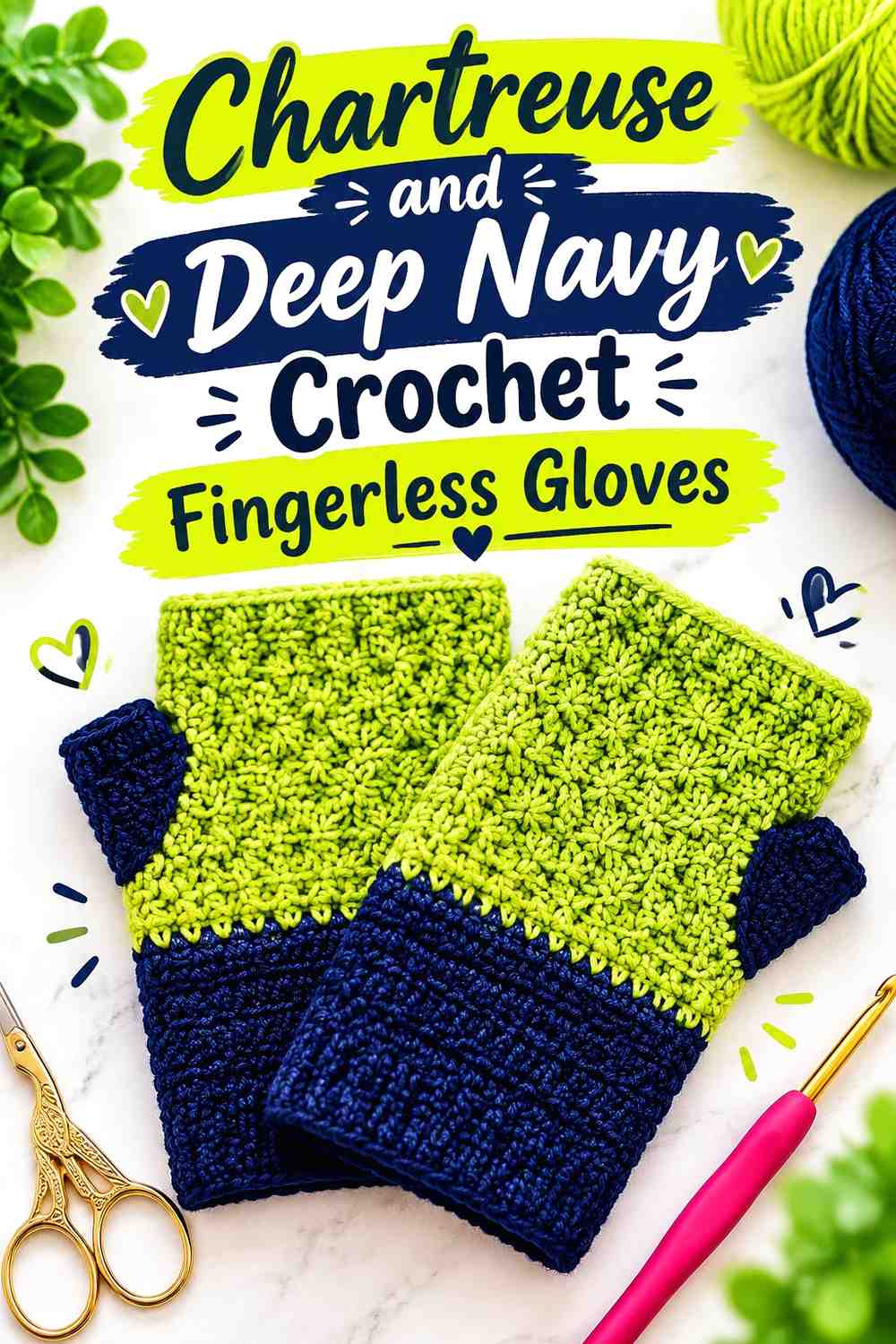
SAVEUse deep navy across the main hand sections and chartreuse at the cuffs. This creates a bright wrist accent while allowing shell stitches or other surface texture to continue through a darker main field.
Let Deep Navy Cover the Main Crochet Fingerless Gloves
Using navy through the hand section creates visual consistency across the pair. It also makes chartreuse cuffs stand out without requiring extra color changes around the fingers.
Try to keep the color placement matched between the two gloves unless asymmetry is intentional.
Make Chartreuse Cuffs Distinct Against Deep Navy Crochet Gloves
The cuff needs enough depth to read as a deliberate block rather than a thin finishing row. At the same time, making it excessively long can shift the pair toward equal color coverage.
If you want another chartreuse repeat, a narrow upper detail can echo the cuff more subtly.
Creator Credit: Hooked by Robin
17. Chartreuse And Deep Navy Crochet Shawl
 SAVE
SAVEA shawl offers long edges where deep navy can frame chartreuse without interrupting the main drape. Keep most of the body chartreuse, then use navy in the final border or in a limited sequence near the outer edge.
Keep Chartreuse Broad Across the Crochet Shawl Body
A large chartreuse field allows open stitches and repeated texture to remain visually continuous. This is particularly useful on a draped accessory, where folds already break the surface into light and shadow.
Frequent navy stripes through the center would create a much more graphic result.
Let Deep Navy Define the Chartreuse Crochet Shawl Edge
A navy outer border can trace the shawl shape and make the perimeter easy to see when worn over a lighter layer.
If you want a wider dark border, consider transitioning through a chartreuse repeat first so the change does not feel abrupt across a large edge.
Creator Credit: Fiber Flux
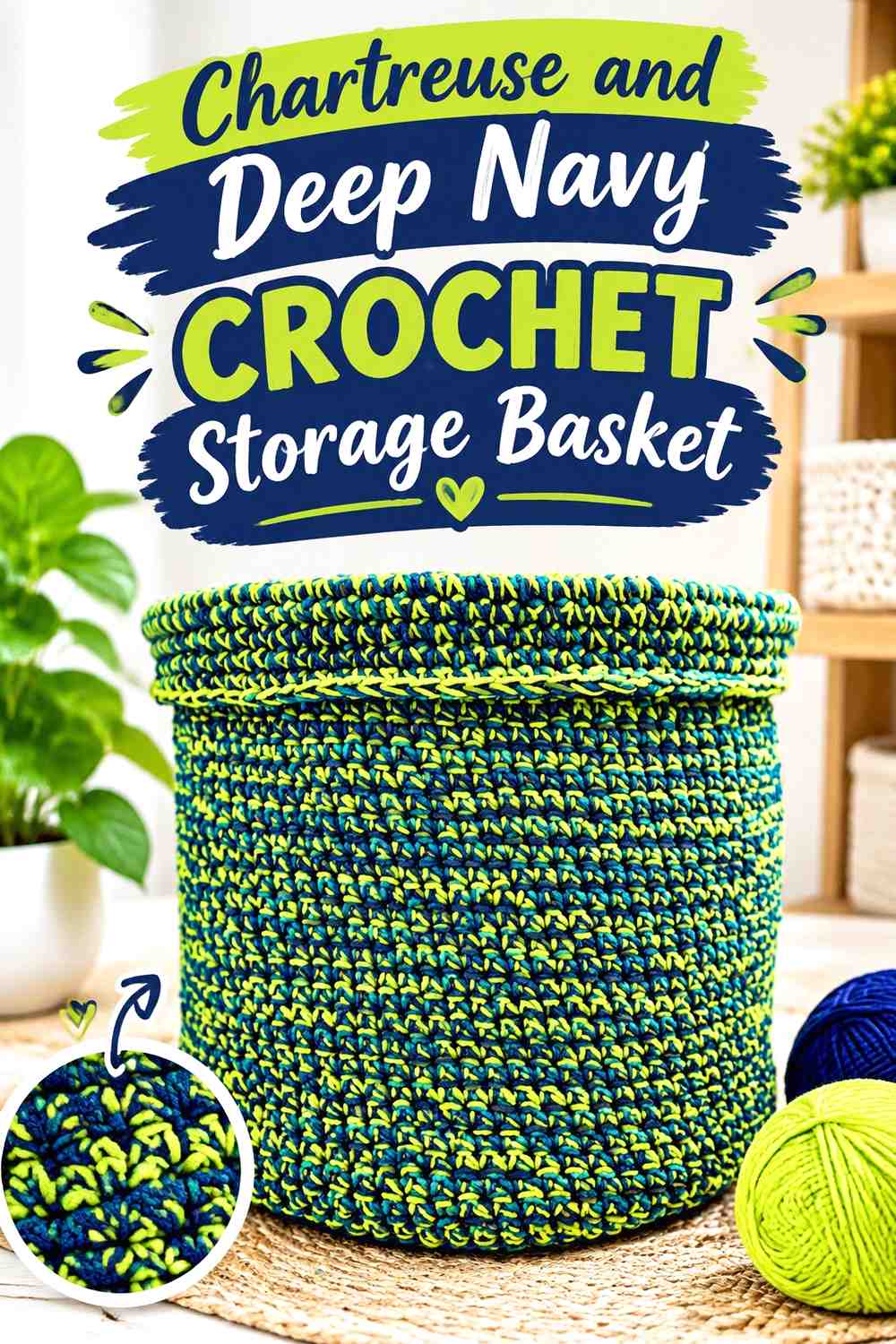
18. Chartreuse And Deep Navy Crochet Storage Basket
 SAVE
SAVEA storage basket can use deep navy where visual weight makes sense: at the base. Transition into chartreuse higher up the sides so the basket becomes brighter toward the opening while retaining a dark foundation.
Put Deep Navy at the Crochet Basket Base Beneath Chartreuse
A navy base visually anchors the basket and gives you a clear point for the palette transition. Extending that dark section slightly up the lower walls can make the change look intentional rather than confined to a surface that is rarely visible.
Use Chartreuse Around the Deep Navy Crochet Basket Opening
Chartreuse across the upper walls and rim keeps the brighter shade visible when the basket is viewed on a shelf or floor.
If handles are part of the design, decide whether they should remain chartreuse and blend with the rim or return to navy and reconnect with the base.
Creator Credit: Crochet With Julie
19. Chartreuse And Deep Navy Crochet Market Bag
 SAVE
SAVEA market bag can place chartreuse across the open body while reserving deep navy for the base, top band, and handles. The darker structural sections then frame the brighter mesh or openwork center.
Let Chartreuse Fill the Main Crochet Market-Bag Body
Chartreuse across the openwork keeps the center bright without requiring complicated color changes inside a stretchy or meshed surface.
Because the contents may remain partly visible through open stitches, evaluate the palette with something inside the bag as well as when it is empty.
Use Deep Navy for Chartreuse Crochet Market-Bag Handles and Base
Navy handles visually connect to a dark base and create a strong outer structure around the chartreuse center.
Repeating navy at the top edge can complete that framework, but keep the band proportional so it does not reduce the chartreuse body to a narrow middle strip.
Creator Credit: The Crochet Crowd
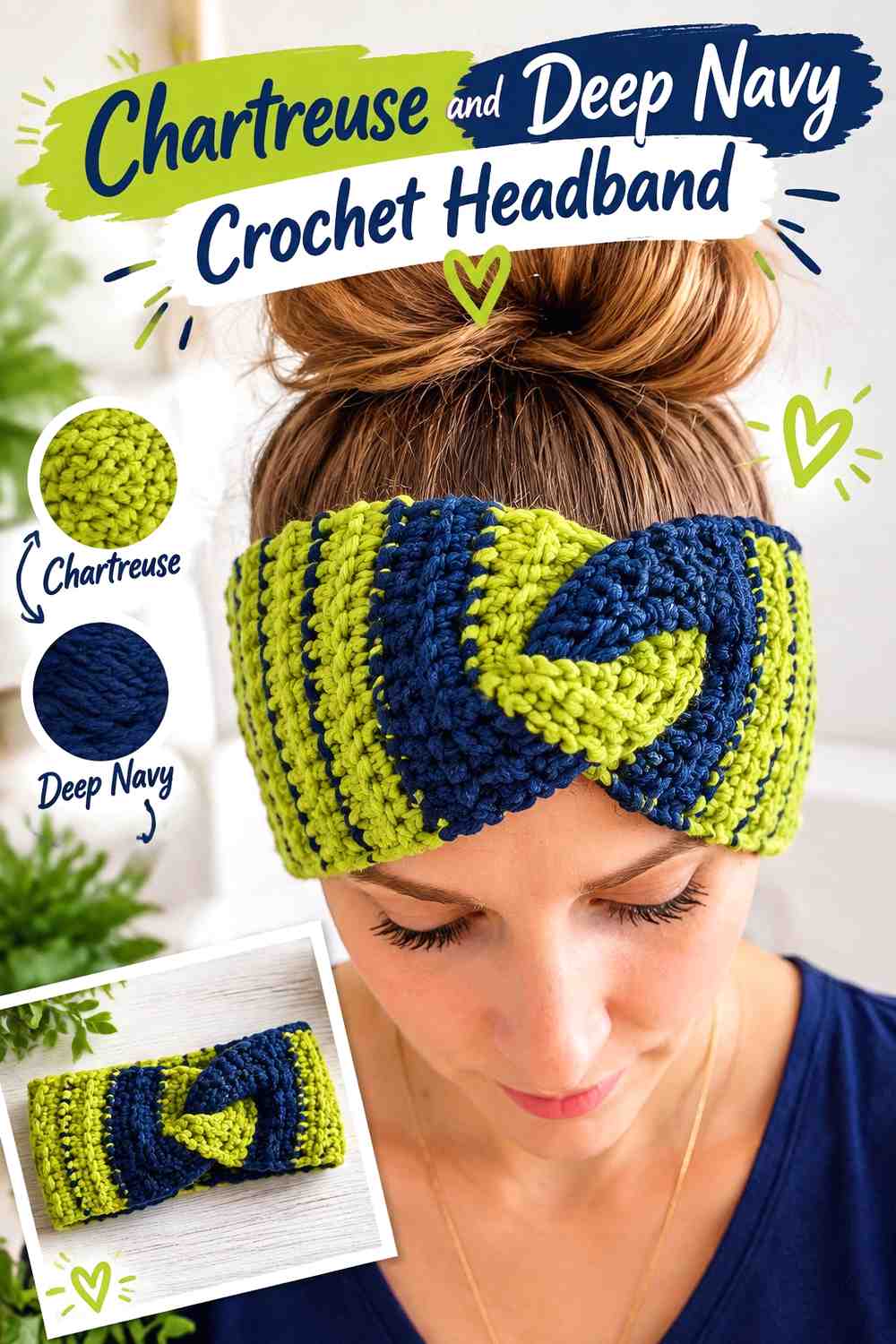
20. Chartreuse And Deep Navy Crochet Headband
 SAVE
SAVEA headband is compact, so small changes in color proportion have a large effect. Use deep navy across most of the band and place chartreuse near the twist, center overlap, or another focal section rather than alternating many tiny stripes.
Keep Deep Navy Continuous Across Most of the Crochet Headband
A mostly navy band gives ribbing or another repeated stitch enough uninterrupted length to stay visible.
It also provides a stable background for one chartreuse section, which is often more effective on a narrow accessory than several disconnected bright patches.
Place Chartreuse at the Deep Navy Crochet Headband Focal Point
If the headband has a twist or overlapping center, that area is a natural place for chartreuse because the construction already draws attention there.
Keep the chartreuse section large enough to look deliberate but short enough that the navy band still connects clearly on both sides.
Creator Credit: B.Hooked Crochet & Knitting
Comparing the Chartreuse and Deep Navy Crochet Ideas
For the brightest finished projects, the cardigan, bucket hat, beanie, tank top, frog, skirt, poncho, shawl, and market bag allow chartreuse to cover most of the visible surface. Deep navy mainly provides borders, straps, cuffs, brims, or other structural definition.
The scarf, vest, crossbody bag, wall hanging, sweater, fingerless gloves, basket, and headband give deep navy more visual territory. These are useful directions when you want chartreuse to remain noticeable without making the whole project bright.
The granny-square tote, blanket, and flower coasters give the two colors more opportunity to repeat across the surface. These projects need the most advance planning because changing motif rounds, stripe widths, or border depth can quickly shift the dominant color.
Conclusion
Chartreuse and deep navy can move from bright and energetic to dark and graphic simply by changing which shade gets the largest visual area.
If you want chartreuse to dominate, use it across broad garment panels, hat crowns, shawl bodies, skirt sections, or openwork bag surfaces and reserve deep navy for structural edges. If you prefer a darker project, start with deep navy and use chartreuse where the eye naturally expects emphasis: cuffs, motif centers, necklines, focal panels, and trims.
Motif projects benefit from deep navy as a separator because the darker shade can keep repeated chartreuse sections distinct. Large flat projects such as blankets and wall hangings allow more experimentation with proportion, negative space, and stripe width.
Before committing to a large project, compare the actual yarns in the stitch texture you plan to use. The creator tutorials can guide the construction, while the chartreuse-and-deep-navy placements can be adapted independently to achieve the color balance you want.
Frequently Asked Questions
Should Chartreuse or Deep Navy Be the Main Crochet Color?
Either can lead. Choose chartreuse when you want the project to look predominantly bright and use deep navy for borders, cuffs, joins, or straps. Choose deep navy when you want a darker overall piece with concentrated chartreuse focal points.
Does Chartreuse Have Enough Contrast With Deep Navy in Crochet?
The combination can provide substantial light-and-dark separation, but individual yarn shades vary. Put the actual yarns together and make a small sample before relying on the contrast for lettering, tiny motifs, or detailed colorwork. Viewing a photo in grayscale can provide another useful contrast check.
Where Should Deep Navy Go on a Chartreuse Crochet Garment?
Start with natural structural boundaries such as cuffs, necklines, waistbands, hems, front bands, straps, and armhole edging. You do not need navy on every edge. Selecting a few connected areas usually creates a clearer hierarchy.
How Do I Keep Chartreuse and Deep Navy Crochet From Looking Too Striped?
Avoid dividing the colors into equal narrow bands unless stripes are the intended effect. Give one color larger uninterrupted areas and use the second at borders, joins, motifs, or selected blocks.
Can I Replace Chartreuse With a Softer Green?
Yes. If you want to preserve a similar relationship with deep navy, choose a green that remains clearly brighter or lighter than the navy. Moving toward olive, forest green, or another deep green will reduce the original bright-versus-dark contrast.
Can I Replace Deep Navy With a Different Dark Blue?
Yes. Preserve the dark supporting role. A dark indigo, midnight blue, or another deep blue can work if it remains clearly separated from chartreuse. A brighter royal blue will create a more saturated two-color result and may compete more strongly with the chartreuse.
Can I Add a Third Color to Chartreuse and Deep Navy Crochet?
Yes, but give it a specific job. A small neutral can separate detailed motifs, soften a transition, or create an additional outline. Avoid automatically distributing all three colors equally if you want chartreuse and deep navy to remain the recognizable main palette.