
Moss Green and Biscuit give a crochet cable neck hood a useful balance between muted depth and warm lightness. Moss Green can ground broad hood panels and make the accessory feel cohesive from the neck upward, while Biscuit can separate raised cables, frame the face opening, or lighten the neck section without introducing a stark white contrast.
A neck hood has several color zones packed into a relatively small wearable: the hood crown, side panels, face opening, neck tube, lower edge, and any cable panel running between them. That makes color placement more important than simply splitting the yarn evenly. A narrow Biscuit face border may influence the finished look more than a much larger Biscuit section hidden toward the back of the hood.
Cable visibility also deserves attention. Raised crochet stitches create their own shadows, so the best Moss Green and Biscuit arrangement is one that keeps the cable shape readable in the actual yarns you choose.
The supporting tutorials include direct cabled hooded-cowl constructions as well as hooded cowls, hooded scarves, snoods, and hooded neck warmers that provide compatible shaping references. The Moss Green and Biscuit cable treatments below are independent editorial adaptations rather than claims about the creators’ original color choices.
Quick List
- Moss Green Crochet Cable Neck Hood With Biscuit Center Braid
- Biscuit Crochet Cable Neck Hood With Moss Green Center Braid
- Moss Green Hood Panels With Biscuit Cable Neckband
- Biscuit Hood Panels With Moss Green Cable Neckband
- Moss Green Crochet Cable Neck Hood With Biscuit Face Frame
- Biscuit Crochet Cable Neck Hood With Moss Green Face Frame
- Moss Green Side Cables and Biscuit Center Hood
- Biscuit Side Cables and Moss Green Center Hood
- Moss Green Diamond Cable and Biscuit Hood Panel
- Biscuit Diamond Cable and Moss Green Hood Panel
- Moss Green Hood With Biscuit Cable Crown
- Biscuit Hood With Moss Green Cable Crown
- Moss Green Crochet Cable Neck Hood With Biscuit Lower Cowl
- Biscuit Crochet Cable Neck Hood With Moss Green Lower Cowl
- Moss Green Cable Hood With Biscuit Closure Panel
- Biscuit Cable Hood With Moss Green Closure Panel
- Moss Green and Biscuit Alternating-Cable Neck Hood
- Moss Green and Biscuit Split-Panel Crochet Cable Neck Hood
- Moss Green Cable Neck Hood With Biscuit Edges
Check Moss Green and Biscuit Contrast Inside the Cable Texture
Do not judge the palette only from the yarn balls. Moss Green and Biscuit may appear clearly separated when flat, but raised cable crossings introduce shadows that change how light and dark areas interact.
Work enough of the intended cable to see a complete crossing or braided section. If a Moss Green cable becomes hard to distinguish, give it a broader Biscuit background rather than inserting small light stitches inside every crossing. If Biscuit carries the cable, keep enough Moss Green beside it to preserve the outline.
Decide Whether Moss Green or Biscuit Should Control the Hood
The hood itself is the largest visible color area. A Moss Green hood with Biscuit neck details will still read primarily green, while a Biscuit hood with a concentrated Moss Green cable can feel much lighter even though the darker color is the focal point.
Choose the dominant hood color before assigning the neckband and face border. Those finishing areas can either reinforce the main shade or deliberately rebalance it.
Connect Moss Green and Biscuit From the Neck to the Face Opening
A neck hood looks more deliberate when the second color appears in more than one meaningful location. For example, a Biscuit neckband can connect naturally to Biscuit face edging, while a Moss Green center cable can continue visually from the neck into the hood crown.
Avoid adding an unrelated color change only because one section ends. With two strong palette roles already available, repetition usually creates a cleaner result than introducing a third shade.
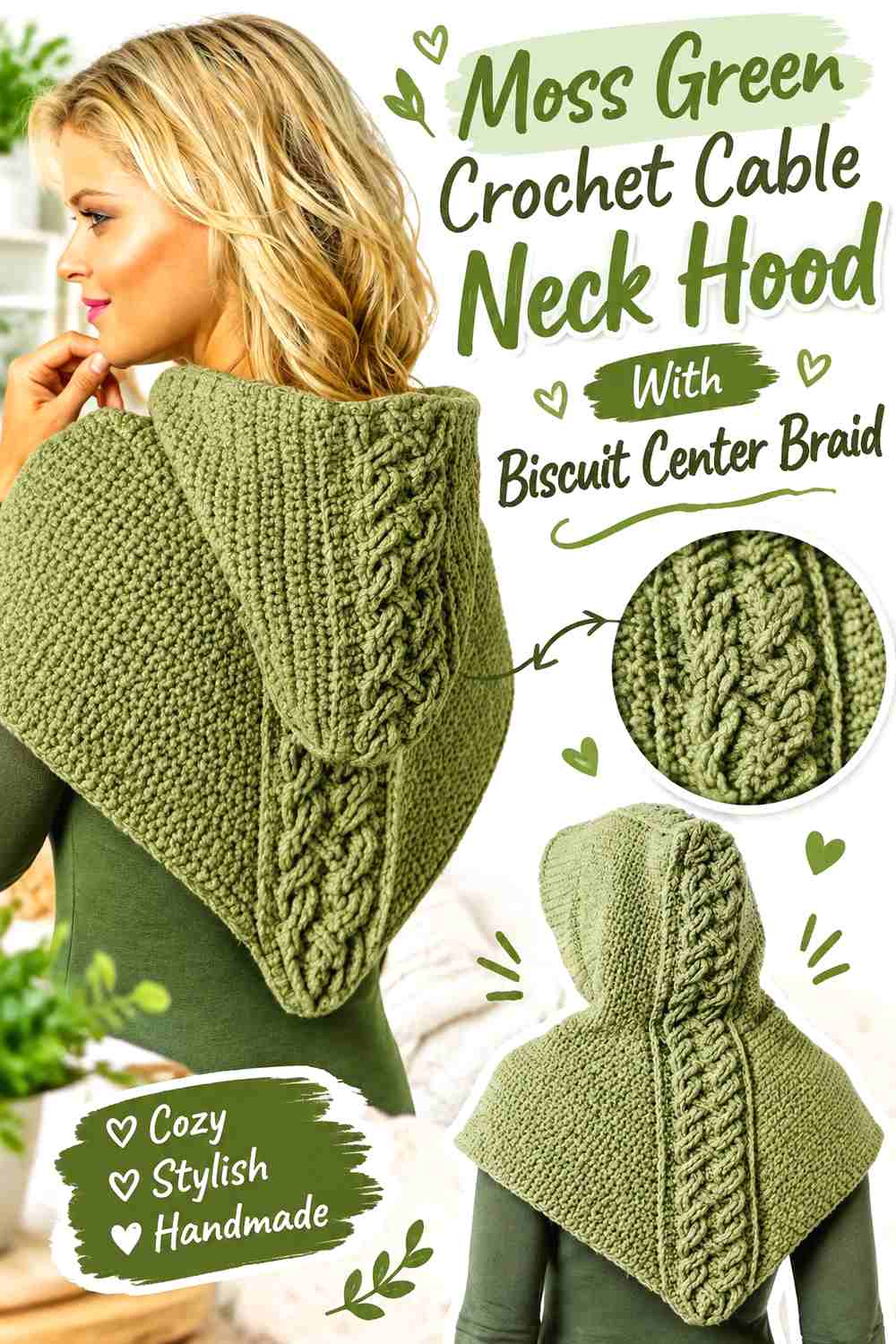
1. Moss Green Crochet Cable Neck Hood With Biscuit Center Braid
 SAVE
Let Moss Green cover most of the hood and neck area, then place one substantial Biscuit braid through the center. The lighter cable becomes easy to locate against the muted green without requiring Biscuit to interrupt every panel.
Biscuit Center Cables Need Enough Width Against Moss Green
Give the Biscuit braid enough surface area for both its color and raised crossings to remain visible. A very narrow pale cable may read more like a stripe than a textured focal feature.
Leave uninterrupted Moss Green beside it so the contrast remains clear.
Moss Green Should Continue Around the Biscuit Neck Hood Edges
Keep Moss Green at the face opening or lower edge when you want the dominant color to contain the lighter center cable. This prevents Biscuit from gradually becoming the structural color throughout the accessory.
Creator Credit: Marly Bird
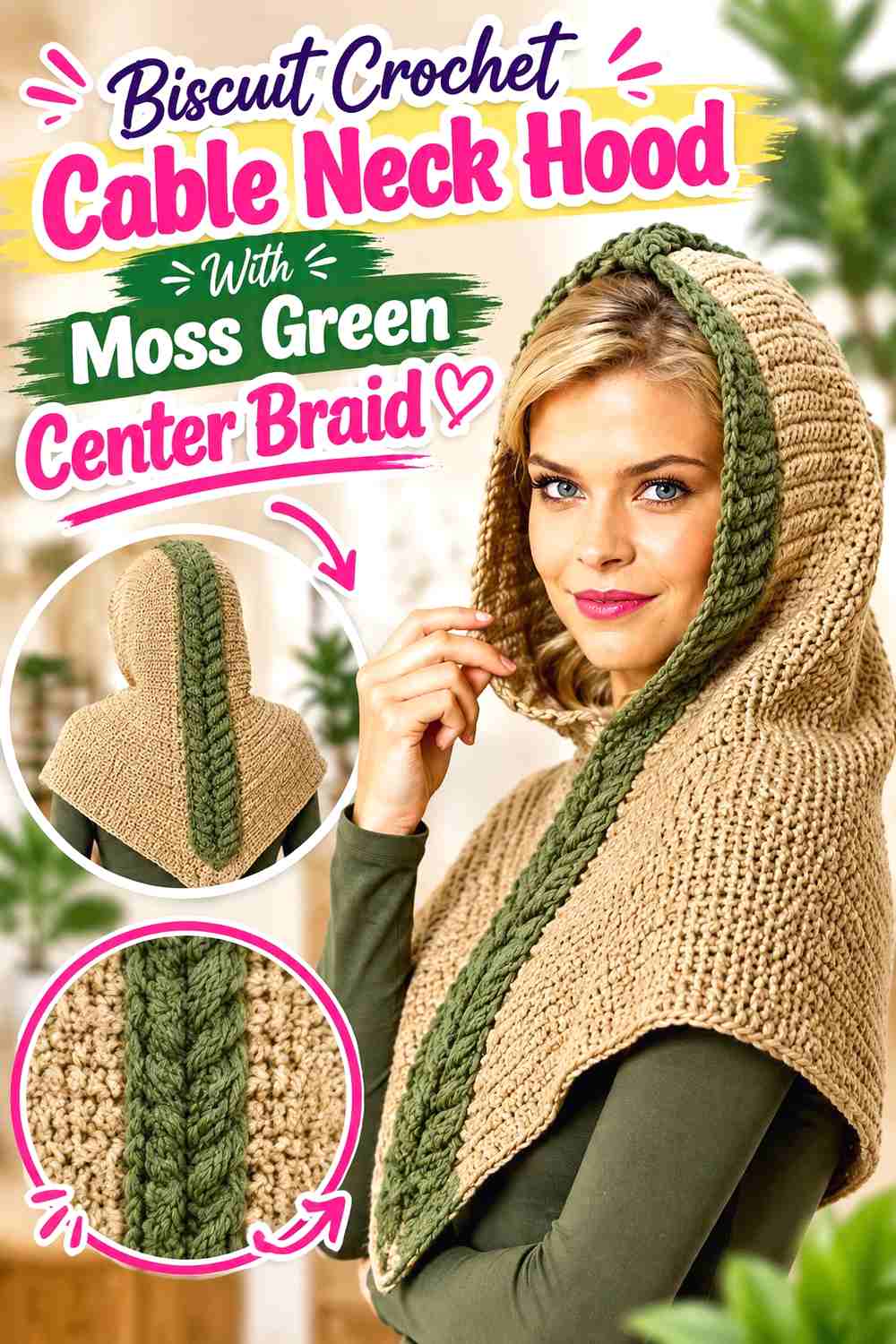
2. Biscuit Crochet Cable Neck Hood With Moss Green Center Braid
 SAVE
Reverse the hierarchy by using Biscuit across most of the hood and neck tube while Moss Green carries the principal center cable. The deeper green becomes a focused vertical feature rather than a broad background.
Moss Green Creates a Strong Cable Focus Inside Biscuit
Keep Moss Green concentrated through one substantial braided section. Scattering many small green accents around the Biscuit hood can reduce the impact of the main cable.
Biscuit Gives Moss Green Cable Crossings Clear Space
Allow Biscuit to remain comparatively quiet around the cable. The lighter field can make the edges and shadows of the Moss Green texture easier to distinguish.
Creator Credit: The Crochet Crowd
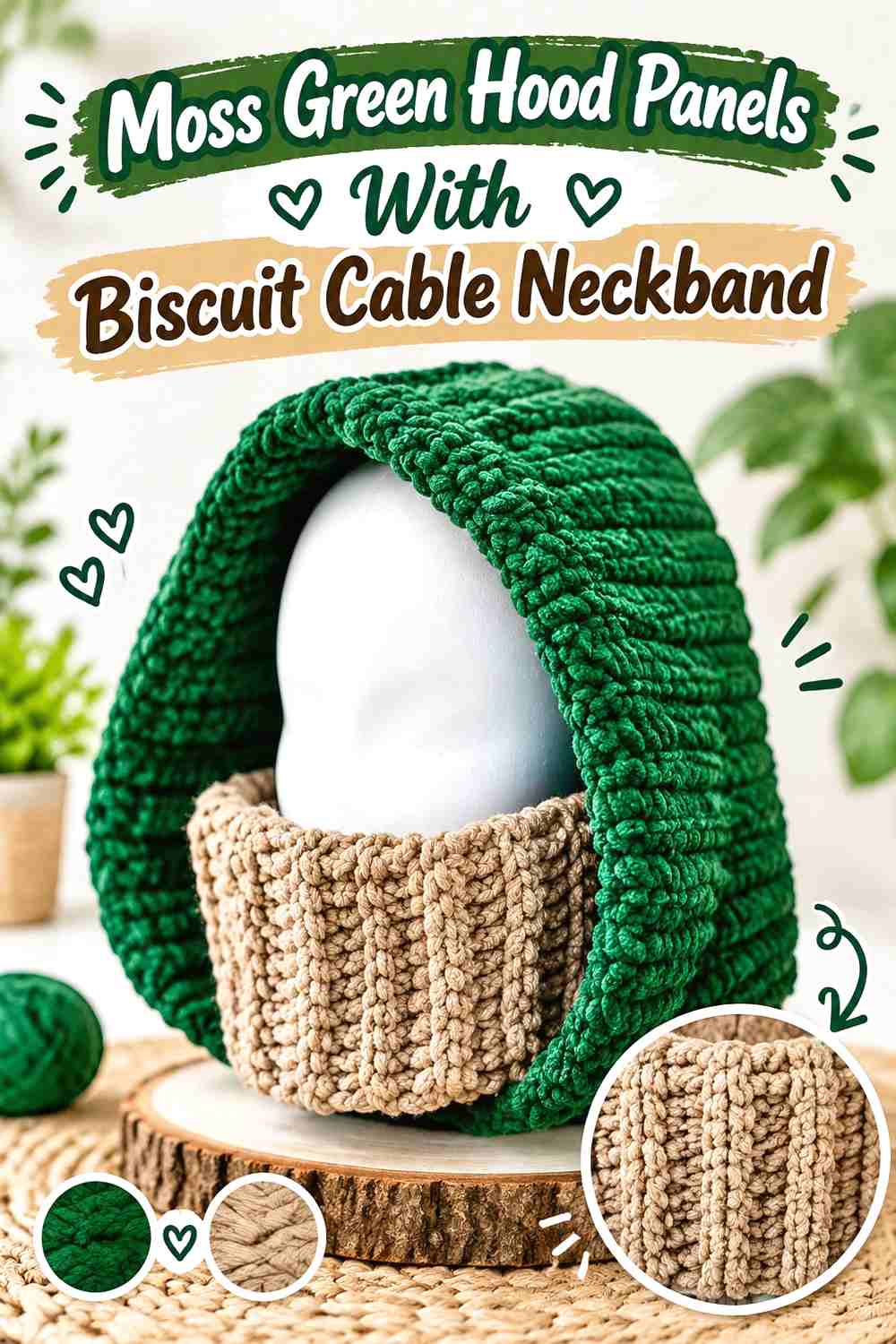
3. Moss Green Hood Panels With Biscuit Cable Neckband
 SAVE
Use Moss Green for the large hood panels and move Biscuit into the neck section. Adding cable texture specifically to the Biscuit neckband gives the lighter shade a structural job instead of using it only as trim.
Biscuit Cable Neckbands Can Separate the Moss Green Hood From Clothing
A lighter textured neck area creates a visible transition beneath the Moss Green hood. Keep the Biscuit section broad enough for the cable relief to register rather than squeezing the texture into a narrow finishing strip.
Moss Green Should Flow Cleanly Above the Biscuit Neckband
Once the neck section ends, let Moss Green continue confidently through the hood. Repeated Biscuit stripes inside the hood would make this idea less distinct from an evenly two-color design.
Creator Credit: Diving Ducks Crochet
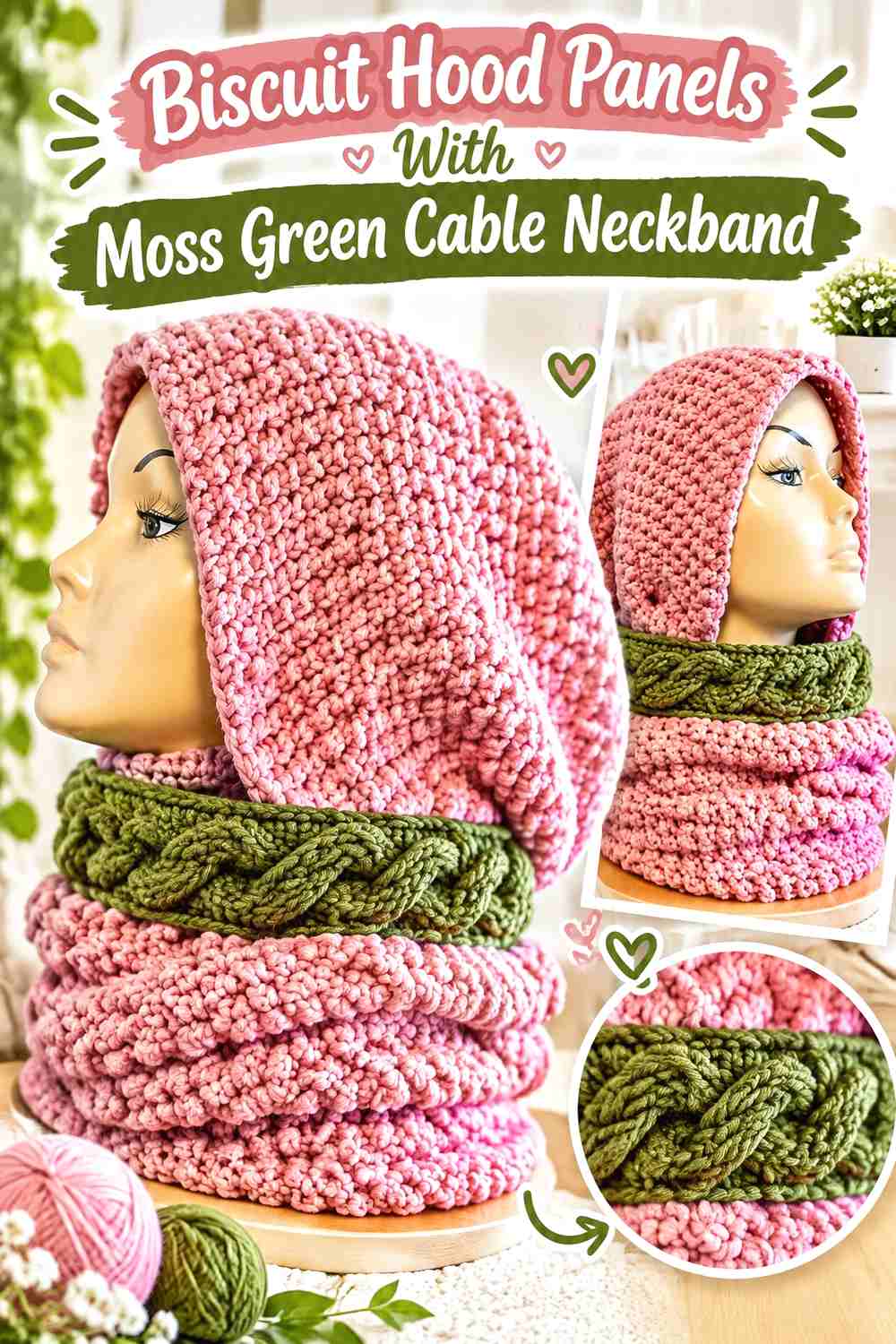
4. Biscuit Hood Panels With Moss Green Cable Neckband
 SAVE
A Biscuit hood keeps the upper accessory light, while a Moss Green cable band anchors the neck. Because the darker area sits below the face, it can define the transition from hood to cowl without covering the entire project.
Moss Green Cable Texture Can Ground a Biscuit Hood
Use a substantial Moss Green neck section rather than a single narrow row. Enough green surface is needed for raised cable shadows to remain readable.
Biscuit Should Stay Dominant Above the Moss Green Neck
Keep the hood crown and side panels mainly Biscuit if the lighter color should remain the first thing noticed. A small Moss Green face detail can connect to the neckband without changing the overall hierarchy.
Creator Credit: Hobby Crochet
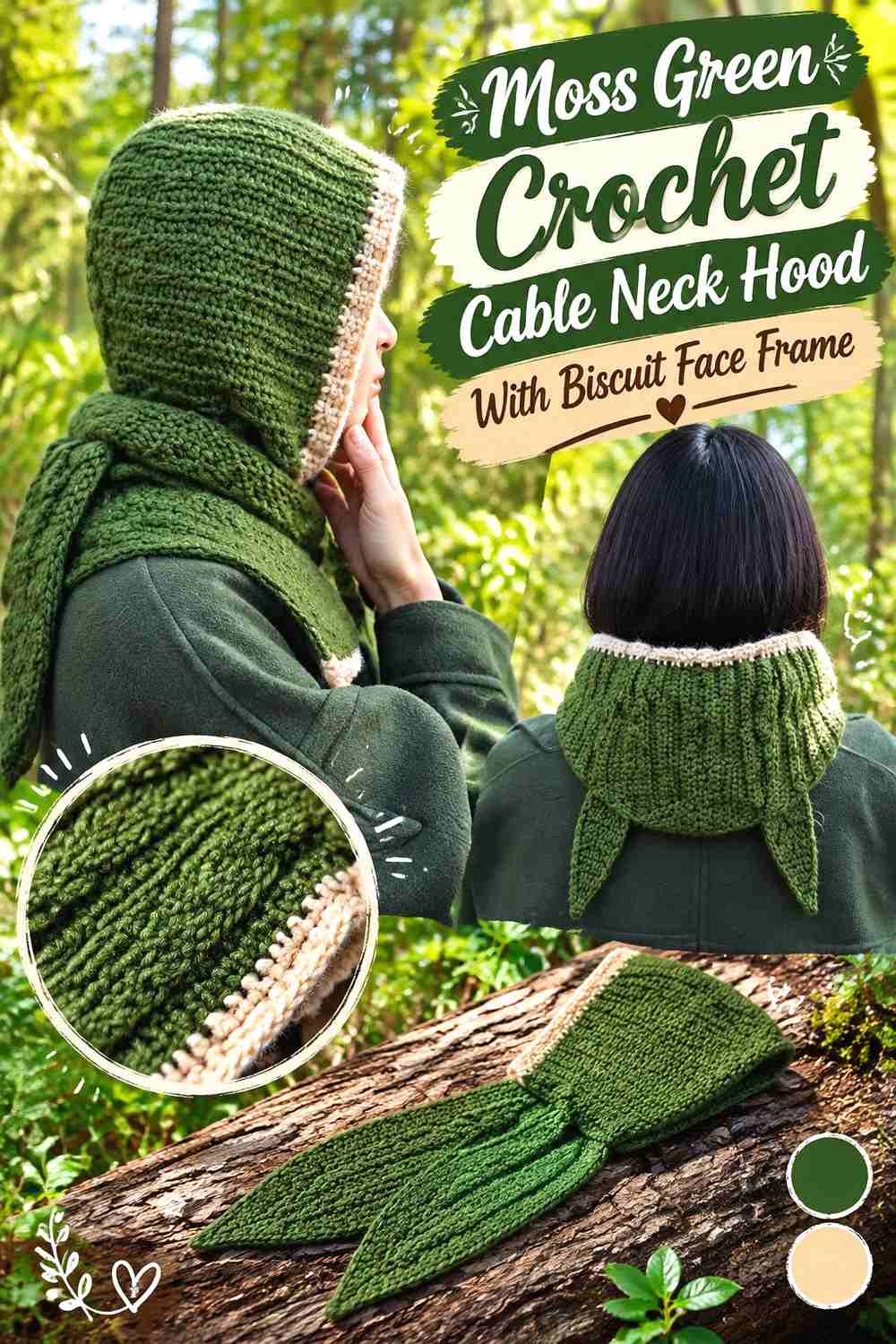
5. Moss Green Crochet Cable Neck Hood With Biscuit Face Frame
 SAVE
Keep the cables and main hood body Moss Green, then use Biscuit around the face opening. The light border outlines the hood silhouette while leaving the main raised texture uninterrupted.
Biscuit Can Clarify the Moss Green Face Opening
Repeat Biscuit evenly around the visible hood edge. Because this border surrounds the face, even a relatively narrow section can have substantial visual influence.
Moss Green Cables Should Stop Cleanly Before Biscuit Edging
Avoid squeezing complicated cable crossings directly into a narrow Biscuit frame. Let the Moss Green cable complete before the border so both details remain legible.
Creator Credit: ABoC Studio
6. Biscuit Crochet Cable Neck Hood With Moss Green Face Frame
 SAVE
This version uses Biscuit for the broader textured hood while Moss Green outlines the face. The darker opening gives the pale body definition and creates a clear visual boundary around the hood.
Moss Green Face Edging Can Contain a Biscuit Cable Hood
Use Moss Green continuously around the opening rather than breaking it into isolated accents. The uninterrupted frame helps define the hood shape against a light cable surface.
Biscuit Cable Panels Need Space Beside Moss Green
Leave enough Biscuit between the main cables and dark face edge. That gap prevents the two strong structural features from visually colliding.
Creator Credit: Life With Lisa 343
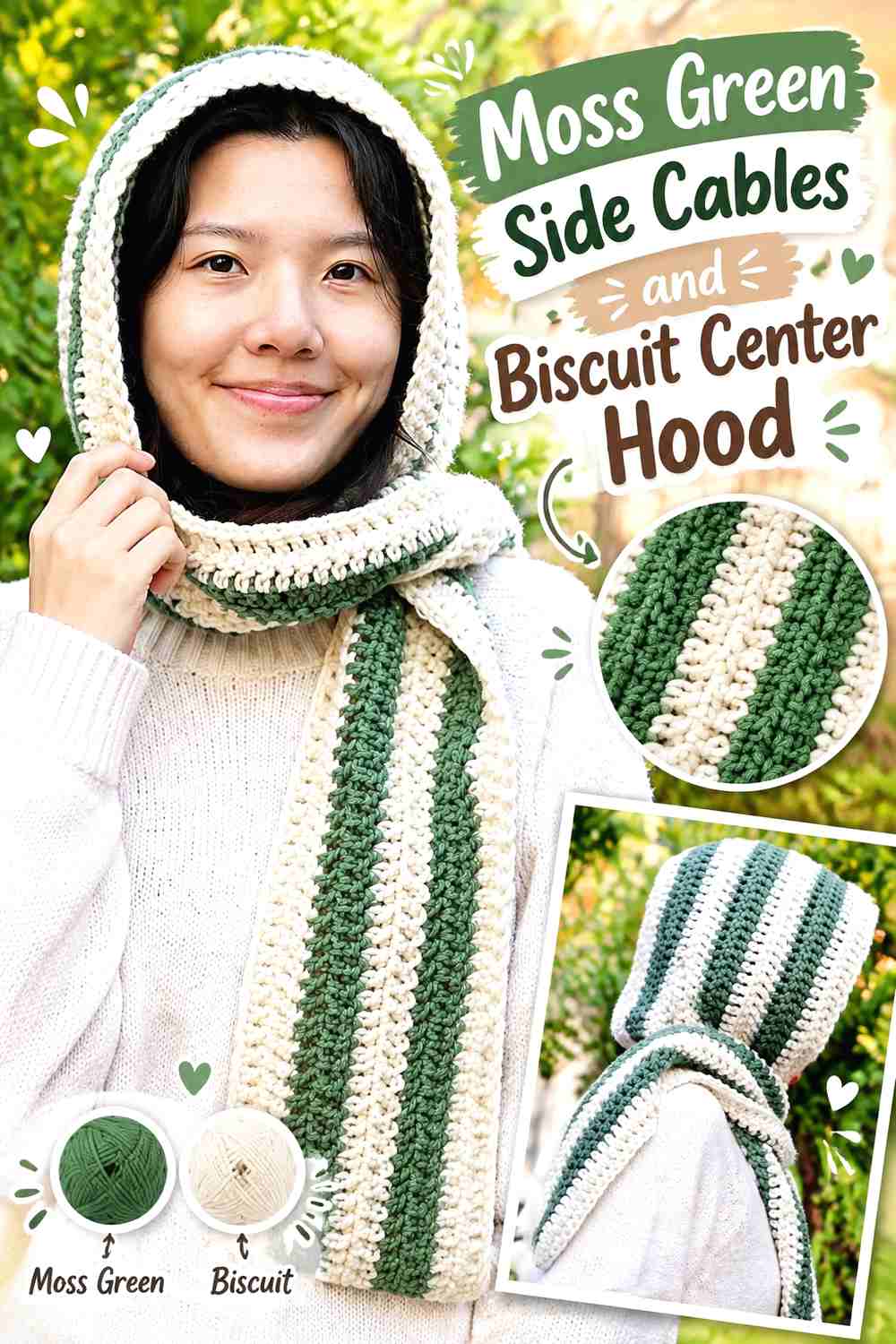
7. Moss Green Side Cables and Biscuit Center Hood
 SAVE
Place Moss Green cable columns on either side of a quieter Biscuit center panel. The darker raised sections frame the face area without filling the whole hood with dense texture.
Moss Green Side Cables Should Balance the Biscuit Center
Keep the cable placement reasonably related on both sides when symmetry is intended. Strong green columns can make unequal spacing around the Biscuit center especially noticeable.
Biscuit Can Give Moss Green Cables a Visual Pause
Use a broad Biscuit middle section rather than filling it with equally strong texture. The quieter center lets the green cable columns retain separate identities.
Creator Credit: VivCrochets
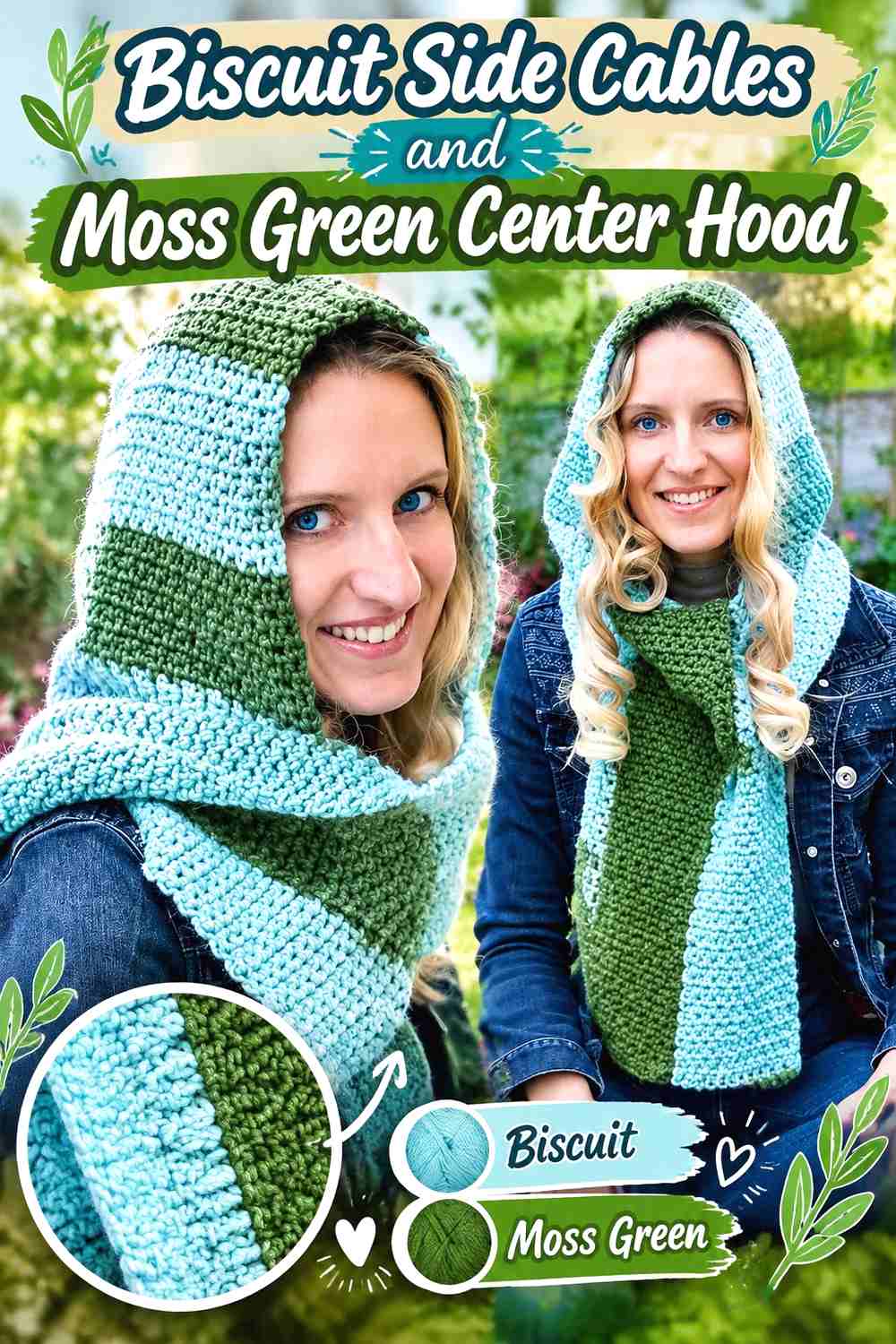
8. Biscuit Side Cables and Moss Green Center Hood
 SAVE
Reverse the previous layout with Moss Green occupying the broad middle section and Biscuit carrying the side cables. The hood remains green-led, but the light raised columns keep the side structure visible.
Biscuit Side Cables Need Clear Moss Green Separation
Give each Biscuit cable enough Moss Green around it for the outline to remain readable. If the pale sections become too broad, they can merge visually with the face border or neckband.
Moss Green Should Remain Broad Between Biscuit Cables
Preserve a substantial center panel so Moss Green remains the dominant hood color. This broad field also gives the two lighter side cables a common background.
Creator Credit: naztazia
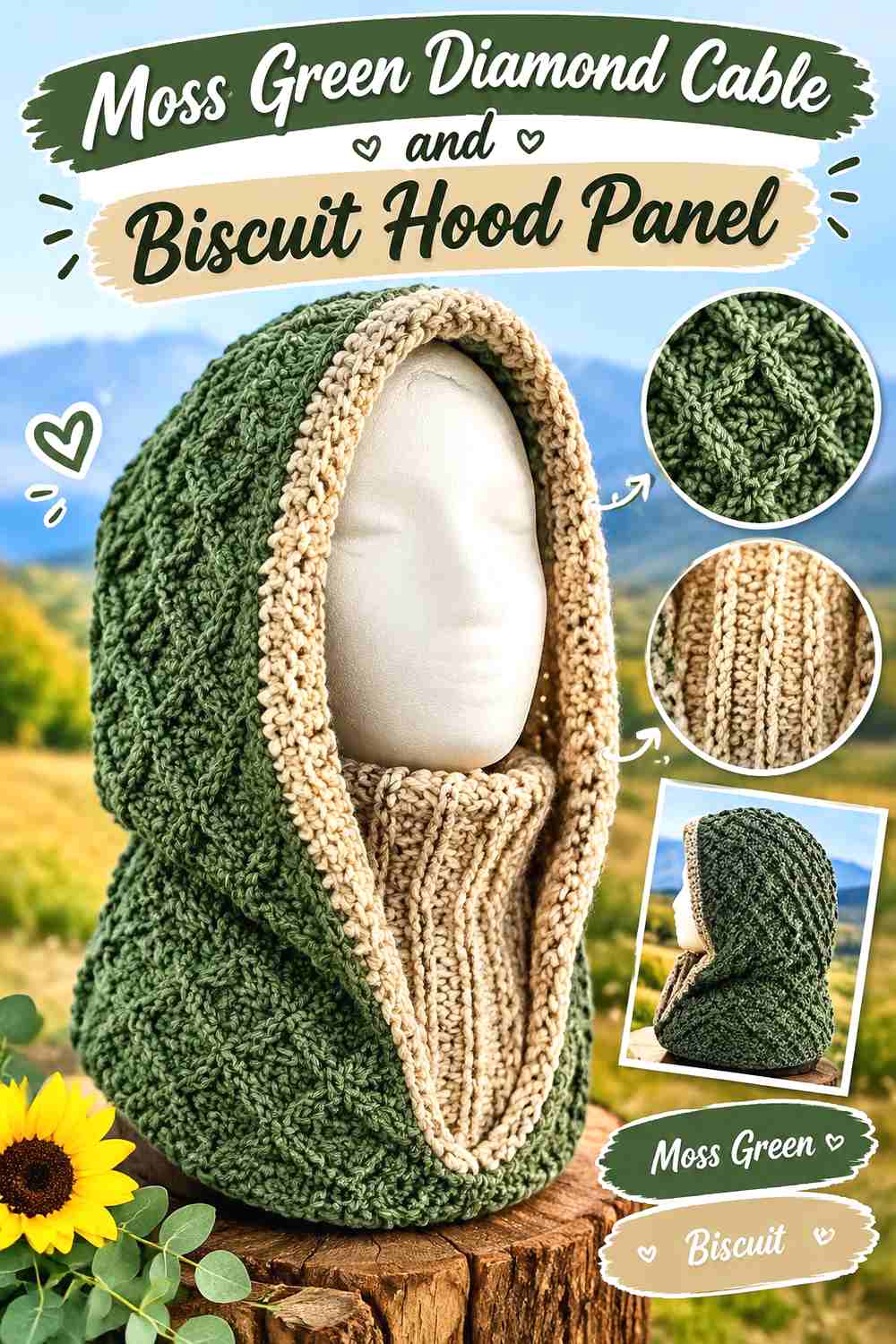
9. Moss Green Diamond Cable and Biscuit Hood Panel
 SAVE
Use Moss Green for repeated diamond or crossing-cable motifs and Biscuit for the surrounding hood field. The lighter background helps separate individual cable units rather than letting them merge into one dense surface.
Biscuit Space Helps Moss Green Diamond Cables Stay Distinct
Leave enough Biscuit between neighboring green motifs for their boundaries to remain visible. Narrow gaps can cause several cable units to read as one dark textured block.
Moss Green Diamond Cables Should Repeat Through the Biscuit Hood
Keep the scale and placement consistent enough to create an intentional rhythm from the neck upward. One isolated diamond can look disconnected unless it is deliberately the only focal motif.
Creator Credit: Lucky Platypus Crochet
10. Biscuit Diamond Cable and Moss Green Hood Panel
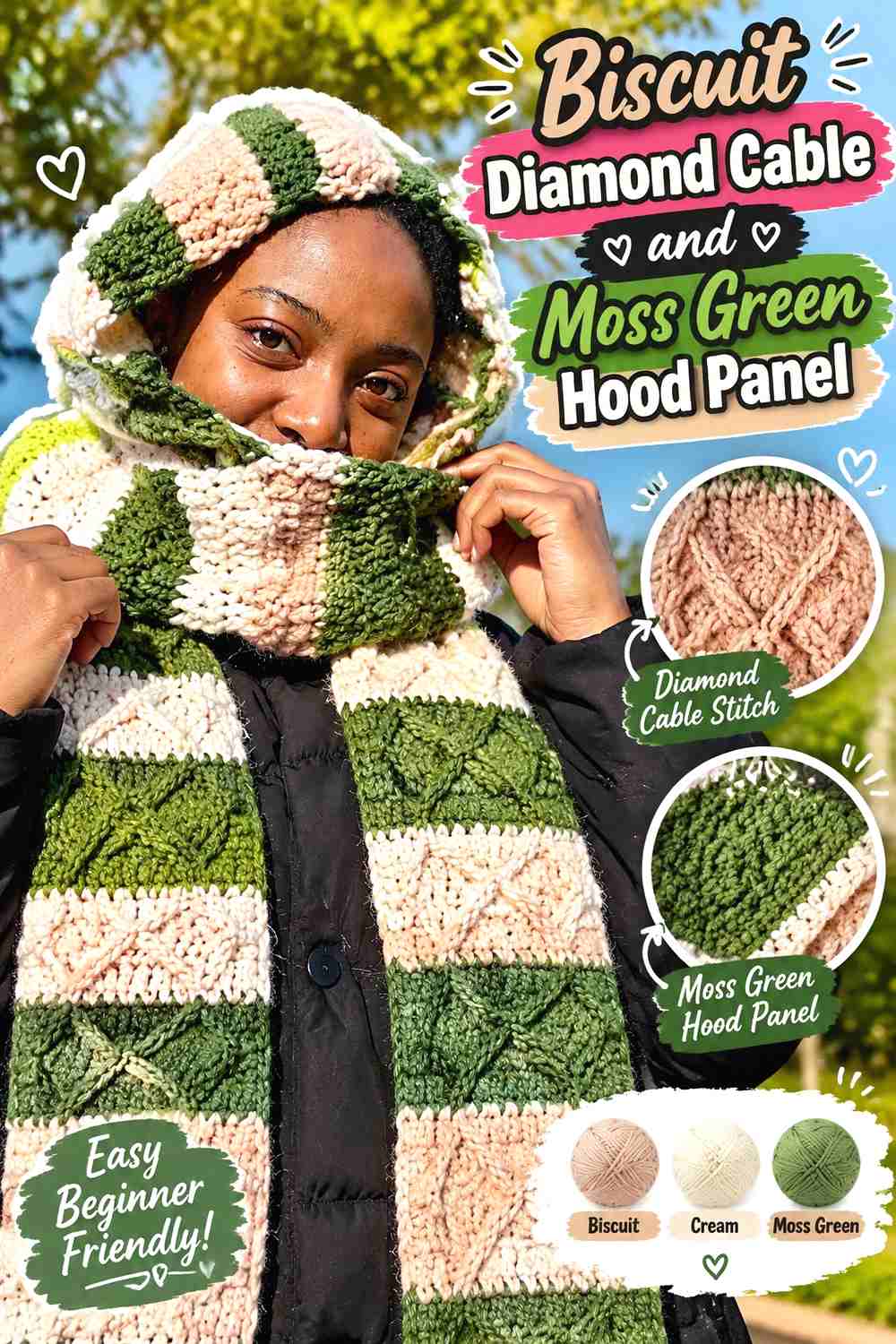 SAVE
Place Biscuit inside the raised diamond motifs and use Moss Green around them. This makes the cables lighter than the surrounding hood and gives the darker color responsibility for connecting the repeated shapes.
Biscuit Diamond Cables Need Moss Green Between Each Motif
Preserve visible green around the light cable units. When several Biscuit diamonds touch or nearly touch, they can begin to resemble one pale panel rather than repeated texture.
Moss Green Can Connect Biscuit Cables From Hood to Neck
Continue Moss Green through the flatter areas and neck section so the dominant shade forms one continuous framework around the lighter texture.
Creator Credit: kiara’s hooks
11. Moss Green Hood With Biscuit Cable Crown
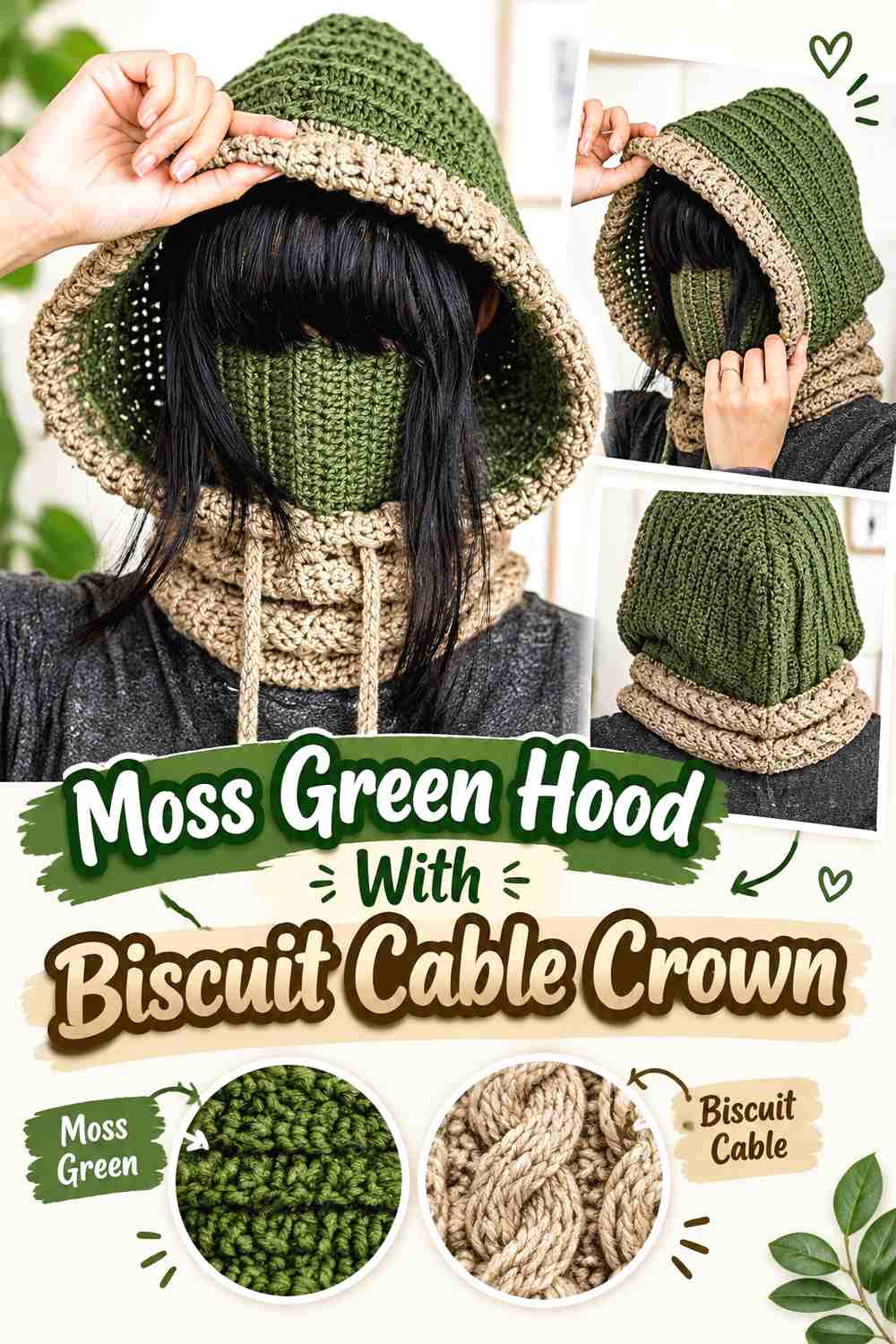 SAVE
Concentrate Biscuit cable work over the crown while leaving the side panels and neck Moss Green. The lighter texture draws attention upward without requiring the entire hood to be two-color.
Biscuit Crown Cables Should Connect Naturally Into Moss Green
Keep the transition between the crown cable and green side panels clean. A narrow Moss Green boundary around the cable can make the top panel look deliberately inset.
Moss Green Side Panels Can Keep the Biscuit Crown From Taking Over
Allow Moss Green to remain broad around the ears, lower hood, and neck. Those areas preserve the darker overall direction even though Biscuit occupies the highest focal point.
Creator Credit: TCDDIY
12. Biscuit Hood With Moss Green Cable Crown
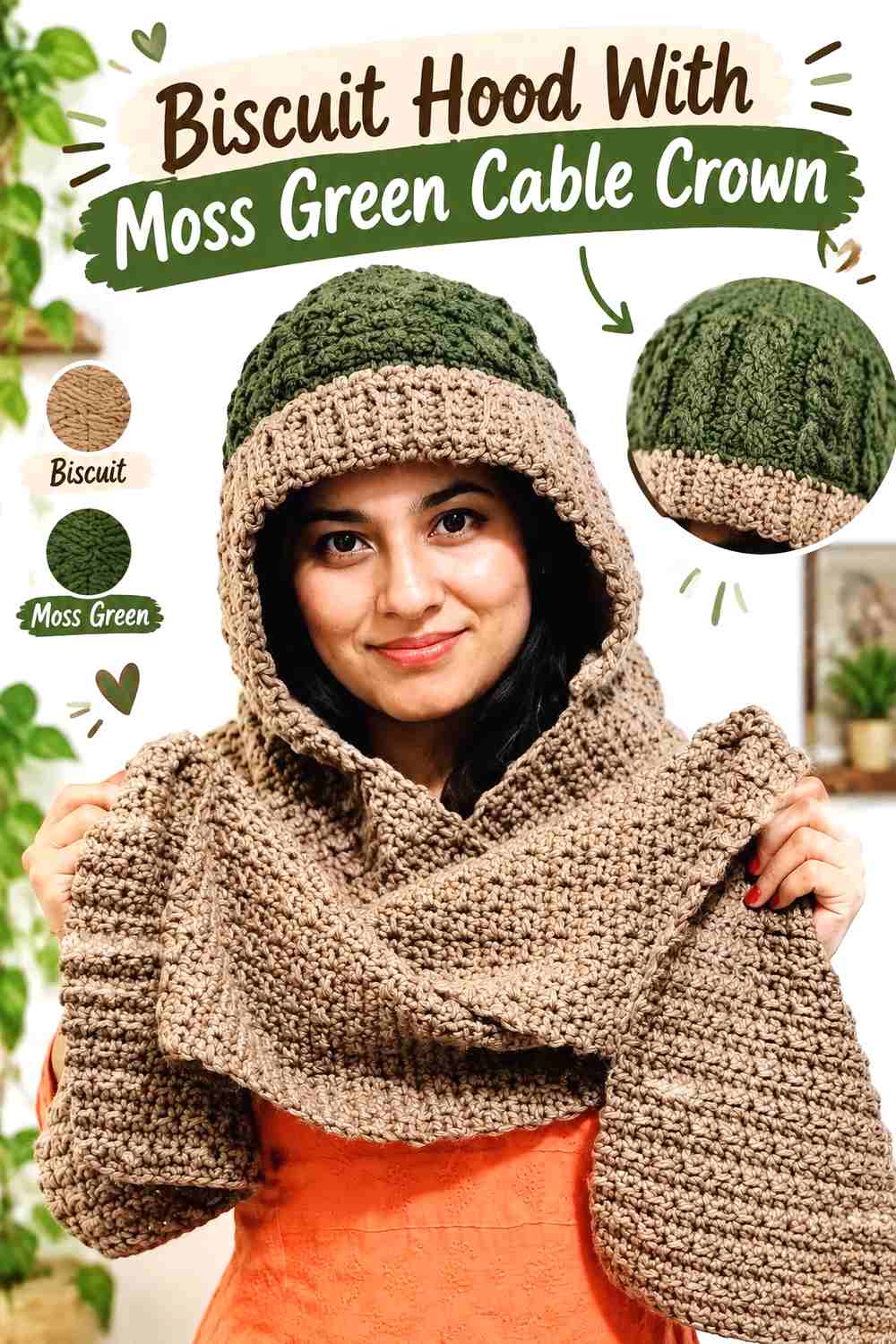 SAVE
A mostly Biscuit hood becomes more grounded when Moss Green runs over the crown in one defined cable panel. Because the green sits at the top of the accessory, it remains easy to notice even without covering the sides.
Moss Green Crown Cables Need Enough Biscuit Around Them
Leave pale space on both sides of the cable panel so its raised outline stays distinct. Expanding Moss Green too far toward the face opening changes the design into a more evenly split hood.
Biscuit Should Continue Through the Lower Moss Green Hood Transition
Let Biscuit remain visible below the crown and around the neck if the light color is meant to dominate. A small Moss Green neck detail can echo the top cable without creating a second large dark block.
Creator Credit: Las Maravillas del Crochet
13. Moss Green Crochet Cable Neck Hood With Biscuit Lower Cowl
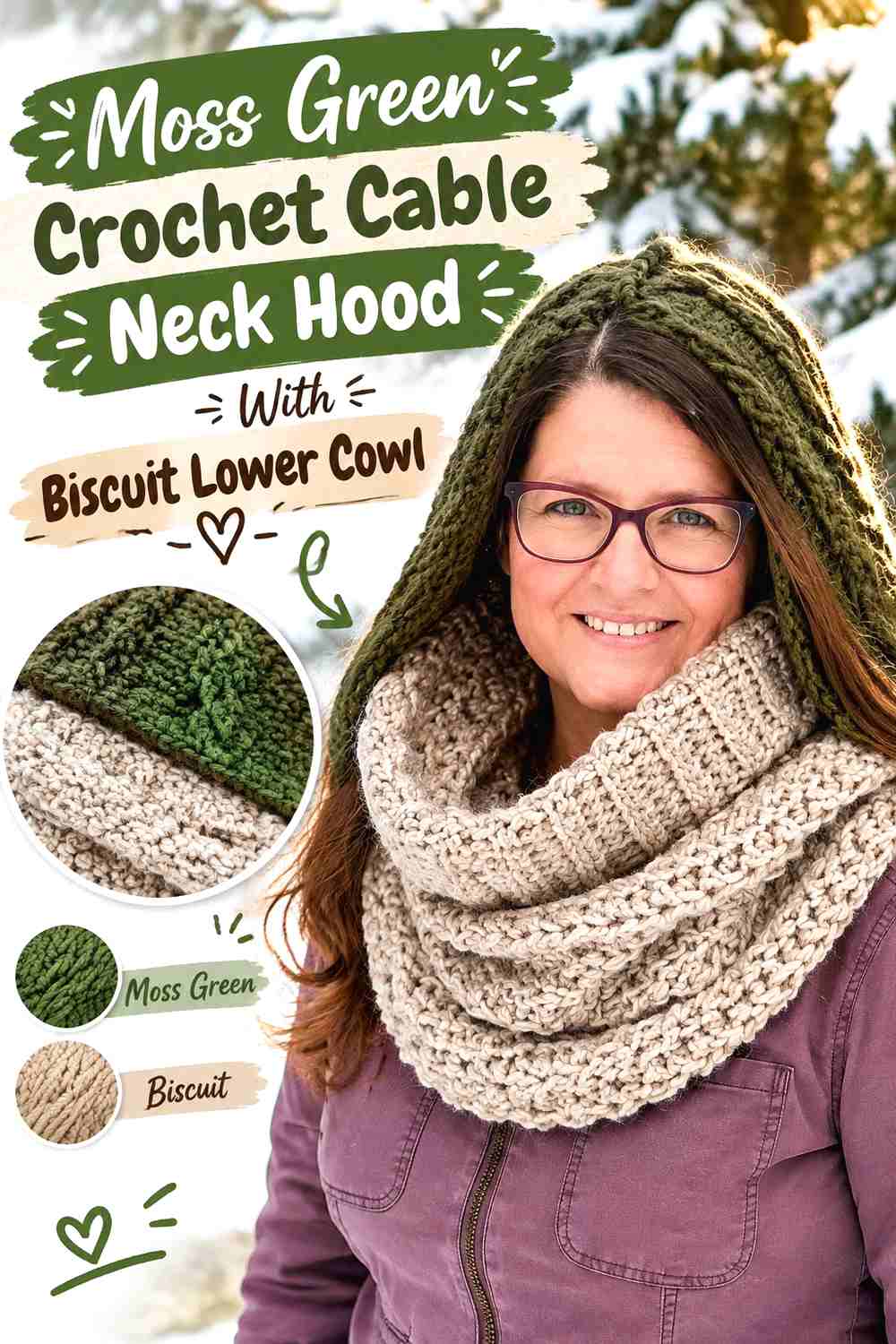 SAVE
Keep the hood and its cables Moss Green, then transition into Biscuit around the lower neck. This creates a strong top-to-bottom color division while still connecting both shades through one wearable.
Moss Green Cables Can Stay Uninterrupted Through the Hood
Use Moss Green consistently through the principal raised sections so the texture remains cohesive. The color change should happen at a logical construction boundary instead of cutting through several cable crossings.
Biscuit Can Lighten the Moss Green Neck Hood Below the Chin
A broader Biscuit lower cowl provides a warmer neutral break beneath the darker hood. Repeat a small amount of Biscuit near the face if the lower section otherwise feels isolated.
Creator Credit: A Crocheted Simplicity
14. Biscuit Crochet Cable Neck Hood With Moss Green Lower Cowl
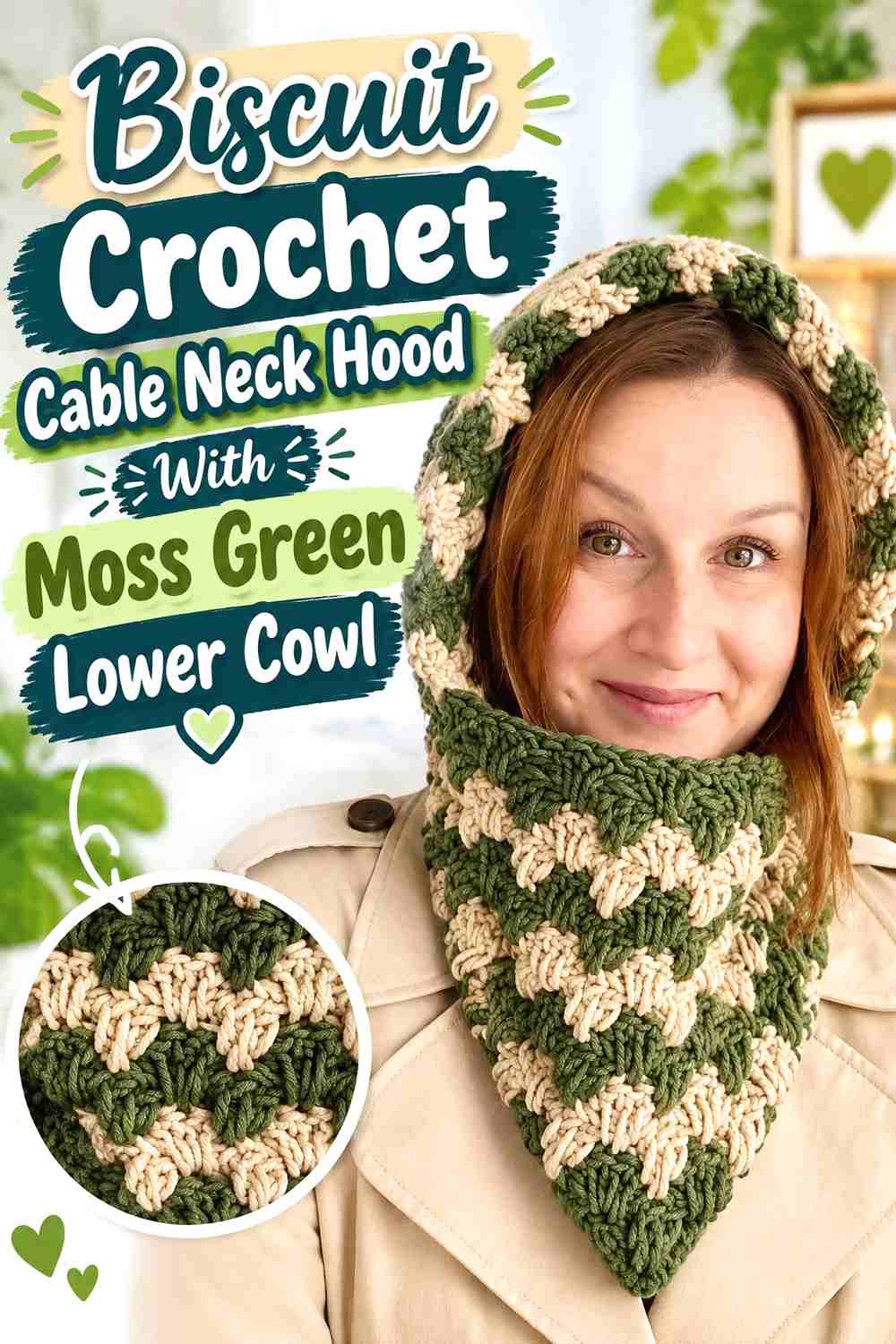 SAVE
Use Biscuit across the hood and cables, then give Moss Green the lower neck section. The green base grounds the lighter hood and can visually connect the accessory to darker outerwear.
Moss Green Can Give a Biscuit Hood a Defined Neck Base
Make the green section deep enough to read as part of the garment rather than a narrow border. A substantial lower cowl gives the two-color split a clear purpose.
Biscuit Cables Should Remain Visible Above Moss Green
Keep the main cable field confidently pale above the color change. If Moss Green starts repeating through every upper cable, the hood loses its Biscuit-led direction.
Creator Credit: Blue Star Crochet
15. Moss Green Cable Hood With Biscuit Closure Panel
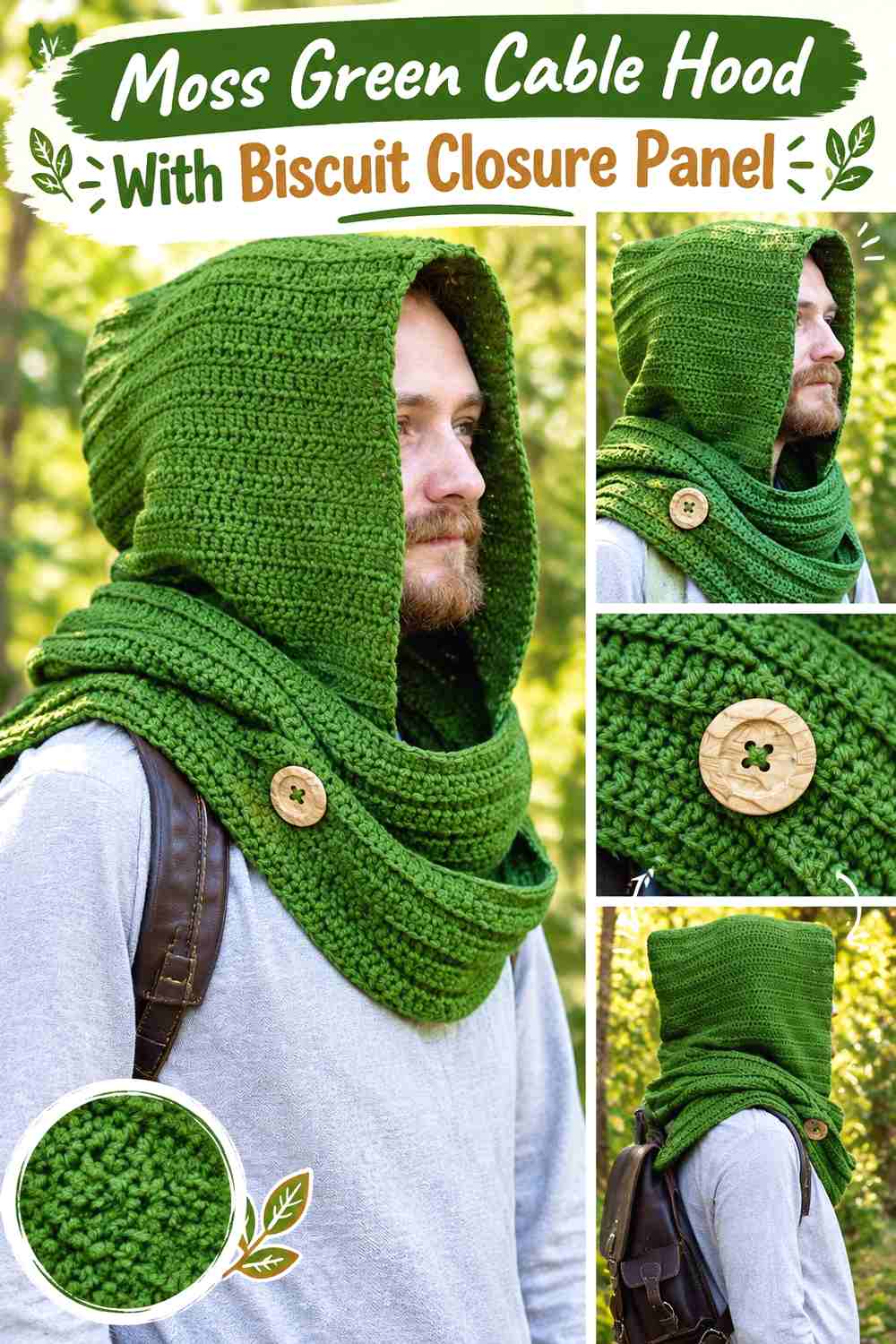 SAVE
A neck hood with an overlapping, scarf-like, or fastening section gives Biscuit another structural placement. Keep most of the hood Moss Green and use Biscuit around the closure or crossing neck panel.
Biscuit Can Clarify the Front of a Moss Green Neck Hood
Place Biscuit where the neck section overlaps or visually closes. The lighter area can make the front construction easier to distinguish against a broad Moss Green hood.
Moss Green Cables Should Continue Around the Biscuit Closure
Keep the shoulders, hood crown, and major cable sections Moss Green so the Biscuit front remains an accent rather than becoming the main garment color.
Creator Credit: Winding Road Crochet
16. Biscuit Cable Hood With Moss Green Closure Panel
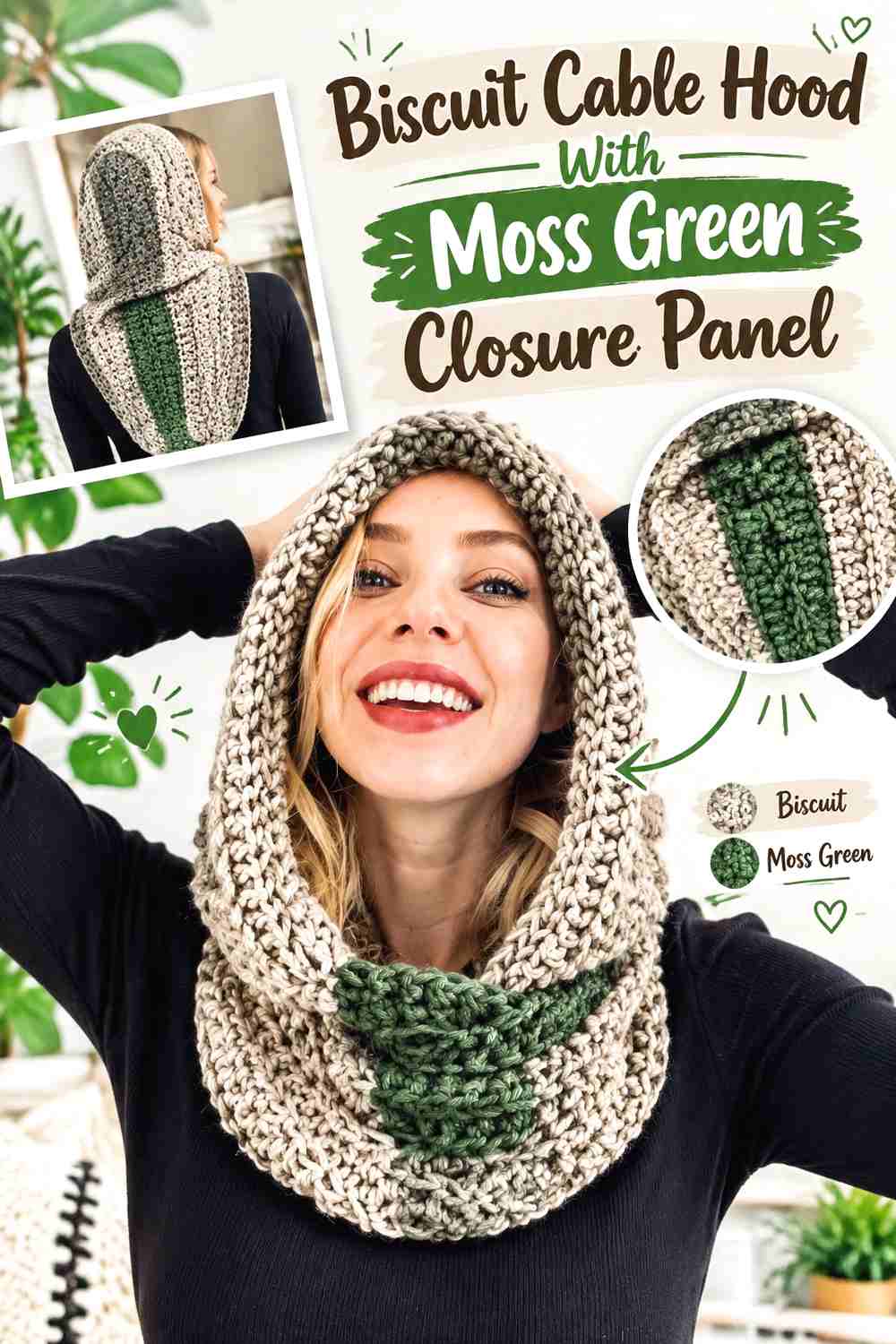 SAVE
Reverse the previous direction by making the hood Biscuit-led and placing Moss Green around the closure or neck overlap. The darker front panel gives the lighter hood a strong lower focal point.
Moss Green Closure Details Need a Clear Biscuit Background
Keep the adjacent neck and hood fabric Biscuit so the green fastening area remains easy to locate. Avoid adding several unrelated dark blocks around it.
Biscuit Cable Texture Should Continue Beyond Moss Green
Let the lighter raised pattern remain visible across the rest of the hood. This prevents the darker closure from becoming visually disconnected from the textured upper section.
Creator Credit: Wilma Westenberg
17. Moss Green and Biscuit Alternating-Cable Neck Hood
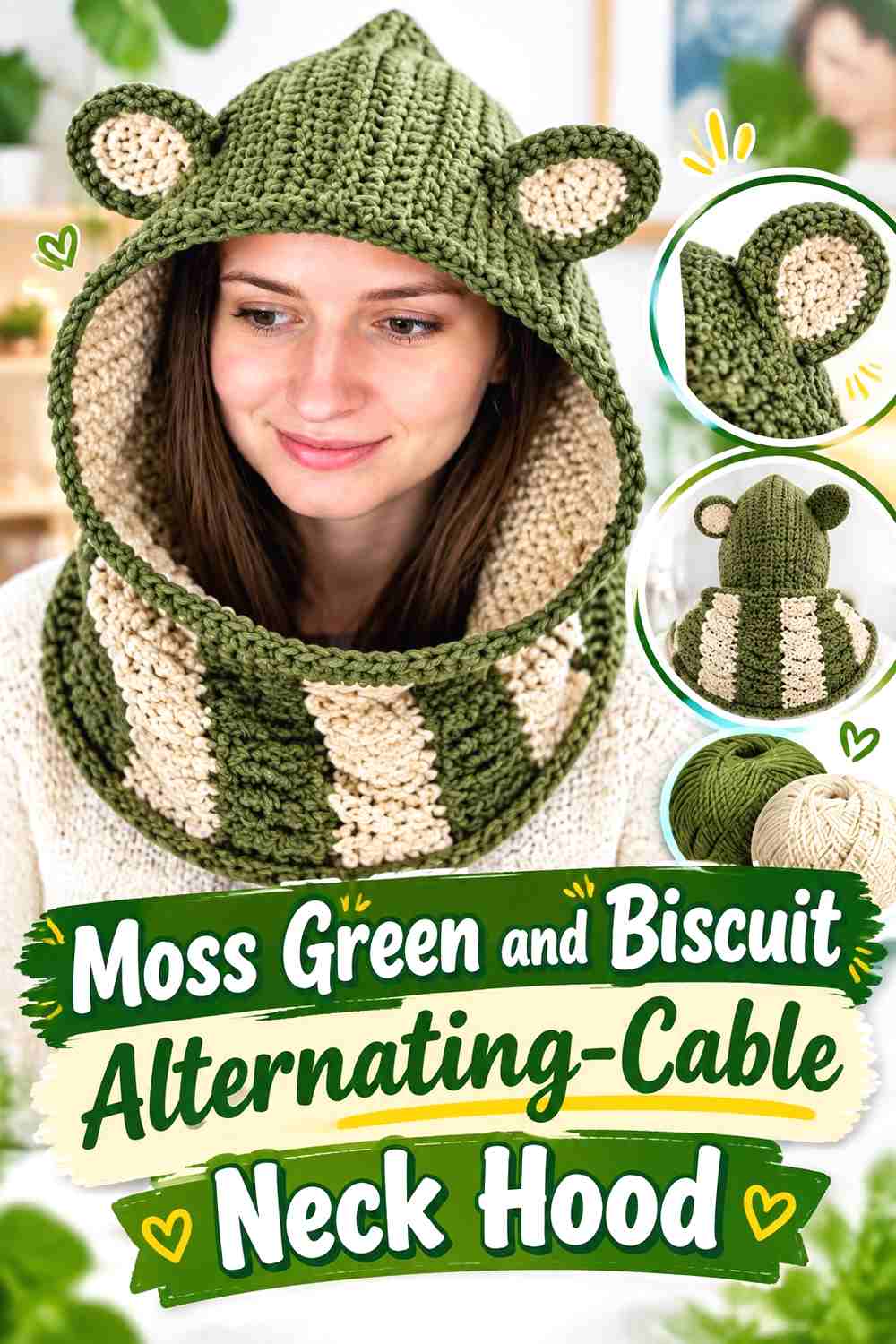 SAVE
Alternate Moss Green and Biscuit cable columns when you want both colors to have substantial structural importance. This is one of the busier options because the color changes occur directly inside the texture rather than only at borders.
Moss Green Cable Columns Need Consistent Biscuit Spacing
Plan the cable sequence across the full hood before repeating it. Two neighboring Moss Green columns can create a noticeably heavier dark section if an alternating rhythm is intended.
Biscuit Cables Should Match Moss Green in Visual Scale
Keep the Biscuit cables reasonably comparable in width if both colors should share attention. Narrow pale columns beside very broad Moss Green braids will still create a green-dominant hood.
Creator Credit: Crochet with Clare
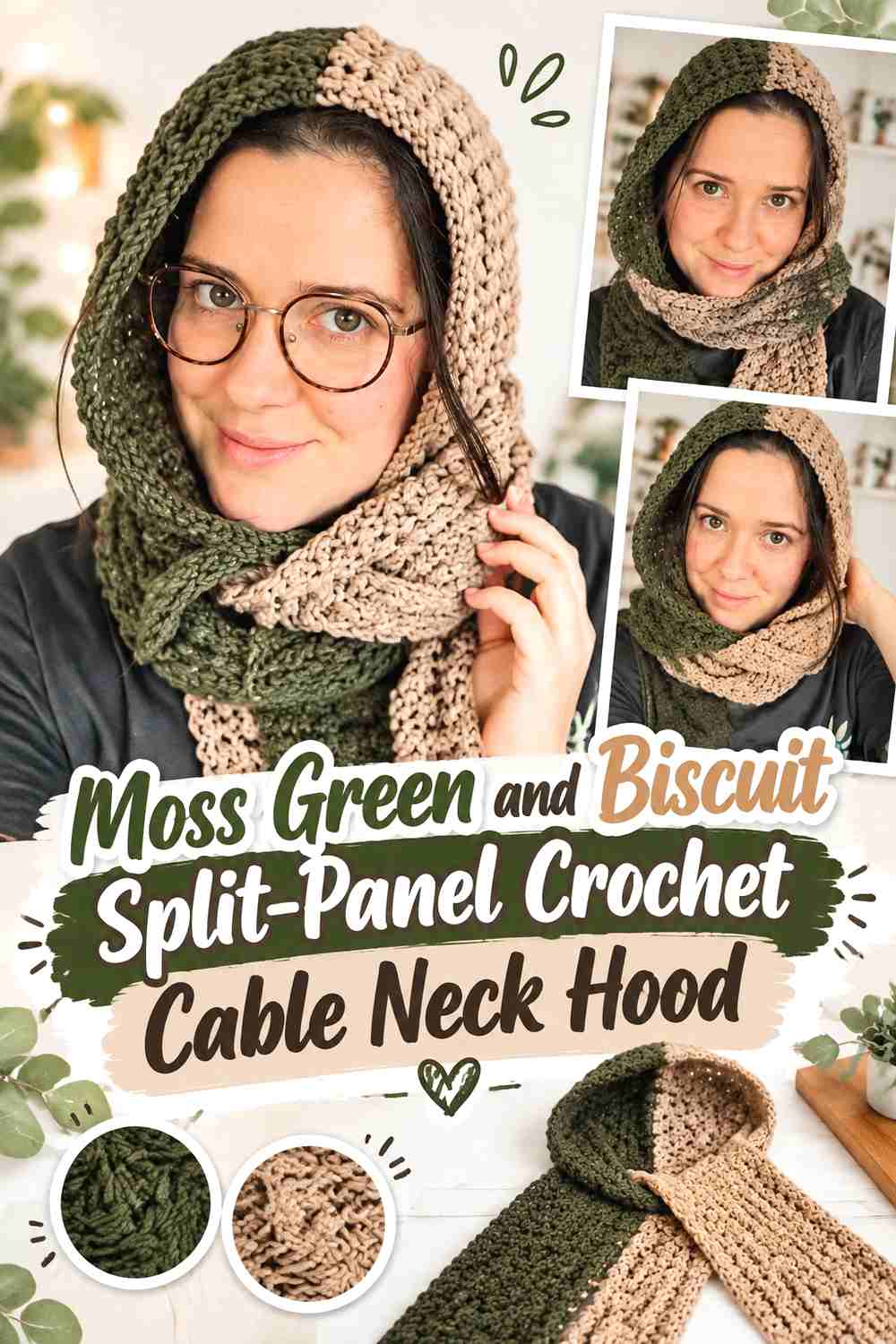
18. Moss Green and Biscuit Split-Panel Crochet Cable Neck Hood
 SAVE
Divide the hood into larger Moss Green- and Biscuit-led zones instead of alternating individual cables. One side or major panel can carry the darker shade while another uses the light neutral, with smaller details crossing the boundary to connect them.
Moss Green Should Cross Into the Biscuit Cable Panel
Repeat Moss Green in one smaller feature on the Biscuit side, such as a narrow cable, neck edge, or face border. This keeps the split from looking like two unrelated hood halves.
Biscuit Should Reappear Inside the Moss Green Hood Panel
Use Biscuit in the same way on the darker side. A restrained light cable or trim creates enough connection without eliminating the intentional asymmetry.
Creator Credit: Passionate Crafter
19. Moss Green Cable Neck Hood With Biscuit Edges
 SAVE
For the most restrained two-color treatment, work the hood and its cable texture mainly in Moss Green and reserve Biscuit for the face opening, lower cowl edge, and other finishing lines. The second shade defines the silhouette without interrupting the cable pattern.
Biscuit Edging Can Outline a Moss Green Cable Hood
Repeat Biscuit at more than one visible edge when you want the lighter shade to behave as a true frame. A face border and lower neck finish can connect the top and bottom of the accessory.
Moss Green Cables Should Stay Clear Between Biscuit Borders
Leave the main cable area uninterrupted in Moss Green. Because both edges already carry Biscuit, adding further pale color changes through the center can weaken the clean framed effect.
Creator Credit: The Knotty Lace
Which Moss Green and Biscuit Cable Neck Hood Should You Choose?
For a clearly Moss Green-led hood, Ideas 1, 3, 5, 8, 9, 11, 13, 15, and 19 keep the muted green across broad surfaces while using Biscuit to highlight cables, edges, neck sections, or closures.
For a lighter Biscuit-led direction, Ideas 2, 4, 6, 10, 12, 14, and 16 give the neutral most of the hood area and concentrate Moss Green where darker definition is useful.
Idea 17 gives both shades stronger recurring roles through alternating cables, while Idea 18 is better when you want obvious asymmetry rather than a regular repeat.
If cable definition is your priority, consider a broad contrasting panel rather than many narrow color changes. Ideas 1, 2, 9, and 10 give the raised texture surrounding space, while Ideas 5 and 19 keep the cables mainly one color and move the contrast to the edges.
Conclusion
Moss Green and Biscuit can create very different crochet cable neck hoods depending on whether color follows the texture or the garment structure. Moss Green can anchor broad hood sections, neckbands, and darker cable panels, while Biscuit can reveal raised details through lighter backgrounds, face frames, crown panels, and lower edging.
Start by deciding which shade should dominate the hood itself. Then give the second color one or two clear responsibilities rather than distributing it randomly. A repeated connection between the neck and face opening, or between the center cable and crown, can make a simple two-color palette look much more deliberate.
Use the credited tutorial for the hood, cowl, scarf, or neck-warmer construction it actually demonstrates. Where the tutorial does not contain cable texture, test your proposed cable panel separately and confirm that the altered fabric still works with the original shaping before adapting the full piece.
Frequently Asked Questions
Do Moss Green and Biscuit have enough contrast for crochet cables?
They often can, but the result depends on the actual yarns. Work a cable sample and inspect it from normal viewing distance. If small crossings disappear, increase the contrasting background area or use a broader cable instead of introducing more colors.
Should Moss Green or Biscuit be the main crochet neck-hood color?
Choose Moss Green when you want the finished hood to read darker and more muted. Use Biscuit as the larger field when you want a lighter result with concentrated green definition. Neither shade needs to occupy exactly half of the accessory.
Is Biscuit useful around a Moss Green hood face opening?
Yes. A Biscuit face frame can create a lighter boundary around a Moss Green hood without interfering with the main cable panel. Because the border sits in a prominent position, it does not need to be especially wide to influence the palette.
Can Moss Green work only as an accent on a Biscuit cable hood?
Yes. A center cable, neckband, crown panel, face edging, or closure section can give Moss Green enough repeated visual presence without covering most of the hood.
What can replace Moss Green without changing the palette too much?
Choose another muted medium or deep green with similar visual weight. Preserve the subdued character and compare it directly with Biscuit so the replacement does not become either too dark to show cable shadows or too close to the neutral in value.
What can replace Biscuit in a Moss Green cable neck hood?
A warm cream, oatmeal, light camel, or related pale neutral can serve a similar role if it remains visibly lighter than Moss Green. A bright white will make the contrast sharper, while a darker tan will make the palette more blended.
How can I keep a Moss Green and Biscuit cable hood from looking too busy?
Limit the number of color systems. If the cables alternate Moss Green and Biscuit, keep the neckband and face border simple. If the hood contains elaborate Moss Green cables, use Biscuit in larger quiet areas such as the face frame or lower cowl rather than changing color inside every crossing.