
Royal Purple and Camel give a crochet cable capelet a useful balance between saturation and neutrality. Royal Purple can turn a raised cable into the strongest feature on the shoulders, while Camel provides warmer visual space around that texture without creating the stark separation of a very pale neutral.
Capelets make those color decisions especially visible because the neckline, yoke, cable body, and lower edge sit relatively close together. A Royal Purple neckline can influence the entire piece even when Camel covers more fabric, while a broad Camel shoulder section can keep several purple cable columns from competing.
Cable visibility also deserves attention. The shadows created by raised crochet stitches affect how both colors appear, so compare Royal Purple and Camel in the actual cable texture rather than judging only from the yarn balls.
The supporting tutorials below include direct cabled capelet and cabled poncho constructions as well as compatible cape and capelet silhouettes. Where a tutorial does not contain cables, use it for the capelet construction concept and plan the cable panel separately. The Royal Purple and Camel color placements are independent editorial adaptations rather than claims about the creators’ original palettes.
Quick List
- Royal Purple Crochet Cable Capelet With Camel Braided Columns
- Camel Crochet Cable Capelet With Royal Purple Center Cable
- Royal Purple Yoke and Camel Lower Cable Crochet Capelet
- Camel Yoke and Royal Purple Lower Cable Crochet Capelet
- Royal Purple Diamond Cable and Camel Side-Panel Crochet Capelet
- Camel Center Cable and Royal Purple Side-Panel Crochet Capelet
- Royal Purple Rope Cable Crochet Capelet With Camel Neckline
- Camel Rope Cable Crochet Capelet With Royal Purple Neckline
- Royal Purple and Camel Split-Panel Crochet Cable Capelet
- Royal Purple Cable-Band and Camel Field Crochet Capelet
- Royal Purple Crochet Cable Capelet With Camel Closure Panel
- Royal Purple and Camel Alternating-Column Crochet Cable Capelet
Check Royal Purple and Camel Inside the Actual Cable Texture
Royal Purple and Camel may have plenty of hue contrast while still sitting closer in lightness than expected. Cable stitches complicate that relationship because raised crossings create their own shadows. A narrow Camel cable may therefore be less obvious against Royal Purple than the two yarns suggest when laid flat.
Work enough of the intended cable to judge the complete raised section. If the cable disappears at normal viewing distance, increase the width of the contrasting panel or use the second color around the cable instead of changing only the raised stitches.
Decide Whether Royal Purple or Camel Should Control the Shoulder Line
A capelet concentrates much of its visual weight around the shoulders. If Royal Purple occupies the yoke, the whole piece can look purple-led even when Camel takes over farther down. A Camel yoke does the reverse by giving stronger purple cable work more breathing room beneath the neckline.
Think of the yoke as part of the color hierarchy rather than simply the place where the capelet starts. Its shade affects how every cable below it is perceived.
Use Royal Purple and Camel Consistently at the Neckline and Hem
The neckline and lower edge can either reinforce the dominant color or balance it. Camel around a Royal Purple body softens the outer frame, while Royal Purple edging makes a Camel body substantially more graphic.
Avoid assigning colors to these edges only after the cable body is finished. On a short capelet, the neckline and hem sit close enough together that both remain part of the main visual composition.
1. Royal Purple Crochet Cable Capelet With Camel Braided Columns
 SAVE
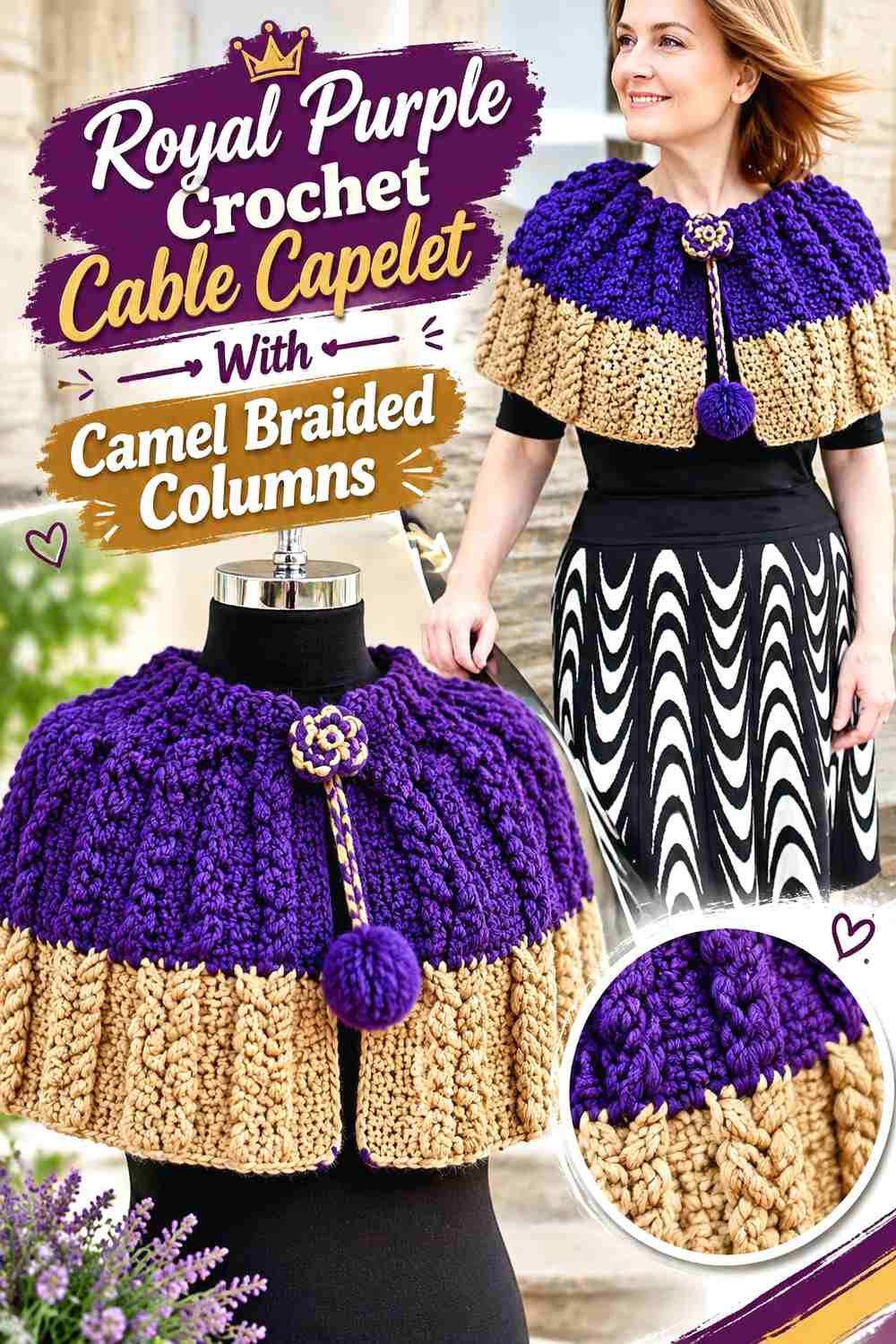
Let Royal Purple cover most of the shoulder cape while Camel runs through a few substantial braided cable columns. The purple field keeps the garment cohesive, and the Camel cables add lighter vertical structure without turning the design into equal-width stripes.
Camel Braided Cables Need Enough Width Against Royal Purple
Give Camel enough surface area for both its color and its raised crossings to remain visible. A very narrow Camel braid can lose definition once shadows form around the stitches.
Keep uninterrupted Royal Purple beside each cable so the Camel section has a clear background rather than another competing texture.
Royal Purple Should Continue Around the Camel Cable Capelet Edges
Use Royal Purple at the neckline or hem if you want the dominant color to contain the lighter cable work. This prevents Camel from becoming the structural color simply because it appears in every raised feature.
Creator Credit: Nana’s Crafty Home | Tonya Bush
2. Camel Crochet Cable Capelet With Royal Purple Center Cable
 SAVE
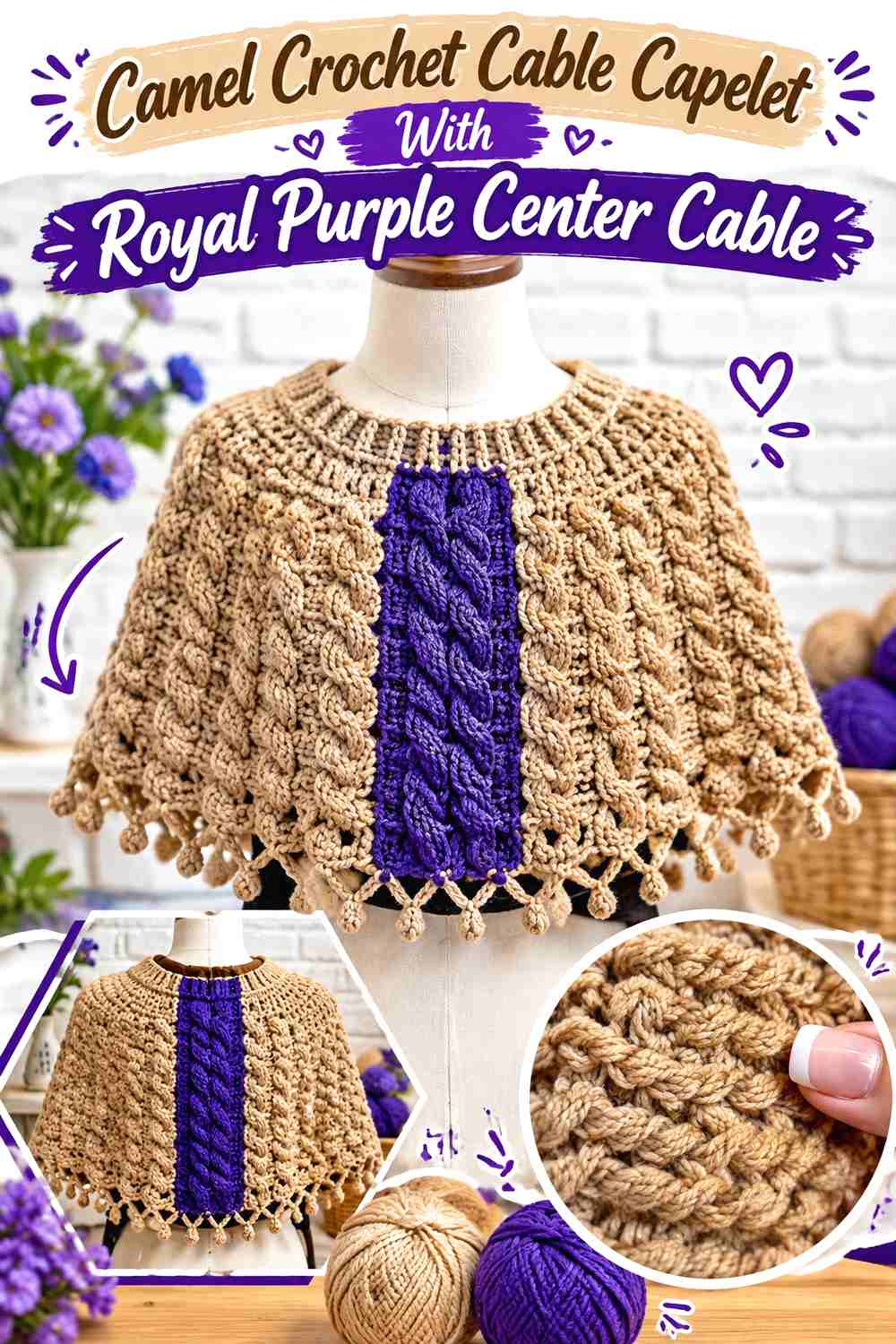
A Camel body gives one central Royal Purple cable plenty of quieter surrounding space. The saturated cable becomes an obvious focal line down the capelet without requiring purple to appear in every section.
Royal Purple Can Carry One Strong Cable Through the Camel Center
Keep the central Royal Purple cable broad enough to read clearly across the short capelet. Concentrating the saturated shade in one major feature creates more impact than scattering many tiny purple details.
Camel Should Stay Relatively Quiet Beside the Royal Purple Cable
Allow the surrounding Camel areas to emphasize the cable through contrast rather than adding equally heavy texture everywhere. If side panels also contain elaborate cables, the central Royal Purple feature can lose its hierarchy.
Creator Credit: Stitches n Scraps
3. Royal Purple Yoke and Camel Lower Cable Crochet Capelet
 SAVE
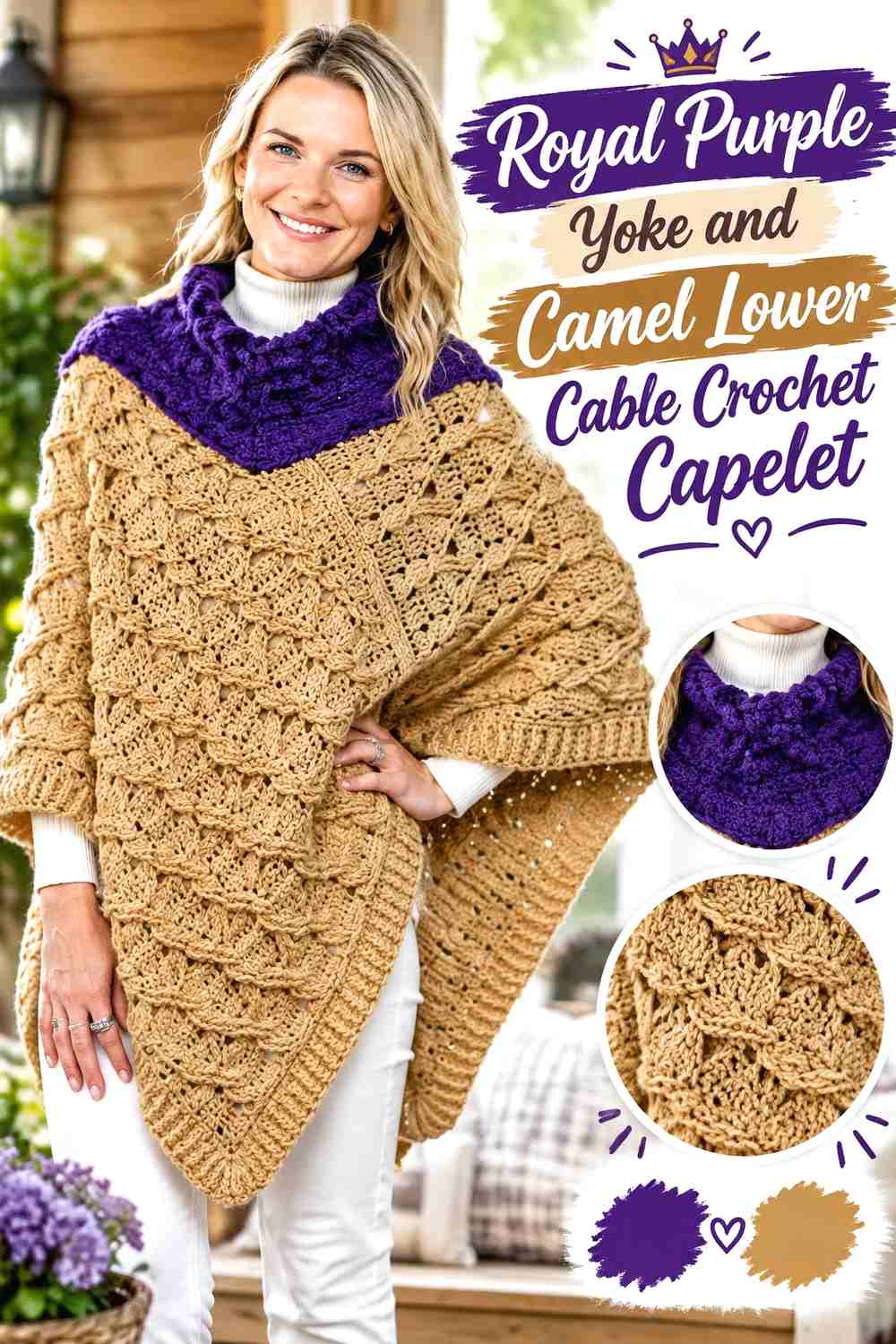
Use Royal Purple across the neckline and upper shoulder yoke, then transition into Camel cable work lower on the capelet. The saturated upper section creates a defined shoulder frame, while the neutral cable body keeps the lower half from becoming equally intense.
Royal Purple Should Establish the Capelet Shoulder Line Before Camel Takes Over
Keep enough Royal Purple around the upper section for it to read as a purposeful yoke rather than a narrow stripe. The color should visually connect the neckline and shoulders before Camel becomes more prominent.
Camel Cables Can Add Texture Without Competing With the Royal Purple Yoke
Use Camel for the repeated cable area below. Because texture already provides visual interest, the neutral does not need another accent color to make the lower section distinctive.
Creator Credit: BonnieBayCrochet
4. Camel Yoke and Royal Purple Lower Cable Crochet Capelet
 SAVE
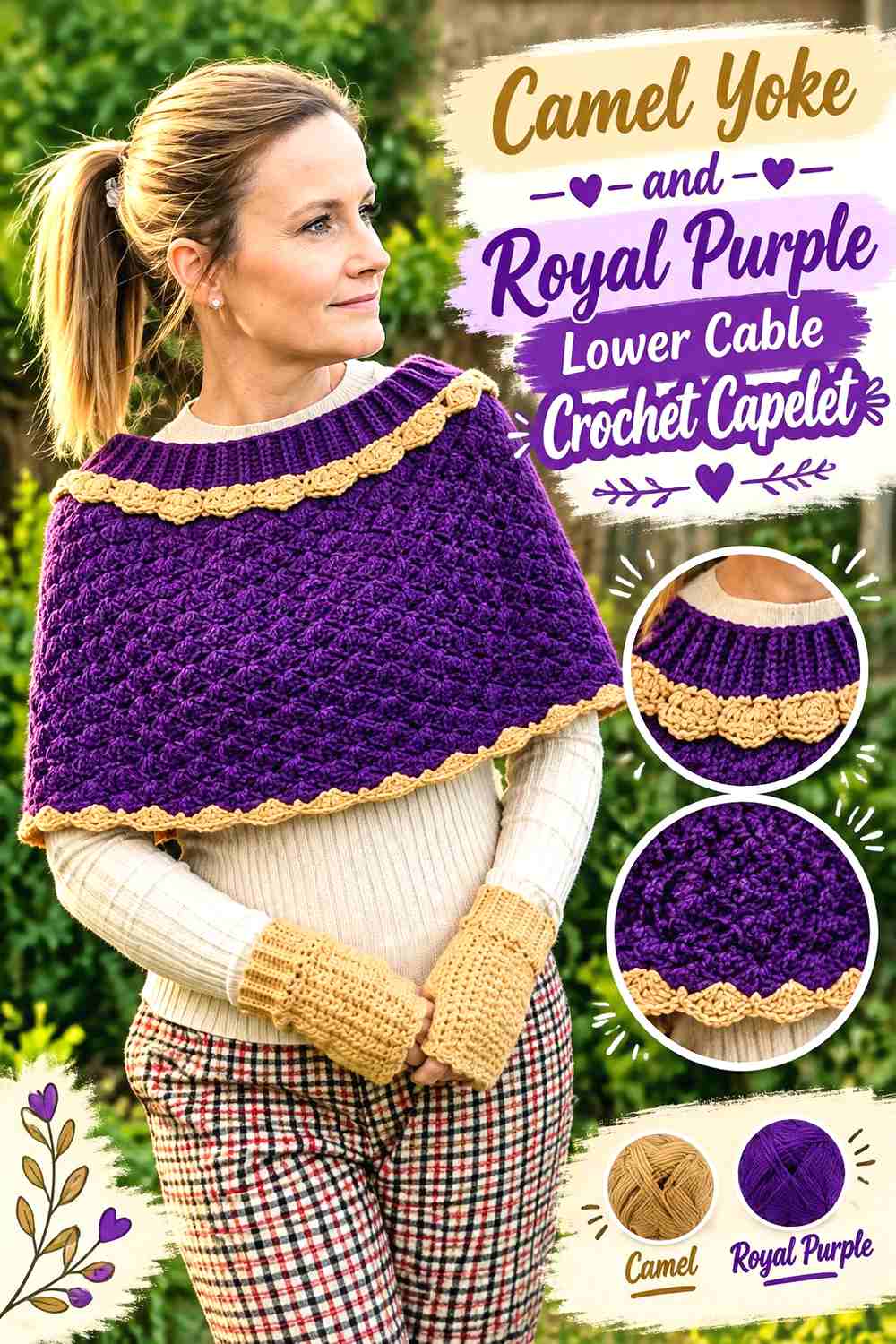
Reverse the previous direction with Camel around the neck and shoulders and Royal Purple expanding through the lower cable section. This places the strongest color farther from the face while still letting it dominate much of the visible texture.
Camel Gives Royal Purple Cables a Quieter Starting Point
Use Camel through the neckline and upper shoulder area to create a clear visual pause before the cable work begins. A small Royal Purple repeat inside the yoke can preview the lower section if the transition otherwise feels abrupt.
Royal Purple Should Gain Visual Weight Gradually Below Camel
Increase Royal Purple through progressively broader cable areas or a clear lower section rather than switching colors unpredictably. The capelet should read as a planned transition from neutral yoke to saturated cable body.
Creator Credit: Loopy Mabel Crochet
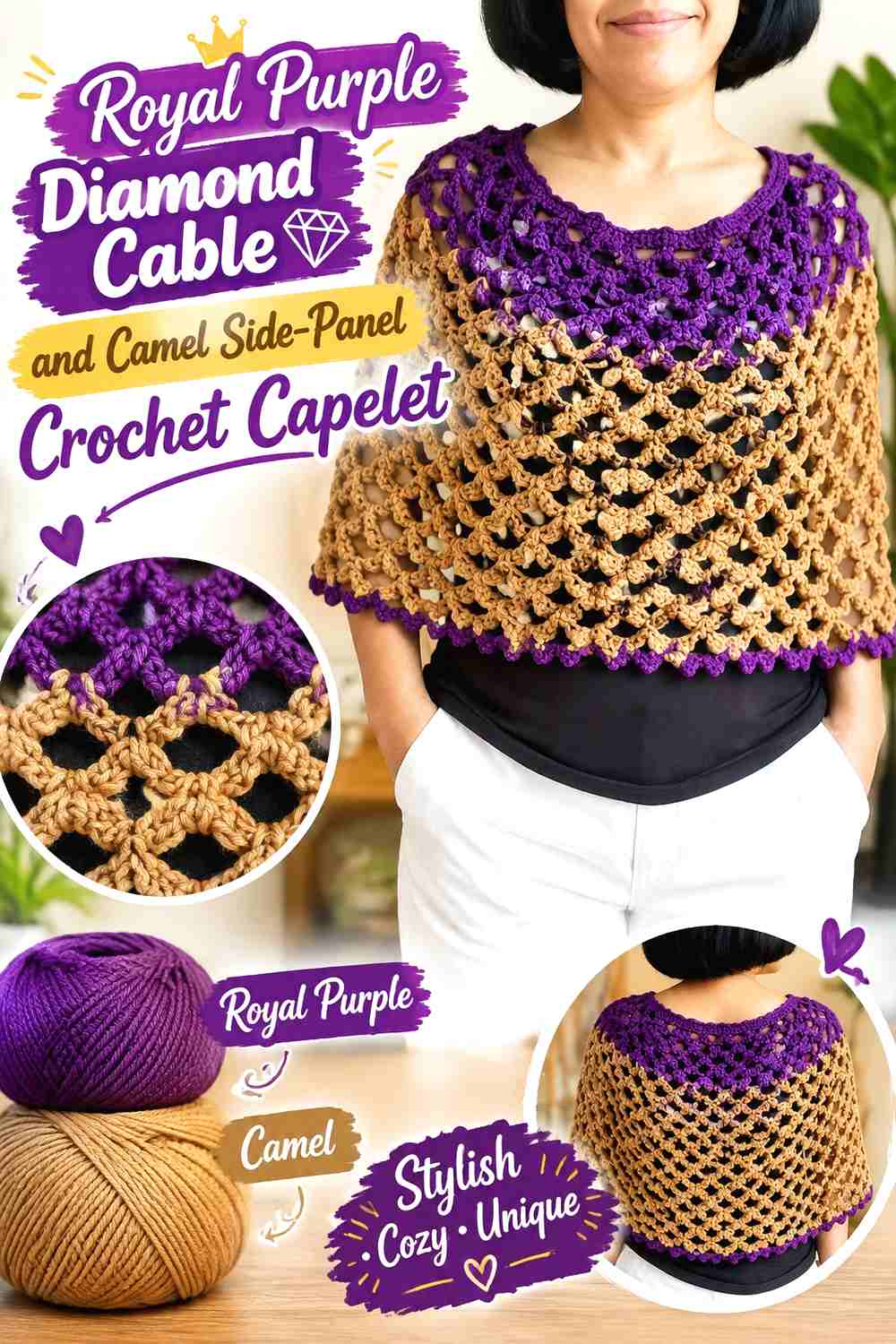
5. Royal Purple Diamond Cable and Camel Side-Panel Crochet Capelet
 SAVE
Place Royal Purple diamond-style or crossing cable motifs in the center and use Camel along the side shoulder sections. The neutral side areas stop multiple purple cable crossings from filling the entire capelet with equally dense texture.
Royal Purple Diamond Cables Need Camel Space Around Their Shape
Leave enough Camel between the cable motif and the outer edge for the Royal Purple shape to remain readable. If the purple texture stretches almost from edge to edge, the diamond outline may become harder to distinguish from the overall body.
Camel Side Panels Can Keep Royal Purple Shoulder Texture Balanced
Keep the Camel panels comparatively simple. Their purpose is to provide visual breathing room around the raised Royal Purple center rather than introduce a second equally complex texture.
Creator Credit: Crafting Shed
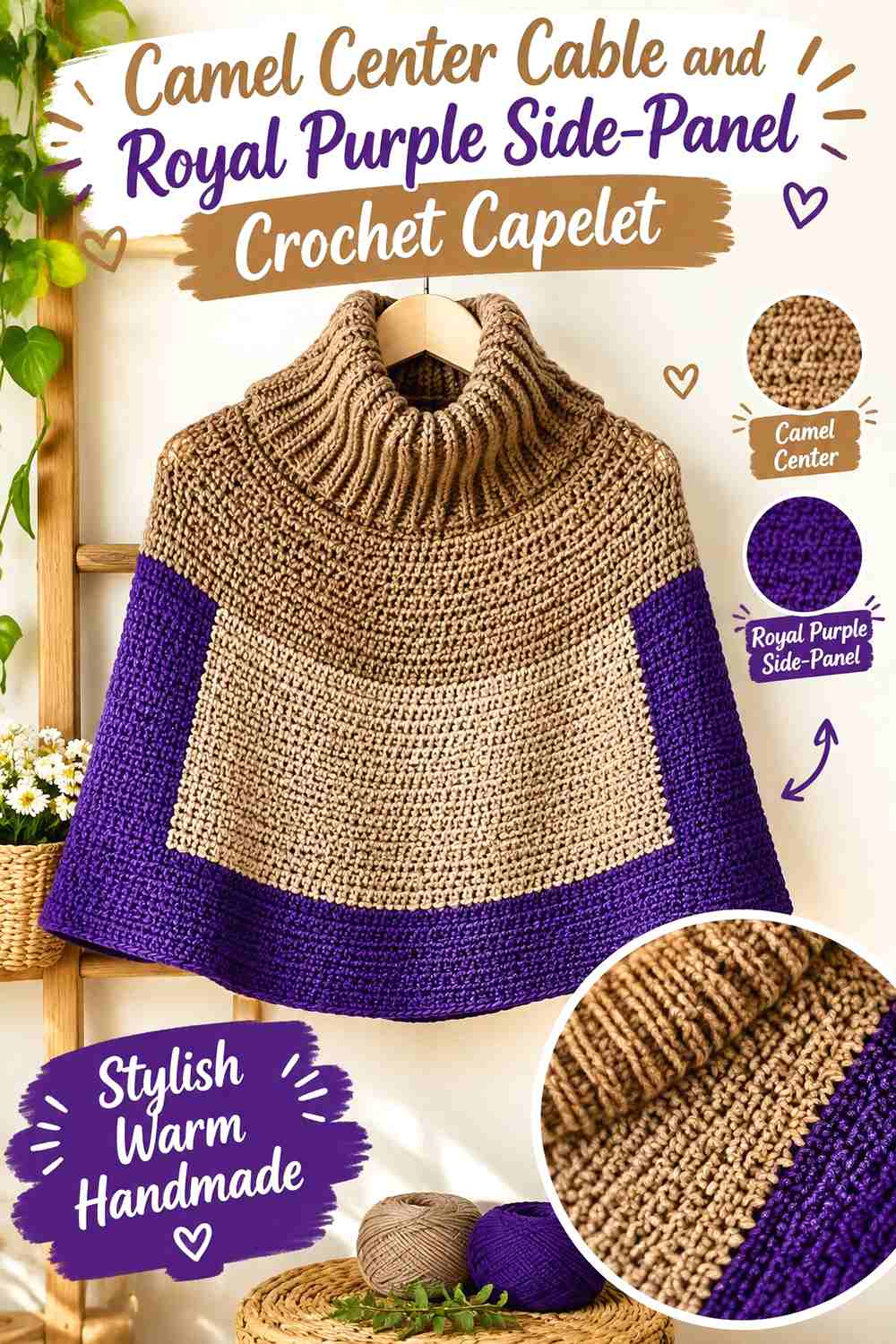
6. Camel Center Cable and Royal Purple Side-Panel Crochet Capelet
 SAVE
A Camel cable through the center produces a subtler raised focal point, while Royal Purple occupies larger areas across the shoulders and sides. This lets purple dominate the capelet without requiring the principal cable itself to be purple.
Camel Center Cables Need Clear Separation From Royal Purple
Check whether the Camel cable remains visible when surrounded by a saturated purple field. If the light-and-dark difference is modest, enlarge the Camel center panel rather than reducing the cable to a narrow braid.
Royal Purple Side Panels Can Carry More Color Than Camel Texture
Keep Royal Purple across the broader side sections and shoulder areas. The larger color blocks preserve the purple-led identity even when Camel receives the most prominent raised texture.
Creator Credit: The Crochet Crowd
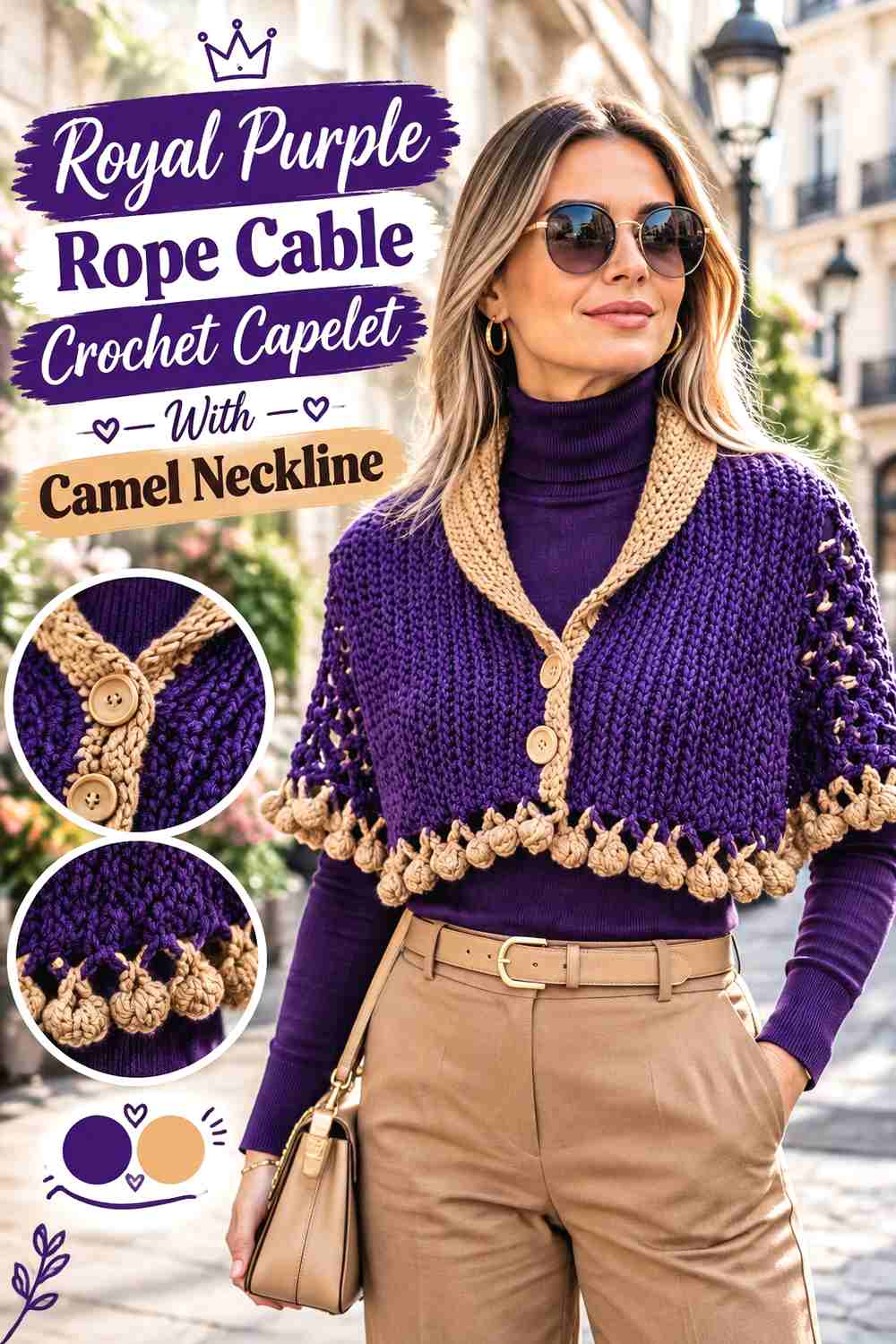
7. Royal Purple Rope Cable Crochet Capelet With Camel Neckline
 SAVE
Cover most of the capelet in Royal Purple rope-like cables and use Camel around the neckline. The lighter neck treatment creates separation between the saturated textured body and the clothing or skin visible above it.
Camel Can Give a Royal Purple Cable Neckline a Clear Boundary
Use Camel consistently around the opening rather than inserting it in unrelated small sections. A continuous neutral neckline makes the top edge easier to read against a heavily textured Royal Purple body.
Royal Purple Rope Cables Should Remain Uninterrupted Below Camel
Once the Camel neckline ends, allow Royal Purple to carry the main cable field for a substantial distance. Frequent Camel interruptions inside every cable would weaken the strong single-color texture this idea depends on.
Creator Credit: Handwork diy
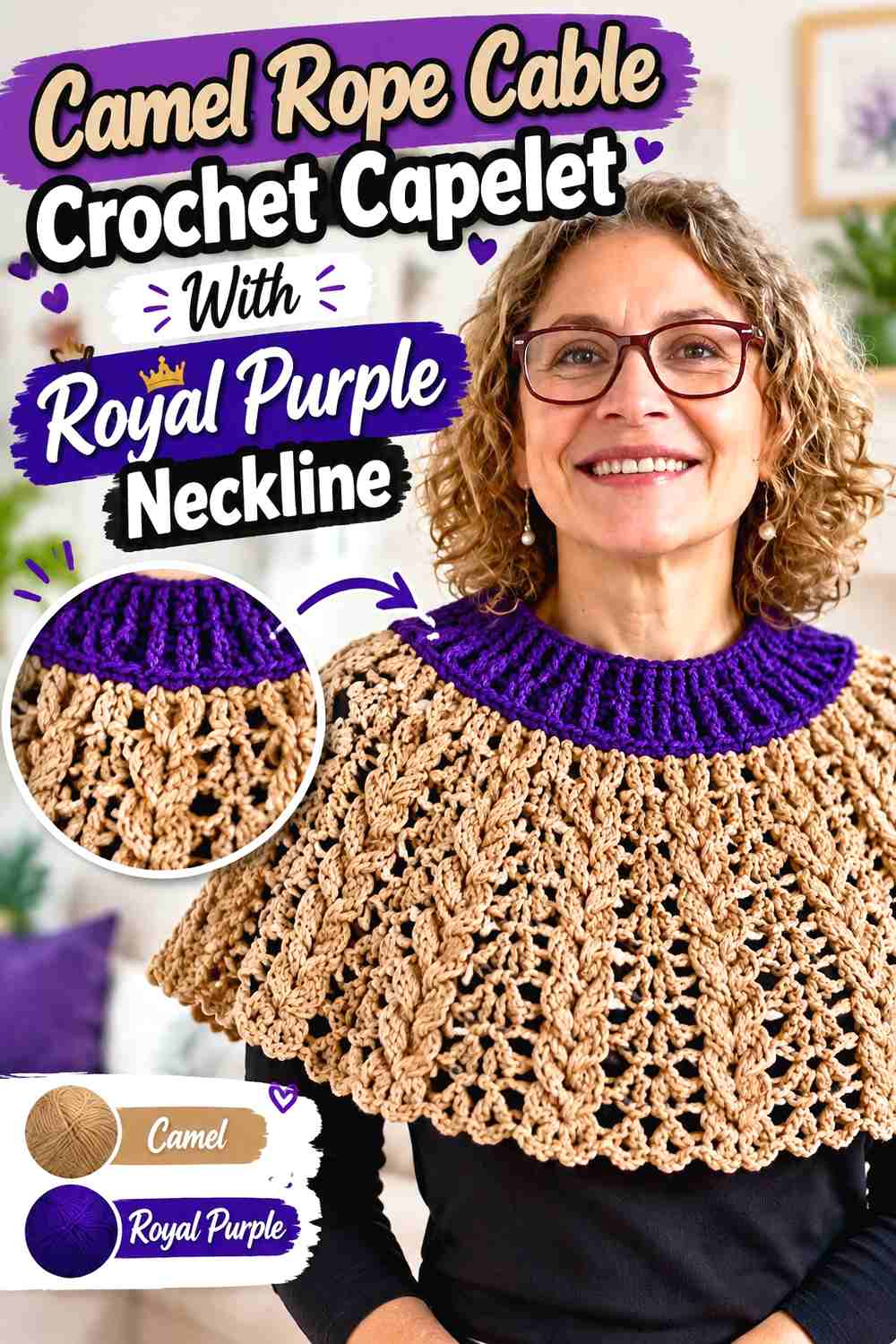
8. Camel Rope Cable Crochet Capelet With Royal Purple Neckline
 SAVE
A Camel cable body creates a warmer neutral garment, while Royal Purple is concentrated at the neck. The smaller saturated section can still have significant impact because the neckline sits at the visual center of the capelet.
Royal Purple Can Anchor a Camel Cable Capelet at the Neck
Use Royal Purple around the full opening or through another clearly defined neckline treatment. This gives the saturated color a structural purpose rather than scattering isolated purple stitches through the Camel body.
Camel Rope Cables Need Enough Texture to Balance Royal Purple
Because Royal Purple naturally attracts more attention, let the Camel body rely on substantial raised texture for its own visual presence. Broad ropes or clearly separated cables can help the neutral section remain interesting without adding more colors.
Creator Credit: Hobby Crochet
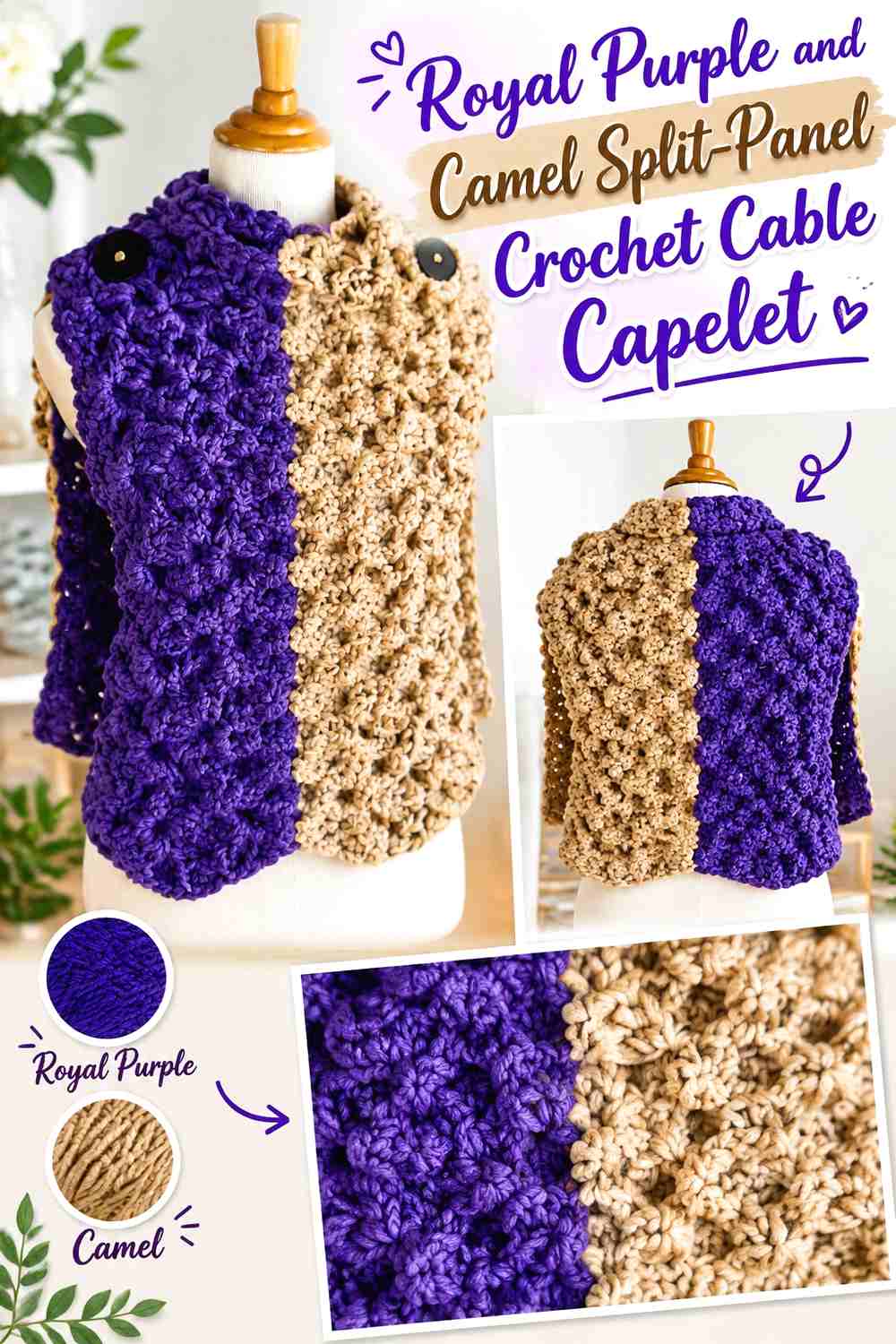
9. Royal Purple and Camel Split-Panel Crochet Cable Capelet
 SAVE
Divide the capelet into larger Royal Purple- and Camel-led areas rather than alternating every narrow cable. The asymmetric layout makes color blocking part of the capelet silhouette and can give each side a different cable emphasis.
Royal Purple Should Cross Slightly Into the Camel Cable Panel
Repeat Royal Purple in one smaller Camel-side feature, such as a narrow cable, part of the neckline, or a lower edge detail. This prevents the split from looking like two unrelated pieces placed together.
Camel Should Reappear Inside the Royal Purple Capelet Panel
Use the same principle in reverse. A Camel border or secondary cable within the purple section creates enough connection to unify the asymmetric layout without making the two sides identical.
Creator Credit: Fiber Flux
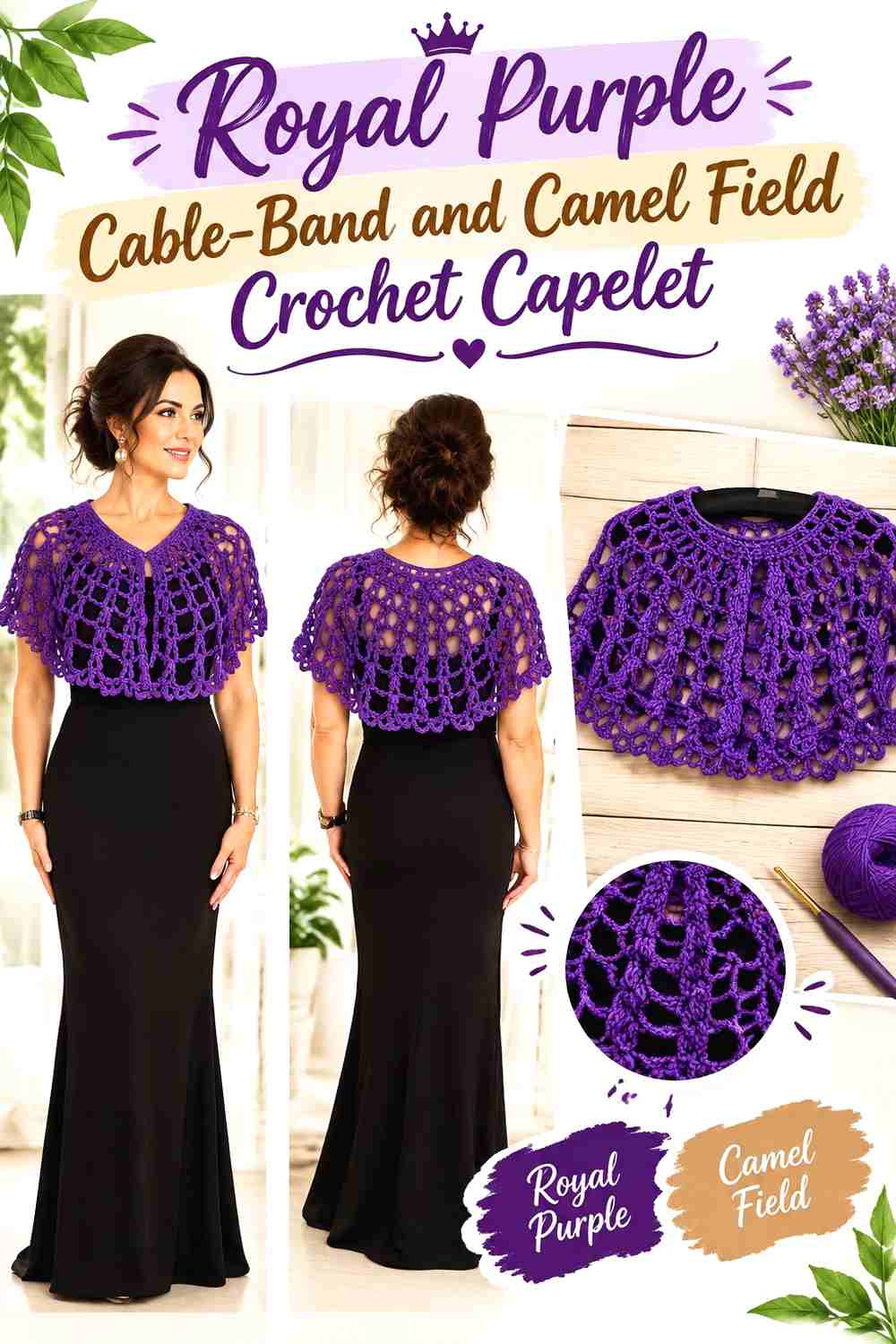
10. Royal Purple Cable-Band and Camel Field Crochet Capelet
 SAVE
Use broad Camel sections as the main fabric and insert Royal Purple cable bands at planned intervals. The capelet remains neutral-led, but every purple band introduces both color and raised texture at the same time.
Royal Purple Cable Bands Should Repeat Predictably Through Camel
Place the purple bands according to a clear rhythm rather than wherever a color change happens to be convenient. Repetition helps the short capelet read as a designed cable layout instead of a sequence of unrelated stripes.
Camel Needs Broad Sections Between Royal Purple Cables
Leave enough Camel between the purple bands for each cable to retain its individual identity. Narrow neutral gaps can make several purple bands merge into one busy textured field.
Creator Credit: Hectanooga1
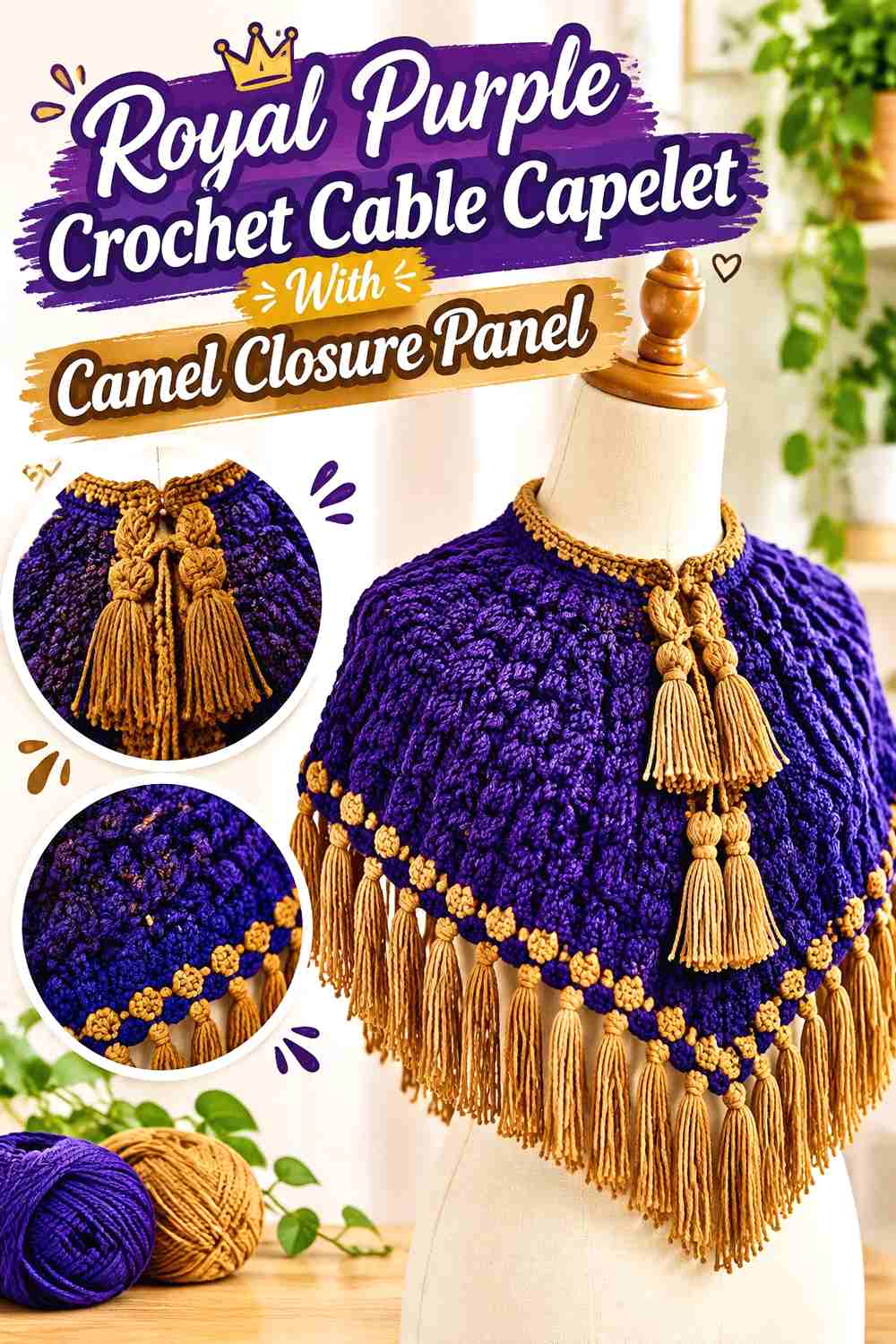
11. Royal Purple Crochet Cable Capelet With Camel Closure Panel
 SAVE
An open-front or buttoned capelet gives Camel a useful placement beyond simple edging. Keep the main cable body Royal Purple and use Camel around the front closure or overlapping panel so the fastening area becomes part of the palette.
Camel Can Clarify the Front Opening Against Royal Purple Cables
Use Camel where the two front edges meet or overlap. This creates a visible boundary around the closure without cutting through the main purple cable panels.
If the construction uses a fastening, follow the source tutorial for its placement rather than changing functional details based only on color.
Royal Purple Should Continue Around the Camel Closure Area
Keep Royal Purple across the shoulders and most of the body so the Camel front detail remains an accent. A small Camel repeat at the hem can connect the closure to another part of the capelet if needed.
Creator Credit: Just Vintage Crochet
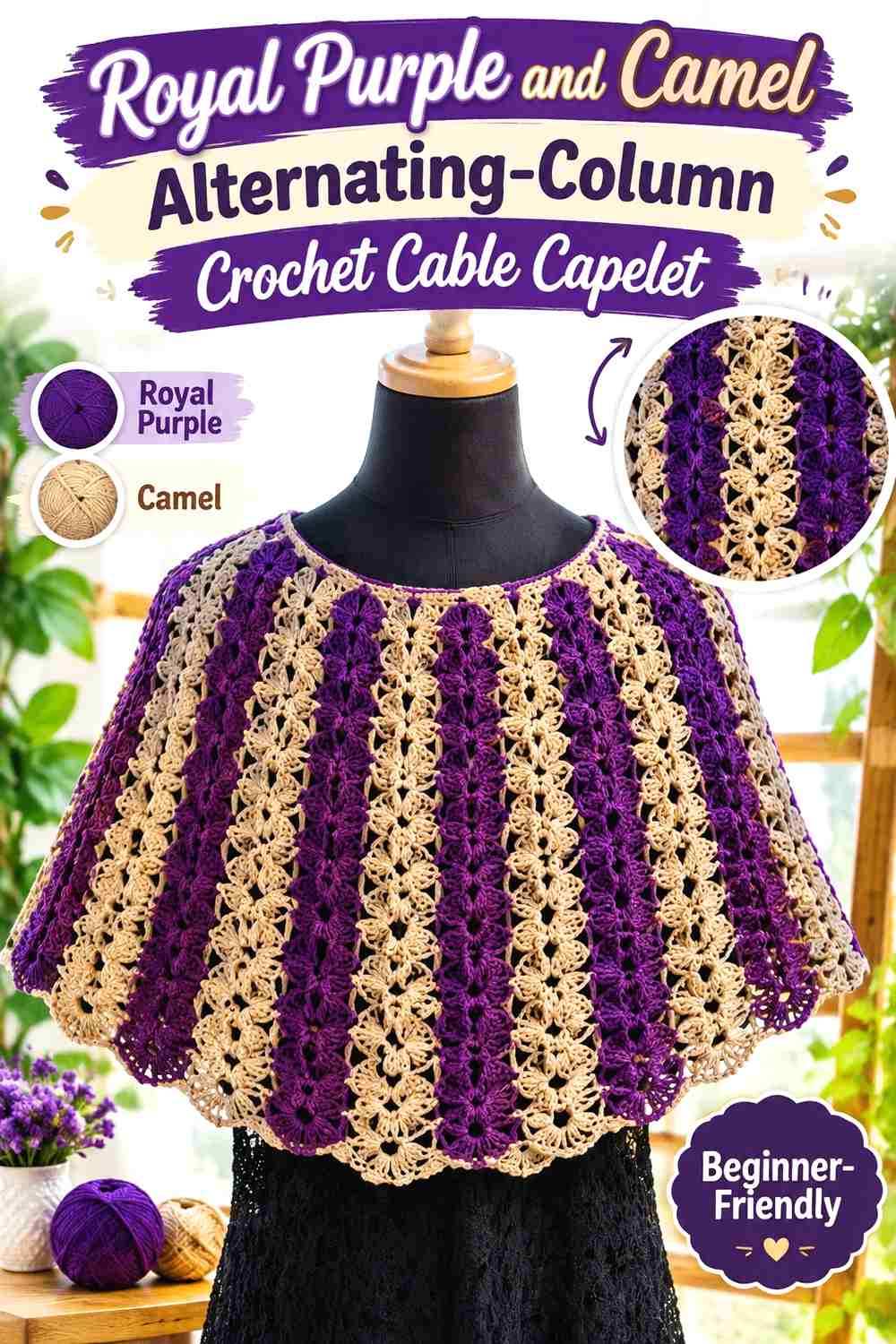
12. Royal Purple and Camel Alternating-Column Crochet Cable Capelet
 SAVE
Alternate substantial Royal Purple and Camel cable columns across the shoulders when you want both colors to have nearly equal structural importance. This is one of the strongest two-color options because color changes occur inside the main texture rather than only at the edges.
Royal Purple Cable Columns Need Consistent Camel Spacing
Plan the complete sequence before committing to repeated columns. Two Royal Purple cables placed together can create a noticeably heavier saturated section and interrupt an intended alternating rhythm.
Camel Columns Should Match the Visual Scale of Royal Purple
Keep the Camel cable sections comparable in width if you want a balanced two-color result. If Royal Purple receives much wider cables, it will still dominate even when the number of columns is equal.
Use one existing color for the neckline and hem rather than automatically adding a third shade to finish the capelet.
Creator Credit: Mitsu
Which Royal Purple and Camel Cable Capelet Direction Should You Choose?
For a distinctly Royal Purple-led capelet, Ideas 1, 5, 7, 11, and 12 give purple broad body areas while Camel handles cables, side sections, borders, or closures.
For a more Camel-led direction, Ideas 2, 6, 8, 10, and 13 use the neutral across larger surfaces and let Royal Purple become a concentrated focal color.
Ideas 3 and 4 create a top-to-bottom shift between the two colors. Idea 9 uses larger asymmetric zones, while Idea 14 gives both colors nearly equal weight through alternating cable columns.
If cable visibility is your main priority, judge the colors inside a finished cable swatch. Royal Purple and Camel can look very different as separate yarns yet behave differently once raised posts, crossings, and shadows become part of the fabric.
Conclusion
Royal Purple and Camel work well for a crochet cable capelet because the colors can divide responsibilities instead of simply sharing the surface equally. Royal Purple can emphasize a center braid, shoulder yoke, collar, or broad body field, while Camel can provide quieter panels and clearer space around raised texture.
Start with the part of the capelet you want noticed first. If that is the cable work, give the contrasting color enough width to make the raised structure visible. If the silhouette should lead, keep the cables mainly in one color and use the second shade around the neckline, sides, closure, or hem.
For exact shaping and construction, follow the credited tutorial associated with the cape or capelet form you choose. Where a source does not include cable texture, treat the cable placement as an adaptation and verify how the altered fabric affects the intended dimensions before committing to the full garment.
Frequently Asked Questions
Do Royal Purple and Camel have enough contrast for a crochet cable capelet?
They can, but the answer depends on the actual yarns. Compare them inside a cable sample because raised stitches create shadows that can change their apparent contrast. A grayscale photo can also help reveal differences in lightness.
Should Royal Purple or Camel be used for the main capelet cables?
Royal Purple works well when the cable should become the saturated focal feature. Camel gives the texture a quieter, warmer-neutral appearance. The better choice depends on whether you want the cable or the surrounding body color to attract more attention.
Can Camel keep a Royal Purple crochet capelet from looking too heavy?
Yes, especially when Camel is placed around the neckline, side panels, or between repeated cables. Those larger neutral areas interrupt broad Royal Purple sections without requiring another hue.
Where should Royal Purple go on a Camel-dominant cable capelet?
Useful placements include a center cable, neckline, repeated cable bands, closure edge, or lower border. Choose one or two structural locations and repeat the color deliberately rather than scattering small accents everywhere.
What can replace Royal Purple without changing the Camel capelet too much?
Choose another rich, relatively saturated purple with a similar lightness relationship to Camel. A much paler lavender will create a softer and lighter palette, while a nearly black plum may reduce cable contrast.
What can replace Camel in a Royal Purple cable capelet?
Look for another warm tan or medium neutral that remains clearly distinct from Royal Purple. A much lighter cream will produce sharper contrast, while a deep brown will make the overall capelet darker.
How can I keep Royal Purple and Camel cables from making the capelet too busy?
Limit the number of competing systems. If the cables alternate colors, keep the neckline and hem comparatively simple. If the body has elaborate Royal Purple texture, use Camel in larger quiet sections rather than changing color inside every cable crossing.