Crochet lace bandanas give you two design elements to plan at the same time: the openwork itself and the colors moving through it. A shade that looks subtle in a solid crochet fabric can become much more noticeable when hair or clothing shows through the openings, while a highly contrasting border can compete with delicate flowers, diamonds, or filet motifs.
The ideas below use different approaches to color as well as different lace styles. Some keep the bandana almost entirely one color and reserve contrast for the edge. Others use flower centers, granny motifs, stripes, or ties to introduce a second shade.
The credited tutorials support the crochet construction concepts. The color schemes described here are independent palette ideas, so they should not be read as claims that the tutorial creators used these exact colors.
Quick List
- Ivory And Sage Diamond Crochet Lace Bandana
- Dusty Rose And Cream Floral Crochet Lace Bandana
- Midnight Navy And Silver Blue Openwork Crochet Lace Bandana
- Powder Blue And White Fine Lace Crochet Bandana
- Butter Yellow And White Daisy Crochet Lace Bandana
- Burgundy Blush And Cream Heart Crochet Lace Bandana
- Terracotta And Cream Mesh Crochet Lace Bandana
- Seafoam And White Wide Mesh Crochet Lace Bandana
- Lavender And Charcoal Striped Crochet Lace Bandana
- Mustard And Oatmeal Picot Crochet Lace Bandana
- Teal And Ecru Filet Crochet Lace Bandana
- Black And Deep Red Filet Crochet Lace Bandana
- Coral And Cream Floral Crochet Lace Bandana
- Forest Green And Camel Linked Crochet Lace Bandana
- Cobalt Blue And White Flower Filet Crochet Lace Bandana
Choose Crochet Lace Bandana Colors With the Open Spaces in Mind
Lace does not display color in the same way as dense crochet. Hair, clothing, and the surrounding background remain visible through mesh, filet cells, granny spaces, and floral openings, so the apparent contrast changes once the bandana is worn.
For intricate lace, a single main color often lets the stitch pattern remain easiest to read. If you want two or three shades, place the secondary colors where the construction already creates a natural division: flower centers, motif backgrounds, edging, ties, selected bands, or an outer border.
Use Borders to Control Color Without Hiding the Crochet Lace
A contrasting border can give a lace bandana definition without requiring color changes throughout the triangle. This is particularly useful for delicate filet, diamond, and floral patterns where frequent stripes might interrupt the motif.
Check the border against the completed body before committing to it. A very dark edge around a pale lace center creates a strong outline, while a tonal edge keeps attention on the internal stitch pattern. Neither approach is automatically better; the useful choice depends on what you want viewers to notice first.
1. Ivory And Sage Diamond Crochet Lace Bandana
 SAVE
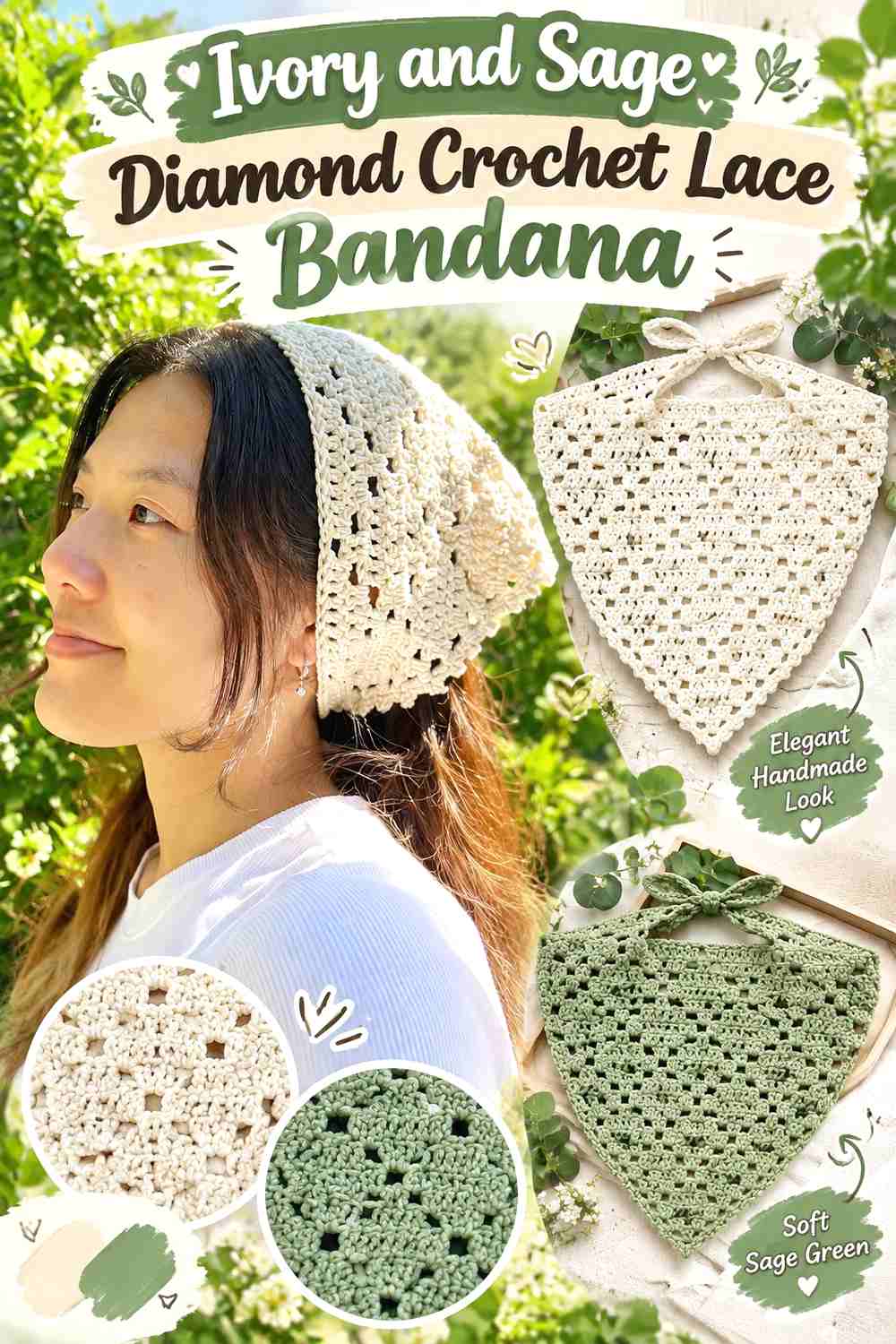
Ivory keeps a geometric diamond-lace surface easy to inspect, while sage can introduce a soft color change around the perimeter. Let ivory dominate the triangle so the repeated openings remain the main feature, then use sage selectively for ties or a narrow finishing edge. This keeps the palette visible without dividing every diamond with a new color.
Ivory Keeps the Crochet Diamond Lace Easy to Read
Use ivory across most of the bandana when the orderly diamond openings are the feature you want to emphasize. A quiet solid field lets the negative space establish the pattern instead of asking the eye to follow both geometry and frequent color changes.
Check several completed diamonds against your hair before deciding whether additional contrast is necessary.
Sage Can Frame the Ivory Crochet Lace Without Taking Over
A sage border or pair of sage ties gives the ivory triangle a defined finish without interrupting its center. Keep the green relatively limited if the diamond grid already provides substantial visual detail.
If sage appears only on the ties, consider carrying a narrow amount along the outer edge so the secondary color feels connected to the bandana body.
Creator Credit: VivCrochets
2. Dusty Rose And Cream Floral Crochet Lace Bandana
 SAVE
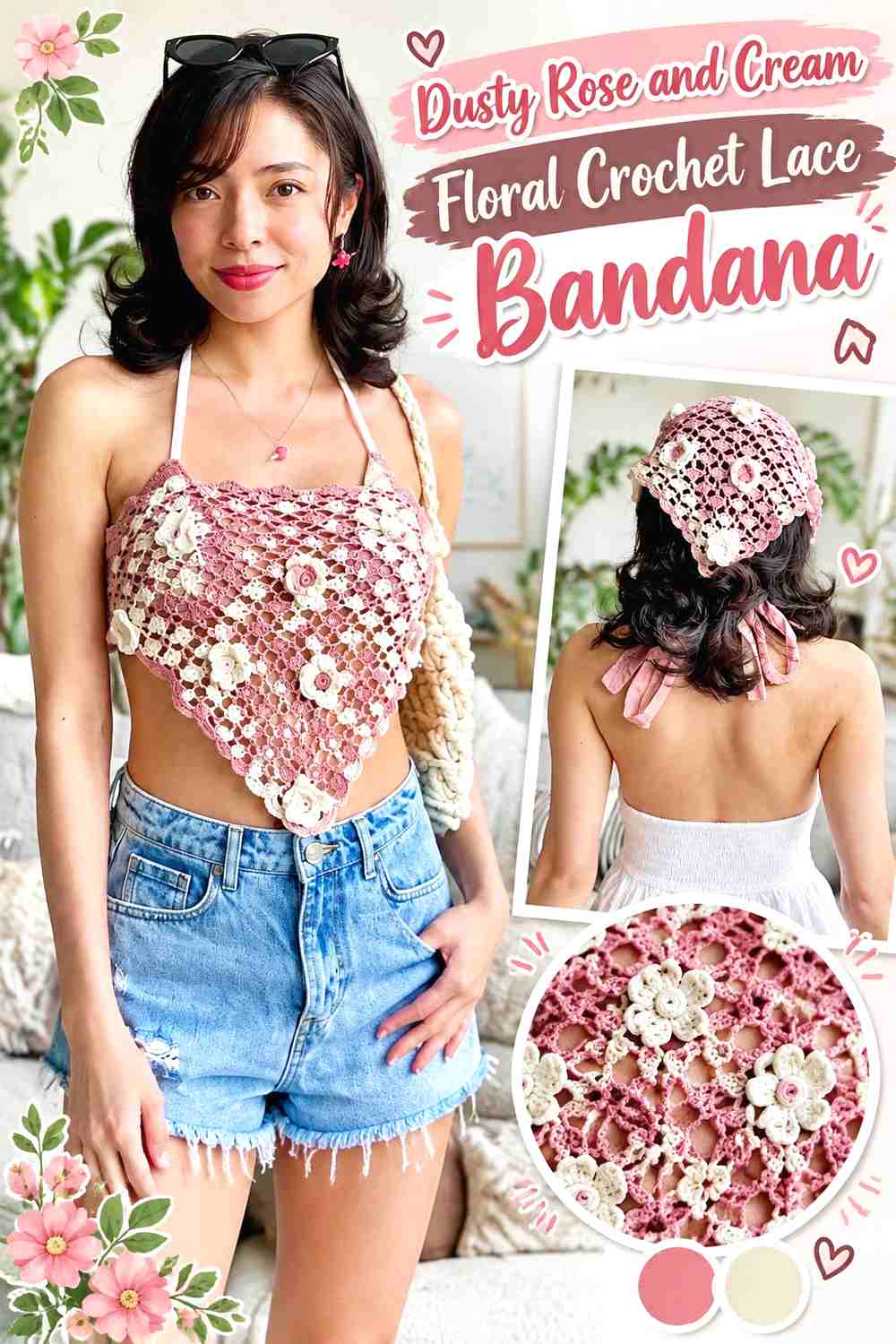
Dusty rose and cream suit a floral lace bandana because the two shades can separate the body from the smaller decorative details without creating a harsh color break. Dusty rose can lead across the triangle, while cream highlights the flower elements, shell-like edge, or ties.
Let Dusty Rose Carry the Crochet Floral Lace Body
Keeping the main openwork dusty rose gives repeated flowers a continuous background relationship. This is useful when the lace itself already changes shape frequently and does not need additional striping.
If your dusty rose is particularly muted, compare it against your hair to make sure the floral openings remain visible when worn.
Use Cream Where Dusty Rose Floral Details Need Separation
Cream can highlight selected flowers or edge details without covering a large percentage of the bandana. The lighter color is especially useful around small decorative areas that might otherwise disappear inside the dusty rose lace.
Repeat cream in at least two locations, such as the flower details and ties, so it does not look like an isolated addition.
Creator Credit: petpetcrochets
3. Midnight Navy And Silver Blue Openwork Crochet Lace Bandana
 SAVE
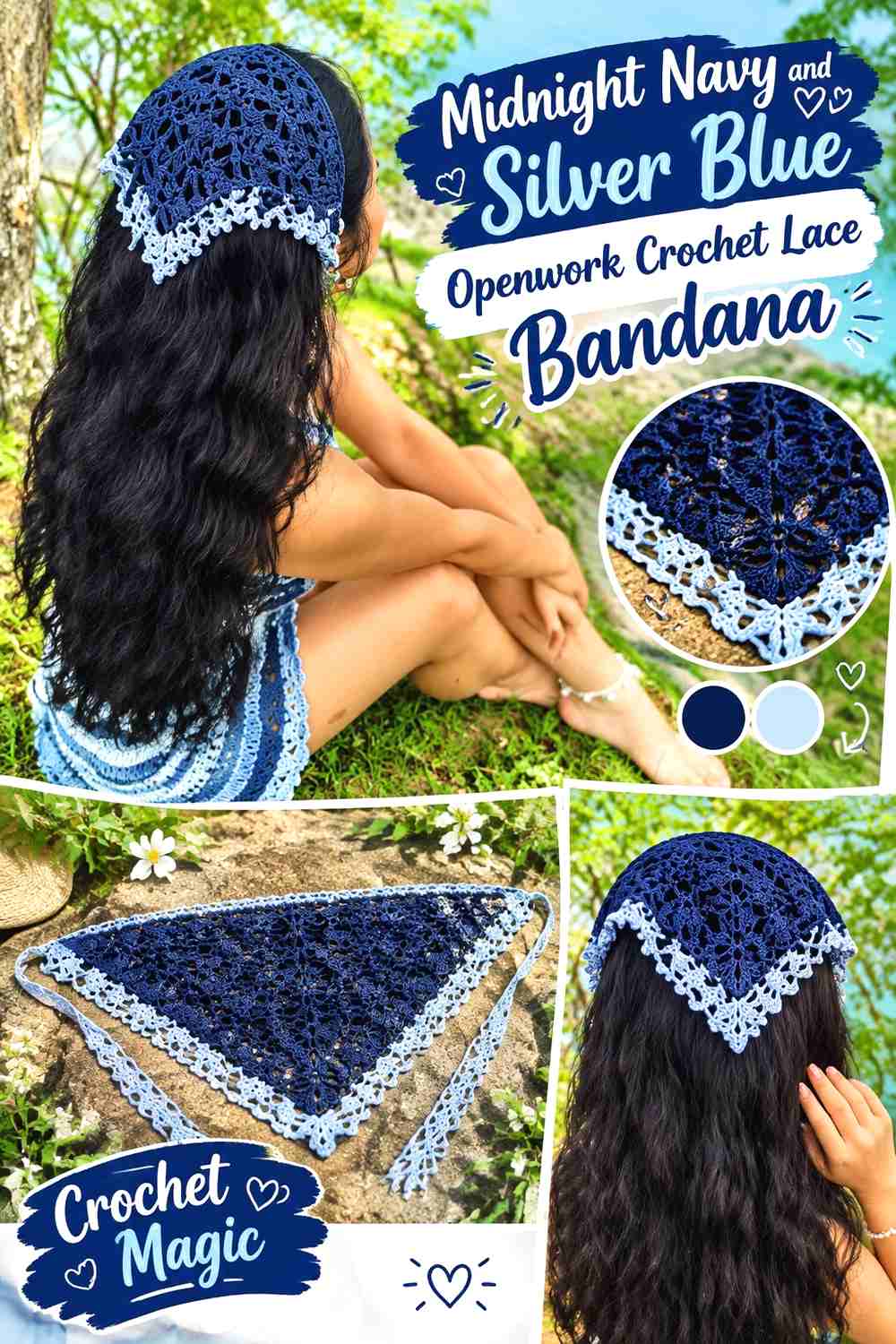
Intricate openwork already contains a high level of visual detail, so this palette works best when midnight navy carries most of the lace and silver blue appears only in controlled areas. The dark field makes the openings more obvious against a lighter background, while silver blue can soften the outer edge.
Midnight Navy Gives Detailed Crochet Lace One Continuous Field
Use midnight navy through the complicated central openwork rather than changing colors in the middle of every repeat. A continuous shade makes it easier for the structure of the lace to remain the focal point.
Step away from the developing bandana occasionally. If the openwork loses definition at normal viewing distance, additional colors are unlikely to solve the underlying visibility issue.
Silver Blue Can Lighten a Midnight Navy Crochet Lace Edge
Place silver blue around the border or ties when the navy body feels visually heavy. The lighter shade introduces contrast at the silhouette without dividing the internal lace.
Keep the silver blue edge narrow if the openwork is highly ornate. A large contrasting frame can pull attention away from the stitch pattern you chose the project for.
Creator Credit: Crochet Corner Ph
4. Powder Blue And White Fine Lace Crochet Bandana
 SAVE
Powder blue is a natural main color for fine-scale lace because it provides visible color without overwhelming small openings. White can be used at the perimeter to sharpen the silhouette, especially when the bandana has delicate stitch groups that would become busy with repeated color changes.
Powder Blue Lets Fine Crochet Lace Stay Visually Light
Keep powder blue across most of the triangle so the small-scale lace reads as one continuous textile. With fine openings, frequent color changes can occupy more visual attention than the actual stitch pattern.
View the sample against your hair rather than only against a light work surface. Fine powder blue lace can appear more or less distinct depending on the background behind it.
White Gives Powder Blue Crochet Lace a Cleaner Outer Line
White can work along the ties or outer edge when the powder blue body needs more definition. Because the two colors are both light, the transition remains softer than a dark contrasting border.
If your powder blue is extremely pale, compare it directly with white first. You want enough distinction for the border to have a purpose.
Creator Credit: The Crochet Channel
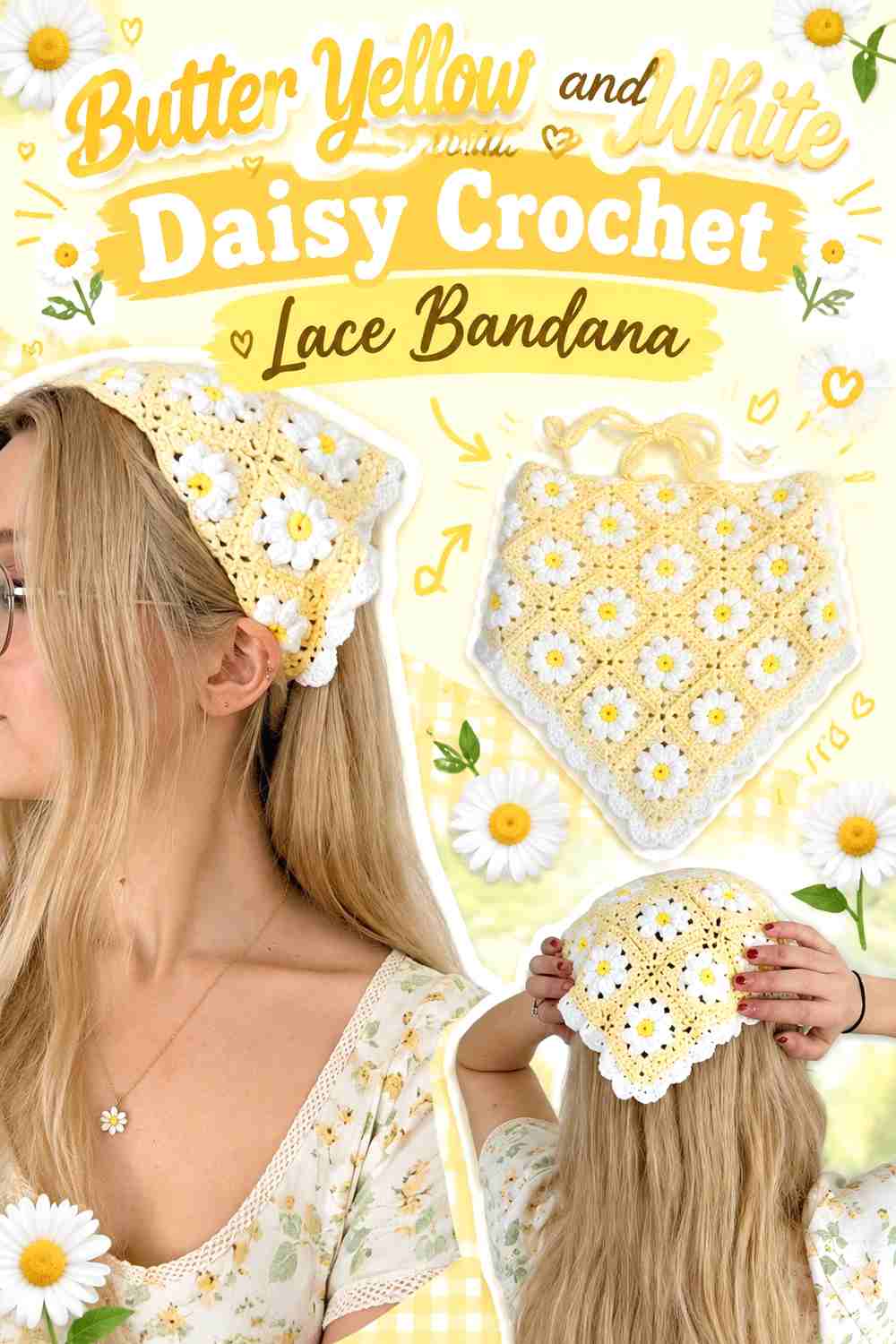
5. Butter Yellow And White Daisy Crochet Lace Bandana
 SAVE
A joined daisy bandana gives color distinct structural locations: flower centers, petals, motif backgrounds, joins, and edging. Butter yellow can occupy the flower centers while white forms the petals, giving the floral theme clear repetition across the triangular layout.
Butter Yellow Makes the Crochet Daisy Centers Repeat Clearly
Use butter yellow consistently in the centers if you want each flower to read as part of the same bandana. Repetition matters more in joined motifs because every square or triangular piece becomes a separate visual unit.
Lay the completed motifs out before joining so the yellow centers are distributed evenly across the final triangle.
White Keeps Butter Yellow Crochet Daisy Petals Distinct
White petals create a light area around each yellow center and can also be repeated along the border or joins. Avoid introducing several additional strong colors unless you deliberately want the modular construction to become highly multicolored.
If the motif background is also white, check whether the petals still have enough structural definition once the pieces are joined.
Creator Credit: cosybearcrochet
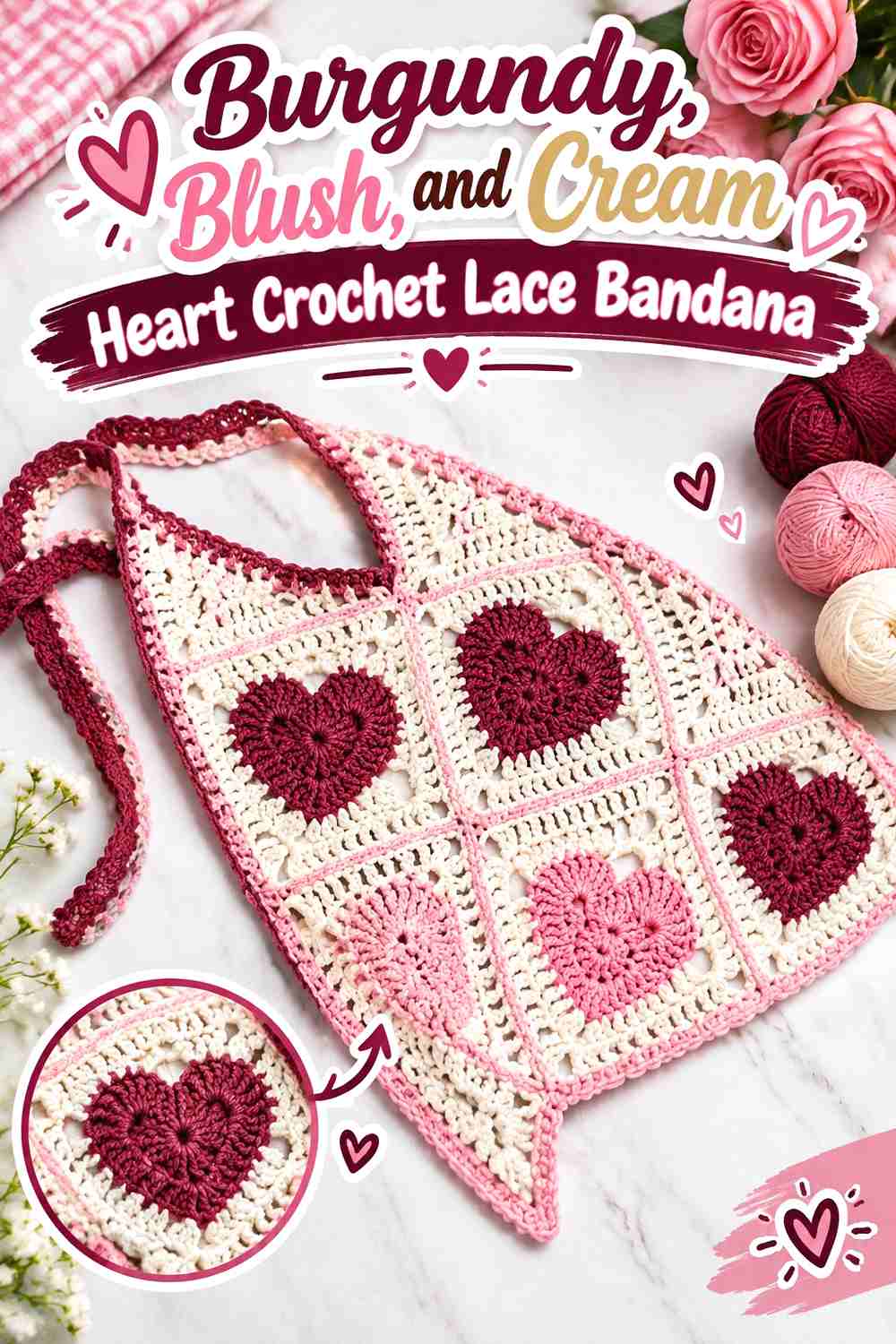
6. Burgundy Blush And Cream Heart Crochet Lace Bandana
 SAVE
Joined heart motifs can carry three colors without looking arbitrary because each shade can be assigned a role. Burgundy can define the hearts, blush can surround them inside the squares, and cream can handle joins, edging, or ties.
Burgundy Makes the Crochet Heart Motifs the Darkest Accent
Reserve burgundy for the hearts when you want the motif to be recognized before the square background. Keeping the darkest shade in one repeated location gives every heart a consistent visual role.
Before making all the motifs, complete one full burgundy-and-blush square and view it from several feet away to confirm that the heart remains obvious.
Cream Separates Burgundy and Blush Crochet Heart Squares
Cream can work as an outer motif color or joining shade when burgundy and blush already supply enough color inside the squares. The neutral space gives each heart unit a clearer boundary.
Keep cream secondary if you want the finished bandana to remain noticeably pink and burgundy rather than becoming a cream patchwork piece.
Creator Credit: La Tía Ni
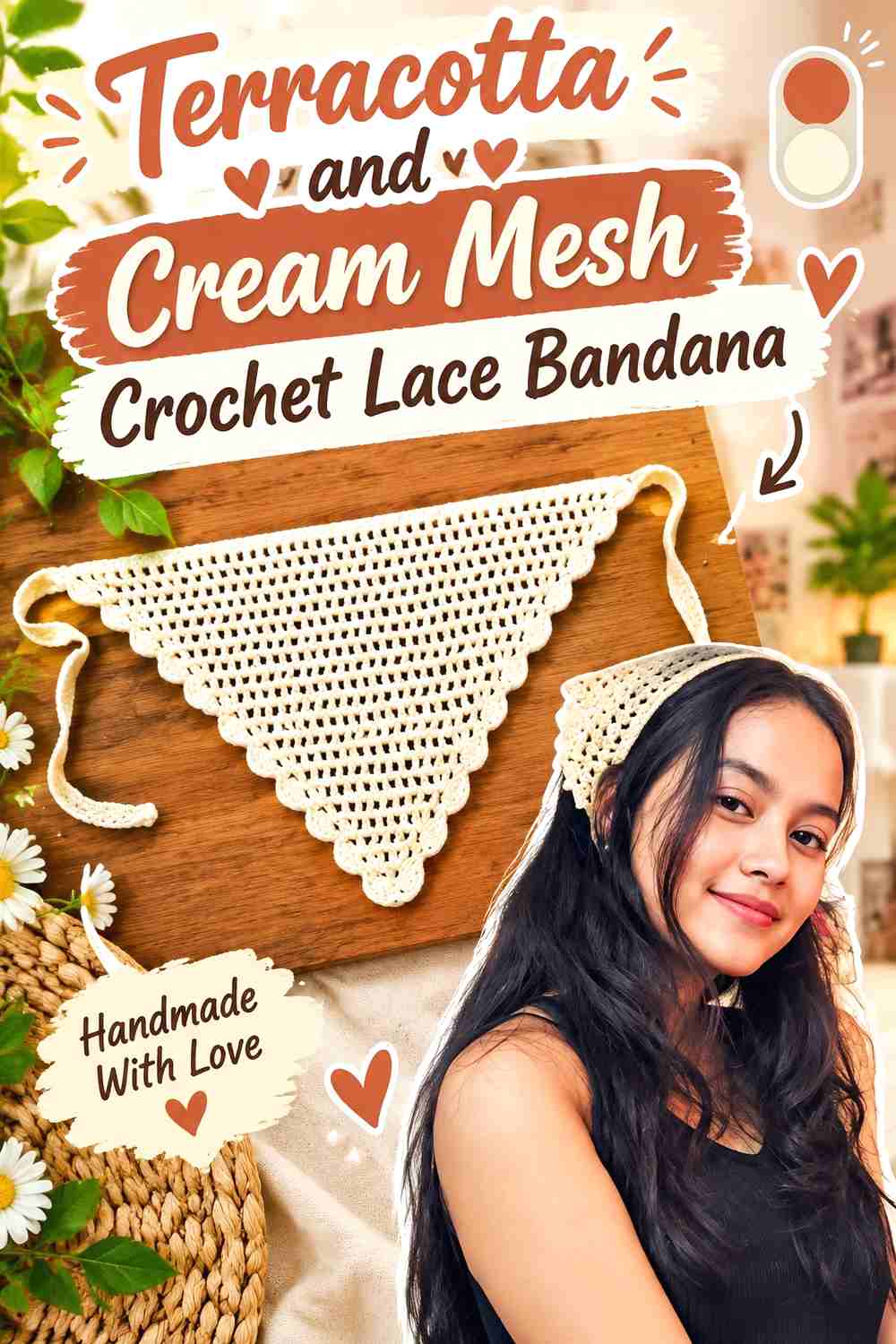
7. Terracotta And Cream Mesh Crochet Lace Bandana
 SAVE
Terracotta gives simple mesh a strong warm color without needing complicated motif work. Cream can be concentrated around the edge and ties, where it lightens the silhouette and prevents the entire bandana from becoming one uninterrupted terracotta triangle.
Terracotta Works Well Across Broad Crochet Mesh
Let terracotta dominate the open body so the mesh itself remains visually consistent. Alternating colors through every mesh section can make the holes harder to read as one continuous pattern.
Because a large amount of hair remains visible through mesh, try the developing triangle on before deciding whether the terracotta appears as strong or as subtle as expected.
Cream Can Define the Terracotta Crochet Mesh Ties
Cream ties create an obvious transition from the terracotta body to the fastening area. Repeating cream along a narrow border connects those ties back to the triangle.
If you want a more understated finish, keep both ties terracotta and use cream only as a small edge accent.
Creator Credit: Shyler crochets
8. Seafoam And White Wide Mesh Crochet Lace Bandana
 SAVE
Wide mesh makes the background behind the bandana especially important, so a lighter palette can keep the effect airy. Seafoam can cover the main framework while white appears around picots or edging, giving the perimeter extra definition without filling the open spaces.
Seafoam Keeps Wide Crochet Mesh From Looking Visually Heavy
Use seafoam continuously across the mesh when you want the open structure to be more important than striping. Because large holes already divide the surface into a strong pattern, another repeated color change is not necessary.
Judge seafoam against your actual hair color because the contrast can look substantially different once the bandana is worn.
White Can Highlight Seafoam Crochet Picot Details
Small white picots or a white finishing edge can make the perimeter easier to see without changing the mesh body. This is particularly useful when seafoam is light enough that the bandana outline begins blending into the background.
Avoid making the white edge disproportionately wide, or it may become more prominent than the open seafoam center.
Creator Credit: ElyseCrochets 💌
9. Lavender And Charcoal Striped Crochet Lace Bandana
 SAVE
Lavender and charcoal create a stronger light-dark contrast than most pastel lace palettes. Use lavender for the majority of the open bandana and charcoal as spaced stripes, edging, or ties. The dark shade needs less surface area to remain noticeable.
Let Lavender Dominate the Crochet Lace Stripes
Broad lavender sections give the lace enough uninterrupted space to remain recognizable. Instead of alternating lavender and charcoal equally, allow several lavender areas to establish the main color first.
This is particularly useful if the border is also decorative, since too many equally strong elements can make a small bandana feel crowded.
Keep Charcoal Narrow Against the Lavender Crochet Lace
Charcoal works well as an accent because its darker value can produce a strong visual line even in narrow sections. Place it at repeated intervals or reserve it for the border and straps.
Check the charcoal placement near the bandana point. A large dark block there can visually pull the entire design downward.
Creator Credit: Ashten Stitches
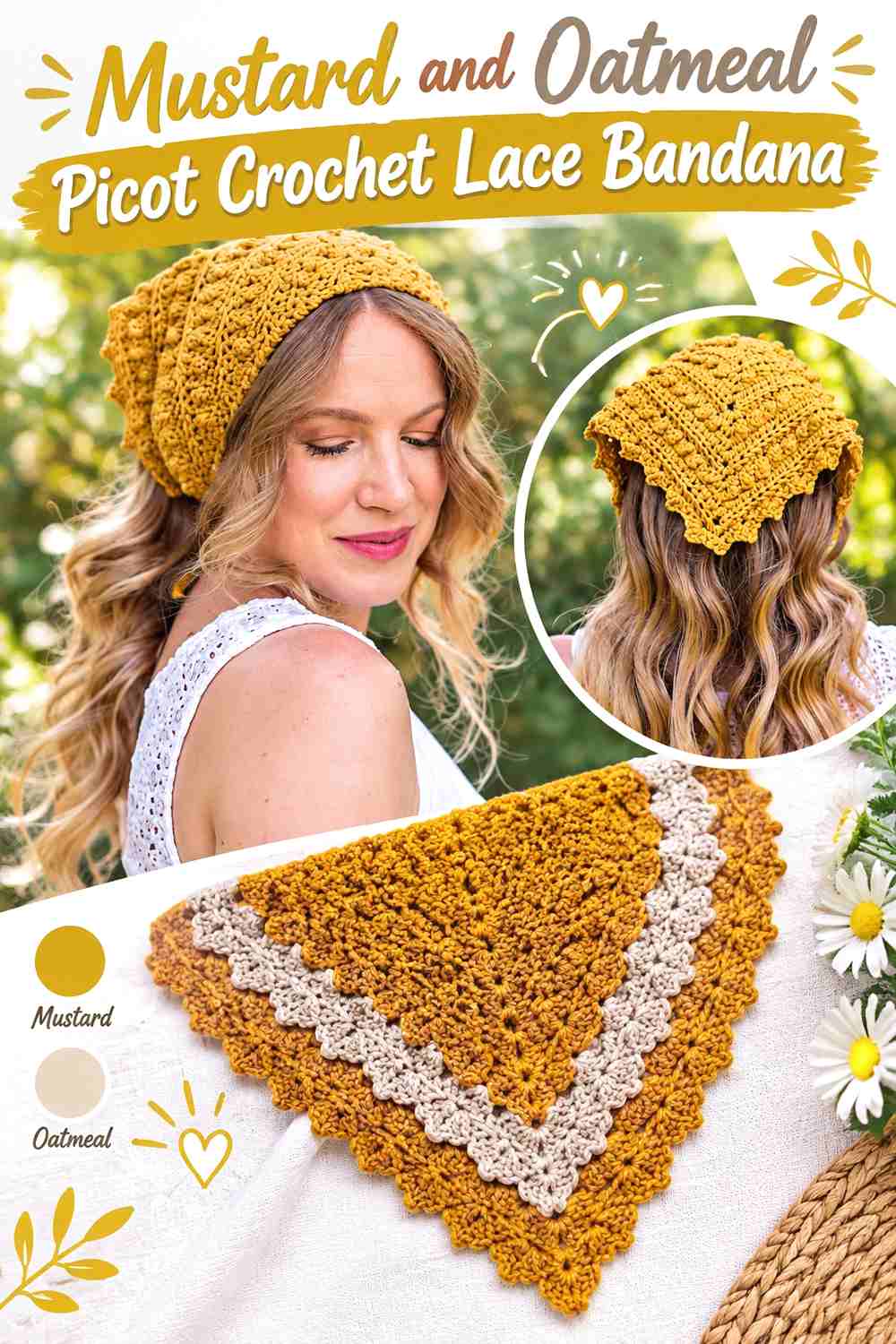
10. Mustard And Oatmeal Picot Crochet Lace Bandana
 SAVE
A textured picot bandana contains more solid crochet than broad mesh, making color distribution across the surface especially noticeable. Mustard can lead through the main body, while oatmeal softens the outer edge and prevents the small picot details from disappearing inside one solid color field.
Mustard Makes Crochet Picot Texture More Noticeable
Use mustard through the central fabric when you want the textured stitches to create most of the visual interest. A solid main shade lets shadows around the raised or pointed details remain easier to see.
Before introducing oatmeal, make enough mustard fabric to decide whether the texture already supplies sufficient contrast on its own.
Oatmeal Gives Mustard Crochet Picots a Softer Border
Oatmeal around selected edge details can separate the silhouette without producing the stronger effect of white or black. This keeps the palette warm while still giving the border a distinct role.
If the oatmeal and mustard are similar in lightness, use oatmeal in larger connected sections rather than tiny isolated details.
Creator Credit: The Turtle Trunk
11. Teal And Ecru Filet Crochet Lace Bandana
 SAVE
Filet crochet relies on a readable relationship between filled and open areas, so teal works well as one continuous main color. Ecru can be introduced around the decorative edge or ties where it does not interrupt the internal grid.
Teal Keeps the Crochet Filet Grid Visually Connected
Use teal throughout the central filet area to let the open-and-solid pattern provide the internal contrast. Frequent color changes inside the grid can make it harder to distinguish which visual changes belong to the motif and which come from yarn color.
View the filet vertically as well as flat because a larger triangle can drape differently once worn.
Ecru Can Finish the Teal Crochet Filet Without Hiding It
An ecru border gives the outer edge a light break from the saturated teal body. It is most useful when the bandana needs a clearer silhouette rather than more detail through the center.
Repeat ecru in the ties if you want the lighter edge to continue naturally into the fastening.
Creator Credit: DIYGuru
12. Black And Deep Red Filet Crochet Lace Bandana
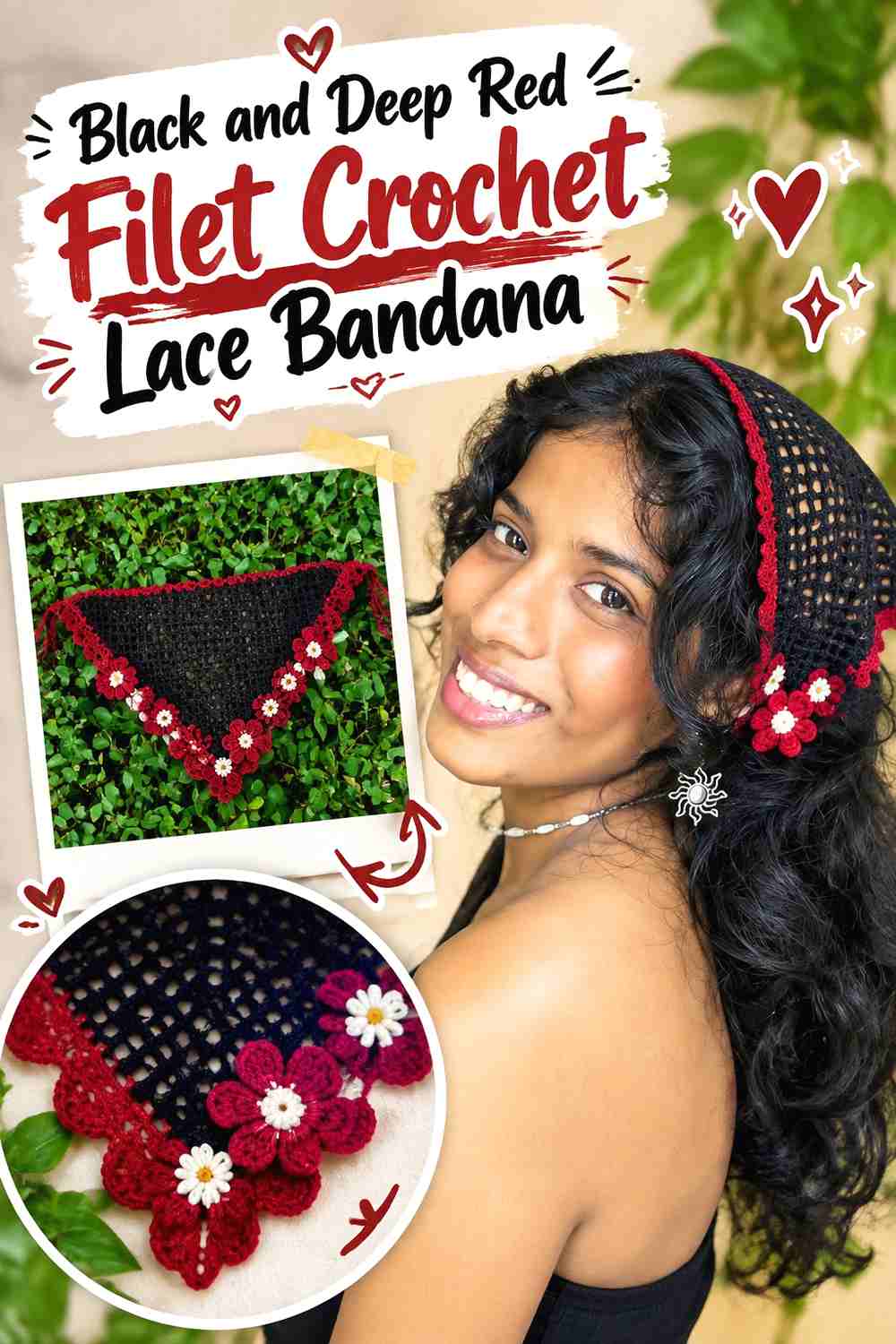 SAVE
Black and deep red create a much darker lace direction. Because both colors can carry considerable visual weight, the safest approach is to let black dominate the filet triangle and reserve deep red for specific edge areas, ties, or one deliberate band.
Black Makes the Crochet Filet Openings the Main Contrast
A black filet bandana uses the background visible through the openings as part of the design. That means you may not need a second yarn color throughout the body at all.
Look at the bandana against the hair or clothing you expect behind it. The filet grid may be much more noticeable against a lighter background than a dark one.
Deep Red Should Stay Controlled Against Black Crochet Lace
Deep red can add warmth to the ties or picot edging without competing with every open filet cell. Keeping the red concentrated also prevents two dark colors from merging across the entire triangle.
If your red is especially deep, compare both yarns in grayscale. Similar values may create a subtle rather than sharply contrasting result.
Creator Credit: Croshico- Crochet with Rave🌻
13. Coral And Cream Floral Crochet Lace Bandana
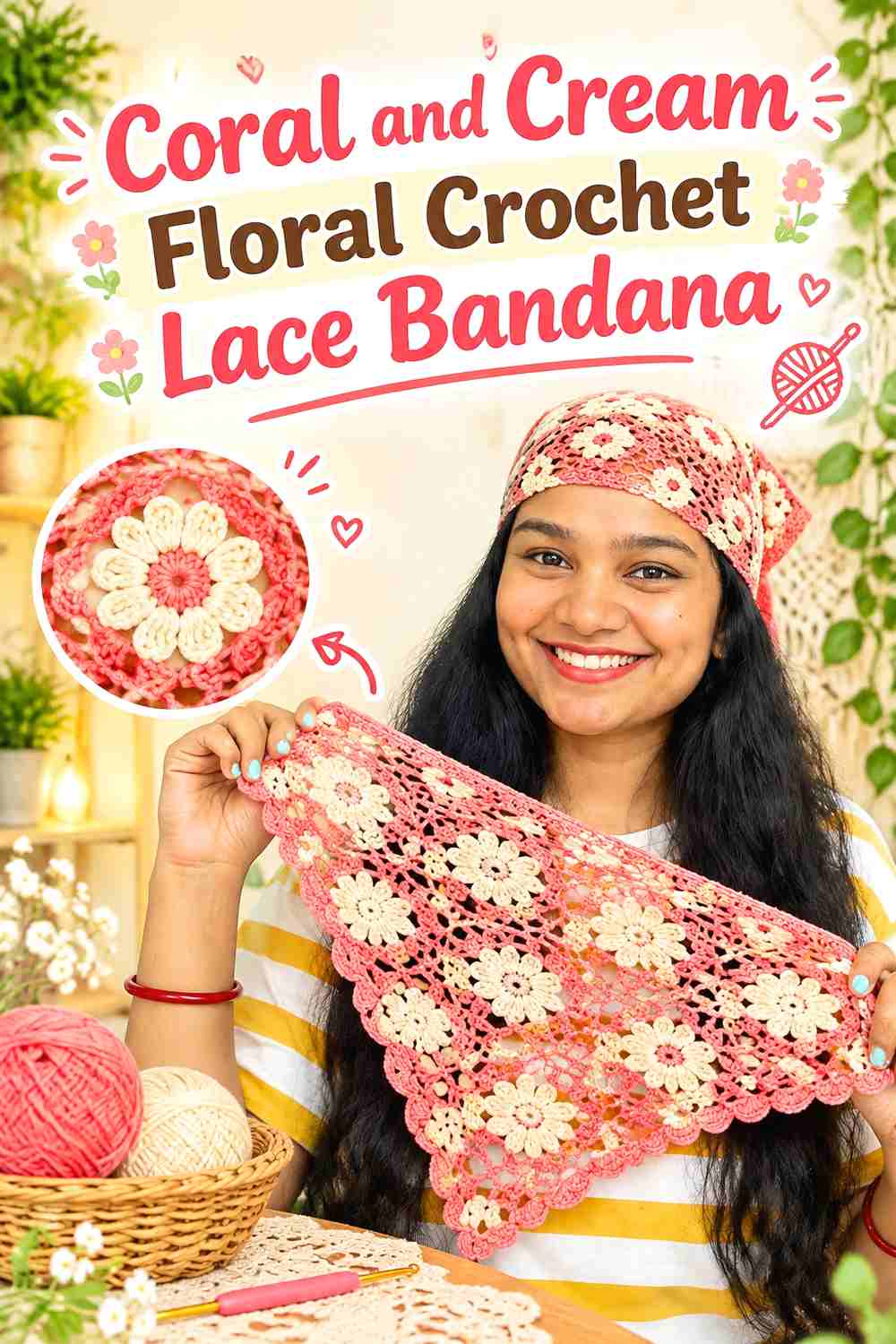 SAVE
Coral gives floral openwork a stronger warm-weather color direction, while cream can highlight the smaller flower shapes or finish the ties. Unlike a joined-flower bandana, continuous floral lace benefits from keeping most of the body one color so the repeated openings remain connected.
Coral Can Carry the Entire Crochet Floral Lace Repeat
Use coral through the main triangle when the flower-shaped openings are the design you want to showcase. A consistent hue helps the viewer follow the repeated petals and curves instead of switching attention between color bands.
Make enough fabric to reveal several flowers before deciding whether the coral yarn gives them sufficient definition.
Cream Can Lighten the Coral Crochet Floral Edge
Cream works well around the perimeter if the coral triangle needs a lighter frame. It can also appear on the ties so the contrasting edge has a second visual connection.
Keep the cream border simple when the floral body is already intricate. The edge should clarify the silhouette rather than introduce a competing motif.
Creator Credit: Crochet by Amrita
14. Forest Green And Camel Linked Crochet Lace Bandana
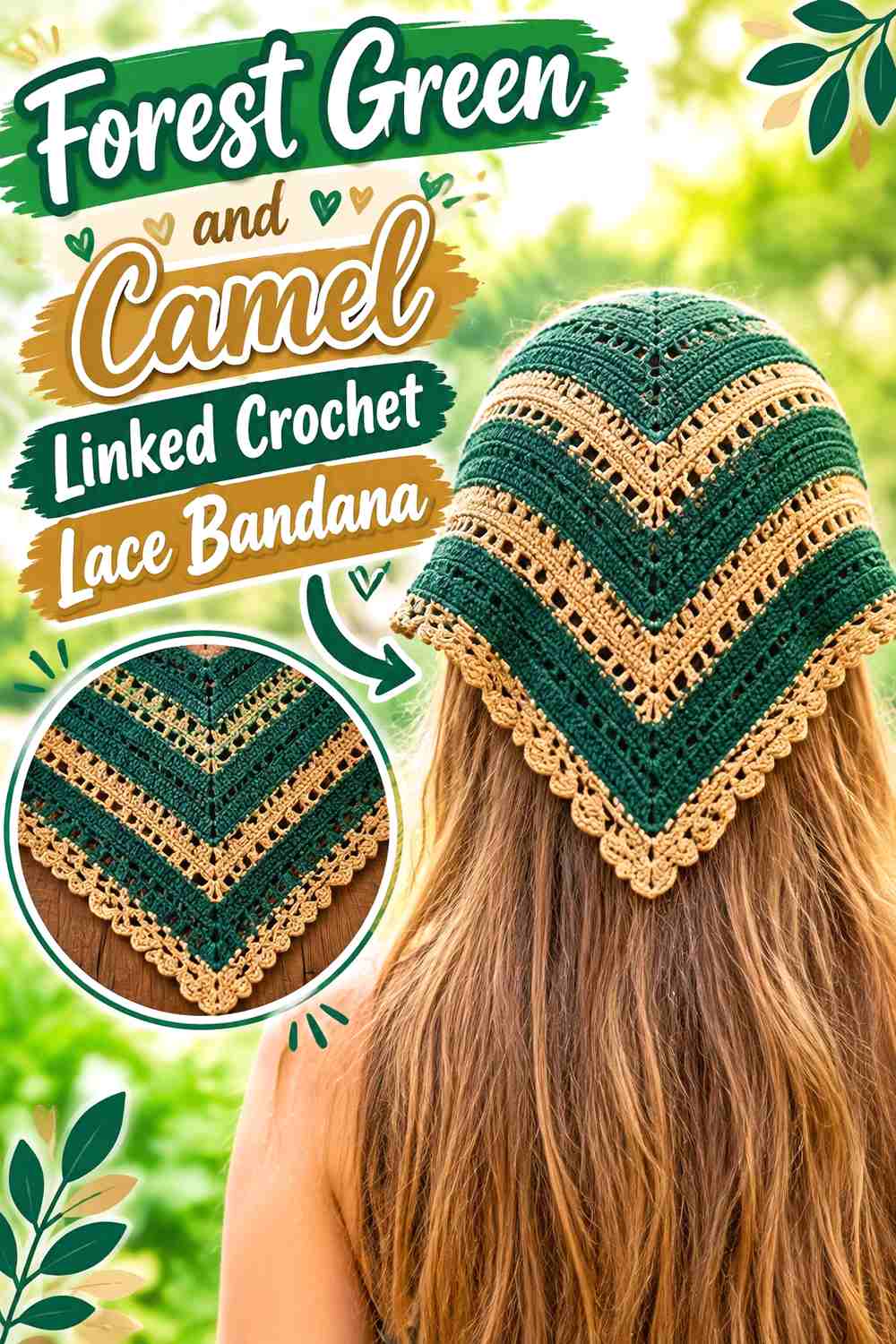 SAVE
Forest green and camel give a linked or mixed-density bandana an earthy high-contrast palette. Forest green can occupy the more substantial body sections, while camel highlights scalloped edging or selected open areas without making the entire triangle equally dark.
Forest Green Grounds the Denser Crochet Bandana Sections
Use forest green across the areas containing more crochet fabric so the stronger sections visually connect. When the pattern shifts between denser and more open textures, one consistent main color prevents those changes from becoming fragmented.
Check how the dark green behaves when the fabric hangs rather than judging it only while the bandana lies flat.
Camel Can Separate the Forest Green Crochet Scallops
Camel around a scalloped edge makes the curves easier to identify against the forest green body. Because scallops already create considerable movement, the lighter color does not need to extend far into the main triangle.
Repeat camel in the ties if the border otherwise feels isolated from the rest of the finished bandana.
Creator Credit: Nicki’s Homemade Crafts
15. Cobalt Blue And White Flower Filet Crochet Lace Bandana
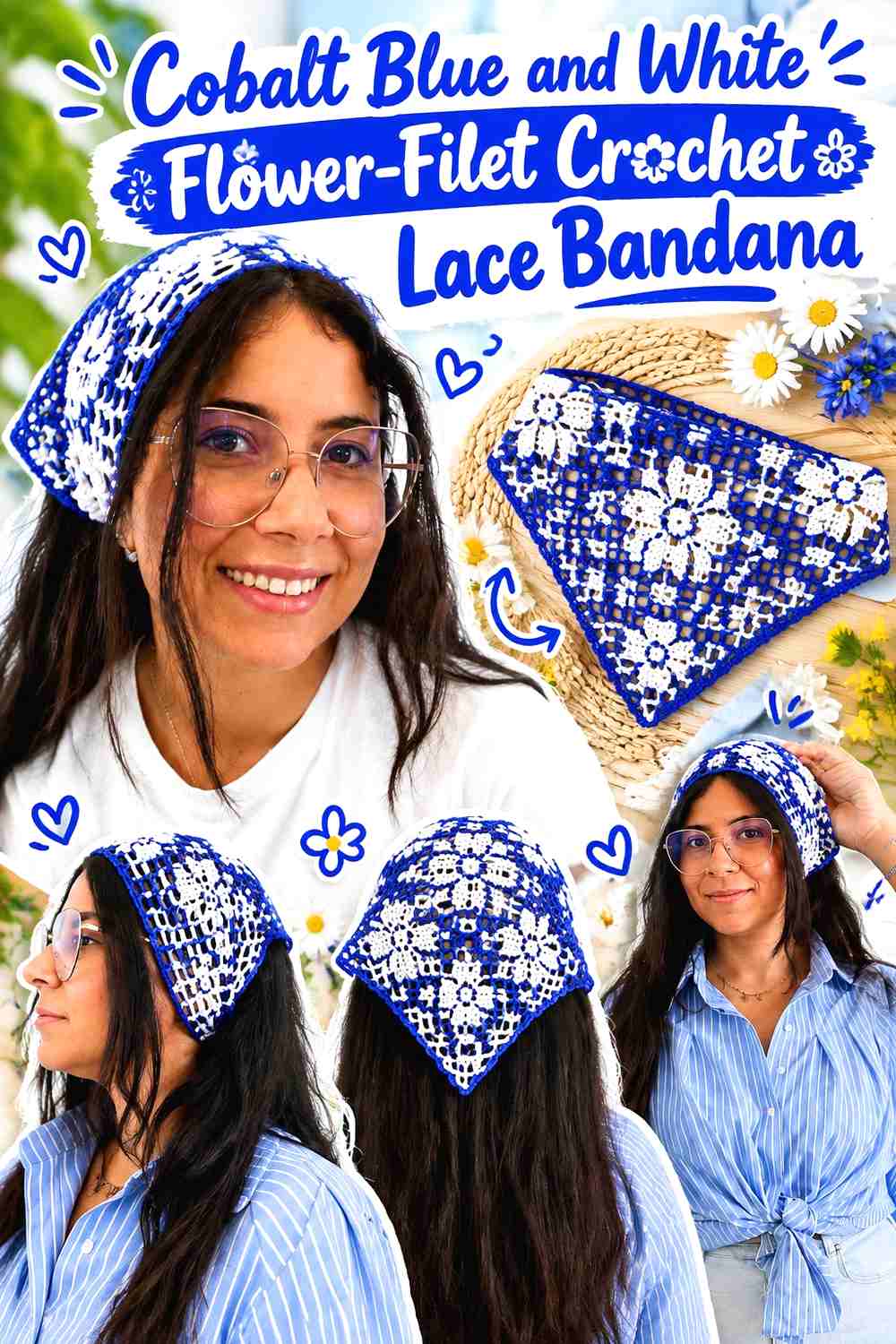 SAVE
Cobalt blue gives filet flowers a strong single-color foundation, while white can be used sparingly around the ties or final edge. The saturated blue makes this palette more graphic than the powder-blue or cream-heavy ideas earlier in the list.
Cobalt Blue Keeps the Crochet Filet Flower Unified
Use cobalt blue across both open and filled filet areas so the flower is created by negative space rather than multiple yarn colors. This lets the grid itself form the motif and keeps the saturated blue visually uninterrupted.
Step back once the flower becomes visible to make sure the motif reads as an image rather than only as separate squares.
White Can Outline Cobalt Blue Crochet Lace Without Competing
White ties or a narrow white border give the cobalt triangle a crisp edge. Because the blue is already visually strong, you usually need only a limited amount of white to make the contrast obvious.
If the flower motif is near the outer edge, keep the white finish narrow enough that it does not visually cut into the filet design.
Creator Credit: Tessiland
How to Choose Between These Crochet Lace Bandana Color Schemes
For a light, soft palette, look toward ivory and sage, powder blue and white, butter yellow and white, or seafoam and white. These combinations keep the visual weight relatively low and let the lace openings provide much of the contrast.
For richer color, dusty rose, coral, terracotta, teal, and mustard can carry most of a bandana while a neutral handles the edge or ties. Midnight navy, burgundy, forest green, charcoal, black, and cobalt blue create stronger anchors when you want the bandana itself to remain noticeable from a greater distance.
Construction should influence the final choice. Joined daisies and hearts give you clear places to assign several colors, while intricate filet and diamond lace usually benefit from a simpler color hierarchy.
Conclusion
A crochet lace bandana does not need many yarn colors to look detailed. Openings, picots, flowers, diamonds, filet cells, scallops, and granny spaces already create substantial visual variation.
Start by deciding whether the lace motif or the color contrast should be noticed first. For motif-focused bandanas, keep one shade dominant and use the second color mainly around borders, ties, or small repeated details. For modular flower or heart designs, assign each shade a consistent role before joining the pieces.
Most importantly, judge the colors on the bandana as it will actually be worn. Hair showing through openwork becomes part of the visual background, so a palette that looks subtle on a table can appear much more graphic once the lace is placed on the head. Use the credited tutorials for the creators’ exact construction methods.
Frequently Asked Questions
Which colors show crochet lace bandana stitches most clearly?
Solid or relatively quiet colors can make detailed diamonds, filet cells, flowers, and picots easier to follow because the yarn color does not interrupt the stitch pattern. The exact result also depends on the background visible through the lace.
Should a crochet lace bandana use one color or several colors?
Either approach can work. One color puts more emphasis on the lace structure. Two or three colors are useful when the construction provides logical placement areas such as motif centers, borders, joins, stripes, or ties.
How do I know if two colors have enough contrast for a crochet lace bandana?
Place the actual yarns next to each other and view them from a distance. A grayscale photo can also show whether they differ clearly in lightness. Similar values create a softer transition, while stronger light-dark separation makes borders and motifs easier to distinguish.
Where should the accent color go on a crochet lace bandana?
Useful locations include the ties, outer edging, picots, flower centers, motif backgrounds, joins, or occasional bands. Choose areas that already have a structural reason to look different instead of scattering the accent randomly through the triangle.
Are multicolor yarns suitable for crochet lace bandanas?
They can be, but consider how often the yarn changes color compared with the size of the lace repeat. Fast color changes may obscure small filet flowers, diamonds, or detailed openwork, while broader changes can create a more readable effect.
Why does my crochet lace color look different once the bandana is worn?
Openwork allows the background to show through. Hair color, clothing, and lighting can therefore change how light, dark, muted, or saturated the crochet appears. Check the developing bandana against the background where it will actually be worn before making final color decisions.