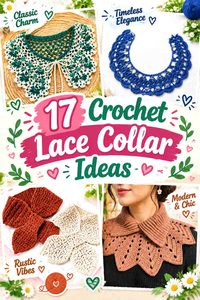
Crochet lace collars pack a surprising amount of design into a relatively small accessory. The inner neckline, open spaces, scallops, motifs, outer points, closure, and garment underneath can all affect how the color scheme looks once the collar is worn.
That makes color placement especially important. A dark border can turn delicate lace into a graphic outline, while a pale single-color collar can let shadows and openwork provide most of the definition. Motif-based collars create even more options because flower centers, petals, joins, ties, and outer rounds can each carry a different color role.
The tutorials credited below support the crochet collar construction concepts. The palettes are independent color adaptations, so the color suggestions are not claims about the shades used by the tutorial creators.
Quick List
- Ivory And Black Rounded Peter Pan Crochet Lace Collar
- Dusty Rose And Cream Delicate Crochet Lace Collar
- Burgundy And Antique Ivory Rose Motif Crochet Lace Collar
- Cobalt Blue And White Oversized Crochet Lace Collar
- Forest Green And Camel Pelerine Crochet Lace Collar
- Teal And Ecru Geometric Crochet Lace Collar
- Mustard And Cream Compact Vintage Crochet Lace Collar
- Powder Blue And White Shell Stitch Crochet Lace Collar
- Black And Silver Gray Fine Thread Crochet Lace Collar
- Lavender And Ivory Cardigan Crochet Lace Collar
- Sage Cream And Blush Flower Square Crochet Lace Collar
- Rust And Oatmeal Leaf Edge Crochet Lace Collar
- Navy And Pale Gray Narrow Crochet Neck Lace Collar
- Terracotta And Cream Bib Style Crochet Lace Collar
- White And Black Gothic Crochet Lace Collar
- Blush And Burgundy Scalloped Peter Pan Crochet Lace Collar
- Emerald Green And Ivory Airy Peter Pan Crochet Lace Collar
Choose Crochet Lace Collar Colors Against the Garment Underneath
Unlike a blanket or bag, a lace collar rarely appears against an empty background. A blouse, sweater, dress, or cardigan shows through the open spaces, effectively becoming another color in the finished composition.
Before committing to a palette, place the yarn against clothing similar to what you plan to wear with the collar. Ivory lace over cream creates a much quieter effect than ivory over navy or black. Dark green openwork may look highly defined over white but more subdued over a brown or charcoal garment.
This matters most for very open lace. When much of the garment remains visible through the crochet, the underlying clothing can create as much contrast as a second yarn color.
Give Borders, Motifs, and Closures Clear Color Roles
A small collar can become visually busy quickly. Instead of distributing two or three colors evenly through every row, assign them jobs.
One shade can cover the main lace body, another can define the outer scallops, and a third can appear only at a flower center, join, tie, or closure area. This hierarchy is particularly useful for ornate collars because the stitch pattern already provides considerable detail.
For a simpler look, keep the entire lace body one color and let the clothing underneath provide the contrast.
Check Light and Dark Contrast Before Coloring Small Lace Details
Two yarns can be different hues yet still sit close together in lightness. That matters when one shade is supposed to outline a tiny flower, leaf, picot, shell, or geometric motif.
Compare the yarns side by side and consider viewing a photo in grayscale. If the detail disappears, either increase the value contrast or give that color a larger area.
Small lace does not always need maximum contrast, however. Close values can create a softer blended result when the silhouette rather than the individual motif is meant to lead.
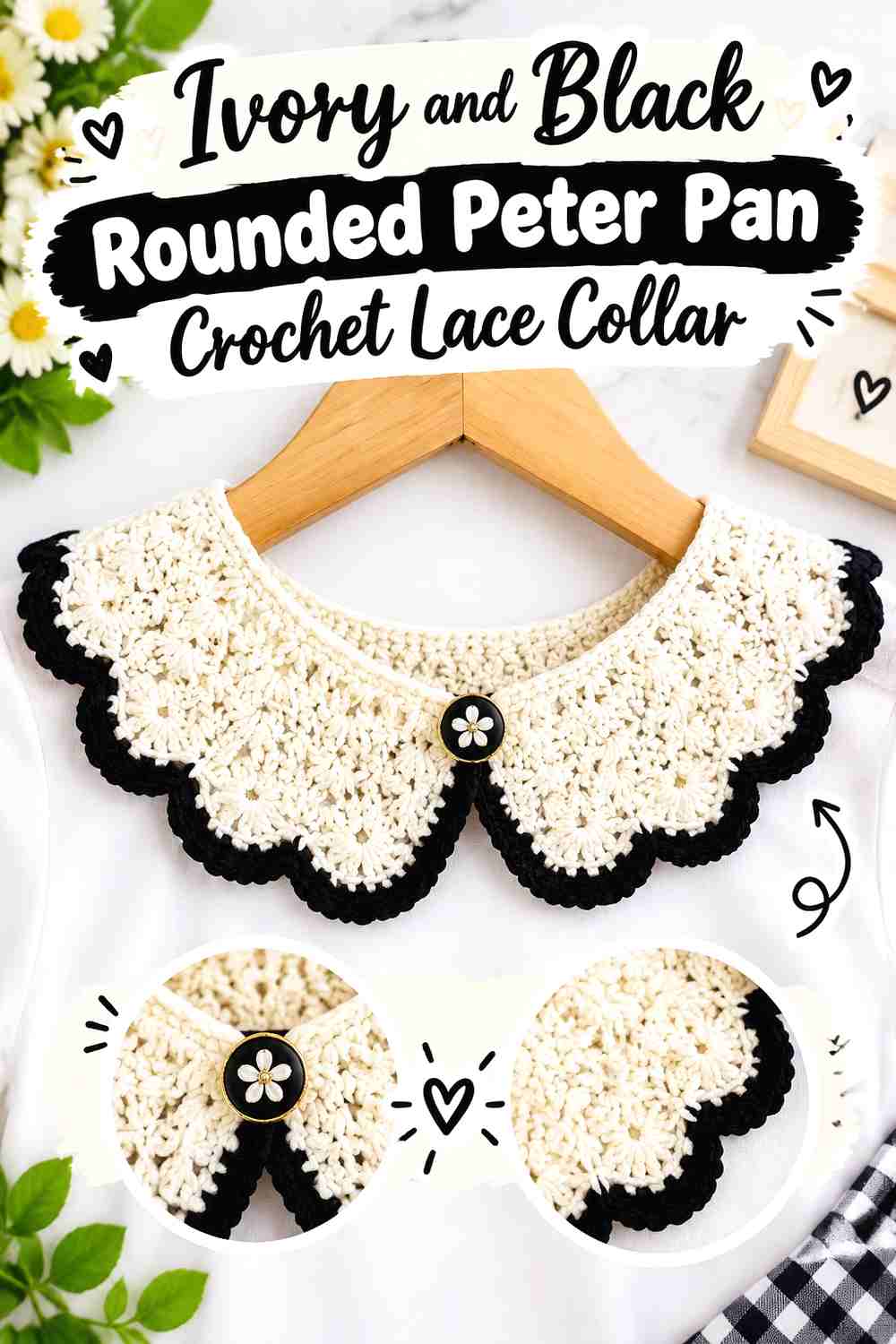
1. Ivory And Black Rounded Peter Pan Crochet Lace Collar
 SAVE
Ivory can carry the rounded Peter Pan shape while black appears only along the outer lace edge or at the fastening. This keeps the collar light overall but creates enough dark definition for the two rounded sides to remain obvious. Because black has strong visual weight, it does not need much surface area to influence the finished collar.
Let Ivory Control the Rounded Crochet Lace Collar
Use ivory across the neckline and most of the rounded collar body when you want the curved shape and open stitches to remain the first features readers notice.
A continuous ivory field also prevents the small collar from becoming chopped into many dark and light bands. The garment underneath can supply additional contrast through the lace openings.
Keep Black Narrow Around the Ivory Crochet Collar Edge
Black works well as a narrow outline, tie detail, or fastening accent. Avoid automatically giving it the same width as the ivory body, because a broad dark border can visually shrink the lighter center.
Place the unfinished ivory collar over the intended garment before deciding whether black edging is even necessary. A dark blouse may already provide plenty of definition.
Creator Credit: Crochet Lovers
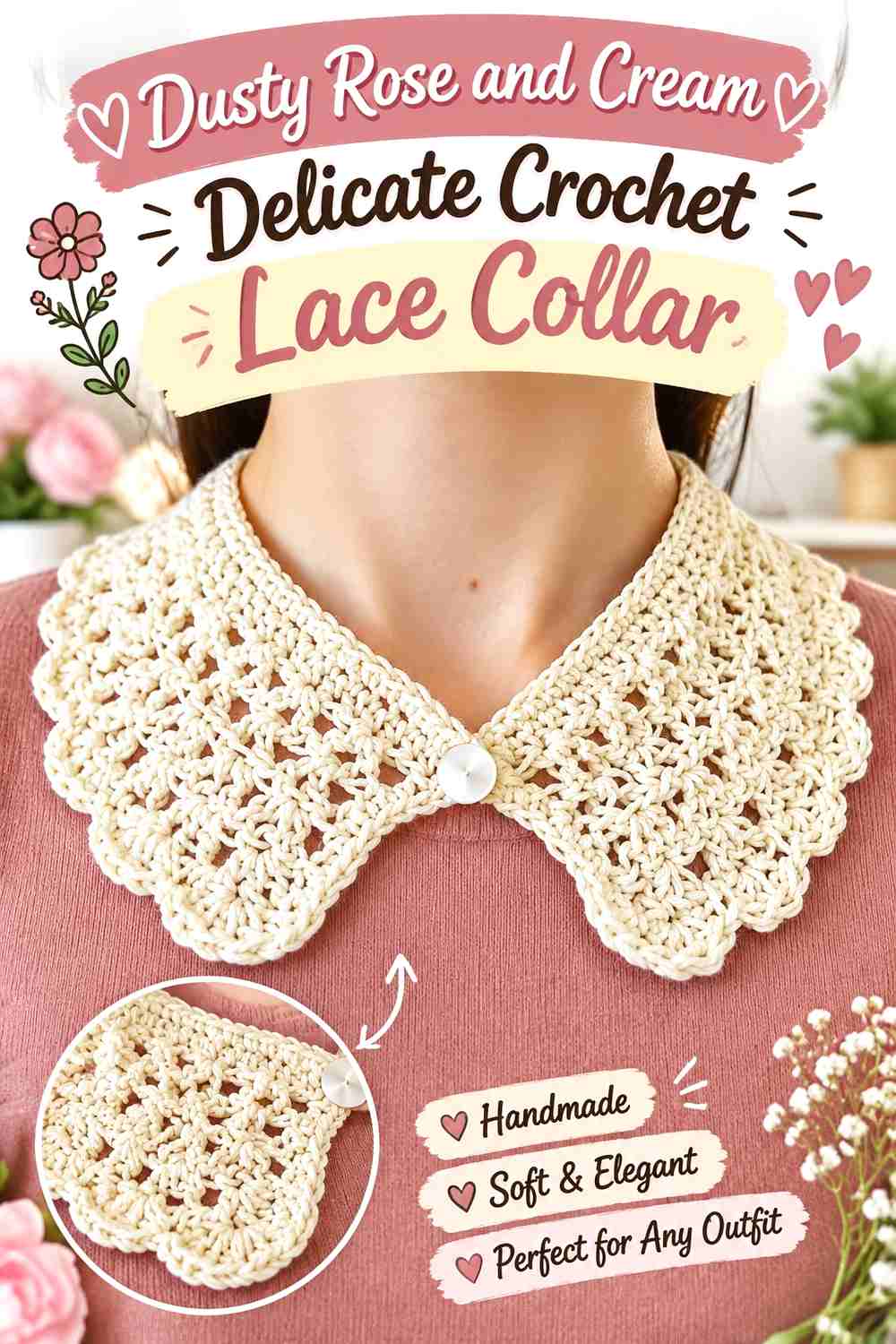
2. Dusty Rose And Cream Delicate Crochet Lace Collar
 SAVE
A small lace accent collar benefits from restrained color placement. Dusty rose can carry the main openwork, while cream defines selected scallops or the fastening area. Both colors remain relatively soft, so the contrast comes from their lightness difference rather than an aggressive color clash.
Keep Dusty Rose Continuous Through the Delicate Crochet Lace
Use dusty rose across the smallest lace repeats so the stitch structure remains connected. Frequent cream changes through fine openwork can attract more attention than the lace itself.
When the collar is narrow, even subtle color interruptions occupy a significant percentage of the visible area.
Use Cream to Clarify Dusty Rose Crochet Scallops
Cream can highlight an outer scallop or small pointed finish when dusty rose alone produces too little definition against the garment.
Repeat cream in another controlled location, such as the tie or button-loop area, if one isolated cream edge looks disconnected.
Creator Credit: Jayda InStitches
3. Burgundy And Antique Ivory Rose Motif Crochet Lace Collar
 SAVE
A rose-motif collar gives burgundy and antique ivory clearly separated jobs. Burgundy can define the flower centers or full roses, while antique ivory connects the motifs and keeps the area around the neck from becoming one dark band. The result depends more on motif distribution than striping.
Burgundy Should Mark the Crochet Rose Motifs Consistently
If burgundy identifies the flowers, repeat that decision through the whole collar. A consistent dark floral color helps separate the decorative motifs from the supporting lace.
Lay the completed roses around the neckline before joining them so one side does not accidentally collect most of the burgundy visual weight.
Antique Ivory Can Open Space Around Burgundy Crochet Roses
Use antique ivory between or around the roses to keep individual motifs distinguishable. The lighter shade can also carry ties or an inner neckline band when you want the collar to feel less heavy near the neck.
Avoid introducing another strong color unless it has a specific job; the rose arrangement already provides substantial detail.
Creator Credit: Tiara Lace Crochet
4. Cobalt Blue And White Oversized Crochet Lace Collar
 SAVE
An oversized collar can support cobalt blue because there is enough surface area for the saturated shade to breathe. White works best as a strategic contrast around the outermost lace or central fastening rather than dividing every section equally.
Let Cobalt Blue Fill the Oversized Crochet Lace Collar
Use cobalt blue across the broad shoulder-spreading sections to make the collar read as one statement accessory instead of several separate colored bands.
Because the shape already covers more of the upper garment, keeping the main body one shade helps control visual complexity.
White Can Sharpen the Cobalt Blue Crochet Collar Perimeter
A narrow white outer edge can emphasize points, scallops, or other lace contours. It is particularly effective when the collar will be worn over a medium or dark garment.
If the underlying clothing is white, however, white edging may disappear. In that case, keeping the outer edge cobalt can produce a clearer silhouette.
Creator Credit: Loopy Mabel Crochet
5. Forest Green And Camel Pelerine Crochet Lace Collar
 SAVE
A pelerine collar spreads farther across the shoulders than a compact neckline accent, giving forest green room to function as the main field. Camel can warm the outer border or neckline without competing with the large green area.
Forest Green Can Ground the Broad Crochet Pelerine Collar
Use forest green through most of the shoulder-spreading fabric so the broad silhouette remains visually connected from front to back.
Large pelerine shapes already create considerable movement around the upper body, so the main color does not need frequent interruptions to stay interesting.
Camel Can Break Up the Forest Green Crochet Collar Near the Edge
Camel works well as a controlled border or decorative band toward the outside. The warmer neutral gives the green a lighter transition without the sharper effect of bright white.
Check how wide the camel section appears while the collar is actually on the shoulders. A border that seems narrow on the work surface may become much more prominent around a broad outer circumference.
Creator Credit: Fuad Azmat / YARNutopia by Nadia
6. Teal And Ecru Geometric Crochet Lace Collar
 SAVE
Geometric motif collars need color repetition that reinforces the construction. Teal can fill each pentagon or primary motif while ecru handles the joins and inner neckline. That arrangement lets the geometry remain recognizable without forcing a new color into every section of each motif.
Repeat Teal Across Every Geometric Crochet Lace Motif
Consistent teal motifs create a visual rhythm around the neckline. If you alternate several colors randomly, the pentagon structure may become harder to read as one coordinated collar.
Arrange the motifs before joining and check whether the teal areas appear balanced across both sides.
Ecru Can Make Teal Crochet Lace Joins Part of the Design
Use ecru at the joins when you want each teal motif to retain a distinct outline. The lighter connecting color can emphasize the modular construction rather than trying to hide it.
If you prefer a more continuous surface, use teal for the joins and reserve ecru for the inner or outer edge instead.
Creator Credit: Ravella Design
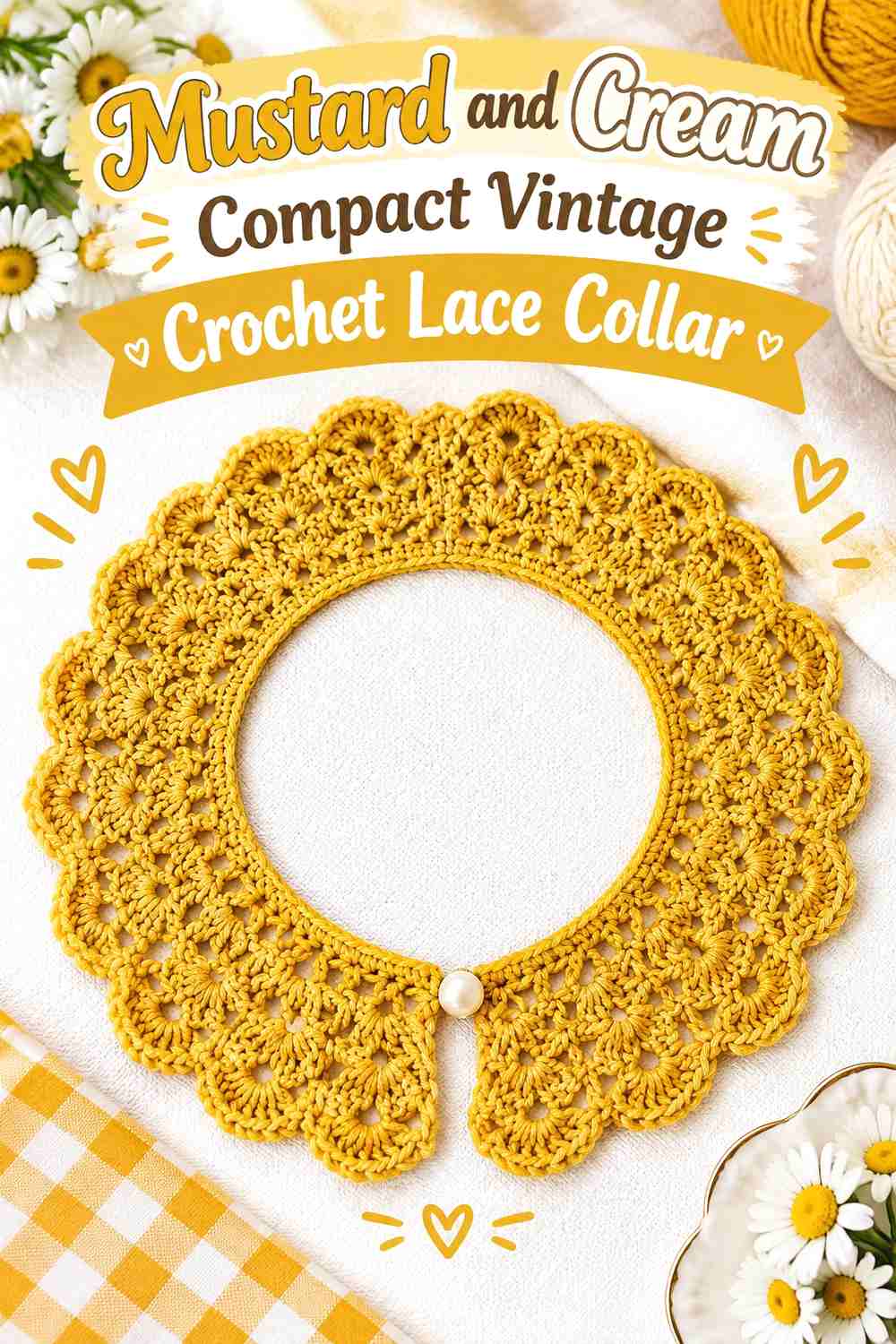
7. Mustard And Cream Compact Vintage Crochet Lace Collar
 SAVE
A compact vintage collar does not offer much room for complicated color blocking, so mustard should do most of the work. Cream can appear along the scalloped edge or fastening area to give the small silhouette extra separation.
Keep Mustard Dominant on the Compact Crochet Lace Collar
Use mustard across the neckline and central lace body so the collar reads clearly as one warm-colored accessory.
Because the collar is narrow, dividing it equally between mustard and cream may create several very small color zones rather than one coherent shape.
Cream Can Lighten the Mustard Crochet Collar Scallops
Cream around the outer scallops can make their curves easier to distinguish. This is especially helpful over a garment that is similar in depth to the mustard yarn.
If the collar will usually sit over cream or beige clothing, consider leaving the scallops mustard so the edge does not disappear into the garment.
Creator Credit: Lululoves Crochet
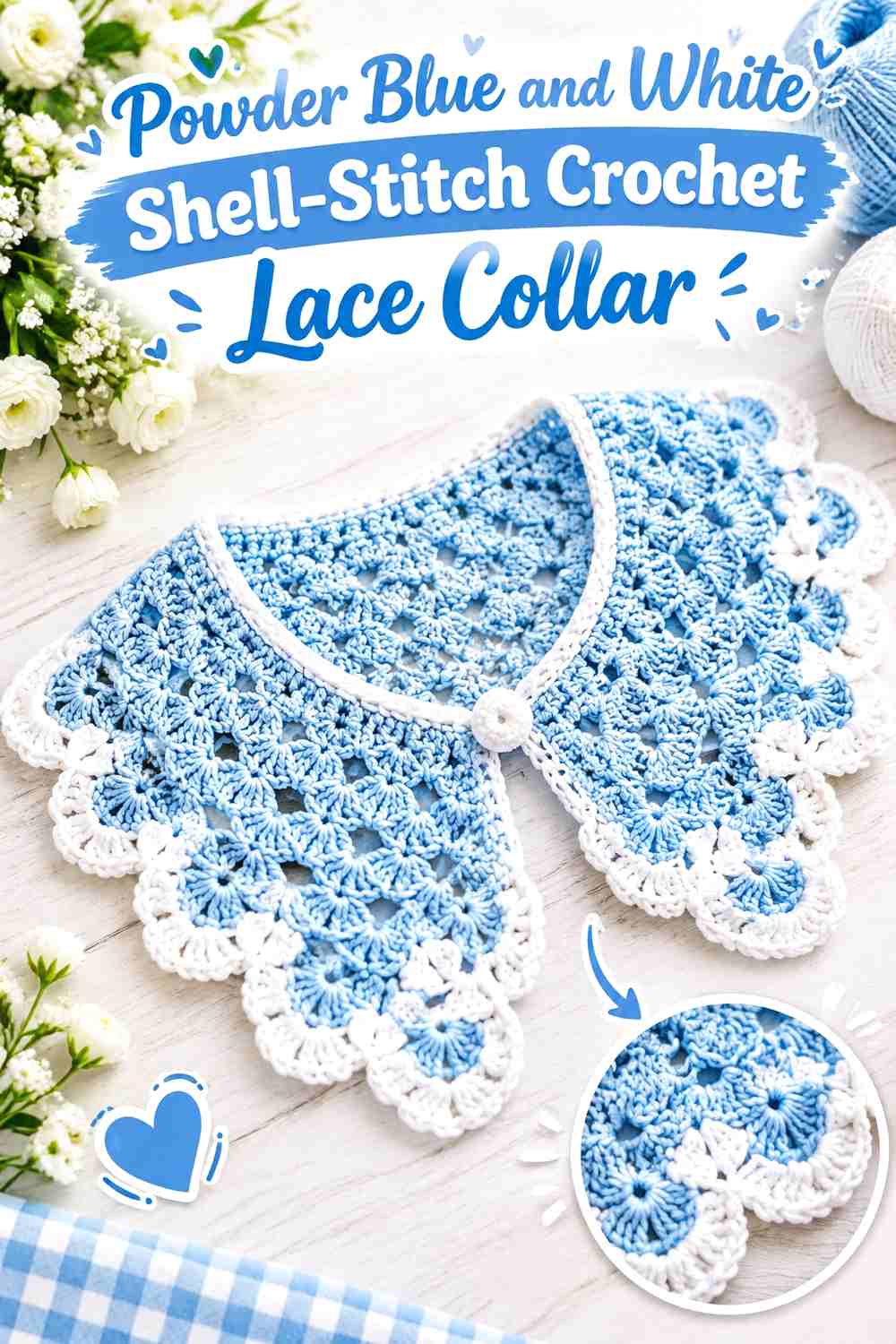
8. Powder Blue And White Shell Stitch Crochet Lace Collar
 SAVE
Shell stitches already create repeated fan shapes, so the color scheme should reinforce rather than interrupt that rhythm. Powder blue can cover the full collar while white appears only at the final shell row or closure.
Powder Blue Keeps the Crochet Shell Lace Rhythm Connected
Working the repeated shells primarily in powder blue lets their shape create the pattern. If every shell changes color, the eye may follow the yarn changes instead of the fan-like edge.
Look across several shells together when judging the color rather than evaluating a single repeat.
White Can Emphasize the Powder Blue Crochet Shell Edge
Use white for the final shell or scallop treatment when you want the outer contour to stand out more clearly.
Before adding it, place the powder blue collar over the intended blouse or dress. A white garment showing through the openings may already provide all the contrast the blue shells need.
Creator Credit: Crochet with GG
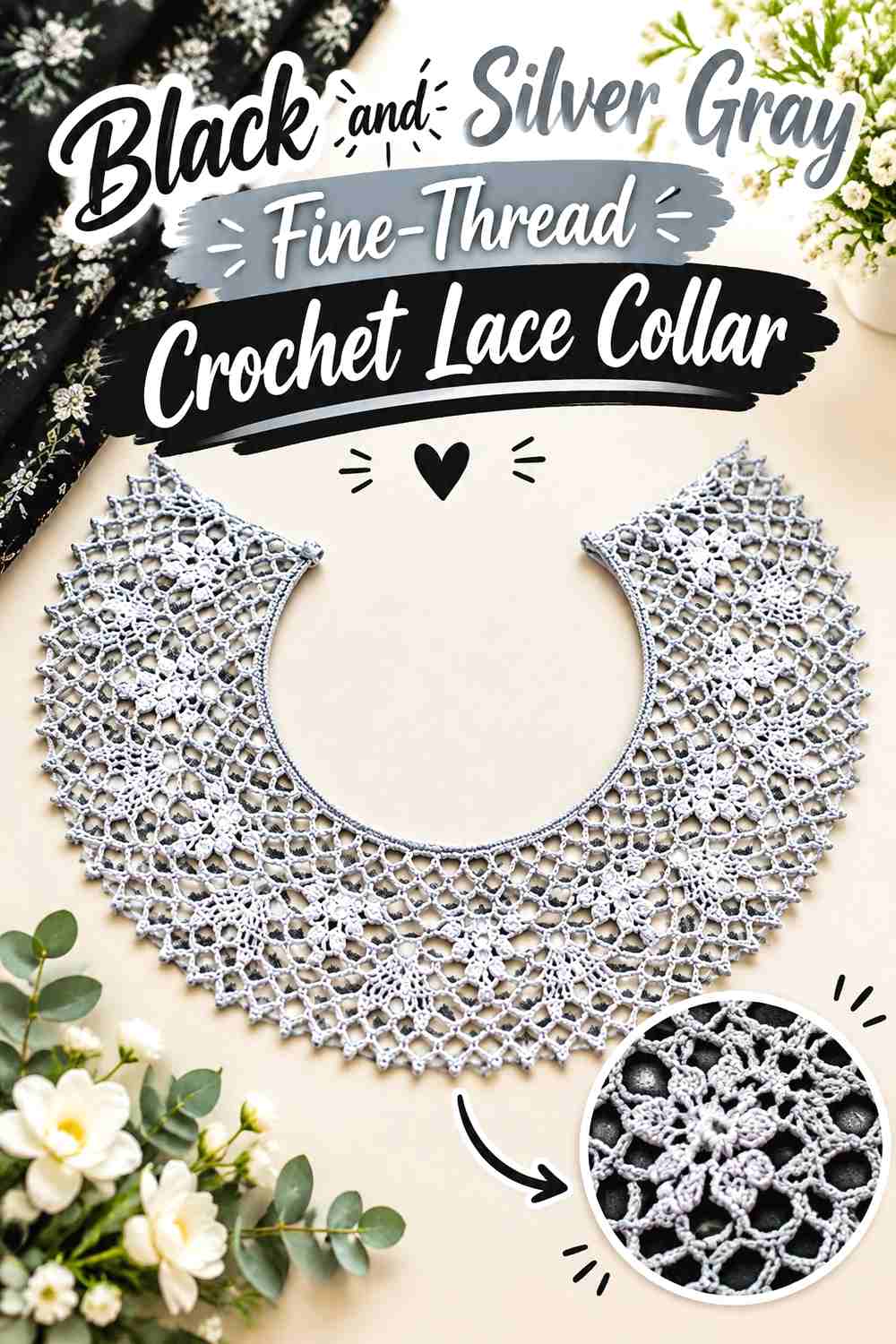
9. Black And Silver Gray Fine Thread Crochet Lace Collar
 SAVE
Fine-thread crochet can support a dramatic dark palette because the open spaces stop black from becoming one solid visual block. Silver gray is useful as a narrow separator or closure color where additional definition is needed.
Black Gives Fine Crochet Lace a Graphic Outline
Use black across most of the fine-thread lace when you want every opening and point to read strongly against a pale garment.
Because thin crochet produces delicate lines, the dark shade can create a strong effect without requiring a heavy or bulky-looking collar.
Silver Gray Should Stay Subtle Around Black Crochet Lace
Silver gray can appear at the inner neckline, button area, or a narrow outer round. Keeping it limited preserves black as the obvious dominant shade.
If black and silver gray look close in grayscale, do not depend on tiny gray details for separation. Give the gray a slightly larger connected area instead.
Creator Credit: DoilyDreams
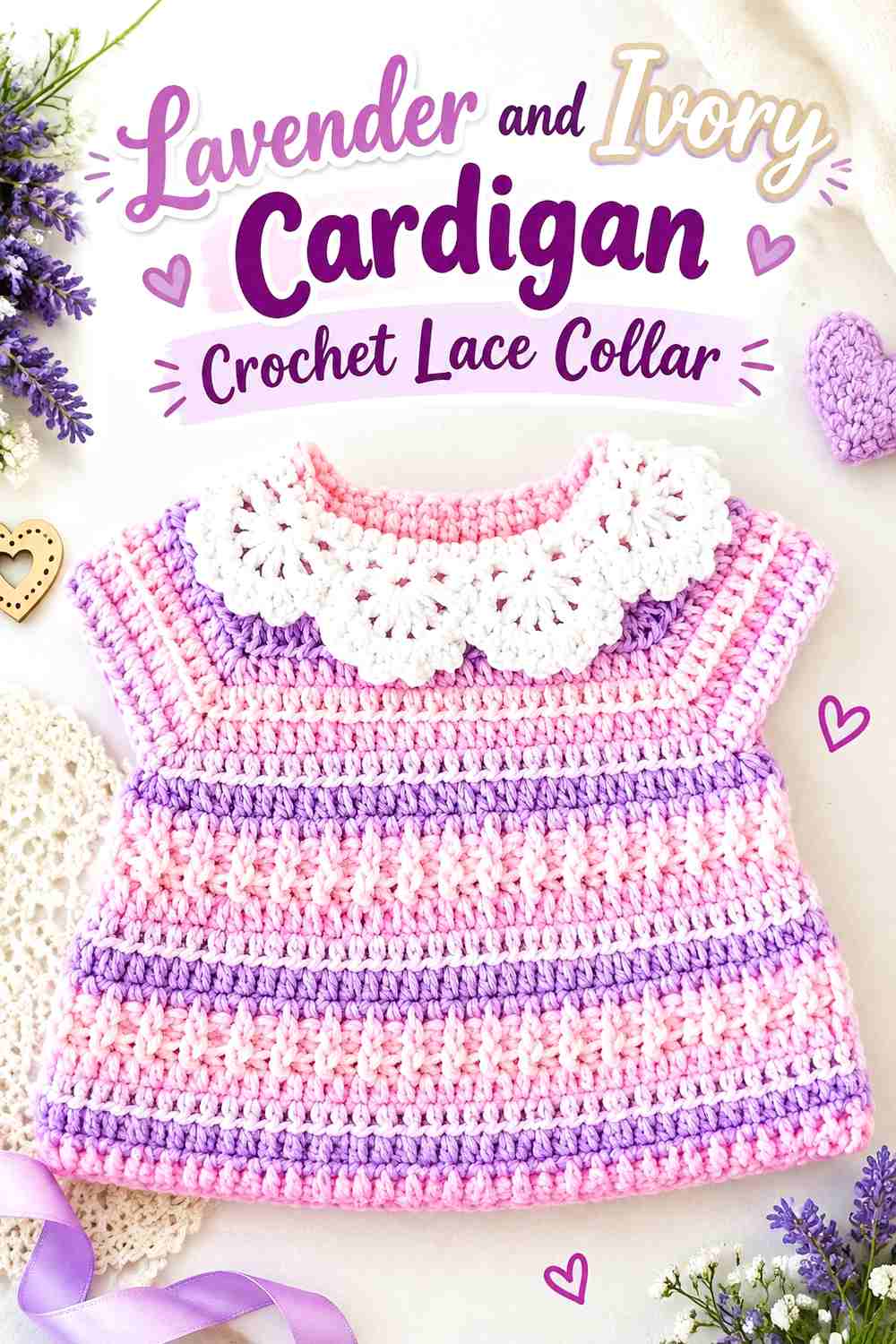
10. Lavender And Ivory Cardigan Crochet Lace Collar
 SAVE
A collar worked directly with a cardigan needs to look integrated rather than like an unrelated accessory resting on top. Lavender can connect the collar visually to the garment, while ivory can clarify the decorative lace edge.
Lavender Can Connect the Crochet Lace Collar to the Cardigan
Use lavender through the neckline foundation or main collar area if lavender also appears elsewhere on the garment. Repetition makes the collar feel intentional rather than attached as a separate color experiment.
If the cardigan itself is another color, compare the lavender against that body shade before choosing how much collar area it should occupy.
Ivory Can Separate Lavender Crochet Lace From the Garment
Ivory is useful at the outer lace edge when lavender does not create enough definition against the cardigan body.
Keep the ivory treatment simple, particularly on a small garment. The lace edge already provides decoration and does not need several additional accent colors.
Creator Credit: BabyCrochetDesigns
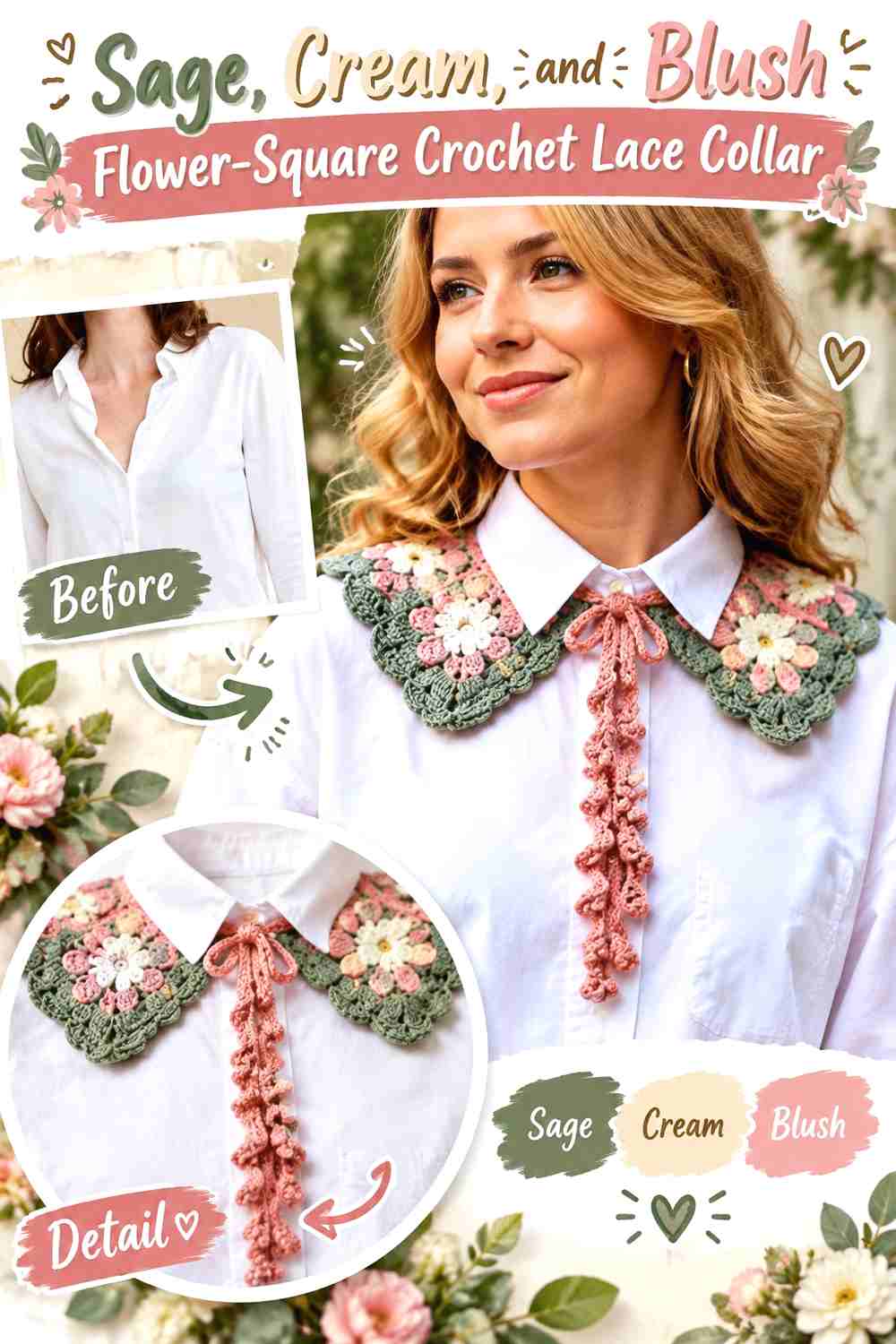
11. Sage Cream And Blush Flower Square Crochet Lace Collar
 SAVE
A flower-square collar can use three colors effectively because the motifs provide clear zones. Sage can form the square backgrounds, cream can connect the motifs, and blush can mark the flower centers or petals. Giving each shade a stable role keeps the multicolor collar organized.
Sage Should Repeat Across the Crochet Flower-Square Backgrounds
Using sage consistently around each flower creates a common frame across the collar. Even when individual flowers vary slightly, the repeated green keeps the motifs connected.
Lay all completed pieces out before joining so the sage areas form an even visual path around the neckline.
Blush and Cream Need Separate Jobs in the Sage Crochet Collar
Use blush inside the flower motifs and cream for joining or ties rather than mixing both randomly through every square.
That division makes it easier to read the flower, background, and assembly as three distinct layers of the color scheme.
Creator Credit: Brunaticality
12. Rust And Oatmeal Leaf Edge Crochet Lace Collar
 SAVE
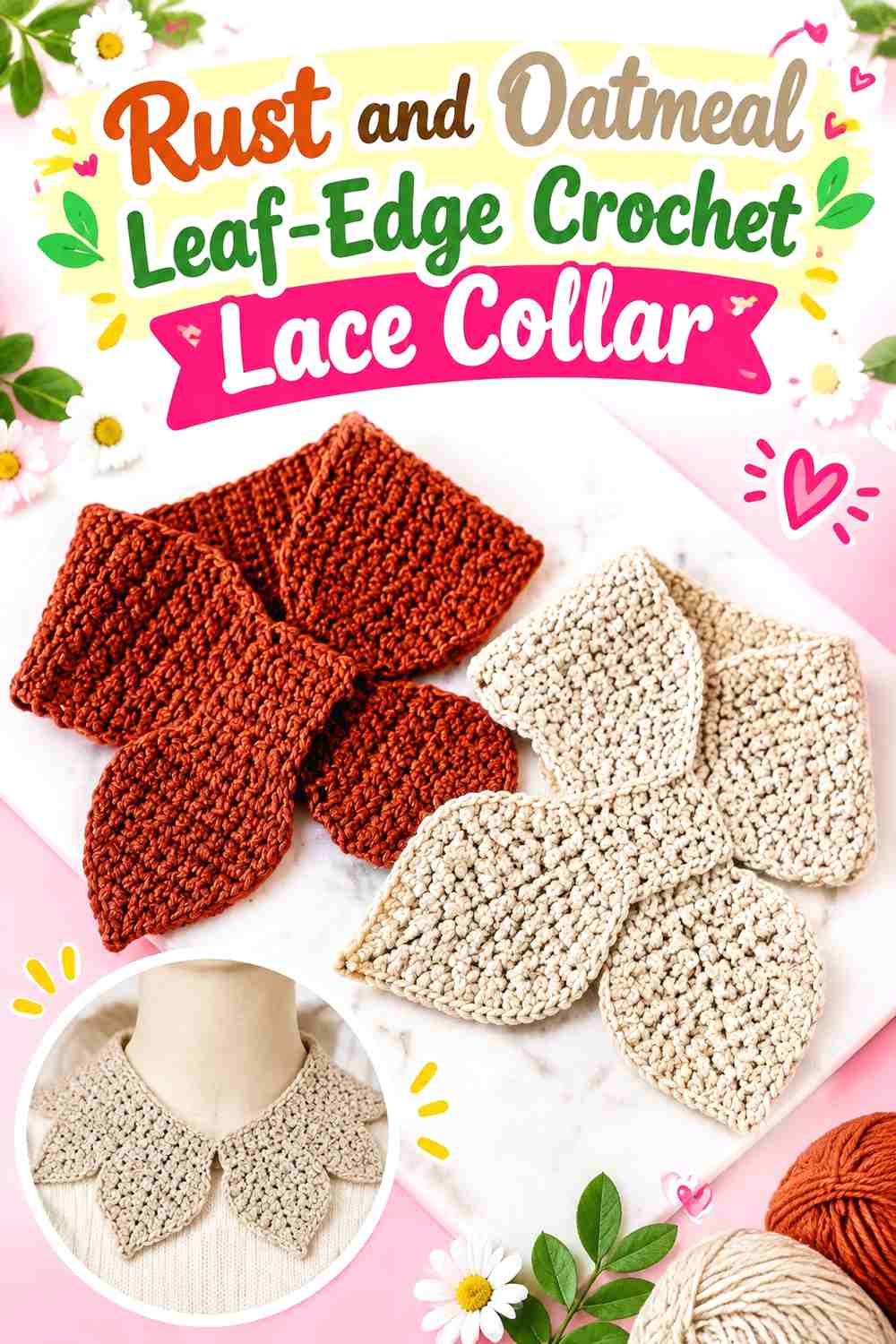
A leaf-shaped border benefits from color placement that keeps the botanical outline visible. Rust can carry the leaf motifs, while oatmeal supports the neckline or provides a lighter area between the garment and decorative outer edge.
Rust Makes the Crochet Leaf Collar Edge the Focal Point
Use rust consistently through the leaves if their repeated shape is the feature you want to emphasize. Switching each leaf to a different color would change the effect from one botanical border to a multicolor motif collection.
Check the rust against the intended garment because the individual leaf outlines need enough separation to remain recognizable.
Oatmeal Can Give Rust Crochet Leaves a Quieter Foundation
An oatmeal inner band can create a transition between the rust leaves and the neckline. This is useful when an all-rust collar feels visually dense near the neck.
Keep the lighter neutral relatively narrow so the botanical edge still controls the finished appearance.
Creator Credit: Mariie Crochet
13. Navy And Pale Gray Narrow Crochet Neck Lace Collar
 SAVE
A narrow neck-lace collar sits closer to jewelry scale than a large shoulder collar. Navy can form the main decorative band, while pale gray is reserved for tiny points, ties, or the closure. The limited width means every contrasting line becomes relatively prominent.
Navy Should Carry Most of the Narrow Crochet Lace Collar
Keep navy across the main openwork so the accessory reads as one continuous band around the neckline.
A narrow collar does not have enough surface area for numerous equal color blocks without becoming visually fragmented.
Pale Gray Can Mark the Navy Crochet Neck-Lace Closure
Use pale gray at the fastening or tie area when you want a small break from the dark navy. The lighter color can also appear in a very narrow outer edge if a second connection is needed.
Avoid distributing tiny gray details throughout every repeat unless the lace has enough scale for those details to remain readable.
Creator Credit: Maariyah Creative Arts
14. Terracotta And Cream Bib Style Crochet Lace Collar
 SAVE
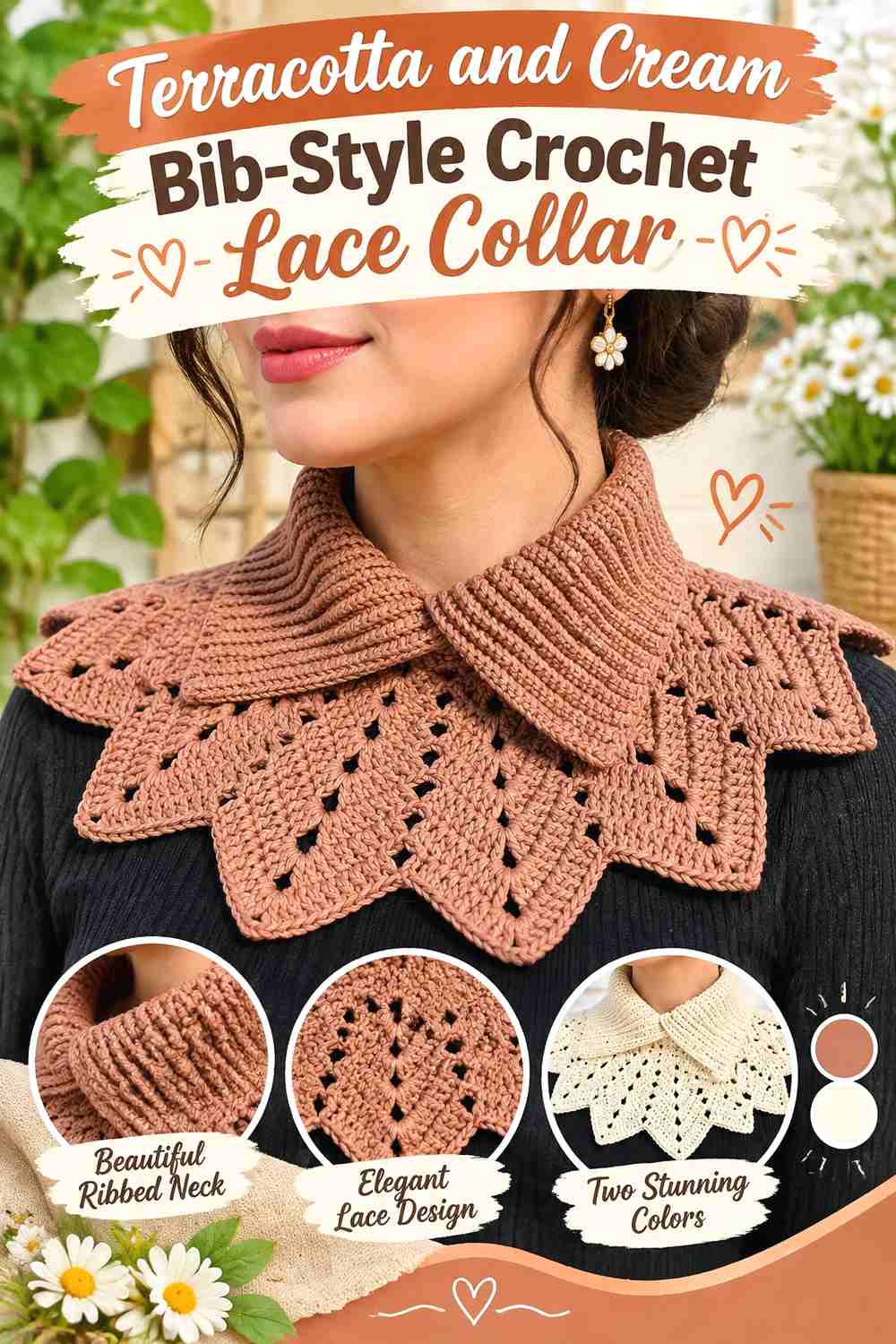
A bib-style collar covers more of the upper chest, giving terracotta enough room to become a substantial main color. Cream can outline the lower lace edge or central opening where the broad collar needs definition.
Terracotta Can Fill the Broad Crochet Bib Collar Surface
Use terracotta across most of the bib area to keep the larger accessory visually unified. Because the collar extends farther down the chest, excessive striping can compete with buttons or other garment details underneath.
Large connected terracotta sections give the crochet surface more continuity.
Cream Can Clarify the Terracotta Crochet Bib Collar Outline
A cream lower border can distinguish the edge where the collar finishes against the garment. It can also be repeated near the neckline if the palette needs another connection.
Check the collar over the actual clothing you intend to wear. Cream against a cream blouse may vanish, while the same edge can look highly defined over navy or charcoal.
Creator Credit: TEJIENDO CON MERRY CARDIEL
15. White And Black Gothic Crochet Lace Collar
 SAVE
White lace over dark clothing creates one of the strongest possible collar contrasts, making the outer points and openwork particularly noticeable. Black is best treated as a supporting color inside the crochet itself because the garment may already provide a large dark background.
Let White Dominate the Gothic Crochet Lace Collar
Use white across most or all of the lace body when you want the open pattern to stand sharply against black or another dark garment.
High contrast also makes irregular color changes noticeable, so keeping the main field consistent can give the lace a cleaner visual structure.
Use Black Sparingly Inside the White Crochet Lace
If you want black yarn within the collar, place it at a fastening, narrow neckline band, or selected edge detail rather than throughout every lace repeat.
Remember that a black garment already becomes visible through the open spaces. Adding too much black yarn can make parts of the lace visually merge into the clothing underneath.
Creator Credit: Littlejohn’s Yarn
16. Blush And Burgundy Scalloped Peter Pan Crochet Lace Collar
 SAVE
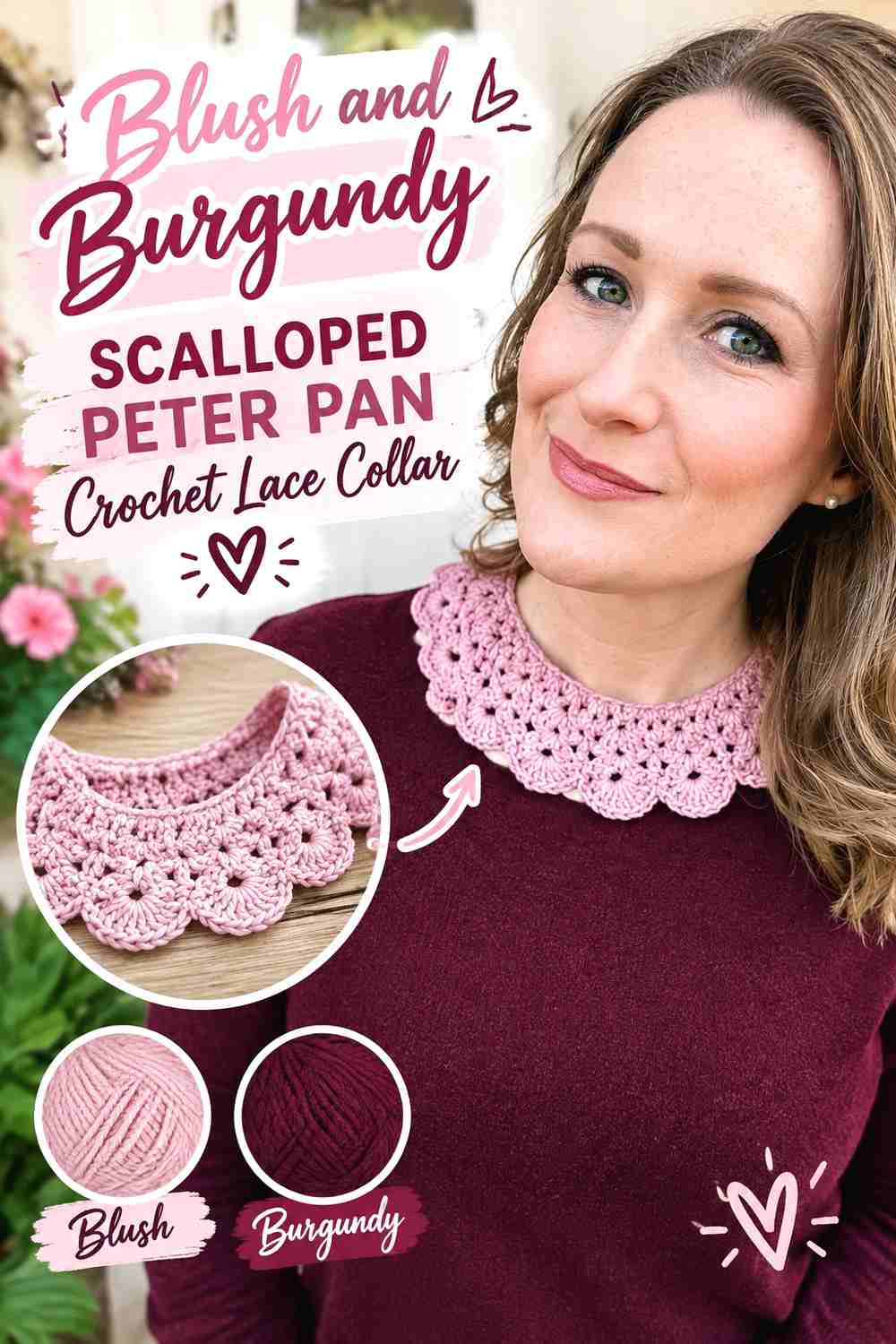
Blush can make the rounded Peter Pan body feel light, while burgundy gives the scalloped edge a darker outline. Because the darker color sits at the perimeter, even a narrow amount can strongly influence the collar’s shape.
Blush Should Lead Across the Peter Pan Crochet Lace Body
Use blush throughout the main rounded sections so the traditional two-sided silhouette remains clear.
A continuous blush field also leaves more visual room for open V shapes, shells, or other lace features without forcing each one to carry a separate color.
Burgundy Can Define the Blush Crochet Scallops
Burgundy works well around the final scalloped edge because the dark color emphasizes the repeating curves.
Keep the border narrow if you want blush to remain dominant. A deep burgundy band that moves too far into the collar can visually overpower the pale central area.
Creator Credit: HanJan Crochet
17. Emerald Green And Ivory Airy Peter Pan Crochet Lace Collar
 SAVE
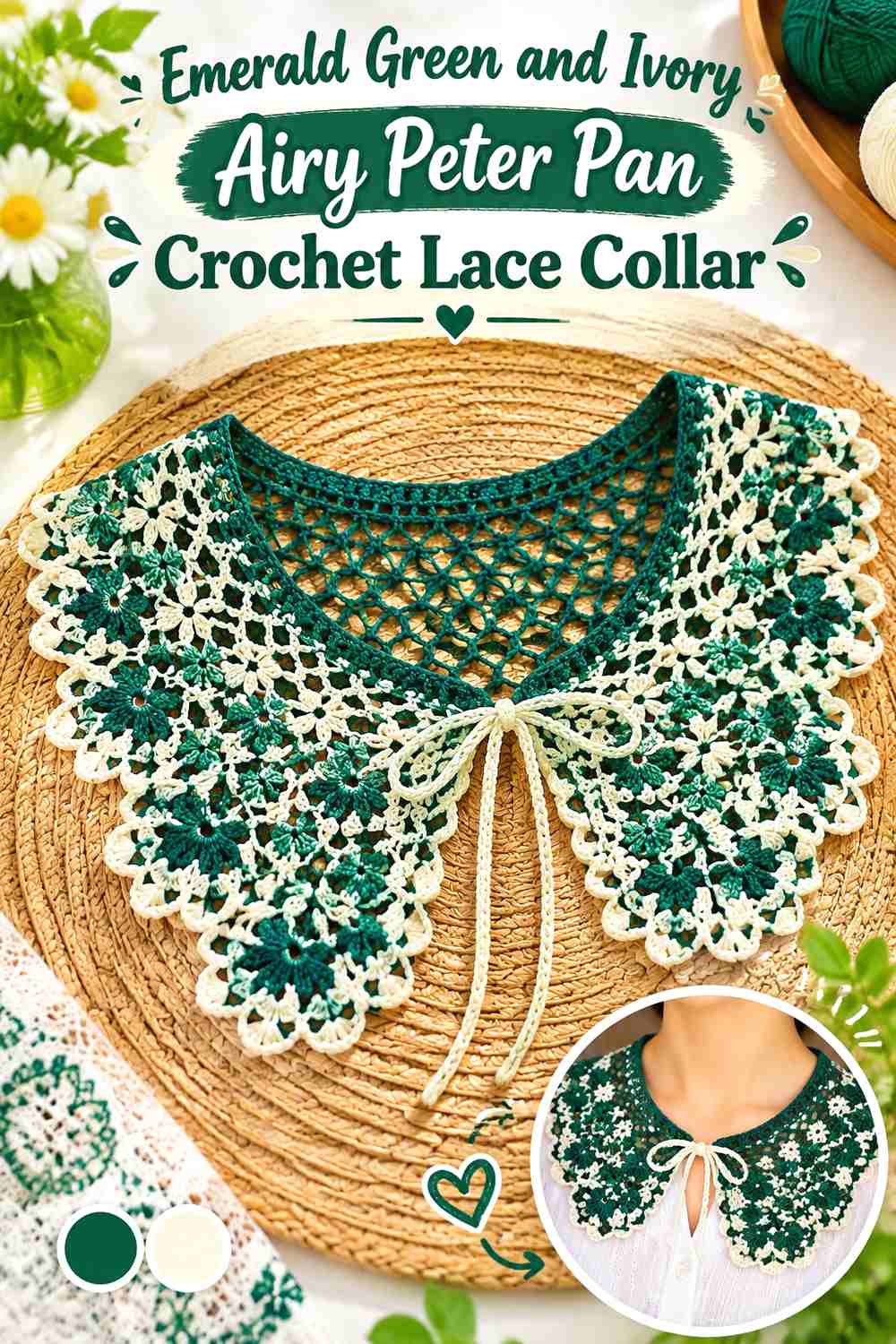
Emerald green brings stronger saturation to an airy Peter Pan collar without requiring a complicated multicolor design. Let emerald fill most of the openwork and use ivory around selected edges or ties to stop the saturated green from forming an uninterrupted outline.
Emerald Green Can Carry the Airy Crochet Lace Openwork
Use emerald consistently through the main collar body so the open spaces remain the primary source of pattern.
The garment underneath becomes particularly important with airy lace. Emerald over white creates a clear green grid, while emerald over another dark color produces a quieter result.
Ivory Can Give Emerald Green Crochet Lace a Lighter Finish
Add ivory around the outer edge or fastening if the emerald body needs separation. The lighter color can make a curved Peter Pan perimeter easier to distinguish without introducing another saturated shade.
Do not assume the entire border needs ivory. A few controlled areas may be enough if the garment underneath already contrasts strongly with emerald.
Creator Credit: Crochet Swan
How to Compare These Crochet Lace Collar Color Schemes
For a light, vintage-leaning direction, ivory and black, dusty rose and cream, powder blue and white, lavender and ivory, or blush and burgundy keep pale colors across most of the lace and use darker or clearer accents selectively.
For stronger color, cobalt blue, forest green, teal, emerald, rust, terracotta, and mustard can carry a larger share of the collar. These shades work particularly well when the design has enough open space or enough physical width to prevent the color from becoming one heavy block.
Motif collars need a slightly different strategy. The burgundy rose collar, teal pentagon collar, and sage flower-square collar work most clearly when each shade is assigned a consistent structural role. For highly open or fine-thread lace, the clothing underneath should be considered part of the palette before you decide whether another yarn color is necessary.
Conclusion
The most useful way to choose a crochet lace collar palette is to start with the construction. Rounded Peter Pan collars give you a body and outer edge to separate. Floral and geometric collars provide centers, motifs, joins, and borders. Pelerine and bib collars have enough surface area for larger color blocks, while narrow neck-lace designs usually benefit from simpler color distribution.
Then consider the garment underneath. Open crochet allows that clothing color to show through, which can strengthen or weaken the contrast you expected from the yarn alone.
If the lace itself is the main attraction, keep one color dominant and restrict contrasting shades to an edge, motif center, join, tie, or closure. If color is meant to become part of the motif, repeat its role consistently so the collar looks planned rather than randomly multicolored. Use the credited tutorials for the creators’ exact construction methods.
Frequently Asked Questions
Which colors work well for a crochet lace collar?
There is no single required palette. Pale neutrals can keep attention on intricate lace, while cobalt, burgundy, emerald, black, or other deeper shades can make the collar more graphic. The garment underneath is equally important because it remains visible through openwork.
Should a crochet lace collar be one color or two colors?
A one-color collar often shows detailed stitchwork clearly. Two colors are useful when the construction provides obvious places for contrast, such as an outer border, flower center, geometric join, neckline band, or tie.
How do I choose a border color for a crochet lace collar?
First decide whether you want the border to emphasize or soften the collar outline. A noticeably darker or lighter border creates stronger separation. A similar-value border produces a quieter transition. Always check the border against the garment as well as the main crochet color.
Why does a crochet lace collar look different over different clothes?
The garment shows through the open spaces and becomes part of the visual background. White lace can look subtle over cream and much more graphic over black. The same principle applies to colored lace, so test the collar over clothing before finalizing the palette.
Can I use three colors in a crochet lace collar?
Yes, particularly for motif-based collars. Give each shade a clear job—for example, one for flowers, one for motif backgrounds, and one for joins. Three colors used randomly through a small lace collar can become visually busy much faster.
How can I tell whether two collar colors have enough contrast?
Place the yarns side by side and look at them from normal viewing distance. A grayscale photo can help you compare their light-dark values. If a small motif or border disappears, choose shades with more value separation or increase the size of the contrasting area.
Should the darkest color always go on the outer edge of a crochet lace collar?
No. A dark edge produces a strong frame, but it can also pull attention away from delicate internal lace. Keep the darkest shade inside motifs or at the closure when you want the outer silhouette to remain softer.