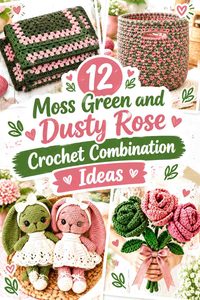
Moss green and dusty rose make an interesting crochet combination because neither color has to overpower the other. Moss green brings a deeper, earthy base, while dusty rose introduces a lighter muted contrast that can separate motifs, soften borders, or highlight smaller details.
The balance can change dramatically from one crochet project to another. A blanket can give moss green most of the visual area, while a floral bouquet naturally places dusty rose in the flowers and moss green around leaves and stems. On wearables, the same colors can be divided between body panels, cuffs, ribbing, pockets, or motifs.
These 12 ideas use the same core combination in different ways so you can compare dominant colors, placement, contrast, repetition, and finishing choices instead of simply switching between two yarn colors.
Quick List
- Moss Green And Dusty Rose Granny Square Crochet Blanket
- Moss Green And Dusty Rose Crochet Cardigan
- Moss Green And Dusty Rose Tapestry Crochet Cushion
- Moss Green And Dusty Rose Crochet Tote Bag
- Moss Green And Dusty Rose Crochet Scarf
- Moss Green And Dusty Rose Crochet Beanie
- Moss Green And Dusty Rose Crochet Baby Blanket
- Moss Green And Dusty Rose Granny Square Crochet Vest
- Moss Green And Dusty Rose Crochet Bucket Hat
- Moss Green And Dusty Rose Crochet Rose Bouquet
- Moss Green And Dusty Rose Crochet Bunny
- Moss Green And Dusty Rose Crochet Storage Basket
Decide Whether Moss Green or Dusty Rose Should Lead
Using exactly half moss green and half dusty rose is possible, but it is not the only way to make the pairing feel connected. Giving one shade noticeably more surface area can create a clearer hierarchy.
Moss green works particularly well as the larger field when you want dusty rose details to remain easy to identify. Dusty rose can take the dominant role when you want a lighter overall project, with moss green used at borders, cuffs, bases, straps, or motif outlines.
For repeated crochet motifs, decide on the hierarchy before making a large batch. Changing the dominant shade from square to square can be intentional, but the repetition should be planned so the finished blanket, vest, or bag does not look randomly distributed.
Check the Moss Green and Dusty Rose Value Contrast
Different hues do not automatically create strong light-and-dark contrast. Some moss greens and dusty roses can be surprisingly similar in value, especially when both are muted medium shades.
Place the yarns together and view them from a distance before committing to detailed motifs. A grayscale photo can also help reveal whether one color is clearly lighter than the other. If both become almost the same gray, small colorwork details may be harder to distinguish.
That softer contrast can work well for broad stripes or large garment panels. For tiny flower centers, tapestry motifs, or narrow edging, a clearer light/dark difference usually gives the color placement more definition.
1. Moss Green And Dusty Rose Granny Square Crochet Blanket
 SAVE
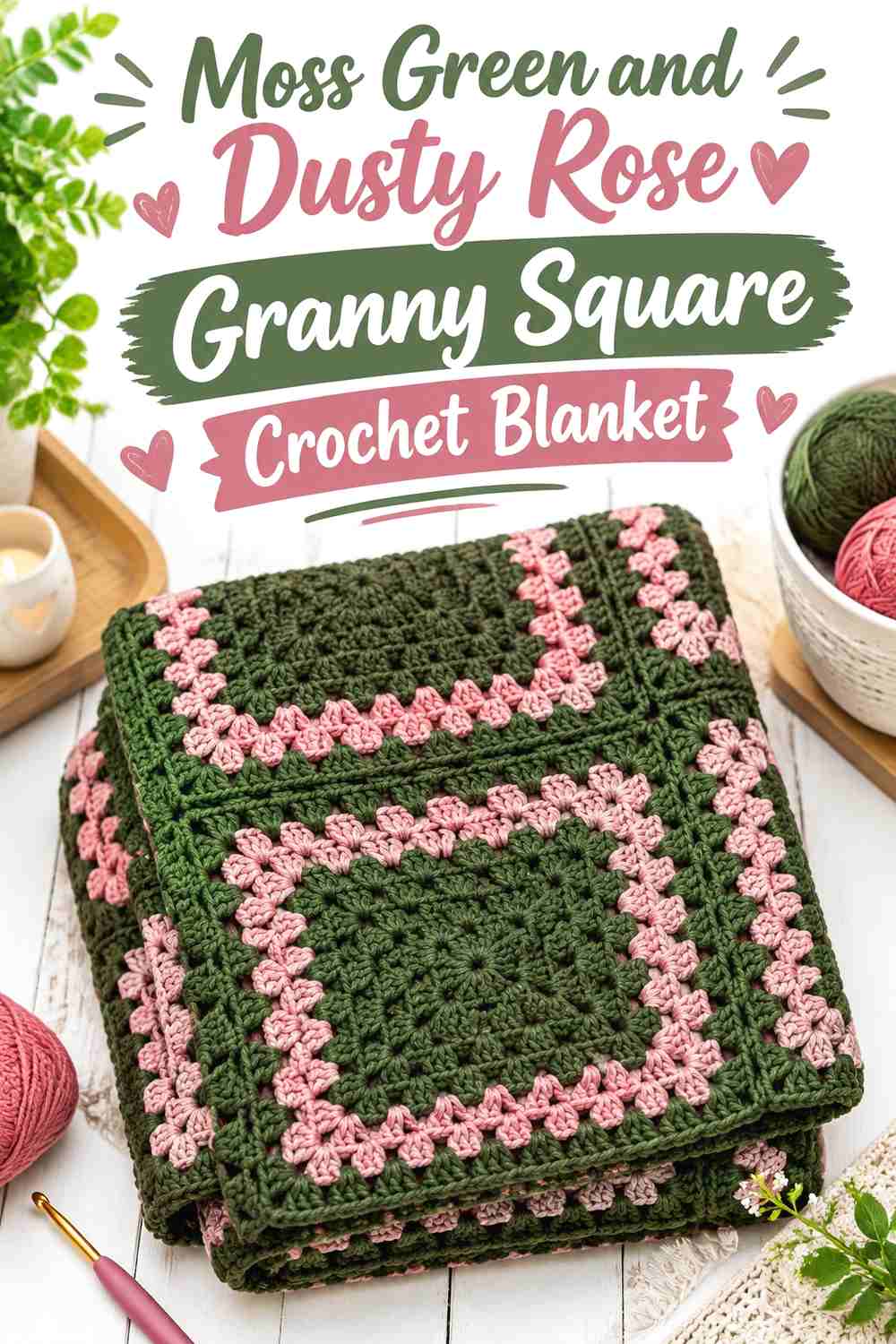
For a granny square blanket, moss green can carry the outer rounds while dusty rose appears closer to the motif centers. That gives the blanket a consistent green framework without reducing the rose to an occasional accent. Reversing selected squares can introduce variation while keeping the same two-color palette.
Moss Green Can Connect the Granny Square Blanket
Using moss green repeatedly around the outside of individual squares can visually connect the blanket after the motifs are arranged together. This is particularly useful when dusty rose placement changes from one square to another.
Before making the entire set, place several finished squares side by side. Check whether the moss green forms enough repetition to make the layout feel deliberate rather than scattered.
Dusty Rose Should Stay Visible Inside Moss Green Motifs
Dusty rose can become lost if the chosen rose and moss shades have very similar values. For granny squares with relatively small centers, compare the two yarns before committing to dozens of motifs.
If separation is weak, choose a dusty rose that is noticeably lighter than the moss green rather than introducing an unrelated third color.
Creator Credit: Yarnspirations
2. Moss Green And Dusty Rose Crochet Cardigan
 SAVE
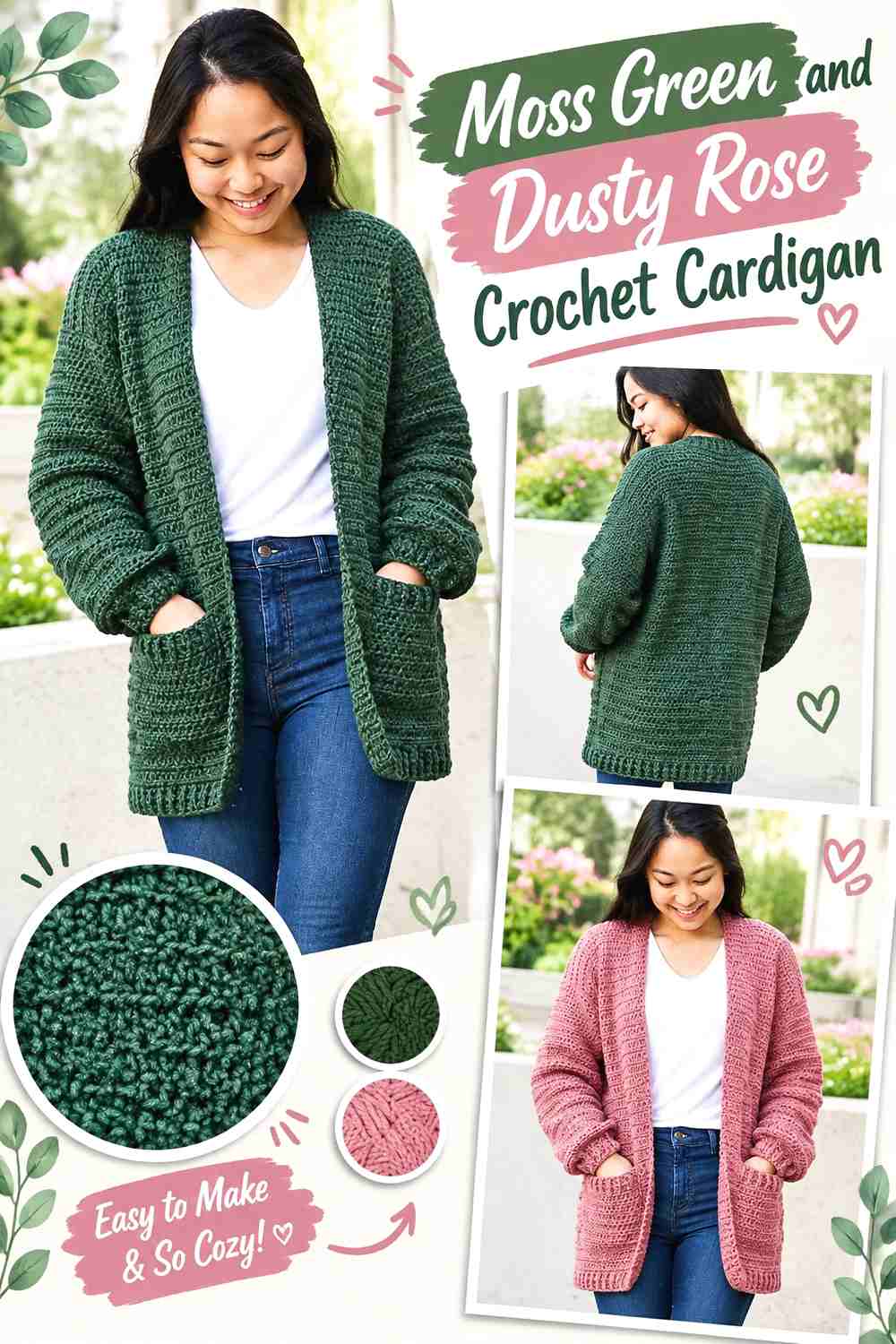
A cardigan offers enough surface area to let moss green dominate without making dusty rose feel insignificant. Moss green can cover the main body and sleeves, while dusty rose appears at cuffs, front edging, pockets, or other clearly repeated finishing areas.
Moss Green Gives the Crochet Cardigan a Consistent Main Field
Keeping the larger body panels in moss green allows the cardigan silhouette and stitch texture to remain visually consistent. It also prevents multiple color changes from fragmenting wide sections of the garment.
If you prefer more rose, increase its presence through repeated garment features instead of inserting isolated patches into otherwise green panels.
Dusty Rose Works Better When Repeated Across the Crochet Cardigan
A single dusty rose cuff can look accidental. Repeating dusty rose at both cuffs and another finishing area, such as front edging or pocket trim, makes the color distribution feel connected across the garment.
Step back from the cardigan while planning placement. The rose accents should appear balanced from left to right rather than concentrated on one small area.
Creator Credit: forthefrills
3. Moss Green And Dusty Rose Tapestry Crochet Cushion
 SAVE
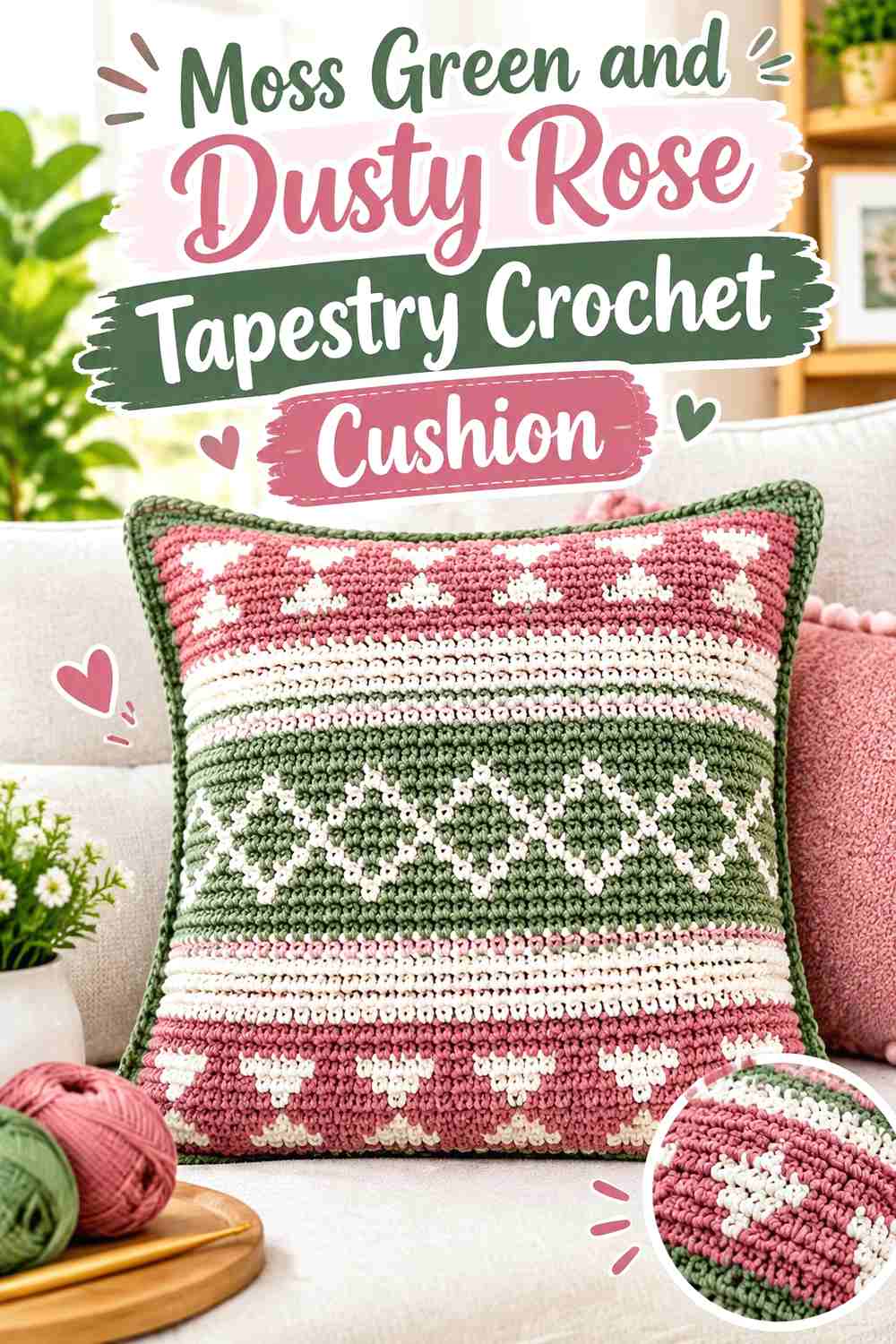
A cushion is a useful place to reverse the usual hierarchy and let dusty rose cover more of the front surface. Moss green can provide the darker geometric or tapestry detail, giving the design definition without dividing the cushion into equally sized blocks.
Dusty Rose Can Lead the Crochet Cushion Surface
Using dusty rose across most of the cushion face creates a continuous background for the colorwork. This approach is especially useful when the surface contains repeated shapes because the reader can follow one background color rather than two competing fields.
Check the full motif before continuing across the panel. The dusty rose should surround the moss green design consistently enough that the intended shape remains readable.
Moss Green Can Define Dusty Rose Tapestry Details
Moss green is most useful here when it has a clear job: defining the pattern rather than appearing in isolated stitches. Larger moss green shapes are easier to distinguish than tiny details when both yarns are muted.
If the motif seems blurred from several feet away, increase the visual separation between the two shades before making the second cushion panel.
Creator Credit: Bella Coco
4. Moss Green And Dusty Rose Crochet Tote Bag
 SAVE
A tote can give moss green the most visually demanding areas: the lower body, base, and attachment area around the handles. Dusty rose can occupy the upper portion or a substantial horizontal band so it remains part of the bag rather than becoming a thin decorative stripe.
Moss Green Can Anchor the Crochet Tote Bag Base
Placing moss green toward the bottom visually grounds the bag and creates a clear starting point for the palette. Continuing some moss green into the handle area can also connect the bottom and top instead of leaving two unrelated color blocks.
Avoid switching colors repeatedly around the base unless the construction naturally supports that effect. Large fields make this muted combination easier to read.
Dusty Rose Can Lighten the Upper Moss Green Tote
Dusty rose across the upper body gives the tote a noticeable second color without competing with the darker moss green base. A larger rose section also gives you enough surface area to appreciate its muted character.
Before deciding where to change colors, consider how the bag will look when carried. A very narrow rose stripe may disappear visually once the bag folds or fills.
Creator Credit: B.Hooked Crochet
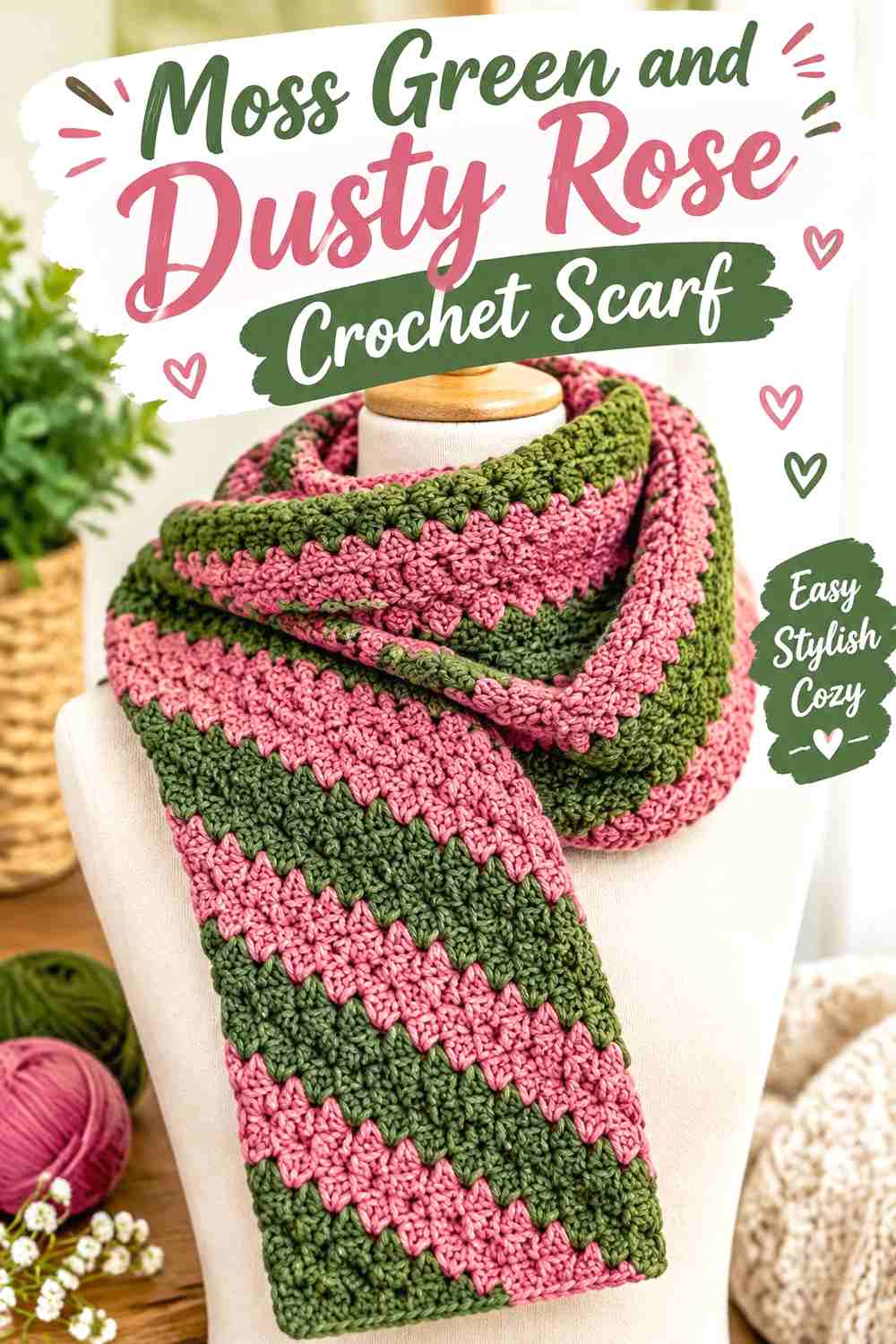
5. Moss Green And Dusty Rose Crochet Scarf
 SAVE
Scarves allow the two colors to be compared across a long continuous surface. Rather than alternating every row, use longer moss green and dusty rose sections or controlled bands so the muted shades remain distinct.
Moss Green Gives the Crochet Scarf a Deeper Color Block
A generous moss green section adds visual weight without requiring additional accent colors. It works particularly well near one end or through the central portion if you want the scarf to look more green-led overall.
Keep the block large enough to show the stitch texture. Frequent color changes can compete with small, repetitive crochet stitches.
Dusty Rose Can Break Up Long Moss Green Sections
Dusty rose provides a softer visual break between larger moss green areas. Instead of treating every stripe equally, try allowing the rose sections to vary in width while repeating them intentionally.
Lay the scarf flat periodically and look at the entire length. Color placement that looks balanced within a few rows may feel uneven once the scarf becomes much longer.
Creator Credit: Hooked by Robin
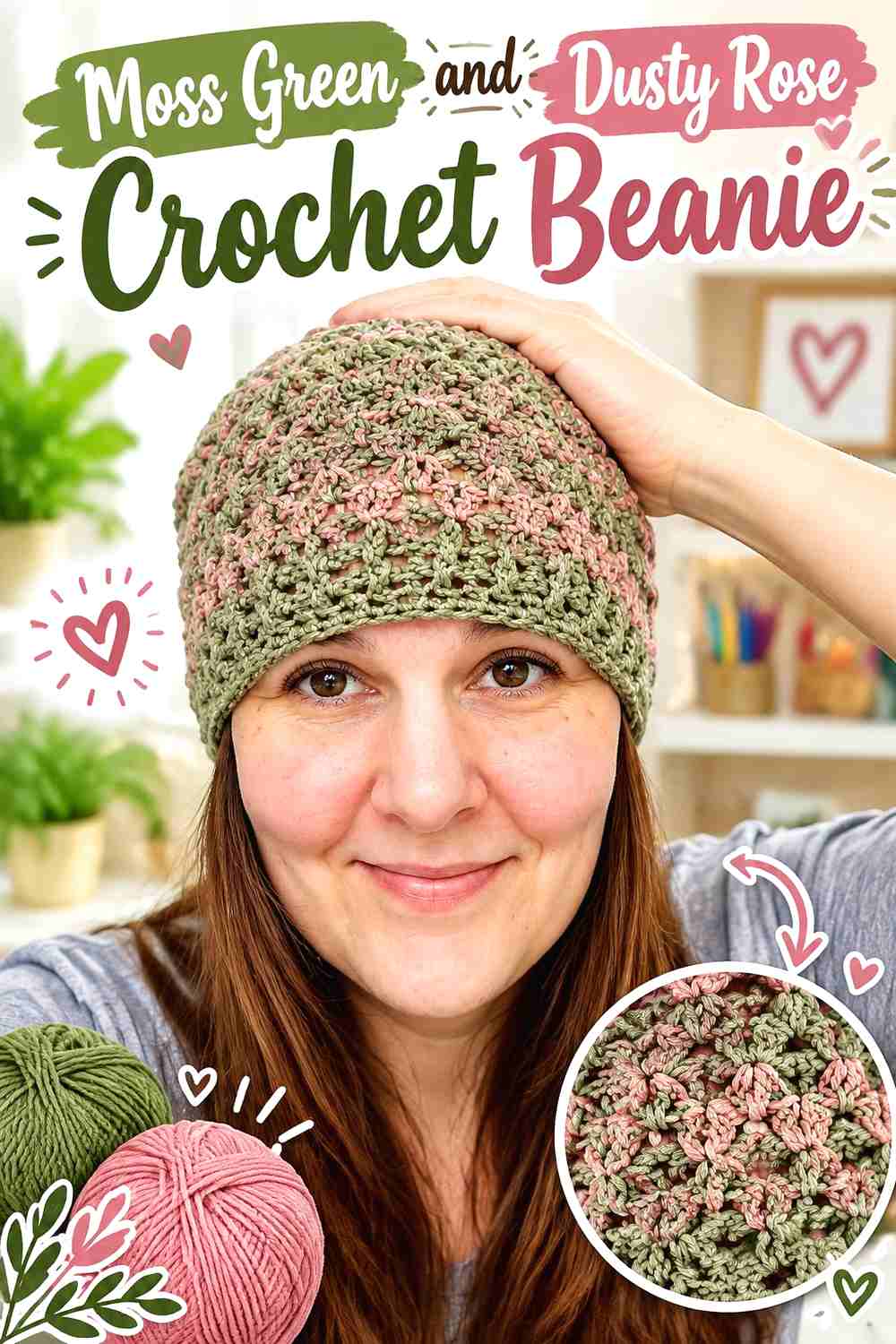
6. Moss Green And Dusty Rose Crochet Beanie
 SAVE
The small surface of a beanie benefits from a simple division. Moss green can cover most of the crown and body while dusty rose defines the lower edge, or the two roles can be reversed when you want the pink to be more prominent.
Moss Green Can Keep the Crochet Beanie Crown Unified
A solid moss green crown avoids interrupting the shaping with frequent color changes. It also provides enough continuous area for the crochet texture to remain visible.
If dusty rose will be added lower on the hat, decide where the transition belongs by looking at the finished proportions rather than changing colors simply because a row ends conveniently.
Dusty Rose Can Emphasize the Moss Green Beanie Edge
Using dusty rose around the lower portion gives the second color a functional visual location. The eye naturally notices the edge of a hat, so the rose can remain recognizable even when it occupies less area.
Check the two yarns under the same lighting. If dusty rose looks almost as dark as the moss green, the transition will be more tonal and understated.
Creator Credit: Bag-O-Day Crochet
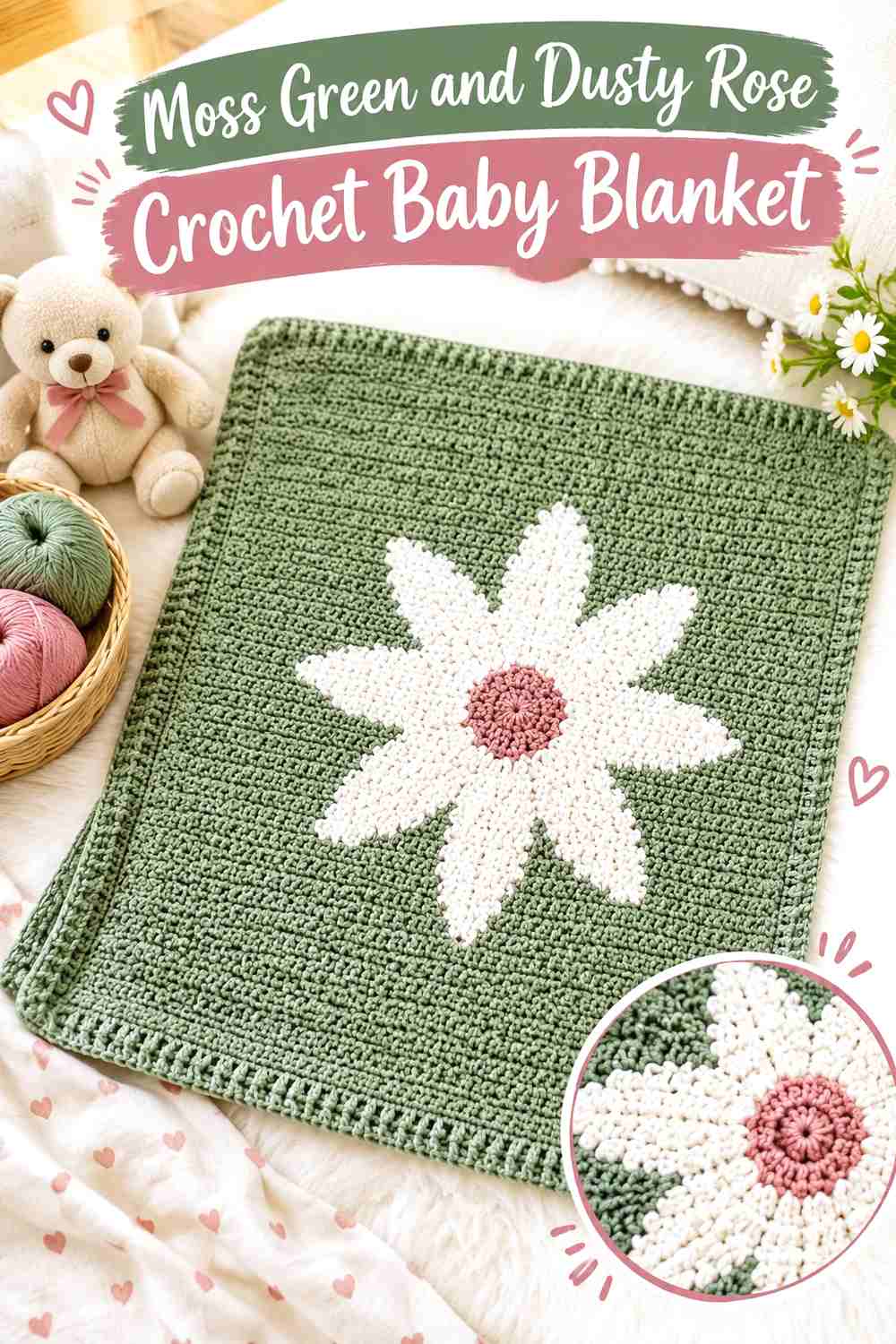
7. Moss Green And Dusty Rose Crochet Baby Blanket
 SAVE
For a baby blanket, dusty rose can cover most of the central field while moss green appears in controlled bands, repeated details, or the outer framing area. This keeps the deeper green visible without letting it visually dominate every part of the blanket.
Dusty Rose Can Keep the Crochet Baby Blanket Visually Light
Giving dusty rose more surface area creates a lighter overall palette than a moss-dominant version. It also provides a consistent background for textured stitches or repeated details.
Do not assume that every dusty rose yarn will look pale once crocheted. Work a small sample next to the moss green so you can judge the actual fabric rather than the yarn balls alone.
Moss Green Can Frame the Dusty Rose Baby Blanket
Moss green can be introduced near the border to give the blanket a defined outer edge. If the center already contains small moss green details, repeating the same shade at the edge ties those sections together.
A very heavy dark border can visually outweigh a soft dusty rose center, so compare the border width with the size of the entire blanket before extending it.
Creator Credit: Daisy Farm Crafts
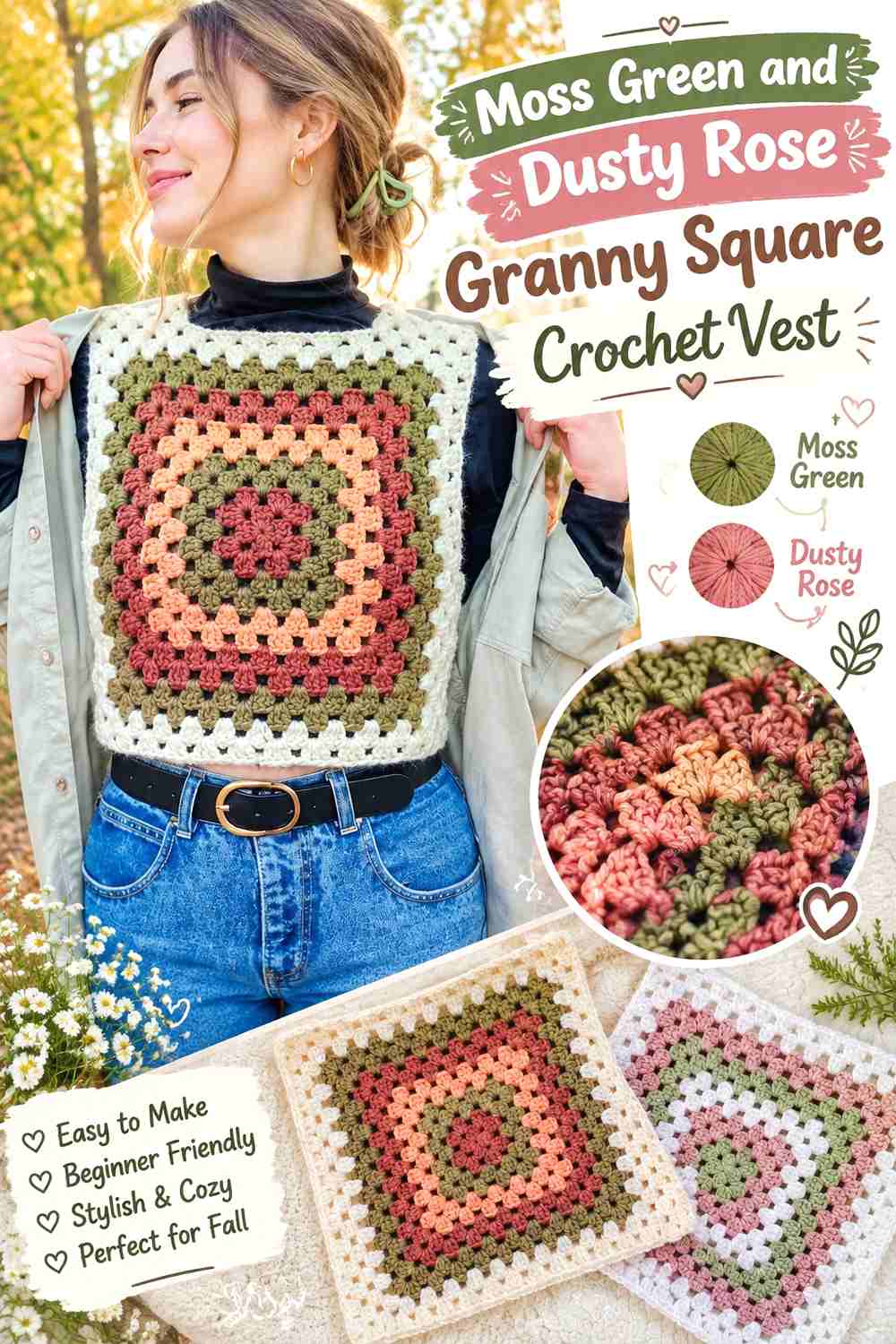
8. Moss Green And Dusty Rose Granny Square Crochet Vest
 SAVE
A granny square vest gives the palette a different challenge from a blanket because the motifs are viewed across the body. Moss green can form the outer parts of large squares while dusty rose moves toward the centers, keeping the strongest contrast away from seams and edges.
Moss Green Can Control the Outer Crochet Vest Motifs
Using moss green in the outer rounds gives large granny squares a consistent frame and can reduce the visual fragmentation created by multiple motif colors.
Check both the front and back layout before joining anything permanently. The green distribution should make sense across the whole vest, not only on one panel.
Dusty Rose Can Highlight Moss Green Granny Square Centers
Dusty rose is useful toward motif centers because a small area of the lighter shade can still attract attention inside a broader green frame. Repeating the same center treatment also makes the vest read as one coordinated piece.
If the dusty rose centers disappear from a distance, choose a lighter rose or reduce the amount of moss green immediately surrounding the smallest detail.
Creator Credit: HayHay Crochet
9. Moss Green And Dusty Rose Crochet Bucket Hat
 SAVE
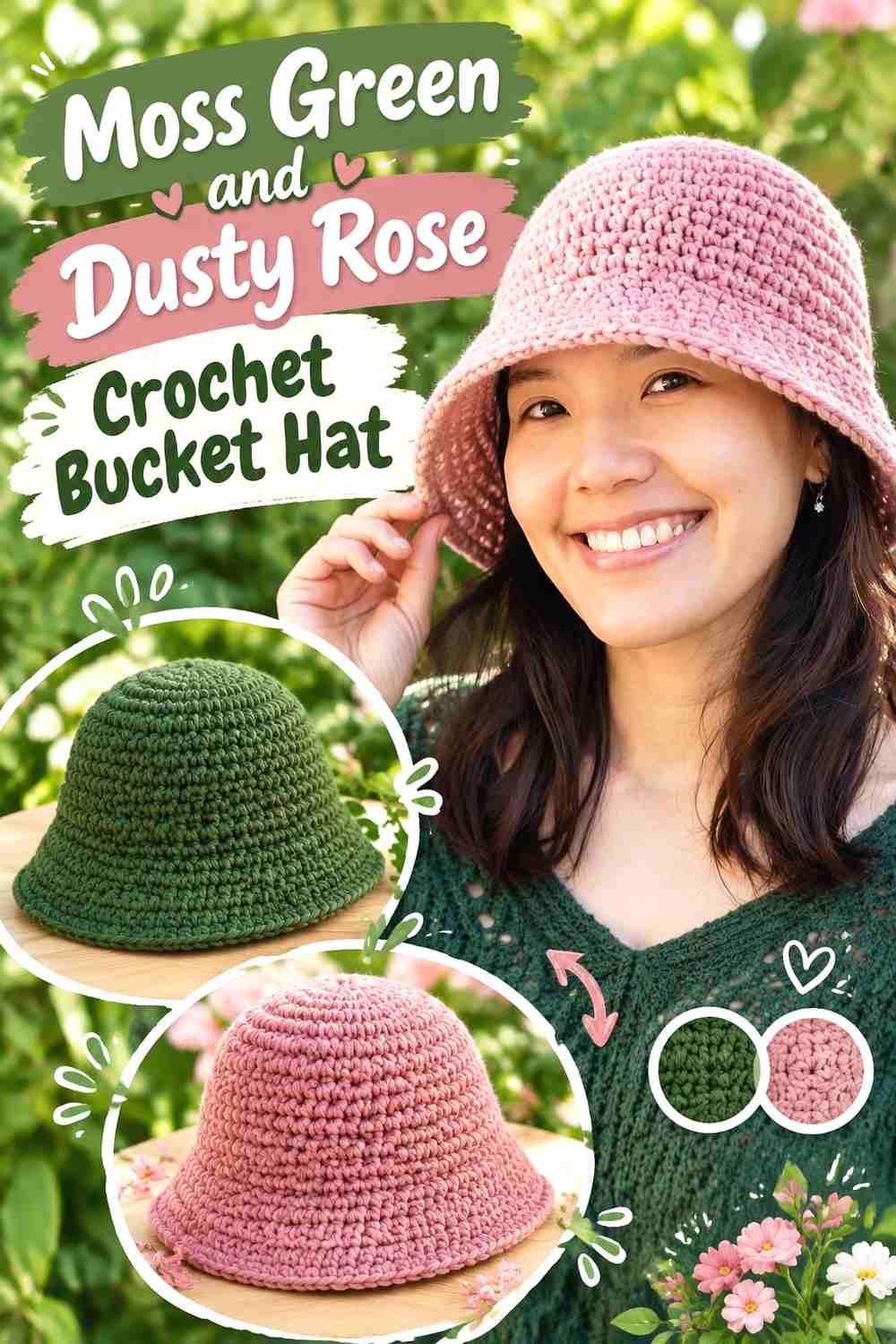
A bucket hat naturally separates into visible zones, making it a strong project for two-color blocking. Dusty rose can cover the crown and middle section, while moss green defines the brim and gives the lower silhouette more weight.
Dusty Rose Can Lead the Crochet Bucket Hat Crown
A dusty rose crown keeps the color visible from above and around the upper portion of the hat. Continuing it far enough down the sides prevents it from becoming a small cap of color above an overwhelmingly green brim.
Consider the hat from several angles when choosing the transition point. Bucket hats are not viewed only from the front.
Moss Green Gives the Dusty Rose Bucket Hat a Defined Brim
Using moss green for the brim creates a strong boundary around the dusty rose body. Because the brim projects outward, even a relatively narrow green section can carry considerable visual weight.
If your moss green is especially dark, avoid expanding it farther up the hat unless you intentionally want the green to become dominant.
Creator Credit: VivCrochets
10. Moss Green And Dusty Rose Crochet Rose Bouquet
 SAVE
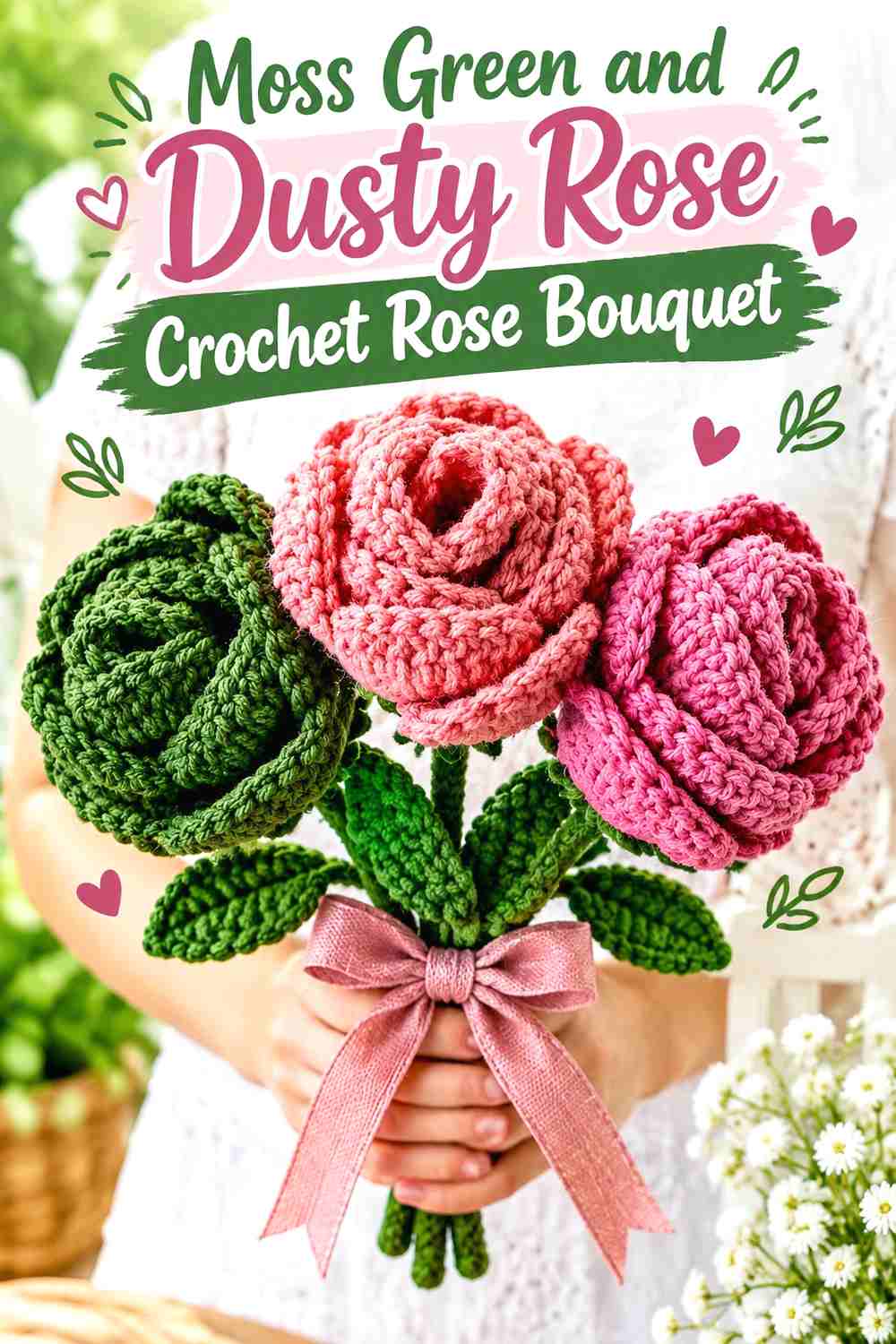
This is one of the most natural placements for the pairing. Dusty rose can define the flower heads while moss green belongs around the stems and leaves, giving each shade a clear visual role rather than dividing the bouquet mechanically.
Dusty Rose Keeps the Crochet Roses Clearly Separated From Moss Green
Let dusty rose occupy the petals rather than scattering green through the flower heads. Keeping the two roles distinct helps the flower shapes remain readable when several blooms are arranged together.
You can vary the dusty rose slightly from flower to flower if desired, but preserve enough similarity that the bouquet still reads as one color story.
Moss Green Should Repeat Throughout the Dusty Rose Bouquet
Moss green becomes more effective when it repeats around multiple flowers through the foliage and stems rather than appearing on only one bloom.
Check the arrangement after several flowers are grouped together. If most of the green sits on one side, redistribute the foliage so the dusty rose blooms have green support throughout the bouquet.
Creator Credit: naztazia
11. Moss Green And Dusty Rose Crochet Bunny
 SAVE
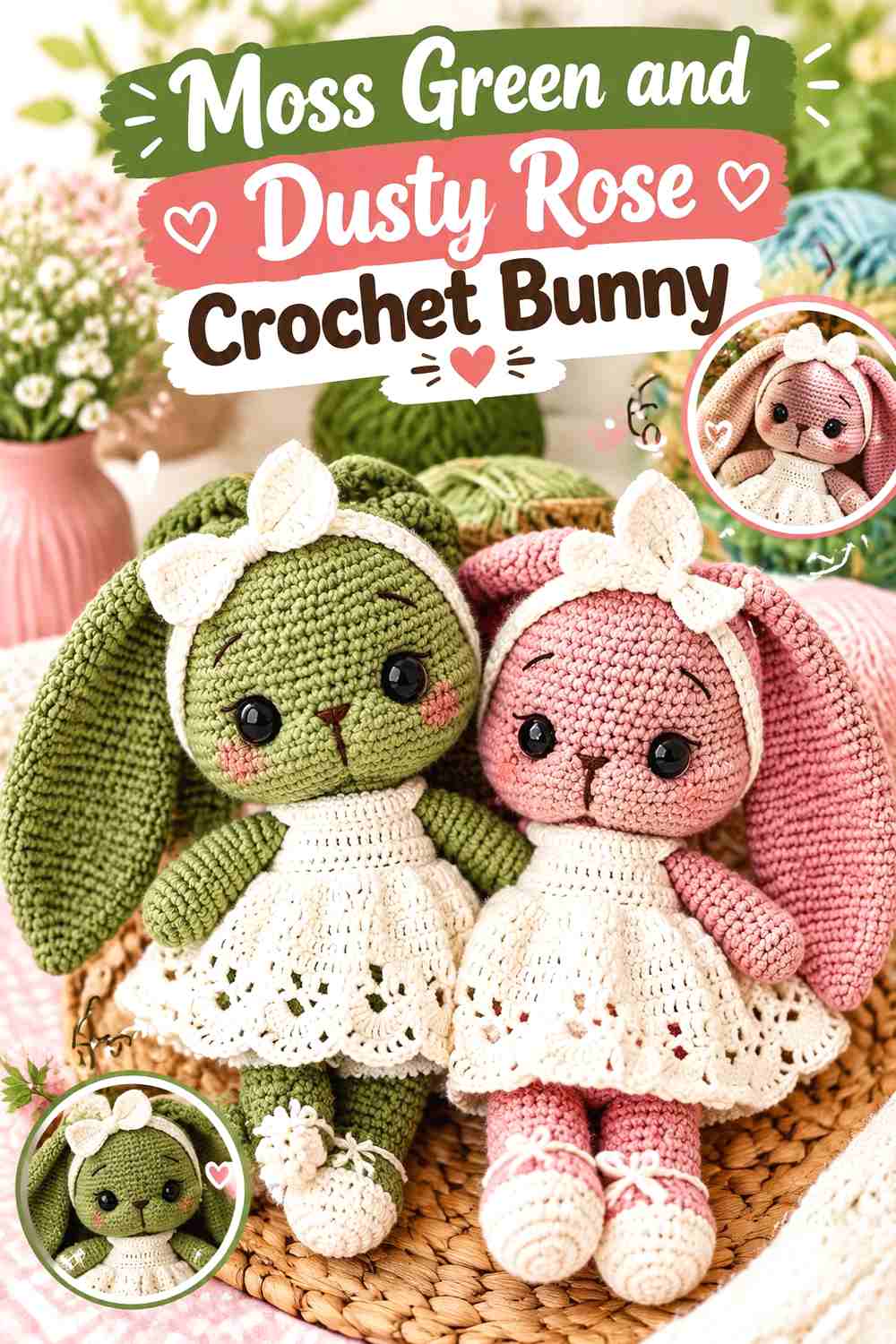
An amigurumi bunny lets dusty rose become the main body color while moss green moves onto clothing or a clearly defined accessory area. That keeps facial and body shaping from being interrupted by unnecessary color changes.
Dusty Rose Can Keep the Crochet Bunny Body Consistent
Using dusty rose throughout the head, ears, body, and limbs gives the bunny one recognizable main color. This is more cohesive than changing body colors solely to use equal quantities of both yarns.
Keep important facial details visually distinct from the dusty rose fabric, especially if you are adapting a tutorial with different original colors.
Moss Green Can Become the Dusty Rose Bunny’s Clothing Accent
Moss green works well on a separate clothing section because the boundary between body and garment already gives the color change a logical placement.
If the green garment covers a large part of the body, dusty rose should still remain visible around the head, ears, and limbs so the intended two-color balance is obvious.
Creator Credit: Hi DIY
12. Moss Green And Dusty Rose Crochet Storage Basket
 SAVE
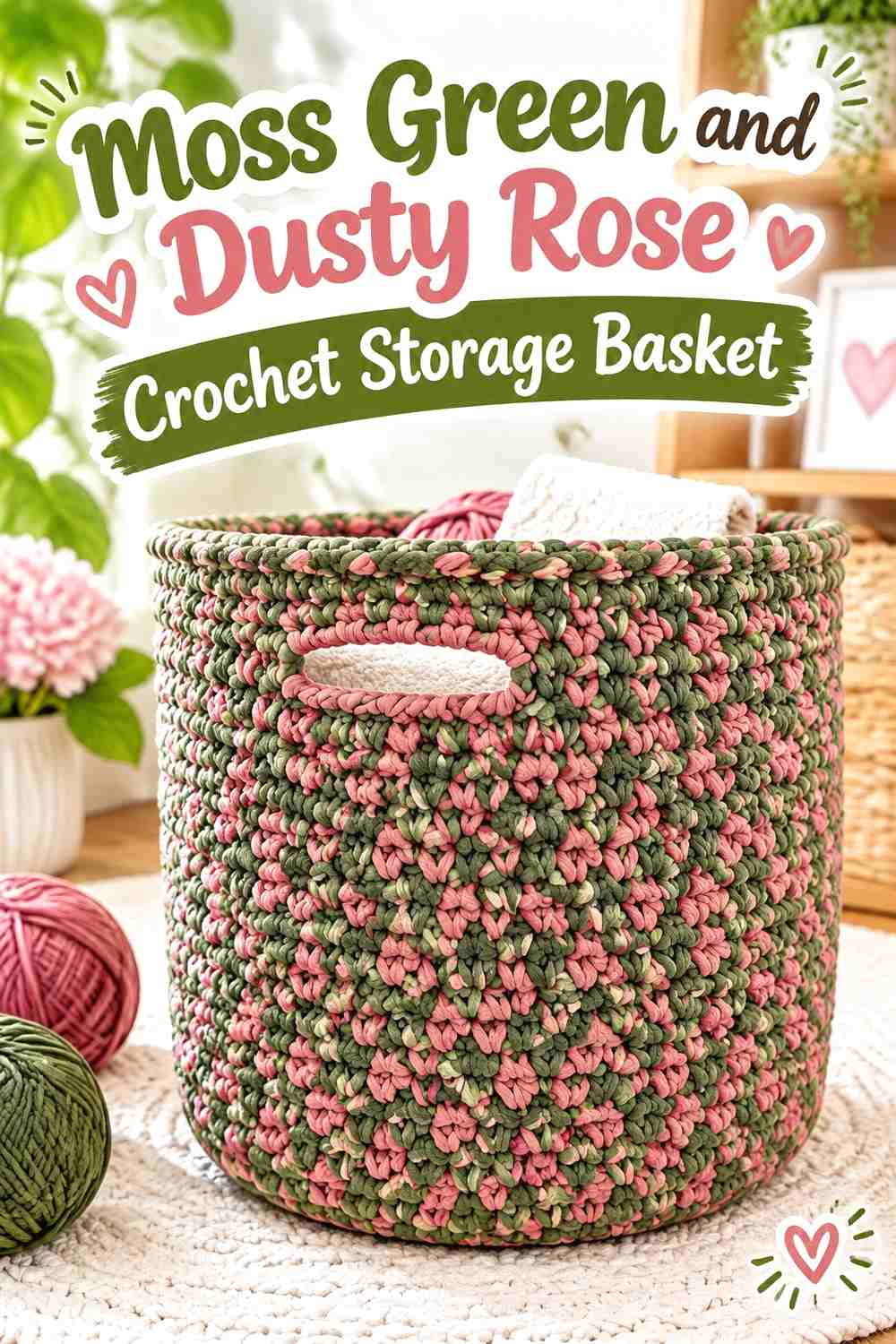
Storage baskets benefit from strong color blocking because their upright sides create broad uninterrupted areas. Moss green can dominate the basket body, while dusty rose marks the upper section or handles so the lighter color is concentrated where it remains easy to see.
Moss Green Can Ground the Crochet Storage Basket Body
Covering most of the basket in moss green emphasizes the container’s simple shape and gives textured crochet stitches a continuous background.
If you are adapting the colors to a basket with handles, consider where the color break meets those handles. An arbitrary transition just below them can make the top look disconnected.
Dusty Rose Can Connect the Moss Green Basket Rim and Handles
Repeating dusty rose around the upper edge and handle area gives the lighter color more purpose than a single decorative stripe. It also pulls attention toward the basket opening.
View the basket from across the room before adding more rose. Because the top edge is visually prominent, a smaller quantity can be enough to balance a much larger moss green body.
Creator Credit: Jayda InStitches
Comparing Moss Green and Dusty Rose Crochet Placements
Choose the granny square blanket or vest when you want the combination repeated through motifs. Moss green around outer rounds creates structure, while dusty rose centers keep the second color easy to identify.
The cardigan, tote, scarf, and basket work well for larger color blocks. These projects give each shade enough uninterrupted surface area to show clearly without constant yarn changes.
The cushion and baby blanket suit a dusty-rose-led direction with carefully controlled moss green details. The beanie and bucket hat use their edges or brims to separate the colors naturally.
For the clearest role-based palette, the rose bouquet and bunny are the most straightforward: each color can correspond to a recognizable part of the finished project instead of being distributed only for decoration.
Conclusion
Moss green and dusty rose do not need equal coverage to work as a crochet combination. In many of these projects, a stronger result comes from choosing one dominant color and giving the second shade a repeated, easy-to-understand job.
Use moss green as the main field when you want a deeper, earthier result on blankets, cardigans, bags, or baskets. Increase dusty rose when you want a lighter surface, especially on cushions, baby blankets, and amigurumi.
For motif projects, pay extra attention to light-and-dark contrast before making multiple pieces. For larger color-blocked projects, focus more on proportion and transition placement. The original tutorials can guide the construction, while the moss green and dusty rose distribution can be planned independently to suit your preferred balance.
Frequently Asked Questions
Do moss green and dusty rose have enough contrast for crochet?
They can, but the amount of contrast depends on the exact shades. Two muted medium-value yarns may look more similar than expected. Place them together or check a photo in grayscale if small motifs or colorwork details need clear separation.
Should moss green or dusty rose be the dominant crochet color?
Either can dominate. Moss green creates a deeper overall project, while dusty rose produces a lighter visual field. Choose according to the item and give the supporting shade a repeated role such as borders, cuffs, motifs, straps, or trim.
Can I add cream to moss green and dusty rose crochet?
Yes, when a third color serves a clear purpose. Cream can separate moss green and dusty rose when their values are too similar, but adding it everywhere can weaken the original two-color focus. Use it selectively around small motifs or joins when extra separation is needed.
How can I replace dusty rose without changing the palette completely?
Choose another muted pink with a similar lightness and softness. More importantly, preserve its relationship with the moss green. If dusty rose was the lighter supporting color, its replacement should remain noticeably lighter rather than becoming another dark shade.
What can replace moss green in this crochet combination?
Look for another muted medium-to-deep green. Olive, softened forest green, or another earthy green direction may work, but compare it directly with the dusty rose so the value relationship remains useful for your planned motifs or color blocks.
How do I keep moss green and dusty rose from looking muddy together?
Avoid assuming that different hue means strong contrast. If the two shades visually merge, increase the difference in lightness, give them larger separate color blocks, or place the lighter shade around the details that need the most definition.