Camel and cobalt blue create a crochet palette with a clear warm-cool contrast. Camel can act as the quieter grounding color, while cobalt blue brings a much stronger color statement. Changing which shade covers more of the project can make the same combination look restrained, graphic, or strongly color-blocked.
The key is not to automatically divide every project equally between the two colors. A camel crochet blanket may need only narrow cobalt blue interruptions, while a cardigan can support larger cobalt panels with camel concentrated around cuffs and edging. On smaller projects, even one cobalt stripe or border can have enough visual impact.
The tutorials credited below support the crochet construction concepts. The camel and cobalt blue combinations are independent palette adaptations rather than claims about the colors used by the tutorial creators.
Quick List
- Camel Dominant And Cobalt Blue Stripe Crochet Blanket
- Cobalt Blue And Camel Crochet Cardigan
- Camel And Cobalt Blue Crochet Tote Bag
- Cobalt Blue And Camel Crochet Mosaic Pillow
- Camel And Cobalt Blue Crochet Color Block Scarf
- Cobalt Blue And Camel Crochet Ribbed Beanie
- Camel And Cobalt Blue Crochet Sweater Vest
- Camel And Cobalt Blue Crochet Storage Basket
- Cobalt Blue Center And Camel Crochet Granny Square
- Camel And Cobalt Blue Crochet Poncho
- Camel And Cobalt Blue Crochet Washcloth
- Camel And Cobalt Blue Crochet Tea Towel
- Cobalt Blue Center And Camel Crochet Round Rug
Decide Whether Camel or Cobalt Blue Should Lead the Crochet Project
Camel works well as the larger color field when you want cobalt blue to function as a concentrated accent. This arrangement is useful on blankets, totes, baskets, and larger garment panels because a relatively small amount of cobalt can still remain noticeable against the quieter camel background.
Reversing the balance produces a much stronger blue statement. A cobalt-dominant pillow, cardigan, or hat can use camel around borders, cuffs, motifs, or edging to break up the blue without taking away its visual lead.
Before starting, decide which color should be noticed first. That choice makes later decisions about borders, straps, sleeves, motifs, and trim much easier.
Check Camel and Cobalt Blue Contrast With the Actual Yarn
Camel and cobalt blue are clearly different hues, but hue difference does not guarantee strong light-dark contrast. A deep camel and medium cobalt can sometimes be closer in value than expected.
Place the yarns together before committing to small motifs or detailed colorwork. A grayscale photo can help reveal whether the two shades remain distinct without relying on hue alone.
If the values are close, use the colors in larger blocks. If they have stronger light-dark separation, smaller cobalt motifs, camel borders, and alternating details are more likely to remain clearly visible.
1. Camel Dominant And Cobalt Blue Stripe Crochet Blanket
 SAVE
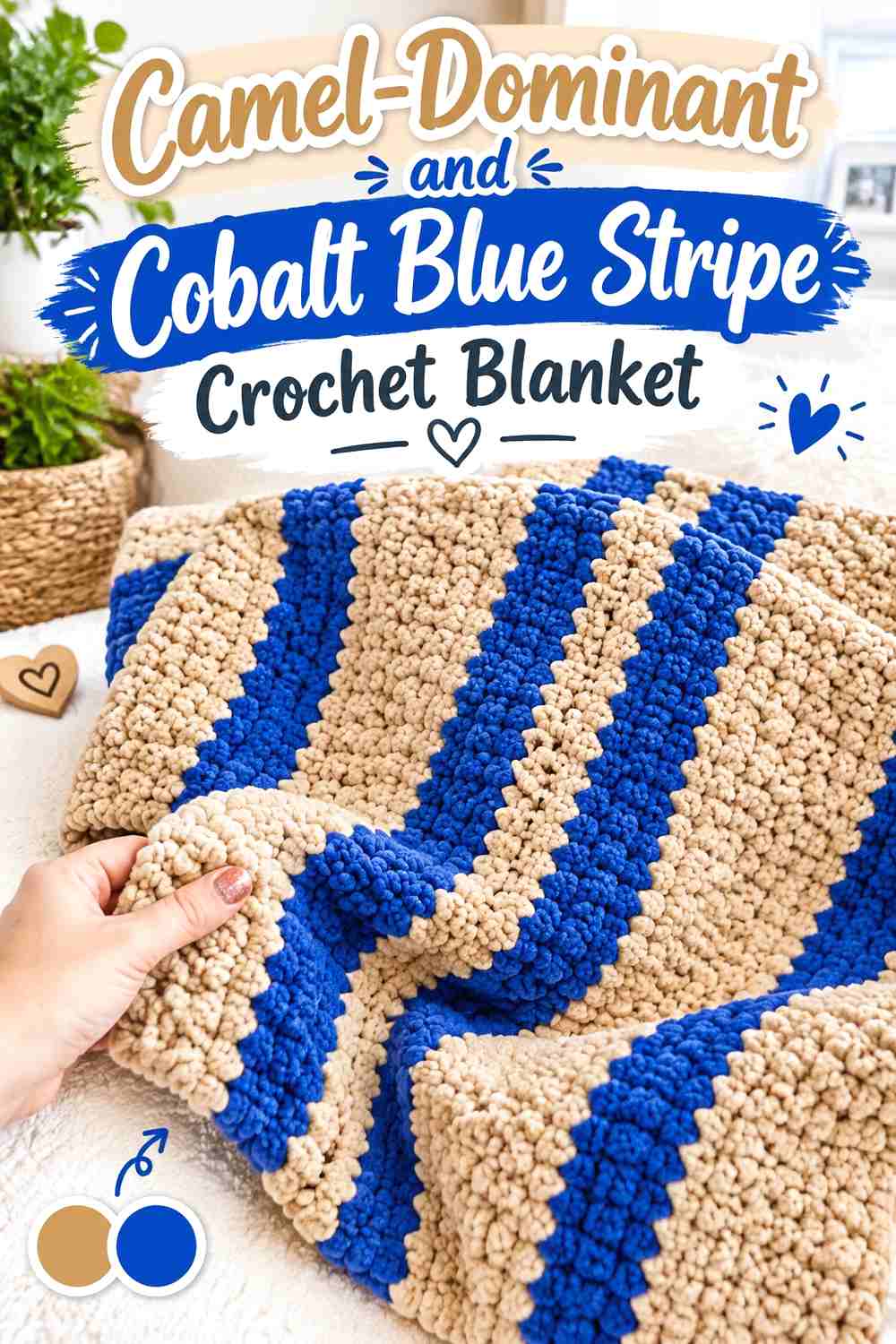
Let camel cover most of this crochet blanket so the finished surface has a continuous warm base, then use cobalt blue for narrower repeated stripes. The strong blue does not need equal space to become noticeable. Repeating it at planned intervals gives the blanket rhythm without allowing every row to compete for attention.
Let Camel Control the Main Crochet Blanket Surface
Broad camel sections allow stitch texture to remain visible without frequent color interruptions. They also establish camel unmistakably as the dominant shade instead of making the blanket read as a simple fifty-fifty stripe design.
When planning the color sequence, compare several wider camel bands with fewer cobalt interruptions before committing to frequent alternating stripes.
Repeat Cobalt Blue Across the Camel Blanket Instead of Using It Once
A single cobalt blue stripe can look disconnected on a large blanket. Repeating the blue in several locations makes the accent feel intentional and carries the strong color across the whole piece.
The cobalt stripes do not all need identical widths, but they should have enough repetition that the eye can recognize a deliberate pattern.
Creator Credit: Bella Coco
2. Cobalt Blue And Camel Crochet Cardigan
 SAVE
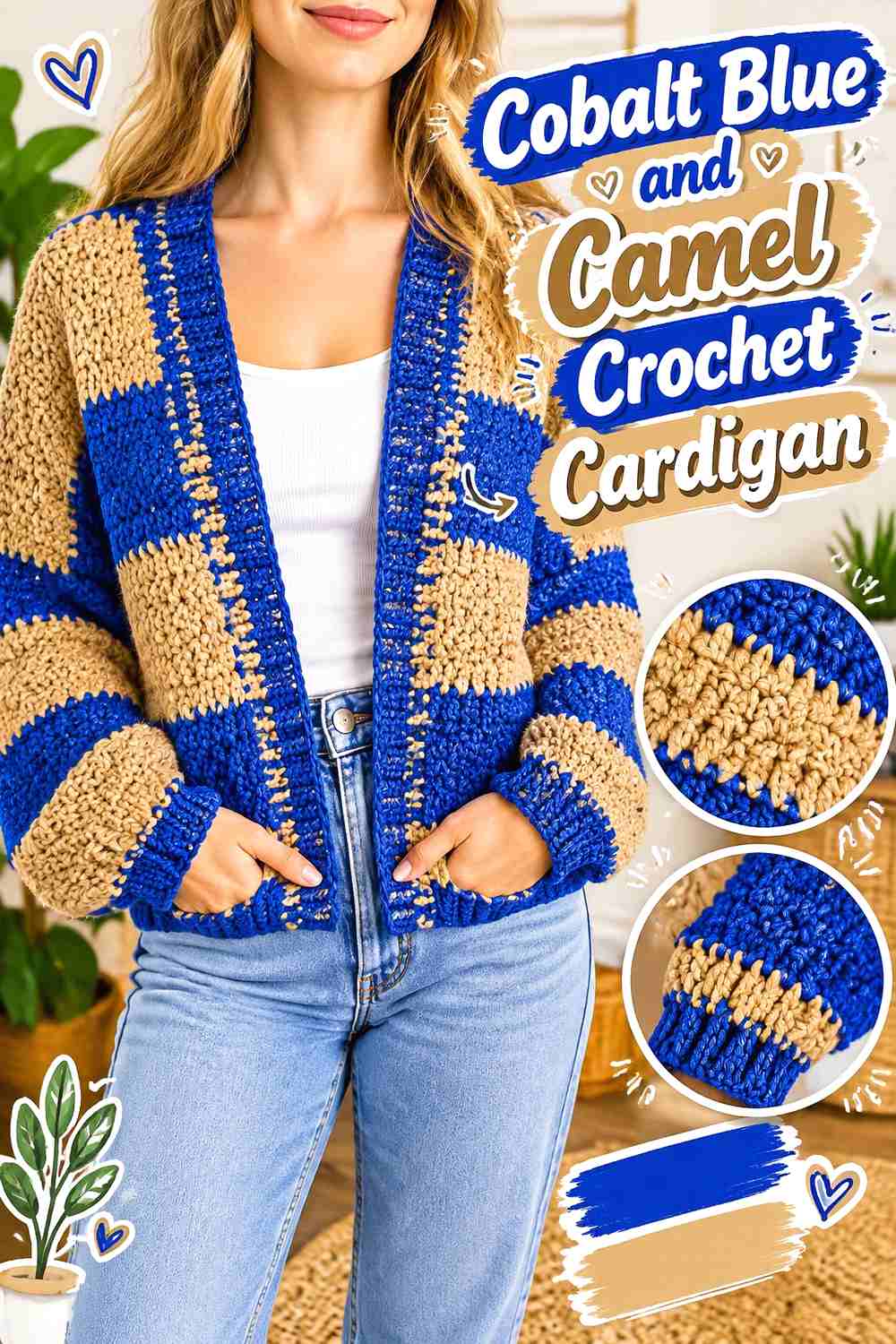
A cardigan can support more cobalt blue than a smaller accessory because its front, back, and sleeves provide several large color areas. Let cobalt lead across the body while camel defines cuffs, lower edging, or front bands. This keeps the strong blue continuous while giving the garment warmer breaks around its structural edges.
Keep Cobalt Blue Connected Across the Crochet Cardigan Panels
Using cobalt blue across both front sections and the back creates a clear main garment color. If camel is introduced too frequently through the body, the cardigan may start reading as striped rather than cobalt-dominant.
For a calmer layout, reserve most camel changes for natural construction boundaries such as the hem, cuffs, or front opening.
Use Camel to Frame the Cobalt Blue Cardigan Edges
Camel around cuffs or front edging can provide definition without competing with the main blue panels. Repeating camel in more than one finishing area helps the neutral look connected to the garment instead of added at the last minute.
If you want a stronger camel presence, extend it to the lower edge rather than scattering small camel patches through the cobalt body.
Creator Credit: Katieree
3. Camel And Cobalt Blue Crochet Tote Bag
 SAVE
For a tote, camel can create one uninterrupted main body while cobalt blue is concentrated around the base, upper edge, or handles. This placement uses the bag’s structure to explain the color changes instead of adding decorative stripes without a clear purpose.
Keep Camel Across Most of the Crochet Tote Body
A large camel body provides a quieter background for stitch texture and gives cobalt blue room to stand out even when used sparingly.
If you want a cobalt band across the bag, place it where it relates to the construction, such as near the base or opening, rather than dividing the body into many equal stripes.
Connect Cobalt Blue Handles Back to the Camel Tote Body
Cobalt handles can become a strong focal point, so repeat a small amount of cobalt somewhere on the body or upper edge. That visual connection prevents the straps from appearing unrelated to the rest of the bag.
If the handles remain camel instead, a cobalt base or upper band can supply the contrast while keeping the handles visually quieter.
Creator Credit: Kristines Crochets
4. Cobalt Blue And Camel Crochet Mosaic Pillow
 SAVE
A pillow gives cobalt blue enough surface area to become a bold background while camel defines a central mosaic or geometric feature. Because a pillow front is viewed as one contained composition, larger color shapes generally read more clearly than many tiny alternating details.
Let Cobalt Blue Give the Crochet Pillow a Strong Main Field
Using cobalt across most of the pillow face creates a consistent backdrop for the camel design. This works particularly well when the decorative surface already contains plenty of directional or geometric detail.
Avoid breaking the cobalt field unnecessarily if the motif itself already provides enough visual movement.
Use Camel to Keep the Cobalt Blue Pillow Motif Readable
Camel can outline or fill the important motif areas so the design does not disappear into the saturated blue background. Check the developing pillow from several feet away rather than judging contrast only at close range.
If the camel and cobalt yarns appear similar in grayscale, enlarging camel areas can be more effective than adding increasingly complicated detail.
Creator Credit: MJ’s Off The Hook Designs
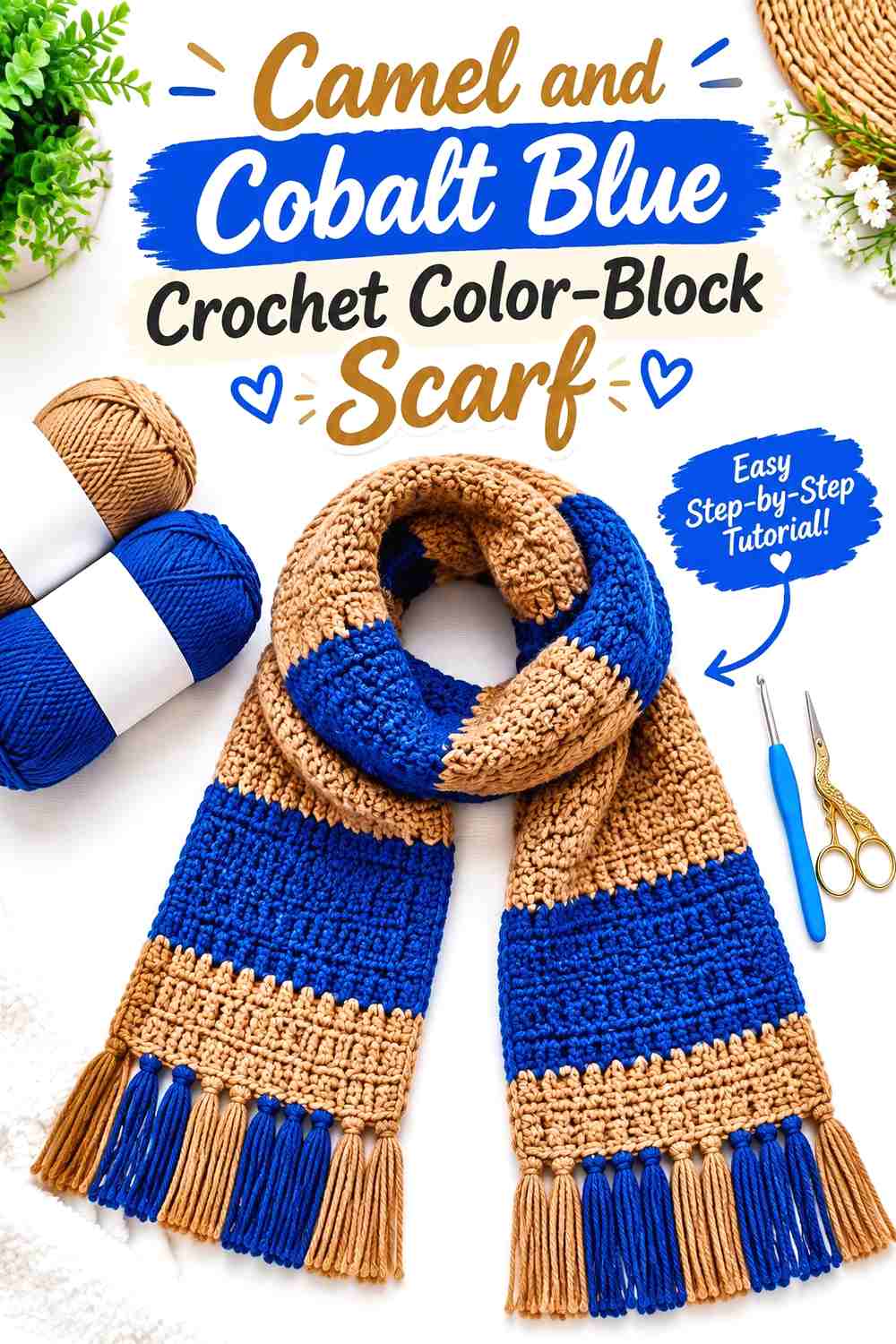
5. Camel And Cobalt Blue Crochet Color Block Scarf
 SAVE
A scarf offers enough length for large camel and cobalt blue blocks rather than constant striping. One option is to keep most of the center camel and use cobalt at both ends. The repeated dark-blue sections then act as deliberate visual anchors when the scarf hangs vertically.
Give Camel the Longest Section of the Crochet Scarf
A broad camel middle keeps the scarf visually continuous and gives the stitch pattern space to show without repeated interruptions.
This arrangement also makes the cobalt ends more noticeable because the blue appears after a substantial stretch of neutral color.
Balance Camel With Cobalt Blue at Both Scarf Ends
Using cobalt at both ends creates repetition across the full length. The sections do not need to dominate the scarf; their position already gives them prominence when both ends are visible.
If you choose an asymmetric layout instead, repeat a small cobalt detail elsewhere so the unequal blocks still appear deliberate.
Creator Credit: Sewrella
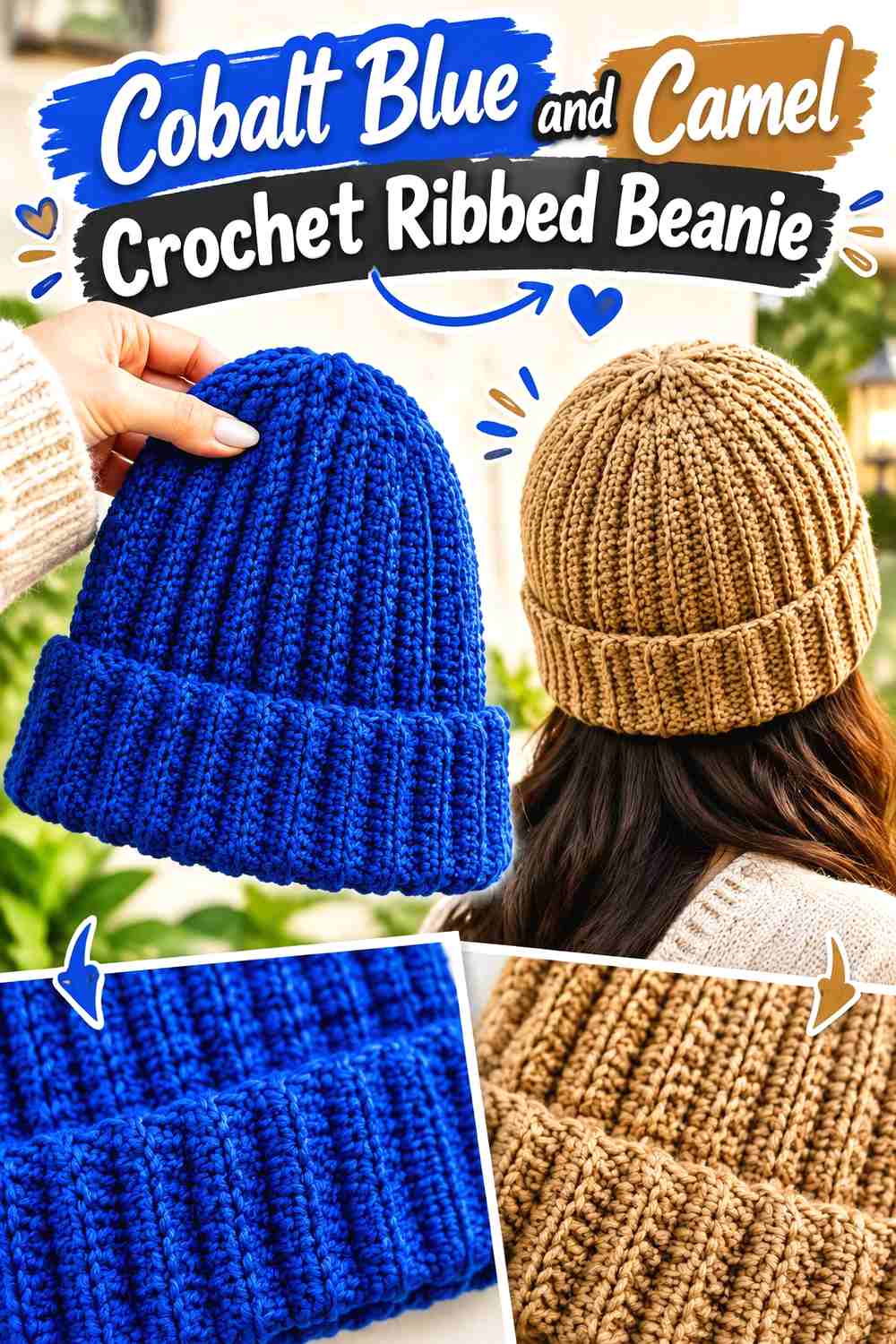
6. Cobalt Blue And Camel Crochet Ribbed Beanie
 SAVE
A ribbed beanie already has strong surface texture, so the palette can stay relatively simple. Use cobalt blue through the main body or crown and camel around the brim. The two-part division lets the ribbing remain important instead of competing with numerous narrow color changes.
Use Camel to Define the Cobalt Blue Crochet Beanie Brim
A camel brim creates a warm band below the stronger cobalt body. Keeping the brim one consistent color also makes the lower edge easy to distinguish from the crown.
If the brim is folded or particularly visually substantial, remember that camel may occupy more of the finished hat than it appears to while crocheting.
Keep Cobalt Blue Continuous Through the Crochet Beanie Crown
A continuous cobalt crown creates a cleaner silhouette than repeatedly switching between cobalt and camel through a small hat.
If the blue section feels too isolated after the beanie is assembled, a limited cobalt-and-camel finishing detail can reconnect the areas without turning the project into narrow stripes.
Creator Credit: VivCrochets
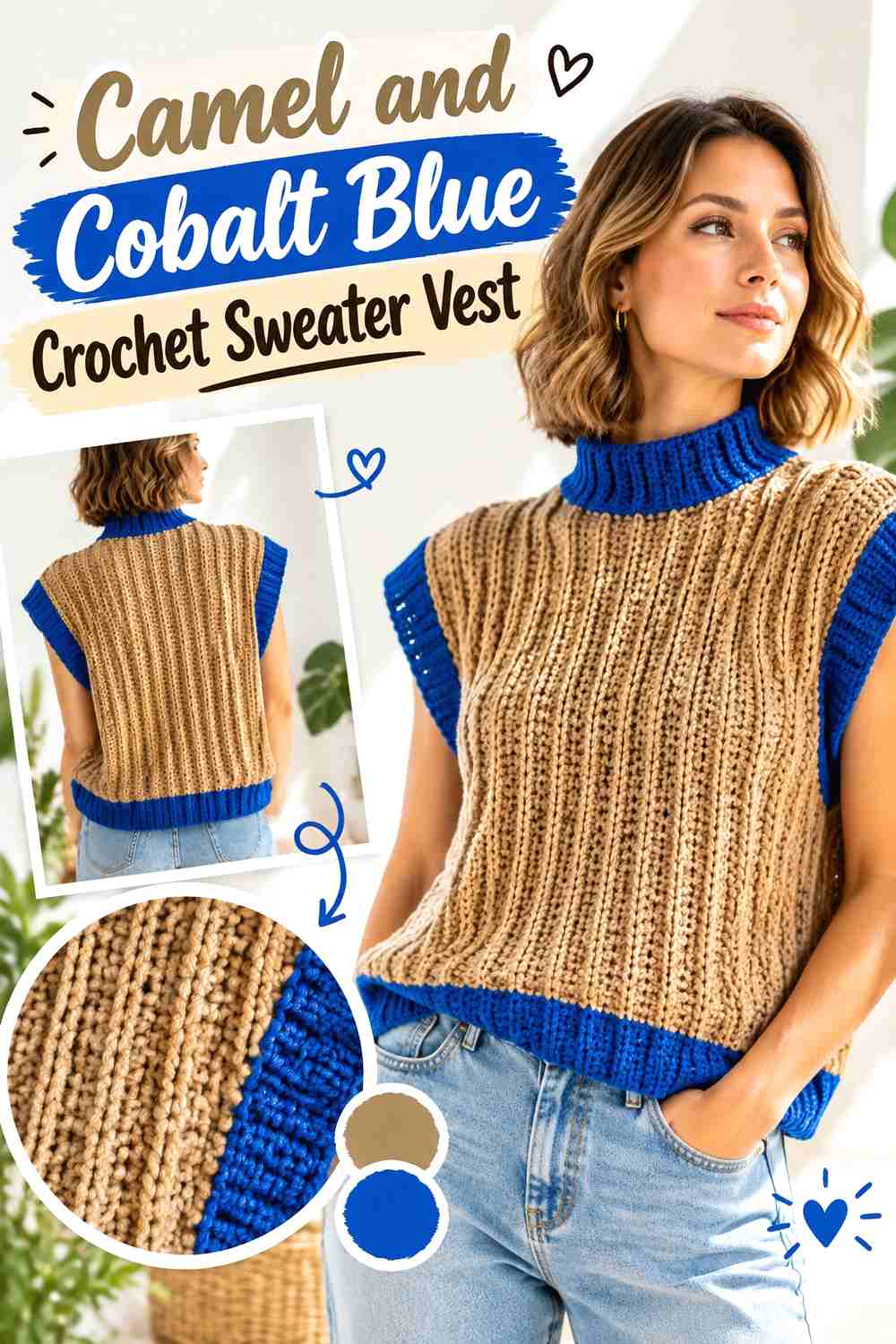
7. Camel And Cobalt Blue Crochet Sweater Vest
 SAVE
Camel can cover the broad front and back panels of a sweater vest while cobalt blue highlights the neckline, armholes, or lower trim. The vest has fewer structural sections than a full cardigan, so repeated blue edging can provide enough contrast without dividing the body.
Let Camel Dominate the Crochet Vest Panels
Keeping the main panels camel gives the vest a clear base color and prevents the stronger cobalt blue from overwhelming the garment’s overall layout.
For a color-block variation, introduce one larger cobalt section rather than numerous unrelated blue patches.
Repeat Cobalt Blue Around the Camel Crochet Vest Openings
Cobalt around the neckline and armholes creates a consistent trim language. Because those edges naturally repeat across the garment, the blue appears integrated with the construction.
Decide separately whether the hem also needs cobalt. Leaving it camel can preserve stronger neutral dominance, while a cobalt hem increases the visual share of blue.
Creator Credit: passtschon
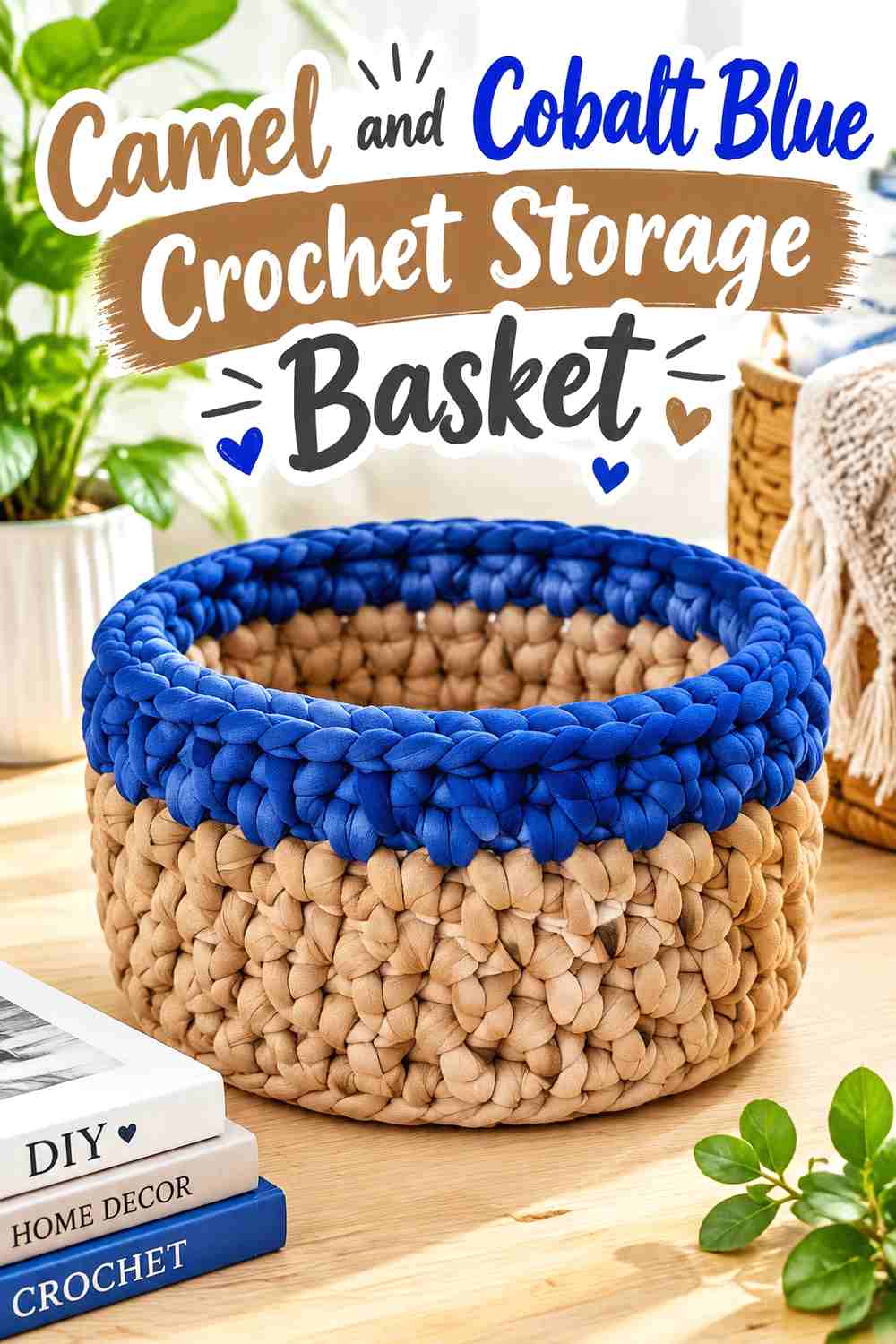
8. Camel And Cobalt Blue Crochet Storage Basket
 SAVE
The shape of a storage basket naturally offers a base, walls, rim, and sometimes handles, making purposeful color placement straightforward. Camel can cover the base and most of the sides, while cobalt blue is reserved for the upper edge and handle area.
Build the Camel Crochet Basket as One Continuous Neutral Base
Keeping camel through the lower basket and most of the side walls gives the container a unified appearance. It also prevents a functional home-decor piece from becoming visually fragmented by many small stripes.
Introduce cobalt only after the camel body has enough height to remain clearly dominant.
Concentrate Cobalt Blue Around the Camel Basket Rim
A cobalt rim makes the opening a clear visual feature and gives the strong color a logical location. If the construction has handles, repeating cobalt there connects the upper details.
When there are no handles, the rim alone may provide enough blue. More cobalt does not automatically make the two-color plan stronger.
Creator Credit: Lallaulab
9. Cobalt Blue Center And Camel Crochet Granny Square
 SAVE
A granny square is a compact way to test how these two shades behave together before using them across a cardigan, blanket, or bag. Cobalt blue can occupy the center while camel expands toward the outside, allowing the stronger blue to become a repeated focal point without dominating the eventual joined surface.
Place Cobalt Blue at the Crochet Granny Square Center
A cobalt center gives each motif an immediate focal point. If many squares will eventually be joined, repeating the blue center distributes cobalt regularly across the larger finished project.
Make one complete sample before producing a stack of squares so you can judge the color balance at full motif size.
Expand Camel Around the Cobalt Blue Granny Square Center
Camel outer rounds give the intense center more neutral space and can make neighboring motifs easier to separate visually.
If you plan to use camel for joining as well, check whether the outer rounds and joins merge into a larger continuous camel field. That may be desirable, but it changes how strongly individual squares remain visible.
Creator Credit: Crochet with Tuula Maaria
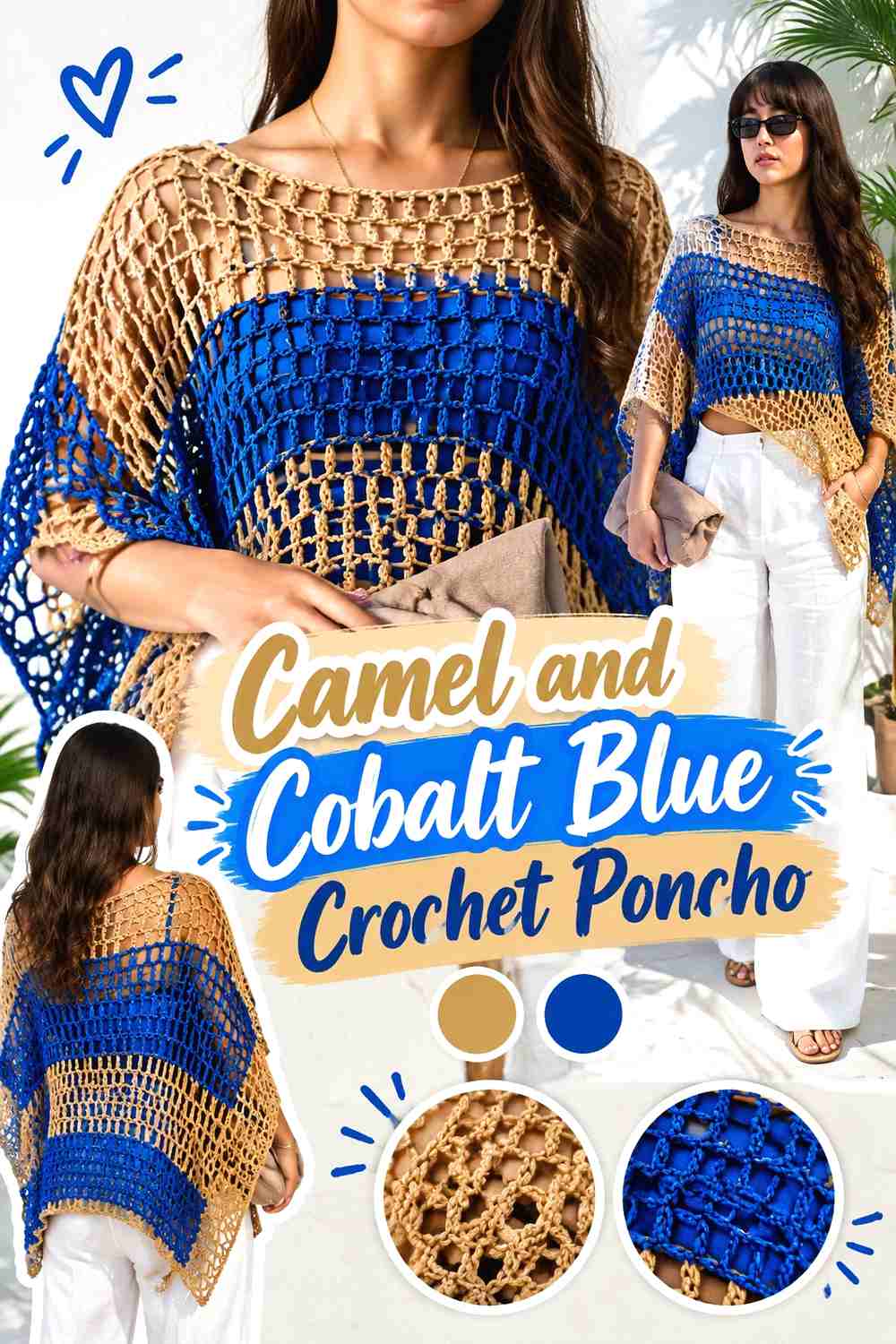
10. Camel And Cobalt Blue Crochet Poncho
 SAVE
A poncho has broad areas where camel can establish a neutral foundation before cobalt blue is introduced around the lower portion, neckline, or selected bands. Large-scale color blocking generally suits the size of the garment better than small scattered changes.
Keep Camel Across the Main Crochet Poncho Panels
Camel can occupy most of the front and back so the garment retains one continuous base. This gives cobalt enough contrast to work in fewer, more deliberate areas.
If the poncho consists of prominent panels, keep the camel distribution balanced across them unless an intentionally asymmetric color-block effect is the goal.
Use Cobalt Blue to Define the Camel Crochet Poncho Border
Cobalt around the lower edge creates a strong finish because the border follows the garment’s outer silhouette. A blue neckline can repeat that color higher on the piece and prevent the border from being the only cobalt element.
Compare a narrow cobalt border with a deeper cobalt section before deciding how much blue the garment needs.
Creator Credit: Lorena
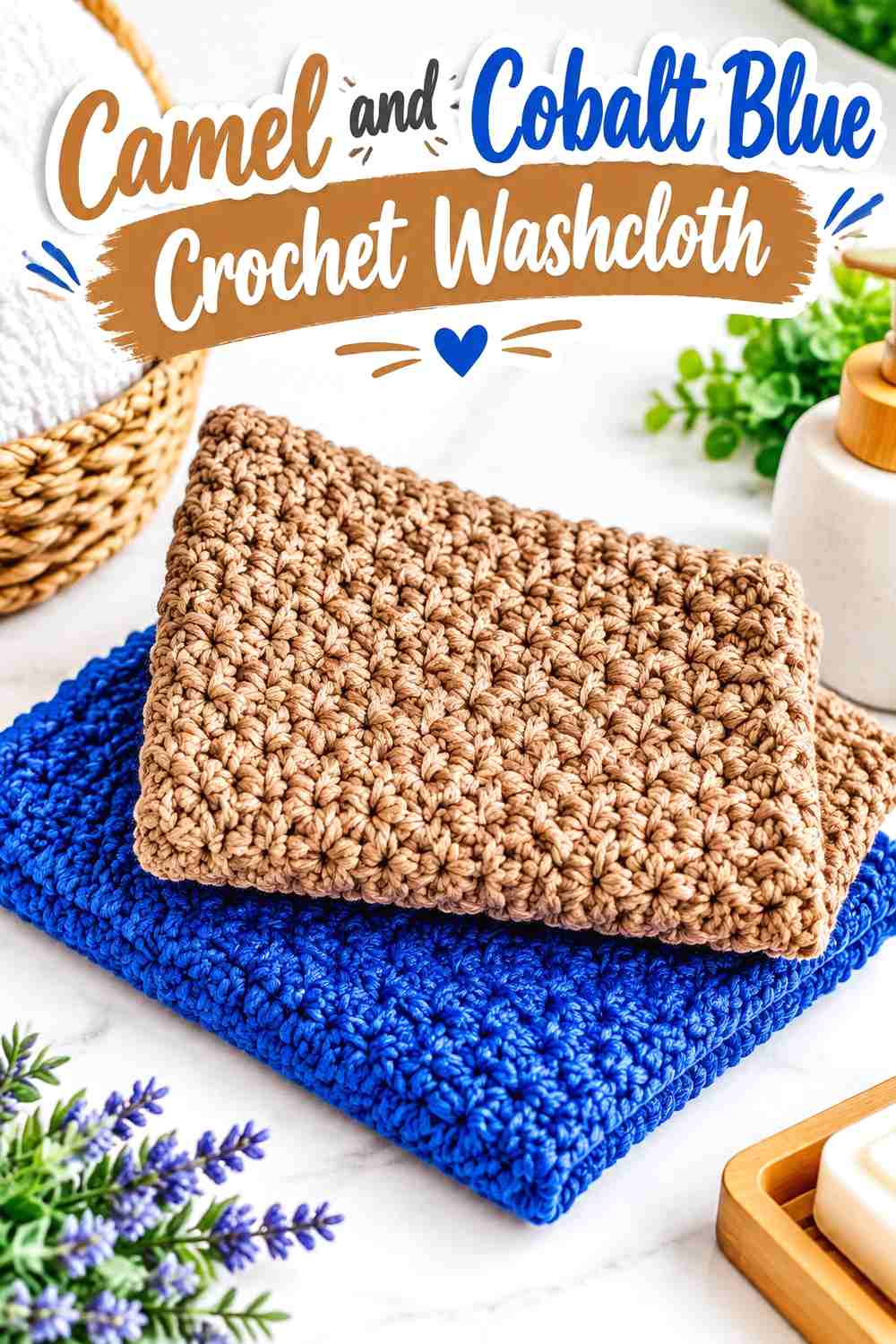
11. Camel And Cobalt Blue Crochet Washcloth
 SAVE
A small washcloth is useful for trying the combination because even simple placement changes are immediately visible. Camel can cover most of the square while cobalt blue forms a center band, corner detail, or outer border.
Keep Camel as the Main Crochet Washcloth Color
Using camel for most of the surface gives the stronger cobalt accent enough room to stand apart. It also lets you evaluate how the camel yarn looks once worked into repeated crochet texture.
For a straightforward test project, avoid dividing the washcloth into numerous narrow alternating stripes.
Add Cobalt Blue Where the Camel Washcloth Needs Clear Separation
A cobalt center stripe or border provides an obvious contrast point without requiring complicated colorwork. A border makes the blue frame the whole square, while a central stripe keeps more camel visible around the outside.
Choose between those placements according to whether you want the blue to define the edge or interrupt the surface.
Creator Credit: Melanie Ham
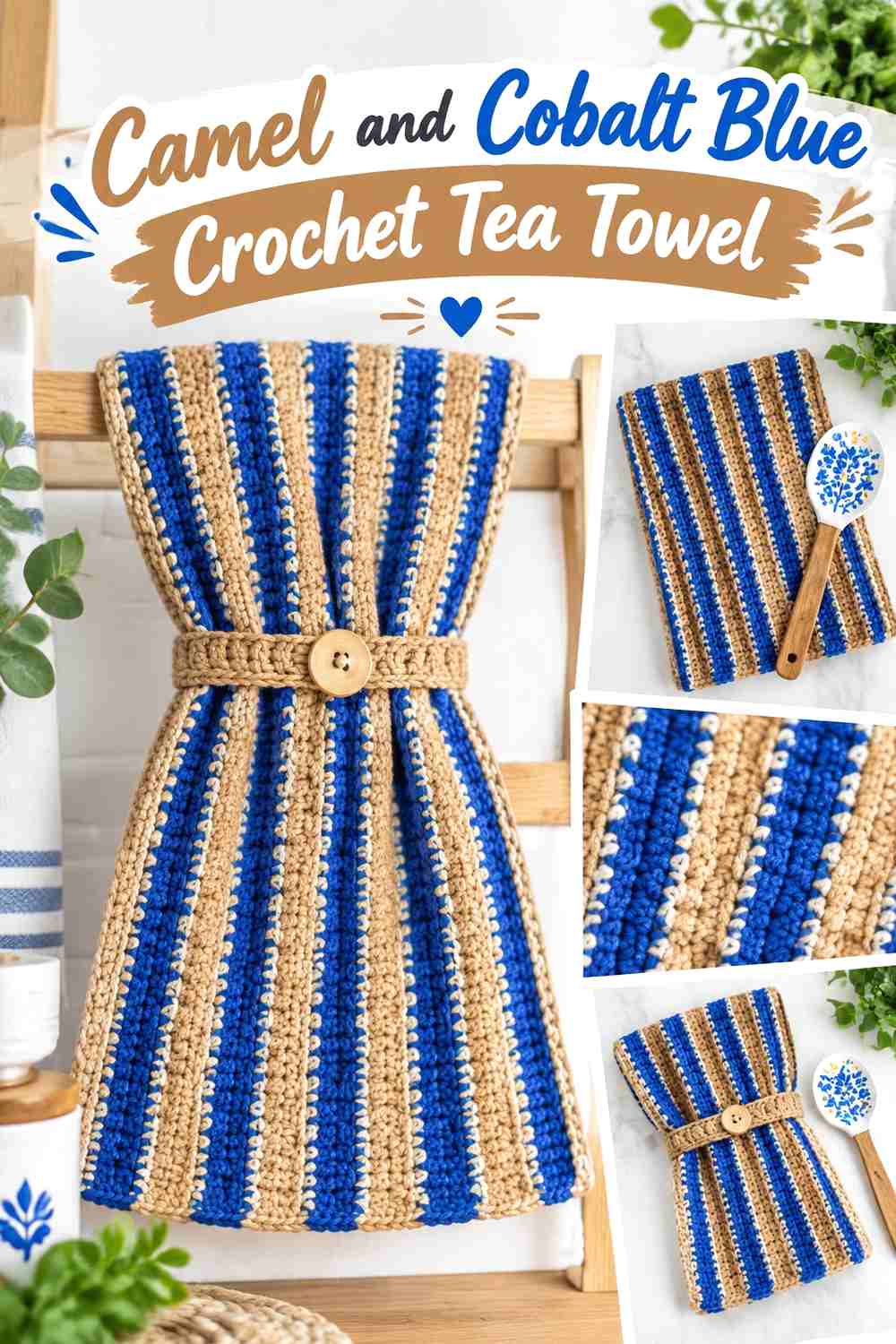
12. Camel And Cobalt Blue Crochet Tea Towel
 SAVE
A tea towel gives the palette a long vertical surface plus smaller structural details. Camel can cover the main towel while cobalt blue appears across the lower band, hanging section, or another repeated finishing area.
Let Camel Cover Most of the Crochet Tea Towel
A camel field keeps the long body visually consistent and lets stitch texture remain easy to follow. Because cobalt is much more assertive, it can still register clearly in a much smaller area.
Consider the towel while hanging, not only while laid flat, because some color sections may fold or overlap in actual use.
Put Cobalt Blue on a Visible Camel Tea Towel Detail
A cobalt lower band creates color at the most visible hanging edge, while a cobalt hanging detail places the contrast near the attachment area.
If both areas are blue, keep the rest of the towel substantially camel so the project does not lose its intended color hierarchy.
Creator Credit: Winding Road Crochet
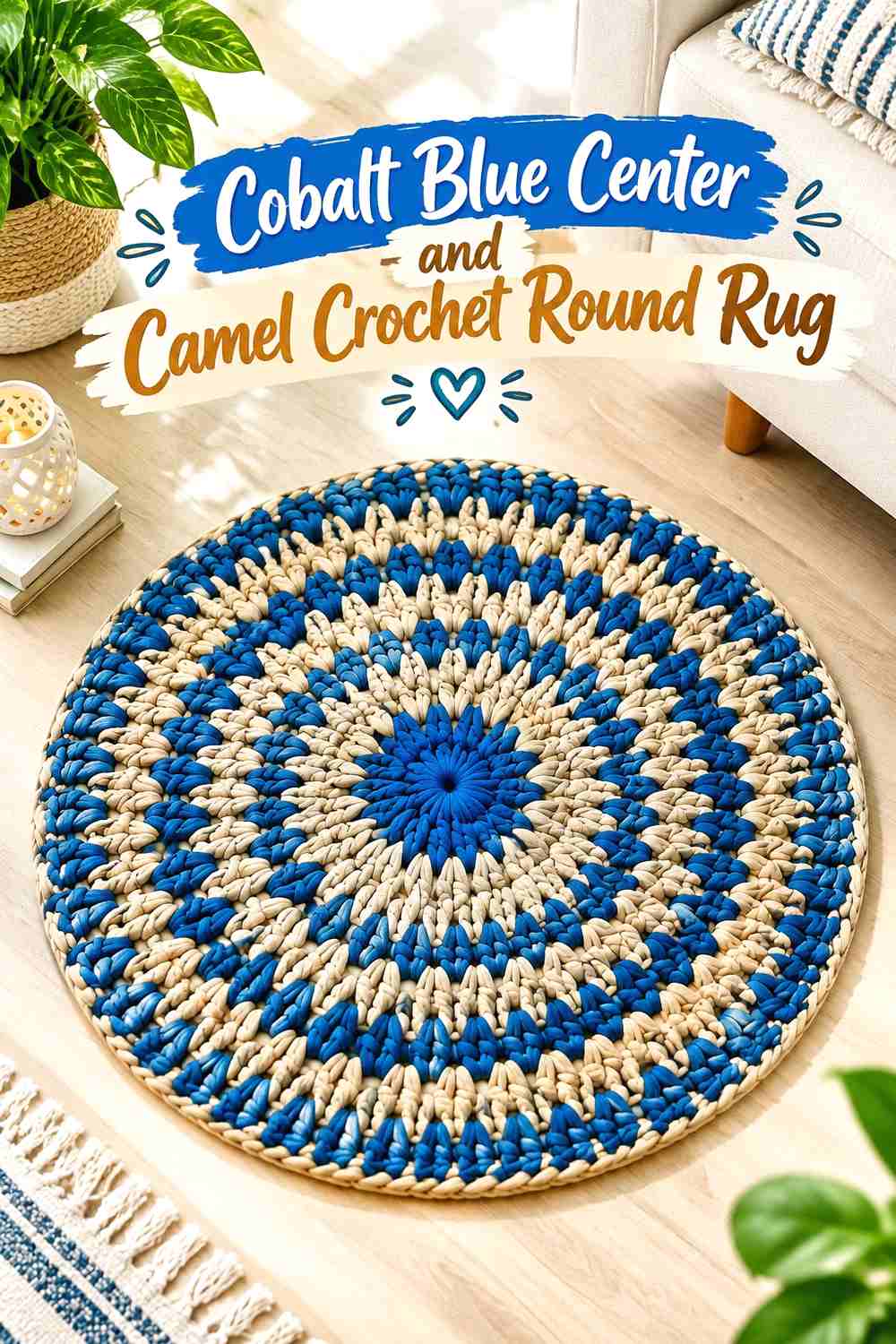
13. Cobalt Blue Center And Camel Crochet Round Rug
 SAVE
A round rug gives the palette a different distribution opportunity because color can move outward in concentric areas rather than horizontal stripes. Cobalt blue can establish the center, while camel takes over through broader outer sections to prevent the saturated color from filling the entire floor-level piece.
Start With Cobalt Blue at the Crochet Rug Center
A cobalt center creates a clear focal point from which the rest of the circular color plan can expand. Keeping the first blue area substantial enough to remain visible is important once wider camel rounds are added.
Check the rug from standing distance as it grows because proportions can look very different from above than they do while the piece is directly in your hands.
Widen Camel Toward the Cobalt Blue Crochet Rug Edge
Increasing the amount of camel toward the exterior shifts the finished balance toward the neutral shade and keeps cobalt concentrated at the center.
You can finish with camel for a quieter outer frame or repeat cobalt in a final narrow edge if the center needs a visual connection to the perimeter.
Creator Credit: Jen Dwyer
Comparing Camel-Dominant and Cobalt Blue-Dominant Crochet Ideas
For a more neutral-heavy result, the blanket, tote, sweater vest, basket, poncho, washcloth, and tea towel give camel the largest share of the visible surface. Cobalt blue then works as a stripe, edge, handle color, or structural accent.
The cardigan, pillow, beanie, granny square, and rug allow cobalt blue to take a stronger focal role. The scarf can move easily in either direction because its long shape supports large blocks of both colors.
If you are unsure about committing to a large cobalt area, test the pair first on the granny square or washcloth. That gives you a chance to compare the actual yarn values before repeating the combination across a garment or blanket.
Conclusion
Camel and cobalt blue work particularly well in crochet when their roles are unequal and deliberate. Camel can provide broad, warm-looking background areas, while cobalt blue can define borders, bands, handles, cuffs, motif centers, and other details that benefit from a stronger color statement.
For quieter projects, increase camel and restrict cobalt to repeated accents. For a more graphic result, let cobalt occupy a major panel or central field and use camel as the framing color.
Most importantly, plan the palette around the structure of the crochet item. Cardigan cuffs, basket rims, granny-square centers, blanket stripes, and pillow motifs already provide logical places for color changes, making the finished combination feel intentional rather than randomly divided.
Frequently Asked Questions
Do camel and cobalt blue work well together in crochet?
They can create a distinct warm-cool pairing, especially when one shade is given a clear dominant role. Camel usually functions well as the quieter field, while cobalt blue can provide stronger visual emphasis.
Should camel or cobalt blue be the main crochet color?
Either can lead. Choose camel when you want a more neutral-heavy blanket, garment, bag, or home-decor piece. Choose cobalt when you want the blue to create the first visual impression and use camel for edging, borders, or supporting areas.
How much cobalt blue should I use with camel?
There is no required ratio. Because cobalt blue can have strong visual presence, a smaller amount may be enough when it appears repeatedly in prominent areas such as cuffs, stripes, borders, handles, or motif centers.
How can I check whether camel and cobalt blue have enough contrast?
Compare the actual yarns side by side and view them from a distance. A grayscale photo is also useful for checking light-dark value independently of the obvious difference between brown and blue hues.
Where should cobalt blue go on a camel crochet garment?
Necklines, cuffs, armholes, hems, front bands, selected panels, and repeated motifs can all carry cobalt blue. Choose a few related structural areas rather than scattering small blue details everywhere.
Can I reverse a camel-dominant crochet palette and make cobalt blue dominant?
Yes. Preserve the color roles rather than simply swapping every section mechanically. A cobalt body may need fewer camel accents than a camel body needs cobalt accents because the stronger blue can already carry substantial visual weight.
What should I substitute if I cannot find the exact camel or cobalt blue yarn?
Look for colors that preserve the same relationship. Choose a warm tan or muted brown neutral in place of camel, and a clear, saturated medium-to-deep blue in place of cobalt. Compare the substitutes together to make sure the contrast still supports the placement you planned.