
A crochet lace triangle scarf gives color and openwork equal importance. Because the fabric contains visible spaces, yarn colors are influenced by whatever sits underneath them—a shirt, dress, coat, or even bare skin. That makes contrast, borders, and color placement especially important.
The triangular shape adds another consideration. Color bands become progressively longer as the scarf expands, so a shade used near the outer edge can occupy much more visual area than the same number of rows near the center point. Dark borders can frame the triangle strongly, while pale outer sections can make the finished scarf look lighter.
These 15 ideas use lace, mesh, openwork, C2C lace, granny-style openwork, and triangle-scarf constructions that can support a lace-focused adaptation. The suggested palettes are independent editorial color plans rather than claims that the tutorial creators used these exact combinations.
Quick List
- Ivory And Dusty Blue Crochet Open Lace Triangle Scarf
- Sage And Cream Crochet Spring Lace Triangle Scarf
- Burgundy And Blush Crochet Mesh Triangle Scarf
- Teal And Oatmeal Crochet Openwork Triangle Scarf
- Plum And Mauve Crochet Airy Triangle Scarf
- Rust And Beige Crochet Lightweight Lace Triangle Scarf
- Navy And Ivory Crochet C2c Lace Triangle Scarf
- Lavender And Silver Crochet Mesh Fringe Triangle Scarf
- Moss Green And Dusty Rose Crochet Openwork Triangle Scarf
- Mustard And Chocolate Crochet Picot Triangle Scarf
- Charcoal And Cream Crochet Lace Triangle Scarf
- Terracotta And Sage Crochet Granny Lace Triangle Scarf
- Royal Purple And Cream Crochet Granny Lace Triangle Scarf
- Denim Blue And Natural Crochet Open Granny Triangle Scarf
- Wine And Antique Gold Crochet Granny Triangle Scarf
Plan Color From the Triangle Center Outward
Color proportions behave differently on a triangle than on a rectangular scarf. Sections become wider as the scarf grows, so an accent introduced near the outer edge can quickly occupy a large percentage of the finished piece.
If you want one shade to remain an accent, repeat it in narrower sections or place it nearer the center point. If the second color is intended to frame the scarf, a wider outer band can make that role clear.
Spread the developing scarf flat occasionally. Looking only at the current row makes it difficult to judge how much visual space earlier colors occupy across the complete triangle.
Use Contrast to Keep Crochet Lace Openings Visible
Lace already creates contrast through yarn and empty space. Strongly contrasting yarn colors add another layer, so they work best when placed deliberately.
For detailed openwork, consider keeping individual lace sections mostly one color. Constantly changing yarn inside a small repeating motif can make the openings harder to follow.
A contrasting border is a simpler way to introduce a second shade. It defines the triangular silhouette while allowing the interior lace pattern to remain visually continuous.
Think About What Shows Through the Triangle Scarf
Openwork can look dramatically different over light and dark clothing. Cream lace over a dark shirt appears more graphic, while the same cream scarf over beige creates a softer effect.
Before committing to subtle tonal colors, place a sample against clothing you are likely to wear underneath it. Two yarn shades that look distinct on a worktable may become less noticeable when the background color shows through the lace.
1. Ivory And Dusty Blue Crochet Open Lace Triangle Scarf
 SAVE
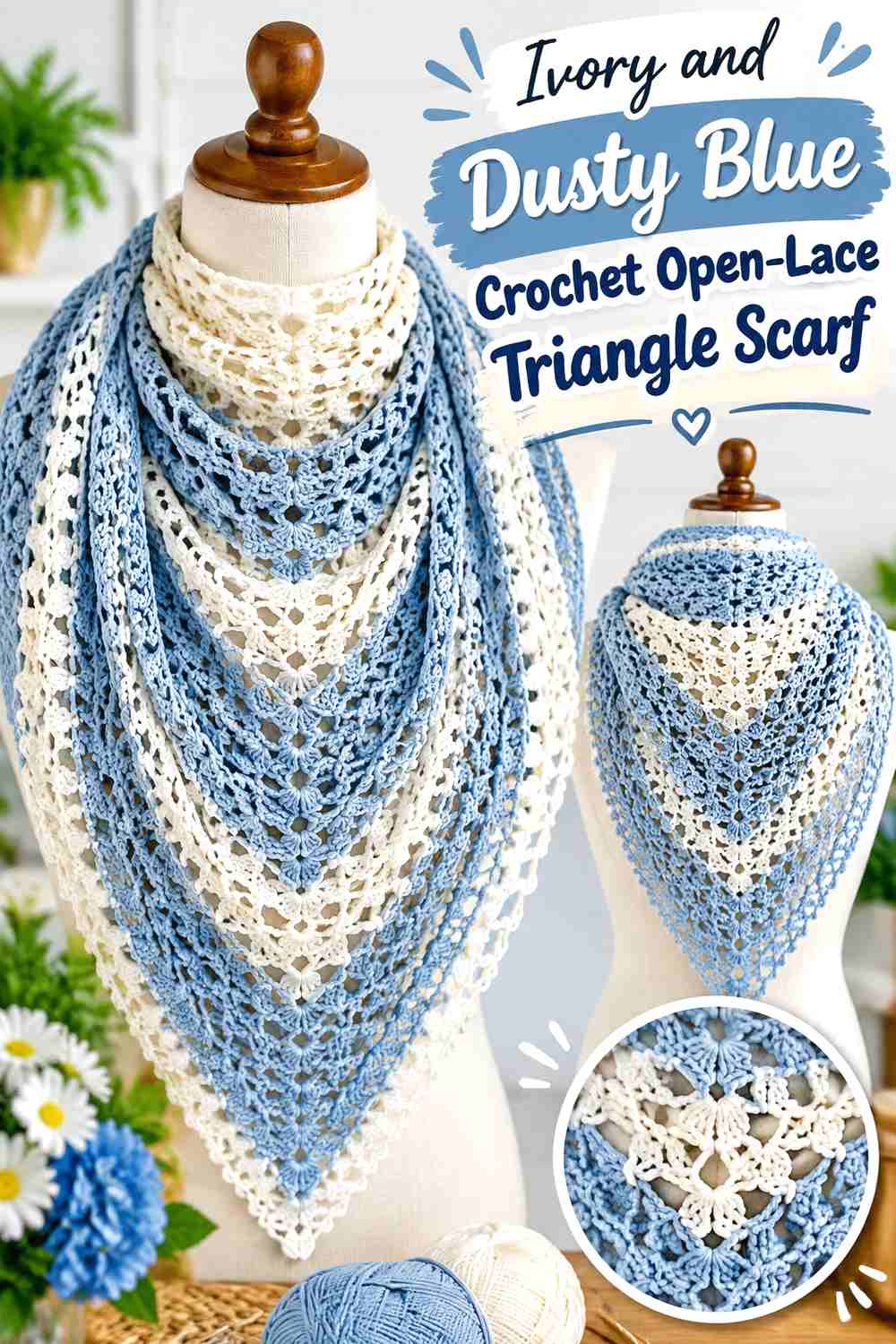
Ivory and dusty blue create a light palette that allows the openwork itself to remain the main feature. Ivory can cover most of the triangular body while dusty blue appears near the outer section and edging. Keeping the blue away from every individual lace repeat prevents the delicate fabric from becoming visually striped.
Ivory Keeps Dusty Blue Crochet Lace Details Light
Use ivory through the central triangle when you want the spaces between stitches to remain easy to read. A continuous light field also lets shadows around the lace pattern create subtle definition.
If the scarf will usually be worn over very pale clothing, test the ivory first. The openwork may look less distinct without enough contrast behind it.
Dusty Blue Can Frame the Ivory Crochet Triangle
A dusty blue outer section can emphasize the diagonal sides and lower point without creating the sharp contrast of navy or black.
Because outer triangle rows occupy more area, check the scarf after a small blue section before deciding to extend it substantially.
Creator Credit: Hooked by Robin
2. Sage And Cream Crochet Spring Lace Triangle Scarf
 SAVE
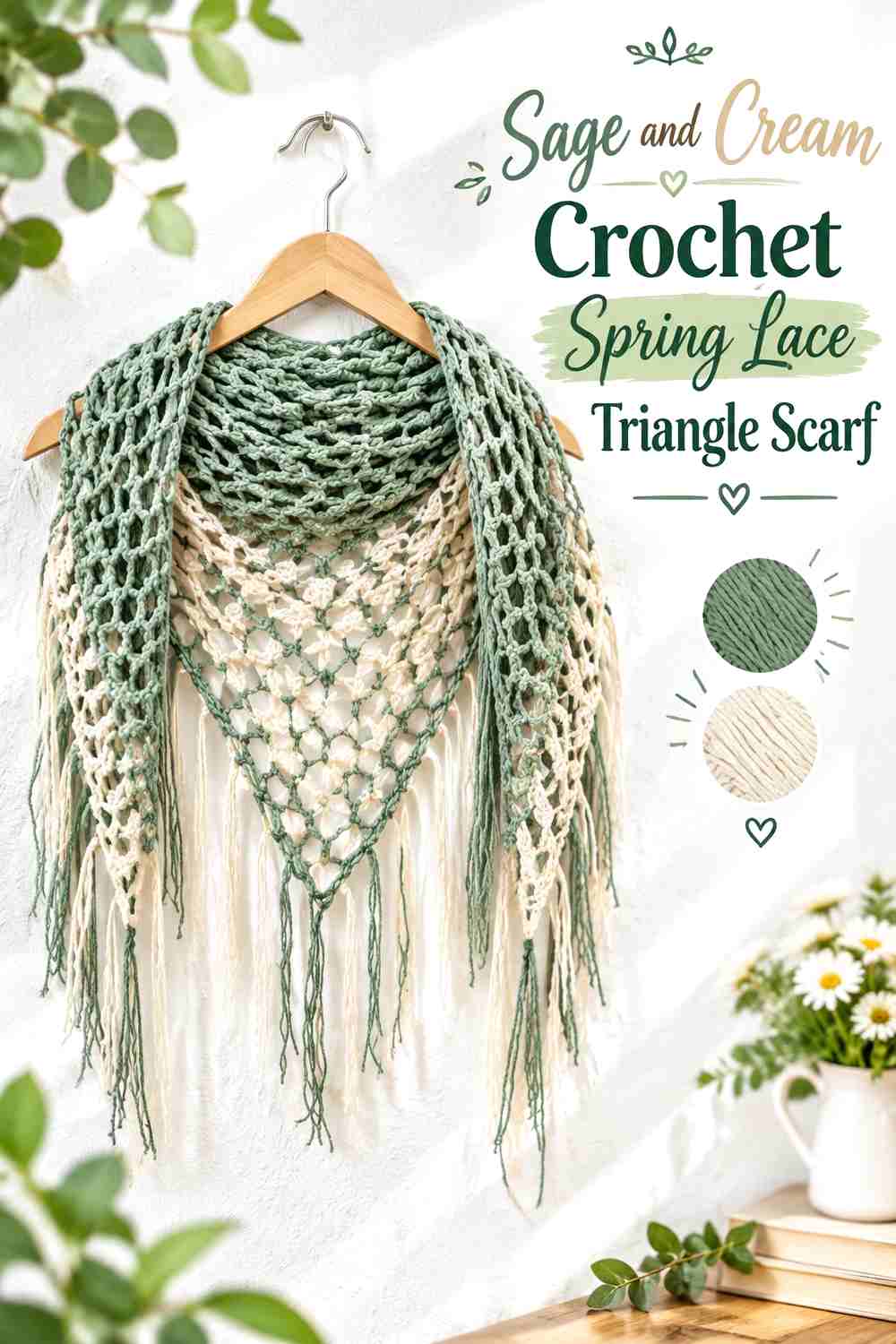
Sage and cream suit a lightweight lace scarf when you want color differences to stay restrained. Sage can dominate the openwork body while cream creates a narrow outer border or highlights the finishing edge.
Sage Can Carry the Main Crochet Lace Triangle
Keeping sage through a large central section prevents frequent color changes from competing with open stitchwork.
If the lace repeat already contains several different openings or textures, maintaining one main color gives those structural changes more room to show.
Cream Can Brighten the Sage Crochet Lace Edge
Cream along the outer triangle creates a lighter outline without overpowering the muted green.
A narrow cream edge may be enough when the values are clearly different. Expanding cream across several broad outer sections can shift the scarf from sage-dominant to nearly equal color blocking.
Creator Credit: Ani Tugushi (Turtle Whicky)
3. Burgundy And Blush Crochet Mesh Triangle Scarf
 SAVE
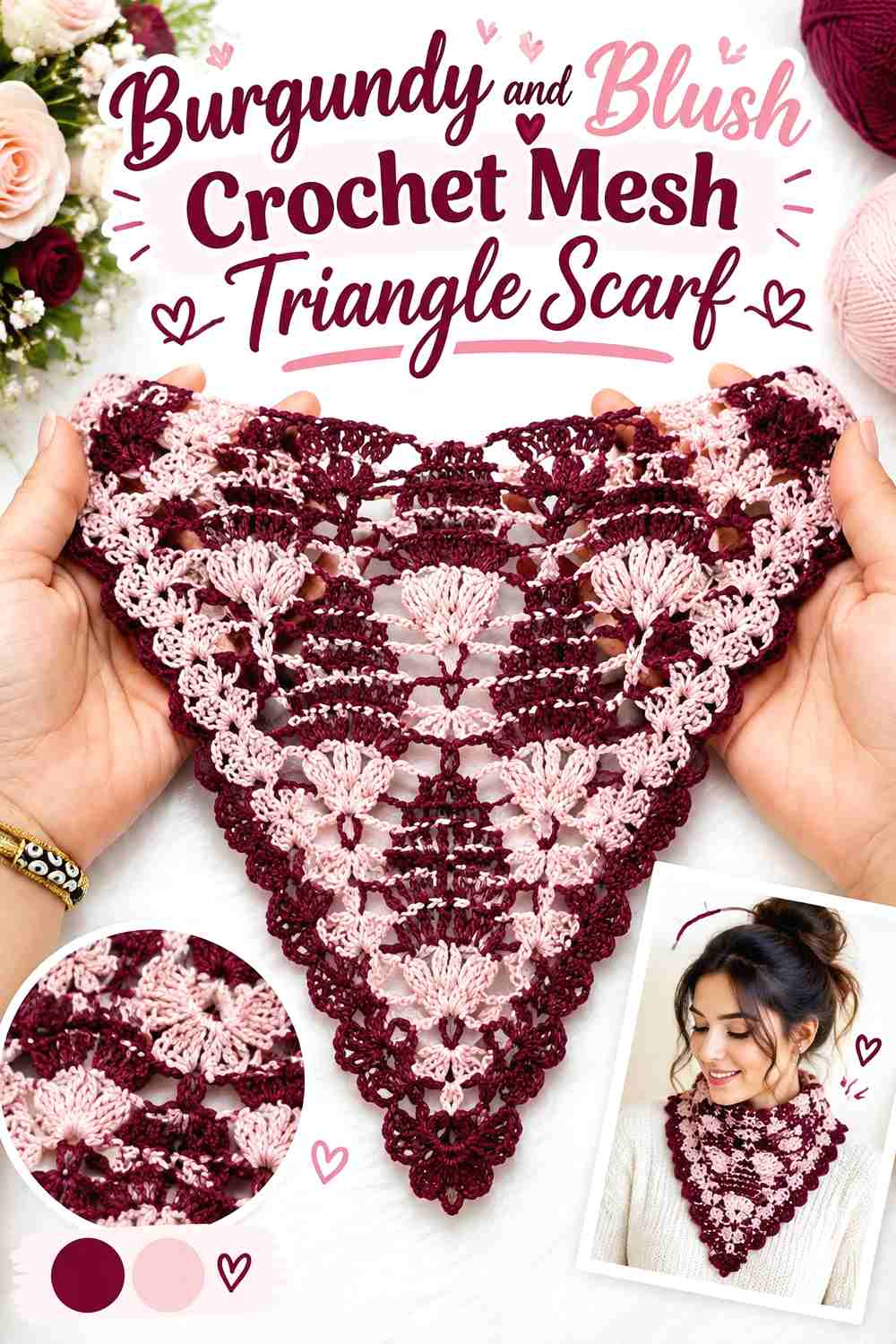
Mesh gives the background underneath the scarf substantial visual influence, making burgundy and blush useful for controlled color blocking. Blush can occupy the central mesh while burgundy defines the outer triangle and lower point.
Blush Keeps Burgundy Crochet Mesh From Becoming Too Heavy
Use blush across enough of the open center to maintain a lighter field inside the scarf.
Small burgundy stripes repeated too frequently can interrupt the regular mesh pattern, so larger separated sections are easier to read.
Burgundy Can Emphasize the Blush Crochet Triangle Point
Placing burgundy toward the outer edge naturally draws attention to the scarf’s widening triangular shape and pointed lower section.
Check the color balance with the scarf hanging rather than only lying flat. The darker outer color can appear more dominant when the point falls vertically.
Creator Credit: Tuba Crochet
4. Teal And Oatmeal Crochet Openwork Triangle Scarf
 SAVE
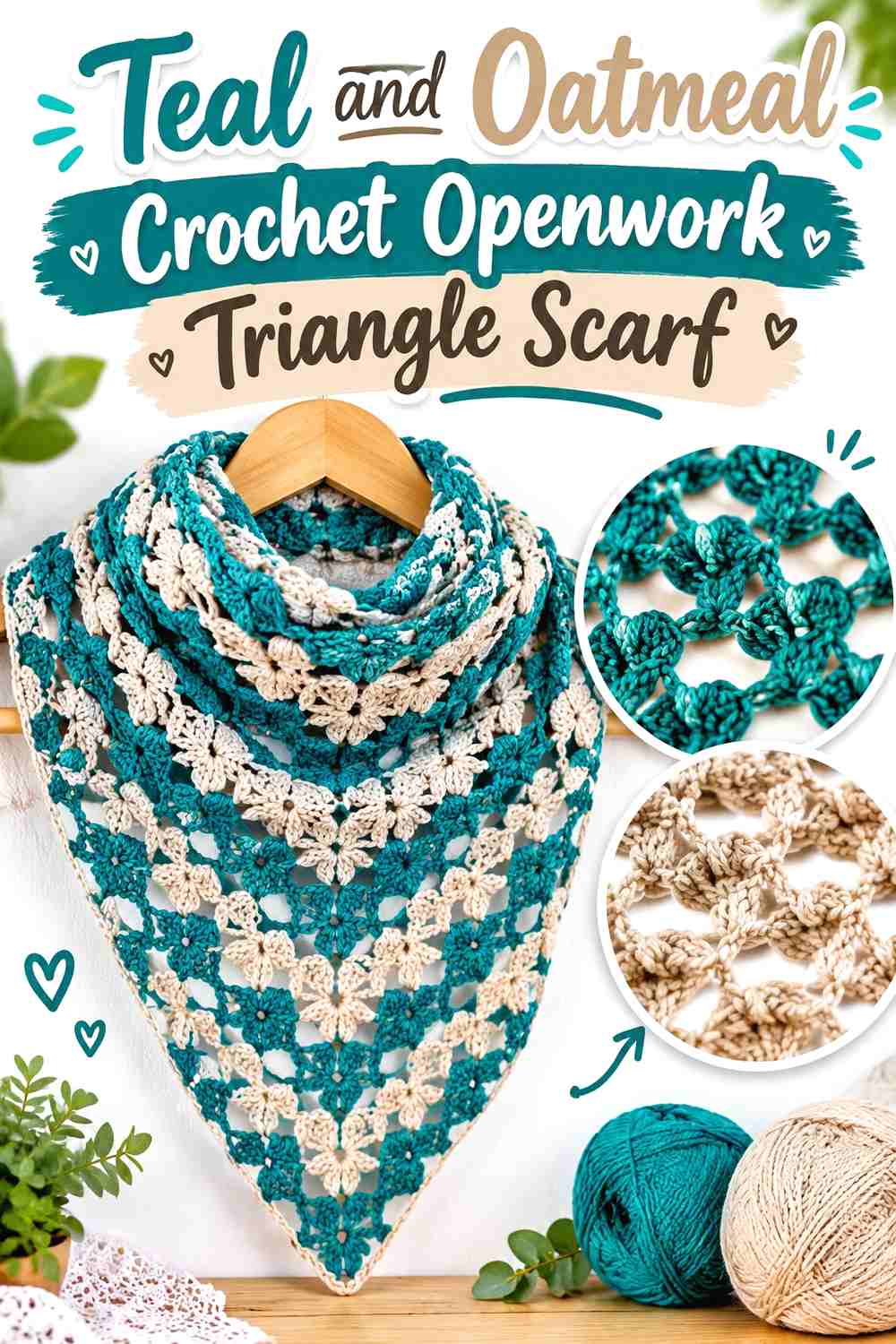
Teal provides a strong main color, while oatmeal offers enough lightness to separate selected openwork sections. Instead of alternating the colors repeatedly, let teal cover most of the triangle and use oatmeal around the final lace border.
Teal Can Keep the Crochet Triangle Openwork Continuous
A broad teal field lets repeated holes and stitch groups create the surface pattern without additional color interruption.
If your teal is very dark, examine the fabric under normal lighting. Subtle stitch structure can be less obvious in deep yarn than in a light neutral.
Oatmeal Can Outline the Teal Crochet Lace Border
Oatmeal creates strong separation at the outer edge while staying softer than bright white.
Because a border runs across the widest part of the triangle, even a relatively small oatmeal section can have considerable visual presence.
Creator Credit: Crochet MC
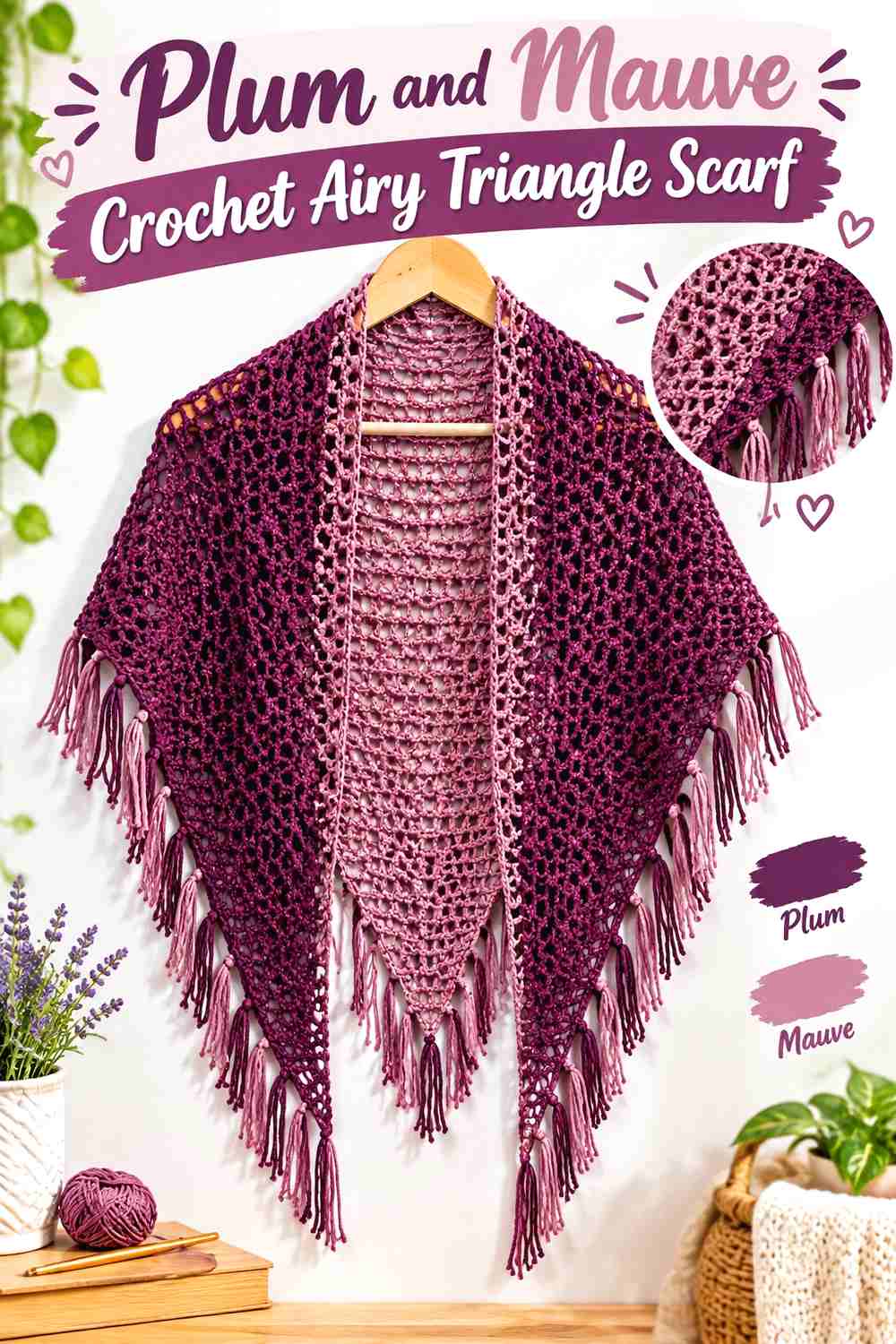
5. Plum And Mauve Crochet Airy Triangle Scarf
 SAVE
Plum and mauve keep the scarf within one broad color family while providing enough value difference to organize the triangle. Mauve can fill the central openwork and plum can gradually take over closer to the outside.
Mauve Can Keep Plum Crochet Lace Tonal
Use mauve across the largest area when you want the finished scarf to remain relatively soft despite the dark accent.
The lace openings already create pattern, so the two purples do not need to alternate frequently to remain interesting.
Plum Can Add Depth Around the Mauve Crochet Triangle
A plum edge gives the light mauve body a stronger visual boundary.
If the two yarns look nearly identical from a distance, choose a lighter mauve rather than adding an unrelated third shade simply to increase contrast.
Creator Credit: Crochet Tejido Color
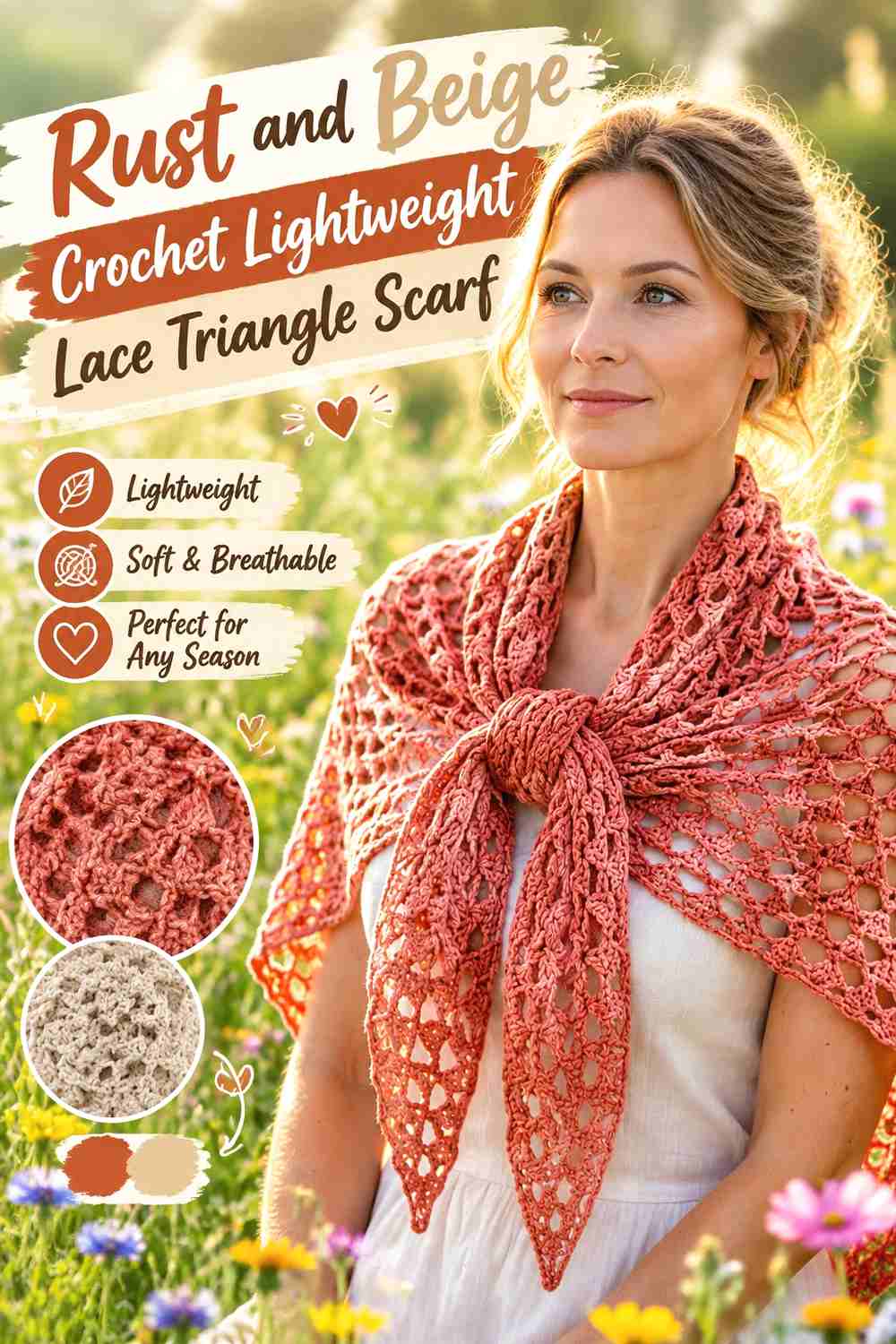
6. Rust And Beige Crochet Lightweight Lace Triangle Scarf
 SAVE
Rust and beige produce a warmer openwork scarf. Beige can dominate the inner triangle, while rust appears in a substantial but controlled outer section. The lighter center keeps the project from becoming visually heavy despite the strong warm accent.
Beige Gives Rust Crochet Lace More Breathing Room
Keep broad beige areas around the open stitch pattern so rust remains a deliberate accent instead of competing through every repeat.
Against darker clothing, beige openwork can become especially visible, so check the scarf with likely wardrobe layers before adding more rust.
Rust Can Warm the Beige Crochet Triangle Border
Use rust toward the lower edge or point when you want the warm shade to frame the scarf.
Remember that the widest rows occur near the outside. A few rust sections there can visually outweigh a much larger number of beige rows close to the center.
Creator Credit: Crochetricot de Marie
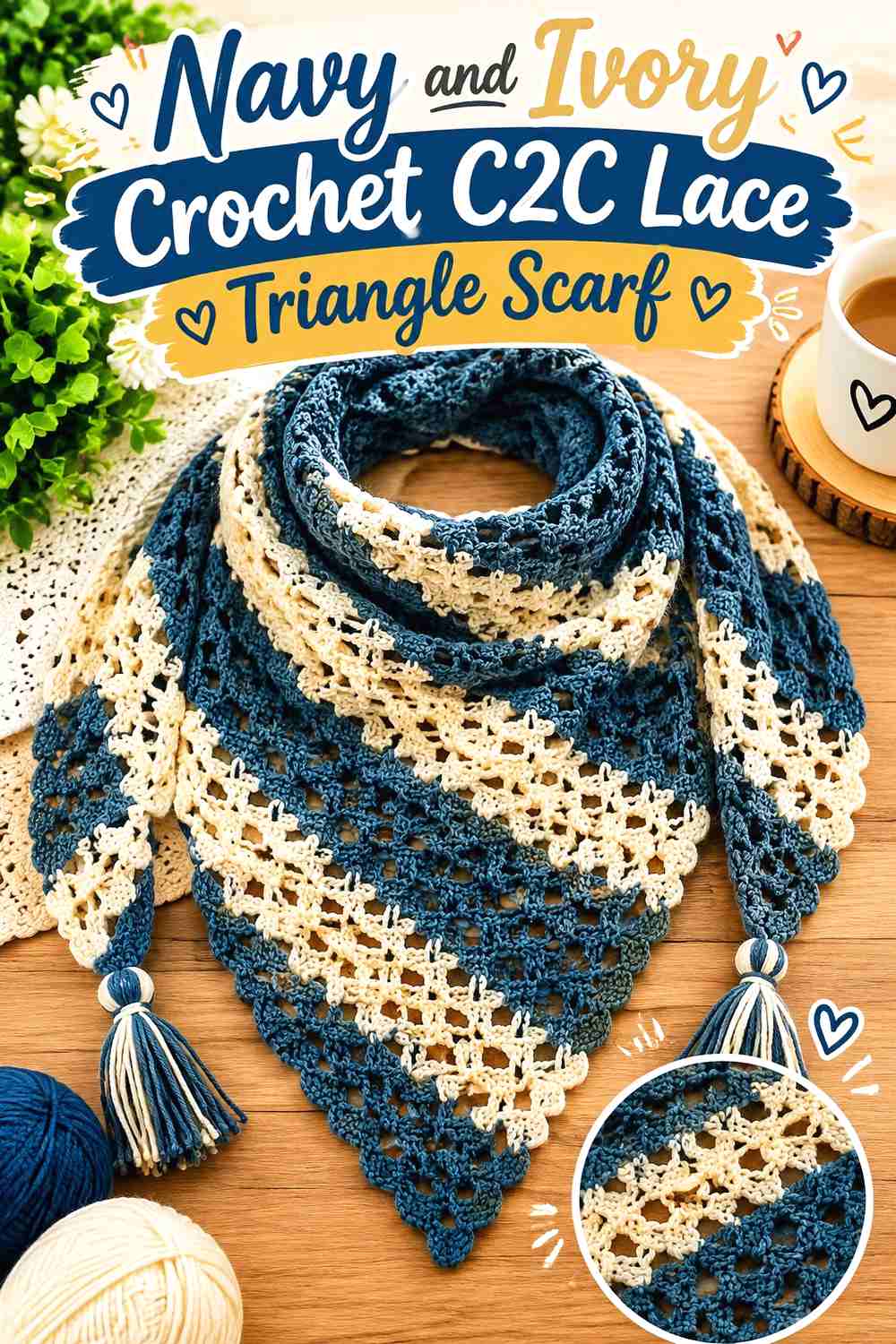
7. Navy And Ivory Crochet C2c Lace Triangle Scarf
 SAVE
Navy and ivory provide strong value contrast for C2C-style lace. Ivory can dominate the center while navy appears around the outer section or decorative edging, making the diagonal construction especially easy to see.
Ivory Keeps Navy Crochet C2C Lace Open
A large ivory field lets the diagonal holes remain clear without simultaneously asking the eye to follow constant color changes.
If you want additional navy within the body, repeat it in one or two deliberate diagonal areas rather than changing every small section.
Navy Can Define the Ivory Crochet Triangle Edges
A navy border gives the pale C2C fabric a strong outline and draws attention to the angled sides.
If the scarf already contains substantial navy near the center, consider a narrower outer border so the darkest shade does not dominate the whole piece.
Creator Credit: Fiber Spider
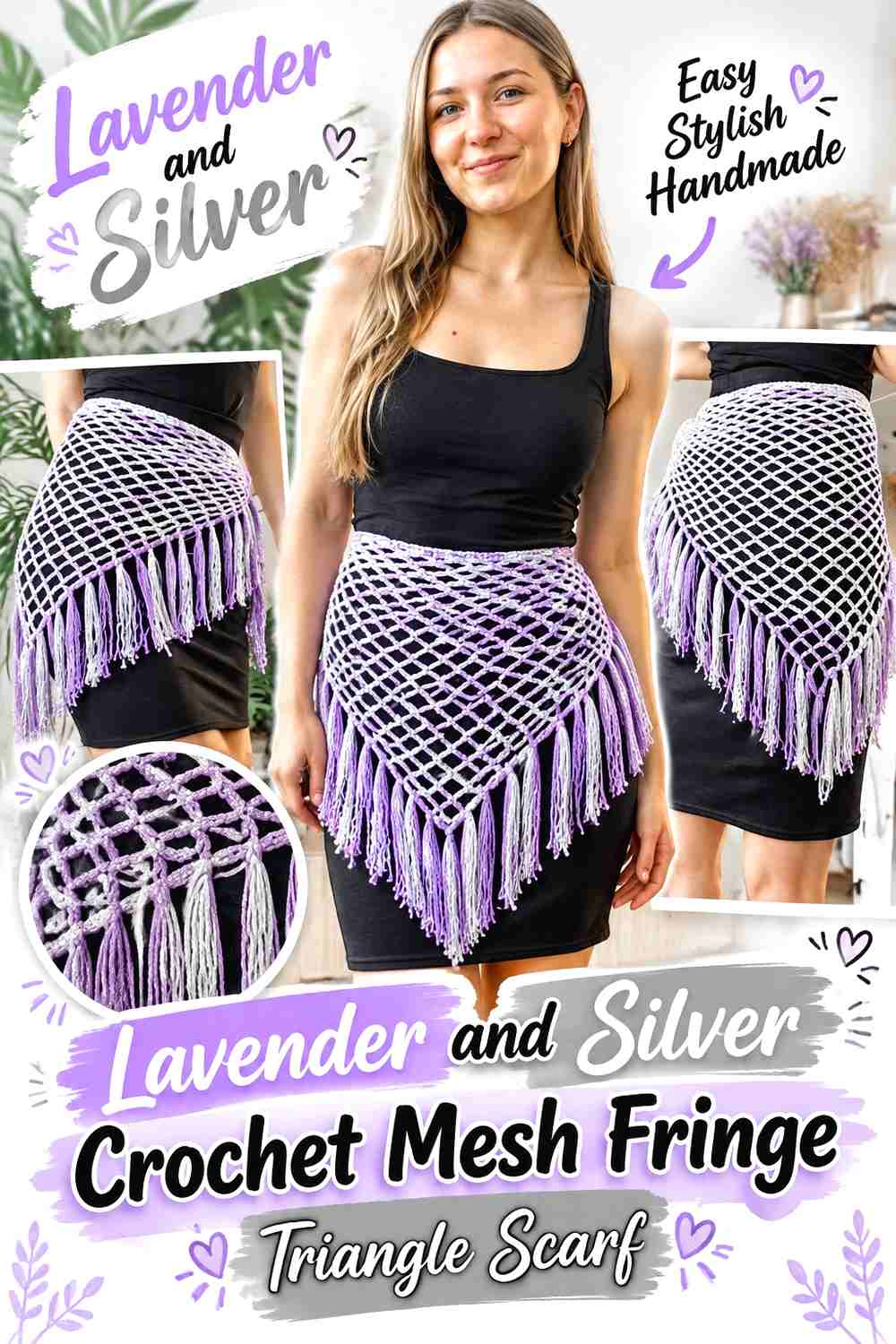
8. Lavender And Silver Crochet Mesh Fringe Triangle Scarf
 SAVE
Lavender and a soft silver-gray can create a cool-toned mesh scarf without relying on stark contrast. Lavender can cover most of the triangular mesh while silver-gray appears around the border and fringe.
Lavender Can Keep the Crochet Mesh Triangle Cohesive
Use lavender continuously across the main mesh to preserve the repeated diamond or open-grid appearance.
Because the background will show through extensively, compare lavender against several clothing colors before deciding whether it has enough presence.
Silver Can Connect Lavender Crochet Edging and Fringe
Repeating silver-gray at the border and fringe makes those finishing details feel related instead of treating the fringe as a separate color decision.
If the fringe is visually substantial, a small silver border may already provide enough repetition without adding silver throughout the lavender mesh.
Creator Credit: by Kristine
9. Moss Green And Dusty Rose Crochet Openwork Triangle Scarf
 SAVE
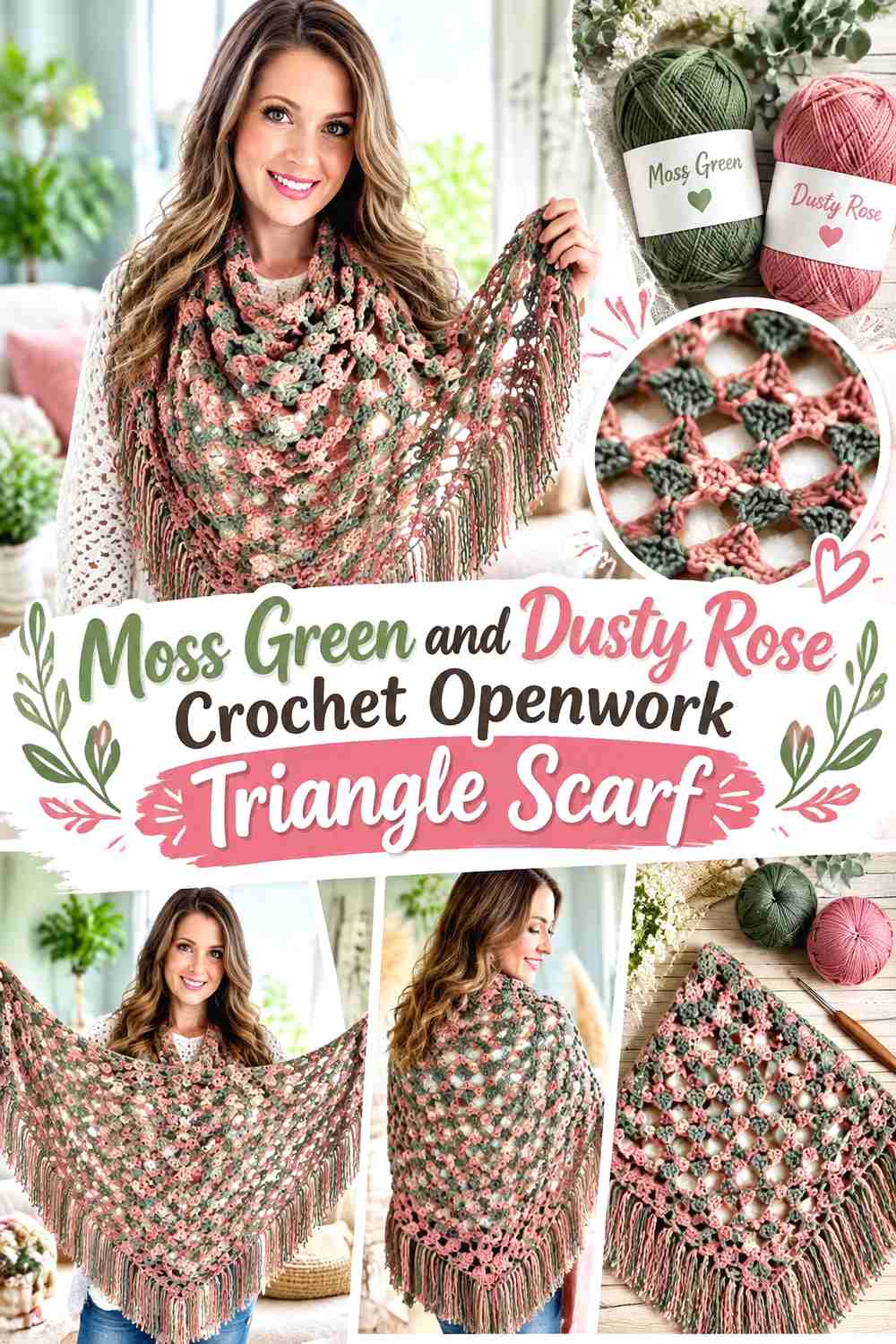
Moss green and dusty rose create a muted two-color scarf in which neither shade needs to become a tiny accent. Moss green can cover the central and upper triangle, while dusty rose gradually becomes more visible toward the lower edge.
Moss Green Can Ground the Dusty Rose Crochet Triangle
Using moss green across the beginning of the scarf establishes a deeper base before the triangle reaches its widest sections.
If the moss and rose have similar lightness, keep their transitions in broad bands. Tiny details may visually merge when value contrast is weak.
Dusty Rose Can Soften the Moss Green Crochet Outer Rows
Dusty rose toward the outer triangle changes the overall balance without introducing a bright neutral.
Spread the scarf flat before extending the dusty rose section. Because these rows are longer, the rose can quickly become the dominant visible color.
Creator Credit: MJ’s Off The Hook Designs
10. Mustard And Chocolate Crochet Picot Triangle Scarf
 SAVE
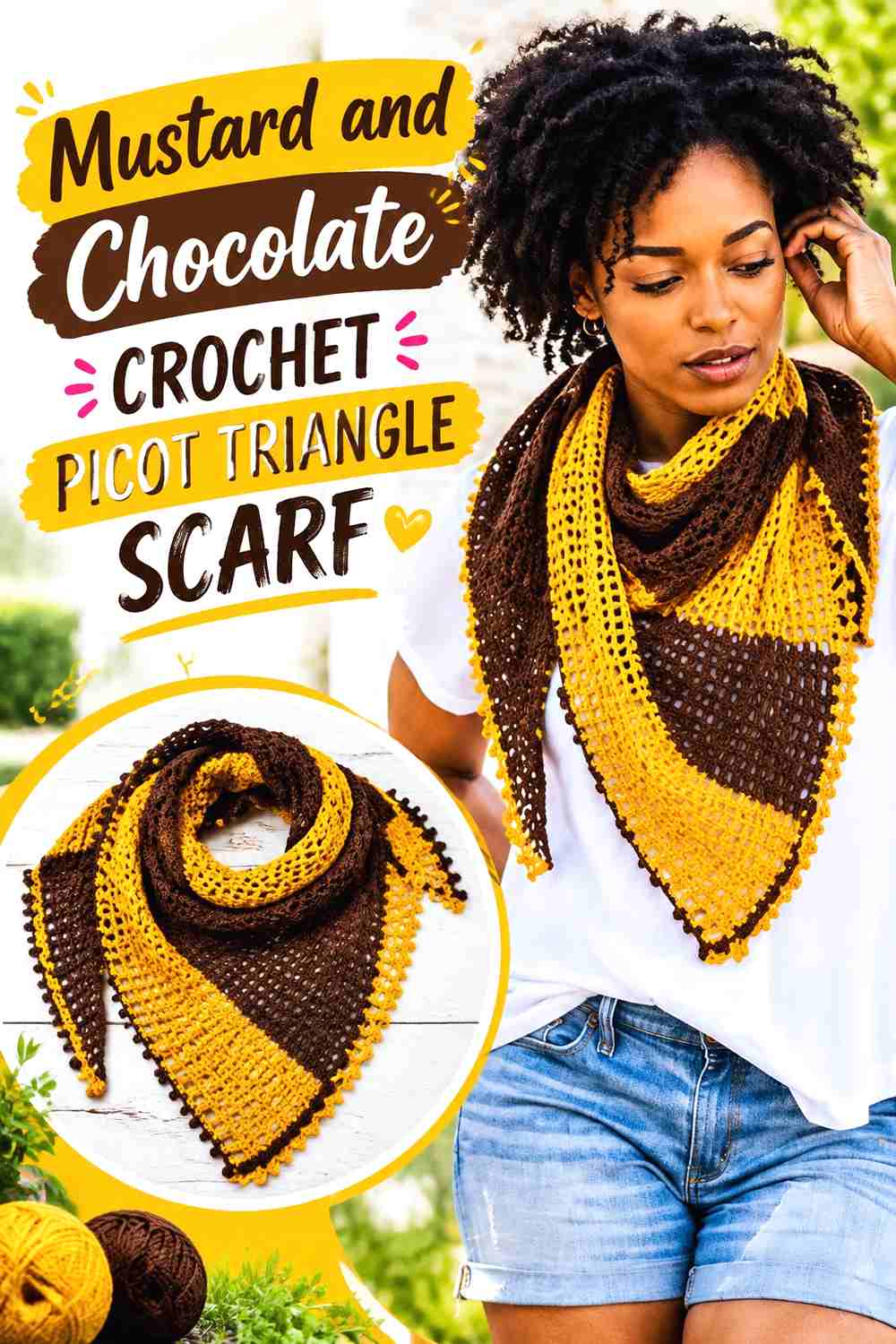
Mustard and chocolate offer strong warm contrast, making them useful when a decorative edge deserves particular emphasis. Mustard can lead the triangular body while chocolate is reserved for the picot-style outer finish.
Mustard Can Carry the Crochet Triangle Before the Dark Border
Keeping mustard through the main fabric ensures the darker shade does not divide the open triangle into several visually heavy areas.
The warm main color also provides enough continuity for lace or open stitch patterns to remain readable.
Chocolate Can Define the Mustard Crochet Picot Edge
A chocolate edge makes individual points along a picot-style finish more noticeable.
Because both the dark color and shaped edging attract attention, avoid repeating a thick chocolate band immediately above the border unless a strongly framed look is intentional.
Creator Credit: TL Yarn Crafts
11. Charcoal And Cream Crochet Lace Triangle Scarf
 SAVE
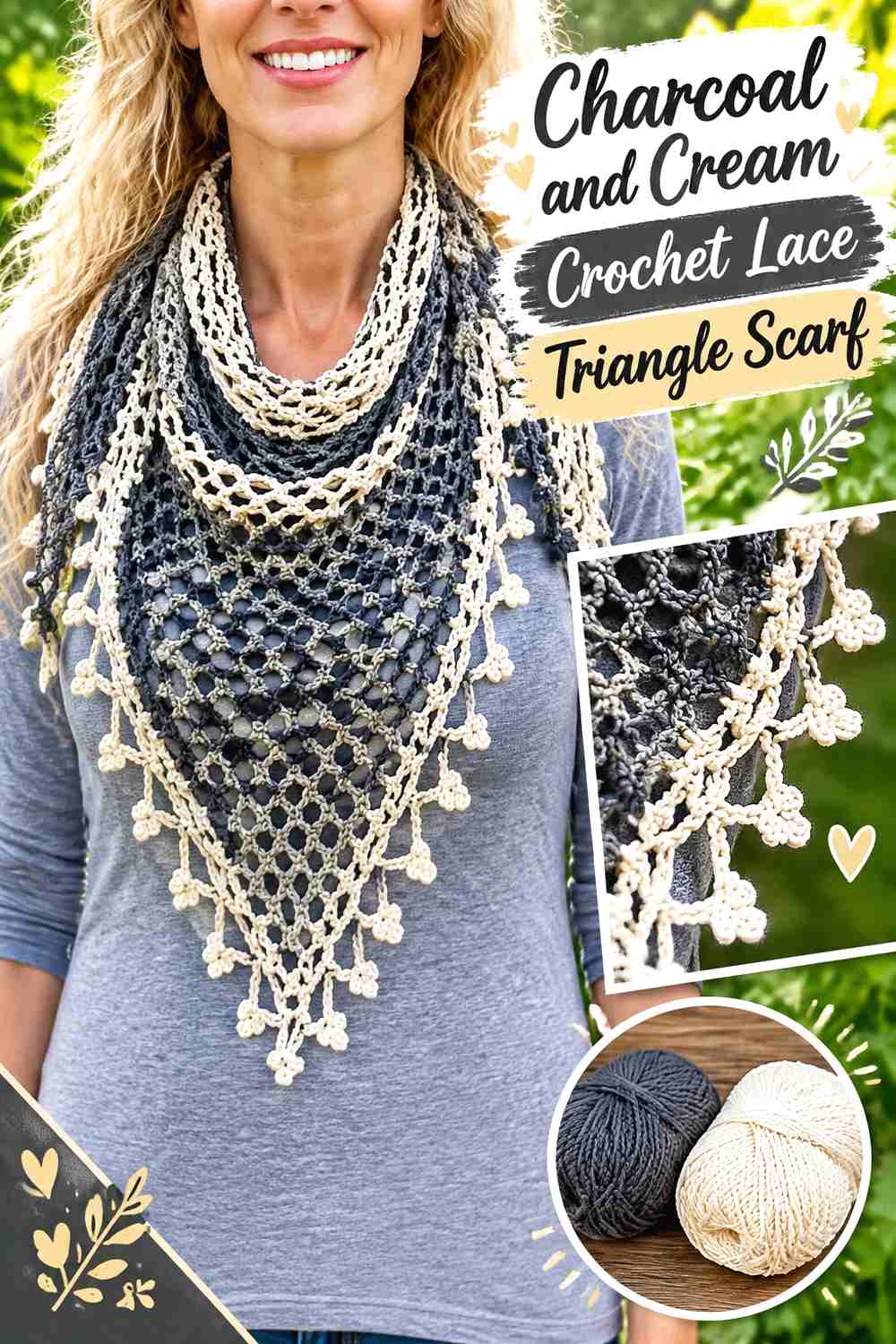
Cream and charcoal create the strongest light-and-dark contrast in this collection. Cream can dominate the lace body, with charcoal used toward the point, edging, or tassel area.
Cream Can Keep Charcoal Crochet Lace Details Visible
A cream center is especially useful when the scarf includes relatively small openings because shadows and the background behind the scarf help define the stitchwork.
If the scarf will usually be worn over white, the lace will appear much subtler than it does over dark clothing.
Charcoal Can Give the Cream Crochet Triangle a Strong Frame
Use charcoal selectively around the outside when you want a clearly defined silhouette.
A very wide charcoal section can visually shrink the cream center, so judge the border against the complete triangle rather than the current outer row.
Creator Credit: naztazia
12. Terracotta And Sage Crochet Granny Lace Triangle Scarf
 SAVE
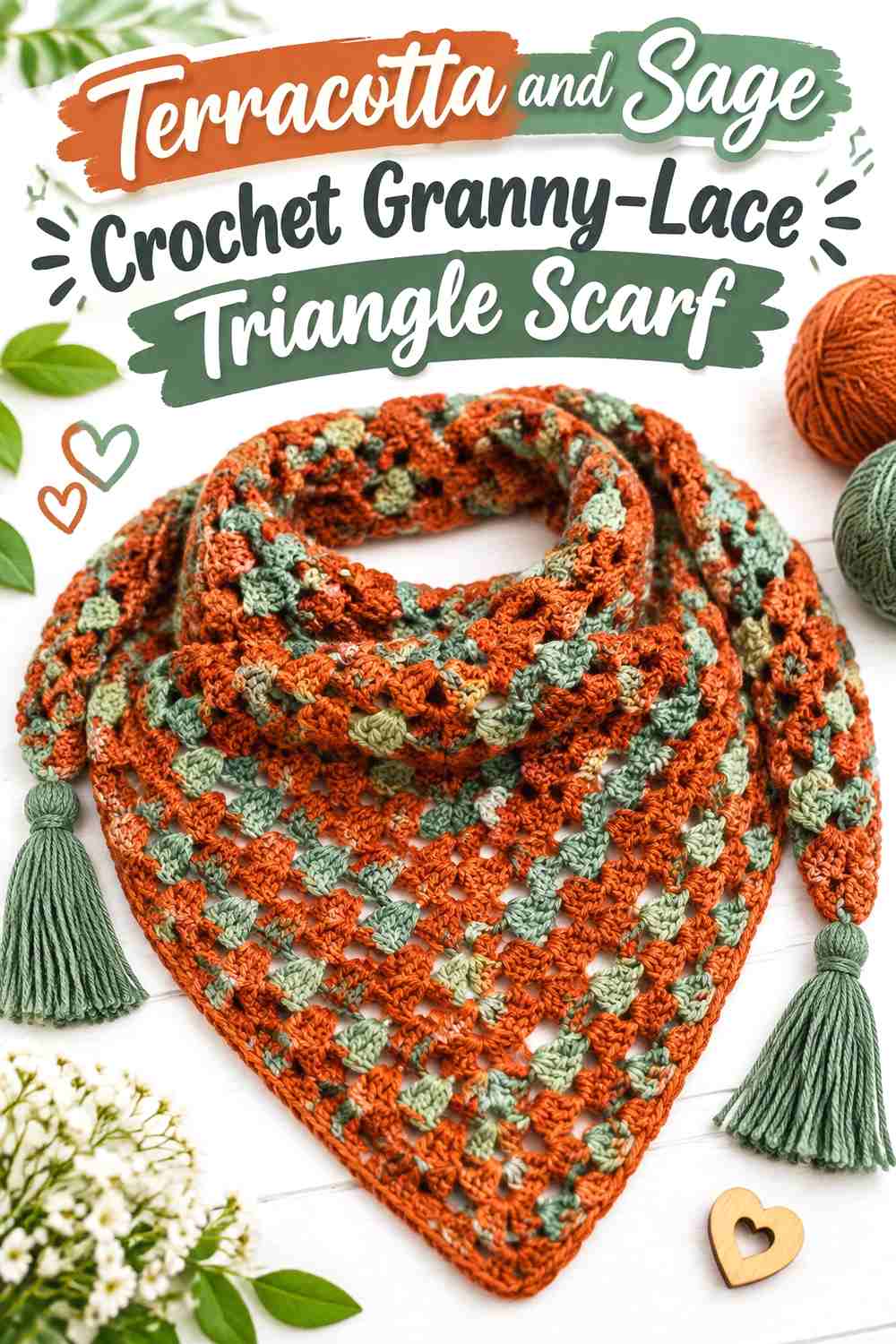
A granny triangle can take on a lighter lace-like direction because the spaces between clusters become part of the design. Terracotta can dominate the clusters, while sage appears in selected bands and the outer finish.
Terracotta Can Keep the Crochet Granny-Lace Triangle Warm
Use terracotta through longer uninterrupted sections so the open granny structure remains easy to follow.
Changing between terracotta and sage in every row creates a stronger striped appearance, which may distract from the triangular arrangement of the open spaces.
Sage Can Cool the Terracotta Crochet Outer Edge
Sage around the outer portion introduces contrast without using a neutral.
Repeat the green strategically rather than evenly. One inner sage band plus a sage edge can connect the palette while still leaving terracotta clearly dominant.
Creator Credit: Bella Coco
13. Royal Purple And Cream Crochet Granny Lace Triangle Scarf
 SAVE
Royal purple has enough visual strength that cream does not need equal coverage to remain important. Purple can form the main granny-style triangle, while cream separates selected sections and finishes the outer border.
Royal Purple Can Lead the Cream Crochet Triangle Clearly
Use royal purple across broad cluster sections when you want a richer overall scarf.
Because open spaces interrupt the color naturally, a solid purple section will still have plenty of visual movement without constant yarn changes.
Cream Can Separate Royal Purple Crochet Granny-Lace Sections
A cream band can create a light pause between larger purple areas.
Near the outer edge, cream occupies more space because the rows are longer. Keep that proportional change in mind if royal purple is meant to remain dominant.
Creator Credit: Meema Makes
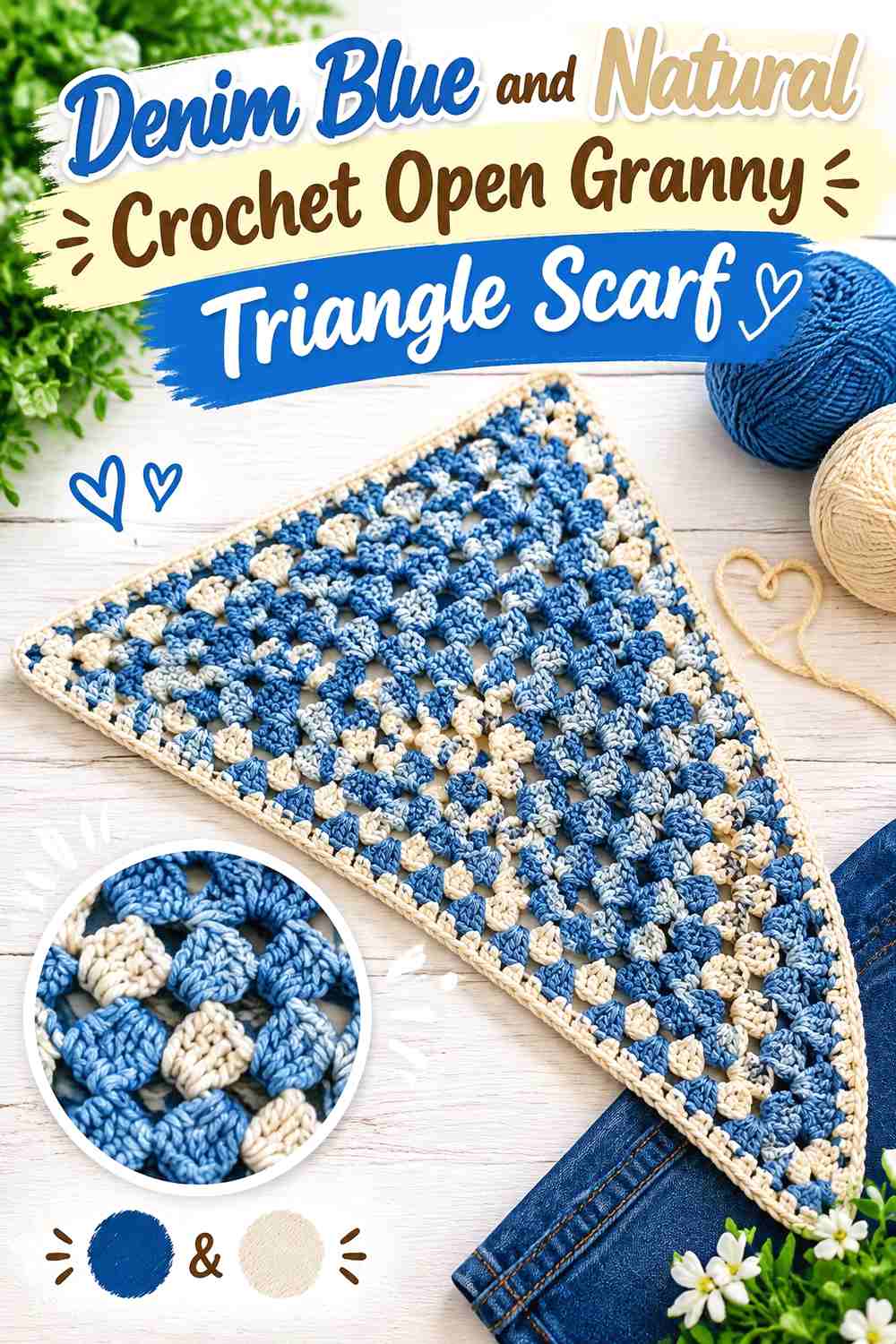
14. Denim Blue And Natural Crochet Open Granny Triangle Scarf
 SAVE
Denim blue and an undyed-looking natural neutral make a useful casual palette for an open granny triangle. Denim blue can fill most of the body, while natural yarn appears in repeated bands that become gradually wider with the scarf.
Denim Blue Can Keep the Crochet Triangle Visually Consistent
A large denim-blue field prevents the open granny structure from becoming excessively striped.
If using several bands, decide their approximate visual rhythm while the scarf is still small rather than changing colors whenever one yarn happens to run out.
Natural Bands Can Break Up Denim Blue Crochet Openwork
Natural yarn creates a light interruption across the denim field and can make the widening shape easier to see.
Outer natural bands will appear much larger than early bands near the center, so identical row counts do not create identical visual proportions.
Creator Credit: crochet with marmara
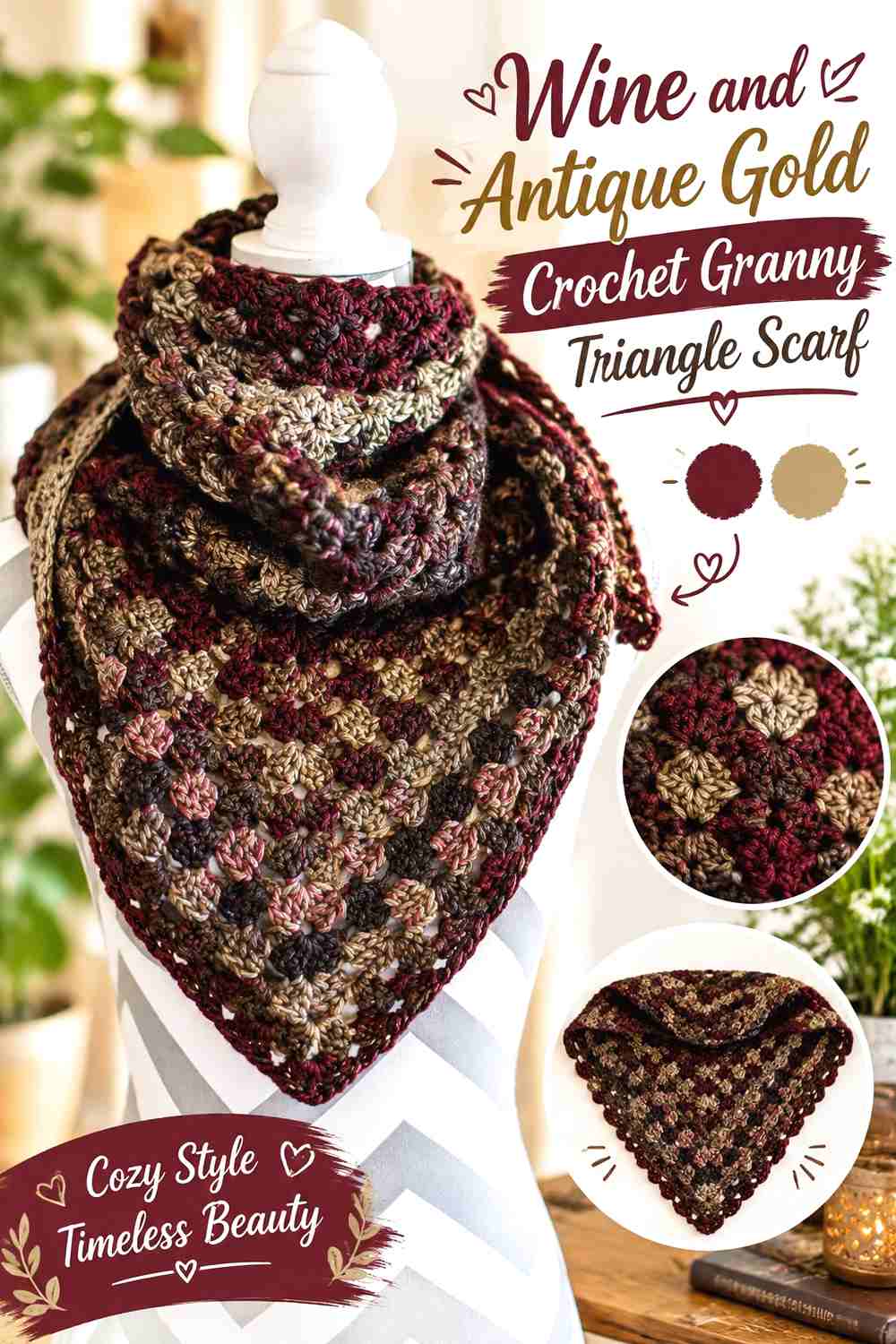
15. Wine And Antique Gold Crochet Granny Triangle Scarf
 SAVE
Wine and a muted antique-gold mustard create a deeper vintage-inspired triangle scarf. Wine can dominate the open granny body while antique gold is used sparingly toward the edge or in one repeated band.
Wine Can Keep the Antique Gold Crochet Triangle Rich
Give wine most of the surface when you want the scarf to retain a deep overall color rather than becoming equally divided.
The open granny structure prevents the wine field from appearing completely solid because the clothing underneath remains visible through the spaces.
Antique Gold Should Stay Controlled Against Wine Crochet Openwork
A muted gold band can create significant contrast against wine even when it occupies relatively little area.
Repeat it once or twice in deliberate locations rather than inserting narrow gold stripes everywhere. This keeps the accent recognizable without competing with the triangular lace-like structure.
Creator Credit: B.Hooked Crochet
Comparing the 15 Crochet Lace Triangle Scarf Color Directions
For the lightest appearance, ivory and dusty blue, sage and cream, rust and beige, and charcoal and cream give pale shades enough surface area to emphasize openwork and the background visible through it.
For deeper contrast, consider navy and ivory, mustard and chocolate, royal purple and cream, or wine and antique gold. These palettes make borders and widening outer sections much more noticeable.
The plum and mauve, moss green and dusty rose, and lavender and silver scarves offer softer value changes when you want the lace pattern to attract more attention than sharp color boundaries.
For granny-style openwork, terracotta and sage, royal purple and cream, denim blue and natural, and wine and antique gold show how broad color bands can organize an open triangular construction without needing a complicated multicolor sequence.
Conclusion
The triangle shape should guide the color plan for a crochet lace scarf. Colors introduced near the center occupy relatively little space, while the same treatment near the outer edge can become a major part of the finished piece.
Choose a pale dominant color when you want lace openings and stitch shadows to remain especially visible. Darker dominant shades create a richer scarf, but consider using lighter borders or bands where important openwork needs additional separation.
For two-color scarves, give each shade a clear role—main field, widening band, border, point, picot edge, or fringe. That creates more control than switching colors simply at regular intervals without considering how the triangle expands.
Frequently Asked Questions
What colors work well for a crochet lace triangle scarf?
Both tonal and high-contrast palettes can work. Soft combinations such as plum and mauve keep attention on the lace pattern, while cream with navy, charcoal, or royal purple creates clearer separation between colors and openwork.
Should the darkest color go on the crochet triangle scarf border?
It can if you want a strongly framed triangle. A dark border emphasizes the diagonal sides and point. A lighter border gives a softer outer edge and can prevent an already dark scarf from feeling visually heavy.
Why does a color band look wider near the bottom of a crochet triangle scarf?
The triangle expands as it grows, so later rows extend across a larger area. Even when the same number of rows is used, an outer color section can have much more visual presence than one close to the center.
How can I make crochet lace easier to see?
Contrast can come from both yarn color and the background underneath the scarf. Test the openwork over likely clothing colors. A light scarf often shows more clearly against dark clothing, while darker lace can become more graphic over a pale background.
Should I change colors inside a detailed crochet lace repeat?
You can, but frequent changes may compete with an intricate stitch pattern. Larger solid-color sections often let detailed openwork remain easier to follow. Reserve stronger color changes for borders or natural transitions when the lace itself is already complex.
Can a granny triangle work for a lace-style scarf?
An open granny construction can create a lace-like effect because repeated spaces separate the stitch clusters. For a lighter visual result, keep color bands broad and allow the open structure rather than constant color changes to create most of the pattern.
How can I substitute one color in a two-color triangle scarf?
Preserve its role in the palette. If the original accent was noticeably darker than the main color, choose a replacement with a similar value difference. If the two colors were deliberately tonal, choose a substitute that stays close in lightness and saturation rather than introducing a sharply contrasting shade.