A scalloped edge can change a simple crochet phone pouch without requiring the entire bag to become highly decorative. The curved trim can frame the opening, finish a flap, run along the sides, or repeat at the bottom edge. Because a phone pouch is narrow, even a small scalloped section can become one of its strongest visual features.
Color placement determines whether that trim blends into the pouch or becomes an obvious design element. A dark scallop against a cream body creates a defined outline, while two similar muted shades produce a softer edge. Straps, buttons, flowers, and granny-square flaps can repeat one of those colors so the scallops do not look disconnected.
The tutorials below support phone-pouch and phone-bag constructions. Some show scalloped or shell-style detailing directly, while others provide a pouch structure that can be adapted with a compatible decorative scalloped finishing treatment rather than claiming the creator used the exact editorial design or palette.
Quick List
- Cream And Sage Crochet Scalloped Phone Sling Pouch
- Dusty Rose And Cream Crochet Shell Stitch Scalloped Phone Pouch
- Burgundy And Blush Crochet Granny Flap Scalloped Phone Pouch
- Teal And Oatmeal Crochet Textured Scalloped Phone Pouch
- Mustard And Chocolate Crochet Granny Square Scalloped Phone Pouch
- Lilac And Ivory Crochet Slim Scalloped Phone Pocket
- Coral And Sage Crochet Flower Scalloped Phone Pouch
- Navy And Cream Crochet Structured Scalloped Phone Bag
- Olive And Rust Crochet Buttoned Scalloped Phone Pouch
- Denim Blue And Natural Crochet Scalloped Sling Phone Pouch
- Black And Camel Crochet Checkerboard Scalloped Phone Pouch
- Plum And Mauve Crochet Simple Scalloped Mobile Pouch
- Terracotta And Beige Crochet Slim Scalloped Phone Cover
Decide Whether the Scallops Should Contrast With the Crochet Phone Pouch
The scalloped edge can either frame the pouch clearly or behave like a continuation of the main fabric. A cream pouch with dark green scallops creates an obvious upper boundary, while cream with pale sage keeps the transition quieter.
Stronger contrast is useful when the scallops are small because each curve remains easier to distinguish. Softer contrast works when the scallop shape itself is large enough to stay readable without relying heavily on color.
Before finishing an entire edge, make a short sample or hold the accent yarn against the pouch opening. The same color that looks balanced in a skein can appear much stronger once repeated across multiple scallops.
Repeat the Scallop Color on the Strap, Flap, or Closure
Phone pouches have relatively few structural areas, which makes color repetition particularly noticeable. If the scalloped edge is burgundy, repeating burgundy on the strap attachment, button loop, flap border, or a small section of the strap can connect the trim to the rest of the pouch.
That does not mean the entire strap must always match the scallops. A contrasting strap becomes a much stronger visual line because it extends well beyond the pouch itself. Decide whether you want attention on the scalloped body or on the carrying strap before choosing its color.
Keep Scalloped Crochet Edges From Hiding the Phone Opening
A decorative border should remain visually distinct from the opening itself. If several scallop rows, flowers, or thick color bands are concentrated at the top, the edge can begin looking heavier than the narrow pouch body.
Color can help control that effect. Keep the main body relatively uninterrupted and reserve the stronger accent for one scalloped row, or reverse the strategy by making the scallops tonal when the flap or flower already provides a prominent focal point.
1. Cream And Sage Crochet Scalloped Phone Sling Pouch
 SAVE
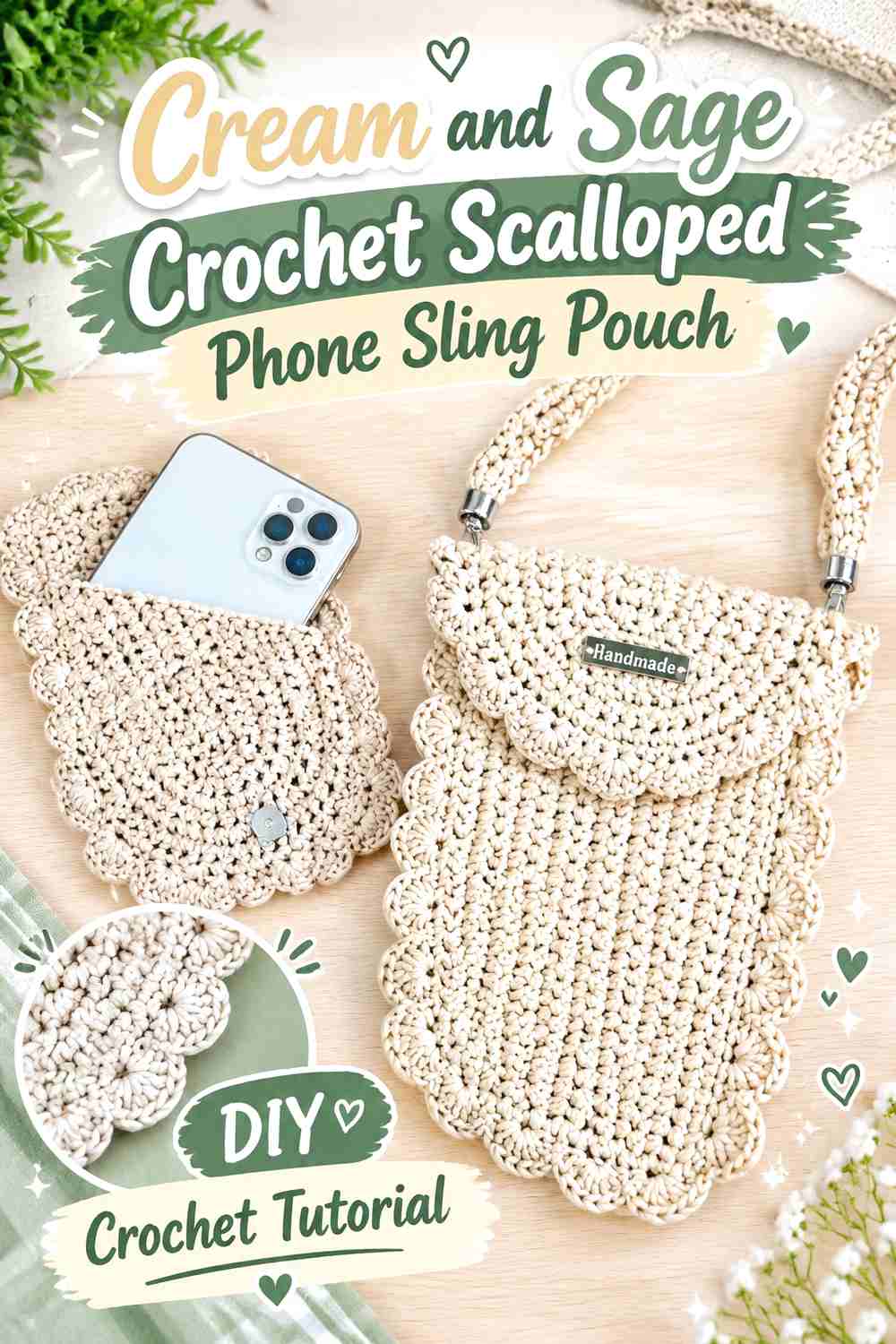
Cream and sage suit a phone sling when you want the scalloped edge to remain decorative without becoming dramatically high-contrast. Cream can cover most of the front and back panels, while sage defines the curved edge and repeats selectively in the strap or closure area. This tutorial is especially relevant because its construction includes a scalloped edge rather than requiring that feature to be added conceptually.
Sage Can Give the Cream Crochet Phone Opening a Clear Scalloped Edge
Use sage consistently across the scallops so every curve reads as part of one border. Breaking individual scallops into multiple colors would add unnecessary visual activity to an already shaped edge.
If the chosen sage is very pale, compare it directly with the cream. Enough separation should remain for the curved outline to be visible when the pouch is hanging vertically.
Cream Should Remain Dominant Beneath Sage Scallops
Give cream enough uninterrupted surface beneath the decorative edge that the phone pouch retains a clear rectangular body.
If sage already appears on the scallops, strap, and closure, avoid adding several more sage stripes through the cream panels unless you intentionally want a near-equal two-color design.
Creator Credit: Quite Monologue
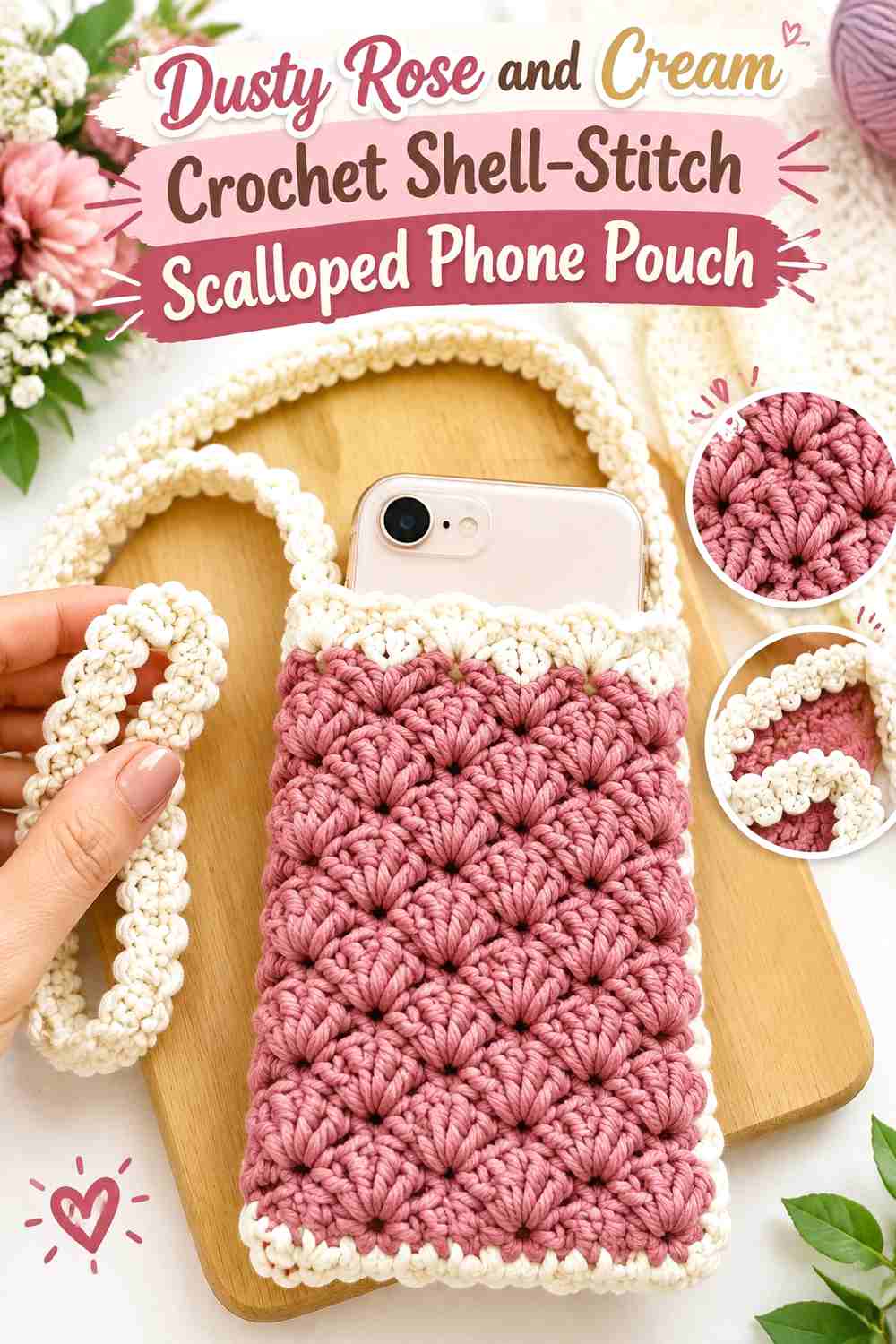
2. Dusty Rose And Cream Crochet Shell Stitch Scalloped Phone Pouch
 SAVE
Shell stitches naturally create a curved, decorative rhythm that can support a scalloped look. Dusty rose can dominate the pouch body while cream appears in selected shell sections or at the finishing edge. The lighter cream separates the curves without forcing the entire pouch into bold color blocking.
Dusty Rose Can Keep the Crochet Shell Pouch Visually Unified
Use dusty rose across broad sections so the repeating shell texture remains the primary surface detail.
Changing colors at every shell can make the narrow phone pouch look much busier. Reserve cream for a deliberate finishing section if you want the stitch shape to remain easy to follow.
Cream Can Define Dusty Rose Crochet Scallops at the Opening
A cream upper edge creates enough value difference to outline each curved shell against the dusty rose body.
If the cream border already creates strong contrast, keep the strap dusty rose or use cream only in a small repeated detail so the decorative edge remains the focal point.
Creator Credit: Crochet & Crafts Therapy by Chompu
3. Burgundy And Blush Crochet Granny Flap Scalloped Phone Pouch
 SAVE
A granny-style flap already introduces a decorative element, so this palette works best when the scallops support rather than compete with it. Blush can cover the main pouch body while burgundy appears within the flap and returns at its scalloped lower edge.
Burgundy Can Connect the Blush Crochet Granny Flap and Scallops
Repeat burgundy in both the granny-flap motif and the curved trim. This prevents the scalloped border from looking like an unrelated decoration added after the pouch was finished.
Keep enough blush between burgundy areas to preserve the lighter body as the dominant field.
Blush Can Stop Burgundy Crochet Scallops From Feeling Too Heavy
A broad blush pouch body gives the deep burgundy edge room to stand out without visually shortening the pouch.
If the granny flap already contains a large amount of burgundy, make the scalloped treatment relatively controlled rather than extending the dark shade down both side edges.
Creator Credit: Hopeful Turns
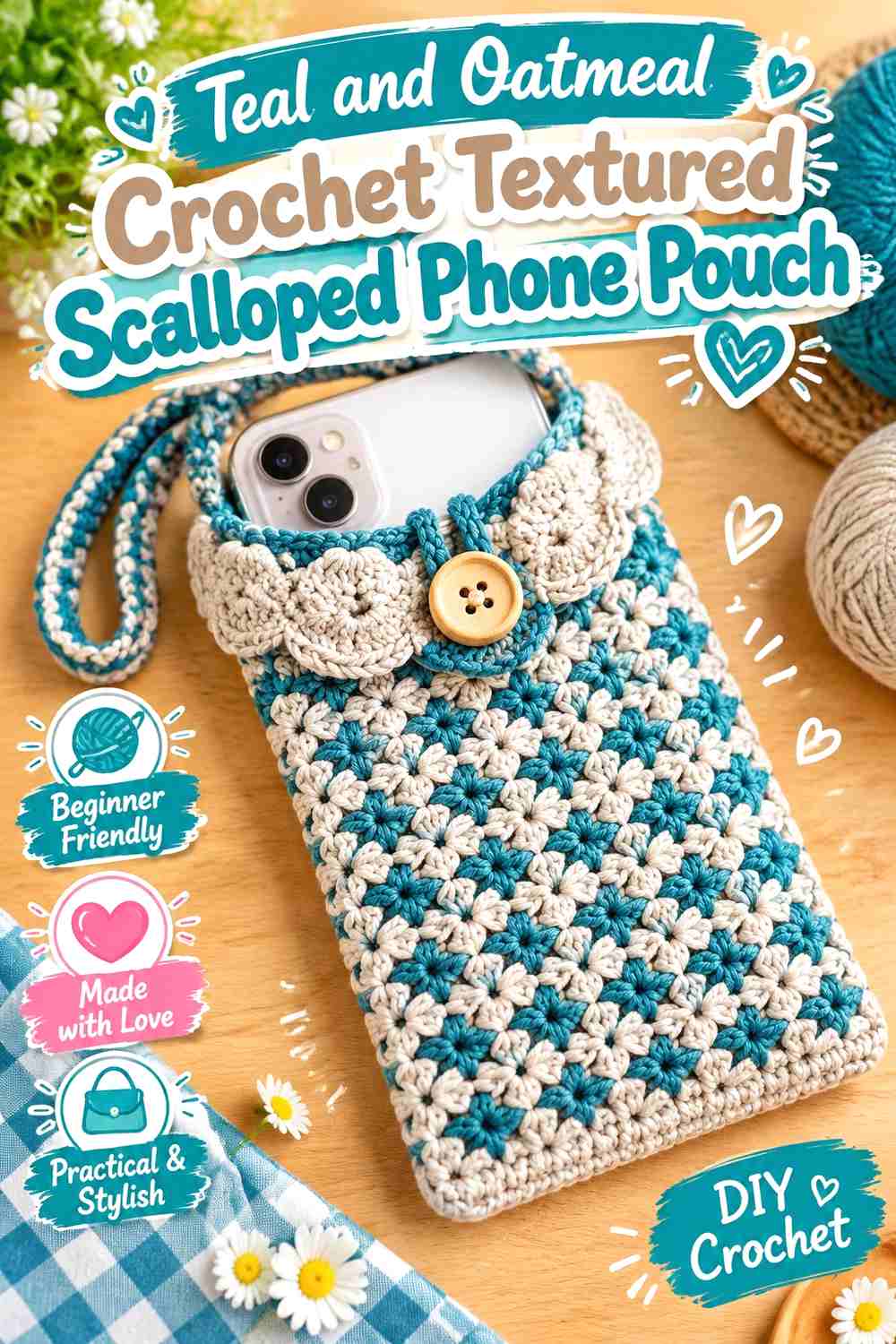
4. Teal And Oatmeal Crochet Textured Scalloped Phone Pouch
 SAVE
Teal can take the main role on a textured phone pouch while oatmeal provides a lighter scalloped border. This reverses the more common light-body/dark-edge strategy and makes the opening easier to distinguish against a deep pouch surface.
Teal Can Carry the Crochet Phone Pouch Texture
Keep teal continuous through the main panel so stitch texture is not interrupted by frequent color changes.
Because darker yarn can make subtle texture less obvious under low lighting, check the crocheted fabric rather than judging the teal only from the skein.
Oatmeal Can Brighten the Teal Crochet Scalloped Opening
Use oatmeal along the top curves when you want the scalloped edge to remain clearly visible.
A small amount of oatmeal may be enough because the value difference is already substantial. Repeating it on a tiny strap detail can connect the palette without turning the strap into another large light area.
Creator Credit: August Craft & Crochet
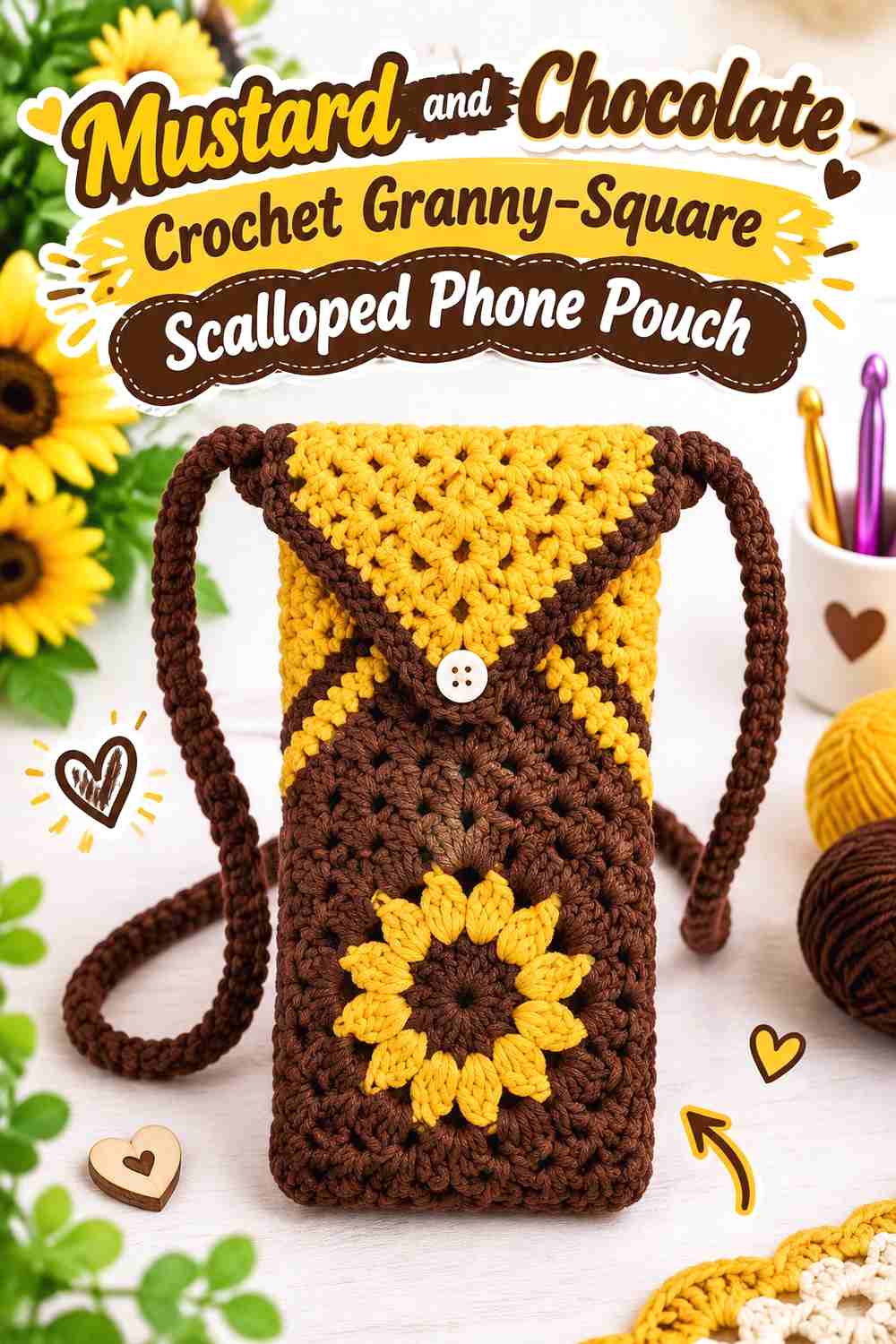
5. Mustard And Chocolate Crochet Granny Square Scalloped Phone Pouch
 SAVE
Mustard and chocolate create a warmer, higher-weight palette for a granny-square phone pouch. Mustard can dominate the motif and body while chocolate defines the flap edge, joining area, and scalloped trim.
Mustard Should Stay Visible Inside Chocolate Crochet Granny Details
Give mustard enough space inside the granny element that the warm color remains recognizable when the pouch is viewed at normal carrying distance.
Chocolate is substantially darker, so very narrow mustard sections can appear smaller once surrounded by the deeper shade.
Chocolate Can Frame the Mustard Crochet Scalloped Flap
Use chocolate along the lower flap edge if that is where the scalloped adaptation will sit. The dark color makes individual curves more obvious against a mustard body.
Repeating chocolate near the strap attachment can connect the upper and lower structural details without requiring a third color.
Creator Credit: Coc Tips & Tricks
6. Lilac And Ivory Crochet Slim Scalloped Phone Pocket
 SAVE
A simple phone pocket provides a clean base for a decorative edge. Lilac can form the entire pouch body while ivory appears only along the opening in a scalloped treatment, creating a light trim without changing the basic silhouette.
Lilac Can Keep the Crochet Phone Pocket Body Simple
Use lilac continuously from the base to the upper border so the narrow shape remains visually uninterrupted.
This is particularly useful when you are adapting a basic phone-pocket tutorial rather than following an existing scalloped design. The decorative change stays concentrated in one area.
Ivory Can Make Lilac Crochet Scallops Easier to See
Ivory provides a light outline around the top and keeps small curves distinct from the lilac body.
If the intended garment or bag where the pouch will be carried is also ivory, check that the lilac body remains visible enough to define the whole pouch silhouette.
Creator Credit: Crochet Jewel
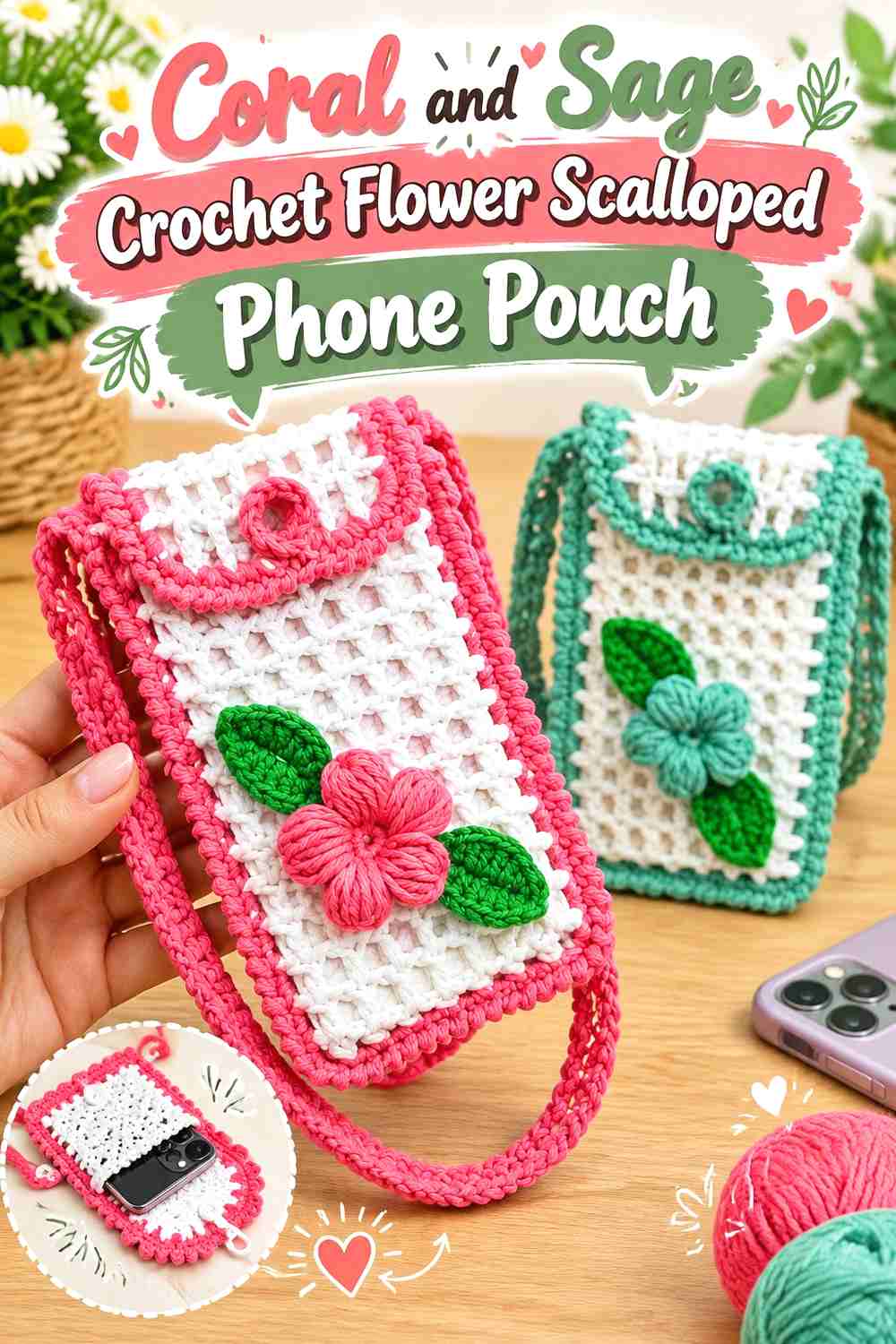
7. Coral And Sage Crochet Flower Scalloped Phone Pouch
 SAVE
A three-dimensional flower already gives a phone pouch a focal point, so coral and sage should be assigned clear jobs. Coral can lead the body and scalloped edge while sage stays concentrated in leaf-like details or a secondary flower element.
Coral Can Link the Crochet Flower Pouch With Its Scalloped Border
Repeating coral from the pouch body into the scallops keeps the trim tonal instead of creating another competing focal area.
This allows the dimensional flower to remain the most noticeable decorative feature.
Sage Should Stay Controlled Beside Coral Crochet Scallops
Use sage where the flower design needs a supporting botanical color rather than inserting sage into every border curve.
If sage appears on the flower, strap, and scallops simultaneously, it may become equal to coral despite occupying less of the body. Check the complete pouch before repeating it again.
Creator Credit: Sarita’s Creation
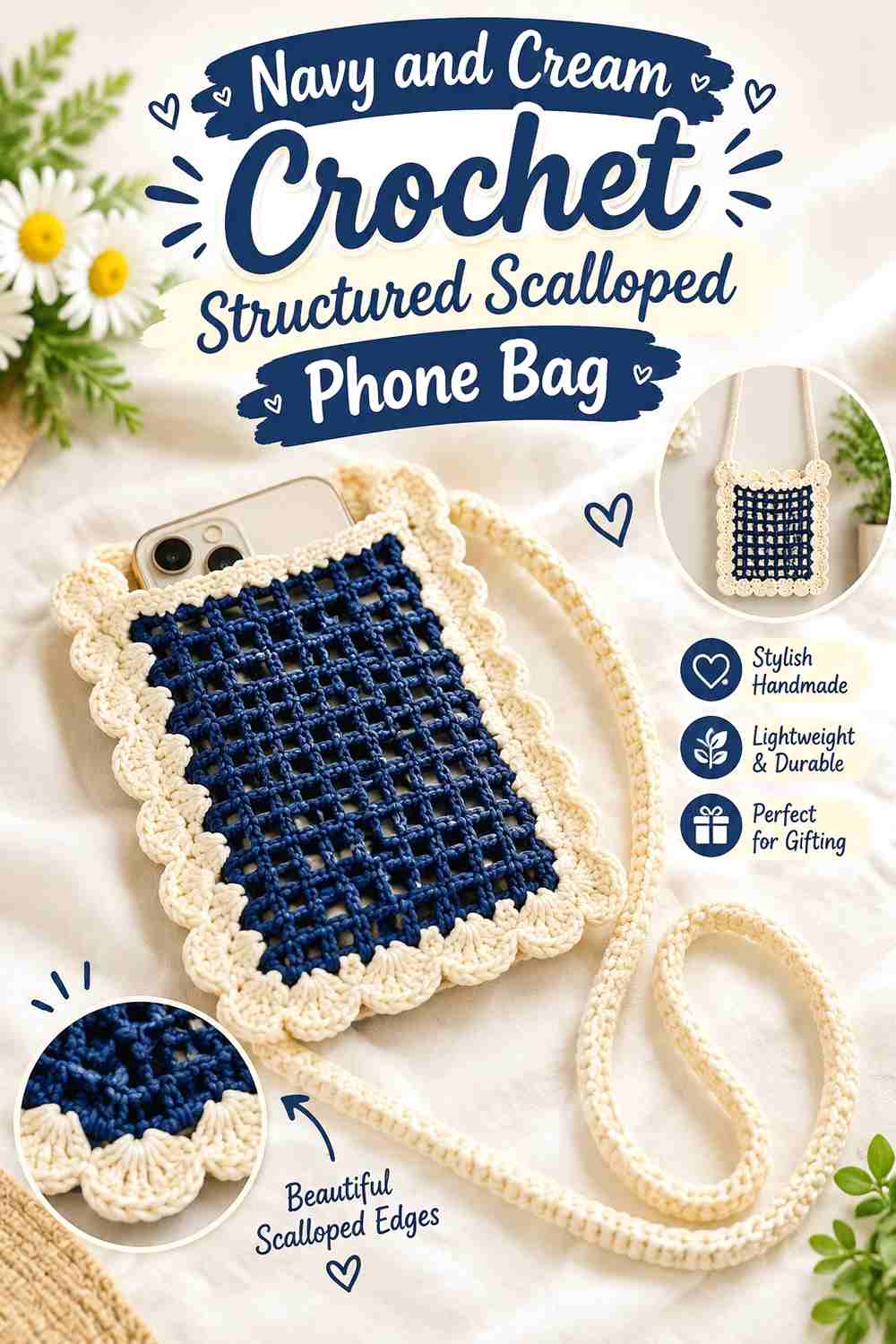
8. Navy And Cream Crochet Structured Scalloped Phone Bag
 SAVE
Navy and cream give a structured phone pouch a strong light-and-dark division. Navy can cover most of the main bag, with cream used at the scalloped upper edge and selected strap details.
Navy Can Give the Crochet Phone Bag a Consistent Main Field
Using navy through the body lets the rectangular construction remain visually clear. Avoid alternating cream repeatedly through the panel when the main decorative objective is the scalloped top.
A continuous dark field also gives a cream upper edge maximum separation.
Cream Can Give Navy Crochet Scallops a Crisp Outline
Cream is especially useful when the scallops are relatively shallow because the value contrast makes even smaller curves noticeable.
If the cream trim already creates a strong horizontal feature, keep additional cream lower on the bag minimal so the top edge stays visually distinct.
Creator Credit: Gebrina Crochet
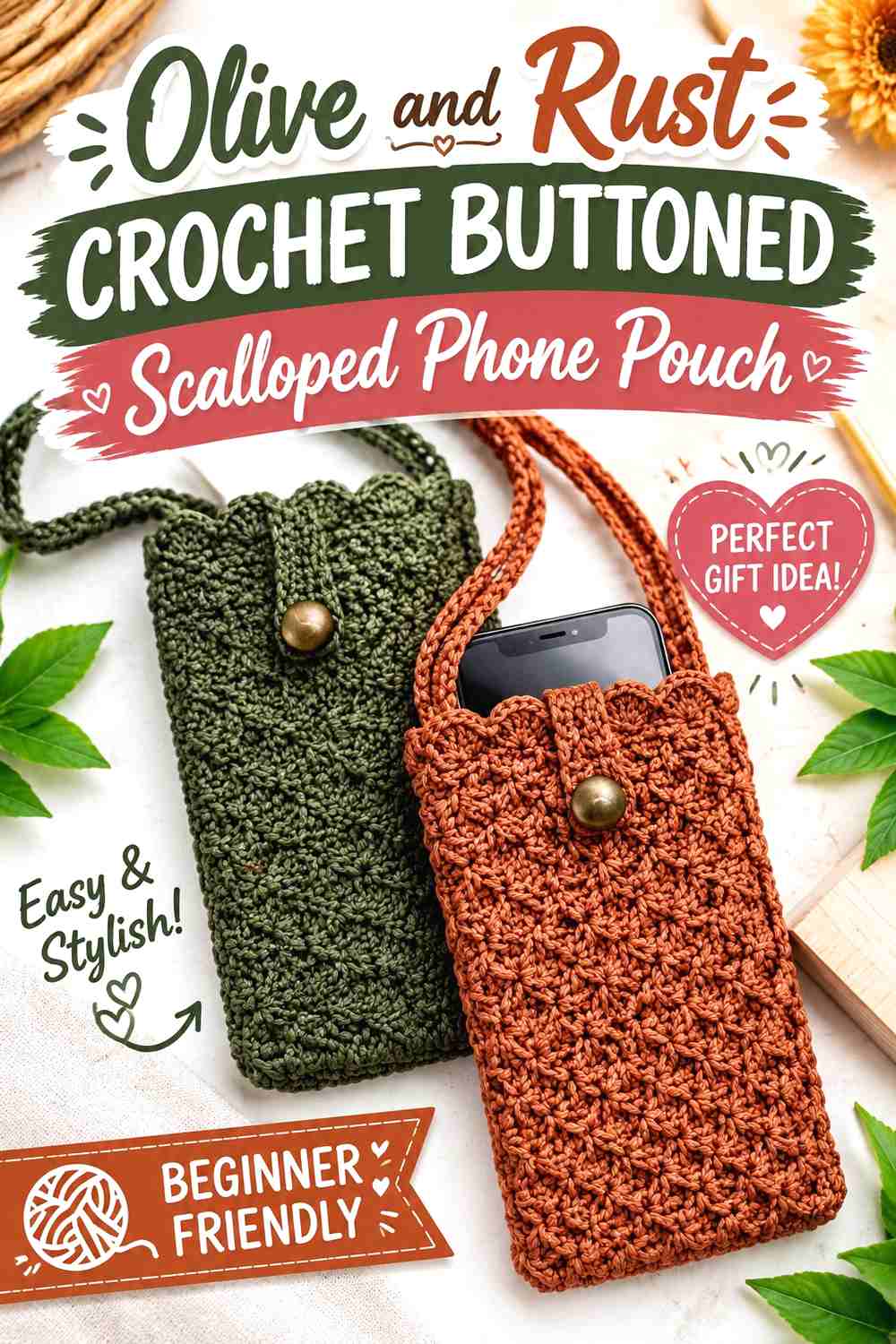
9. Olive And Rust Crochet Buttoned Scalloped Phone Pouch
 SAVE
A button closure gives the upper pouch another natural focal point. Olive can cover most of the textured body, while rust appears at the scalloped edge and repeats around the closure area.
Olive Can Keep the Rust Crochet Button Area From Becoming Busy
A continuous olive background gives the button and scalloped trim room to stand out without adding stripes or multiple body colors.
If the stitch pattern itself is textured, olive should generally cover enough area for that texture to remain readable.
Rust Can Connect the Olive Crochet Scallops With the Closure
Use rust for the decorative edge and a small nearby closure detail so the two features look related.
Avoid making the entire strap rust automatically. A long warm-colored strap can visually outweigh the relatively small scalloped section.
Creator Credit: Silvana Crochet Studio
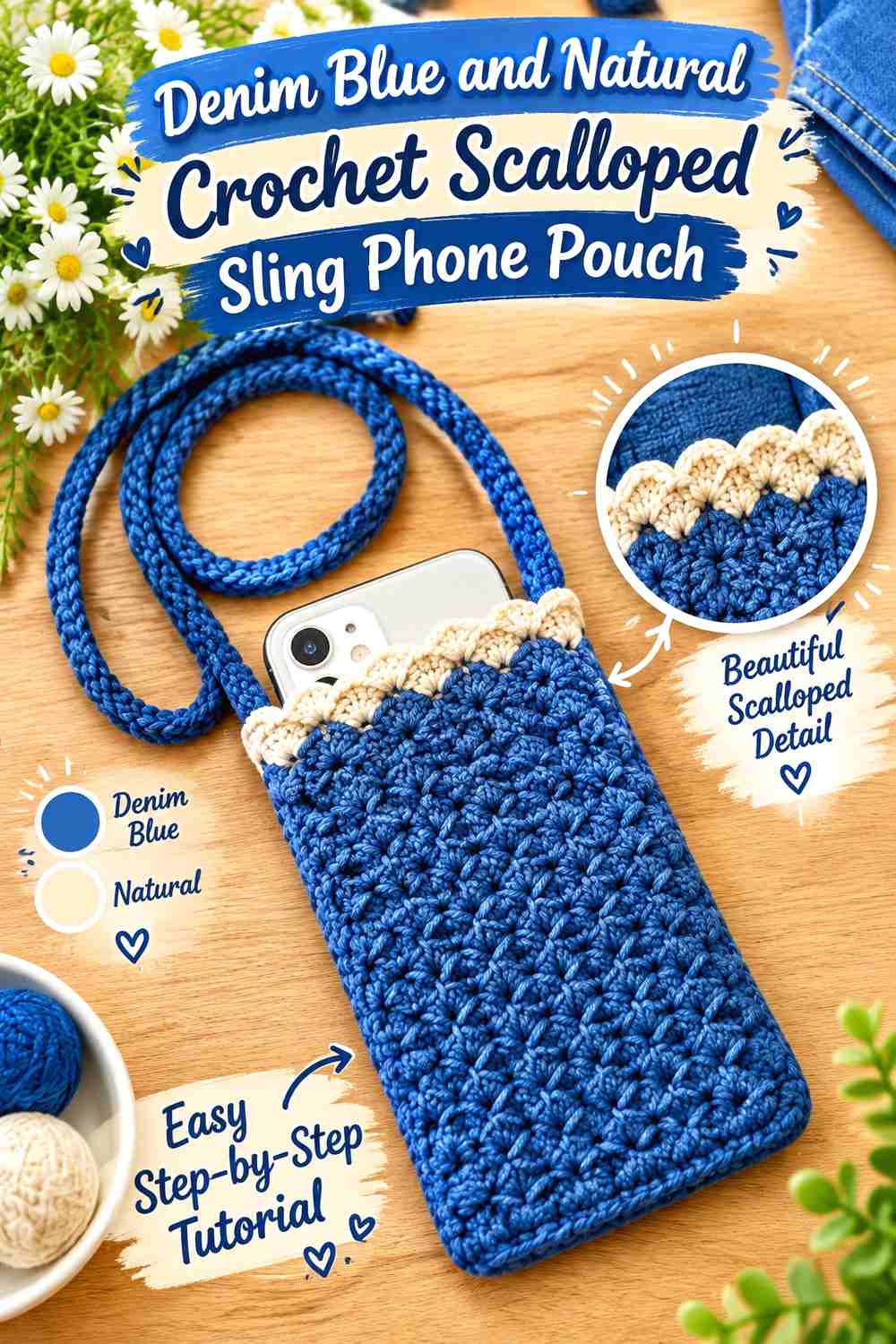
10. Denim Blue And Natural Crochet Scalloped Sling Phone Pouch
 SAVE
Denim blue and a natural neutral suit a long sling pouch when you want the body to remain casual and the scallops relatively understated. Denim blue can dominate the pouch and strap, while natural yarn outlines the opening.
Denim Blue Can Connect the Crochet Phone Pouch and Long Strap
Repeating denim blue from the body into the strap keeps the long carrying line from becoming a separate color feature.
That leaves the natural shade free to concentrate around the decorative scalloped opening.
Natural Scallops Can Lighten the Denim Blue Crochet Opening
A natural neutral creates enough separation from denim blue to show each curve without the sharpness of bright white.
If you repeat natural yarn elsewhere, use it near the top or closure so the lower pouch remains visually simple.
Creator Credit: leonyvie handicrafts
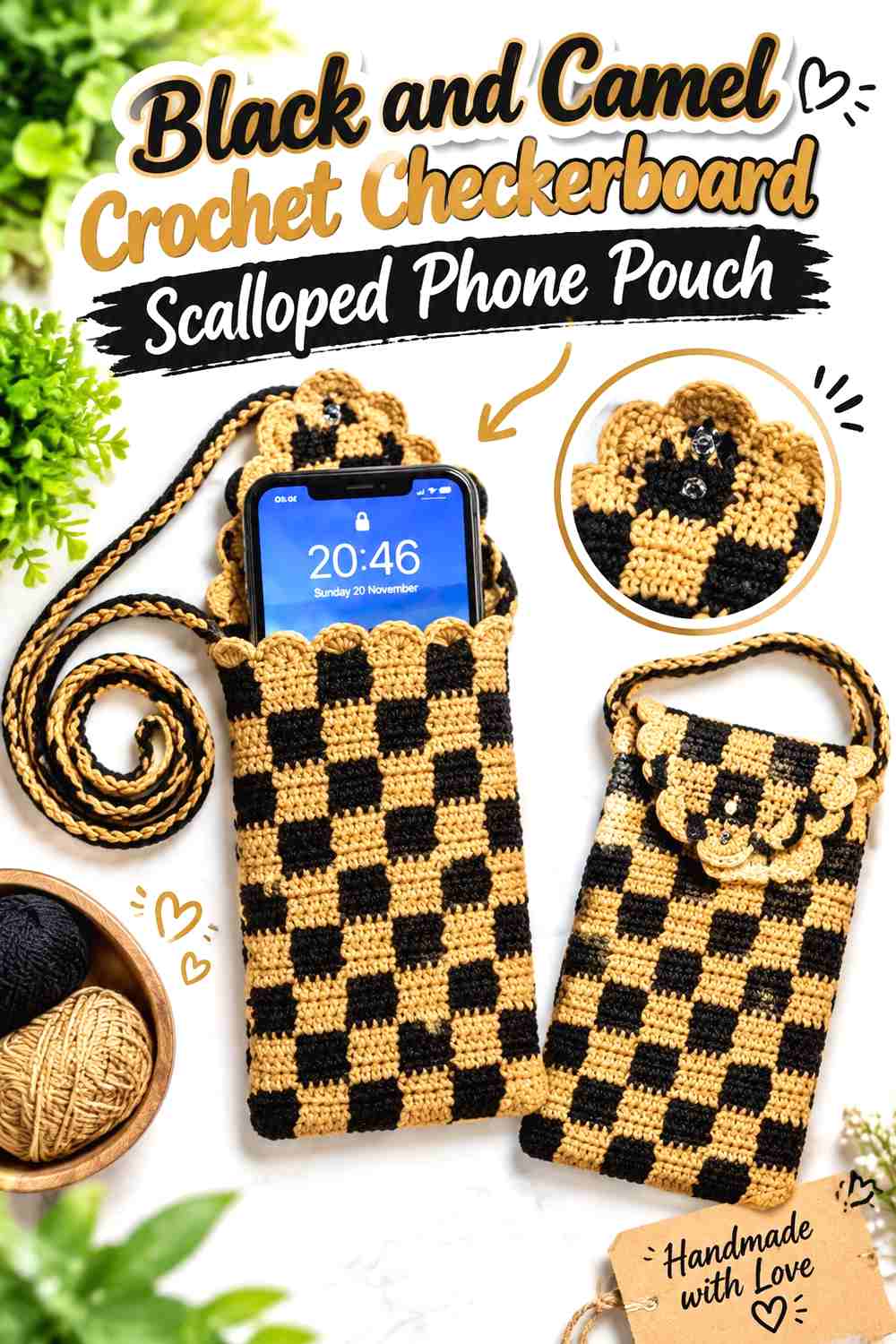
11. Black And Camel Crochet Checkerboard Scalloped Phone Pouch
 SAVE
Checkerboard crochet already contains strong repetition, so the scalloped treatment should organize rather than further complicate the design. Black and camel can alternate across the main panels, with one solid color reserved for the shell or scalloped upper detail.
Black and Camel Need Consistent Crochet Checker Placement
Keep the checker sequence deliberate across both panels so the phone pouch does not look randomly patched.
Because black has greater visual weight, equal-sized blocks can still make the finished surface appear darker than a true half-and-half color split.
Camel Can Separate the Black Crochet Checkerboard From the Scallops
Using a solid camel shell or scalloped detail at the top creates a visual pause after the active checkerboard pattern.
If the scallops were also alternated black and camel, their curved outline could become harder to read against the already changing body.
Creator Credit: Brunaticality
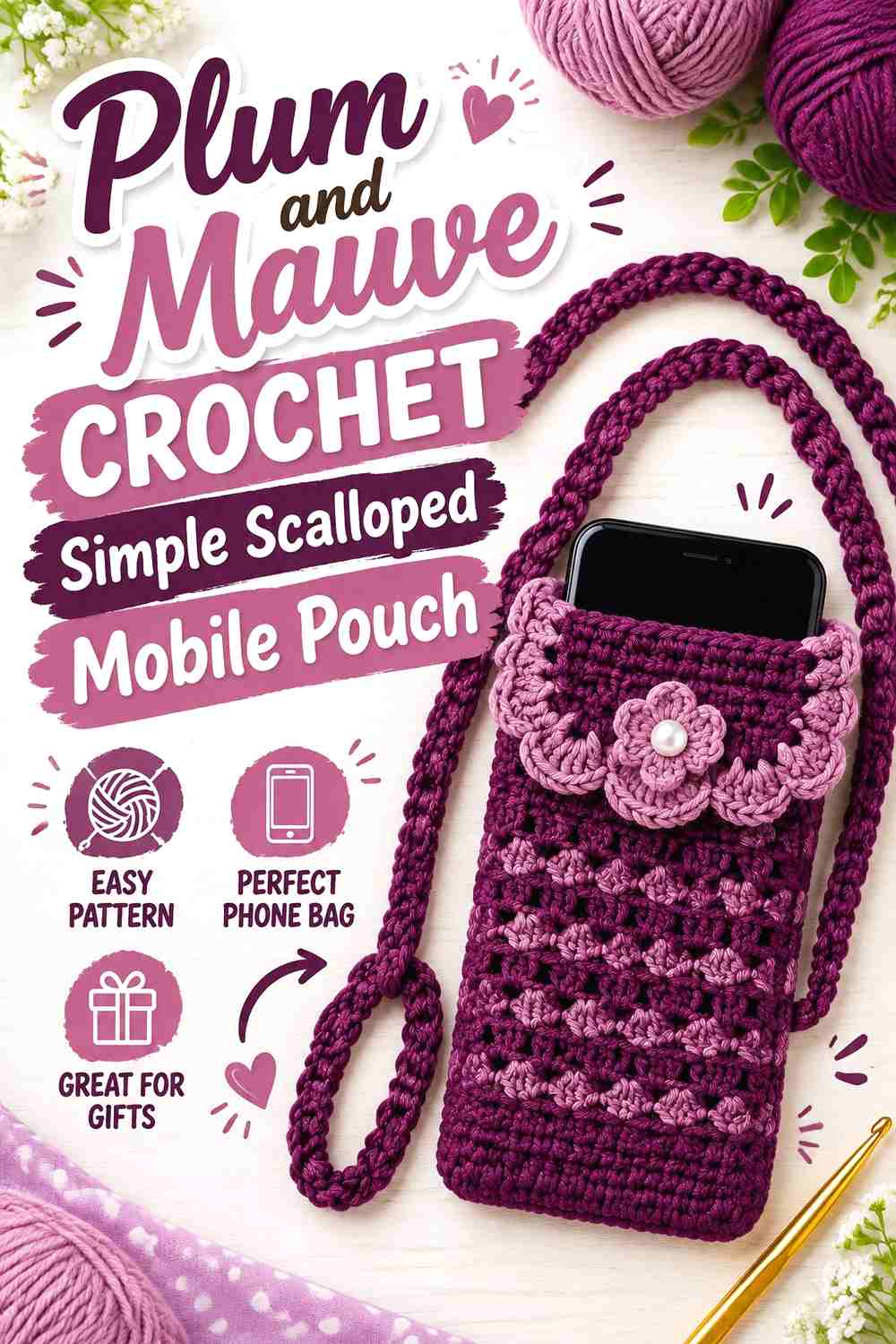
12. Plum And Mauve Crochet Simple Scalloped Mobile Pouch
 SAVE
Plum and mauve offer a tonal alternative to the high-contrast palettes. Mauve can dominate the pouch while plum creates the scalloped border, giving the curves definition through darkness without introducing a completely different hue family.
Mauve Can Keep the Plum Crochet Phone Pouch Tonal
A large mauve body allows the palette to remain soft even when deep plum is used at the opening.
Keep the center panel mostly uninterrupted so the relationship between the two purple-family shades remains easy to understand.
Plum Can Add Depth to Mauve Crochet Scallops
Use plum on the curved top edge when you want the decorative border to be visible without the sharp jump created by black, navy, or white.
If the two yarns appear too similar from a distance, choose a lighter mauve rather than adding an unrelated third shade solely to increase contrast.
Creator Credit: The wool story
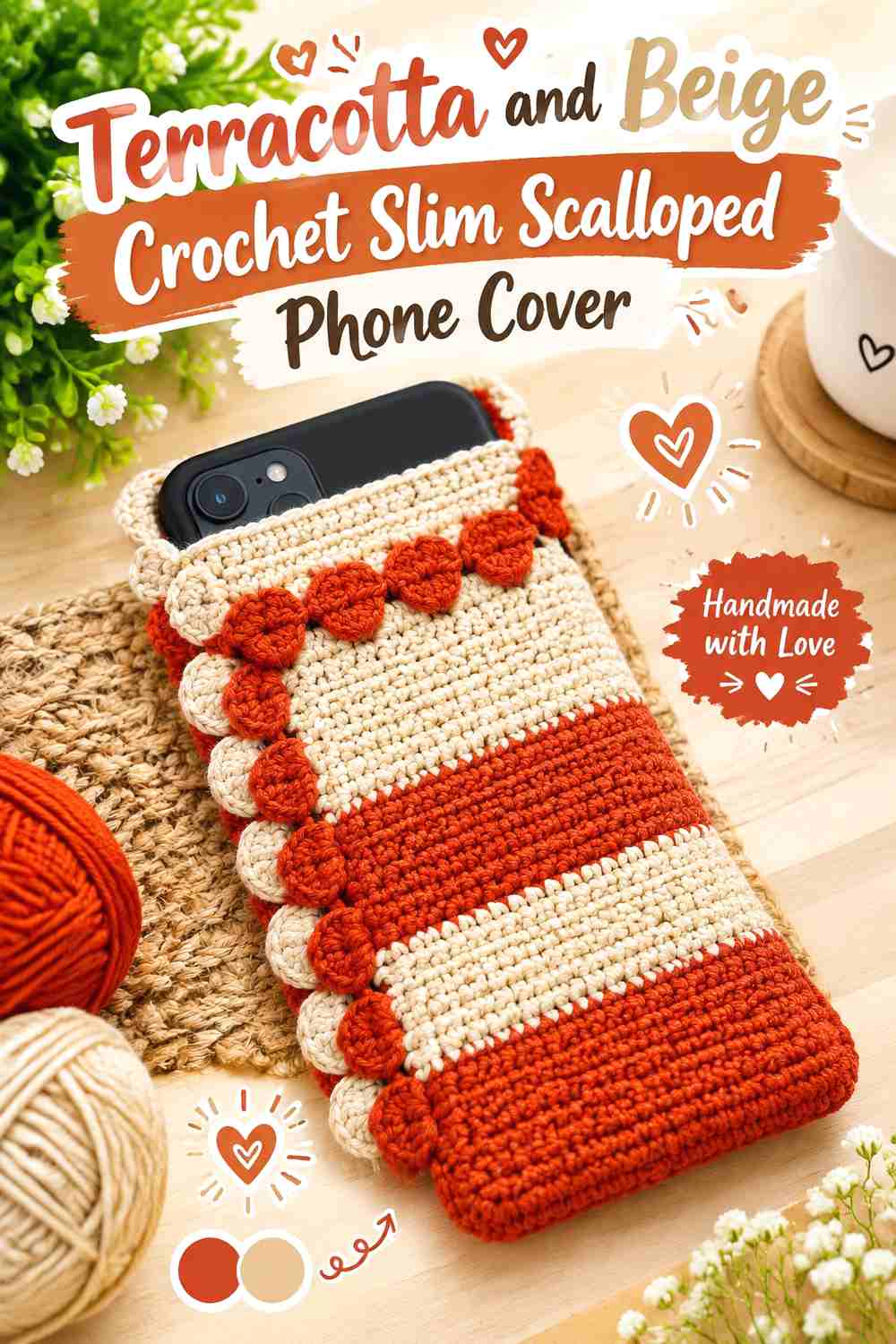
13. Terracotta And Beige Crochet Slim Scalloped Phone Cover
 SAVE
A basic phone-cover construction gives the color scheme and border room to create most of the visual personality. Terracotta can cover the main pocket, while beige finishes the opening with restrained scallops.
Terracotta Can Give the Crochet Phone Cover a Warm Main Field
Use terracotta consistently across the slim body so the pouch does not become visually segmented.
Because the surface is narrow, one strong warm color is enough to make the cover distinctive before any trim is added.
Beige Can Give Terracotta Crochet Scallops a Softer Contrast
Beige creates a lighter edge without the stronger contrast of pure white. That makes it useful when you want the scallops visible but not dramatically outlined.
Repeat beige only where needed—such as a small loop or strap detail—so terracotta remains the dominant color.
Creator Credit: Crochet Tale
Comparing the 13 Crochet Scalloped Phone Pouch Directions
For the clearest scalloped-edge contrast, the navy and cream, teal and oatmeal, black and camel, and mustard and chocolate palettes create strong boundaries between the pouch body and decorative trim.
For a softer scalloped finish, cream and sage, lilac and ivory, plum and mauve, or terracotta and beige reduce the visual jump between the body and border.
Choose the burgundy and blush granny-flap or mustard and chocolate granny-square pouch when you want a motif or flap to share attention with the scalloped edging. The coral and sage flower pouch works similarly but uses a dimensional focal detail instead of a geometric motif.
The denim blue and natural and olive and rust versions suit designs where the strap or closure helps repeat the accent color beyond the scalloped edge.
Conclusion
A scalloped phone pouch does not need several complicated color changes to look distinctive. The most effective palettes usually give the pouch body one clear dominant color and reserve the second shade for the curved edge, flap, closure, flower, strap detail, or another repeated structural area.
Use stronger light-and-dark contrast when you want every scallop to be easy to see. Choose closer tonal shades when you want the curved border to blend more gently into the pouch. When the body already contains checkerboards, granny squares, flowers, or heavy texture, simplifying the scallop color can keep the finished project from becoming visually crowded.
For tutorials that use a plain phone-pouch construction, treat the scalloped border as an adaptation rather than assuming the creator’s exact finishing sequence. Check that your chosen edge works comfortably around the opening before applying it across the entire pouch.
Frequently Asked Questions
Where should I put scallops on a crochet phone pouch?
The opening and lower edge of a flap are natural locations because the curved border remains visible without interfering with most of the pouch body. Side scallops create a stronger decorative outline but can make a narrow pouch look busier.
Should crochet scallops contrast with the phone pouch body?
They can, but they do not have to. A high-contrast edge makes individual curves more obvious, while a tonal scallop produces a softer finish. Choose according to how much attention you want the border to receive.
Should the crochet phone pouch strap match the scalloped edge?
Matching them can connect the color palette, especially when the scallop color appears nowhere else. However, a long contrasting strap can become visually dominant. A smaller repetition near the strap attachment may be enough.
How many colors work well for a scalloped crochet phone pouch?
Two colors are often sufficient because the body and decorative edge already create separate visual areas. A third color is most useful when a granny motif, flower, closure, or other feature needs its own clearly defined role.
How can I make small crochet scallops easier to see?
Increase the light-and-dark difference between the scallop yarn and the pouch body. Keeping the scallops in one continuous color also makes their repeated curved shape easier to follow than changing color within every section.
Can I add scallops to a plain crochet phone-pouch tutorial?
A decorative edge can often be treated as a separate adaptation, but it needs to suit the existing opening and fabric. Avoid assuming that a border from an unrelated pattern will fit automatically; test a short section and check that the opening still works as intended.
What colors work well for a vintage-style scalloped phone pouch?
Muted combinations such as dusty rose and cream, olive and rust, plum and mauve, terracotta and beige, or mustard and chocolate can create a vintage-inspired direction. Keep one shade dominant so the scalloped edge remains decorative rather than competing with the whole pouch.