
A crochet brooch can feel heirloom-worthy without relying on one specific antique style. Layered roses, fine floral pins, botanical sprays, dimensional butterflies, and small corsage-like flowers can all take on a keepsake character when the colors are restrained and the motif remains clearly defined.
Color is especially important on a brooch because the surface is small. A dark center can overwhelm pale petals, leaves can disappear against an equally dark flower, and several strong accent colors can make a delicate motif feel crowded. A clearer hierarchy—main flower color, supporting foliage, and a small center or trim shade—usually gives the crochet more room to show.
These 16 ideas use complete brooch tutorials where available and flower tutorials that can support an heirloom brooch adaptation in several cases. The suggested palettes are independent editorial color plans rather than claims that the creators used these exact combinations.
Quick List
- Dusty Rose And Sage Crochet Sculpted Rose Heirloom Brooch
- Oxblood And Charcoal Crochet Botanical Poppy Heirloom Brooch
- Faded Blue And Antique Ivory Crochet Butterfly Heirloom Brooch
- Ochre And Chocolate Crochet Sunflower Heirloom Brooch
- Burgundy And Moss Crochet Carnation Heirloom Brooch
- Mauve And Cream Crochet Layered Flower Heirloom Brooch
- Old Rose And Oatmeal Crochet Rolled Flower Heirloom Brooch
- Powder Blue And Ivory Crochet Petite Flower Pin Heirloom Brooch
- Plum And Antique Gold Crochet Safety Pin Heirloom Brooch
- Sage And Blush Crochet Safety Pin Floral Heirloom Brooch
- Dusty Peony Pink And Olive Crochet Peony Heirloom Brooch
- Faded Blue And Moss Crochet Forget Me Not Heirloom Brooch
- Wine And Antique Ivory Crochet Orchid Heirloom Brooch
- Cream And Moss Green Crochet Lily Of The Valley Heirloom Brooch
- Burgundy And Blush Crochet Camellia Heirloom Brooch
- Terracotta And Sage Crochet Camellia Spray Heirloom Brooch
Give an Heirloom Crochet Brooch One Clear Dominant Color
Small accessories rarely benefit from giving every shade equal coverage. Decide what the viewer should notice first: rose petals, a poppy center, butterfly wings, or a carnation’s ruffled edge.
The dominant shade should usually occupy the largest recognizable part of the motif. Supporting colors can then define leaves, centers, edging, or pin details without breaking the brooch into many small competing sections.
For floral brooches, this often means keeping most petals in one color family rather than changing shades between every layer.
Use Vintage Neutrals to Separate Crochet Brooch Details
Cream, ivory, oatmeal, taupe, camel, and muted gray can do more than make a palette look old-fashioned. They can separate a flower from its center, define a stem, or create breathing room between dark colors.
Choose the neutral according to the amount of contrast you need. Antique ivory against burgundy creates a strong distinction, while oatmeal beside dusty rose produces a quieter result.
A grayscale photo is useful when two muted yarns look different in hue but nearly identical in lightness.
Check the Brooch Palette Against the Garment
A brooch does not have its own visual background once it is worn. A cream flower may nearly disappear on an ivory cardigan, while a burgundy brooch may merge into a dark wine coat.
Place the unfinished motif against the fabric where you expect to wear it before finalizing the colors. The main outline, center, and leaves should remain recognizable from normal viewing distance.
This is particularly important with heirloom palettes because muted colors can blend more readily into tweed, wool, linen, and other softly colored fabrics.
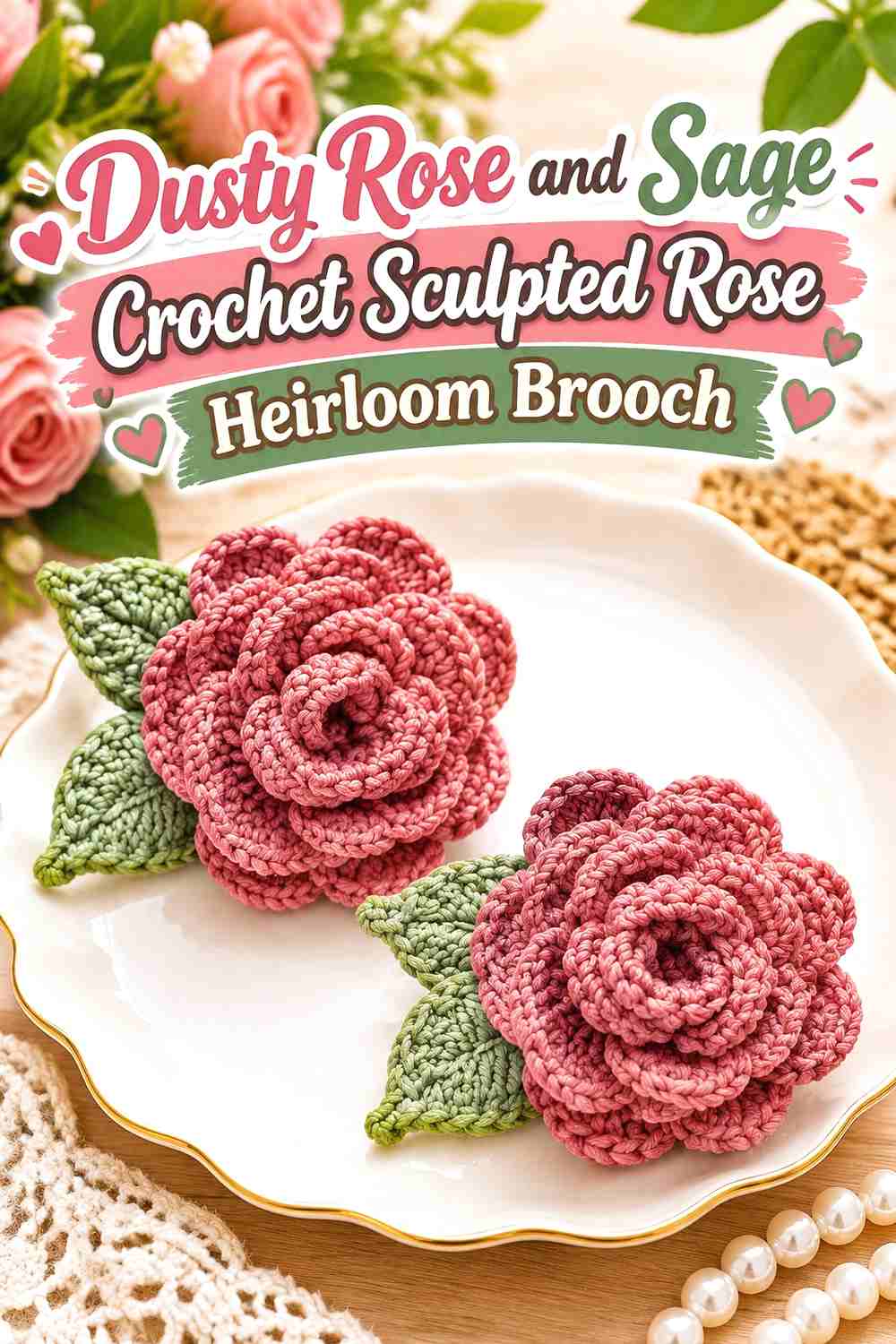
1. Dusty Rose And Sage Crochet Sculpted Rose Heirloom Brooch
 SAVE
A sculpted rose already creates natural shadows between its petals, so the palette does not need many extra colors. Dusty rose can cover the entire bloom while sage appears only in one or two supporting leaves. A cream or oatmeal center is unnecessary unless the flower construction specifically leaves an exposed central detail.
Dusty Rose Should Carry the Crochet Rose Petals
Keep dusty rose consistent through the layered bloom so the rose reads as one flower rather than several unrelated rings.
If you want more depth, choose a slightly darker dusty rose for a small inner section rather than changing every layer. The folds and overlaps will already create tonal variation.
Sage Can Frame the Dusty Rose Crochet Rose
Use sage behind the flower where the leaf shape remains visible without becoming larger than the bloom.
Check the brooch vertically before fixing the backing. If the sage leaf projects too far on one side, it can make the dusty rose flower appear off-center when worn.
Creator Credit: MAMA HUMAM
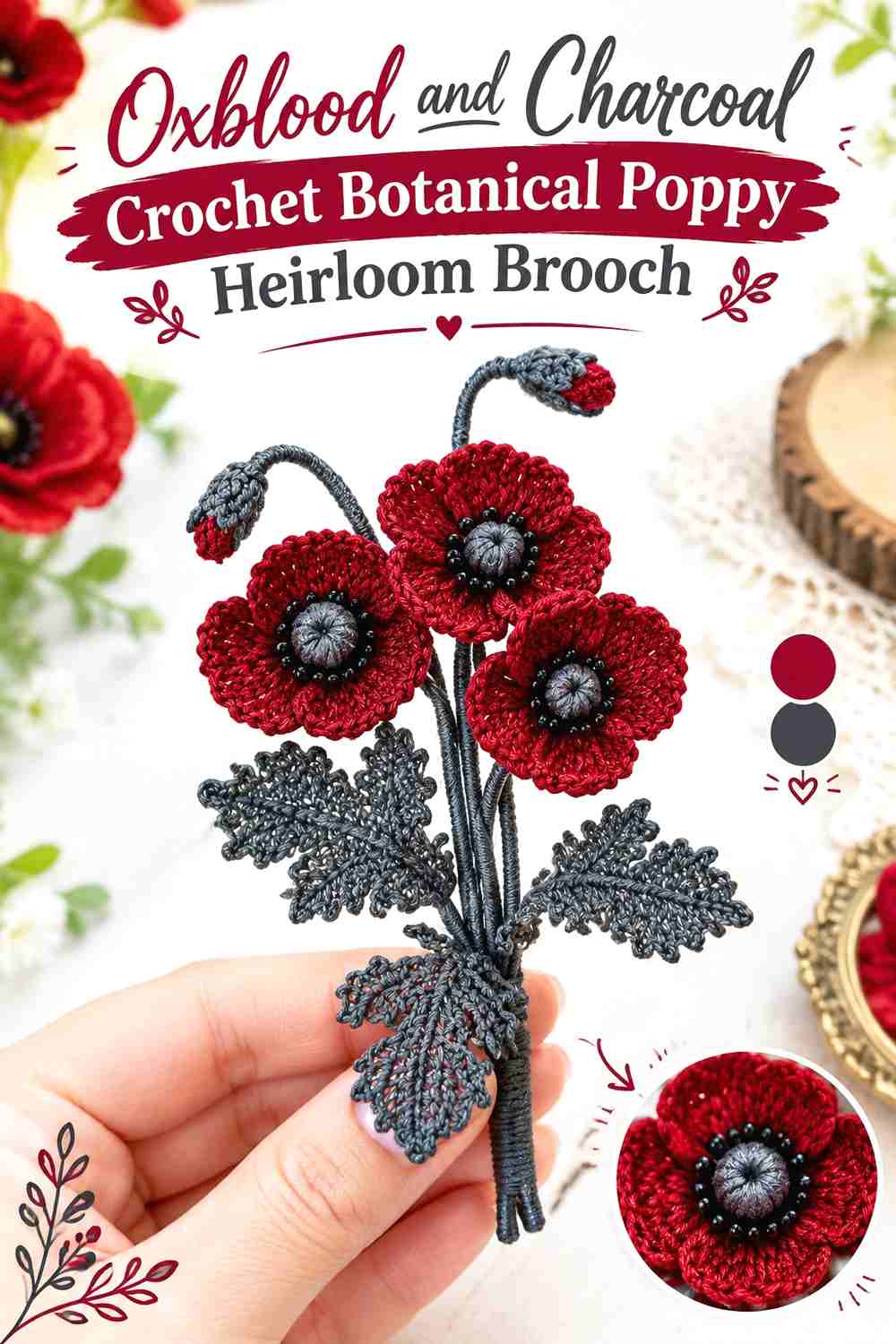
2. Oxblood And Charcoal Crochet Botanical Poppy Heirloom Brooch
 SAVE
Oxblood gives a poppy a deeper, more restrained red than scarlet, while charcoal creates a concentrated dark center. This palette works because the broad petals remain one color and the strongest contrast is confined to the middle.
Oxblood Should Remain the Main Crochet Poppy Color
Use oxblood throughout the broad petal shapes so their outline remains easy to recognize.
Avoid adding charcoal along every petal edge. The flower already gains depth where petals overlap, and excessive dark edging can make the bloom look smaller.
Charcoal Can Define the Oxblood Crochet Poppy Center
Keep charcoal tightly concentrated around the center so it provides definition without dominating the brooch.
If the center appears almost as large as the petals from a few feet away, reduce the visible charcoal rather than lightening the entire oxblood flower.
Creator Credit: TinyLimeCraft
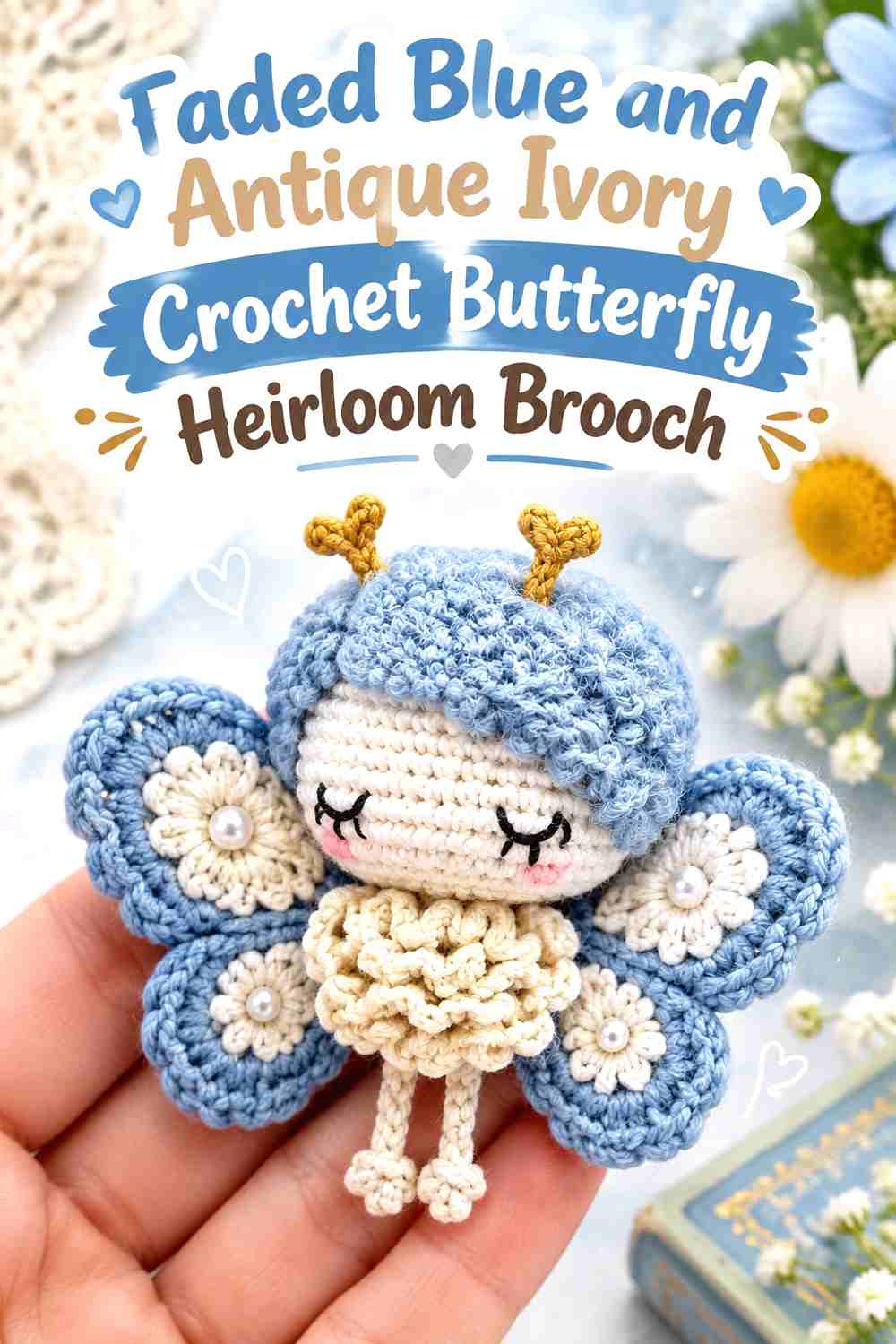
3. Faded Blue And Antique Ivory Crochet Butterfly Heirloom Brooch
 SAVE
A dimensional butterfly can move toward an heirloom look when the wings use faded blue instead of a highly saturated rainbow palette. Antique ivory can support smaller wing markings or body details, leaving the silhouette calm enough to suit a cardigan, coat, or keepsake display.
Faded Blue Can Keep Both Crochet Butterfly Wings Connected
Use the same faded blue family across the main portions of both wings so the butterfly remains visually balanced.
If you introduce variation, mirror the placement on both sides rather than assigning unrelated colors to each wing.
Antique Ivory Can Clarify Faded Blue Crochet Wing Details
Antique ivory can separate small inner wing sections without creating the sharpness of bright white.
Because the butterfly already contains several dimensional details, keep the ivory pattern restrained. Large pale patches can break the wings into too many visual pieces.
Creator Credit: CrochetConfetti
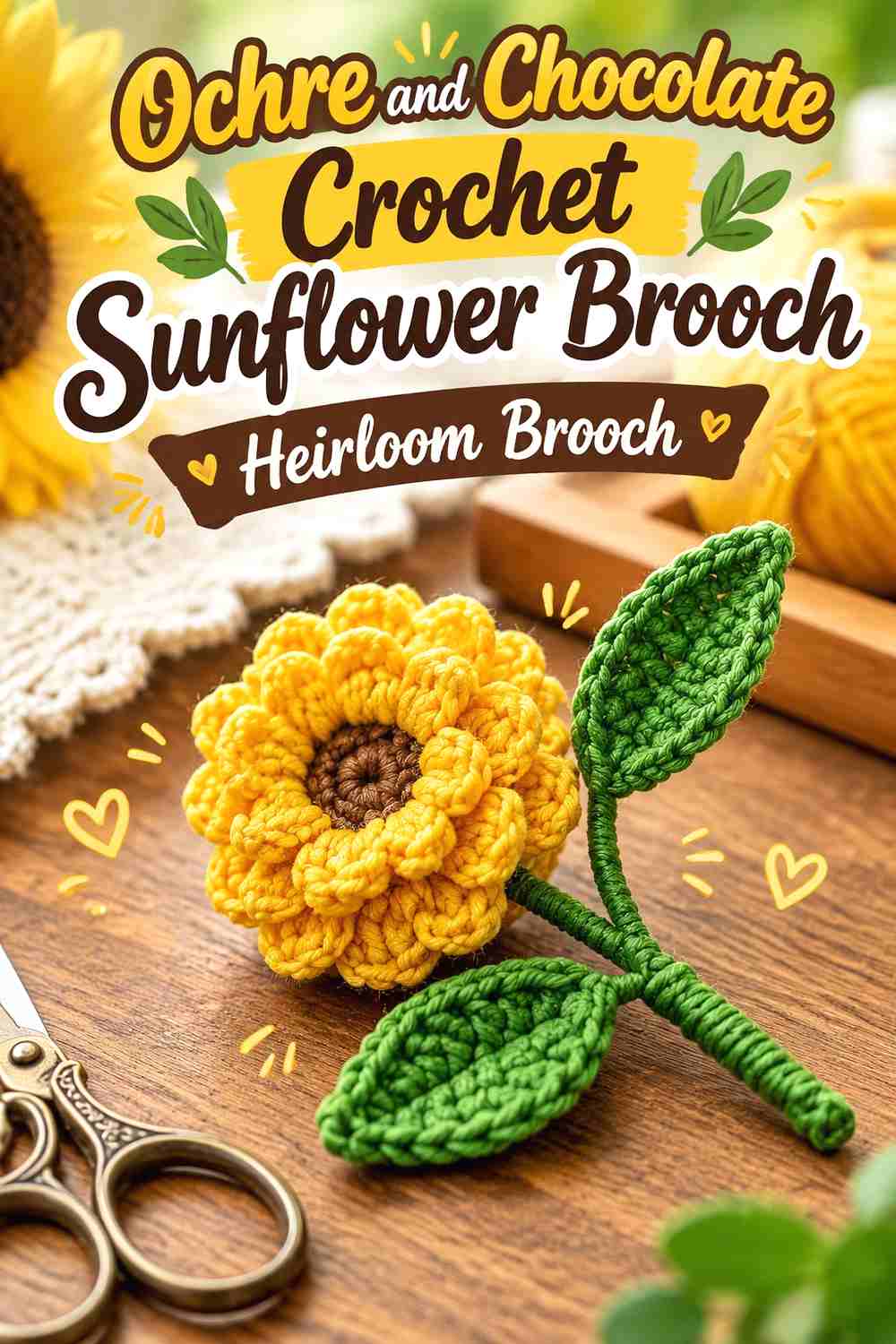
4. Ochre And Chocolate Crochet Sunflower Heirloom Brooch
 SAVE
Ochre and chocolate turn a sunflower into a warmer, less vivid textile-jewelry piece. Chocolate can define the central disc while ochre forms the radiating petals. A muted olive leaf may be added when foliage is part of the finished brooch, but the flower itself should remain clearly two-toned.
Ochre Needs Enough Space Around the Chocolate Crochet Center
Keep the petal ring wide enough that the chocolate center does not consume most of the visible flower.
On a small brooch, a dark center naturally appears heavier, so the ochre petals need sufficient repeated area to balance it.
Chocolate Can Give Ochre Crochet Petals a Strong Heirloom Center
A consistent chocolate center keeps the flower easy to recognize even when the overall palette is muted.
If you want a softer result, choose a warm dark brown rather than introducing black, which creates a more graphic jump against ochre.
Creator Credit: Lilyrosycrafts
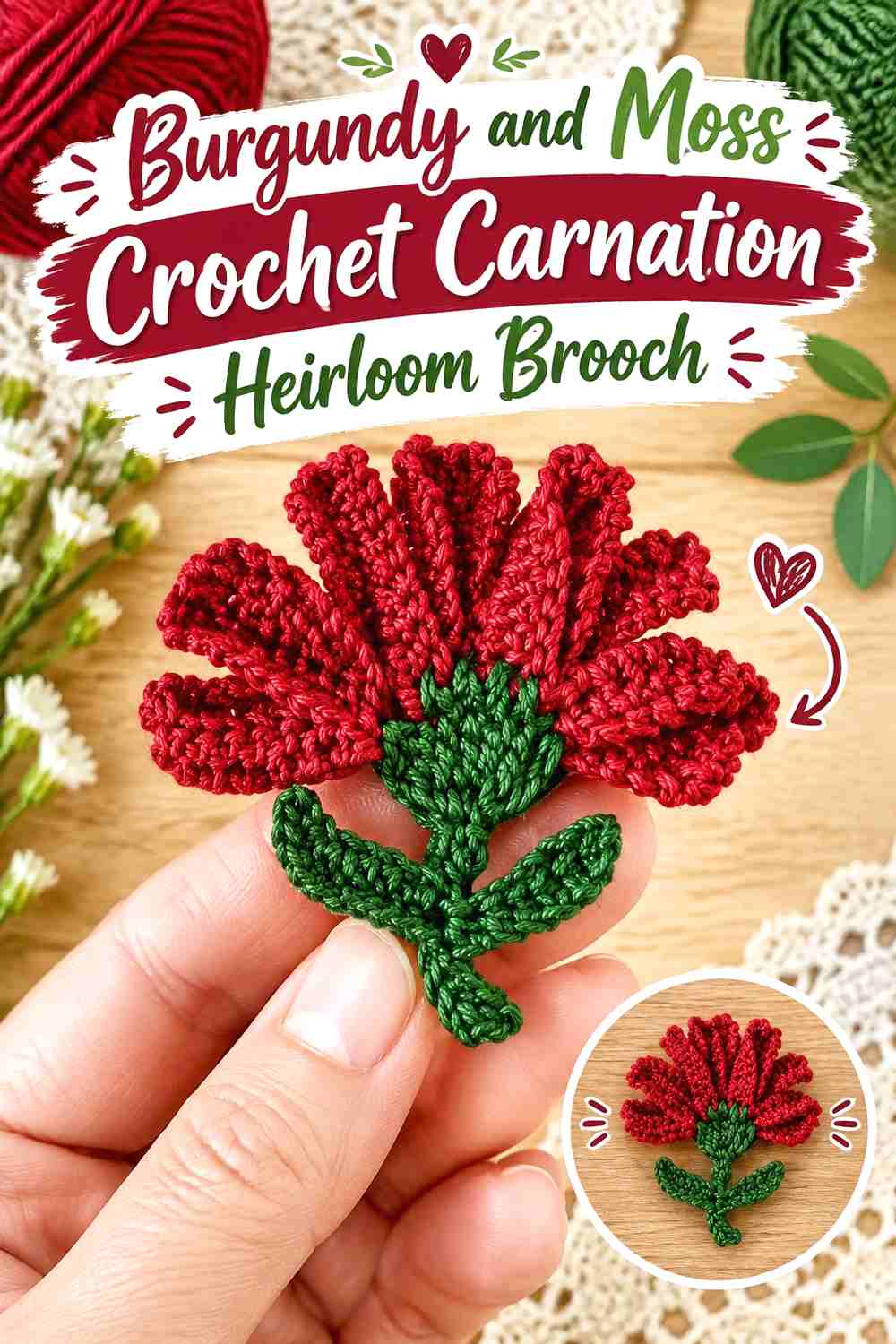
5. Burgundy And Moss Crochet Carnation Heirloom Brooch
 SAVE
A carnation depends on ruffled petal edges, so keeping the bloom predominantly burgundy lets the texture provide most of the visual complexity. Moss green can define the lower botanical details without interrupting the ruffles.
Burgundy Can Keep the Crochet Carnation Ruffles Unified
Use burgundy through the main flower so multiple curled or layered areas remain part of one recognizable bloom.
Switching shades repeatedly through the ruffles can make the flower look striped instead of dimensional.
Moss Green Should Stay Below the Burgundy Crochet Flower
Reserve moss green for the calyx, leaves, or other botanical support.
The green should frame the lower part of the flower rather than spread across the petal area. That separation helps the burgundy ruffles remain the brooch’s focal point.
Creator Credit: zzaim knitting 짜임니팅
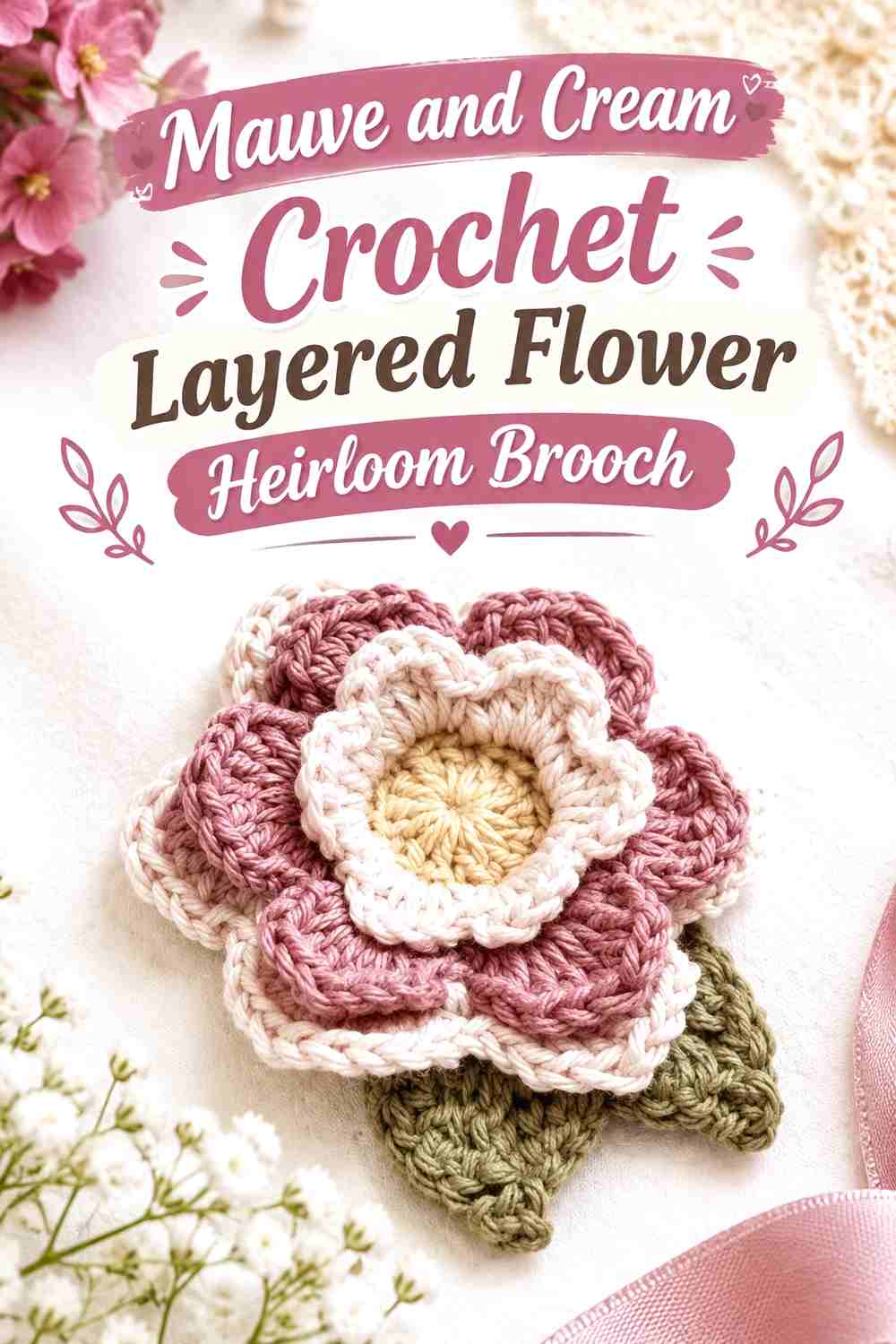
6. Mauve And Cream Crochet Layered Flower Heirloom Brooch
 SAVE
Mauve works particularly well on a layered flower because shadows between the petals naturally produce darker and lighter areas. Cream can be concentrated in the center, giving the brooch one light focal point instead of dividing every layer with contrast.
Mauve Can Unite the Crochet Heirloom Flower Layers
Keep most layers mauve so the petal construction remains easy to follow.
If the outermost layer needs more distinction, choose a slightly softer mauve rather than changing to an unrelated hue.
Cream Can Open Up the Mauve Crochet Flower Center
A cream center gives the eye a clear destination inside the layered petals.
Because cream contrasts strongly with a medium or dark mauve, a relatively small amount is enough. Avoid extending cream around every petal edge if the goal is a restrained heirloom look.
Creator Credit: Mi’s Handmade Hobbies
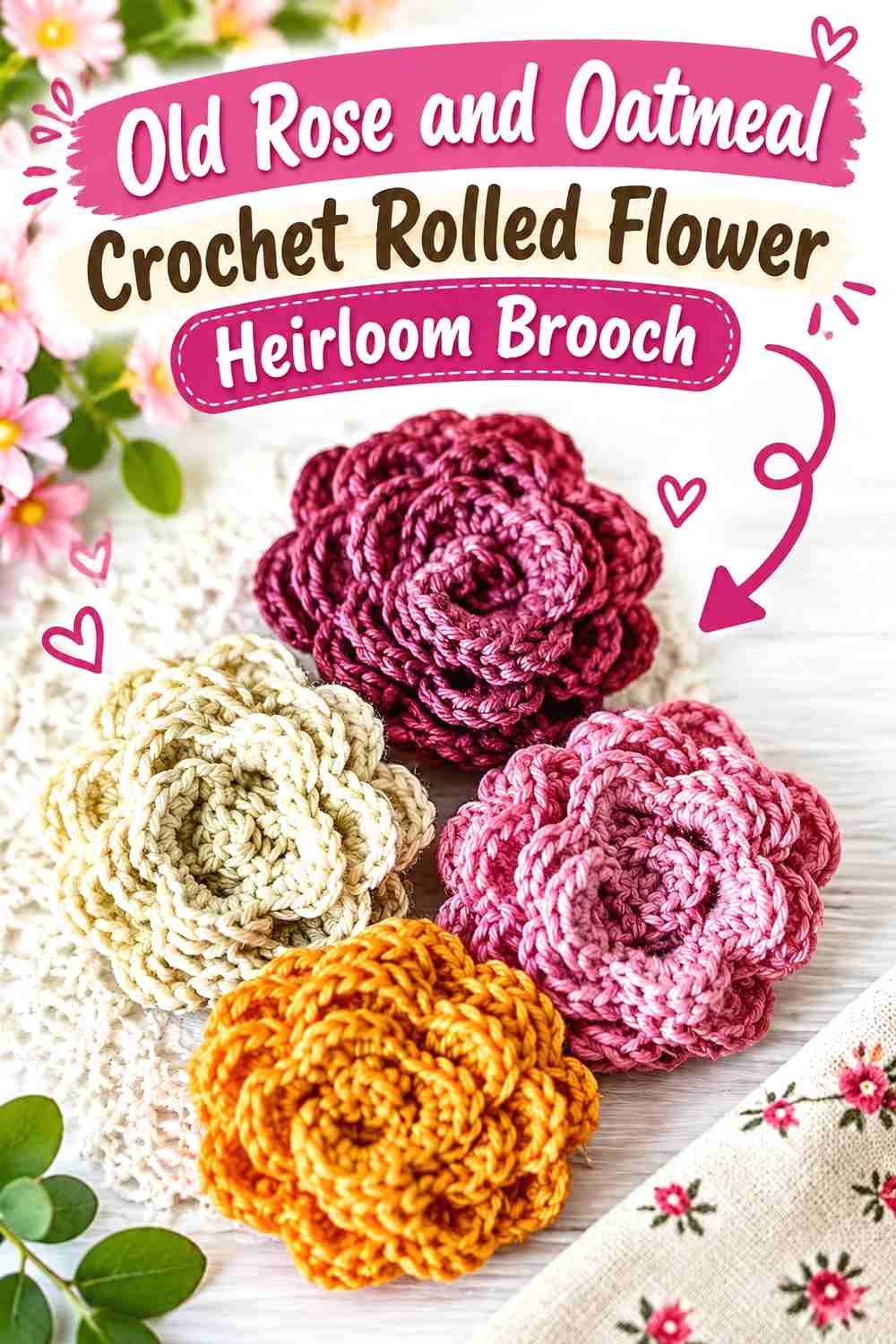
7. Old Rose And Oatmeal Crochet Rolled Flower Heirloom Brooch
 SAVE
Old rose and oatmeal create a softer floral brooch where the yarn’s shape rather than strong contrast provides most of the definition. Old rose can form the complete bloom, while oatmeal is limited to the center, leaf edge, or backing-visible detail.
Old Rose Should Dominate the Crochet Rolled Flower
Using one old-rose shade across the formed petals helps the spiral or rolled structure look continuous.
If the color is too pale against the intended garment, deepen the rose slightly rather than outlining every edge in a darker yarn.
Oatmeal Can Give Old Rose Crochet Details Gentle Separation
Oatmeal creates a quiet highlight that suits an heirloom palette better than stark white.
Use it in one intentional area. Several small oatmeal interruptions can compete with the curved petal shape.
Creator Credit: Crochet con Lillo
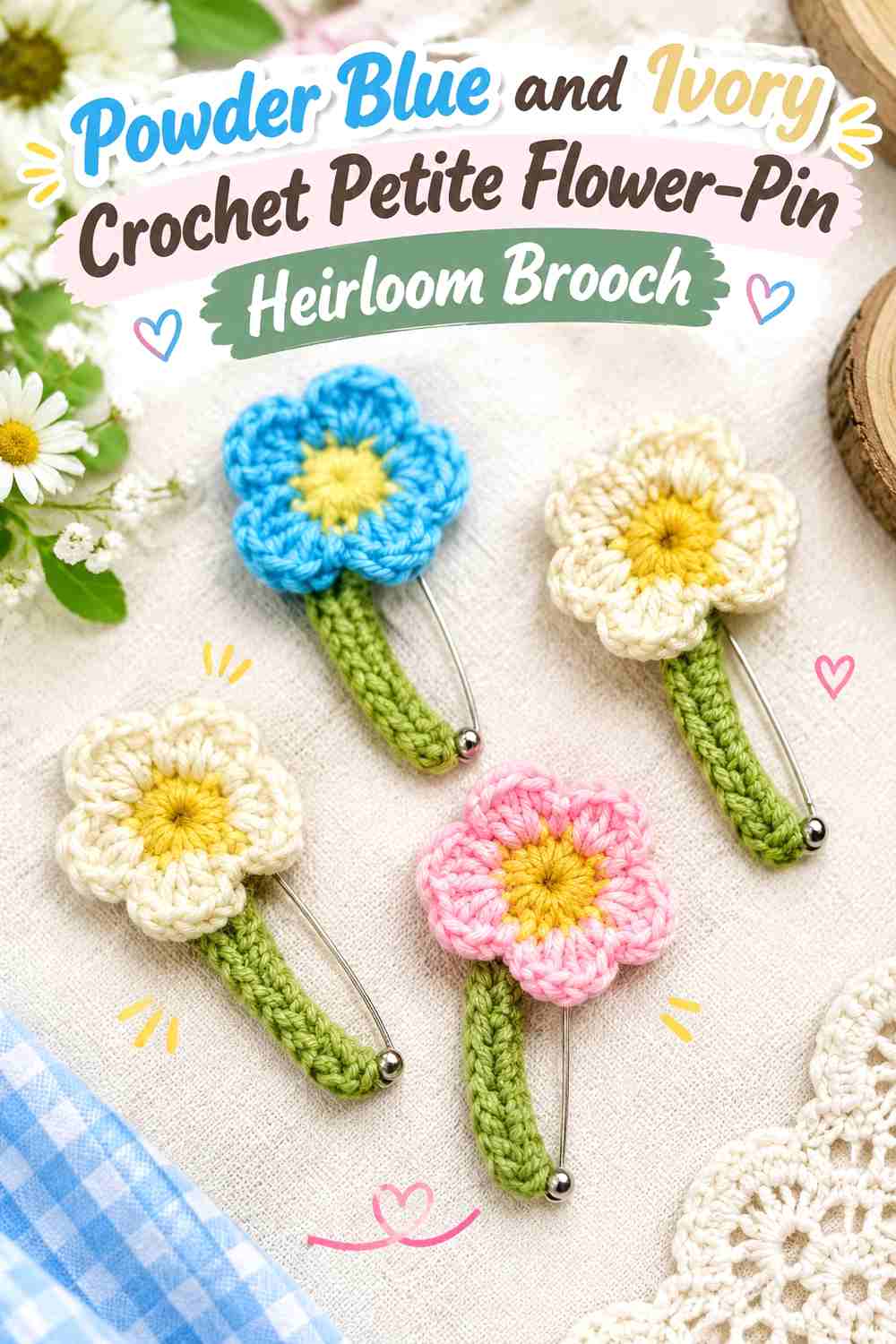
8. Powder Blue And Ivory Crochet Petite Flower Pin Heirloom Brooch
 SAVE
A petite flower pin benefits from simple color distribution because the motif has very little room for complex contrast. Powder blue can cover the petals, with ivory forming a small center or second layer.
Powder Blue Should Keep the Crochet Flower-Pin Outline Clear
Use powder blue across all major petals so the brooch remains recognizable from normal viewing distance.
A tiny project can become visually fragmented when each petal uses a different pastel, even if all the shades look soft individually.
Ivory Can Separate Powder Blue Crochet Petal Details
Use ivory where the flower needs one clear light point.
If the brooch will be worn on a cream cardigan, check that enough powder blue remains visible around the edge so the motif does not disappear into the garment.
Creator Credit: Creative Asra
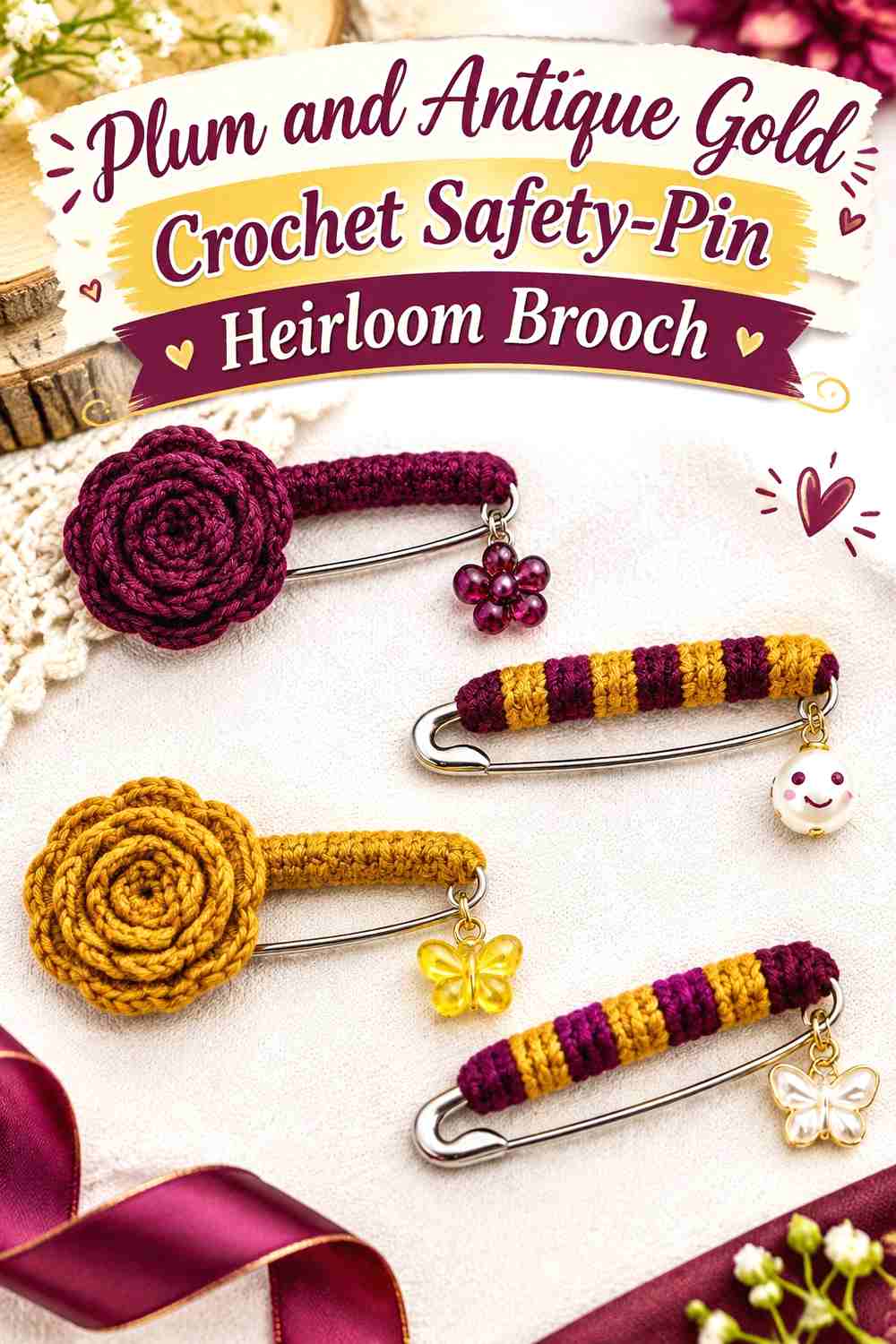
9. Plum And Antique Gold Crochet Safety Pin Heirloom Brooch
 SAVE
A visible safety-pin construction changes how the palette works because the hardware becomes part of the composition. Plum can define the flower while antique-gold-inspired mustard appears in a small center or wrap that visually connects with warm-toned metal.
Plum Can Keep the Crochet Flower Strong Beside the Safety Pin
Use plum for the full flower so it remains the main textile element beside the linear hardware.
If the brooch includes several decorative pieces on the pin, keep their colors restrained rather than making each one equally prominent.
Antique Gold Should Stay Controlled Around Plum Crochet Details
A muted gold accent can warm the plum flower without turning the brooch into equal purple-and-yellow blocks.
Place it around the center or another compact detail where it can repeat the visual warmth of the hardware.
Creator Credit: 𝐊𝐧𝐢𝐭𝐭𝐢𝐧𝐠 𝐛𝐲 𝐖𝐚𝐣𝐢𝐝𝐚
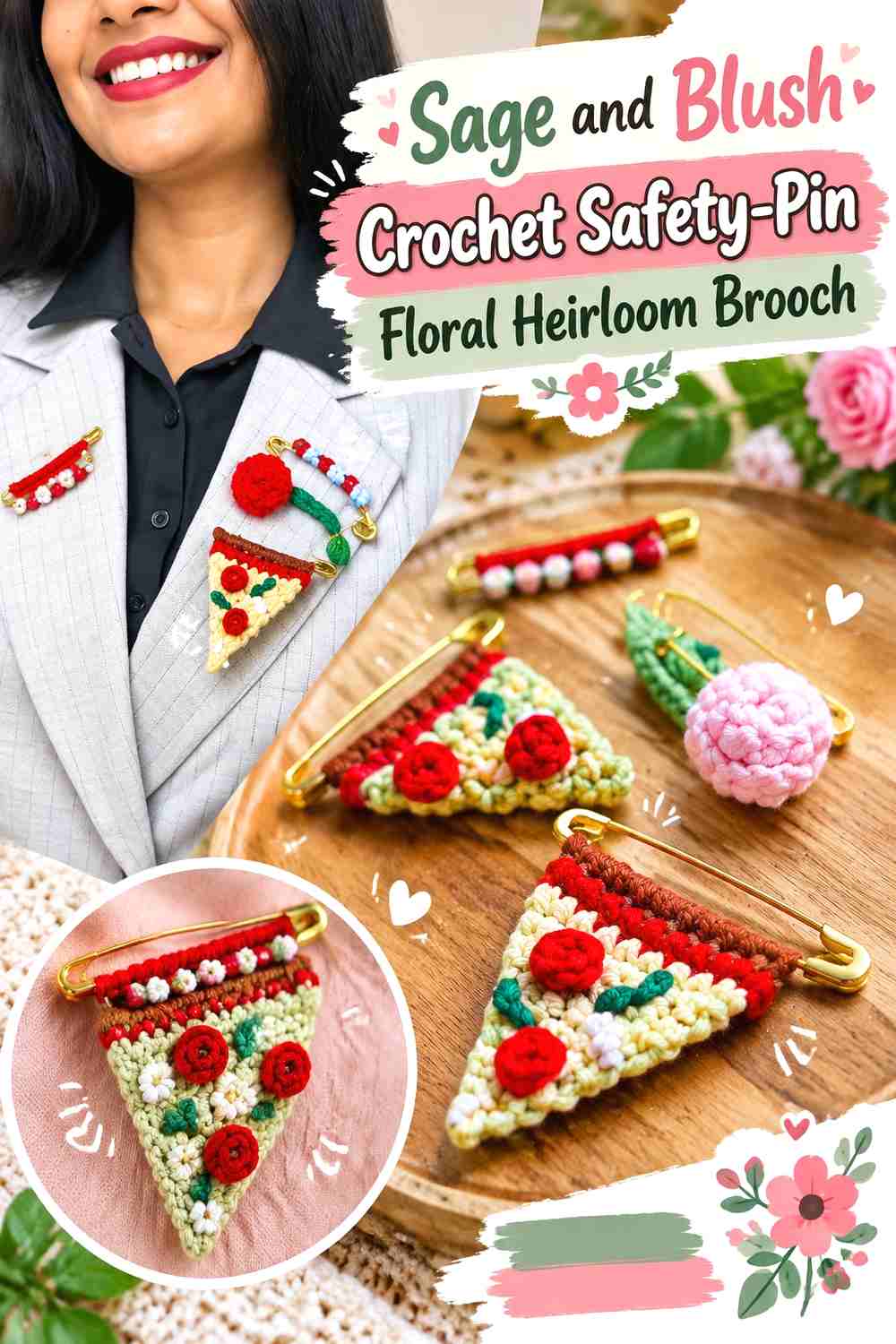
10. Sage And Blush Crochet Safety Pin Floral Heirloom Brooch
 SAVE
Sage and blush create a gentler safety-pin brooch. Blush can lead the flower, while sage appears in leaves or small supporting crochet around the pin. The softer palette makes the visible hardware less dominant than it would be beside black or jewel-toned yarn.
Blush Can Keep the Sage Crochet Safety-Pin Brooch Floral
Use blush across the flower so the accessory still reads primarily as a textile bloom rather than decorated hardware.
If several flowers are attached, repeat the same blush family instead of assigning each one a new pastel.
Sage Can Link Blush Crochet Flowers Along the Safety Pin
Sage works well for the small connecting botanical elements because it can repeat at several points without competing strongly with the main bloom.
Keep green sections relatively narrow so the pin does not become visually divided into alternating pink and green blocks.
Creator Credit: Crochet by Amrita
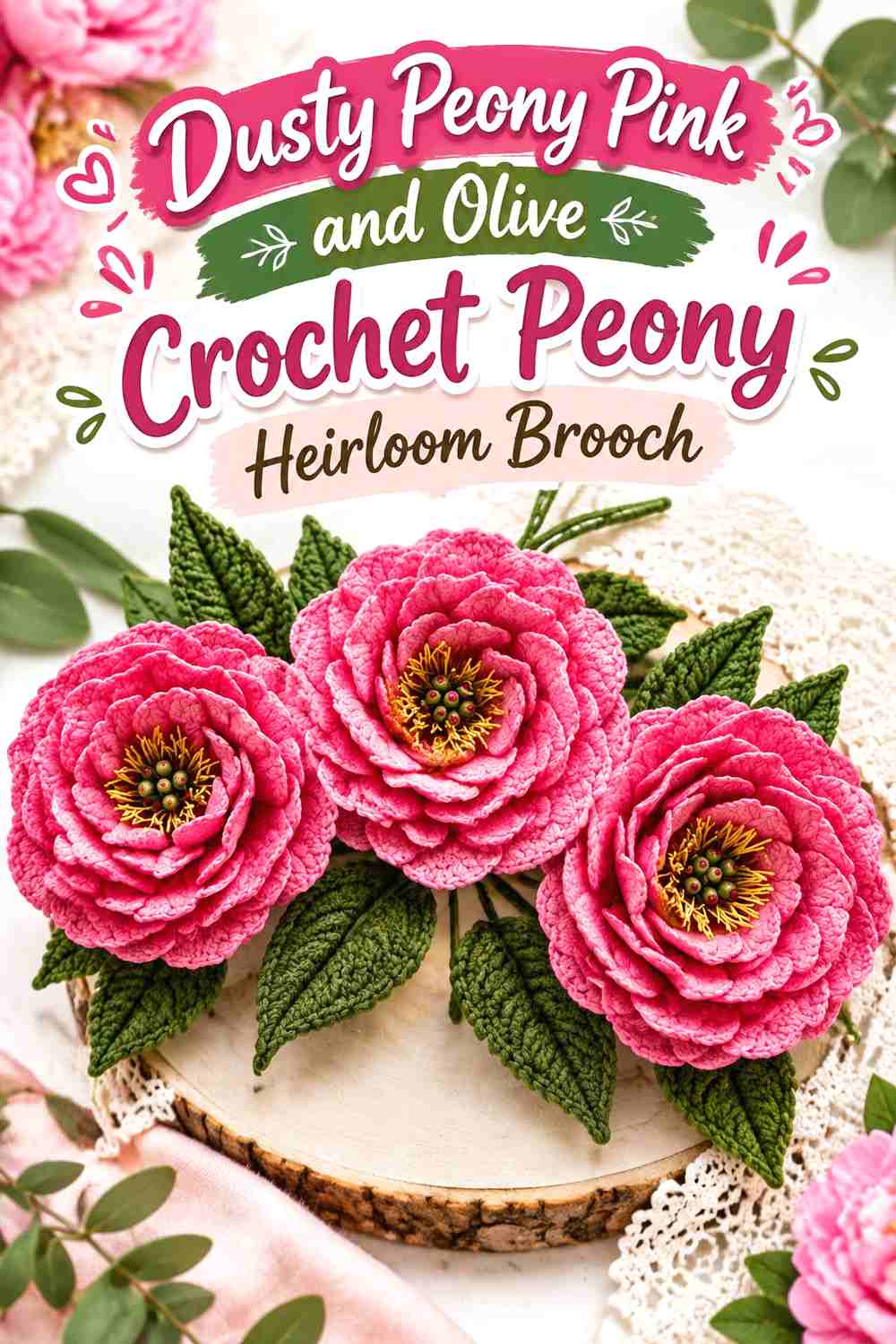
11. Dusty Peony Pink And Olive Crochet Peony Heirloom Brooch
 SAVE
A peony has enough layered volume that its color scheme should stay relatively disciplined. Dusty peony pink can fill most of the flower, while olive appears only in foliage behind it. The source teaches a detailed crochet peony flower, so the pin backing is an heirloom brooch adaptation rather than part of the original project.
Dusty Peony Pink Should Carry the Crochet Peony Layers
Keep the petal mass within one softened pink family so the layers remain visually connected.
If deeper inner petals are desired, make the shift subtle. Strong alternating bands can make the peony look more like concentric color rings.
Olive Can Ground the Dusty Peony Pink Crochet Brooch
Place olive leaves behind rather than between the petals.
The foliage should establish direction and provide a botanical boundary while leaving most of the pink flower visible from the front.
Creator Credit: Natagor Finlayson
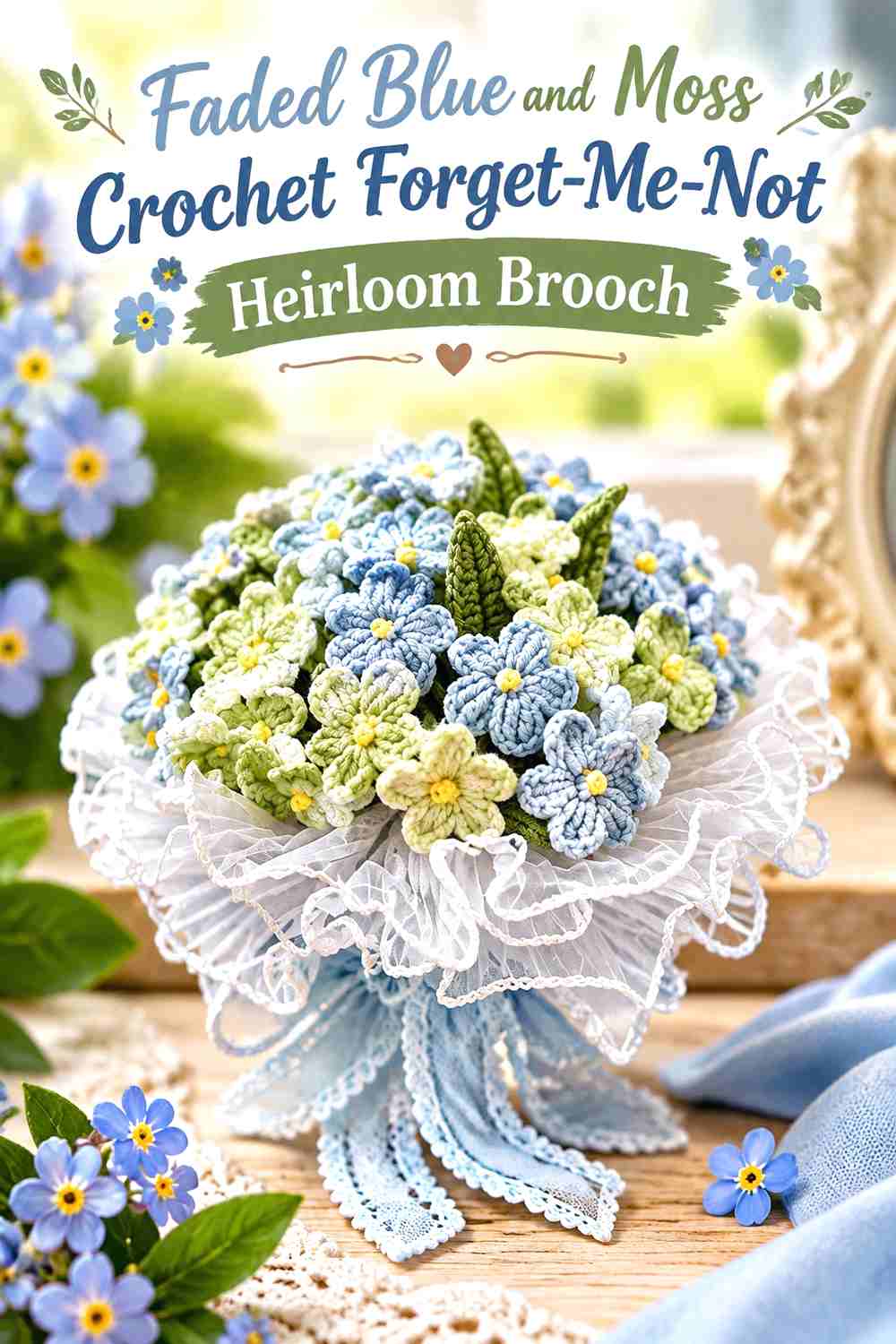
12. Faded Blue And Moss Crochet Forget Me Not Heirloom Brooch
 SAVE
Forget-me-nots create a different heirloom silhouette because several tiny flowers can be gathered into a small spray instead of one large central bloom. Faded blue should repeat across the flowers, while moss green carries the leaves and stems. The tutorial teaches the floral motif and bouquet construction; attaching a suitable brooch backing is a separate adaptation.
Faded Blue Should Repeat Across the Crochet Forget-Me-Not Cluster
Use one faded-blue family through most blossoms so the spray reads as a single botanical composition.
Tiny flowers do not need individual colors. Too much variation can turn the cluster into a collection of dots rather than identifiable blooms.
Moss Green Can Organize the Faded Blue Crochet Flower Spray
Use moss through the stems and leaves to visually connect separate flowers.
Keep the green structure visible between blooms, especially near the base, so the cluster looks arranged rather than randomly grouped.
Creator Credit: Tammy crochet & art
13. Wine And Antique Ivory Crochet Orchid Heirloom Brooch
 SAVE
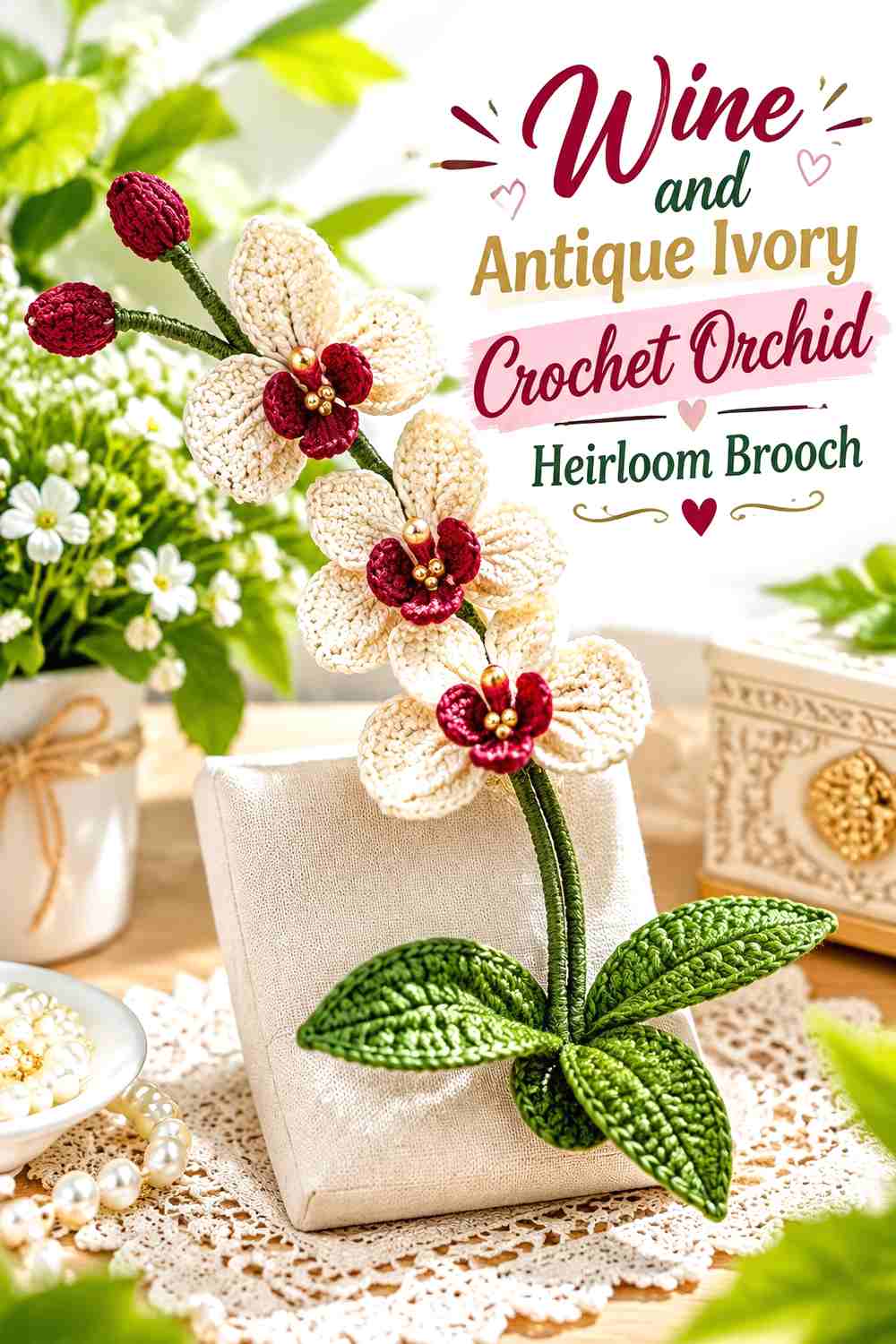
An orchid offers a more sculptural heirloom direction than a round flower. Wine can cover the major petals while antique ivory highlights the central lip or a small inner section. The tutorial teaches a crochet orchid rather than a finished brooch, so use its flower construction as the basis for a carefully backed pin.
Wine Can Preserve the Crochet Orchid Silhouette
Keep the larger petals wine so their unusual arrangement remains obvious.
If multiple petals change between dark and light colors, the viewer may notice the color blocks before the orchid form itself.
Antique Ivory Can Highlight the Wine Crochet Orchid Center
Use antique ivory at the flower’s smaller central structure to create a light focal point.
Because an orchid is already detailed, avoid repeating ivory around every outer edge. One concentrated center is enough to establish contrast.
Creator Credit: Shelen Crochet
14. Cream And Moss Green Crochet Lily Of The Valley Heirloom Brooch
 SAVE
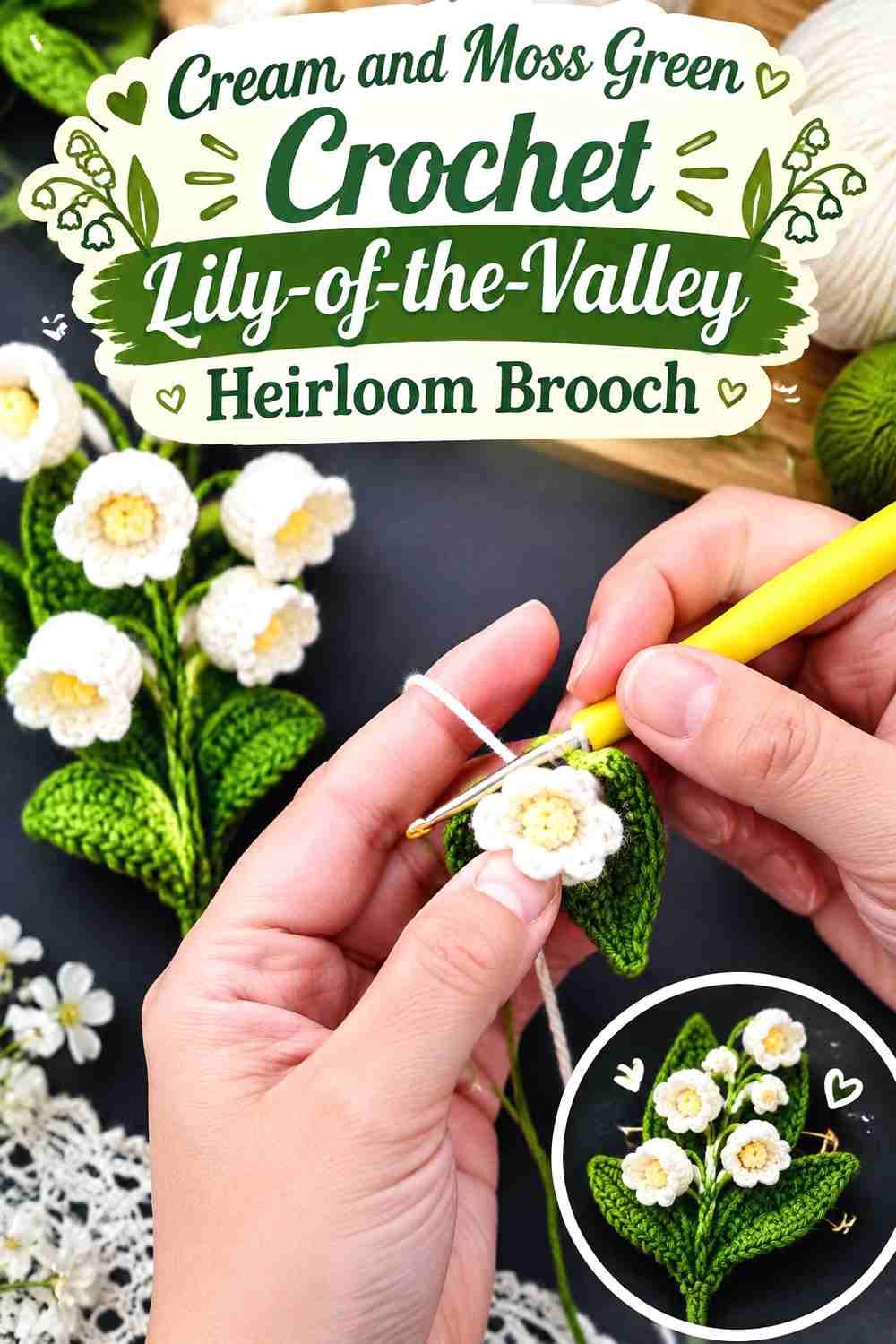
Lily of the valley naturally suits an heirloom brooch because the small hanging flowers create a narrow, jewelry-like botanical line. Cream can define the bells while moss green carries the stem and leaves. The source teaches the flower construction, with brooch hardware treated as a separate adaptation.
Cream Should Keep the Crochet Lily Bells Distinct
Use the same cream across the hanging flowers so they read as a related group.
If a tiny center detail is visible, keep it subdued. The bell silhouette matters more than adding another strong accent color.
Moss Green Can Frame the Cream Crochet Lily Spray
Use moss through the stem and leaf structure so the pale flowers remain connected visually.
If the leaf becomes much larger than the cream bells, adjust its visible placement when assembling the brooch so the foliage does not become the main feature.
Creator Credit: 24th stitch
15. Burgundy And Blush Crochet Camellia Heirloom Brooch
 SAVE
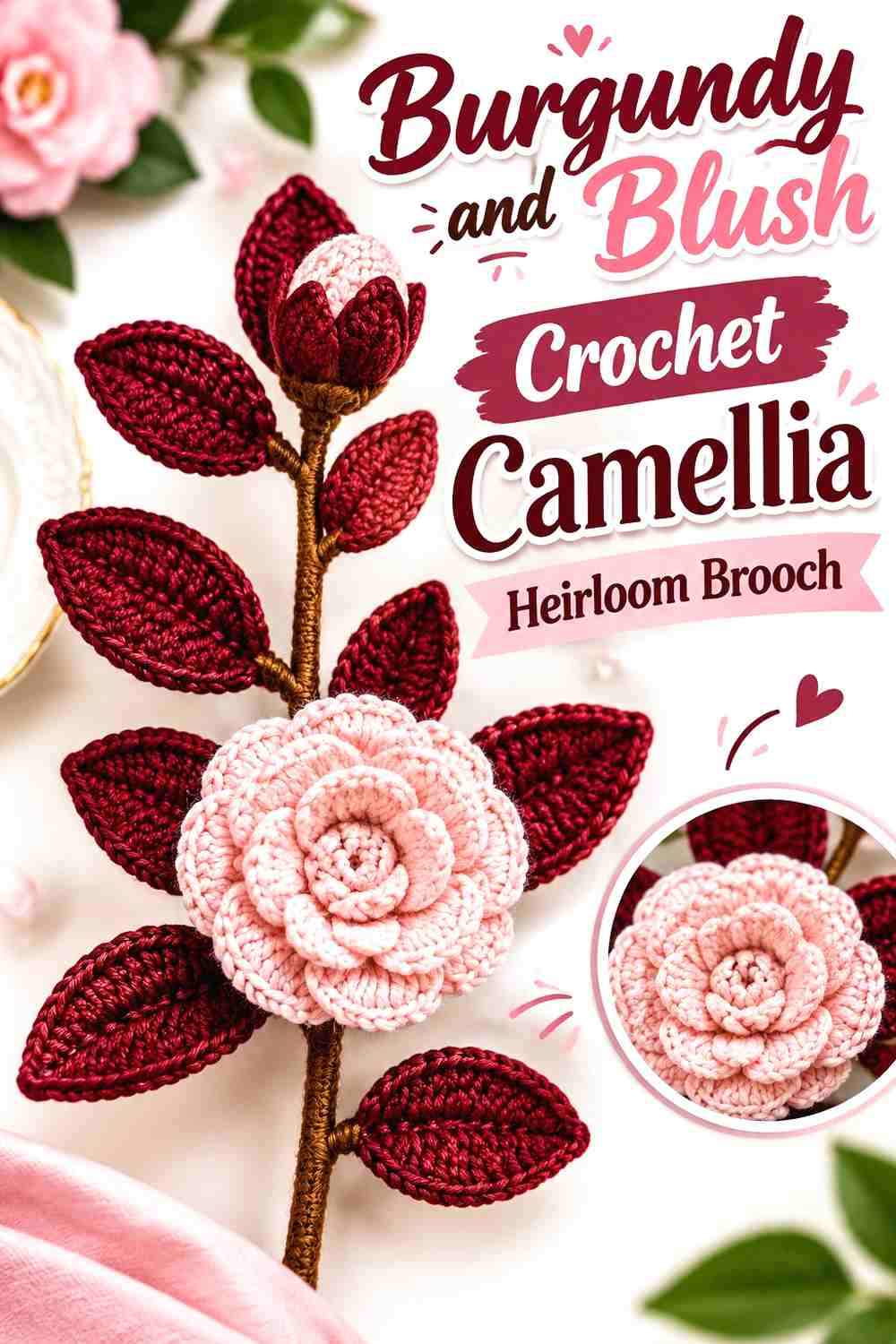
Camellias have layered petals that can support a two-tone treatment without looking striped when the colors are grouped carefully. Burgundy can stay toward the inner or lower layers while blush occupies more of the outer petals. The source teaches a camellia flower that can be adapted with a separate brooch backing.
Blush Can Keep Burgundy Crochet Camellia Layers From Becoming Too Dark
Give blush the larger visual area when you want the flower to remain soft despite its dark center.
Avoid alternating blush and burgundy petal by petal. Broader color zones preserve the layered flower shape more effectively.
Burgundy Can Add Depth to the Blush Crochet Camellia Center
Use burgundy where overlapping petals naturally create visual depth.
If the flower center already looks strongly shaded through construction, keep the burgundy area controlled so it does not visually shrink the blush outer petals.
Creator Credit: Crochet Everyday
16. Terracotta And Sage Crochet Camellia Spray Heirloom Brooch
 SAVE
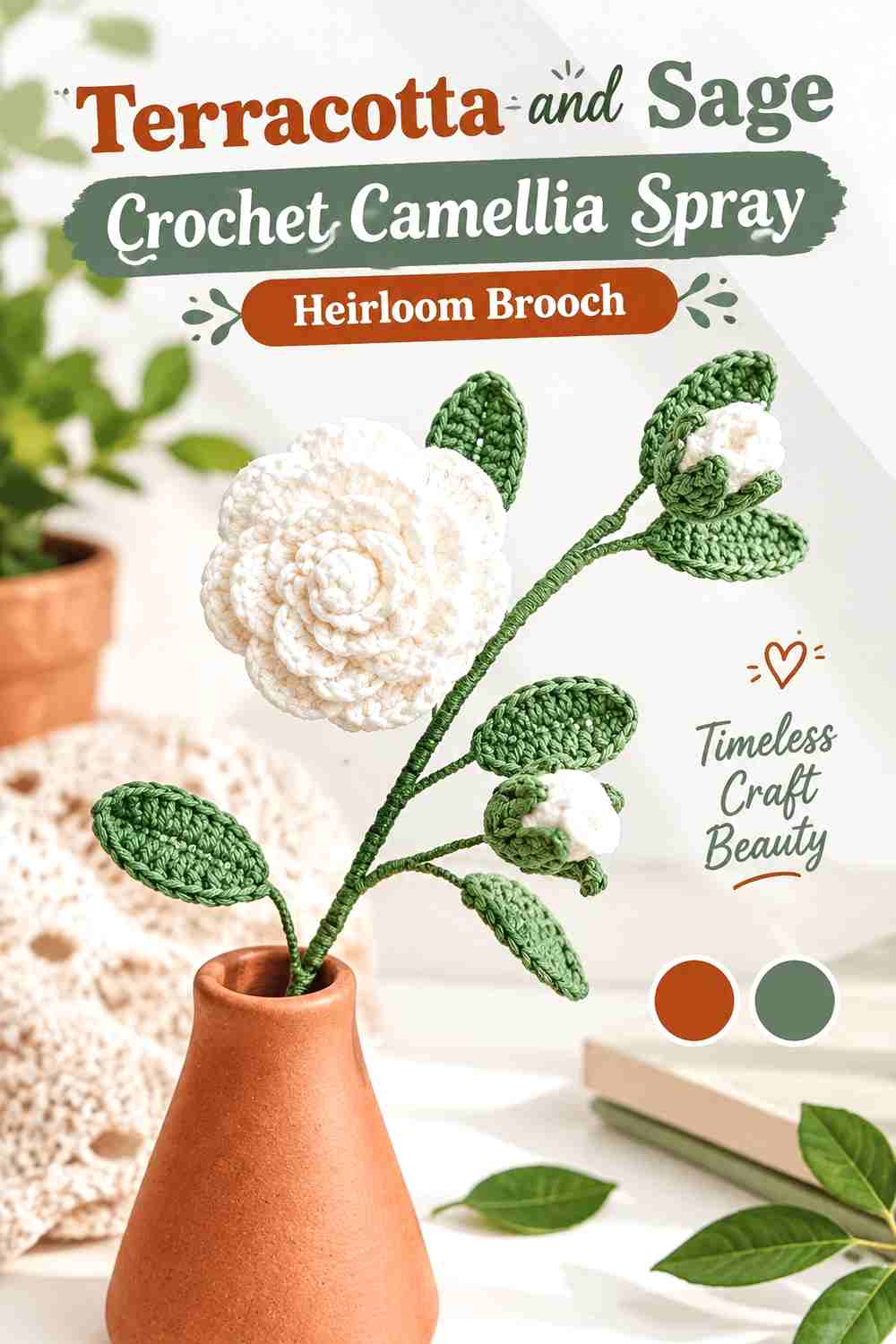
A camellia branch or spray creates a directional brooch rather than a centered round pin. Terracotta can define the flowers, while sage carries the buds and leaves. The supporting tutorial teaches a camellia branch rather than a completed brooch, so the final composition and backing should be planned separately for wearable use.
Terracotta Should Repeat Across the Crochet Camellia Flowers
Use terracotta consistently through the open flowers so the spray reads as one coordinated botanical piece.
If buds are included, keeping them within the same terracotta family can create variation through shape rather than through additional colors.
Sage Can Direct the Terracotta Crochet Camellia Brooch
Use sage leaves to establish the diagonal or horizontal direction of the finished spray.
Before fixing a backing, hold the arrangement against clothing and check whether the foliage pulls too much visual weight to one side. A small adjustment in leaf placement can change how balanced the terracotta blooms appear.
Creator Credit: Lingzhi Handmade
Comparing the 16 Crochet Heirloom Brooch Color Directions
For a romantic floral heirloom, dusty rose and sage, mauve and cream, old rose and oatmeal, or dusty peony pink and olive keep the petals softened while preserving enough contrast for leaves and centers.
For a deeper antique palette, oxblood and charcoal, burgundy and moss, plum and antique gold, or wine and antique ivory give the brooch stronger visual weight. These combinations suit designs where one dark shade can be concentrated rather than scattered across every detail.
The faded blue butterfly and forget-me-not spray offer cooler heirloom directions, while cream and moss lily of the valley creates the lightest botanical option.
Choose the camellia spray, forget-me-not cluster, or lily-of-the-valley brooch when you prefer an elongated botanical composition instead of a traditional round corsage.
Conclusion
Heirloom-style crochet brooches benefit from restrained color roles. Give the main flower, butterfly, or botanical motif one dominant shade, then use supporting greens, neutrals, or dark centers where they help the shape remain clear.
Soft colors such as dusty rose, mauve, faded blue, blush, and cream create lighter keepsake pieces. Burgundy, oxblood, plum, wine, and chocolate give a brooch more visual depth and work particularly well when paired with restrained foliage or antique-style neutrals.
For flower tutorials that do not include a brooch backing, finish and arrange the crochet motif first, then plan the wearable attachment separately. A flower that works as bouquet decor may need a different orientation or more controlled profile when it is worn on a cardigan, coat, scarf, or fabric bag.
Frequently Asked Questions
What colors make a crochet brooch look heirloom-inspired?
Muted florals, deep reds, softened blues, botanical greens, and warm neutrals work well. Dusty rose, burgundy, mauve, cream, antique ivory, moss, sage, plum, ochre, and faded blue can all create different heirloom directions when each shade has a clear role.
How many colors should I use in an heirloom crochet brooch?
Two or three are usually enough for a small brooch. A flower may need one petal color, one foliage color, and possibly a center shade. More colors can work, but they should not all compete for equal attention.
Should crochet brooch leaves be darker than the flower?
Not necessarily. Darker leaves create clearer framing, while similar-value greens produce a softer transition. Check whether the leaf remains recognizable without becoming more prominent than the bloom.
How can I keep a dark crochet brooch from looking too heavy?
Reduce the amount of the darkest color, pair it with a lighter center or outer petal shade, or leave more of the supporting neutral visible. Concentrating dark yarn in one area is usually more effective than spreading it through every detail.
Can I turn a crochet flower tutorial into an heirloom brooch?
Yes, but treat the backing as a separate design decision when the tutorial does not include one. Finish the flower first, decide which direction it should face when worn, and choose an attachment appropriate to the finished motif rather than assuming bouquet construction transfers directly.
How should I choose colors for a crochet brooch worn on a coat?
Test the motif against the actual or a similar coat fabric. The brooch outline, flower center, and foliage should still be visible at normal viewing distance. Increase contrast if the dominant yarn is too close to the garment color.
Can an heirloom crochet brooch use bright colors?
Yes. Heirloom character comes from the overall relationship between motif, palette, finishing, and presentation rather than from muted yarn alone. If using a bright shade, give it a controlled dominant or accent role and balance it with quieter supporting colors.