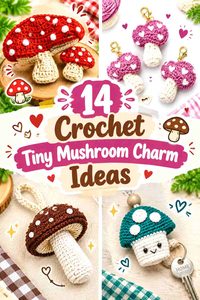
Tiny crochet mushroom charms give color a lot of responsibility. The cap may only be a few stitches across, so a small change in shade can determine whether the mushroom looks woodland-inspired, pastel, whimsical, autumnal, or strongly graphic.
The cap and stem also need to remain visually separate. A rust cap over a cream stem creates a clear two-part silhouette, while taupe and oatmeal produce a quieter result. Spots, faces, hats, scarves, and keychain hardware introduce additional details, so they should support the mushroom rather than cover the limited surface with too many competing colors.
These 14 ideas use mushroom keychains, bag charms, tiny amigurumi, and small mushroom motifs as construction references. Where a tutorial teaches an appliqué or a larger small mushroom rather than a ready-made charm, treat the keychain or bag-charm use as an adaptation instead of assuming the creator used the exact finishing method described here.
Quick List
- Rust And Cream Crochet Tiny Spotted Mushroom Charm
- Dusty Rose And Oatmeal Crochet Tiny Mushroom Keychain
- Chestnut And Ivory Crochet Tiny Woodland Mushroom Charm
- Sage And Cream Crochet Tiny Pastel Mushroom Charm
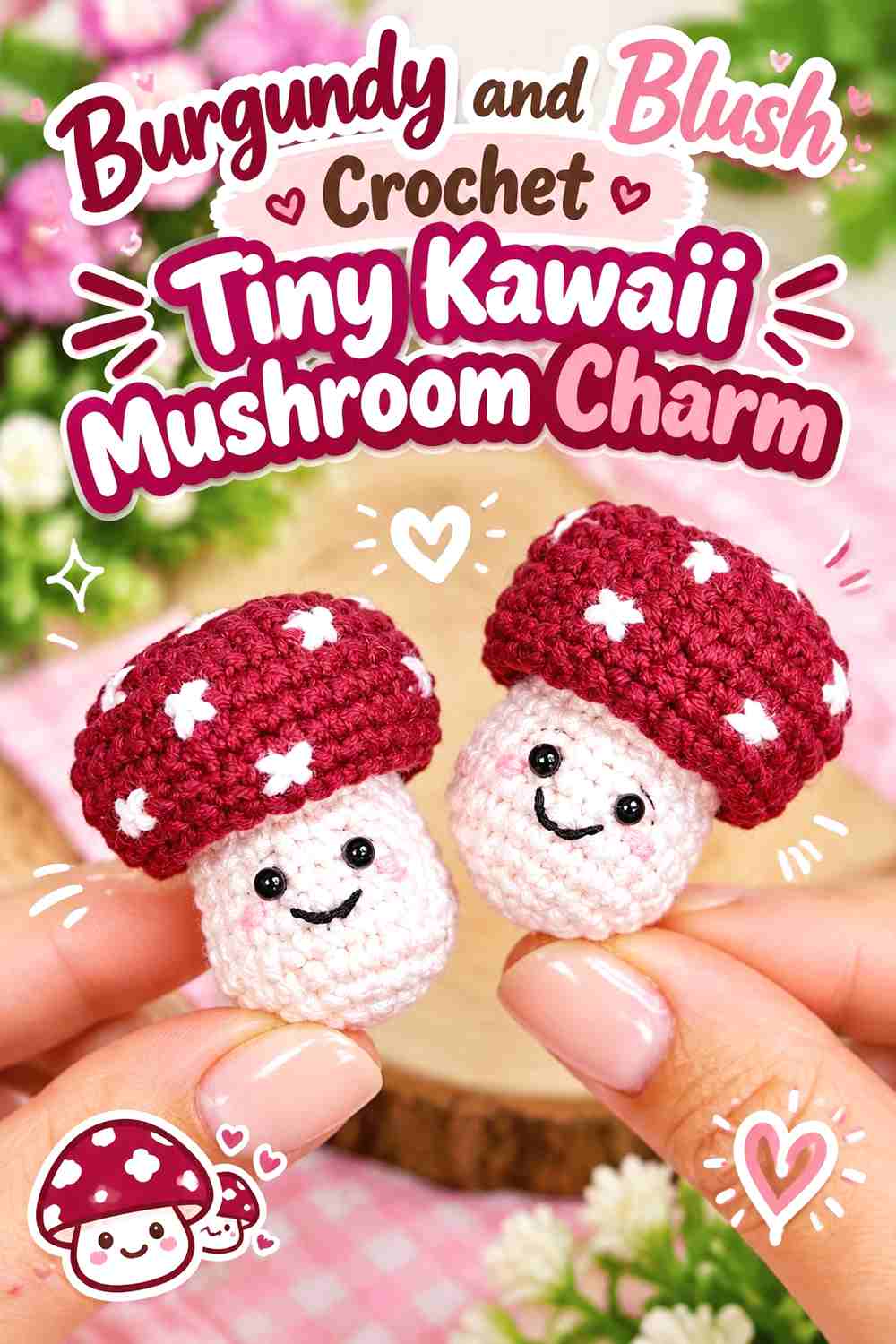
- Burgundy And Blush Crochet Tiny Kawaii Mushroom Charm
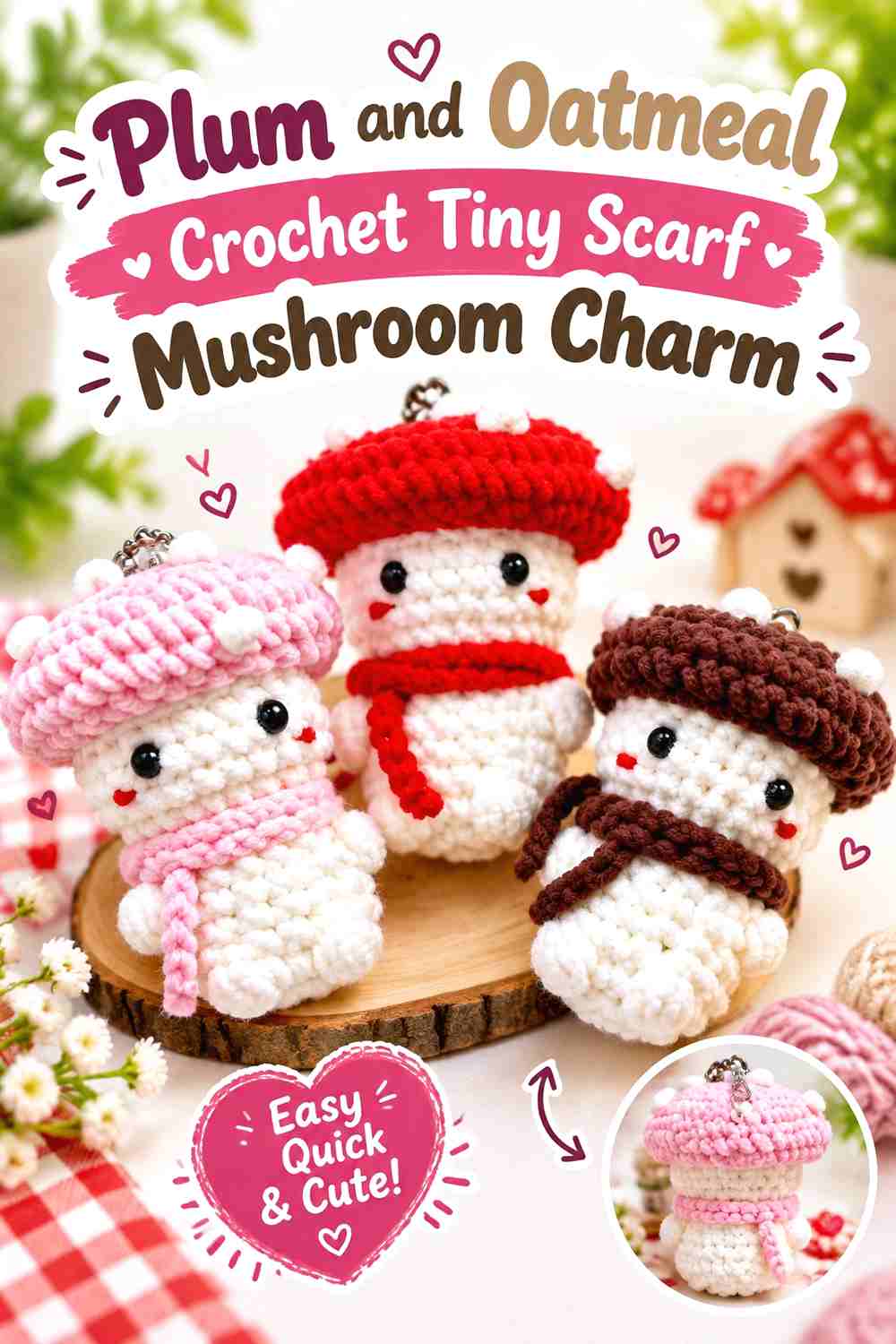
- Plum And Oatmeal Crochet Tiny Scarf Mushroom Charm
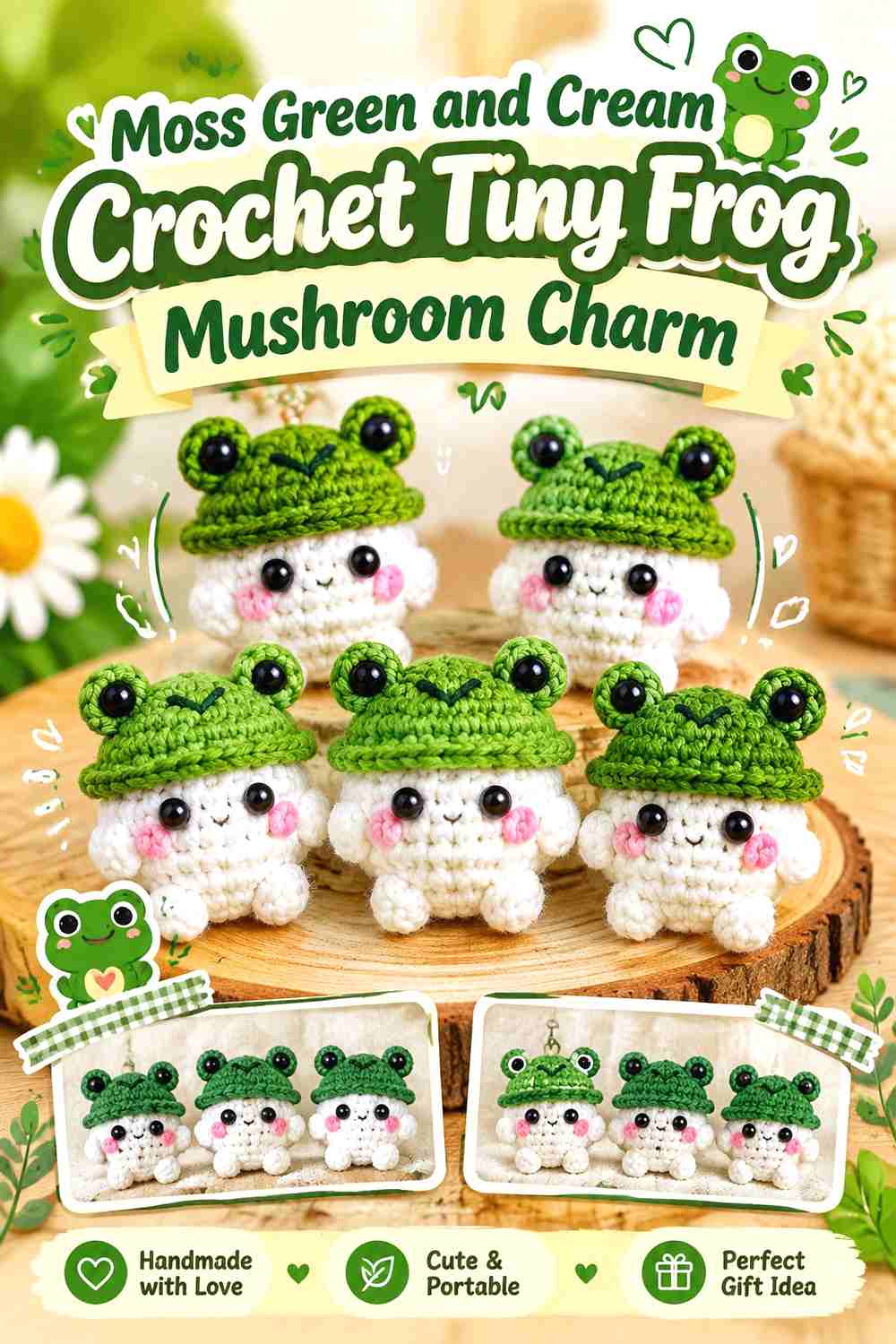
- Moss Green And Cream Crochet Tiny Frog Mushroom Charm
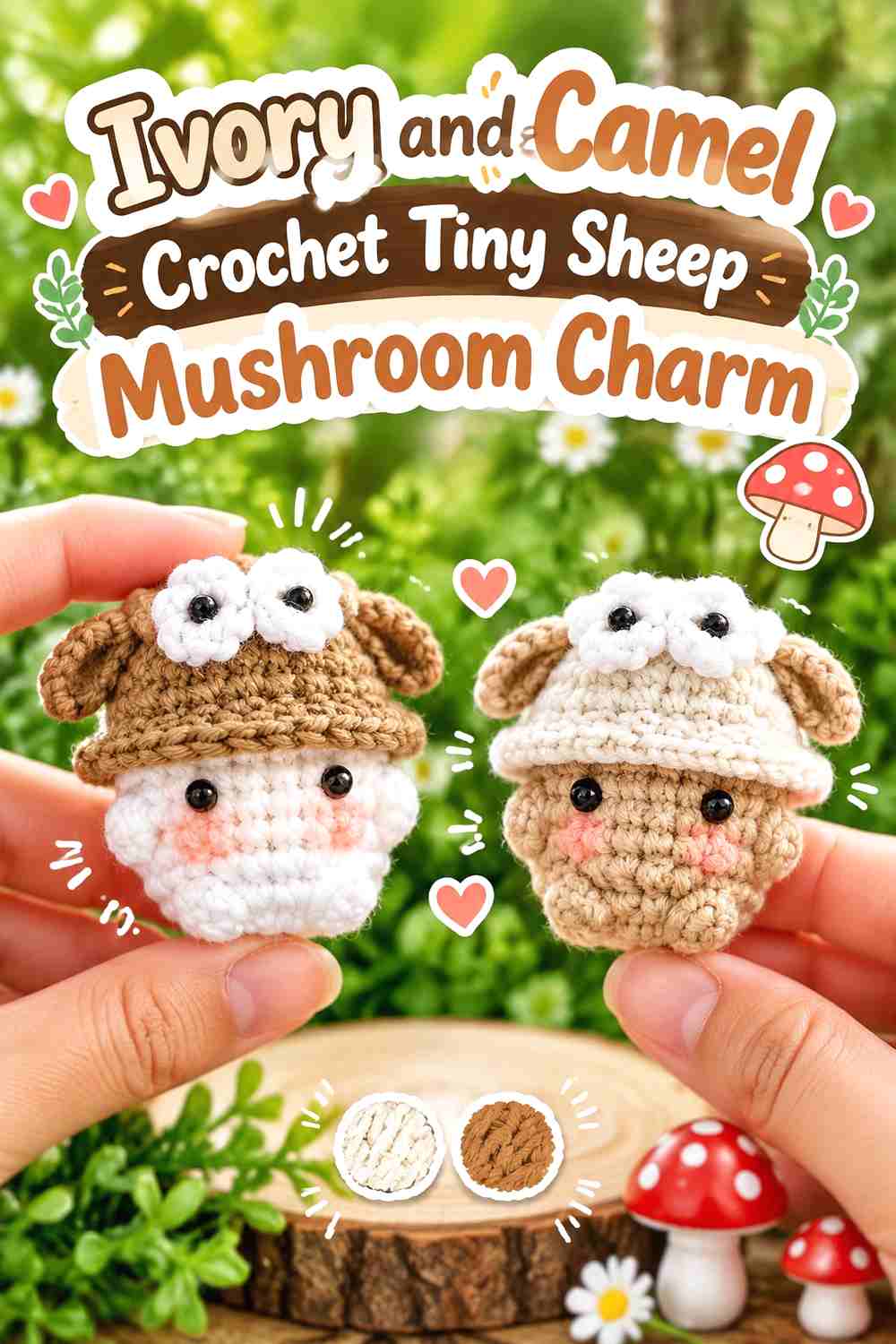
- Ivory And Camel Crochet Tiny Sheep Mushroom Charm
- Burnt Orange And Sage Crochet Tiny Autumn Mushroom Charm
- Terracotta And Natural Crochet Tiny Mushroom Bag Charm
- Deep Teal And Oatmeal Crochet Tiny Mushroom Key Holder Charm
- Chocolate And Beige Crochet Tiny Shiitake Mushroom Charm
- Mauve And Cream Crochet Tiny Heart Cap Mushroom Charm
- Brick Red And Parchment Crochet Tiny Flat Toadstool Charm
Give the Crochet Mushroom Cap the Strongest Color Role
The cap is usually the widest part of a tiny mushroom charm, so it naturally carries more visual attention than the stem. Giving the cap the dominant color helps the silhouette remain recognizable even when the finished charm is viewed from several feet away.
That dominant shade does not have to be bright. Chestnut, moss, plum, rust, and muted rose can all lead effectively as long as the stem remains sufficiently different.
If spots, embroidery, or a face are added, leave enough uninterrupted cap color that the mushroom does not become a collection of tiny disconnected details.
Keep Tiny Crochet Spots Different From the Mushroom Cap
A spotted cap depends on small details remaining visible. Cream dots on rust or burgundy usually create clearer separation than beige dots on a similarly light brown cap.
When using softer palettes, compare the yarns before adding every spot. If the spots disappear from normal charm-viewing distance, choose a lighter or darker version rather than simply making the spots larger.
Large spots can change the cap proportions and hide the main color, which matters more on a miniature charm than on a larger mushroom decoration.
Repeat Accent Colors Without Crowding the Tiny Charm
A tiny mushroom may already contain a cap, stem, spots, face, and hardware. Character versions can add scarves, leaves, ears, or hats.
Instead of assigning a new color to every feature, repeat one of the existing palette shades. A cream stem can share its color with cap spots. A sage cap can repeat sage in a small hanging loop. This creates connection without expanding the palette unnecessarily.
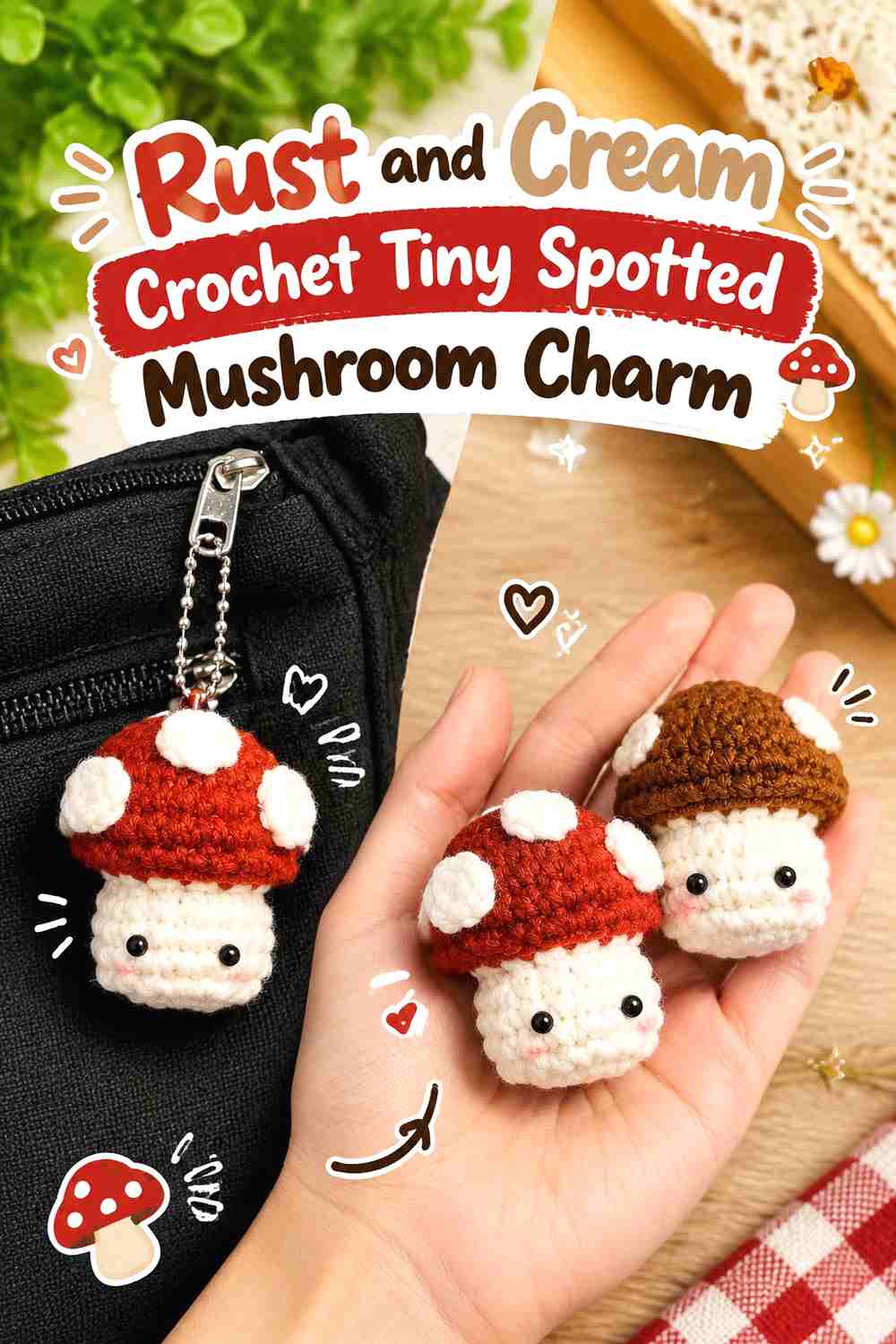
1. Rust And Cream Crochet Tiny Spotted Mushroom Charm
 SAVE
Rust and cream create a classic mushroom silhouette with a softer, earthier direction than vivid red and stark white. Rust can cover the entire rounded cap, cream can define both the stem and spots, and any facial details can remain very small so the two-color structure stays easy to read.
Rust Should Carry Most of the Crochet Mushroom Cap
Use rust across enough of the cap that the warm color remains the first feature you notice.
Because cream spots introduce several interruptions, leave visible rust between them rather than covering most of the cap with oversized pale dots.
Cream Can Connect Rust Crochet Spots and the Mushroom Stem
Repeating cream in both the spots and stem gives the tiny charm an efficient two-color system.
If you add another accent around the face or keychain loop, keep it restrained so cream does not lose its useful role as the single light contrast.
Creator Credit: from littlespot
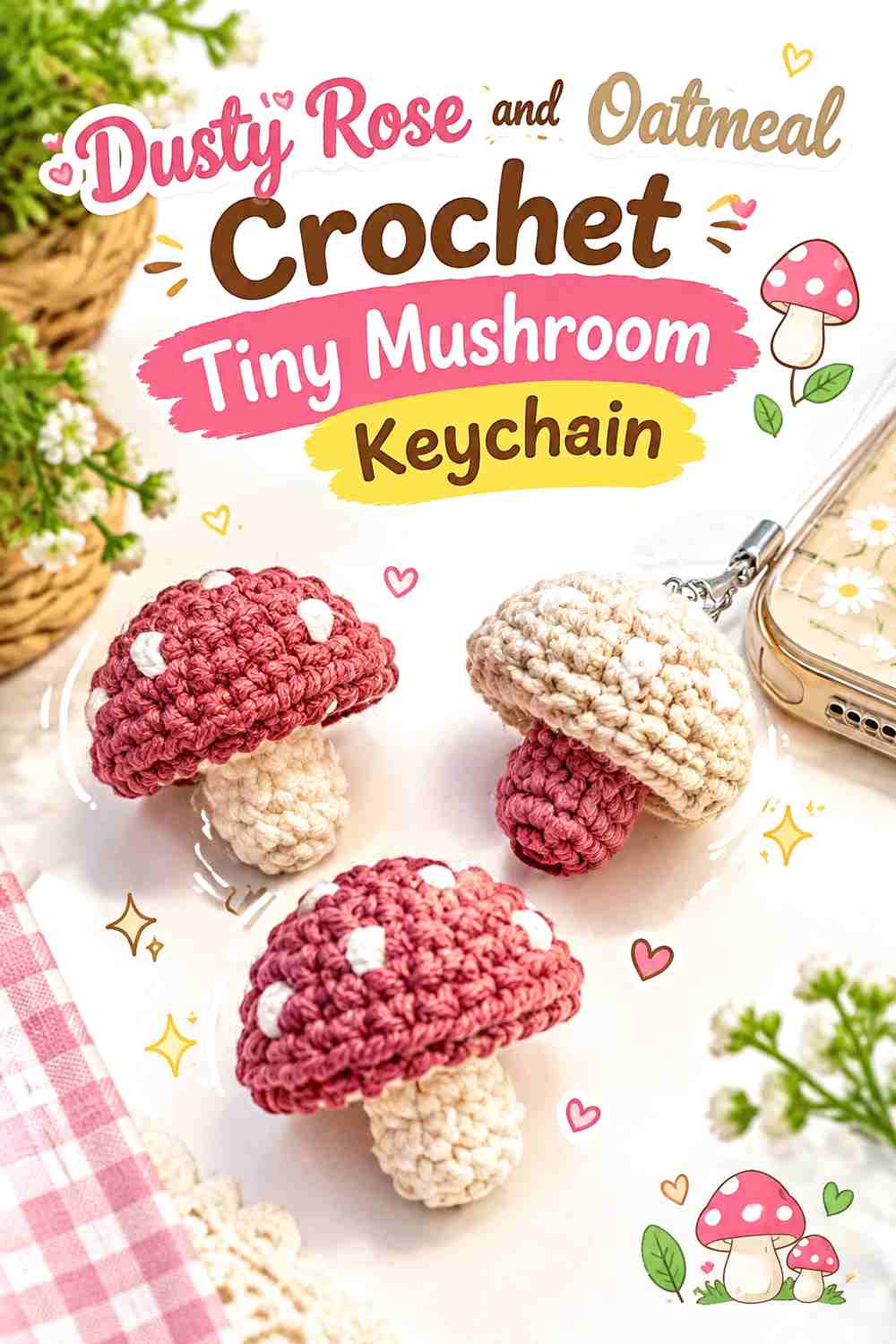
2. Dusty Rose And Oatmeal Crochet Tiny Mushroom Keychain
 SAVE
Dusty rose creates a softer cap, while oatmeal keeps the stem warm and understated. This combination works especially well for a simple keychain shape because the gentle colors let the mushroom silhouette remain more important than strong contrast.
Dusty Rose Can Keep the Crochet Mushroom Cap Soft but Distinct
Use dusty rose continuously over the cap rather than switching among several pink shades.
If the selected rose is very pale, compare it directly with oatmeal. The cap and stem should still remain distinguishable at miniature scale.
Oatmeal Can Give the Dusty Rose Crochet Stem a Warm Neutral Base
Oatmeal is useful when bright white would create more contrast than you want.
If spots are included, repeating oatmeal keeps the palette cohesive while allowing the dusty rose cap to remain clearly dominant.
Creator Credit: Xuxu Crochet
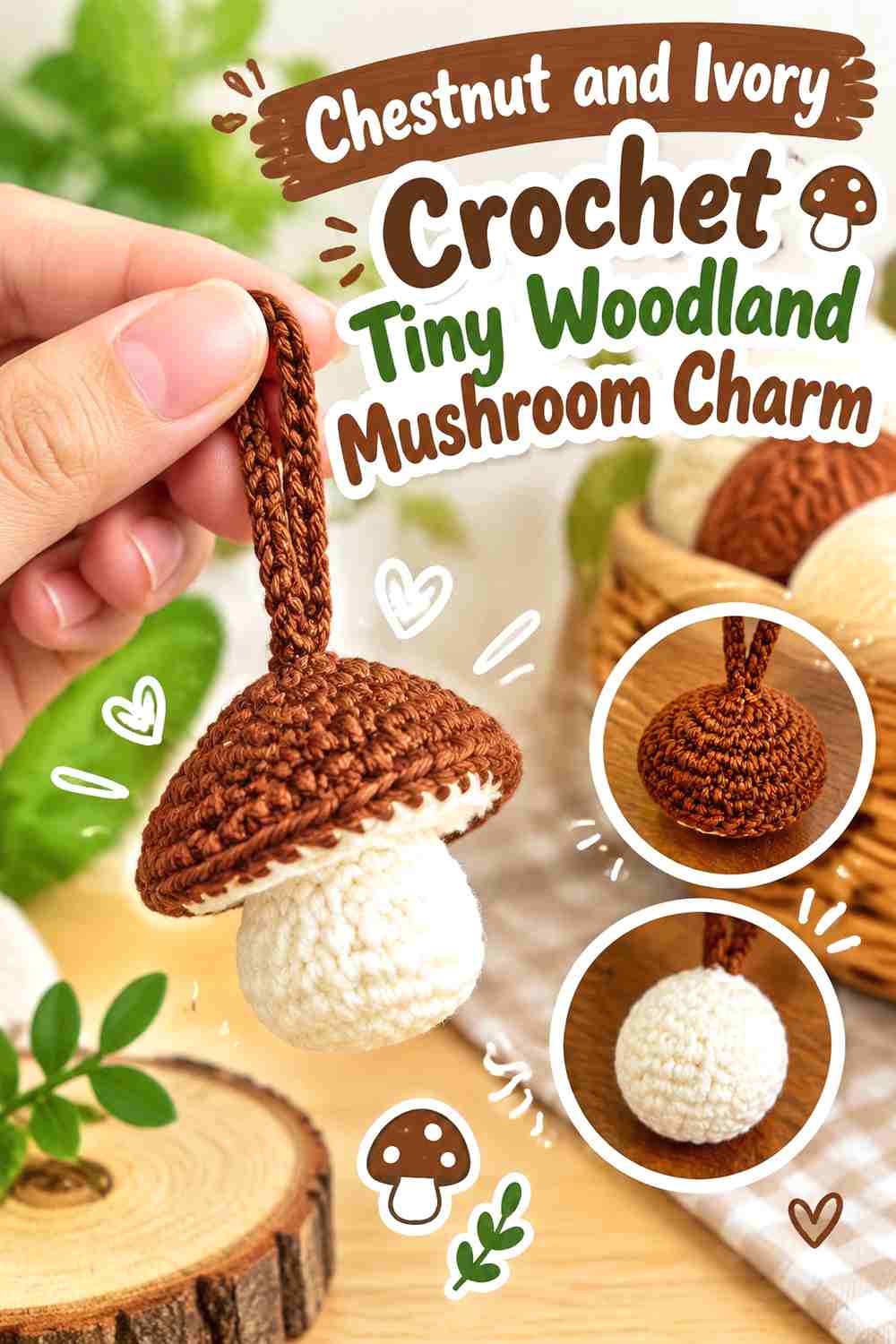
3. Chestnut And Ivory Crochet Tiny Woodland Mushroom Charm
 SAVE
A chestnut cap and ivory stem move the mushroom away from the familiar bright toadstool and toward a natural woodland palette. Keep the cap mostly solid so the brown shape remains recognizable, then use ivory beneath it for enough light-and-dark separation.
Chestnut Can Give the Crochet Mushroom a Natural Cap
Use one chestnut shade across the main cap rather than adding several browns to imitate natural variation.
At tiny scale, stitch shadows already create enough tonal change to keep a solid brown surface from looking completely flat.
Ivory Can Separate the Chestnut Crochet Cap From the Stem
A light ivory stem provides a clear lower shape without introducing stark white.
If embroidered cap markings are added, use ivory sparingly so the charm stays woodland-led instead of shifting back toward a classic spotted toadstool.
Creator Credit: Yarn with a Story
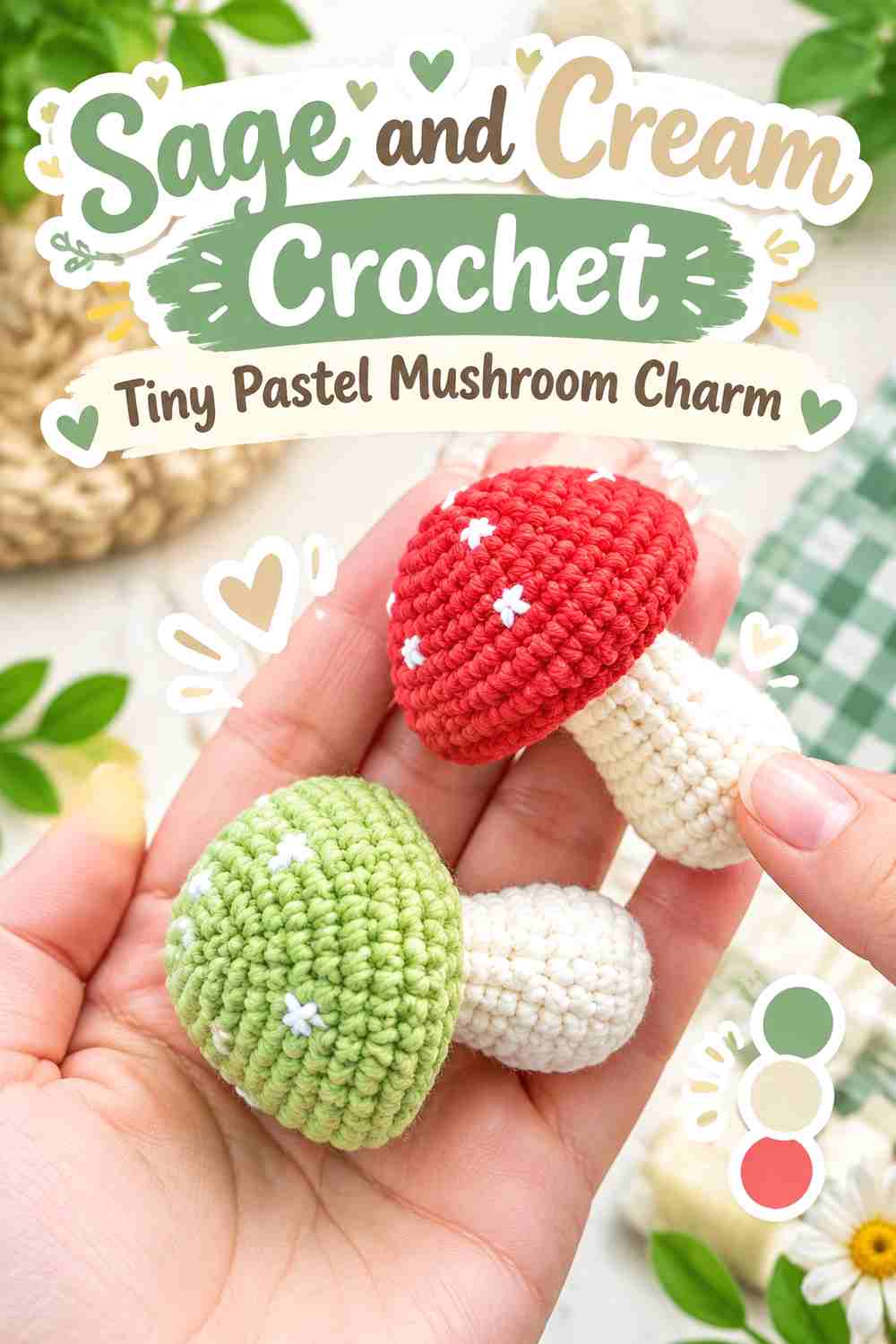
4. Sage And Cream Crochet Tiny Pastel Mushroom Charm
 SAVE
Sage and cream give a tiny mushroom an understated pastel direction. Sage can cover the cap, while cream defines the stem and any small spots. Because both colors are relatively gentle, the main checkpoint is preserving enough value difference.
Sage Needs Enough Contrast Against the Cream Crochet Stem
Place the two yarns together before beginning the charm. A very pale sage can become almost indistinguishable from warm cream.
If that happens, deepen the sage rather than adding a darker third color solely to outline the mushroom.
Cream Should Stay Controlled on the Sage Crochet Cap
Use cream for spots only when the cap has enough uninterrupted green left around them.
Tiny charms need less surface decoration than larger mushroom plushies because even one extra spot occupies meaningful cap area.
Creator Credit: Knot So Hard
5. Burgundy And Blush Crochet Tiny Kawaii Mushroom Charm
 SAVE
Burgundy and blush suit a character-style mushroom because the dark cap creates a strong frame above the lighter body. Blush can replace a traditional cream stem when you want the charm to stay within a romantic red-pink palette.
Burgundy Can Keep the Blush Crochet Mushroom Face Framed
Use burgundy throughout the cap so the lighter face and stem area remains clearly separated below it.
Avoid adding large dark facial features if the burgundy cap already creates substantial visual weight. Small details are easier to balance on a tiny character.
Blush Can Soften the Burgundy Crochet Mushroom Body
A blush body produces less contrast than ivory while still remaining lighter than burgundy.
If cap spots are added, consider using the same blush rather than introducing cream as a third prominent shade.
Creator Credit: DidyToys
6. Plum And Oatmeal Crochet Tiny Scarf Mushroom Charm
 SAVE
A mushroom character with a miniature scarf provides one additional place for color, so the palette needs a clear hierarchy. Plum can dominate the cap, oatmeal can form the body, and the scarf can repeat plum or use a closely related mauve rather than introducing a completely unrelated third hue.
Plum Should Stay Dominant Above the Oatmeal Crochet Mushroom Body
Keep the cap plum so the character still reads first as a mushroom rather than a tiny doll wearing multiple colors.
If the scarf repeats plum, use less of it than the cap so the top remains the largest dark area.
Oatmeal Can Keep the Plum Crochet Scarf and Cap Separate
The light body creates visual space between two plum details when the cap and scarf both use the accent color.
This repetition connects the accessory to the mushroom without requiring extra striping or decoration on the stem.
Creator Credit: Meemanan
7. Moss Green And Cream Crochet Tiny Frog Mushroom Charm
 SAVE
A frog-mushroom hybrid already combines two recognizable ideas, so limiting the palette helps the character remain readable. Moss green can lead the frog elements and cap, while cream separates the stem or selected mushroom details.
Moss Green Should Keep the Crochet Frog Mushroom Visually Unified
Use the same moss green across the most important frog-related sections instead of changing between several greens.
A single dominant green lets the mushroom shape and frog features provide the variety.
Cream Can Separate Moss Green Crochet Mushroom Details
Cream works best in the stem or a small cap detail where it can establish the mushroom side of the hybrid.
Avoid adding several additional bright colors around the face. The green-and-cream relationship should remain easy to identify.
Creator Credit: Yeyey Crochet
8. Ivory And Camel Crochet Tiny Sheep Mushroom Charm
 SAVE
A sheep-inspired mushroom can use ivory for the textured headwear and camel for the mushroom body or cap details. Because pale texture can visually expand a tiny charm, keep the camel areas sufficiently visible to preserve the mushroom silhouette.
Ivory Can Give the Crochet Sheep Mushroom Its Softest Detail
Use ivory where the sheep-like texture is concentrated.
Avoid extending the same pale texture over every section of the mushroom, or the cap, face, and body can begin merging into one indistinct light shape.
Camel Can Ground the Ivory Crochet Mushroom Character
Camel provides a warmer, darker neutral beneath the ivory and can help separate the character from light-colored bags.
If another shade is needed for facial embroidery, keep it tiny rather than introducing a large third color area.
Creator Credit: Po Handmade
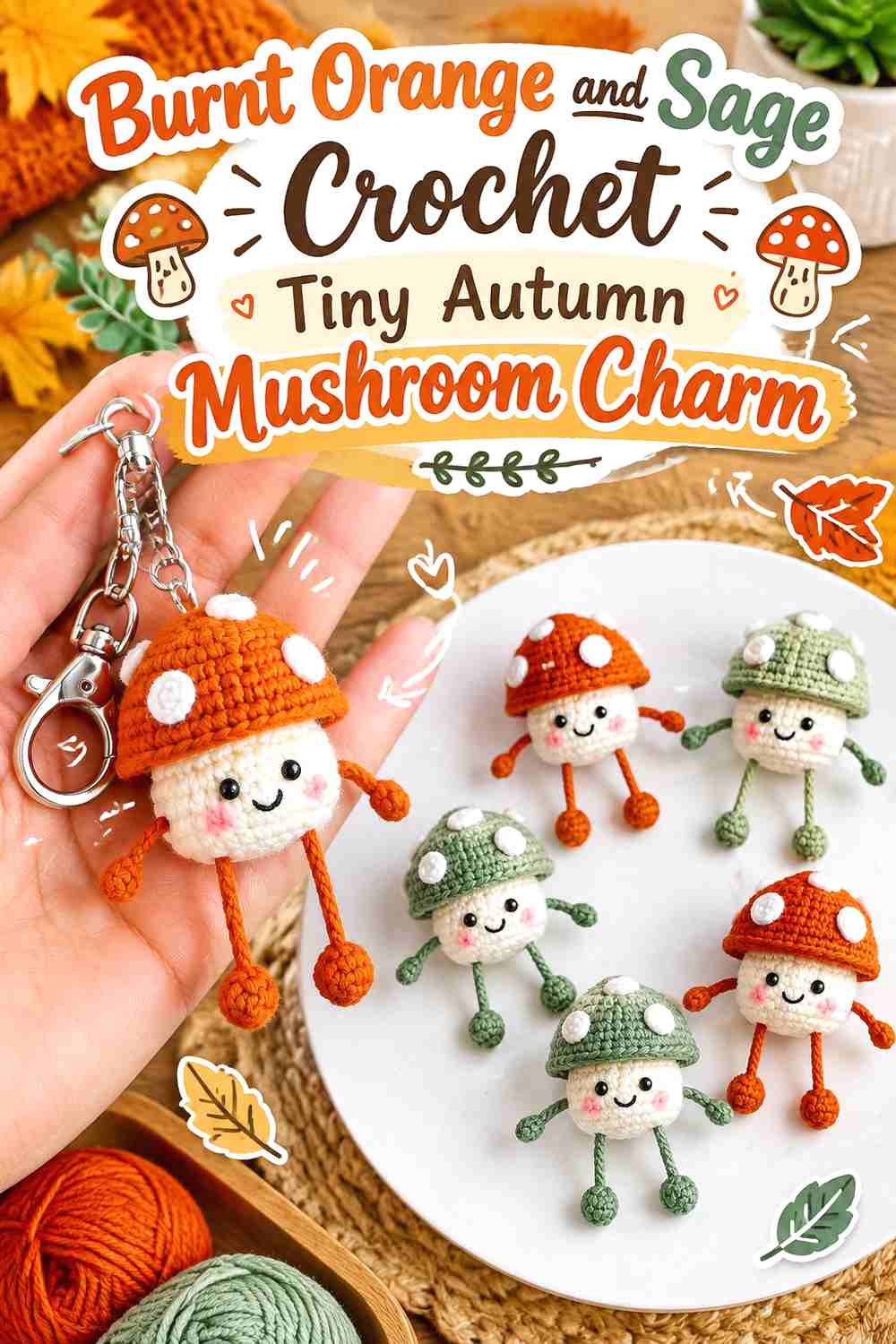
9. Burnt Orange And Sage Crochet Tiny Autumn Mushroom Charm
 SAVE
Burnt orange and sage create an autumn palette that works particularly well with a pumpkin-inspired mushroom cap. Burnt orange can carry the textured cap while sage is reserved for the small leaf or plant-like detail.
Burnt Orange Should Keep the Crochet Pumpkin-Mushroom Cap Recognizable
Use burnt orange continuously across the cap so its ridged shape remains easy to see.
Adding multiple contrasting stripes across the ridges can distract from the texture that makes the cap different from an ordinary mushroom.
Sage Can Highlight the Burnt Orange Crochet Cap Without Competing
Use sage only on the small botanical detail or another controlled accent.
Because the green and orange already provide strong hue contrast, sage does not need to occupy much surface area to remain visible.
Creator Credit: Crochet Everyday
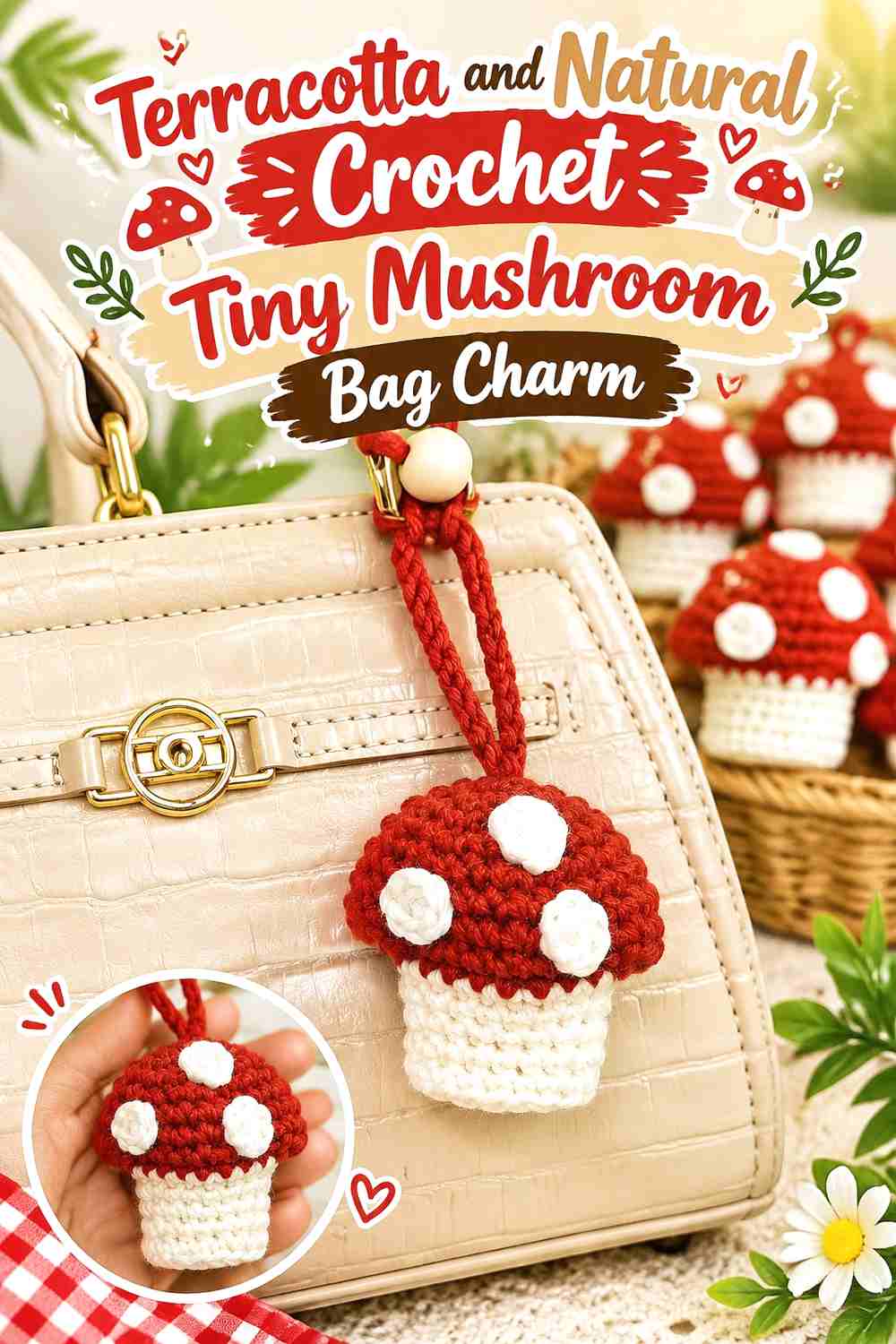
10. Terracotta And Natural Crochet Tiny Mushroom Bag Charm
 SAVE
Terracotta and natural yarn create a restrained bag charm that works well when the mushroom is intended to hang from a tote or backpack without looking overly bright. Terracotta can form the cap and natural yarn can cover the stem and lower structure.
Terracotta Can Keep the Crochet Mushroom Visible on a Bag
Use enough terracotta that the cap remains recognizable against the background color of the bag.
If the bag is also rust, brown, or orange, consider shifting the terracotta slightly lighter or darker rather than automatically adding a new outline color.
Natural Yarn Can Keep the Terracotta Crochet Stem Neutral
A natural neutral gives the lower portion enough separation without creating a stark red-and-white effect.
Repeating it in one cap detail can connect the two sections while keeping terracotta visually dominant.
Creator Credit: Mhalee’s Crochet
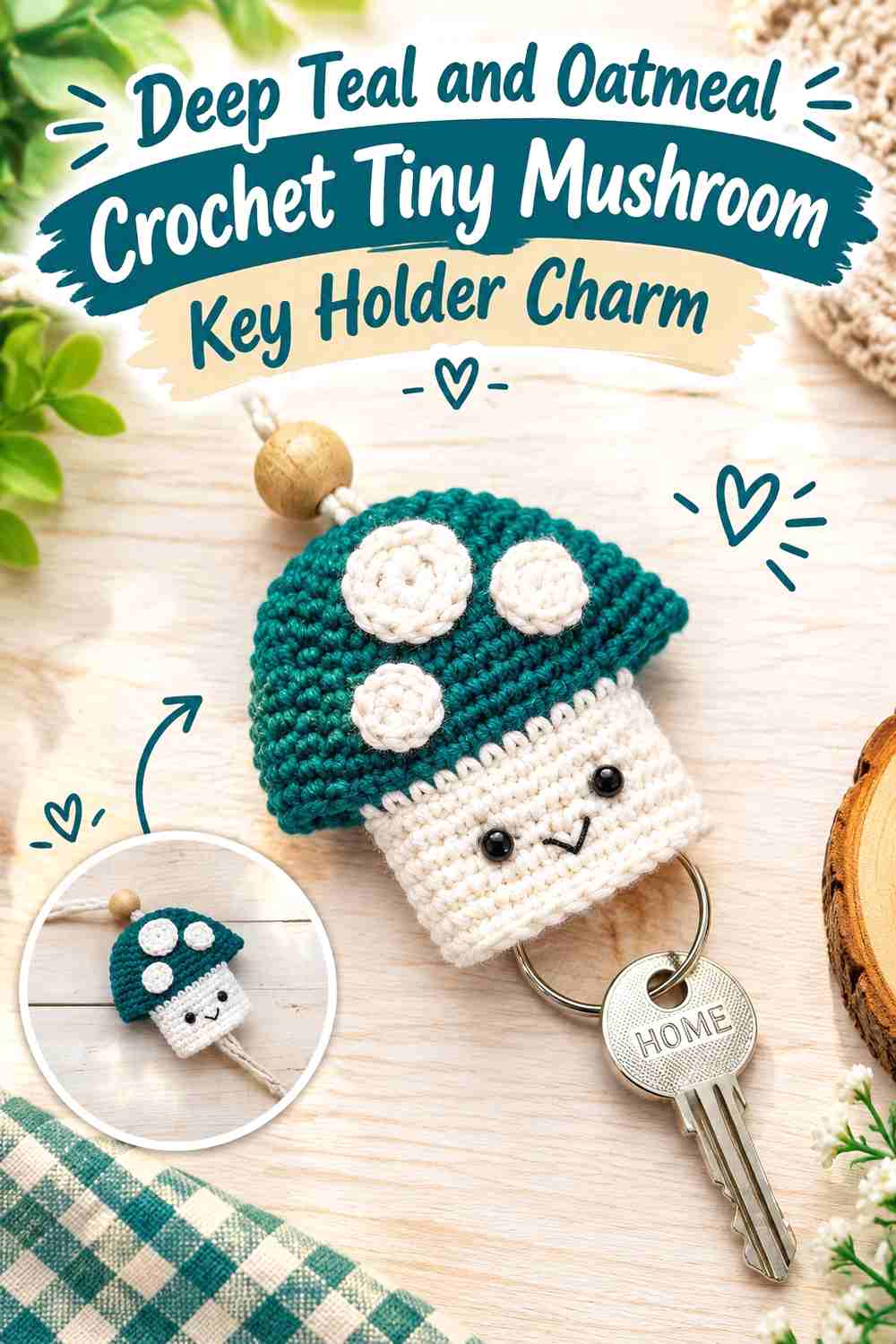
11. Deep Teal And Oatmeal Crochet Tiny Mushroom Key Holder Charm
 SAVE
Deep teal gives a mushroom key-holder shape an unusual darker cap, while oatmeal provides the light body. Because a key holder has a functional opening or moving section, keep the strongest color blocks tied to the major mushroom parts instead of interrupting them with decorative striping.
Deep Teal Can Define the Oatmeal Crochet Mushroom Cap
Use teal throughout the top so the cap remains recognizable even when the holder moves around the key.
If the keychain hardware is dark, check whether it disappears visually into the teal attachment area.
Oatmeal Can Keep the Deep Teal Crochet Key Holder Light Below the Cap
A large oatmeal stem or holder section balances the visual weight of the dark cap.
Avoid carrying teal too far down the body if the goal is to maintain a clearly two-part mushroom silhouette.
Creator Credit: Hopeful Turns
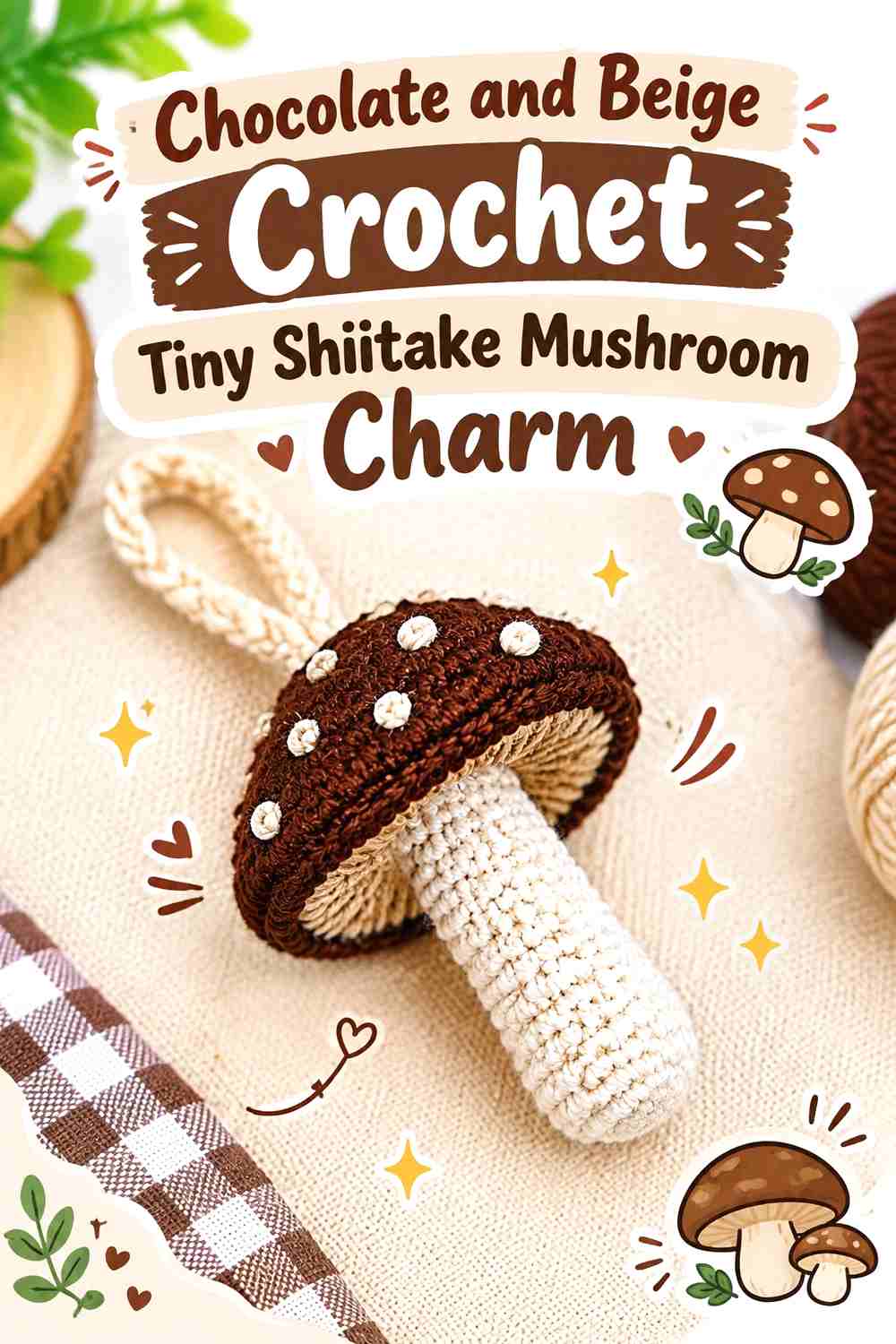
12. Chocolate And Beige Crochet Tiny Shiitake Mushroom Charm
 SAVE
Chocolate and beige suit a shiitake-inspired charm because the palette can rely on naturalistic cap-and-stem contrast instead of bright spots. Chocolate can lead the cap, while beige defines the stem and any embroidered surface markings.
Chocolate Can Keep the Crochet Shiitake Cap Understated
Use chocolate across most of the cap so the mushroom retains a natural woodland direction.
Surface embroidery can add definition, but it should not cover so much of the cap that the main brown color disappears.
Beige Can Make Chocolate Crochet Shiitake Markings Visible
A lighter beige works well for both the stem and restrained cap markings.
If those markings become difficult to see, increase the value difference rather than enlarging them enough to overwhelm the miniature cap.
Creator Credit: Jess Crafting
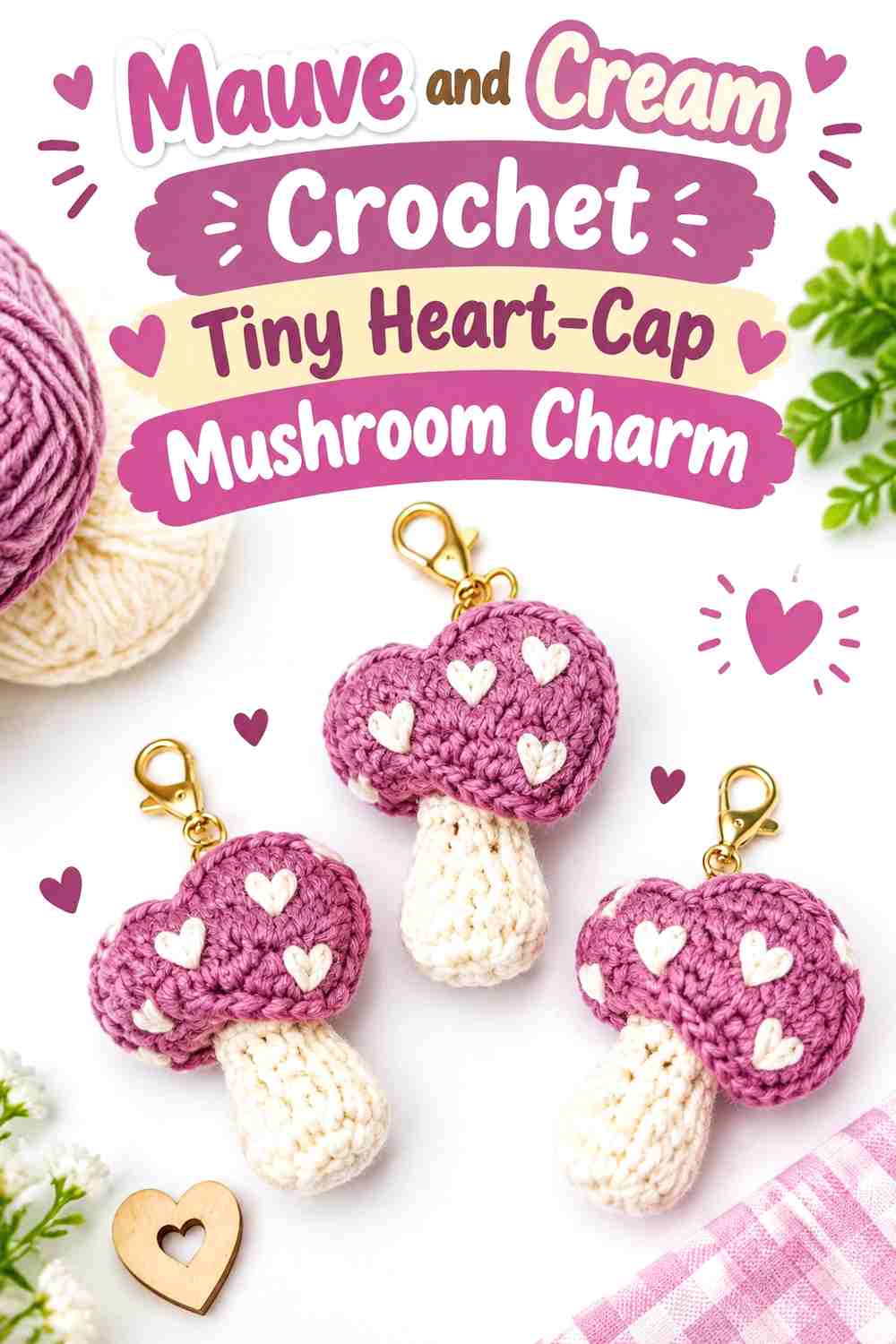
13. Mauve And Cream Crochet Tiny Heart Cap Mushroom Charm
 SAVE
A heart-shaped cap gives a flat mushroom charm a distinctly decorative silhouette. Mauve can form the cap, while cream supplies the stem and keeps the two sections clearly divided. Because this construction begins as an appliqué, it works best as a lightweight charm adaptation rather than being described as a stuffed amigurumi keychain.
Mauve Should Keep the Crochet Heart Mushroom Cap Easy to Read
Use mauve throughout the heart form so both lobes remain part of one recognizable cap.
Scattering several cream decorations across the surface can make the heart outline less immediate on a tiny charm.
Cream Can Give the Mauve Crochet Mushroom Stem a Light Base
A cream stem creates straightforward separation from the mauve cap and helps the flat motif remain readable when attached to a darker bag.
If turning the appliqué into a hanging charm, keep the attachment discreet so it does not distort the heart shape.
Creator Credit: GoldenLucyCrafts
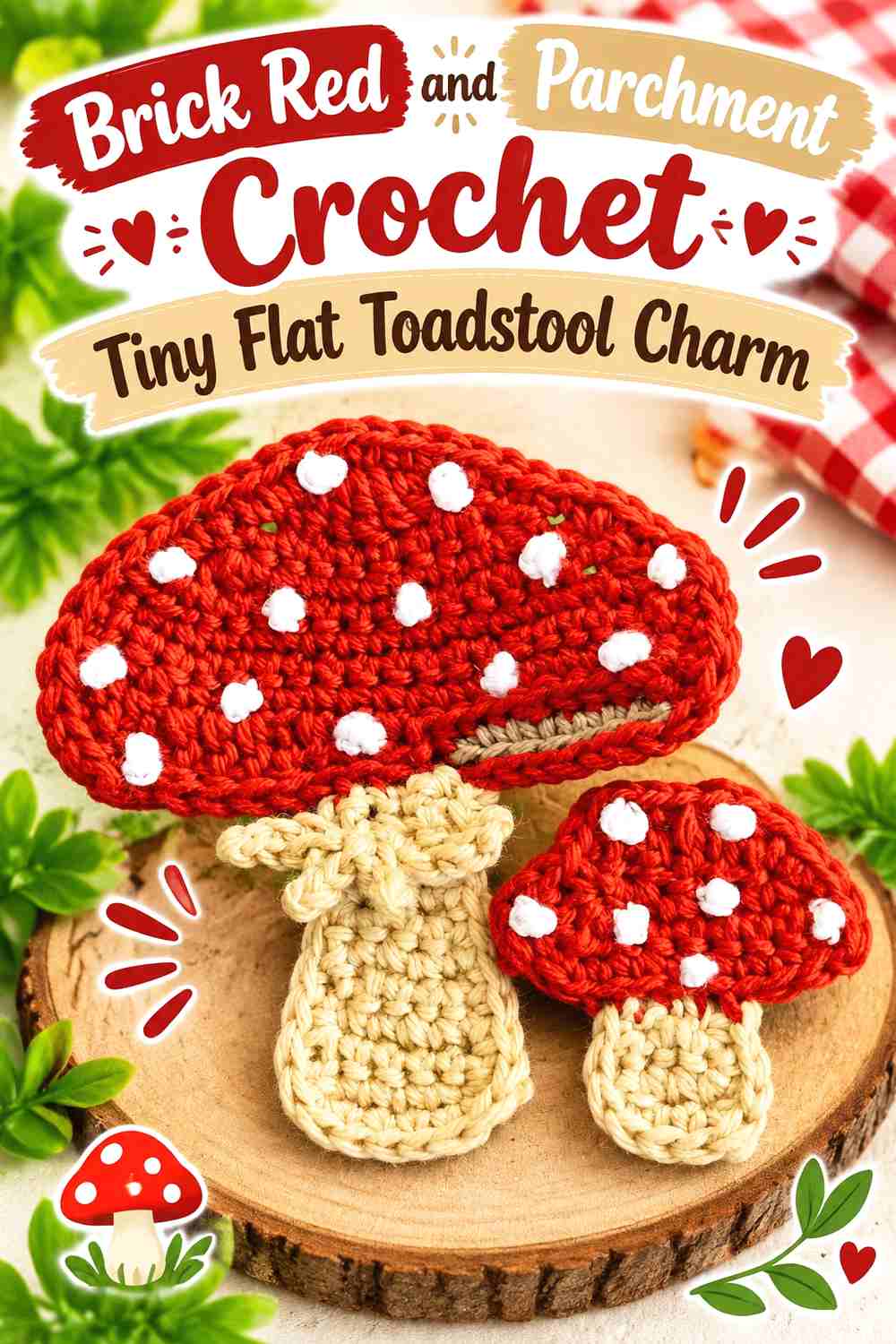
14. Brick Red And Parchment Crochet Tiny Flat Toadstool Charm
 SAVE
A small flat toadstool can use brick red for a vintage woodland cap and parchment for the stem. The flatter construction creates less bulk than stuffed charms, making color and outline particularly important. This tutorial teaches a toadstool appliqué, so charm hardware is an adaptation rather than part of the original construction.
Brick Red Can Keep the Flat Crochet Toadstool Cap Distinct
Use brick red across the full cap so the top remains obvious even without three-dimensional stuffing.
Small parchment spots can be added if desired, but leave enough red between them to preserve the broad cap shape.
Parchment Can Define the Brick Red Crochet Toadstool Stem
Parchment gives the lower shape a light paper-like neutral that works well with the muted red.
For a tiny charm adaptation, judge both pieces together before adding hardware. A large ring or clasp can visually outweigh a very small flat mushroom.
Creator Credit: Kerri’s Crochet
Comparing the 14 Crochet Tiny Mushroom Charm Color Directions
For a classic woodland charm, rust and cream, brick red and parchment, chestnut and ivory, or chocolate and beige keep the familiar cap-and-stem relationship easy to recognize.
For a soft pastel mushroom, dusty rose and oatmeal, sage and cream, burgundy and blush, or mauve and cream shift the color story without requiring extra decorative details.
The frog, sheep, scarf, and autumn mushroom characters work best when the novelty feature uses colors already present in the main palette. Repetition prevents a tiny charm from becoming visually overloaded.
Choose deep teal and oatmeal for stronger nontraditional contrast, or terracotta and natural when you want a quieter bag charm that stays within an earthy range.
Conclusion
A tiny crochet mushroom charm rarely needs many colors. The strongest designs usually start with one dominant cap color, one clearly different stem shade, and only then add spots, embroidery, leaves, scarves, or character features where they serve a recognizable purpose.
For classic toadstools, protect the contrast between cap, spots, and stem. For woodland mushrooms, rely on warm browns and neutrals while preserving enough value difference to separate the shapes. Character mushrooms benefit from even tighter color control because faces and accessories already add extra detail.
If a tutorial teaches an appliqué or a small amigurumi rather than a finished charm, treat the hardware and final scale as separate adaptations. Check the hanging point before attaching a keyring or clasp so the tiny mushroom still presents its cap and stem clearly when suspended.
Frequently Asked Questions
What colors work well for tiny crochet mushroom charms?
Classic red or rust with cream gives the clearest toadstool look, but dusty rose, sage, teal, plum, chestnut, terracotta, mustard, and other colors can work as cap shades. Keep the stem noticeably different when the mushroom silhouette needs clear separation.
Should the crochet mushroom spots match the stem?
They can. Repeating the stem color in the cap spots is an efficient way to create a cohesive two-color charm. A separate spot color works too, but it adds another visual element to an already small project.
How many colors should I use in a tiny crochet mushroom charm?
Two or three are usually enough. One can lead the cap, one can define the stem and spots, and a third can be reserved for a small character or botanical detail when needed.
How can I make tiny crochet mushroom spots easier to see?
Increase their light-and-dark contrast with the cap. Keep enough cap color visible between the spots and judge them from normal viewing distance before adding more.
Can I turn a crochet mushroom appliqué into a charm?
A flat appliqué can be adapted into a lightweight hanging decoration, but the attachment method needs to suit its structure. Test where a loop or clasp can sit without folding or stretching the cap.
What colors give a crochet mushroom a woodland look?
Chestnut, chocolate, camel, oatmeal, rust, moss, olive, terracotta, cream, and other muted earth tones create a more natural woodland direction than high-saturation red and white.
How do I keep a character mushroom charm from looking too busy?
Give the cap and stem clear main colors first, then reuse those shades in accessories where possible. Keep faces, scarves, leaves, hats, and spots small enough that the basic mushroom silhouette remains recognizable.