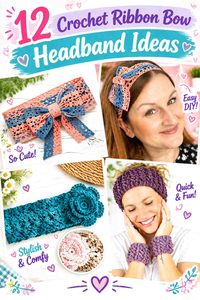
A crochet ribbon bow headband can look delicate, playful, polished, or cozy depending on how the bow color relates to the band. The bow may match the headband for a continuous look, contrast sharply so the knot becomes the focal point, or repeat a smaller edging color that connects the whole accessory.
Because the bow sits in a concentrated area, it usually needs less yarn than the headband but can still carry considerable visual weight. A burgundy bow on an ivory band, for example, may command more attention than its actual size suggests. Softer combinations such as plum and mauve produce a quieter transition.
These 12 ideas include dedicated crochet bow-headband tutorials as well as headband constructions that can support a separately crocheted ribbon-style bow. The suggested palettes are independent adaptations rather than claims that the tutorial creators used these exact colors.
Quick List
- Ivory And Burgundy Crochet Classic Ribbon Bow Headband
- Dusty Rose And Sage Crochet Baby Ribbon Bow Headband
- Navy And Cream Crochet Wide Ribbon Bow Ear Warmer Headband
- Mustard And Chocolate Crochet Knotted Ribbon Bow Headband
- Lavender And Silver Crochet Daisy Ribbon Tie Headband
- Black And Camel Crochet Statement Ribbon Bow Headband
- Peach And Cream Crochet Side Ribbon Bow Headband
- Moss Green And Rust Crochet Textured Ribbon Bow Headband
- Teal And Oatmeal Crochet Twisted Ribbon Bow Headband
- Plum And Mauve Crochet Plush Ribbon Bow Headband
- Coral And Denim Blue Crochet Lace Ribbon Bow Headband
- Royal Purple And Ivory Crochet Cozy Ribbon Bow Ear Warmer Headband
Decide Whether the Crochet Bow or Headband Should Lead
A contrasting bow automatically attracts attention, especially when the band is a light neutral. If you want the ribbon bow to be the centerpiece, choose the stronger or darker color for it and leave the band comparatively quiet.
For a subtler accessory, reverse the strategy or use two colors that are closer in value. A mauve band with a plum bow will usually create less separation than ivory with burgundy, even though both are two-color combinations.
Consider bow size at the same time. An oversized bow in the darkest color may visually dominate the whole accessory, while a smaller bow can support a textured or patterned headband instead.
Use Contrast Around the Crochet Ribbon Bow Center
The pinched center is what makes a crocheted rectangle or tie read clearly as a bow. If the center wrap, loops, and band are all nearly identical in value, that shape can look flatter from a distance.
One useful option is to make the bow loops the accent color while repeating the headband color through the center wrap. Another is to keep the whole bow one shade and rely on a contrasting band underneath it.
Avoid introducing another color solely for the center unless it serves a clear purpose. On a small head accessory, three equally noticeable colors can quickly compete.
Repeat Bow Colors Carefully Across the Crochet Headband
A bow color can repeat at the headband edging, ties, or another small detail to make the palette feel connected. It does not need to appear across half the band.
This is particularly important with saturated colors such as royal purple, rust, teal, or burgundy. Small repeated areas can already establish a strong connection, leaving the main band color enough uninterrupted space to remain dominant.
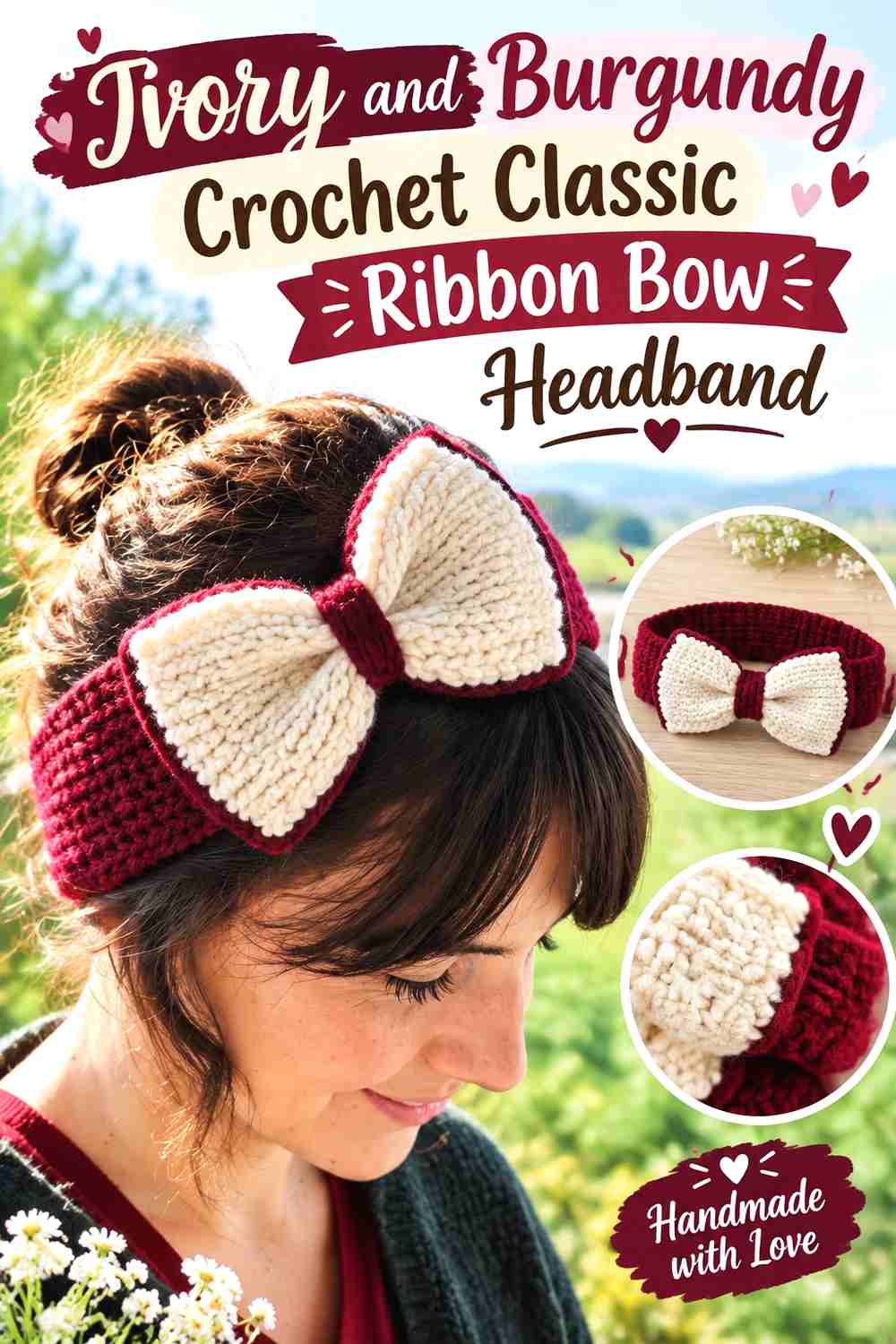
1. Ivory And Burgundy Crochet Classic Ribbon Bow Headband
 SAVE
Ivory creates a light, simple band while burgundy gives the central ribbon bow a defined focal point. This combination works well with a classic centered bow because the darker color remains concentrated in one easily understood area. If you prefer a softer result, keep the bow burgundy but repeat ivory around its center wrap.
Burgundy Can Make the Ivory Crochet Ribbon Bow the Main Feature
Use burgundy across both bow loops when you want the bow to attract attention before the band texture.
Because burgundy has considerably more visual weight than ivory, you do not need additional dark stripes across the headband to make the palette feel balanced.
Ivory Can Separate the Burgundy Crochet Bow Center
An ivory center wrap can visually pinch the darker bow and connect it back to the headband underneath.
If the wrap is narrow, the effect remains subtle. A very broad ivory center can split the burgundy bow into two separate-looking blocks.
Creator Credit: Sirin’s Crochet
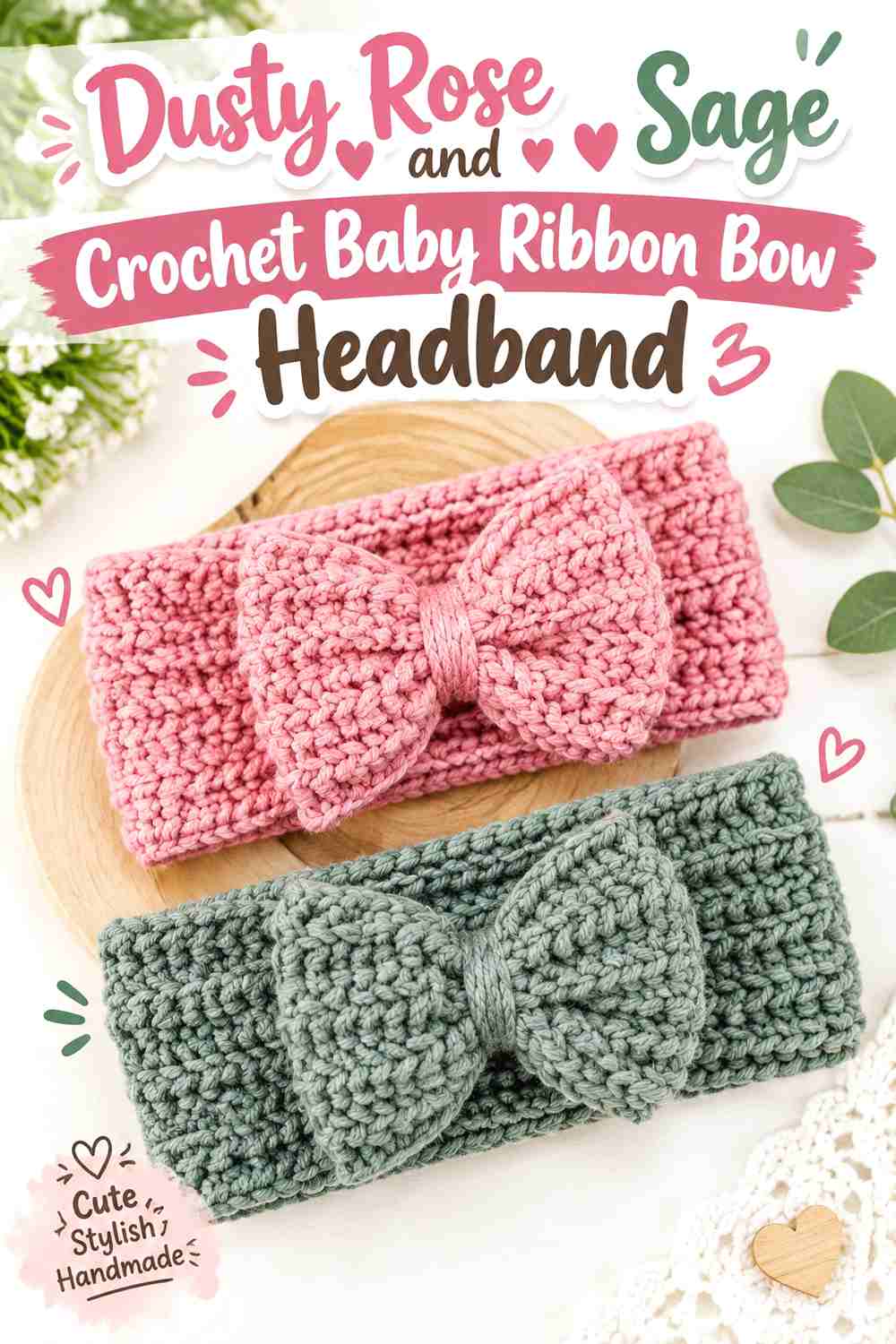
2. Dusty Rose And Sage Crochet Baby Ribbon Bow Headband
 SAVE
Dusty rose can cover the baby headband and bow loops, while sage appears only around the center or in a narrow secondary detail. This keeps the accessory soft and predominantly pink while giving the bow enough color variation to remain distinct. The underlying tutorial directly supports a bow-headband construction.
Dusty Rose Should Keep the Crochet Baby Headband Visually Soft
Use dusty rose through most of the band so there is no abrupt color break around the head.
The bow can remain dusty rose as well when you want shape rather than contrast to provide the main decoration.
Sage Can Give the Dusty Rose Crochet Ribbon Bow a Botanical Accent
A small sage center wrap can separate the bow loops without taking over the accessory.
Keep sage controlled. On a compact baby headband, even a small green section occupies a noticeable percentage of the finished piece.
Creator Credit: Winding Road Crochet
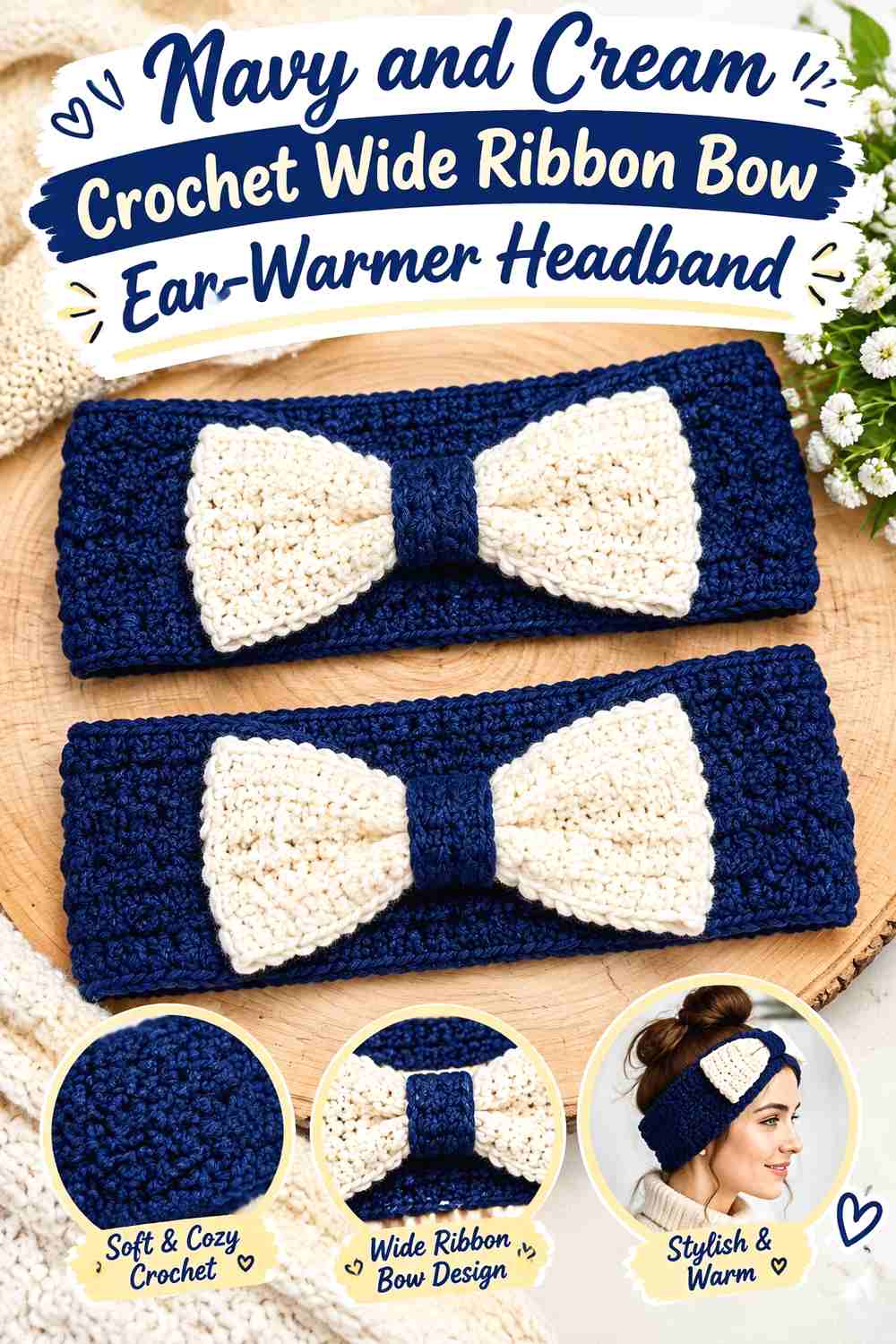
3. Navy And Cream Crochet Wide Ribbon Bow Ear Warmer Headband
 SAVE
A wider headband can support stronger contrast than a narrow hair band. Navy can dominate the warm ear-covering section, while cream creates the bow or central cinched feature. The lighter bow remains visible against the broad dark band without requiring additional decorative colors.
Navy Can Ground the Cream Crochet Ribbon Bow
Keep navy continuous through the wide headband so the cream center has a stable dark background.
Introducing multiple cream stripes through the band would reduce the impact of the bow and make the ear warmer appear more segmented.
Cream Can Keep the Navy Crochet Bow Headband From Looking Too Dark
Use cream where the bow shape is most visible. Its lighter value naturally emphasizes the loops and center against navy.
If cream already fills a substantial bow, avoid adding a wide cream border around the headband as well unless you intentionally want a near-equal color split.
Creator Credit: Blossom Crochet
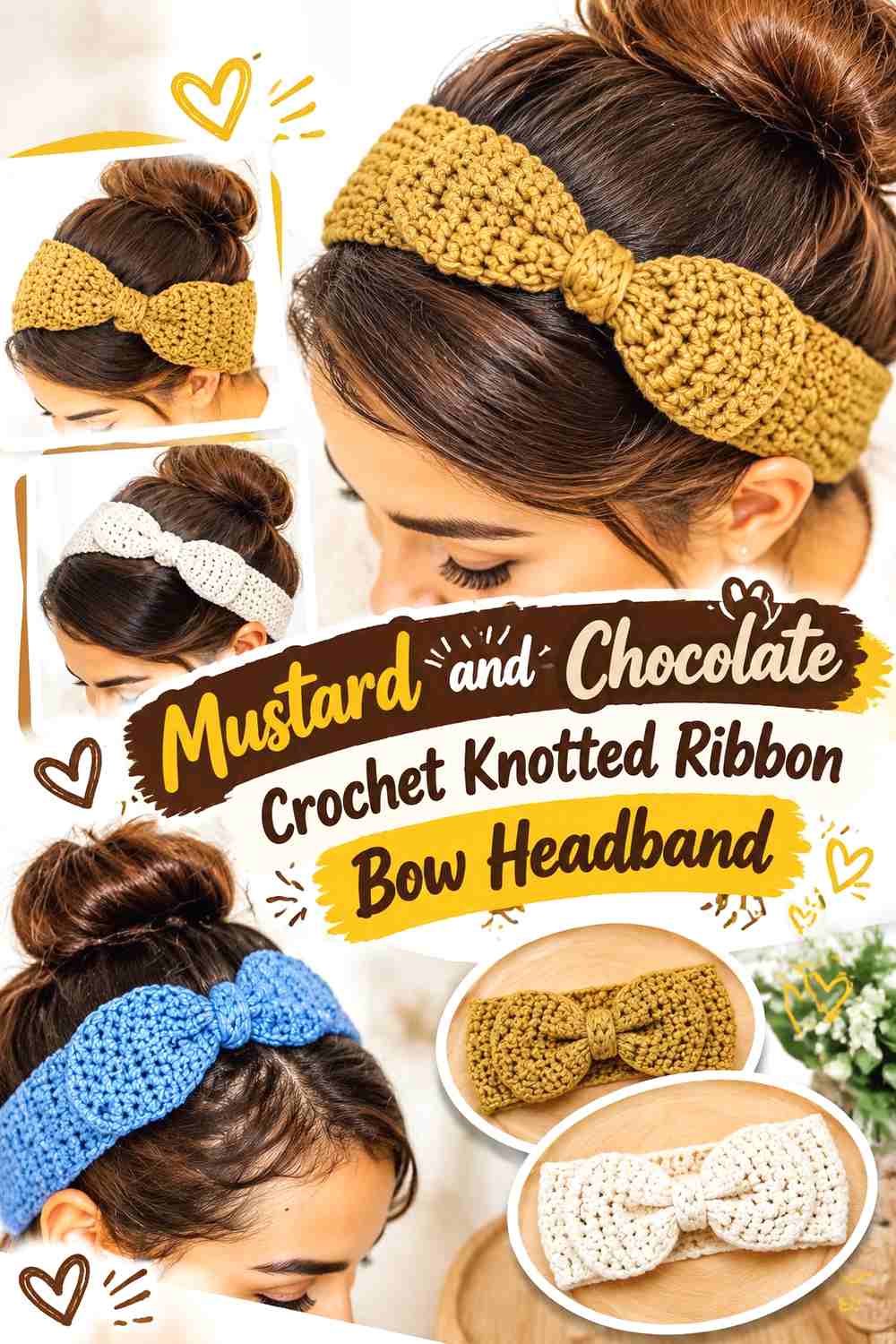
4. Mustard And Chocolate Crochet Knotted Ribbon Bow Headband
 SAVE
A knotted bow gives mustard and chocolate a natural division. Mustard can lead the band and long ribbon-like sections, while chocolate marks the knot or selected end details. The darker center helps the tied shape remain understandable without outlining every edge.
Mustard Can Keep the Chocolate Crochet Knotted Bow Warm
Use mustard across the broadest sections of the headband and bow so the accessory remains clearly mustard-led.
Chocolate has enough visual weight to work in smaller areas, especially around the center where the fabric already gathers.
Chocolate Can Define the Mustard Crochet Ribbon Bow Knot
Concentrating chocolate at the knot creates a darker midpoint between mustard loops or tails.
Avoid spreading chocolate equally through the entire band. The color is more useful when it explains the bow structure instead of becoming ordinary striping.
Creator Credit: Yay For Yarn
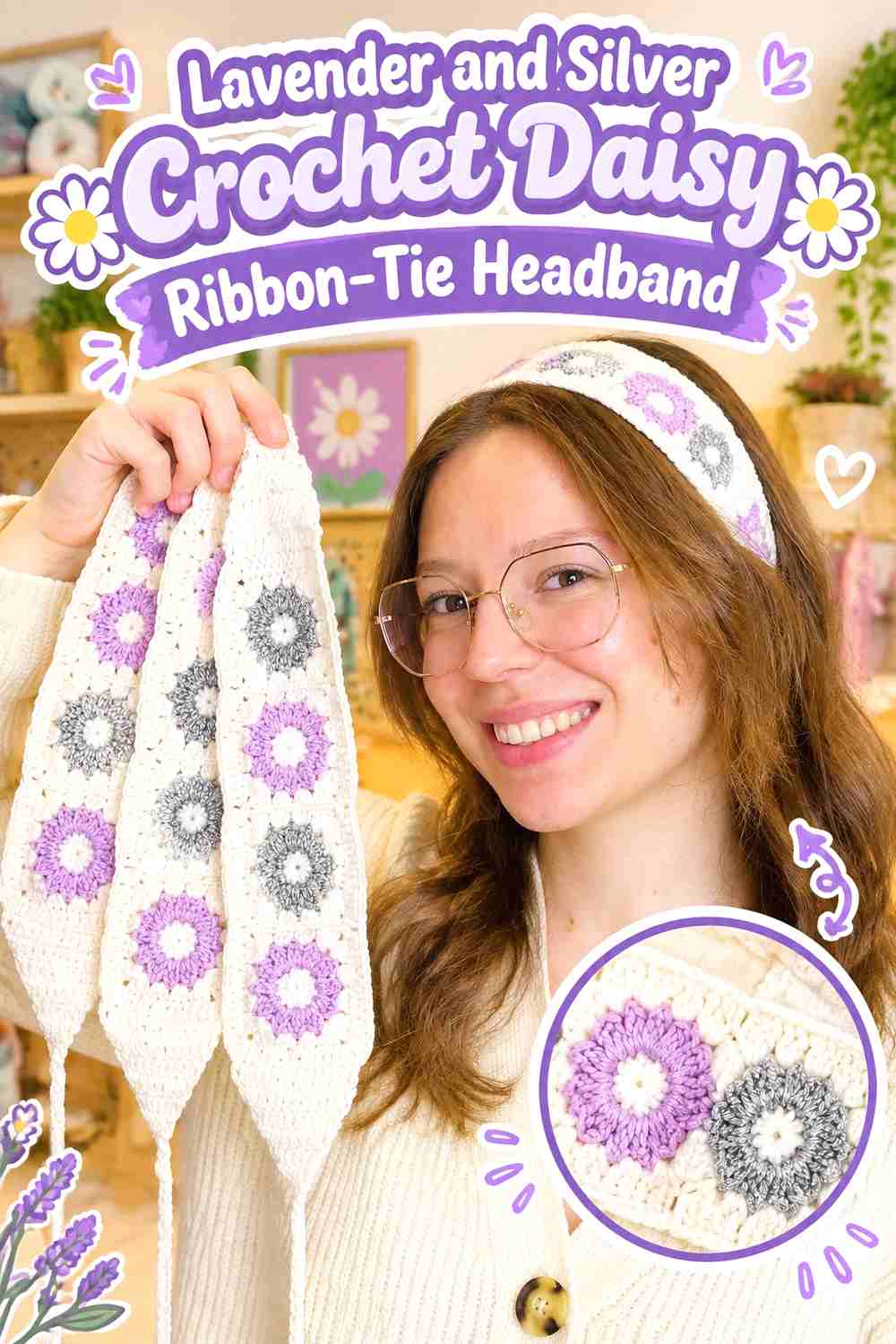
5. Lavender And Silver Crochet Daisy Ribbon Tie Headband
 SAVE
A daisy-granny headband with ribbon-like ties already contains more visual information than a plain band. Lavender can carry the main floral motifs and ties, while silver-gray becomes the quieter background or border color. If cream or yellow is needed for recognizable daisy details, keep it very limited so lavender and silver remain the primary palette.
Lavender Can Connect the Crochet Daisy Motifs and Ribbon Ties
Repeating lavender in the motifs and long tie ends gives the decorative center and bow area a clear relationship.
Avoid assigning a different dominant color to the ties. They occupy enough length to compete with the granny motifs if the contrast becomes too strong.
Silver Can Calm the Lavender Crochet Ribbon Bow Headband
Use silver-gray around motif borders or the main connecting band so the lavender does not cover every part of the accessory.
The neutral works especially well when the granny construction already creates several small shapes that do not need additional strong color changes.
Creator Credit: Carlota Fiaño
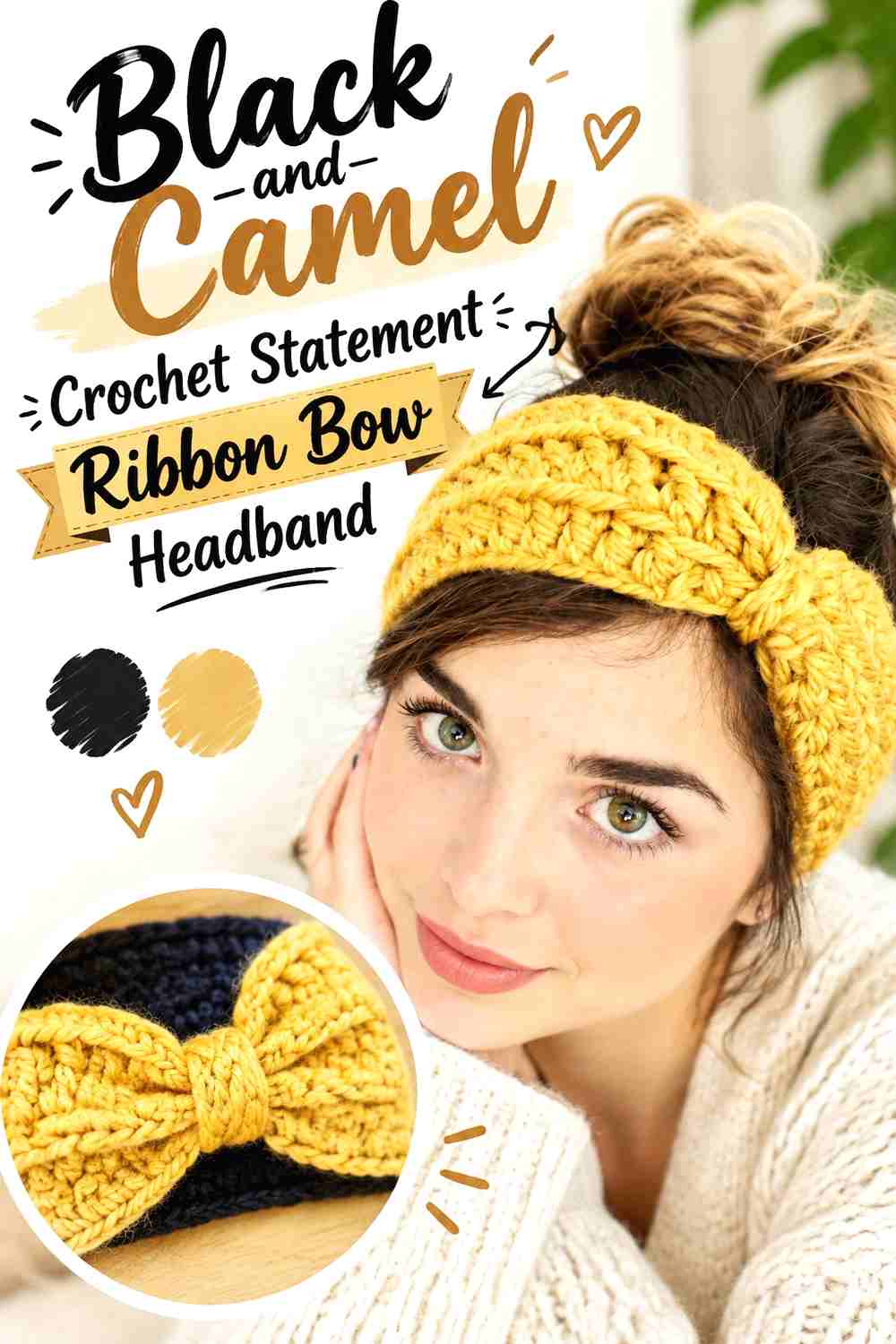
6. Black And Camel Crochet Statement Ribbon Bow Headband
 SAVE
Black and camel create a much stronger graphic bow than the pastel combinations. Camel can cover the main headband while black defines a large centered ribbon bow. Because black carries substantial visual weight, keeping it concentrated in the bow helps the headband stay balanced.
Black Can Give the Camel Crochet Ribbon Bow a Strong Outline
Use black across the main bow loops when you want a statement centerpiece.
The bow does not need additional contrasting edging because the camel band underneath already creates a clear boundary around the shape.
Camel Can Keep the Black Crochet Bow From Overpowering the Headband
A broad camel field gives the dark bow enough surrounding space.
If black is repeated elsewhere, confine it to a narrow finishing detail. Large black sections on both the bow and band would shift the accessory toward a mostly dark palette.
Creator Credit: Veronica Marie
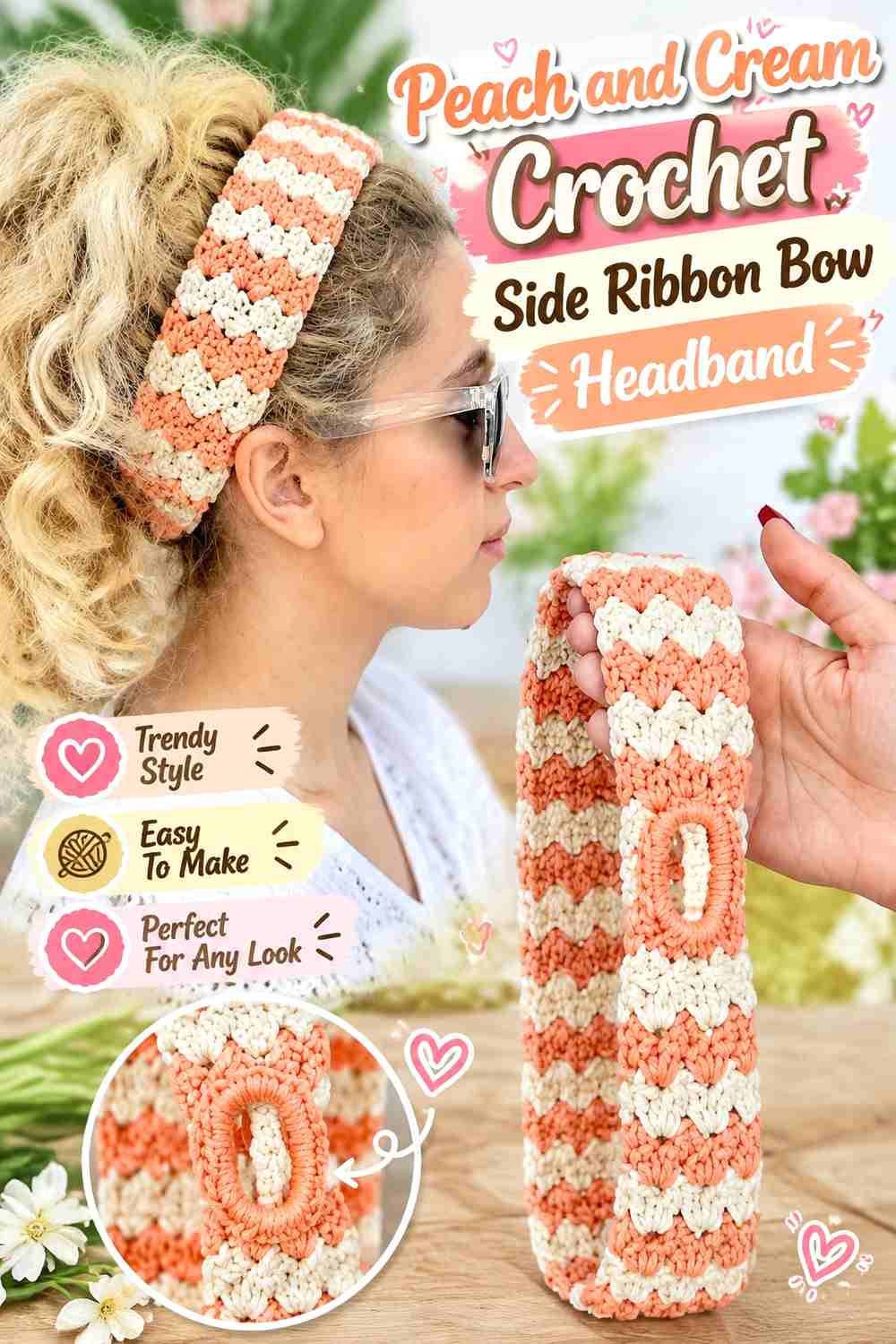
7. Peach And Cream Crochet Side Ribbon Bow Headband
 SAVE
A simple crochet band with elastic support can be adapted with a separately crocheted side bow. Peach can dominate the band, while cream forms a smaller bow positioned away from the center. Keeping the bow light prevents an asymmetrical placement from becoming visually too heavy on one side.
Peach Can Keep the Cream Crochet Side Bow Balanced
Use peach throughout the main band so the base remains continuous from one side of the head to the other.
A side-mounted bow already creates asymmetry through placement, so the band does not need additional peach-and-cream color blocking.
Cream Can Make the Peach Crochet Ribbon Bow Feel Lighter
A cream bow gives the side detail definition without the weight of a very dark accent.
If you want to repeat cream, place it in a small edge or attachment area near the bow rather than on the opposite side of the headband, which could weaken the intentional side focus.
Creator Credit: naztazia
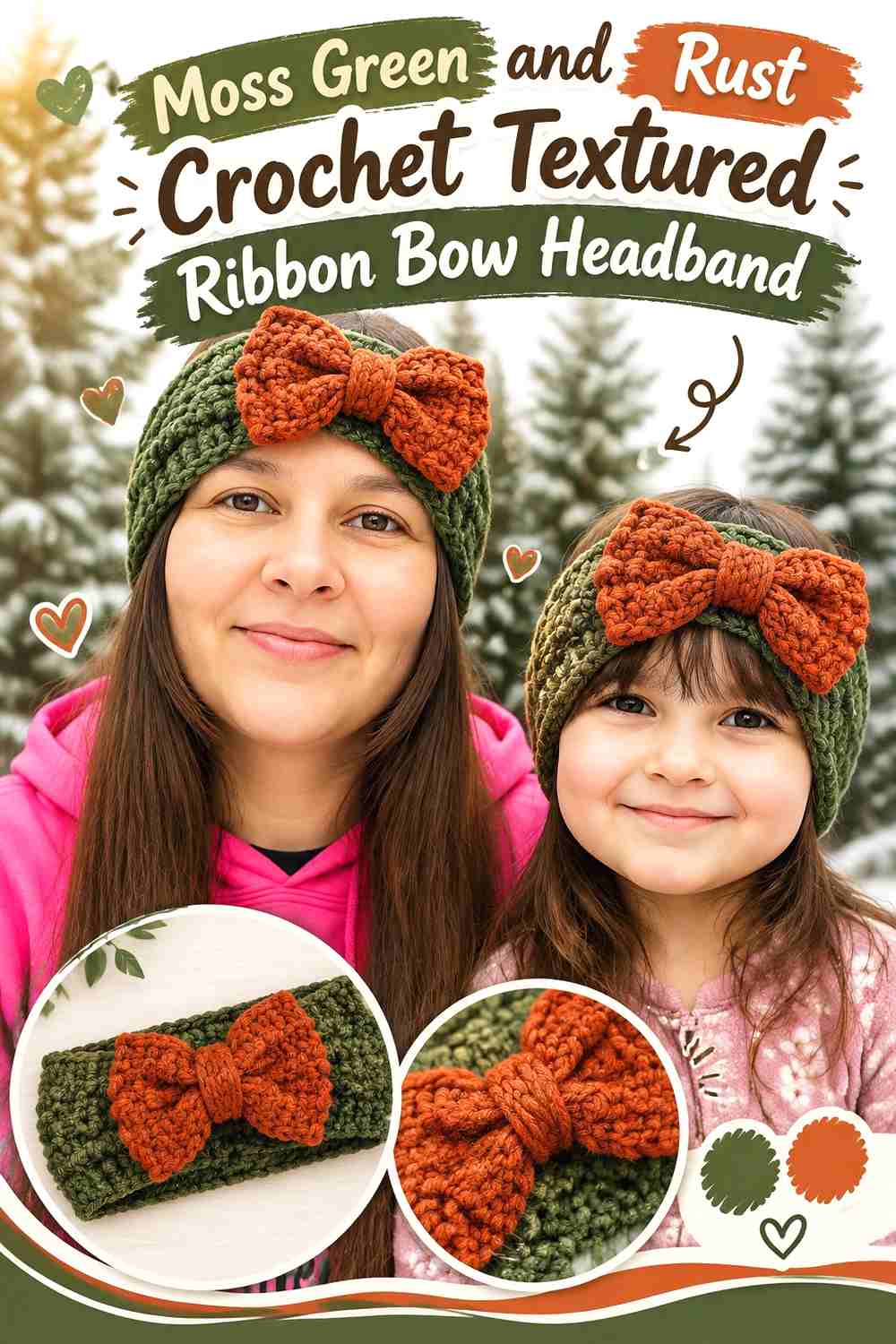
8. Moss Green And Rust Crochet Textured Ribbon Bow Headband
 SAVE
A textured headband provides enough surface detail that the bow can stay comparatively simple. Moss green can cover the band while rust is reserved for a central or slightly offset ribbon bow. The warm rust stands apart from the earthy green without requiring extra colors.
Moss Green Can Keep the Rust Crochet Headband Texture Continuous
Use moss green across the textured band rather than inserting rust between every stitch section.
The uninterrupted color allows shadows and raised texture to remain easier to see.
Rust Can Warm the Moss Green Crochet Ribbon Bow Center
Use rust across the complete bow when you want a clear focal point against the green.
If you repeat rust on the band, keep that repetition small—such as a narrow edge—so it does not compete with the central bow.
Creator Credit: Bag-O-Day Crochet
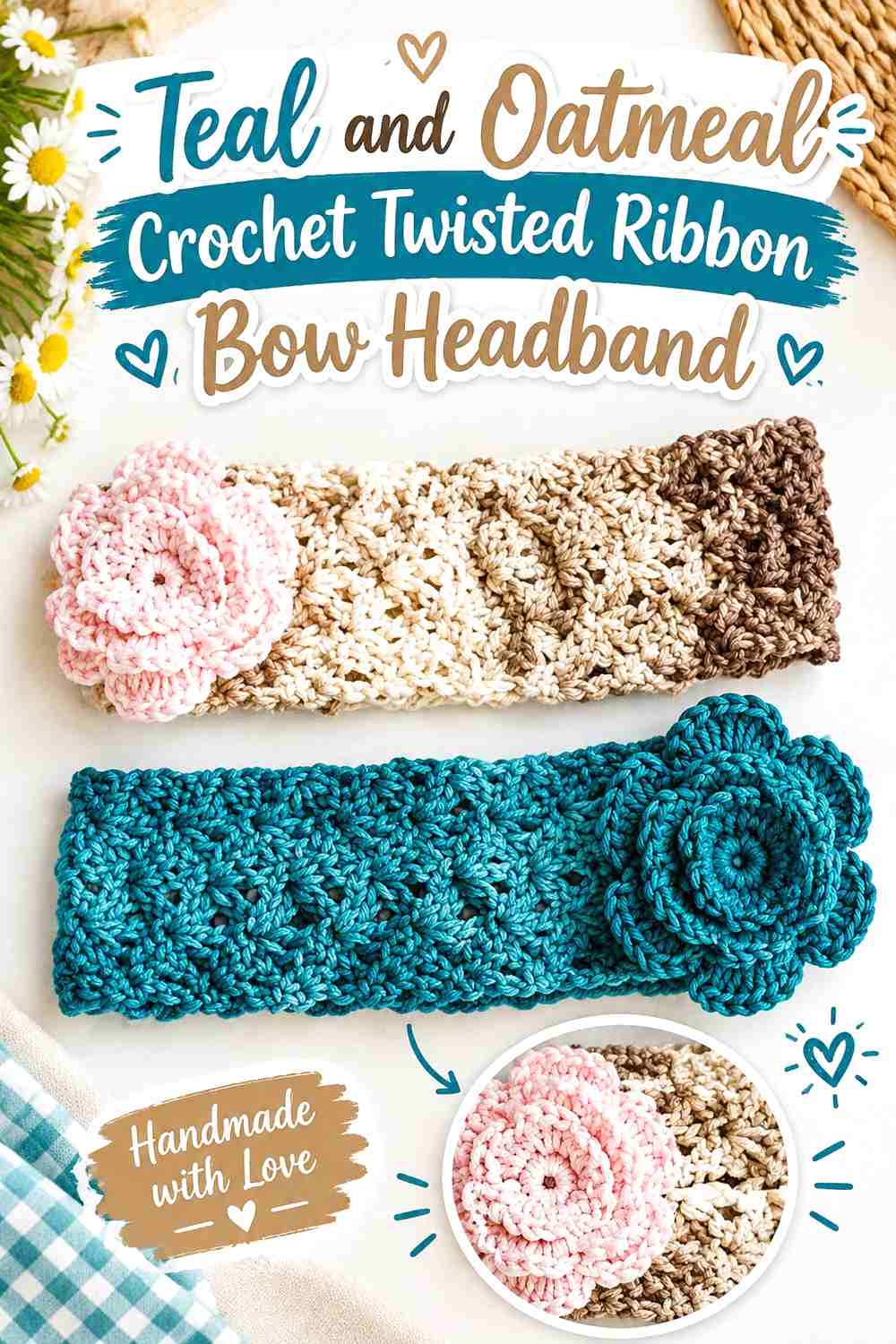
9. Teal And Oatmeal Crochet Twisted Ribbon Bow Headband
 SAVE
A twisted or gathered headband already creates a focal area at the front. Teal can cover the main band, while an oatmeal ribbon bow can sit over or beside that structural detail. The lighter bow should remain restrained so the twist and bow do not become two unrelated competing centers.
Teal Can Keep the Oatmeal Crochet Headband Base Unified
Use teal through the entire main band when adapting a twist-style construction with a bow.
The strong teal field creates continuity even when the front shape folds or overlaps.
Oatmeal Can Highlight the Teal Crochet Ribbon Bow Without Adding Harsh Contrast
Oatmeal gives the bow enough value separation from teal while remaining softer than stark white.
Keep the bow proportionate to the twisted area. A very large oatmeal bow can hide the texture that makes the teal headband construction distinctive.
Creator Credit: Yarnspirations
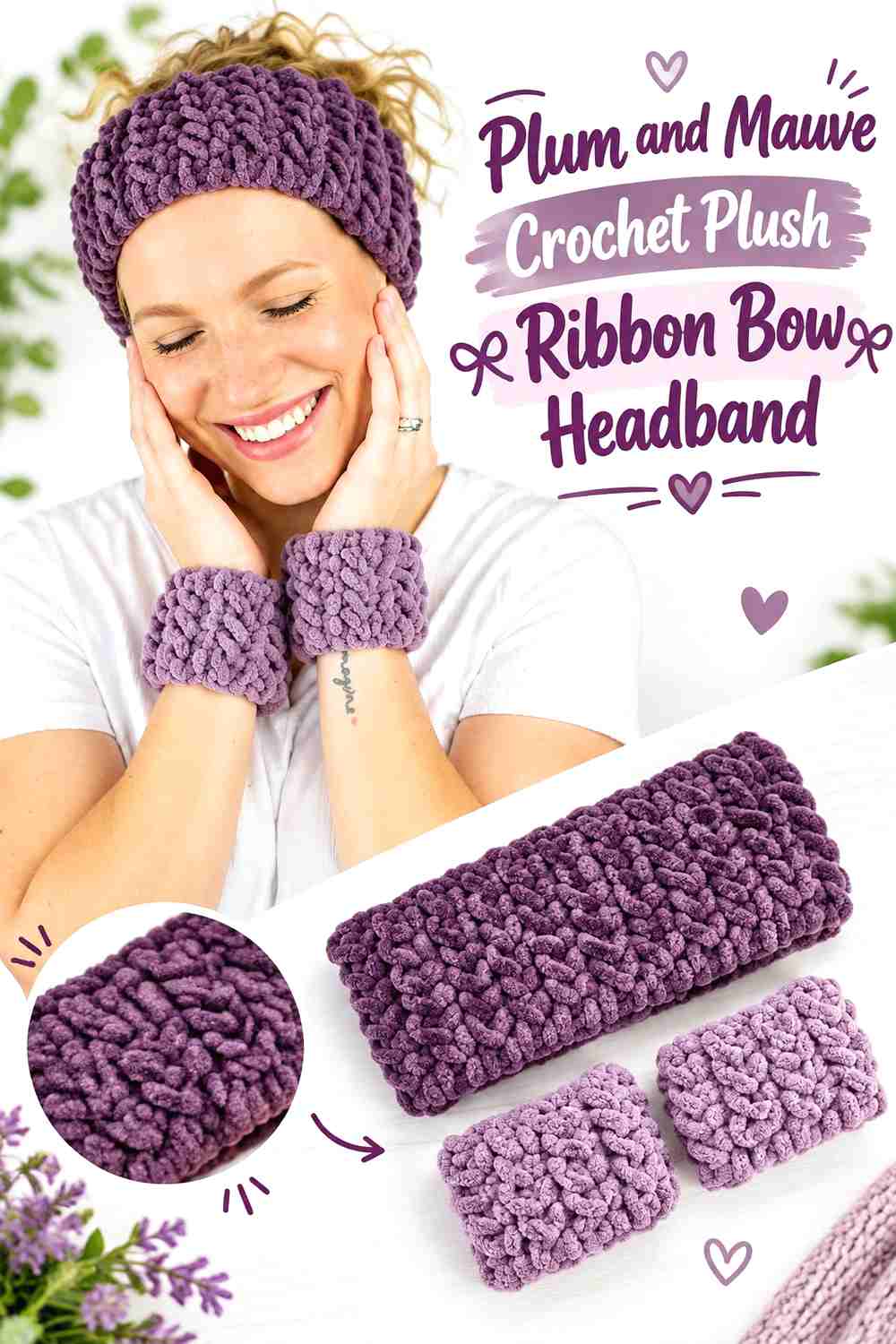
10. Plum And Mauve Crochet Plush Ribbon Bow Headband
 SAVE
A plush headband can use a low-contrast palette because its soft texture already provides substantial visual interest. Mauve can dominate the broad band while plum forms the bow, creating a tonal purple combination instead of a sharp two-color split.
Mauve Can Keep the Plum Crochet Plush Headband Soft
Use mauve through the widest part of the band so the overall accessory remains lighter than the bow.
The plush surface can blur small color details, so broad uninterrupted sections are generally easier to read than tiny alternating accents.
Plum Can Give the Mauve Crochet Ribbon Bow More Depth
A darker plum bow remains distinct without leaving the same color family.
If the shades are very close, compare them from several feet away. Choose a slightly deeper plum when you want the bow silhouette to remain obvious against the mauve band.
Creator Credit: The Turtle Trunk
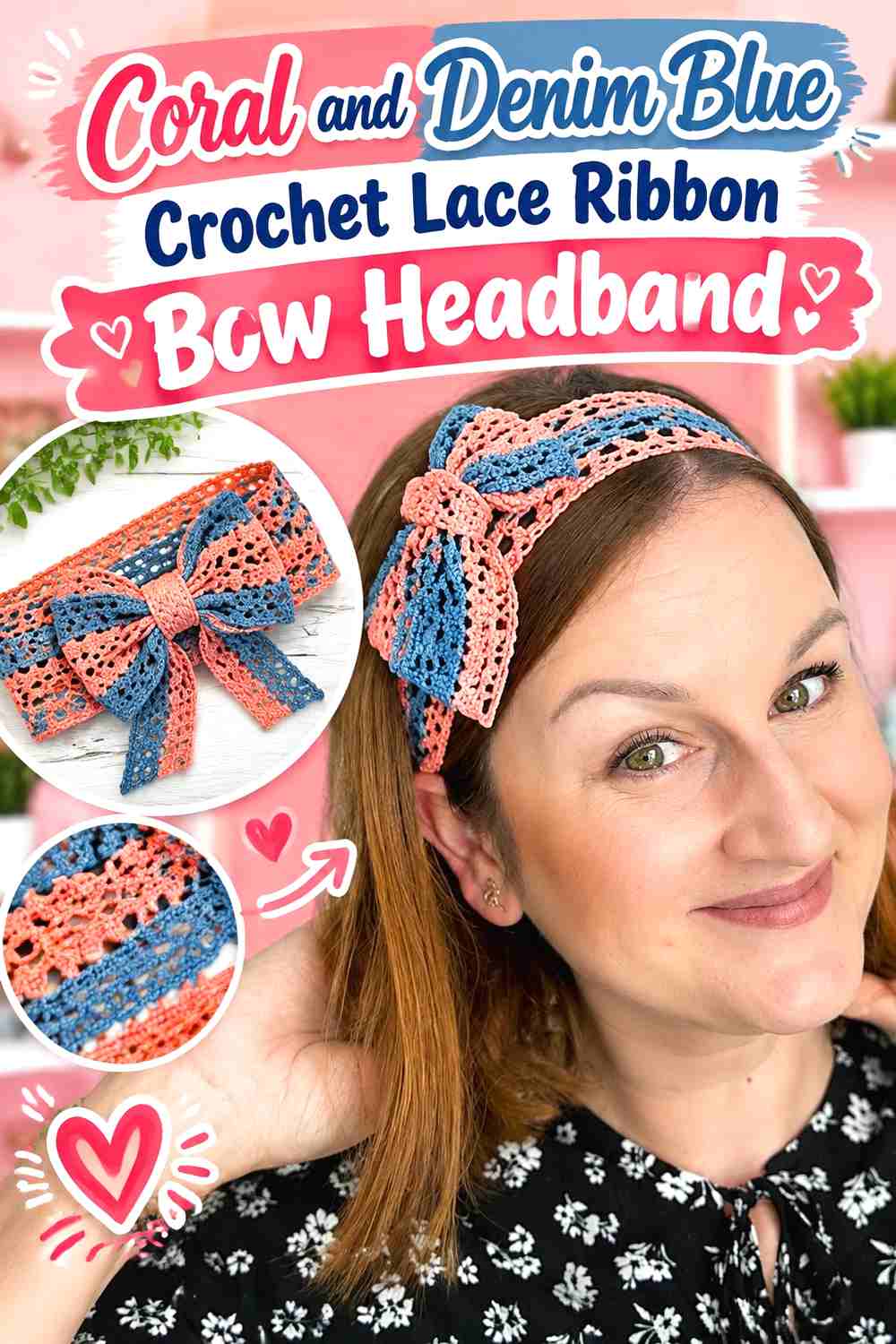
11. Coral And Denim Blue Crochet Lace Ribbon Bow Headband
 SAVE
A lightweight lace headband gives a ribbon bow a different visual setting because openwork already breaks up the main color. Denim blue can carry the lace band while coral creates a smaller bow that adds warmth without interrupting the open stitch pattern.
Denim Blue Can Keep Coral Crochet Lace Openwork Readable
Use denim blue consistently across the lace section so the openings form one continuous pattern.
Frequent coral changes inside the lace can make the stitch pattern and color pattern compete for attention.
Coral Can Create a Warm Focal Point on Denim Blue Crochet Lace
Place the coral bow where it remains clearly visible against the blue openwork.
Because the lace has visual gaps, check the bow over the hairstyle rather than only on a table. The background showing through the band can change how strongly coral appears.
Creator Credit: Blue Star Crochet | Veronika Cromwell
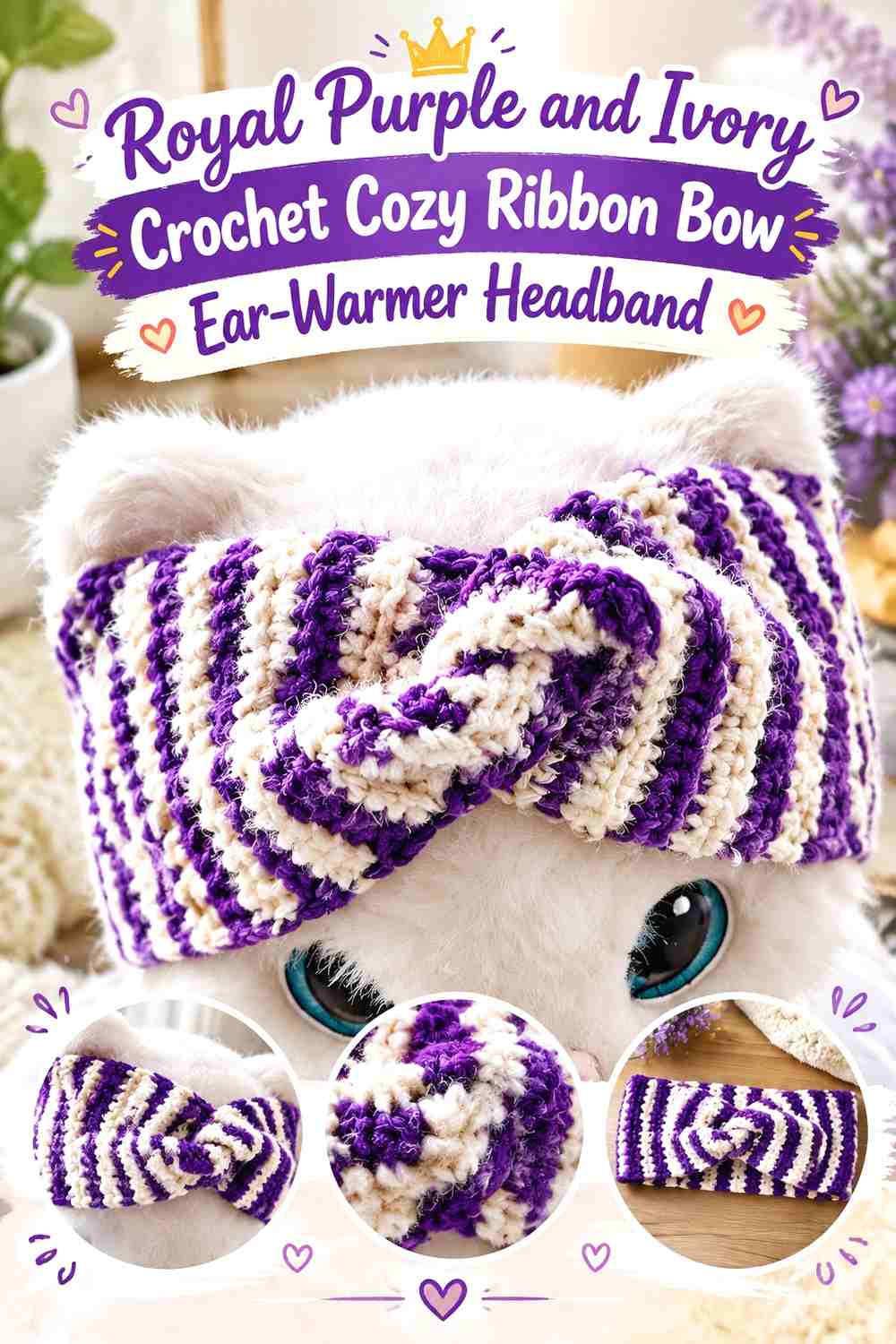
12. Royal Purple And Ivory Crochet Cozy Ribbon Bow Ear Warmer Headband
 SAVE
Royal purple can dominate a cozy ear-warmer band while ivory defines the bow at the front. The clear light-and-dark contrast is useful on a thicker headband because the bow remains recognizable even when both pieces have substantial texture.
Royal Purple Can Give the Ivory Crochet Ear-Warmer a Rich Main Field
Keep royal purple across the broad headband so the warmer accessory has one continuous dominant color.
Avoid breaking the band with several ivory stripes when the front bow already supplies a large light detail.
Ivory Can Keep the Royal Purple Crochet Ribbon Bow Clearly Defined
Use ivory across the bow loops or center feature for maximum separation against royal purple.
If the bow feels too bright compared with the rest of the headband, repeat a small amount of purple through the center wrap instead of adding another color.
Creator Credit: Colorful Crosia
Comparing the 12 Crochet Ribbon Bow Headband Color Directions
For the strongest bow contrast, ivory and burgundy, navy and cream, black and camel, or royal purple and ivory create obvious separation between the ribbon bow and headband.
For a softer tonal bow, dusty rose and sage, plum and mauve, or peach and cream keep the transition less dramatic. These palettes work well when you want the headband texture or shape to remain nearly as important as the bow.
The mustard and chocolate knotted bow emphasizes the center structure, while lavender and silver suits a more decorative granny-and-ribbon design.
For textured or openwork headbands, moss green and rust, teal and oatmeal, and coral and denim blue give the bow enough definition without requiring frequent color changes throughout the band.
Conclusion
A crochet ribbon bow headband works best when the bow and band have clearly planned color roles. If the bow should be the focal point, use the stronger or darker shade there and keep the band comparatively uninterrupted. If the band has lace, granny motifs, thick texture, or a twist of its own, a softer or tonal bow can prevent the accessory from becoming visually crowded.
The bow center also matters. Repeating the band color around the center wrap is an easy way to connect two contrasting sections without adding another shade.
For tutorials that teach a plain headband rather than an attached ribbon bow, use the source for the band construction and treat the bow as a separate decorative adaptation. Test the placement before securing it permanently so the bow sits where the finished headband naturally faces forward.
Frequently Asked Questions
Should the crochet ribbon bow match the headband?
It can, especially when you want texture and bow shape to provide most of the detail. A contrasting bow creates a stronger focal point, while a tonal bow produces a softer look.
Where should I place a crochet bow on a headband?
Centered bows create a balanced, symmetrical look. A side bow creates more visual movement and works particularly well when the bow is smaller. Test the placement while the headband is worn because its position can look different when the band stretches.
What colors work well for a crochet ribbon bow headband?
High-contrast combinations such as navy and cream or burgundy and ivory make the bow easy to distinguish. Softer combinations such as plum and mauve, dusty rose and sage, or peach and cream create a quieter transition.
Can the bow be a darker color than the crochet headband?
Yes. A darker bow will usually attract more attention even when it occupies less area. Keep the rest of the band relatively simple if you want that dark bow to remain the intentional focal point.
How can I make a two-color crochet bow look connected to the band?
Repeat the headband color in the bow’s center wrap, or repeat a small amount of the bow color in the band edging or attachment area. You usually do not need equal amounts of both colors.
Can I add a ribbon bow to a plain crochet headband tutorial?
Yes, as a separate adaptation. Make the headband according to its intended construction, create the bow independently, then test its size and position against the finished band before attaching it securely.
How can I stop a crochet ribbon bow from visually overpowering the headband?
Reduce the bow size, choose a color closer in value to the band, or keep the bow and center wrap within the same color family. You can also avoid repeating the bow color elsewhere if the bow already provides enough contrast.