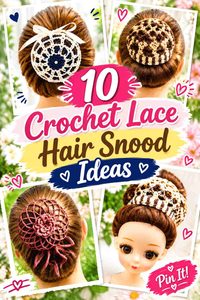
Crochet lace hair snoods combine color with something most crochet accessories do not have: the wearer’s hair becomes part of the visible background. Open mesh placed over dark hair can make pale yarn look sharply defined, while a dark snood over similarly dark hair can create a quieter, more blended effect.
That makes color placement especially important around the front band, gathered edge, crown, and open mesh. A contrast color used only around the forehead can frame the hairstyle without interrupting the lace. A lighter mesh with a darker edge can make the net construction easier to see, while a one-color snood can keep intricate openwork from looking unnecessarily busy.
These 10 ideas include full vintage-style snoods, open hair nets, and smaller bun-cover constructions that can support a lace-snood interpretation. Follow each creator’s tutorial for the original construction; the palettes and color-placement ideas below are separate adaptations.
Quick List
- Burgundy And Antique Ivory Crochet Vintage Lace Hair Snood
- Black And Cream Crochet 1940s Lace Hair Snood
- Dusty Rose And Oatmeal Crochet Full Lace Hair Snood
- Sage And Ivory Crochet Radial Lace Hair Snood
- Deep Teal And Oatmeal Crochet Open Mesh Lace Hair Snood
- Lavender And Silver Crochet Festival Lace Hair Snood
- Wine And Blush Crochet Compact Lace Hair Snood
- Chocolate And Camel Crochet Simple Lace Hair Snood
- Navy And Ivory Crochet Asymmetrical Lace Hair Snood
- Antique Gold And Cream Crochet Round Lace Bun Snood
Check Crochet Lace Colors Against Your Hair
The spaces in a hair snood expose the hair underneath, so the hairstyle effectively becomes another color in the finished accessory. Pale ivory lace may look highly graphic over dark brown or black hair but much quieter over blond or gray hair.
This does not mean you need maximum contrast. Decide whether you want the lace pattern itself to be obvious or whether you prefer the snood to blend more gently into the hairstyle.
Test a small openwork section against the hair before committing to a large color change. That reveals more than comparing yarn skeins on a table.
Give the Front Band and Lace Mesh Different Color Jobs
The fitted or visible front edge is often read differently from the flexible mesh behind it. A darker band can frame the face while a lighter back section keeps the lace airy. Reversing that arrangement creates a darker net with a brighter boundary.
Avoid changing colors at every mesh repeat simply because the construction allows it. Large open spaces already create substantial visual pattern, and too many narrow color changes can make the snood appear fragmented.
Keep the Gathered Edge From Becoming the Main Feature
A snood often narrows or gathers where the hair is contained. That area can take an accent color, but it generally needs less visual emphasis than the broad lace surface.
Repeating the front-band color at the gathering point can connect the front and back of the accessory. Keep the repeat smaller when you want the main mesh color to stay dominant.
1. Burgundy And Antique Ivory Crochet Vintage Lace Hair Snood
 SAVE
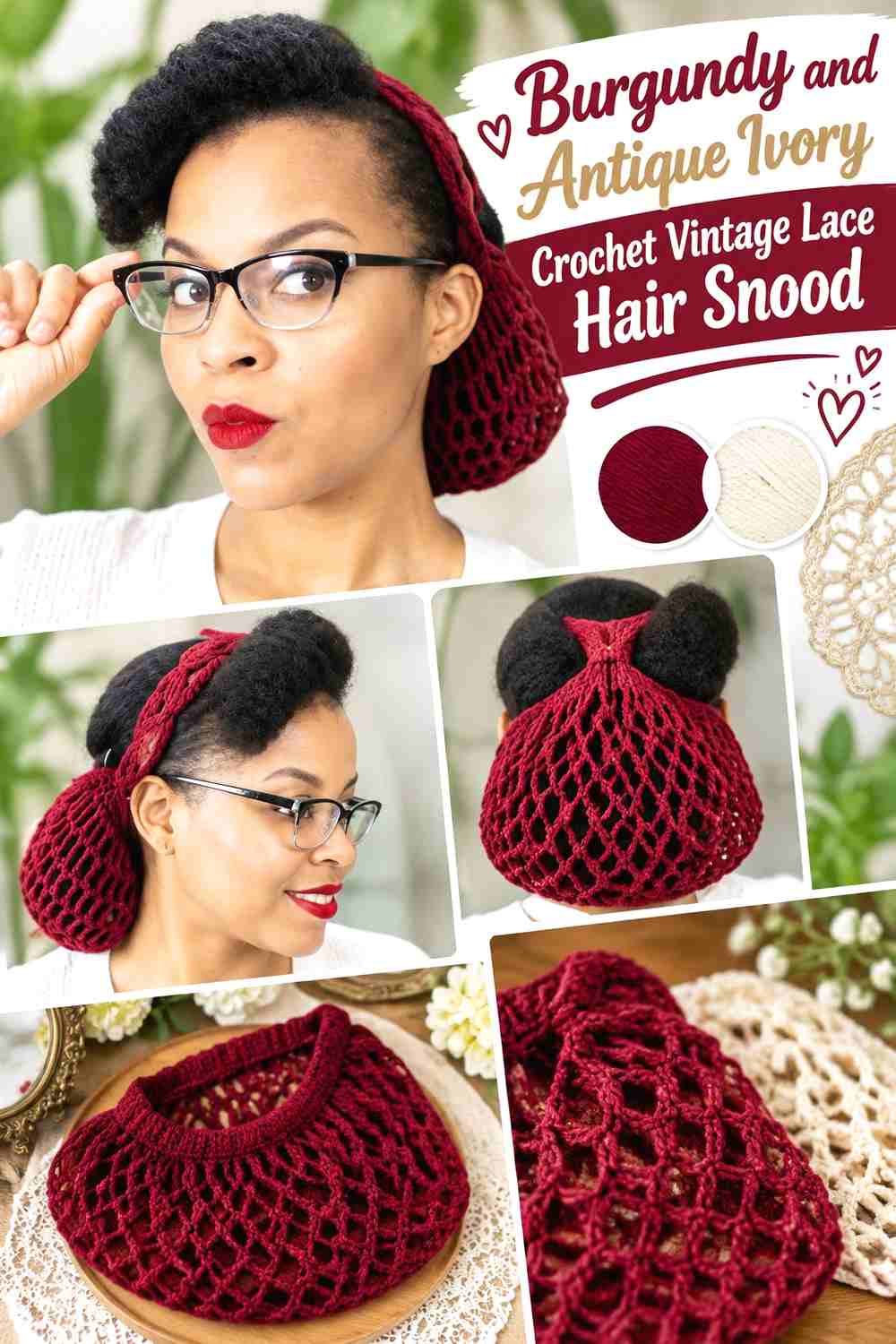
Burgundy and antique ivory create a strongly vintage-inspired direction for a full hair snood. Antique ivory can cover most of the open crochet, letting the hair show through the lighter mesh, while burgundy frames the front edge and returns in a restrained lower detail. The original tutorial provides a vintage-inspired snood construction; the two-color arrangement is an independent adaptation.
Antique Ivory Keeps Burgundy Crochet Lace From Becoming Too Heavy
Use antique ivory across most of the open net if you want the lace structure to remain visually light.
Because the hair remains visible through the openings, the ivory does not behave like an opaque cream fabric. Check the snood over the intended hairstyle before deciding whether it needs additional burgundy inside the mesh.
Burgundy Can Frame the Antique Ivory Crochet Snood Front
A burgundy front band creates a clear boundary between the lighter lace and the face or hairline.
If burgundy is repeated at the gathered back edge, make that second section narrower so the snood still reads primarily as an antique-ivory lace accessory.
Creator Credit: Littlejohn’s Yarn YouTube tutorial
2. Black And Cream Crochet 1940s Lace Hair Snood
 SAVE
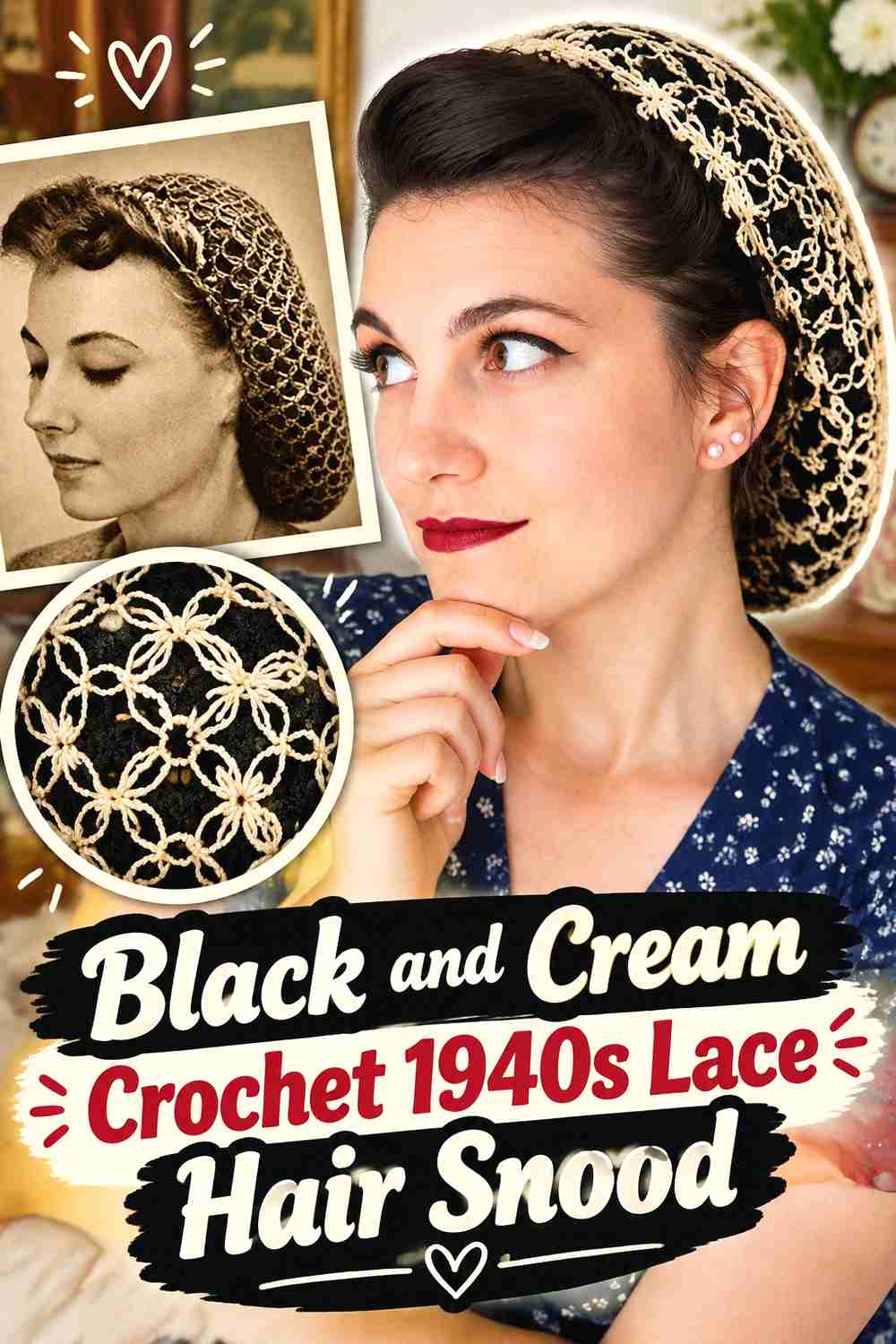
Black and cream give a 1940s-inspired snood a much stronger graphic direction. Black can dominate the main net while cream appears around the front or tie area, preventing the dark lace from visually disappearing when worn over equally dark hair. The supporting source follows a vintage-style crochet snood project rather than a modern neck snood.
Black Can Keep the Crochet Lace Hair Snood Visually Continuous
Use black through broad areas of the net instead of alternating cream through every mesh section.
A single dark field lets the open pattern remain recognizable through the contrast between yarn and hair or skin underneath.
Cream Can Separate Black Crochet Lace From Dark Hair
A cream front detail is particularly useful when black yarn and dark hair visually merge.
Keep that light color concentrated near the most visible edge. Turning half the net cream would change the project from a black-led snood into a stronger two-color block design.
Creator Credit: Stitch ‘N Fiction YouTube tutorial
3. Dusty Rose And Oatmeal Crochet Full Lace Hair Snood
 SAVE
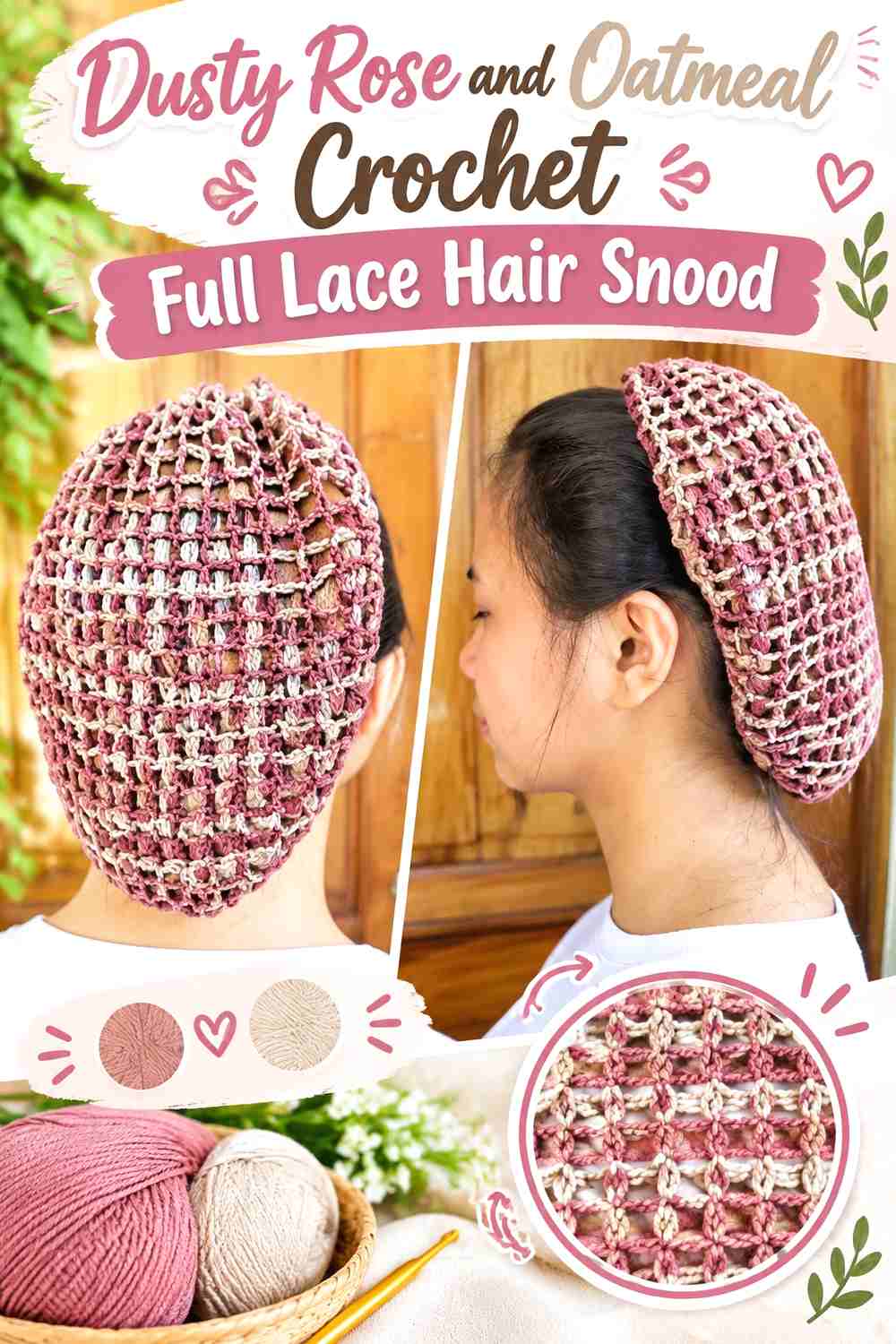
Dusty rose and oatmeal create a softer full-snood palette. Dusty rose can fill most of the expandable mesh while oatmeal defines the edge closest to the face. This source specifically teaches a hair net that can also function as a hair snood and discusses a deeper mesh form rather than only a small bun cover.
Dusty Rose Can Spread Across the Full Crochet Snood Mesh
Keep dusty rose broad across the flexible back area so the openwork remains connected as the snood expands around the hair.
Narrow oatmeal stripes through the middle can make the mesh look segmented, especially once the openings stretch in use.
Oatmeal Can Give Dusty Rose Crochet Lace a Softer Face Frame
Oatmeal provides a lighter border without the sharper appearance of pure white.
Repeat it around another small finishing area only if the front edge otherwise feels isolated. Dusty rose should still cover enough mesh to remain the unmistakable main color.
Creator Credit: Crochet with Isah YouTube tutorial
4. Sage And Ivory Crochet Radial Lace Hair Snood
 SAVE
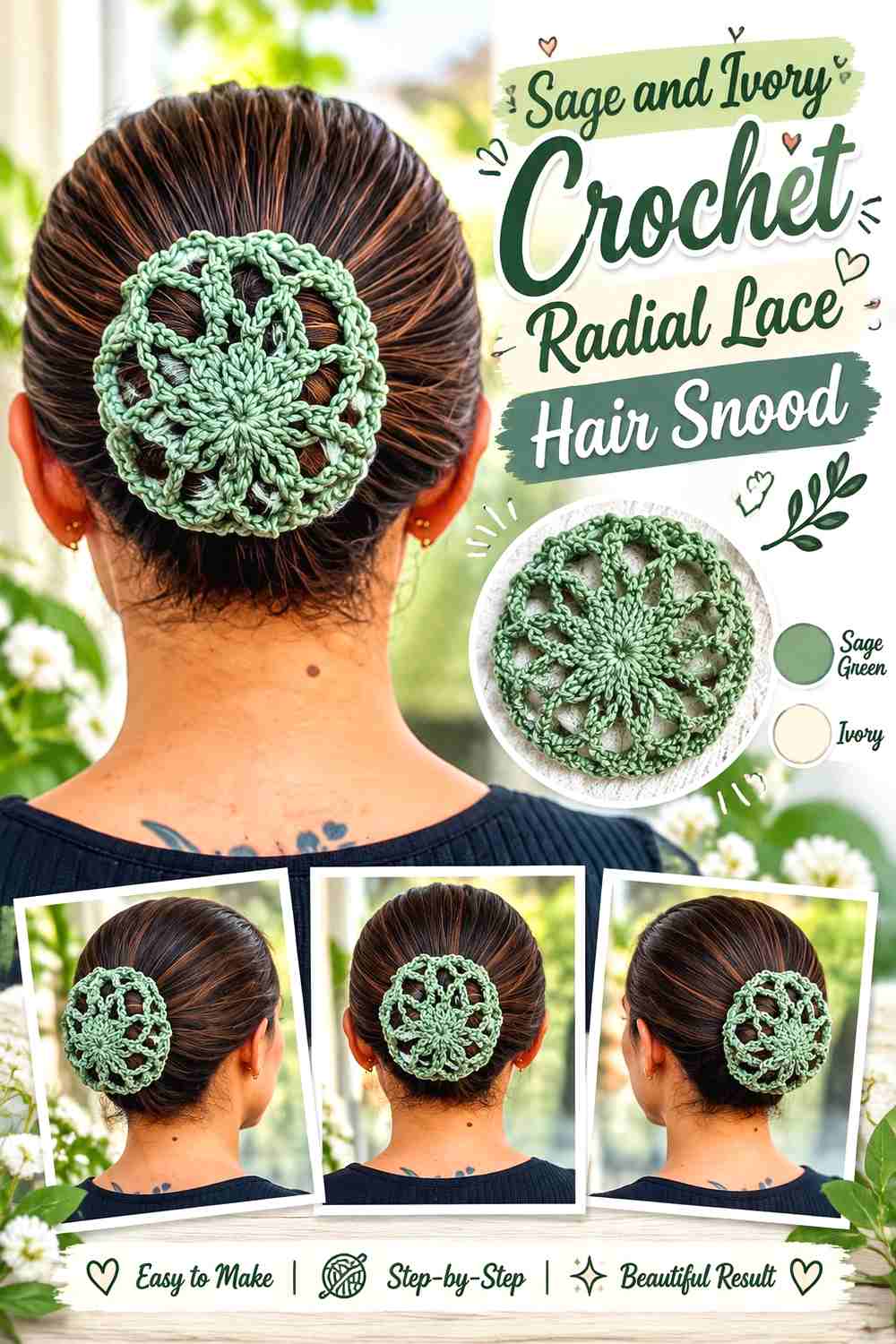
A radial hair-net construction provides an opportunity to keep the center and expanding mesh in sage while using ivory near the flexible outer boundary. This is a compact hair-net or bun-cover direction rather than the deep hanging silhouette of a full vintage snood, so the colors occupy a smaller circular area.
Sage Can Keep the Crochet Radial Lace Center Cohesive
Use sage through the central openwork so the eye can follow the circular expansion without frequent interruptions.
A compact snood has less surface than a full hair net, meaning even a small ivory addition can become visually important.
Ivory Can Define the Sage Crochet Lace Outer Edge
Ivory around the outer boundary creates a light halo between the sage crochet and the surrounding hair.
If the hairstyle itself is very light, compare the ivory edge against it before committing. A slightly stronger sage presence near the perimeter may preserve the circular outline more clearly.
Creator Credit: Michelle Duarte Crochê YouTube tutorial
5. Deep Teal And Oatmeal Crochet Open Mesh Lace Hair Snood
 SAVE
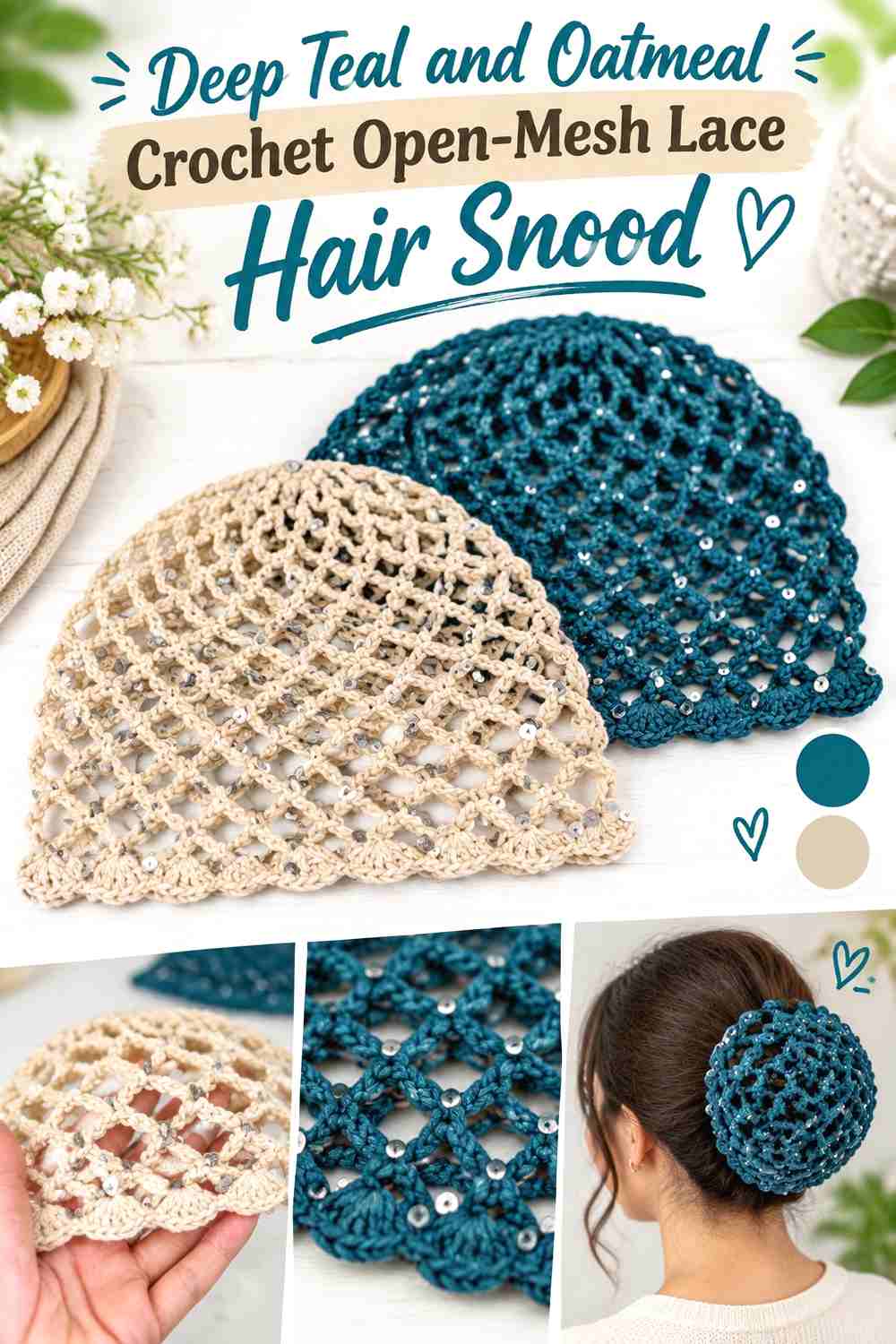
Deep teal can carry an open mesh strongly without using black, while oatmeal provides a clear light accent. Keep teal across most of the net and place oatmeal where the edge needs definition. The supporting tutorial is specifically for a crochet hair net, making it a useful base for this open-mesh snood color treatment.
Deep Teal Can Make the Crochet Lace Mesh the Main Feature
Keep the larger field deep teal when you want the repeated openings rather than color striping to create the pattern.
On dark hair, check whether the teal still reads distinctly. If it blends heavily, the oatmeal edge becomes especially important.
Oatmeal Can Outline the Deep Teal Crochet Hair Net
A narrow oatmeal section around the most visible perimeter can make the silhouette easier to distinguish.
Avoid expanding oatmeal deep into the mesh unless you deliberately want the project to become nearly equal in color. The stronger effect comes from one light boundary against a large teal field.
Creator Credit: İlmek Tutkum YouTube tutorial
6. Lavender And Silver Crochet Festival Lace Hair Snood
 SAVE
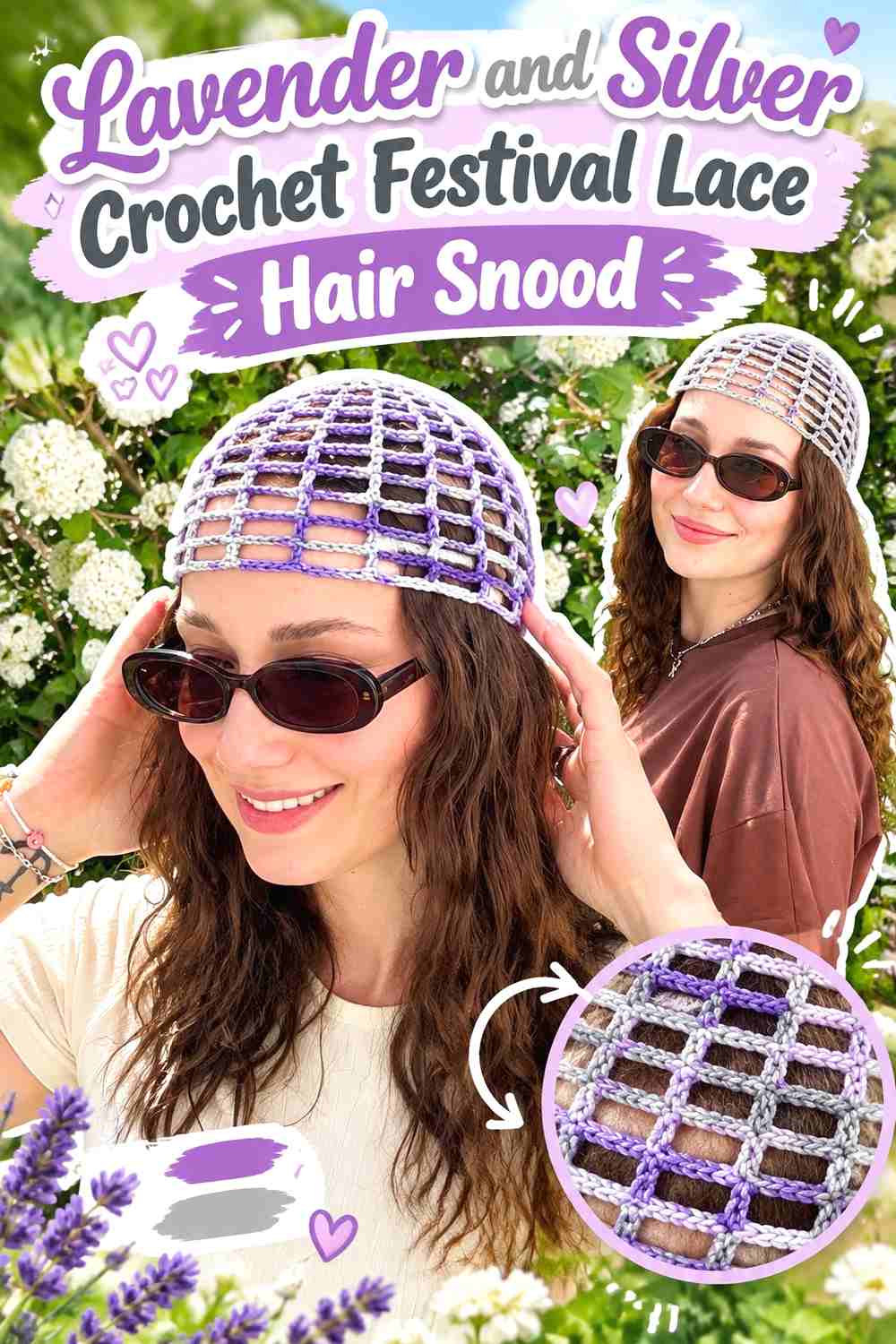
Lavender and soft silver-gray give an open hair net a cooler, more contemporary lace direction. Lavender can dominate the mesh while silver follows one visible edge rather than encircling every section equally. The source tutorial presents its hair net as a summer or festival accessory, so this idea keeps that lighter styling direction while changing the palette.
Lavender Can Keep the Crochet Festival Lace Soft
Use lavender throughout most of the open mesh so the net does not become a sequence of alternating gray and purple stripes.
The openings already add substantial pattern, making a broad single-color field useful for visual balance.
Silver Can Give Lavender Crochet Lace a Controlled Edge
Place silver-gray along the edge that remains most visible from the side or back.
A partial accent can look more intentional than forcing silver around every boundary, particularly when part of the snood edge disappears under the hairstyle.
Creator Credit: Julezcrochet YouTube tutorial
7. Wine And Blush Crochet Compact Lace Hair Snood
 SAVE
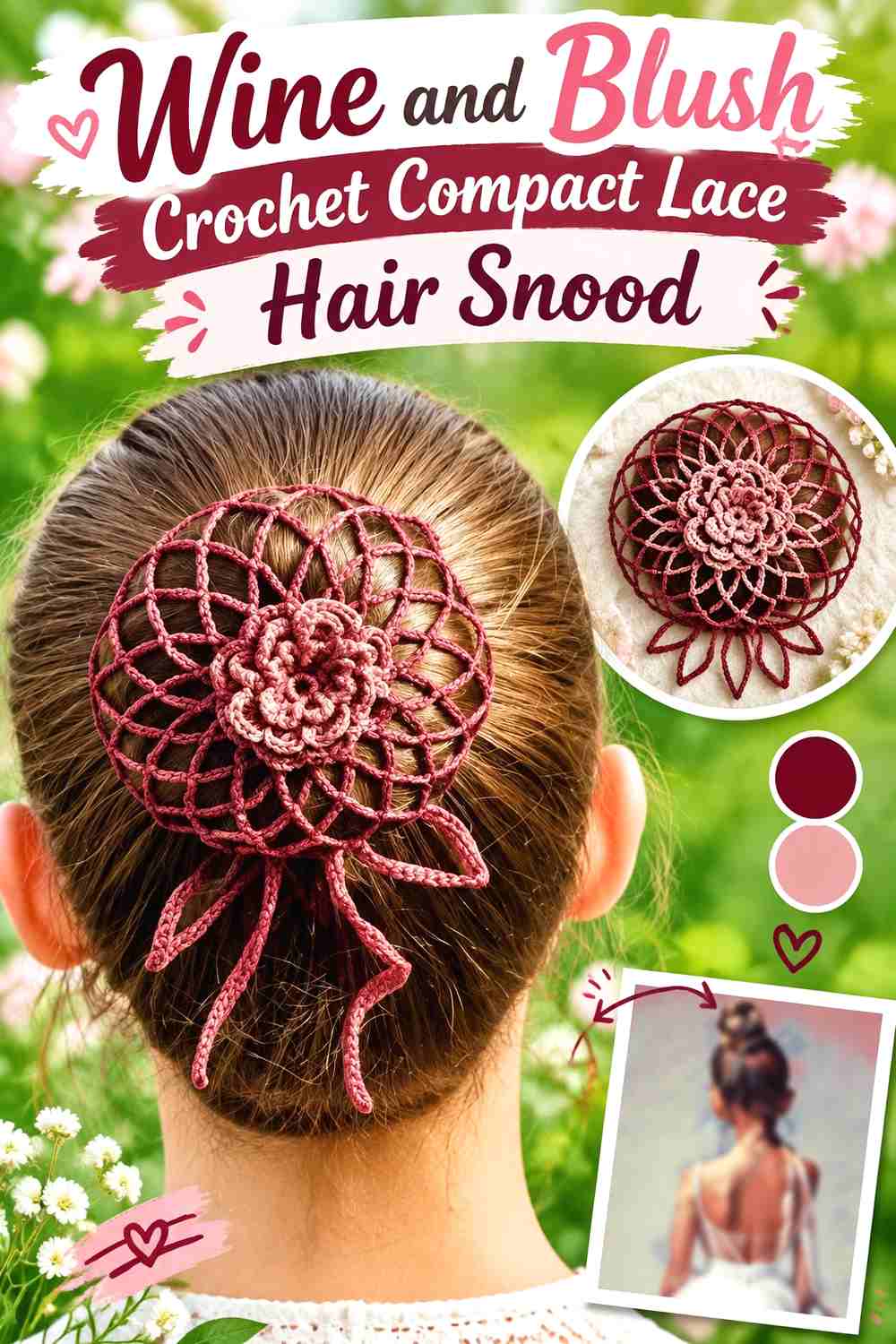
Wine and blush work well on a smaller hair net because the light pink can keep a compact dark accessory from appearing visually dense. Let wine cover the center and most of the mesh, then use blush around the outer area or one small decorative section. The supporting tutorial is intended for a smaller hair-net form rather than a large, deep snood.
Wine Can Give the Compact Crochet Lace Snood a Strong Center
Keep wine through the central structure so the circular form stays easy to read.
Because the accessory is small, several additional colors would occupy a disproportionately large share of the visible surface.
Blush Can Lighten the Wine Crochet Lace Perimeter
Use blush near the edge where the crochet meets the hair. A small amount may be sufficient because the value change is stronger than the difference in physical area suggests.
If the blush begins to occupy most of the outer rounds, step back and check whether the intended wine-led hierarchy still remains.
Creator Credit: Warmi Sulata YouTube tutorial
8. Chocolate And Camel Crochet Simple Lace Hair Snood
 SAVE
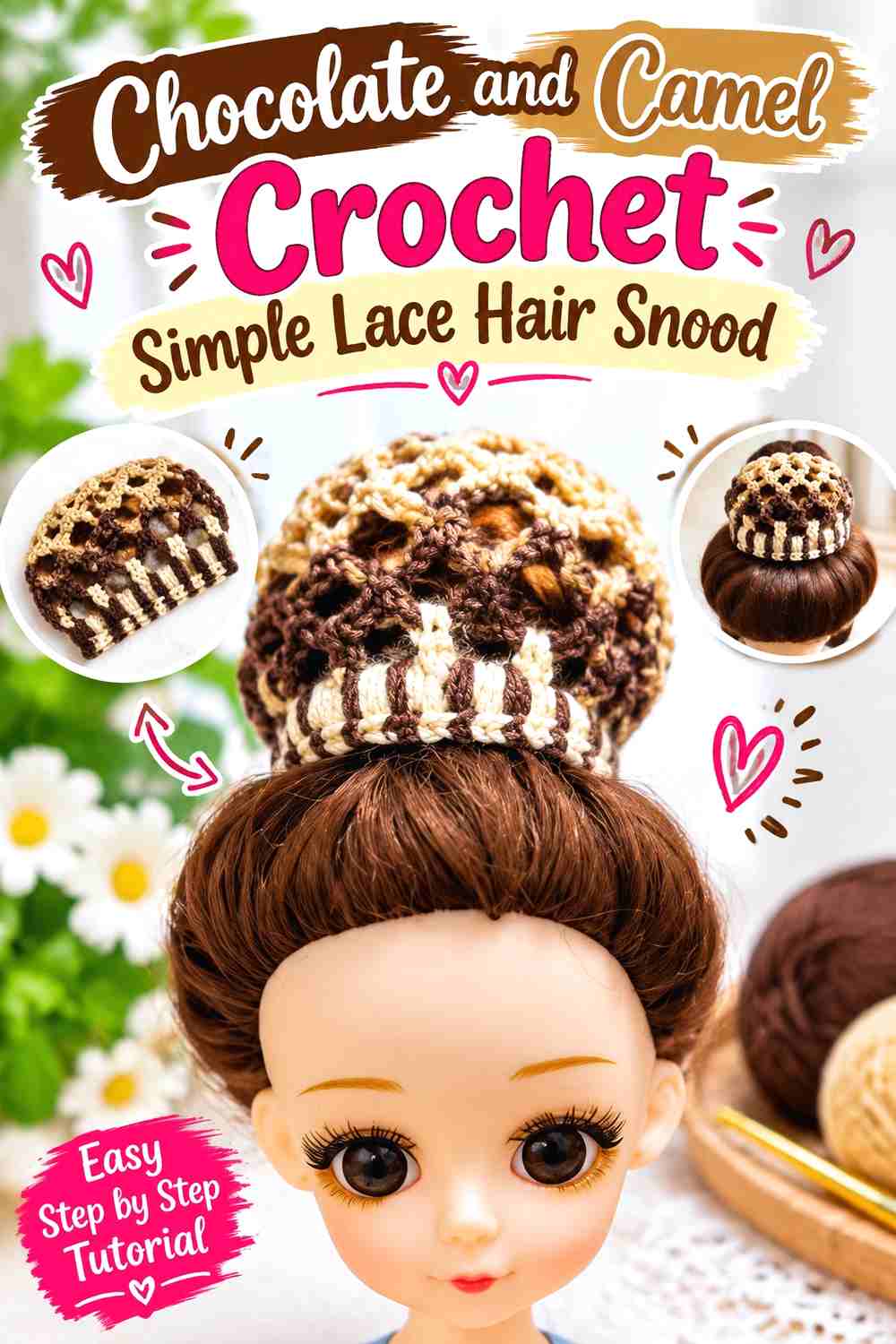
Chocolate and camel give a simple hair-net base a warm neutral palette that relies more on value than on strong hue contrast. Camel can dominate the openwork while chocolate defines the front or gathering edge. The supporting source teaches a plain hair-net construction, so the lace-forward palette is the editorial adaptation rather than a claim about the creator’s exact styling.
Camel Can Keep Chocolate Crochet Lace Warm and Visible
Use camel through the largest mesh area when you want a lighter warm neutral against darker hair.
The uninterrupted camel surface allows the shape of each opening to remain more important than repeated color changes.
Chocolate Can Define the Camel Crochet Snood Boundary
Chocolate works best where the snood needs a clear visual stop: the opening, front band, or lower gathering area.
If chocolate already appears at both ends, avoid adding additional dark stripes through the center. That keeps camel responsible for the open lace field.
Creator Credit: Reda Ahmed YouTube tutorial
9. Navy And Ivory Crochet Asymmetrical Lace Hair Snood
 SAVE
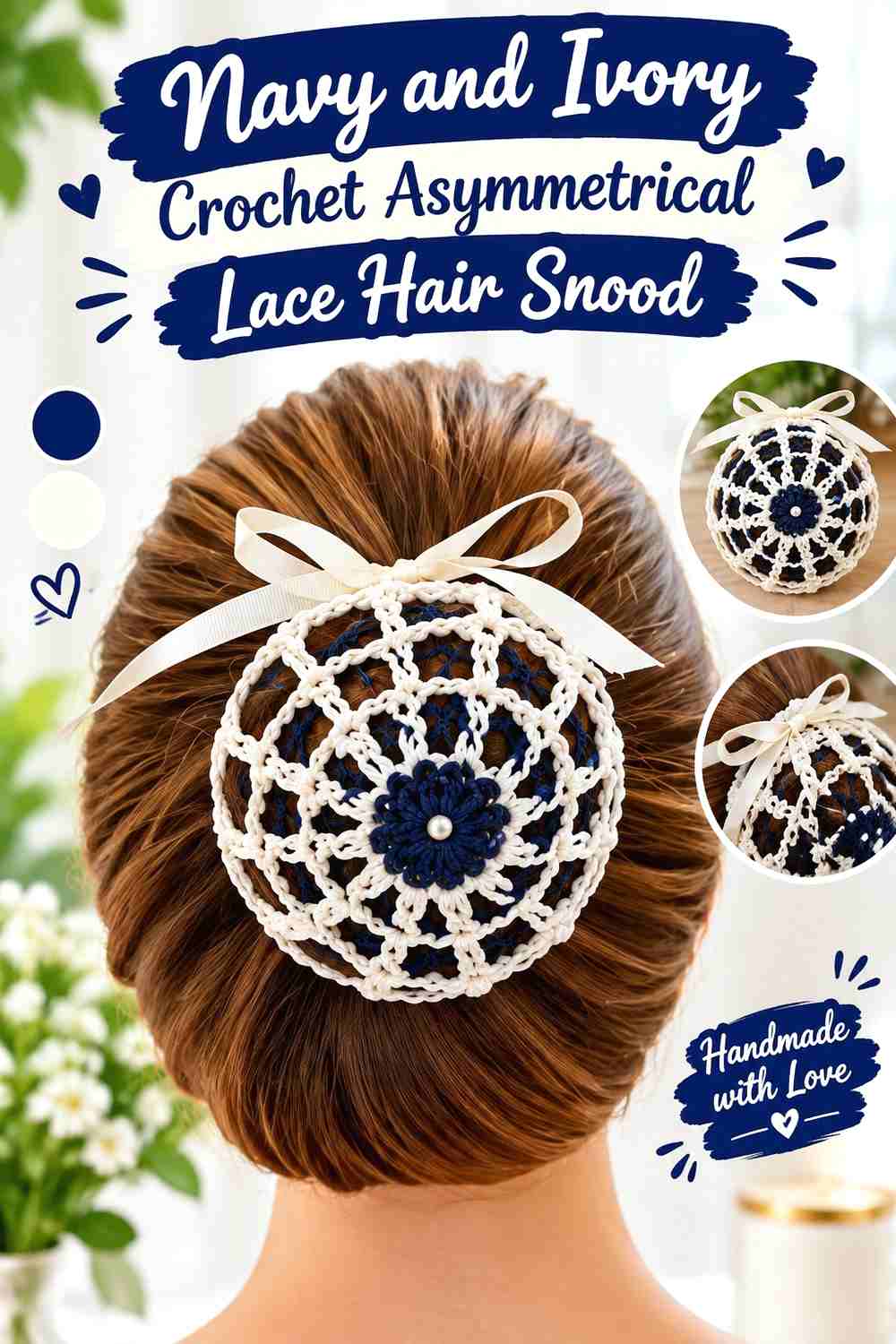
Navy and ivory can make a plain hair net feel more decorative without requiring multiple lace patterns. Navy can cover the entire base while ivory appears along one intentionally limited visible section, creating an asymmetrical accent rather than a complete contrasting border. The underlying tutorial is a crochet hair-net construction; the asymmetric two-color treatment is separate editorial guidance.
Navy Can Keep the Crochet Lace Snood Grounded
Use navy consistently through the mesh so the irregular ivory area has a stable background.
When worn over black or very dark brown hair, check the snood in ordinary lighting to make sure enough of the navy net remains visible.
Ivory Can Create One Focal Area on Navy Crochet Lace
Place ivory where it can be seen clearly from the preferred side instead of distributing it evenly around the entire net.
The empty navy space is important. If ivory continues at the same frequency across the whole snood, the design stops reading as an asymmetrical accent and becomes ordinary two-color repetition.
Creator Credit: Crochet y Cintas YouTube tutorial
10. Antique Gold And Cream Crochet Round Lace Bun Snood
 SAVE
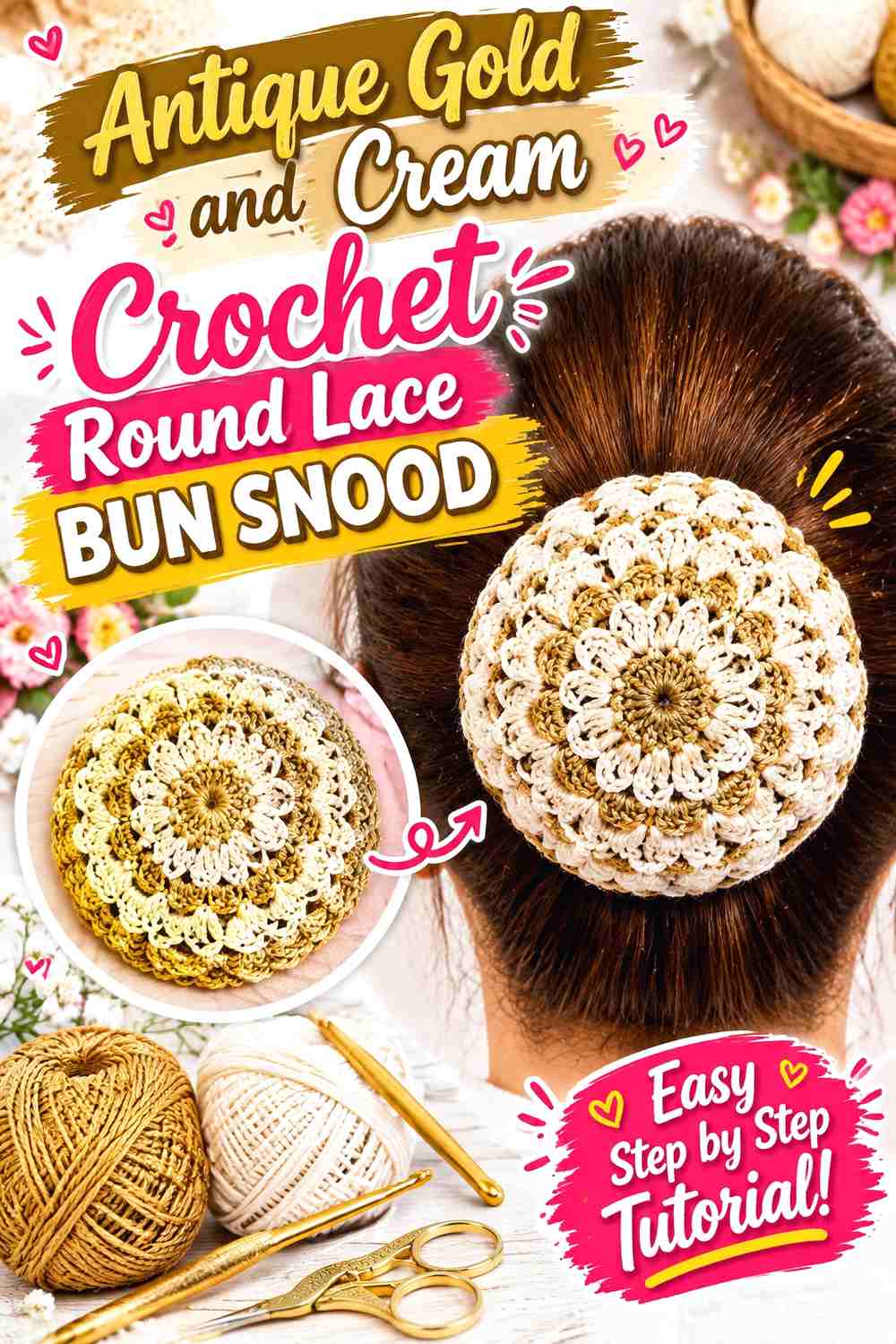
A round bun-cover base can create a compact snood effect with a more concentrated lace pattern. Antique gold can lead the circular crochet while cream defines one internal ring or outer edge. Because a bun cover wraps a smaller hairstyle area than a full snood, color restraint is especially useful. The supporting tutorial demonstrates a circular crochet bun cover rather than a deep back-of-head snood.
Antique Gold Can Keep the Round Crochet Lace Snood Cohesive
Use antique gold across most of the circular openwork so the radial structure remains the main feature.
Changing colors repeatedly around a compact bun can make individual lace rounds compete with the shape of the finished accessory.
Cream Can Give Antique Gold Crochet Lace a Light Halo
A cream ring or perimeter creates a controlled contrast against the deeper golden main color.
Choose one position for that contrast. Using cream at the center, middle, and outer edge simultaneously can divide a very small snood into too many visual zones.
Creator Credit: Crochet Jewel YouTube tutorial
Comparing the 10 Crochet Lace Hair Snood Color Directions
For the strongest vintage direction, burgundy and antique ivory, black and cream, or wine and blush give the mesh a clearly framed, old-fashioned hair-accessory look without requiring a large multicolor palette.
For a lighter romantic snood, dusty rose and oatmeal, sage and ivory, or lavender and silver keep the lace airy while still separating the edge from the main mesh.
Choose deep teal and oatmeal or navy and ivory when you want stronger contrast and clearer visibility of the net against medium or dark hair.
The antique gold and cream and wine and blush options are better suited to compact bun-cover silhouettes, where a small amount of contrasting yarn can influence most of the visible accessory.
Conclusion
Color in a crochet lace hair snood needs to work with both the crochet and the hair underneath it. A pale mesh over dark hair can emphasize every opening, while dark lace over similarly dark hair produces a quieter surface and may benefit from a lighter front band or outer edge.
For a full vintage snood, let one color cover most of the expandable mesh and keep secondary shades around stable boundaries. On compact bun snoods, reduce the number of color zones because each section occupies more of the finished accessory.
Most importantly, test the lace in its worn shape. A net changes visually when it expands around hair, and a border that seems wide while lying flat can become much narrower once stretched into position.
Frequently Asked Questions
What colors work well for a crochet lace hair snood?
Both vintage neutrals and muted colors work well. Antique ivory, cream, black, burgundy, wine, dusty rose, sage, deep teal, navy, camel, lavender, and muted gold all provide useful directions. The most important consideration is how the chosen yarn contrasts with the hair visible beneath the lace.
Should a crochet lace snood match my hair color?
It does not have to. A shade close to your hair creates a subtler net, while a contrasting color makes the lace pattern easier to see. Choose according to whether you want the snood to blend into the hairstyle or become a visible accessory.
Should the front band be darker than the lace snood?
A darker front band can frame a lighter mesh effectively, but the arrangement can also be reversed. A cream band around a black or navy snood creates an equally clear boundary. Give the band enough contrast to remain visible without automatically making it the largest color area.
Can I use two colors in an open crochet hair net?
Yes. Large color zones generally work more clearly than changing colors at every mesh repeat. Consider using one shade for the main openwork and the second for the band, outer edge, tie area, or gathering point.
How can I make pale crochet lace visible on light hair?
Increase contrast at the border or select a slightly deeper version of the pale shade. You do not necessarily need to darken the entire net. A clearer front band or edge may provide enough definition while keeping the main lace light.
Is a crochet bun cover the same as a full hair snood?
They overlap in purpose but differ in coverage. A bun cover concentrates around a formed bun, while a full hair snood can contain a larger section of hair behind the head. That difference also affects color placement because compact covers have less surface for multiple accents.
How do I keep a two-color lace snood from looking striped?
Avoid switching yarn at every available mesh row. Give one color the majority of the openwork and reserve the second for a structural zone such as the front band, opening, outer edge, or gathering area. This lets the lace rather than repeated color changes create most of the pattern.